




NCERT Exemplar Solutions for Class 11 Biology Chapter 14 Breathing and Exchange of Gases solve all 32 questions from the Exemplar book. Every MCQ, Very Short Answer, Short Answer and Long Answer problem is answered step by step in the free 55-page PDF, updated for the 2026-27 syllabus.
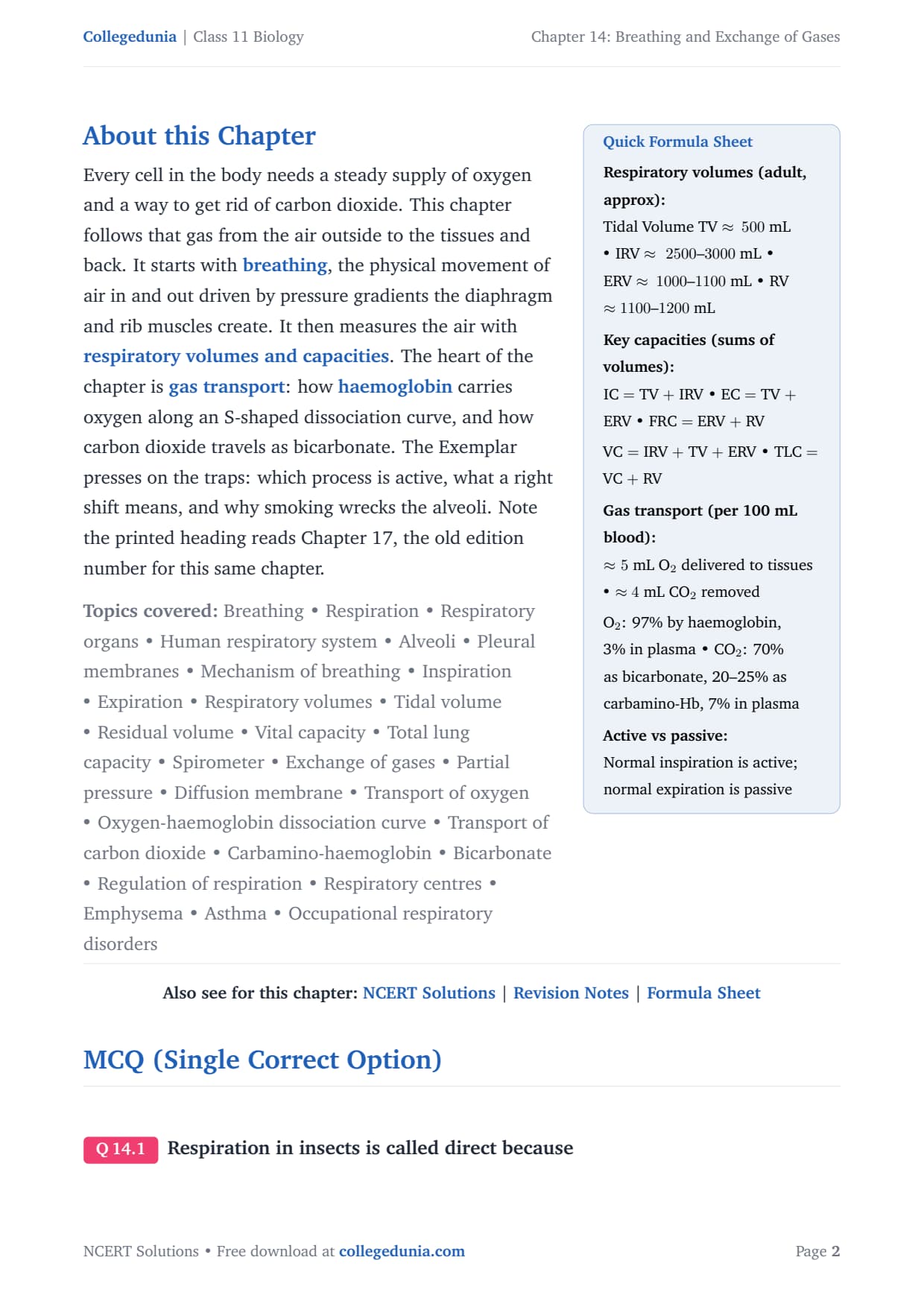
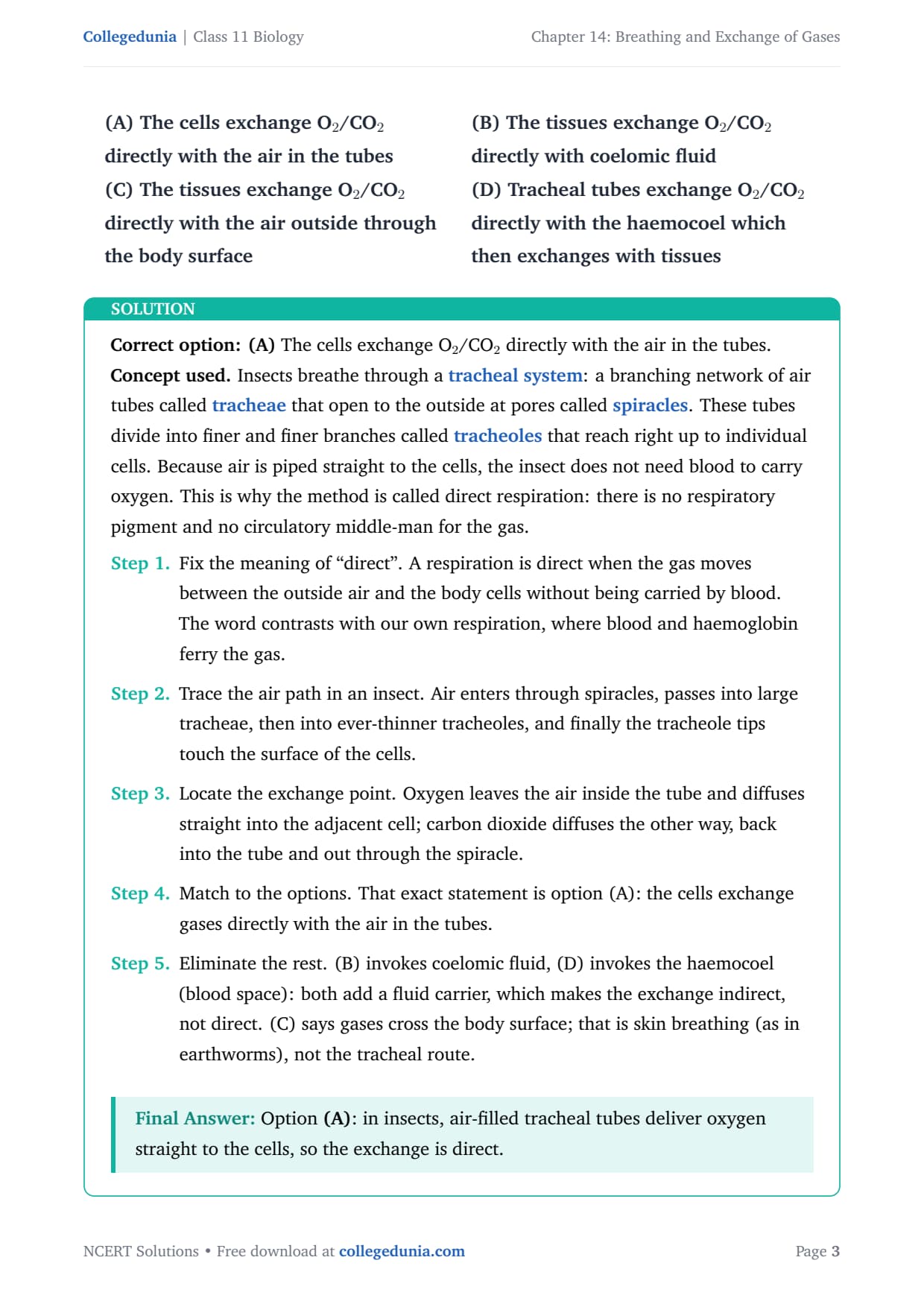
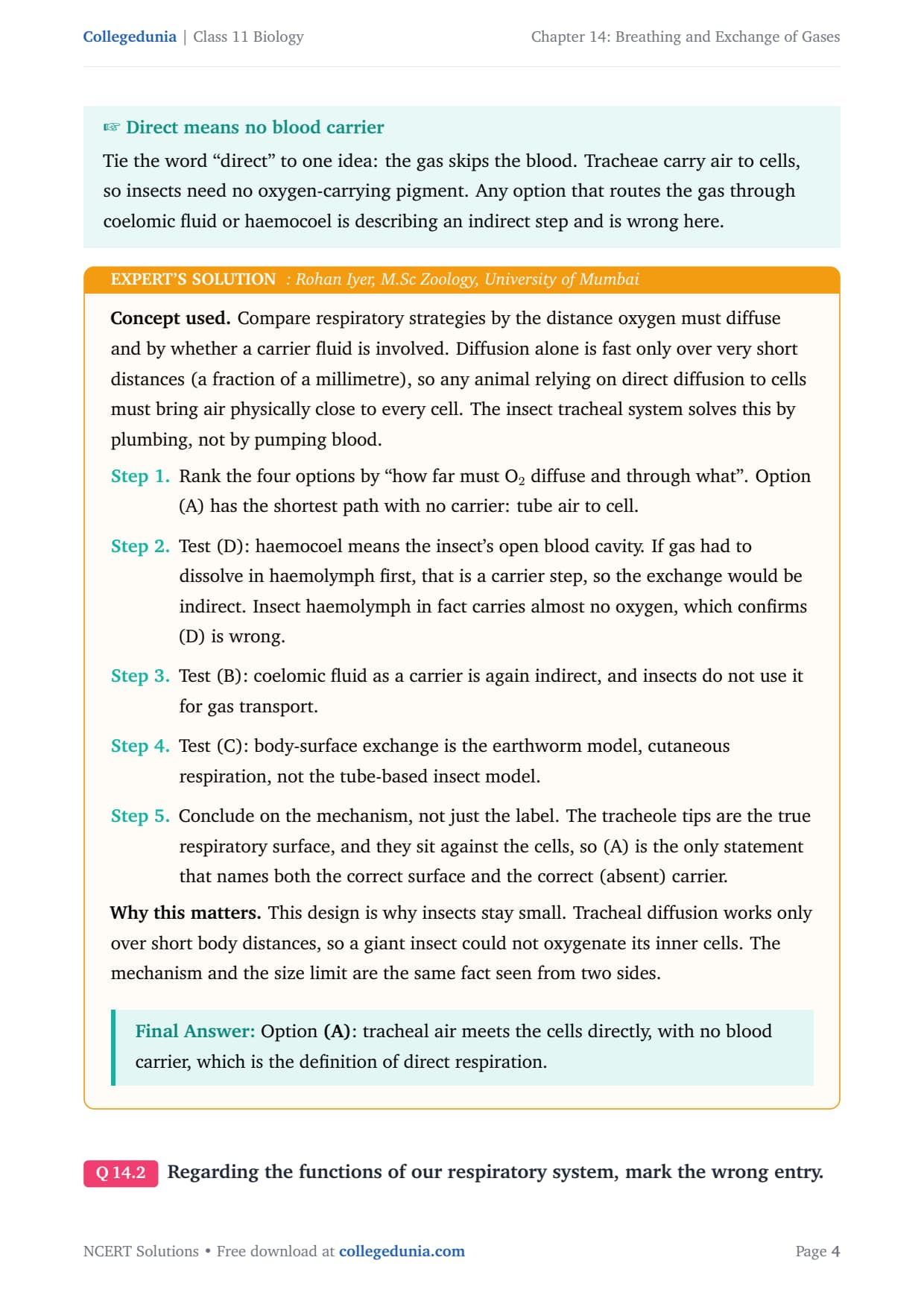
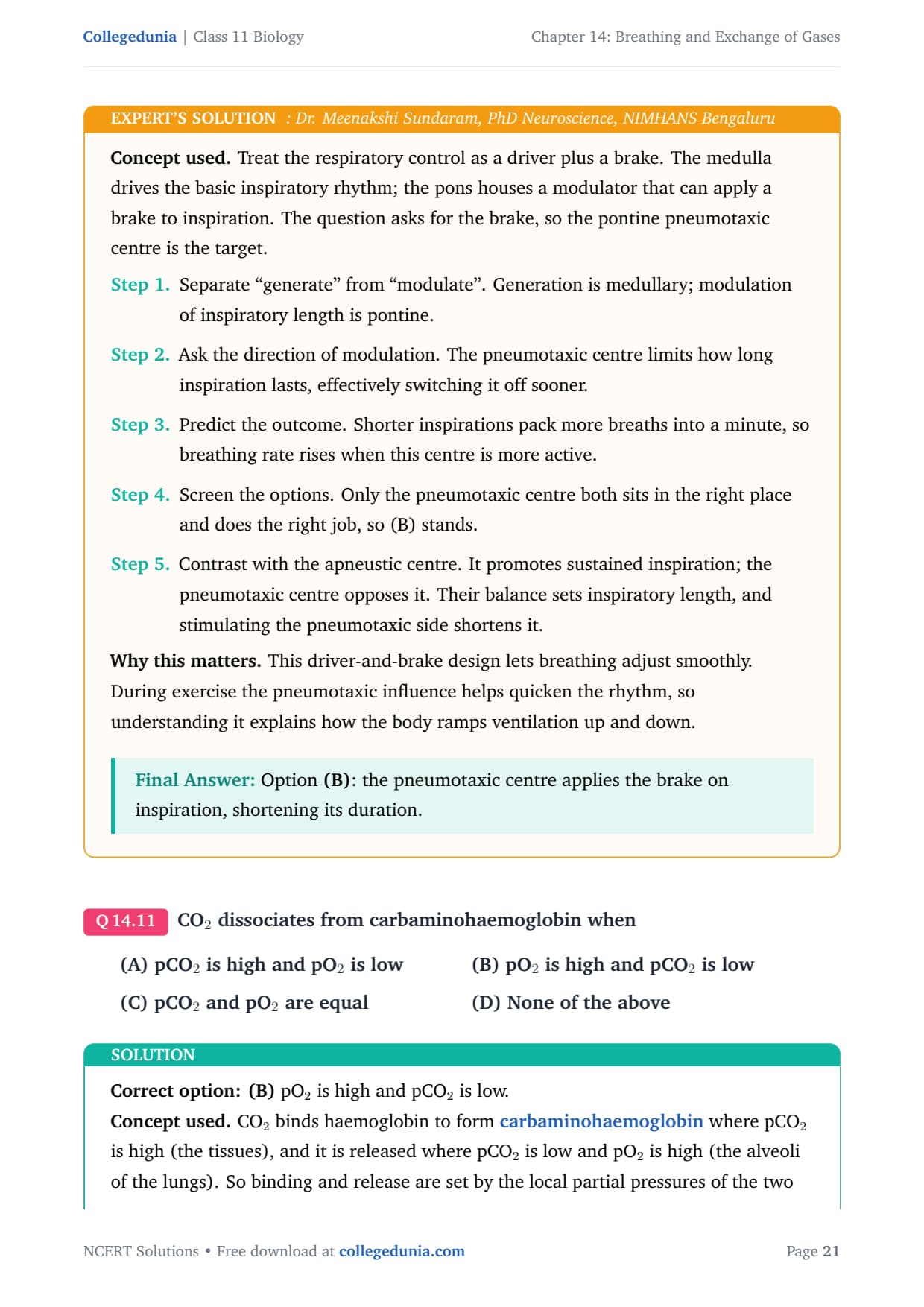
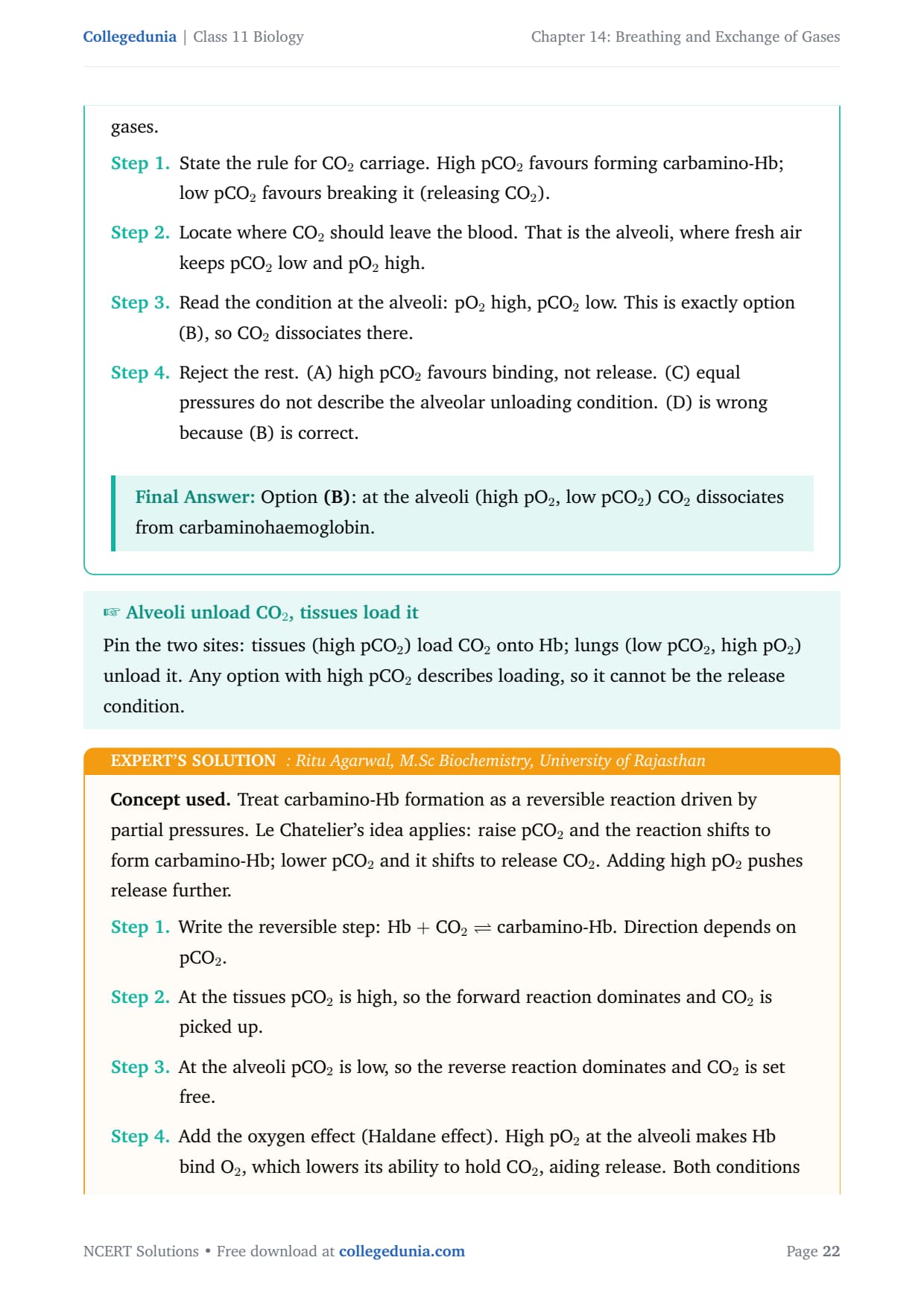
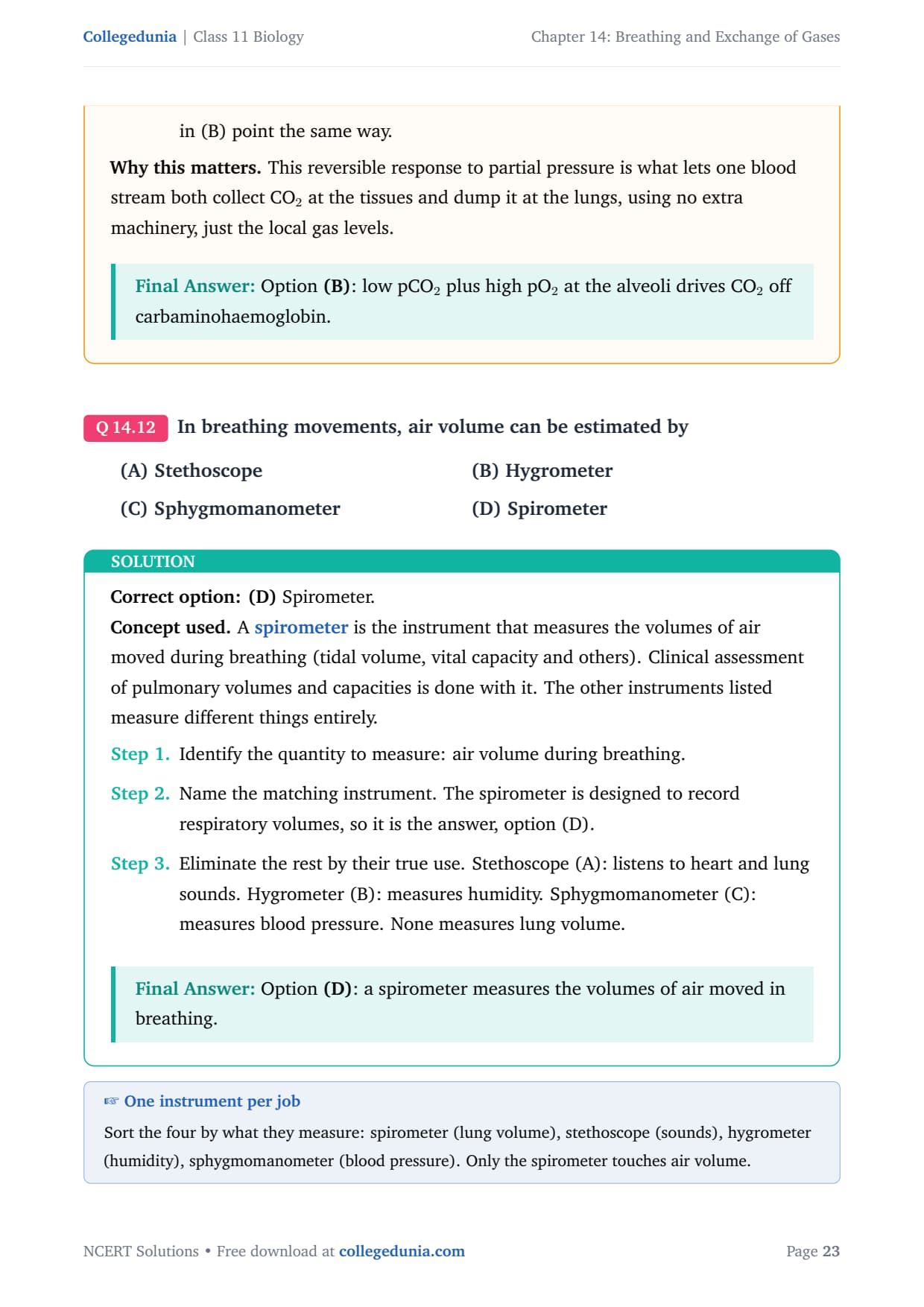
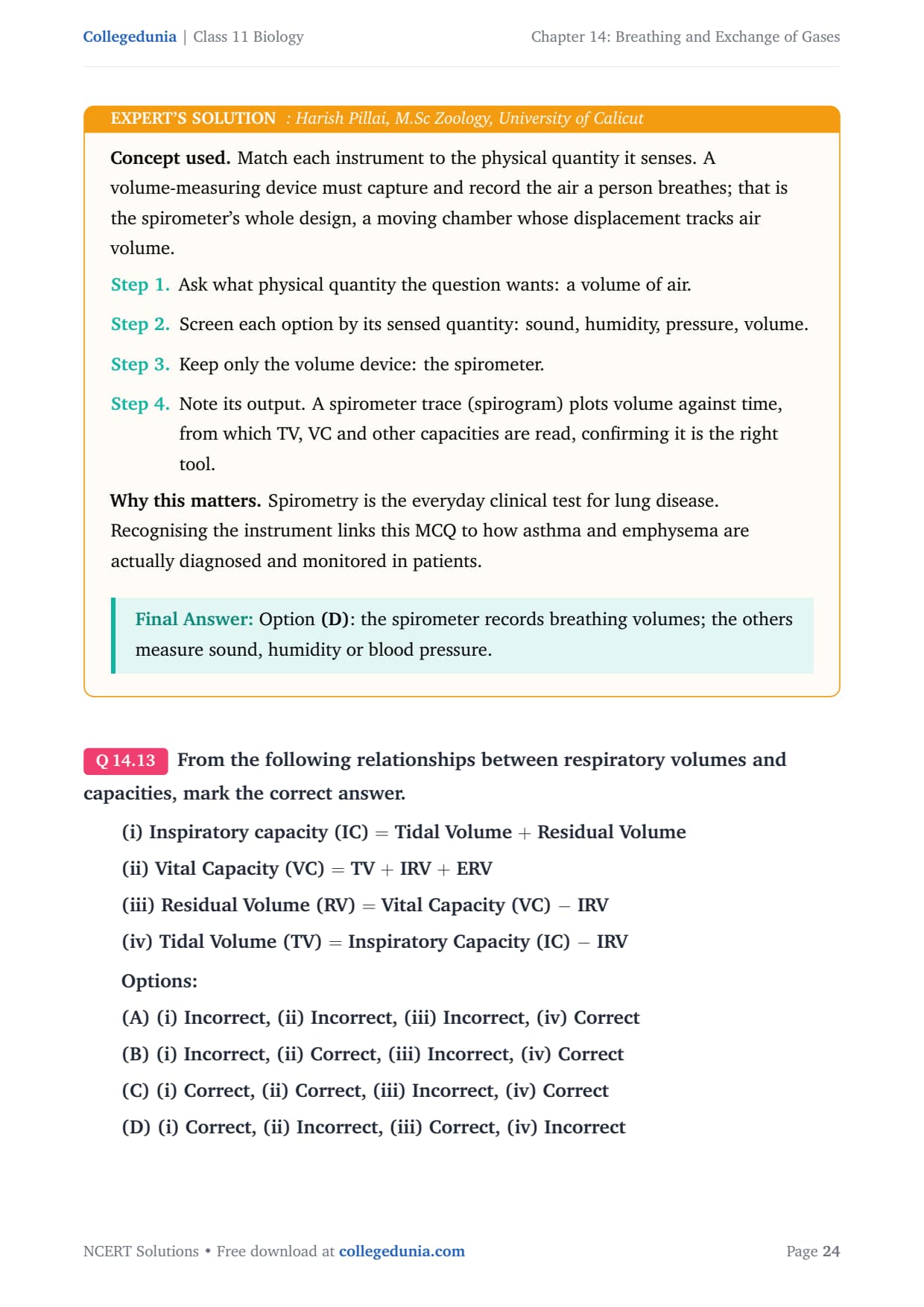
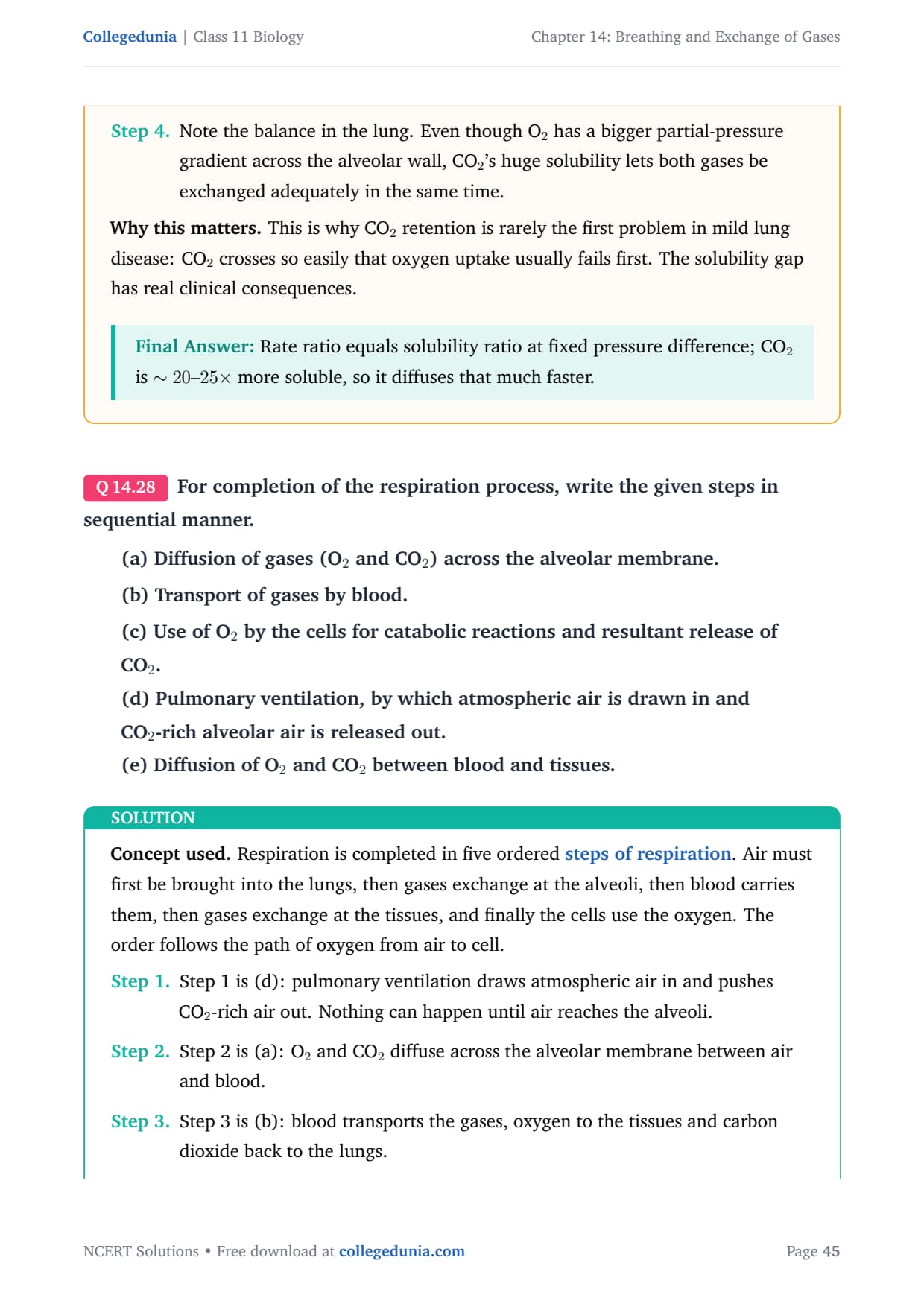
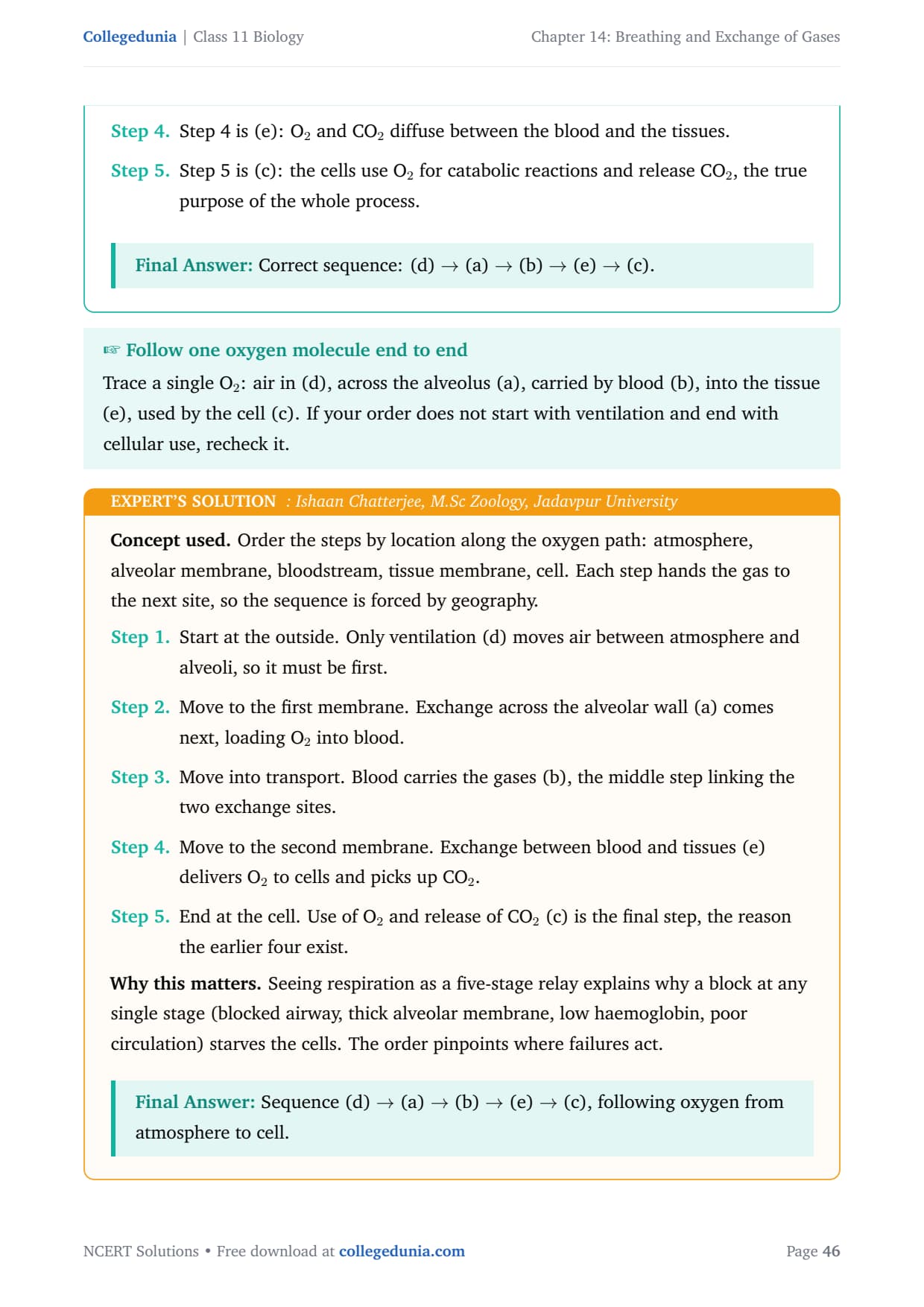
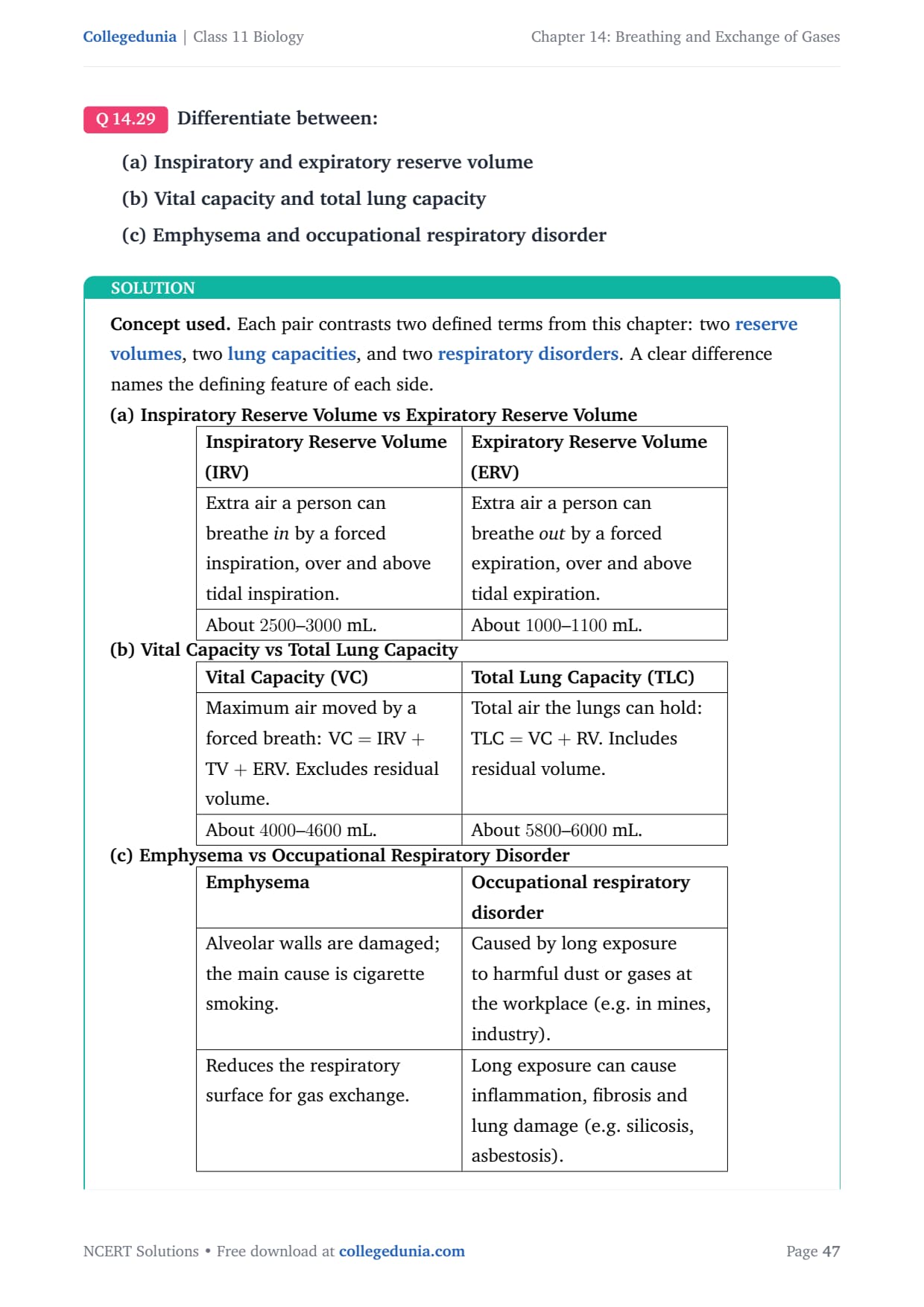
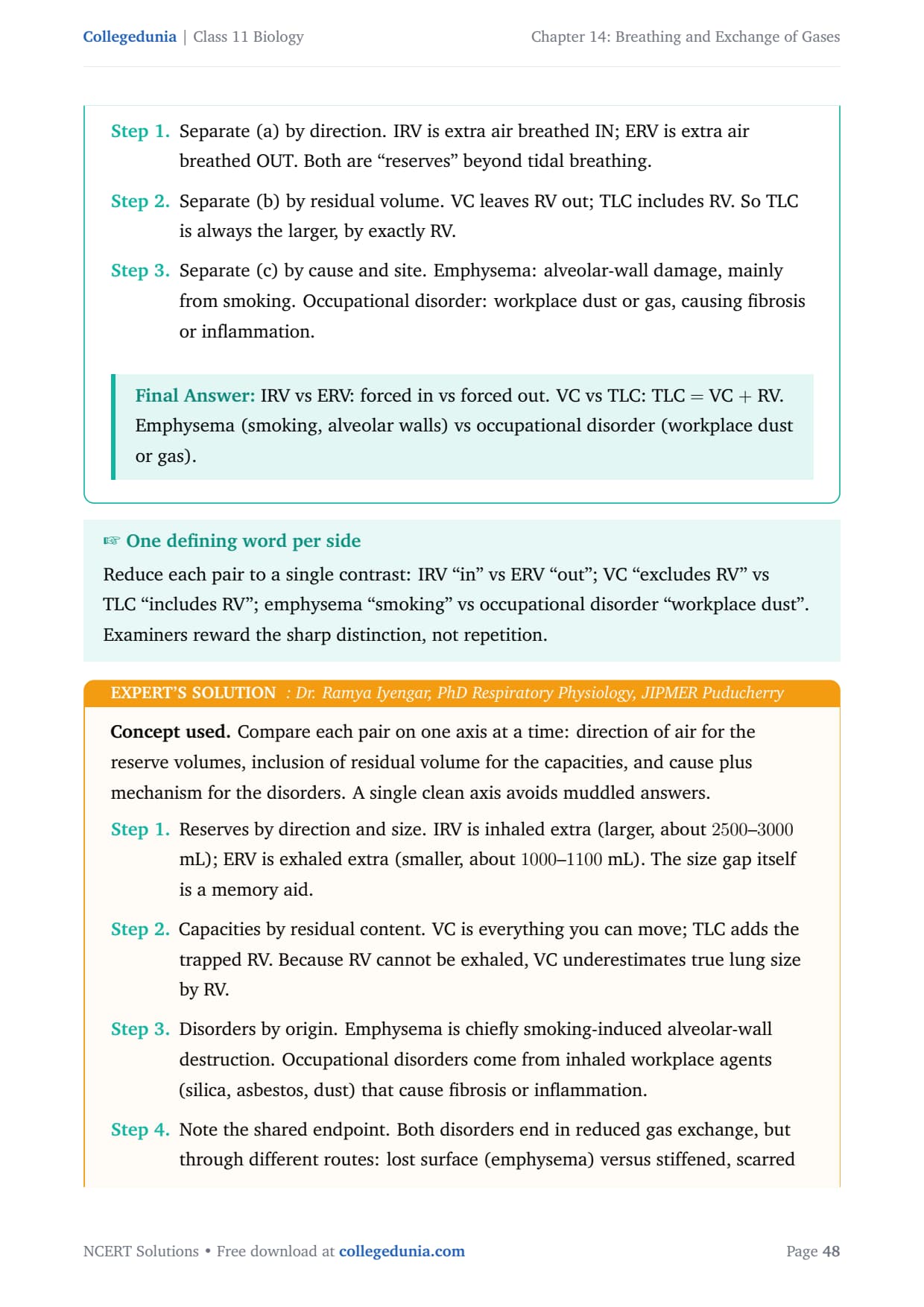
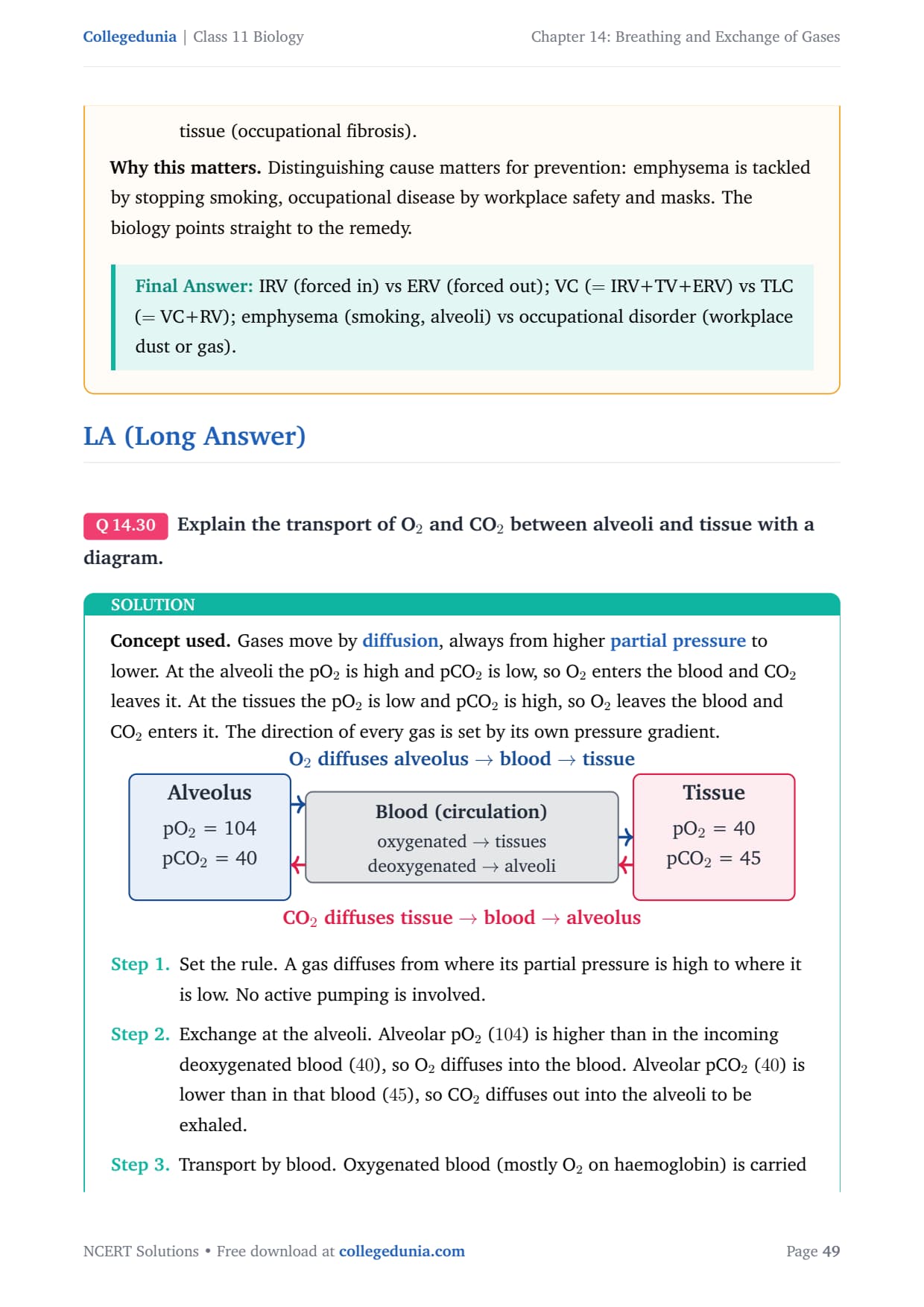
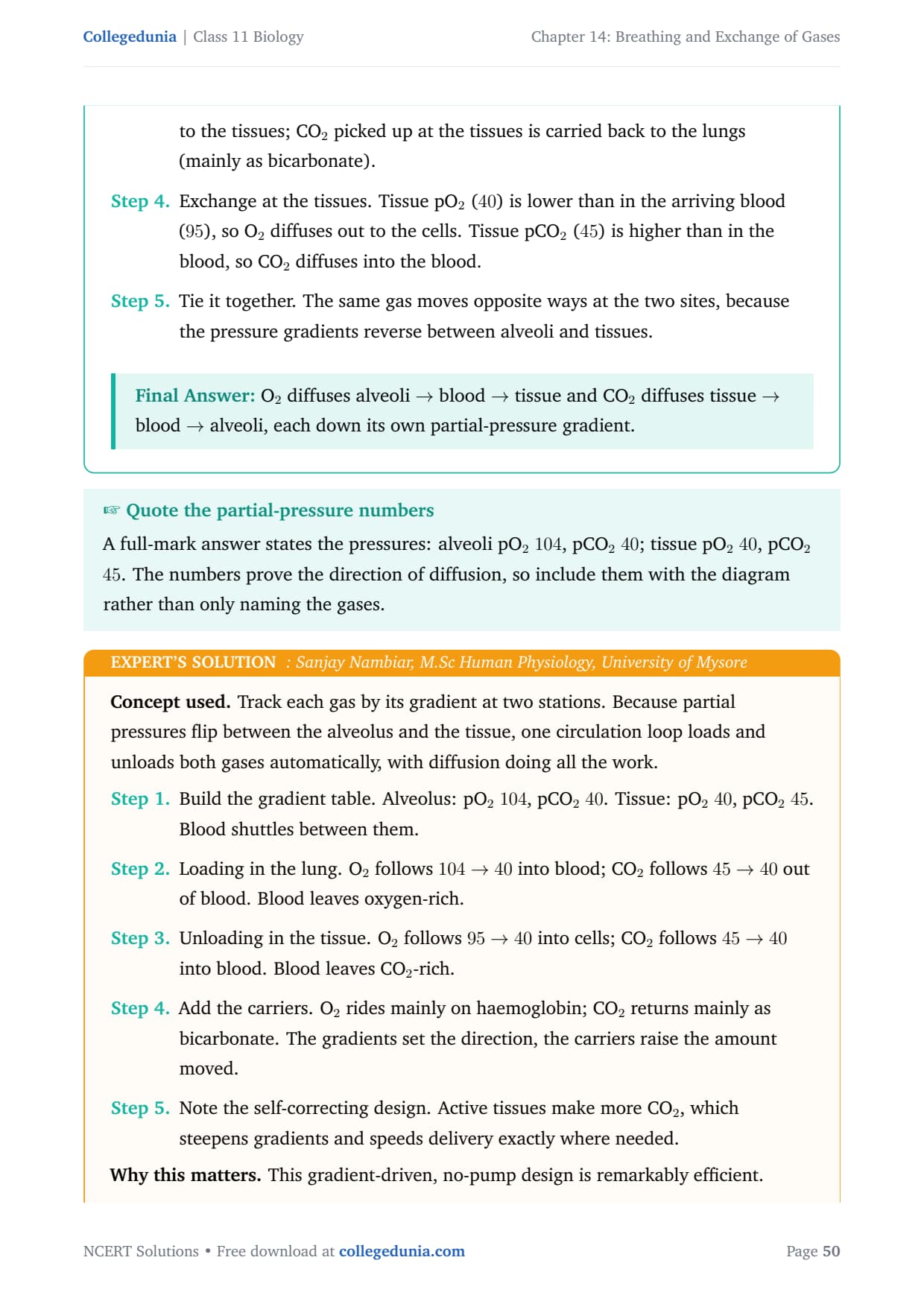
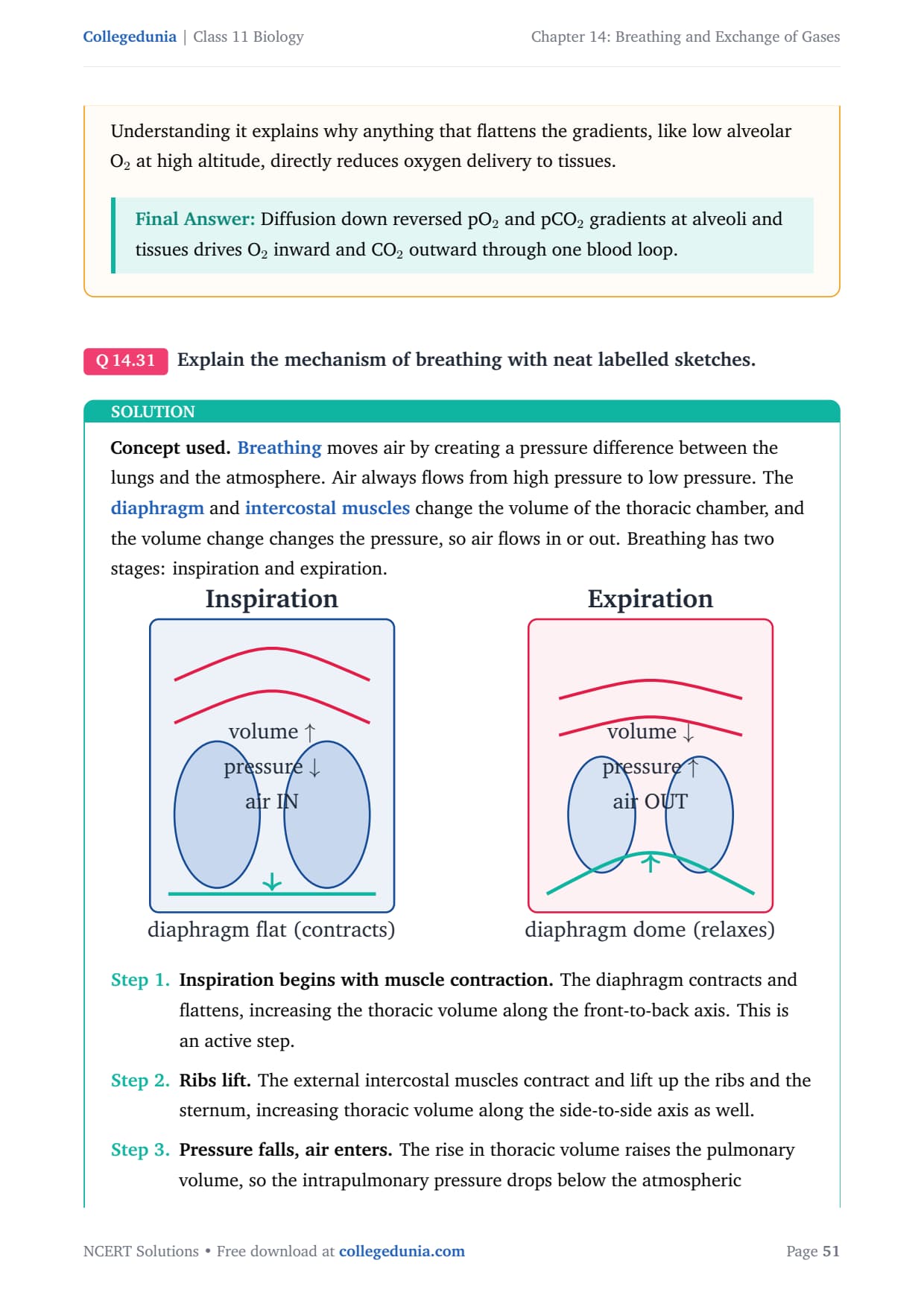
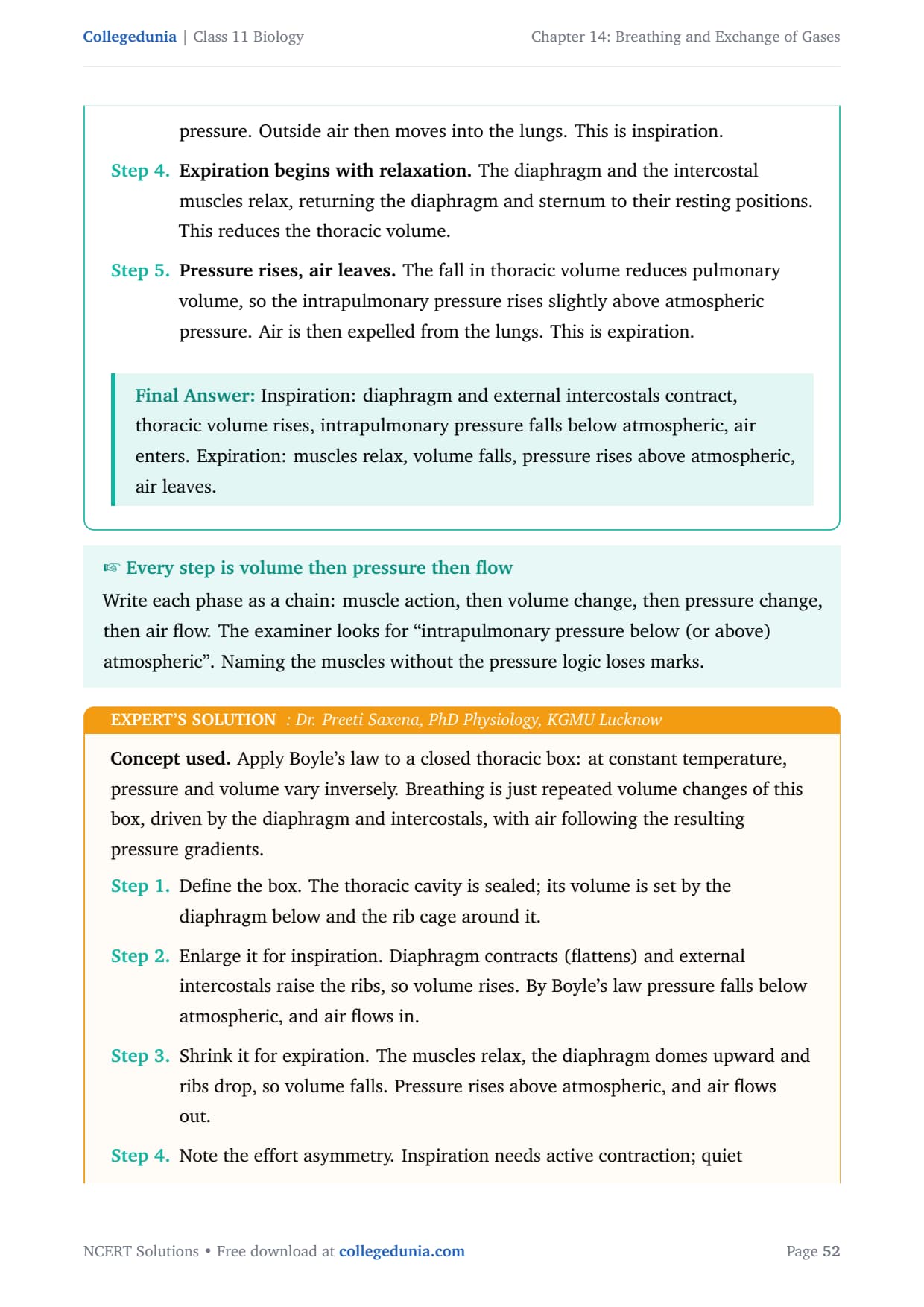
This chapter tracks a single oxygen molecule from the air outside to a working cell, and carbon dioxide back the other way. The textbook describes the route. The Exemplar asks you to judge it: which step is active, what a right shift on the dissociation curve does, and why an alveolus fails in a smoker.
- CBSE Weightage: 4 to 5 marks, usually one question on respiratory volumes or the mechanism of breathing
- NEET Weightage: 2 to 3 questions per year on the oxygen dissociation curve, gas transport and respiratory disorders
- CUET Weightage: 1 to 2 questions on lung volumes and breathing regulation in the Biology domain paper
Every answer is checked against the official NCERT Exemplar keys, keep423 for MCQs and keep424 for descriptive questions, and the three places where the printed book contradicts itself are flagged at the exact question.
Topics Covered in the Class 11 Biology Breathing and Exchange of Gases Exemplar
The 32 questions sit on four ideas, and each returns in Body Fluids and Circulation. The Exemplar keeps setting the same trap: a process that looks active but is passive, or a number that looks like a capacity but is a volume.
- Respiratory organs: tracheae in insects, gills in fishes, moist cuticle in earthworms, and the conducting part against the exchange part in humans
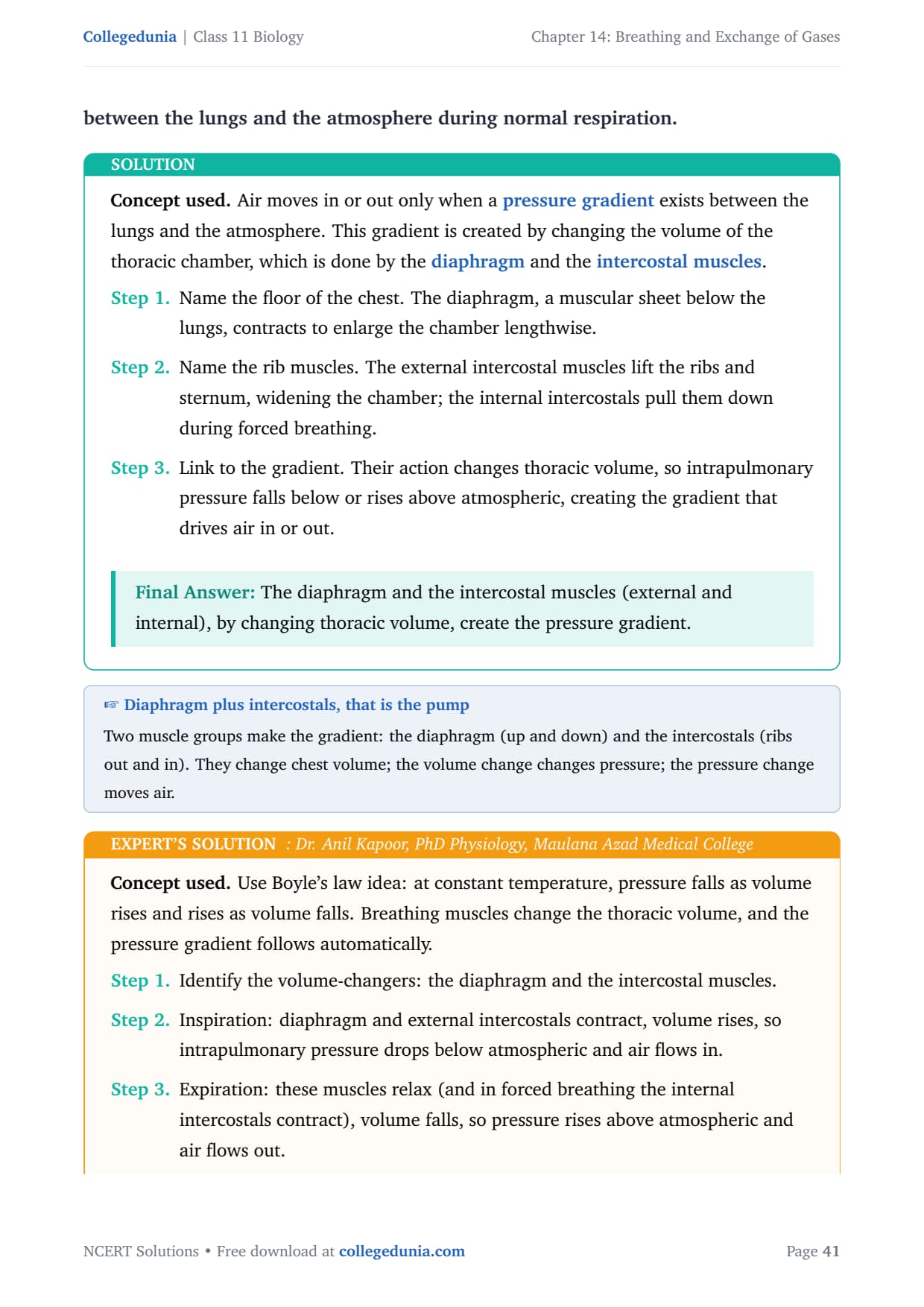
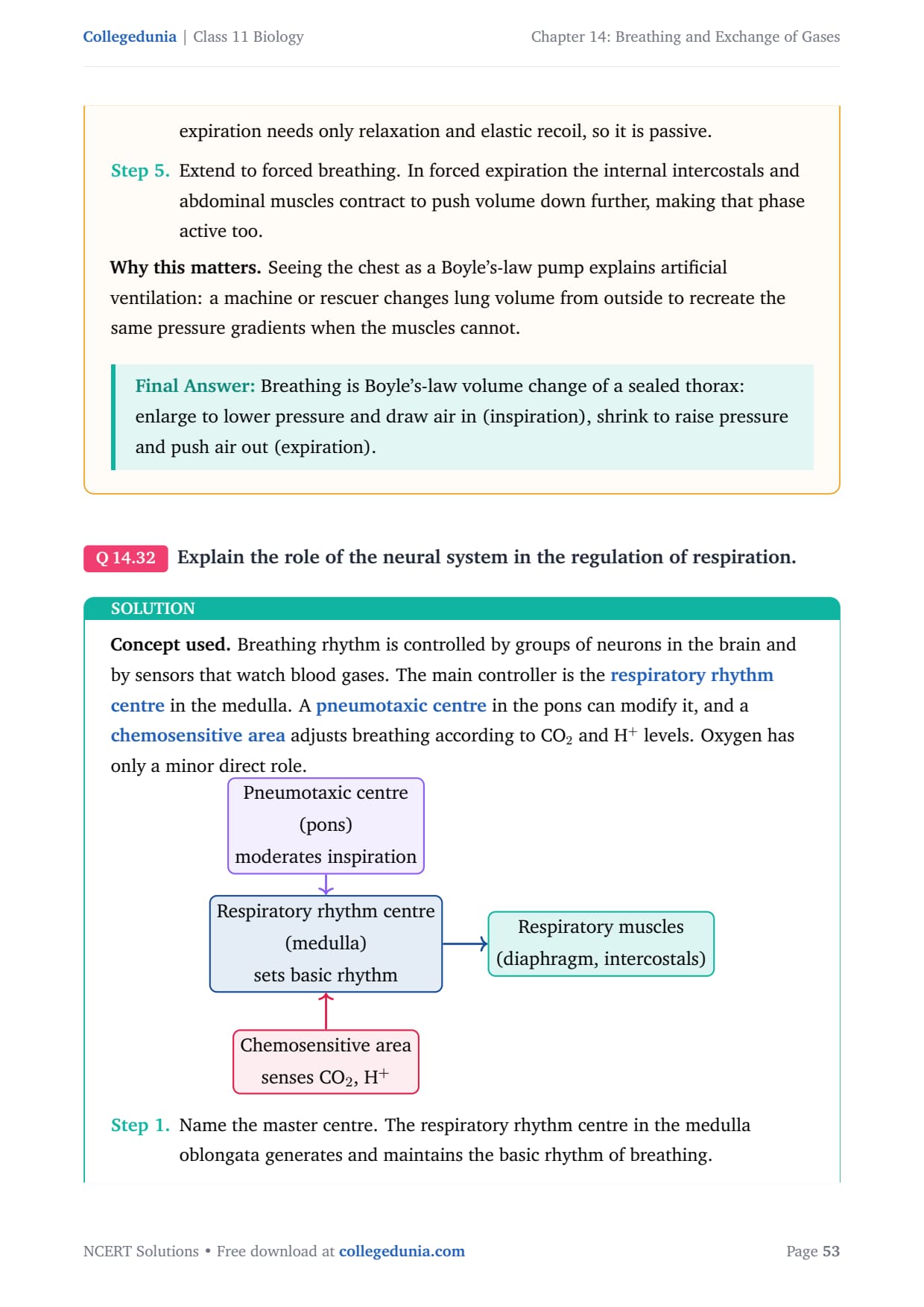
- Mechanism of breathing: diaphragm and intercostal muscles, intrapulmonary and intrapleural pressure, and why inspiration is active but expiration is passive
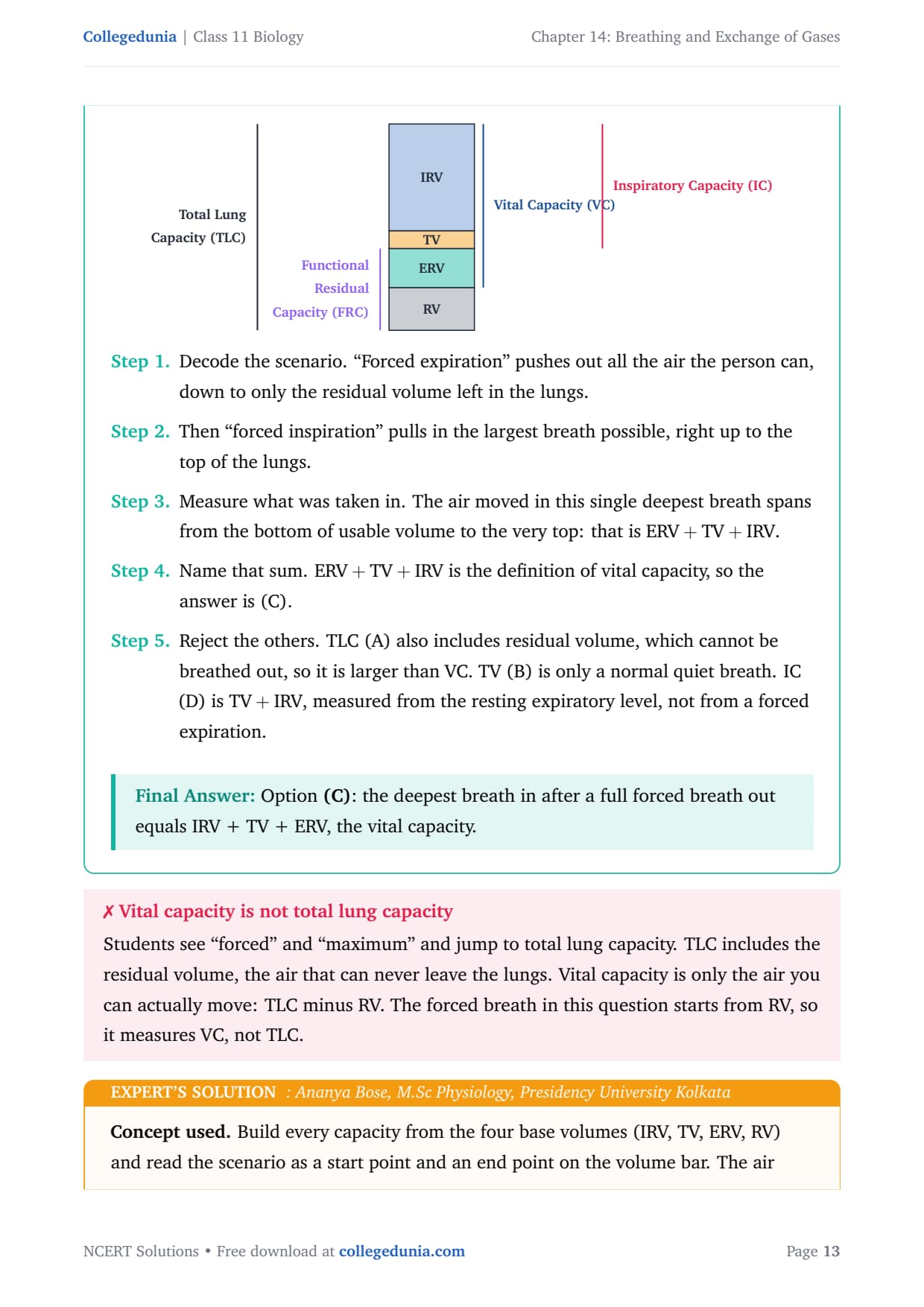
- Volumes and capacities: tidal volume, the two reserve volumes, residual volume, vital capacity, and the spirometer that measures them
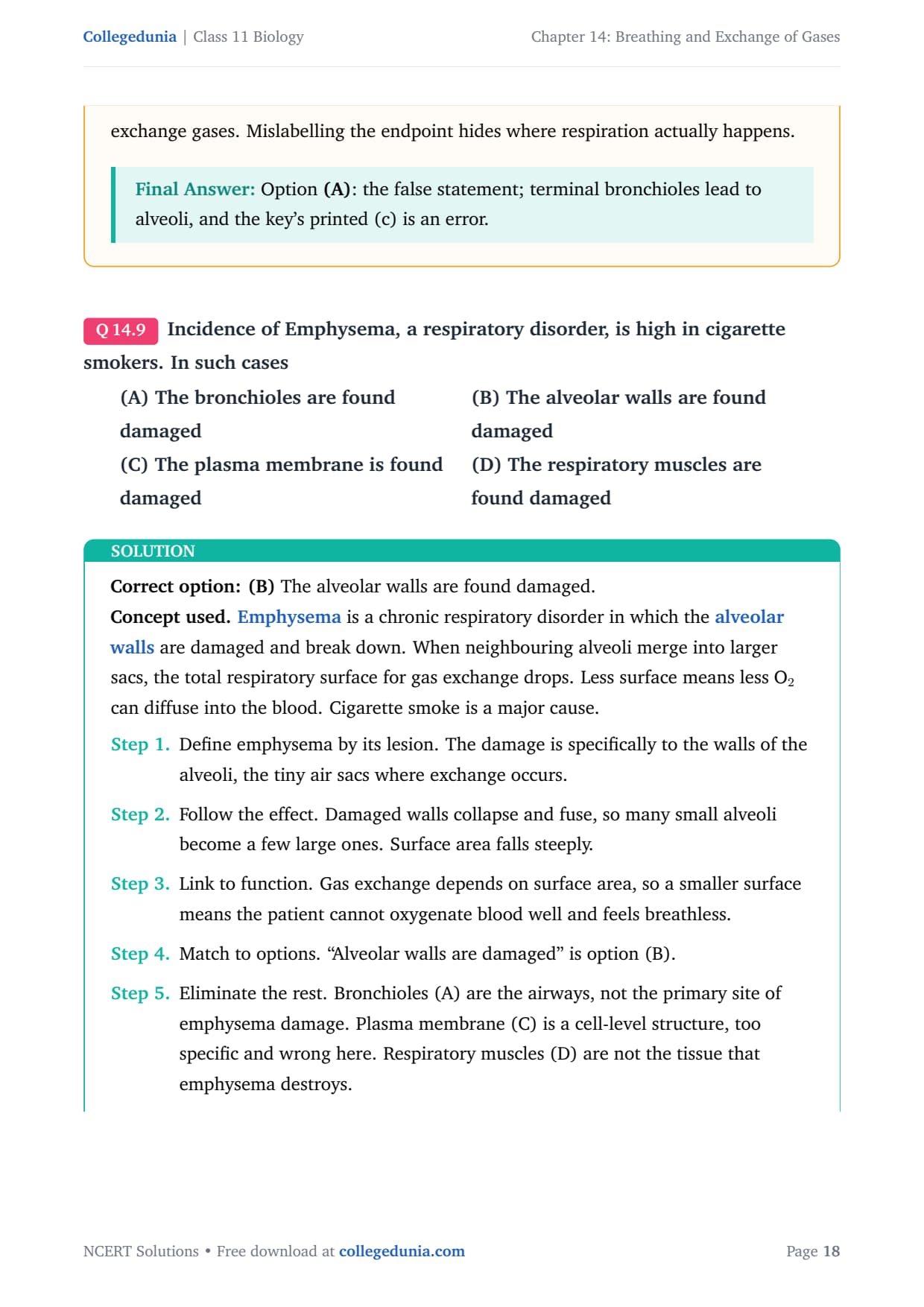
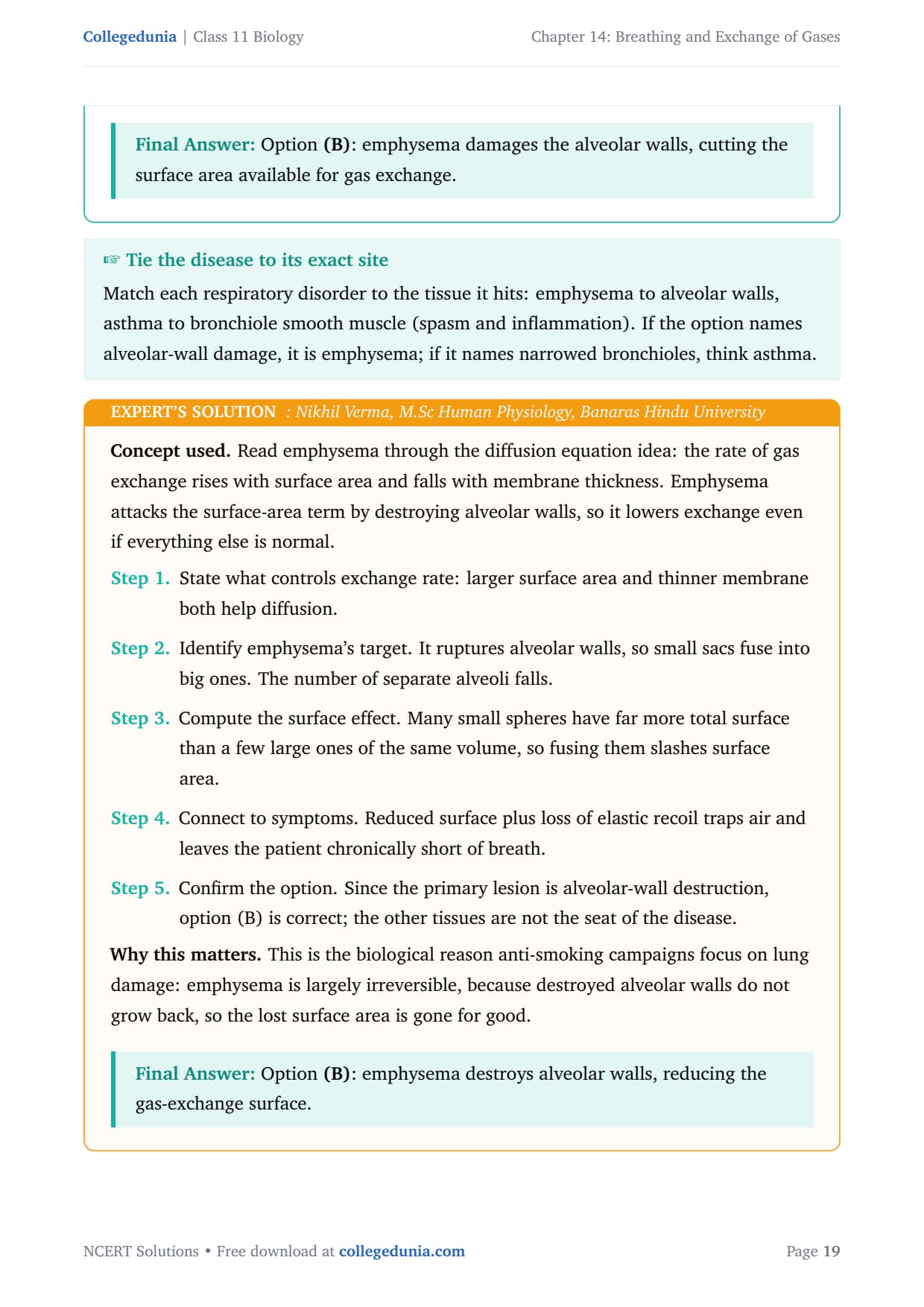
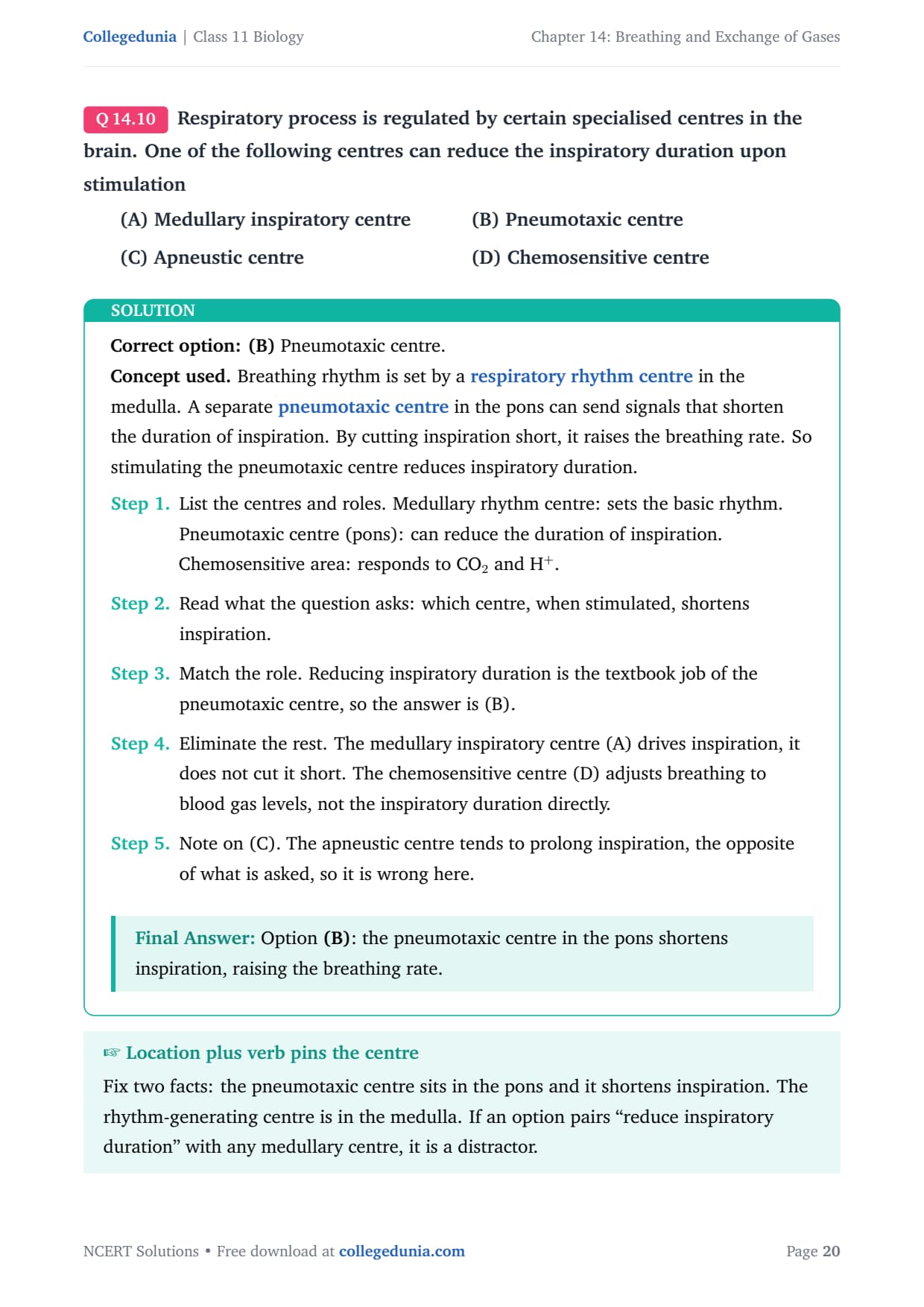
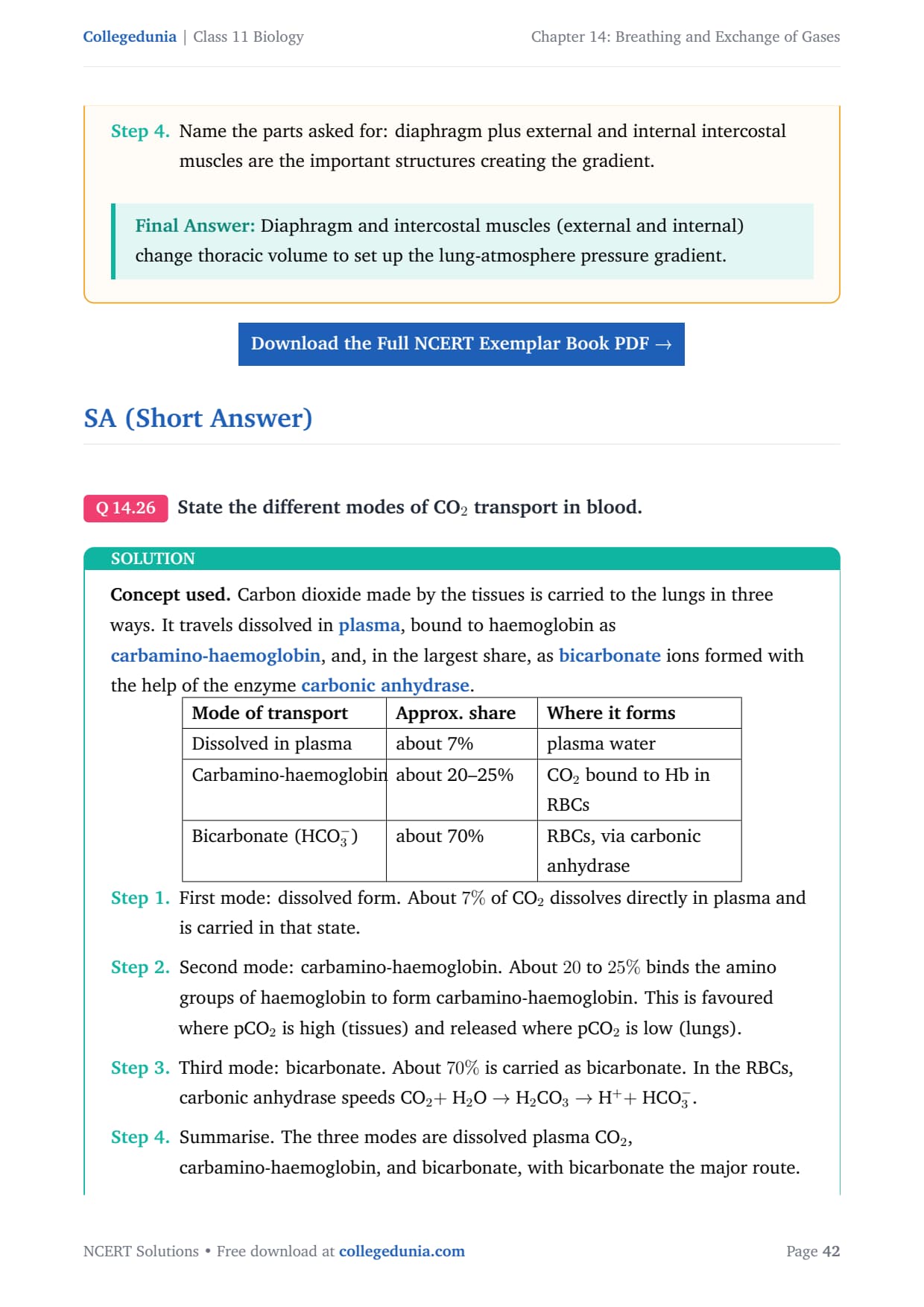
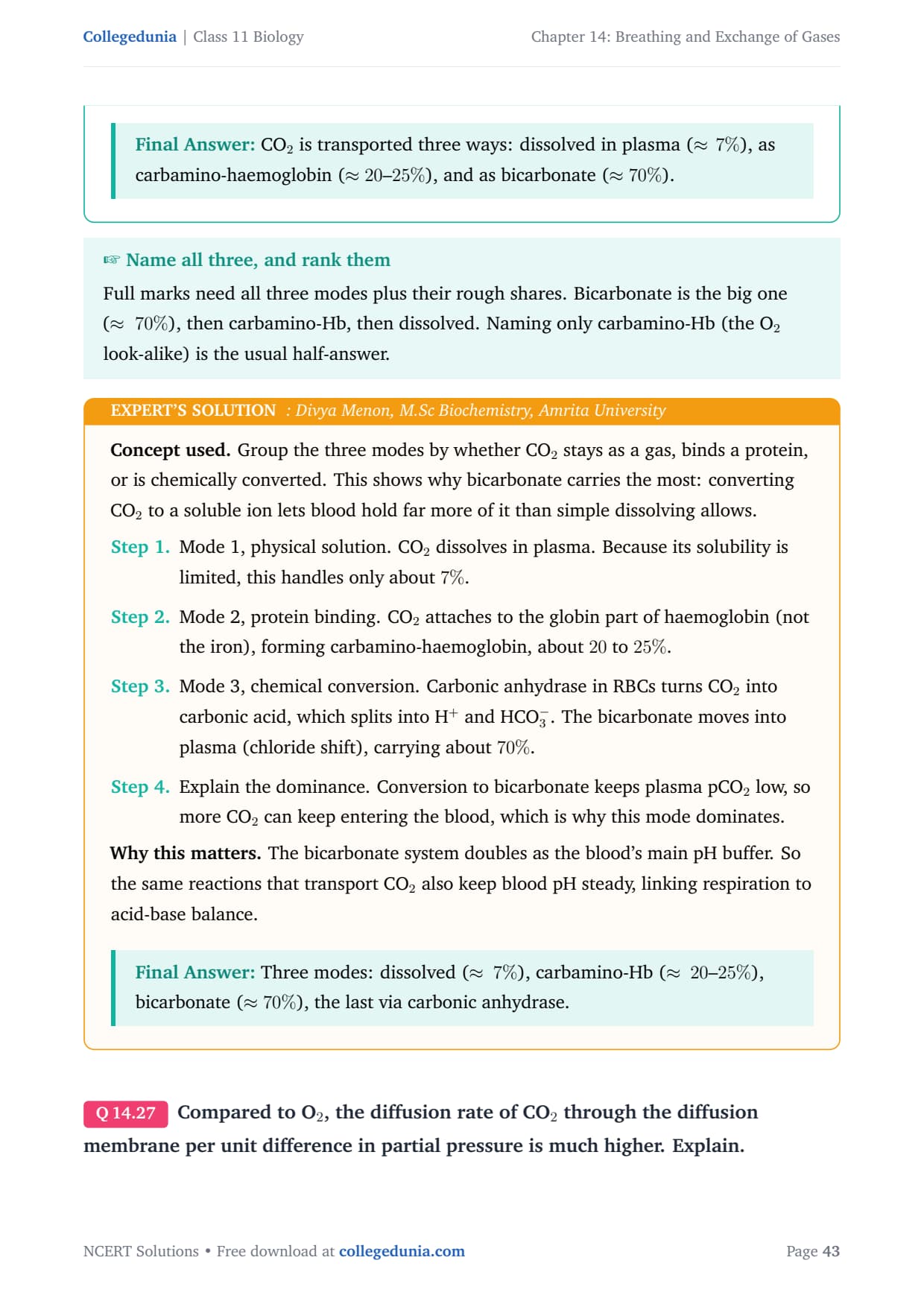
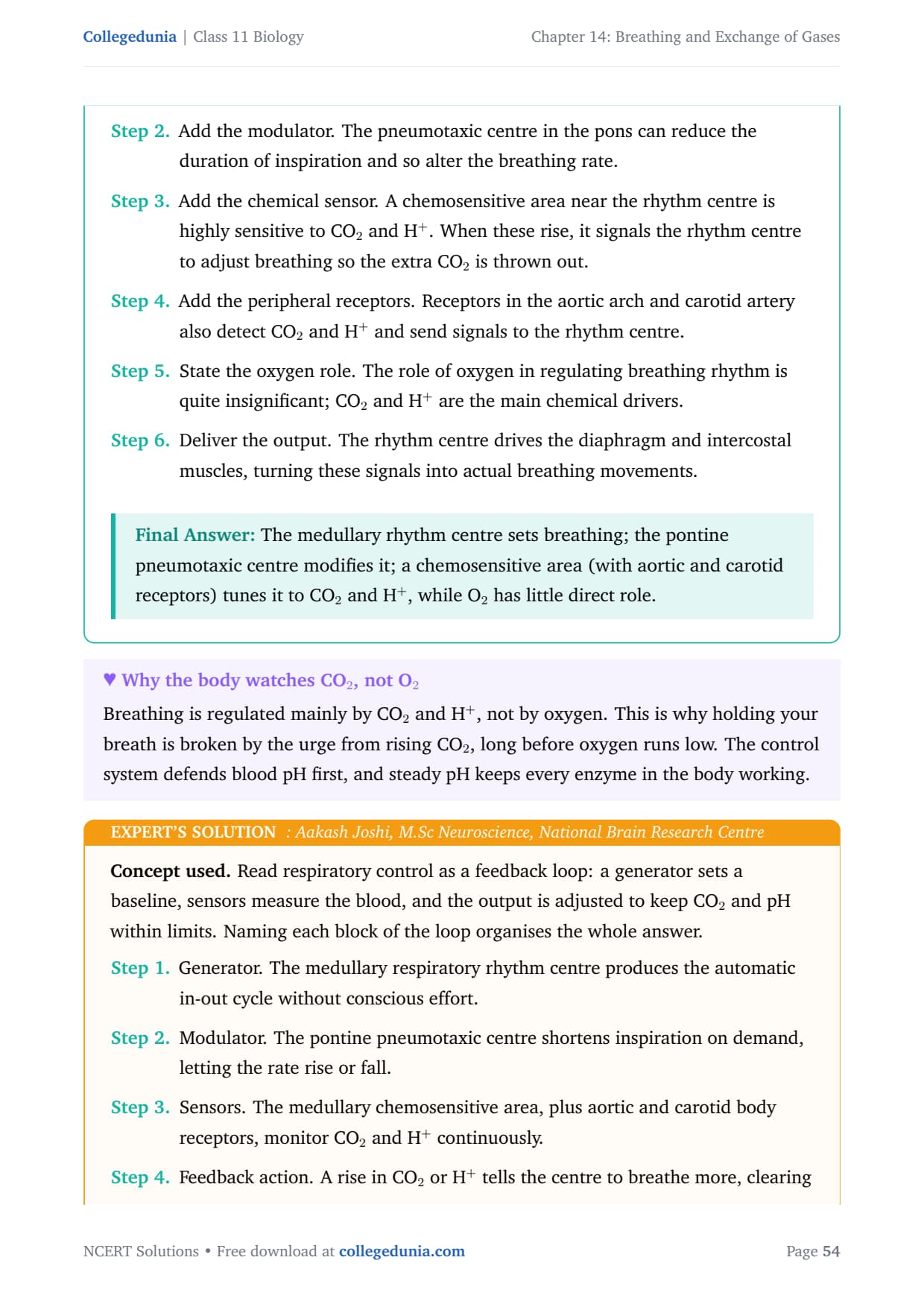
- Transport and regulation: the oxygen haemoglobin curve, bicarbonate transport, the respiratory centre, and disorders such as emphysema and asthma
Question Types in the Breathing and Exchange of Gases NCERT Exemplar
This chapter leans harder on MCQs than most Class 11 Biology Exemplar chapters. Nearly half the set is single correct options, and several turn on one word. The three Long Answer questions carry the diagrams.
| Question Type | Count | What It Tests |
|---|---|---|
| MCQ (single correct) | 15 | Precise reading of pressure, volume and curve statements |
| VSA (Very Short Answer) | 10 | One-line facts such as the role of pleural fluid and the 5 mL O2 figure |
| SA (Short Answer) | 4 | Explaining a mechanism in three or four steps |
| LA (Long Answer) | 3 | The full breathing mechanism with labelled sketches |
Printing Errors in the Exemplar Key for This Chapter
Three questions in this chapter do not match their own answer key, and a student who trusts the key blindly will learn a wrong fact. Each is flagged in the PDF at the question itself.
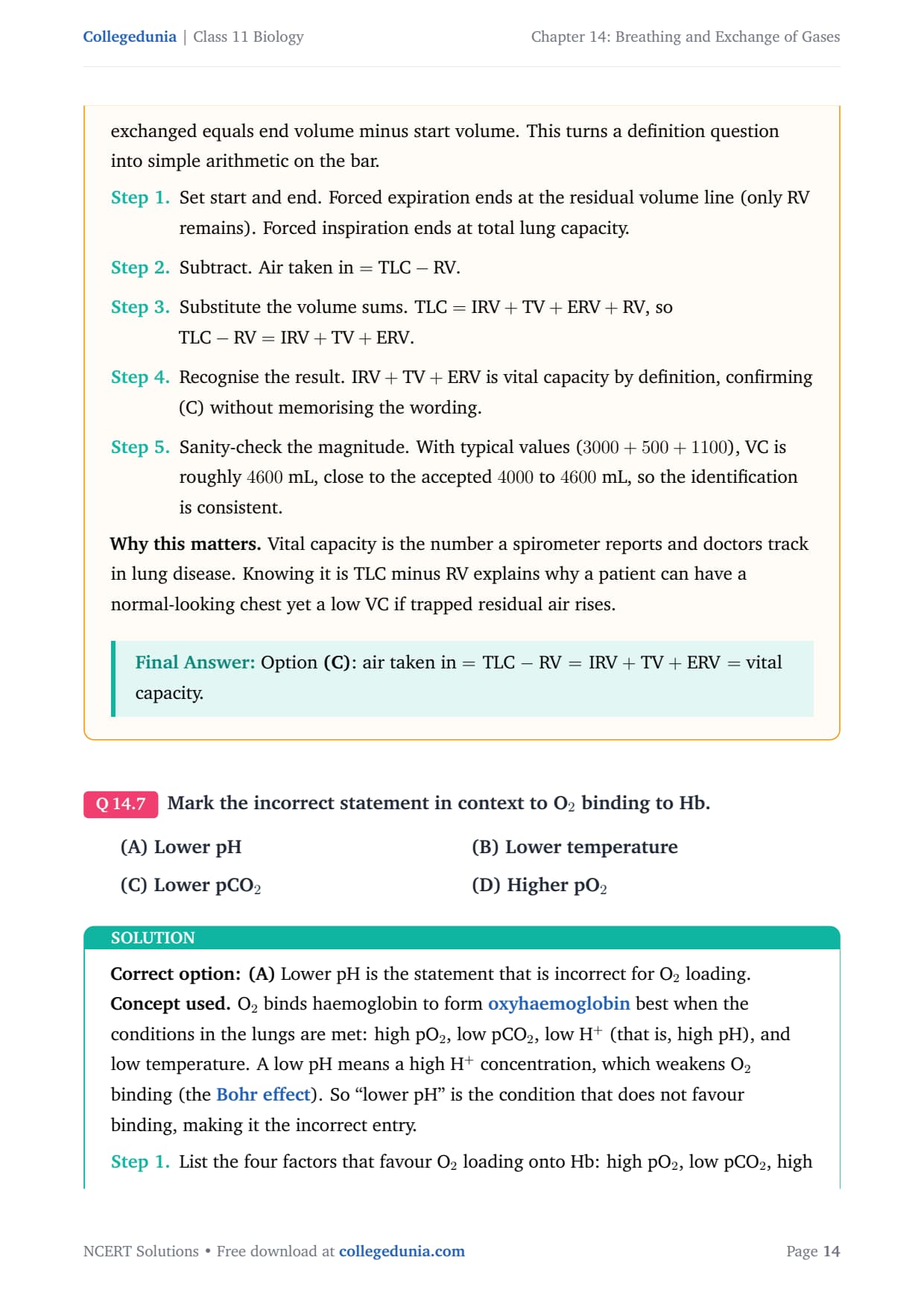
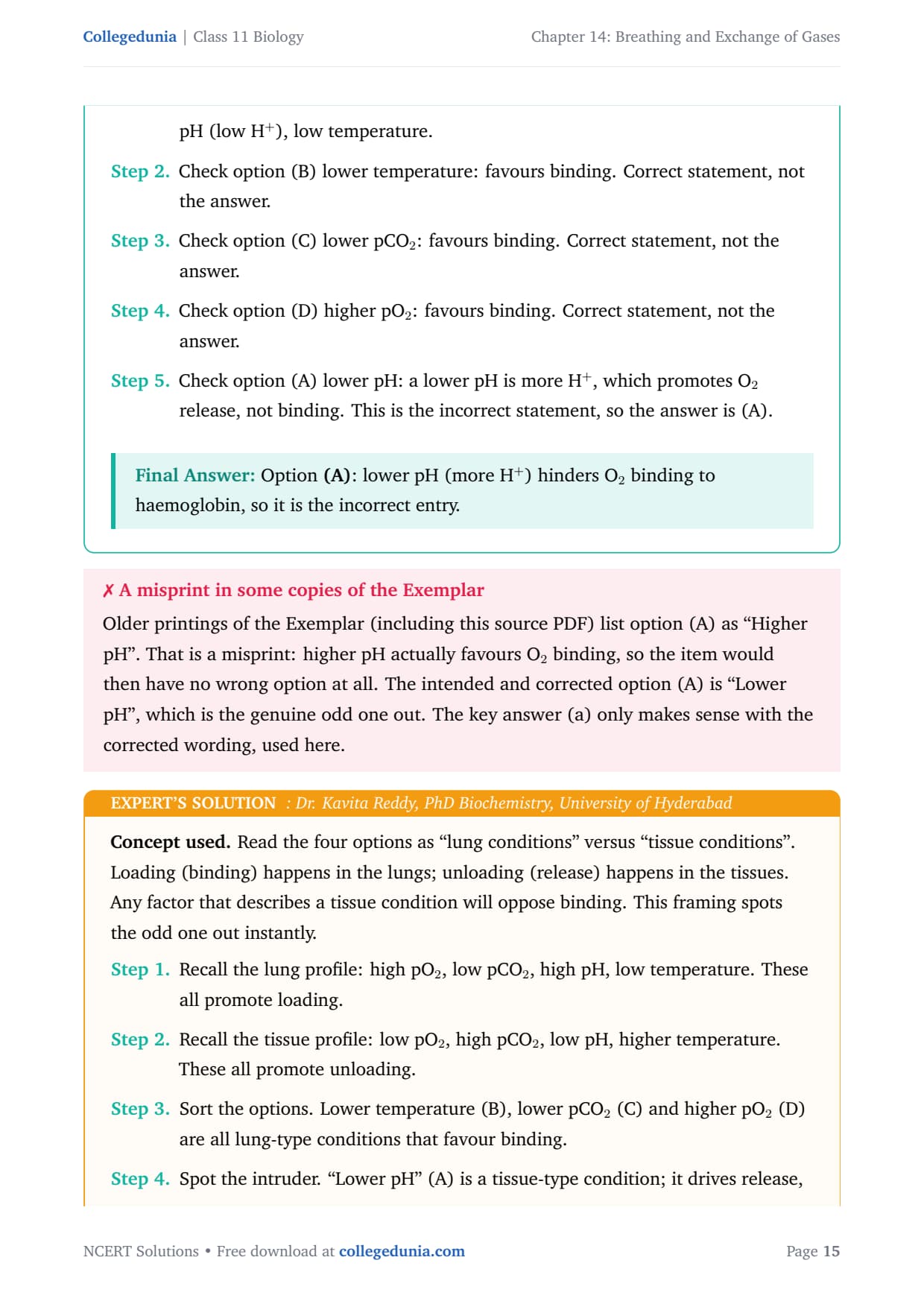
- MCQ 7, a misprinted option: the source book prints option (a) as "Higher pH". Higher pH actually favours oxygen binding, so with that wording no option is wrong at all. The corrected option (a) reads "Lower pH", which is the genuine odd one out. The key answer (a) only makes sense once the wording is fixed.
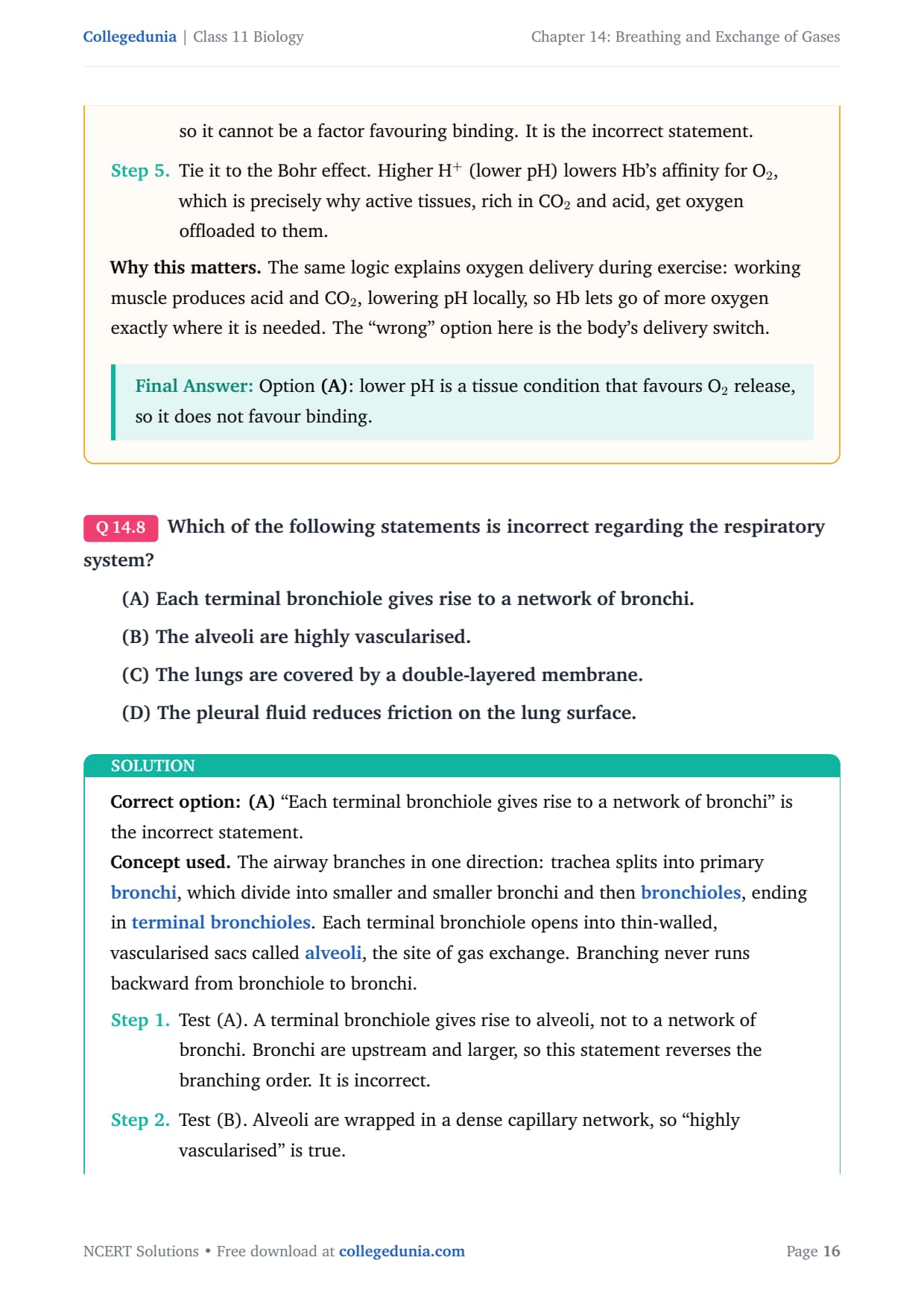
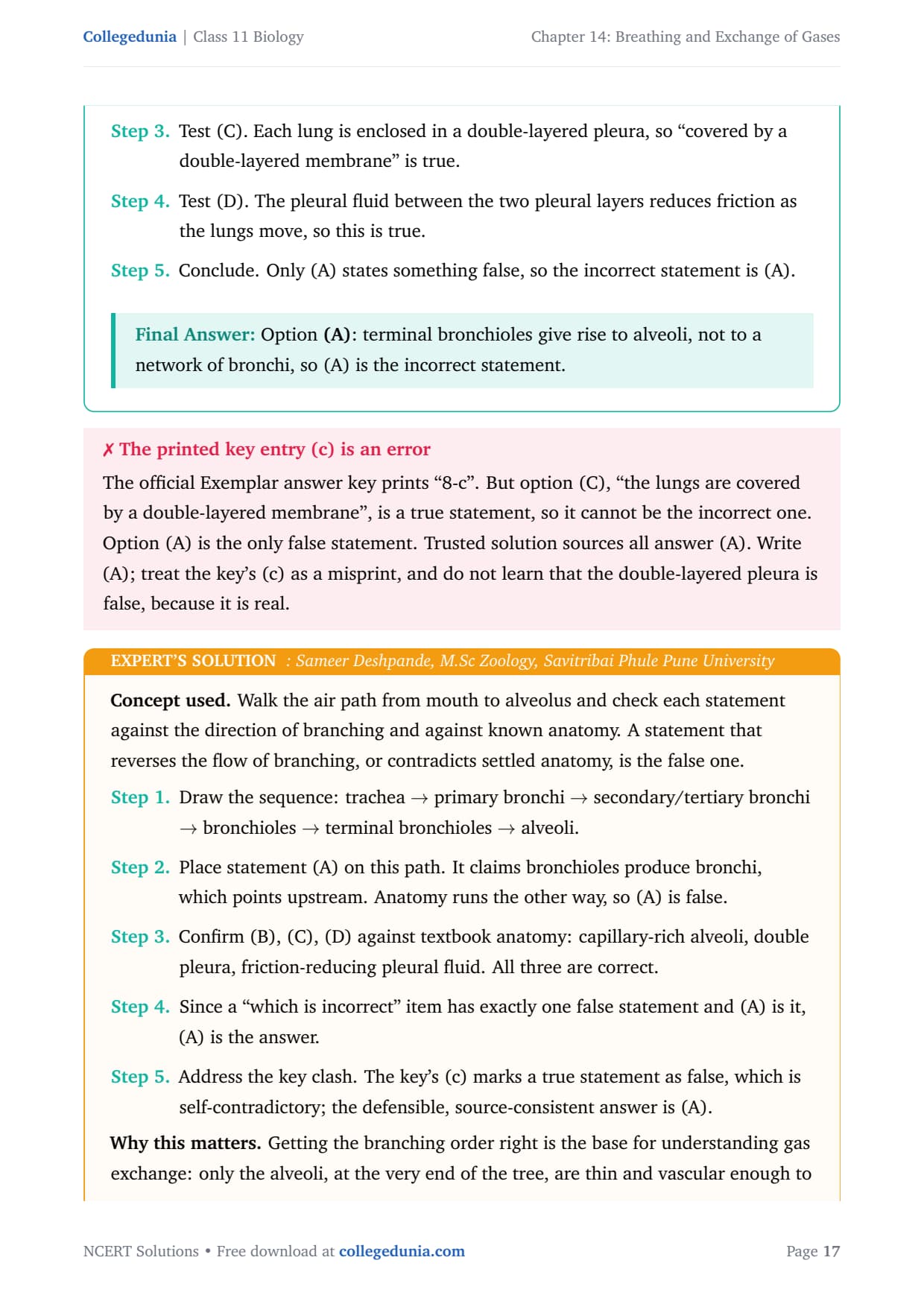
- MCQ 8, a wrong key entry: the key prints "8-c", but option (c), that the lungs are covered by a double-layered membrane, is a true statement. The false statement is (a), that a terminal bronchiole gives rise to a network of bronchi. It gives rise to alveoli. Write (a).
- MCQ 2, a flawed item: you must mark the wrong entry among humidifying, warming, gas exchange and cleaning the air. The key marks cleaning, yet nasal hairs and mucus do clean the air. All four are real functions. Write the key's answer, but do not learn that the tract fails to clean air.
Answer the key to score, then correct the biology in your notes. That split is the safest habit for this chapter.
Why the Printed Exemplar Calls This Chapter 17
Students often open the Exemplar and think they have the wrong chapter. The book is the older 22 chapter edition, where this content is printed as "Chapter 17: Breathing and Exchange of Gases". Every question and figure inside it is numbered 17.x.
The current textbook drops the old Chapter 16, Digestion and Absorption, so this chapter moves up to 14. The content is identical and only the printed number differs. Both answer keys also index it under Chapter 17, so do not go looking for a Chapter 14 block that does not exist.
Common Mistakes Students Make in Breathing and Exchange of Gases
Four errors account for most lost marks here, and each is tied to a real Exemplar question.
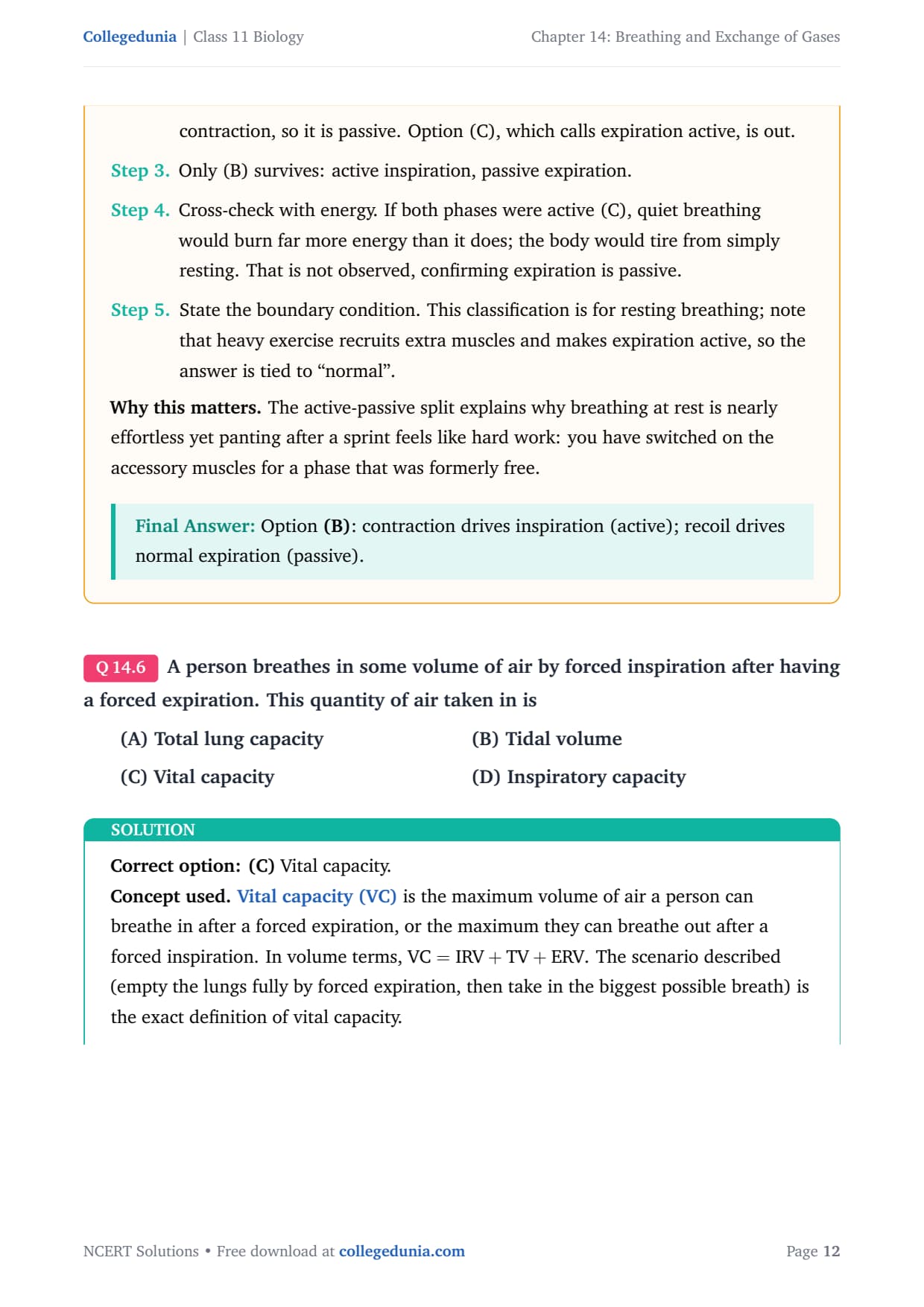
- Vital capacity against total lung capacity: vital capacity leaves out residual volume. Total lung capacity includes it. An MCQ turns on exactly this gap.
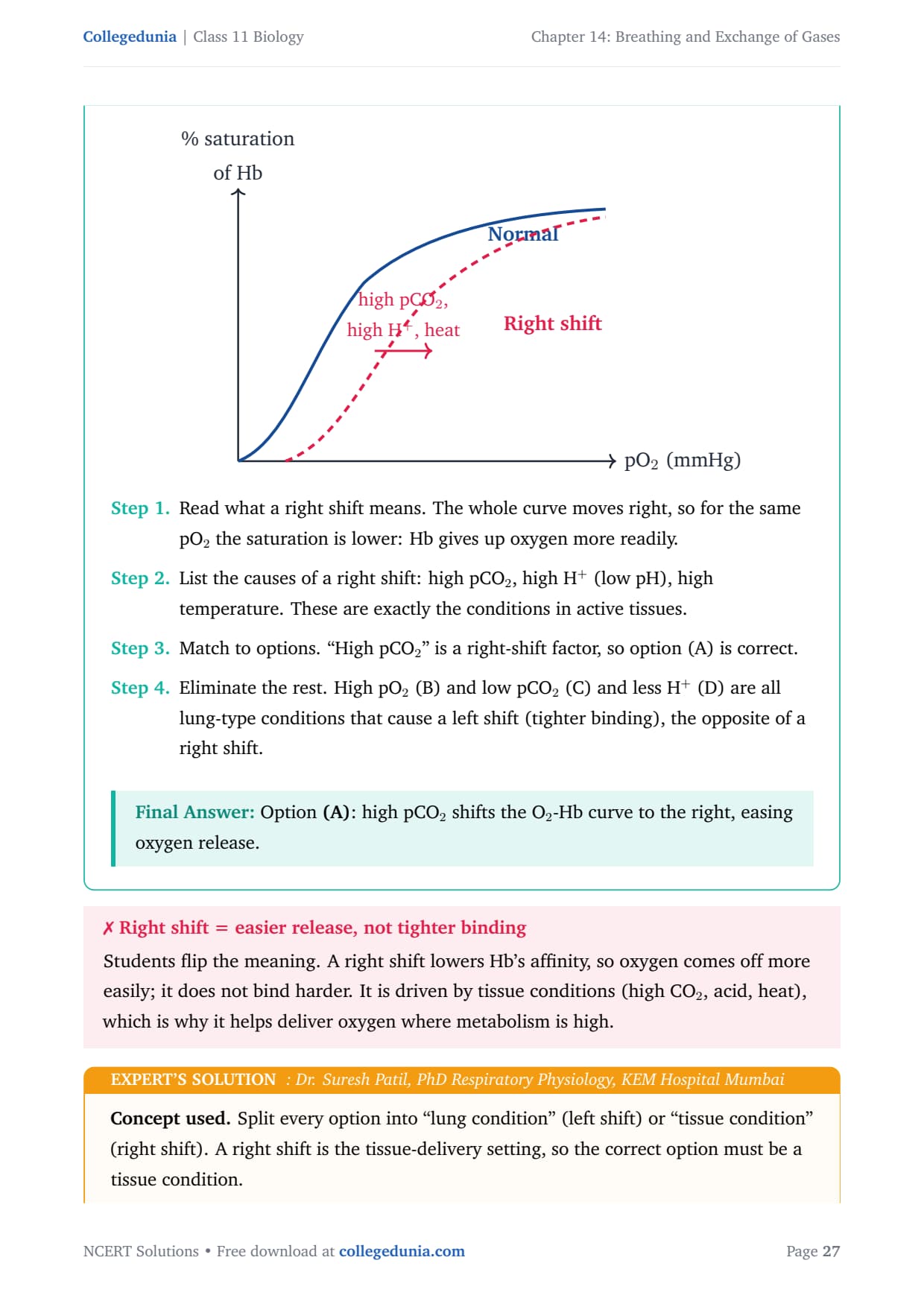
- Right shift of the curve: high pCO2, high H+ and high temperature shift the curve right, which means easier release at the tissues, not tighter binding.
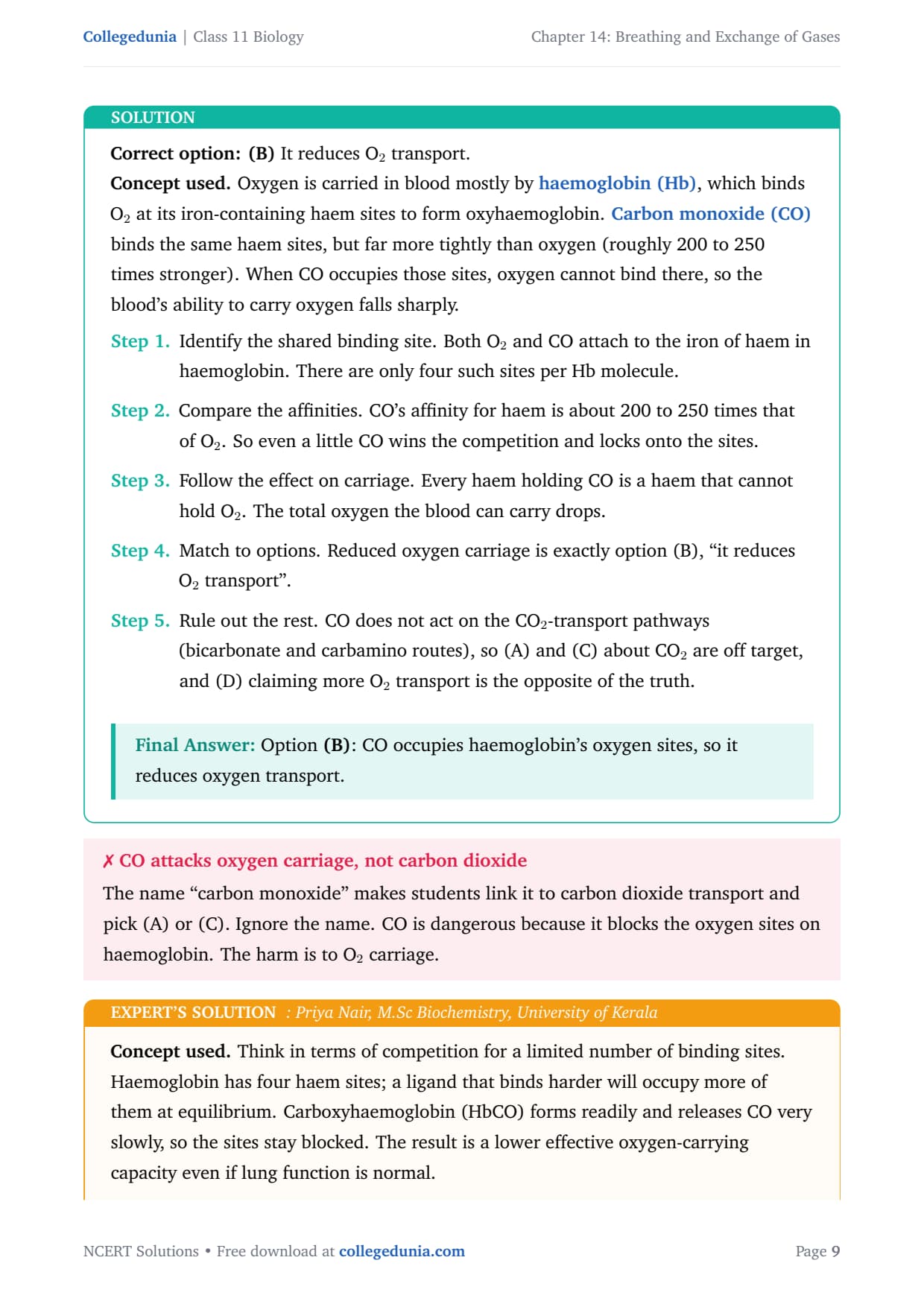
- Carbon monoxide poisoning: it blocks oxygen carriage by binding haemoglobin far more strongly than oxygen, and does not attack carbon dioxide transport.
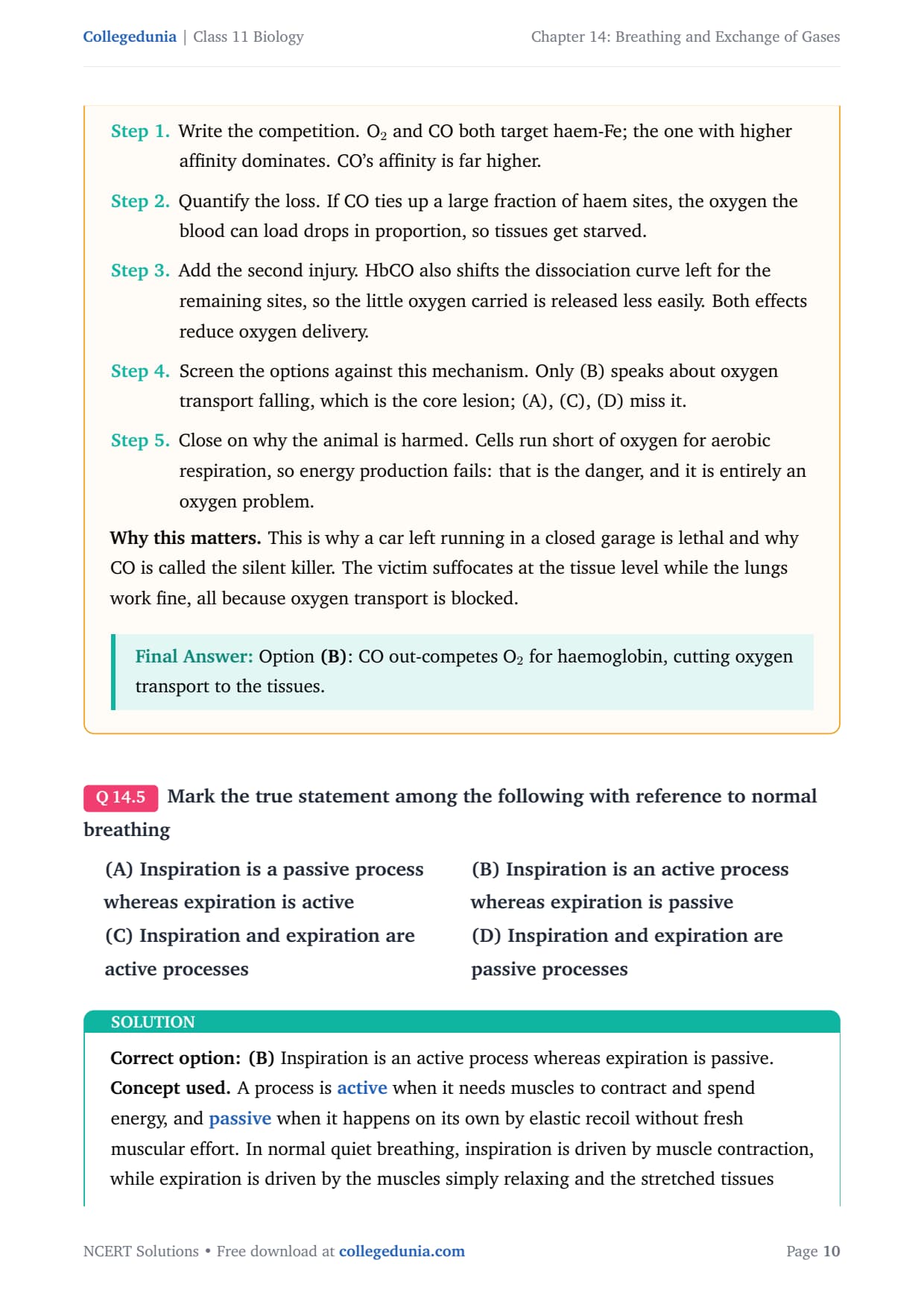
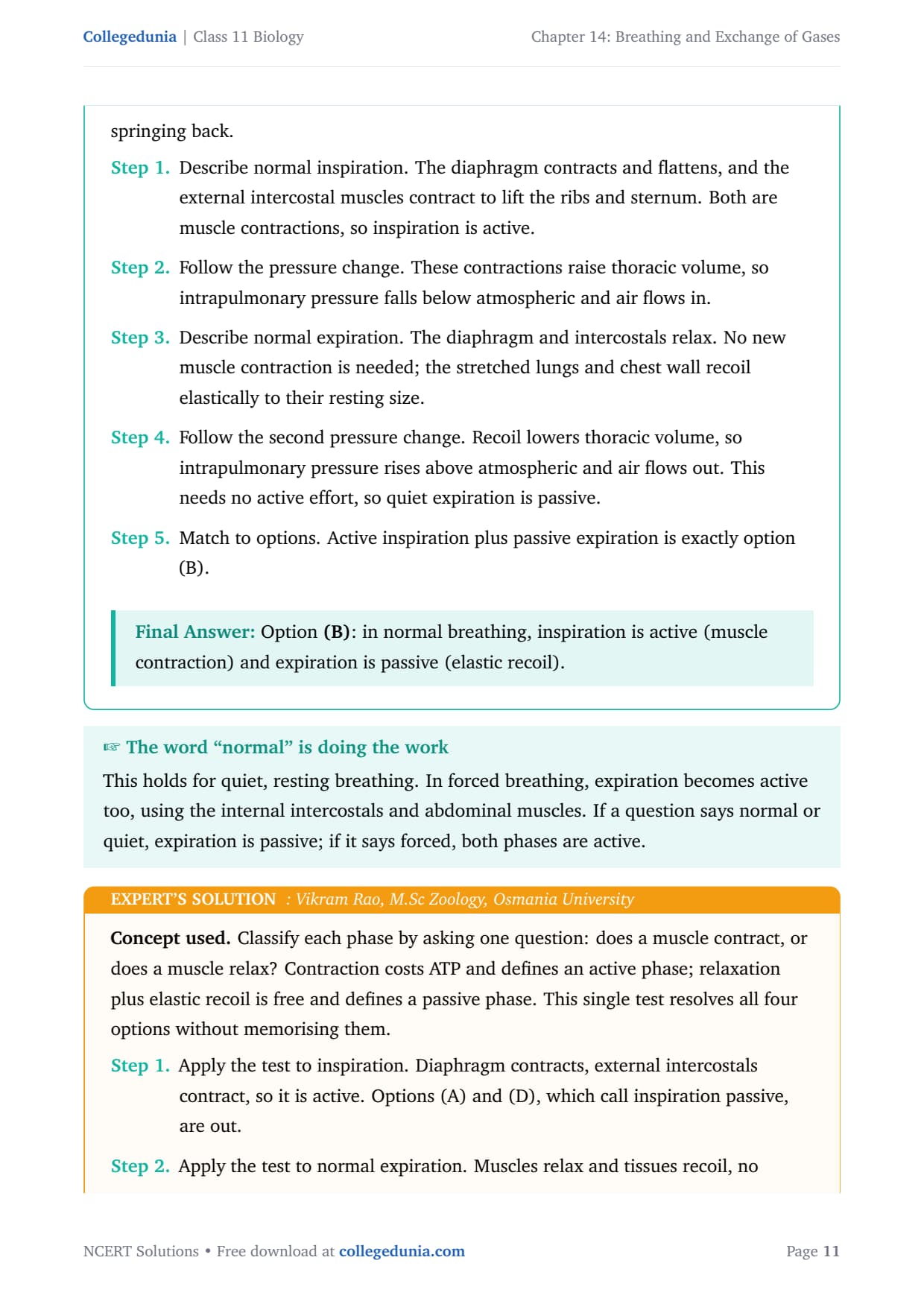
- Expiration is passive: in quiet breathing the muscles relax and elastic recoil does the work. Only forced expiration is active.
How to Use These NCERT Exemplar Solutions for Boards, NEET and CUET
Attempt each question before opening the solution. This chapter punishes vague wording, so write a full sentence first, then compare it with the model answer.
- Boards: the three Long Answer questions match the 5 mark board pattern, especially the labelled breathing mechanism
- NEET: work all 15 MCQs first, since NEET repeats the dissociation curve and gas transport at that level
- CUET: the Very Short Answer set gives the exact single-fact recall the domain paper favours
Student Feedback
Students using Collegedunia's Class 11 Biology Exemplar Solutions told us the oxygen dissociation curve was the hardest part of this chapter, well ahead of the volumes and capacities. Around 7 in 10 said having the key errors flagged at the question saved them from memorising a wrong fact.
Other Resources for Class 11 Biology Breathing and Exchange of Gases
Collegedunia has the full study set for this chapter. Read the Notes first, then attempt the Exemplar once the curve is steady.
Also Check:
- NCERT Solutions for Class 11 Biology Chapter 14
- Class 11 Biology Chapter 14 Notes
- Class 11 Biology Chapter 14 NCERT Book PDF
- Class 11 Biology Chapter 14 Exemplar Questions with Solutions
NCERT Exemplar Solutions for Other Class 11 Biology Chapters
Each chapter below has the same step-by-step treatment and a free PDF.
Breathing and Exchange of Gases Class 11 NCERT Exemplar Solutions FAQs
Ques. How many questions are there in the Class 11 Biology Breathing and Exchange of Gases Exemplar?
Ans. Chapter 14 has 32 questions. They are split into 15 MCQ, 10 Very Short Answer, 4 Short Answer and 3 Long Answer questions. All 32 are solved in the free 55-page PDF on this page.
Ques. Why is this chapter printed as Chapter 17 in the NCERT Exemplar book?
Ans. The Exemplar is the older 22 chapter edition, where the same content appears as Chapter 17 and every question and figure is numbered 17.x. The current textbook drops the old Chapter 16, Digestion and Absorption, so this chapter moves up to 14. Both official answer keys still index it under Chapter 17.
Ques. Is the answer to MCQ 8 in this chapter correct in the official key?
Ans. No. The official key prints "8-c", but option (c), that the lungs are covered by a double-layered membrane, is a true statement. The incorrect statement is (a), that a terminal bronchiole gives rise to a network of bronchi. Terminal bronchioles give rise to alveoli, so (a) is the right answer.
Ques. What does a right shift of the oxygen dissociation curve mean?
Ans. A right shift means haemoglobin releases oxygen more easily. High pCO2, high H+ concentration and high temperature all cause it, and all three describe conditions inside active tissues. Students often reverse this and read a right shift as tighter binding, which loses the mark in both boards and NEET.
Ques. Is the NCERT Exemplar enough for NEET questions from this chapter?
Ans. For Breathing and Exchange of Gases it covers the ground well. NEET asks two to three questions a year on the dissociation curve, gas transport and respiratory disorders, and these sit at the level of the 15 Exemplar MCQs. Work all of them and the 10 Very Short Answers before moving to a coaching module.



Comments