




These breathing and exchange of gases class 11 notes pull together every organ, volume, gradient, and regulation idea that the CBSE Boards, NEET and CUET papers actually test in 2026-27. Revise the whole chapter fast, with the human respiratory pathway, the mechanism of inspiration and expiration, the partial-pressure gradients that drive gas exchange, and the transport of oxygen and carbon dioxide in one place.
This is one of the first human physiology chapters of Class 11 Biology, and the vocabulary of diffusion, partial pressure, and transport you learn here returns in Body Fluids and Circulation and Excretory Products.
- CBSE Weightage: 4 to 6 marks, usually one short answer on respiratory volumes or the diffusion membrane plus one question on gas transport or the mechanism of breathing.
- Topics covered: respiratory organs across animals, the human respiratory system, mechanism of breathing, respiratory volumes and capacities, exchange of gases by partial pressure, transport of O2 and CO2, neural regulation of respiration, and respiratory disorders.
- Key rules: breathing is not cellular respiration, only the alveoli exchange gas, inspiration is active while quiet expiration is passive, and carbon dioxide is carried mainly as bicarbonate.
These breathing and exchange of gases class 11 notes are curated by subject experts, based on the 2026-27 NCERT textbook, and checked against the last five years of CBSE Board and NEET papers.
Topic-by-Topic Summary of Breathing and Exchange of Gases
The chapter follows a single molecule of oxygen from the air outside to a working cell, and a molecule of carbon dioxide back the other way. It starts with the organs that move air, then the mechanism that pumps it, then the physics of diffusion, and ends with how the blood carries and unloads each gas and how the brain keeps the rhythm steady. Here is the quick map of what each topic gives you before you revise the detail.
- Respiratory organs: how different animals exchange gas, and the full human air passage from nostrils to alveoli.
- Mechanism of breathing: inspiration and expiration driven by pressure differences, plus the four respiratory volumes and the capacities built from them.
- Exchange of gases: partial pressure gradients, the thin three-layered diffusion membrane, and why the direction is always favourable.
- Transport of gases: oxygen on haemoglobin along the sigmoid curve, and carbon dioxide mostly as bicarbonate.
- Regulation and disorders: the medulla rhythm centre that tracks carbon dioxide, and the disorders asthma, emphysema, and occupational lung disease.
Revise the topics in this order, because each one uses the one before it. Master the five steps of respiration and Table 14.1 first, and the transport and regulation sections fall into place around them. These breathing and exchange of gases class 11 notes follow the same sequence as the NCERT textbook.
The Human Respiratory System and Passage of Air
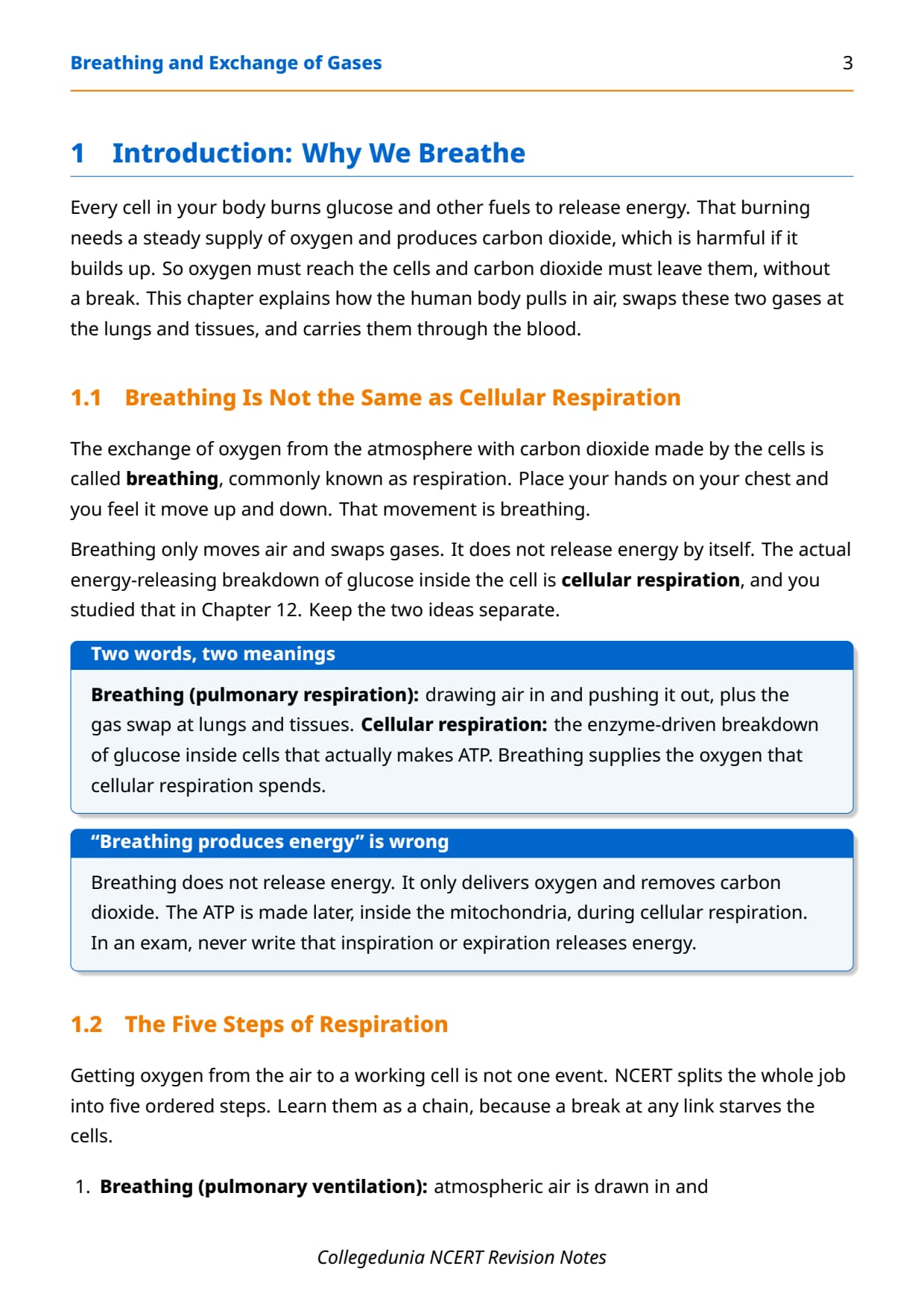
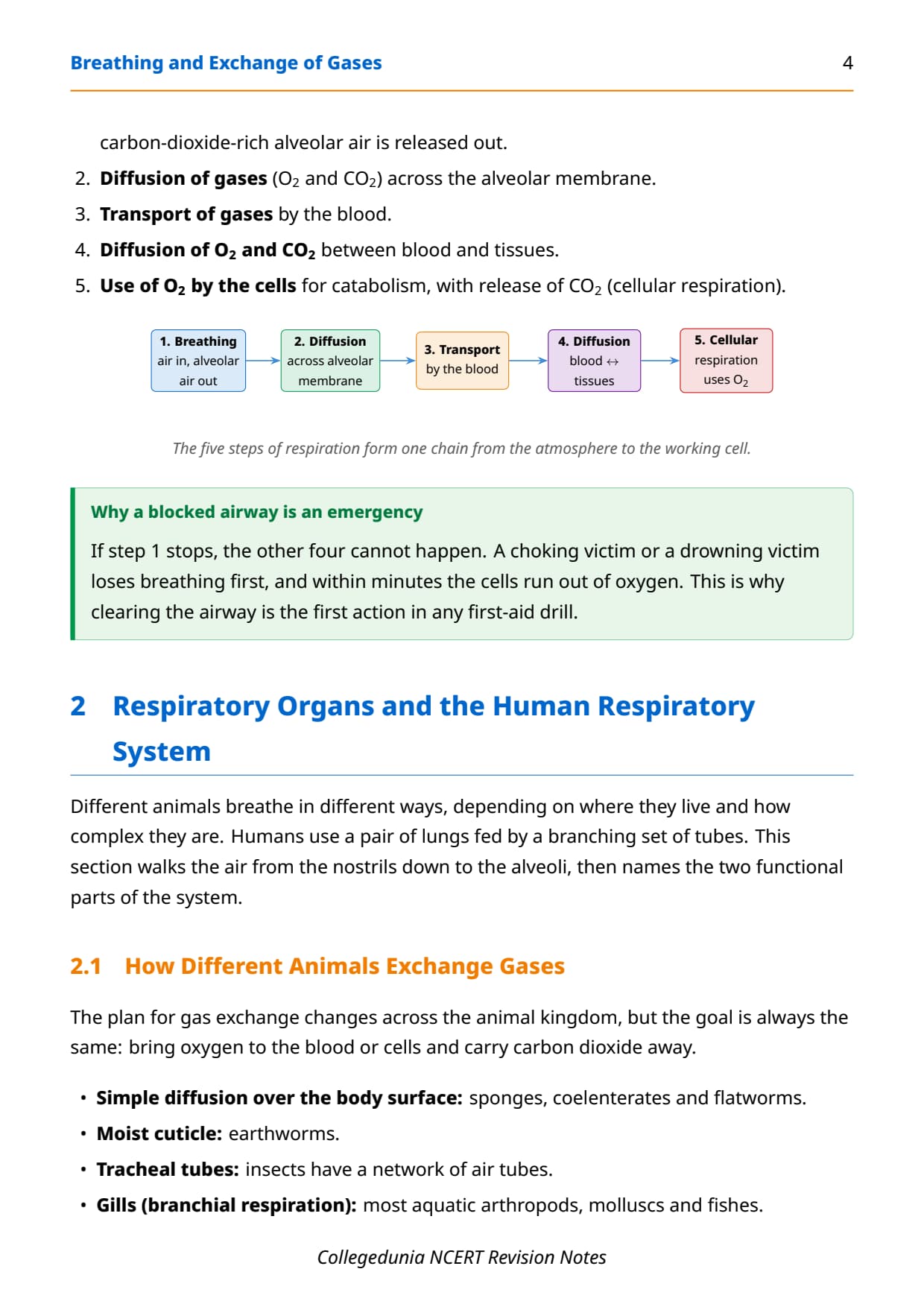
Every cell burns fuel and needs a steady supply of oxygen while it dumps carbon dioxide, so the exchange of oxygen from the atmosphere with the carbon dioxide made by cells is called breathing, commonly known as respiration. Breathing only moves air and swaps gases; it does not release energy, because the actual energy-releasing breakdown of glucose is cellular respiration inside the mitochondria. NCERT splits the whole job into five ordered steps, that is, breathing (pulmonary ventilation), diffusion of gases across the alveolar membrane, transport of gases by blood, diffusion between blood and tissues, and use of oxygen by cells. Different animals solve the same problem in different ways depending on where they live.
- Simple diffusion: sponges, coelenterates, and flatworms exchange gas straight across the body surface.
- Moist cuticle: earthworms breathe through the moist skin, and frogs use moist skin in addition to lungs.
- Tracheal tubes: insects pipe air directly to the tissues through a network of air tubes, so this is the site asked in Exercise 10.
- Gills: most aquatic arthropods, molluscs, and fishes use branchial respiration.
- Lungs: terrestrial amphibians, reptiles, birds, and mammals use pulmonary respiration.
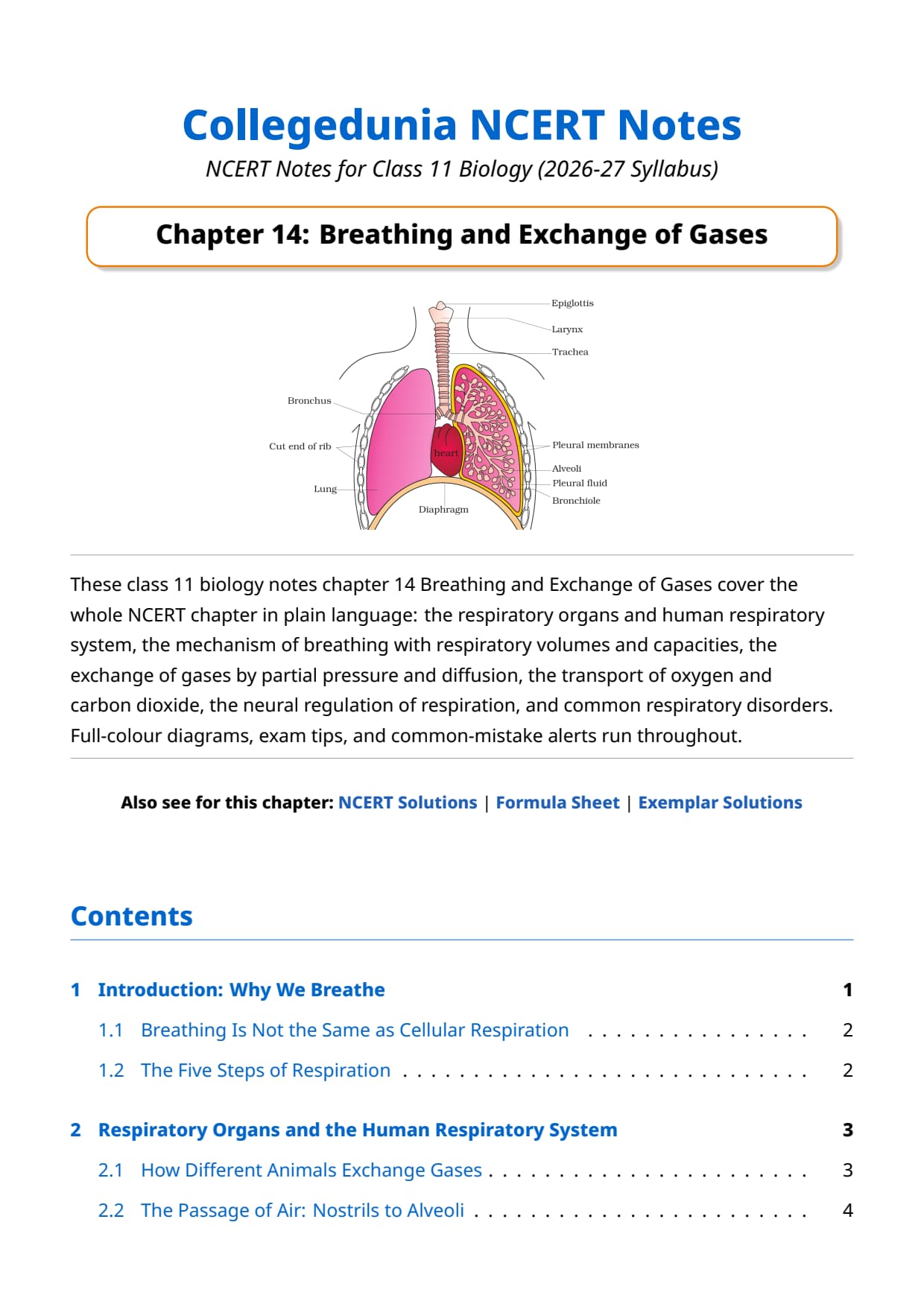
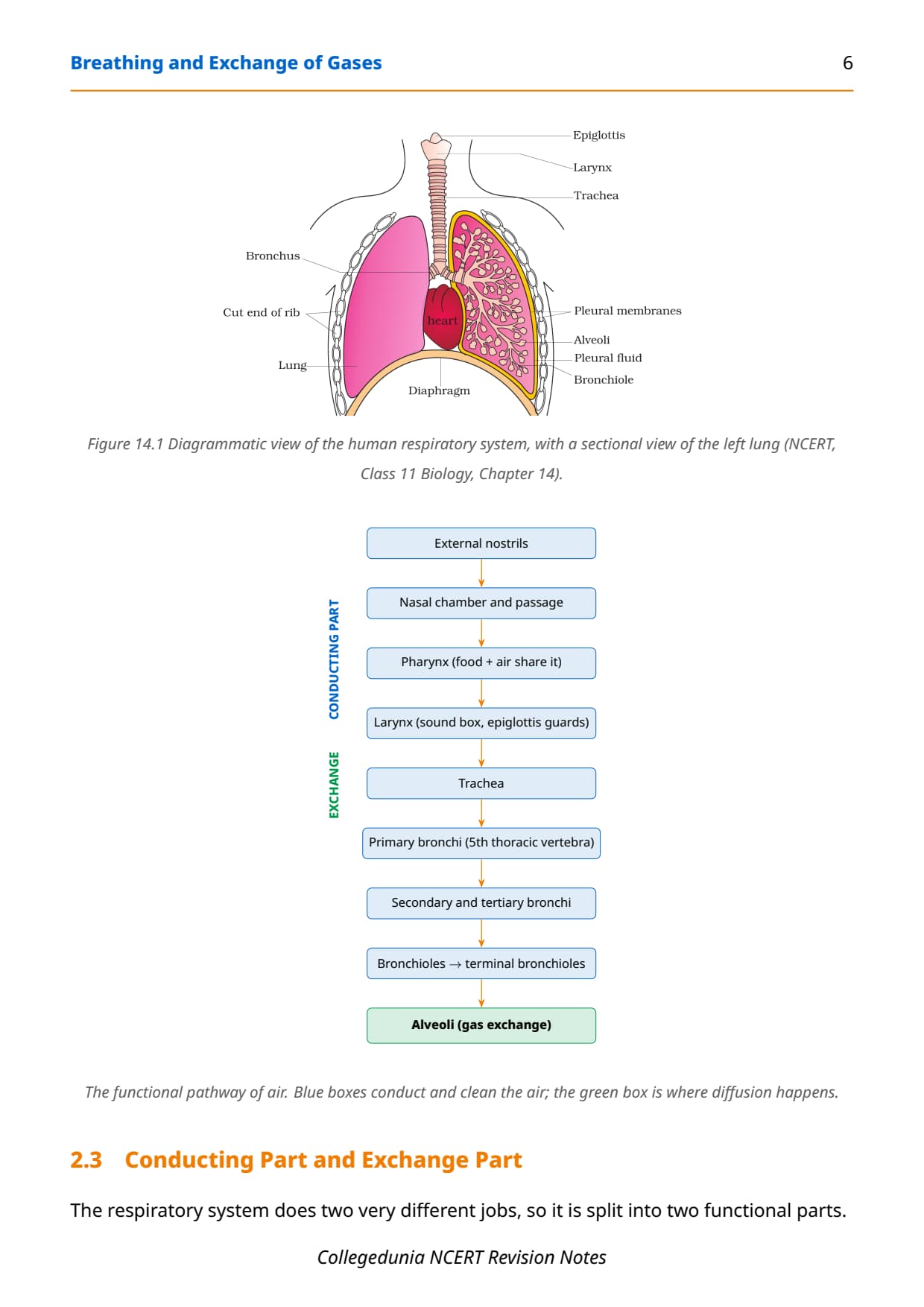
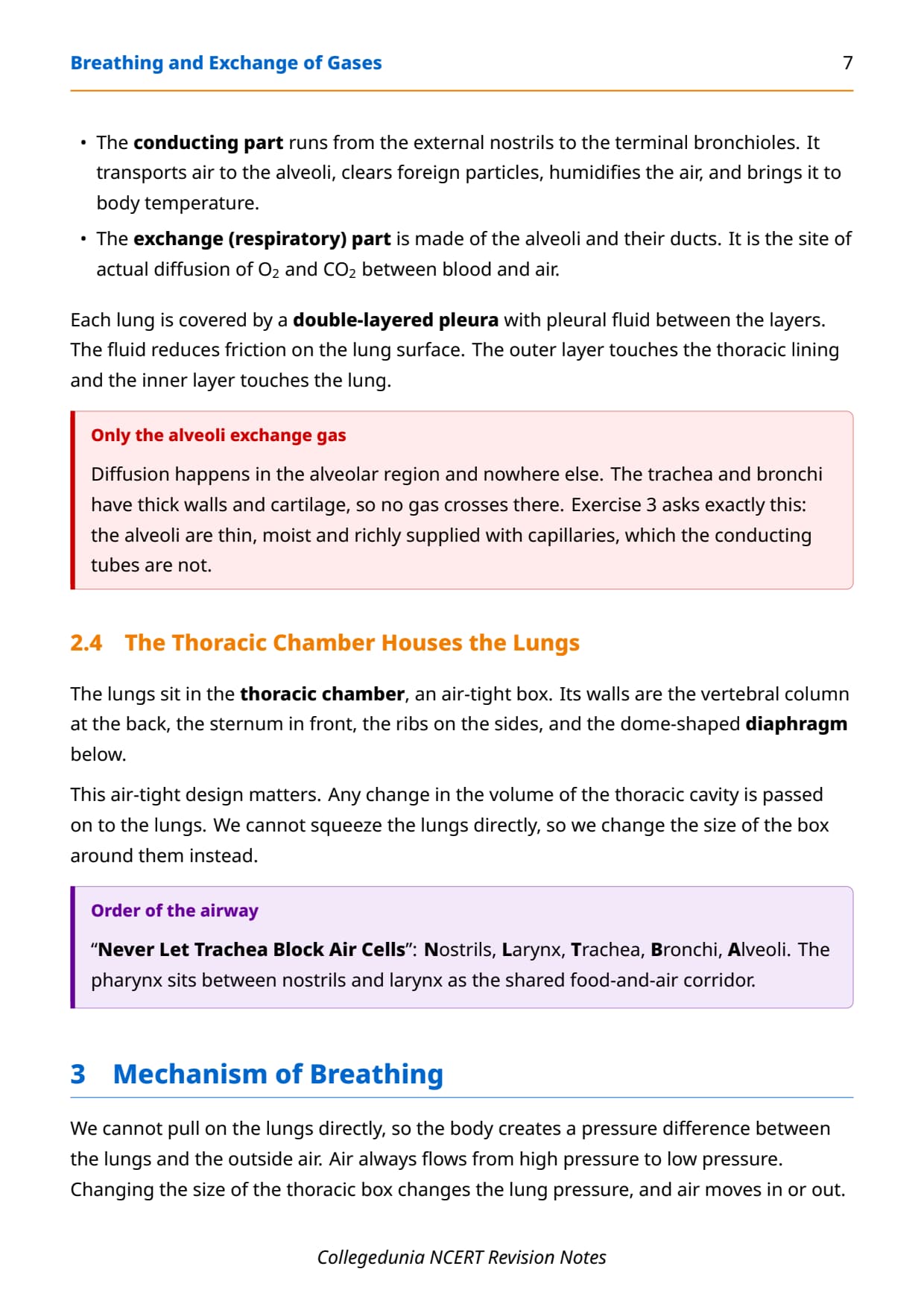
In humans air follows a fixed route: the external nostrils open into the nasal chamber, which leads to the pharynx (a shared food and air passage), then through the larynx (the cartilaginous sound box, guarded by the epiglottis) into the trachea. The trachea divides at the fifth thoracic vertebra into right and left primary bronchi, which branch into secondary and tertiary bronchi and bronchioles, ending in terminal bronchioles that open into the alveoli. The system splits into a conducting part (nostrils to terminal bronchioles) that cleans, warms, and humidifies air, and an exchange part (the alveoli) where diffusion actually happens. Each lung is covered by a double-layered pleura with pleural fluid that reduces friction, and the whole set sits in the air-tight thoracic chamber walled by the vertebral column, sternum, ribs, and the dome-shaped diaphragm.
Mechanism of Breathing and Respiratory Volumes
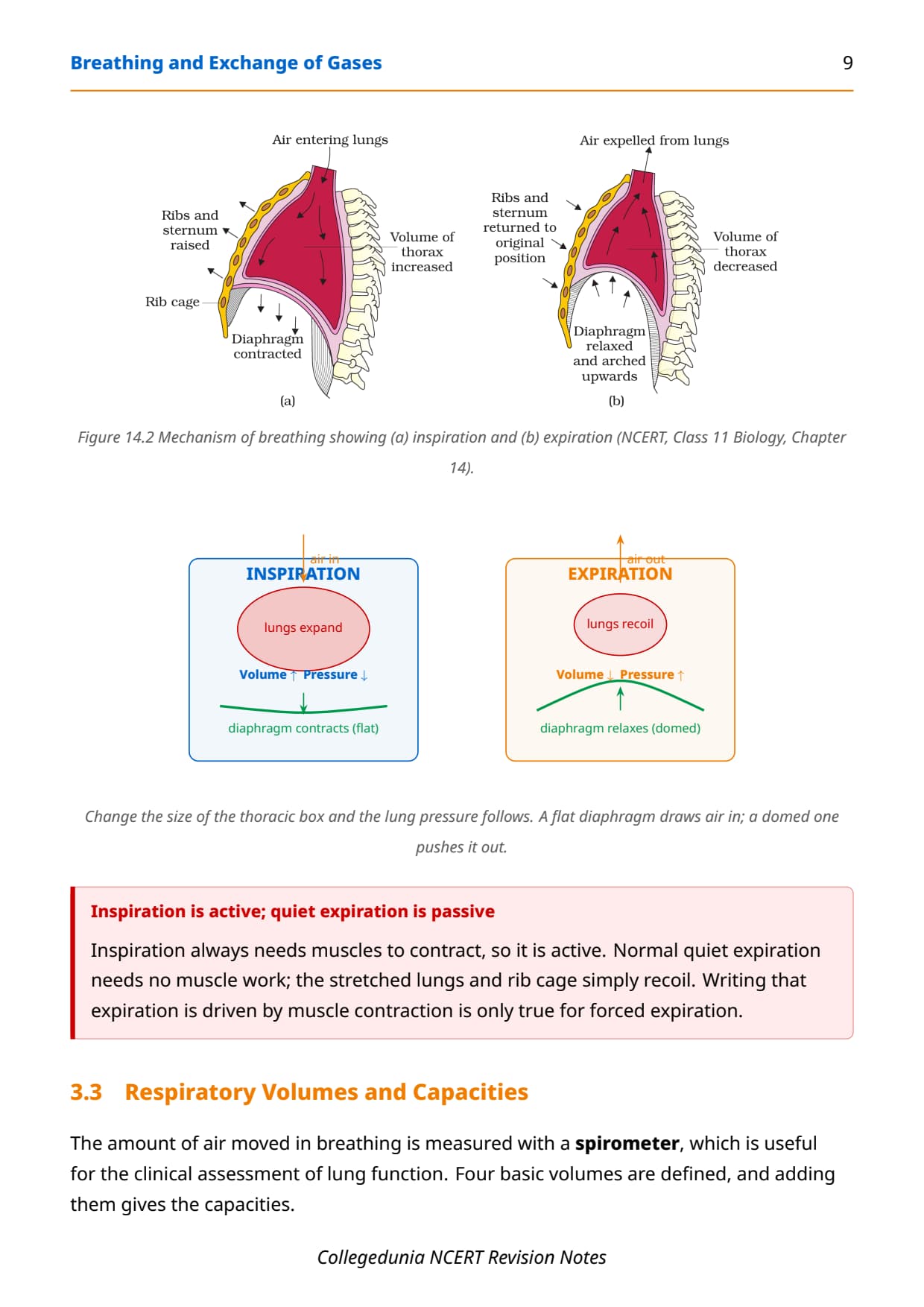
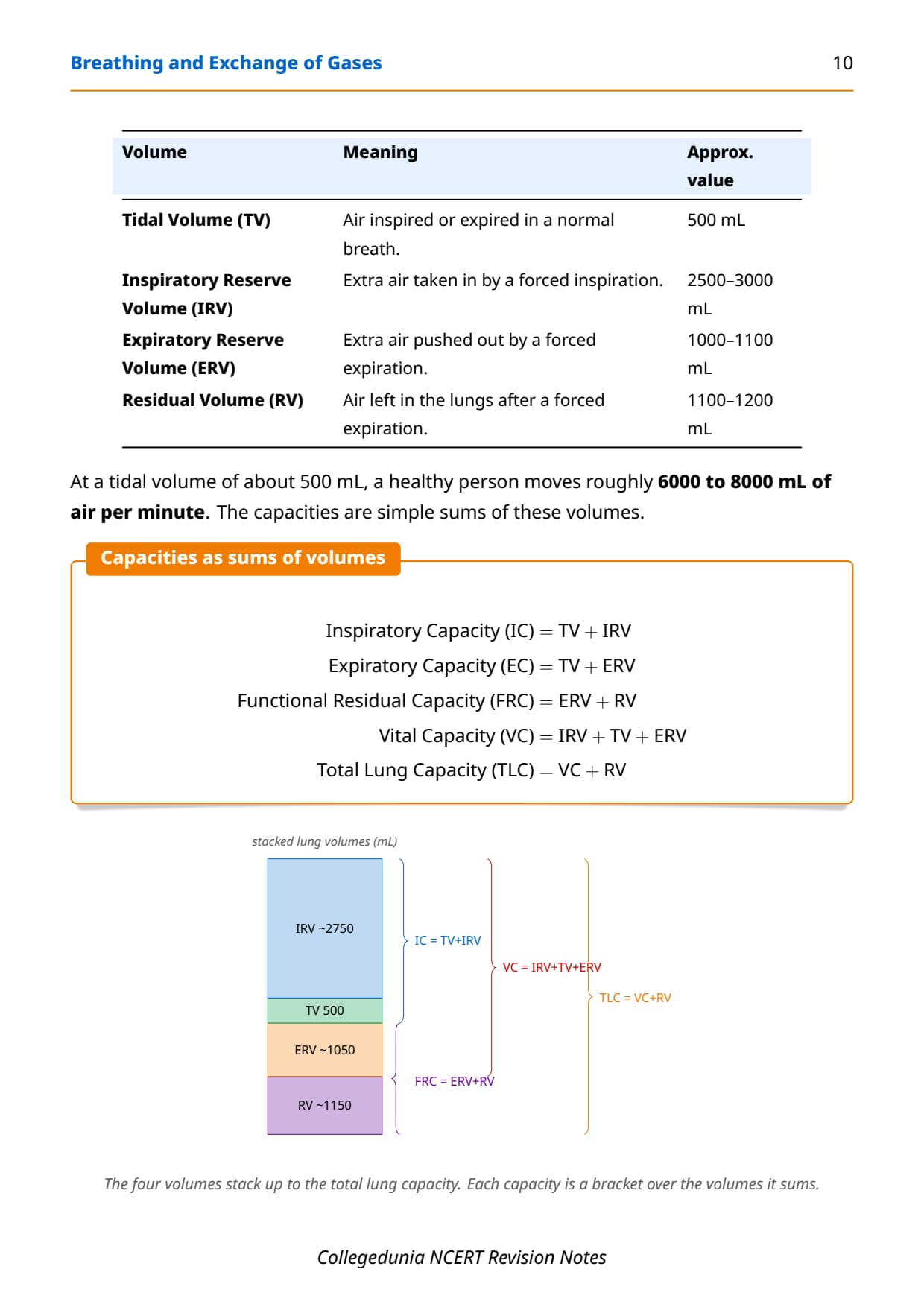
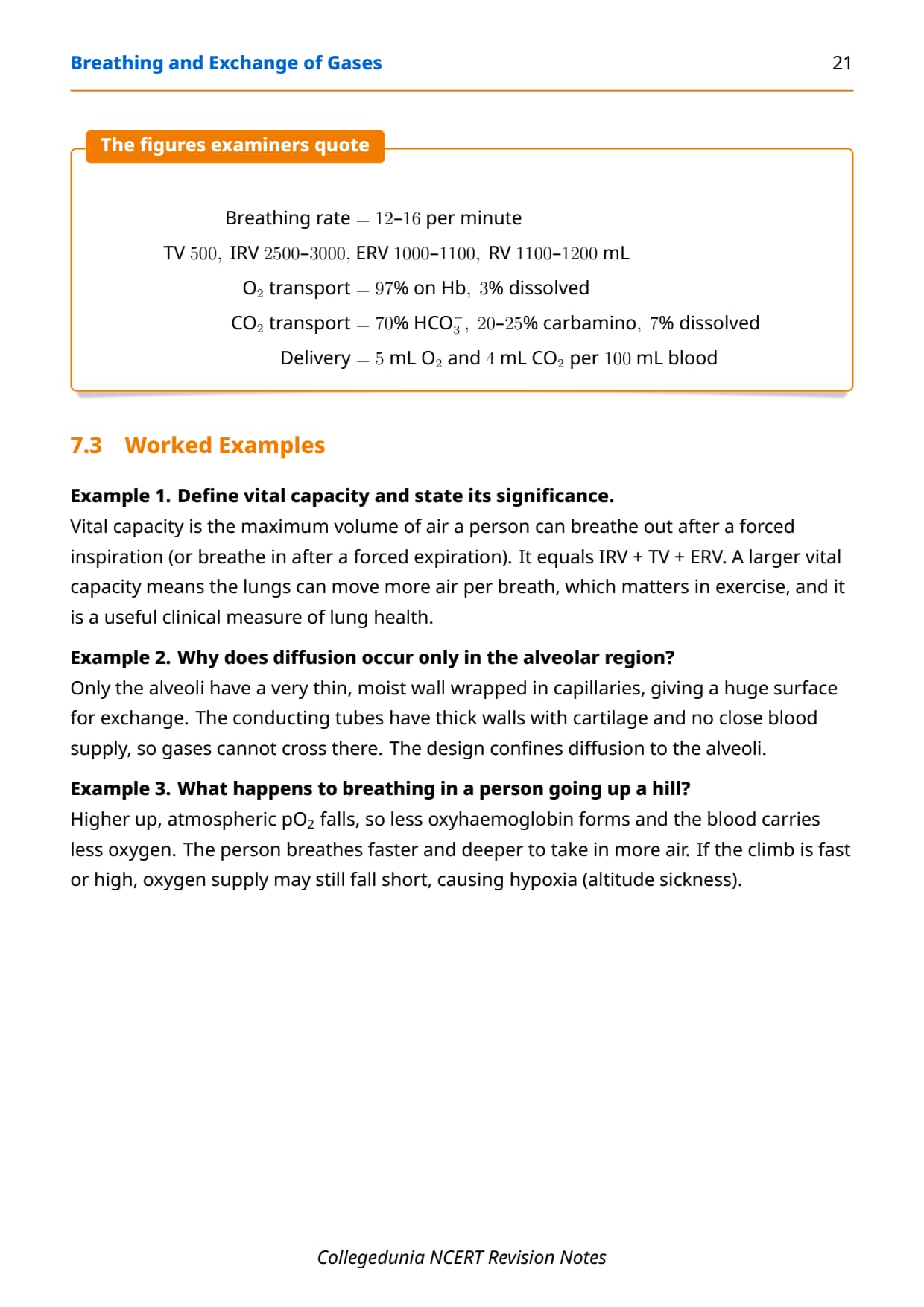
We cannot pull on the lungs directly, so the body creates a pressure difference between the lungs and the outside air, and air always flows from high pressure to low pressure. Inspiration happens when the intra-pulmonary pressure falls below atmospheric pressure: the diaphragm contracts and flattens, the external intercostal muscles lift the ribs and sternum, the thorax enlarges, and outside air rushes in. Expiration happens when the intra-pulmonary pressure rises above atmospheric pressure, and normal quiet expiration is passive, driven by the elastic recoil of the stretched lungs and rib cage. A healthy person breathes about 12 to 16 times a minute, moving roughly 6000 to 8000 mL of air per minute. The volume of air moved is measured with a spirometer, which defines four basic volumes.
| Volume | Meaning | Approx. value |
|---|---|---|
| Tidal Volume (TV) | Air inspired or expired in a normal breath. | 500 mL |
| Inspiratory Reserve Volume (IRV) | Extra air taken in by a forced inspiration. | 2500 to 3000 mL |
| Expiratory Reserve Volume (ERV) | Extra air pushed out by a forced expiration. | 1000 to 1100 mL |
| Residual Volume (RV) | Air left in the lungs after a forced expiration. | 1100 to 1200 mL |
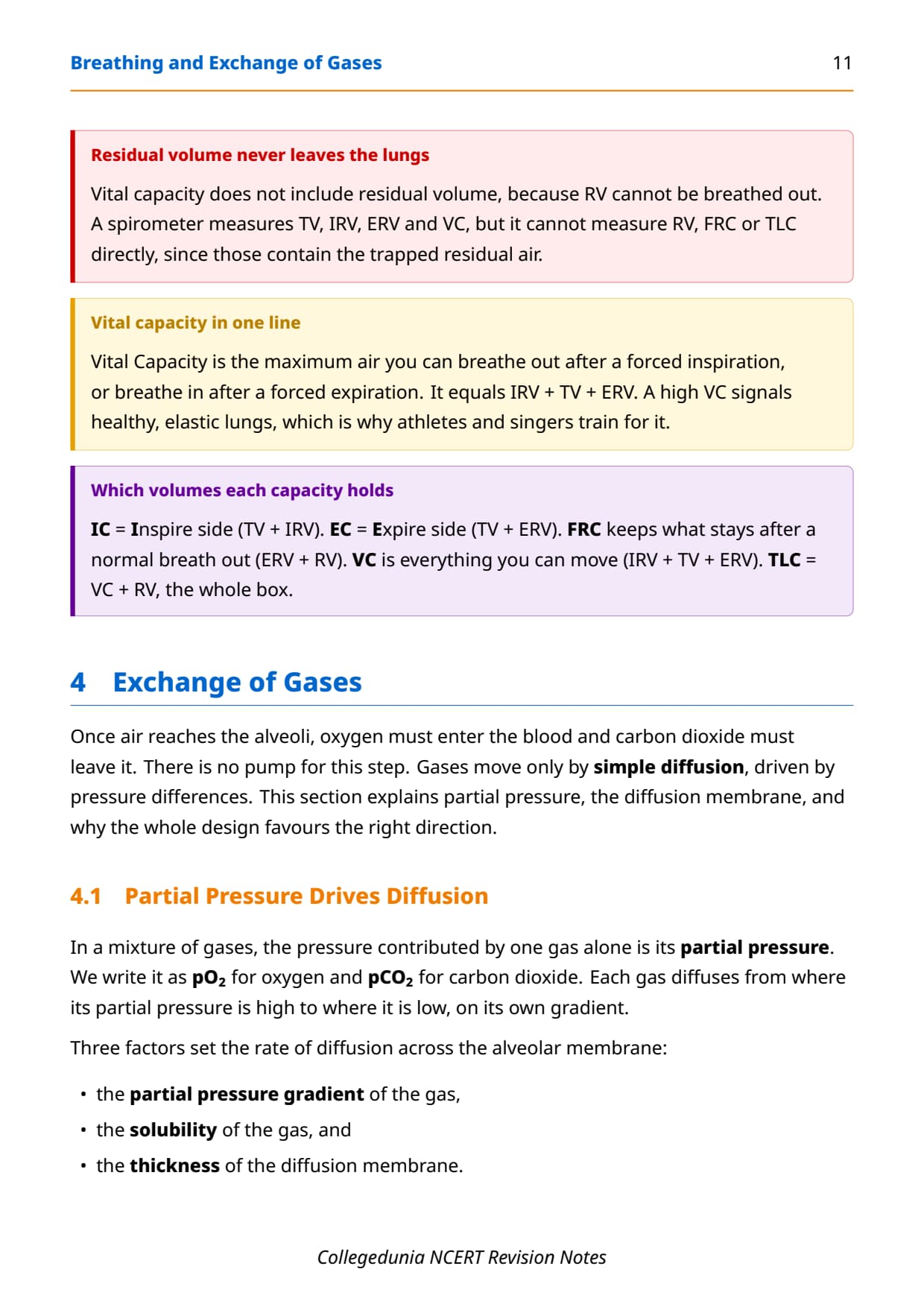
The capacities are simple sums of these volumes: Inspiratory Capacity (IC) = TV + IRV, Expiratory Capacity (EC) = TV + ERV, Functional Residual Capacity (FRC) = ERV + RV, Vital Capacity (VC) = IRV + TV + ERV, and Total Lung Capacity (TLC) = VC + RV. Vital capacity does not include residual volume, because RV cannot be breathed out, and a spirometer cannot measure RV, FRC, or TLC directly since they all contain the trapped residual air. A high vital capacity signals healthy, elastic lungs, which is why athletes and singers train for it.
Exchange of Gases at the Alveoli and Tissues
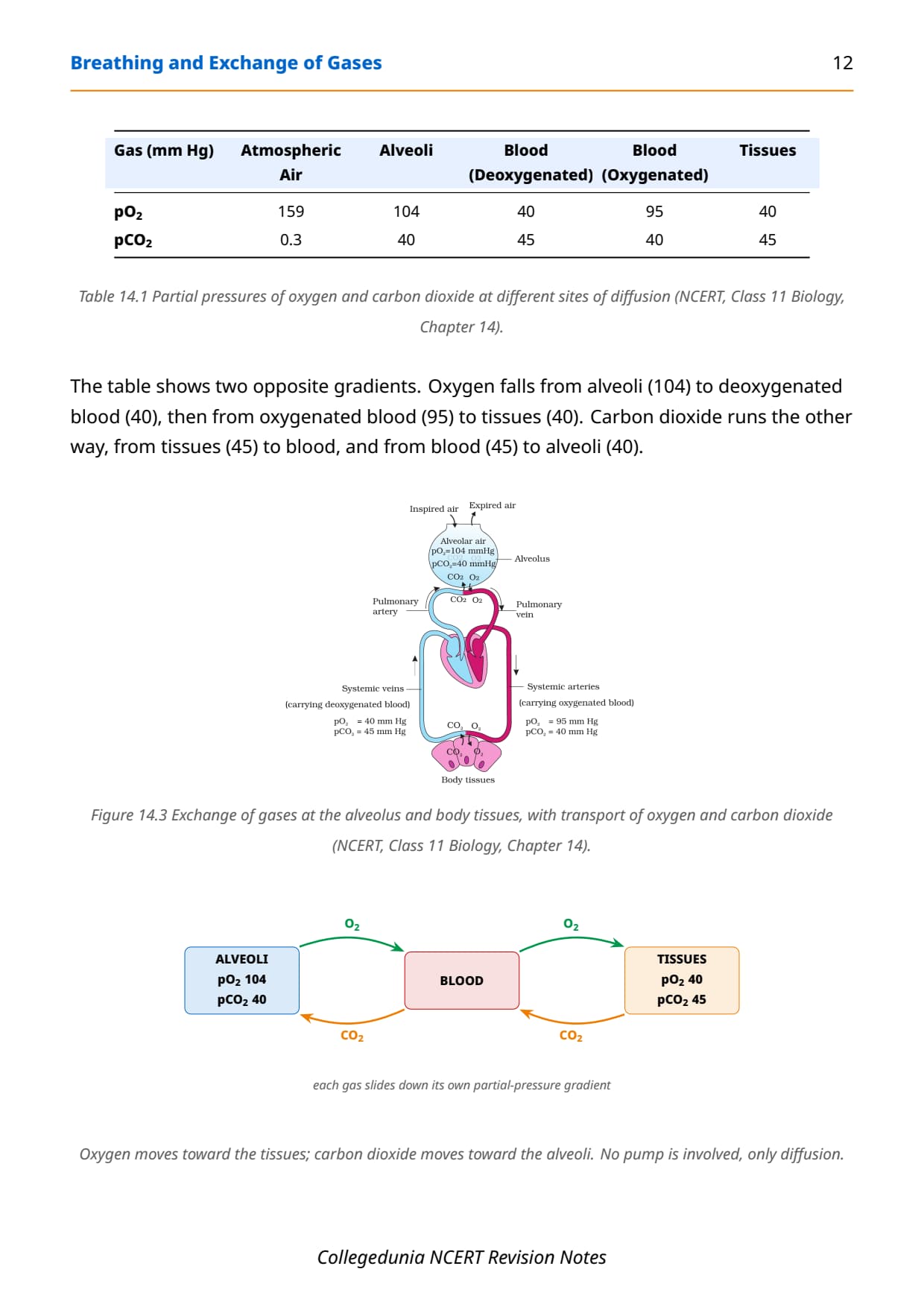
Once air reaches the alveoli there is no pump for the next step; gases move only by simple diffusion, driven by pressure differences. In a mixture of gases, the pressure contributed by one gas alone is its partial pressure, written pO2 for oxygen and pCO2 for carbon dioxide, and each gas diffuses from where its partial pressure is high to where it is low. Three factors set the rate of diffusion across the alveolar membrane, that is, the partial-pressure gradient, the solubility of the gas, and the thickness of the diffusion membrane. NCERT prints the exact partial pressures at each site in Table 14.1.
| Gas (mm Hg) | Atmospheric Air | Alveoli | Deoxygenated Blood | Oxygenated Blood | Tissues |
|---|---|---|---|---|---|
| pO2 | 159 | 104 | 40 | 95 | 40 |
| pCO2 | 0.3 | 40 | 45 | 40 | 45 |
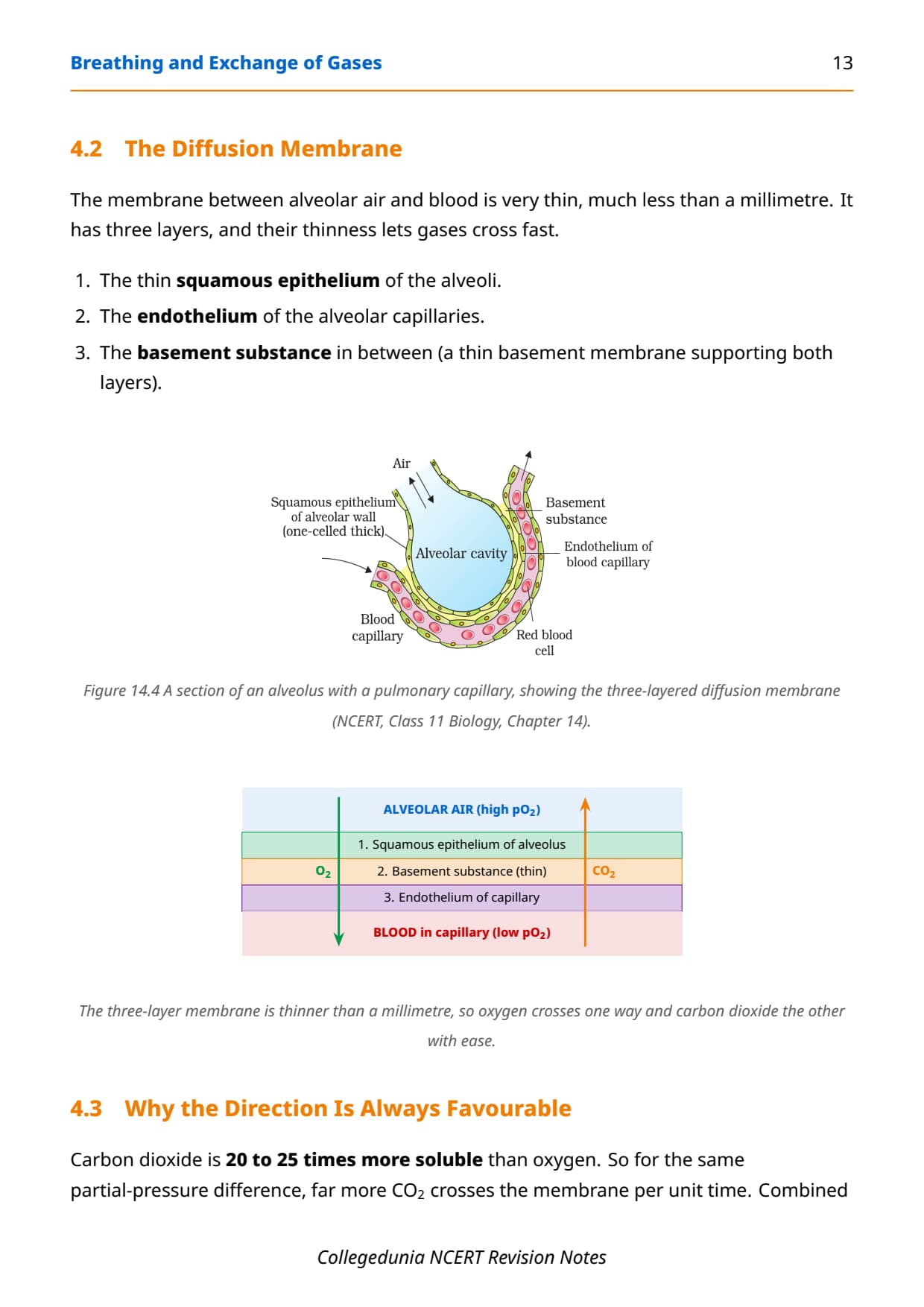
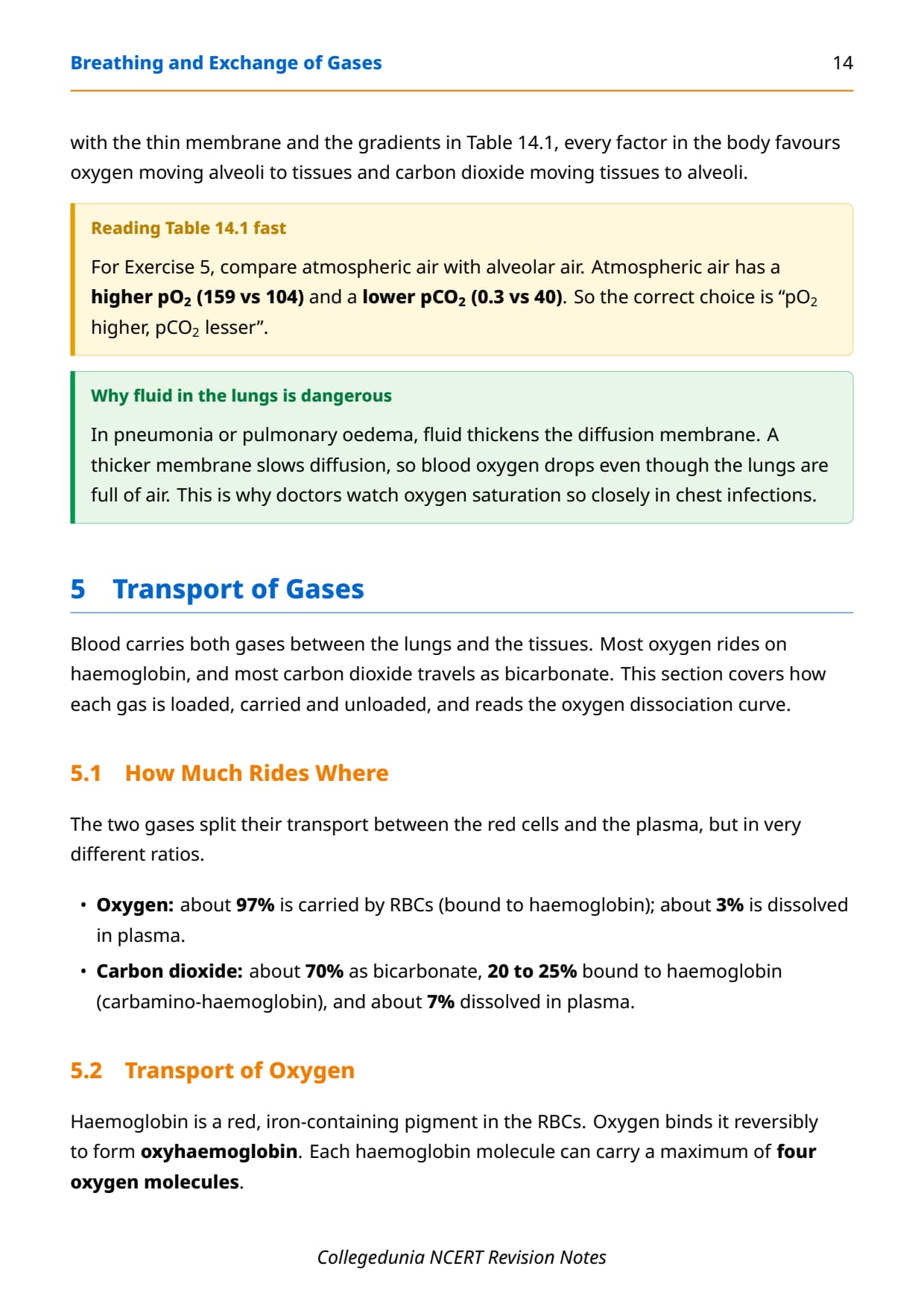
The table shows two opposite gradients. Oxygen falls from alveoli (104) to deoxygenated blood (40), then from oxygenated blood (95) to tissues (40); carbon dioxide runs the other way, from tissues and blood (45) to alveoli (40). The membrane between alveolar air and blood is much thinner than a millimetre and has three layers.
- Squamous epithelium of the alveoli, a very thin single layer.
- Endothelium of the alveolar capillaries.
- Basement substance in between, a thin basement membrane supporting both layers.
Carbon dioxide is 20 to 25 times more soluble than oxygen, so for the same pressure difference far more CO2 crosses per unit time. Combined with the thin membrane and the gradients above, every factor favours oxygen moving from alveoli to tissues and carbon dioxide from tissues to alveoli. When fluid thickens the membrane in pneumonia or pulmonary oedema, diffusion slows and blood oxygen drops even though the lungs are full of air.
Transport of Oxygen and Carbon Dioxide
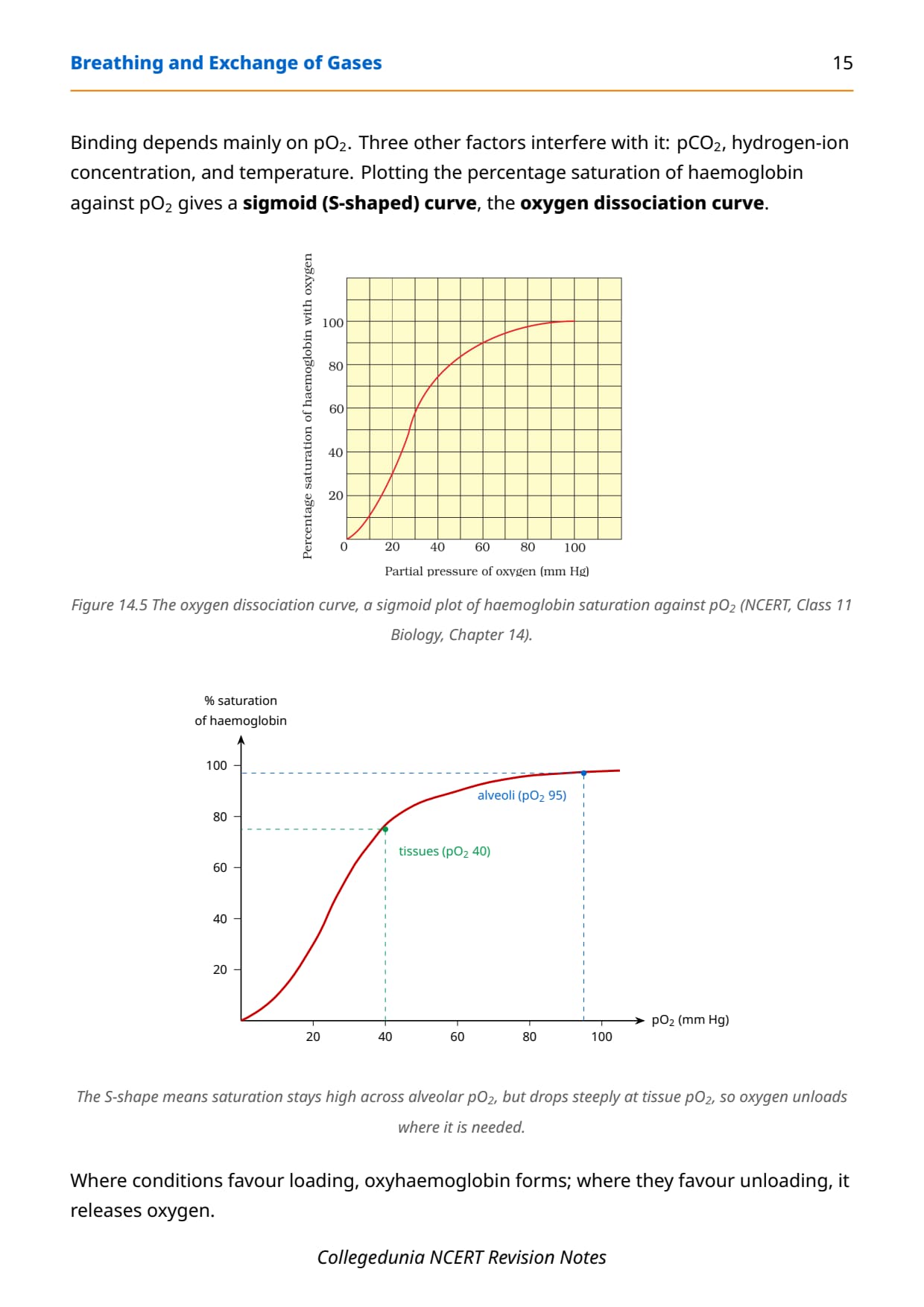
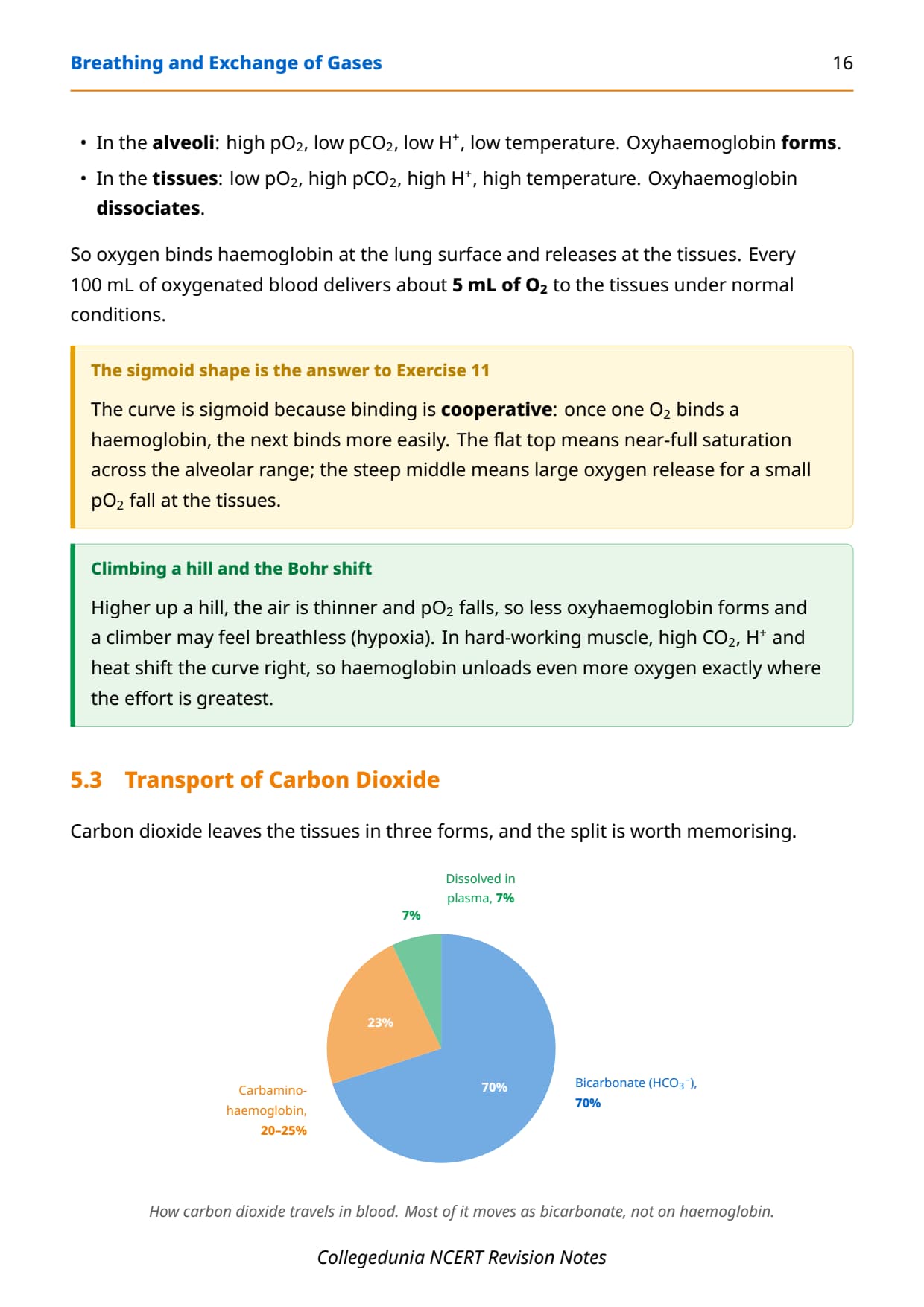
Blood carries both gases between the lungs and the tissues, but in very different ratios. About 97 per cent of oxygen is carried by RBCs bound to haemoglobin and only 3 per cent is dissolved in plasma, while carbon dioxide travels about 70 per cent as bicarbonate, 20 to 25 per cent bound to haemoglobin as carbamino-haemoglobin, and about 7 per cent dissolved. Haemoglobin is a red, iron-containing pigment that binds oxygen reversibly to form oxyhaemoglobin, and each molecule can carry a maximum of four oxygen molecules. Plotting percentage saturation against pO2 gives a sigmoid oxygen dissociation curve, because binding is cooperative.
- In the alveoli: high pO2, low pCO2, low H+, and low temperature favour loading, so oxyhaemoglobin forms.
- In the tissues: low pO2, high pCO2, high H+, and high temperature favour unloading, so oxyhaemoglobin dissociates.
- Delivery: every 100 mL of oxygenated blood delivers about 5 mL of oxygen to the tissues under normal conditions.
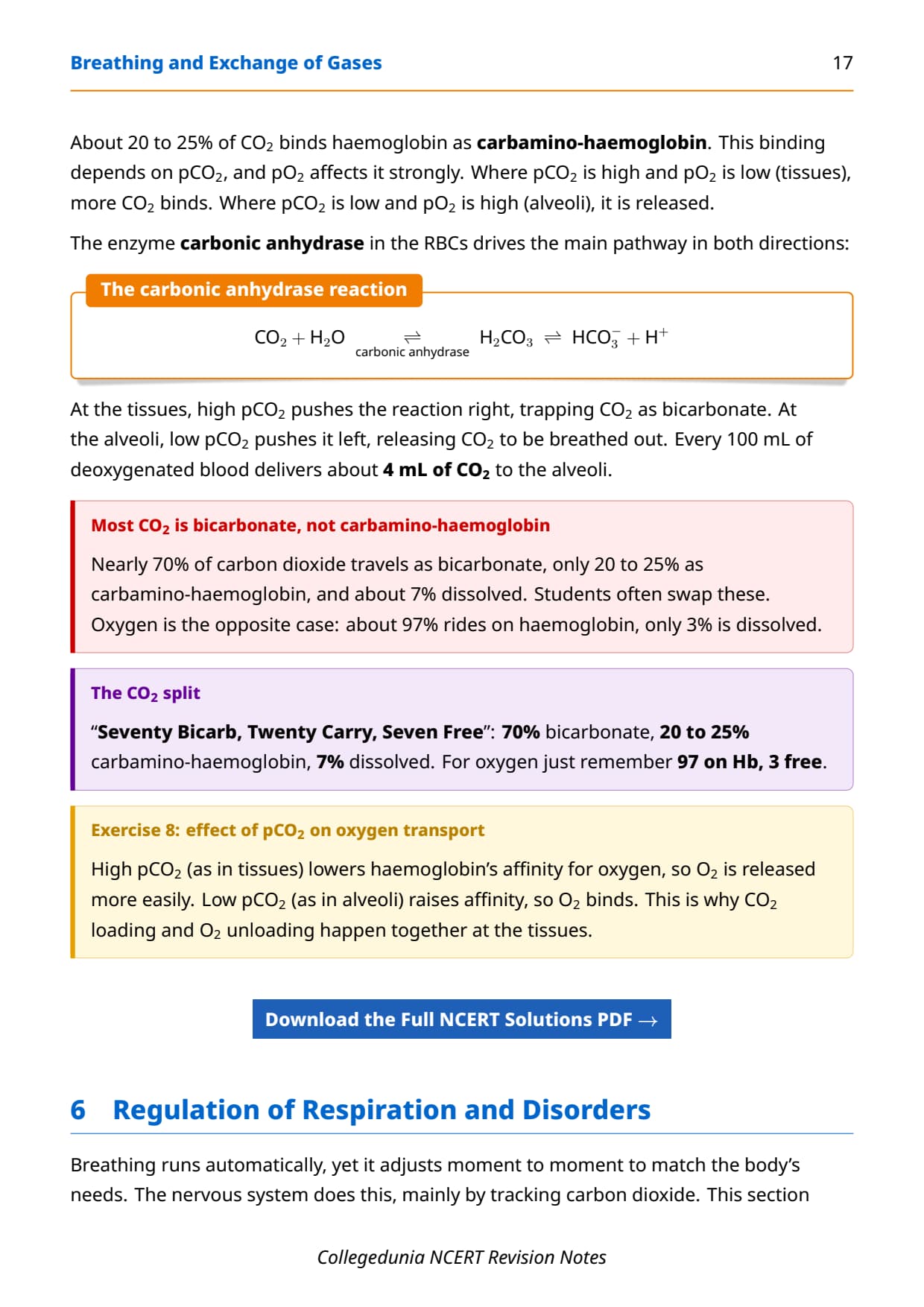
Carbon dioxide loading runs mainly through the enzyme carbonic anhydrase in the RBCs, which drives CO2 + H2O ⇌ H2CO3 ⇌ HCO3− + H+ in both directions. At the tissues, high pCO2 pushes the reaction right and traps CO2 as bicarbonate; at the alveoli, low pCO2 pushes it left and releases CO2 to be breathed out. Every 100 mL of deoxygenated blood delivers about 4 mL of carbon dioxide to the alveoli. Nearly 70 per cent of carbon dioxide travels as bicarbonate, so never write that most CO2 rides on haemoglobin. High pCO2 also lowers haemoglobin's affinity for oxygen, which is why CO2 loading and O2 unloading happen together at the tissues.
Regulation of Respiration and Respiratory Disorders
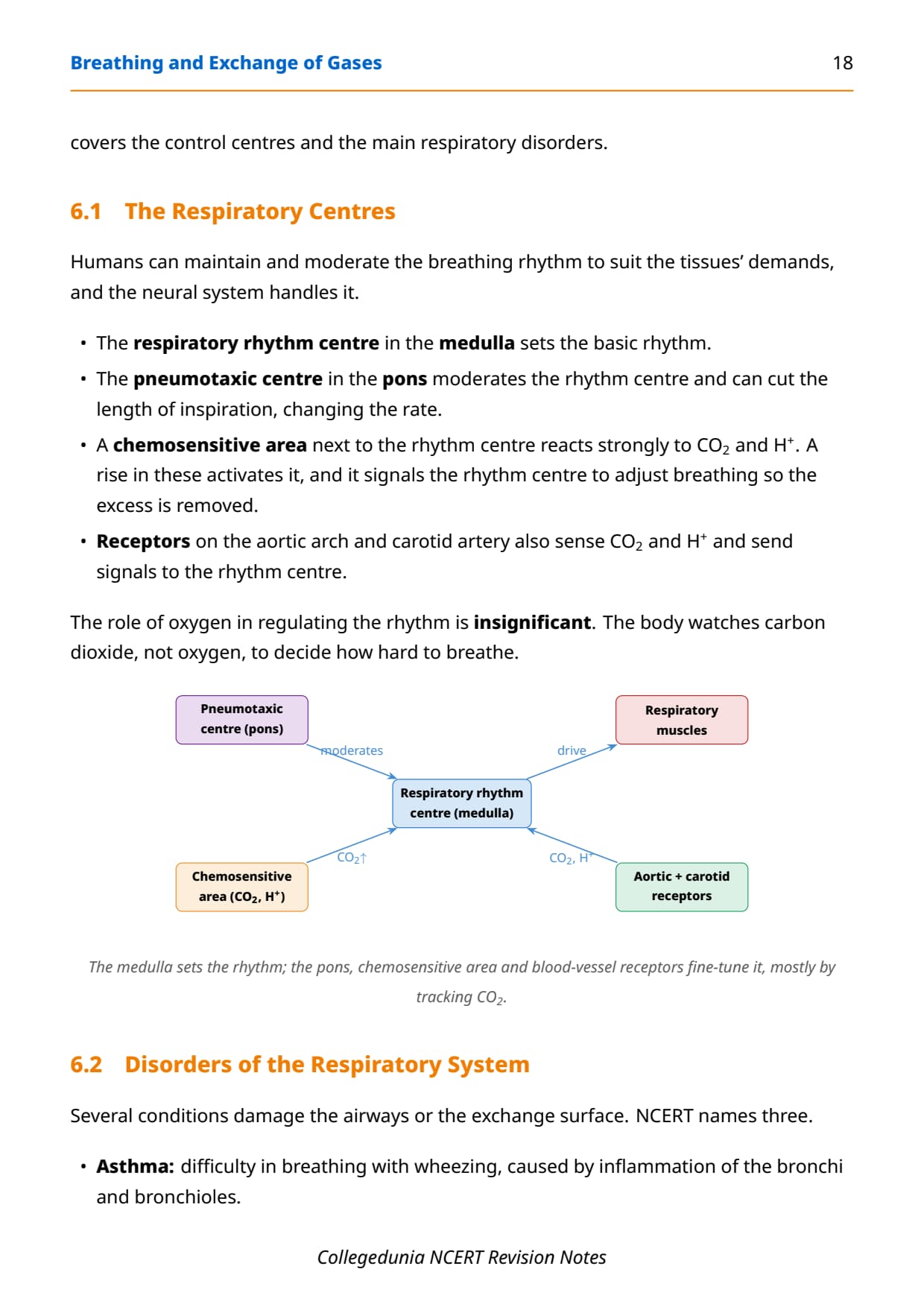
Breathing runs automatically, yet it adjusts moment to moment to match the body's needs, and the nervous system does this mainly by tracking carbon dioxide. Humans can maintain and moderate the breathing rhythm to suit the tissues' demand, and a set of neural centres handles it. The role of oxygen in regulating the rhythm is insignificant, because the body watches carbon dioxide, not oxygen, to decide how hard to breathe.
- Respiratory rhythm centre: in the medulla, it sets the basic breathing rhythm.
- Pneumotaxic centre: in the pons, it moderates the rhythm centre and can cut the length of inspiration, changing the rate.
- Chemosensitive area: next to the rhythm centre, it reacts strongly to CO2 and H+ and signals the rhythm centre to remove the excess.
- Aortic and carotid receptors: on the aortic arch and carotid artery, they also sense CO2 and H+ and send signals to the rhythm centre.
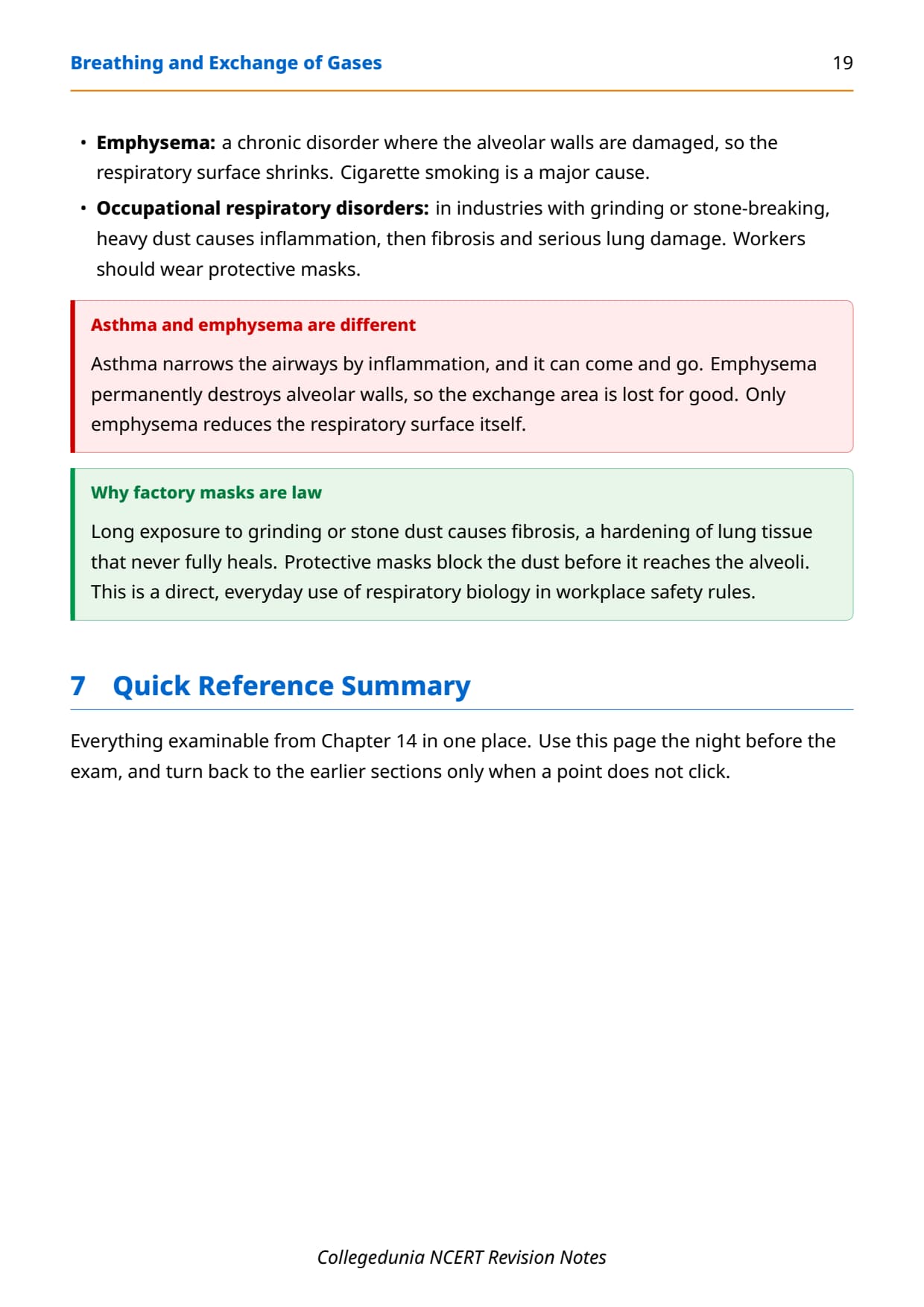
Several conditions damage the airways or the exchange surface, and NCERT names three. Asthma is difficulty in breathing with wheezing, caused by inflammation of the bronchi and bronchioles. Emphysema is a chronic disorder where the alveolar walls are damaged so the respiratory surface shrinks, and cigarette smoking is a major cause. Occupational respiratory disorders arise in industries with grinding or stone-breaking, where heavy dust causes inflammation and then fibrosis, so workers should wear protective masks. Only emphysema reduces the respiratory surface itself, while asthma narrows the airways by inflammation and can come and go.
Key Definitions in Breathing and Exchange of Gases
Board short-answer questions often ask for a clean definition in one or two lines, and a vague answer loses easy marks. Learn these word-for-word, because the wording of the exam question is usually built straight from the NCERT definition. Each term below also connects to a diagram or number you can be asked to explain.
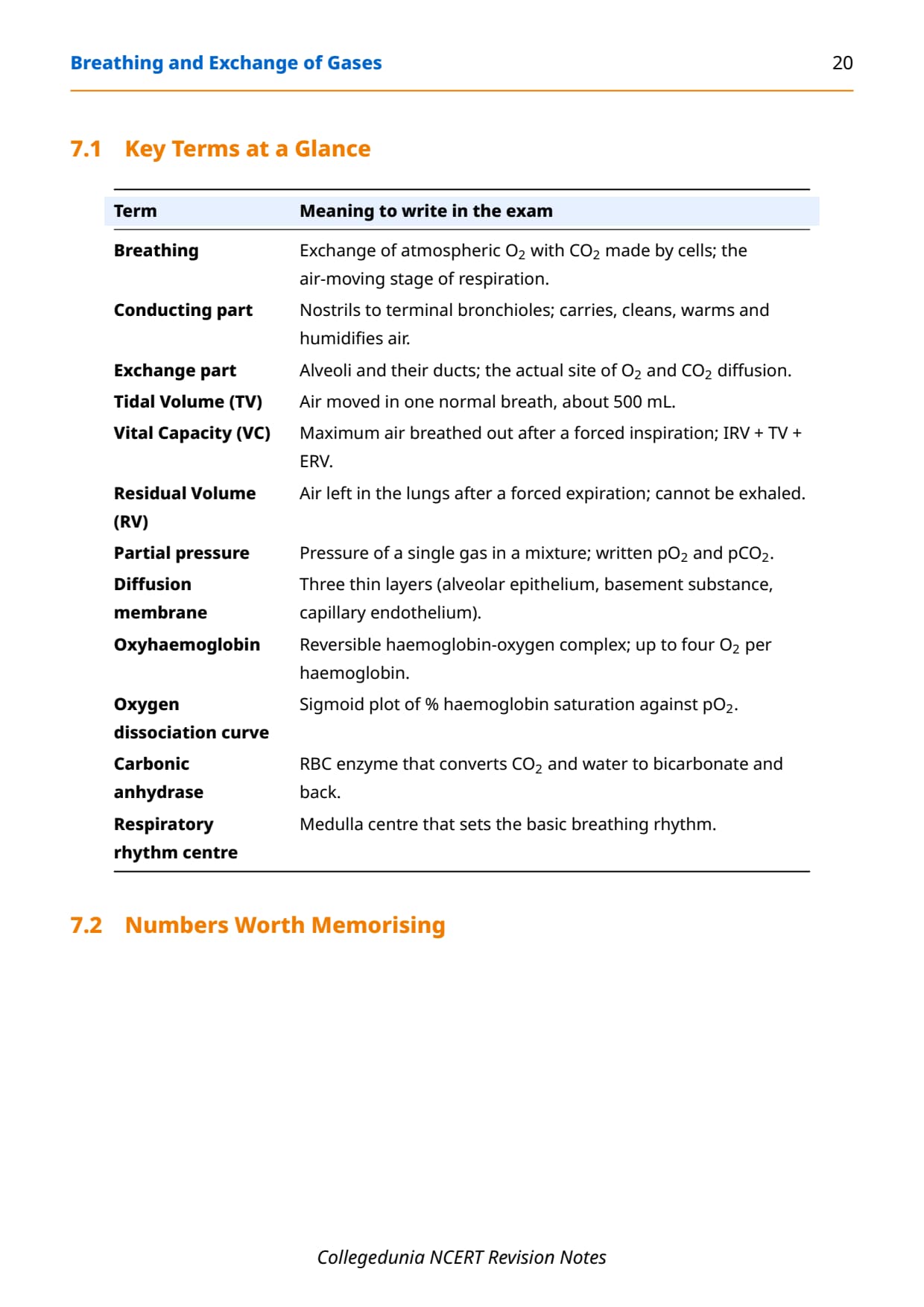
| Term | Definition |
|---|---|
| Breathing | Exchange of atmospheric oxygen with the carbon dioxide made by cells; the air-moving stage of respiration. |
| Conducting part | Nostrils to terminal bronchioles; carries, cleans, warms, and humidifies air, with no gas exchange. |
| Exchange part | The alveoli and their ducts; the actual site of oxygen and carbon dioxide diffusion. |
| Vital Capacity (VC) | Maximum air breathed out after a forced inspiration; equals IRV + TV + ERV. |
| Residual Volume (RV) | Air left in the lungs after a forced expiration; cannot be exhaled. |
| Partial pressure | Pressure of a single gas in a mixture; written pO2 and pCO2. |
| Oxyhaemoglobin | Reversible haemoglobin-oxygen complex; up to four oxygen molecules per haemoglobin. |
A common board question asks you to define vital capacity and state its significance. State VC = IRV + TV + ERV first, then add that a larger vital capacity moves more air per breath and is a useful clinical measure of lung health. Learning these definitions makes the wording of almost every one-mark and two-mark question in this chapter familiar.
Common Mistakes Students Make in Breathing and Exchange of Gases
These slips happen because two terms look alike, not because the concept is hard. Each one costs 1 to 2 marks in the paper, so watch for them at the exact step where they occur.
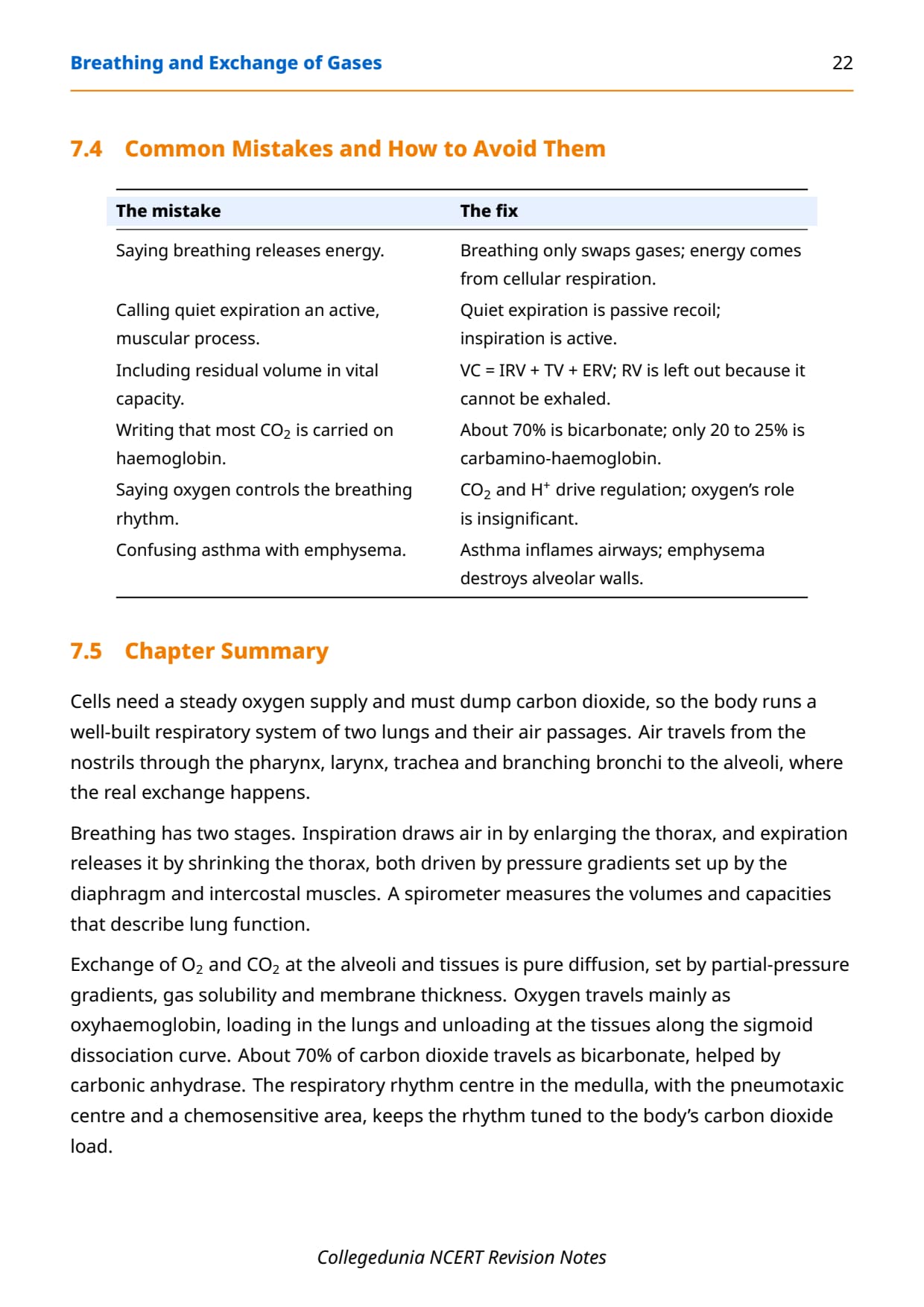
Mistake 1: Writing that breathing releases energy. Breathing only swaps gases; the ATP is made later by cellular respiration inside the mitochondria.
Mistake 2: Calling quiet expiration an active, muscular process. Inspiration is active, but normal quiet expiration is passive elastic recoil.
Mistake 3: Including residual volume in vital capacity. VC = IRV + TV + ERV, and RV is left out because it cannot be exhaled.
Mistake 4: Saying most carbon dioxide is carried on haemoglobin. About 70 per cent travels as bicarbonate and only 20 to 25 per cent as carbamino-haemoglobin.
Mistake 5: Saying oxygen controls the breathing rhythm. CO2 and H+ drive regulation; oxygen's role is insignificant.
Breathing and Exchange of Gases Weightage in CBSE Boards, NEET and CUET
This chapter is a scoring one because it mixes clean definitions with a few numbers and one graph. It appears every year as a short answer or a diagram-based question, and it is a reliable source of objective questions in the entrance exams. Here is how the marks split across the main exams for 2026-27.
| Exam | Typical weightage | What is asked |
|---|---|---|
| CBSE Boards | 4 to 6 marks | One short answer on respiratory volumes or the diffusion membrane plus one on gas transport or the breathing mechanism |
| NEET | 2 to 3 questions | Respiratory volumes, partial pressures in Table 14.1, the oxygen dissociation curve, and CO2 transport |
| CUET | 1 to 2 objective questions | Definitions, the site of exchange, and the disorders asthma and emphysema |
Gas transport and the respiratory volumes are the most tested ideas from this chapter across all three exams. Master Table 14.1 and the volume and capacity formulae first, then the oxygen dissociation curve, then the disorders, in that order of return on effort for the 2026-27 session.
How to Revise Breathing and Exchange of Gases Quickly
Use these breathing and exchange of gases class 11 notes for a fast, ordered recap the night before a test. The checklist below takes about 25 minutes and hits every marks-heavy idea in the chapter without opening the full textbook.
- First 8 minutes: write the air passage from nostrils to alveoli, then the four respiratory volumes with their values and the five capacity formulae.
- Next 9 minutes: reproduce Table 14.1 and mark the two gradients, then write the 97/3 split for oxygen and the 70/23/7 split for carbon dioxide.
- Last 8 minutes: sketch the sigmoid curve, name the three respiratory centres, and one-line the difference between asthma and emphysema.
Close the loop by explaining why diffusion happens only in the alveoli and never in the trachea. If you can do all three blocks without notes, the chapter is exam-ready. Keep Table 14.1 and the capacity formulae beside you for the first pass only, then try the whole checklist closed-book.
Student Feedback on the Breathing and Exchange of Gases Notes
What 12,340 students told us about their Breathing and Exchange of Gases revision:
- 71% of students rated the respiratory volumes and capacity formulae as the part most worth memorising for the exam.
- Most-confused pair: asthma versus emphysema, mixed up by about 3 in 10 students.
- Students who learnt the oxygen dissociation curve with the alveoli-versus-tissues markers said the transport questions felt easy afterwards.
Source: 2026-27 Class 11 Biology student poll. Sample of 12,340 students from CBSE schools across 15 states, conducted before the 2026 boards.
Other Breathing and Exchange of Gases Class 11 Biology Resources
Pair these notes with the solved answers, the formula sheet, and the textbook PDF for the same chapter.
| Resource | Link |
|---|---|
| NCERT Solutions | Breathing and Exchange of Gases Class 11 NCERT Solutions |
| Formula Sheet | Breathing and Exchange of Gases Class 11 Formula Sheet |
| Exemplar Solutions | Breathing and Exchange of Gases Class 11 Exemplar Solutions |
| NCERT Book PDF | Breathing and Exchange of Gases Class 11 Book PDF |
| Exemplar Book PDF | Breathing and Exchange of Gases Class 11 Exemplar Book PDF |
NCERT Notes for Class 11 Biology: All Chapters
Jump to the revision notes for any other Class 11 Biology chapter below.
| Chapter | NCERT Notes |
|---|---|
| Chapter 1 | The Living World |
| Chapter 2 | Biological Classification |
| Chapter 3 | Plant Kingdom |
| Chapter 4 | Animal Kingdom |
| Chapter 5 | Morphology of Flowering Plants |
| Chapter 6 | Anatomy of Flowering Plants |
| Chapter 7 | Structural Organisation in Animals |
| Chapter 8 | Cell The Unit of Life |
| Chapter 9 | Biomolecules |
| Chapter 10 | Cell Cycle and Cell Division |
| Chapter 11 | Photosynthesis in Higher Plants |
| Chapter 12 | Respiration in Plants |
| Chapter 13 | Plant Growth and Development |
| Chapter 14 | Breathing and Exchange of Gases |
| Chapter 15 | Body Fluids and Circulation |
| Chapter 16 | Excretory Products and their Elimination |
| Chapter 17 | Locomotion and Movement |
| Chapter 18 | Neural Control and Coordination |
| Chapter 19 | Chemical Coordination and Integration |
FAQs on Breathing and Exchange of Gases Class 11 Biology Notes
Breathing and Exchange of Gases Notes - Frequently Asked Questions
Ques. What topics do the breathing and exchange of gases class 11 notes cover?
Ans. These breathing and exchange of gases class 11 notes cover the respiratory organs across animals, the human respiratory system and passage of air, the mechanism of inspiration and expiration, the respiratory volumes and capacities, the exchange of gases by partial pressure and diffusion, the transport of oxygen and carbon dioxide, the neural regulation of respiration, and the respiratory disorders asthma, emphysema, and occupational disease. Every key definition, value, and example is included for fast revision.
Ques. What is the difference between breathing and cellular respiration?
Ans. Breathing, also called pulmonary respiration, is the exchange of atmospheric oxygen with the carbon dioxide made by cells, plus the physical movement of air in and out. It does not release energy. Cellular respiration is the enzyme-driven breakdown of glucose inside the mitochondria that actually makes ATP. Breathing simply supplies the oxygen that cellular respiration spends, so writing that inspiration or expiration releases energy is wrong.
Ques. What are the four respiratory volumes and how do the capacities form?
Ans. The four basic volumes are Tidal Volume (about 500 mL), Inspiratory Reserve Volume (2500 to 3000 mL), Expiratory Reserve Volume (1000 to 1100 mL), and Residual Volume (1100 to 1200 mL). The capacities are sums: Inspiratory Capacity = TV + IRV, Expiratory Capacity = TV + ERV, Functional Residual Capacity = ERV + RV, Vital Capacity = IRV + TV + ERV, and Total Lung Capacity = VC + RV. Vital capacity leaves out residual volume because RV cannot be breathed out.
Ques. How are oxygen and carbon dioxide transported in the blood?
Ans. About 97 per cent of oxygen is carried by RBCs as oxyhaemoglobin and only 3 per cent is dissolved in plasma. Carbon dioxide travels about 70 per cent as bicarbonate (formed with the help of carbonic anhydrase in the RBCs), 20 to 25 per cent bound to haemoglobin as carbamino-haemoglobin, and about 7 per cent dissolved in plasma. Every 100 mL of blood delivers roughly 5 mL of oxygen to the tissues and 4 mL of carbon dioxide to the alveoli.
Ques. Why is the oxygen dissociation curve sigmoid?
Ans. The oxygen dissociation curve plots the percentage saturation of haemoglobin against pO2, and it is sigmoid because binding is cooperative: once one oxygen binds a haemoglobin, the next binds more easily. The flat top means near-full saturation across the alveolar range, so oxygen loads well in the lungs, while the steep middle means a large oxygen release for a small pO2 fall at the tissues. High pCO2, H+, and temperature shift the curve right and unload more oxygen where effort is greatest.
Ques. What is the weightage of this chapter in the CBSE board exam?
Ans. Breathing and Exchange of Gases carries about 4 to 6 marks in the CBSE Class 11 Biology paper, usually one short answer on respiratory volumes or the diffusion membrane plus one on gas transport or the breathing mechanism. It is also a high-yield chapter in NEET, with 2 to 3 questions on Table 14.1, the oxygen dissociation curve, and CO2 transport, and it appears in CUET as objective questions for the 2026-27 session.
Ques. What is the difference between asthma and emphysema?
Ans. Asthma is difficulty in breathing with wheezing, caused by inflammation of the bronchi and bronchioles, and it can come and go. Emphysema is a chronic disorder where the alveolar walls are damaged, so the respiratory surface itself shrinks and gas exchange is lost for good; cigarette smoking is a major cause. Only emphysema reduces the exchange area, while a third group, occupational respiratory disorders, comes from long exposure to grinding and stone dust that causes fibrosis.



Comments