


Class 7 Science Chapter 11 Light: Shadows and Reflections is built on ray diagrams. These class 7 science handwritten notes chapter 11 Light: Shadows and Reflections follow the 2026-27 NCERT and cover sources of light, straight-line travel, shadows, plane mirror images, the pinhole camera and the periscope.
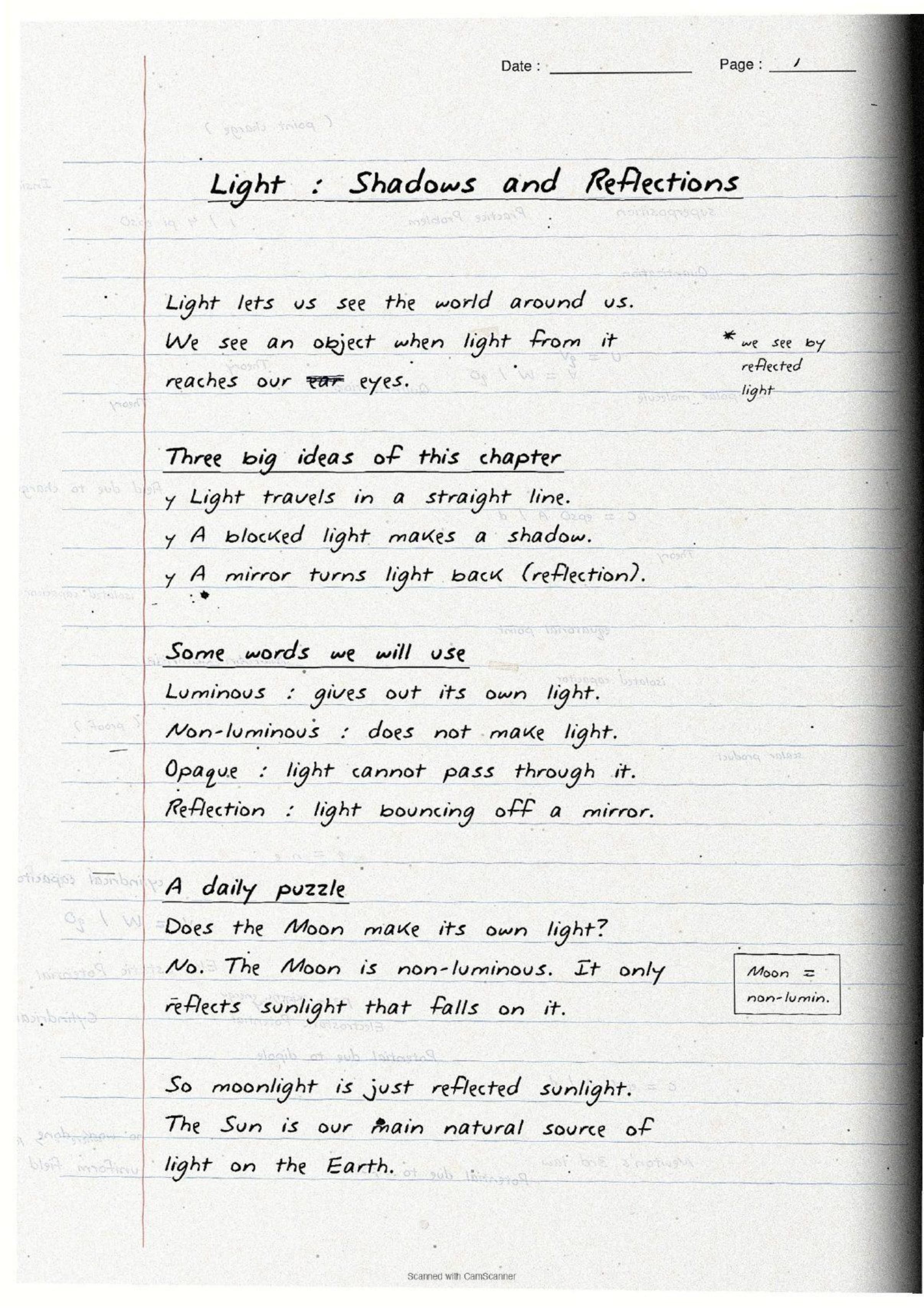
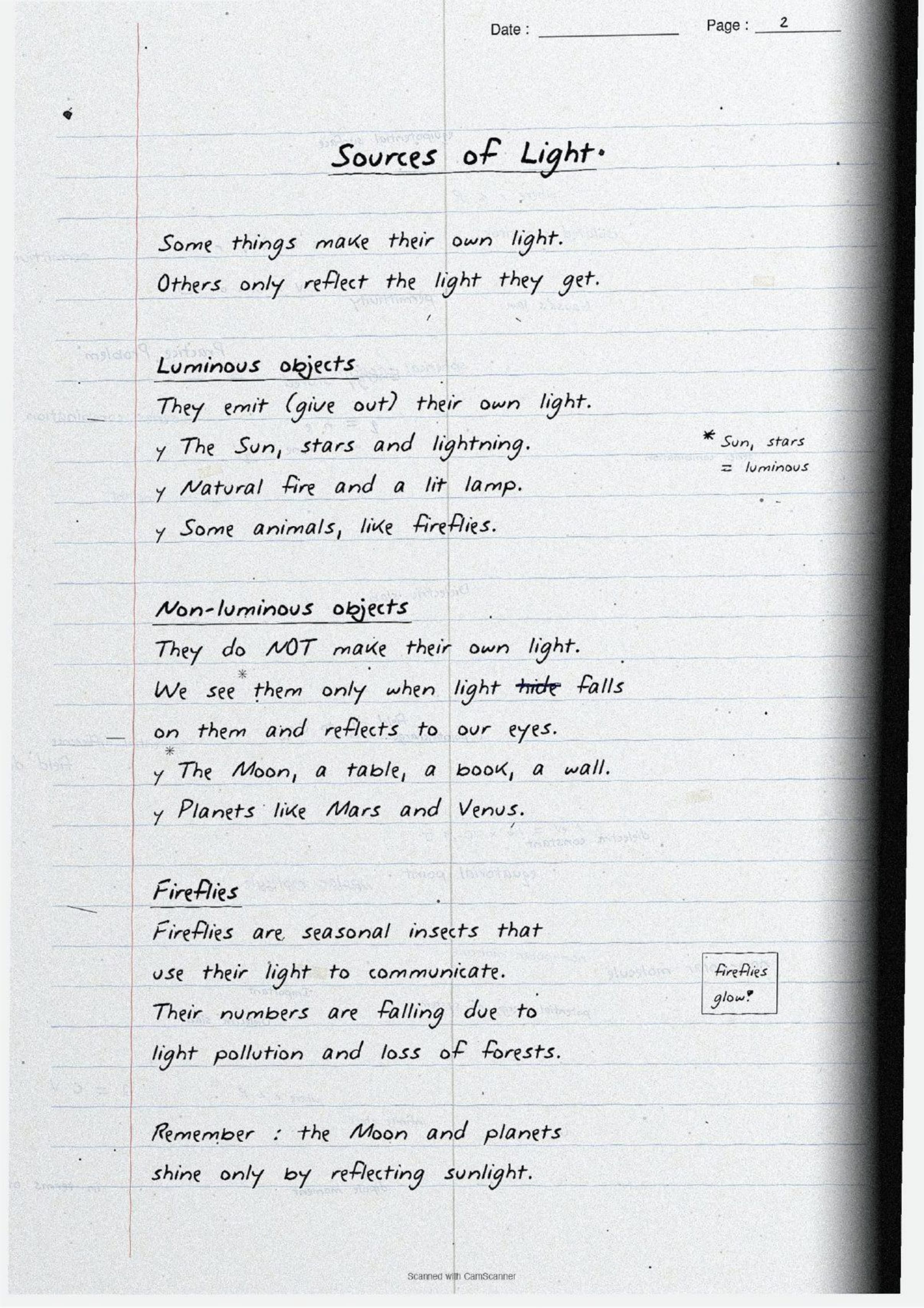
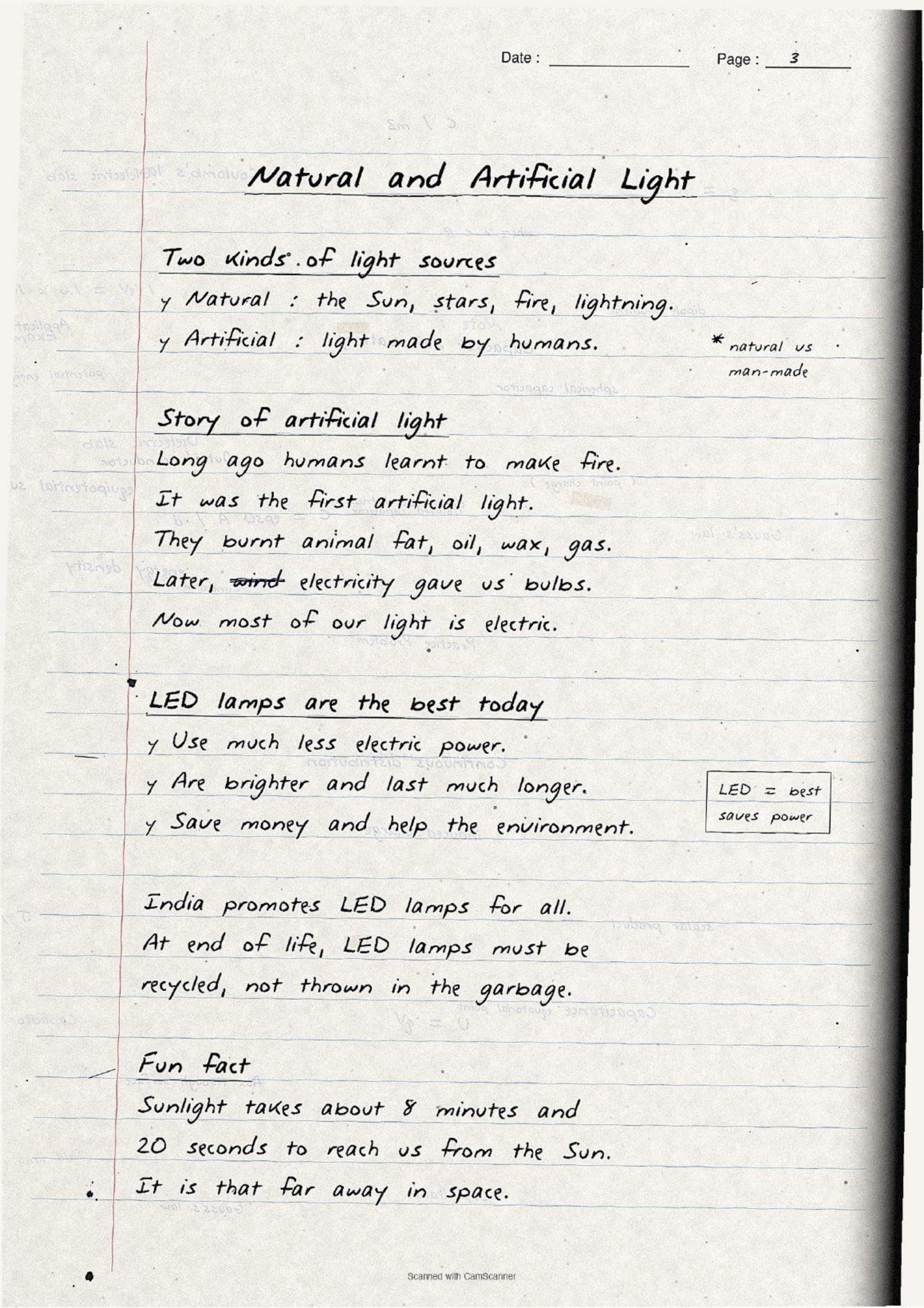
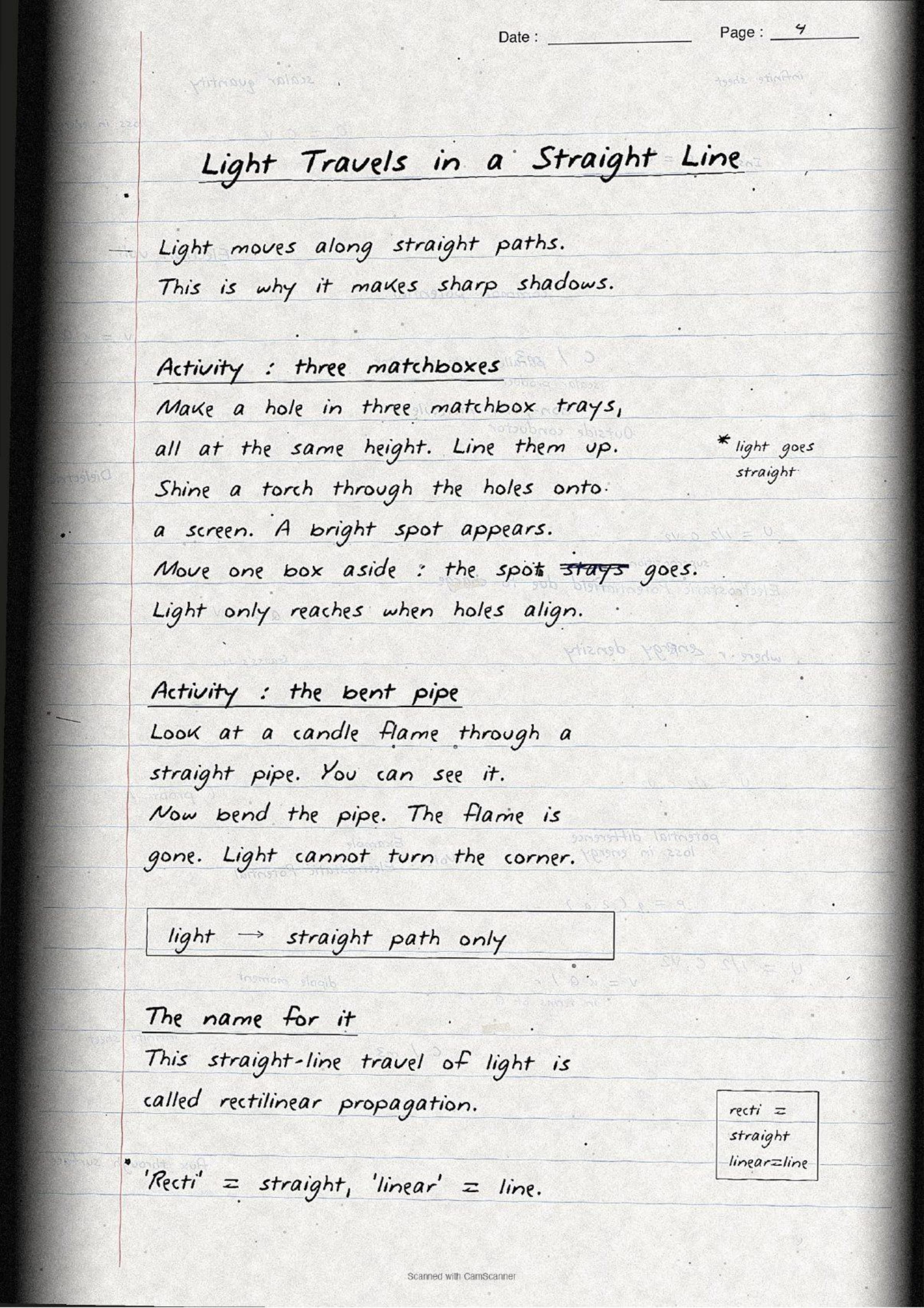
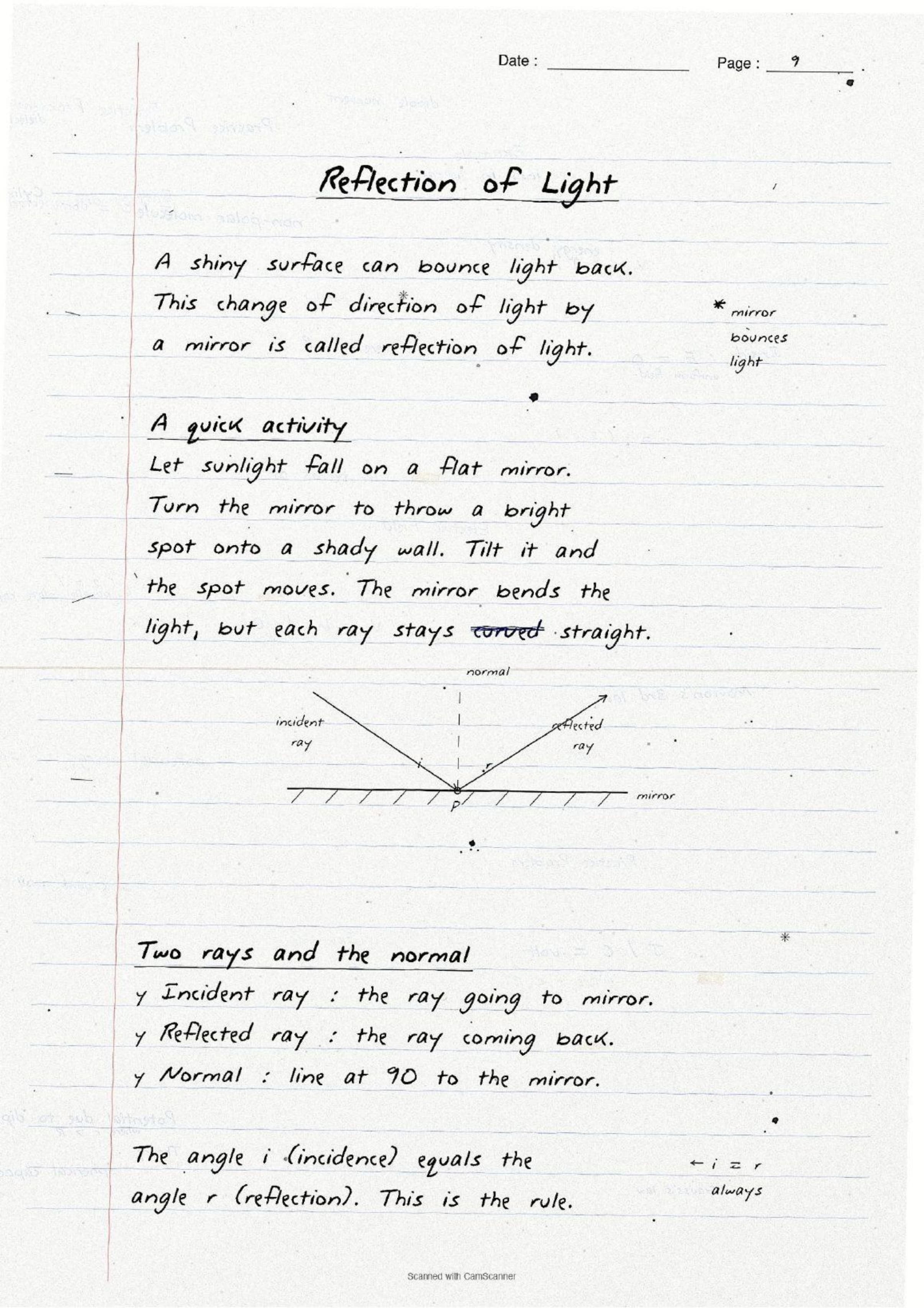
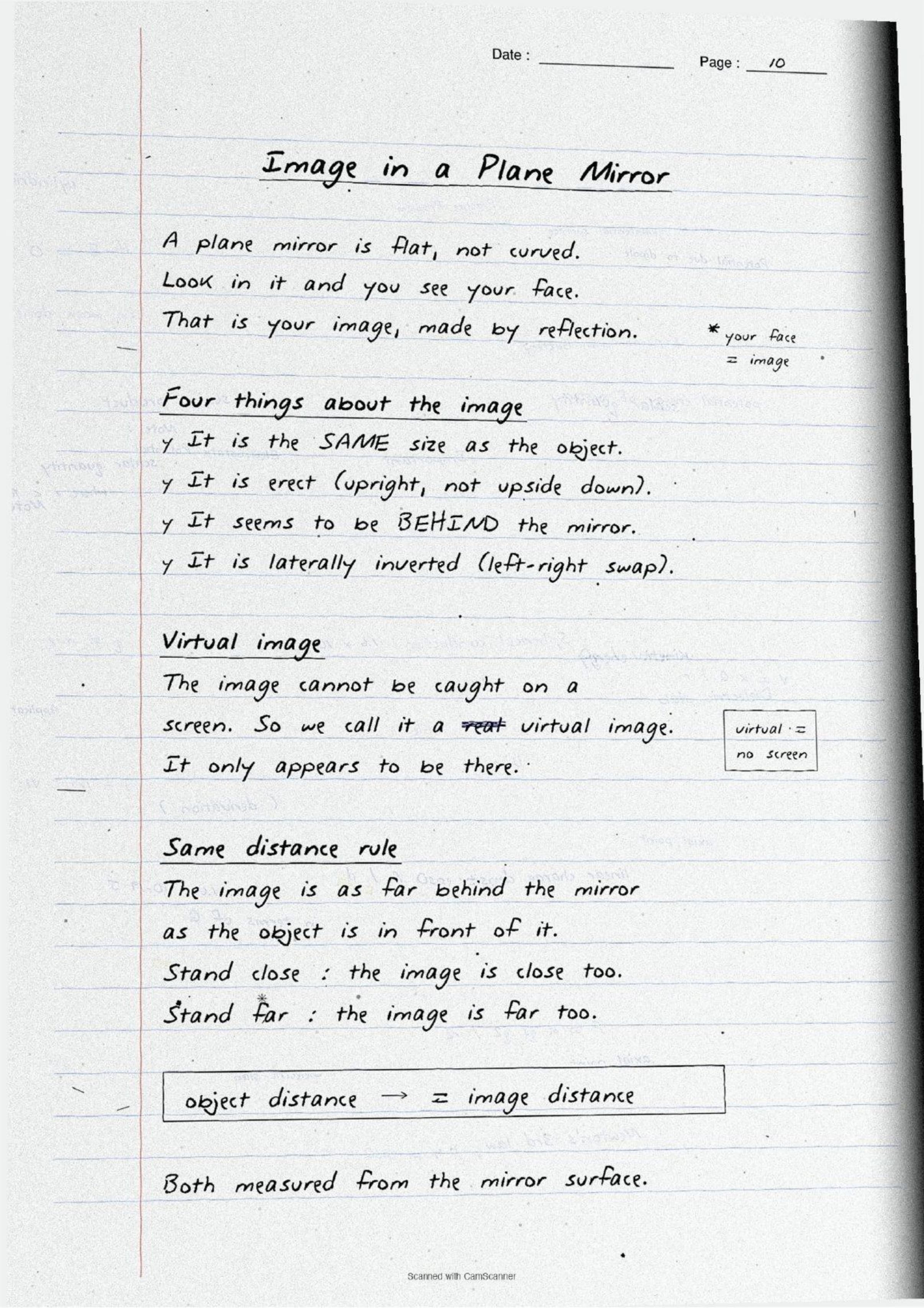
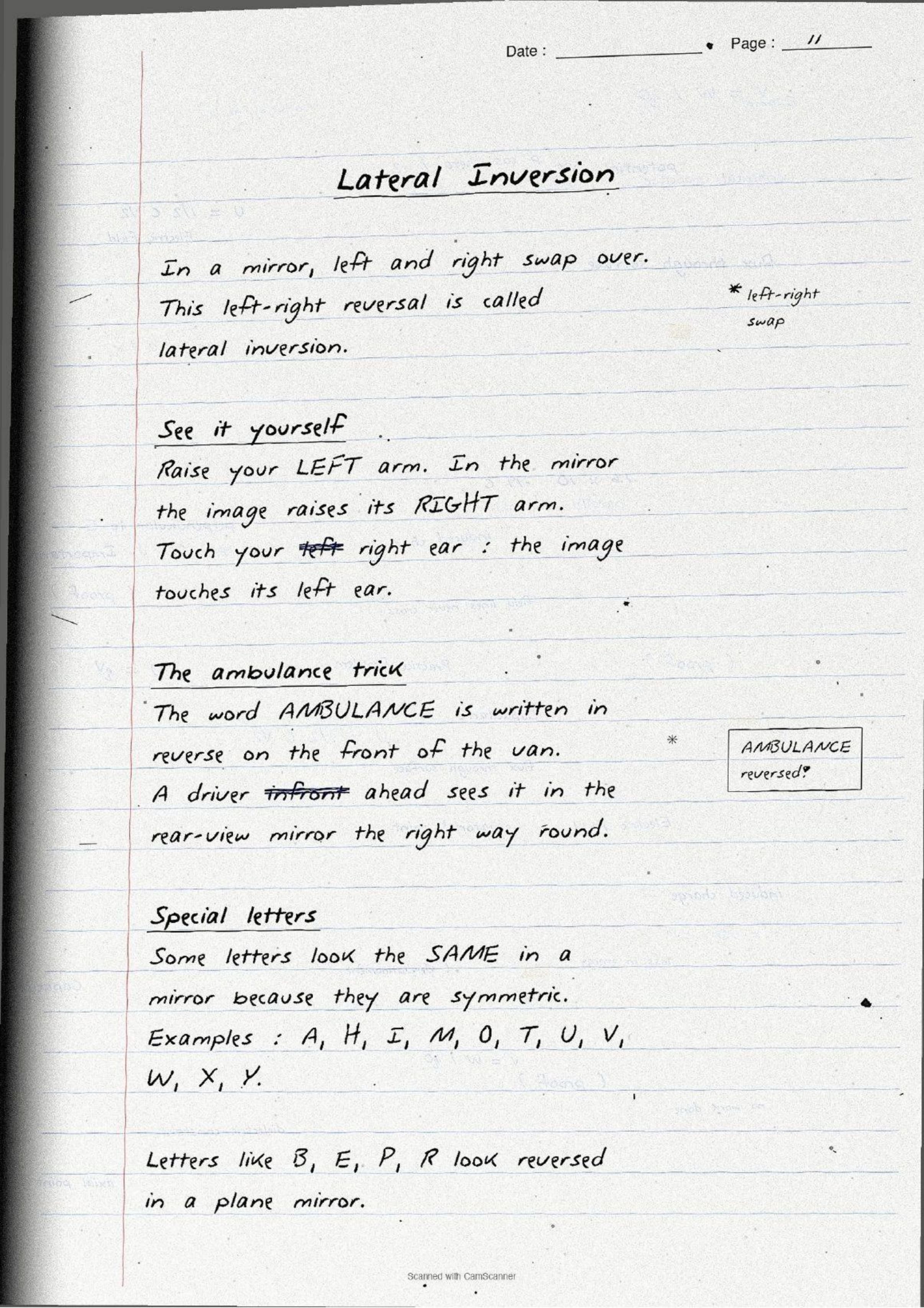
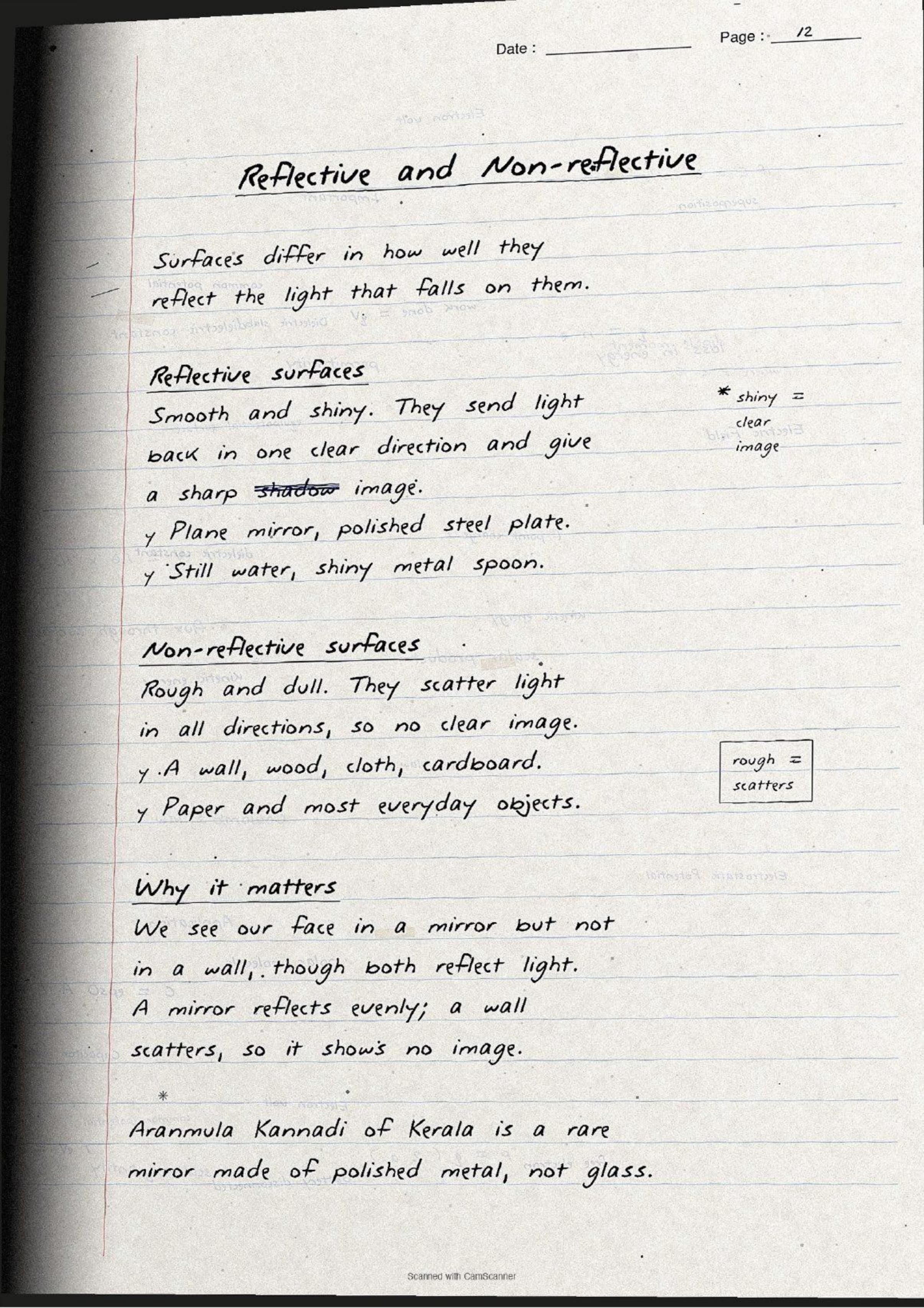
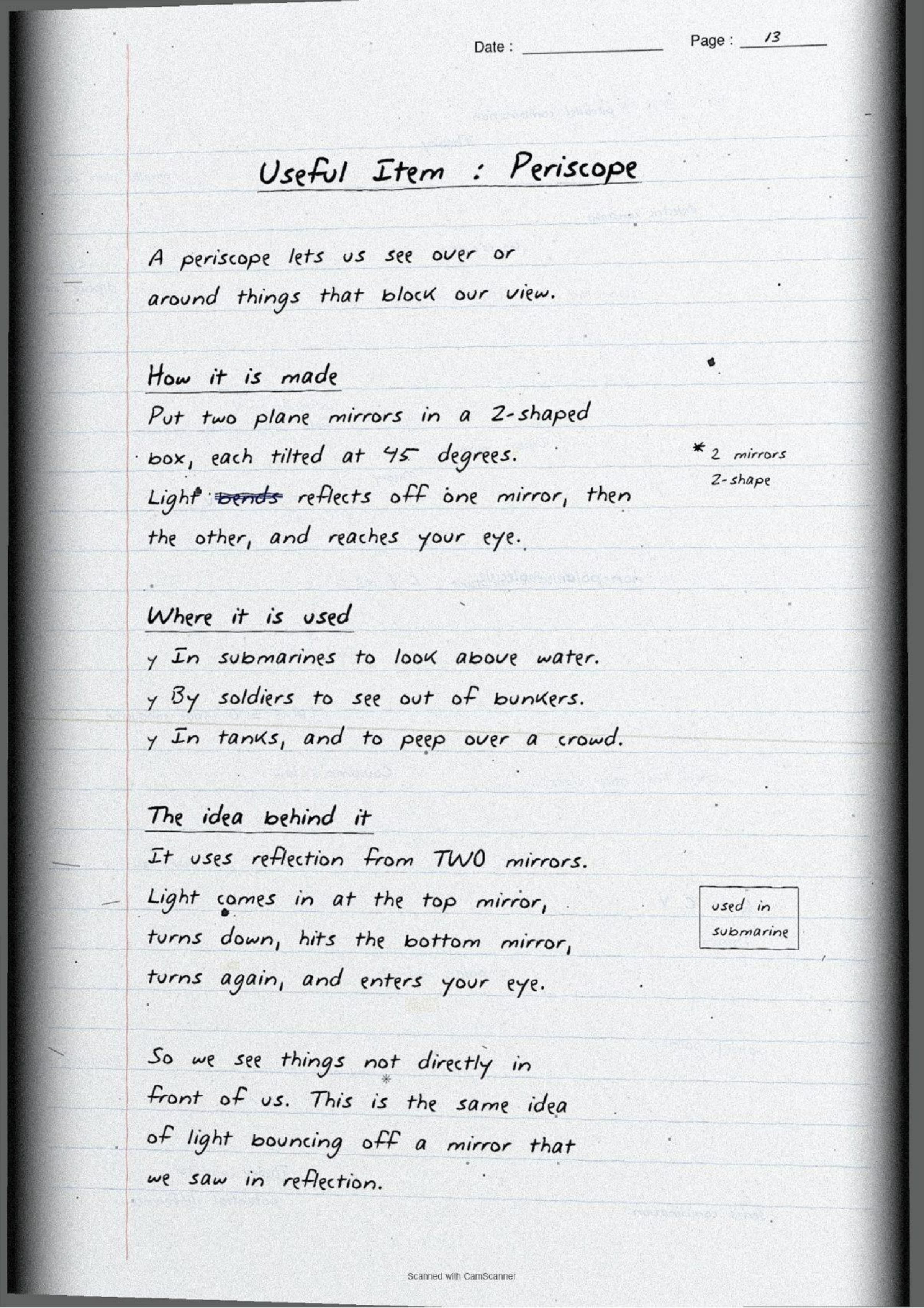
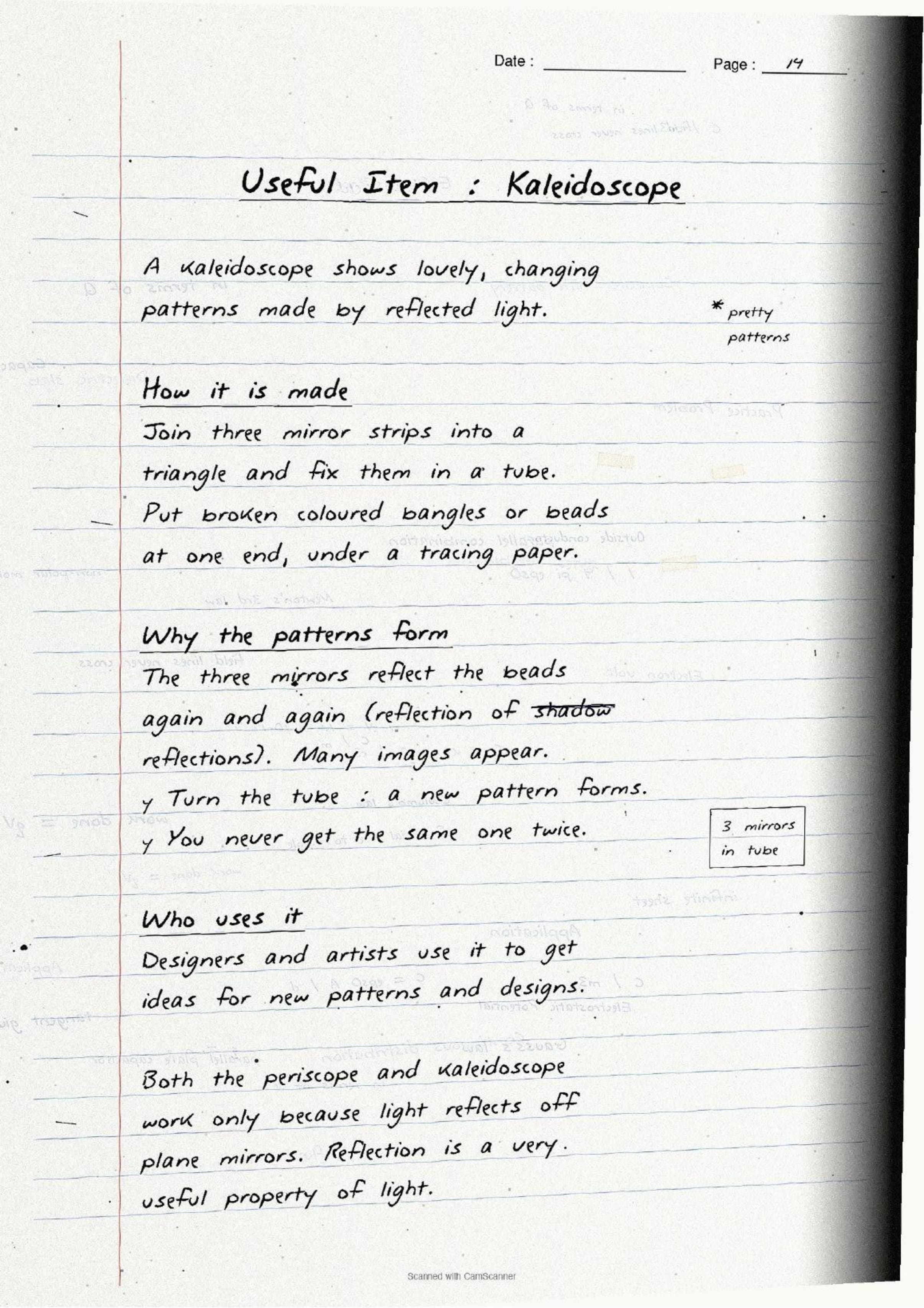
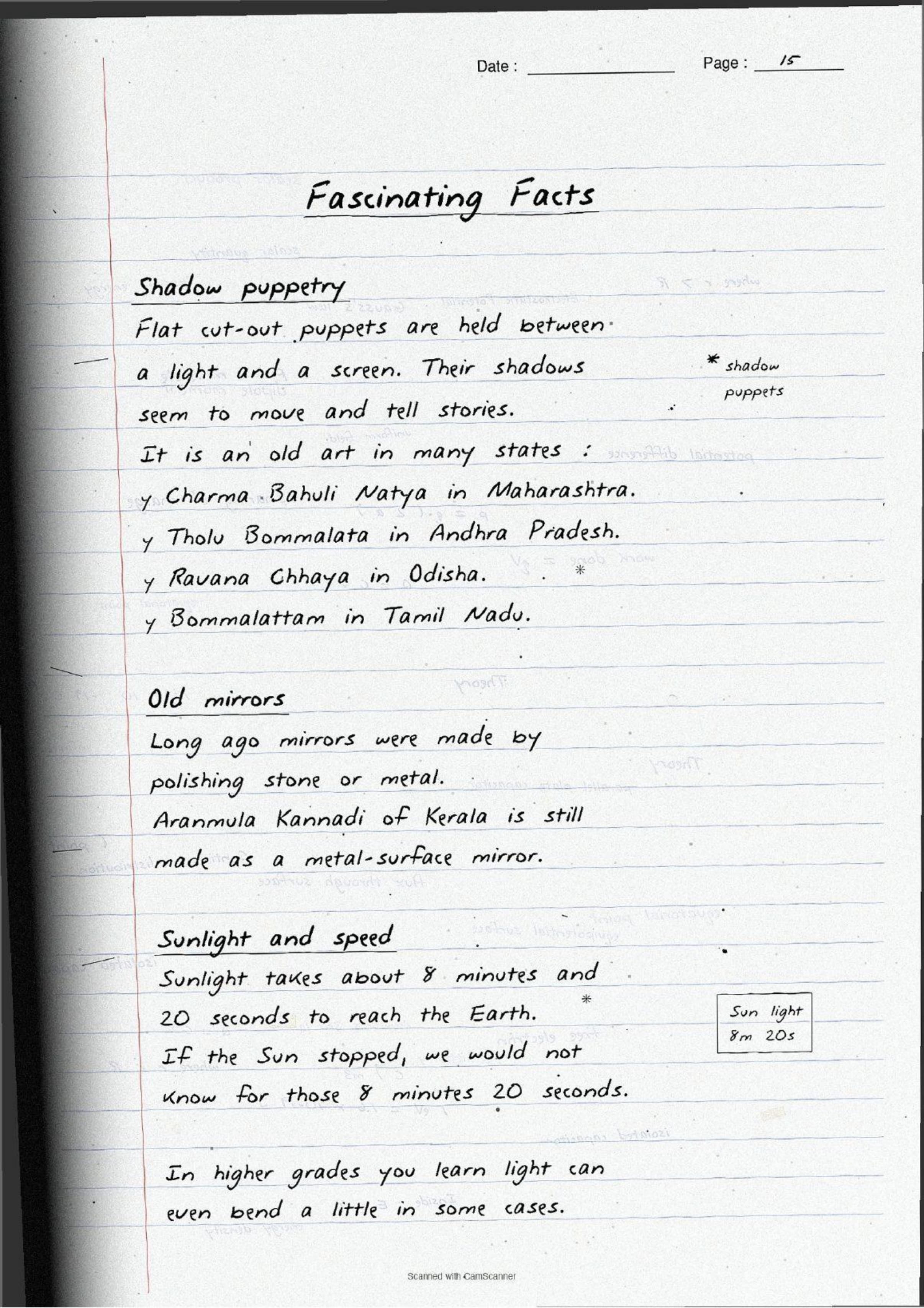
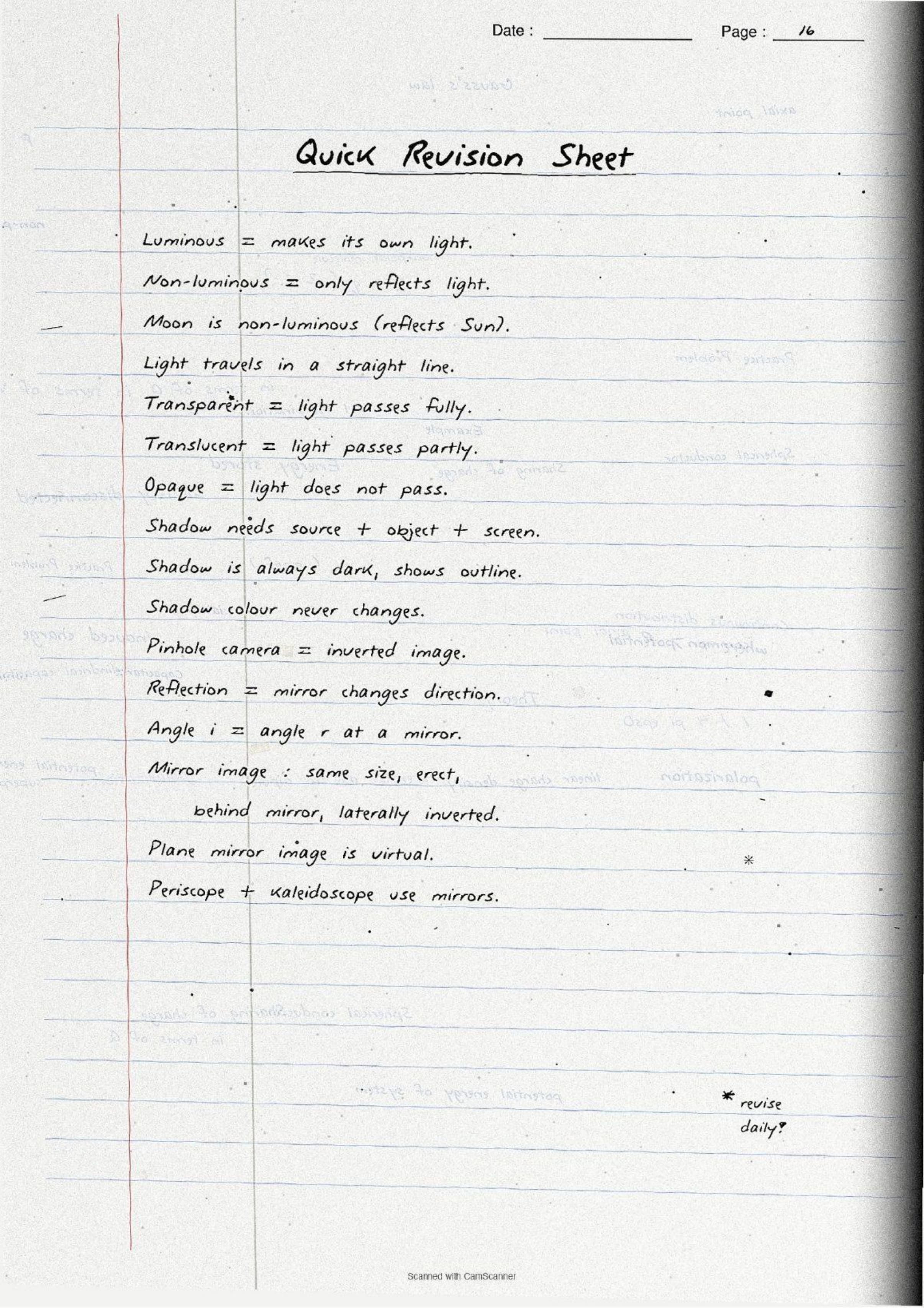
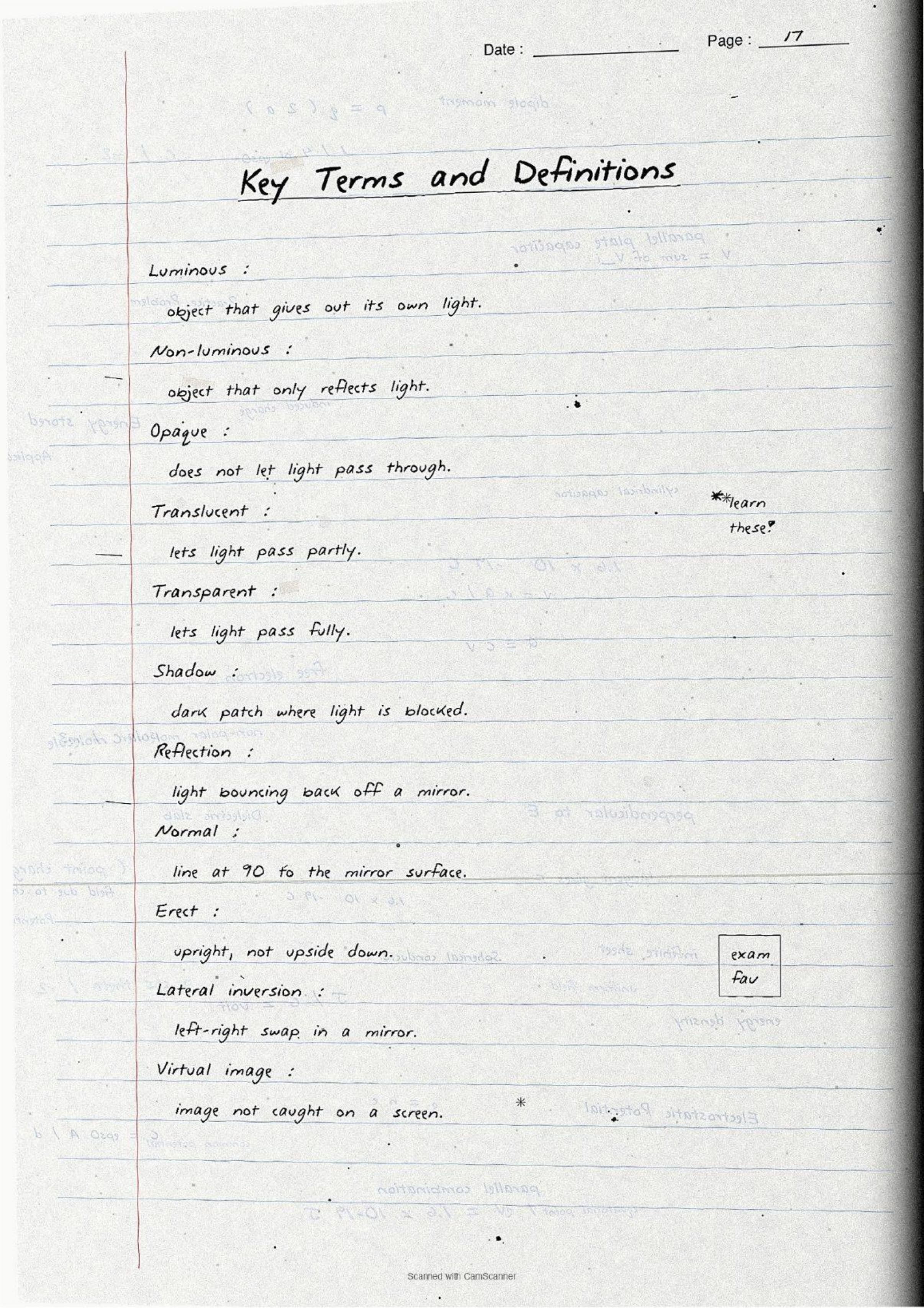
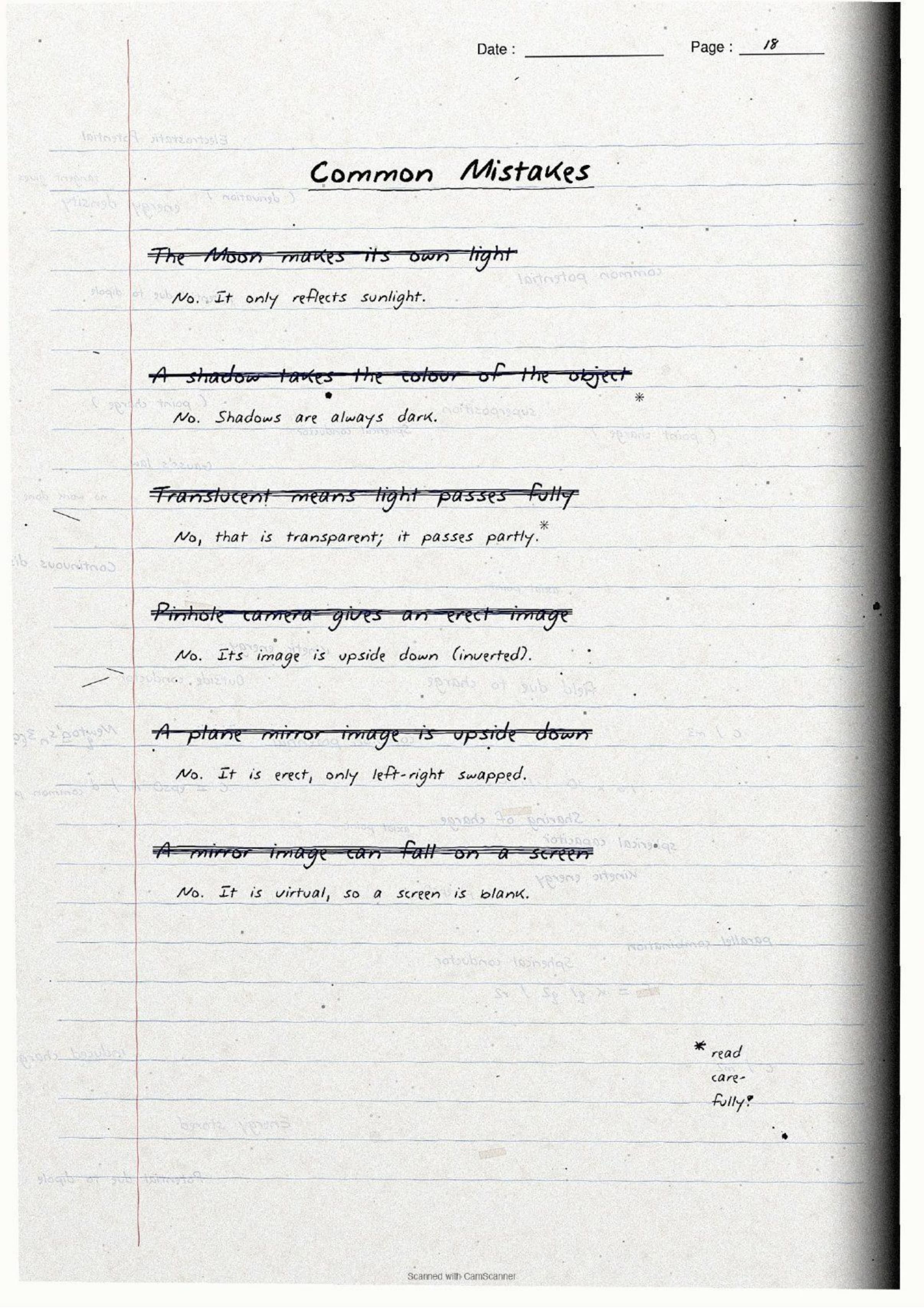
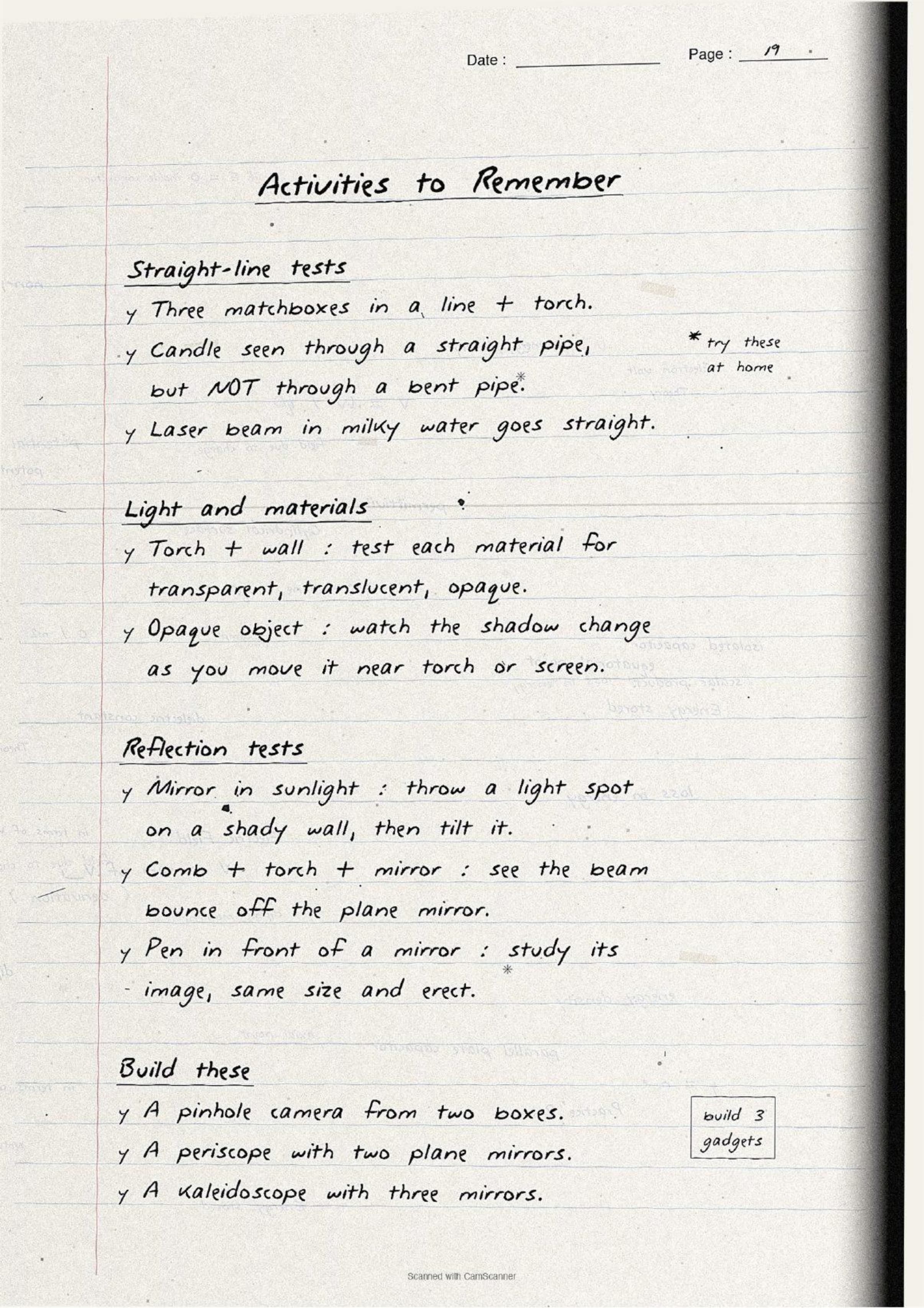
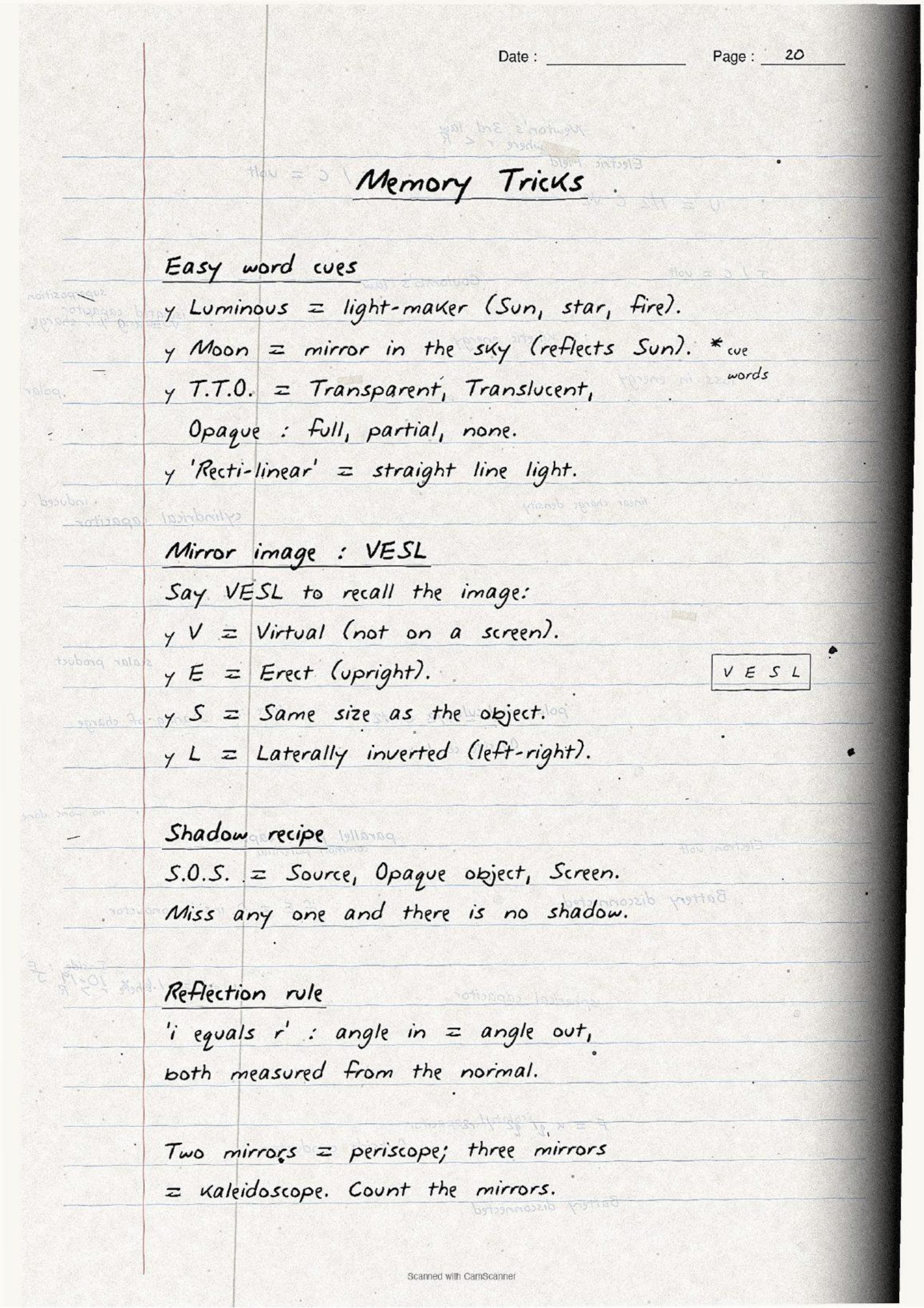
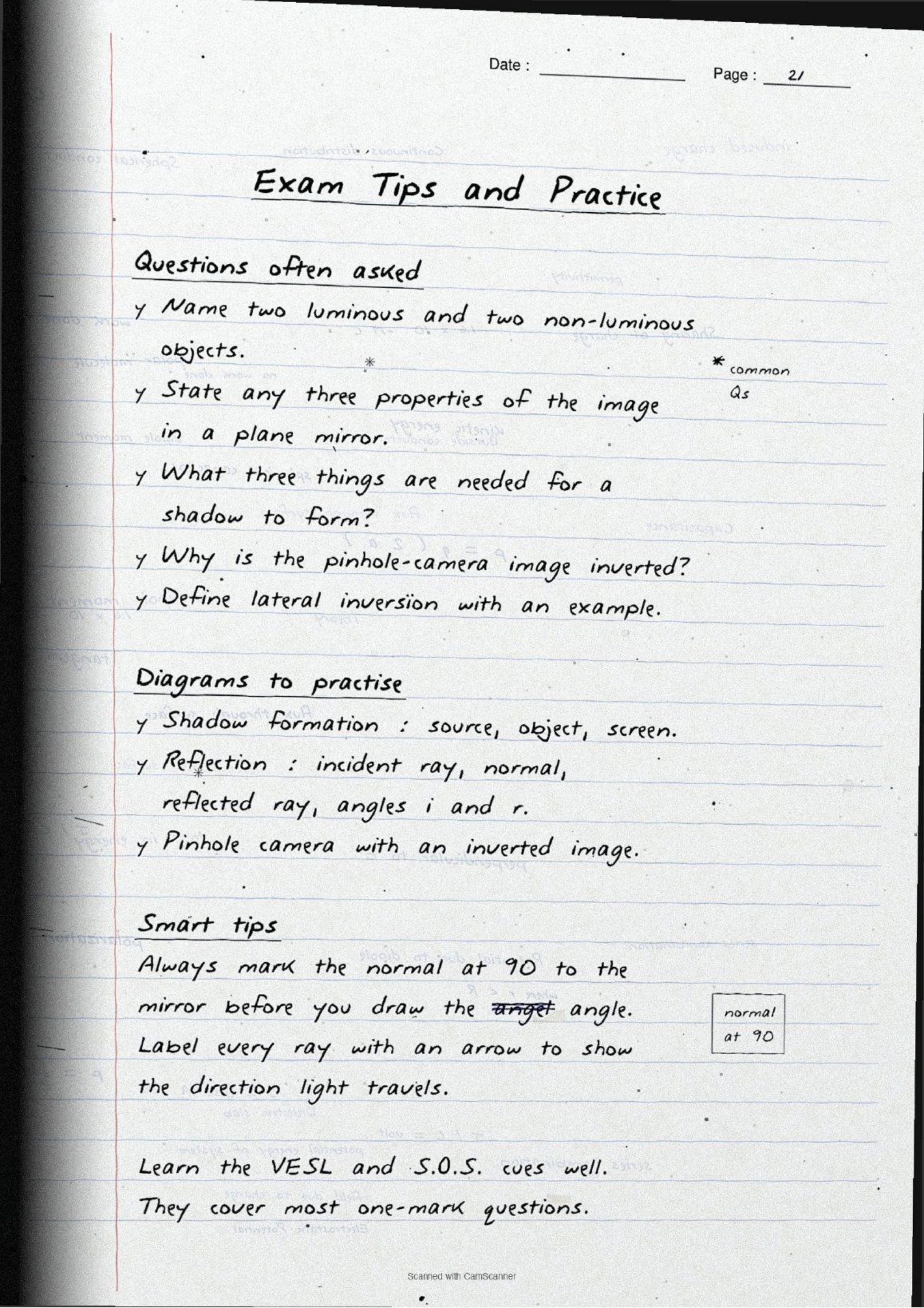
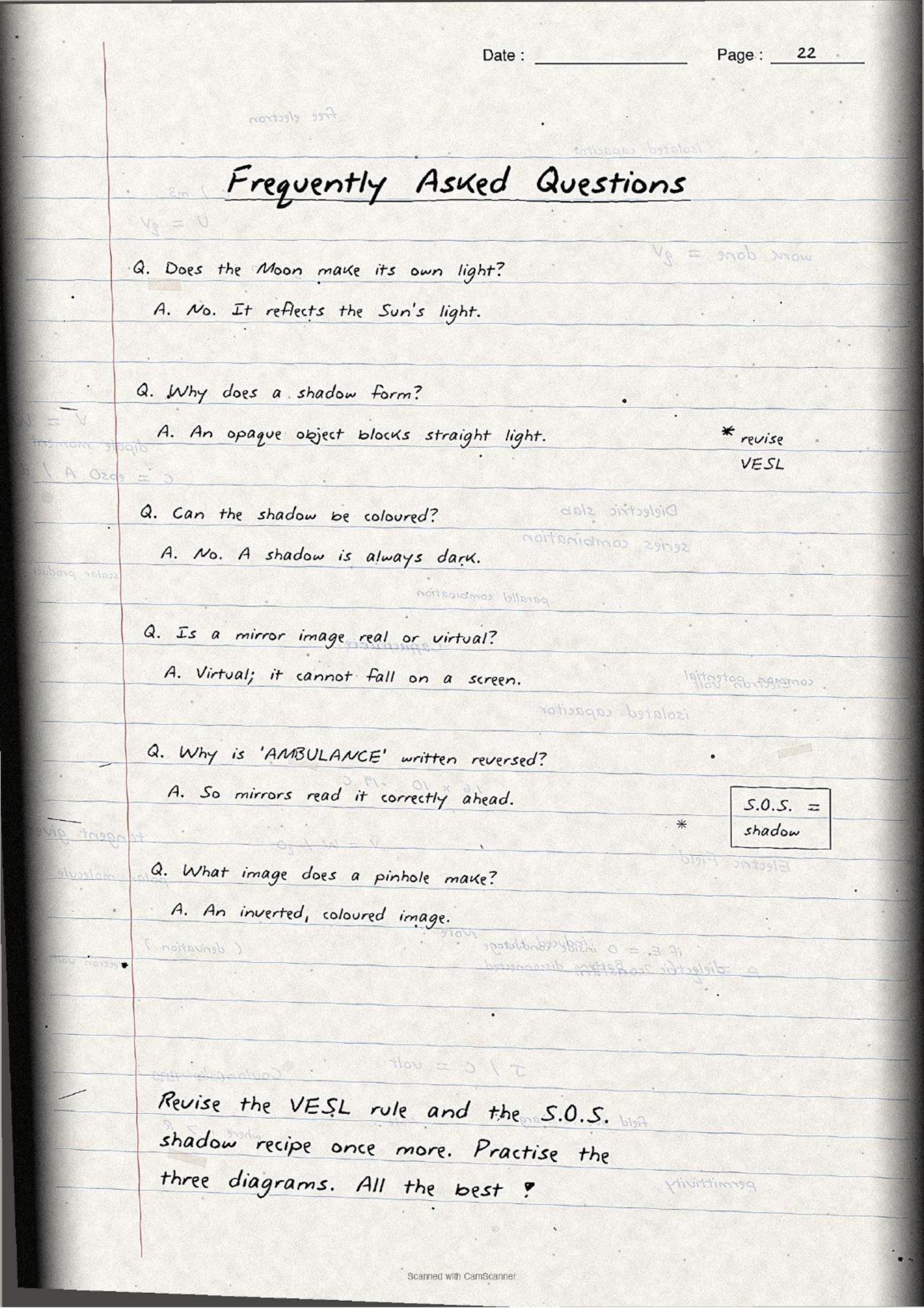
- Ray diagrams drawn: shadow formation, mirror reflection and the pinhole camera drawn with rays
- What the notes cover: luminous and non-luminous sources, transparent and opaque materials, shadows, reflection, images and two devices
- Best for: diagram questions on shadows and plane mirror images
Everything described here is in the class 7 science handwritten notes PDF for Light: Shadows and Reflections, linked below.
These handwritten notes are written by Science teachers, mapped to the 2026-27 NCERT, and checked against Class 7 school question papers.
Section-by-Section Map of the Light: Shadows and Reflections Notes
The chapter opens with fireflies in a Western Ghats village and works up to building a periscope. The notes follow that build, because each device uses the rule learned just before it.
- Sources of light: luminous and non-luminous
- Does light travel in a straight line
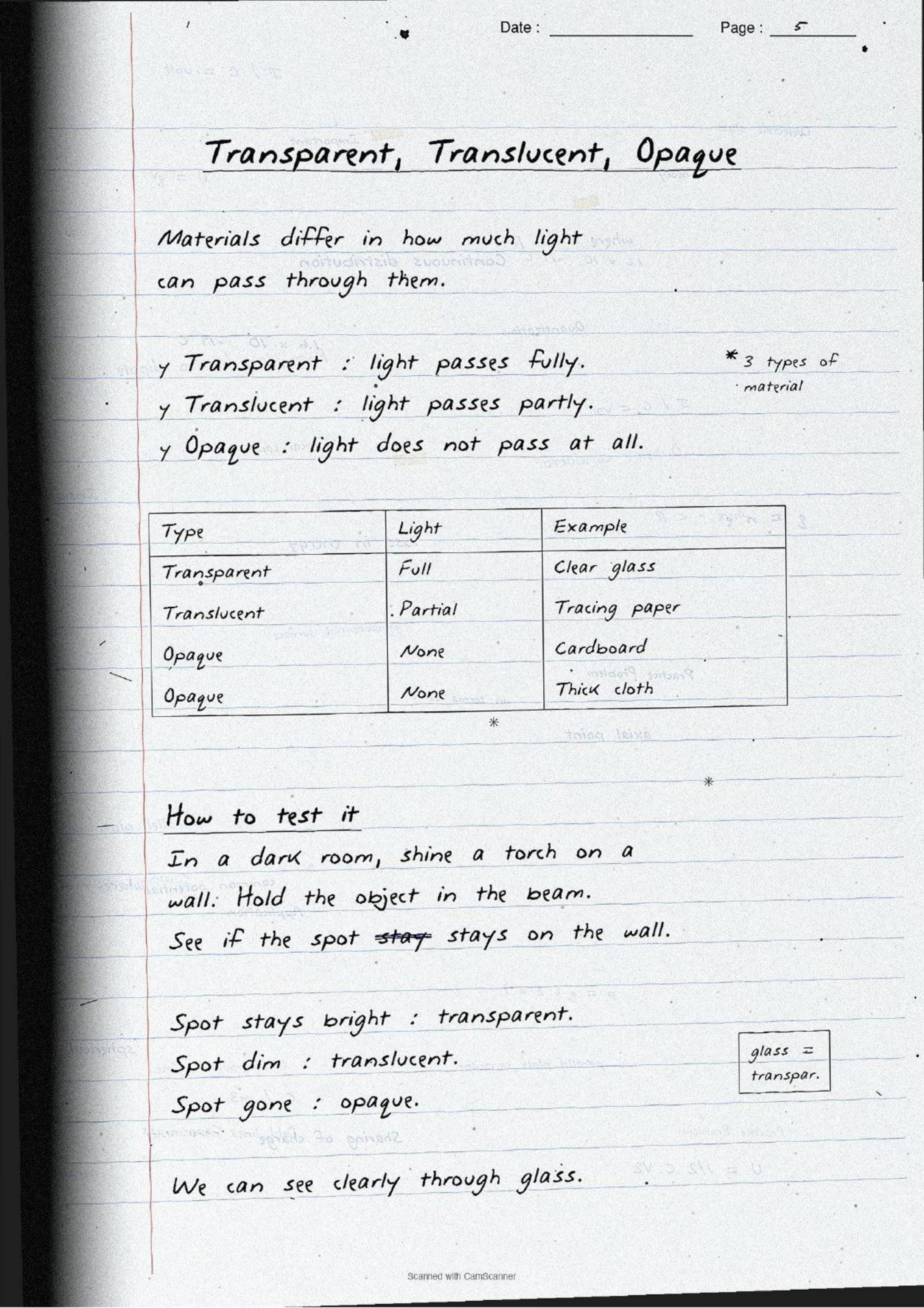
- Light through transparent, translucent and opaque materials
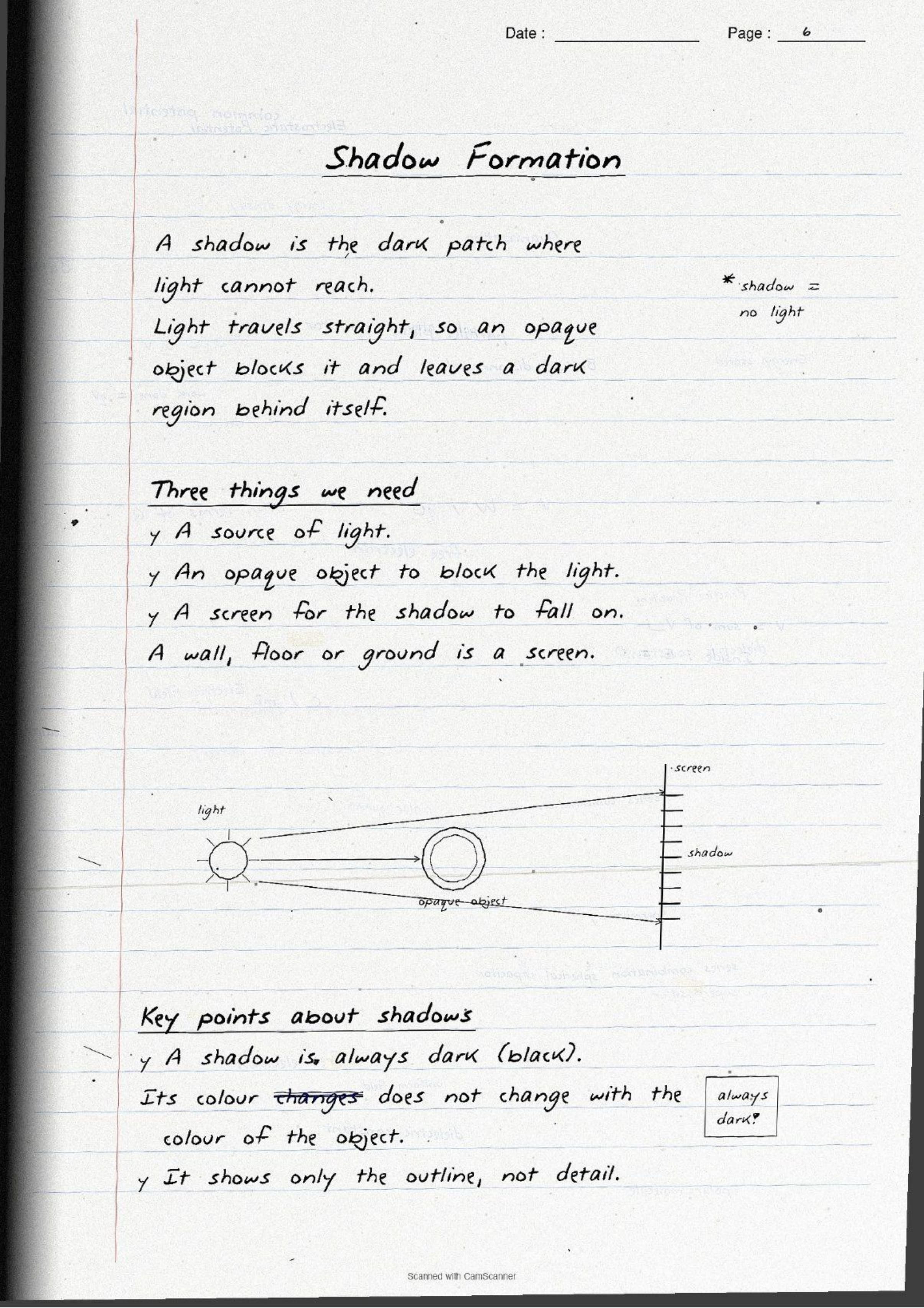
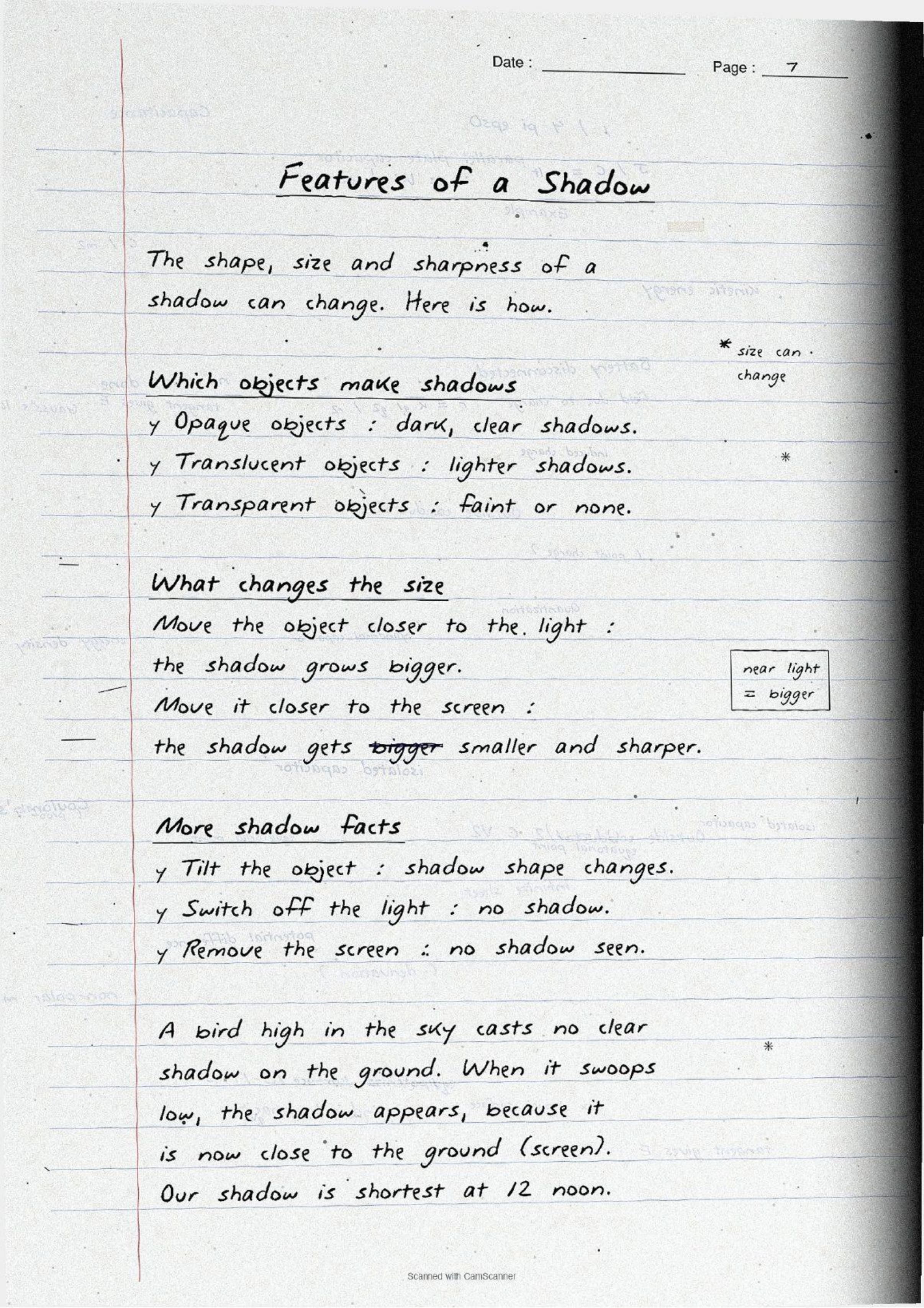
- Shadow formation and what a shadow shows
- Reflection of light
- Images formed in a plane mirror
- Lateral inversion in a mirror image
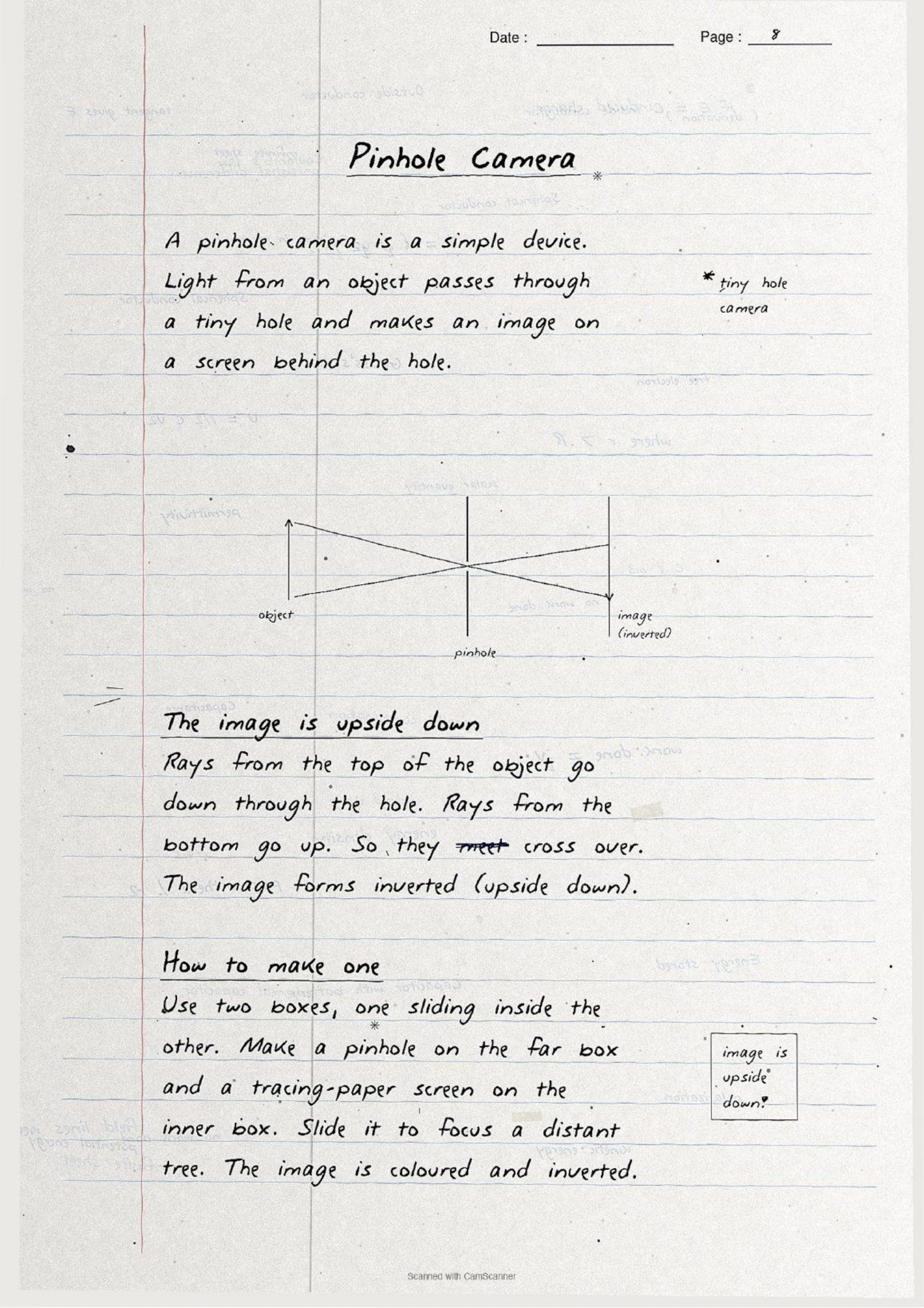
- The pinhole camera
- Making a periscope
- Making a kaleidoscope
How Collegedunia Wrote These Light: Shadows and Reflections Notes
Collegedunia drew each ray diagram with arrows on the rays and every part named, the way an examiner expects. Collegedunia checks every page of these class 7 science handwritten notes against the textbook.
- Labelled ray diagrams: shadow, reflection and pinhole camera drawn with arrows
- Mirror image property box: the four properties written in one hand-drawn box
- Material sorter: ten everyday materials split into transparent, translucent and opaque
- Colour-coded sub-headings: sub-topics written in red so each rule stands alone
How CBSE Class 7 Science Splits Marks Across Light: Shadows and Reflections
Ray diagrams take most of the marks here. Mirror image properties follow close behind.
| Sub-topic | Weightage | How often asked |
|---|---|---|
| Shadow formation with ray diagram | High | asked often |
| Properties of a plane mirror image | High | asked often |
| Transparent, translucent and opaque | High | asked often |
| Pinhole camera | Medium | asked sometimes |
| Periscope | Medium | asked sometimes |
| Kaleidoscope | Low | asked rarely |
The Light: Shadows and Reflections Vocabulary CBSE Class 7 Science Expects
A ray diagram answer needs the right words in its labels.
| Term / Idea | What it means |
|---|---|
| Luminous object | an object that gives out its own light, like the Sun |
| Non-luminous object | an object that is seen only by reflected light, like the Moon |
| Transparent | a material you can see through clearly, like clear glass |
| Translucent | a material that lets some light through but blurs it, like butter paper |
| Opaque | a material that lets no light through, like wood |
| Shadow | the dark patch formed when an opaque object blocks light |
| Reflection | the bouncing back of light from a surface |
| Lateral inversion | the left-right reversal seen in a plane mirror image |
| Pinhole camera | a closed box with a tiny hole that forms an inverted image |
Light: Shadows and Reflections Practice Questions with Answers
Five quick questions on light. Tap to see the answer.
Which of these is a luminous object?
(a) the Moon (b) a mirror (c) the Sun (d) a wooden table
Answer: (c) the Sun, it gives out its own light
Butter paper is an example of a
(a) transparent material (b) translucent material (c) opaque material (d) luminous object
Answer: (b) translucent material
An image in a plane mirror is
(a) smaller than the object (b) inverted (c) the same size and laterally inverted (d) always coloured
Answer: (c) the same size and laterally inverted
A shadow forms because light
(a) bends around objects (b) travels in straight lines and is blocked (c) changes colour (d) speeds up
Answer: (b) travels in straight lines and is blocked
The image formed by a pinhole camera is
(a) erect and enlarged (b) inverted (c) the same as in a mirror (d) never formed
Answer: (b) inverted
Why Light: Shadows and Reflections Matters Beyond Class 7
Light rewards neat drawing. Most lost marks come from ray diagrams without arrows or without labels.
- A shadow or mirror ray diagram appears in nearly every Class 7 paper
- The four properties of a plane mirror image are a standard two-mark answer
- Sorting materials into transparent, translucent and opaque is a one-mark question
- These ray rules carry straight into the Class 10 light chapter
One-Page Recall Card for Light: Shadows and Reflections
Everything for the final ten minutes.
- Light travels in straight lines
- Luminous gives its own light; non-luminous only reflects
- Transparent, translucent, opaque in that order of clarity
- Shadow shows shape, not colour
- Mirror image: same size, equally far behind, erect, laterally inverted
- Pinhole camera gives an inverted image
What the Light: Shadows and Reflections Notes Draw Out for You
The whole chapter is diagrams, so the notes give them the most space.
| Figure drawn by hand | What it shows |
|---|---|
| Straight-line travel | three cards with holes lined up to show a straight path |
| Shadow formation | source, opaque object and screen with rays marked |
| Material sorter | transparent, translucent and opaque samples compared |
| Plane mirror reflection | incident and reflected rays with the image behind |
| Lateral inversion sketch | the word AMBULANCE reversed in a mirror |
| Pinhole camera | the inverted image on the screen with rays traced |
| Periscope | two mirrors at angles inside a tube |
Fitting the Light: Shadows and Reflections Notes Into Your Revision Week
Draw first, then read. Ray diagrams stick only when your own hand has drawn them. Treat the class 7 science handwritten notes as a revision tool, not as a first-time textbook.
- Draw a shadow ray diagram with the source, object and screen marked
- Write the four properties of a plane mirror image from memory
- Draw the pinhole camera and mark the inverted image
- Before the test, revise the property box and the three ray diagrams
Pair the Light: Shadows and Reflections Notes With These
Use the solved exercises for extra ray-diagram practice.
Class 7 Science Handwritten Notes Chapter List
The class 7 science handwritten notes for all chapters are listed below. All twelve Class 7 Science chapters have their own handwritten notes.
Light: Shadows and Reflections Class 7 Science Handwritten Notes FAQs
Ques. Where can I download the Light Shadows and Reflections Class 7 Handwritten Notes PDF?
Ans. The PDF is on this page, free, in both the normal and the HD version.
Ques. Do the notes include ray diagrams?
Ans. Yes. Shadow formation, plane mirror reflection, the pinhole camera and the periscope are all drawn by hand with arrows and labels.
Ques. How many pages is the Chapter 11 handwritten notes PDF?
Ans. It runs 22 pages and covers all eight sections of the chapter plus a quiz.
Ques. What are the properties of an image formed by a plane mirror?
Ans. It is the same size as the object, as far behind the mirror as the object is in front, erect, and laterally inverted, which means left and right are swapped.
Ques. Why is a shadow always dark?
Ans. A shadow is the region where light has been blocked by an opaque object. No light reaches it, so it shows only the outline of the object and never its colour.



Comments