




Class 7 Science Chapter 7 Heat Transfer in Nature explains how heat moves and why coastal places feel different from hill towns. These class 7 science handwritten notes chapter 7 Heat Transfer in Nature follow the 2026-27 NCERT and cover conduction, convection, radiation, sea breeze and the water cycle.
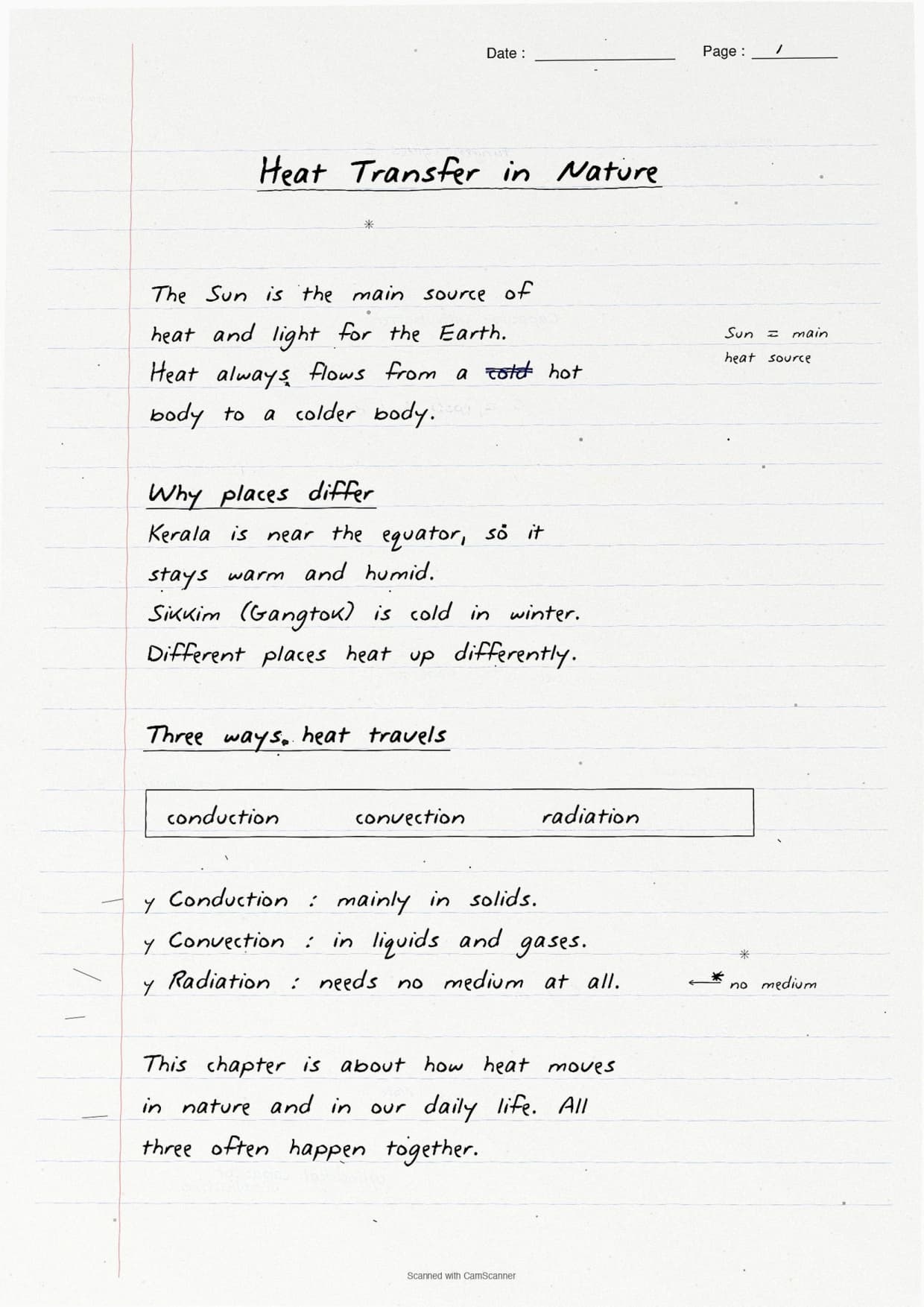
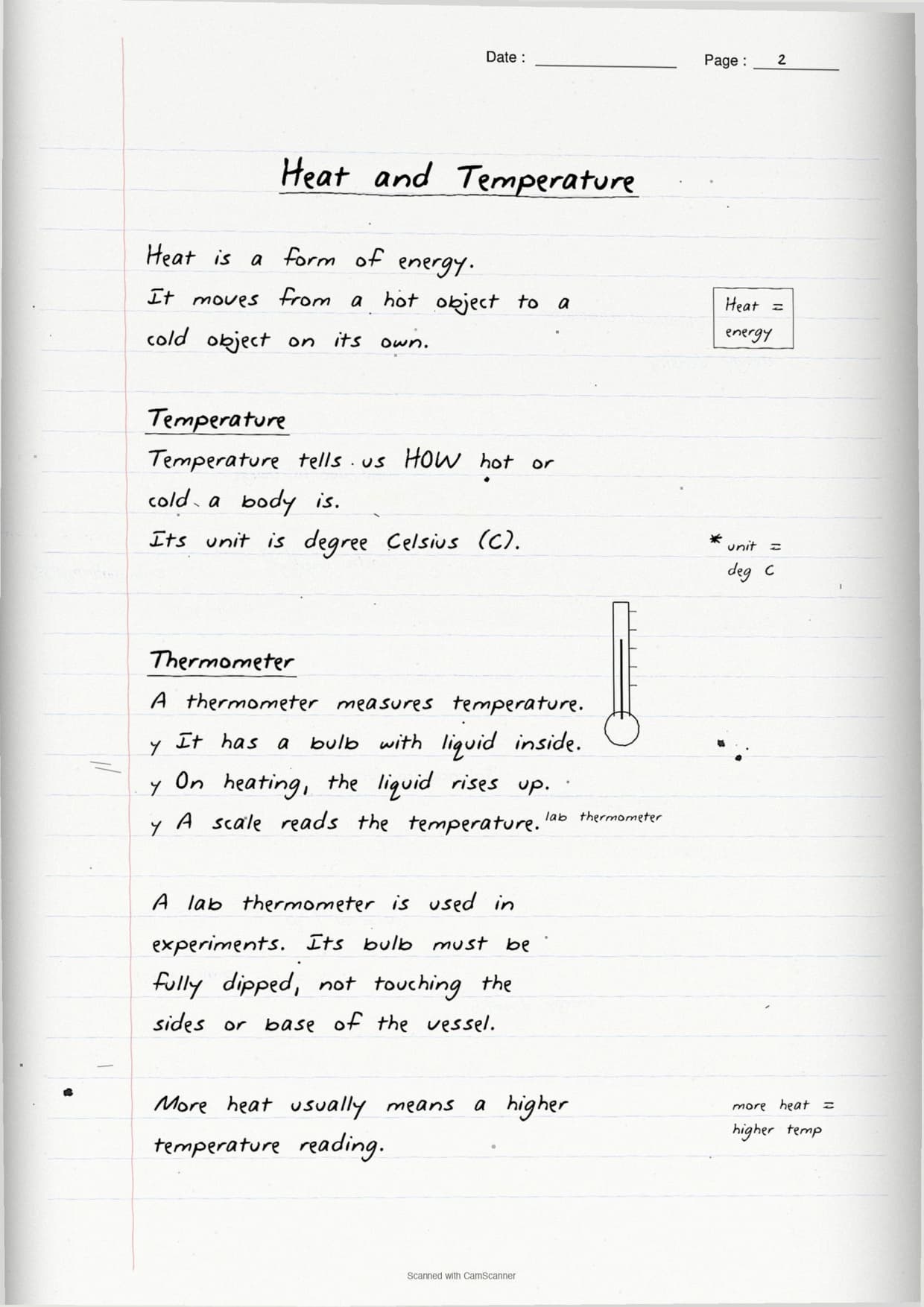
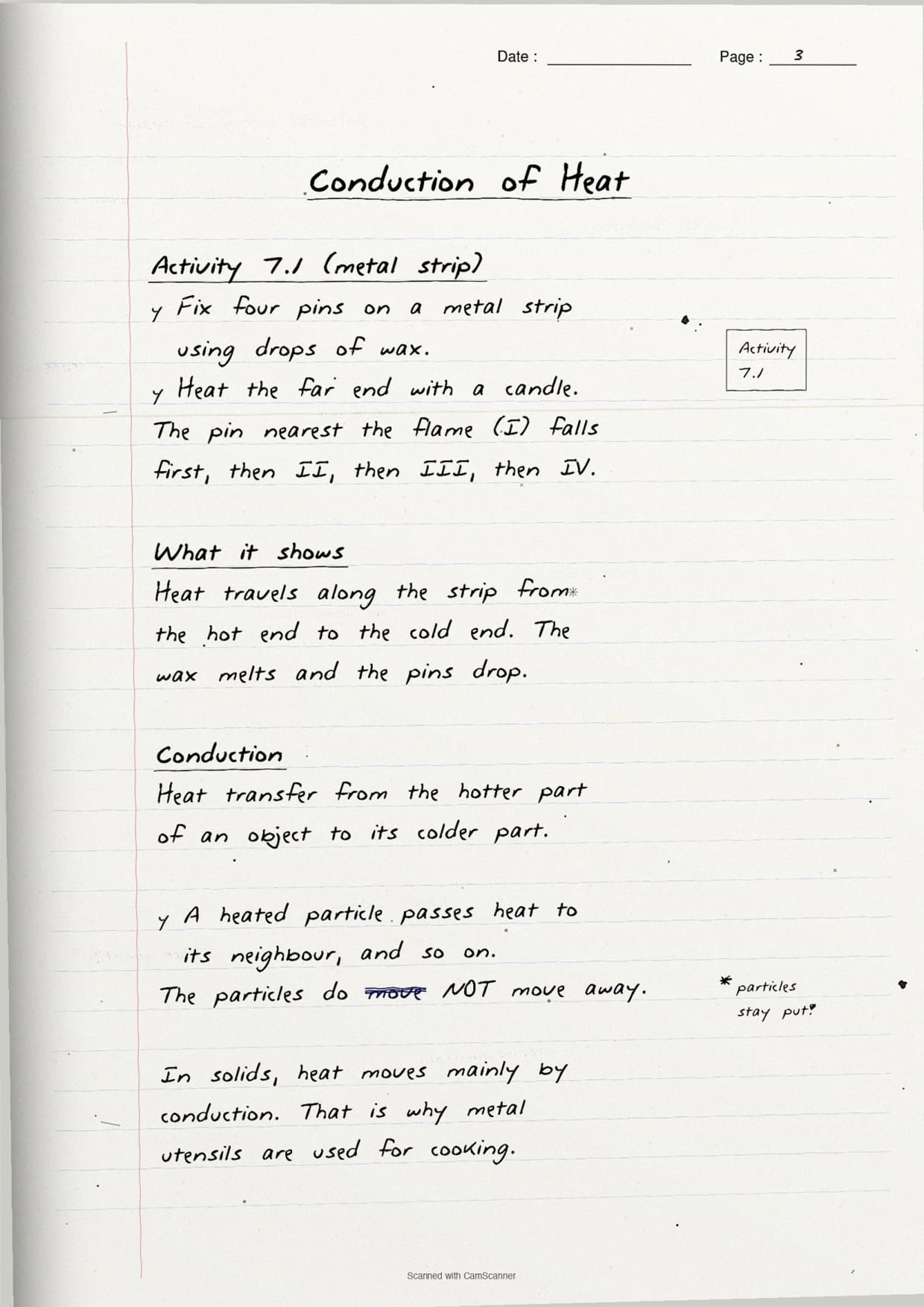
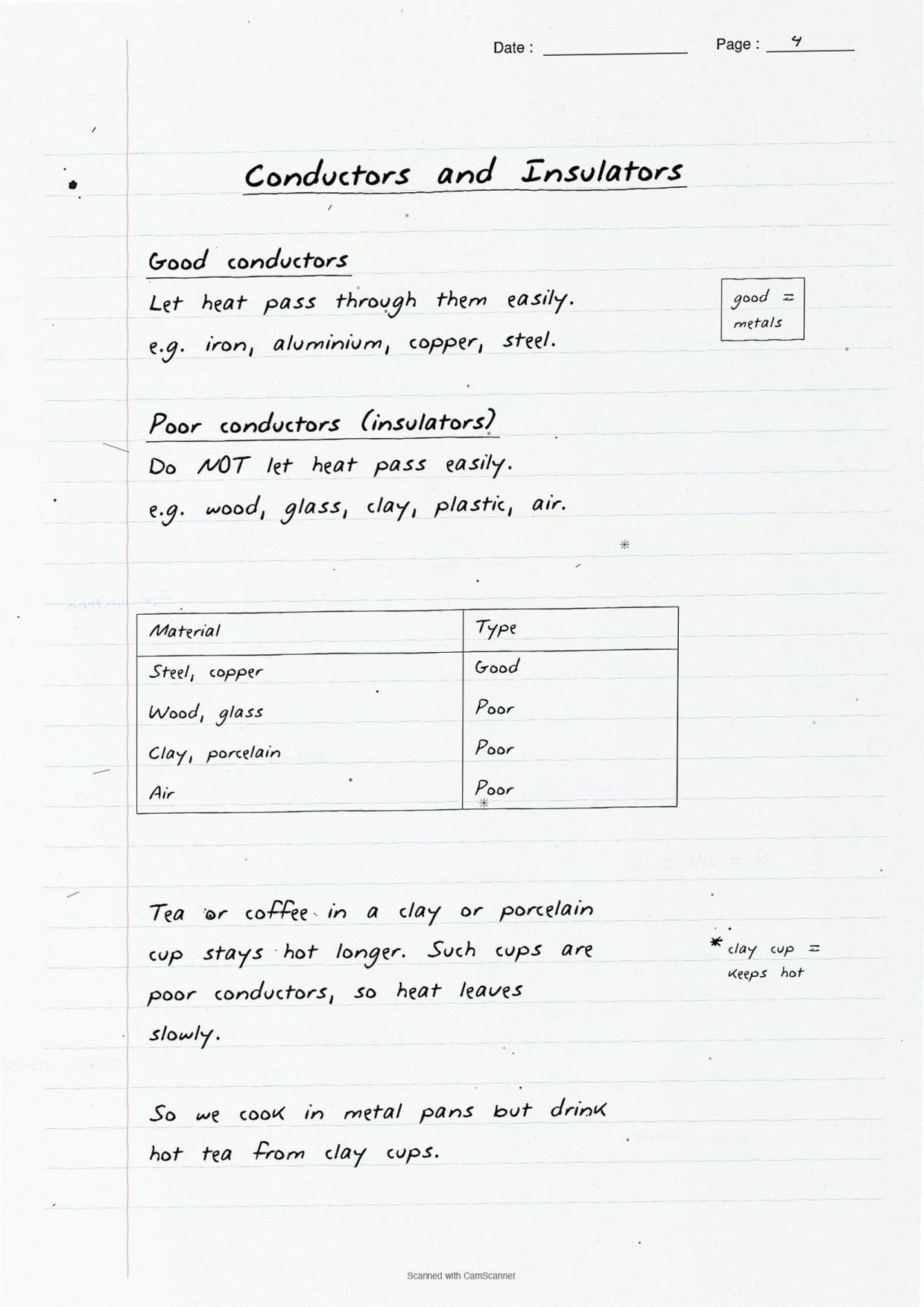
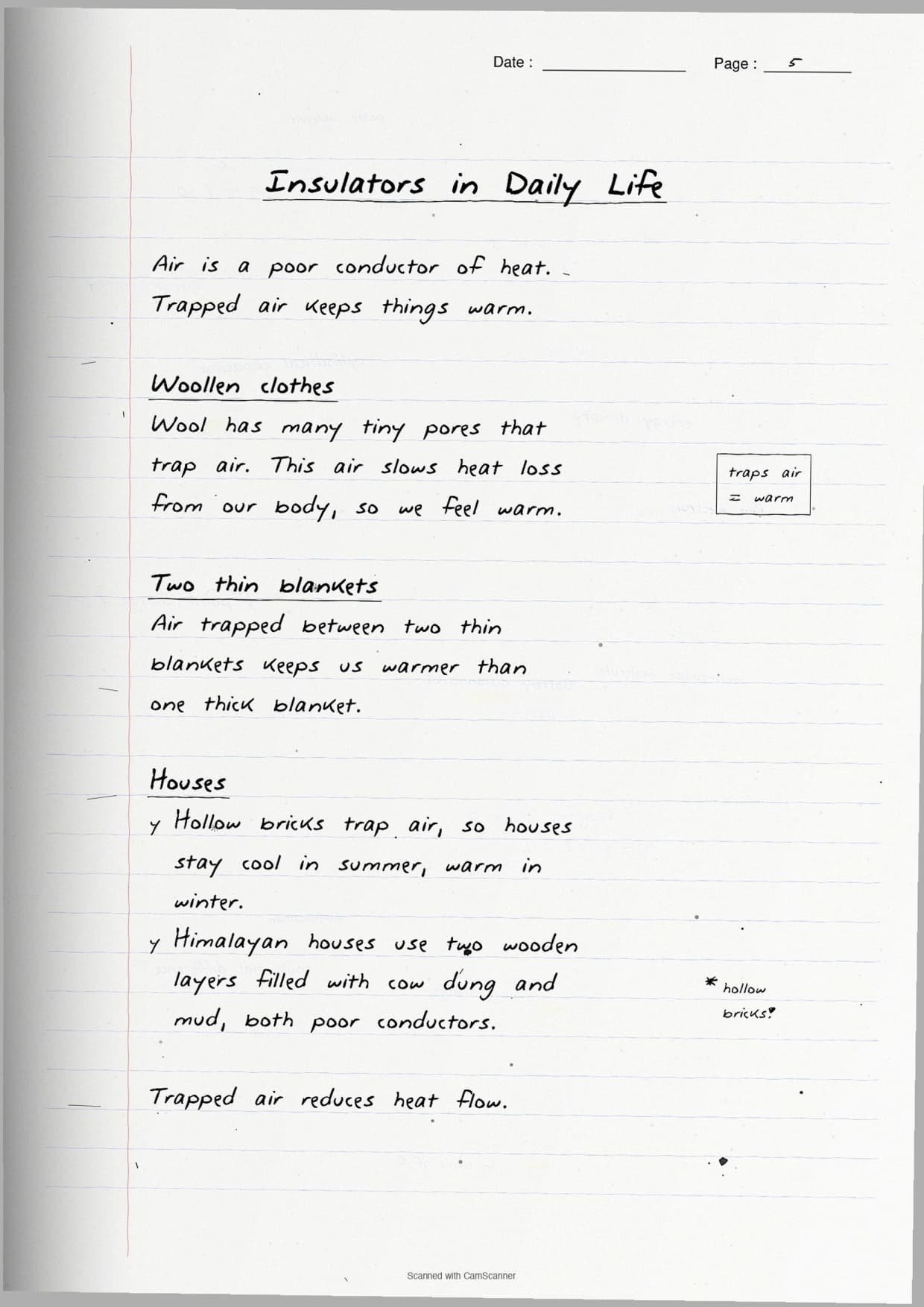
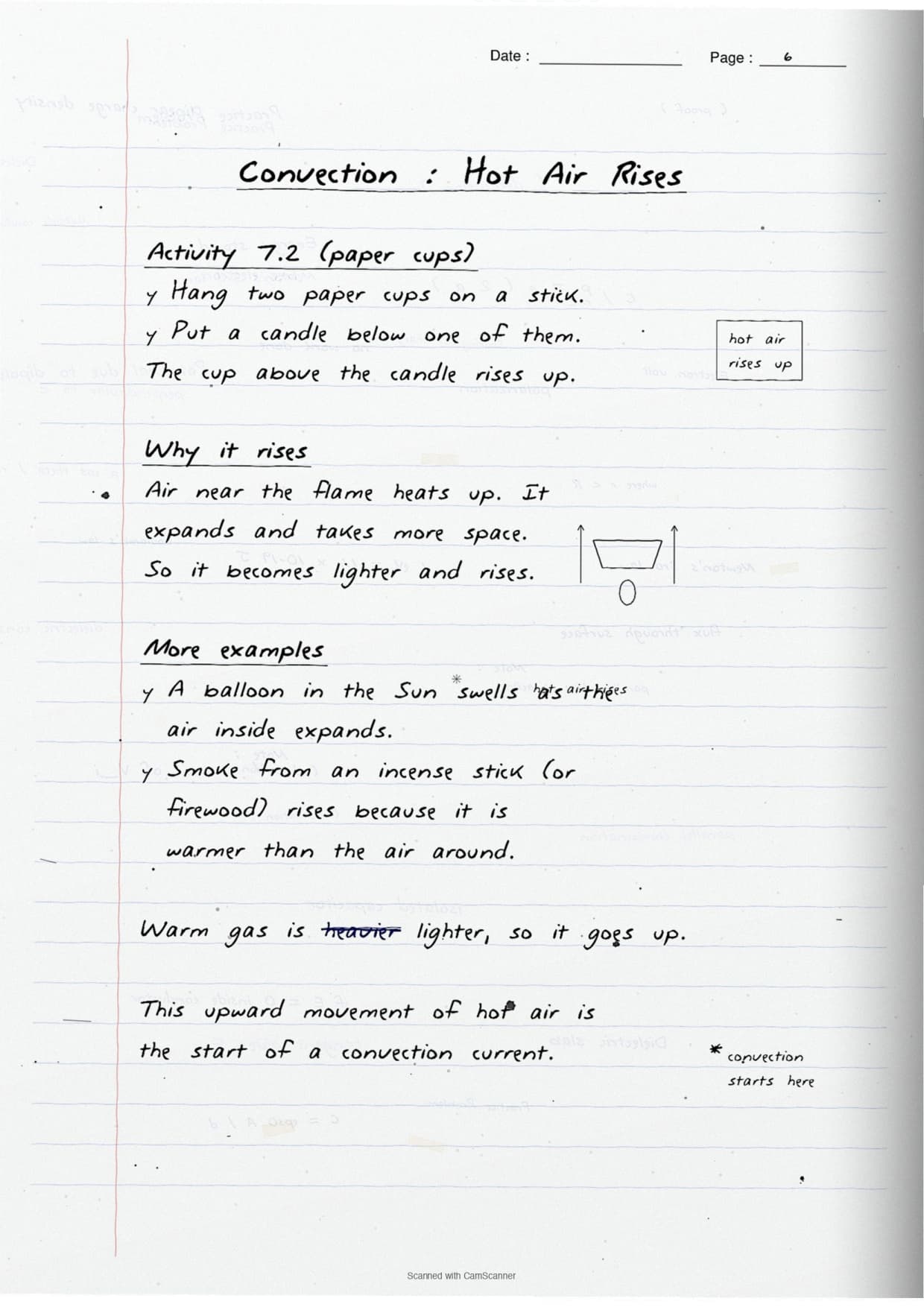
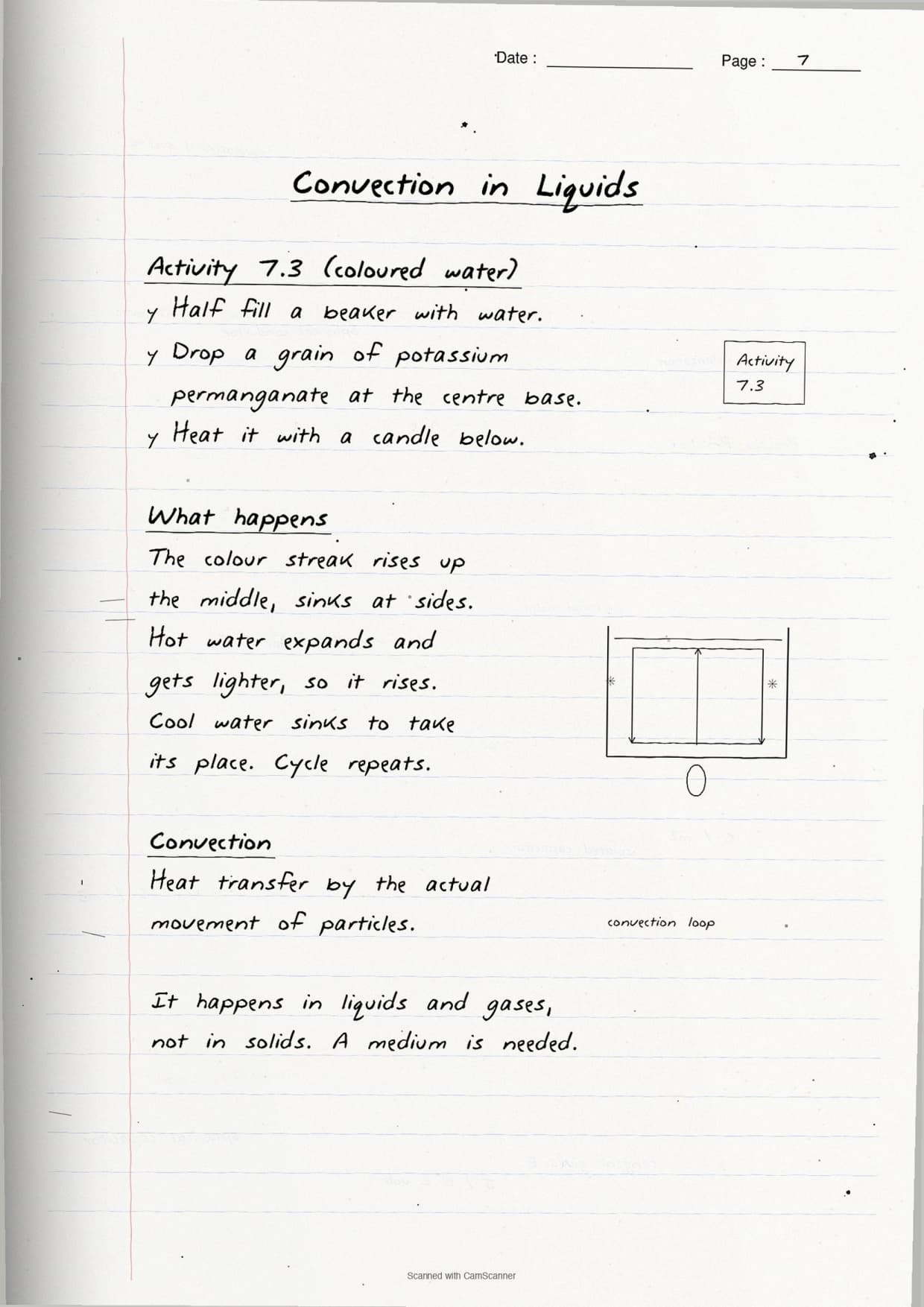
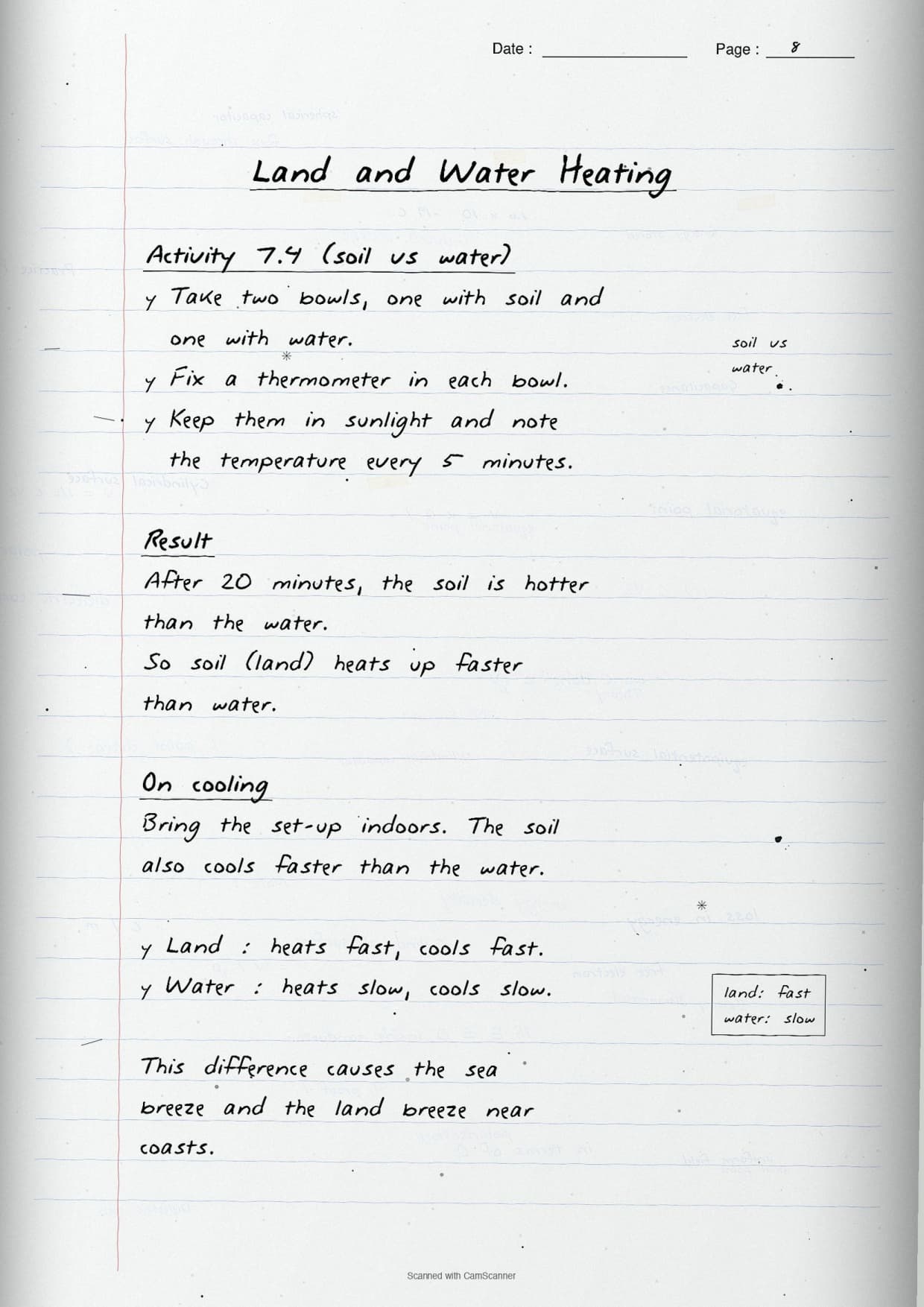
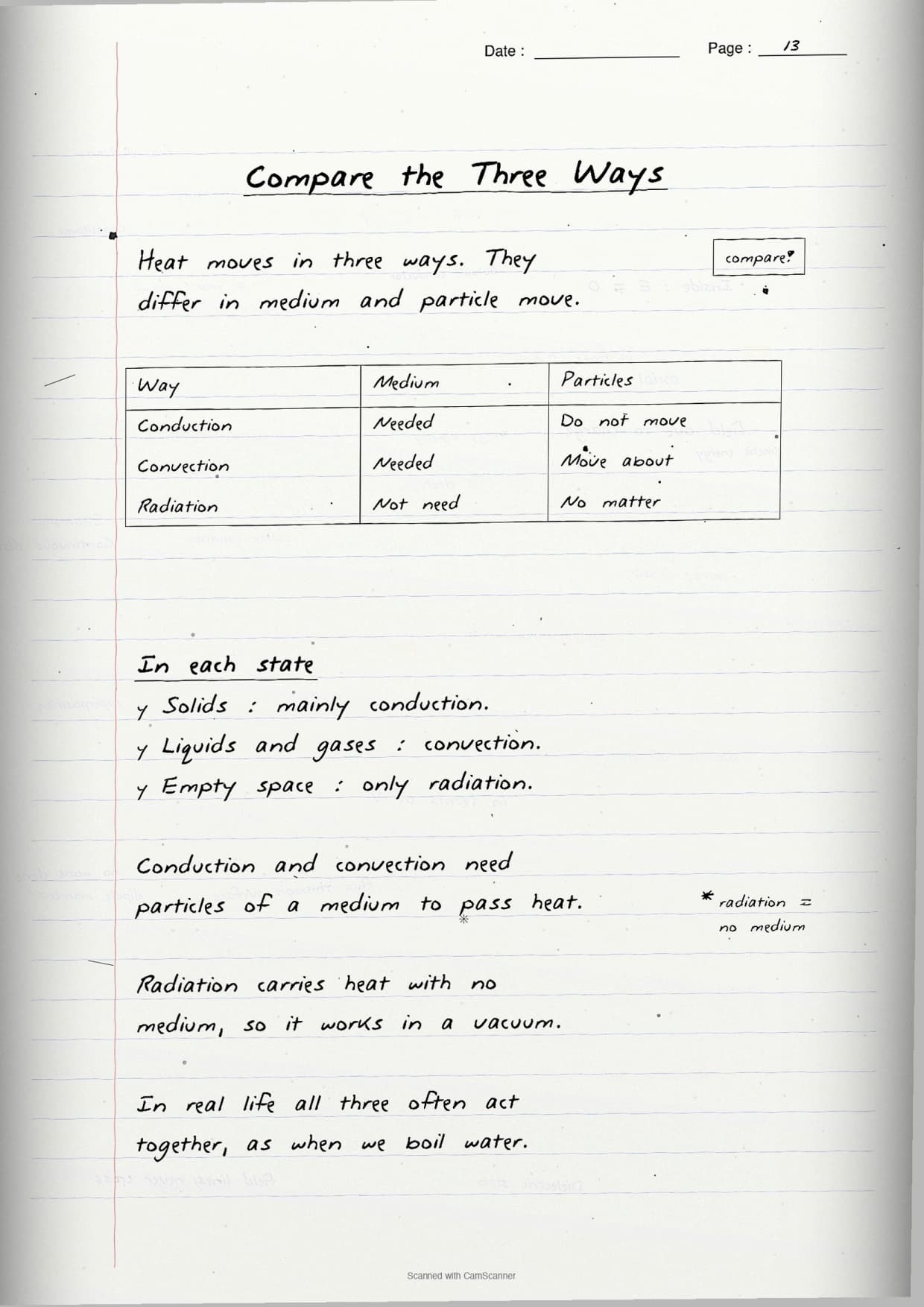
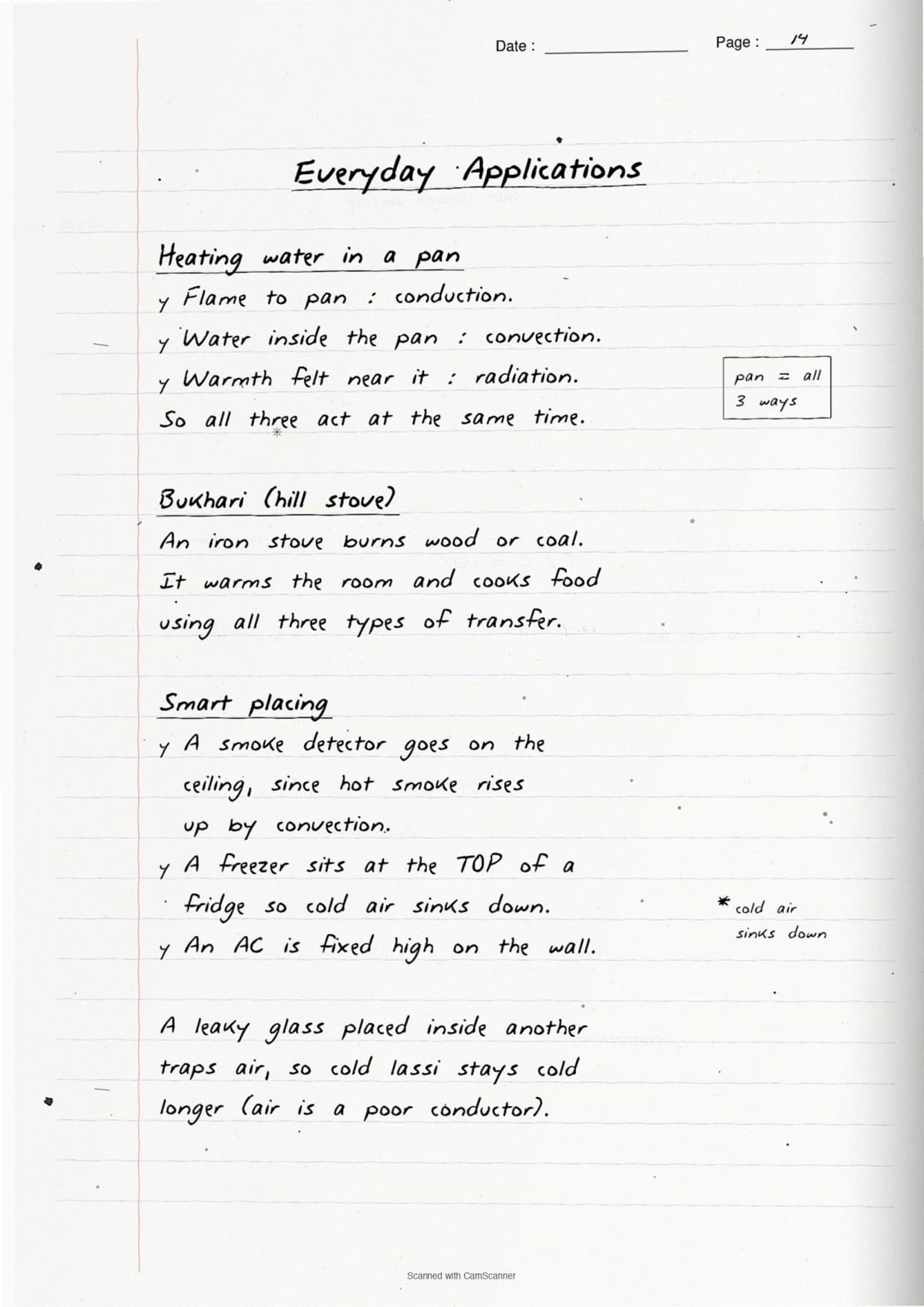
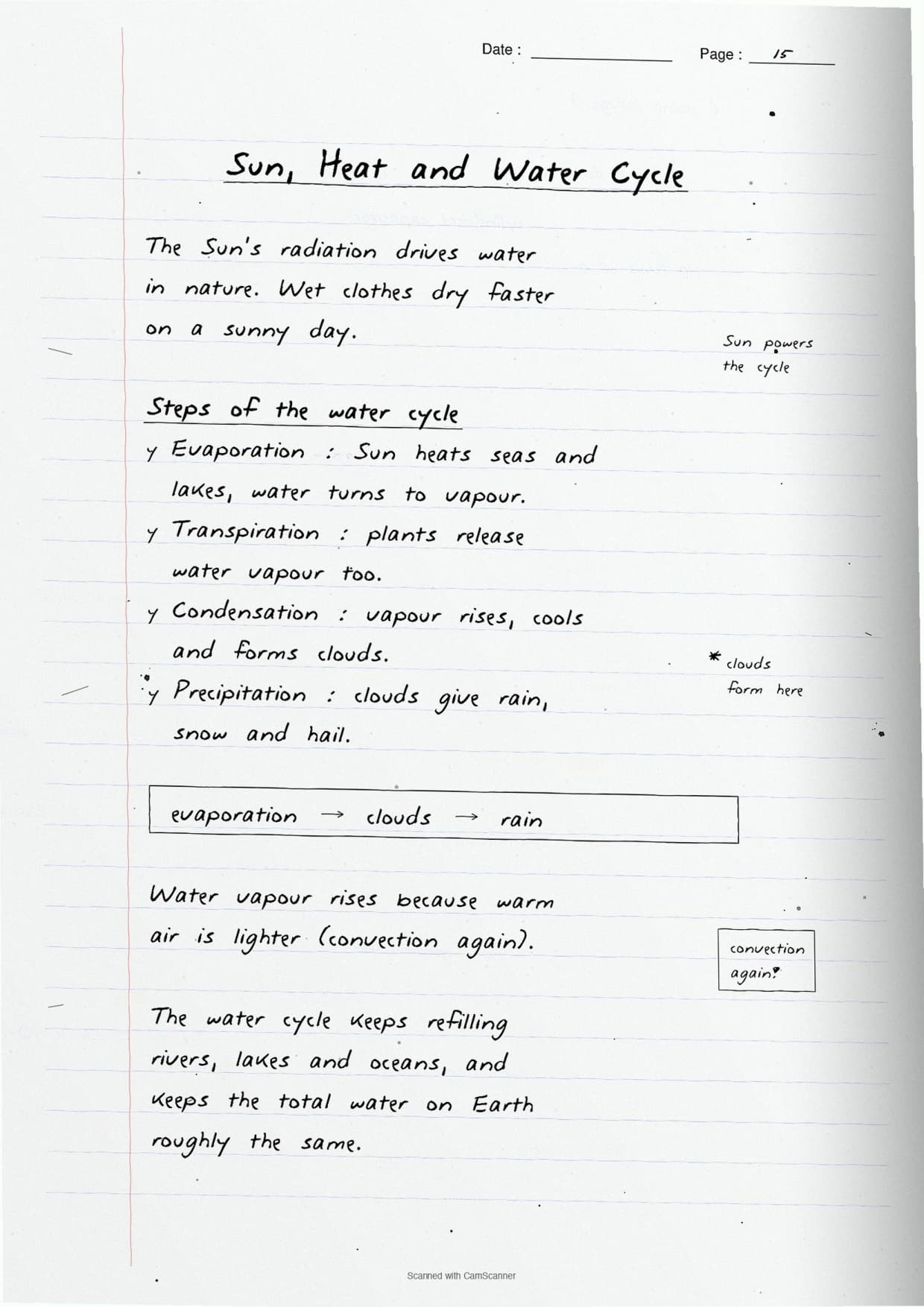
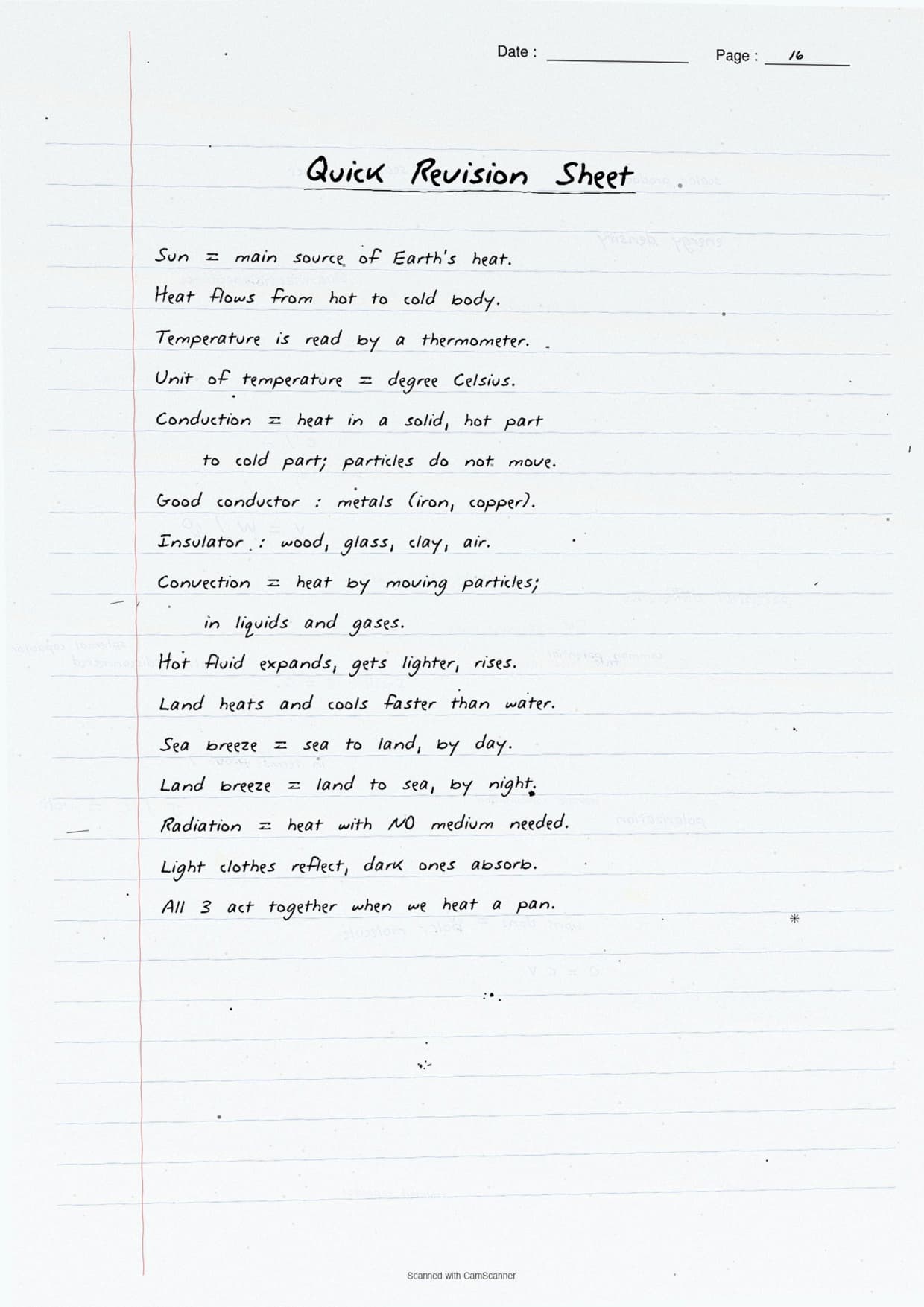
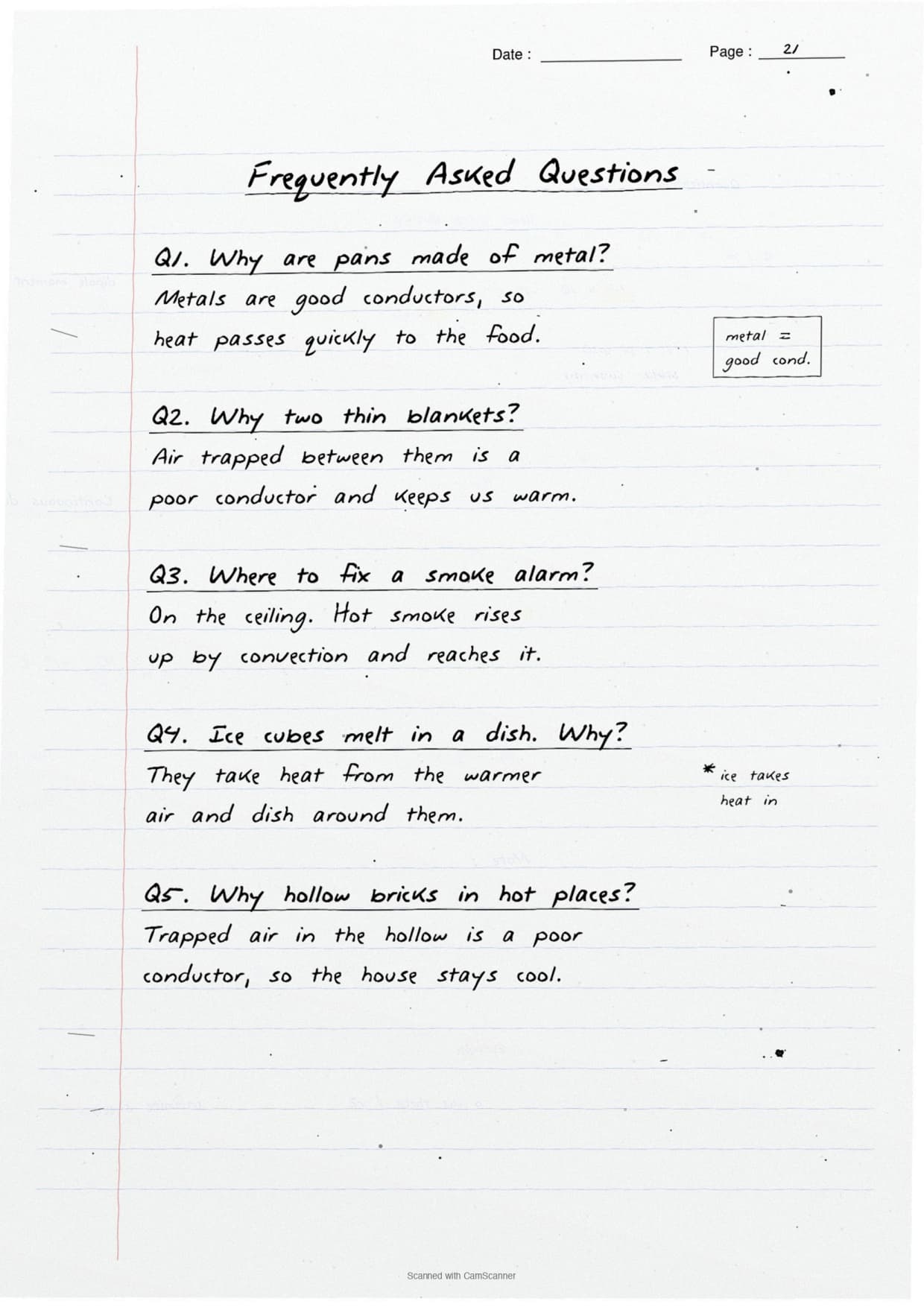
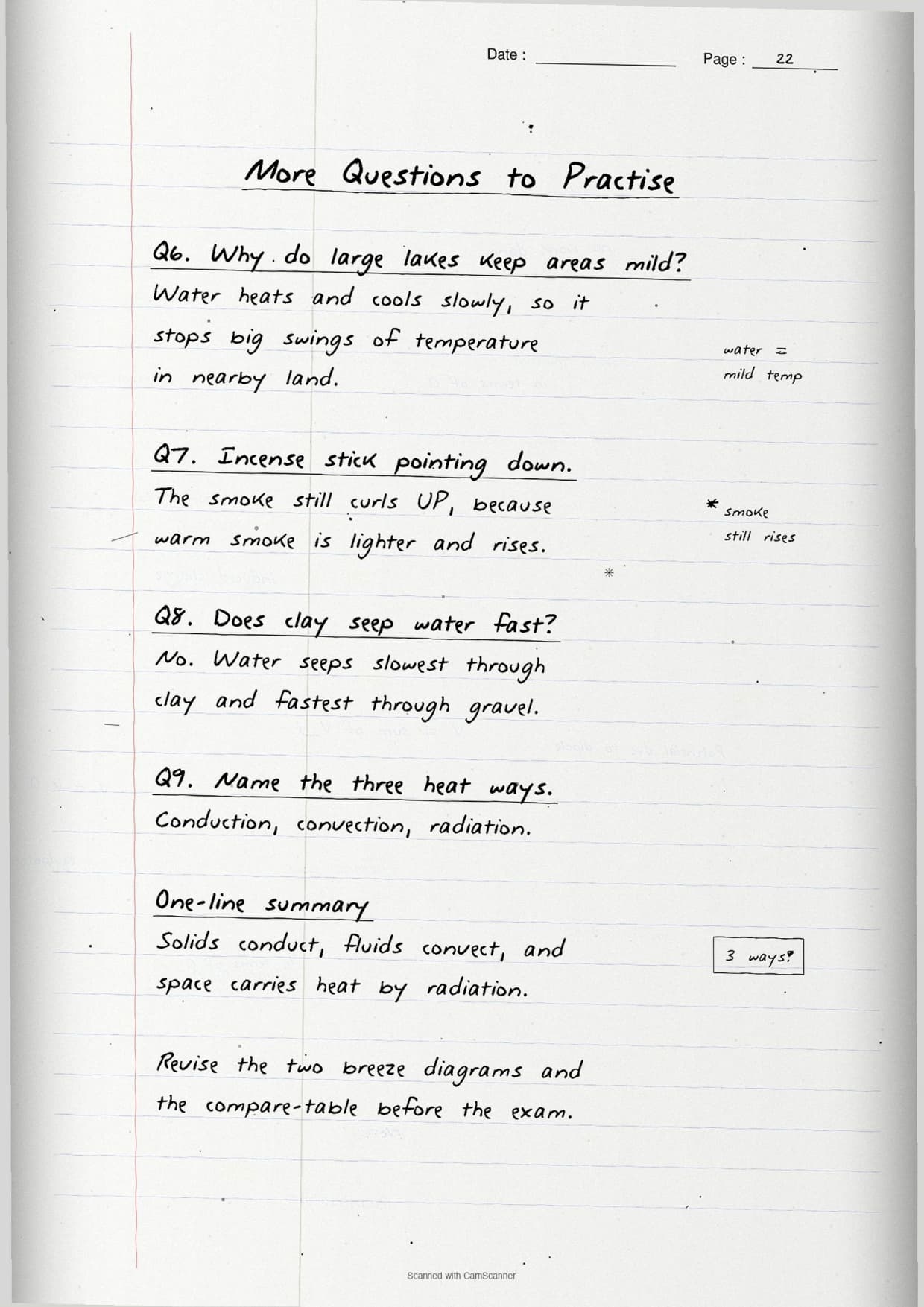
- Three modes boxed: conduction, convection and radiation compared in one hand-drawn table
- What the notes cover: how heat travels, land and sea breeze, the water cycle and seepage of water underground
- Best for: the sea-breeze question and the water-cycle diagram, both common in Class 7 tests
You can read the complete class 7 science handwritten notes for Heat Transfer in Nature, with boxed definitions and quick recall points, in the PDF below.
These handwritten notes are written by Science teachers, mapped to the 2026-27 NCERT, and checked against Class 7 school question papers.
How Collegedunia's Handwritten Notes Help You Revise Heat Transfer in Nature
Collegedunia writes its class 7 science handwritten notes as one clean pass through the chapter. Collegedunia drew the breeze diagrams the way you should draw them in the exam, with the arrows and labels included.
- Comparison table: the three modes side by side with an example for each
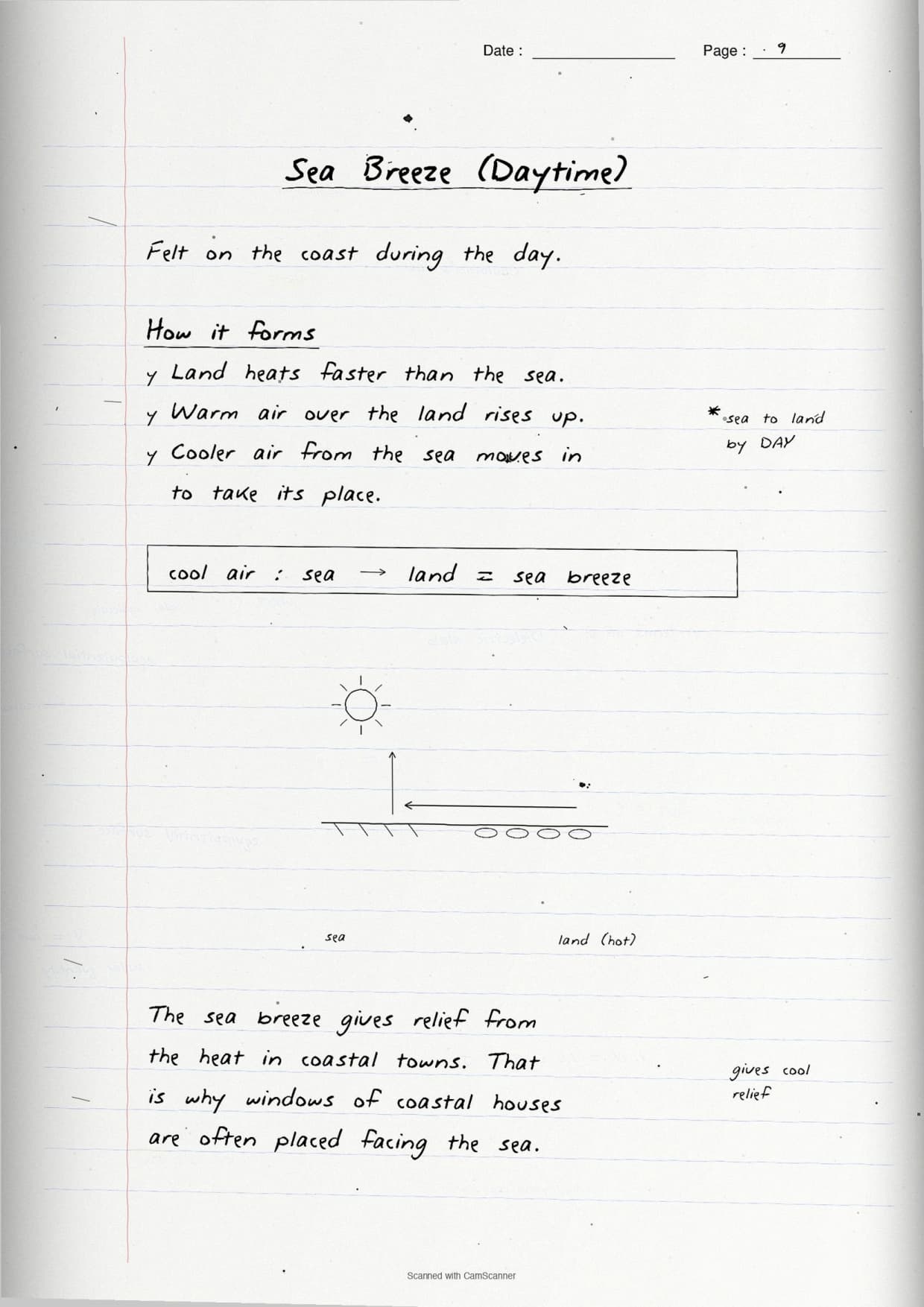
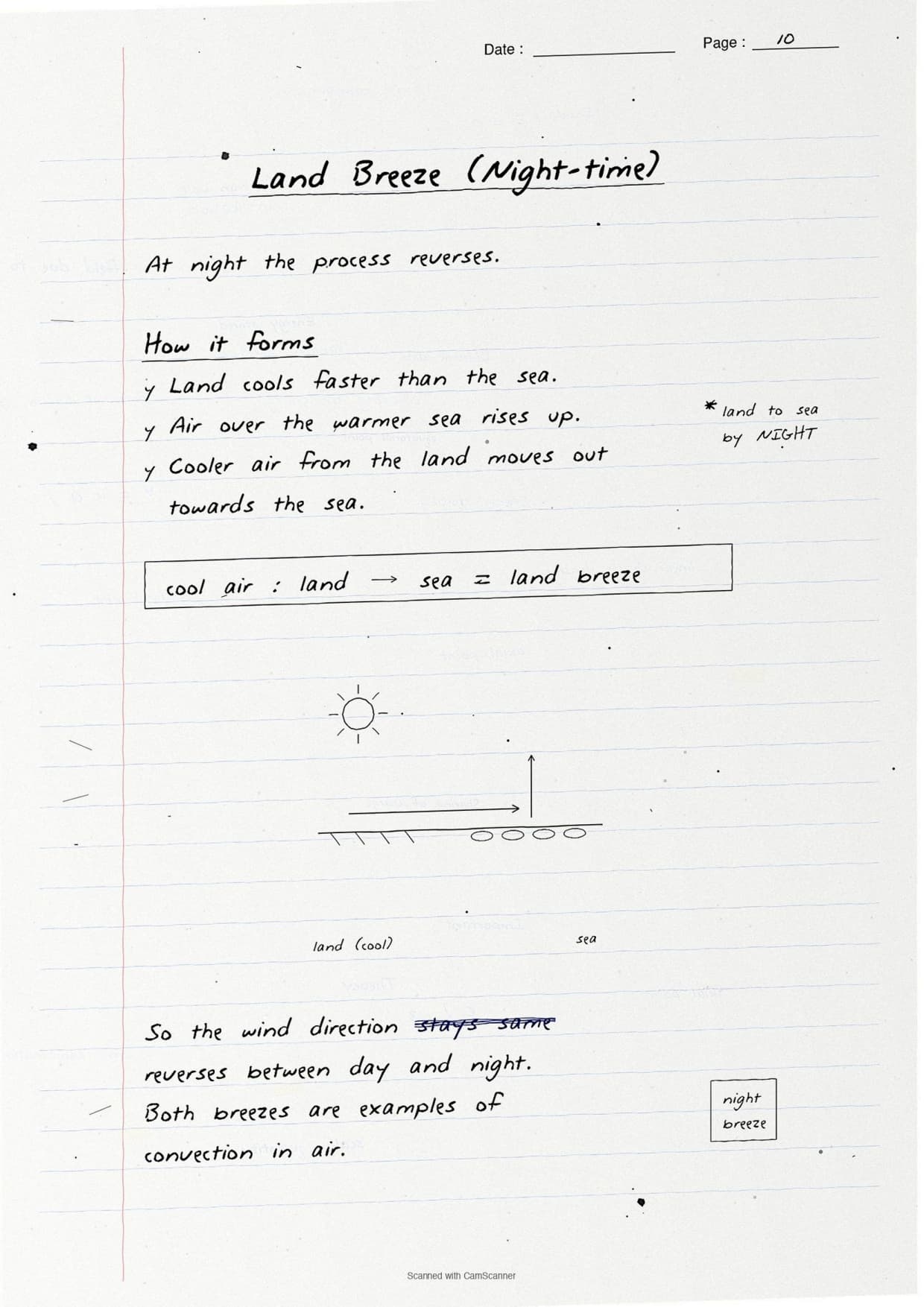
- Breeze pair: sea breeze and land breeze drawn one above the other with arrows
- Labelled water cycle: evaporation, condensation, precipitation and collection marked
- Colour-coded sub-headings: sub-topics in red so the three modes stay separate
What the Heat Transfer in Nature Handwritten Notes Cover
The chapter opens with two children in Gangtok wondering why Kerala is warmer in winter. Every mode of heat transfer is then introduced through a familiar situation, and the notes keep those situations.
- Conduction of heat through solids
- Convection in liquids and gases
- Land breeze and sea breeze
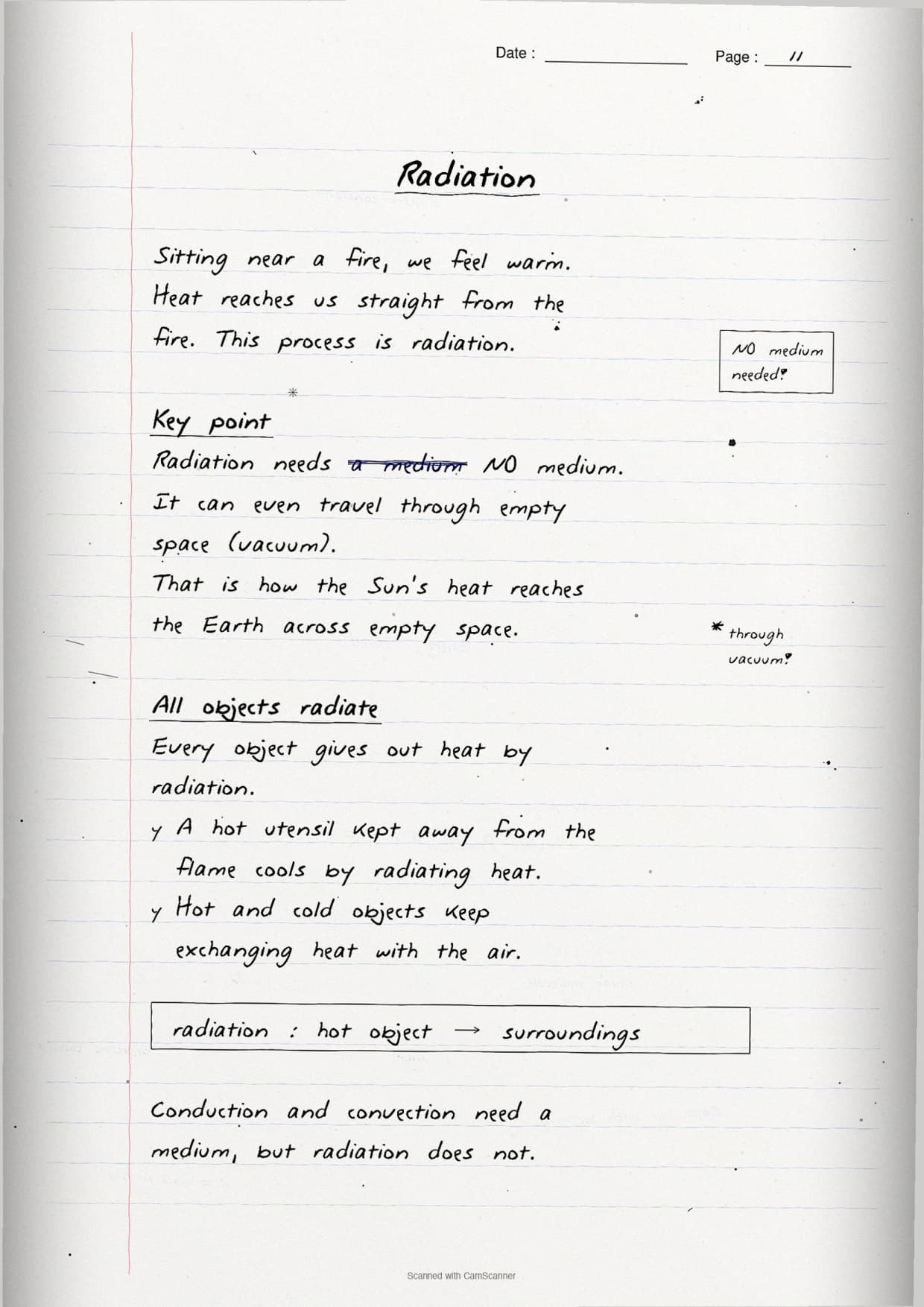
- Radiation and how the Sun warms the Earth
- Comparing the three modes of heat transfer
- The water cycle
- Evaporation, condensation and precipitation
- Seepage of water beneath the ground
- Why some places are hot and others cold
Heat Transfer in Nature Topic-wise Weightage for CBSE Class 7 Science
Sea breeze and the water cycle are the two big scorers. The comparison table supports both.
| Sub-topic | Weightage | How often asked |
|---|---|---|
| Land breeze and sea breeze | High | asked often |
| Water cycle with labels | High | asked often |
| Conduction, convection, radiation compared | High | asked often |
| Radiation from the Sun | Medium | asked sometimes |
| Seepage of water underground | Medium | asked sometimes |
| Everyday examples of conduction | Low | asked rarely |
Why Heat Transfer in Nature Is Worth Revising Carefully
This chapter links Science to the geography you study in Social Science, so the effort pays twice.
- The sea-breeze explanation is a standard two or three mark answer
- A labelled water cycle is asked as a diagram question
- One-mark questions ask you to name the mode in an everyday example
- The same three modes return in Class 8 and Class 10
Last 24-Hour Revision Card for Heat Transfer in Nature
Everything you need in the final ten minutes.
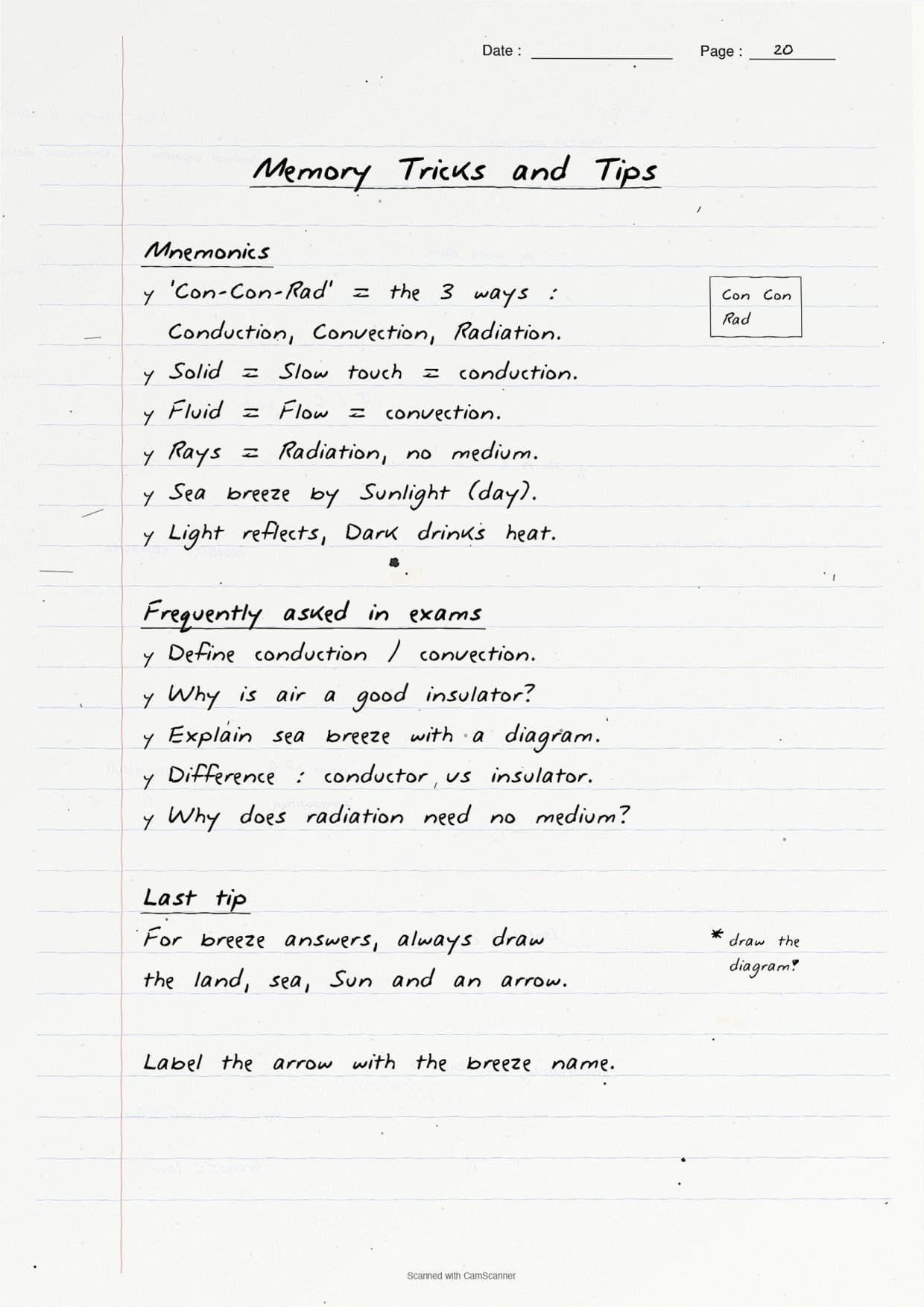
- Conduction in solids, convection in fluids, radiation across space
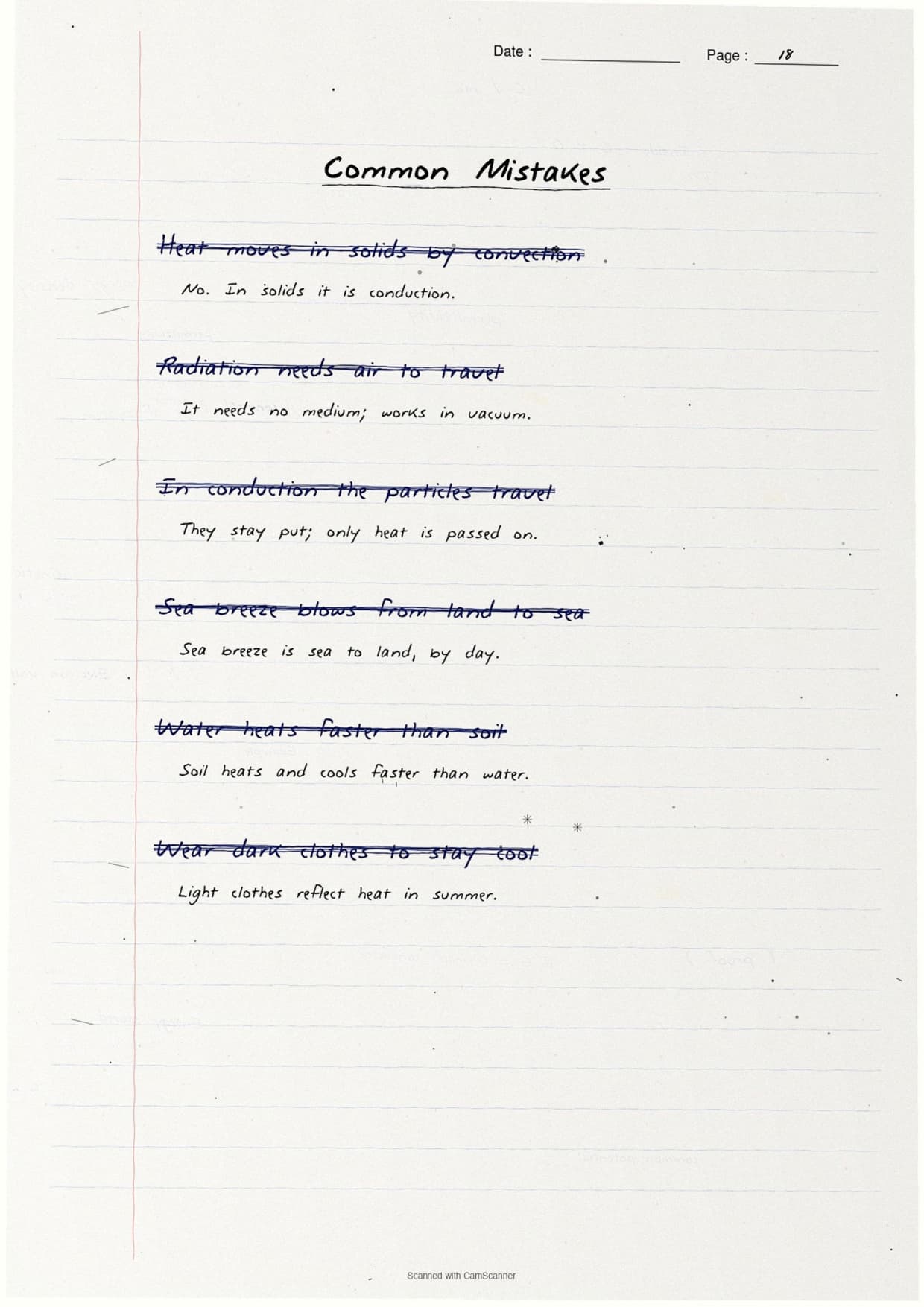
- Land heats and cools faster than water
- Sea breeze by day, land breeze by night
- Water cycle: evaporation, condensation, precipitation, collection
- Seepage feeds the water underground
Heat Transfer in Nature Self-Assessment Quiz
Five questions on heat transfer. Tap to check your answer.
Heat reaches us from the Sun mainly by
(a) conduction (b) convection (c) radiation (d) seepage
Answer: (c) radiation, which needs no material in between
A metal spoon in hot tea becomes warm by
(a) conduction (b) convection (c) radiation (d) evaporation
Answer: (a) conduction, through the solid spoon
The sea breeze blows
(a) from land to sea at night (b) from sea to land during the day (c) only in winter (d) upwards only
Answer: (b) from sea to land during the day
Water vapour turning into droplets on a cold glass is
(a) evaporation (b) condensation (c) precipitation (d) conduction
Answer: (b) condensation
Land breeze happens because at night
(a) the sea cools faster (b) the land cools faster than the sea (c) both cool equally (d) the land heats up
Answer: (b) the land cools faster than the sea
Key Terms and Ideas in Heat Transfer in Nature
Answers score better when the mode is named correctly. Learn these first.
| Term / Idea | What it means |
|---|---|
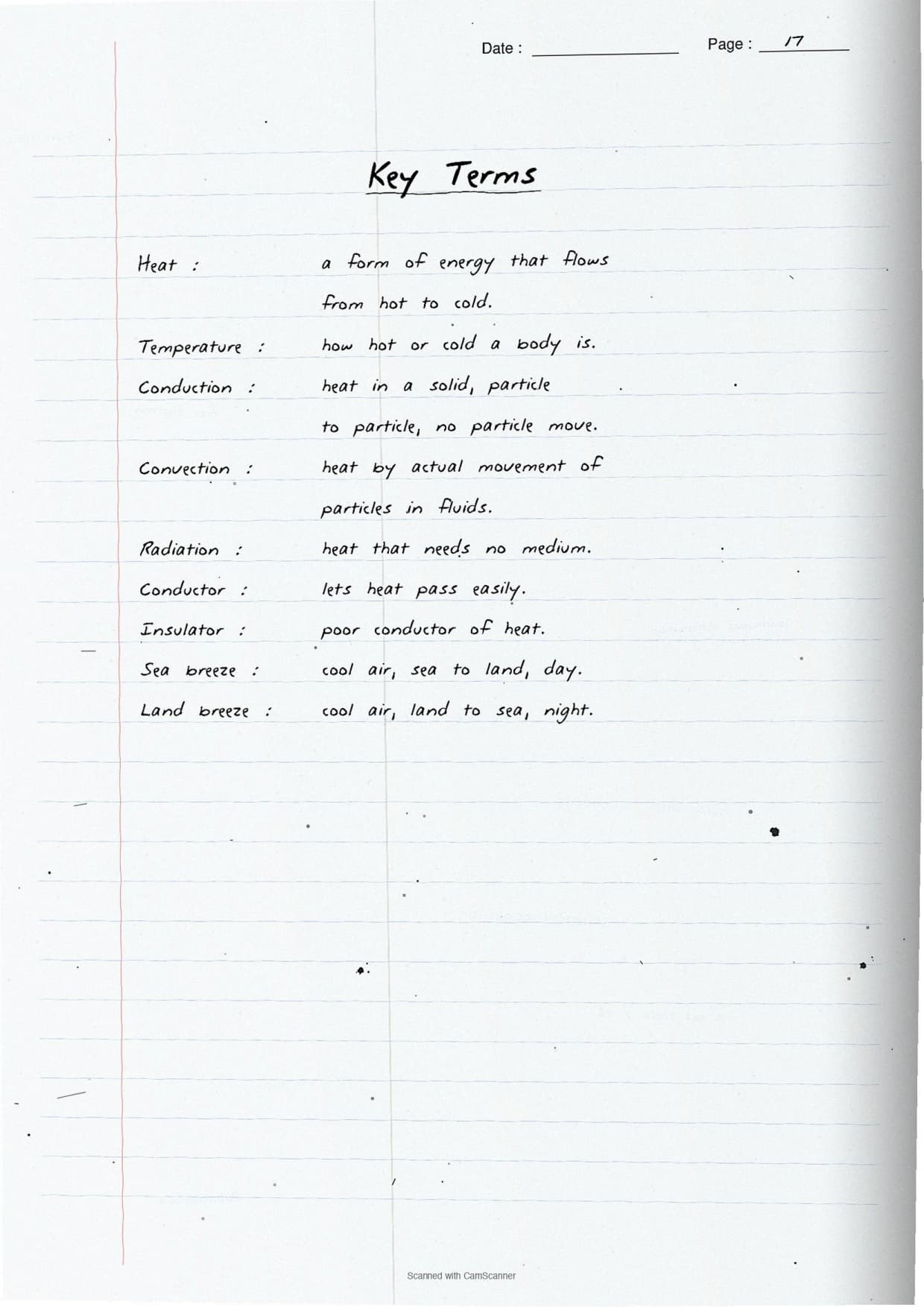
| Conduction | heat moving through a solid without the solid itself moving |
| Convection | heat moving because a warm liquid or gas rises and a cool one sinks |
| Radiation | heat travelling as rays, with no material needed in between |
| Sea breeze | the daytime wind that blows from the sea towards the land |
| Land breeze | the night wind that blows from the land towards the sea |
| Evaporation | water turning into vapour at the surface |
| Condensation | water vapour turning back into tiny droplets |
| Seepage | the slow soaking of water down through soil and rock |
Diagrams Drawn by Hand in the Heat Transfer in Nature Notes
This chapter is carried by its diagrams, so the notes give them room.
| Figure drawn by hand | What it shows |
|---|---|
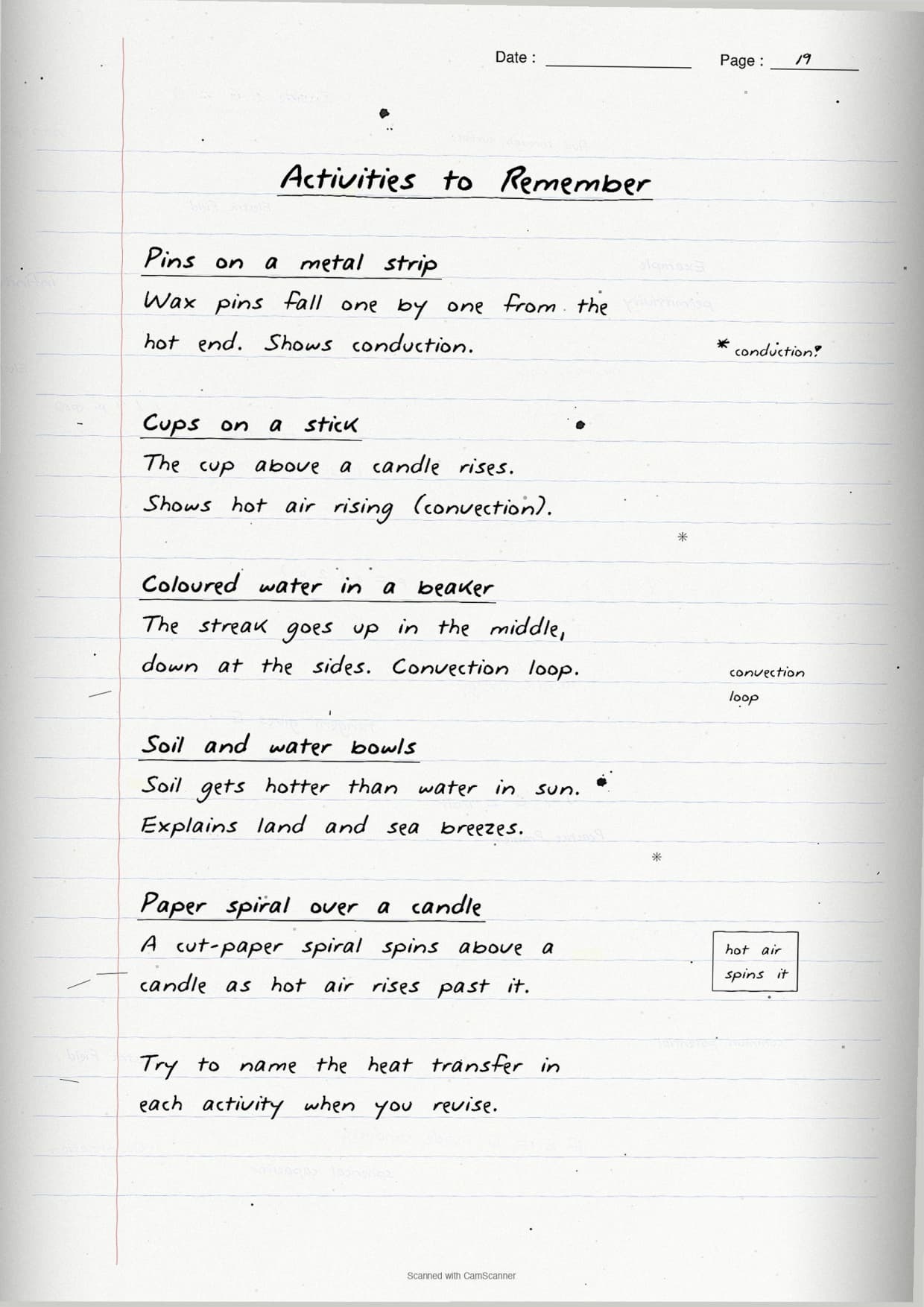
| Conduction along a rod | heat spreading from a heated end, with wax pins falling |
| Convection in water | the circular current in a heated beaker |
| Radiation from the Sun | rays reaching the Earth across empty space |
| Sea breeze sketch | daytime arrows from sea to land with warm air rising |
| Land breeze sketch | night arrows from land to sea |
| Water cycle | evaporation, condensation, precipitation and collection labelled |
| Seepage section | water soaking through soil layers to the water table |
How to Use These Handwritten Notes for Science Revision
Use these class 7 science handwritten notes in two passes. Draw the two breeze diagrams before you read anything else. They carry the chapter.
- Draw the sea breeze and the land breeze with arrows and labels
- Name the mode of heat transfer in five things around your home
- Draw the water cycle once from memory and label four stages
- Before the test, revise the comparison table and the two breeze sketches
Other Science Resources for Heat Transfer in Nature
The solved exercises give more naming and diagram practice.
Class 7 Science Handwritten Notes for All Chapters
All twelve Class 7 Science chapters have handwritten notes, listed below. The table below links the class 7 science handwritten notes for every chapter.
Heat Transfer in Nature Class 7 Science Handwritten Notes FAQs
Ques. Where can I download the Heat Transfer in Nature Class 7 Handwritten Notes PDF?
Ans. The PDF is free on this page in both the normal and the HD version.
Ques. Do the notes include the water cycle diagram?
Ans. Yes. A full labelled water cycle is drawn by hand with evaporation, condensation, precipitation and collection marked.
Ques. How many pages is the Chapter 7 handwritten notes PDF?
Ans. It runs 22 pages and covers all four sections of the chapter plus a quiz.
Ques. Why does the sea breeze blow during the day?
Ans. Land heats faster than water. The warm air over the land rises, and cooler air from over the sea moves in to take its place. That incoming wind is the sea breeze.
Ques. What are the three modes of heat transfer in Class 7 Science?
Ans. Conduction through solids, convection in liquids and gases, and radiation, which travels as rays and needs no material in between.



Comments