




Class 7 Science Chapter 8 Measurement of Time and Motion brings in the first formula of the year. These class 7 science handwritten notes chapter 8 Measurement of Time and Motion follow the 2026-27 NCERT and cover the simple pendulum, the SI unit of time, speed, and uniform and non-uniform motion.
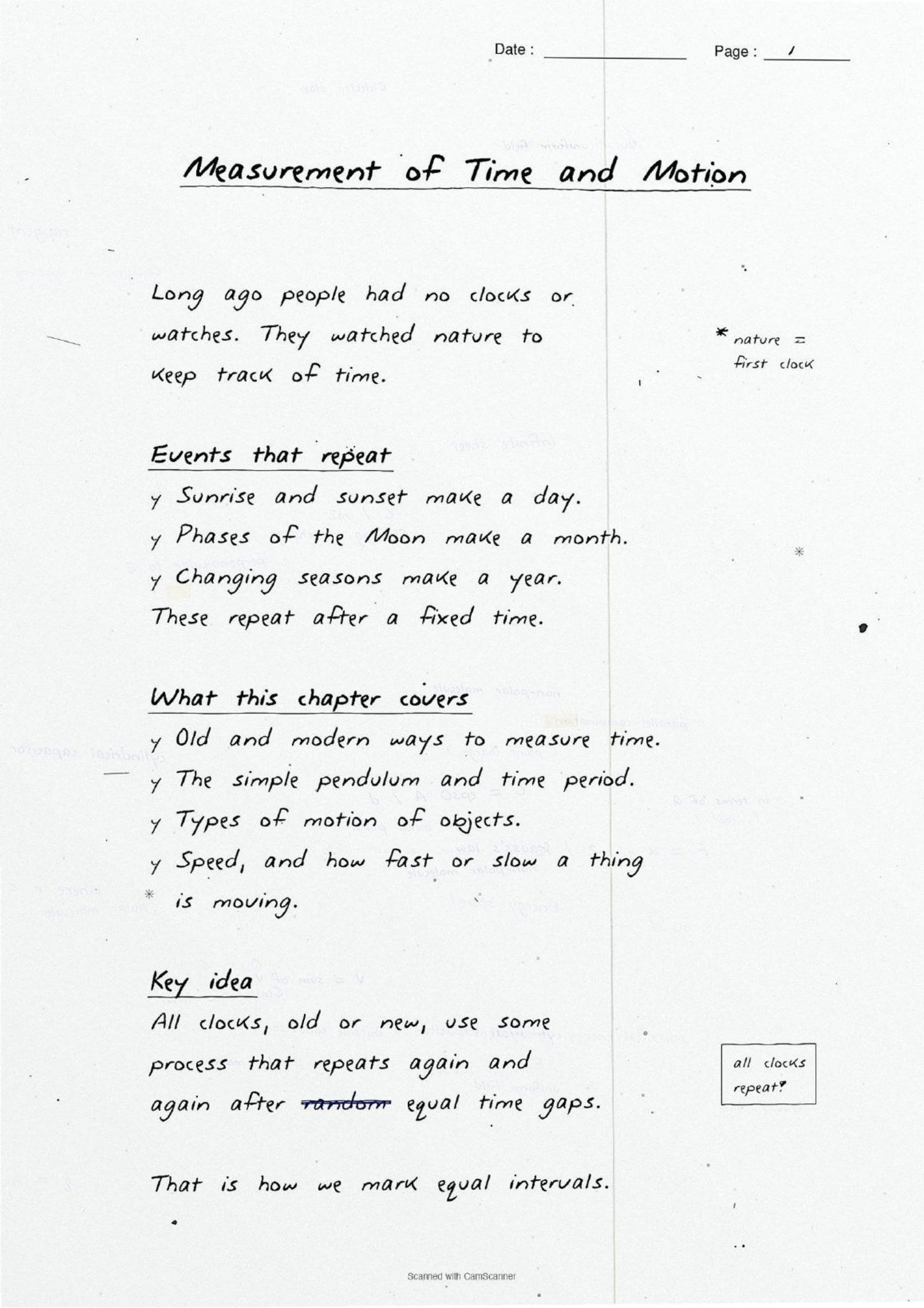
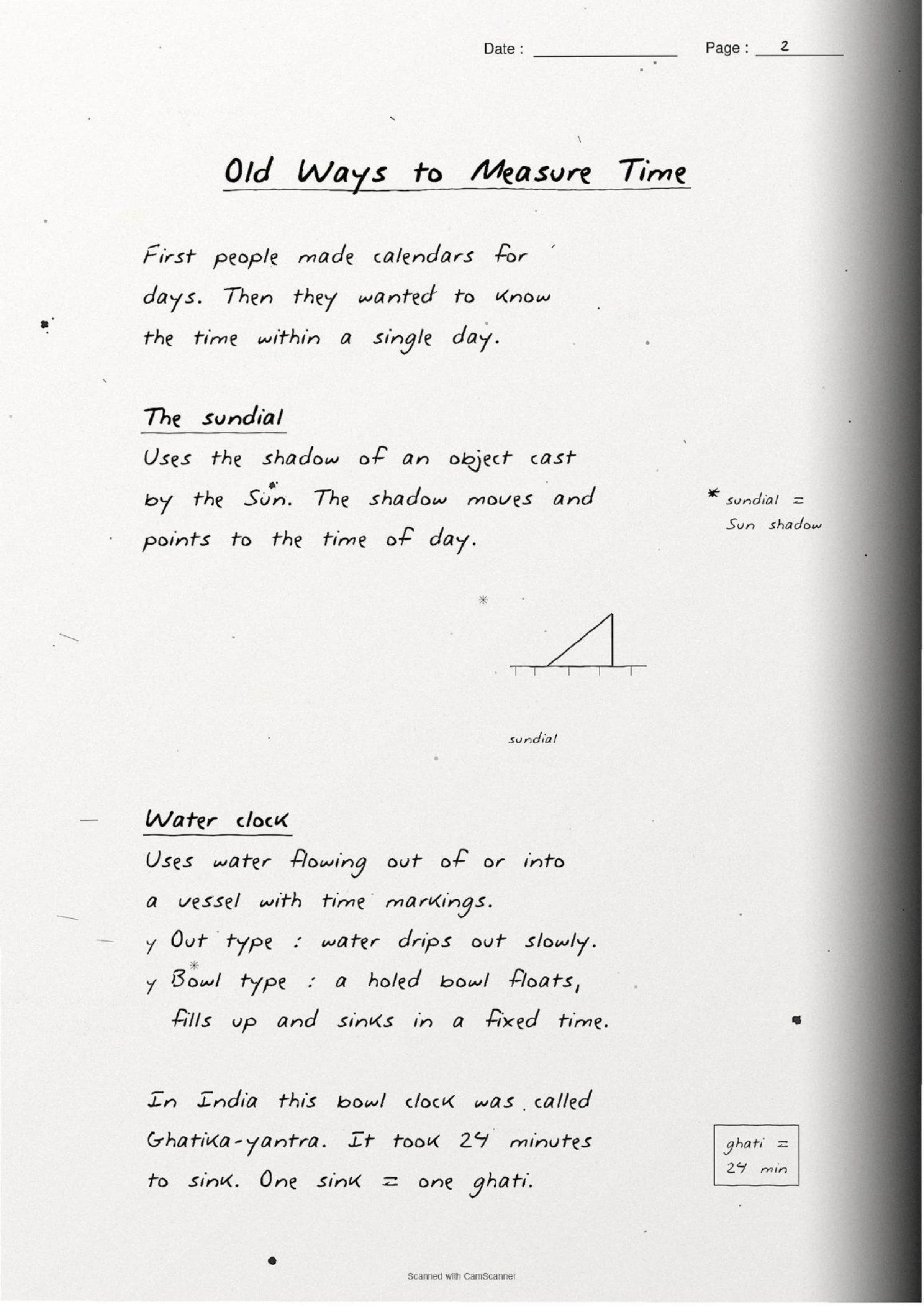
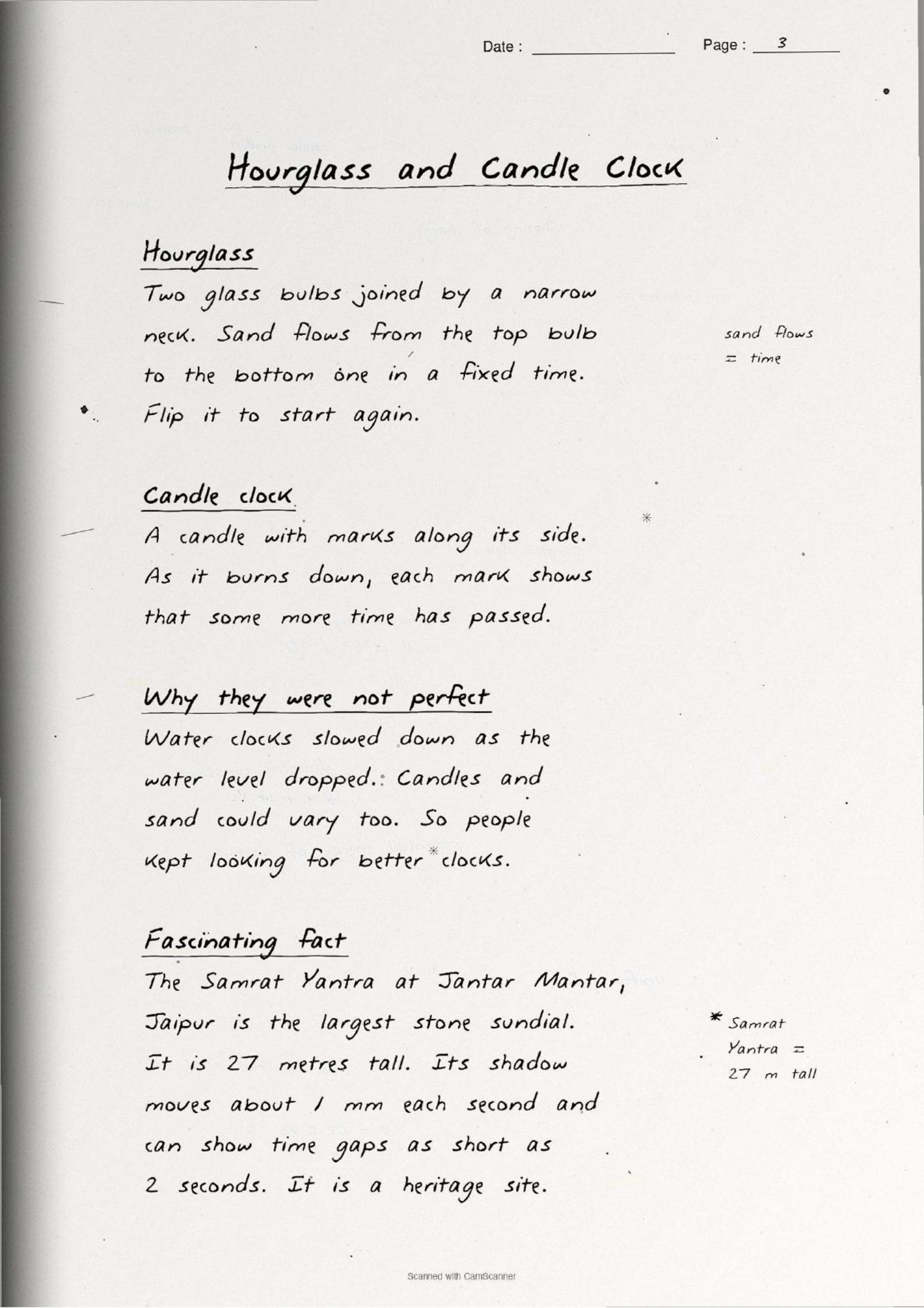
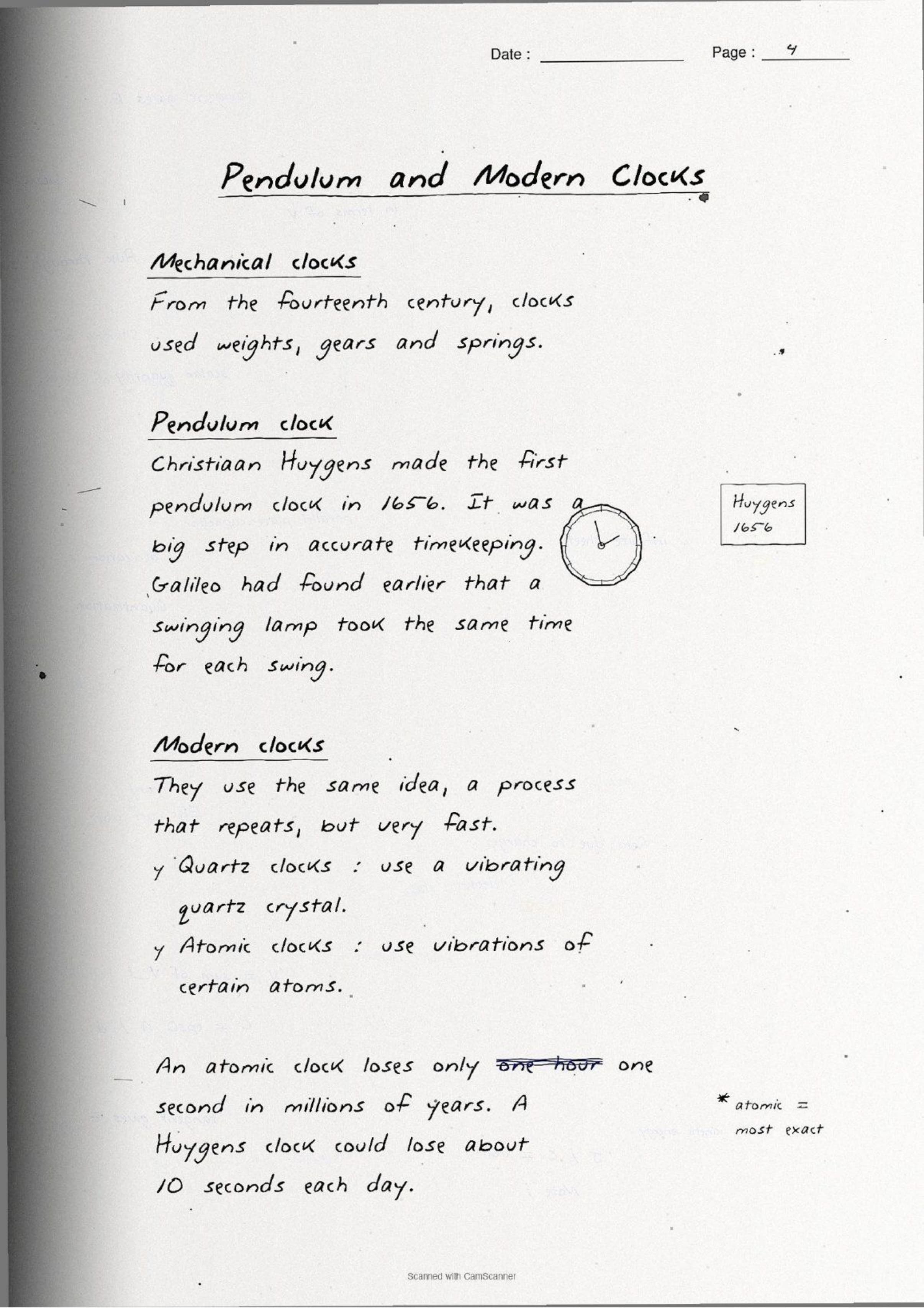
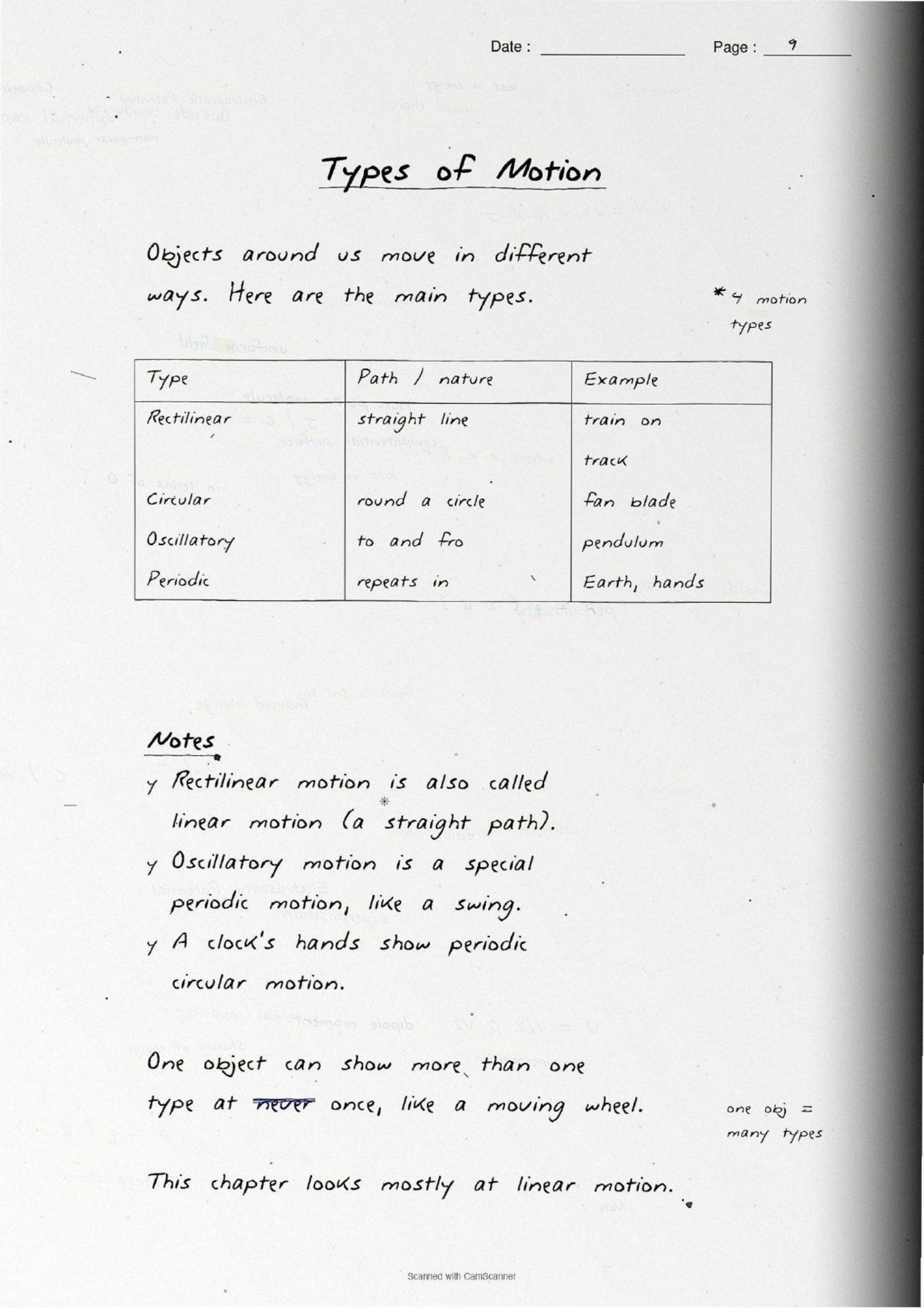
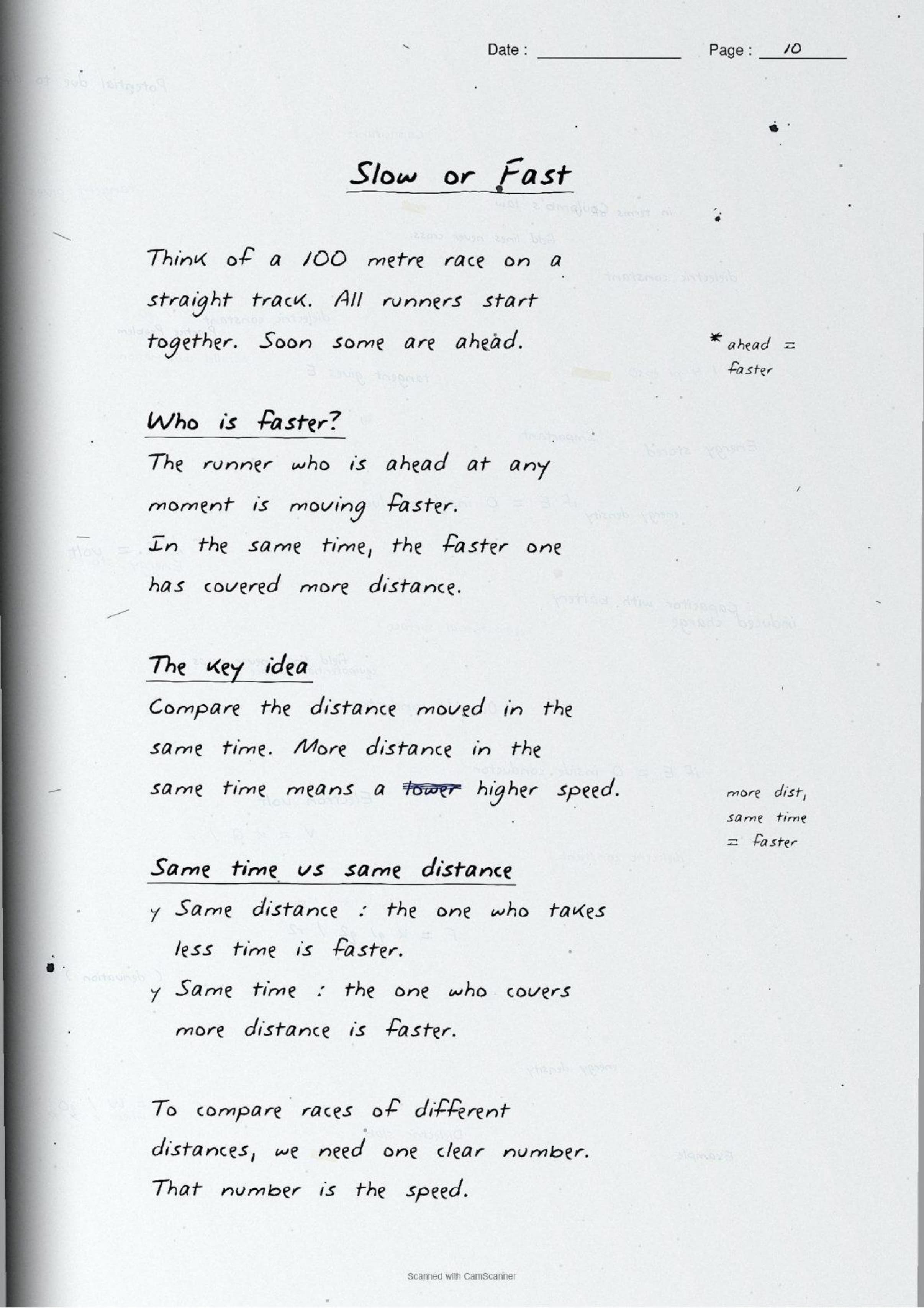
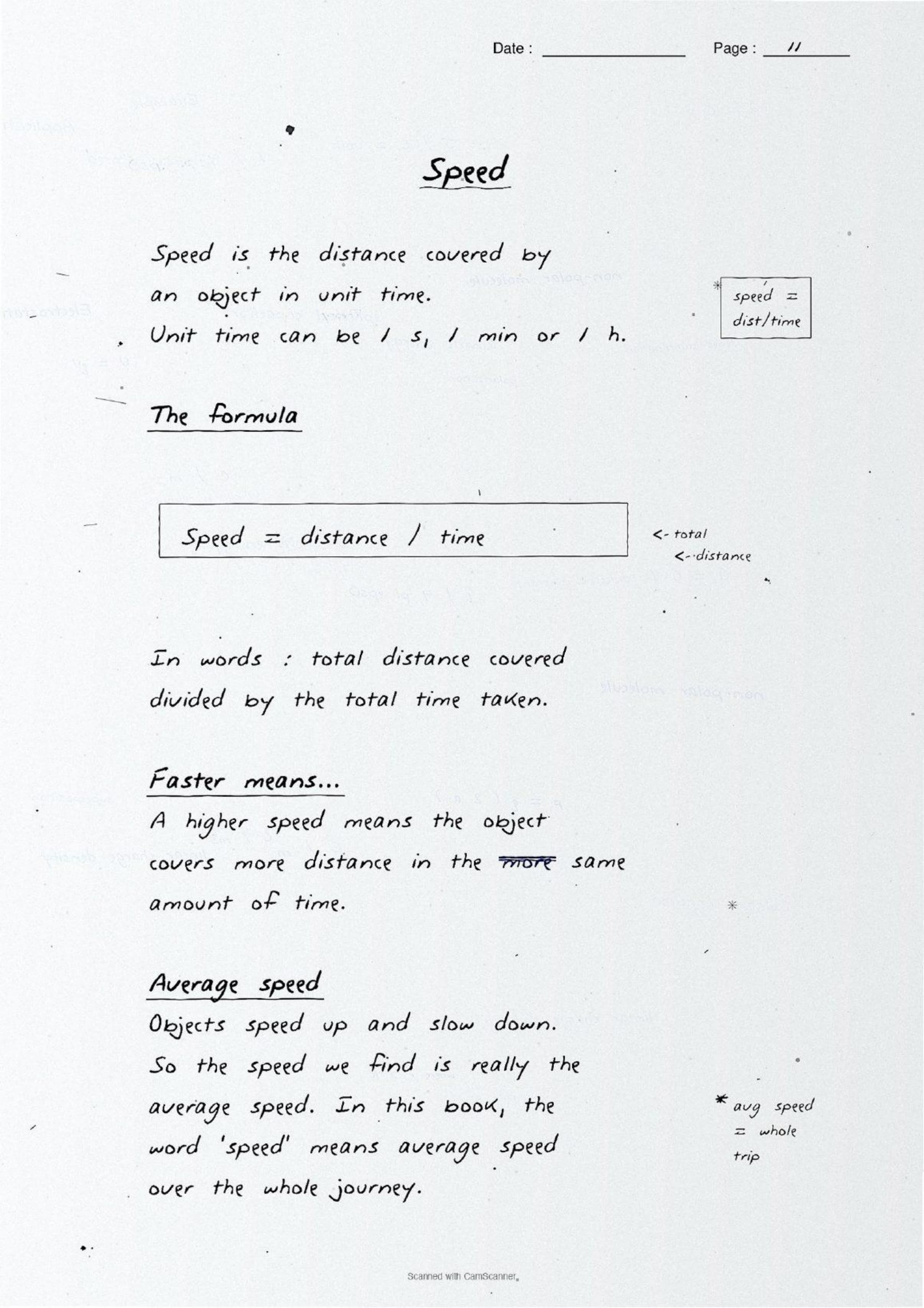
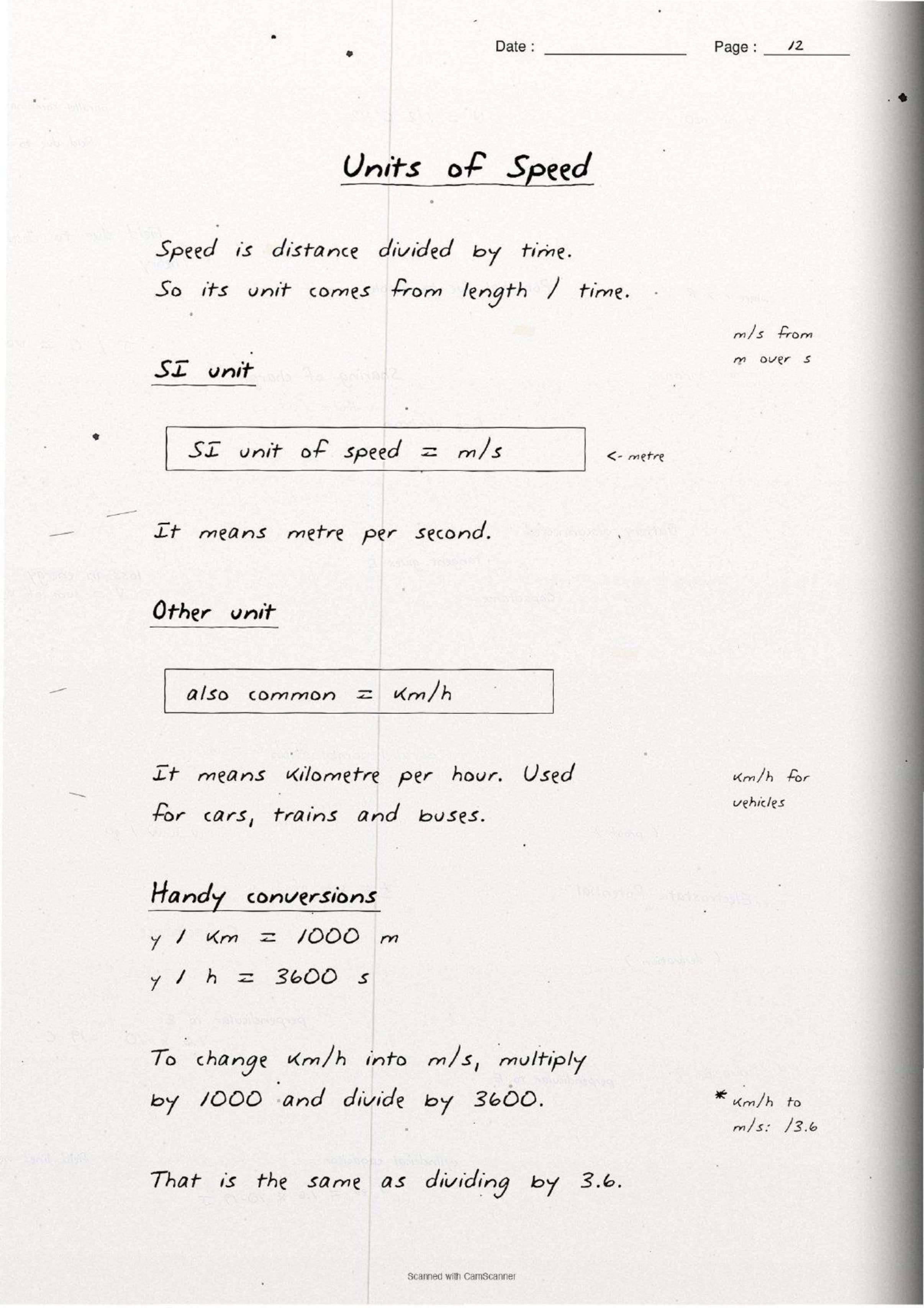
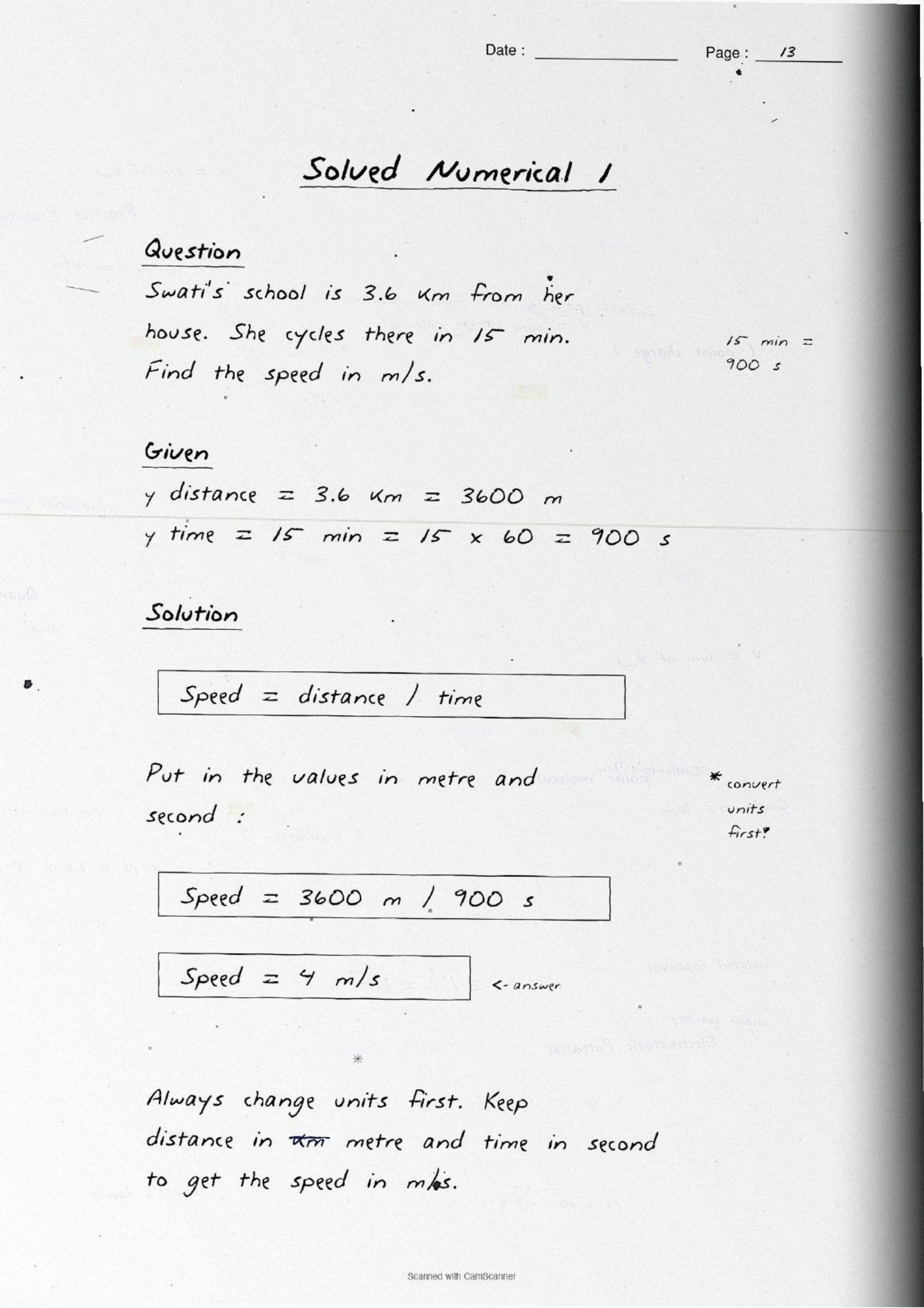
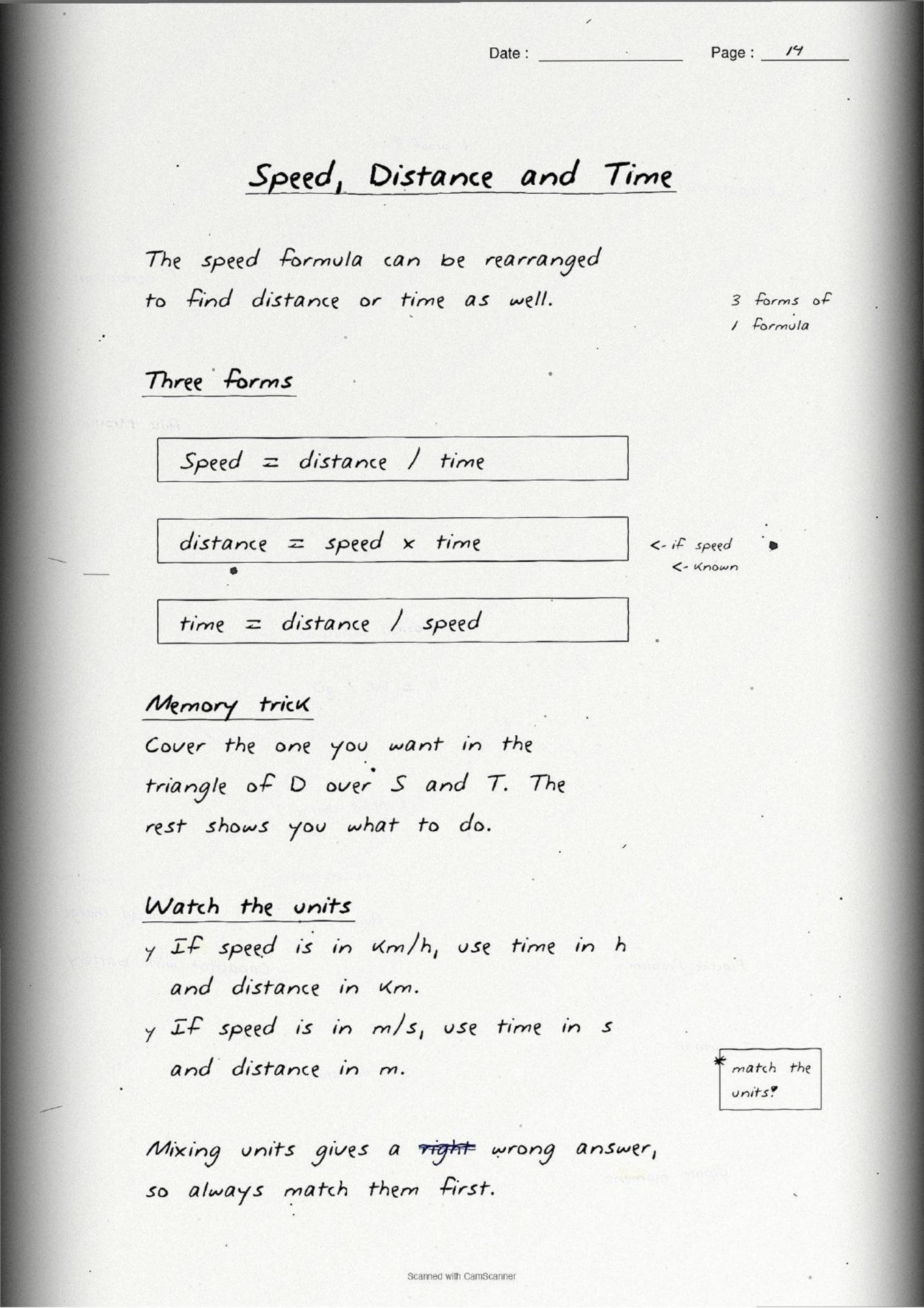
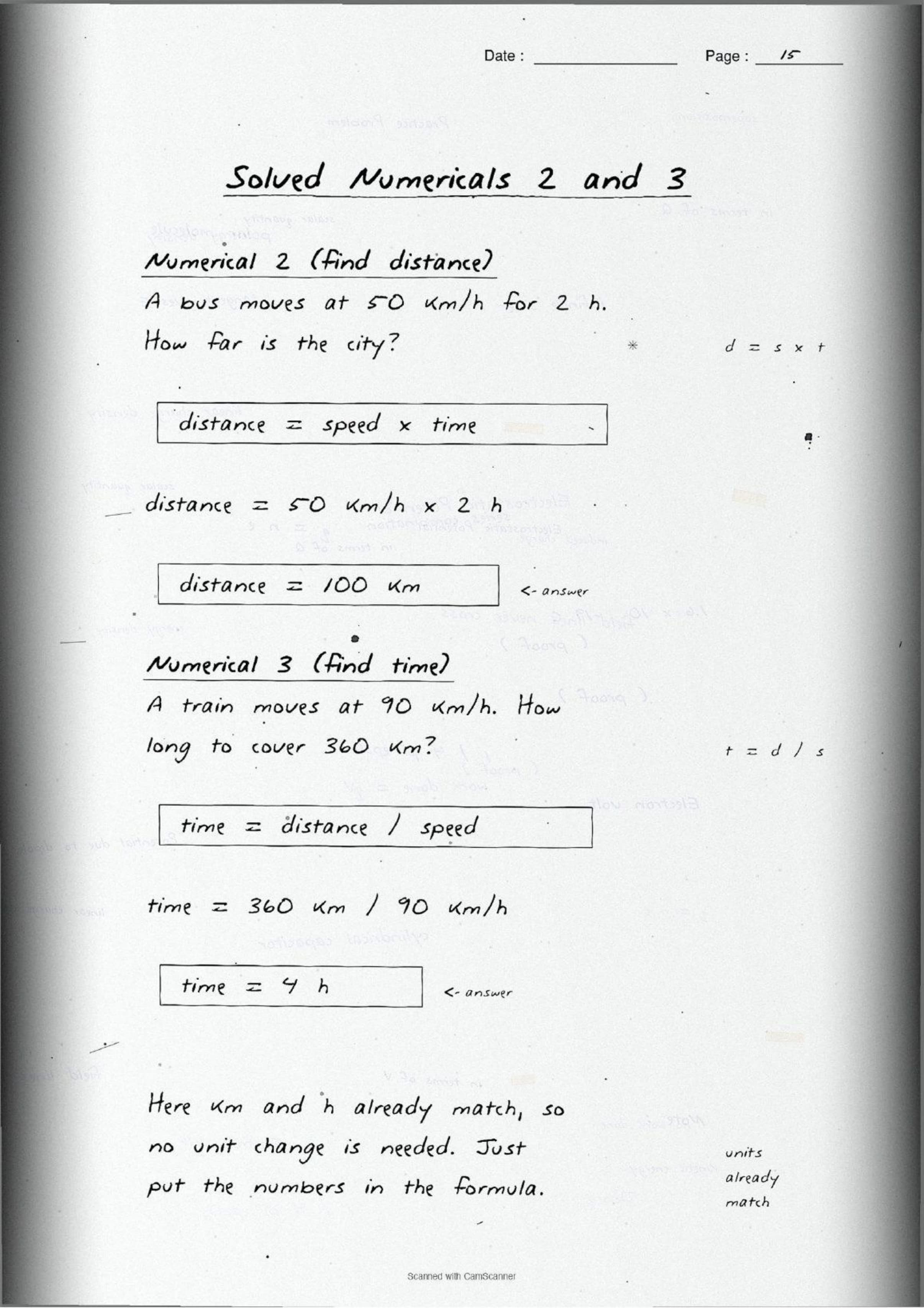
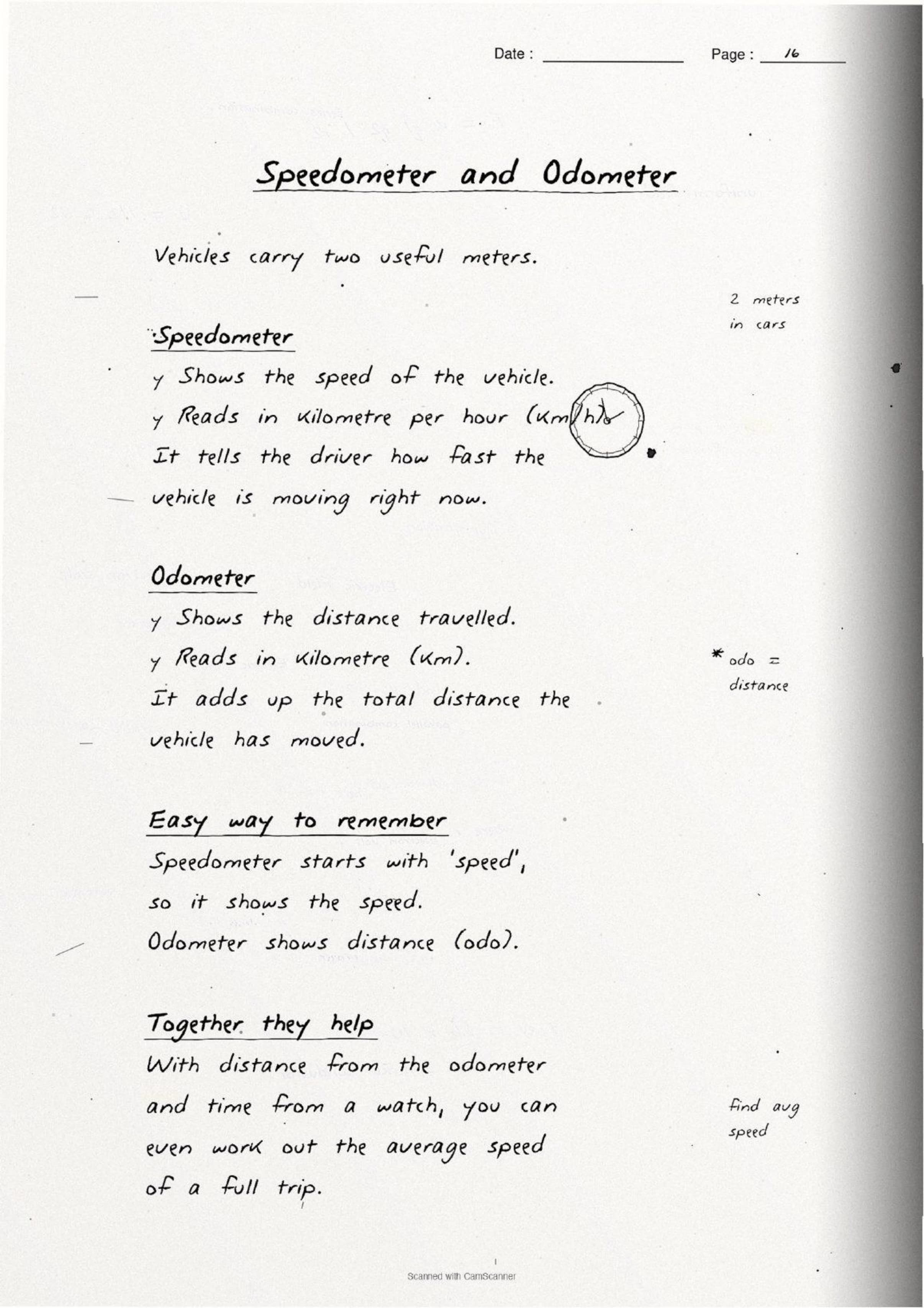
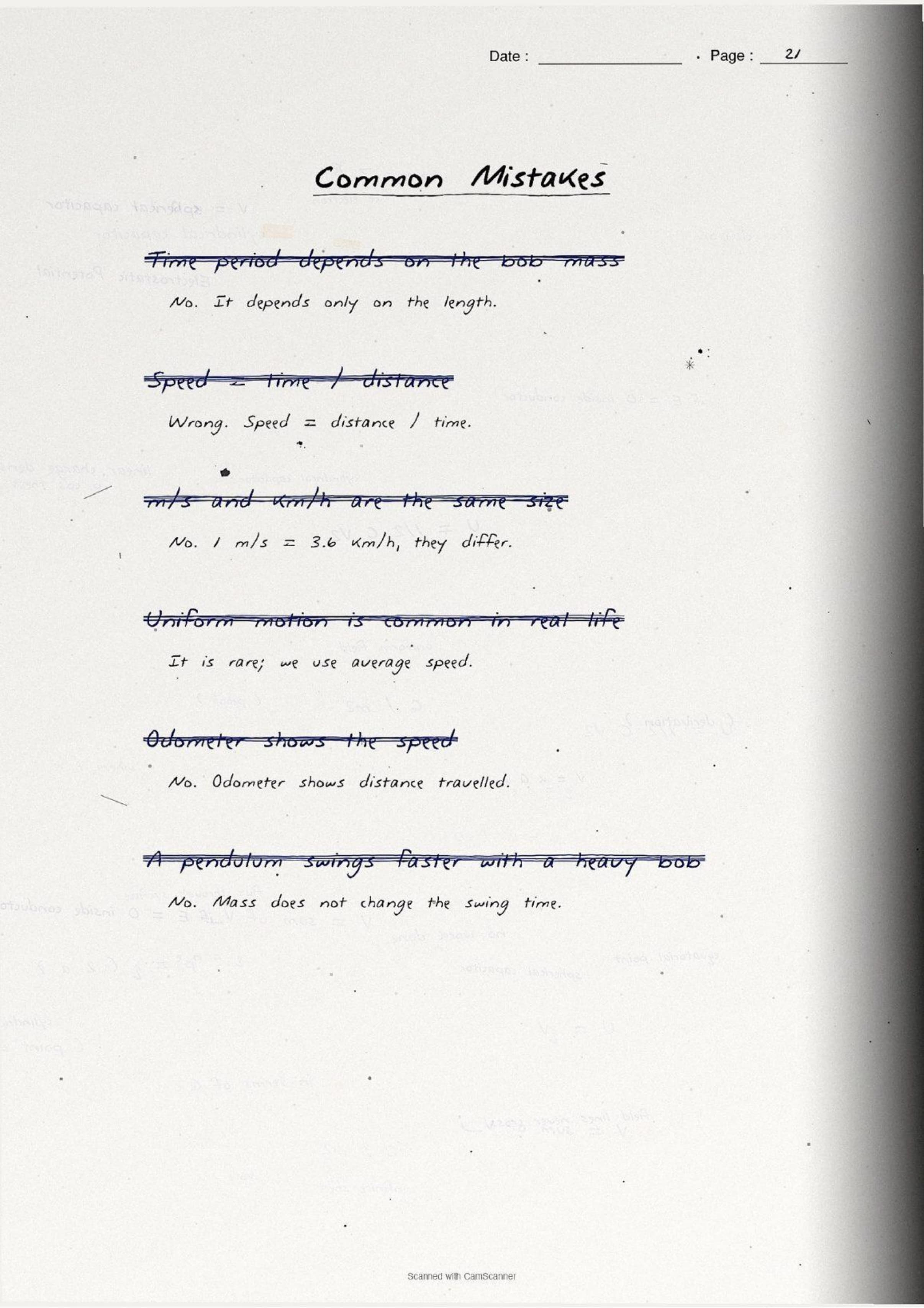
- Speed formula boxed: speed equals distance divided by time, with both rearranged forms
- What the notes cover: measuring time, the simple pendulum, speed calculations, and types of linear motion
- Best for: numerical questions, the only chapter in Class 7 Science that has them
The full class 7 science handwritten notes for Measurement of Time and Motion sit in the PDF below, with every box and figure included.
These handwritten notes are written by Science teachers, mapped to the 2026-27 NCERT, and checked against Class 7 school question papers.
Which Measurement of Time and Motion Topics CBSE Class 7 Science Asks Most
Numericals decide the marks in this chapter. The pendulum terms support them.
| Sub-topic | Weightage | How often asked |
|---|---|---|
| Speed, distance and time calculations | High | asked often |
| Time period of a simple pendulum | High | asked often |
| Uniform and non-uniform motion | High | asked often |
| SI unit of time and its multiples | Medium | asked sometimes |
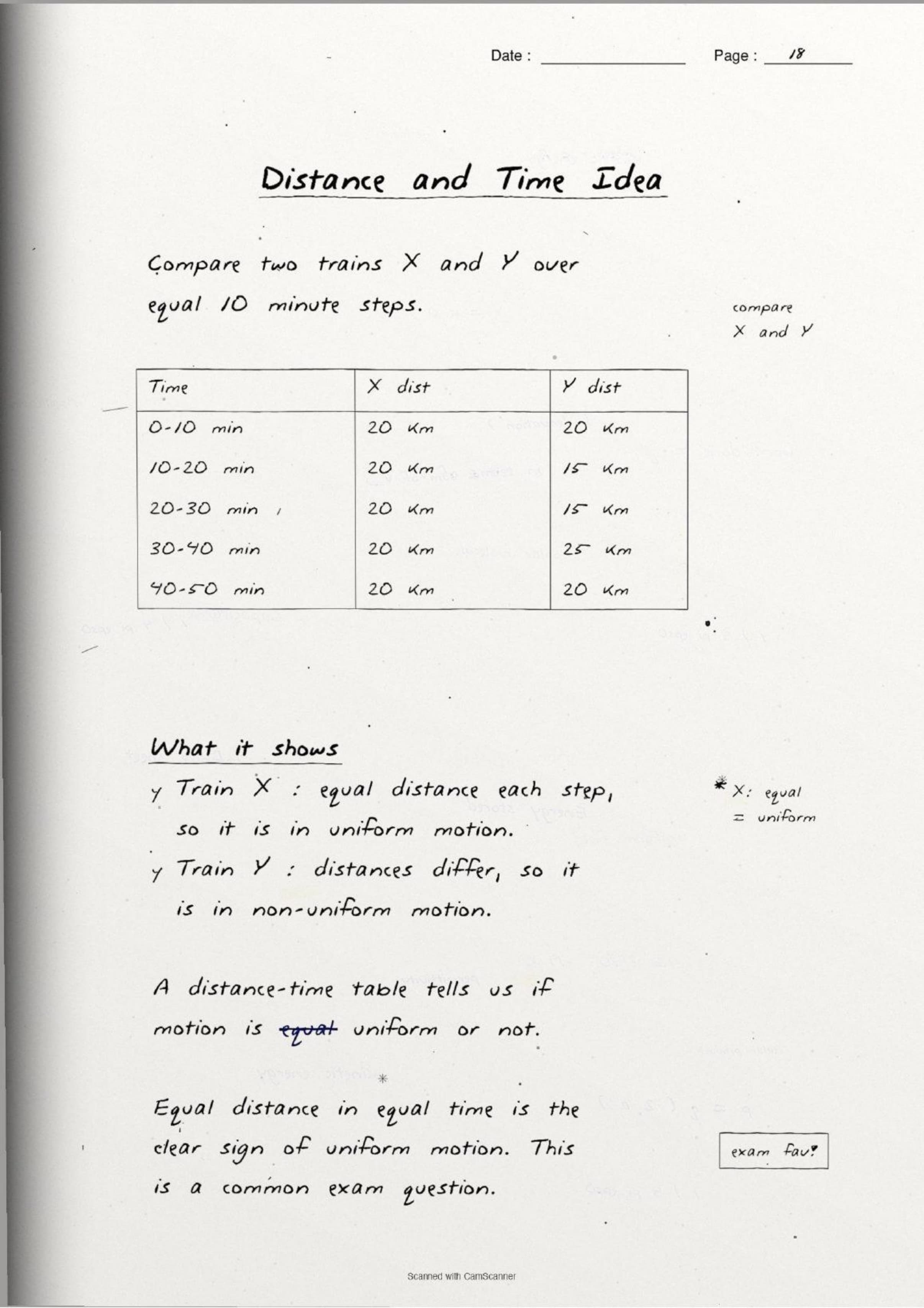
| Reading a distance-time table | Medium | asked sometimes |
| History of measuring time | Low | asked rarely |
Inside the Measurement of Time and Motion Handwritten Notes PDF
The chapter opens with a sprinter and moves to how time itself is measured. The notes keep the pendulum work before the speed work, because the measurement of time comes first.
- How time has been measured
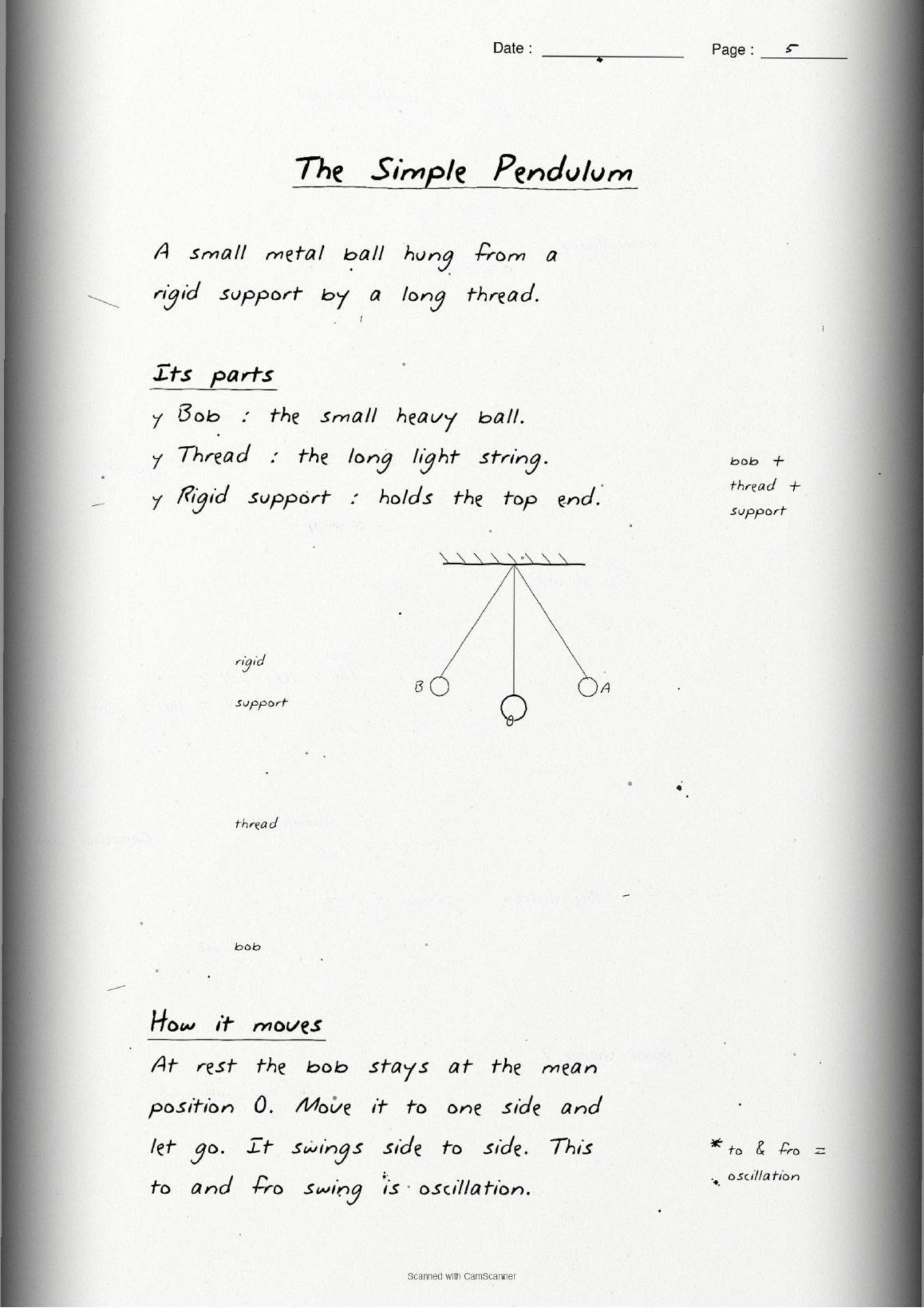
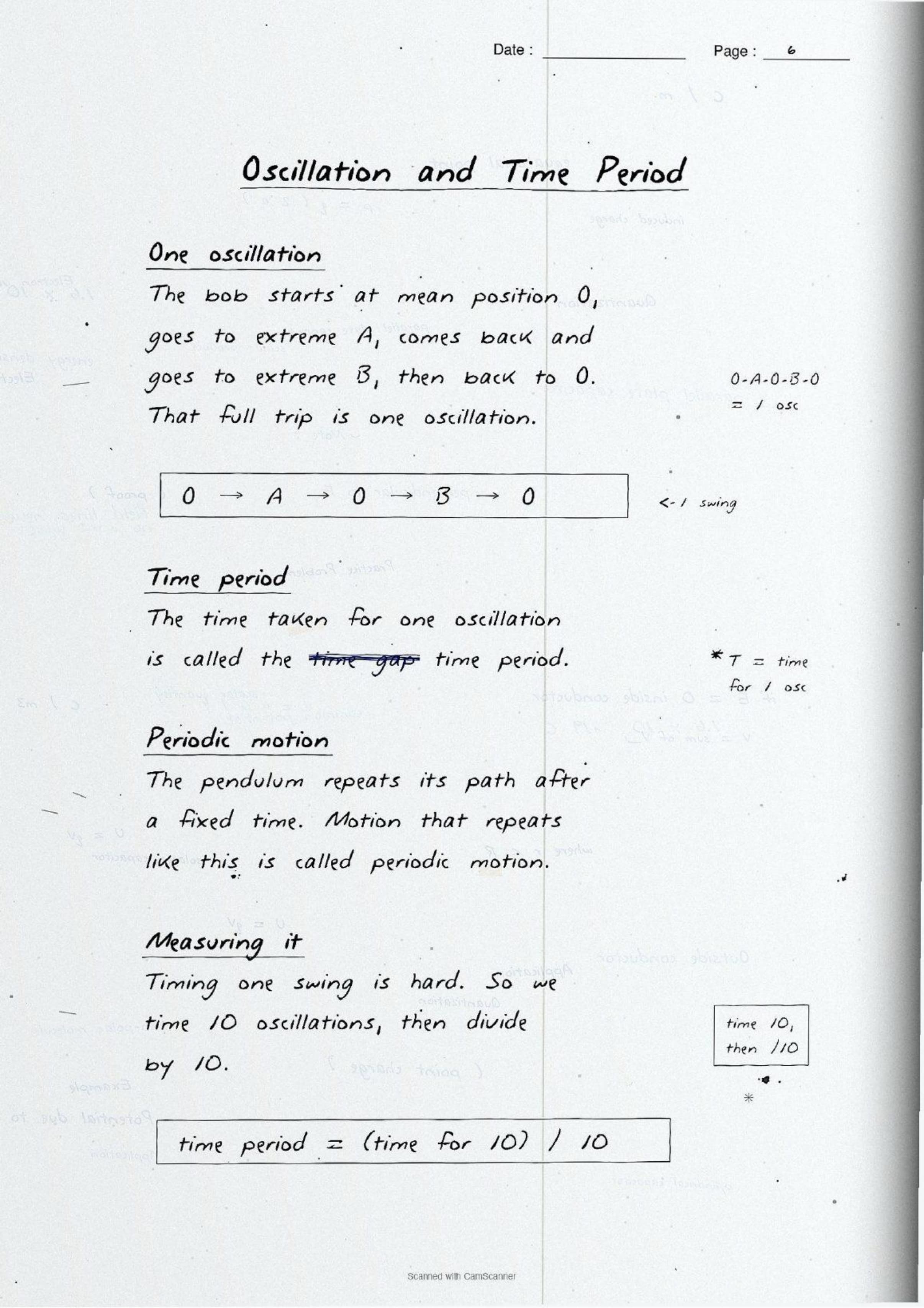
- The simple pendulum and its oscillation
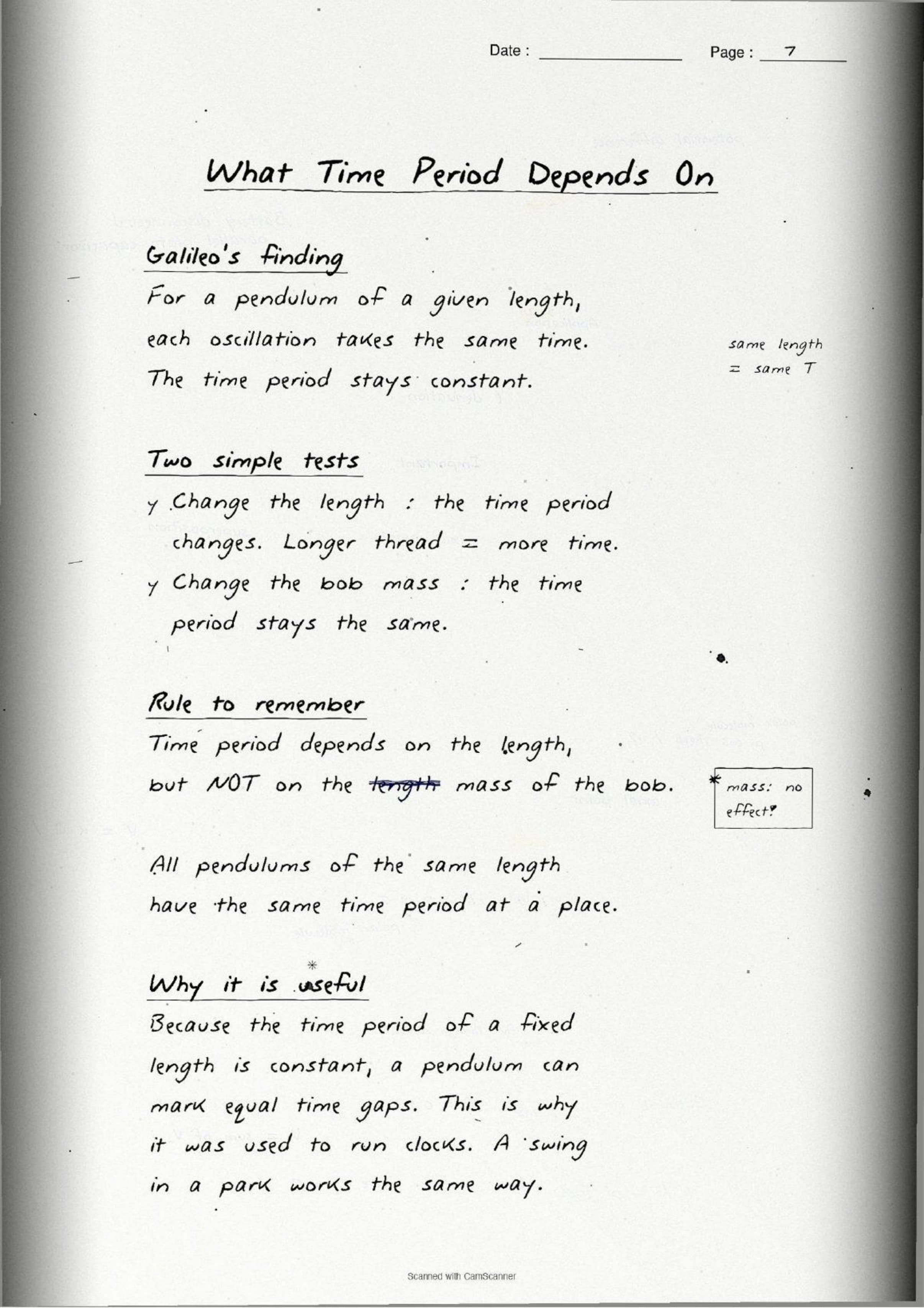
- Time period of a pendulum
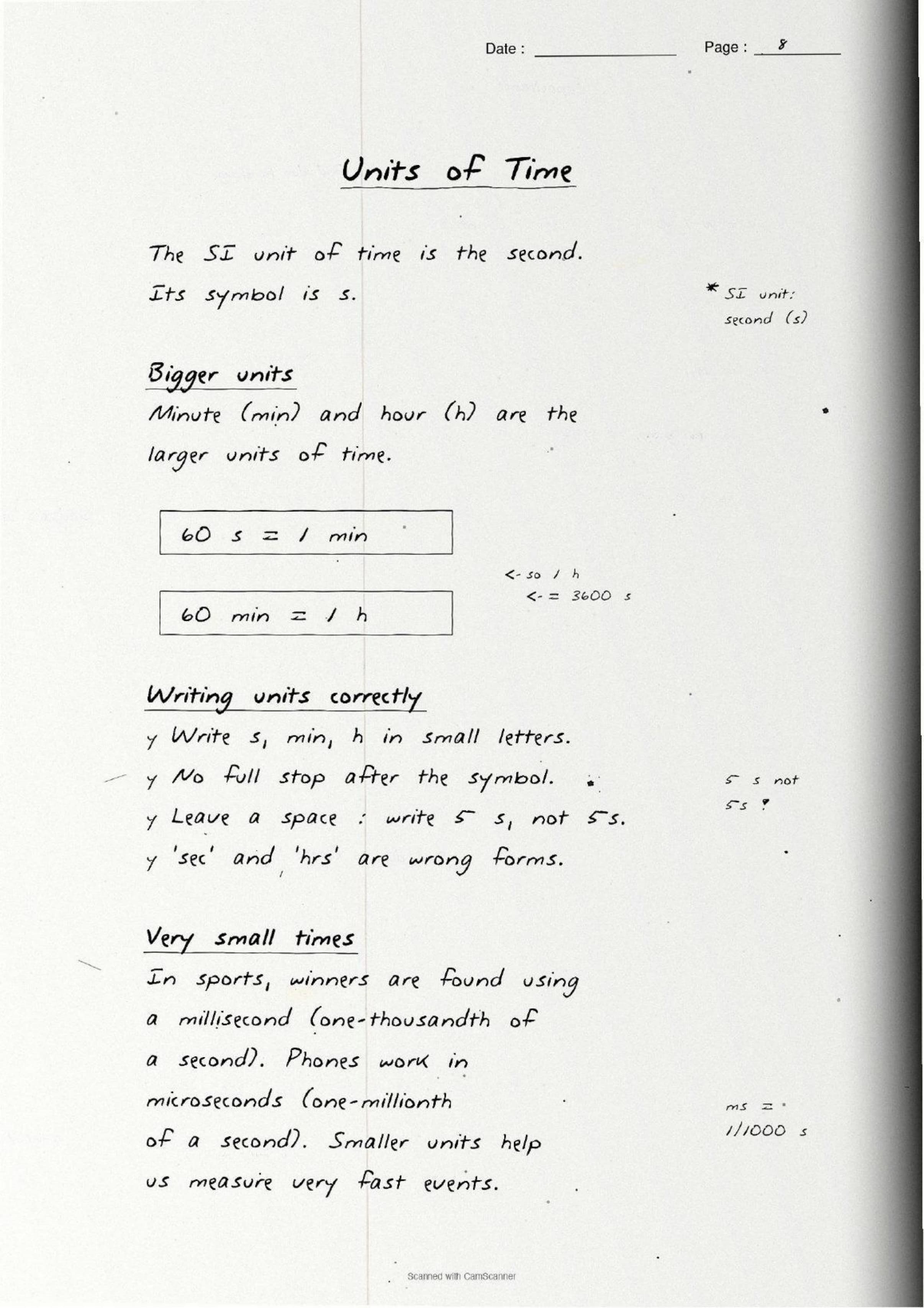
- The SI unit of time
- Deciding what is slow and what is fast
- Speed and how to calculate it
- The relationship between speed, distance and time
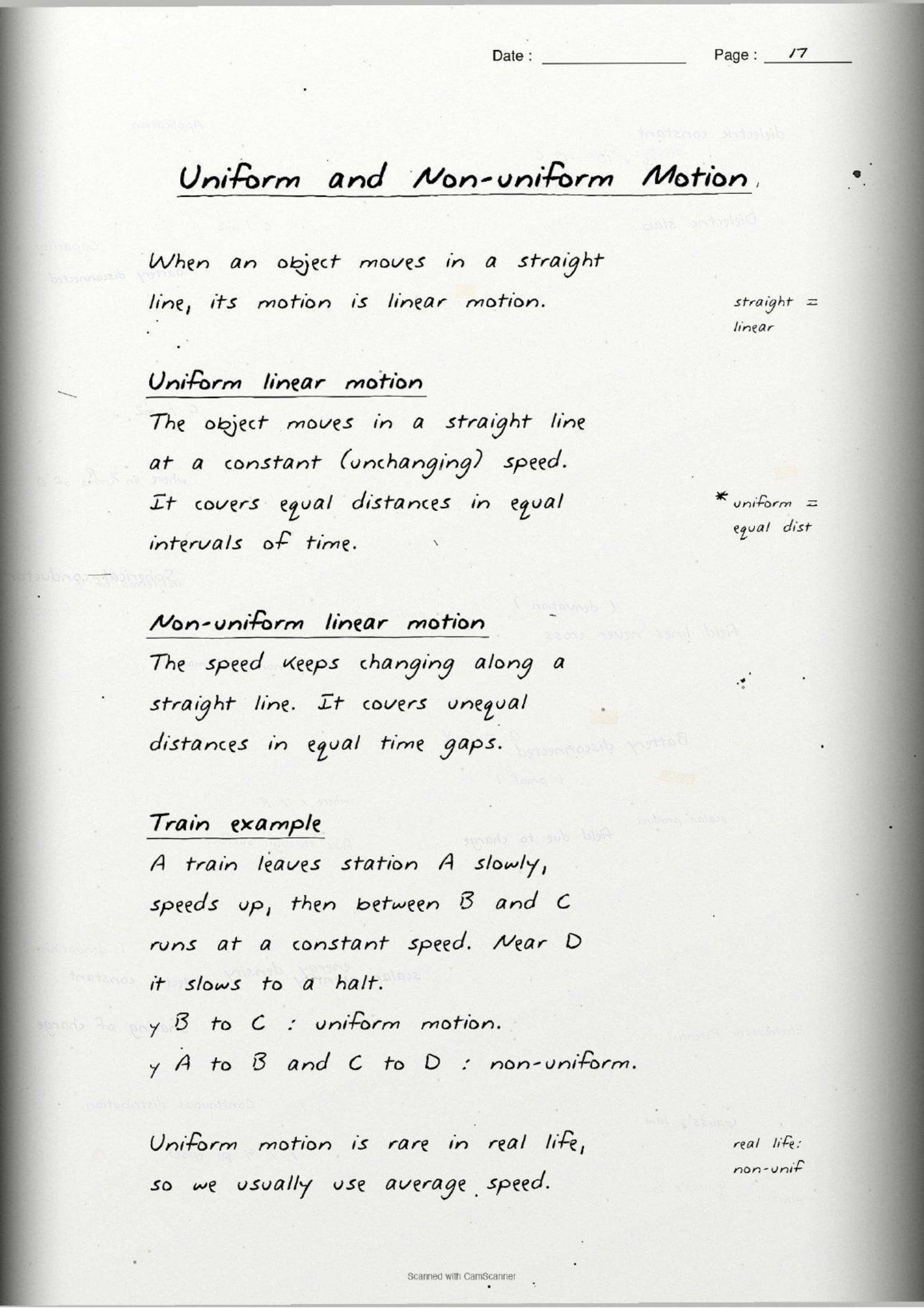
- Uniform linear motion
- Non-uniform linear motion
What Collegedunia's Measurement of Time and Motion Handwritten Notes Give You
Collegedunia wrote every calculation in three lines: the formula, the numbers put in, then the answer with its unit. That is the standard Collegedunia holds these class 7 science handwritten notes to.
- Formula box: the three forms of the speed relation in one hand-drawn box
- Three solved problems: each written as formula, substitution and answer
- Pendulum figure: the bob, thread, mean position and one full oscillation marked
- Colour-coded sub-headings: sub-topics in red so the pendulum and speed parts stay apart
Quick Check on Measurement of Time and Motion
Five questions, including two numericals. Tap to check.
The SI unit of time is the
(a) minute (b) hour (c) second (d) day
Answer: (c) second
A car covers 150 km in 3 hours. Its speed is
(a) 45 km/h (b) 50 km/h (c) 60 km/h (d) 450 km/h
Answer: (b) 50 km/h, since 150 divided by 3 is 50
One complete to-and-fro swing of a pendulum is called one
(a) time period (b) oscillation (c) second (d) metre
Answer: (b) oscillation
A bus moving at an unchanging speed on a straight road shows
(a) non-uniform motion (b) uniform linear motion (c) circular motion (d) no motion
Answer: (b) uniform linear motion
A runner covers 100 m in 20 s. The speed is
(a) 2 m/s (b) 5 m/s (c) 20 m/s (d) 2000 m/s
Answer: (b) 5 m/s, since 100 divided by 20 is 5
Night-Before Revision Card: Measurement of Time and Motion
The last-minute card for this chapter.
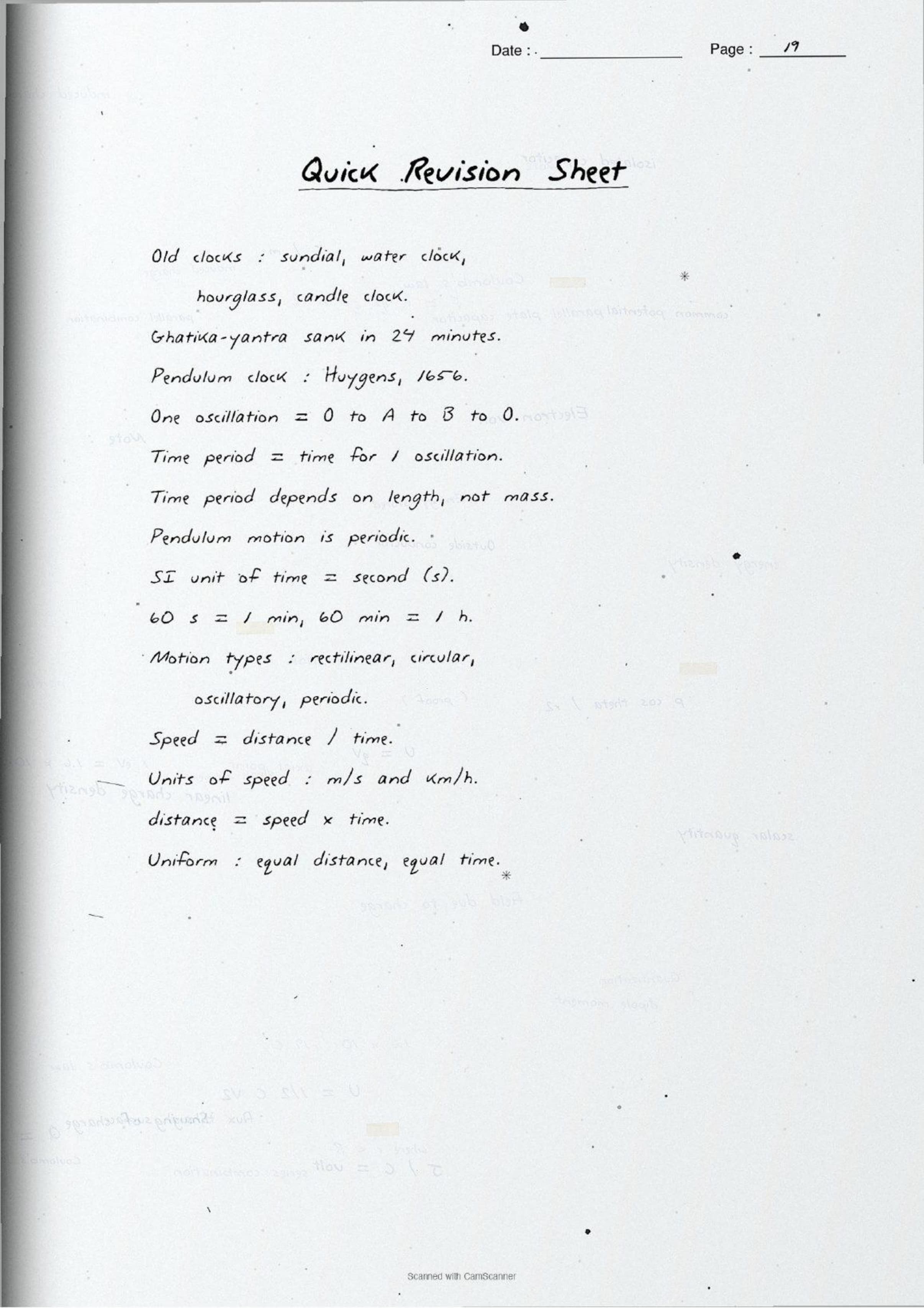
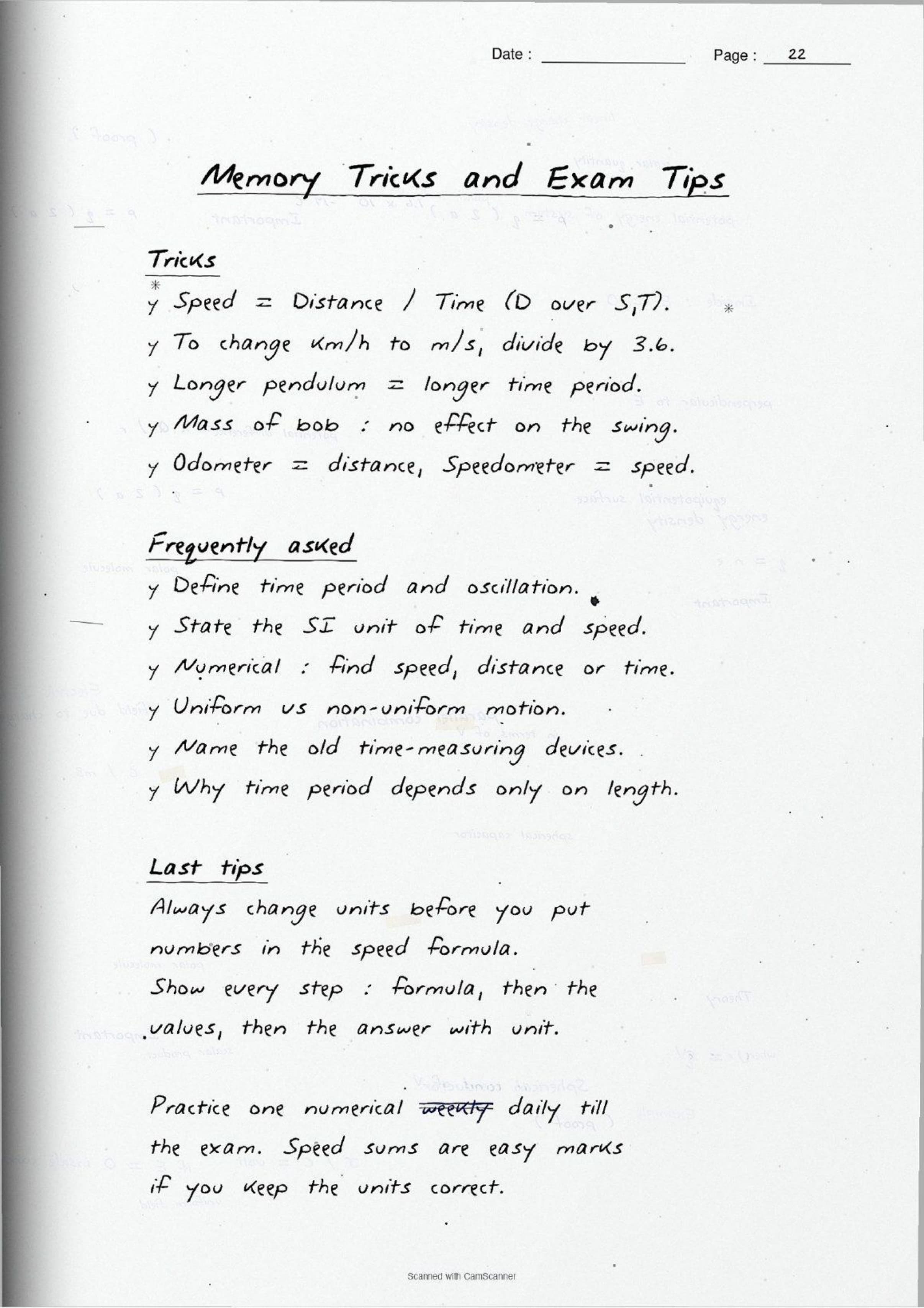
- Speed = distance / time; distance = speed x time; time = distance / speed
- SI unit of time is the second
- One oscillation is one full to-and-fro swing
- Time period is the time for one oscillation
- Uniform motion means the speed does not change
- Keep units consistent before dividing
What Makes Measurement of Time and Motion a Scoring Chapter
This is the chapter where careless unit work costs the most. The method marks are easy if you write the formula first.
- Every paper carries at least one speed numerical
- Writing the formula, then substituting, then solving earns each step its own mark
- The pendulum time period is a common two-mark question
- Speed work here is the base for the Class 9 motion chapter
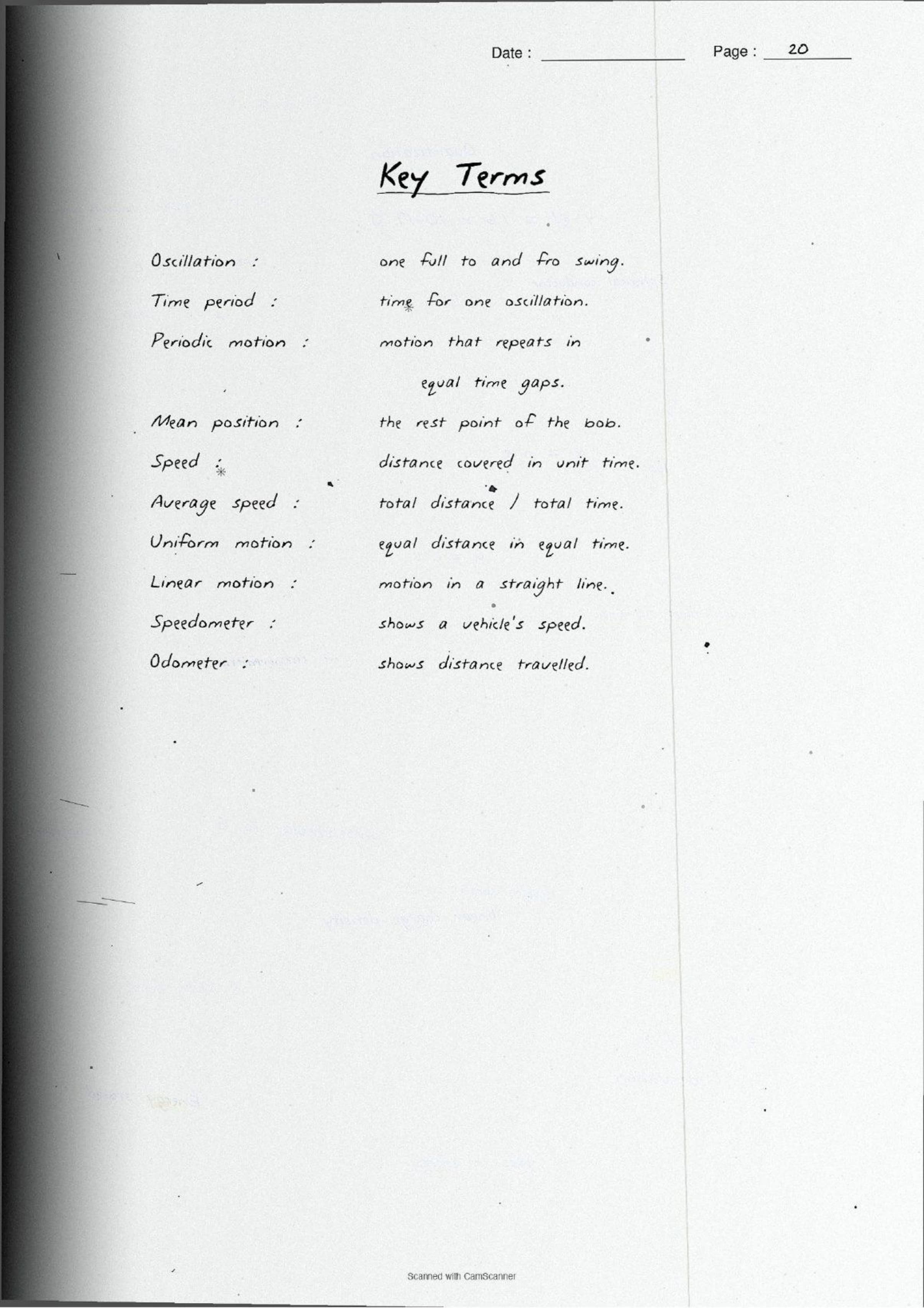
Measurement of Time and Motion Terms You Must Be Able to Define
Numerical answers need the right units as well as the right number.
| Term / Idea | What it means |
|---|---|
| Oscillation | one complete to-and-fro swing of a pendulum |
| Time period | the time taken for one complete oscillation |
| Second | the SI unit of time, written as s |
| Speed | the distance covered in one unit of time |
| Uniform linear motion | motion in a straight line with an unchanging speed |
| Non-uniform linear motion | motion in a straight line with a changing speed |
| Distance | the length of the path covered, measured in metres or kilometres |
Measurement of Time and Motion Figures You Will Find in the Notes
The pendulum and the motion graphs are drawn out in full.
| Figure drawn by hand | What it shows |
|---|---|
| Simple pendulum | bob, thread, mean position and extreme positions labelled |
| One oscillation path | the full to-and-fro swing traced with arrows |
| Speed formula box | the three rearranged forms written together |
| Distance-time table | a filled table for a uniformly moving object |
| Uniform and non-uniform sketch | two paths compared over equal time steps |
A Two-Pass Plan for the Measurement of Time and Motion Handwritten Notes
Practice beats reading in this chapter. Do the numericals with the notes closed. Read the class 7 science handwritten notes the same way twice, once slowly and once fast.
- Write the three forms of the speed relation from memory
- Solve five speed problems, showing the formula each time
- Draw the pendulum and label the mean position and one oscillation
- On the last day, revise the formula box and the three solved problems
More Science Study Material for Measurement of Time and Motion
The solved exercises carry more numericals for practice.
All Chapters: Class 7 Science Handwritten Notes
Every chapter has its own class 7 science handwritten notes. Class 7 Science handwritten notes are ready for all twelve chapters.
Measurement of Time and Motion Class 7 Science Handwritten Notes FAQs
Ques. Where can I download the Measurement of Time and Motion Class 7 Handwritten Notes PDF?
Ans. The PDF is on this page, free, in both the normal and the HD version.
Ques. Do the notes show full speed calculations?
Ans. Yes. Every solved problem is written in three lines: the formula, the numbers put in, and the answer with its unit.
Ques. How many pages is the Chapter 8 handwritten notes PDF?
Ans. It runs 22 pages and covers all four sections of the chapter plus a quiz.
Ques. What is the formula for speed in Class 7 Science?
Ans. Speed equals distance divided by time. Rearranged, distance equals speed multiplied by time, and time equals distance divided by speed.
Ques. What is the time period of a simple pendulum?
Ans. It is the time taken for one complete oscillation, that is one full to-and-fro swing. It is measured in seconds.



Comments