




Class 7 Science Chapter 5 Changes Around Us: Physical and Chemical teaches you to sort any change into two kinds. These class 7 science handwritten notes chapter 5 Changes Around Us: Physical and Chemical follow the 2026-27 NCERT and cover shape and state changes, rusting, combustion, weathering and erosion.
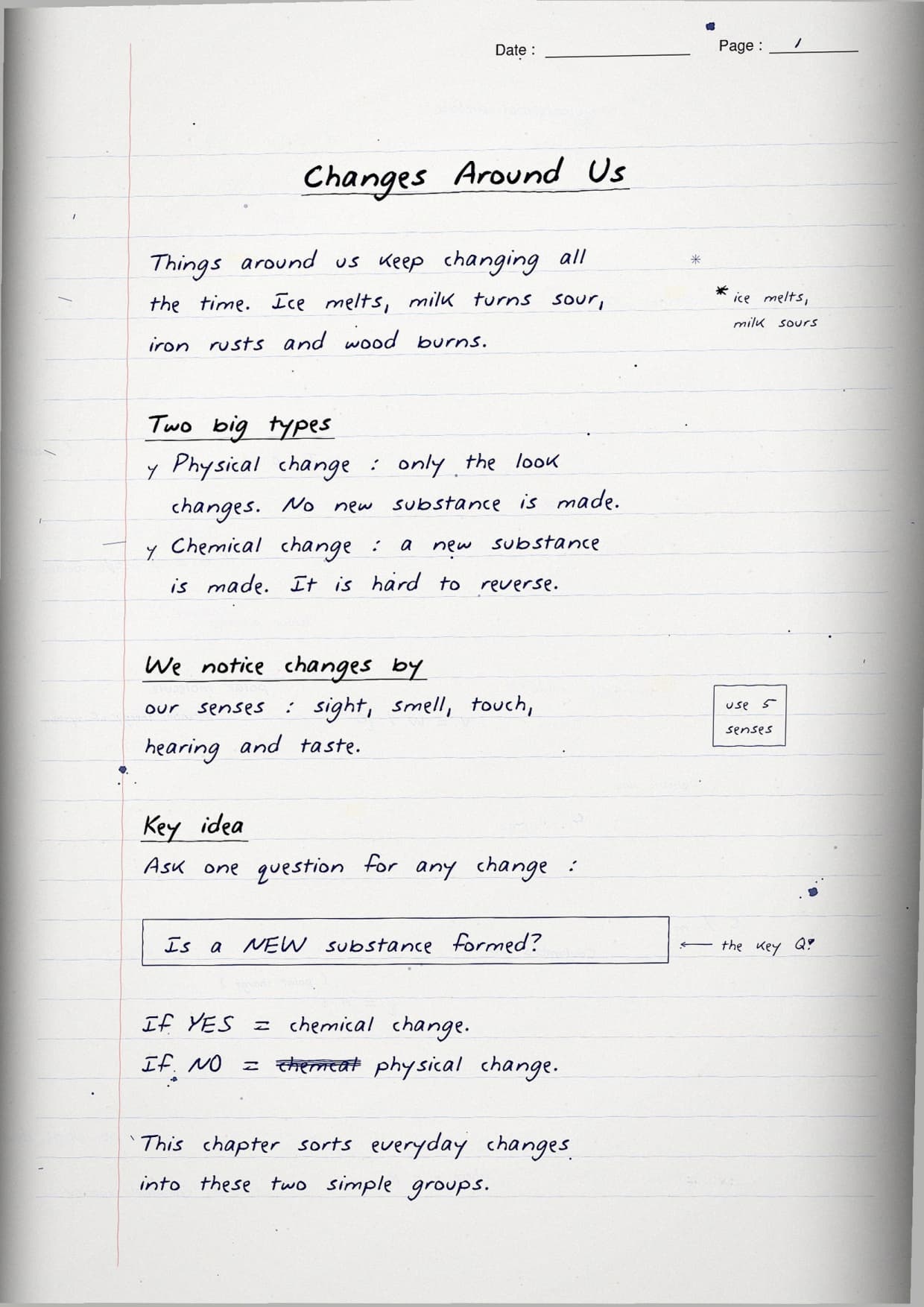
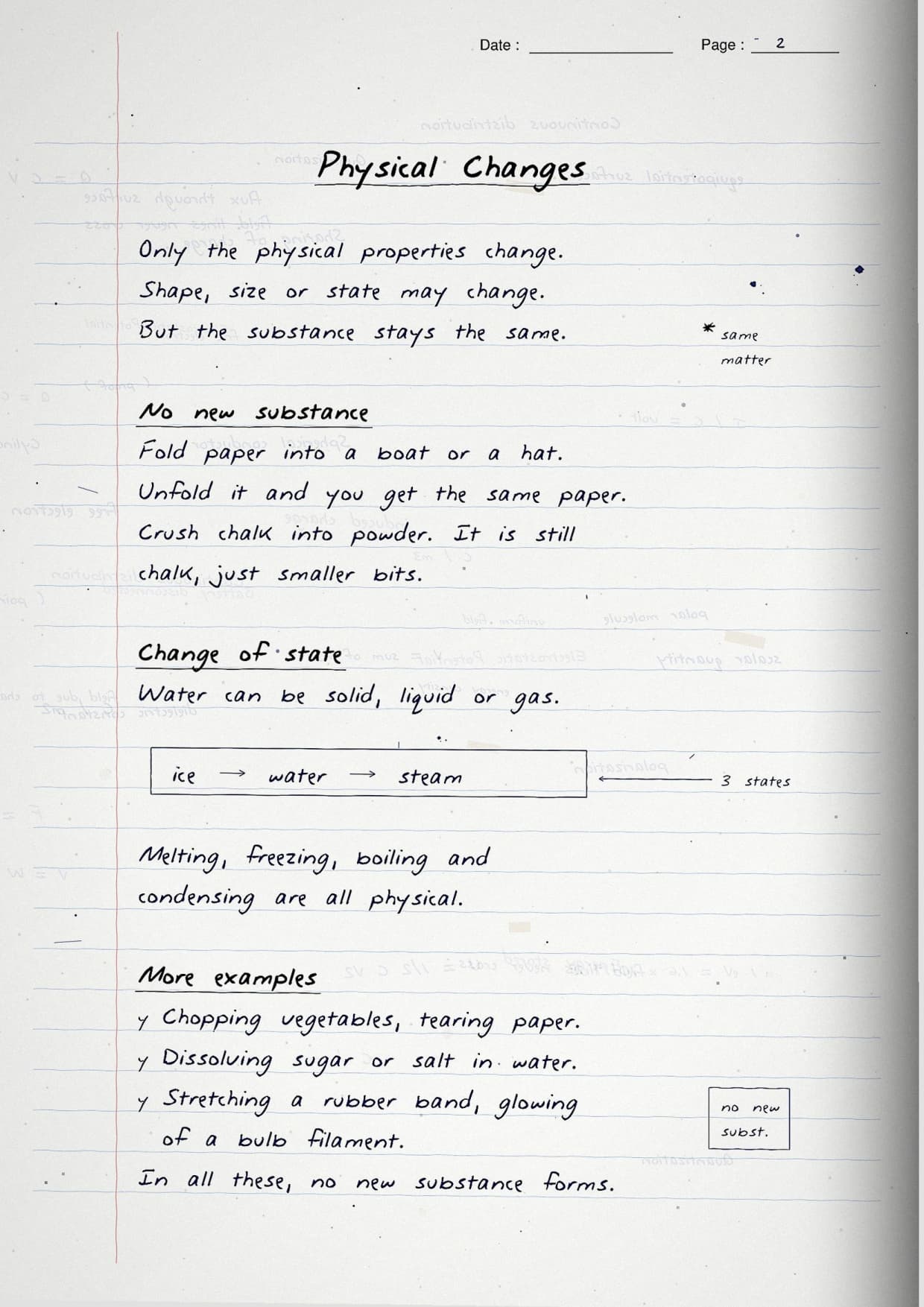
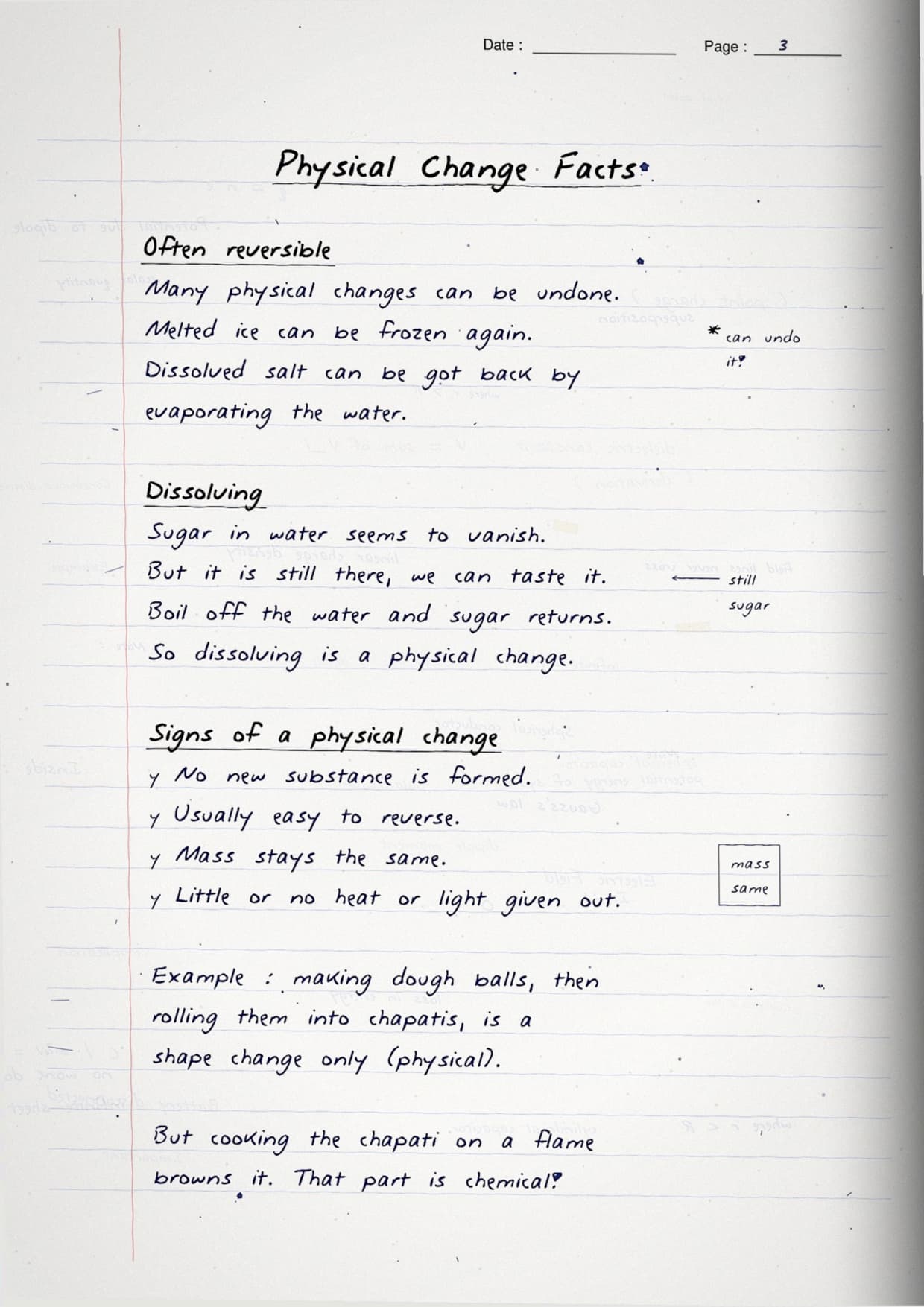
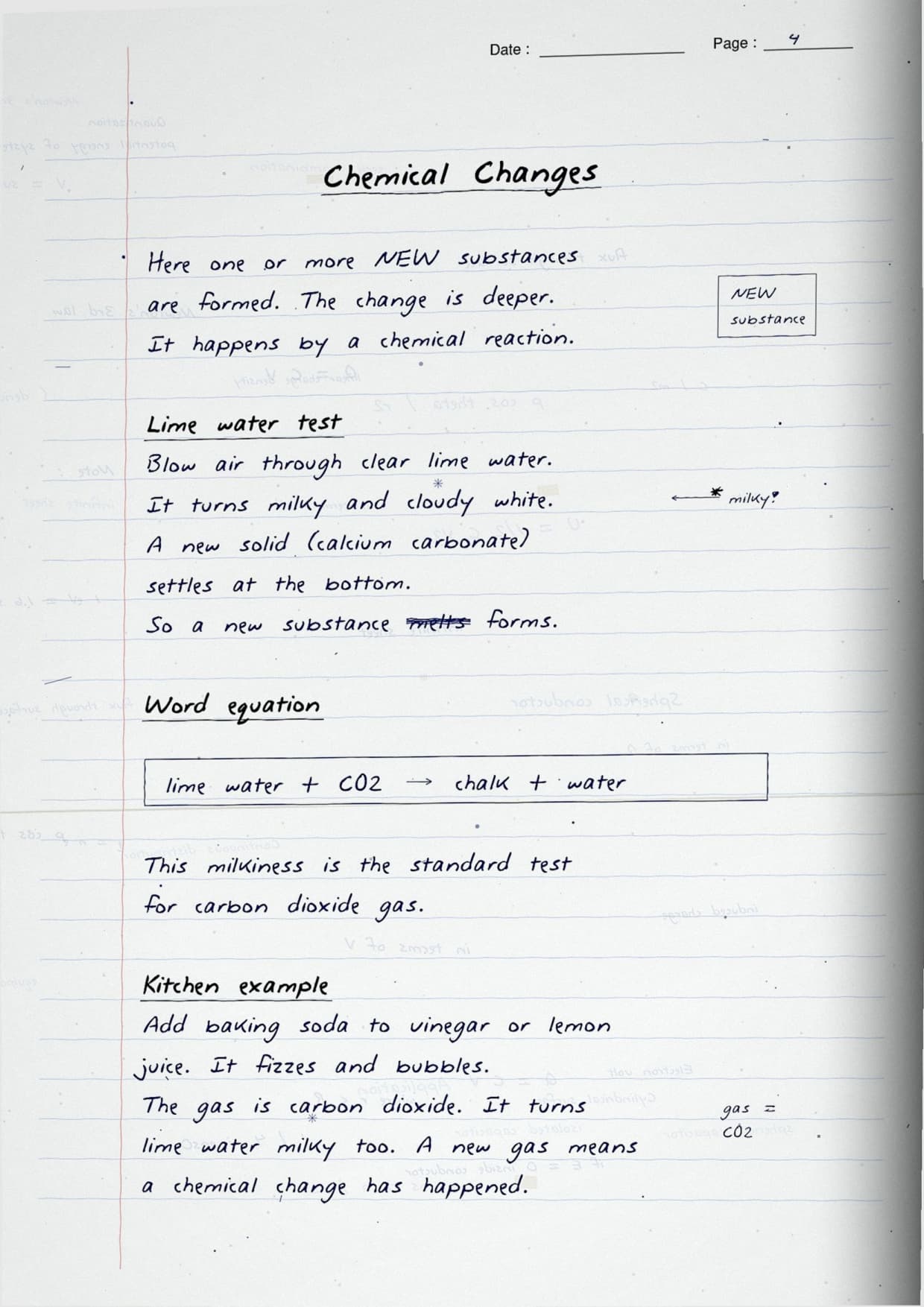
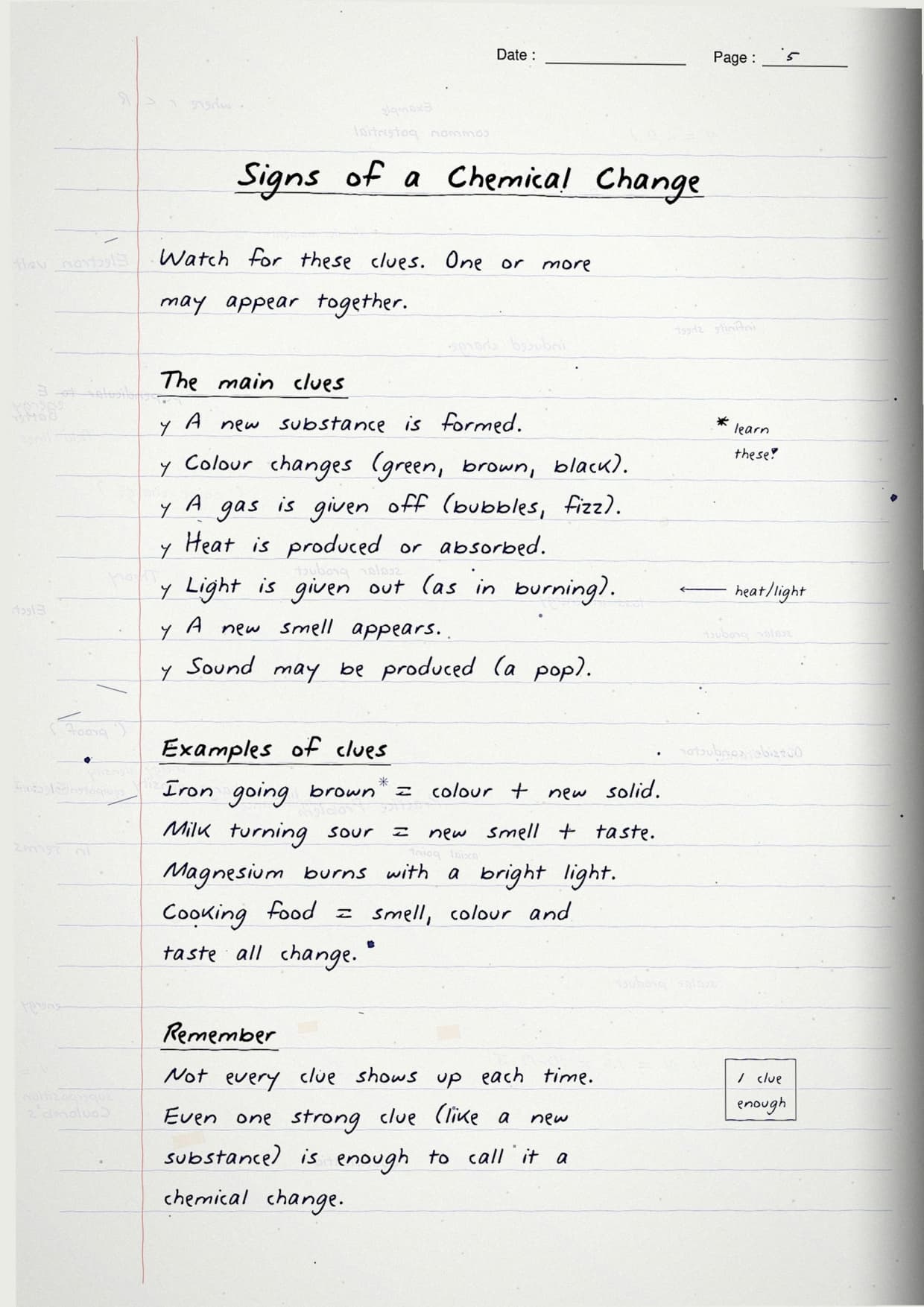
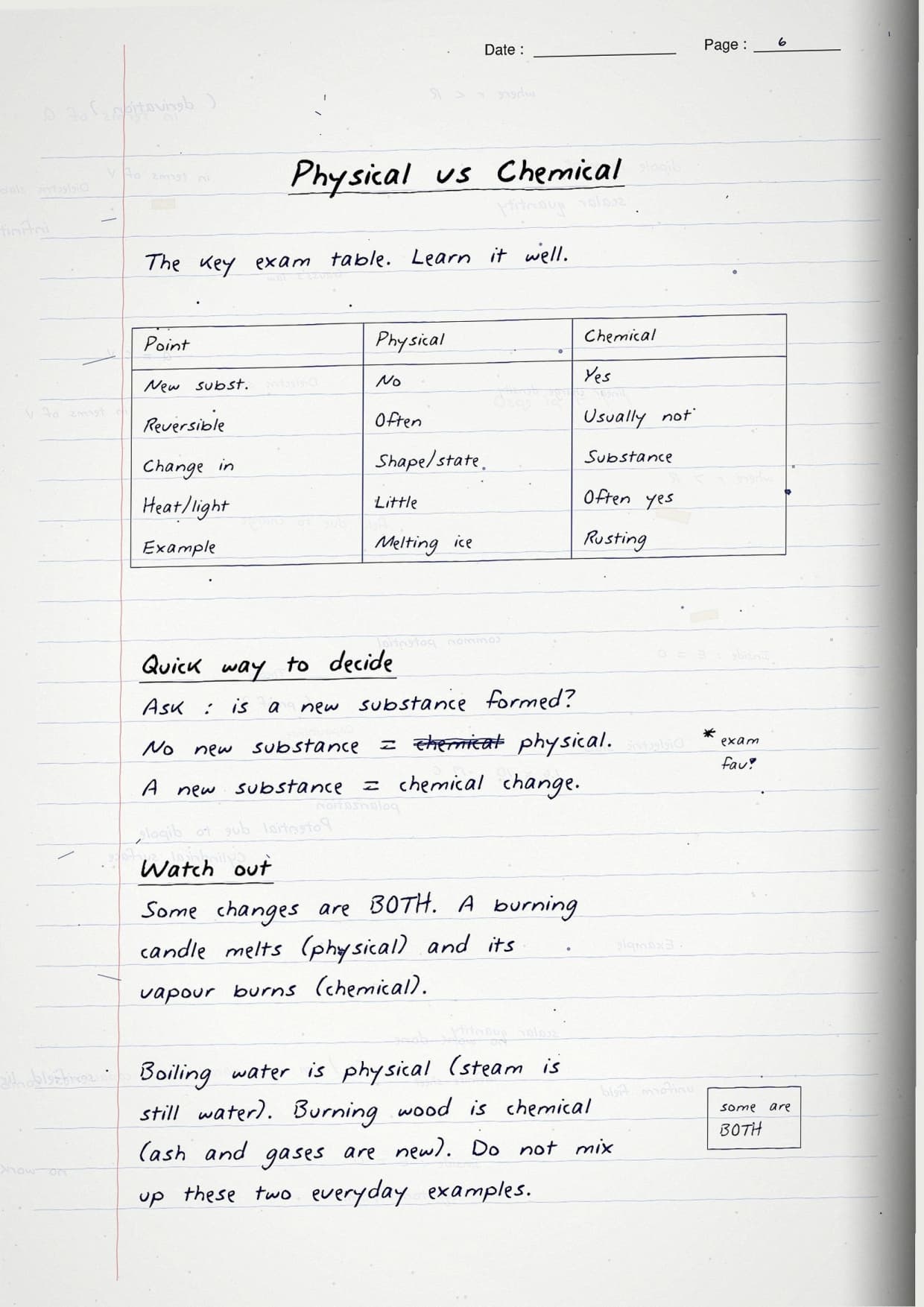
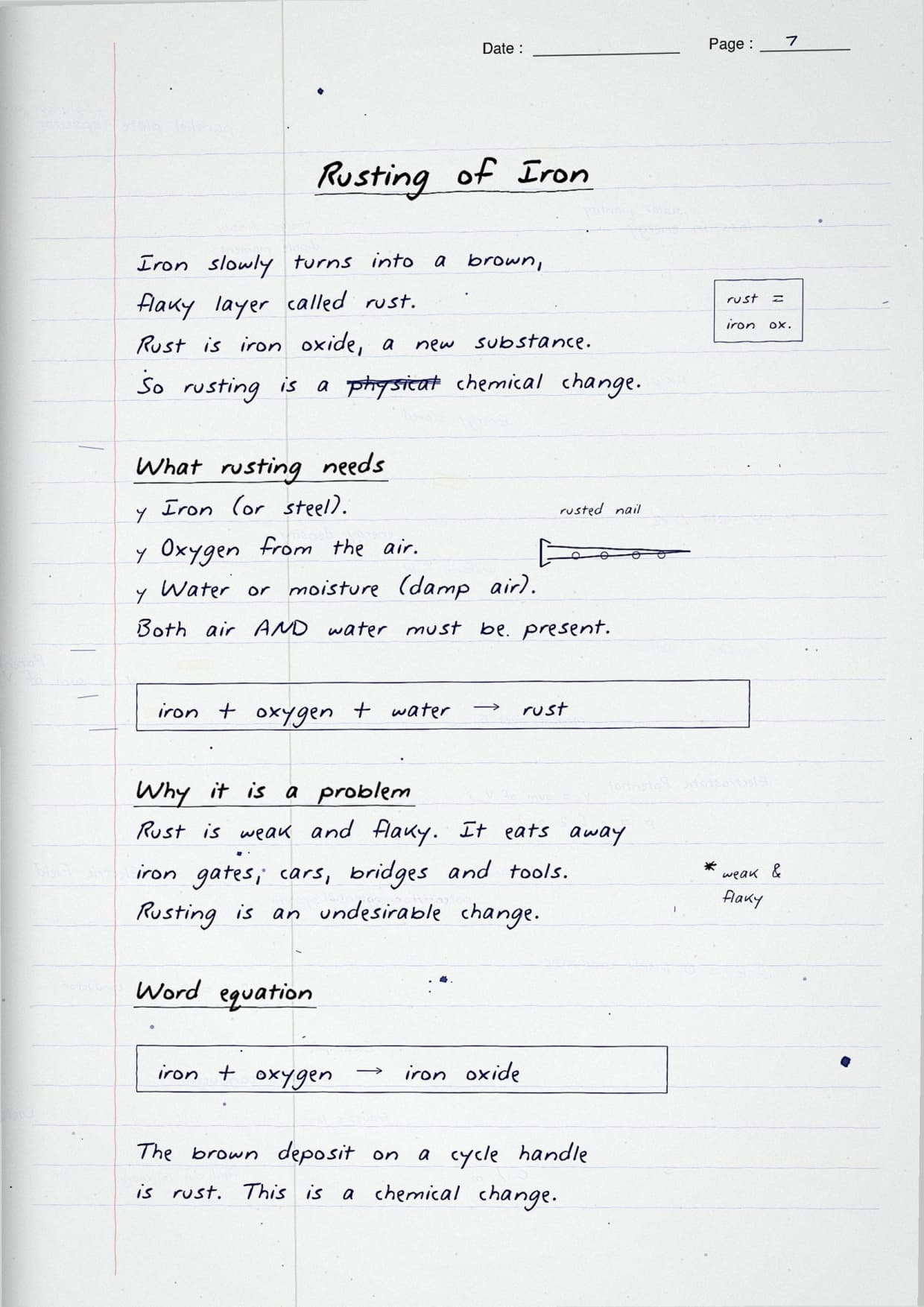
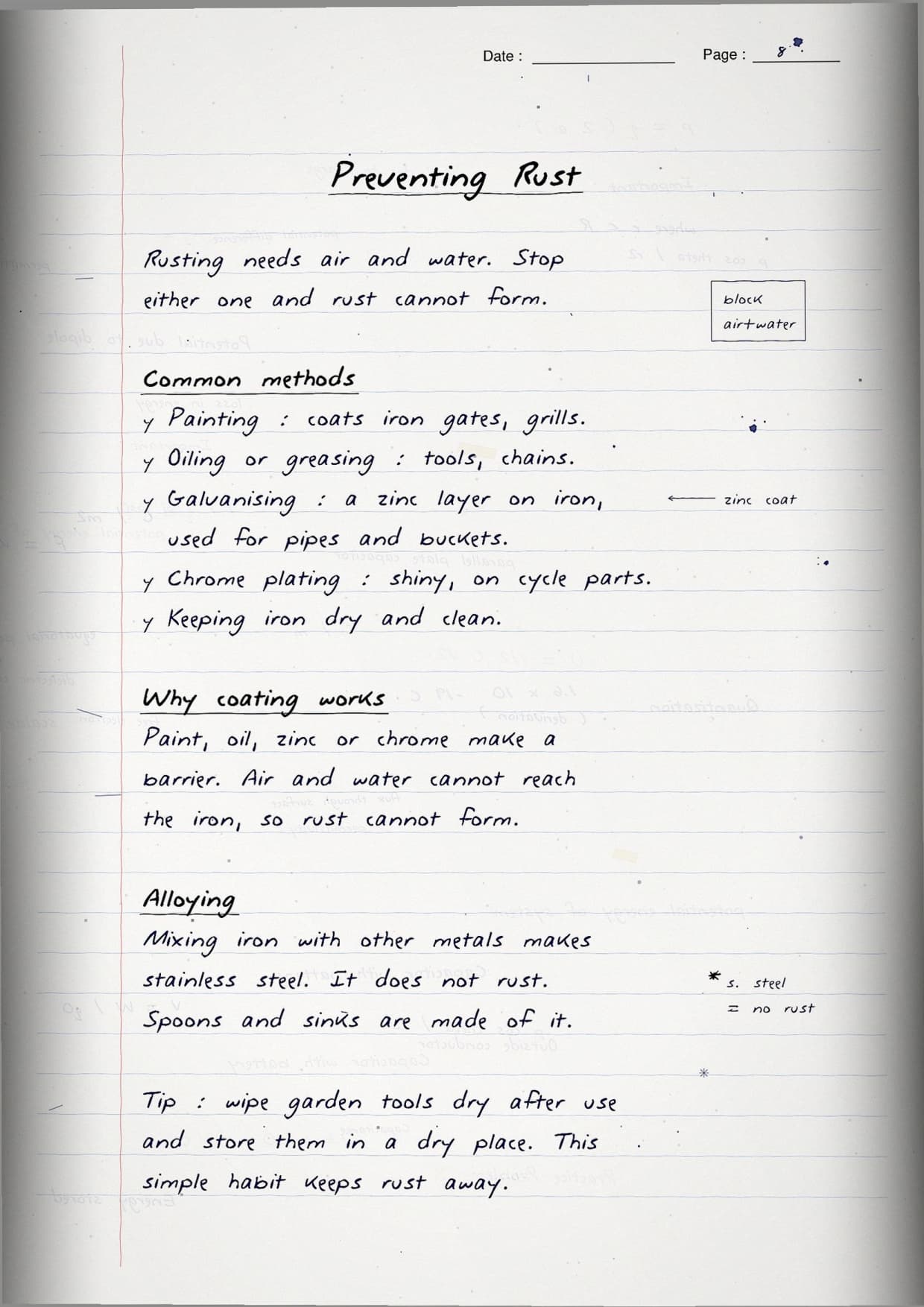
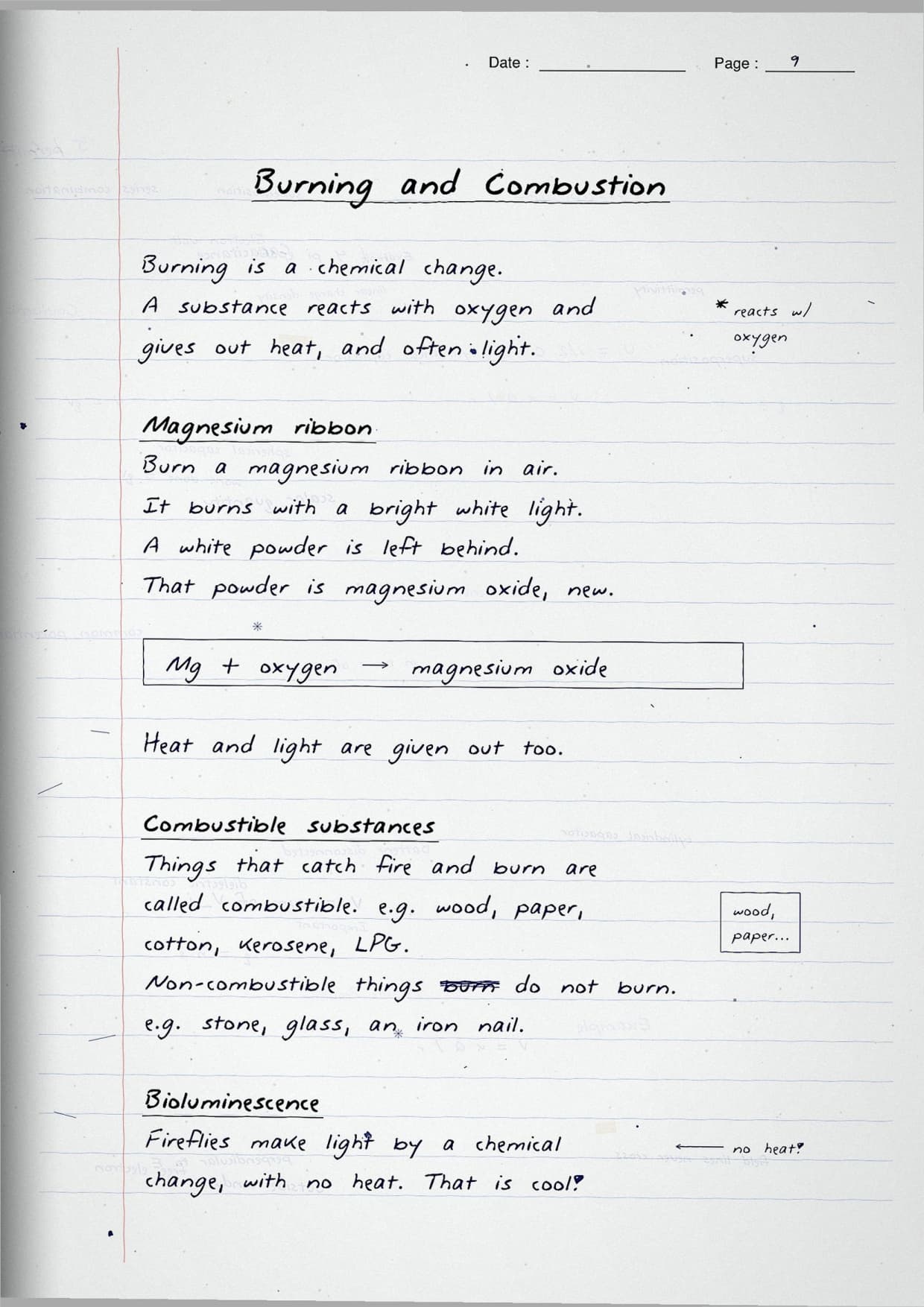
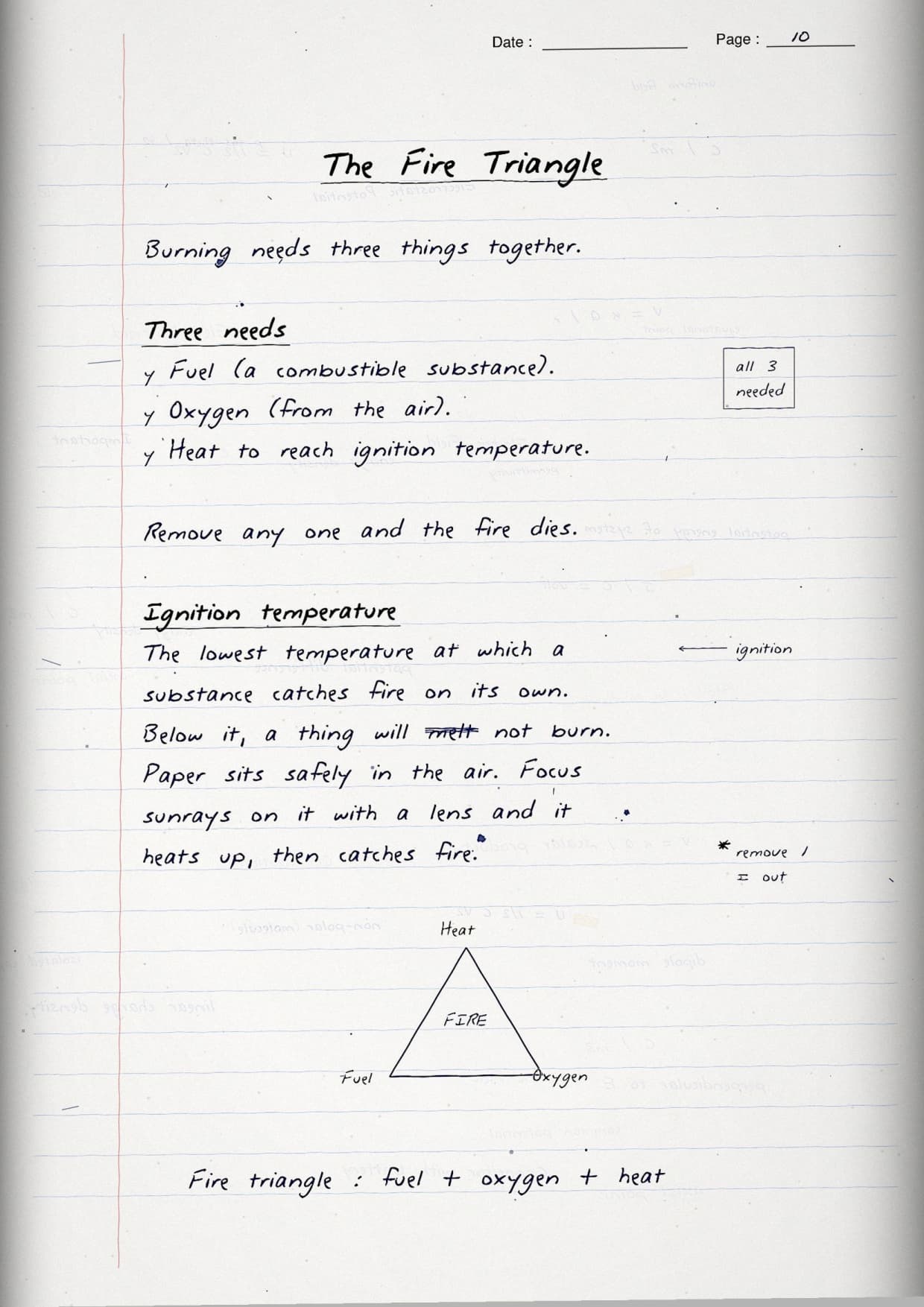
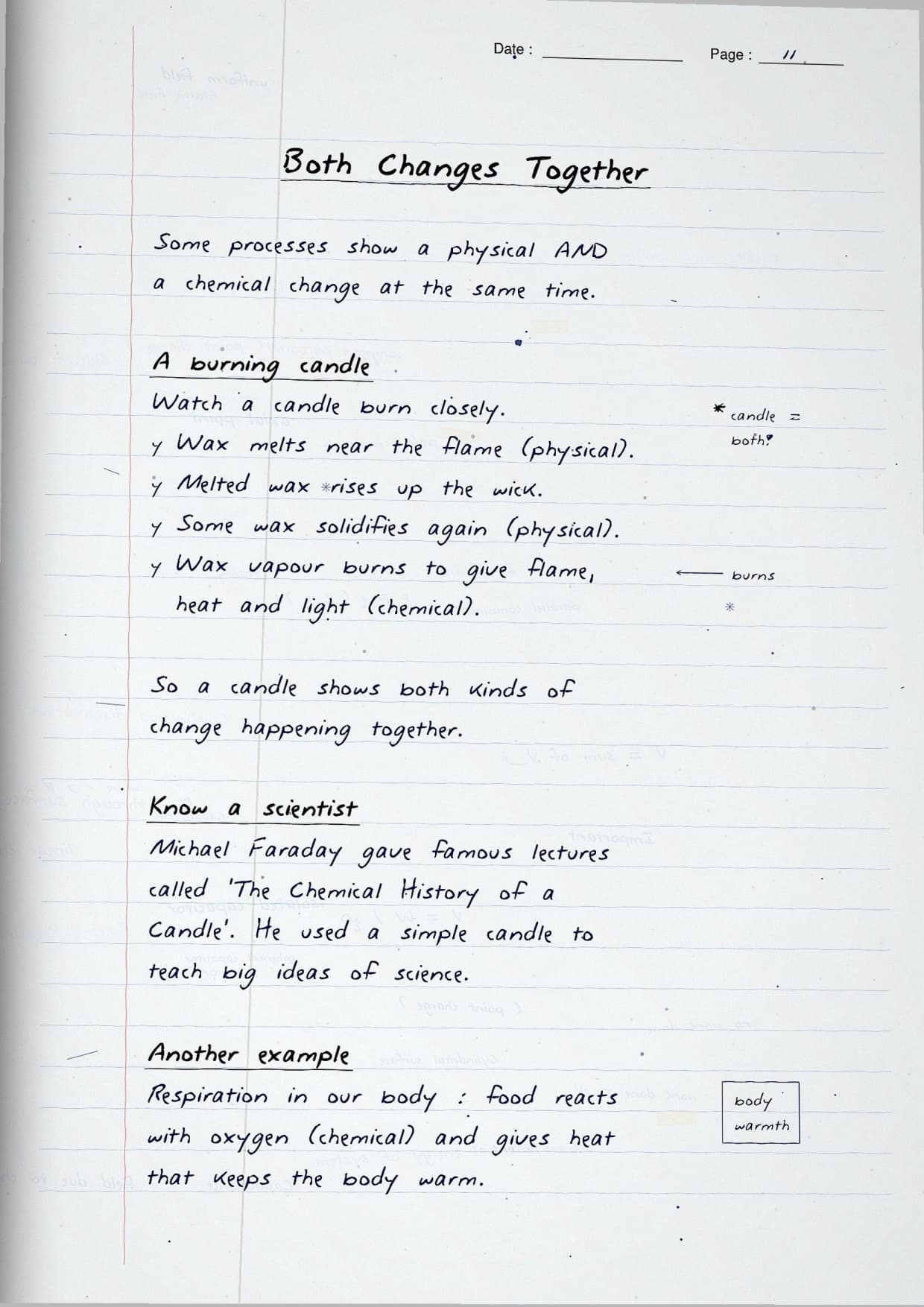
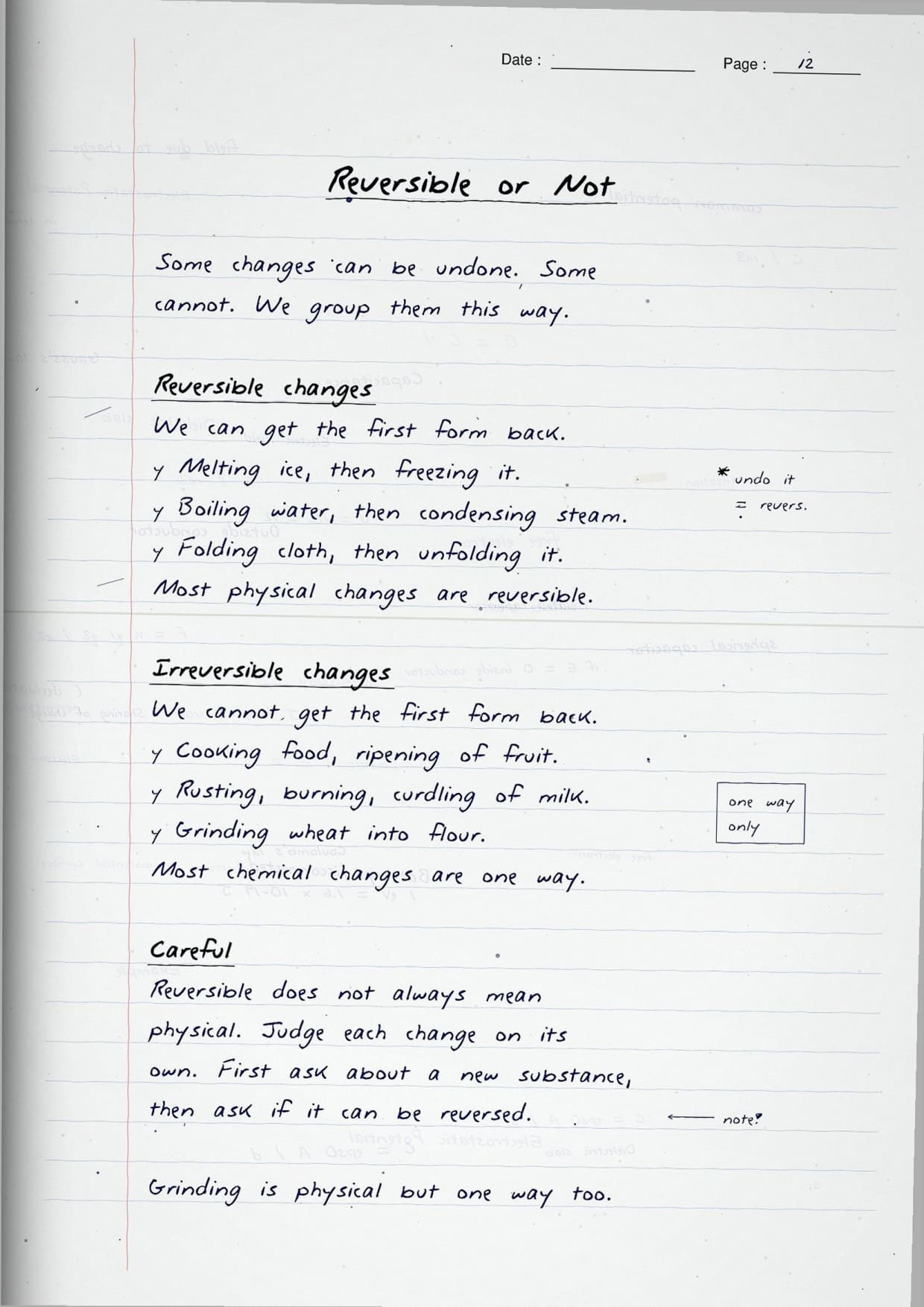
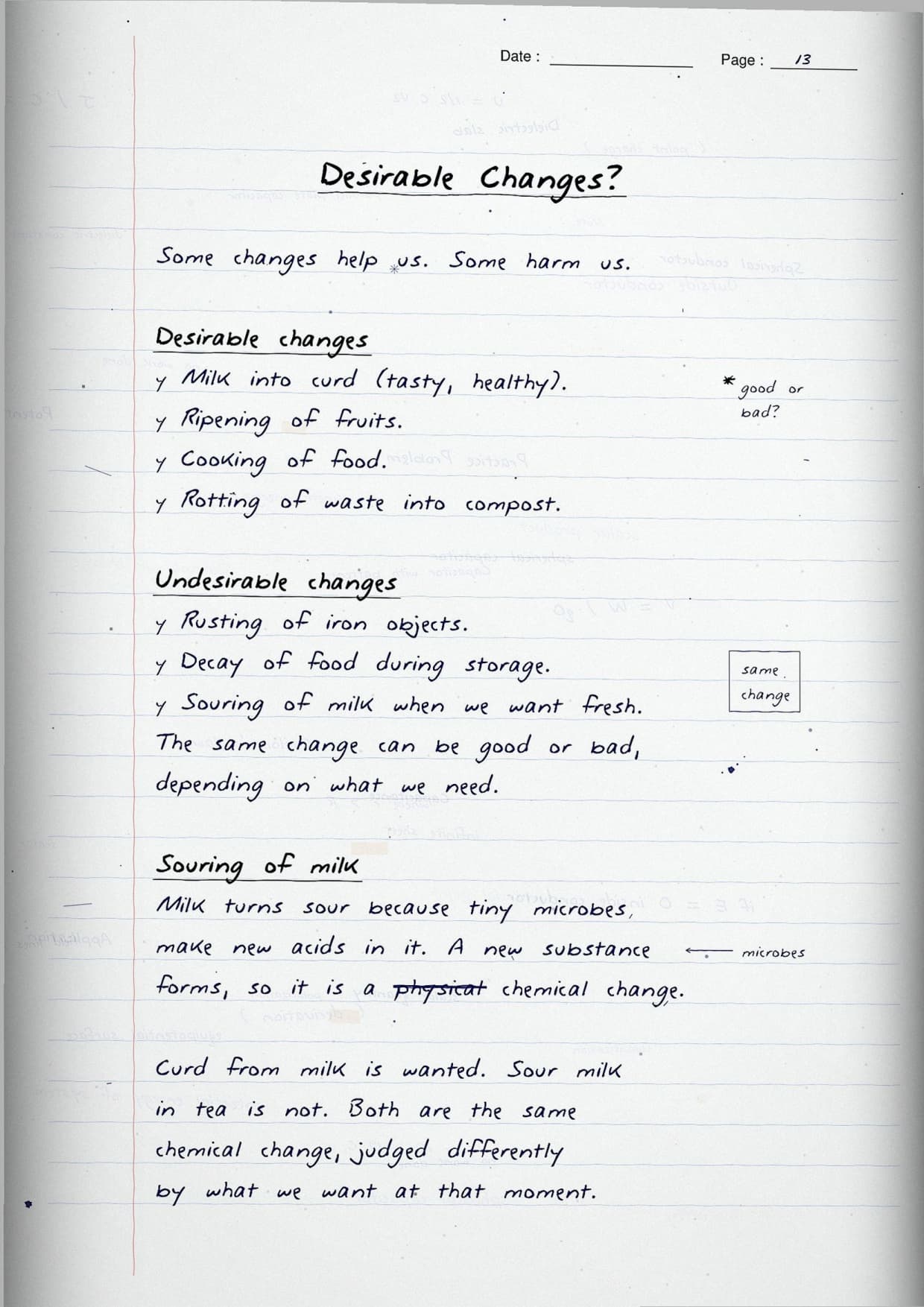
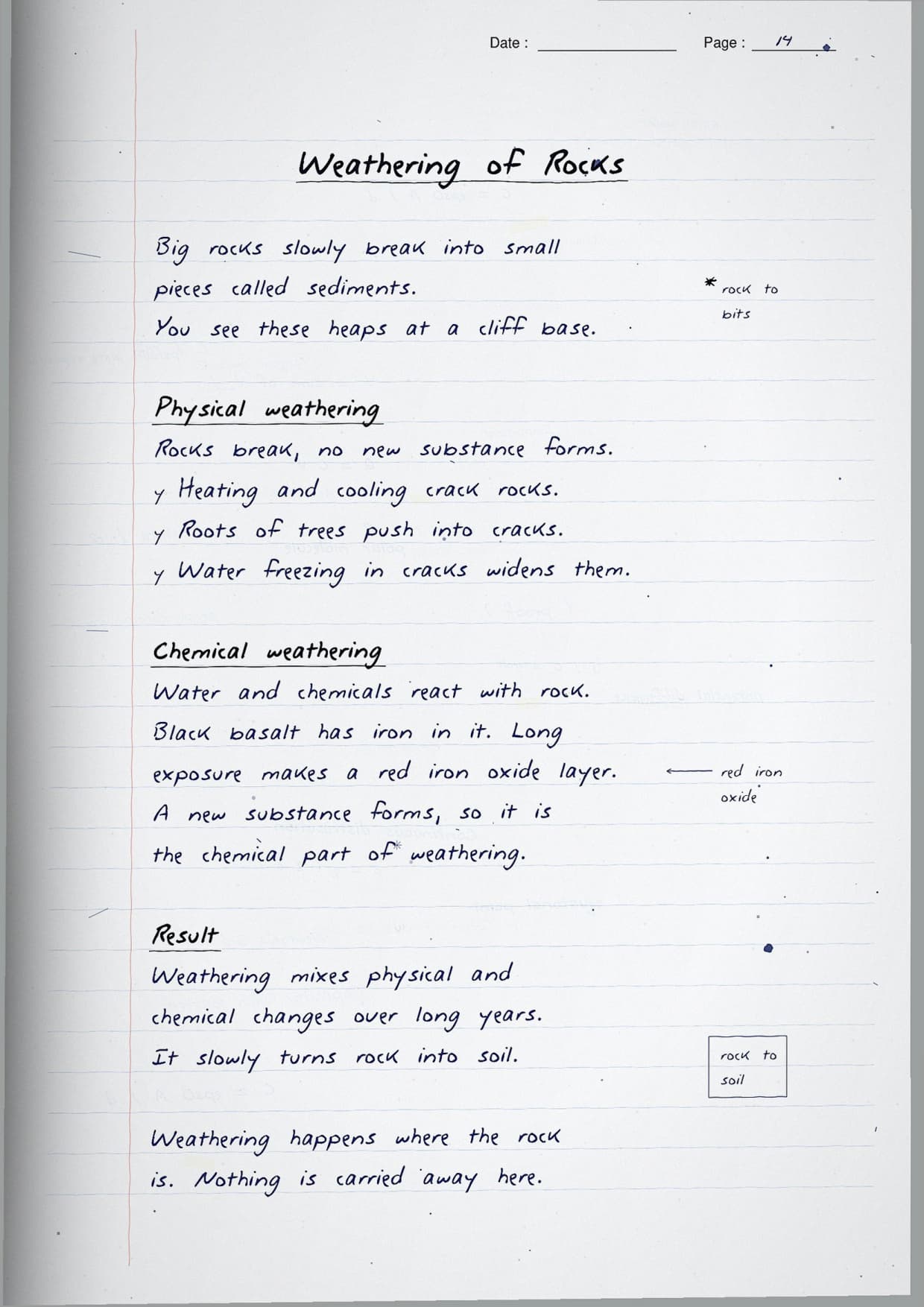
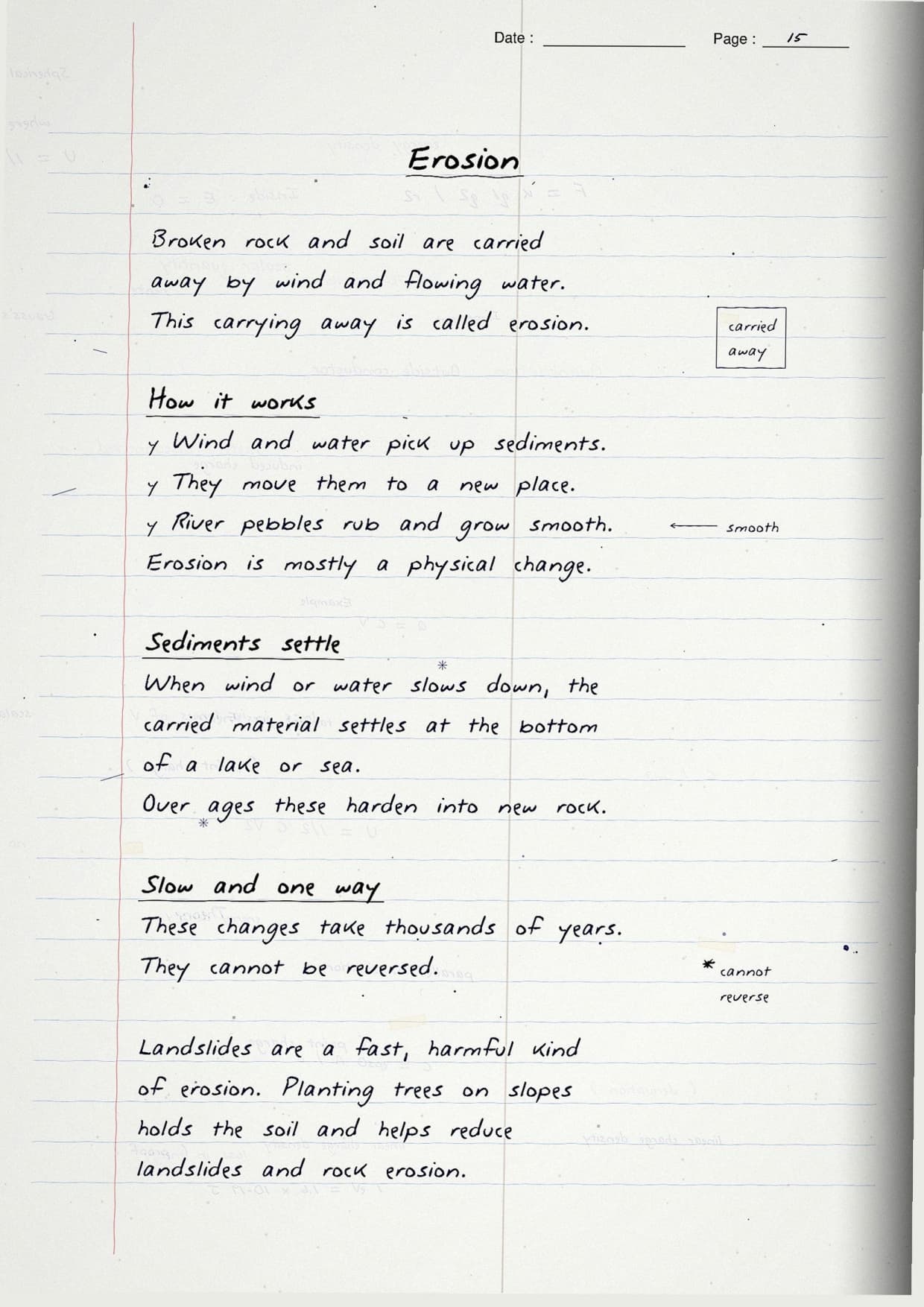
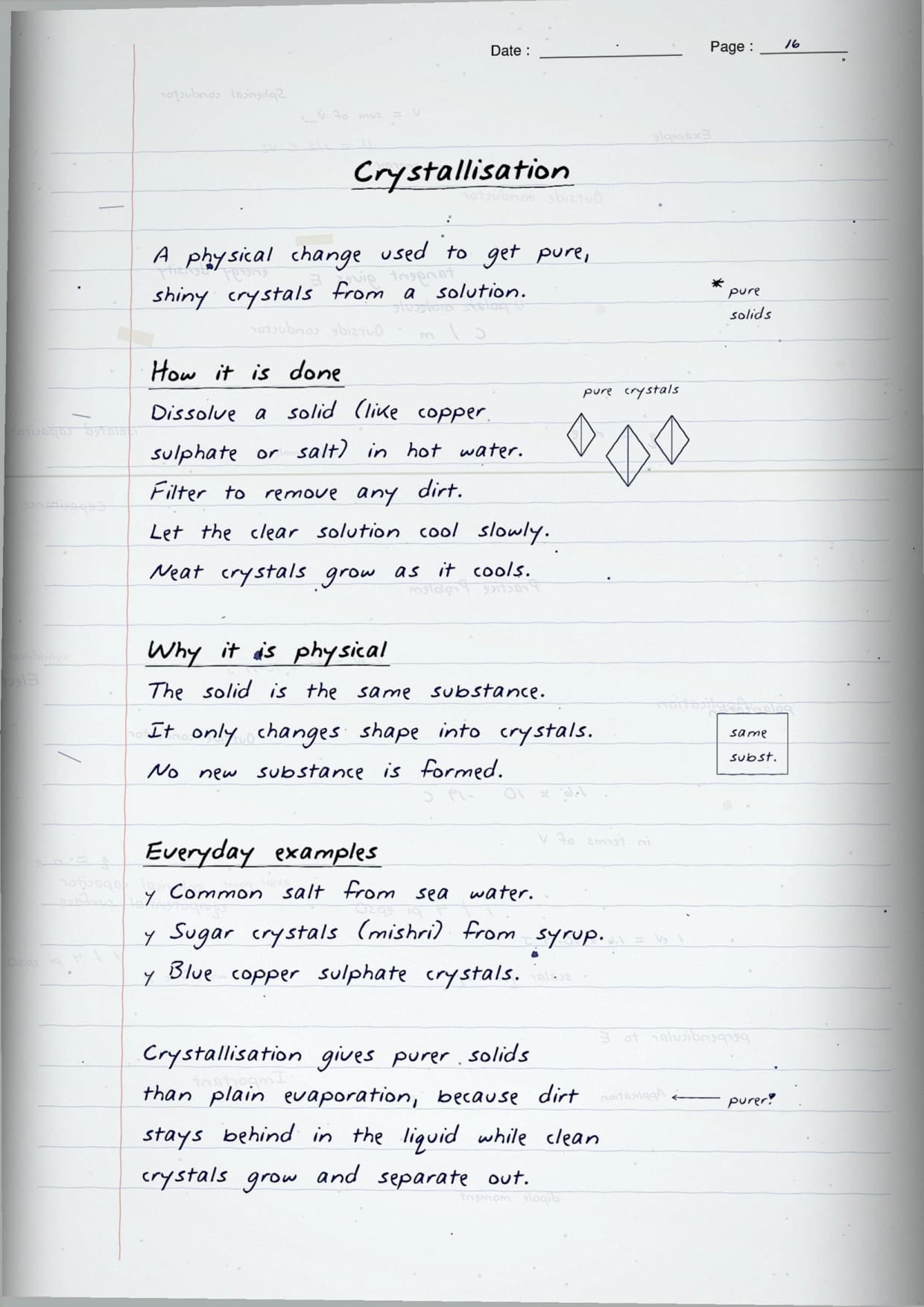
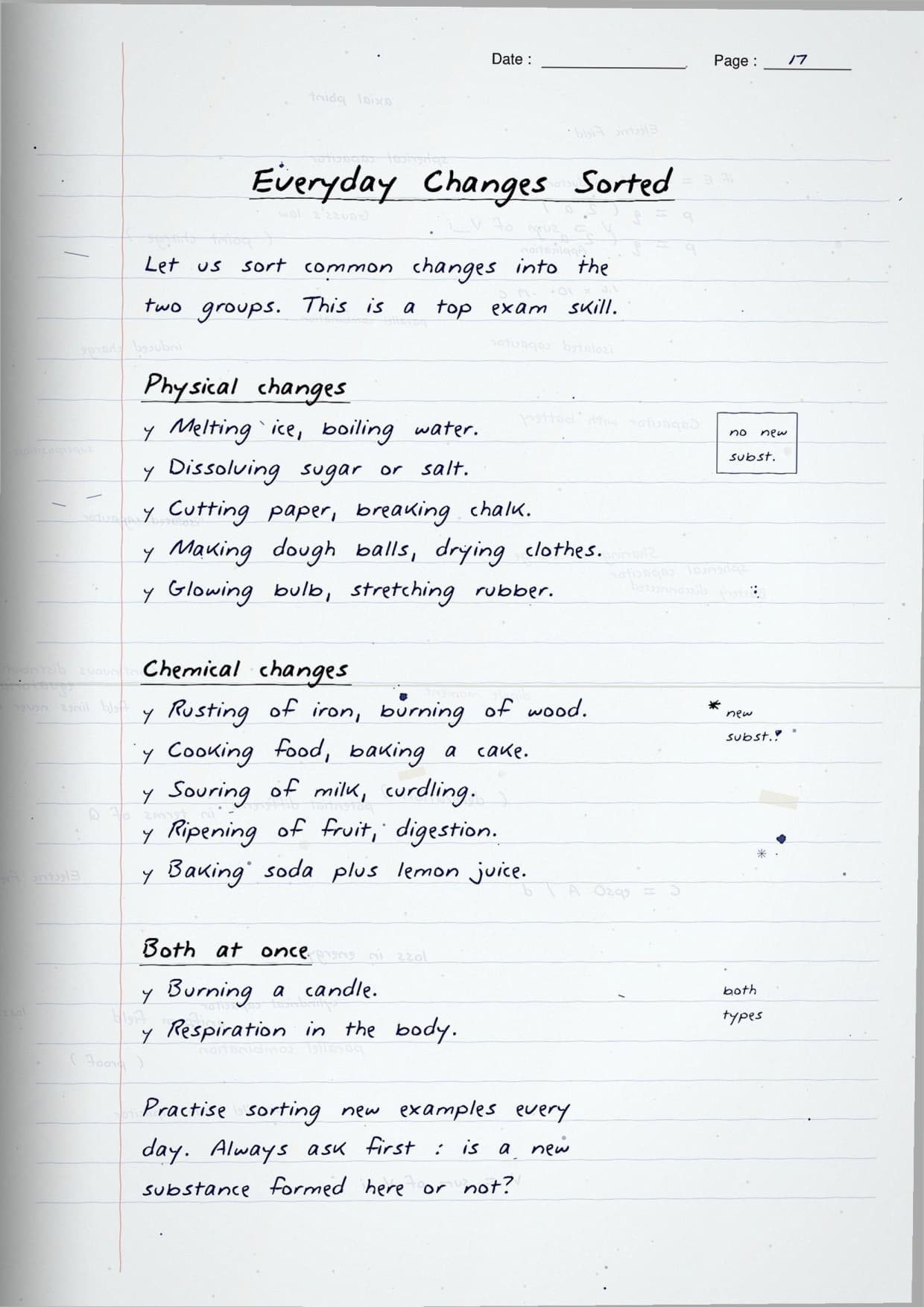
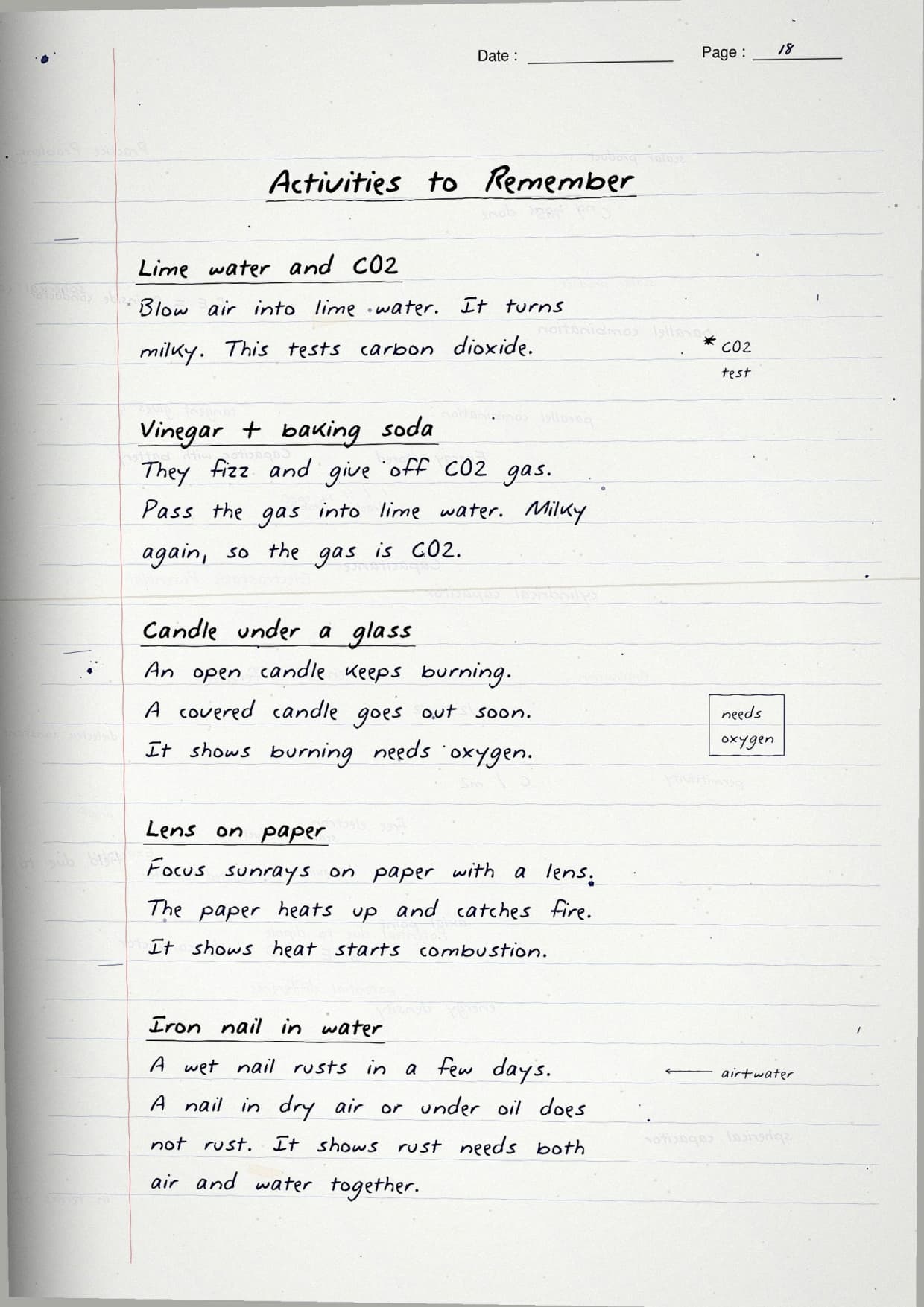
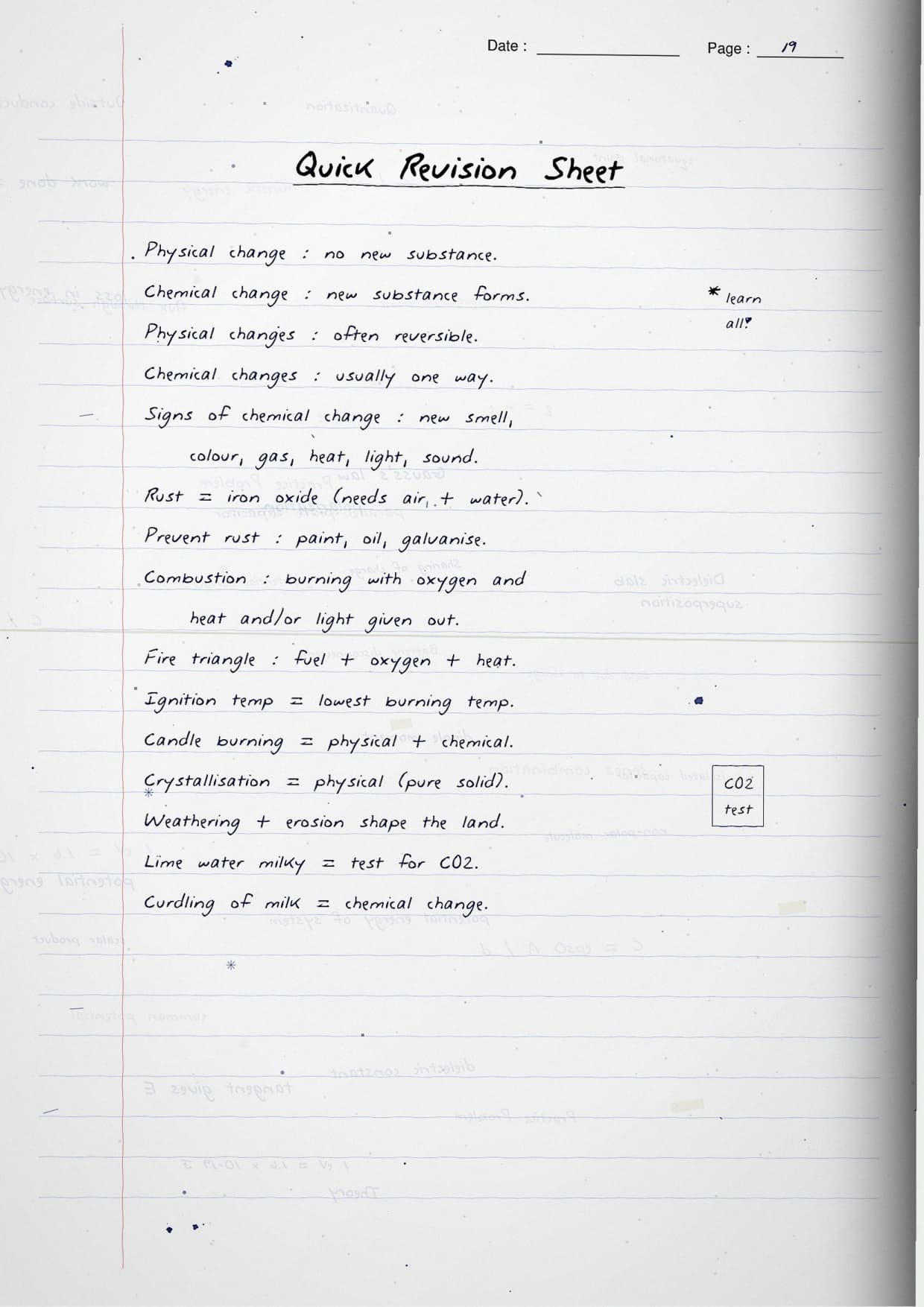
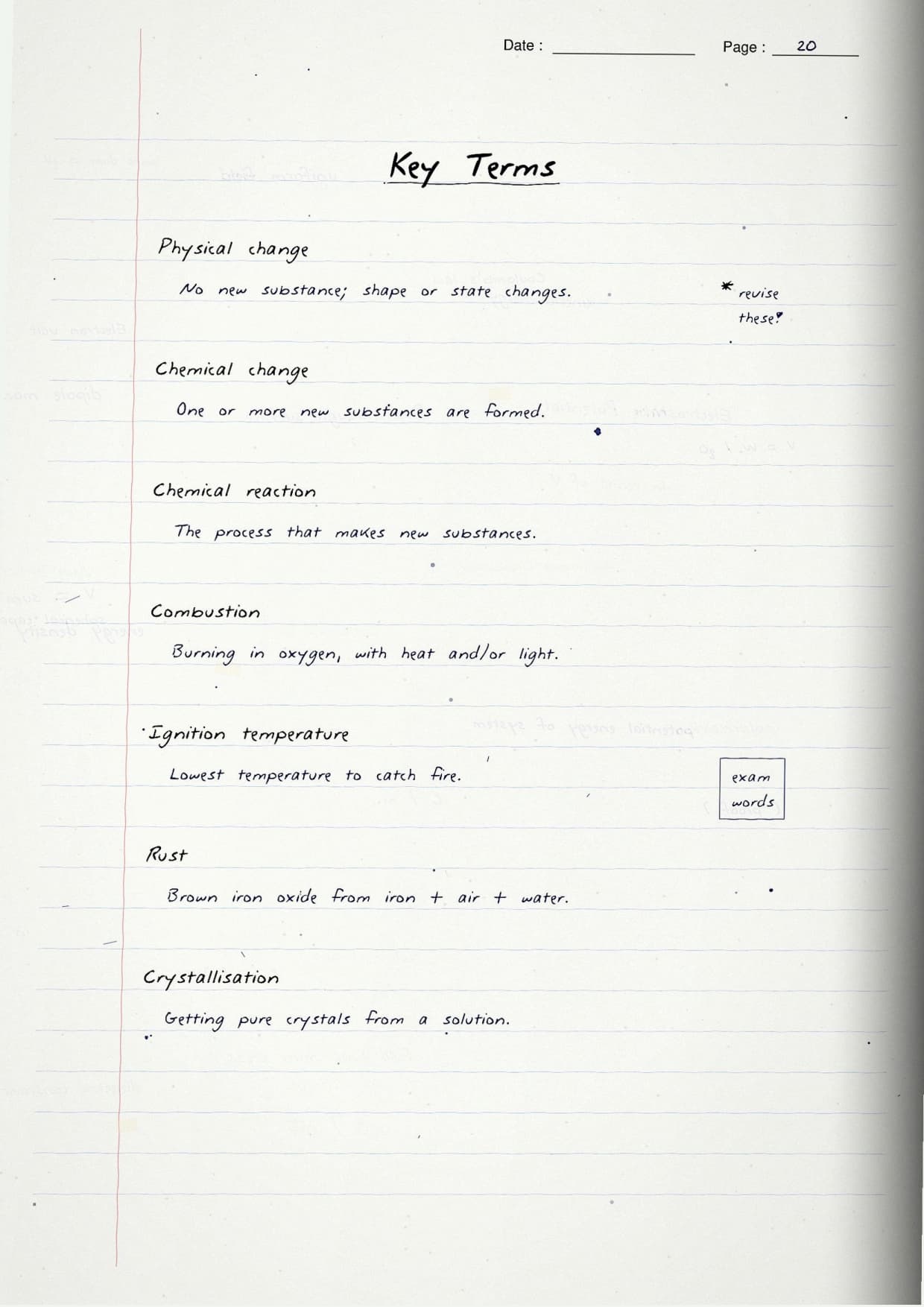
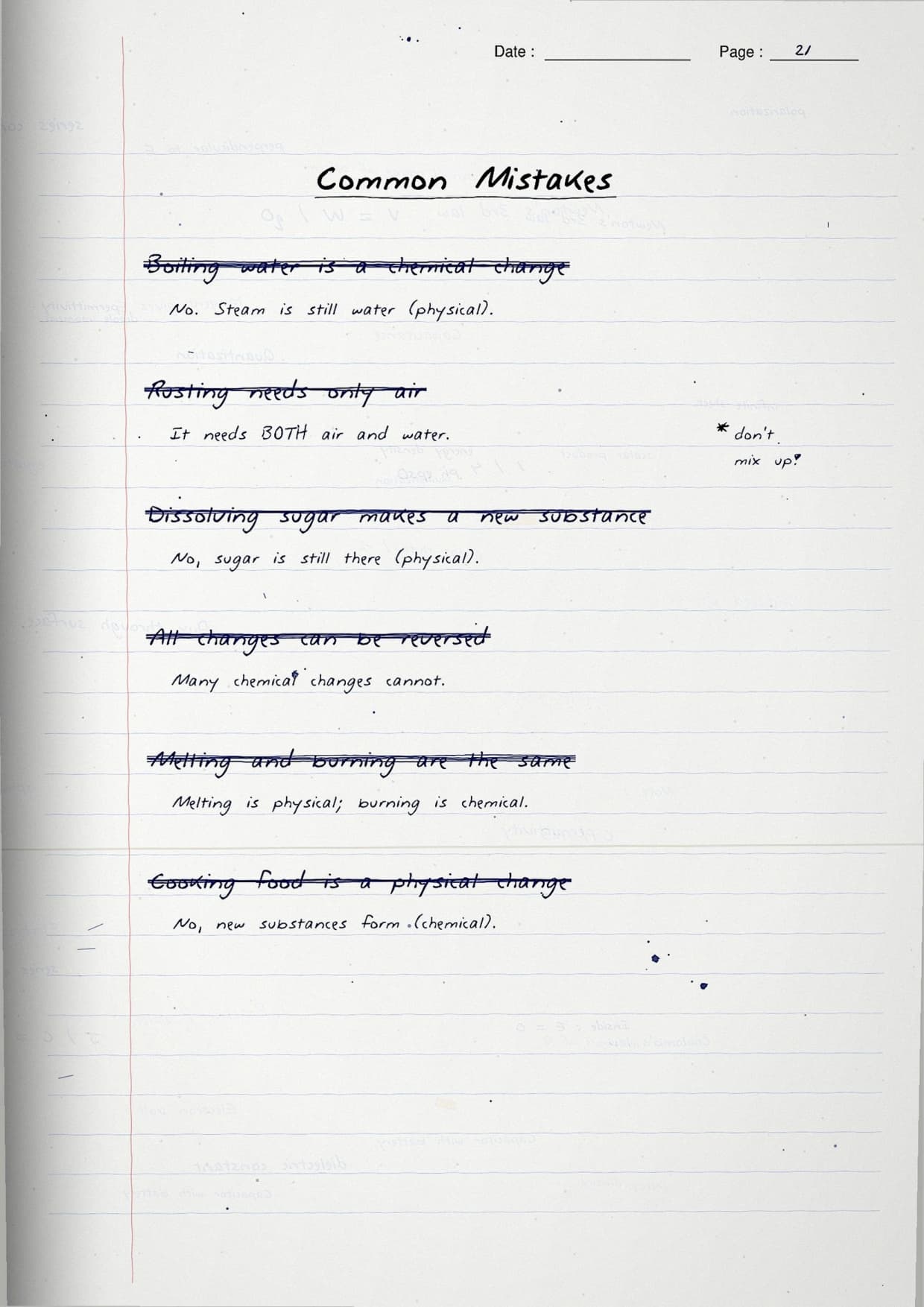
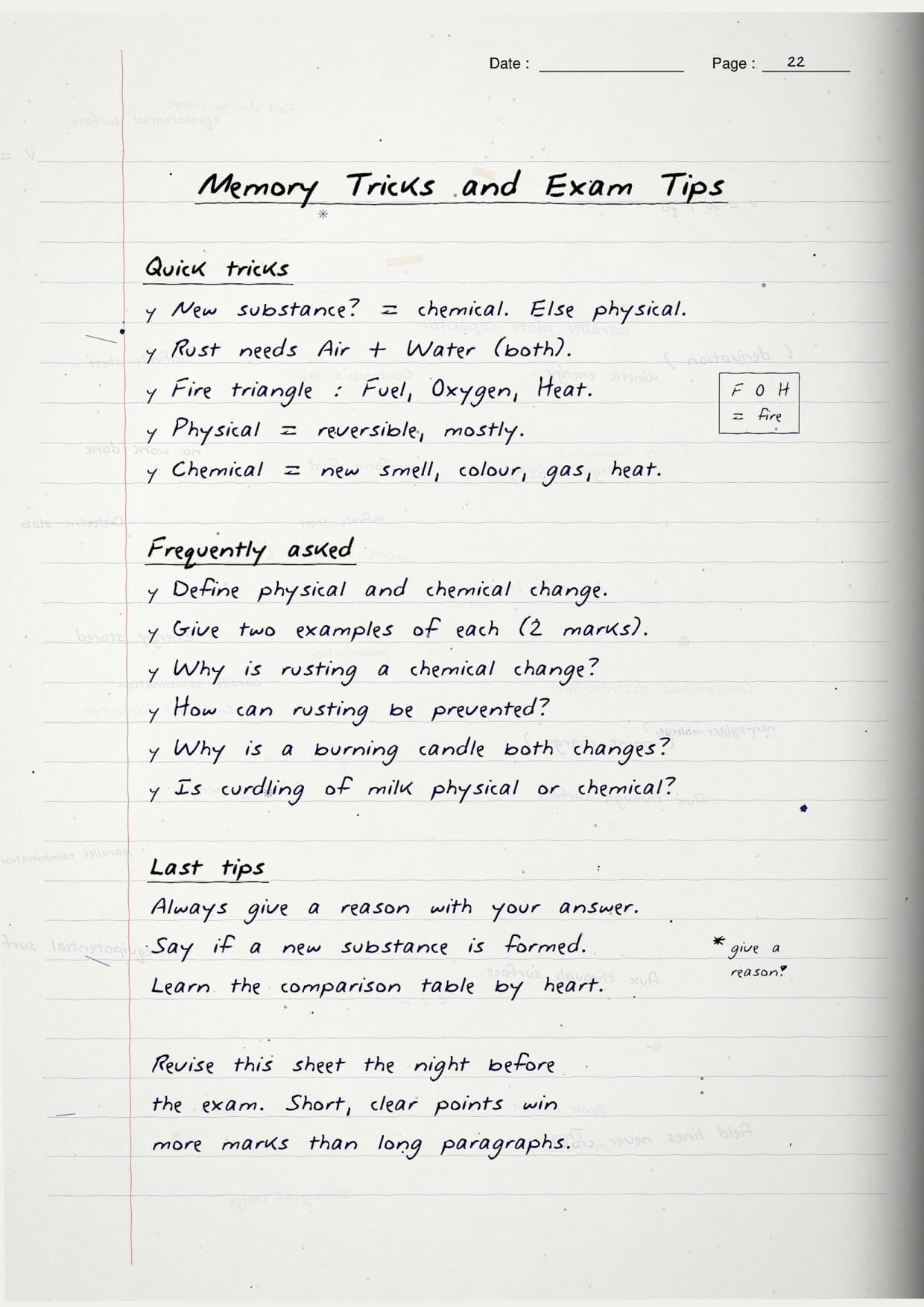
- Sorting rule boxed: one test to decide whether a change is physical or chemical
- What the notes cover: changes in shape and state, rusting, combustion, reversible changes, weathering and erosion
- Best for: sort-the-change questions, which every Class 7 paper asks in some form
Open the PDF below for the complete class 7 science handwritten notes covering Changes Around Us: Physical and Chemical from the first page to the last.
These handwritten notes are written by Science teachers, mapped to the 2026-27 NCERT, and checked against Class 7 school question papers.
Where Students Lose Marks in Changes Around Us: Physical and Chemical
Students lose marks here by giving the answer without the reason. Naming a change is one mark, explaining it is the second.
- Sort-the-change questions appear in every Class 7 test
- Two marks usually go to giving a reason, not just the label
- Weathering and erosion connect straight to the Social Science geography chapters
- The same sorting idea returns in Class 8 and Class 9 chemistry
Why Students Pick Collegedunia's Changes Around Us: Physical and Chemical Handwritten Notes
These class 7 science handwritten notes were written by teachers who set Class 7 papers. Collegedunia built the notes around the sorting rule, so every example points back to it.
- One sorting rule: the new-substance test written in a single hand-drawn box
- Twenty sorted examples: everyday changes split into two columns
- Rusting and burning panels: the two standard chemical changes drawn with their products
- Colour-coded sub-headings: each sub-topic written in red so the sections separate cleanly
Test Yourself on Changes Around Us: Physical and Chemical
Five sorting questions of the type Class 7 papers use. Tap to reveal.
Melting of ice is a
(a) chemical change (b) physical change (c) irreversible change (d) combustion
Answer: (b) physical change, water is still water
Burning of a candle wick is a
(a) physical change (b) reversible change (c) chemical change (d) change of state
Answer: (c) chemical change, new substances form
Which change is irreversible?
(a) melting butter (b) folding paper (c) burning paper (d) dissolving sugar
Answer: (c) burning paper
Rusting of an iron gate happens because of
(a) heat only (b) air and water together (c) sunlight only (d) paint
Answer: (b) air and water together
The slow breaking of rocks where they lie is called
(a) erosion (b) combustion (c) weathering (d) rusting
Answer: (c) weathering
Topics Written Out in the Changes Around Us: Physical and Chemical Notes
The chapter opens with four students noticing small changes around them: melting ice, a bud opening, a banana browning. The notes use the same examples, then add the sorting rule.
- A substance may change in shape or size
- A substance may change in state
- Physical changes and what stays the same
- Rusting as a chemical change
- Combustion as a chemical change
- Can physical and chemical changes happen together
- Are all changes permanent
- Are all changes desirable
- Weathering of rocks
- Erosion by water and wind
Changes Around Us: Physical and Chemical Sub-topic Priority List for CBSE Class 7 Science
Sorting changes carries the most marks. Weathering and erosion are shorter but still asked.
| Sub-topic | Weightage | How often asked |
|---|---|---|
| Physical versus chemical change | High | asked often |
| Rusting and combustion as examples | High | asked often |
| Reversible and irreversible changes | Medium | asked sometimes |
| Desirable and undesirable changes | Medium | asked sometimes |
| Weathering of rocks | Medium | asked sometimes |
| Erosion by water and wind | Low | asked rarely |
Changes Around Us: Physical and Chemical in the Last Hour Before the Exam
Read only this if the exam is minutes away.
- New substance formed means chemical; no new substance means physical
- Melting, boiling, folding, dissolving are physical
- Rusting, burning, cooking, souring are chemical
- Reversible changes can be undone; irreversible cannot
- Weathering breaks rock in place; erosion carries the pieces away
Hand-drawn Sketches Inside the Changes Around Us: Physical and Chemical Notes
The sorted lists and the two chemical changes are drawn out in the notes.
| Figure drawn by hand | What it shows |
|---|---|
| Change sorter | a two-column split of physical and chemical changes |
| Ice to water to steam | the three states with arrows both ways |
| Rusting iron nail | a nail before and after, with the reddish layer marked |
| Burning candle panel | melting wax and burning wick shown as two changes |
| Weathering and erosion sketch | rock breaking, then pieces carried by a stream |
Words and Ideas the Changes Around Us: Physical and Chemical Notes Box Off
These are the words that make a sorting answer complete.
| Term / Idea | What it means |
|---|---|
| Physical change | a change in shape, size or state where no new substance forms |
| Chemical change | a change in which one or more new substances form |
| Reversible change | a change that can be undone, like melting and freezing |
| Irreversible change | a change that cannot be undone, like burning paper |
| Rusting | iron slowly turning into a reddish brown substance in moist air |
| Combustion | burning, where a substance reacts with oxygen and gives heat |
| Weathering | the slow breaking of rock into smaller pieces where it lies |
| Erosion | the carrying away of broken rock and soil by water or wind |
Best Way to Read the Changes Around Us: Physical and Chemical Handwritten Notes
A short plan works better than one long sitting with the class 7 science handwritten notes. Learn the rule first. Once the rule is fixed, the twenty examples take five minutes.
- Write the new-substance test in your own words
- Sort ten changes from your own day into the two columns
- Give a reason, not just a label, for each one
- The night before, read only the rule box and the sorted list
Where to Go After the Changes Around Us: Physical and Chemical Notes
The solved exercises give you more changes to sort.
Chapter-wise Class 7 Science Handwritten Notes
Every Class 7 Science chapter has its own handwritten notes. The table lists all twelve. Use the table to open the class 7 science handwritten notes for any other chapter.
Changes Around Us: Physical and Chemical Class 7 Science Handwritten Notes FAQs
Ques. Where can I download the Changes Around Us Class 7 Science Handwritten Notes PDF?
Ans. You can download it from this page. The normal and HD versions are both free.
Ques. How do the notes explain physical versus chemical change?
Ans. Through a single test written in a box: ask whether a new substance has formed. The notes then sort twenty everyday changes using that test.
Ques. How many pages is the Chapter 5 handwritten notes PDF?
Ans. It runs 22 pages, covering all seven sections of the chapter plus a quiz.
Ques. Is melting of wax a physical or a chemical change?
Ans. Melting wax is a physical change, because the wax is still wax and it can be cooled back to a solid. The burning of the wick above it is a chemical change.
Ques. What is the difference between weathering and erosion?
Ans. Weathering is the slow breaking of rock into smaller pieces where the rock lies. Erosion is the carrying away of those pieces by water, wind or ice.



Comments