



Class 7 Science Chapter 12 Earth, Moon, and the Sun closes the book with day, night, seasons and eclipses. These class 7 science handwritten notes chapter 12 Earth, Moon, and the Sun follow the 2026-27 NCERT and cover rotation, revolution, the changing night sky, and solar and lunar eclipses.
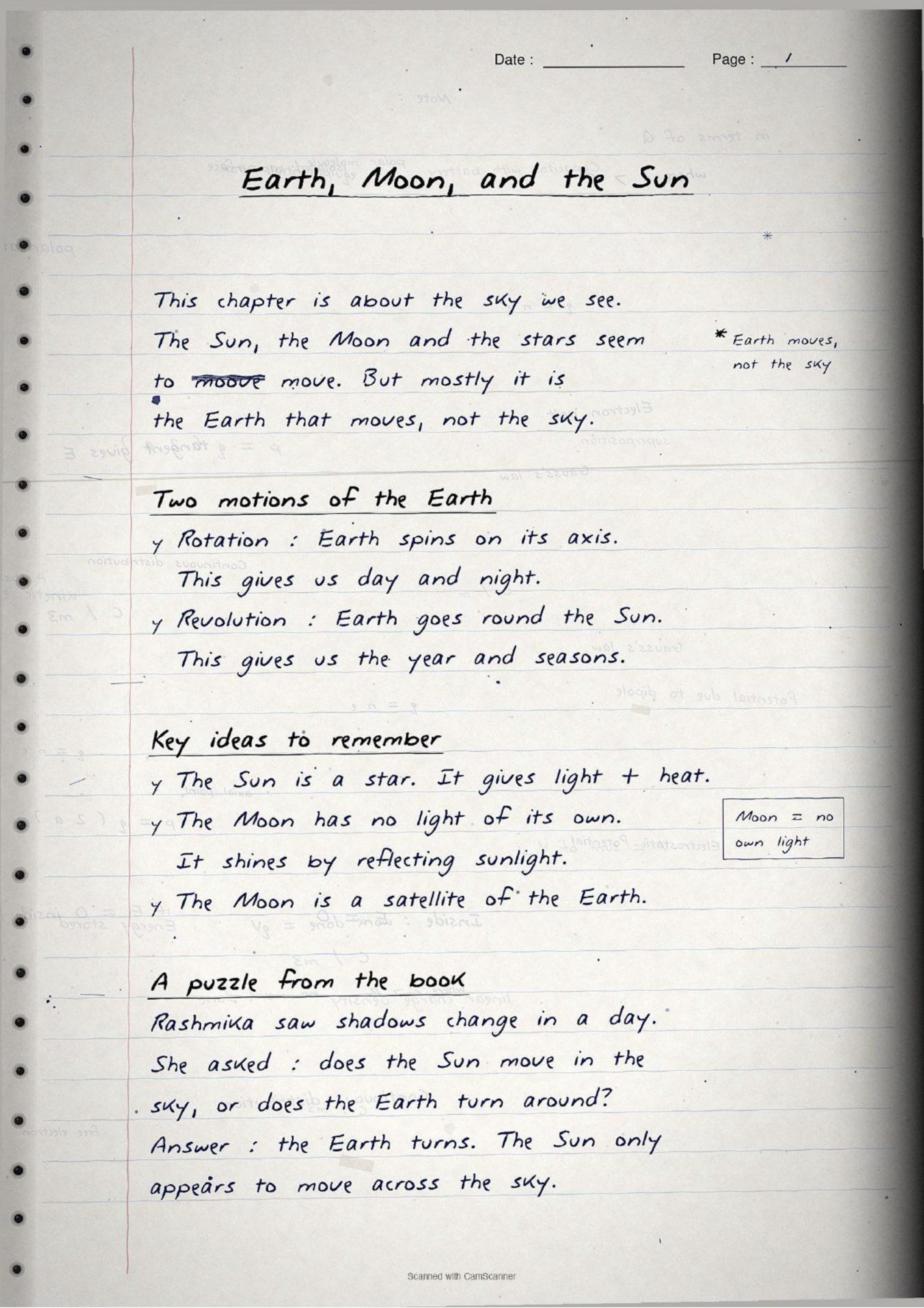
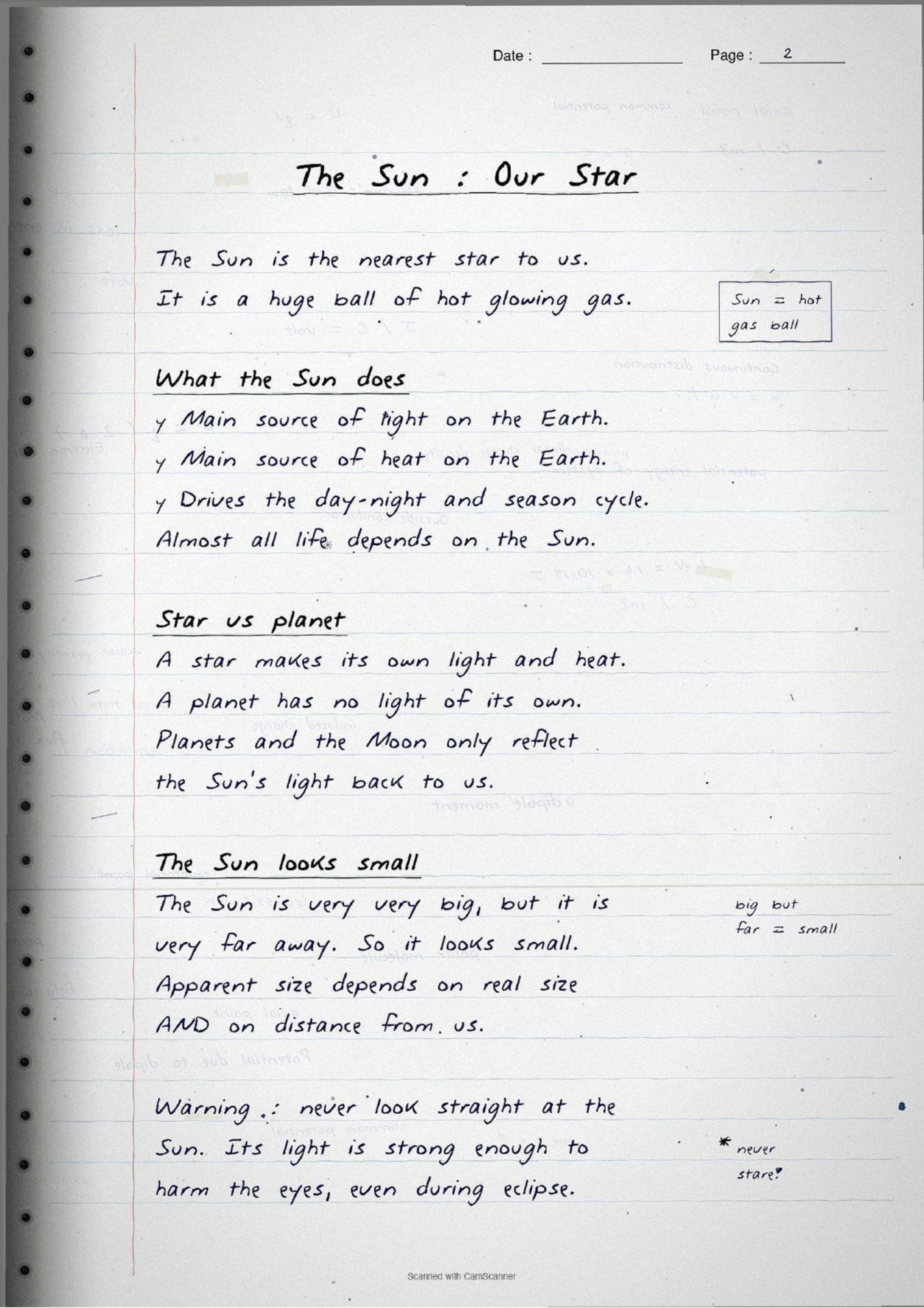
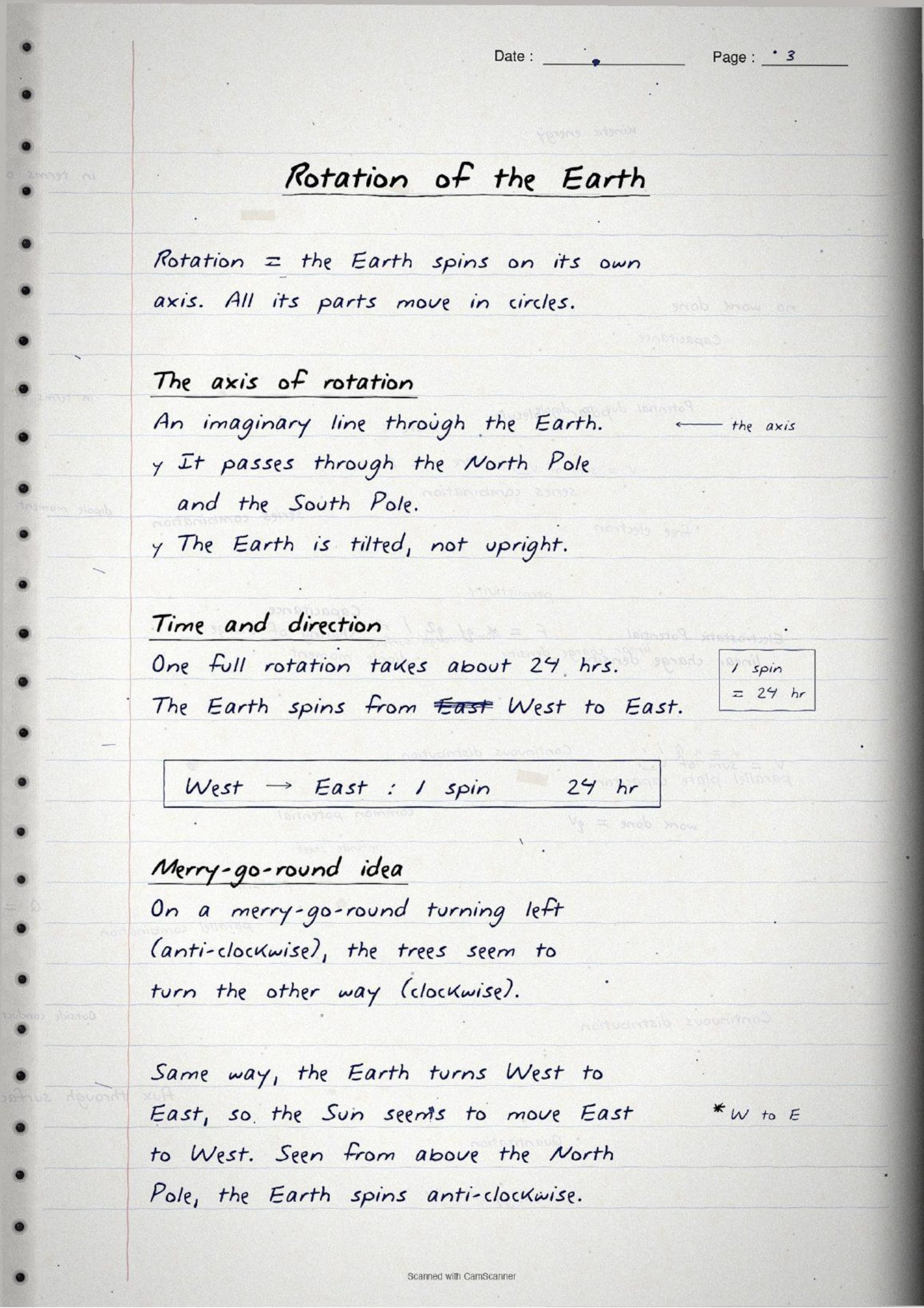
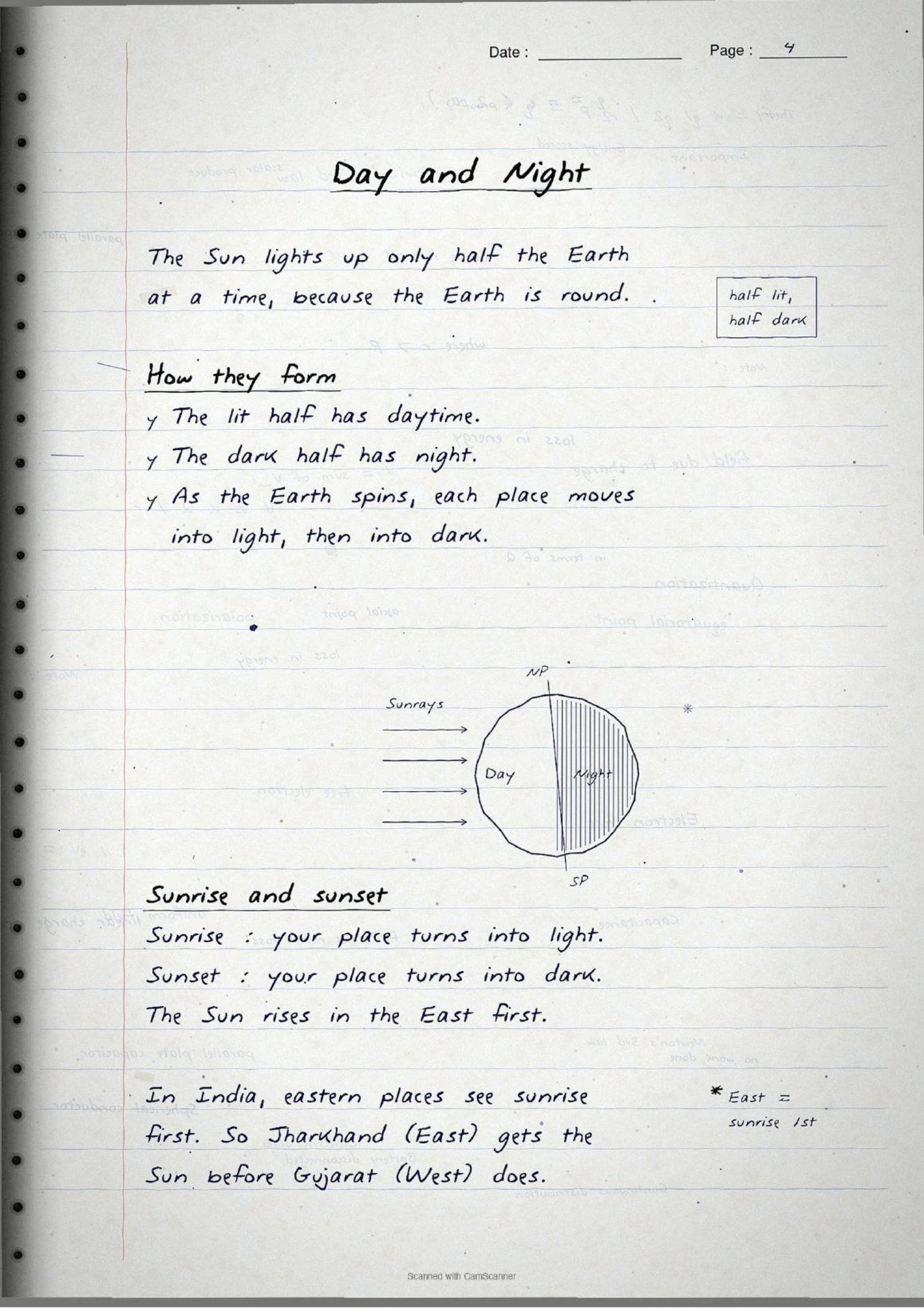
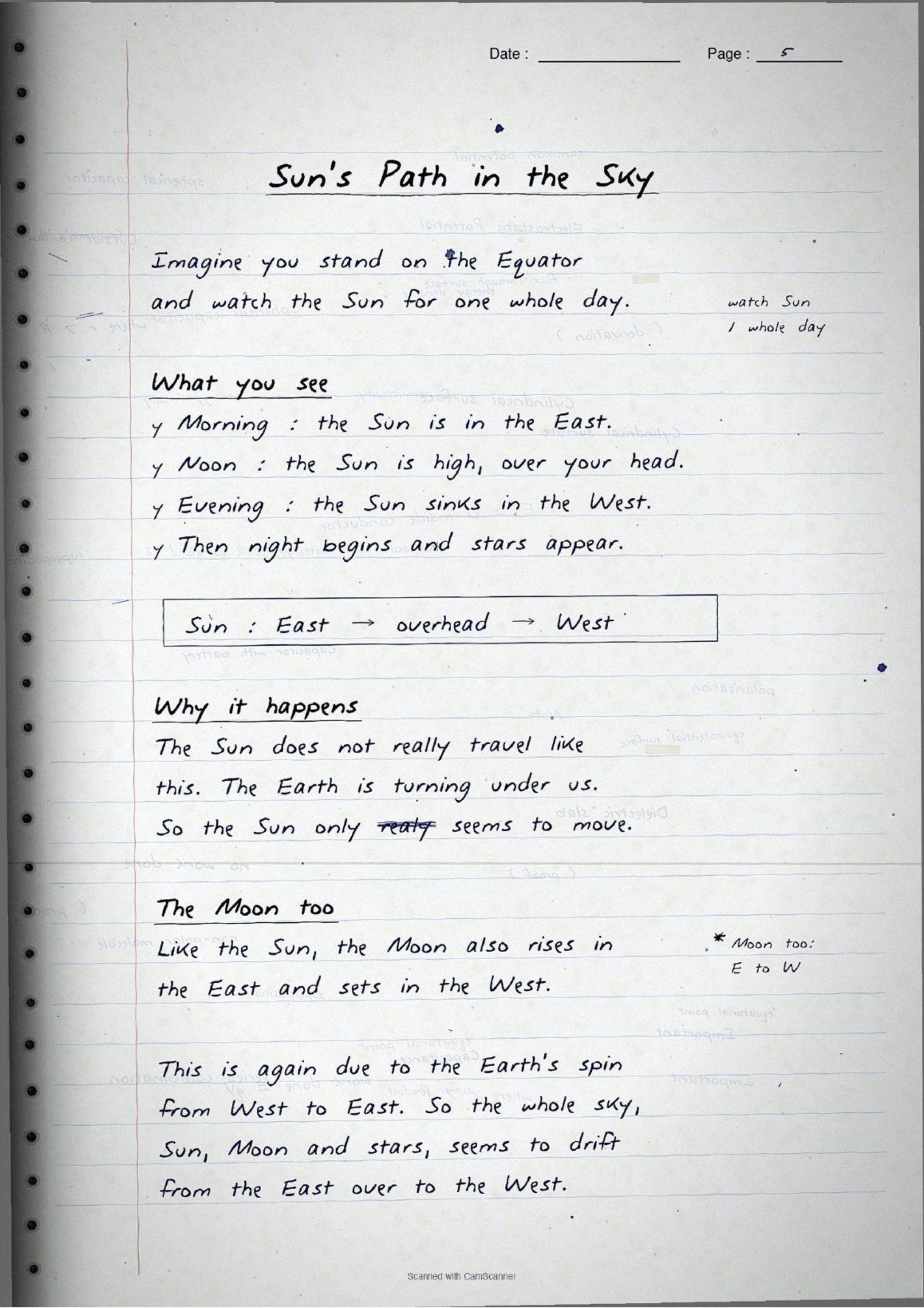
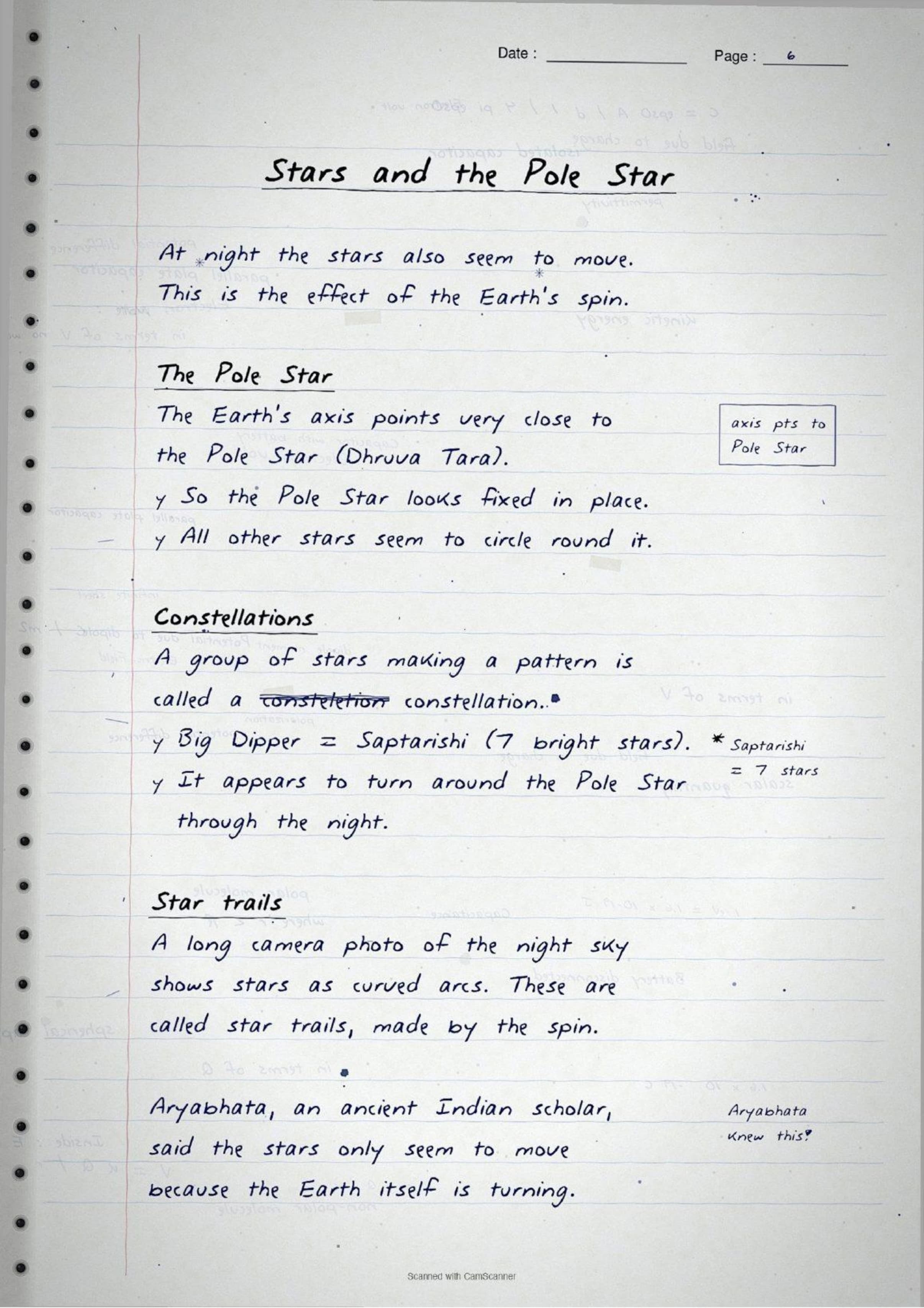
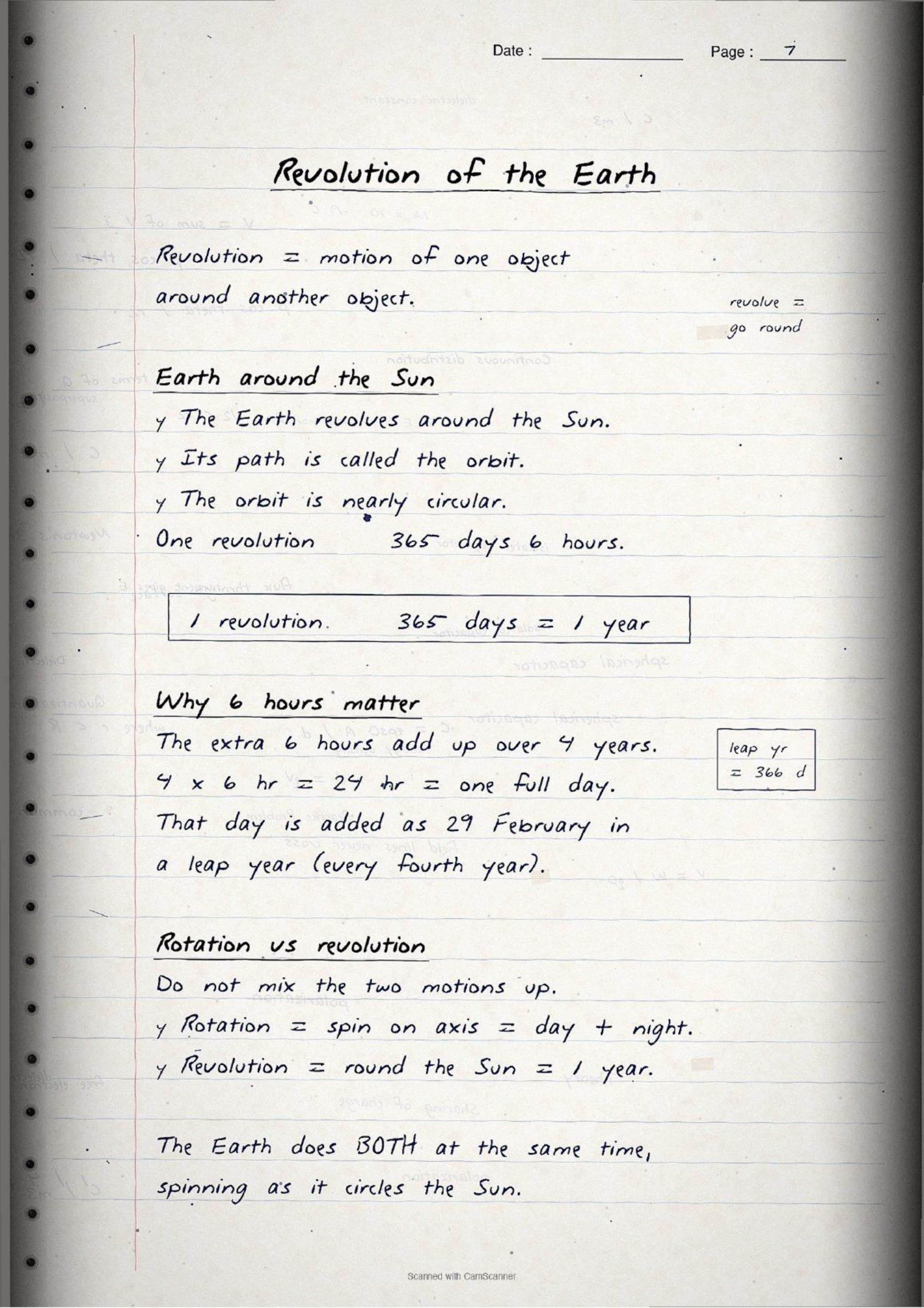
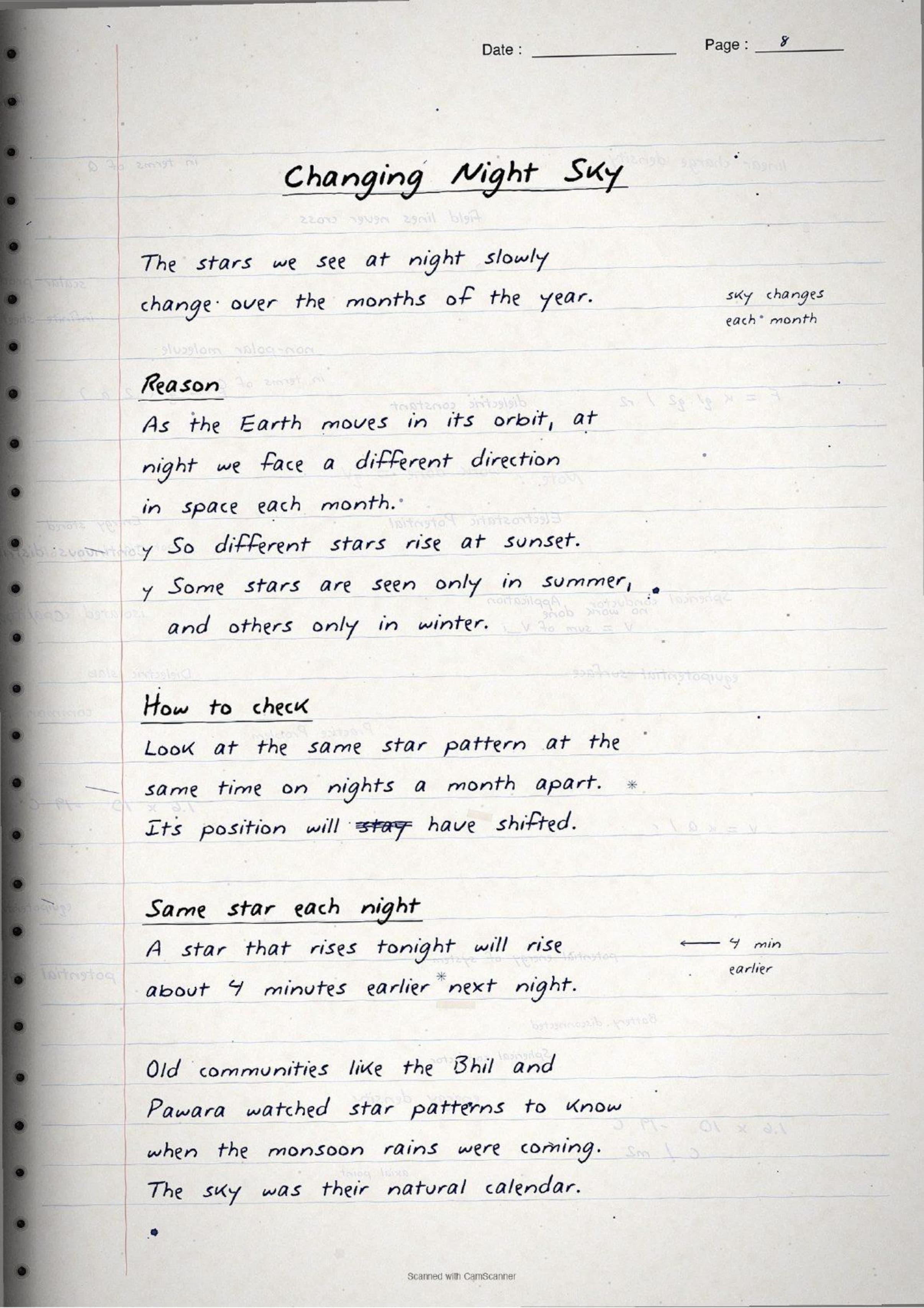
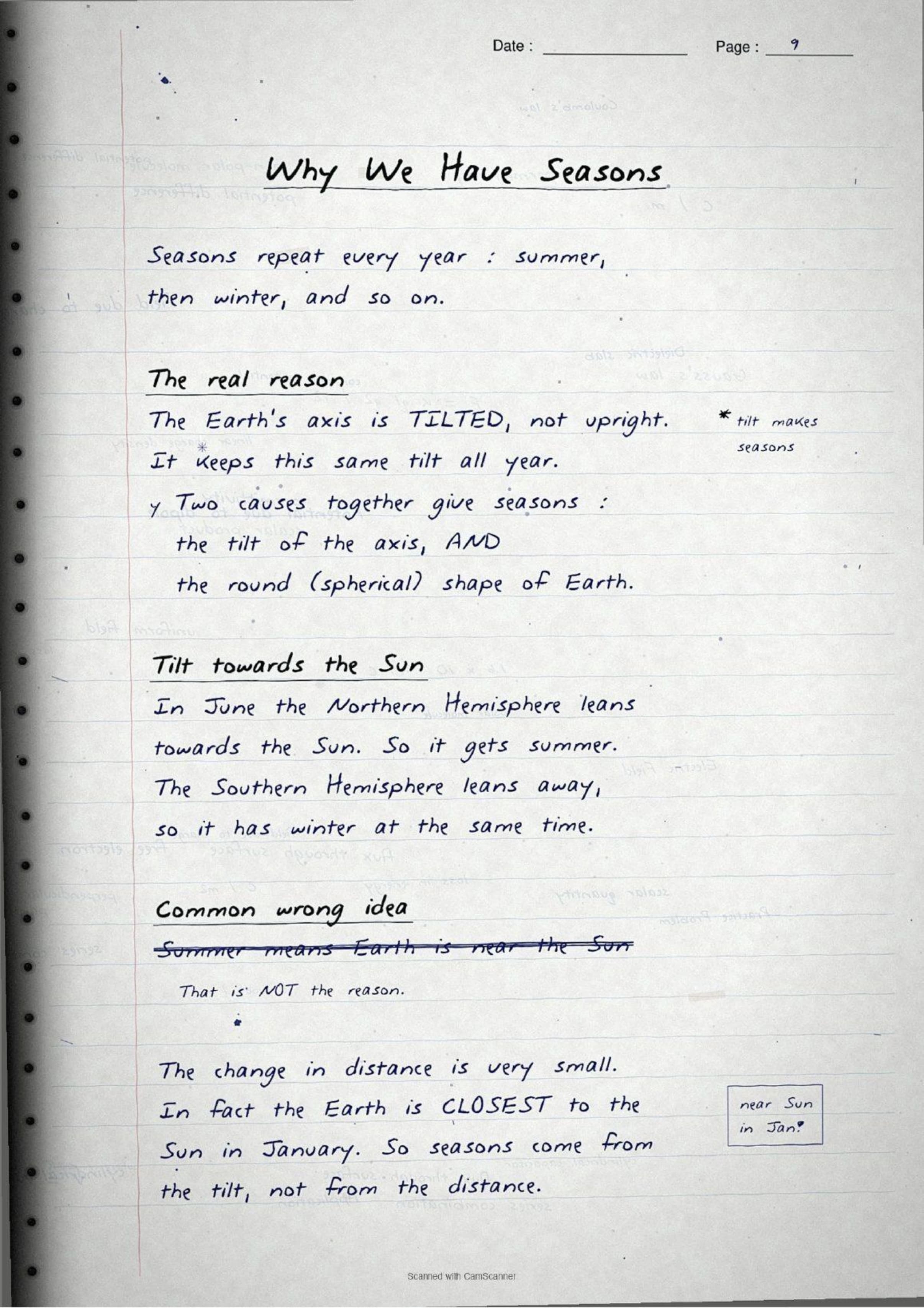
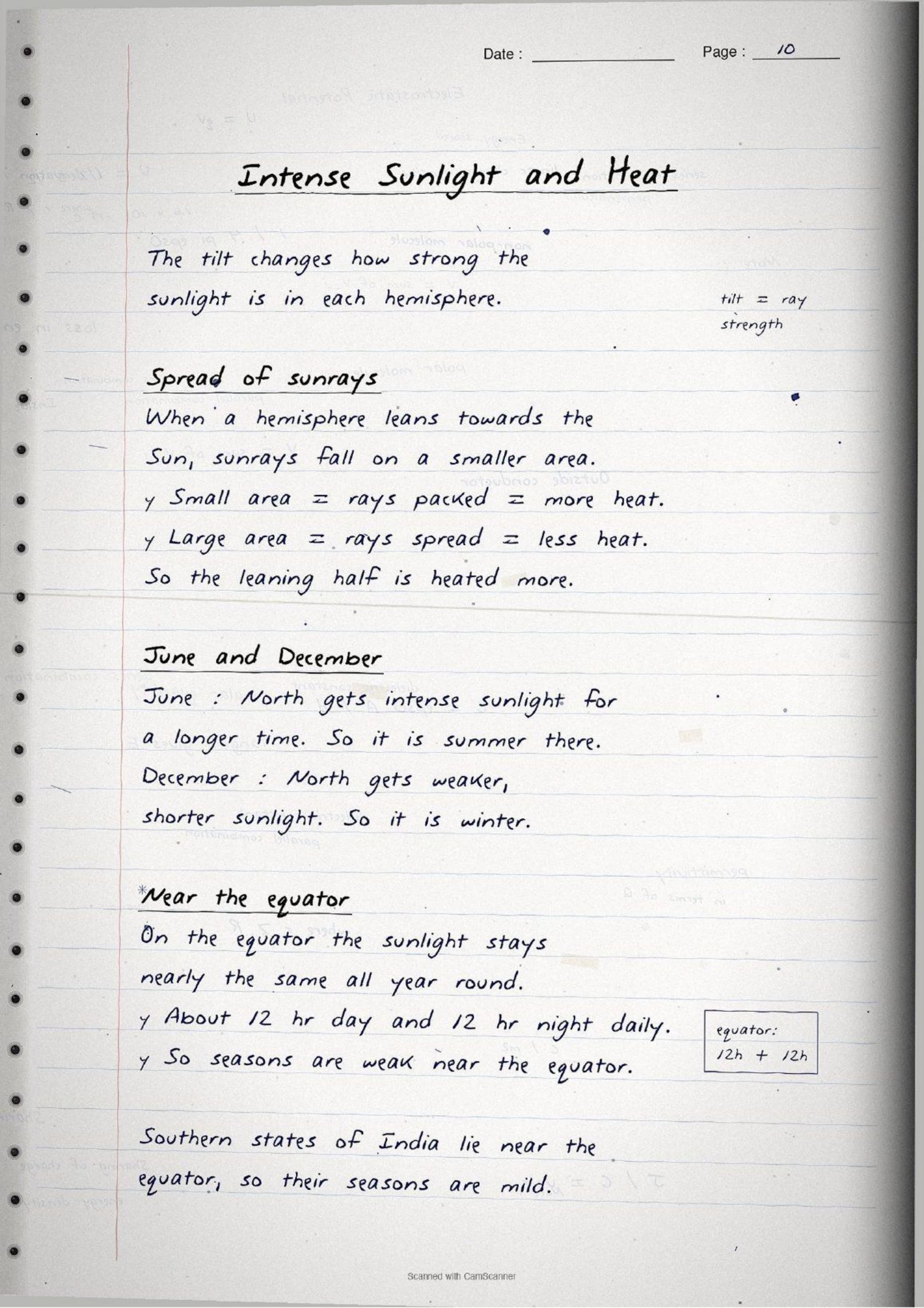
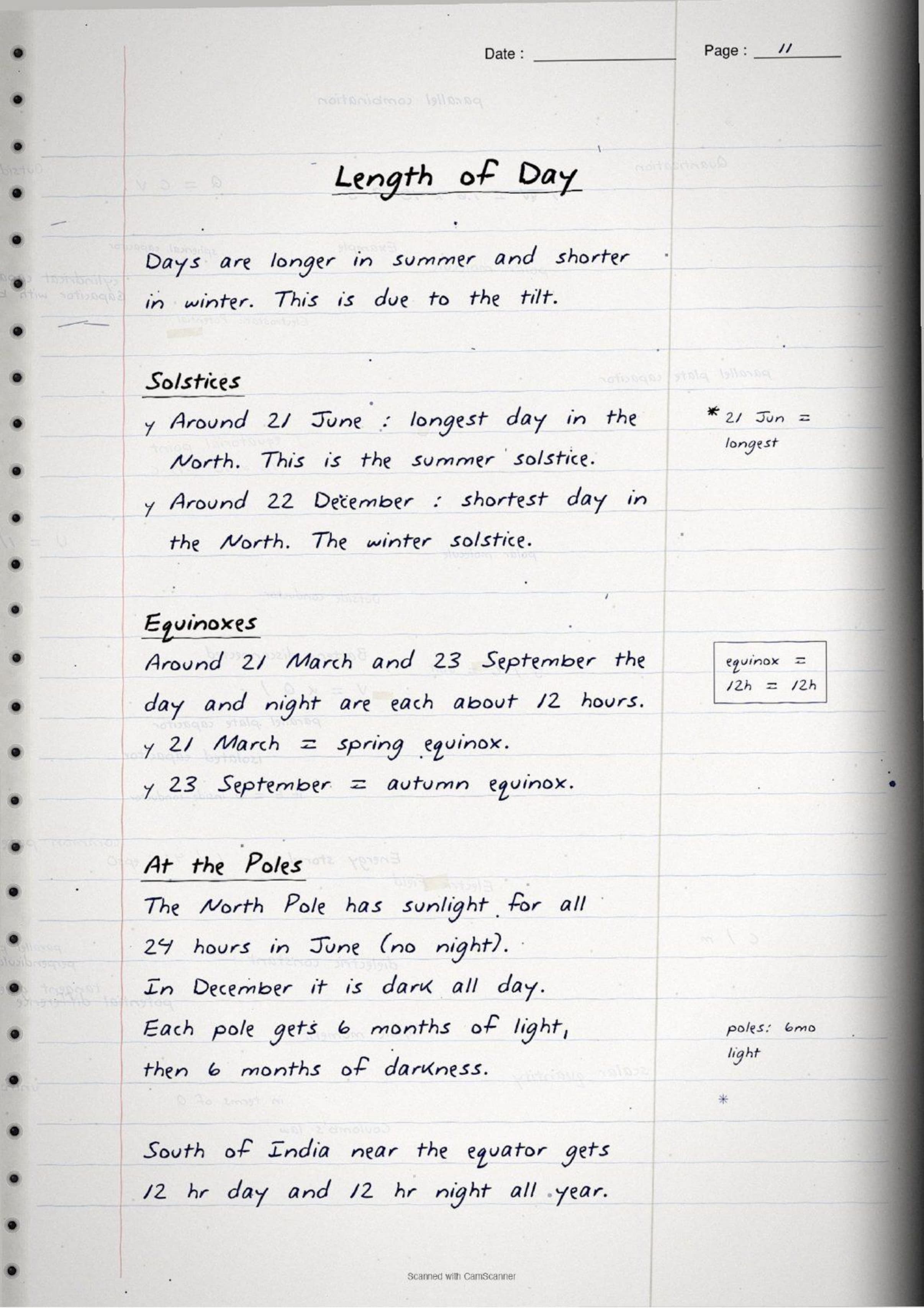
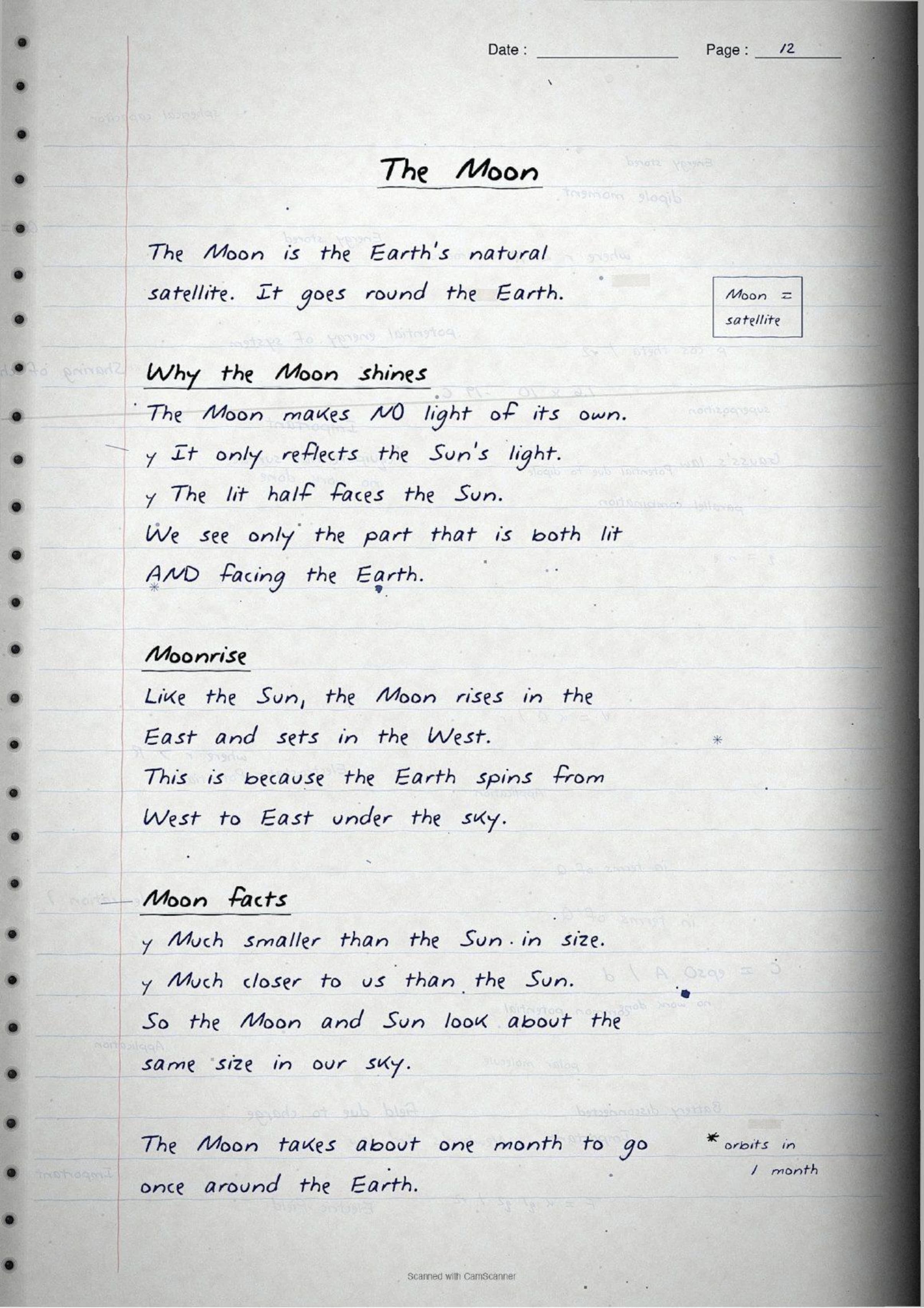
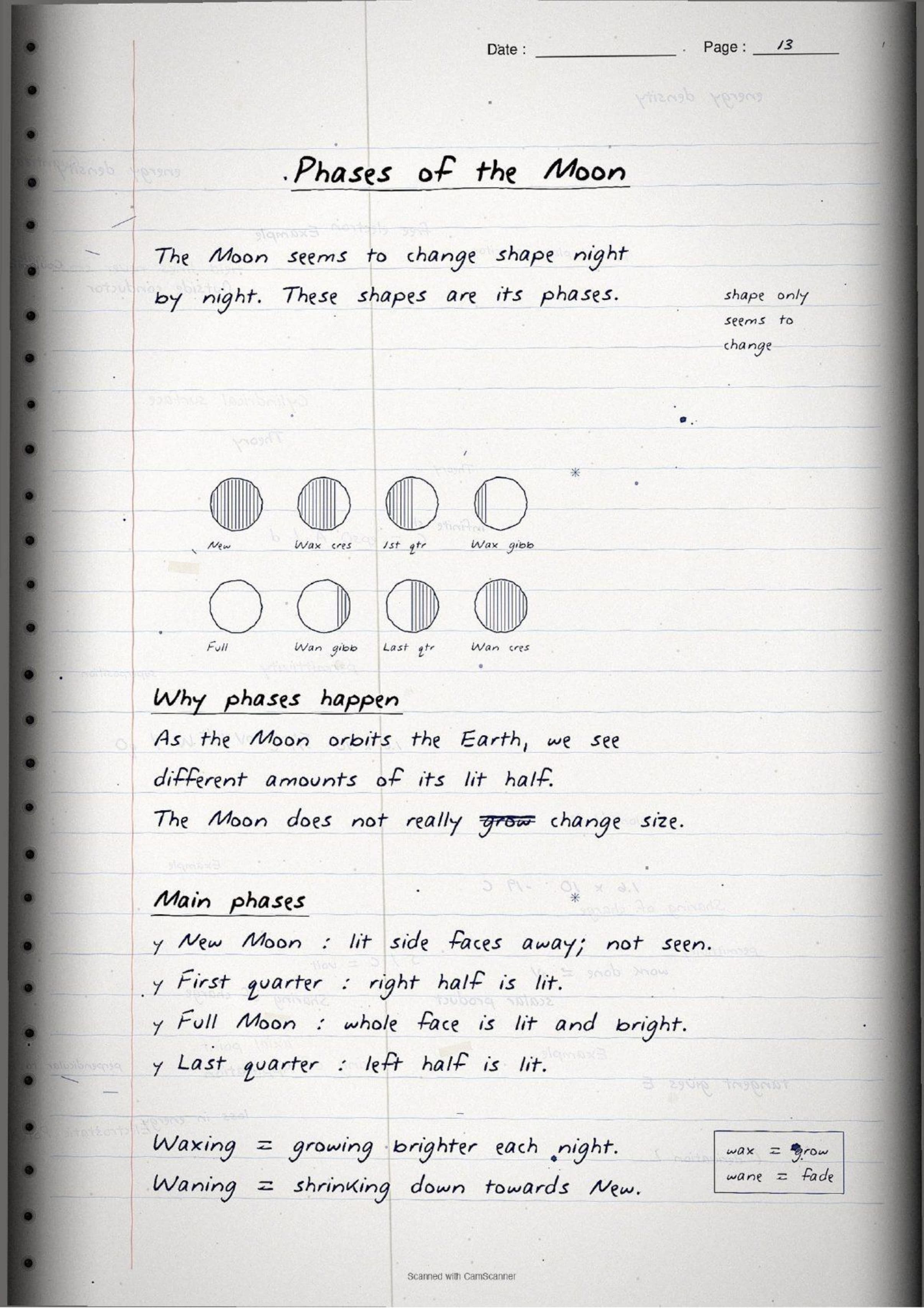
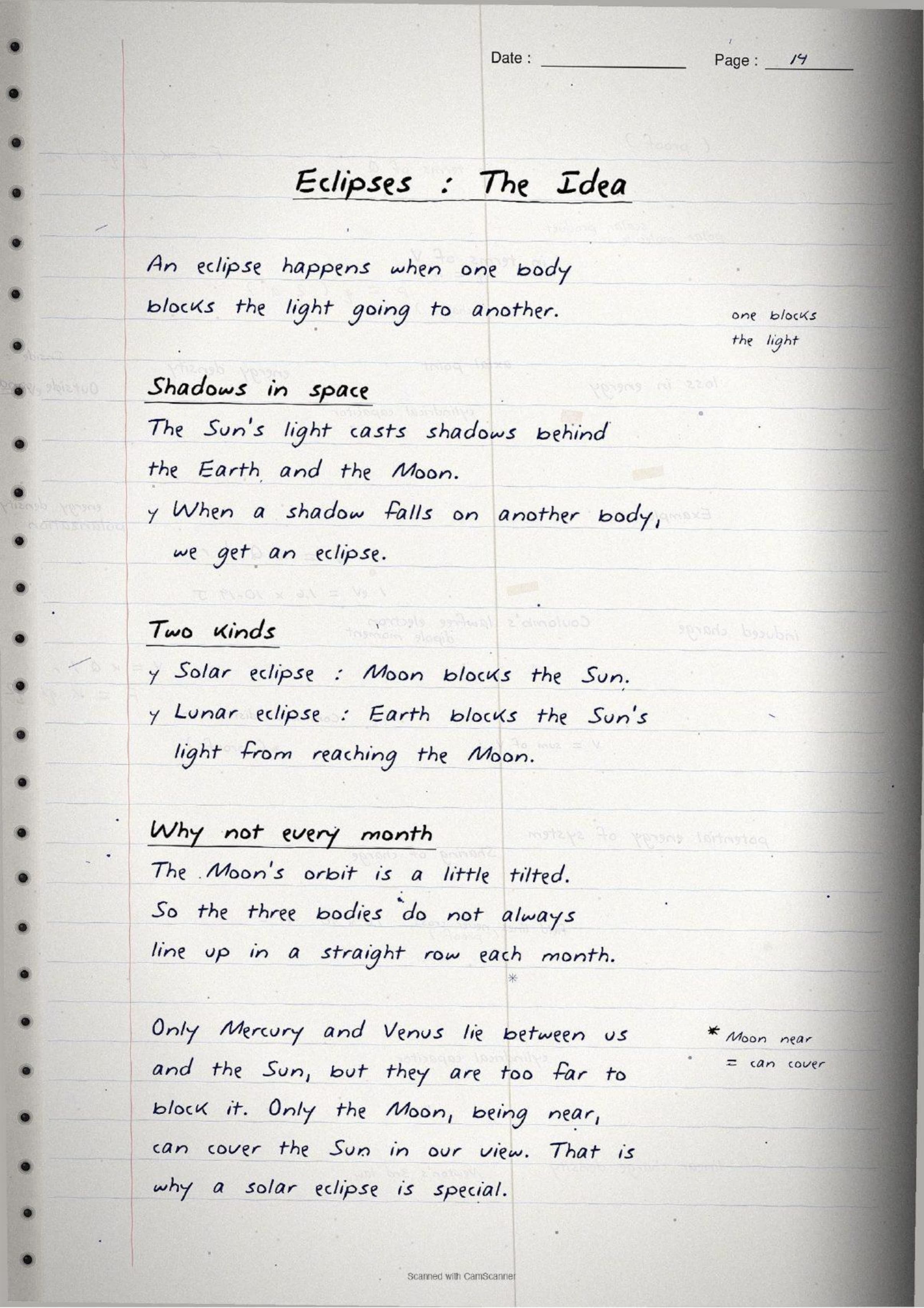
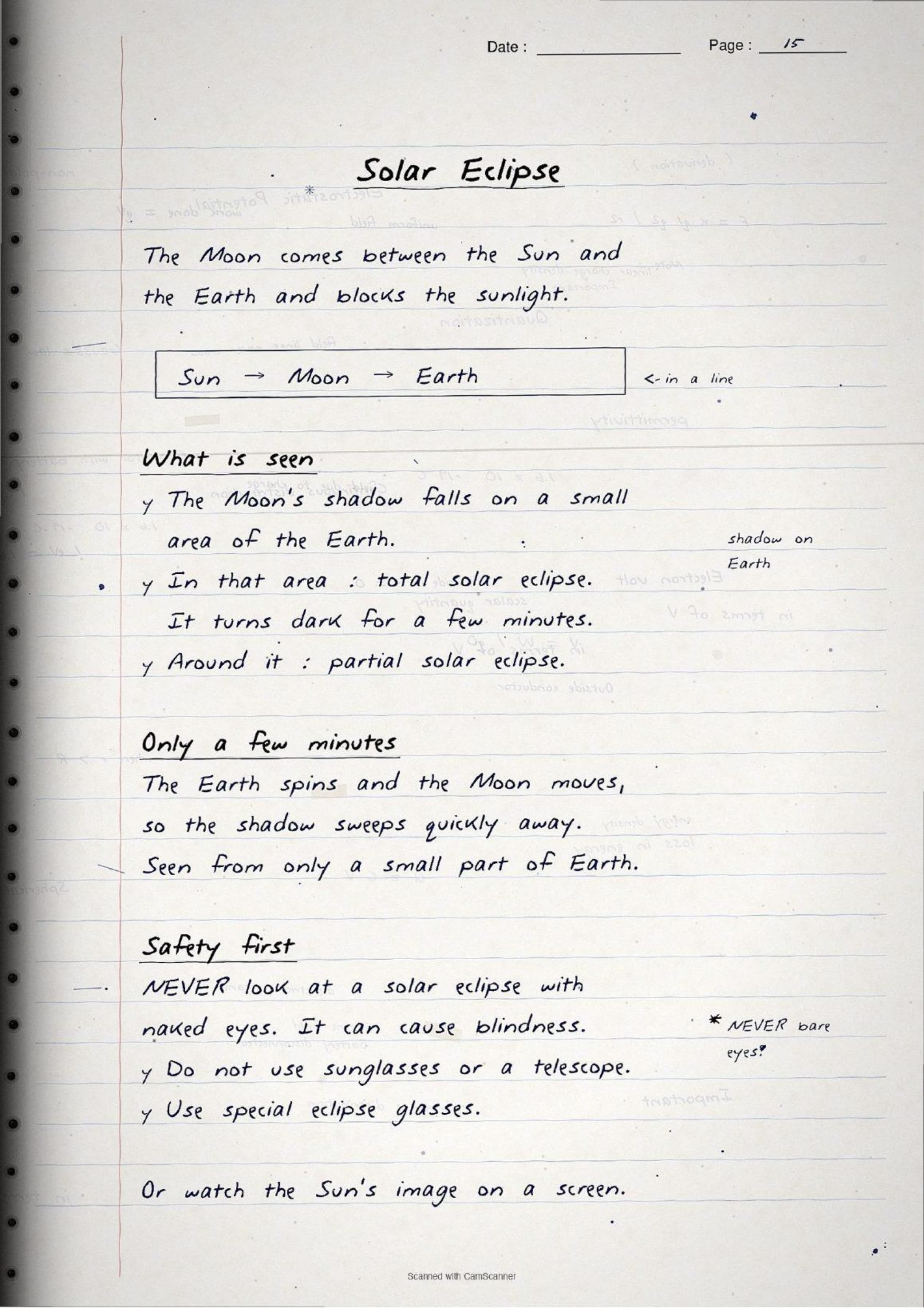
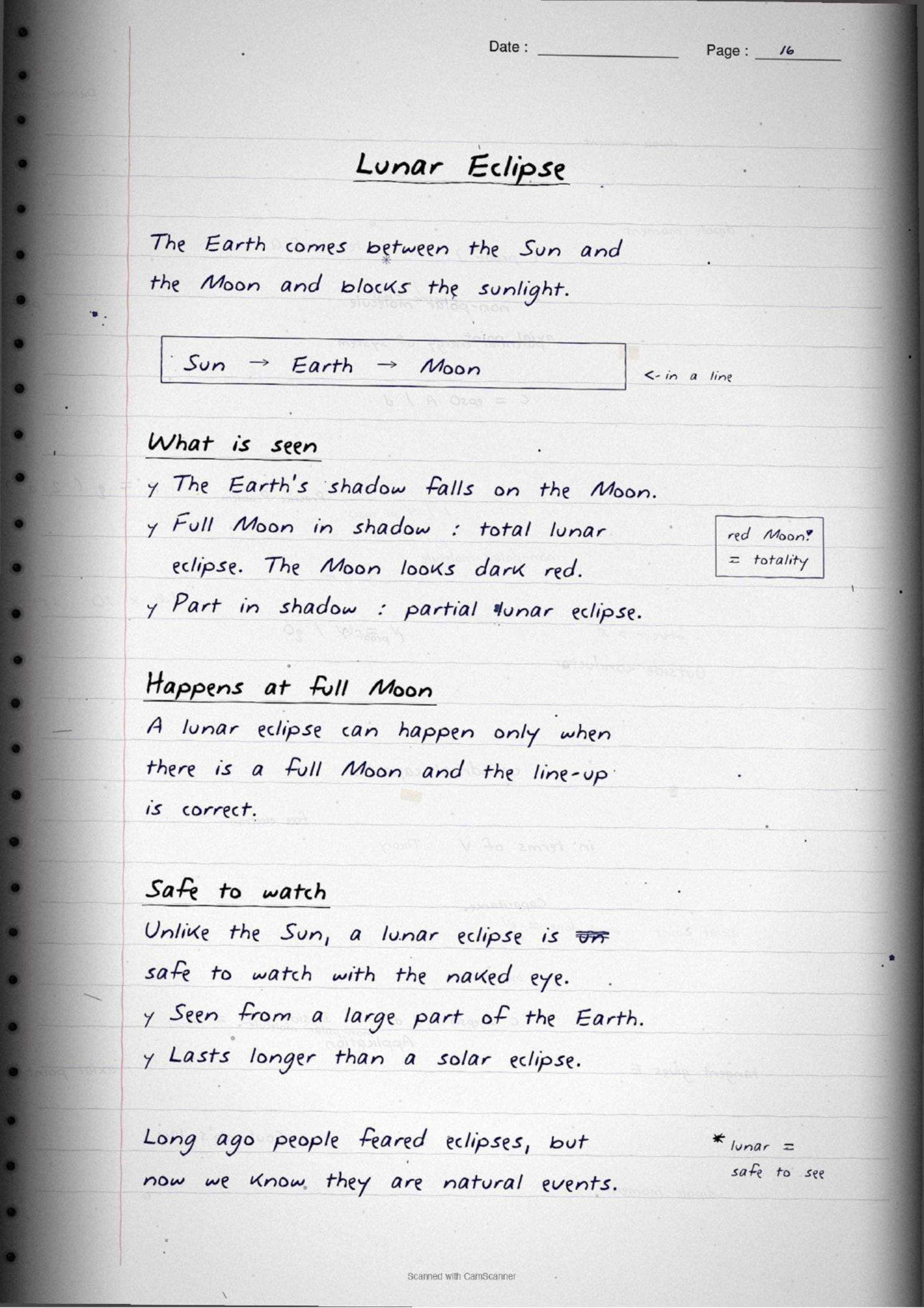
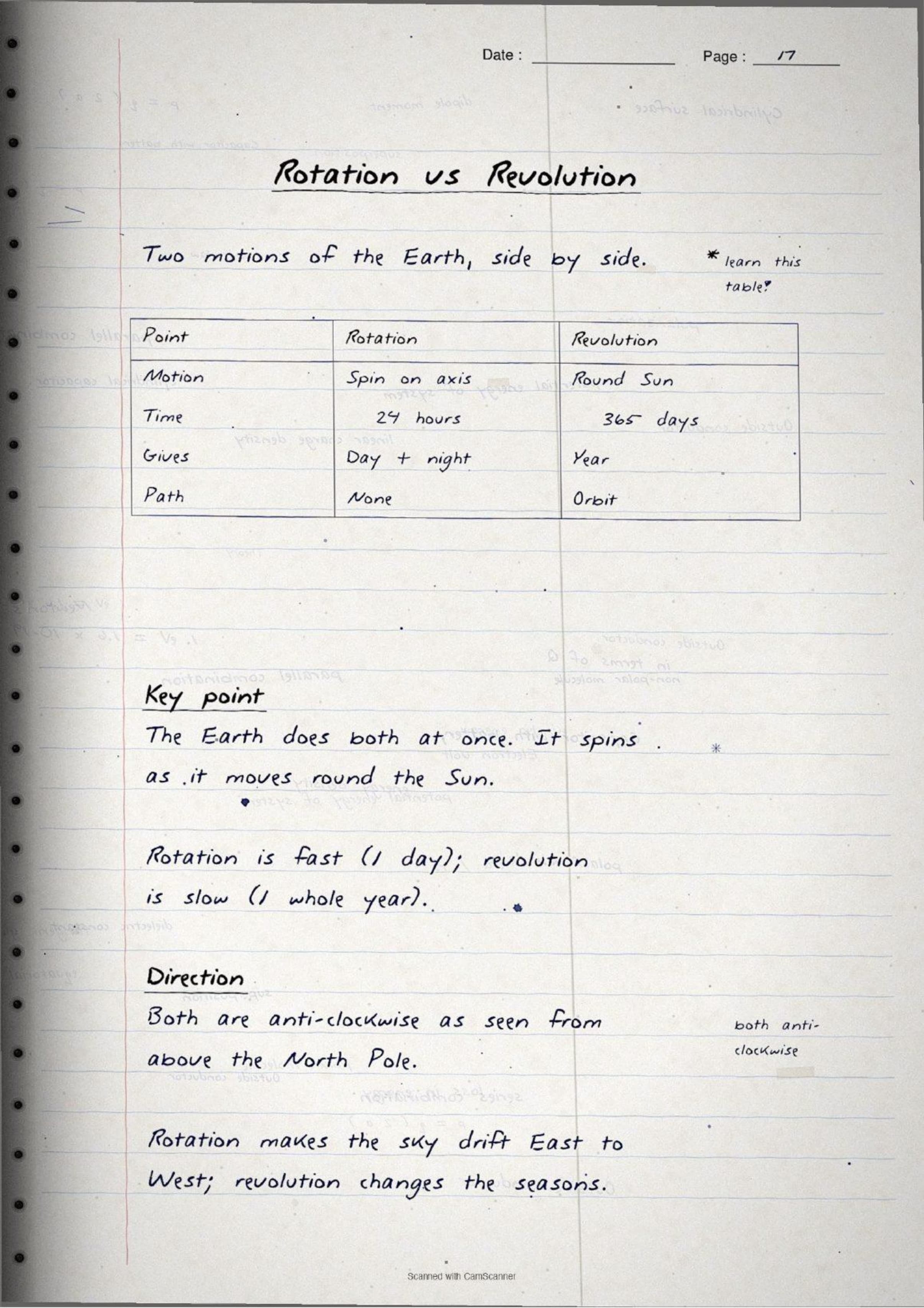
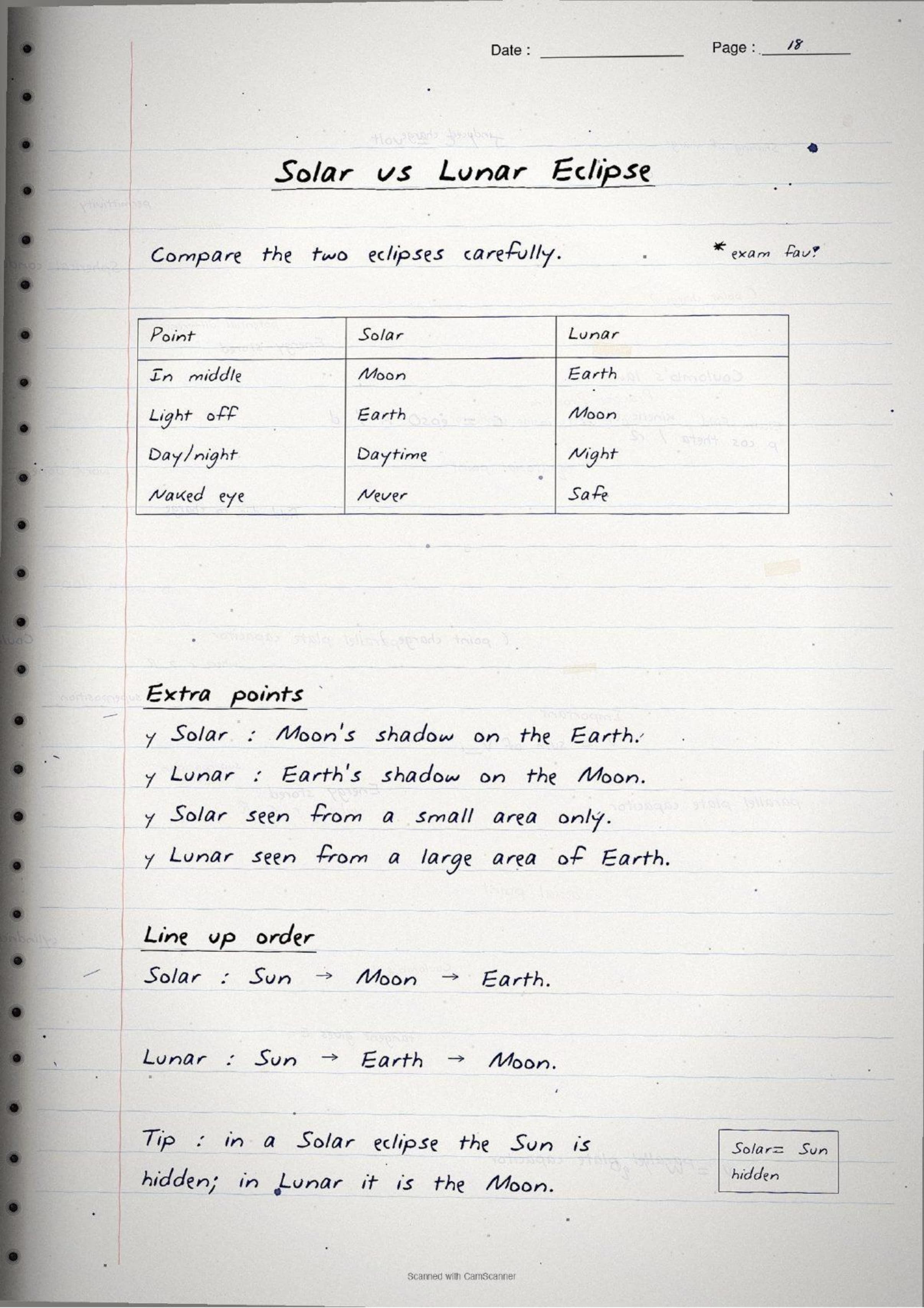
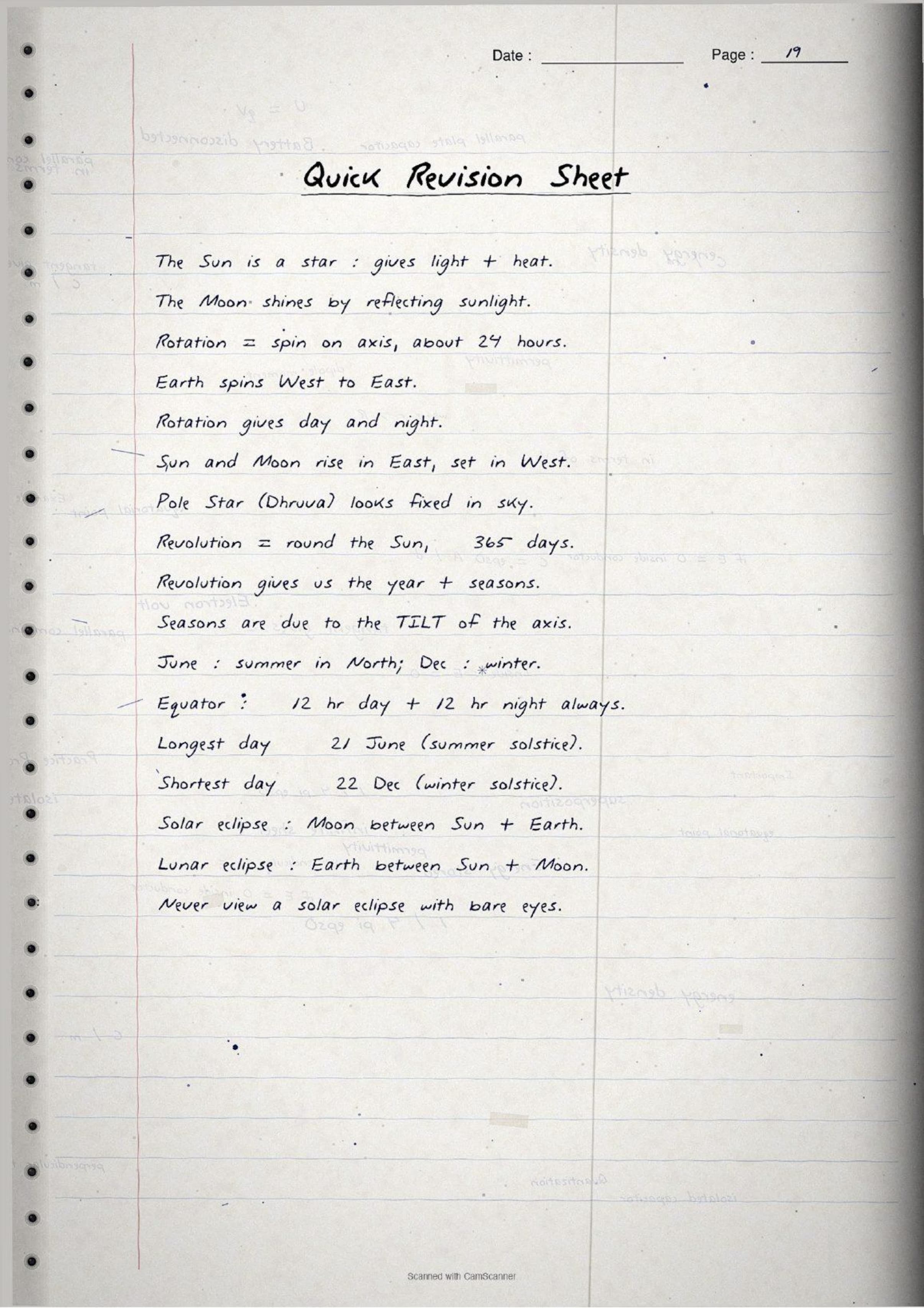
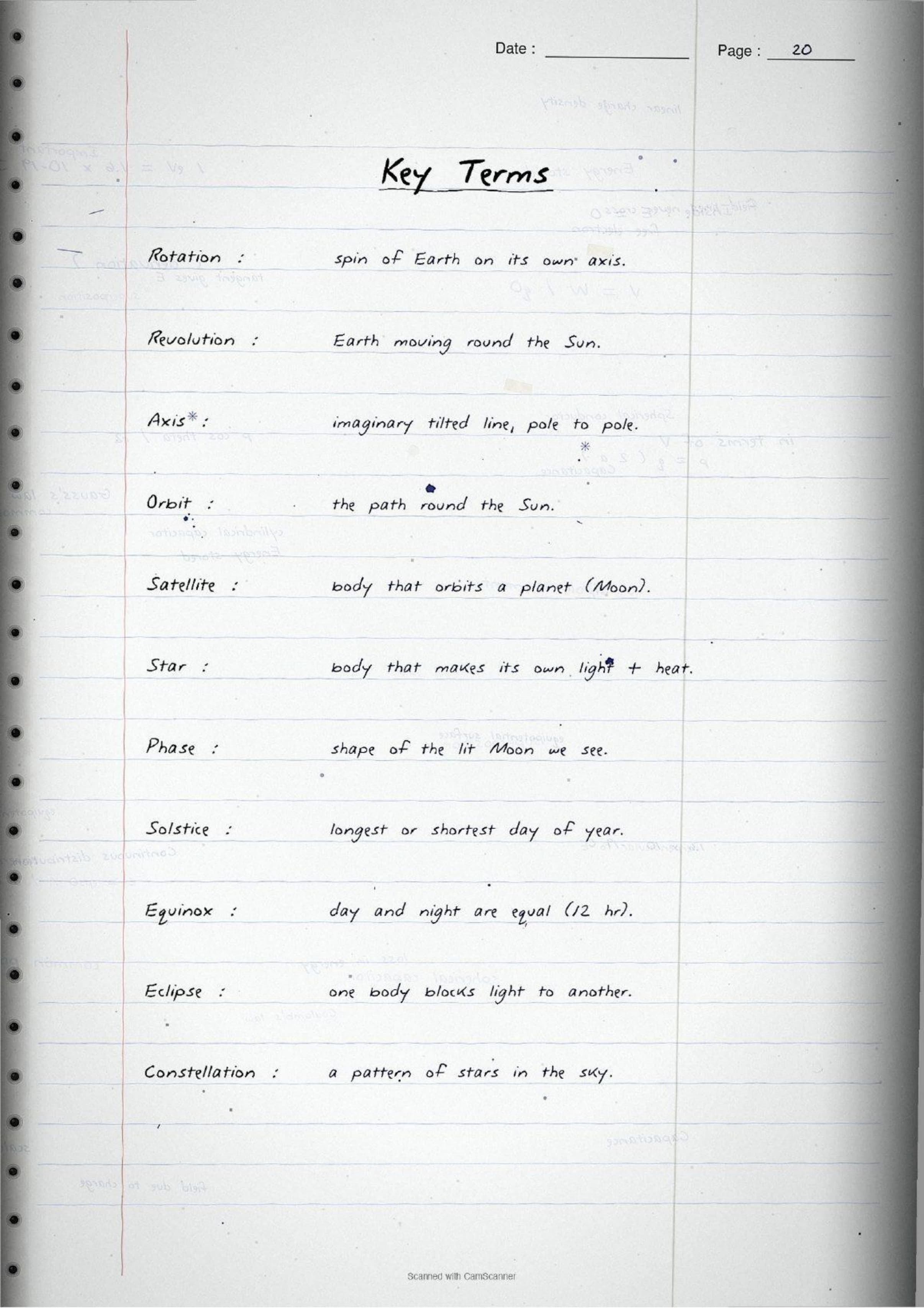
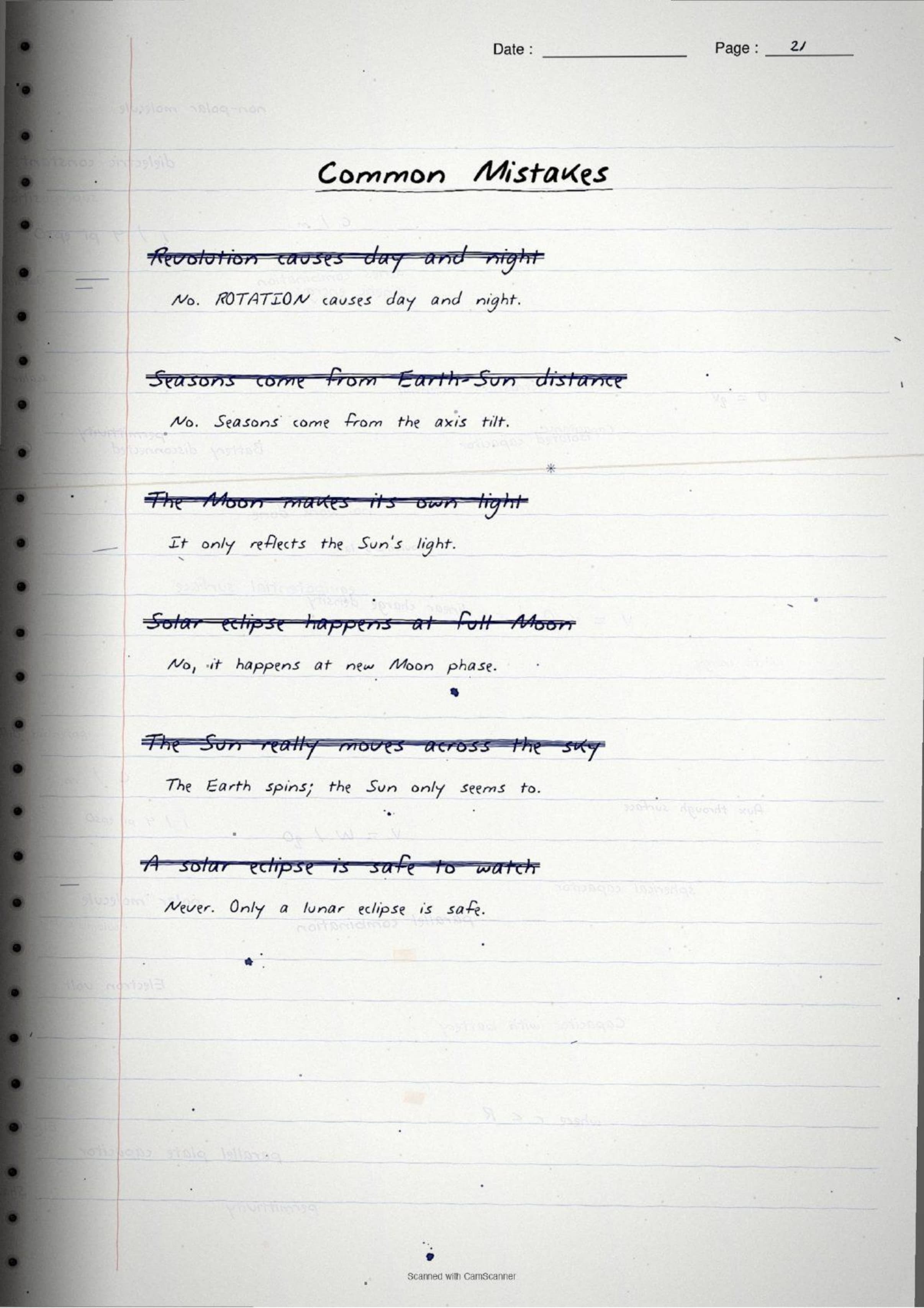
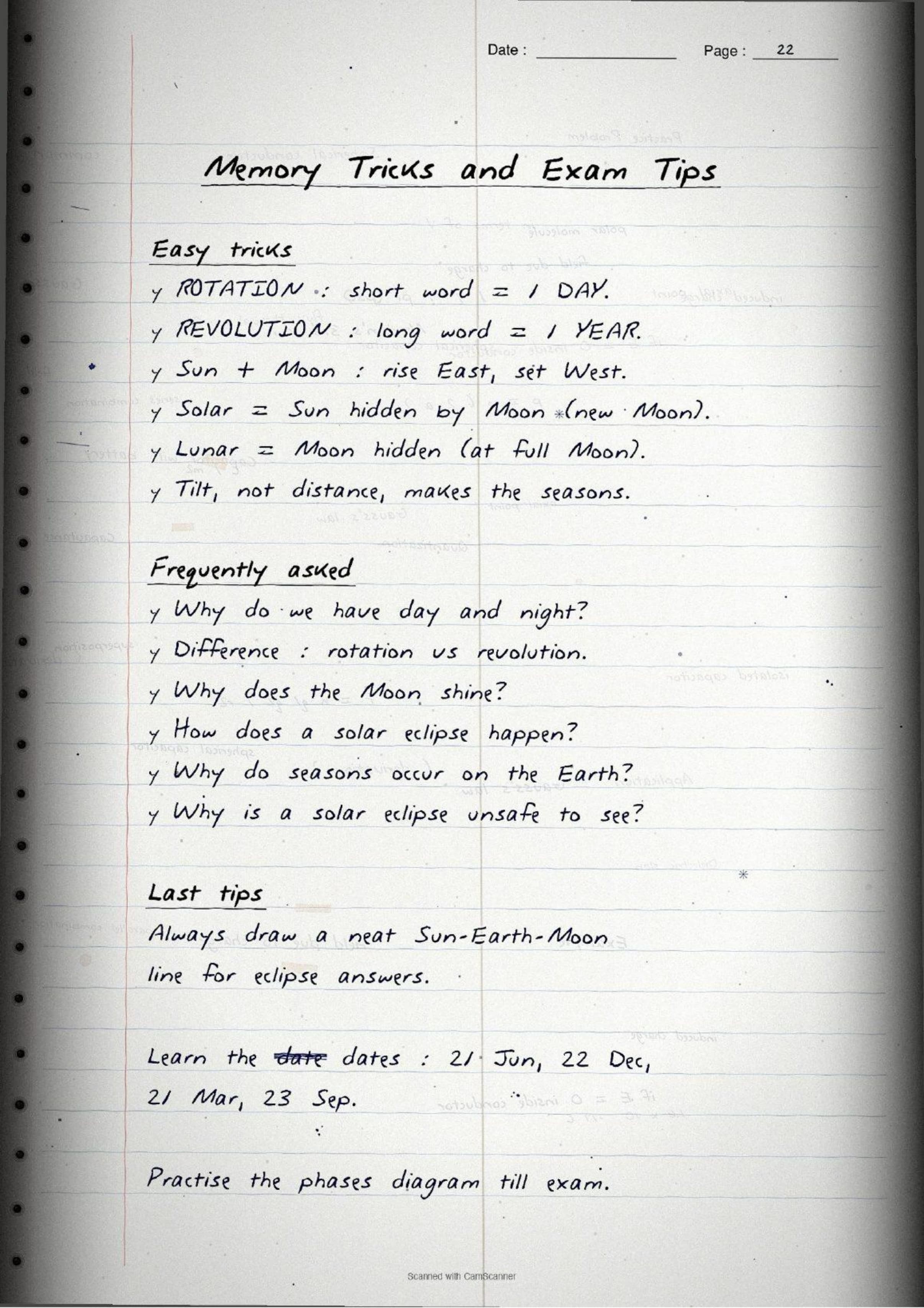
- Two motions compared: rotation and revolution set side by side with what each one causes
- What the notes cover: the spin of the Earth, its orbit, why seasons change, and how both eclipses happen
- Best for: the eclipse diagrams and the rotation versus revolution comparison
The full class 7 science handwritten notes for Earth, Moon, and the Sun sit in the PDF below, with every box and figure included.
These handwritten notes are written by Science teachers, mapped to the 2026-27 NCERT, and checked against Class 7 school question papers.
Which Earth, Moon, and the Sun Topics CBSE Class 7 Science Asks Most
Eclipse diagrams and the two motions decide the marks in this chapter.
| Sub-topic | Weightage | How often asked |
|---|---|---|
| Rotation versus revolution | High | asked often |
| Solar and lunar eclipse diagrams | High | asked often |
| Why seasons change | High | asked often |
| Tilt of the Earth's axis | Medium | asked sometimes |
| Changing night sky through the year | Medium | asked sometimes |
| Length of shadows through the day | Low | asked rarely |
Inside the Earth, Moon, and the Sun Handwritten Notes PDF
The chapter starts with a student in Kanniyakumari noticing that shadows change length through the day. The notes keep that thread, since it leads naturally to rotation.
- Rotation of the Earth and the day
- Why shadows change length through the day
- Revolution of the Earth and the year
- The changing view of the night sky
- Why seasons happen
- The tilt of the Earth's axis
- Eclipses and shadows in space
- Solar eclipse
- Lunar eclipse
What Collegedunia's Earth, Moon, and the Sun Handwritten Notes Give You
Collegedunia drew the two eclipses on facing halves of a page, so the difference is obvious at a glance. That is the standard Collegedunia holds these class 7 science handwritten notes to.
- Eclipse pair: solar and lunar eclipses drawn together with the Sun, Earth and Moon in line
- Motion comparison box: rotation and revolution with period and effect for each
- Seasons sketch: the tilted Earth at four positions in its orbit
- Colour-coded sub-headings: sub-topics in red so the three sections stay clear
Quick Check on Earth, Moon, and the Sun
Five closing questions for the year. Tap to check each answer.
Day and night are caused by the Earth's
(a) revolution (b) rotation (c) tilt (d) orbit shape
Answer: (b) rotation
The Earth takes about 365 days to complete one
(a) rotation (b) revolution (c) eclipse (d) season
Answer: (b) revolution
In a solar eclipse, which body is in the middle?
(a) the Earth (b) the Sun (c) the Moon (d) none
Answer: (c) the Moon, between the Sun and the Earth
Seasons on the Earth are caused mainly by
(a) distance from the Sun (b) the tilt of the Earth's axis (c) the Moon (d) rotation speed
Answer: (b) the tilt of the Earth's axis
A lunar eclipse happens when
(a) the Moon blocks the Sun (b) the Earth comes between the Sun and the Moon (c) the Sun moves (d) the Moon rotates
Answer: (b) the Earth comes between the Sun and the Moon
Night-Before Revision Card: Earth, Moon, and the Sun
The final card of the Class 7 Science course.
- Rotation gives day and night, about 24 hours
- Revolution gives the year, about 365 days
- The tilt of the axis causes the seasons
- Solar eclipse: Moon in the middle
- Lunar eclipse: Earth in the middle
- Shadows are longest in the morning and evening, shortest at noon
What Makes Earth, Moon, and the Sun a Scoring Chapter
This chapter closes the year and is often given generous marks in the annual paper, because the diagrams are quick to draw.
- Rotation versus revolution is a guaranteed comparison question
- Both eclipse diagrams are asked as drawing questions
- Seasons and the axis tilt make a three-mark answer
- The same content appears in Social Science geography as well
Earth, Moon, and the Sun Terms You Must Be Able to Define
Mixing up rotation and revolution is the most common error here. Fix the definitions first.
| Term / Idea | What it means |
|---|---|
| Rotation | the spinning of the Earth on its own axis, once in about 24 hours |
| Revolution | the movement of the Earth around the Sun, once in about 365 days |
| Axis | the imaginary line through the Earth about which it spins |
| Tilt | the slant of the Earth's axis, which causes the seasons |
| Solar eclipse | the Moon coming between the Sun and the Earth |
| Lunar eclipse | the Earth coming between the Sun and the Moon |
| Orbit | the path the Earth follows around the Sun |
Earth, Moon, and the Sun Figures You Will Find in the Notes
The astronomy in this chapter is examined through drawings.
| Figure drawn by hand | What it shows |
|---|---|
| Rotation sketch | the Earth spinning on its tilted axis with day and night sides |
| Revolution orbit | the Earth at four positions around the Sun |
| Seasons diagram | the tilted Earth showing summer and winter positions |
| Solar eclipse | Sun, Moon and Earth in line with the shadow on the Earth |
| Lunar eclipse | Sun, Earth and Moon in line with the shadow on the Moon |
| Shadow length panel | morning, noon and evening shadows compared |
A Two-Pass Plan for the Earth, Moon, and the Sun Handwritten Notes
Two diagrams and one comparison box cover this chapter. Draw all three. Read the class 7 science handwritten notes the same way twice, once slowly and once fast.
- Draw both eclipses with the three bodies in a line
- Fill the rotation and revolution comparison from memory
- Explain in three lines why the tilt causes seasons
- On the last day, revise the eclipse pair and the comparison box
More Science Study Material for Earth, Moon, and the Sun
Finish with the solved exercises for the annual paper.
All Chapters: Class 7 Science Handwritten Notes
Every chapter has its own class 7 science handwritten notes. Handwritten notes are ready for every chapter of Class 7 Science.
Earth, Moon, and the Sun Class 7 Science Handwritten Notes FAQs
Ques. Where can I download the Earth Moon and the Sun Class 7 Handwritten Notes PDF?
Ans. The PDF is free on this page in both the normal and the HD version.
Ques. Do the notes include both eclipse diagrams?
Ans. Yes. The solar and lunar eclipses are drawn on the same page with the Sun, Earth and Moon in line and the shadows marked.
Ques. How many pages is the Chapter 12 handwritten notes PDF?
Ans. It runs 22 pages and covers all three sections of the chapter plus a quiz.
Ques. What is the difference between rotation and revolution?
Ans. Rotation is the Earth spinning on its own axis once in about 24 hours, which gives day and night. Revolution is the Earth moving around the Sun once in about 365 days, which gives the year and the seasons.
Ques. Why do seasons change on the Earth?
Ans. Because the axis of the Earth is tilted. As the Earth moves around the Sun, different parts receive sunlight at different angles through the year, so the seasons change.



Comments