




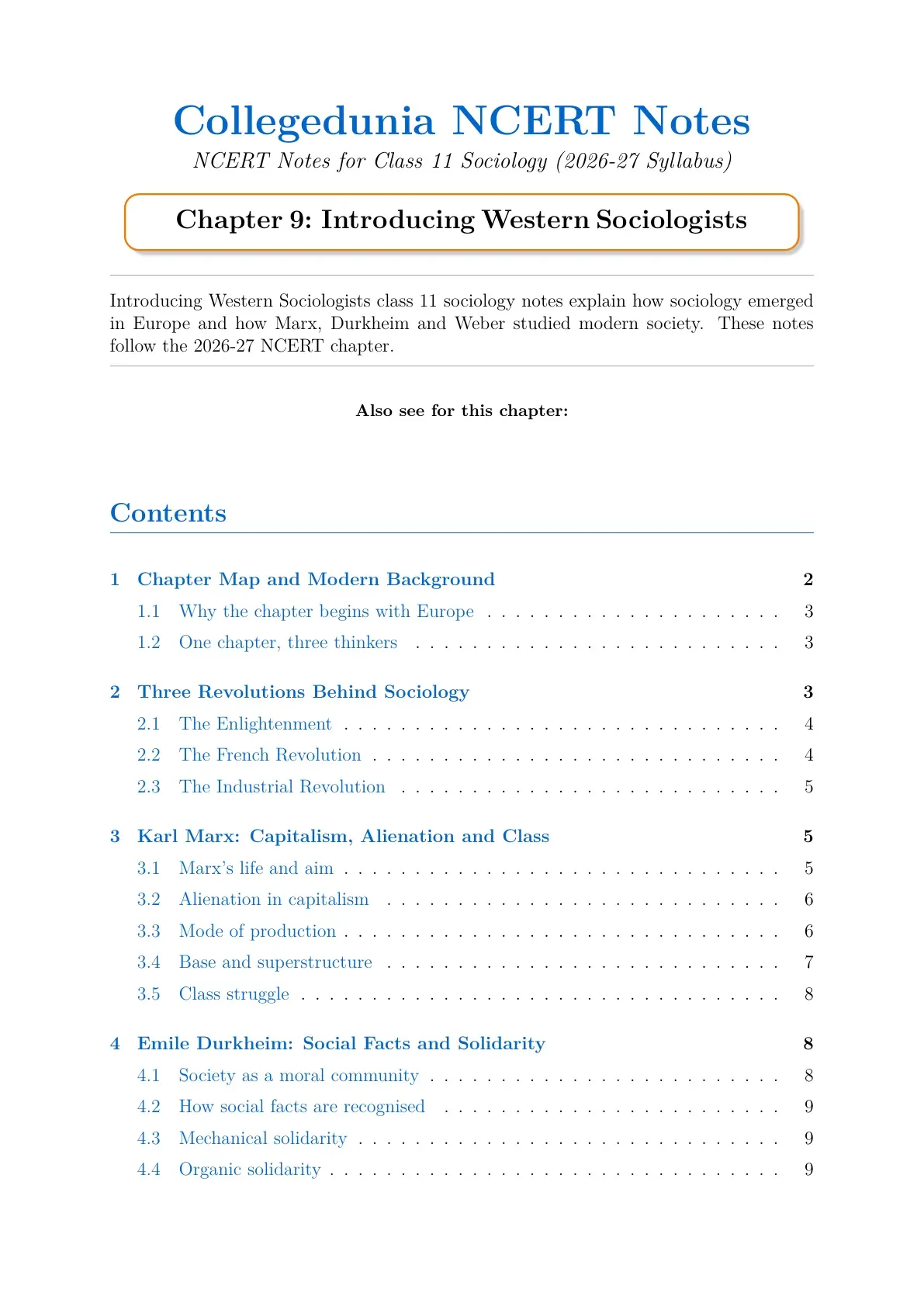
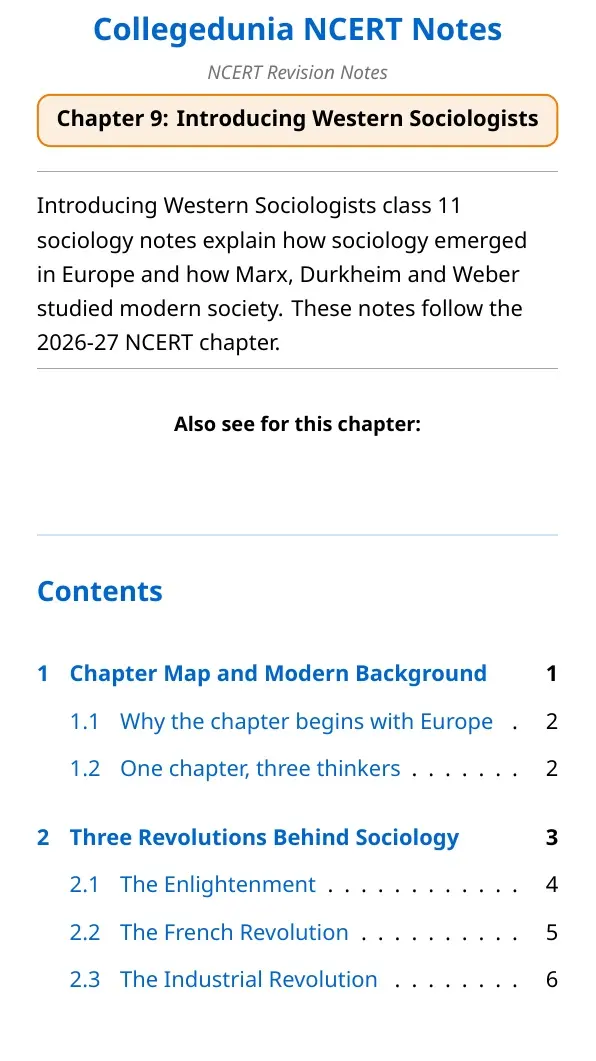
The NCERT Class 11 Sociology Chapter 9 Introducing Western Sociologists Notes help students revise the 2026-27 NCERT chapter on Marx, Durkheim and Weber. The PDF explains the European background of sociology, alienation, class struggle, social facts, solidarity, social action and bureaucracy.
- Best for: Class 11 Sociology tests, NCERT revision and short-answer practice.
- PDF focus: Enlightenment, French Revolution, Industrial Revolution, Marx, Durkheim and Weber.
- Chapter value: this chapter builds the base for classical sociology questions.


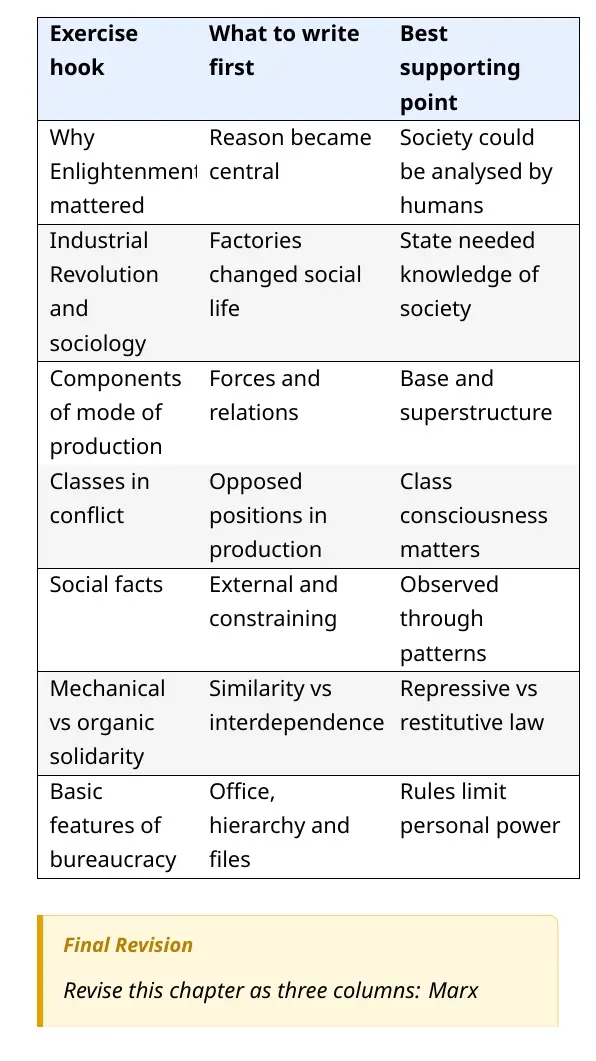
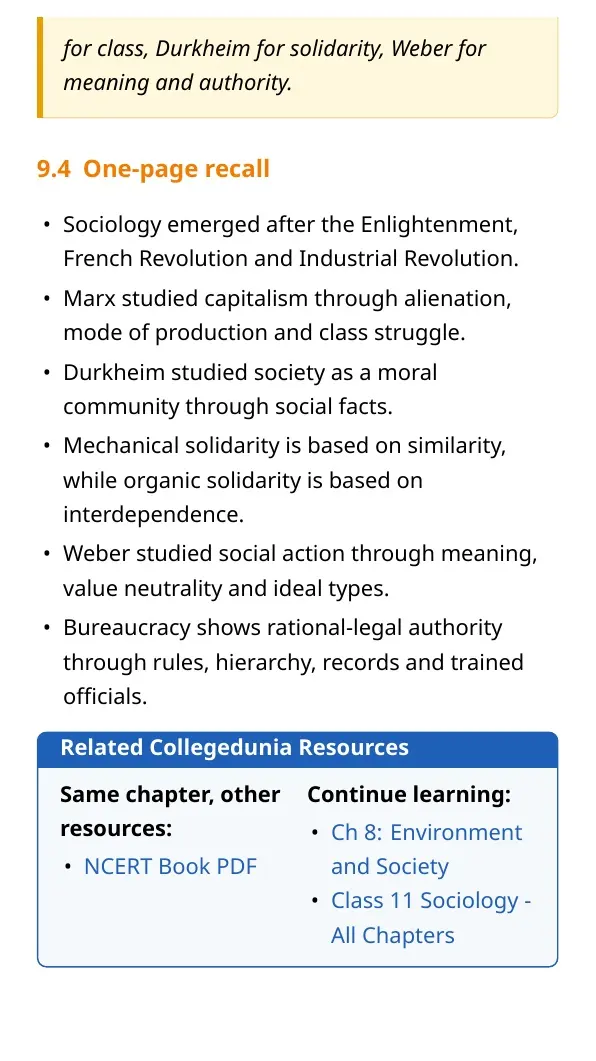
Revision Note: Start with the three revolutions, then revise Marx for class conflict, Durkheim for solidarity and Weber for social action.
Source: Collegedunia editorial review of the NCERT 2026-27 chapter structure.
What the Chapter 9 Sociology Notes Cover
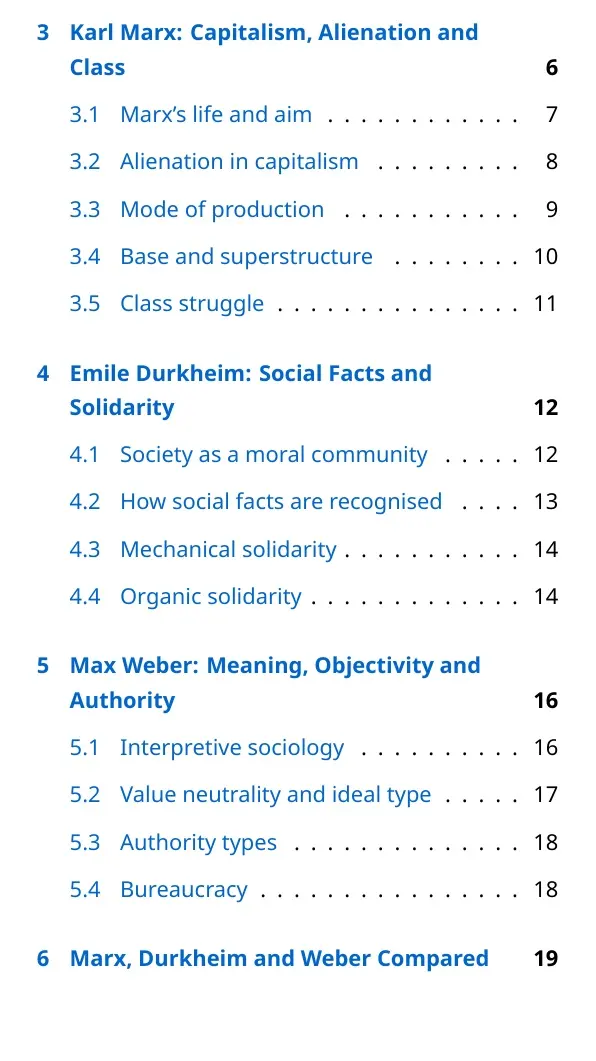
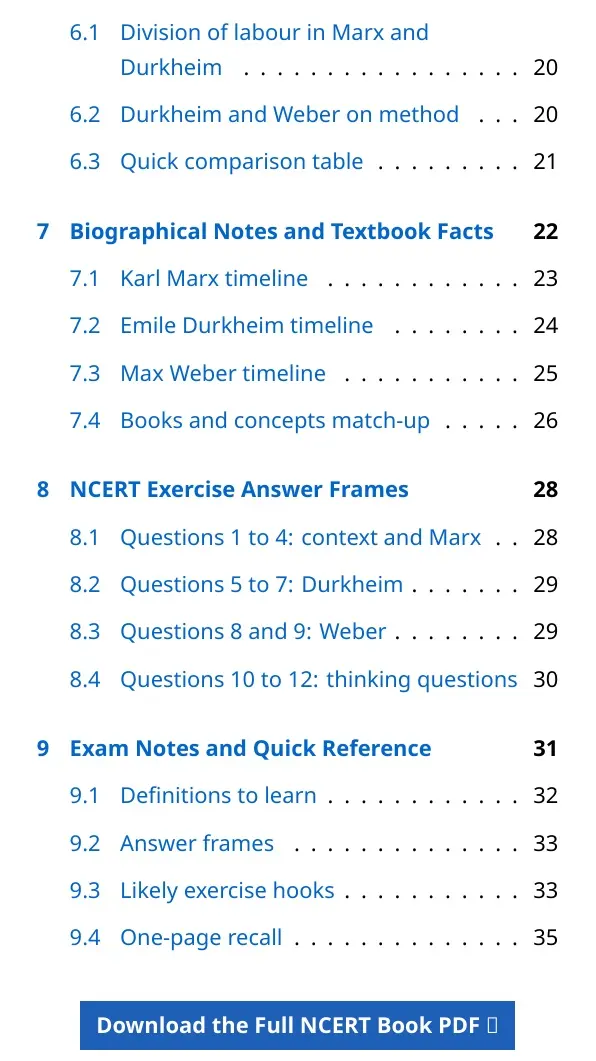
Chapter 9 explains how modern sociology grew after large changes in Europe. It then introduces the key ideas of Karl Marx, Emile Durkheim and Max Weber.
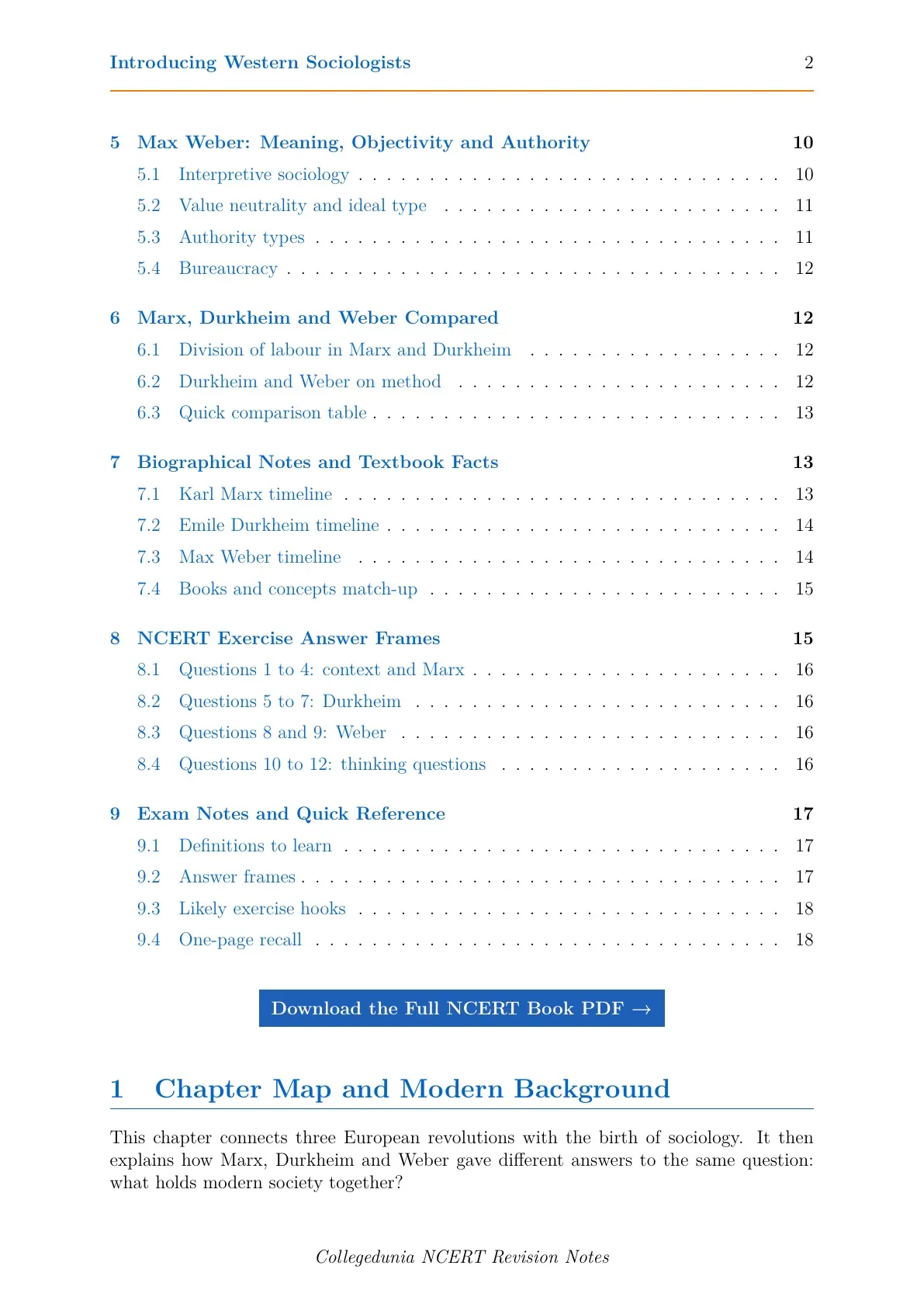
| PDF section | What students revise |
|---|---|
| Context of sociology | Enlightenment, French Revolution and Industrial Revolution. |
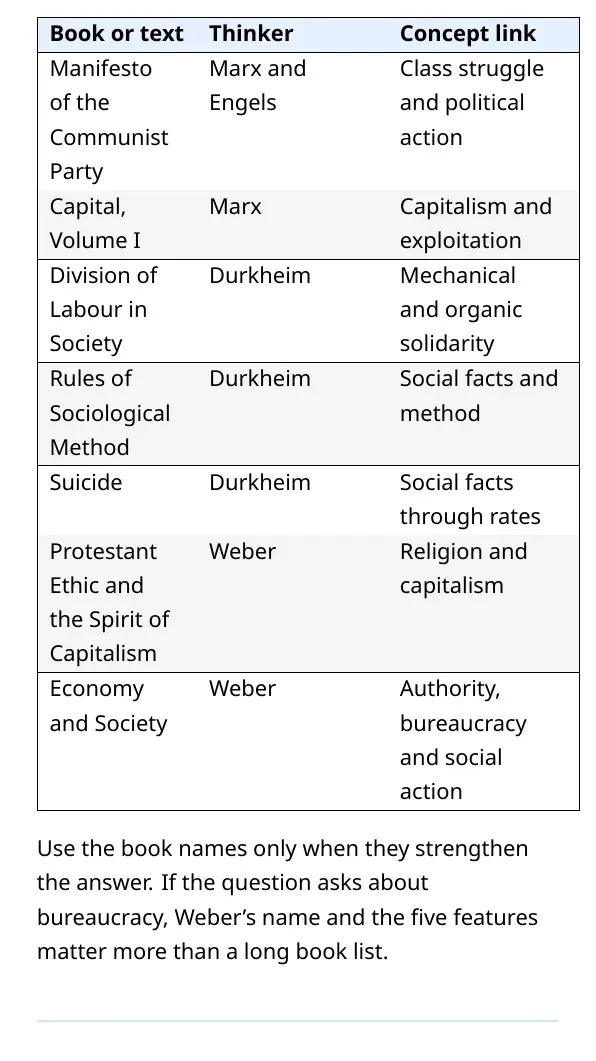
| Karl Marx | Alienation, mode of production, base, superstructure and class struggle. |
| Emile Durkheim | Social facts, moral community, mechanical solidarity and organic solidarity. |
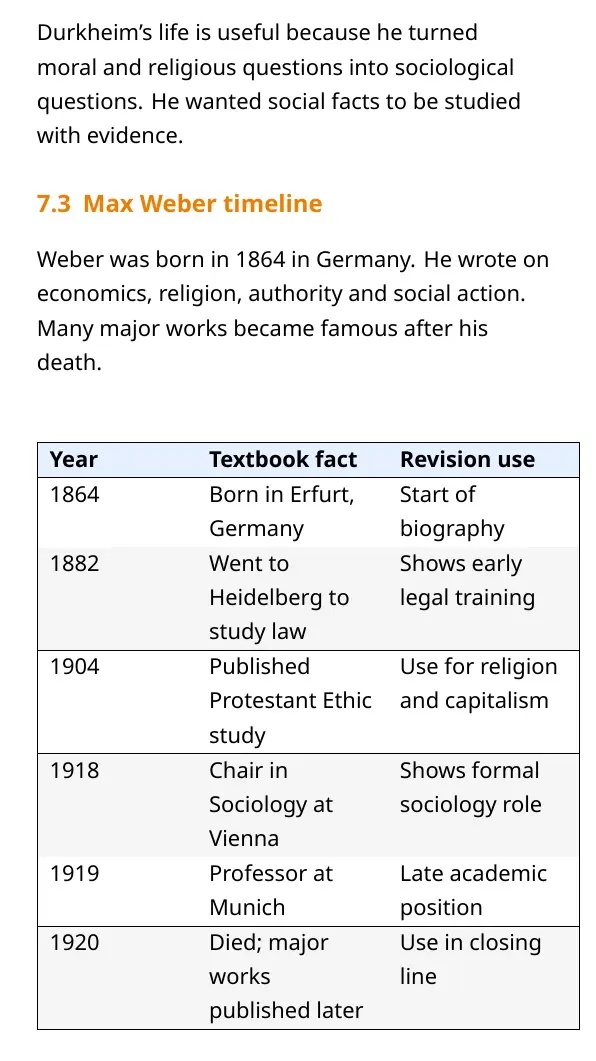
| Max Weber | Social action, value neutrality, ideal type, authority and bureaucracy. |
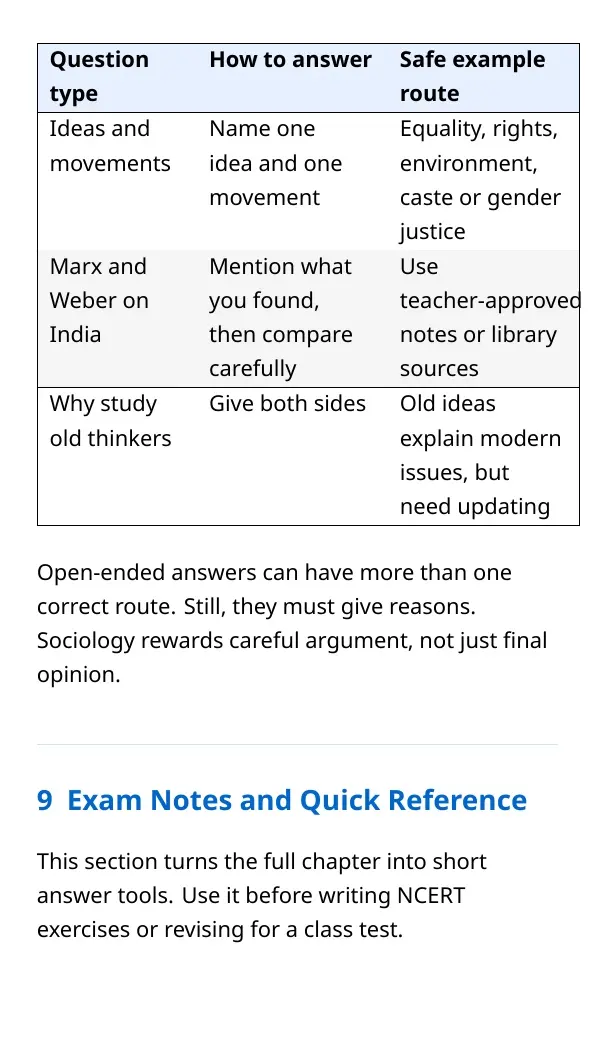
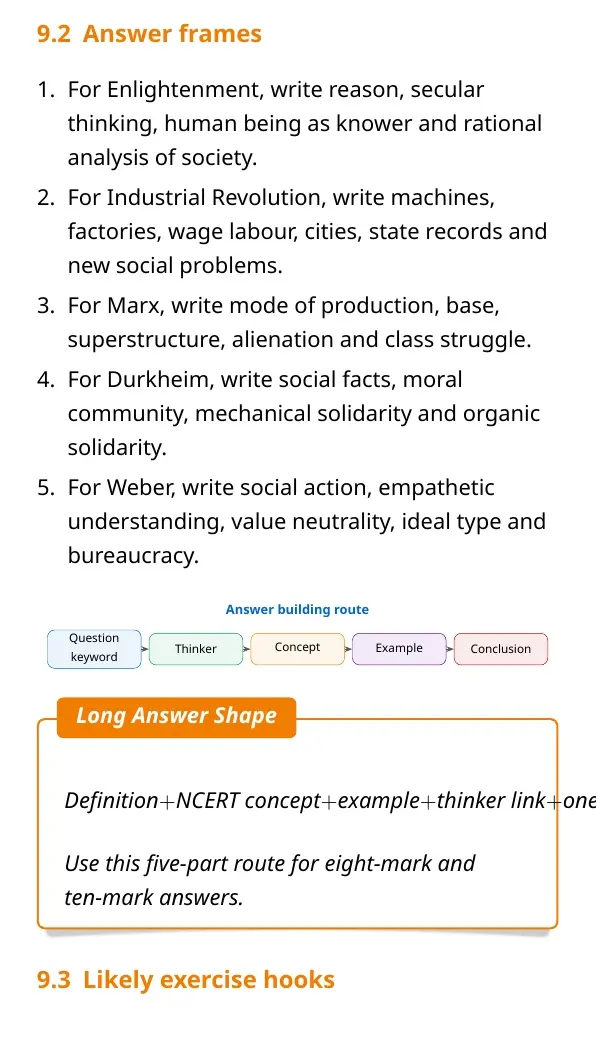
For exams, connect every thinker with one core idea and one NCERT example.
Introducing Western Sociologists Class 11 Video
Source: Magnet Brains on YouTube
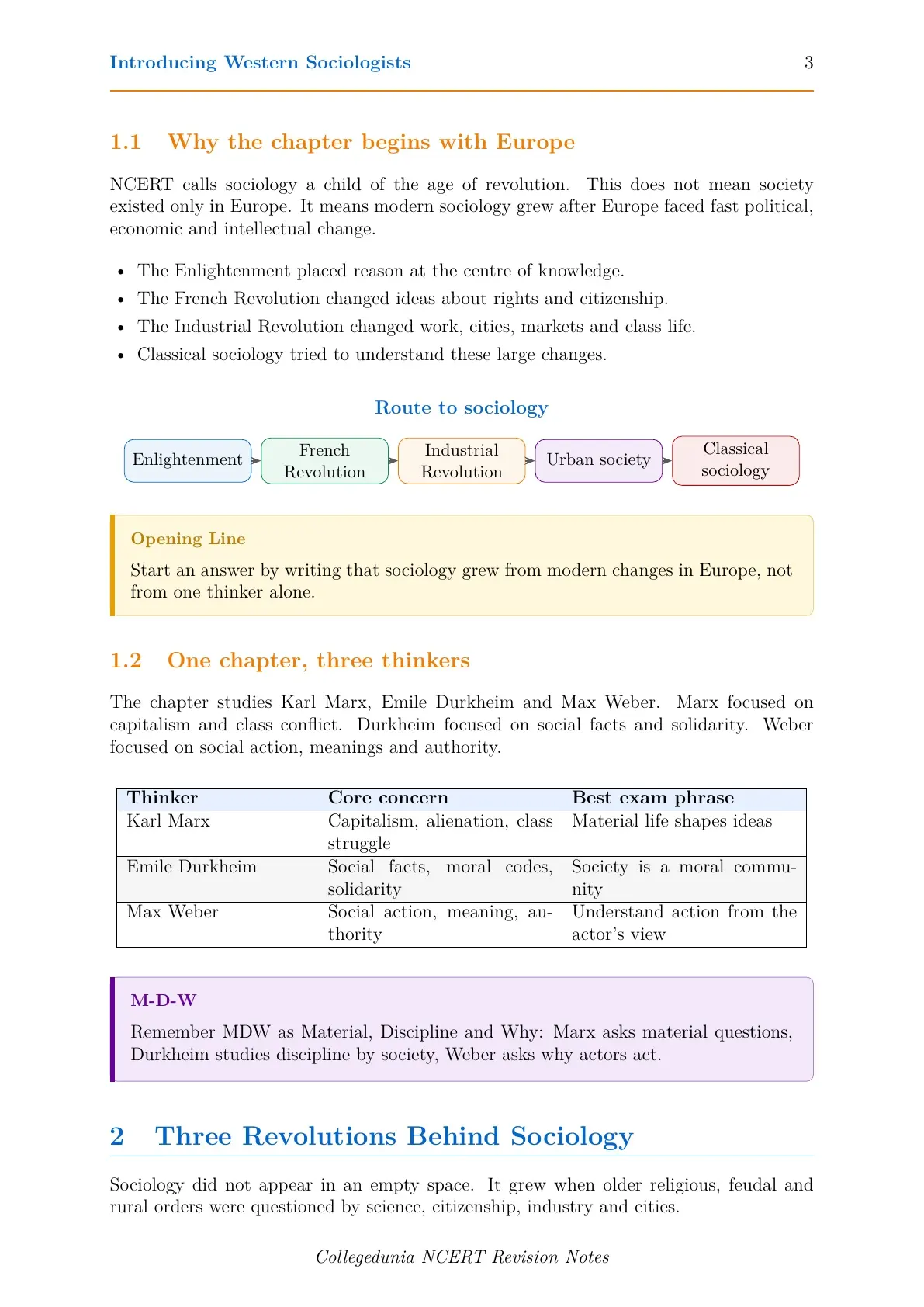
Rise of Western Sociology Timeline
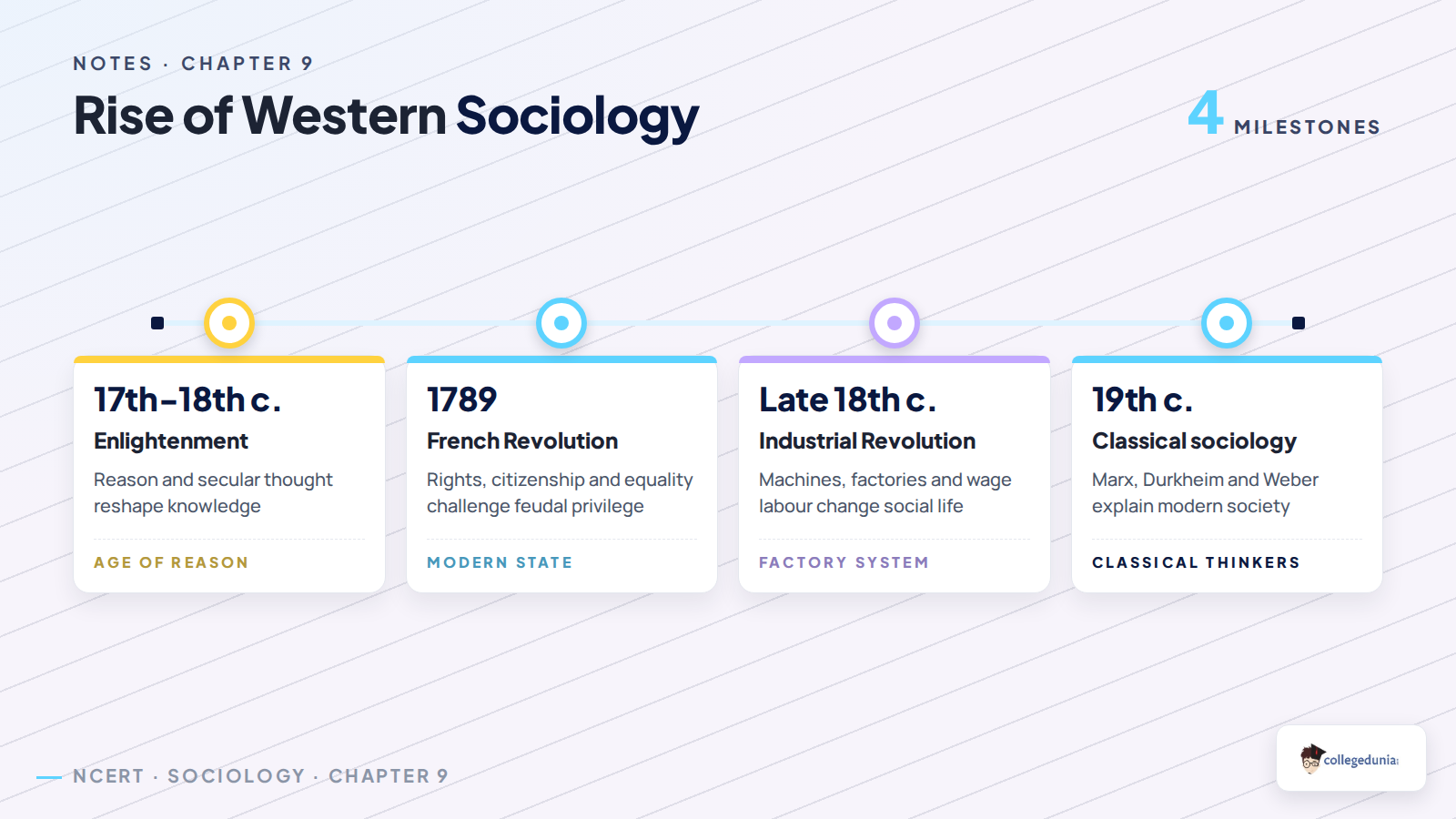
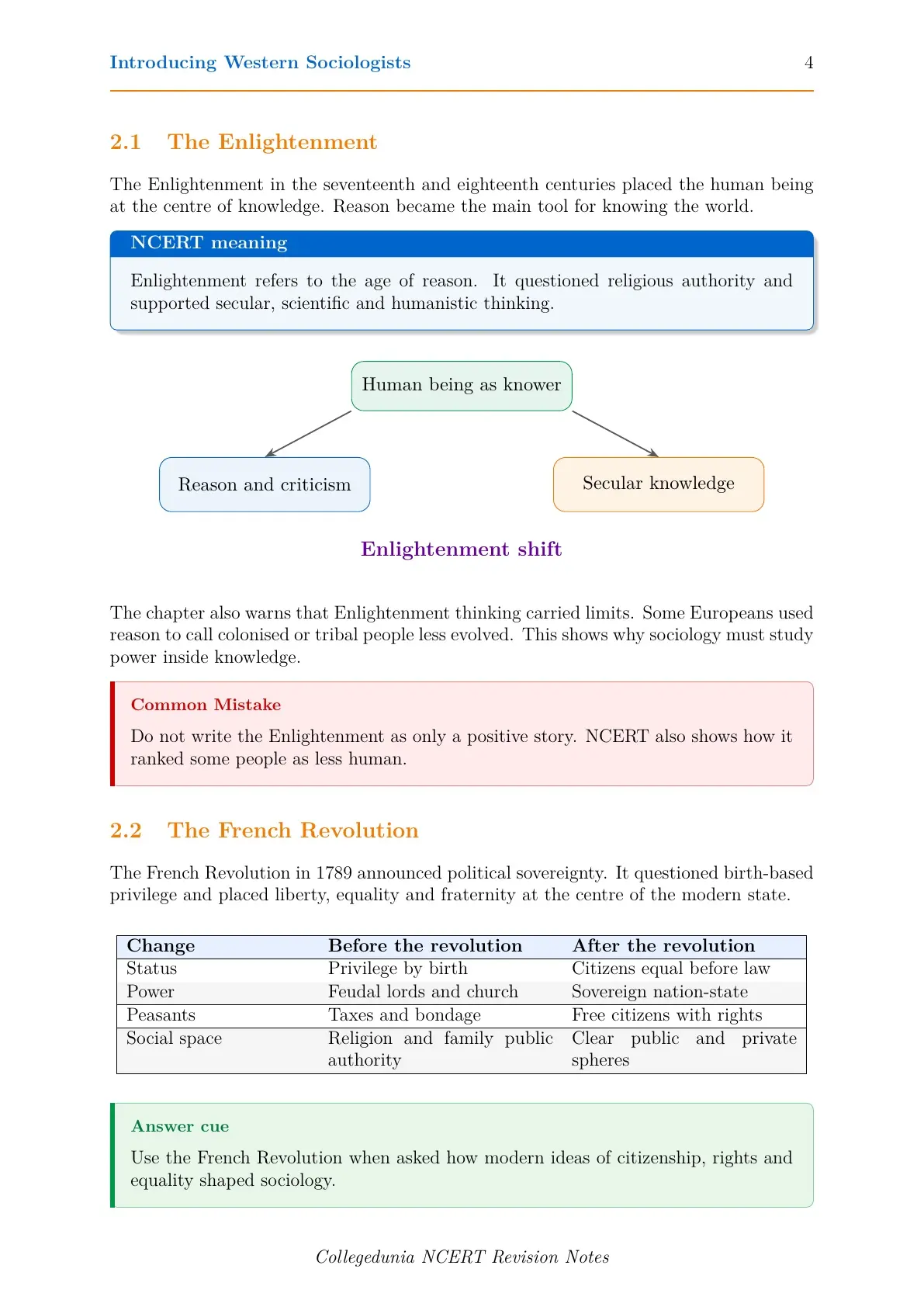
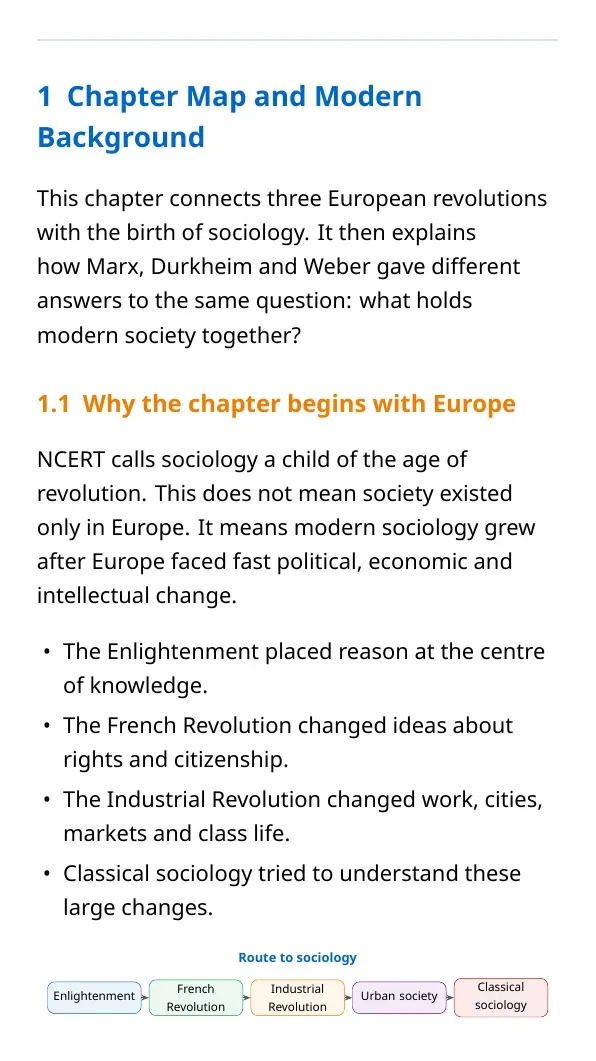
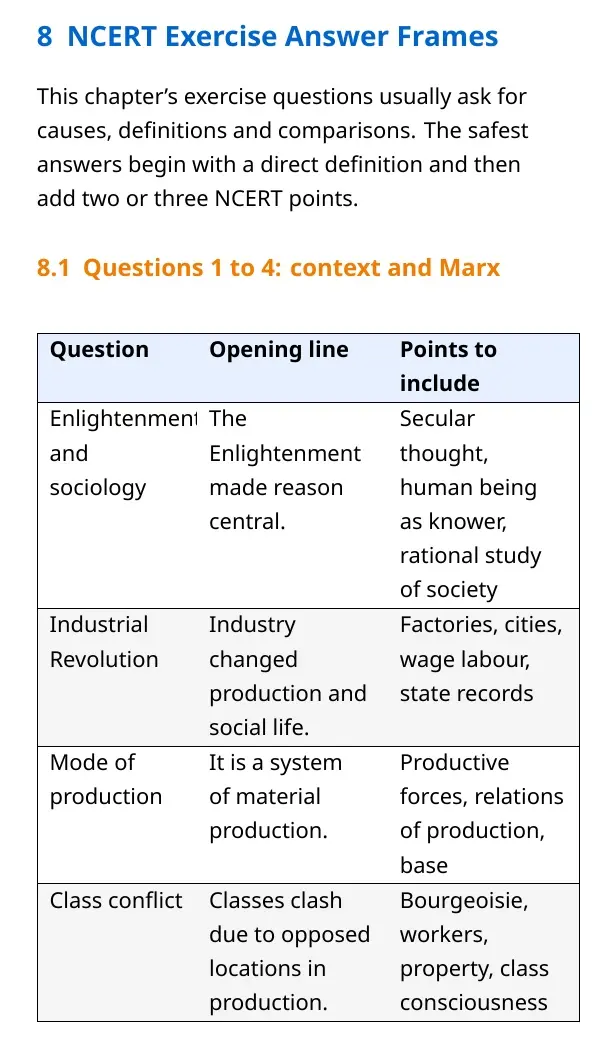
The chapter begins with the context of sociology because ideas about society are shaped by social conditions. The Enlightenment encouraged reason, the French Revolution changed ideas of citizenship, and the Industrial Revolution changed work and urban life.
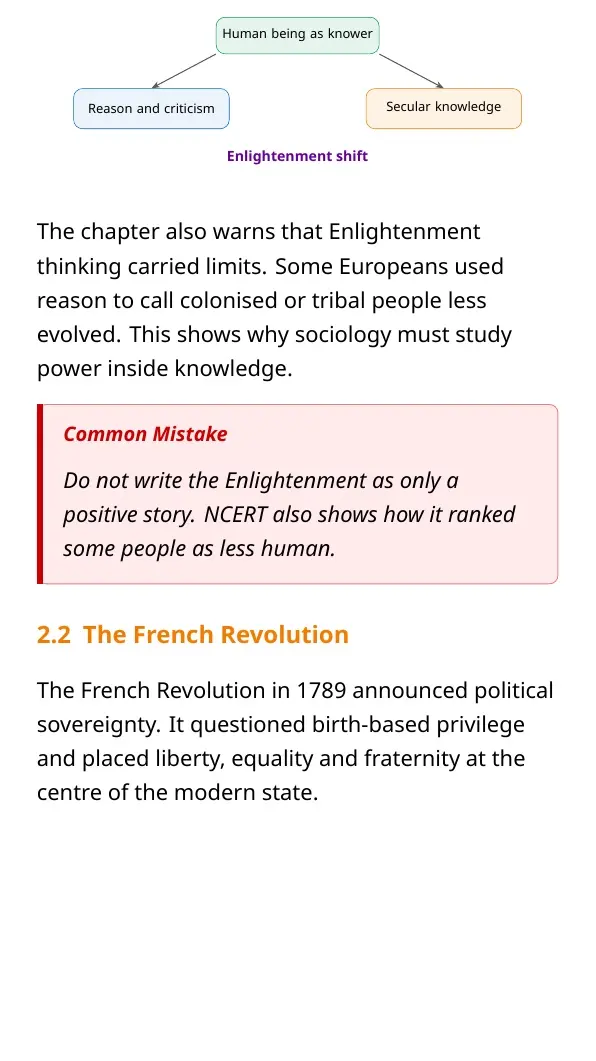
- Enlightenment: reason, secular thought and human beings as knowing subjects.
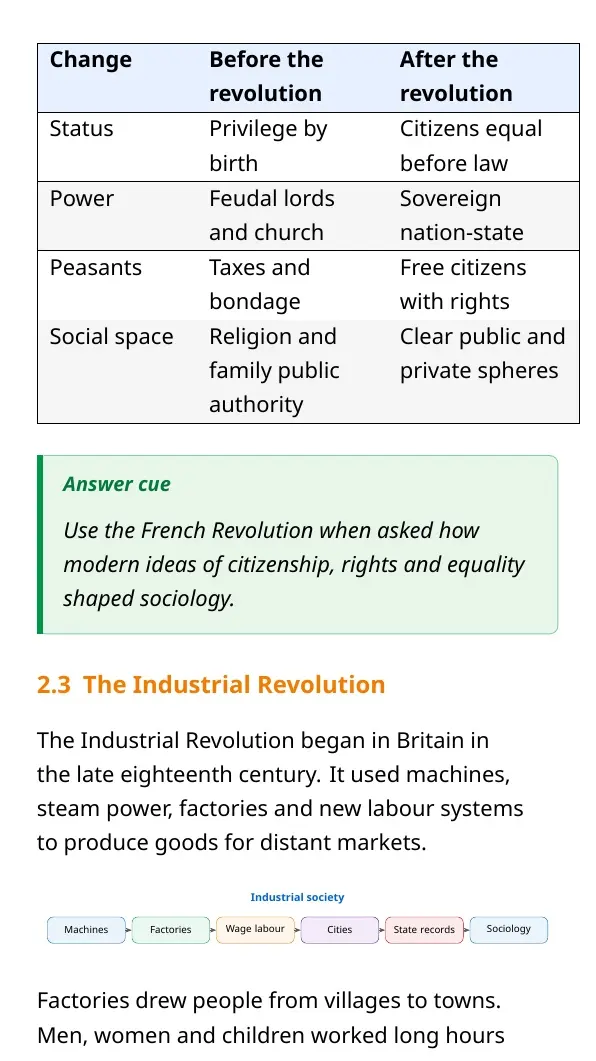
- French Revolution: sovereignty, rights, equality and the modern state.
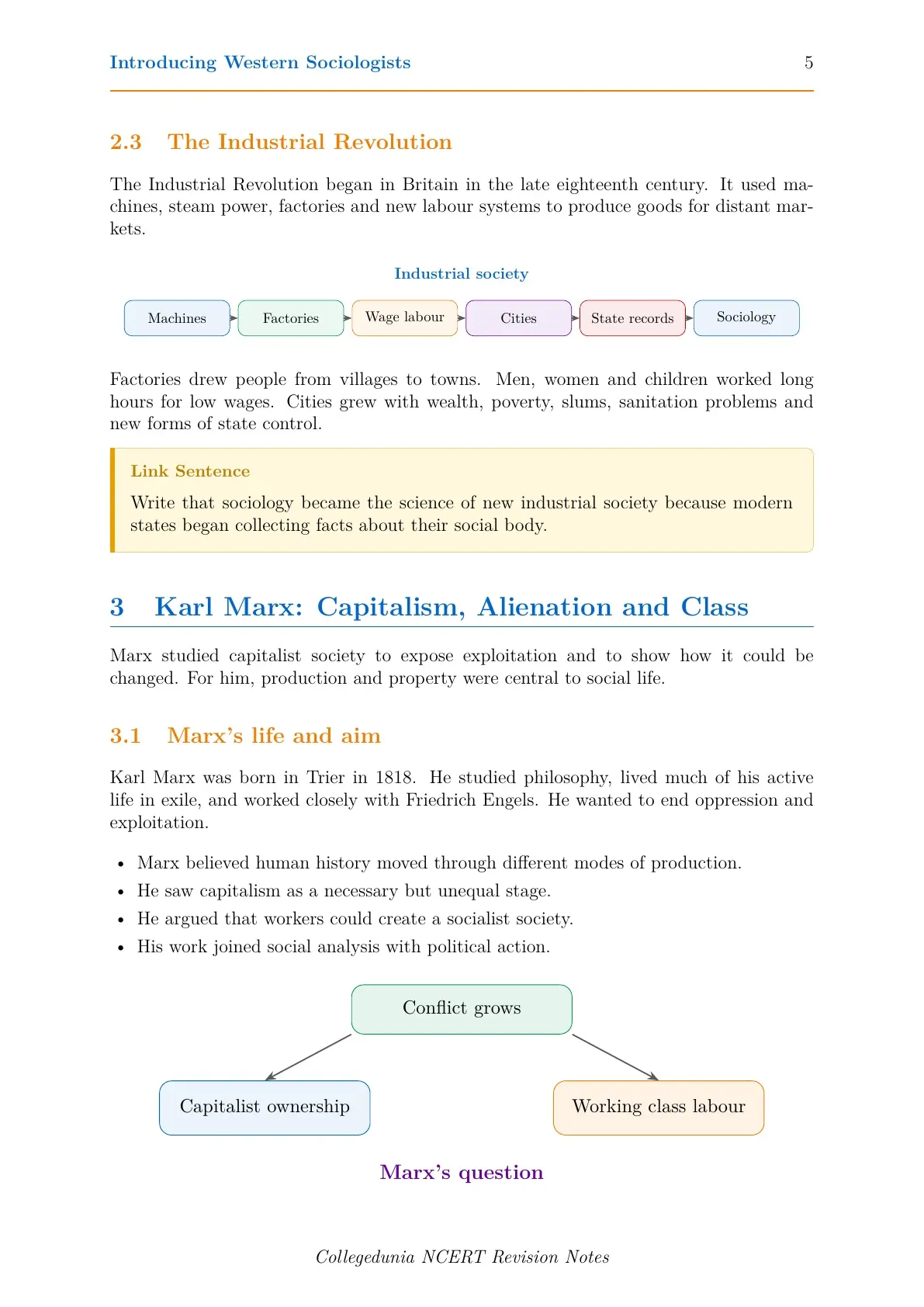
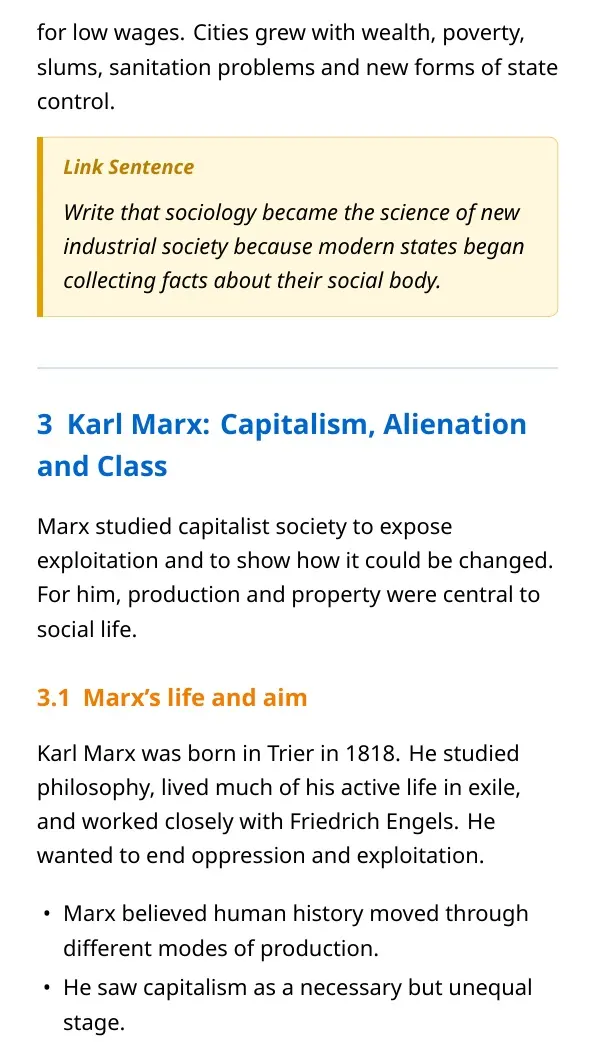
- Industrial Revolution: machines, factories, wage labour, cities and state records.
- Sociology: a new science that studied modern industrial society.
Karl Marx Ideas in Chapter 9
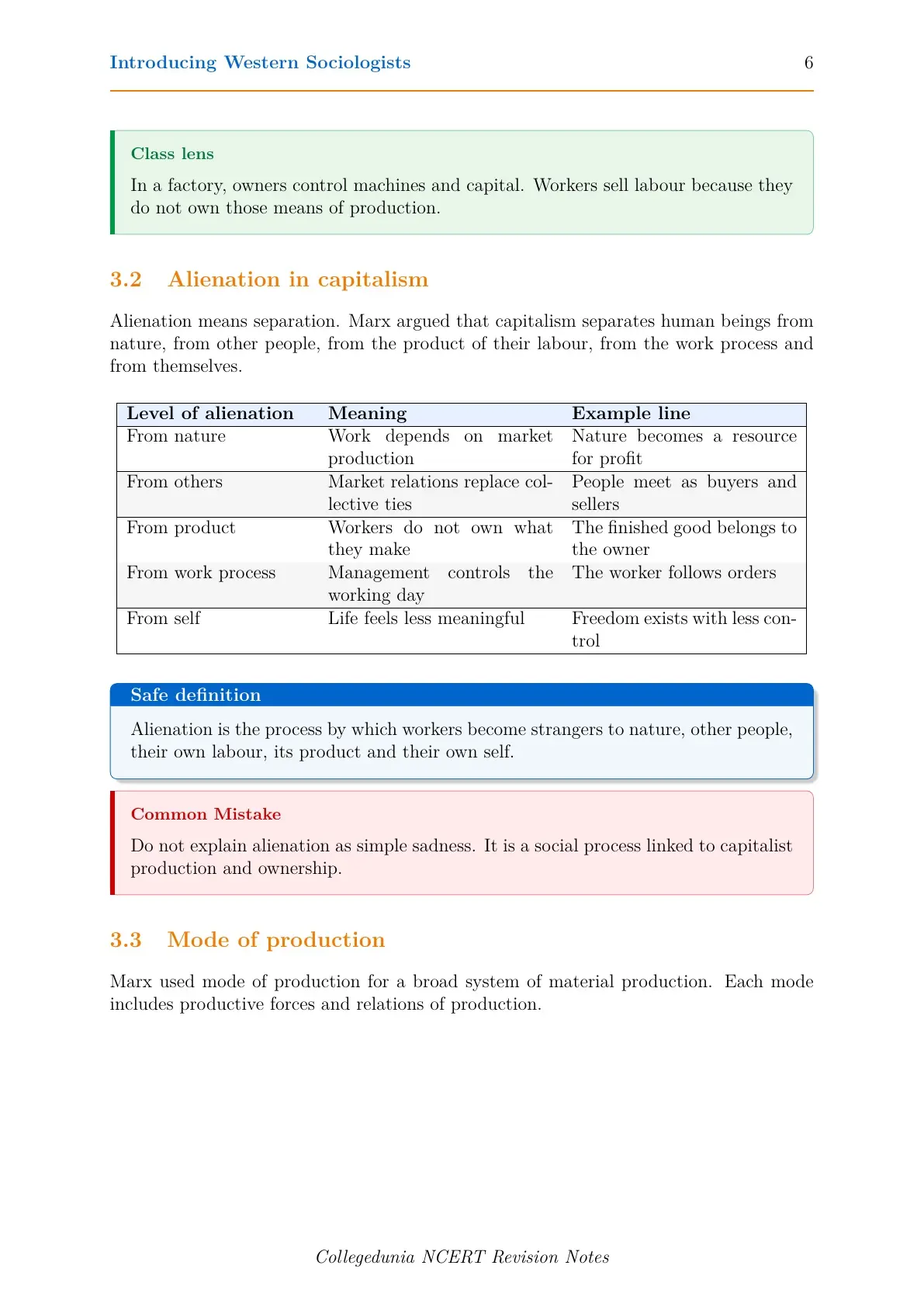
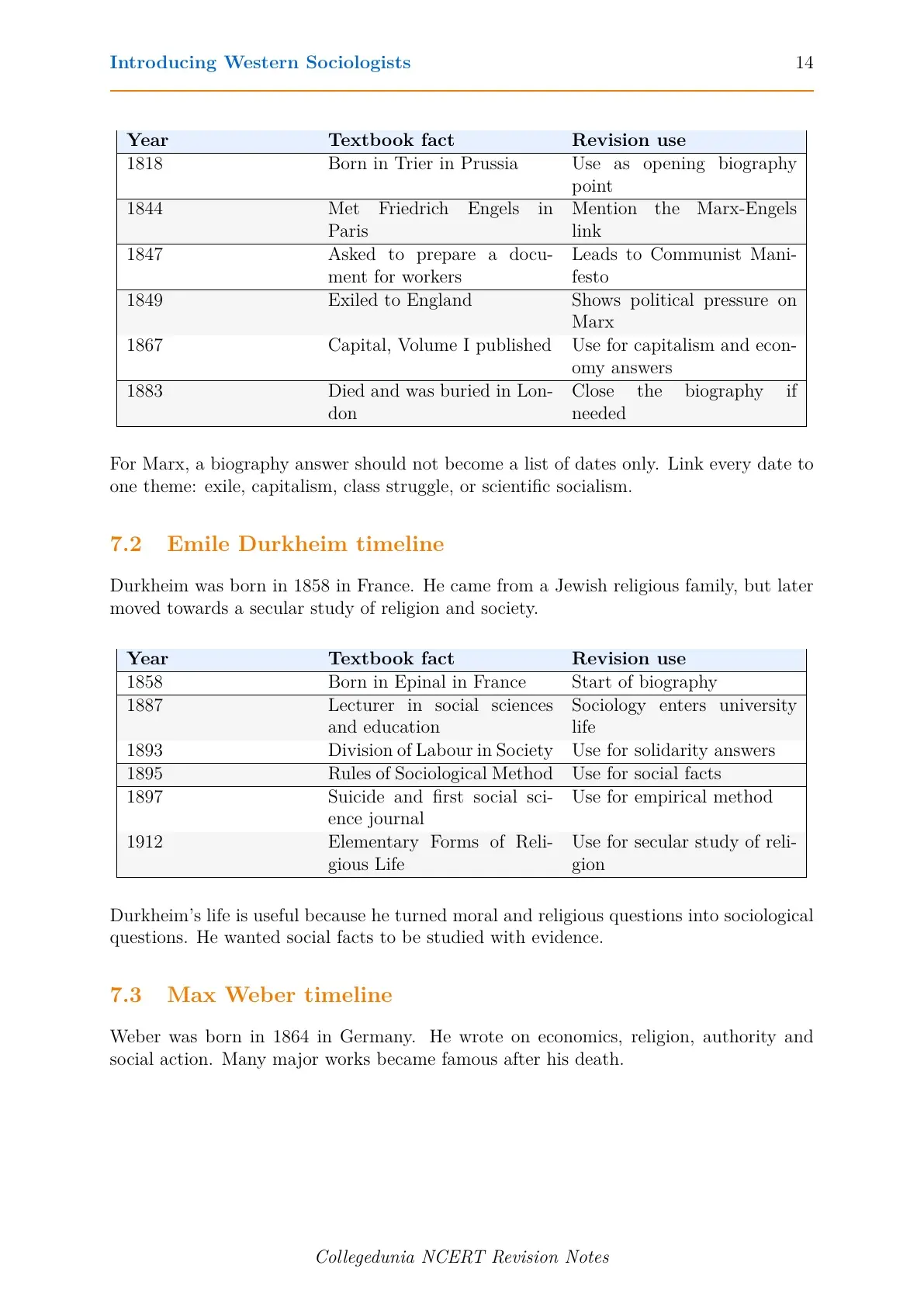
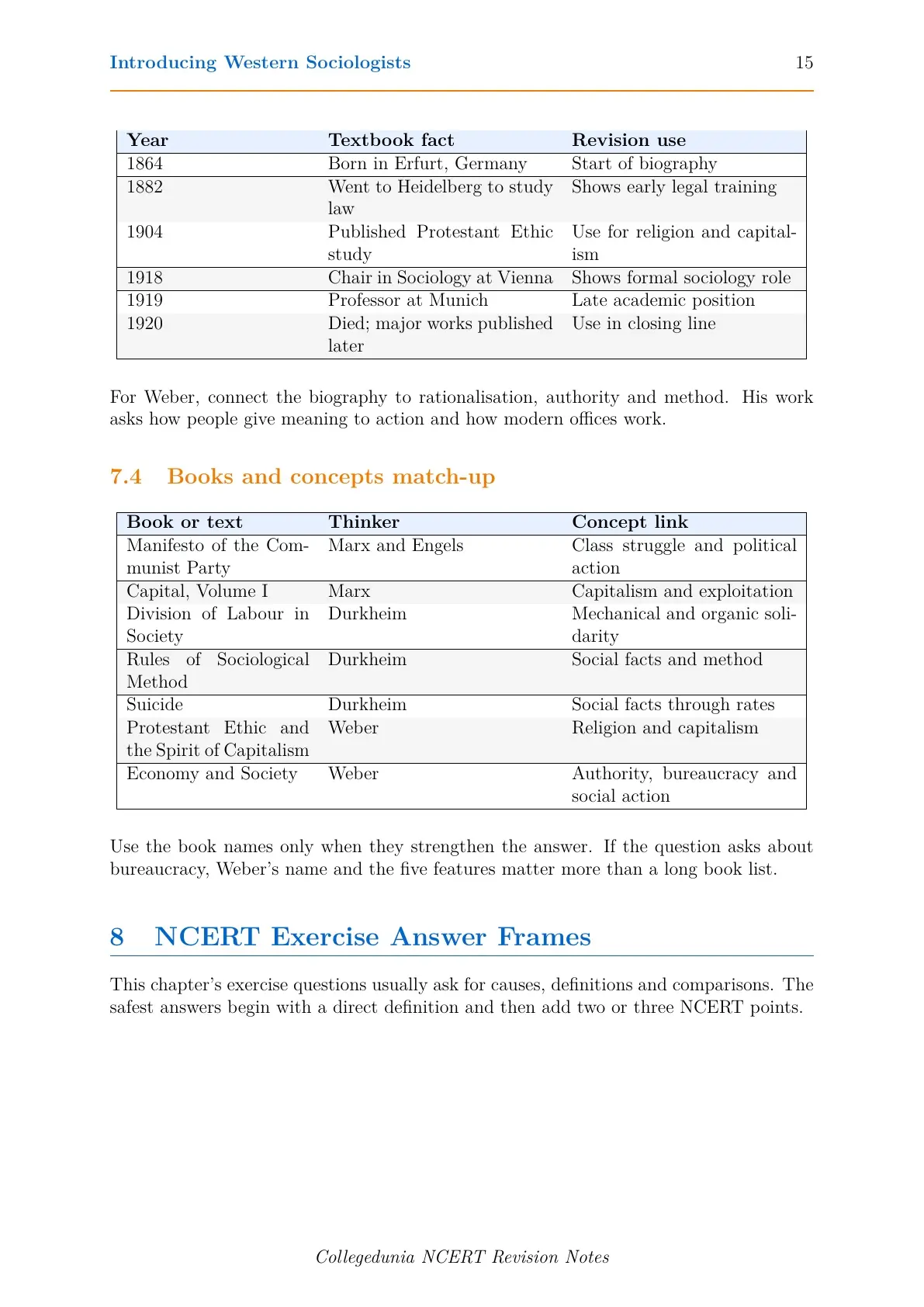
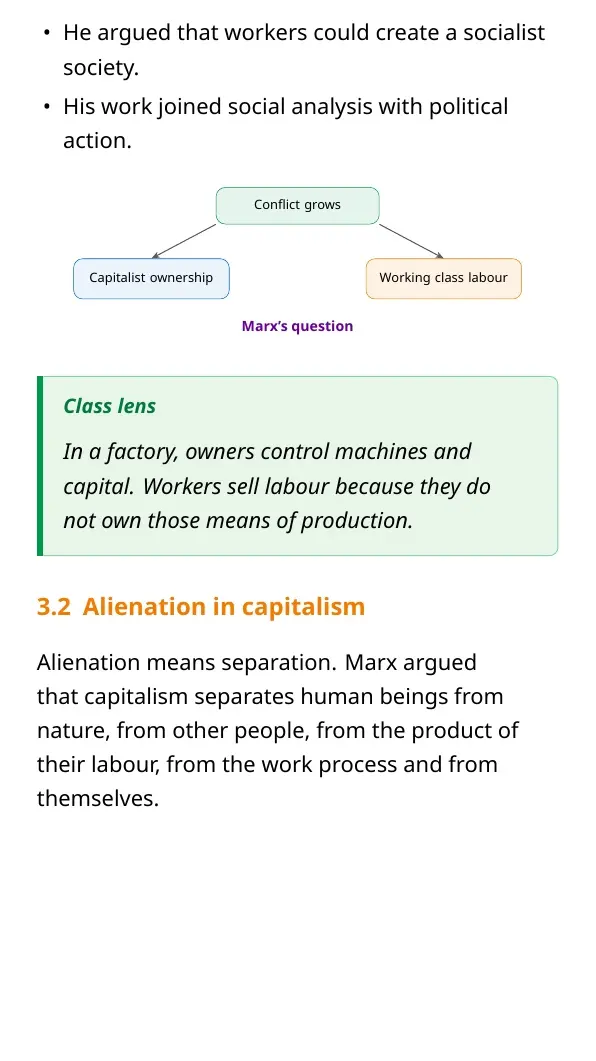
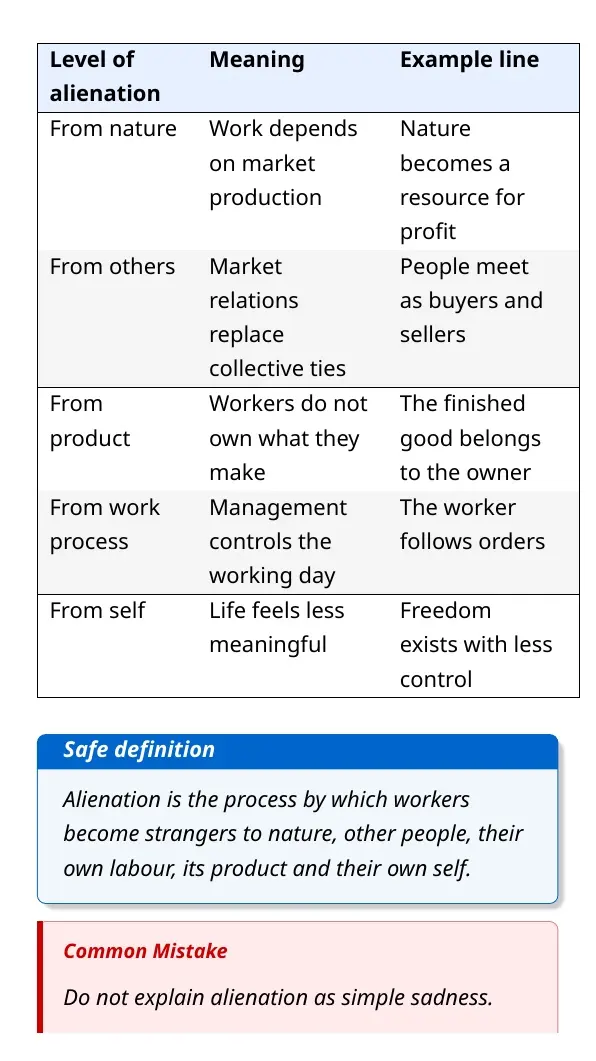
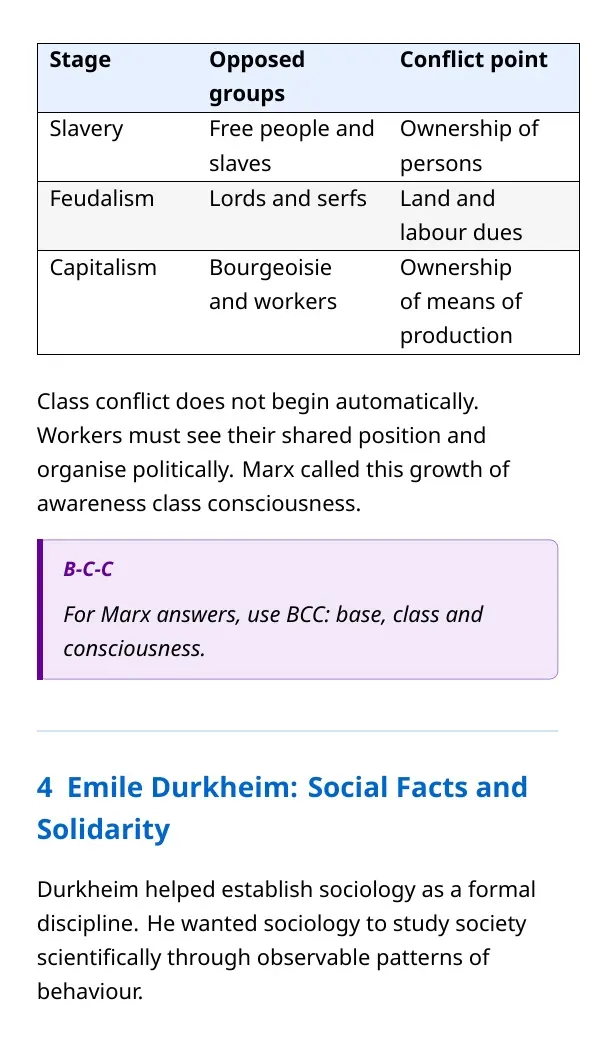
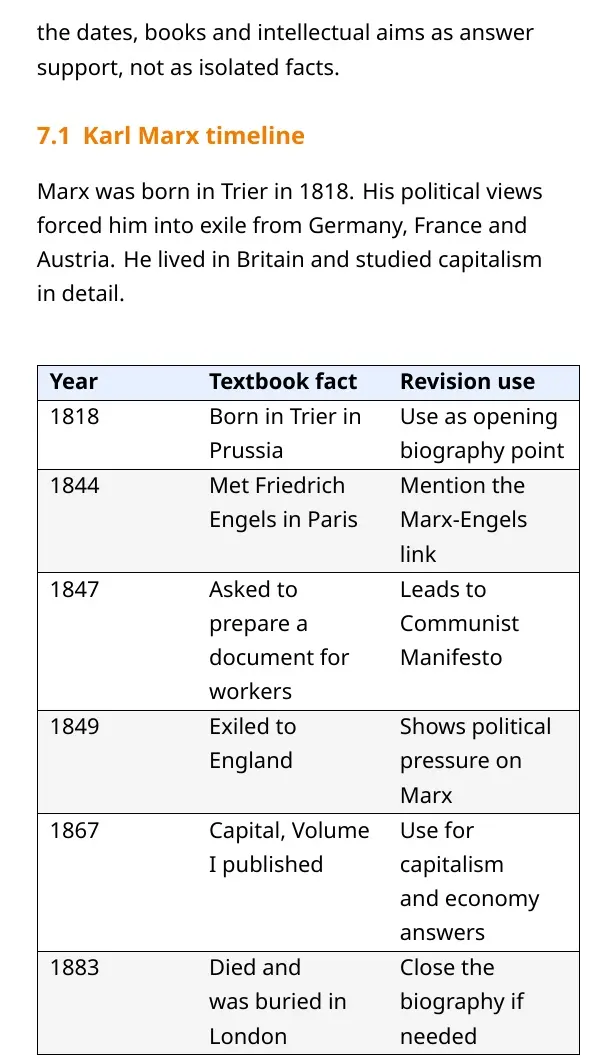
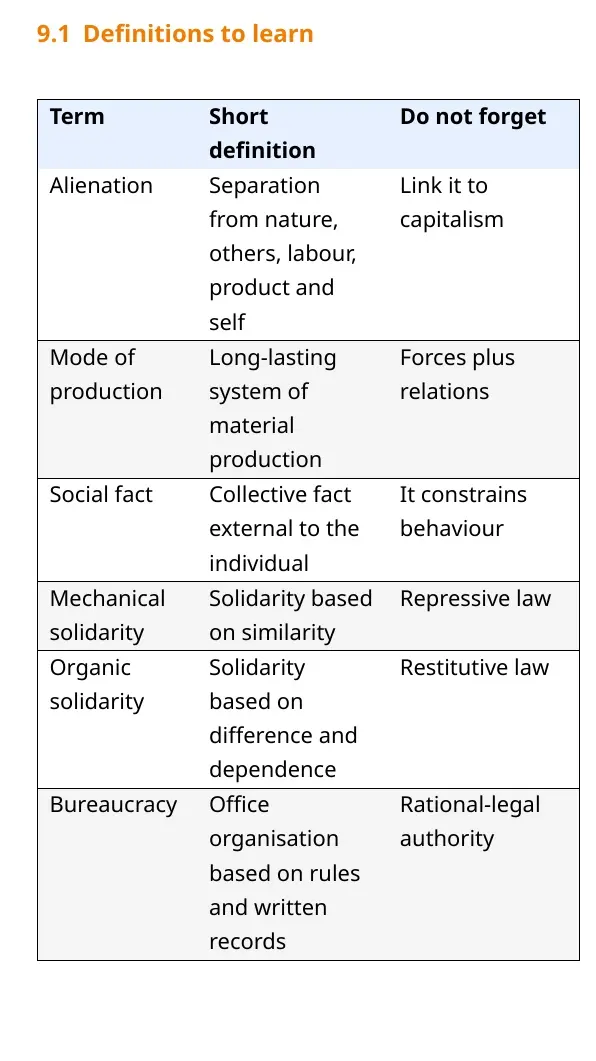
Marx studied capitalism as a system of production and exploitation. He argued that workers are alienated from nature, from other people, from their product, from the work process and from themselves.
| Marx term | Meaning for revision |
|---|---|
| Alienation | Separation from work, product, nature, others and self. |
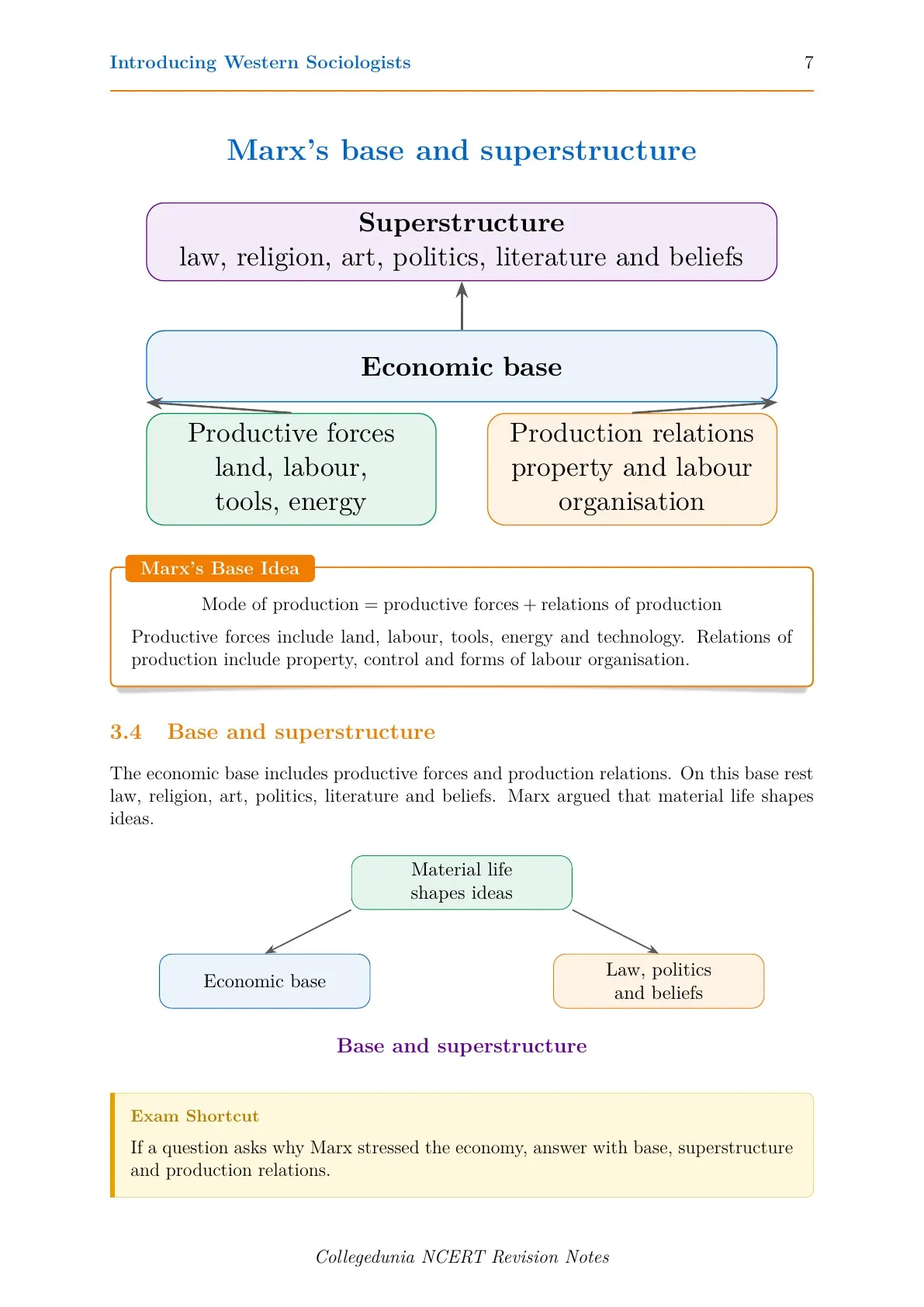
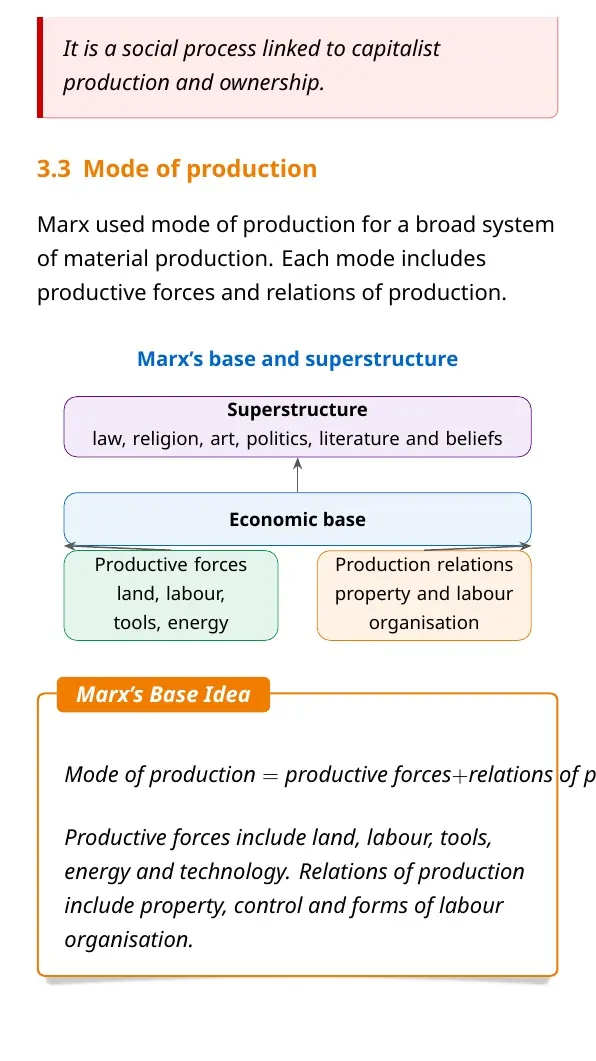
| Mode of production | Productive forces plus relations of production. |
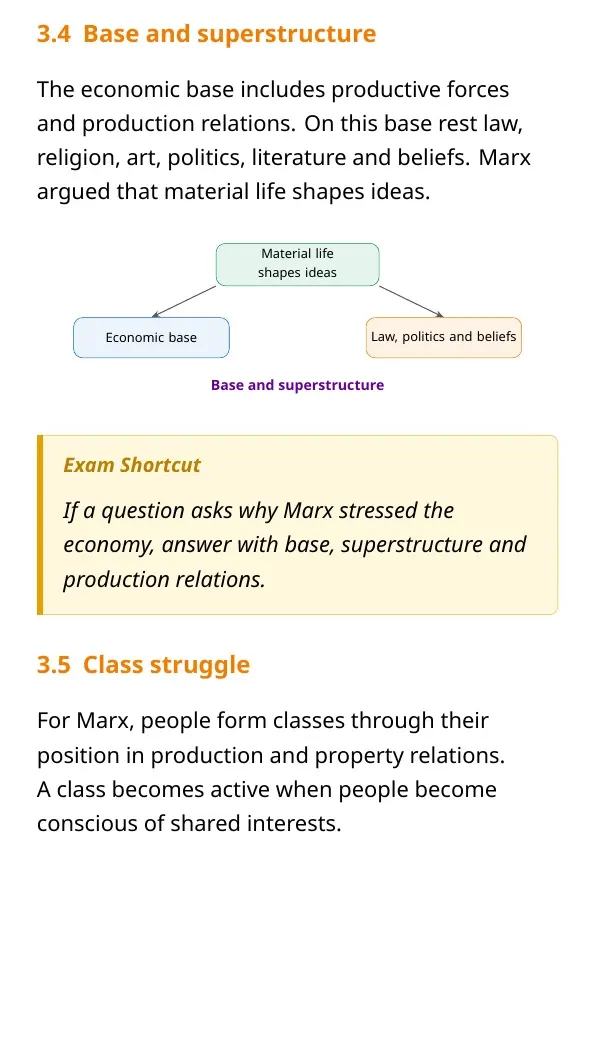
| Economic base | Material production and property relations. |
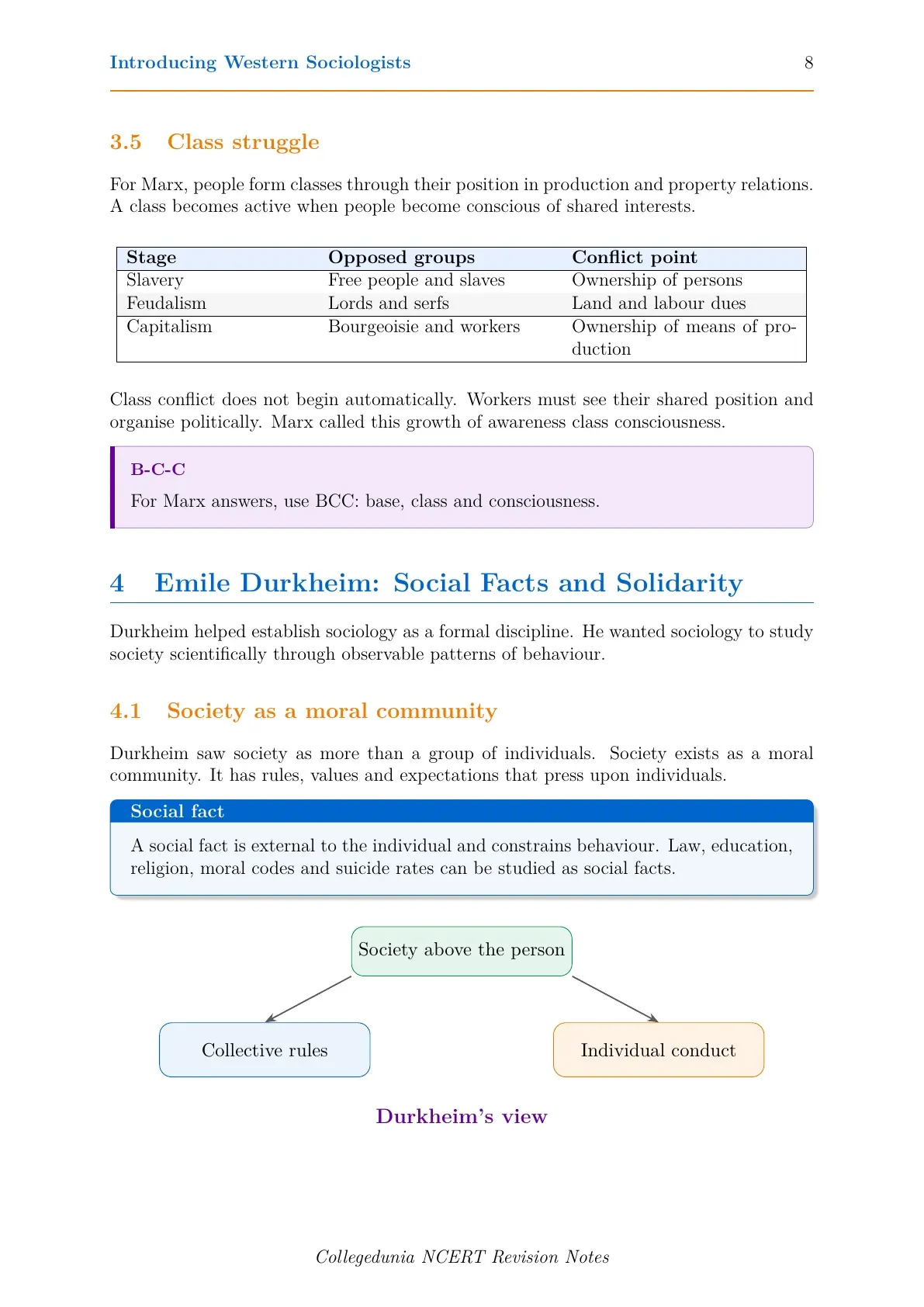
| Class struggle | Conflict between groups placed differently in production. |
Durkheim and Weber Compared with Marx
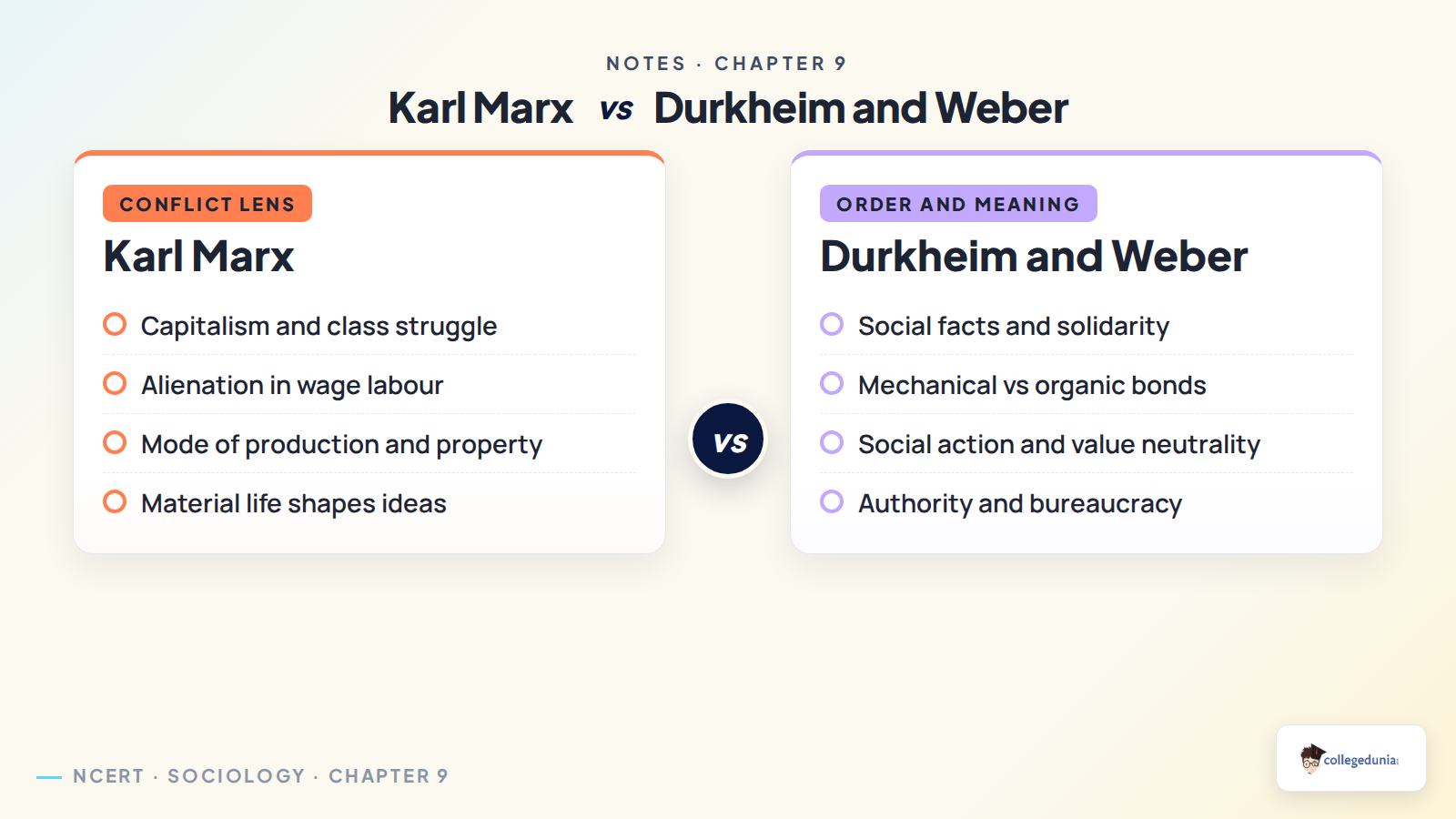
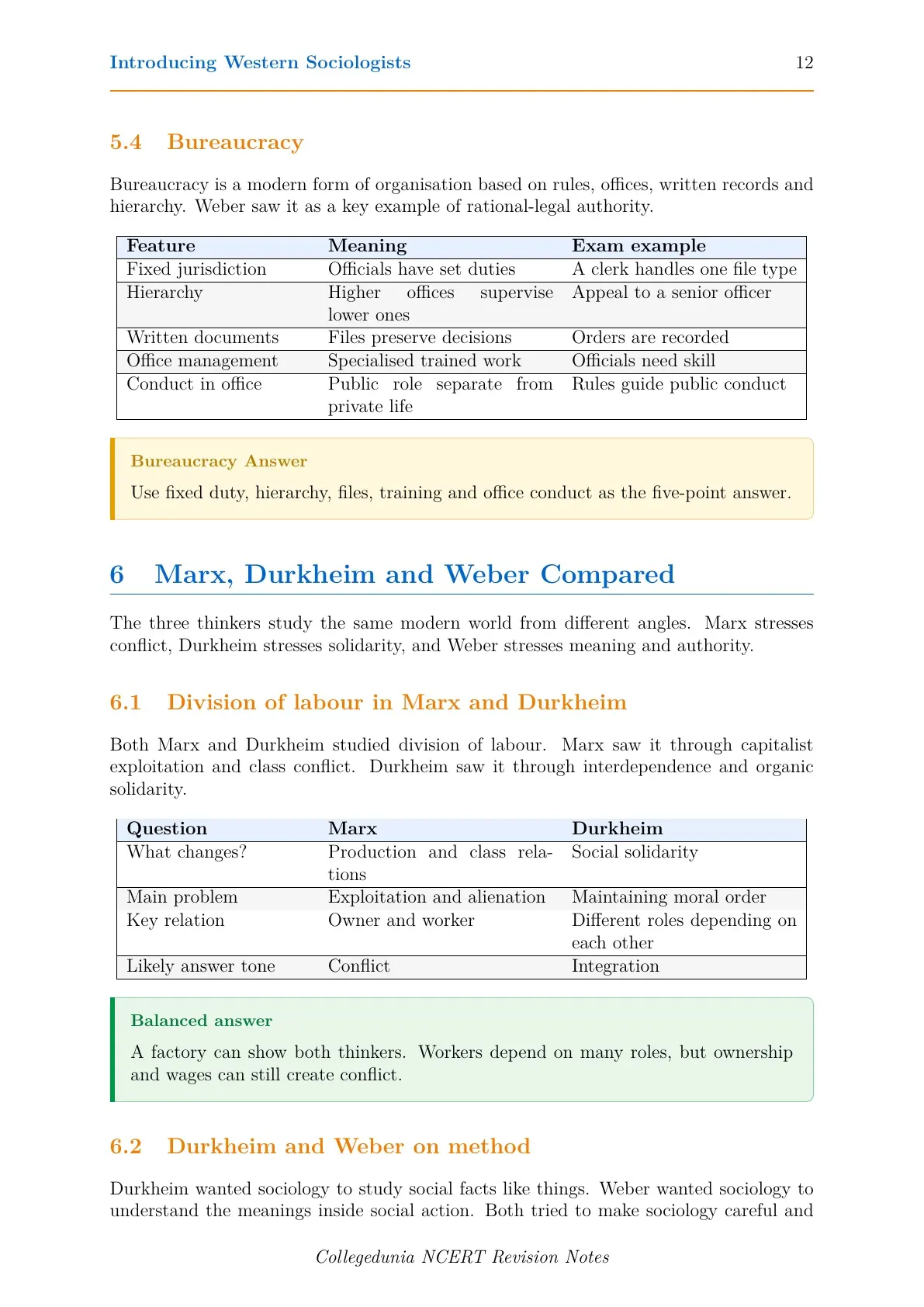
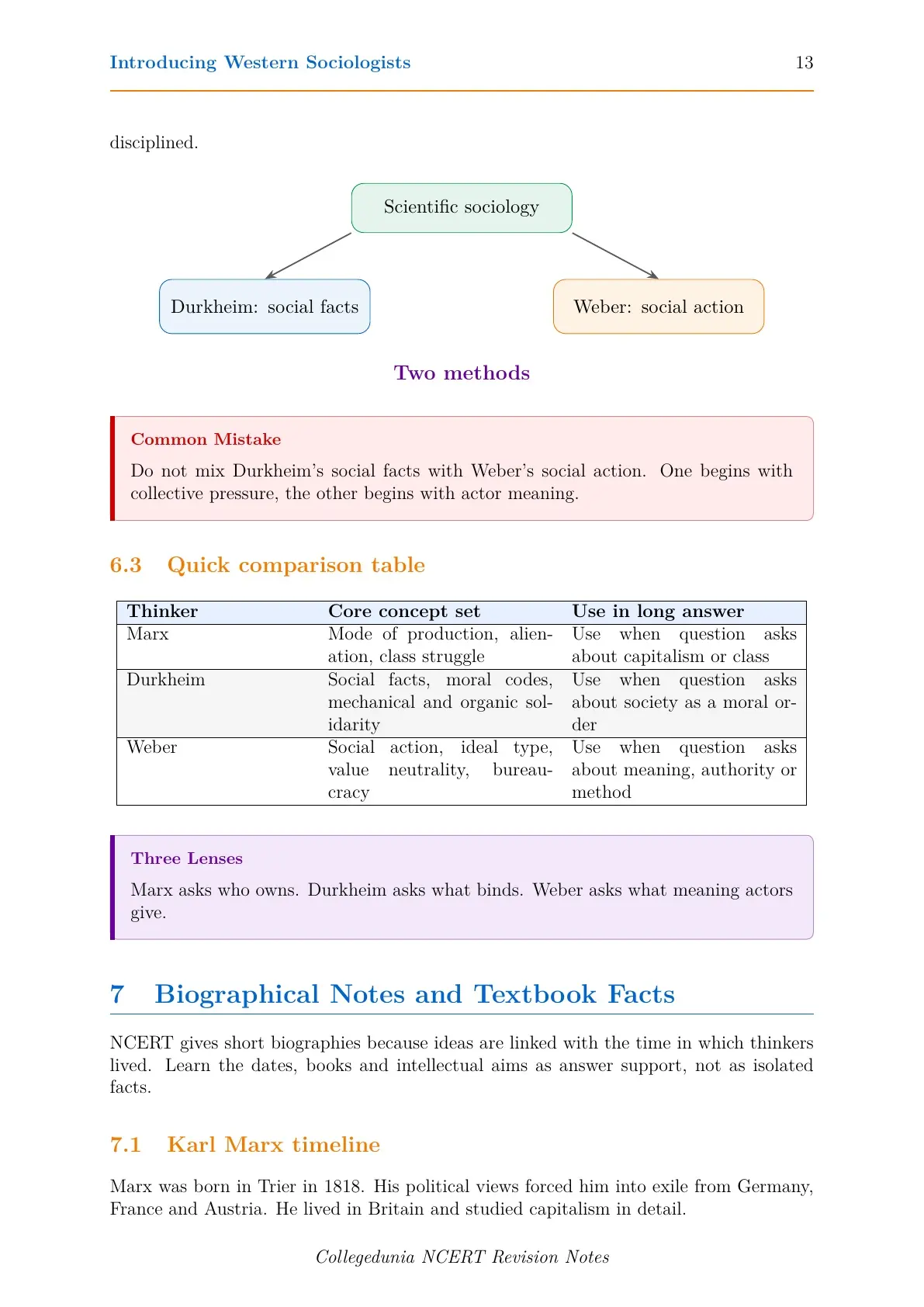
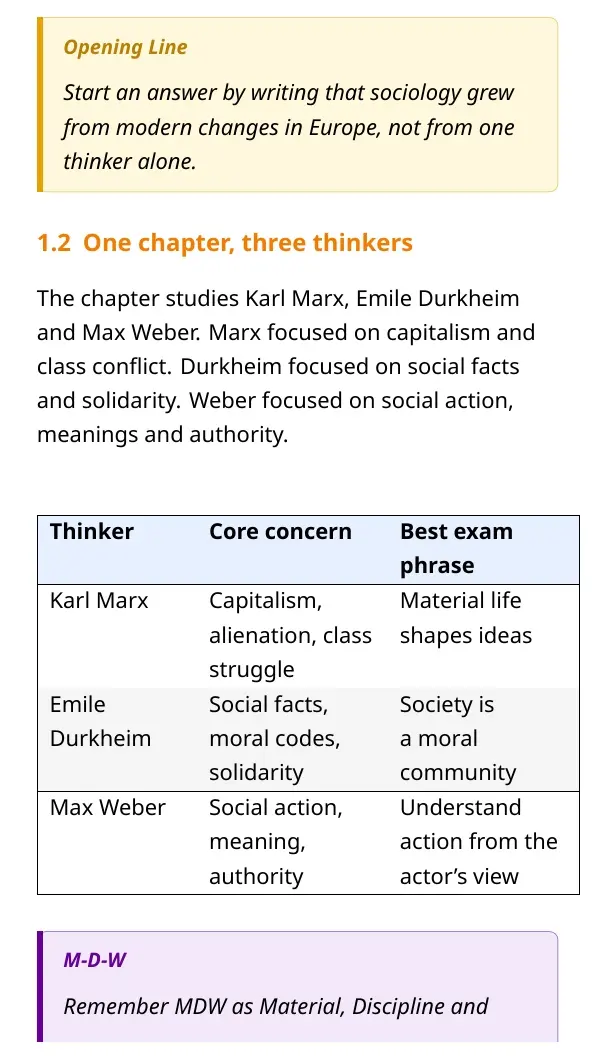
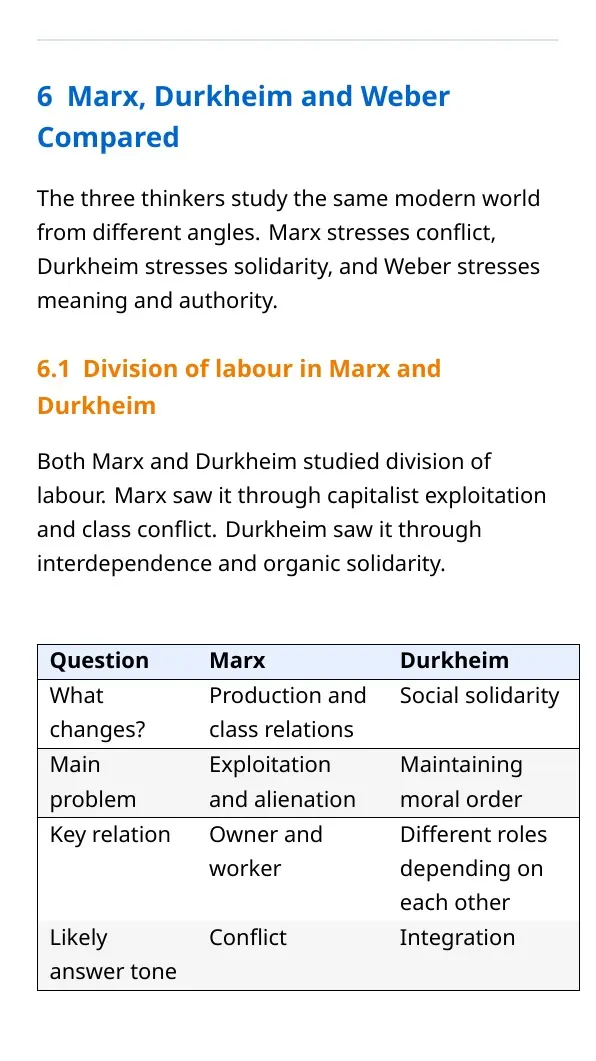
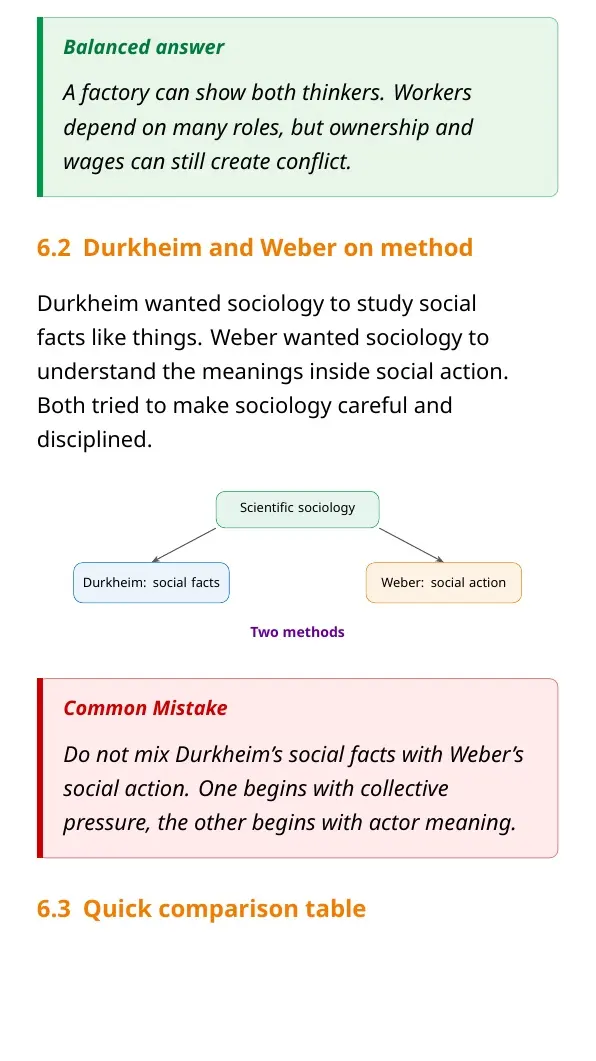
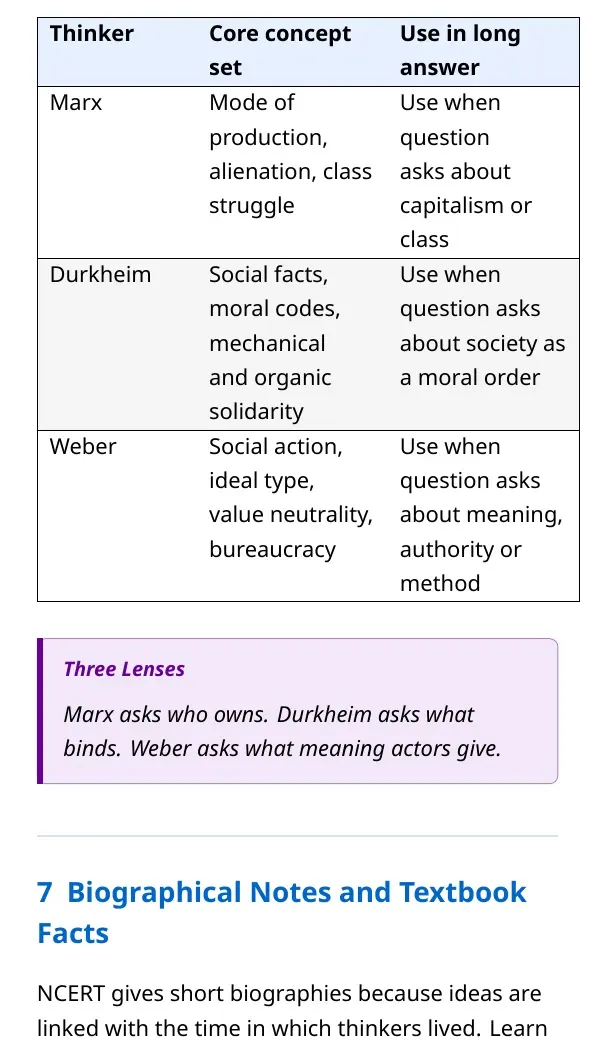
Marx stresses conflict, Durkheim stresses social order, and Weber stresses meaning. This comparison helps students answer questions that ask why the three thinkers read modern society differently.
- Marx: asks who owns the means of production and who works for wages.
- Durkheim: asks how society binds people through social facts and solidarity.
- Weber: asks what meaning actors attach to action and how authority works.
Emile Durkheim Social Facts and Solidarity
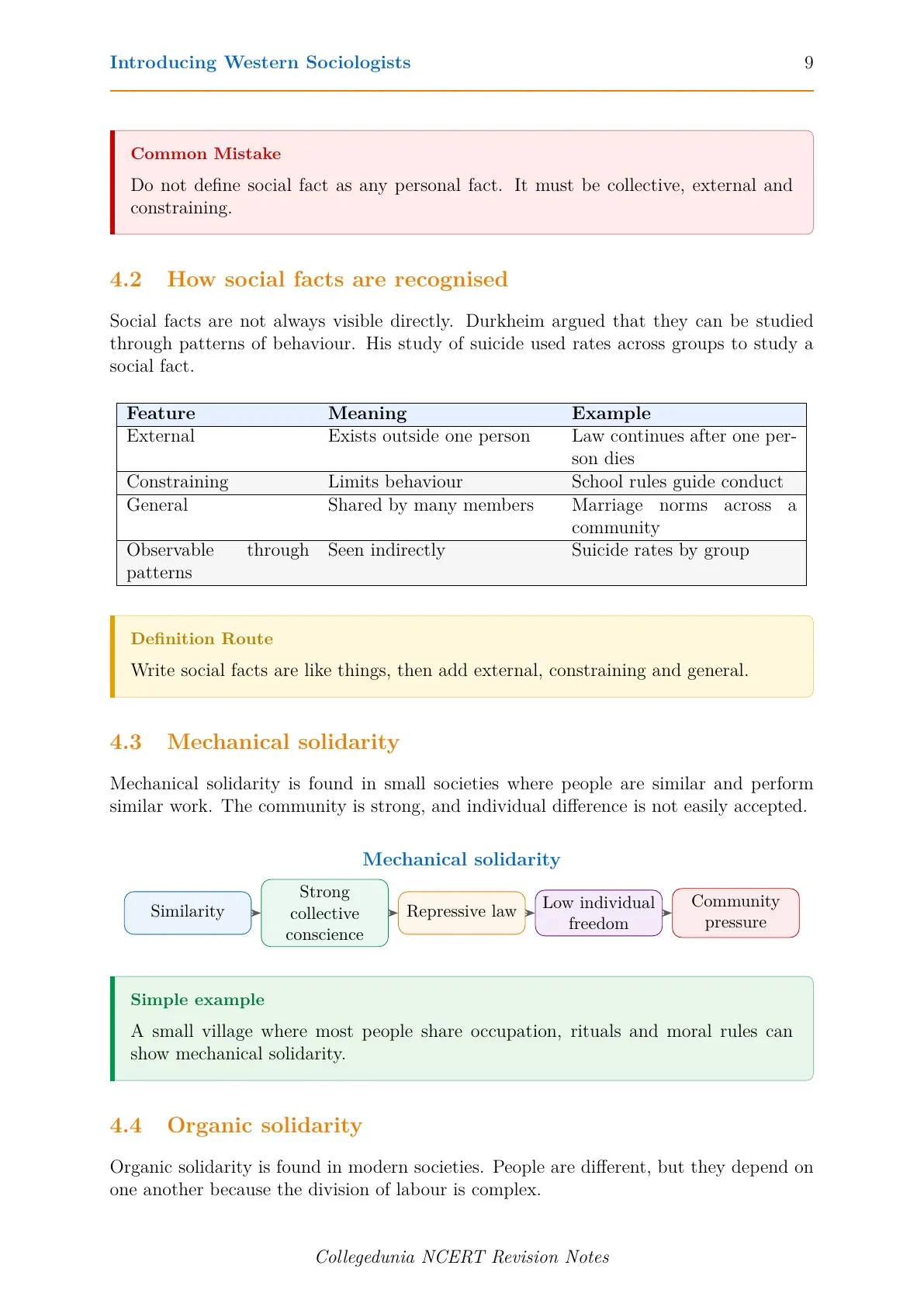
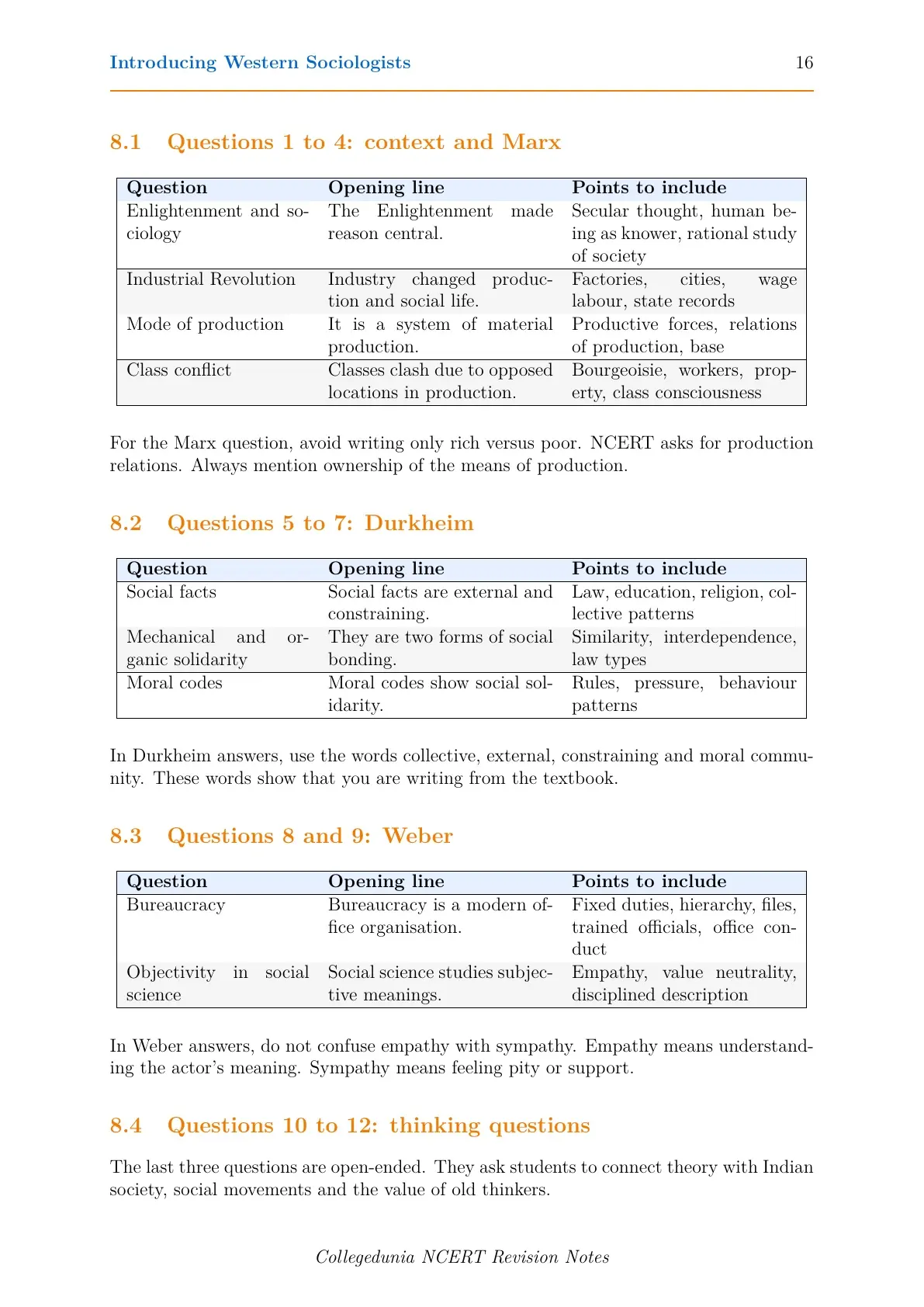
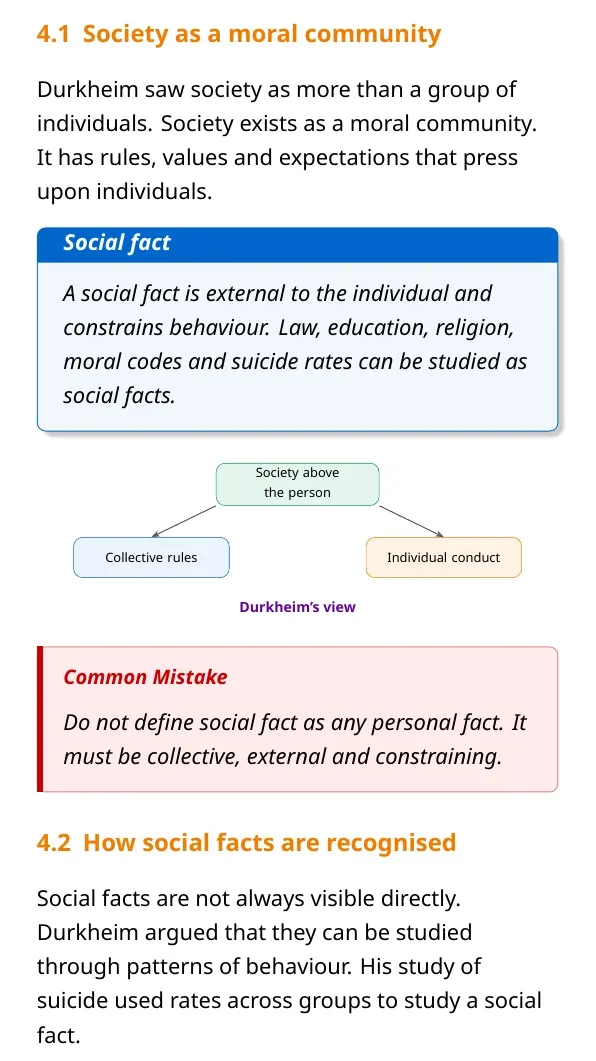
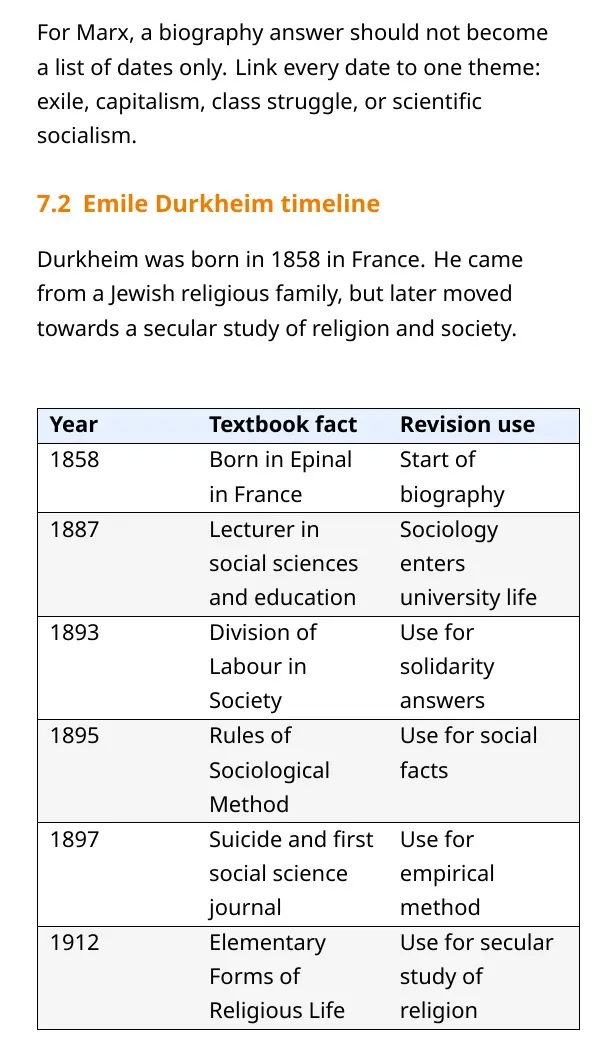
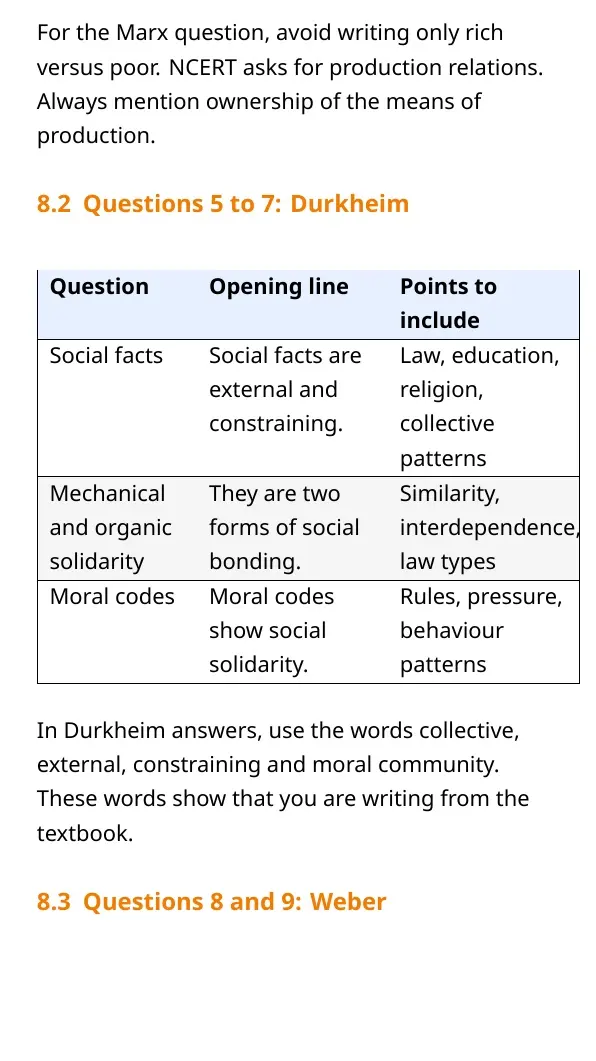
Durkheim treated society as a moral community. Social facts are external to the individual and constrain behaviour. Law, education, religion and moral codes can be studied through patterns of behaviour.
| Concept | NCERT line to remember |
|---|---|
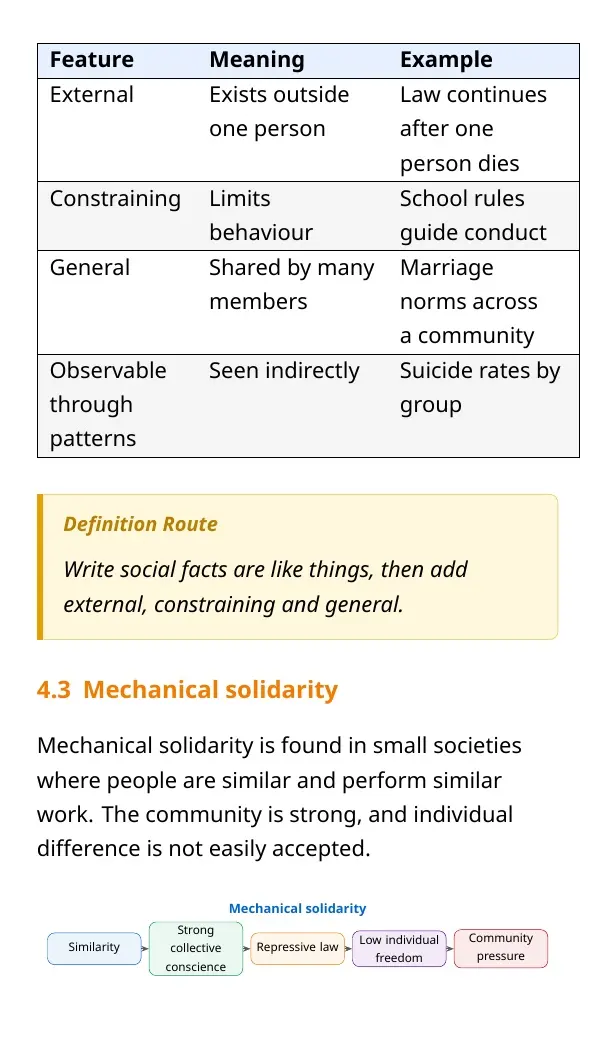
| Social facts | They are external, general and constraining. |
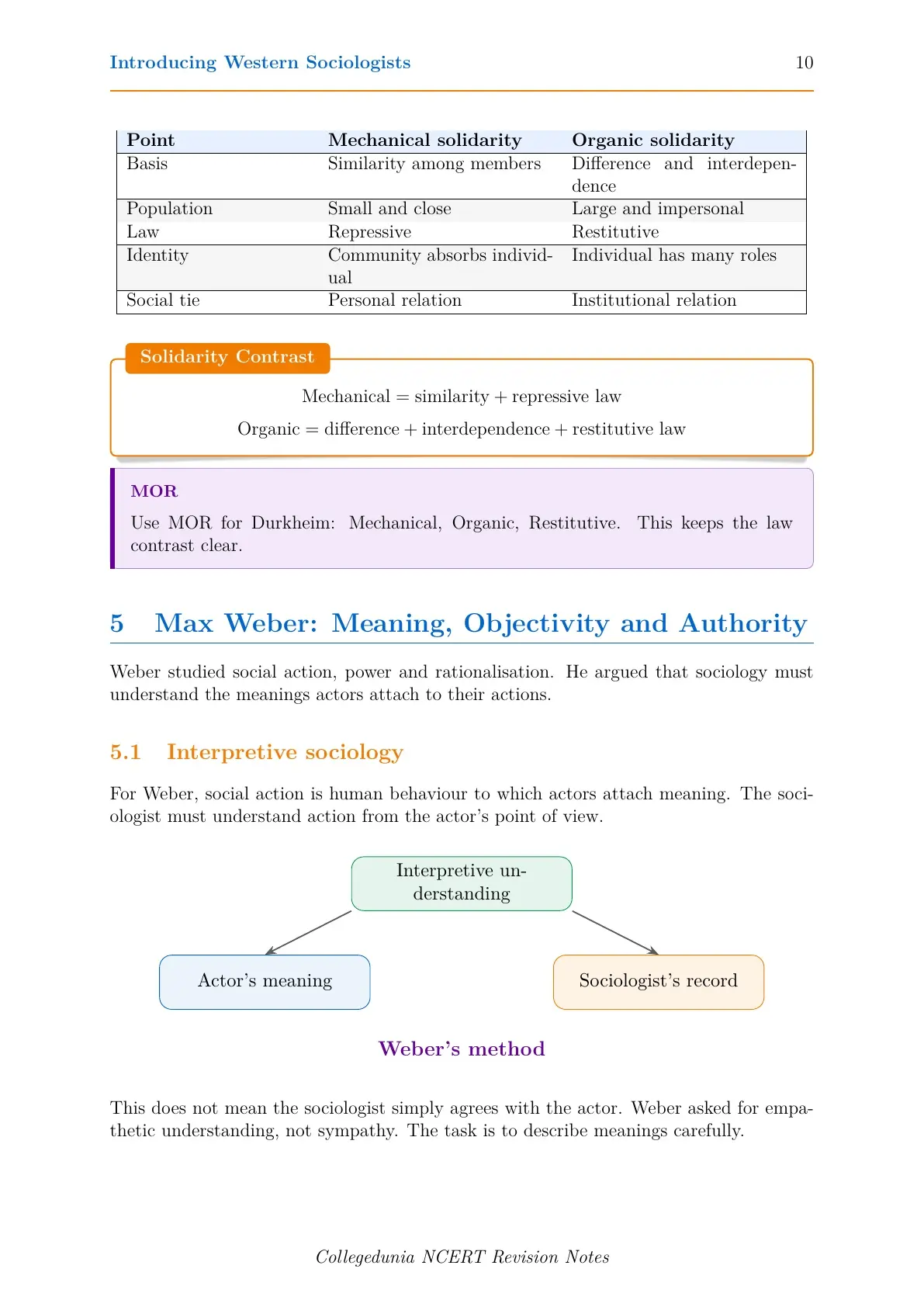
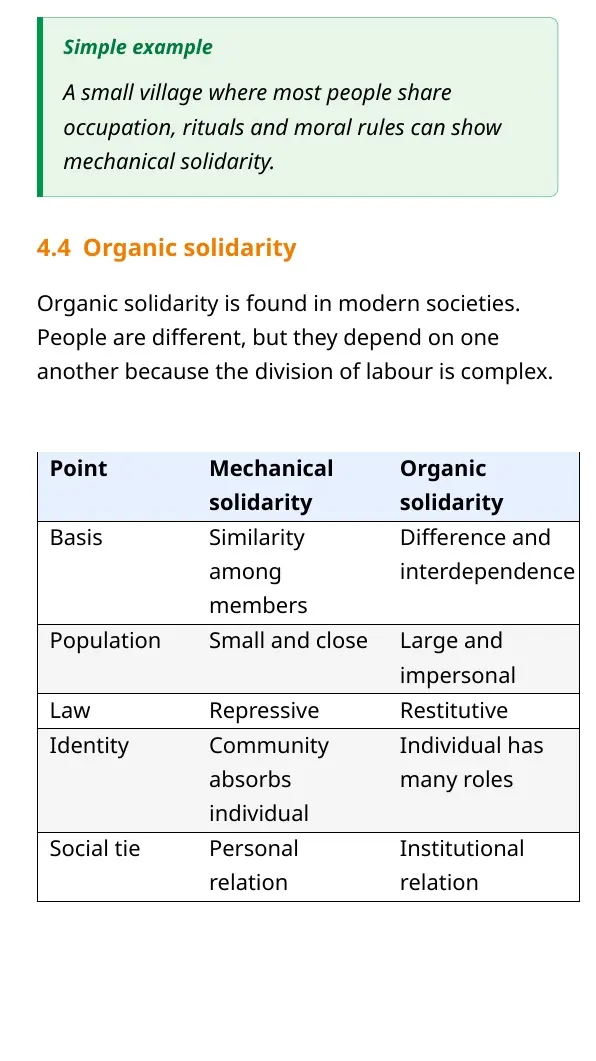
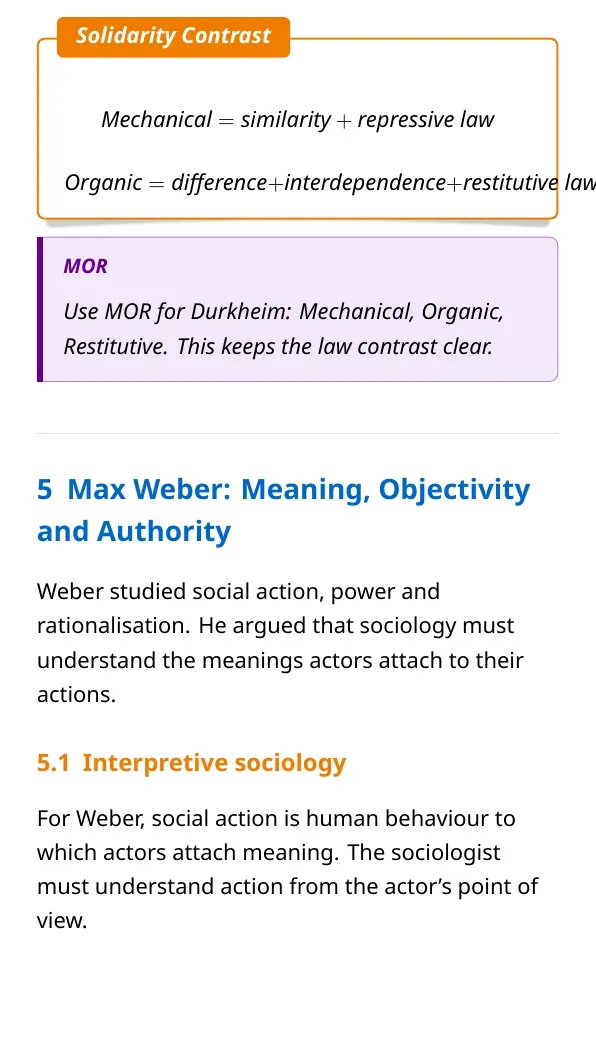
| Mechanical solidarity | Small societies are tied by similarity and repressive law. |
| Organic solidarity | Modern societies are tied by difference and interdependence. |
| Restitutive law | Modern law aims to repair the wrong rather than take revenge. |
Max Weber Social Action and Bureaucracy
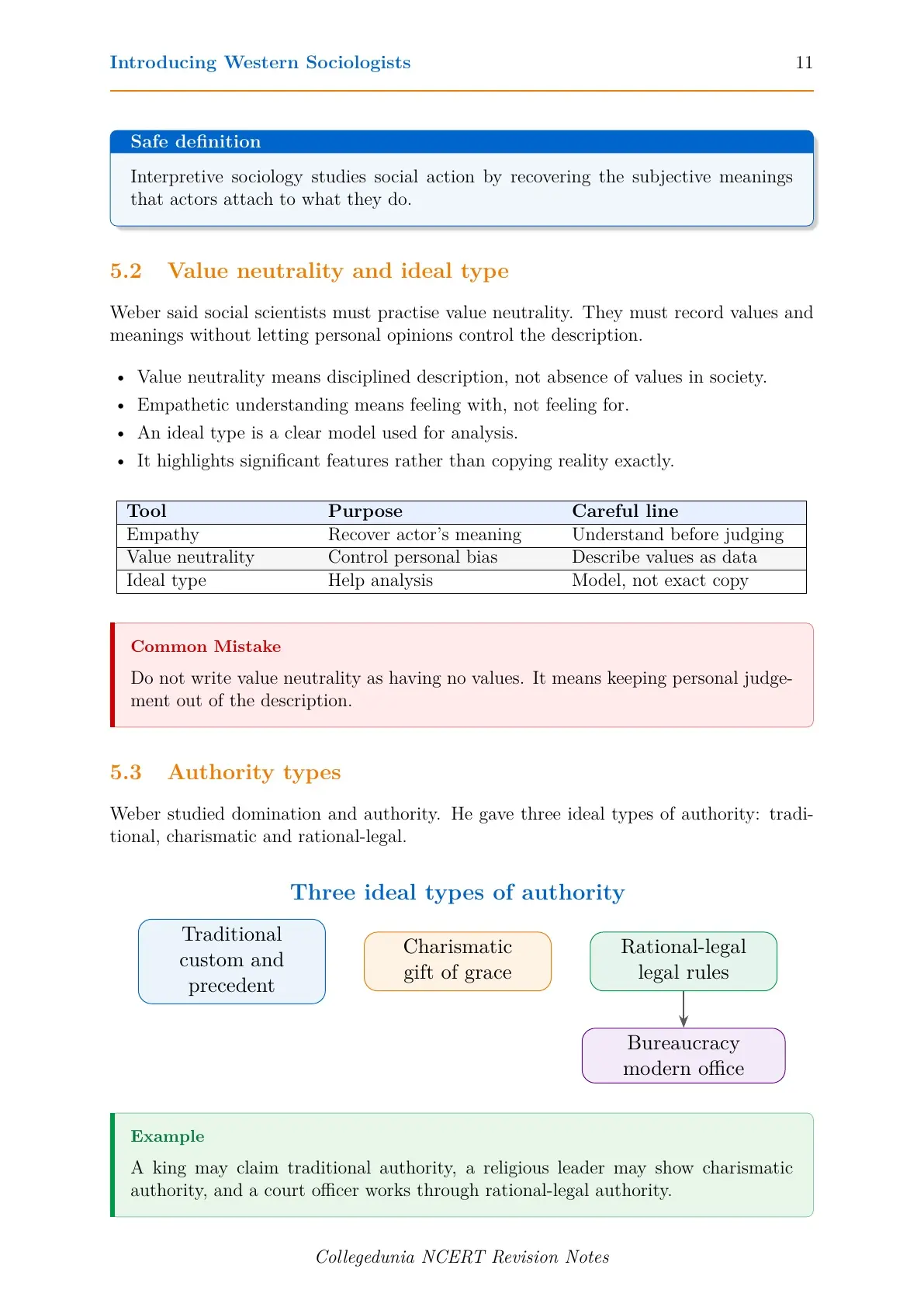
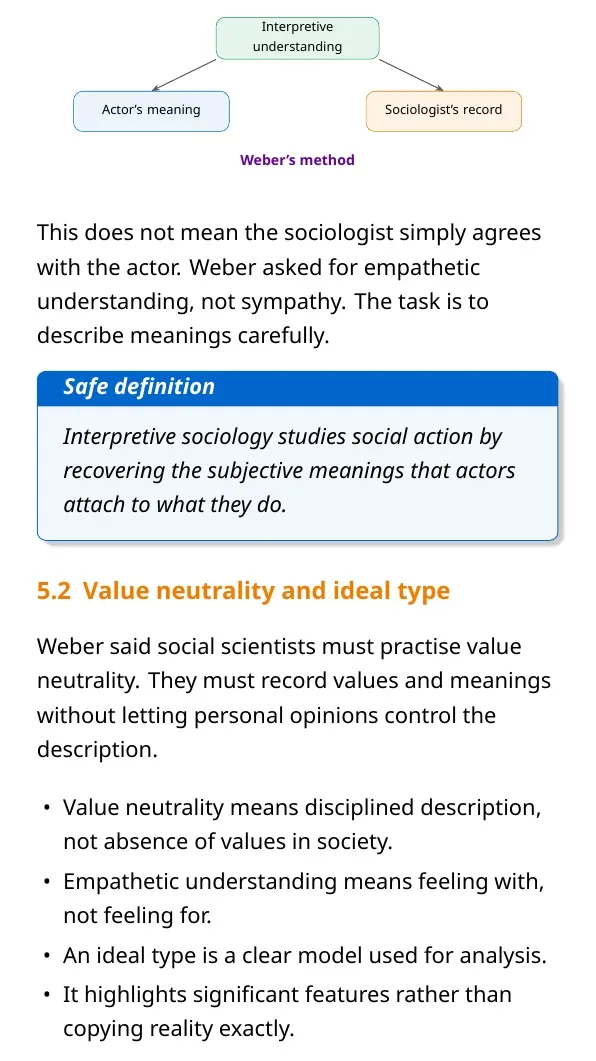
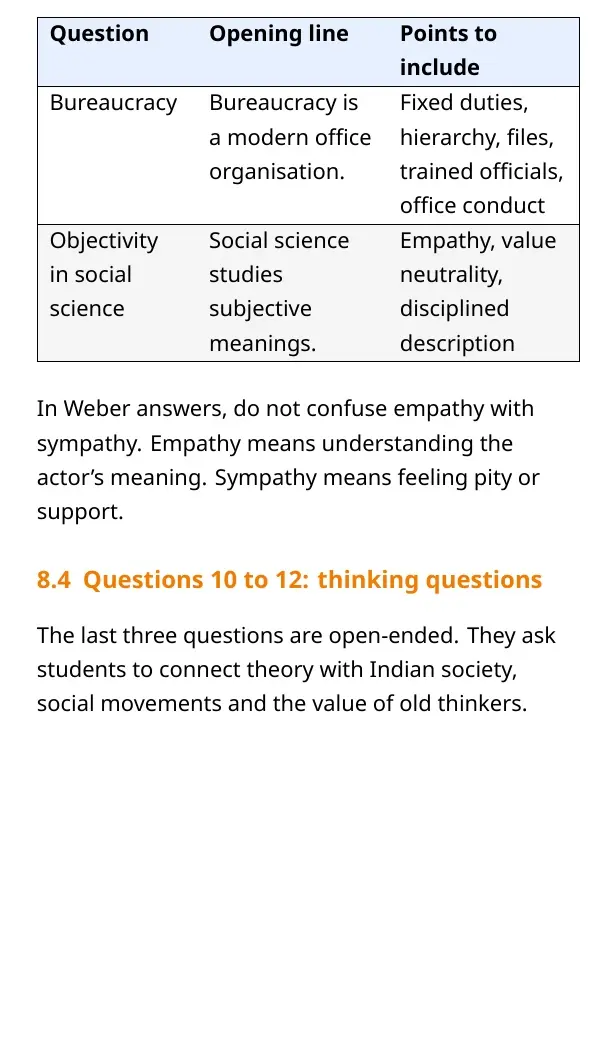
Weber argued that sociology should understand social action from the actor's point of view. He also studied authority, especially the rational-legal authority found in modern bureaucracy.
- Social action: meaningful human behaviour.
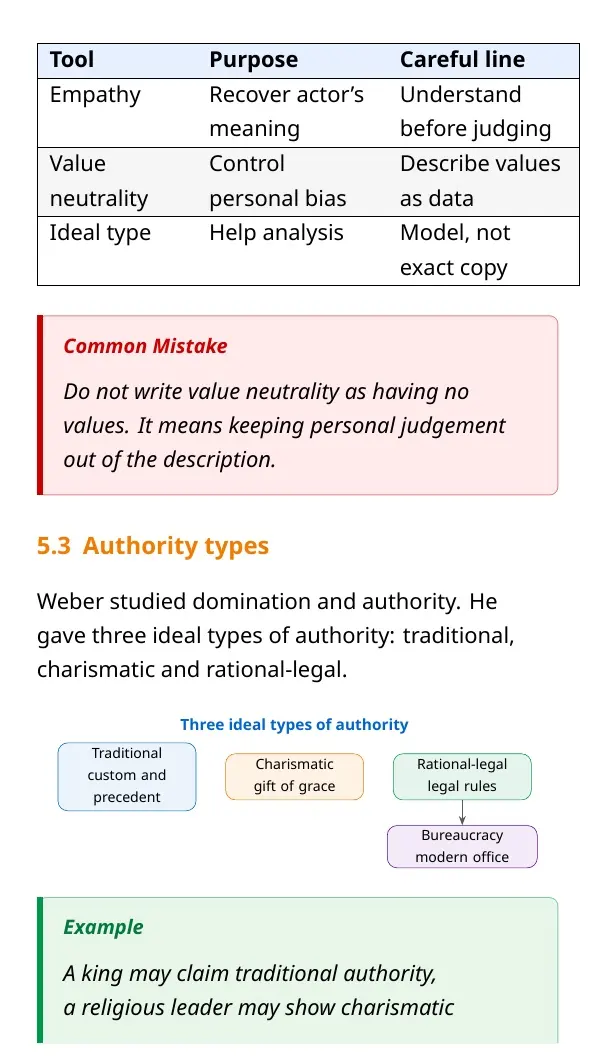
- Value neutrality: record values without letting personal judgement decide the description.
- Ideal type: a clear model used to study an important social feature.
- Bureaucracy: fixed duties, hierarchy, written files, trained officials and office rules.
Related NCERT Resources for Introducing Western Sociologists
| Resource | Use it for |
|---|---|
| Class 11 Sociology Chapter 9 NCERT Book PDF | Official textbook reading and exercise questions. |
| Class 11 Sociology Chapter 8 Notes | Revise environment and society before classical thinkers. |
| Class 11 Sociology Chapter 1 Notes | Open the starting chapter before revising Western sociologists. |
All Class 11 Sociology Notes Chapters
| Chapter | NCERT Notes link |
|---|---|
| Chapter 1 | Sociology and Society Notes |
| Chapter 2 | Terms, Concepts and Their Use in Sociology Notes |
| Chapter 3 | Understanding Social Institutions Notes |
| Chapter 4 | Culture and Socialisation Notes |
| Chapter 5 | Doing Sociology Research Methods Notes |
| Chapter 6 | Social Structure and Social Processes Notes |
| Chapter 7 | Social Change and Social Order Notes |
| Chapter 8 | Environment and Society Notes |
| Chapter 9 | Introducing Western Sociologists Notes |
Introducing Western Sociologists Class 11 Notes FAQs
Ques. What is covered in Class 11 Sociology Chapter 9 Notes?
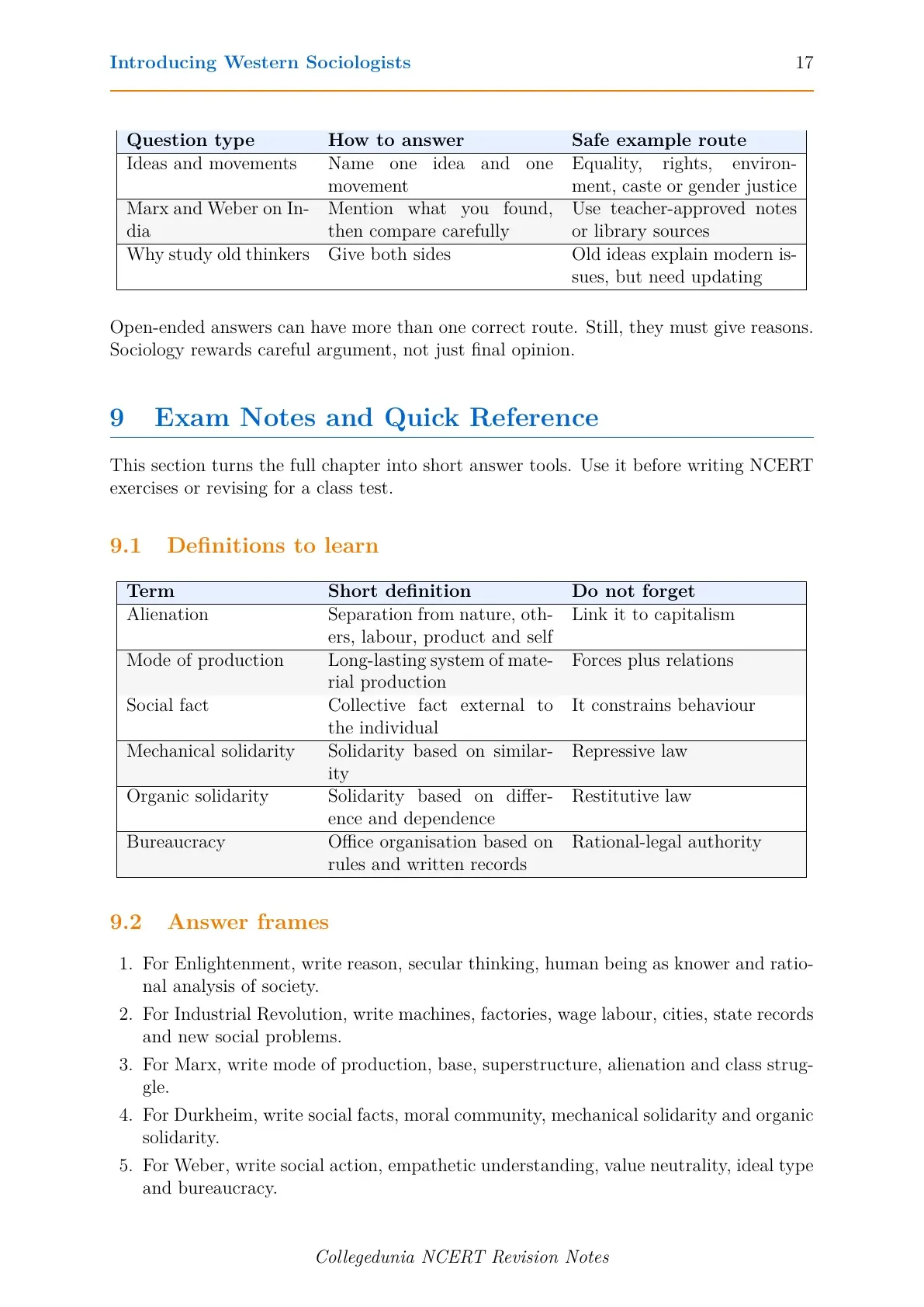
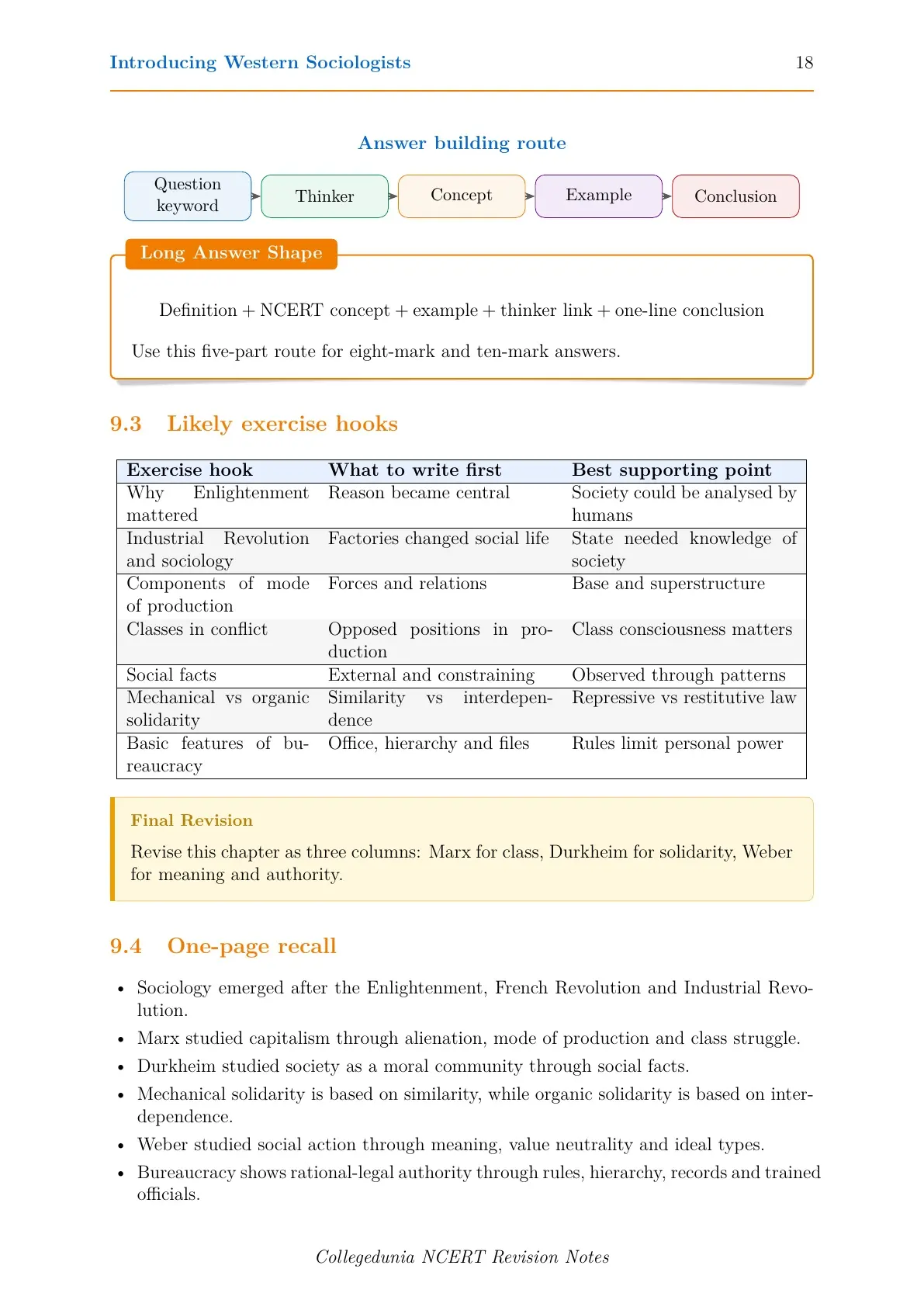
Ans. The notes cover the rise of sociology, Marx, Durkheim, Weber, social facts, class struggle, solidarity and bureaucracy.
Ques. Why is the Enlightenment important for sociology?
Ans. It made reason central and allowed society to be studied through secular and scientific thought.
Ques. What is alienation according to Marx?
Ans. Alienation is separation from nature, other people, work, the product of work and one's own self under capitalism.
Ques. What is bureaucracy according to Weber?
Ans. Bureaucracy is a rule-based office system with fixed duties, hierarchy, written files, trained officials and public conduct rules.



Comments