



The NCERT Class 11 Economics Chapter 14 Employment: Growth, Informalisation and Other Issues Book PDF gives students the official Indian Economic Development chapter for the 2026-27 syllabus. Use it to study workers, workforce participation, rural and urban employment, formal and informal sector work, unemployment and government employment programmes.
- Book section: official NCERT chapter text, tables, charts, activities and exercise questions.
- Best use: read the PDF before making worker, workforce and informal sector revision notes.
- Revision cue: connect every employment trend with growth, income security and social protection.
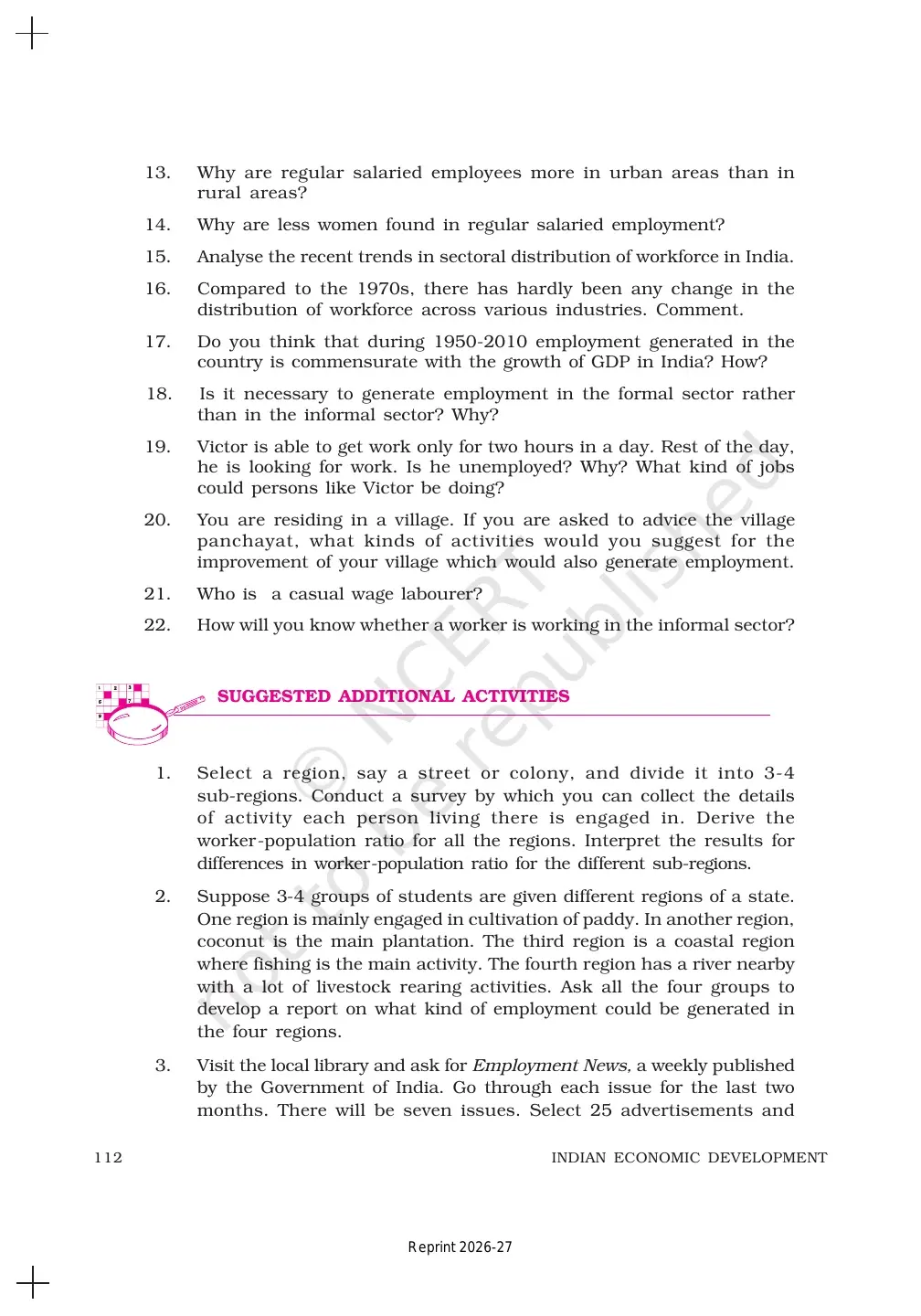
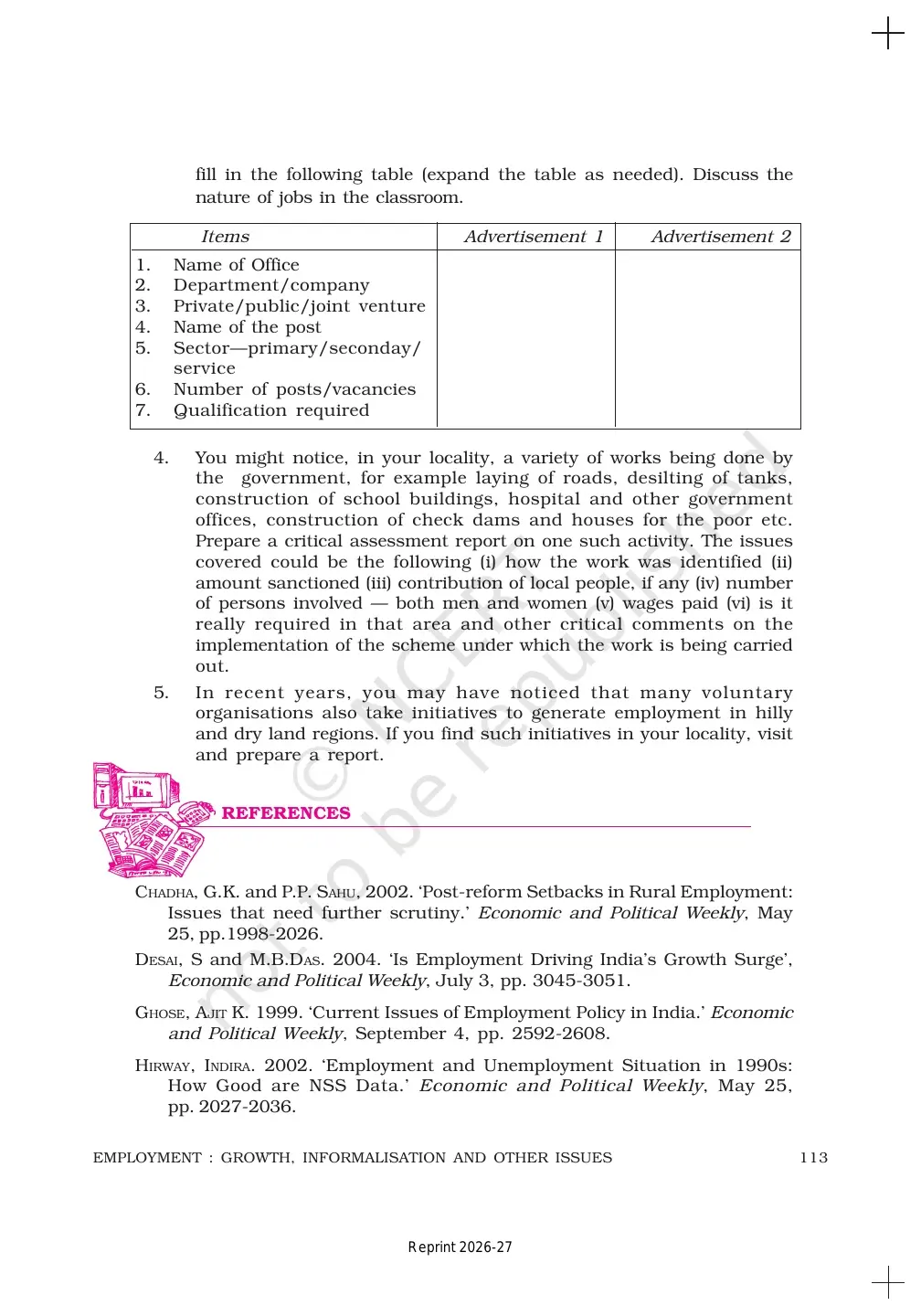
Student Feedback: In a Collegedunia check of 10,940 Class 11 Economics students, many students said this chapter became easier after they separated worker, workforce, formal sector and informal sector into one comparison chart.
Employment Class 11 NCERT Book PDF: What It Covers
The PDF explains employment as a development question. NCERT begins with workers and workforce, then studies worker-population ratio, self-employment, casual wage work, regular salaried work, rural-urban differences and gender gaps.
The official chapter is the best first source for exam answers. It gives the exact NCERT wording students need for definitions, tables and long answers on informalisation and unemployment.
| NCERT area | What students should notice | Answer cue |
|---|---|---|
| Worker and workforce | NCERT separates a working person from the total group of workers. | Use precise definitions. |
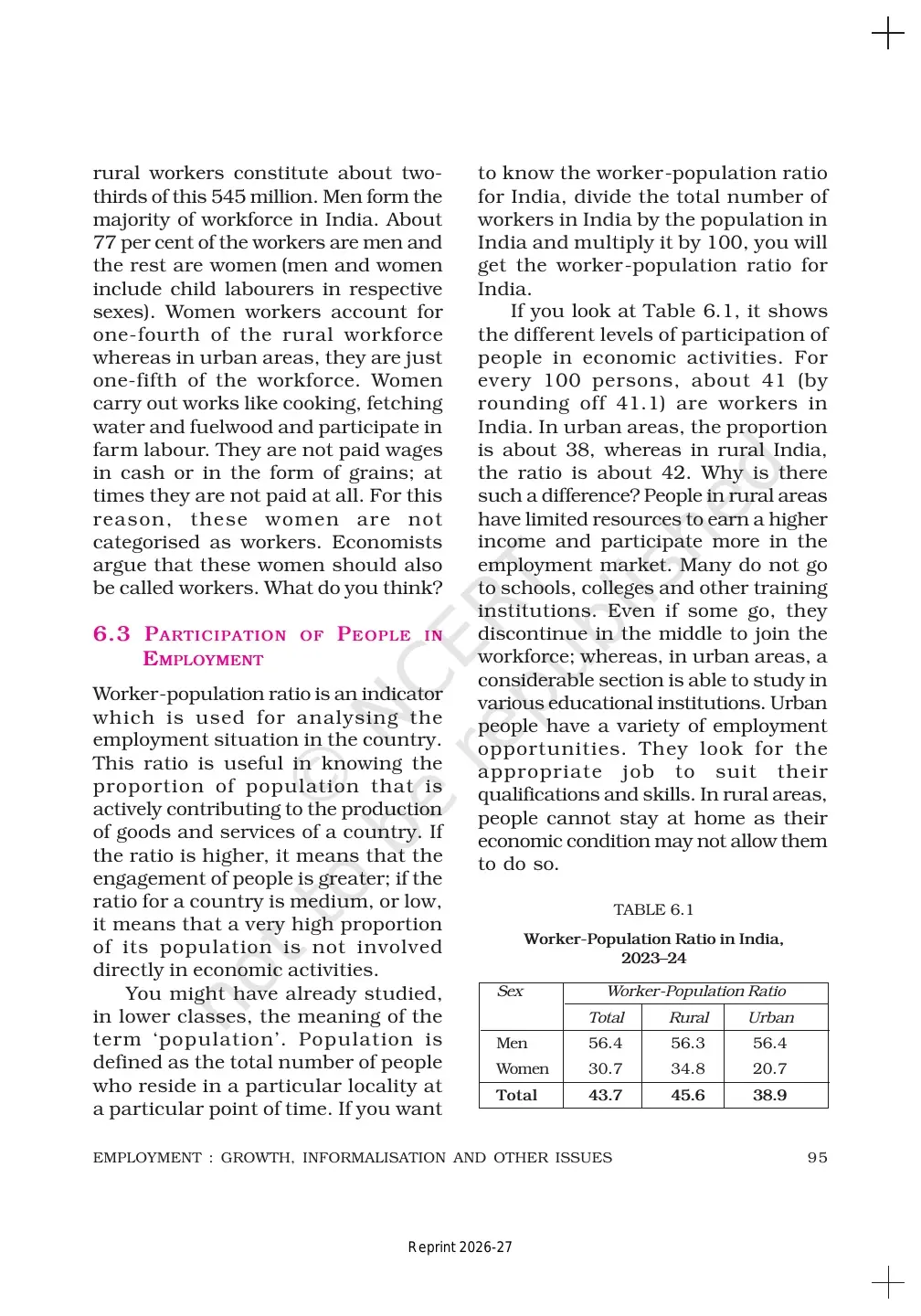
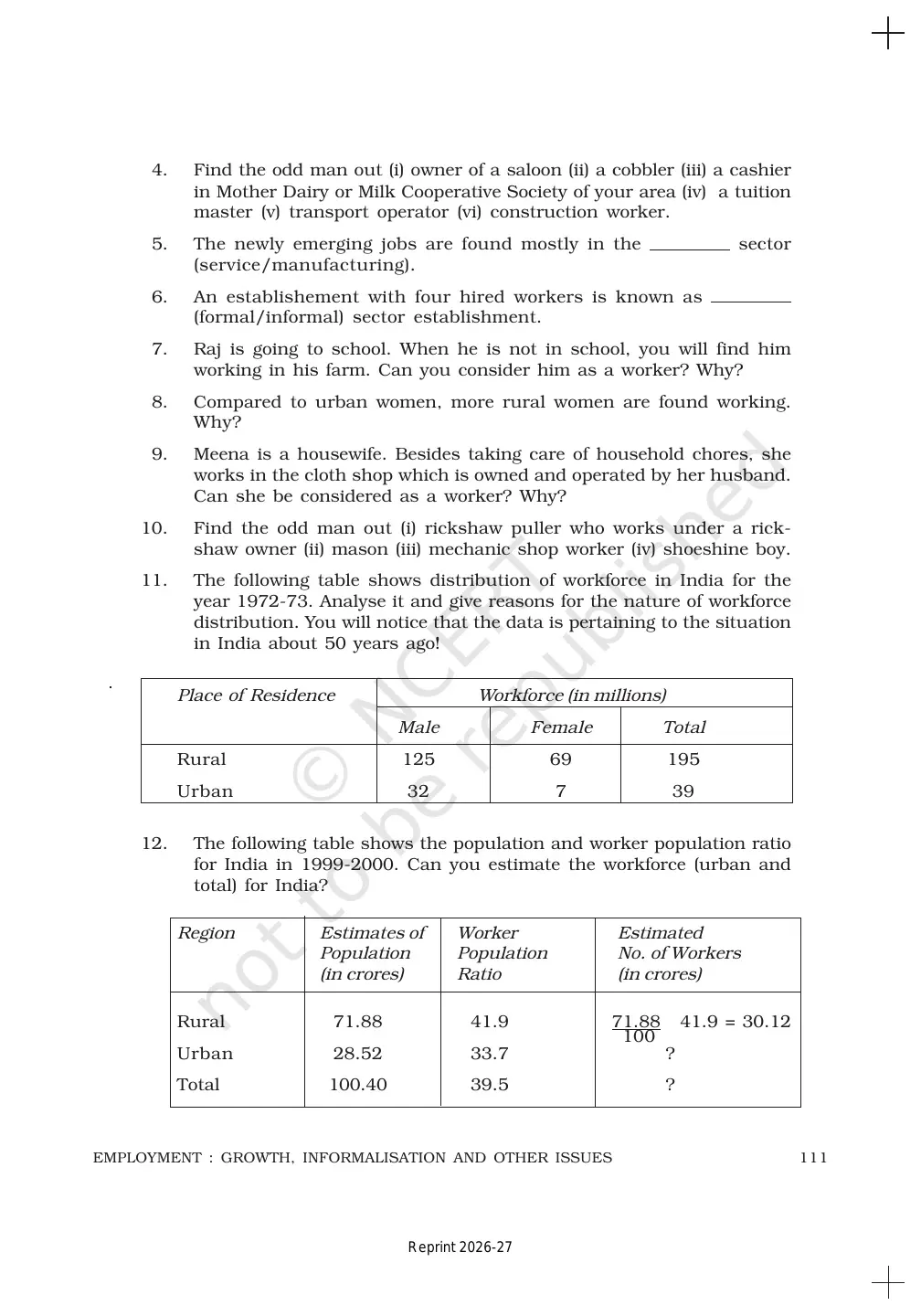
| Worker-population ratio | The ratio shows the proportion of population engaged in work. | Use it for participation answers. |
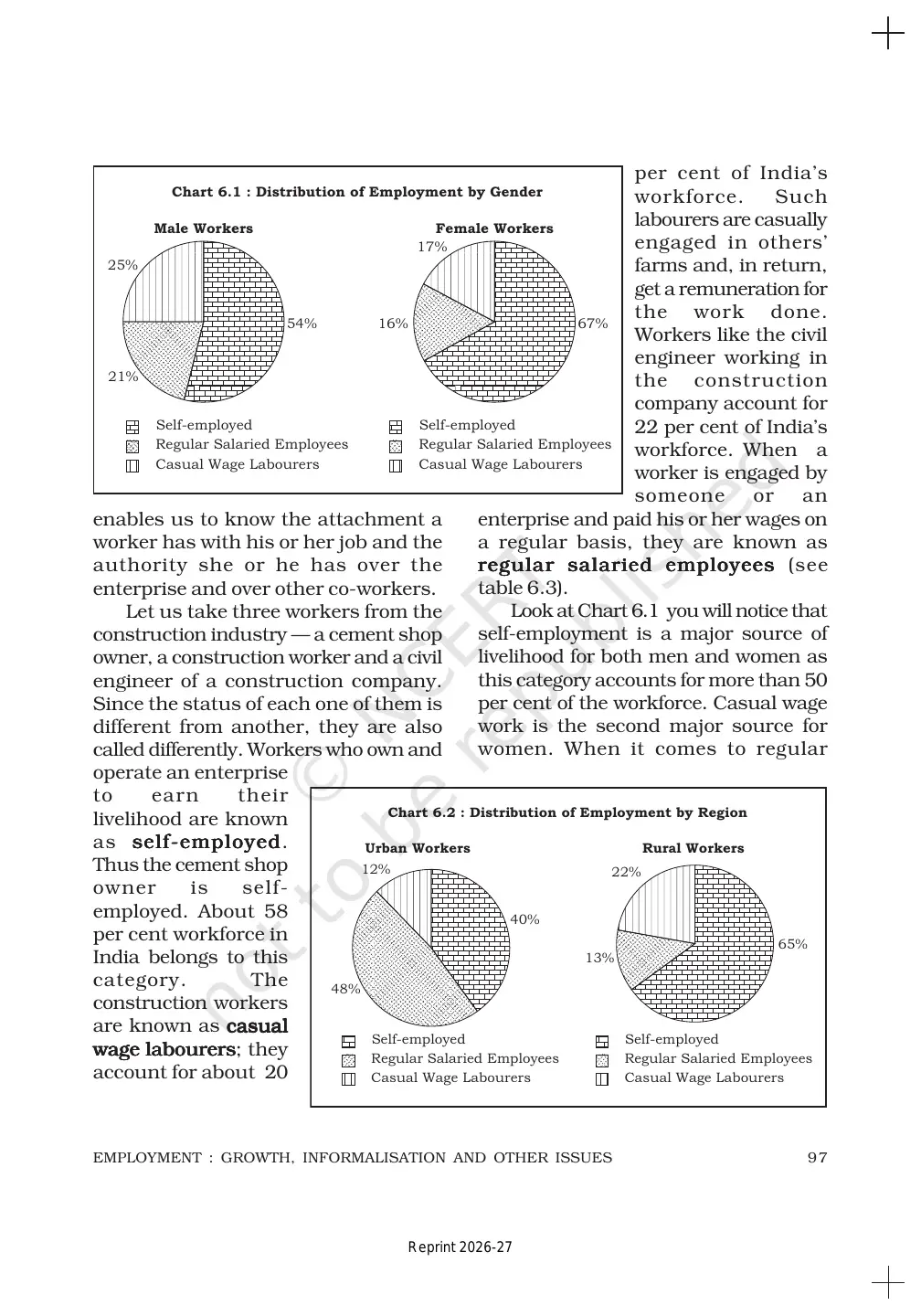
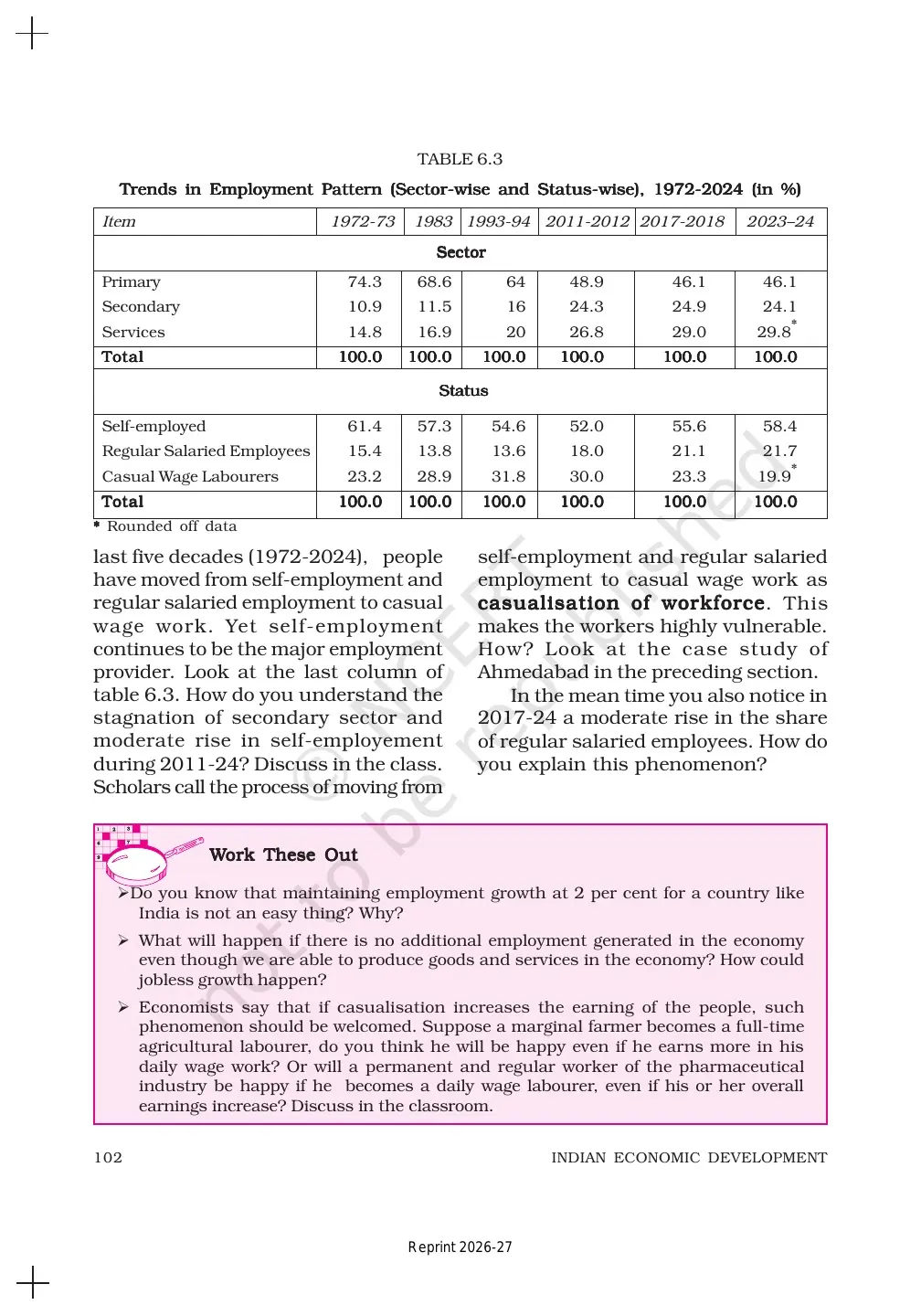
| Employment type | Self-employed, regular salaried and casual wage work are compared. | Write examples for each type. |
| Informalisation | Most Indian workers remain outside formal protection. | Connect jobs with security. |
Employment Chapter Video Recap
Source: PW OnlyIAS Prarambh on YouTube
Worker, Workforce and Participation in Class 11 Economics
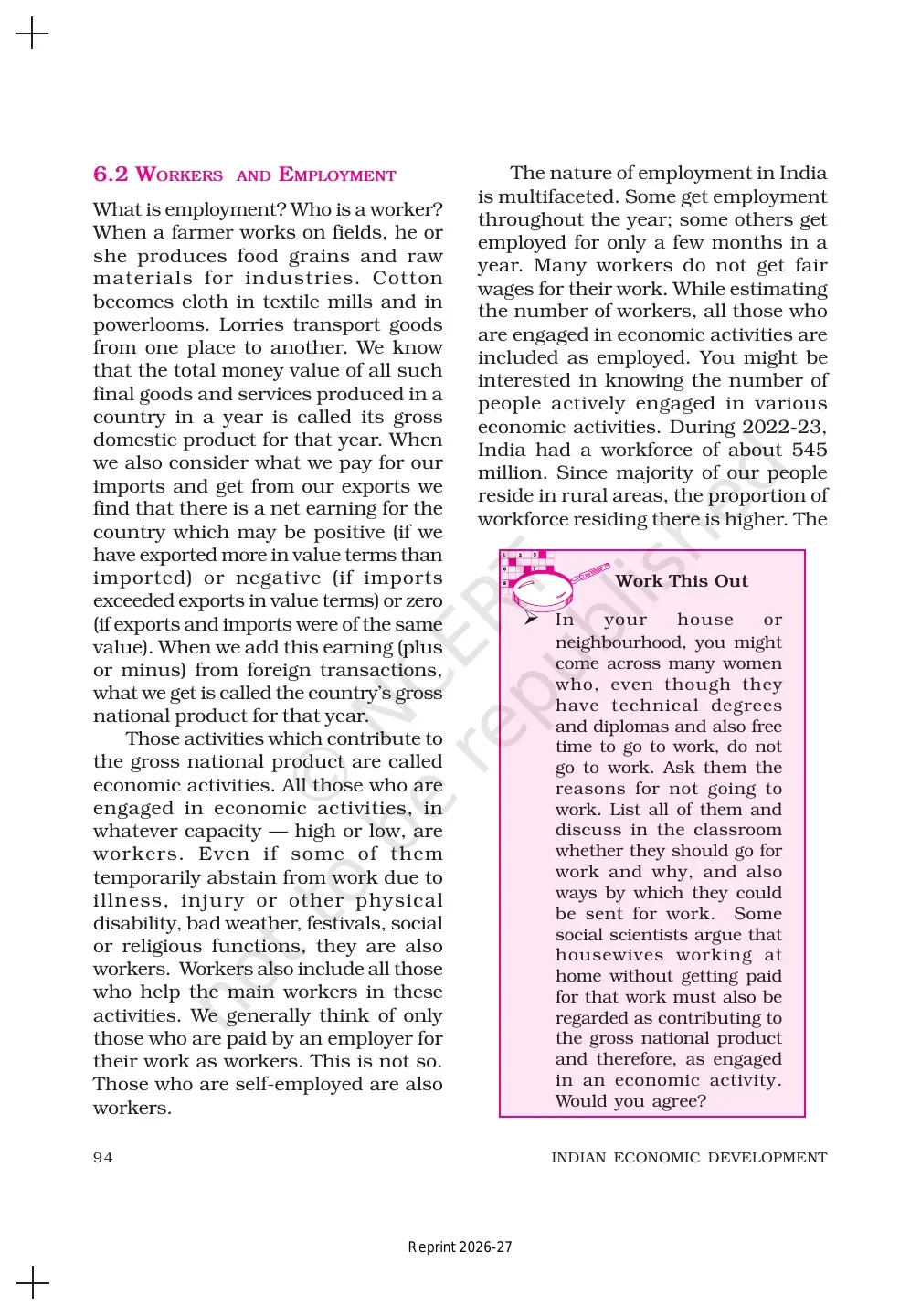
NCERT uses simple terms carefully. A worker is a person engaged in an economic activity. The workforce is the total number of workers. Worker-population ratio then helps students compare participation across groups.
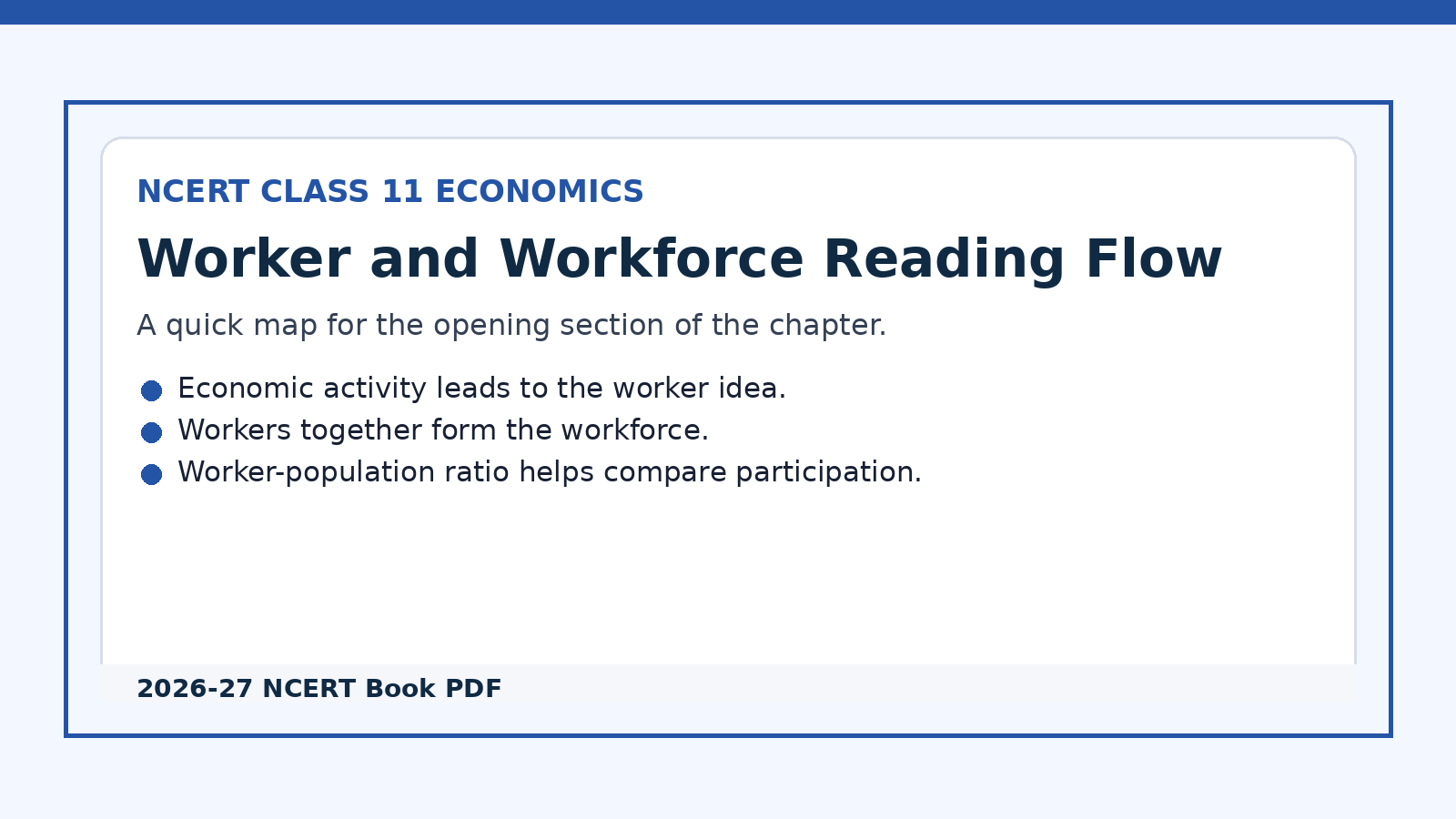
- Worker: includes people who contribute to national income through economic activity.
- Workforce: combines all workers in the economy or a chosen group.
- Worker-population ratio: shows employment participation in relation to population.
- Gender cue: NCERT asks students to notice why women's work may be undercounted.
Employment in Different Sectors
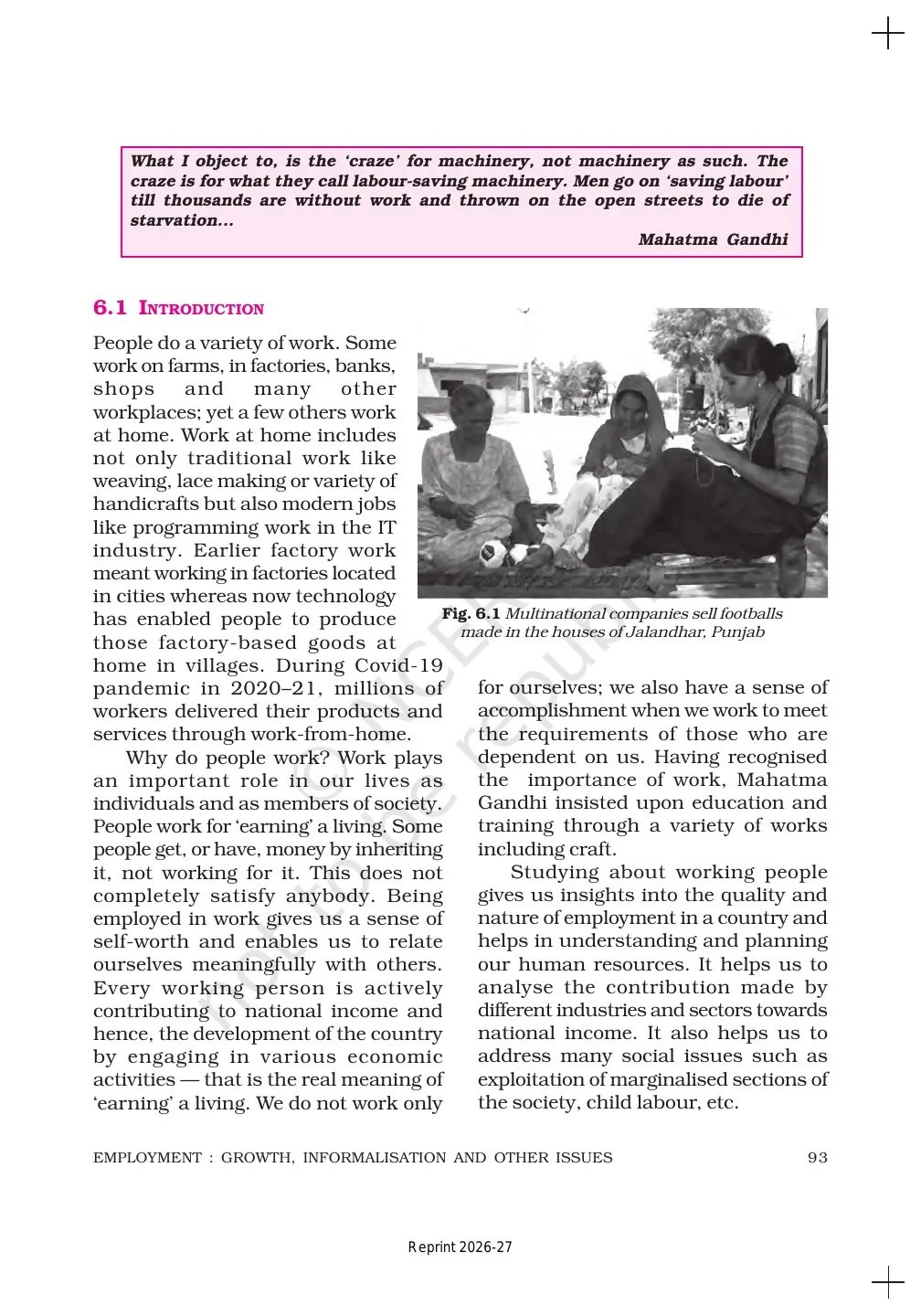
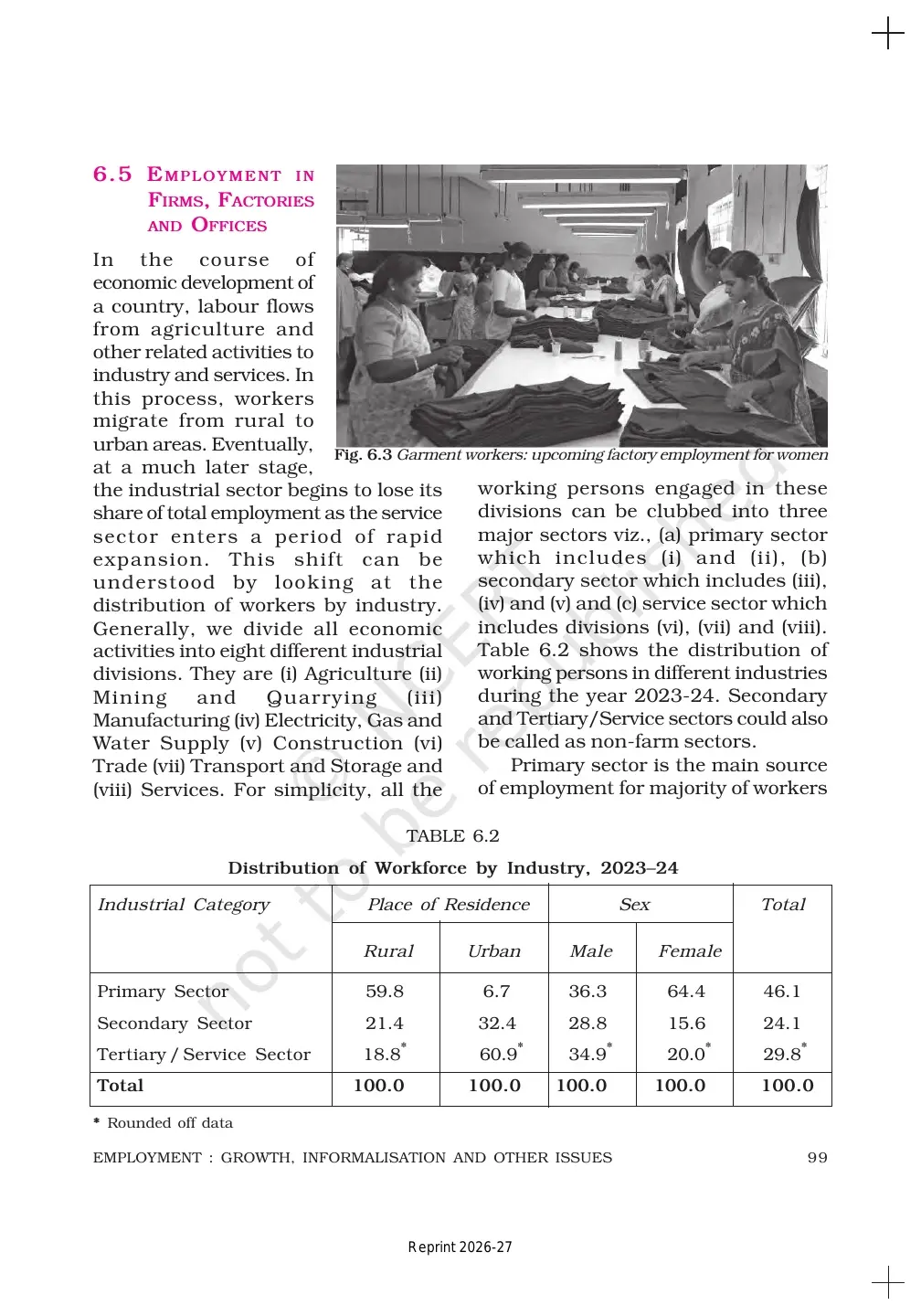
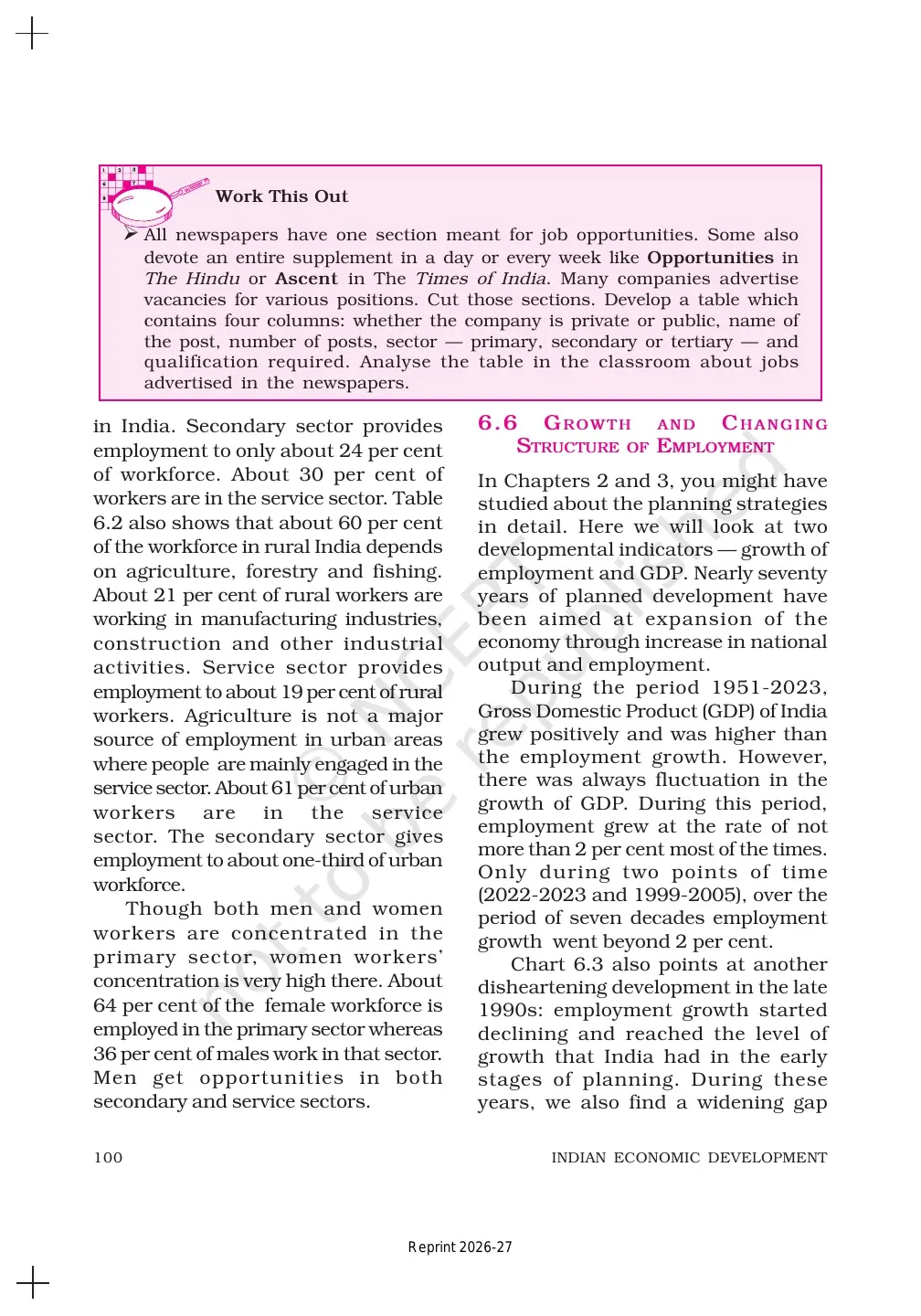
The chapter compares employment in agriculture, industry and services. It also studies how people work in rural and urban areas. This helps students see that growth is not only about output. It is also about the quality and security of work.
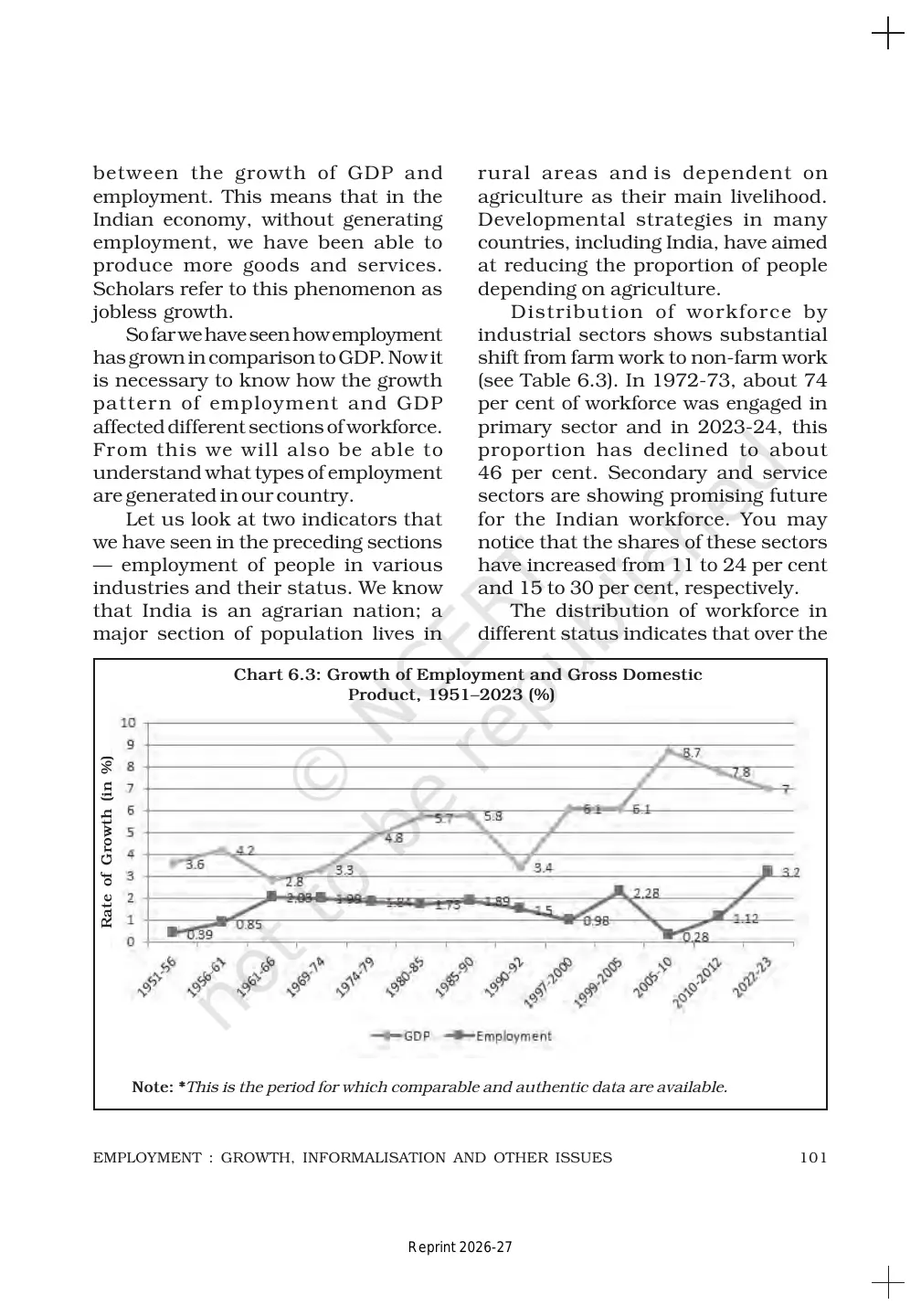
Strong answers should mention both quantity and quality of employment. If GDP grows but secure jobs do not grow at the same pace, students can explain why jobless growth becomes a concern.
| Employment idea | NCERT focus | How to write it |
|---|---|---|
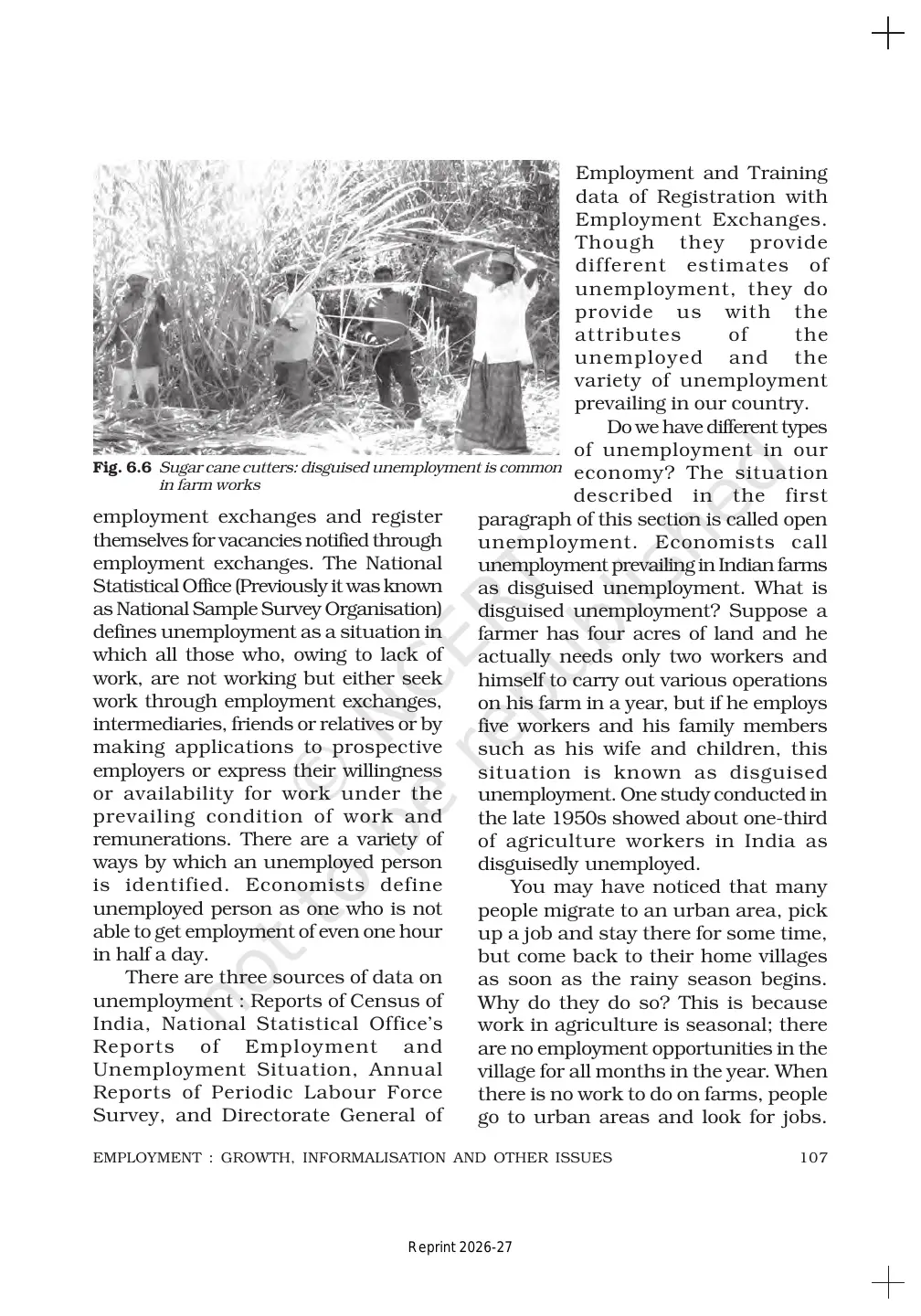
| Agriculture | A large share of workers still depend on agriculture. | Connect it with disguised unemployment. |
| Industry | Industrial employment is linked with structural change. | Show movement from primary to secondary work. |
| Services | Services absorb many workers but not always equally. | Use examples from urban employment. |
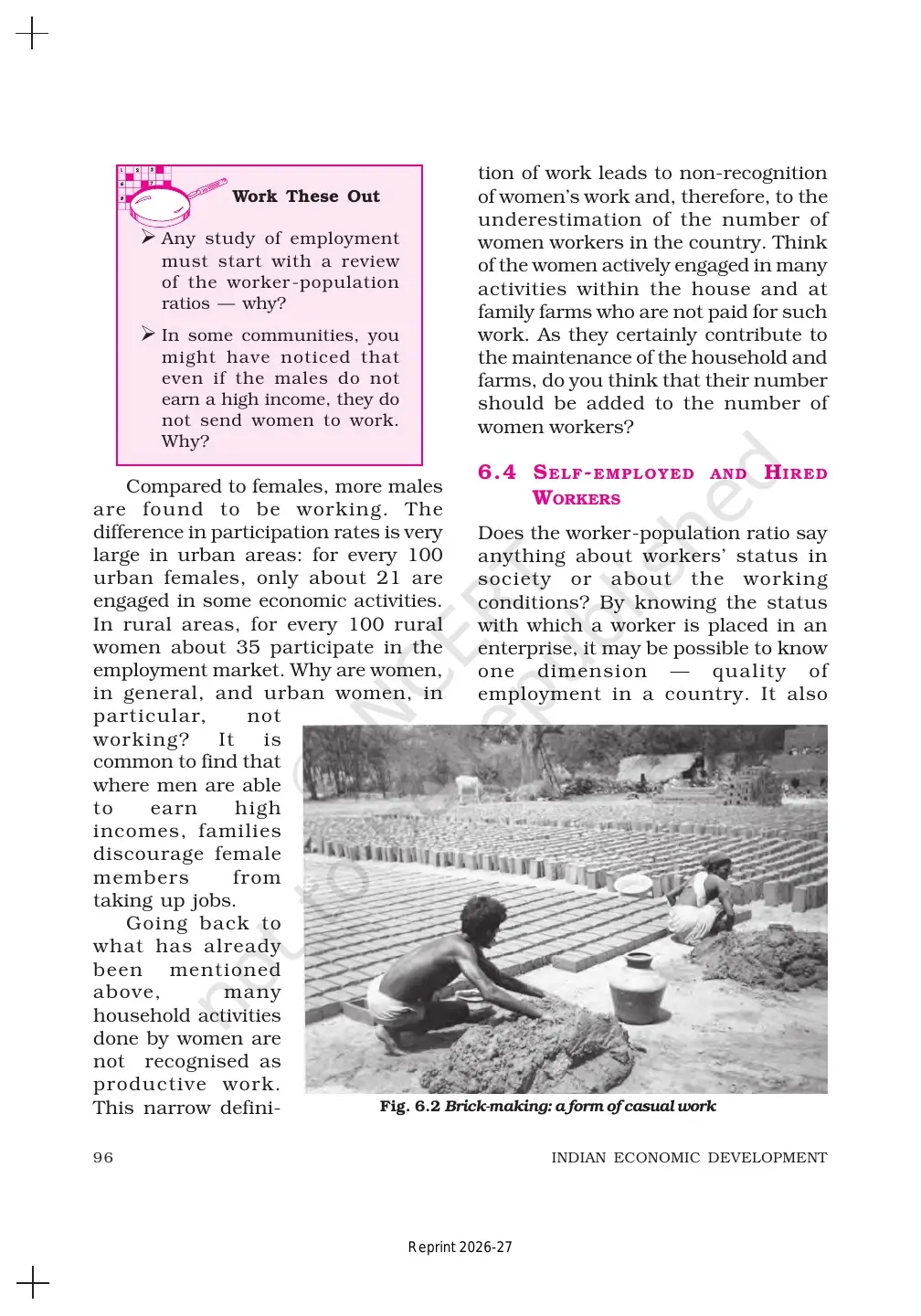
| Gender | Women's work may remain unpaid or less visible. | Explain undercounting carefully. |
Formal and Informal Sector Employment
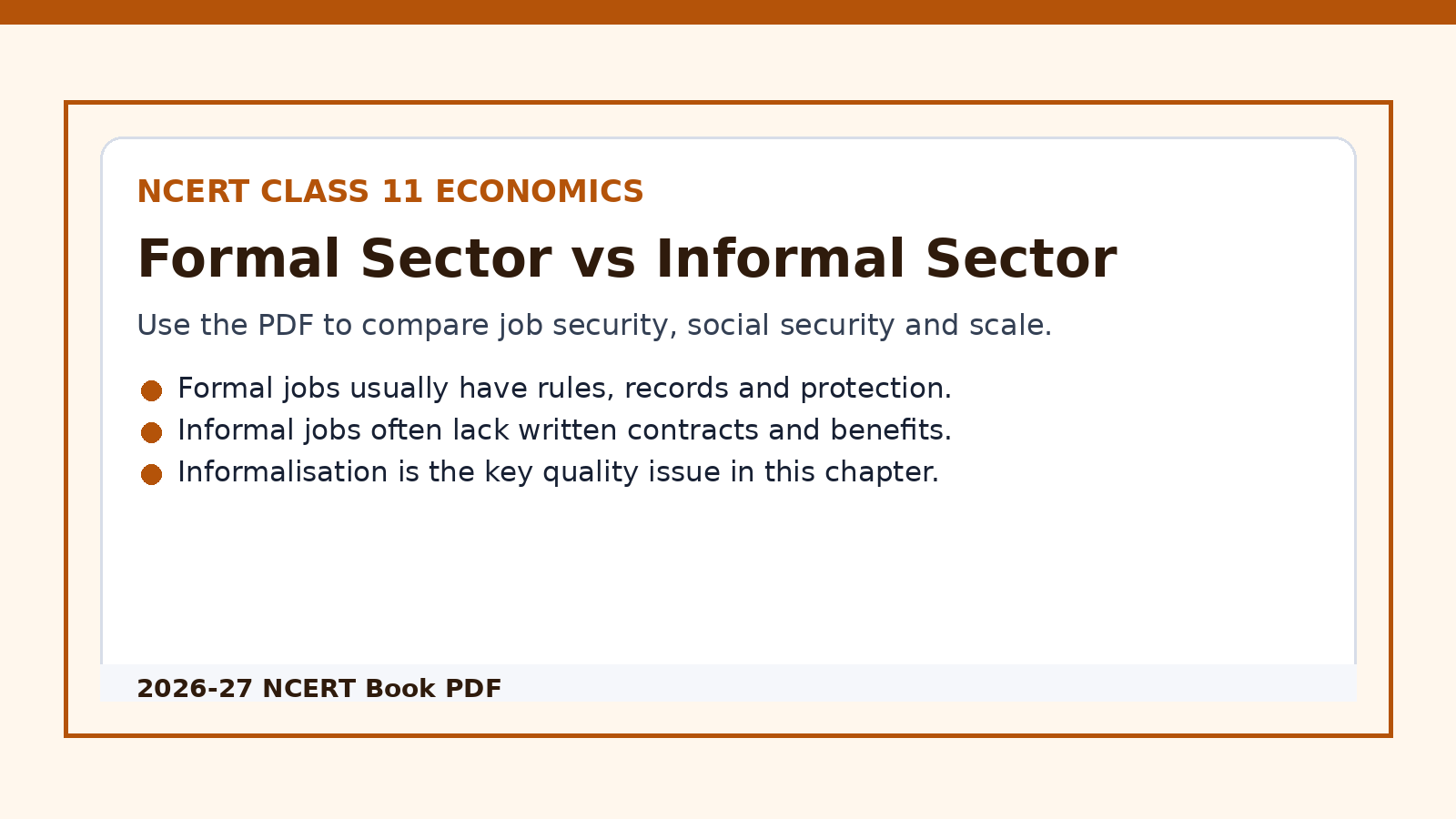
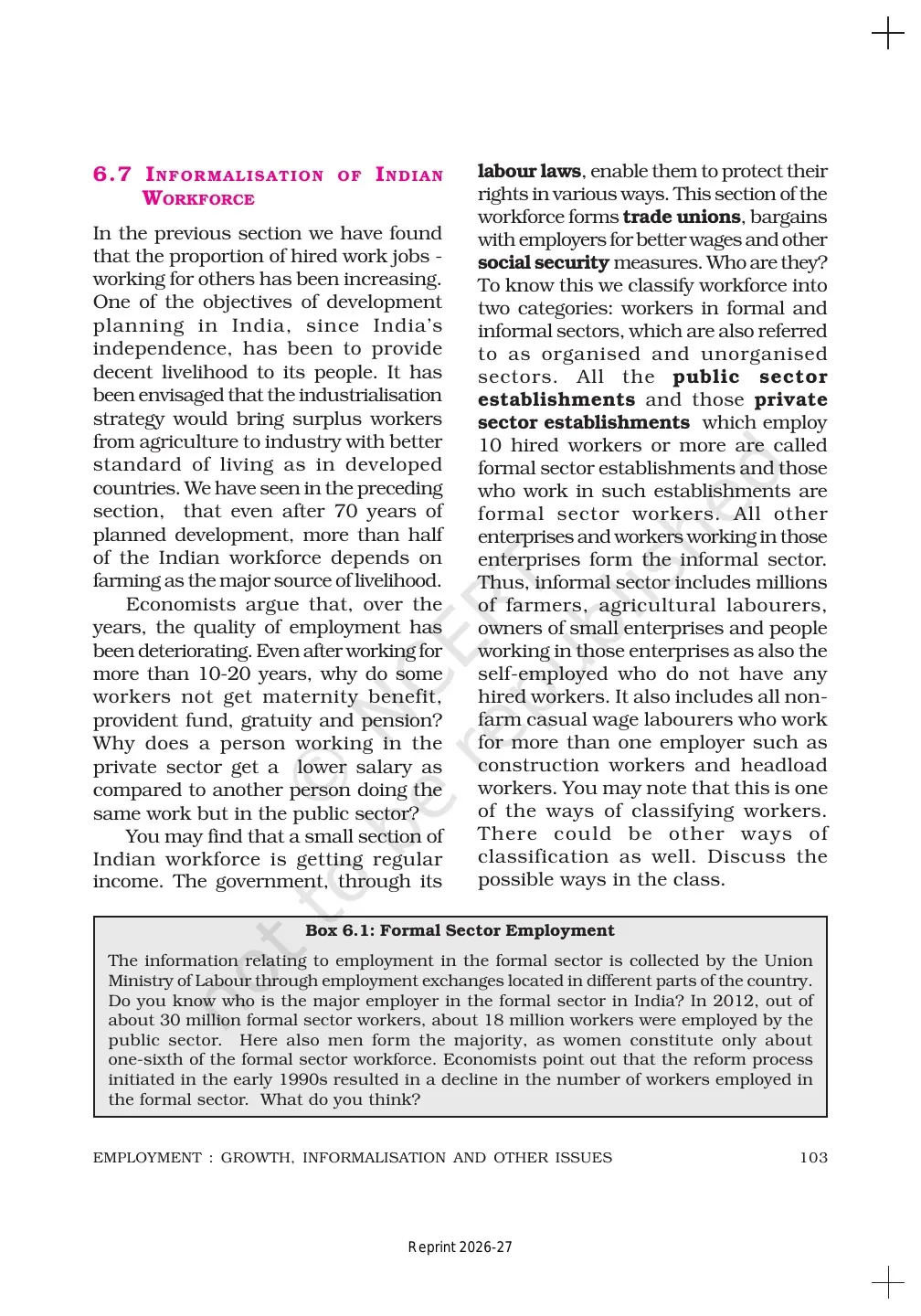
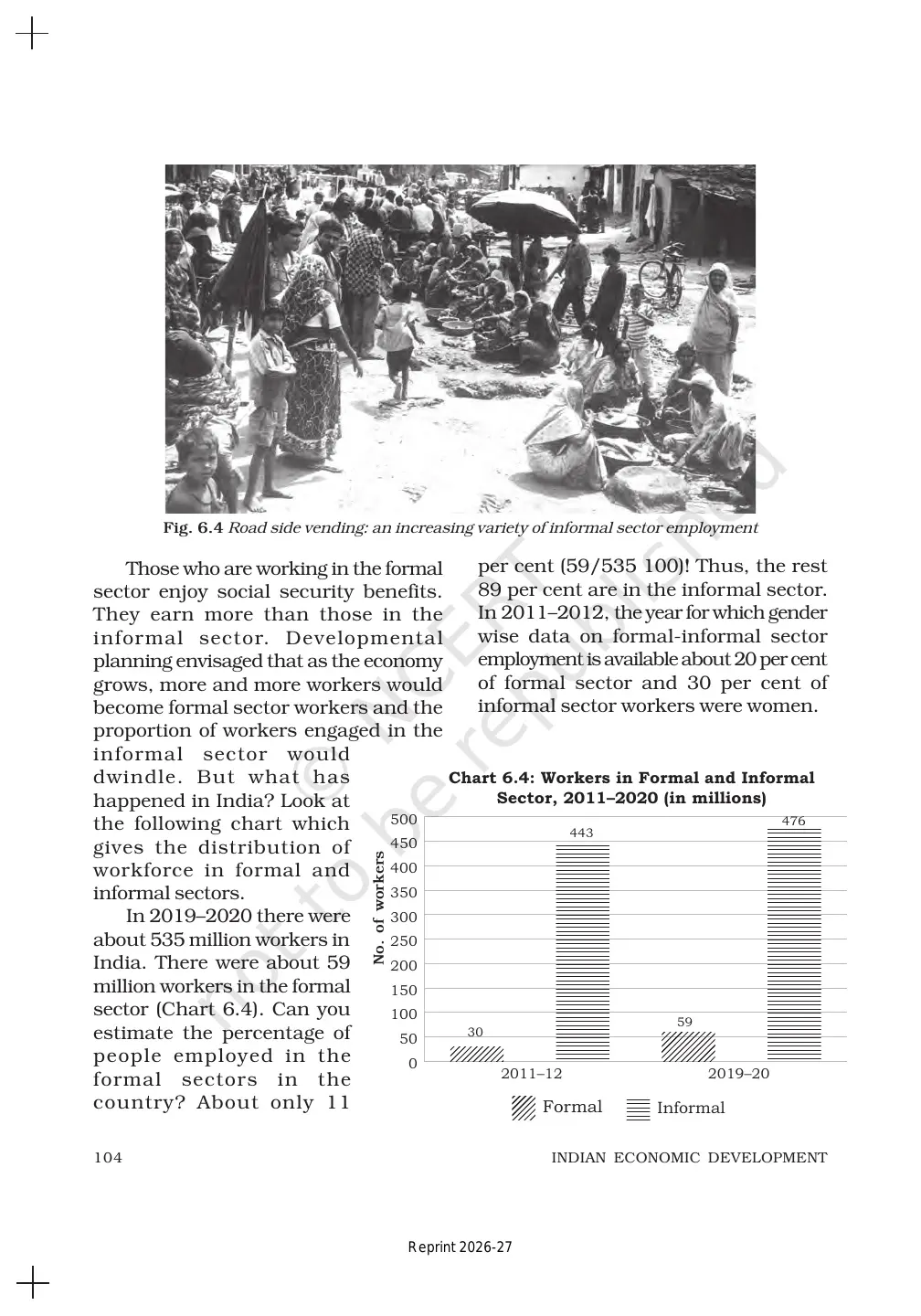
The formal sector includes organised units with regular records, rules and social security. The informal sector includes smaller or unorganised work where many workers do not get paid leave, provident fund, job protection or written contracts.
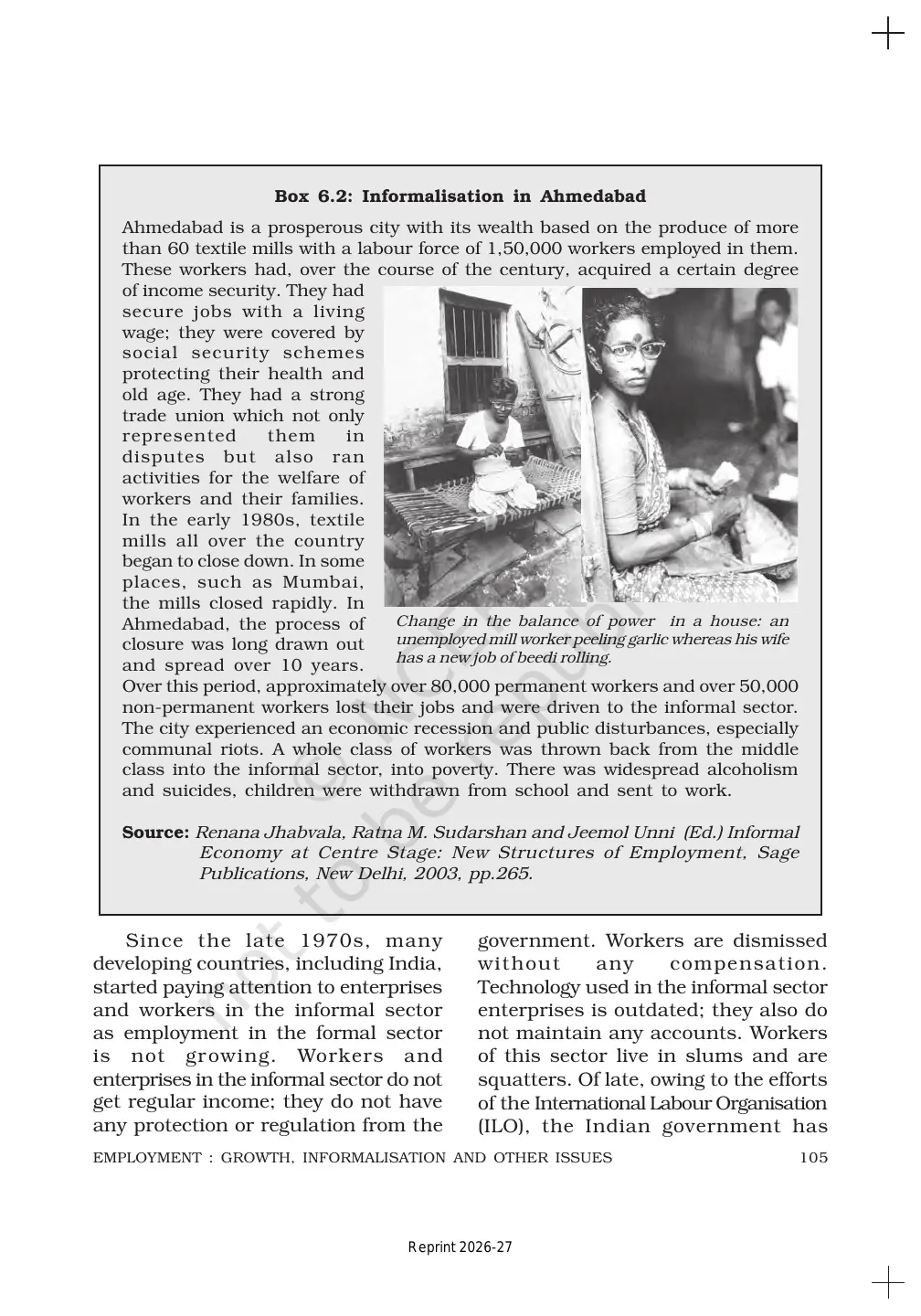
Informalisation is the main quality issue in the chapter. NCERT wants students to see that employment numbers alone do not prove that workers are secure.
- Formal sector: usually offers stronger legal and social security protection.
- Informal sector: absorbs many workers but often lacks stable benefits.
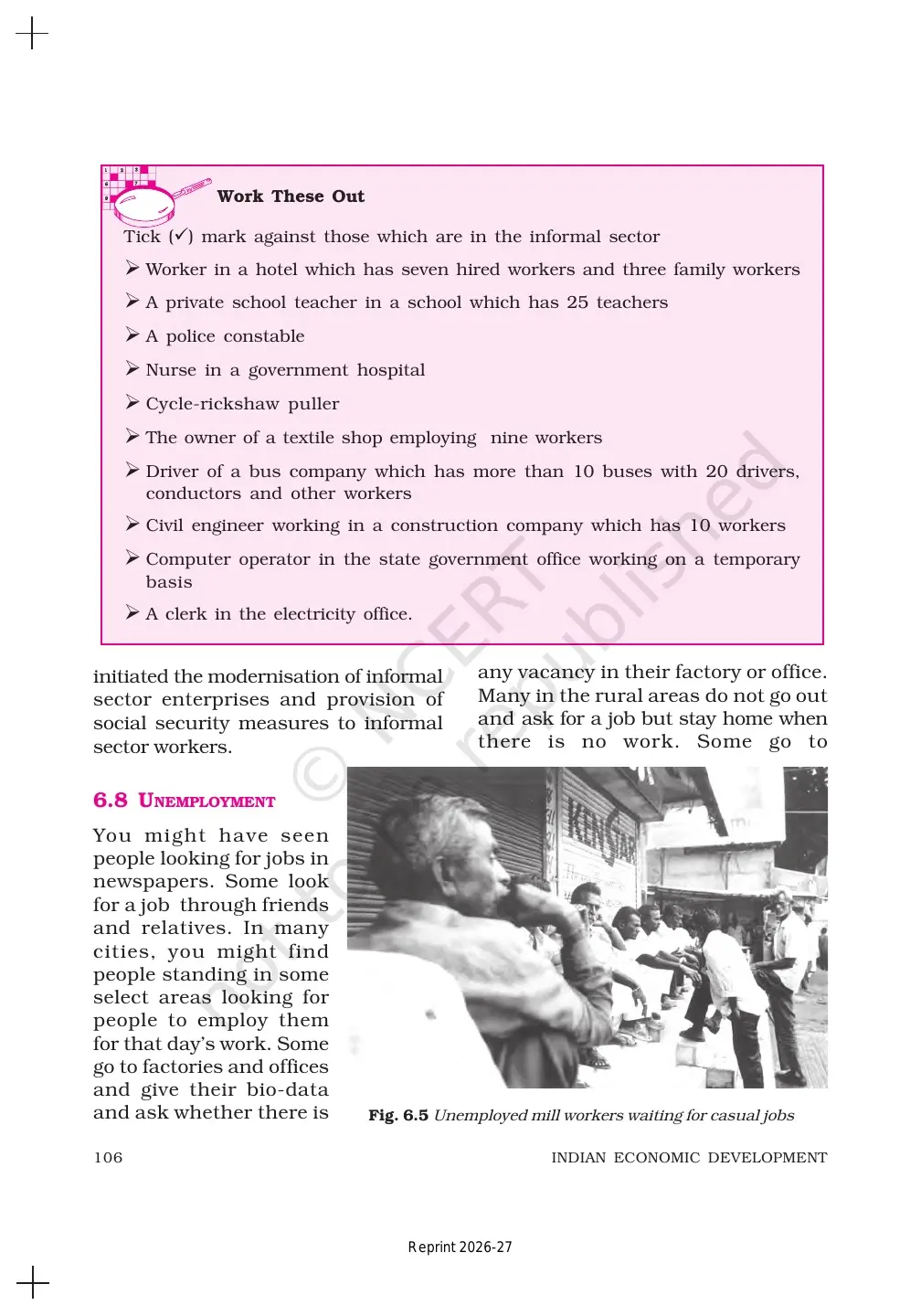
- Unemployment: the chapter explains open unemployment and hidden work problems.
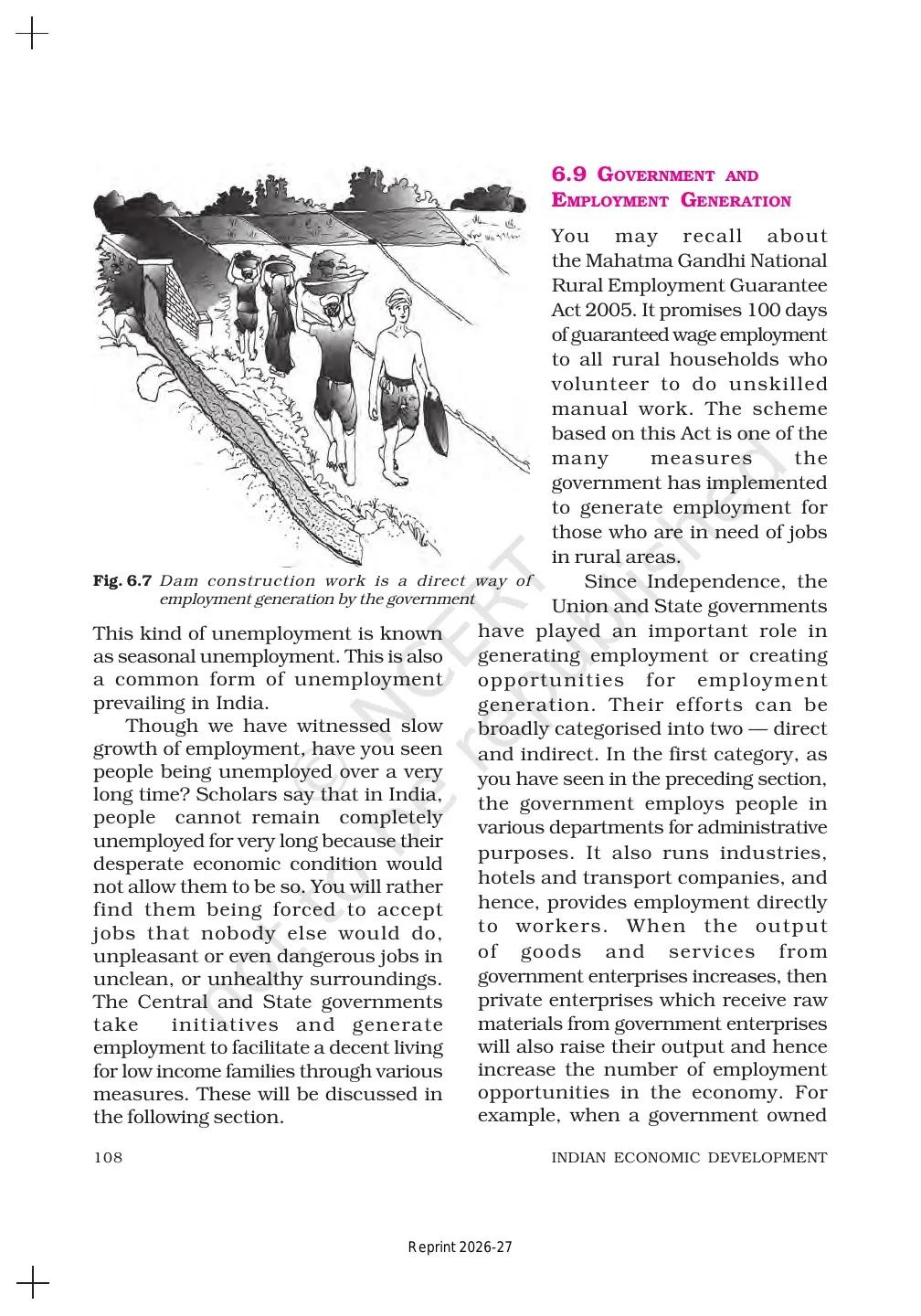
- Policy link: government programmes try to create work and improve livelihoods.
How to Use the Employment NCERT Book PDF
Read this PDF in three passes. First, mark all definitions. Second, revise worker-population ratio and employment types. Third, make a table on formal sector, informal sector, unemployment and employment generation programmes.
- For short answers: define the term and add one NCERT example.
- For long answers: divide the answer into participation, sector, work type and security.
- For revision: compare formal and informal sector work in two columns.
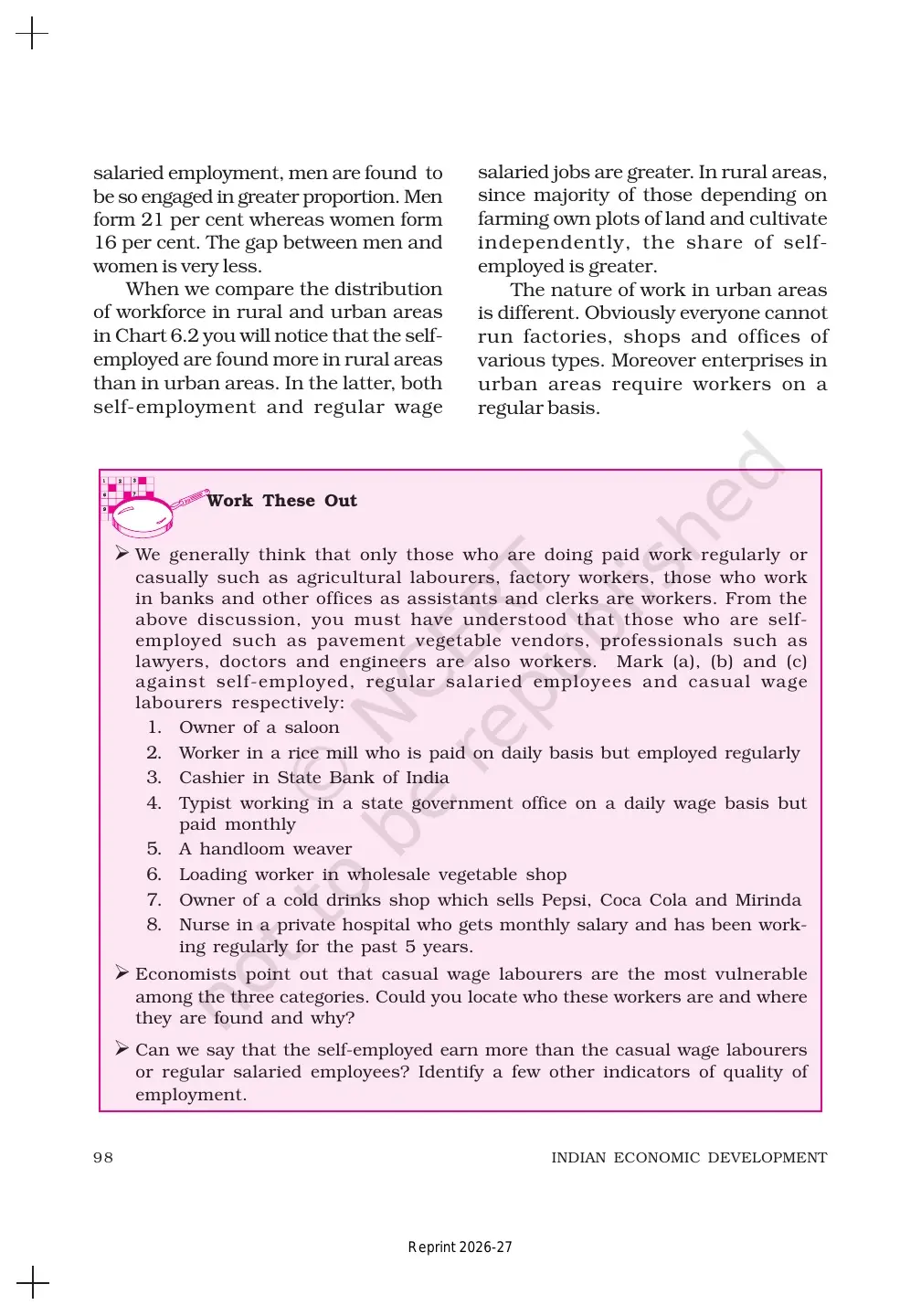
- For examples: use agriculture, construction, salaried work, casual labour and self-employment carefully.
Related Class 11 Economics Resources for Employment
Also Check: use the official book PDF with notes and practice resources for the same chapter.
| Resource | Best use | Link |
|---|---|---|
| NCERT Notes | Revise worker, workforce, informalisation and unemployment quickly. | Employment Notes scheduled. |
| Handwritten Notes | Use for one-shot revision before a class test. | Employment Handwritten Notes |
| NCERT Solutions | Practise textbook questions after reading the official PDF. | Employment NCERT Solutions scheduled. |
Class 11 Economics NCERT Book PDFs for All Chapters
The table below keeps the Class 11 Economics NCERT Book PDF chapters in one place. Chapters 1 to 8 come from Statistics for Economics, and Chapter 9 onward covers Indian Economic Development.
| Chapter | Title | NCERT Book PDF |
|---|---|---|
| Chapter 1 | Introduction | NCERT Book PDF |
| Chapter 2 | Collection of Data | NCERT Book PDF |
| Chapter 3 | Organisation of Data | NCERT Book PDF |
| Chapter 4 | Presentation of Data | NCERT Book PDF |
| Chapter 5 | Measures of Central Tendency | NCERT Book PDF |
| Chapter 6 | Correlation | NCERT Book PDF |
| Chapter 7 | Index Numbers | NCERT Book PDF |
| Chapter 8 | Use of Statistical Tools | NCERT Book PDF |
| Chapter 9 | Indian Economy on the Eve of Independence | NCERT Book PDF |
| Chapter 10 | Indian Economy 1950-1990 | NCERT Book PDF |
| Chapter 11 | Liberalisation, Privatisation and Globalisation: An Appraisal | NCERT Book PDF |
| Chapter 12 | Human Capital Formation in India | NCERT Book PDF |
| Chapter 13 | Rural Development | NCERT Book PDF |
| Chapter 14 | Employment: Growth, Informalisation and Other Issues | Current NCERT Book PDF |
| Chapter 15 | Environment and Sustainable Development | Book PDF scheduled. |
| Chapter 16 | Comparative Development Experiences of India and its Neighbours | Book PDF scheduled. |
Employment Class 11 Economics NCERT Book PDF FAQs
Ques. What does the Class 11 Economics Chapter 14 NCERT Book PDF include?
Ans. It includes the official NCERT chapter on employment, worker-population ratio, employment types, informalisation, unemployment and exercise questions.
Ques. Is this NCERT Book PDF useful for the 2026-27 syllabus?
Ans. Yes. The PDF follows the official NCERT chapter used for the 2026-27 Class 11 Economics syllabus.
Ques. Which NCERT book contains Employment: Growth, Informalisation and Other Issues?
Ans. It belongs to the Indian Economic Development part of Class 11 Economics. It is Chapter 6 in that NCERT book and Chapter 14 in this combined schedule.
Ques. How should students revise the Employment chapter?
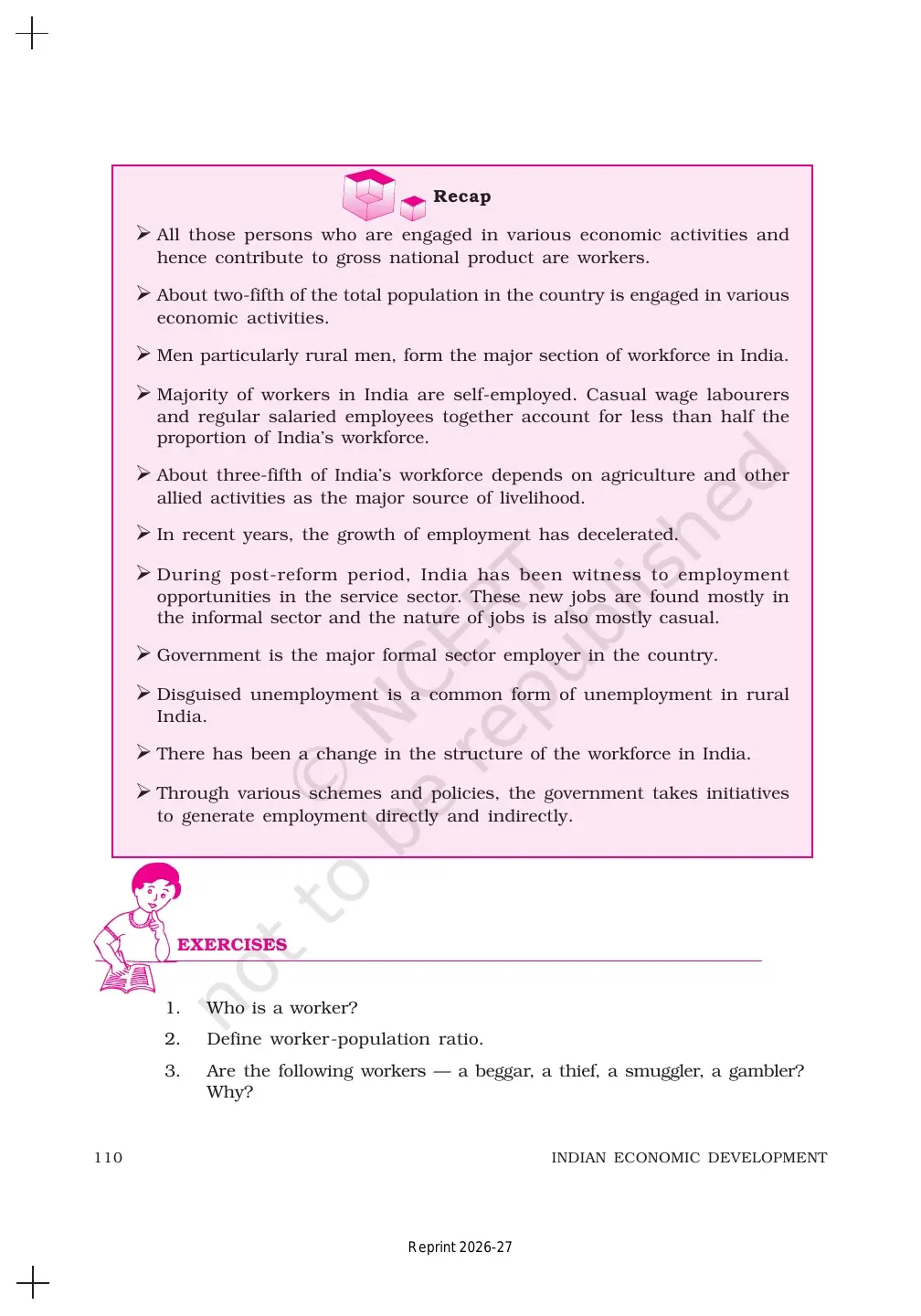
Ans. Students should revise it under four heads: worker and workforce, employment type, formal and informal sector work, and unemployment.



Comments