




The NCERT Class 11 Economics Chapter 13 Rural Development Book PDF gives students the official Indian Economic Development chapter for the 2026-27 syllabus. Use it to study rural credit, agricultural marketing, diversification, organic farming and the wider meaning of rural development in India.
- Book section: official NCERT chapter text, boxes, activity prompts and exercise questions.
- Best use: read the PDF before making a flow chart on rural credit, marketing and diversification.
- Revision cue: connect every rural development measure with productivity, livelihood security and sustainability.
Student Feedback: In a Collegedunia check of 11,720 Class 11 Economics students, many students said this chapter became easier after they grouped the NCERT points under credit, marketing, diversification and organic farming.
Rural Development Class 11 NCERT Book PDF: What It Covers
The PDF explains why rural development is central to India's overall development. NCERT begins with the meaning of rural development, then moves into credit, marketing, diversification and organic farming.
The official chapter is the best first source for school answers. It gives the exact NCERT wording students need for definitions, short answers and long answers on the rural economy.
| NCERT area | What students should notice | Answer cue |
|---|---|---|
| Meaning | Rural development focuses on areas lagging behind in the village economy. | Use it as the main definition. |
| Human resources | Literacy, skill development, health and sanitation are treated as key needs. | Write examples for each need. |
| Infrastructure | Irrigation, electricity, credit, marketing, transport and research support productivity. | Use a point-wise answer. |
| Sustainability | Diversification and organic farming reduce risk and protect rural livelihoods. | Connect income with ecology. |
Rural Development Video Recap
Source: PW OnlyIAS Prarambh on YouTube
Meaning of Rural Development in Class 11 Economics
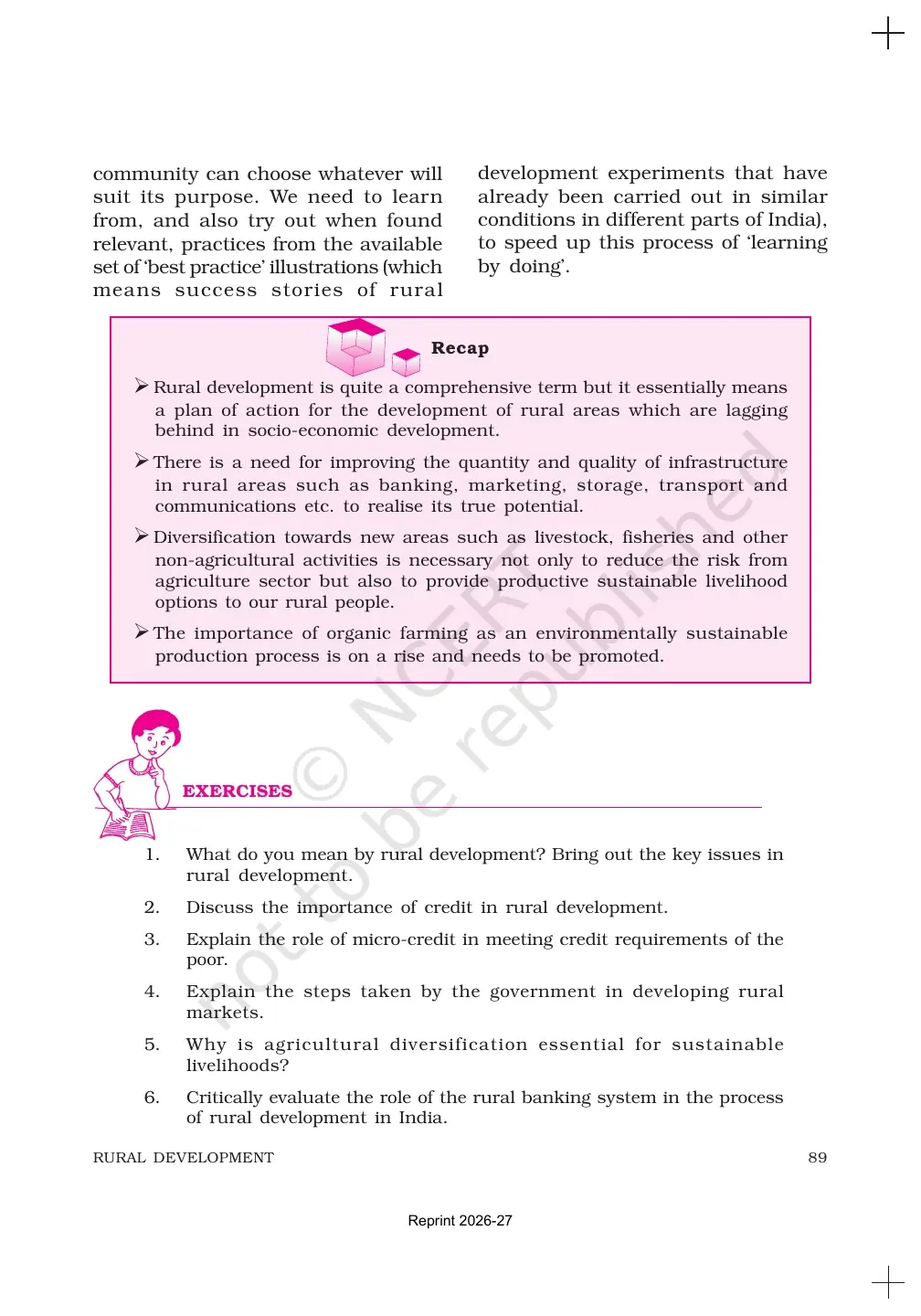
NCERT uses rural development as a comprehensive term. It is not limited to agriculture alone. It includes human resources, land reforms, productive resources, infrastructure, poverty alleviation and better living conditions.
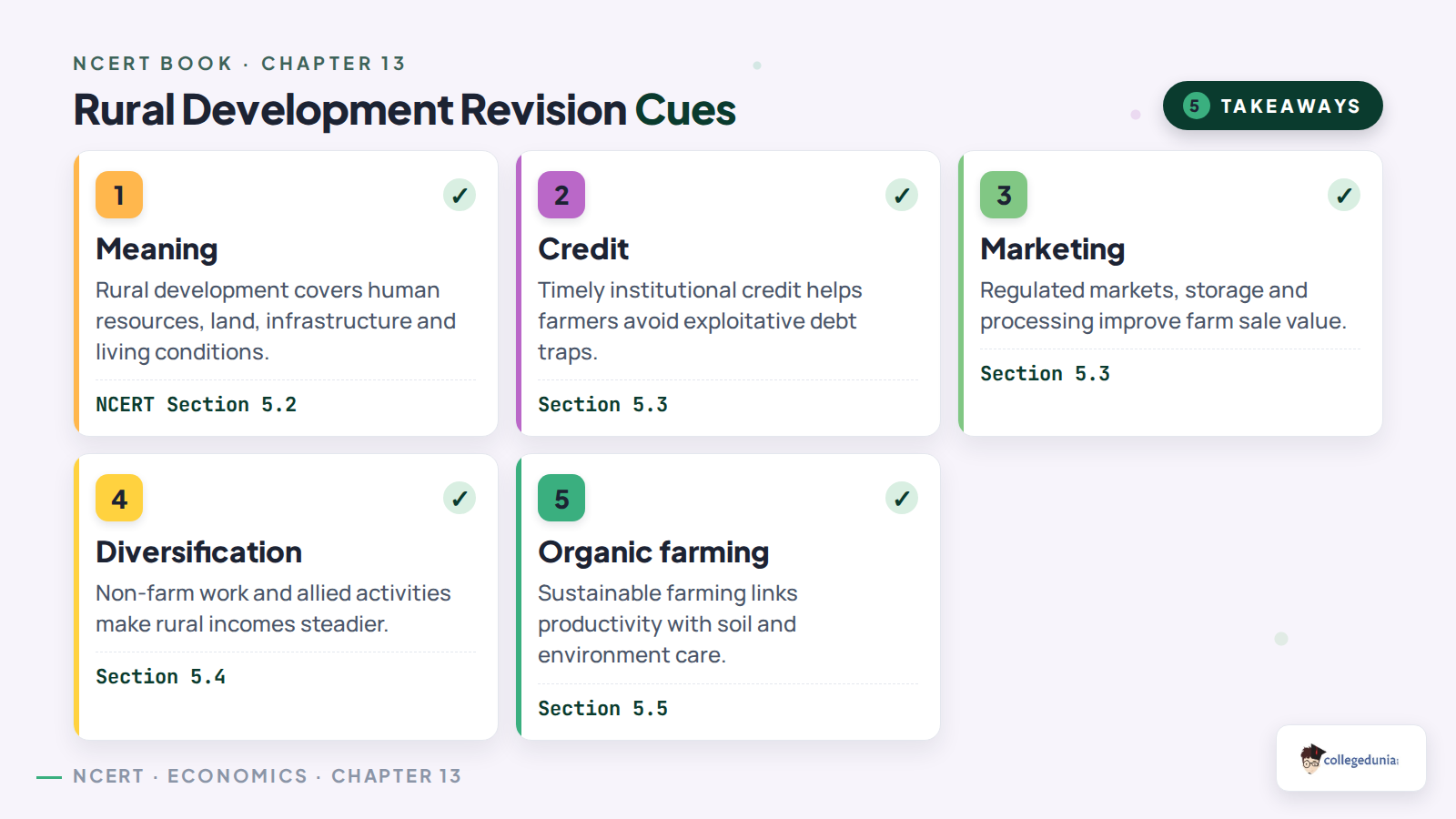
- Human resources: literacy, education, skill development, health and sanitation.
- Productive resources: land, local resources, agriculture support and non-farm opportunities.
- Infrastructure: electricity, irrigation, roads, credit, marketing and information systems.
- Poverty reduction: productive employment and support for weaker sections.
Rural Credit and Rural Marketing in NCERT Economics
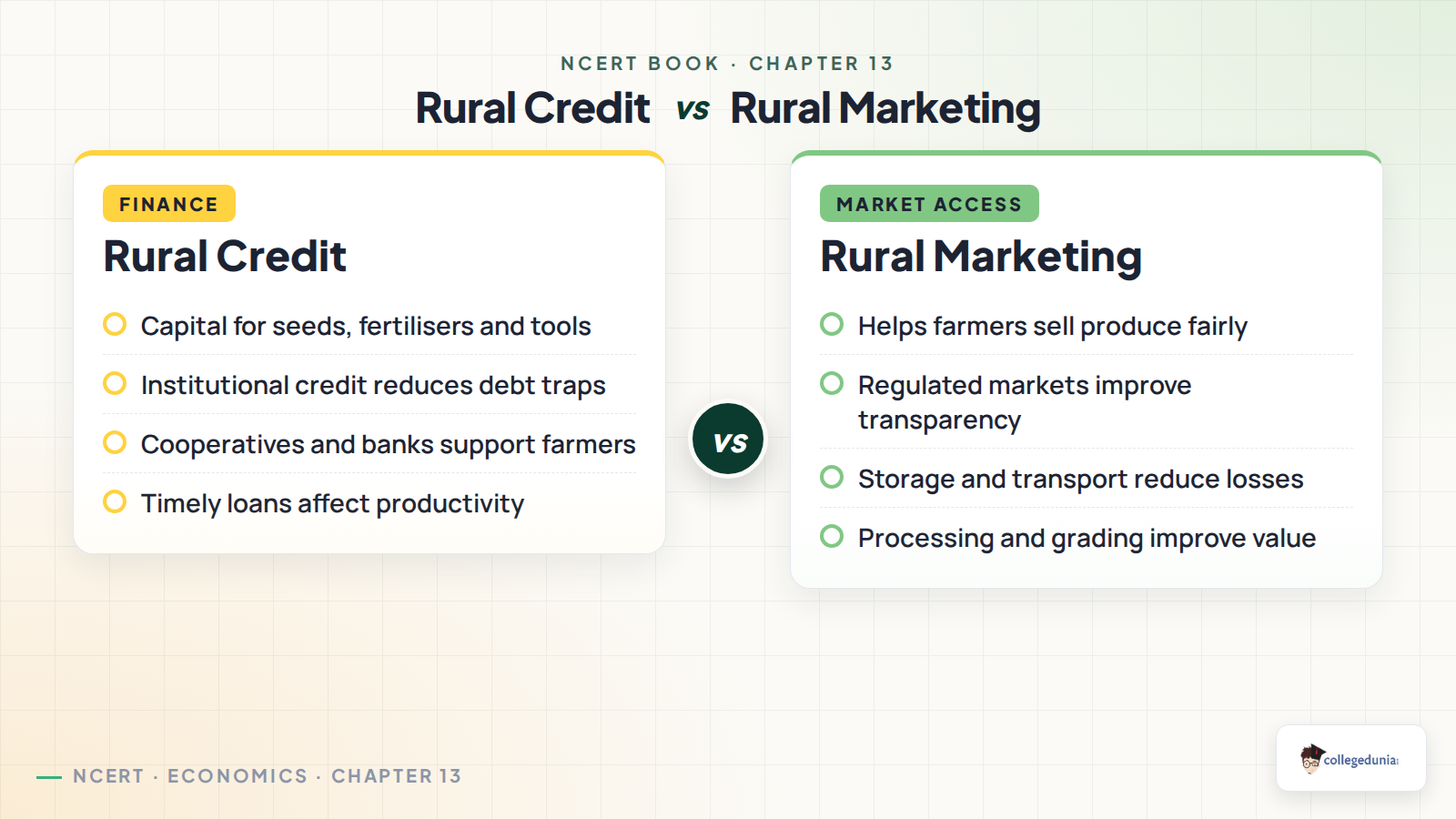
The chapter gives special attention to credit and marketing because both affect farm productivity and rural income. Farmers need credit before production, while marketing decides how fairly they can sell after production.
| Area | NCERT focus | How to write it |
|---|---|---|
| Rural credit | Farmers need capital for seeds, fertilisers, implements and family needs. | Explain why timely loans matter. |
| Debt trap | Moneylenders historically exploited small and marginal farmers. | Use it as the problem background. |
| Institutional credit | Banks, cooperatives and NABARD expanded formal rural credit. | Show the shift from informal to formal sources. |
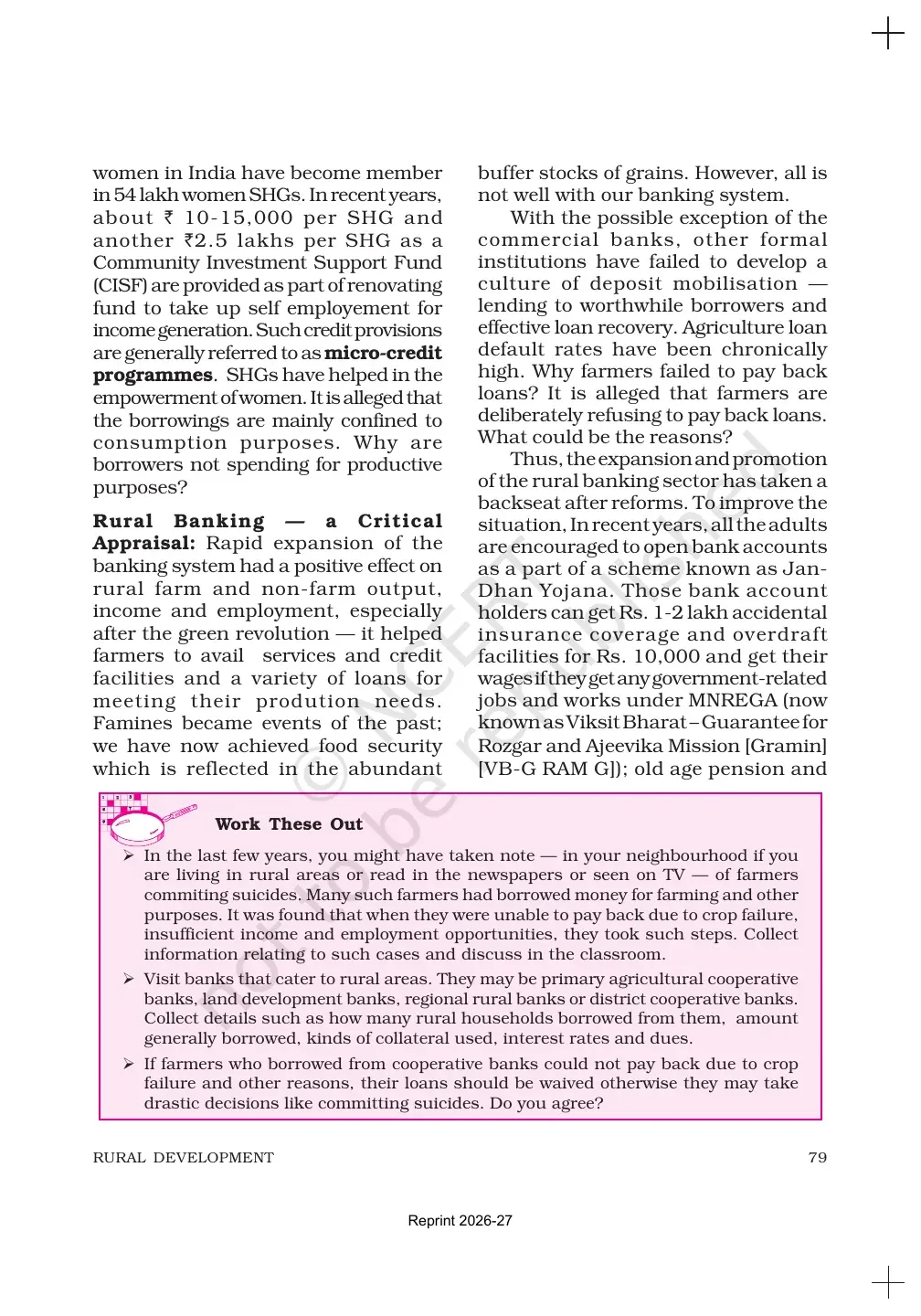
| Marketing | Farmers need fair sale systems, storage, transport and processing. | Connect markets with better income. |
Agricultural Diversification and Organic Farming
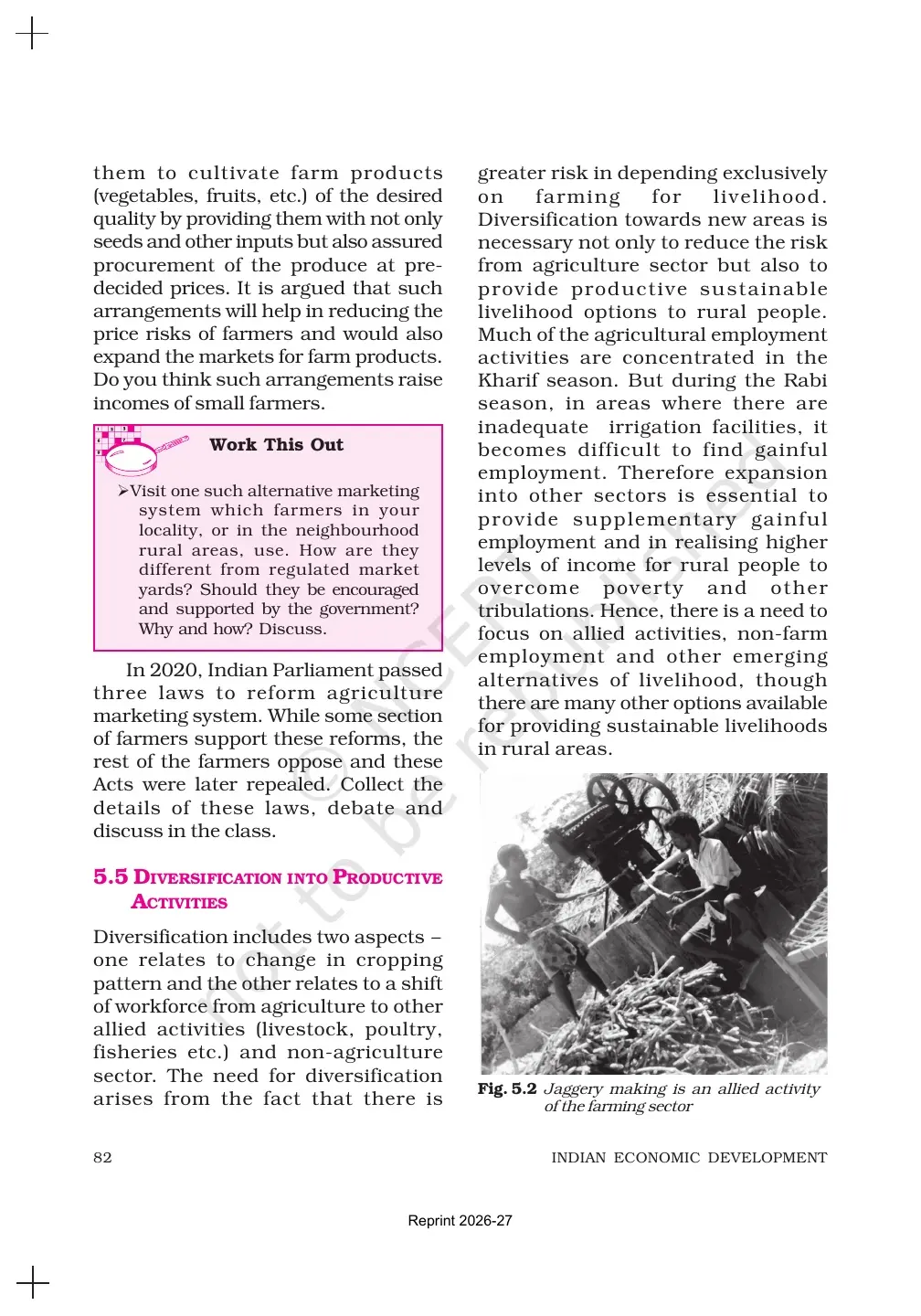
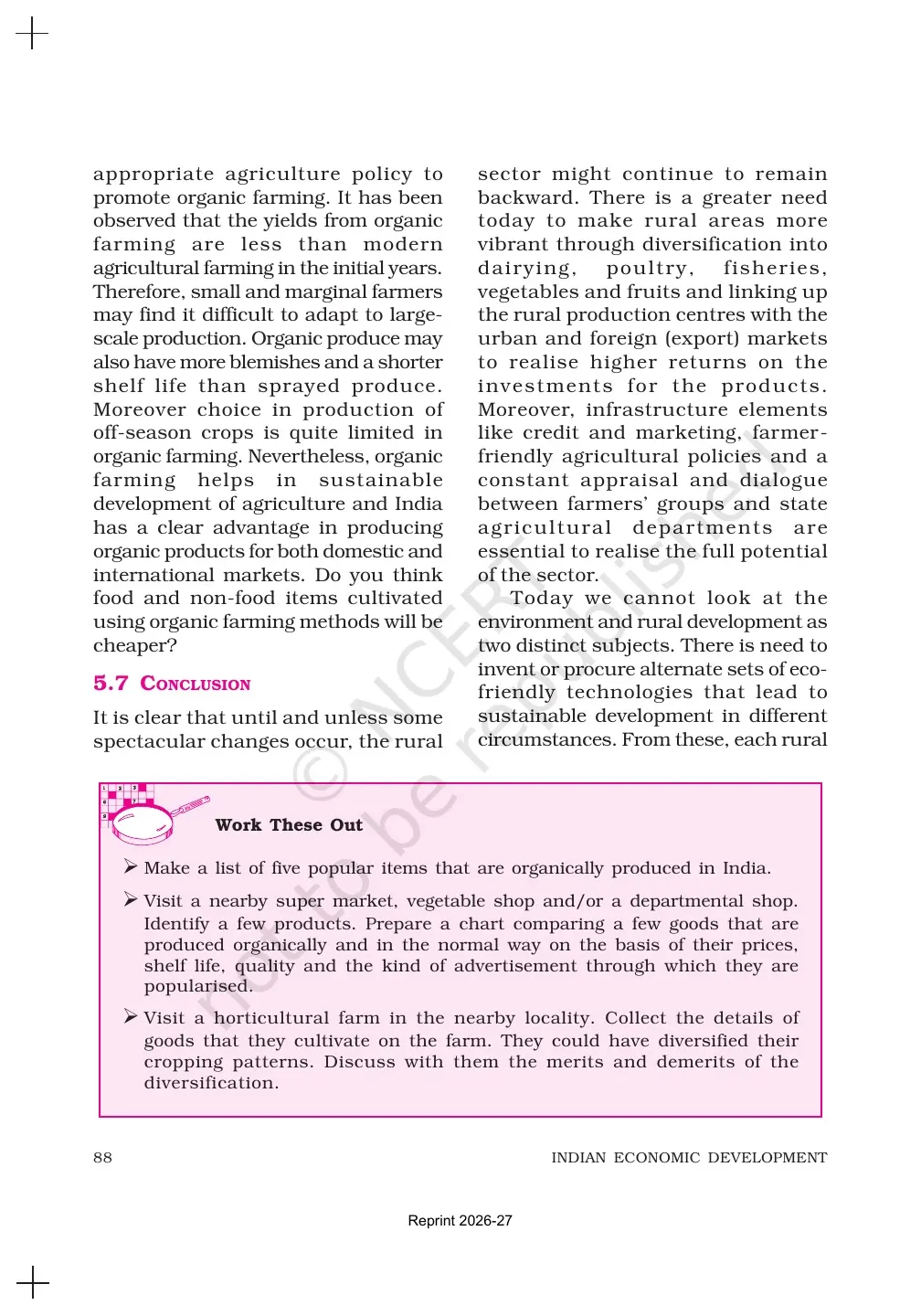
NCERT explains diversification as a way to reduce dependence on crop farming alone. Rural households can earn from animal husbandry, fisheries, horticulture, food processing and other non-farm activities.
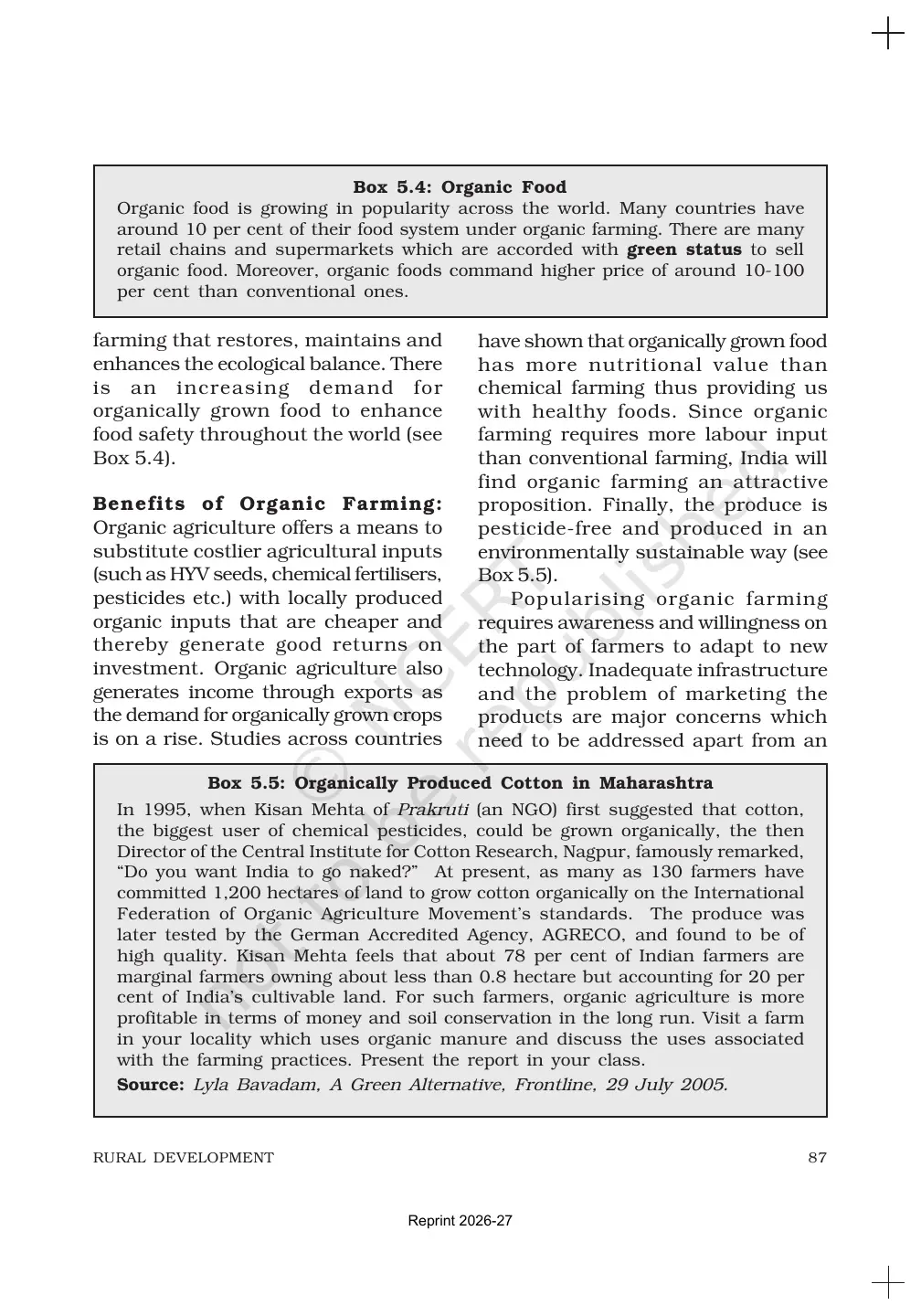
Organic farming is introduced as a sustainable option. It avoids heavy chemical use, protects soil health and can create value for farmers when markets support organic produce.
- For diversification answers: mention non-farm work and allied agricultural activities.
- For organic farming answers: connect sustainability with soil, health and market value.
- For long answers: combine rural development needs with credit, marketing and livelihood options.
- For India-based answers: write why rural progress affects overall economic development.
How to Use the Rural Development NCERT Book PDF
Read this PDF in three passes. First, mark the meaning and major areas of rural development. Second, revise credit and marketing together. Third, make a short chart on diversification and organic farming.
- For short answers: define the term and add one NCERT example.
- For long answers: divide the answer into meaning, credit, marketing, diversification and sustainability.
- For revision: make a two-column table for rural credit and rural marketing.
- For examples: use cooperatives, NABARD, regulated markets, horticulture and organic farming carefully.
Related Class 11 Economics Resources for Rural Development
Also Check: use the official book PDF with notes and practice resources for the same chapter.
| Resource | Best use | Link |
|---|---|---|
| NCERT Notes | Revise rural credit, marketing, diversification and organic farming quickly. | Rural Development Notes |
| Handwritten Notes | Use for one-shot revision before a class test. | Rural Development Handwritten Notes |
| NCERT Solutions | Practise textbook questions after reading the official PDF. | Rural Development NCERT Solutions |
Class 11 Economics NCERT Book PDFs for All Chapters
The table below keeps the Class 11 Economics NCERT Book PDF chapters in one place. Chapters 1 to 8 come from Statistics for Economics, and Chapter 9 onward covers Indian Economic Development.
| Chapter | Title | NCERT Book PDF |
|---|---|---|
| Chapter 1 | Introduction | NCERT Book PDF |
| Chapter 2 | Collection of Data | NCERT Book PDF |
| Chapter 3 | Organisation of Data | NCERT Book PDF |
| Chapter 4 | Presentation of Data | NCERT Book PDF |
| Chapter 5 | Measures of Central Tendency | NCERT Book PDF |
| Chapter 6 | Correlation | NCERT Book PDF |
| Chapter 7 | Index Numbers | NCERT Book PDF |
| Chapter 8 | Use of Statistical Tools | NCERT Book PDF |
| Chapter 9 | Indian Economy on the Eve of Independence | NCERT Book PDF |
| Chapter 10 | Indian Economy 1950-1990 | NCERT Book PDF |
| Chapter 11 | Liberalisation, Privatisation and Globalisation: An Appraisal | NCERT Book PDF |
| Chapter 12 | Human Capital Formation in India | NCERT Book PDF |
| Chapter 13 | Rural Development | Current NCERT Book PDF |
Rural Development Class 11 Economics NCERT Book PDF FAQs
Ques. What does the Class 11 Economics Chapter 13 NCERT Book PDF include?
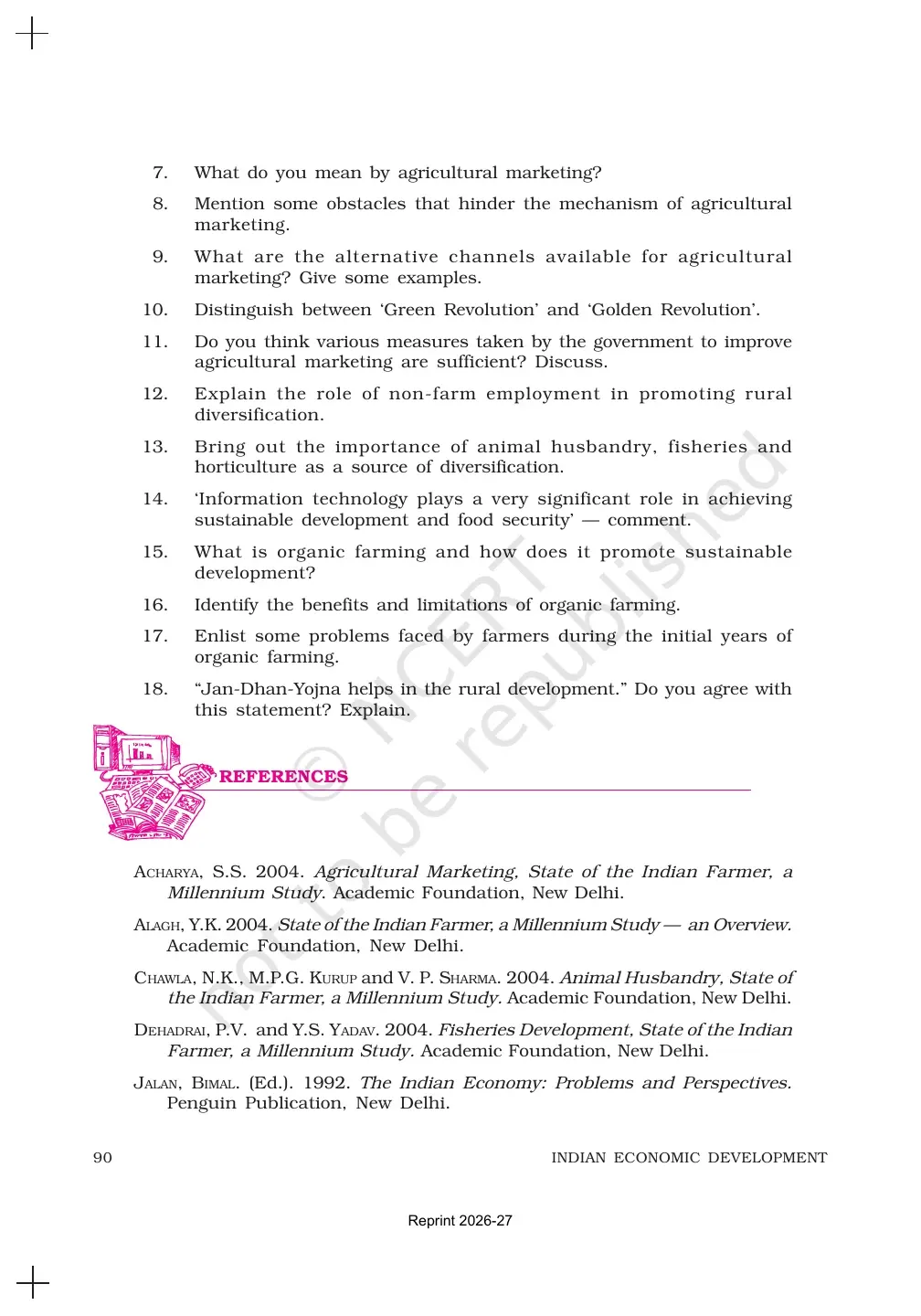
Ans. It includes the official NCERT chapter on Rural Development, with rural credit, marketing, diversification, organic farming and exercise questions.
Ques. Is this NCERT Book PDF useful for the 2026-27 syllabus?
Ans. Yes. The PDF follows the official NCERT chapter used for the 2026-27 Class 11 Economics syllabus.
Ques. Which NCERT book contains Rural Development?
Ans. It belongs to the Indian Economic Development part of Class 11 Economics. It is Chapter 5 in that NCERT book and Chapter 13 in this combined schedule.
Ques. How should students revise Rural Development?
Ans. Students should revise it under four heads: meaning, rural credit and marketing, diversification, and organic farming. This keeps long answers organised.



Comments