




The Class 12 Geography Chapter 9 Geographical Perspective on Selected Issues and Problems textbook PDF is the official NCERT source for every board question on environmental pollution, urban waste disposal, rural-urban migration, slums, and land degradation. It carries about 4 to 6 marks in the CBSE board exam and is essential reading for CUET Geography and UPSC aspirants covering India's key environmental and social challenges.
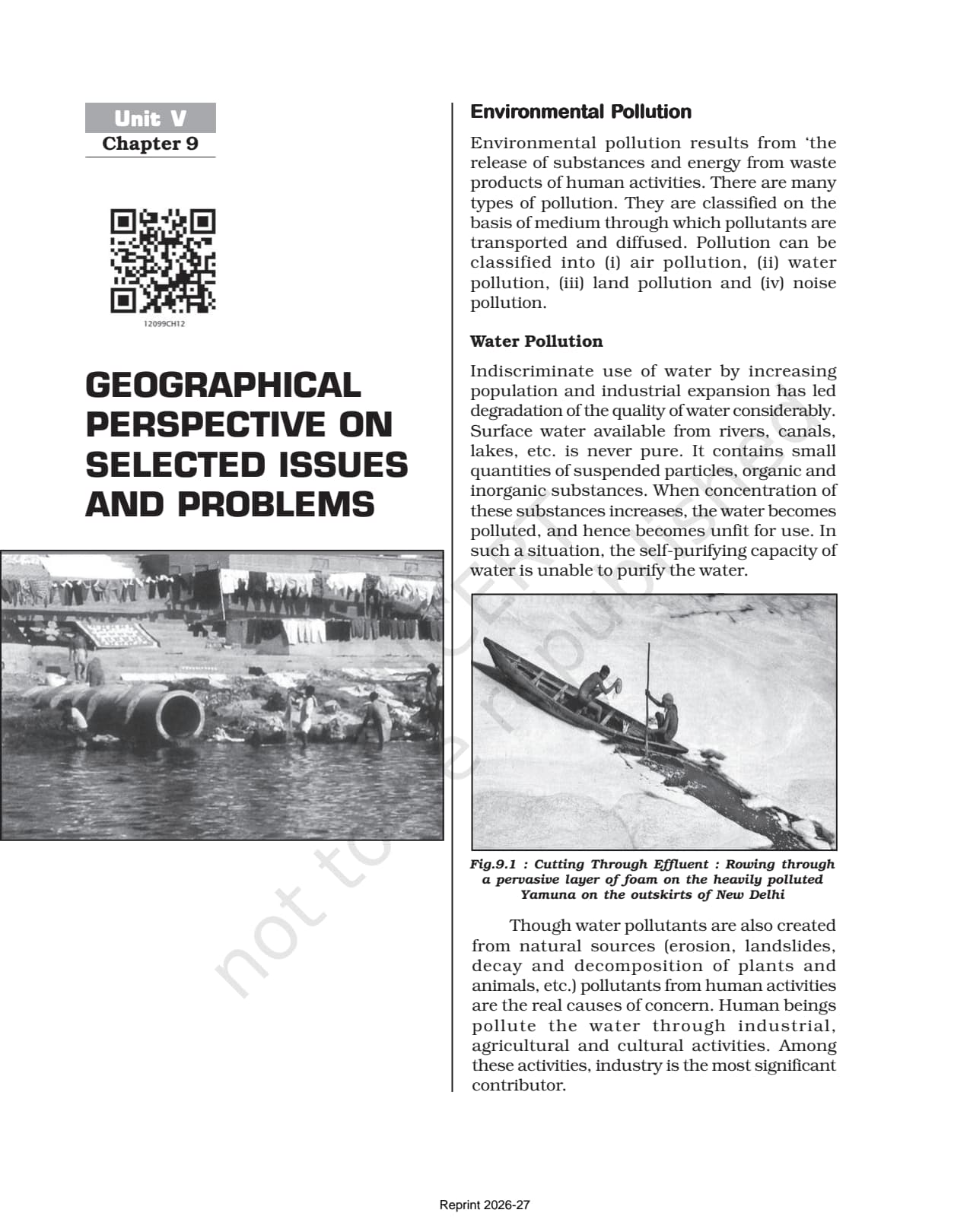
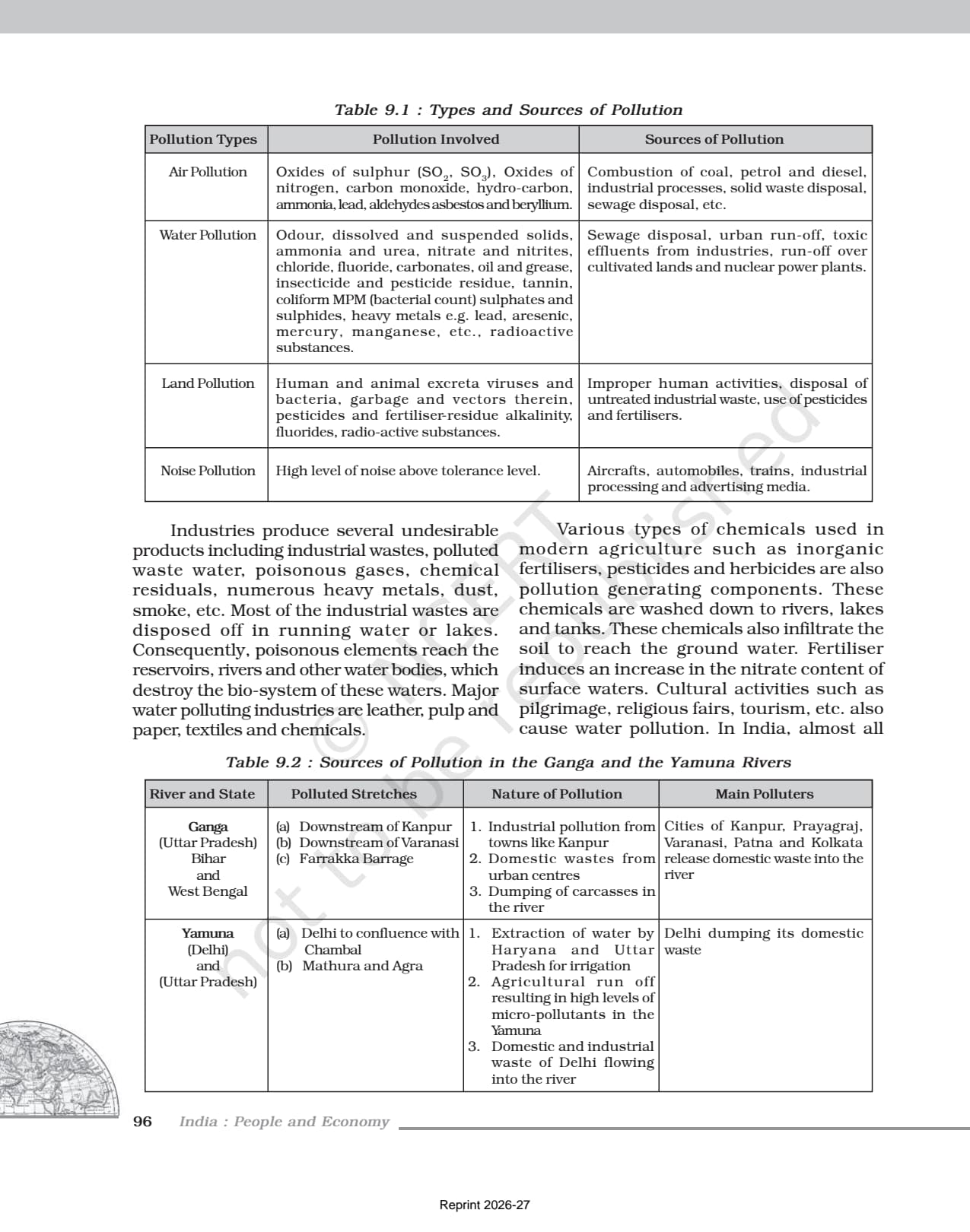
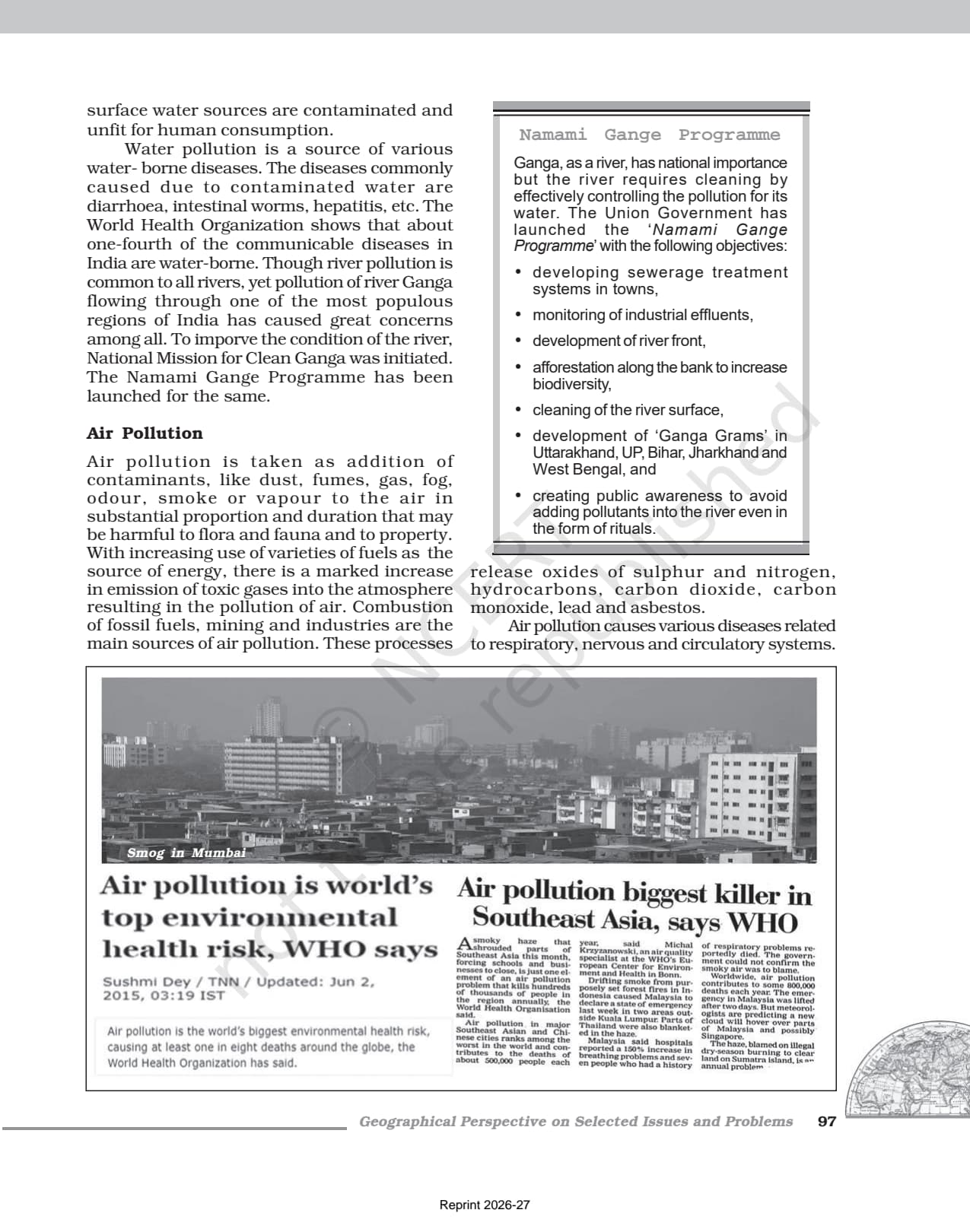
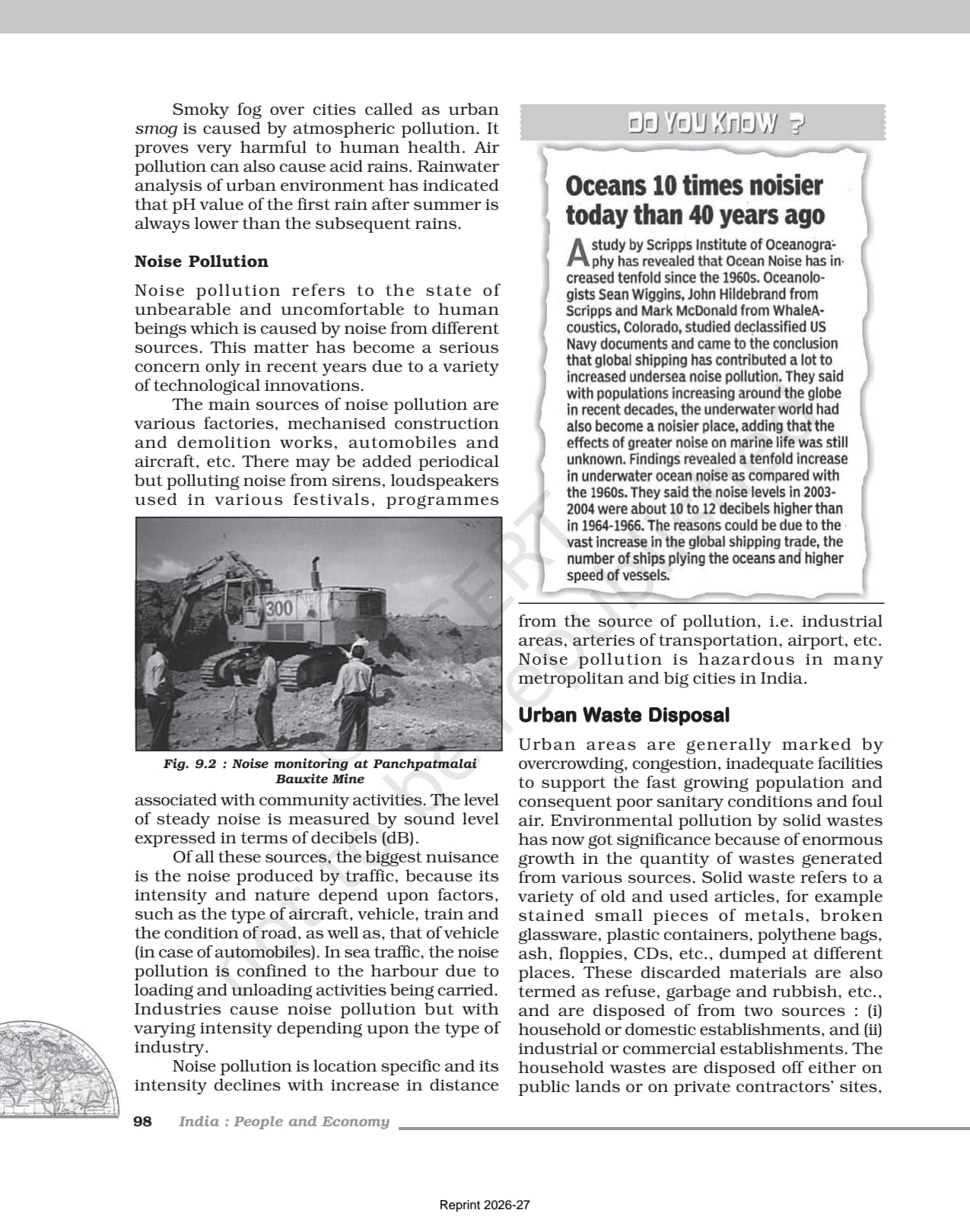
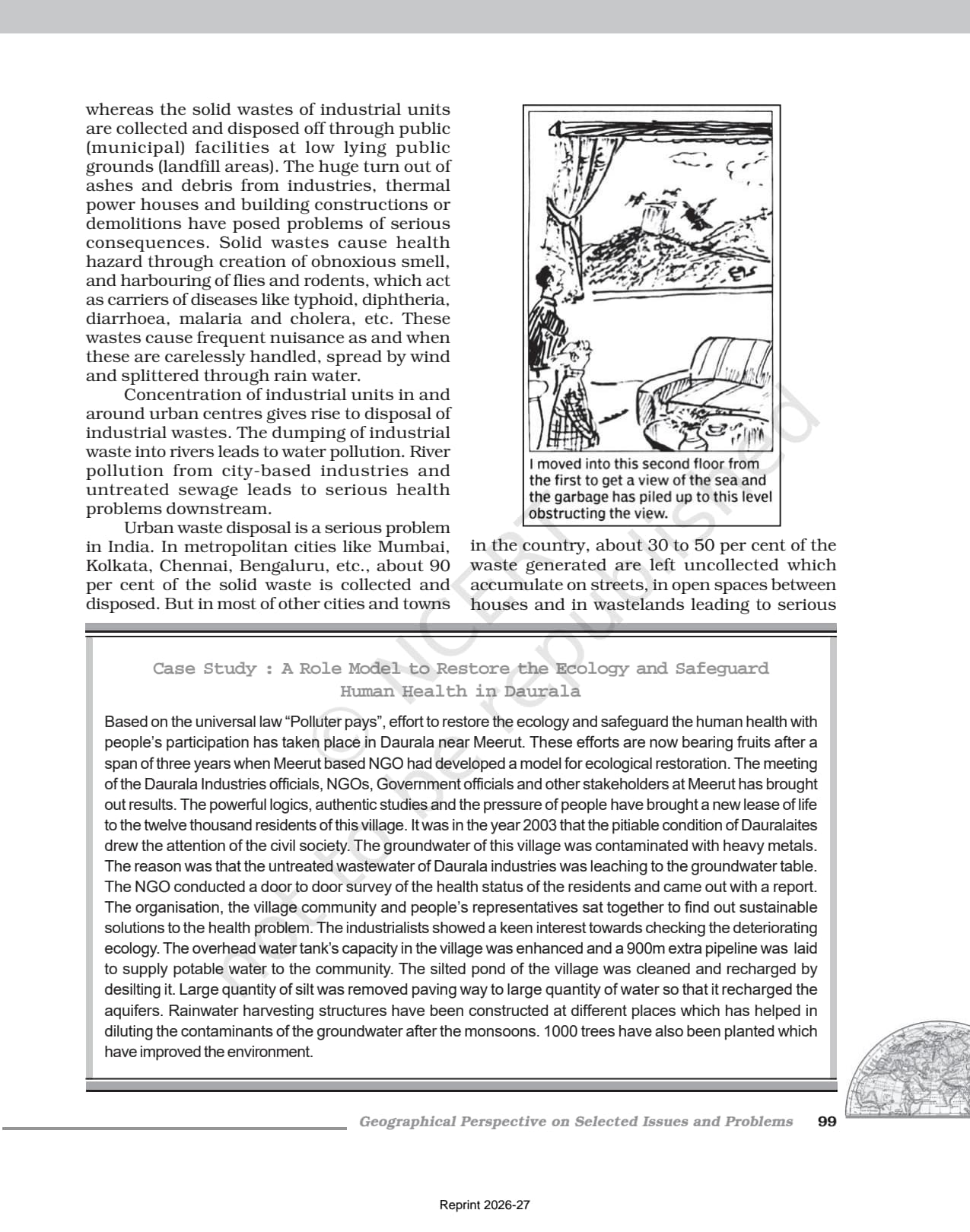
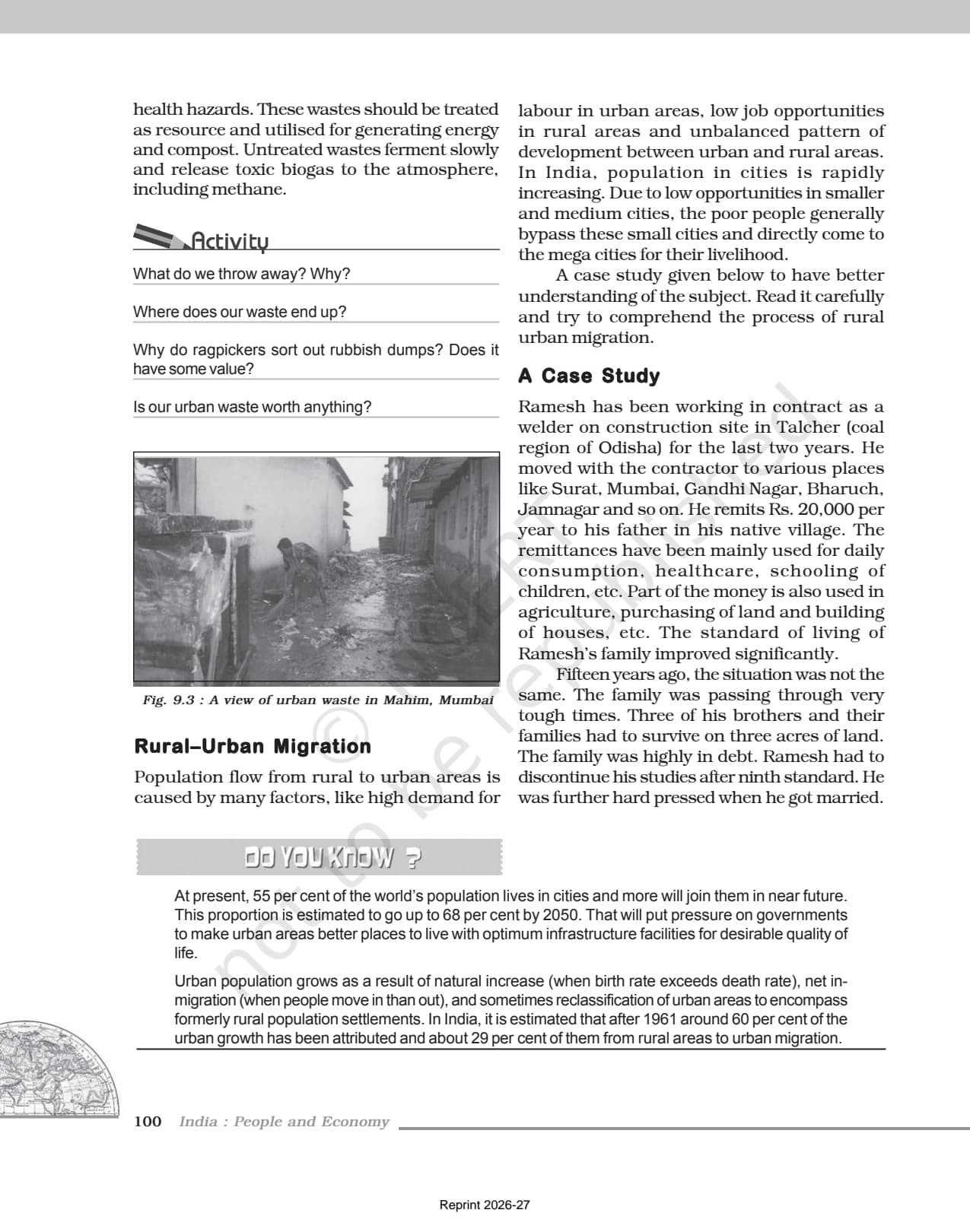
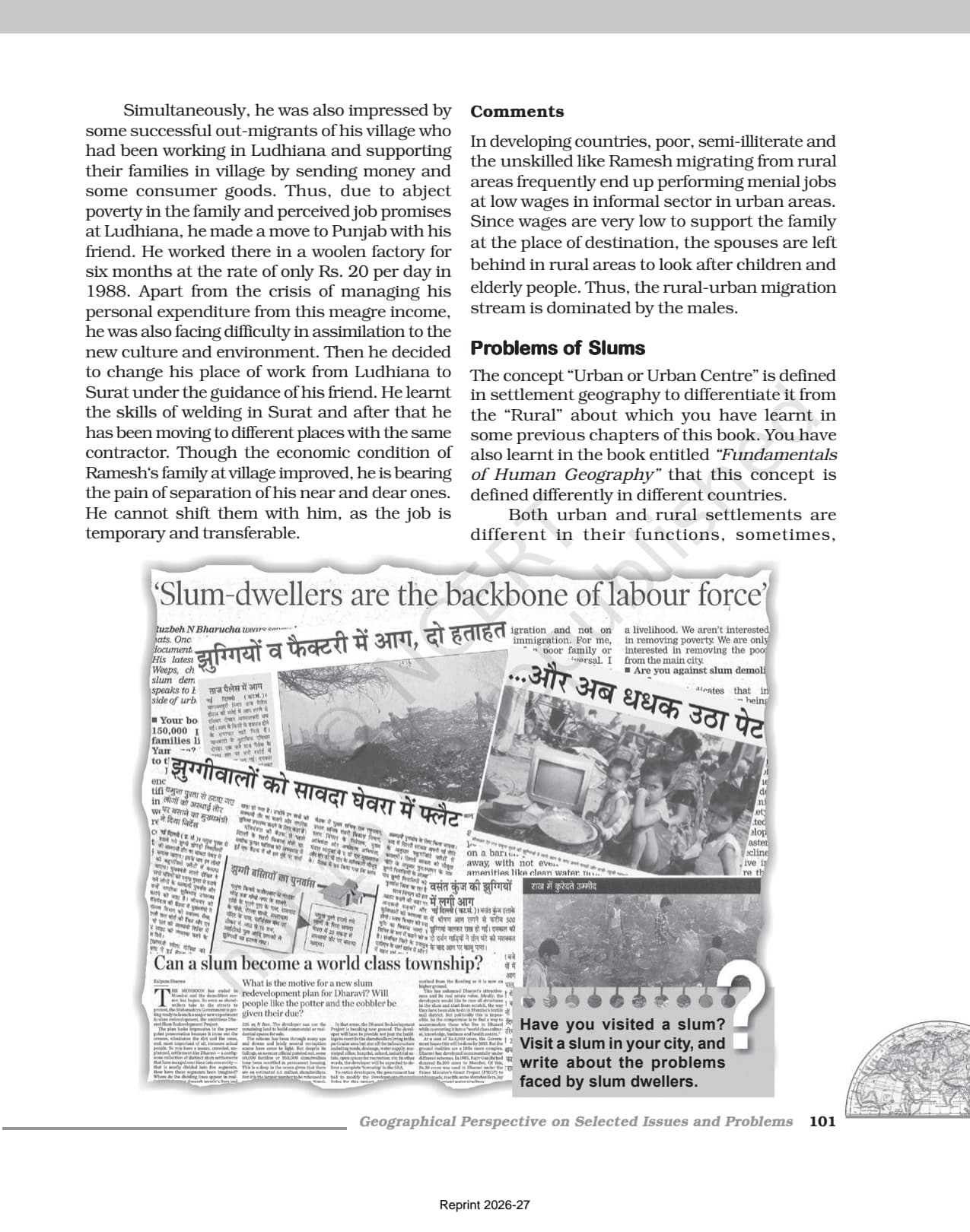
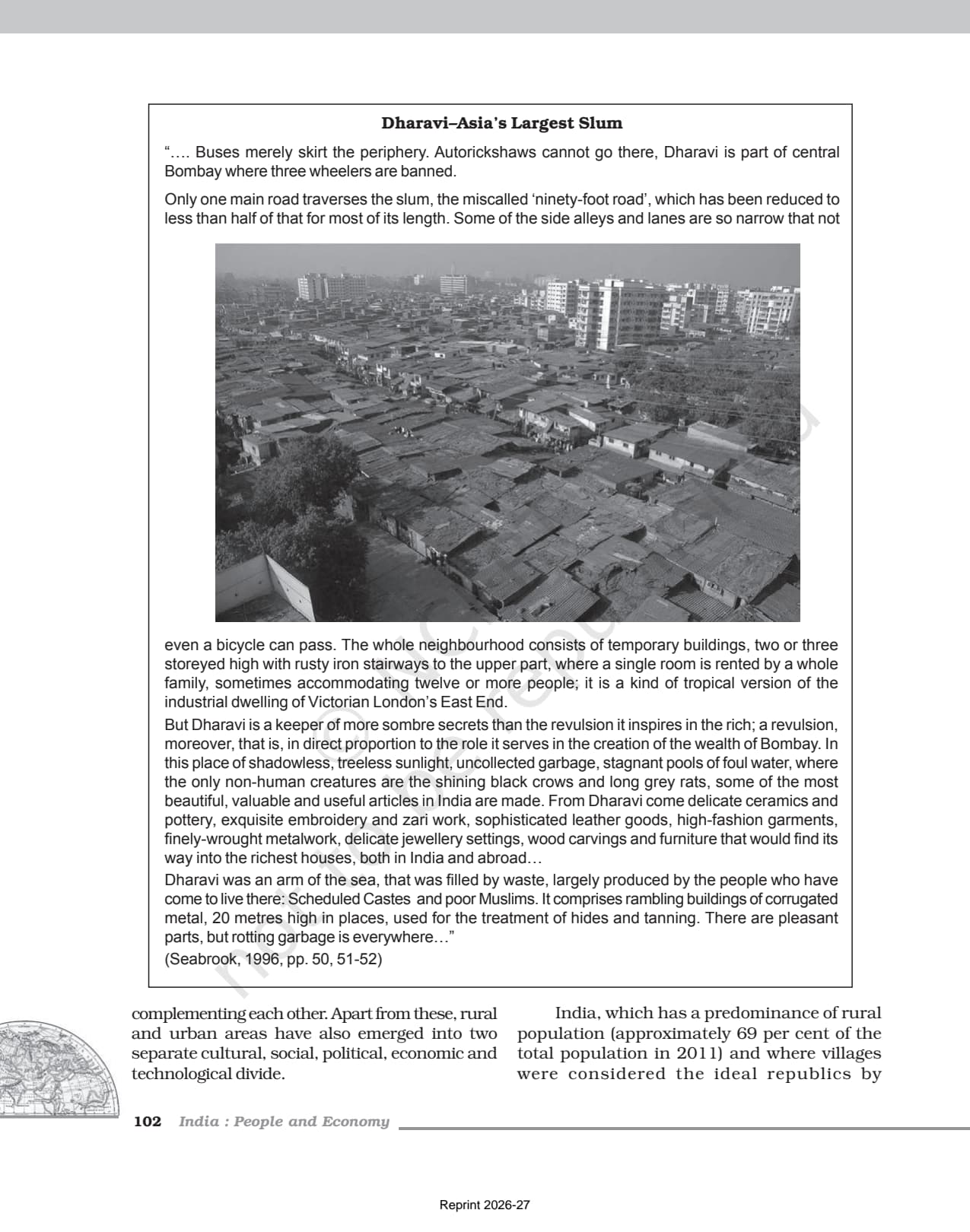
- Official NCERT India People and Economy Class 12 Chapter 9 PDF covering water pollution, air pollution, noise pollution, urban waste disposal, rural-urban migration, slum problems, and land degradation with case studies.
- 4-6 marks CBSE board-paper weightage for Chapter 9; the official textbook is the only source CBSE references when setting questions on environmental and social issues in India.
- Pair with the matching NCERT Solutions, Notes and Handwritten Notes for full chapter coverage.
Student Feedback
In a 2026 Collegedunia poll of 9,200 Class 12 Geography students, 81% said reading the NCERT chapter PDF directly helped them answer board questions on pollution, slums, and migration better than any guide book. Those students averaged 4.7 out of 5 marks on this chapter.
What This Chapter Covers in the NCERT Class 12 Book
The geographical perspective on selected issues and problems class 12 chapter is the final chapter of the India People and Economy textbook and brings together the environmental and social effects of India's rapid development. The official NCERT PDF is the only document CBSE references when setting questions on pollution, urban waste, slums, migration, and land degradation, so students should read it before any guide book for the 2026-27 paper.
Inside the PDF, students cover the four types of environmental pollution and their sources, the Ganga and Yamuna river-pollution cases, the Namami Gange Programme, urban waste disposal and the Daurala restoration case, rural-urban migration through the Ramesh case study, the nature of urban slums, and land degradation. Every topic is presented through a geographical lens.
Source: Next Toppers - 12th Humanities on YouTube
Topics in the Chapter (Section-Wise Map of the NCERT PDF)
The PDF is organised into clear sub-sections on pollution, urban issues, and land degradation. The table below maps each sub-topic to its main concept and the dominant exam angle.
| Section | NCERT Sub-topic | Dominant Exam Concept |
|---|---|---|
| 9.1 | Environmental Pollution - Water Pollution | Sources: industrial, agricultural, cultural; Ganga and Yamuna case; Namami Gange Programme |
| 9.2 | Air Pollution | Combustion of fossil fuels, mining, industries; health effects; urban smog; acid rain |
| 9.3 | Noise Pollution | Sources: traffic, factories, aircraft; decibels (dB); location-specific; distance-decay |
| 9.4 | Urban Waste Disposal | Solid waste types; household vs industrial sources; landfill; health hazards; Daurala case study |
| 9.5 | Rural-Urban Migration | Push and pull factors; Ramesh case study; Odisha to Gujarat pattern; remittances; social costs |
| 9.6 | Problems of Slums | Dharavi case; slum characteristics; overcrowding; poor sanitation; urban poverty |
| 9.7 | Land Degradation | Natural vs man-made causes; waterlogging; salinity; soil erosion; Jhabua watershed case |
Section 9.1 on water pollution and Section 9.5 on rural-urban migration together contribute most of the board-paper questions from this chapter, because both are rich in defined terms, examples, and case studies.
Key Concepts From the NCERT Class 12 Geography Textbook
The PDF carries the canonical NCERT phrasing of the ideas below, and reproducing it is the fastest route to full marks on theory questions.
The Four Types of Environmental Pollution
The textbook classifies pollution by the medium that carries the pollutants. Water pollution occurs when suspended particles and chemical residuals exceed a water body's self-purifying capacity; main sources are industry, agricultural run-off, and cultural activities, with the Ganga and Yamuna the most polluted rivers. Air pollution comes from burning fossil fuels, mining, and industry. Noise pollution is measured in decibels (dB) and falls with distance. Land pollution comes from dumping industrial waste, pesticides, and excreta.
The Namami Gange Programme
The Namami Gange Programme is the Union Government's flagship plan to clean the Ganga. Its objectives include sewerage treatment in towns, monitoring industrial effluents, developing river fronts, afforestation along the banks, cleaning the river surface, developing "Ganga Grams" in five states (Uttarakhand, UP, Bihar, Jharkhand, West Bengal), and building public awareness to stop ritual pollution. CBSE regularly asks students to list these seven objectives, so they must be reproduced accurately.
Rural-Urban Migration: Push and Pull Factors
Migration is explained through the push-pull framework, illustrated by Ramesh, a welder from rural Odisha. Push factors include poverty, indebtedness, low rural jobs, and family pressure on small landholdings. Pull factors include urban labour demand and the prosperity of earlier migrants. The stream is male-dominated, because wages are too low to bring whole families. Ramesh's story shows both the gains (remittances) and the social costs (family separation).
Land Degradation: Natural and Man-Made Causes
Land degradation is a process that reduces the productive capacity of land, and the NCERT stresses that man-made causes matter more than natural ones. Man-made causes include waterlogging, salinity, and soil erosion from deforestation and overgrazing. The Jhabua case in Madhya Pradesh shows how community-led watershed management reverses degradation: the Bhil community in Petlawad block used tree planting, fodder grass, social fencing, and stall-feeding of cattle. Watershed management links land, water, and vegetation through community participation.
Two more ideas round out the chapter: slums (Dharavi, Asia's largest slum, marked by overcrowding, congestion, and poor sanitation) and urban waste disposal (household and industrial solid waste, the Daurala restoration case).
Previous Year Question Trends From This Chapter
The class 12 geography chapter 9 important questions in CBSE board papers follow a steady pattern, and students should expect the same distribution in 2026-27. This chapter has contributed 4 to 6 marks across recent papers, mostly through MCQs, short-answer definitions, and one question on pollution, migration, slums, or land degradation.
| Year | Marks | Question Types | Most Common Topic |
|---|---|---|---|
| 2025 | 5 | 1 MCQ + 1 short answer + 1 extended answer | Water pollution sources / Namami Gange objectives |
| 2024 | 4 | 2 MCQs + 1 short answer | Push-pull factors of migration / types of pollution |
| 2023 | 5 | 1 MCQ + 1 short answer + 1 five-mark answer | Problems of slums / land degradation causes |
| 2022 | 4 | 1 MCQ + 2 short answers | Air pollution effects on health / noise pollution sources |
| 2020 | 6 | 1 long answer + 1 MCQ + 1 short answer | Rural-urban migration; water pollution in India |
The most repeated question type is a three or five-mark question on the nature of water pollution, the problems of slums, or the causes of land degradation, all of which need the textbook's specific case-study details.
Connecting This Chapter to the Rest of India People and Economy
This is the final chapter of the India People and Economy book, tying together the environmental and social effects of patterns from earlier chapters. The table below maps the direct links, which matter because these themes recur across CBSE, CUET, and UPSC Geography.
| Related Chapter | Concept Linking to Chapter 9 |
|---|---|
| Chapter 1: Population Distribution, Density, Growth and Composition | Rapid population growth drives rural-urban migration; high density urban areas generate more pollution and solid waste |
| Chapter 2: Human Settlements | Urban settlement patterns explain slum formation; rural settlement characteristics explain push factors of migration |
| Chapter 3: Land Resources and Agriculture | Agricultural run-off is a major source of water pollution; land degradation directly reduces agricultural productivity |
| Chapter 4: Water Resources | Industrial and agricultural water use creates pollutants that degrade surface and groundwater bodies |
| Chapter 6: Planning and Sustainable Development | Watershed management, Namami Gange, and ecological restoration are outcomes of sustainable development planning |
Quick Glossary From the NCERT Chapter
The chapter introduces about fifteen technical terms, and students should be able to define each in one line for MCQs and short answers. The glossary below lists the most testable ones in textbook phrasing.
- Environmental pollution: Release of substances and energy from human waste products into the environment in harmful quantities.
- Pollutants: The specific substances or forms of energy released that cause pollution, distinct from the process itself.
- Water pollution: Loss of water quality when suspended particles and organic or inorganic substances exceed the water body's self-purifying capacity.
- Air pollution: Addition of dust, fumes, gas, smoke, or vapour to the air in proportions harmful to flora, fauna, and property.
- Noise pollution: Unbearable noise from various sources, measured in decibels (dB); location-specific and falls with distance.
- Solid waste: Old, used, and discarded materials from households or industry, including refuse, garbage, and rubbish.
- Acid rain: Rainwater made acidic by dissolved sulphur and nitrogen oxides from air pollution.
- Push factors: Conditions at the origin that drive migration: poverty, unemployment, low wages, indebtedness, family pressure on land.
- Pull factors: Conditions at destinations that attract migrants: labour demand, higher wages, and better living standards.
- Watershed management: A programme linking land, water, and vegetation to improve livelihoods through natural resource management and community participation.
- Land degradation: A process that reduces the productive capacity of land through waterlogging, salinity, soil erosion, and deforestation.
- Slum: A settlement marked by overcrowding, congestion, poor sanitation, and substandard housing, typically formed by urban migrants.
Also Explore Other Resources for Class 12 Geography Chapter 9
| Resource | Link |
|---|---|
| NCERT Solutions | Class 12 Geography Chapter 9 NCERT Solutions |
| Revision Notes | Class 12 Geography Chapter 9 Notes |
| Handwritten Notes | Class 12 Geography Chapter 9 Handwritten Notes |
| Subject Hub | Class 12 Geography All Chapters |
All Chapters: Class 12 Geography NCERT Book PDF (India People and Economy)
| Chapter | NCERT Book PDF |
|---|---|
| Chapter 1 | Population Distribution, Density, Growth and Composition NCERT Book PDF |
| Chapter 2 | Human Settlements NCERT Book PDF |
| Chapter 3 | Land Resources and Agriculture NCERT Book PDF |
| Chapter 4 | Water Resources NCERT Book PDF |
| Chapter 5 | Mineral and Energy Resources NCERT Book PDF |
| Chapter 6 | Planning and Sustainable Development NCERT Book PDF |
| Chapter 7 | Transport and Communication NCERT Book PDF |
| Chapter 8 | International Trade NCERT Book PDF (Coming soon) |
| Chapter 9 | Geographical Perspective on Selected Issues and Problems NCERT Book PDF (You are here) |
Frequently Asked Questions on Class 12 Geography Chapter 9 NCERT Book PDF
Ques. Where can students download the official NCERT Class 12 Geography Chapter 9 PDF?
Ans. Students can download the official geographical perspective on selected issues and problems class 12 NCERT book PDF directly from the download card at the top of this page. The PDF is the single-chapter file from the India People and Economy textbook, aligned to the 2026-27 CBSE syllabus.
Ques. What is the difference between pollution and pollutants according to the NCERT Class 12 Geography textbook?
Ans. According to the NCERT textbook, environmental pollution is the process of release of substances and energy from waste products of human activities into the environment in harmful quantities. Pollutants are the specific substances or forms of energy released that cause pollution. For example, sulphur dioxide (SO2) is a pollutant released by combustion of coal, and the resulting degradation of air quality is air pollution. This distinction is tested in the very first exercise question of the chapter.
Ques. What are the objectives of the Namami Gange Programme according to the NCERT Class 12 Geography chapter?
Ans. The NCERT textbook lists the following seven objectives of the Namami Gange Programme: (1) developing sewerage treatment systems in towns; (2) monitoring of industrial effluents; (3) development of river front; (4) afforestation along the bank to increase biodiversity; (5) cleaning of the river surface; (6) development of "Ganga Grams" in Uttarakhand, UP, Bihar, Jharkhand, and West Bengal; and (7) creating public awareness to avoid adding pollutants into the river even in the form of rituals.
Ques. What are the push and pull factors of rural-urban migration according to NCERT Class 12 Geography?
Ans. The NCERT textbook explains migration through the push-pull framework. Push factors in rural areas include abject poverty, high indebtedness, low job opportunities, unbalanced development between urban and rural areas, and pressure of large families on small landholdings. Pull factors in urban areas include high demand for labour, higher wages, perceived job promises, and the visible prosperity of earlier out-migrants. The textbook notes that the Ramesh case study illustrates both economic benefits (remittances improving family living standards) and social costs (family separation, cultural assimilation difficulties).
Ques. What are the problems of slums in India according to the NCERT Class 12 Geography textbook?
Ans. The NCERT textbook explains that urban slums are characterised by overcrowding, congestion, inadequate facilities to support fast-growing populations, poor sanitary conditions, and foul air. They form because migrants, especially semi-illiterate and unskilled workers, frequently end up performing menial jobs at low wages in the informal sector and cannot afford proper urban housing. The textbook uses Dharavi in Mumbai as a specific example, describing it as Asia's largest slum, noting that it can only be accessed on foot because autorickshaws are banned and buses skirt the periphery.
Ques. What are the major sources of water pollution in India according to NCERT Class 12 Geography Chapter 9?
Ans. The NCERT textbook identifies three major sources of water pollution: (1) Industrial activities - major polluting industries include leather, pulp and paper, textiles, and chemicals, which dispose of industrial wastes, polluted wastewater, heavy metals, and chemical residuals into rivers and lakes; (2) Agricultural activities - inorganic fertilisers, pesticides, and herbicides are washed into rivers, lakes, and groundwater, increasing nitrate content in surface waters; (3) Cultural activities - pilgrimage, religious fairs, and tourism cause water pollution. The Ganga and Yamuna are cited as the most critically polluted rivers in India.
Ques. What is land degradation and what are its causes according to the NCERT Class 12 Geography textbook?
Ans. Land degradation is a process that reduces the productive capacity of land. The NCERT textbook notes that man-made processes of degradation are more important than natural processes. Man-made causes include waterlogging (especially in irrigated areas), soil salinity from improper irrigation, soil erosion from deforestation and overgrazing, and improper use of pesticides and fertilisers. Natural causes include floods, droughts, and landslides. The Jhabua watershed management case study in Madhya Pradesh shows how community participation and NGO-government partnership can reverse land degradation through tree planting, social fencing, and stall-feeding of cattle.
Ques. What is the Jhabua watershed management case study in the NCERT Chapter 9?
Ans. The Jhabua district case study in the NCERT textbook illustrates successful watershed management in one of India's most backward districts in western Madhya Pradesh, with a high concentration of Bhil tribal population. Programmes funded by the Ministry of Rural Development (Rajiv Gandhi Mission for Watershed Management) treated 20% of the total district area in five years. In Petlawad block, the Bhil community revitalised common property resources by planting trees, growing fodder grass on pasture land, adopting social fencing, and committing to stall-feeding of cattle. This demonstrates that community participation and government-NGO partnership can effectively reverse land degradation.
Ques. What is urban waste disposal and why is it a problem in India according to NCERT Geography Chapter 9?
Ans. Urban waste disposal refers to the management of solid wastes generated from household and industrial sources. The NCERT textbook notes that urban areas generate enormous quantities of solid waste including metals, glass, plastic, ash, and industrial debris. In metropolitan cities like Mumbai, Kolkata, Chennai, and Bengaluru, about 90% of solid waste is collected and disposed of, but in most other cities and towns, only 30 to 50% of waste is collected. The rest accumulates on streets, in open spaces, and in wastelands, creating health hazards through flies, rodents, and toxic biogas release. Solid wastes should ideally be treated as resources for generating energy and compost.
Ques. What is the significance of the Daurala case study in NCERT Class 12 Geography Chapter 9?
Ans. The Daurala case study near Meerut illustrates the application of the "polluter pays" principle in ecological restoration. The groundwater of Daurala village was contaminated with heavy metals from untreated wastewater leaching from Daurala Industries. A Meerut-based NGO conducted a door-to-door health survey, then brought together industrialists, government officials, NGOs, village communities, and people's representatives to find sustainable solutions. Outcomes included enhanced water tank capacity, a 900m extra pipeline for potable water, desilting of the village pond, rainwater harvesting structures, and planting of 1,000 trees. The case shows how people's participation and multi-stakeholder cooperation can restore ecology and safeguard human health.
Ques. Is the Class 12 Geography syllabus changing for 2026-27?
Ans. No major changes have been announced. The India People and Economy textbook chapter structure remains the same for 2026-27, and the official NCERT PDF available on this page is aligned to the 2026-27 CBSE syllabus. CBSE marking schemes continue to reward textbook phrasing in theory questions and specific named case study details from the NCERT text in extended answers.
Ques. What is the best order to use the NCERT PDF, Notes, and Solutions for Class 12 Geography Chapter 9?
Ans. Read the NCERT PDF cold first, marking unfamiliar terms like pollutants, Namami Gange, push-pull factors, watershed management, and land degradation. Then open the Class 12 Geography Chapter 9 Notes alongside the PDF and draw a classification table of the four pollution types. Attempt all exercise questions and verify them against the NCERT Solutions. Use the handwritten notes for last-mile revision the night before the exam.
Ques. How does CUET test Class 12 Geography Chapter 9 Geographical Perspective on Selected Issues and Problems?
Ans. CUET Geography tests this chapter through MCQs on definitions (pollution, pollutants, solid waste, push-pull factors, watershed management, land degradation, slums), the sources and effects of each pollution type, the objectives of the Namami Gange Programme, the characteristics of urban slums with the Dharavi example, and the causes and remedies of land degradation with the Jhabua case study. All questions are drawn from the NCERT textbook, so reading the official PDF is the most effective preparation for both CUET 2026-27 and the CBSE board exam.



Comments