




The Class 12 Geography Chapter 5 Mineral and Energy Resources textbook PDF is the official NCERT source for every board question on India's mineral belts, conventional and non-conventional energy resources, and the conservation of exhaustible resources. It carries significant weightage in CBSE board exams and is an essential chapter for UPSC and CUET preparation.
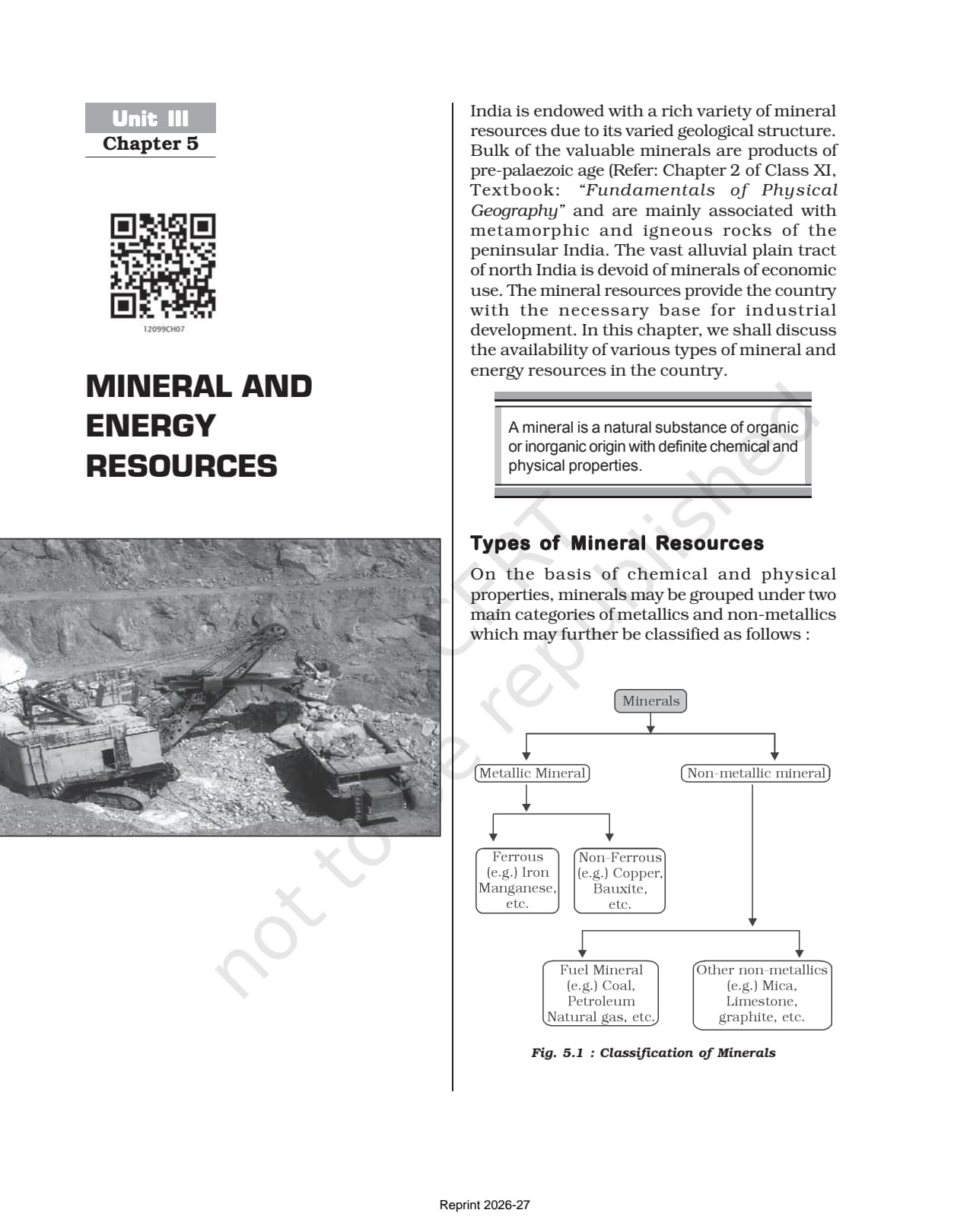
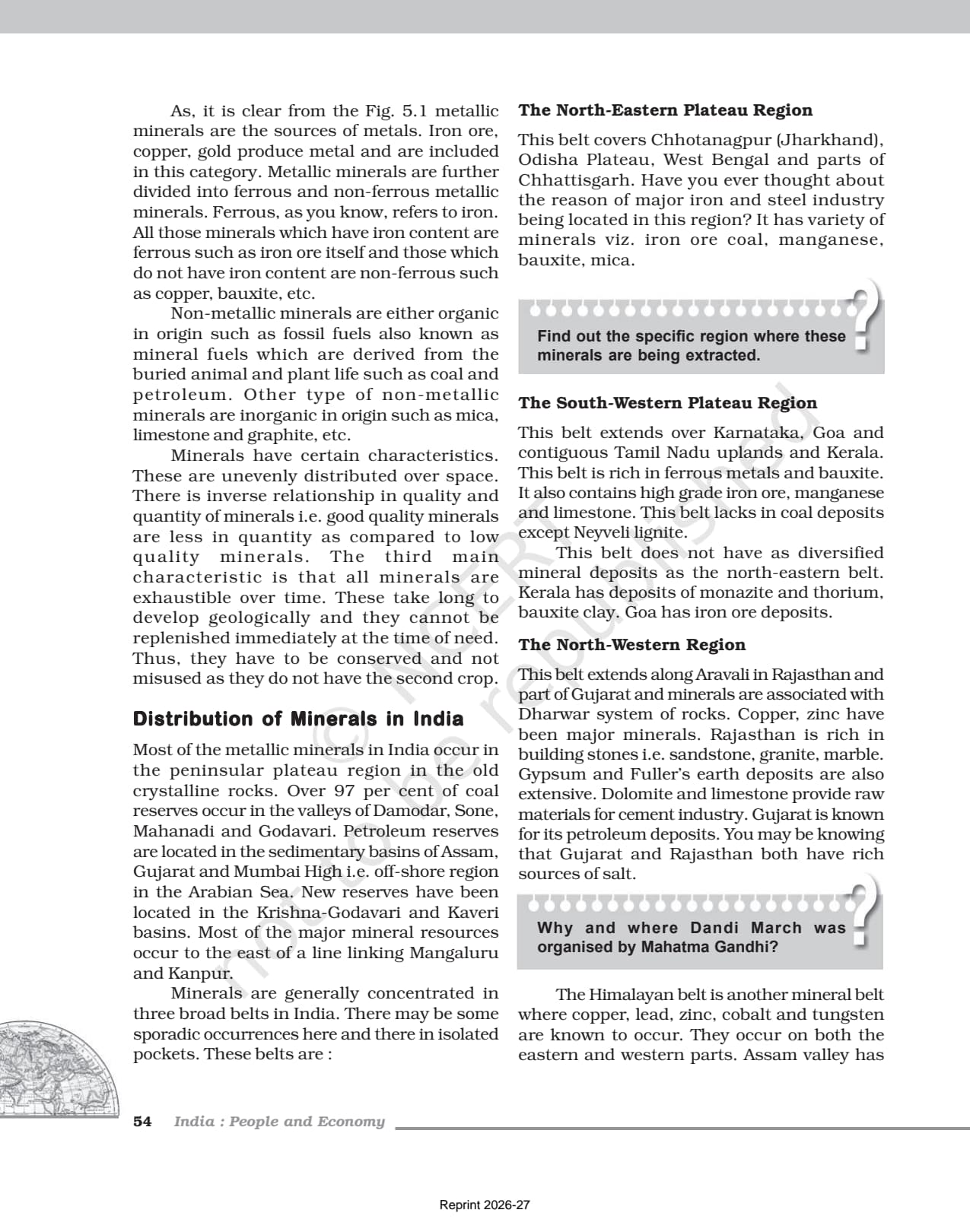
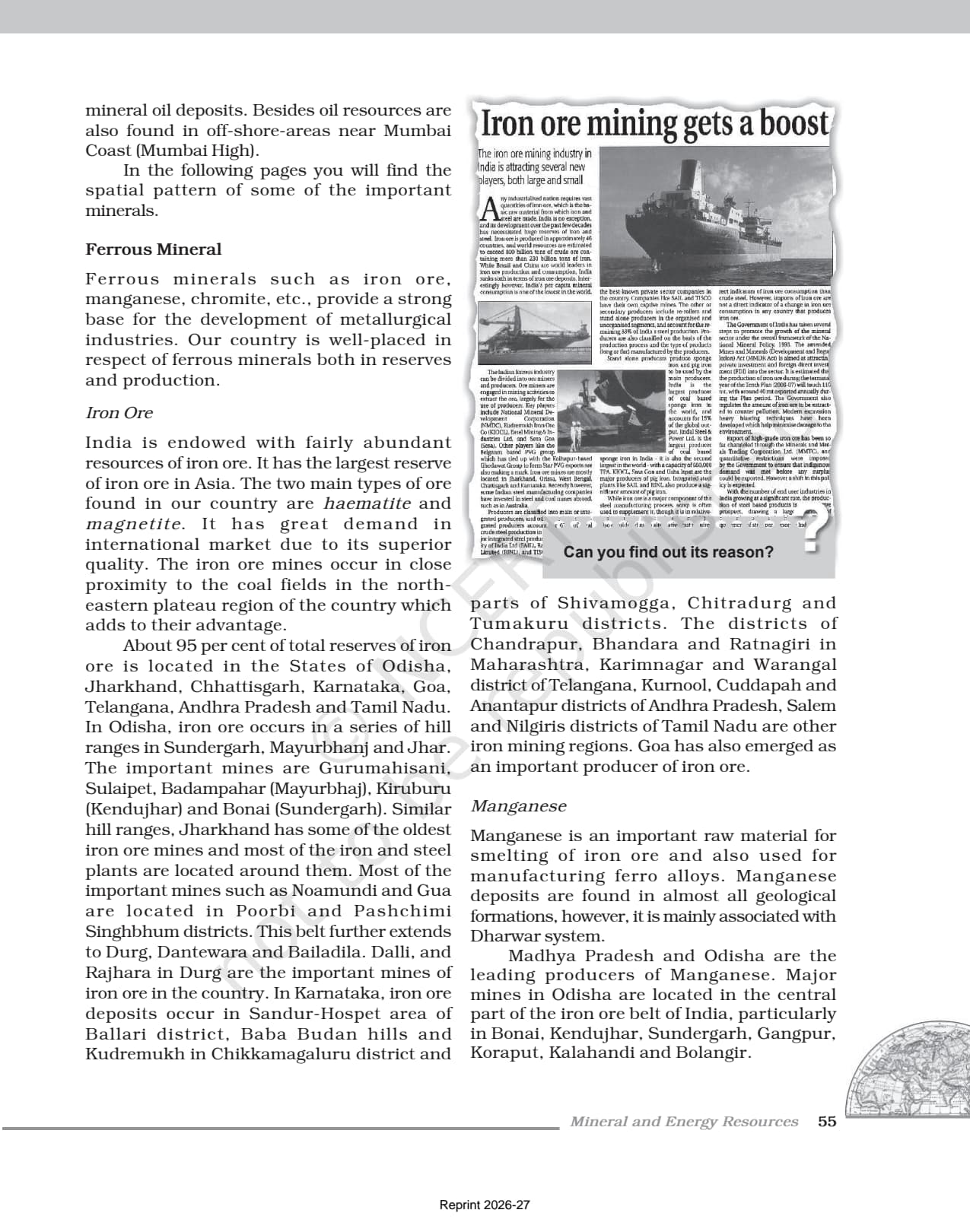
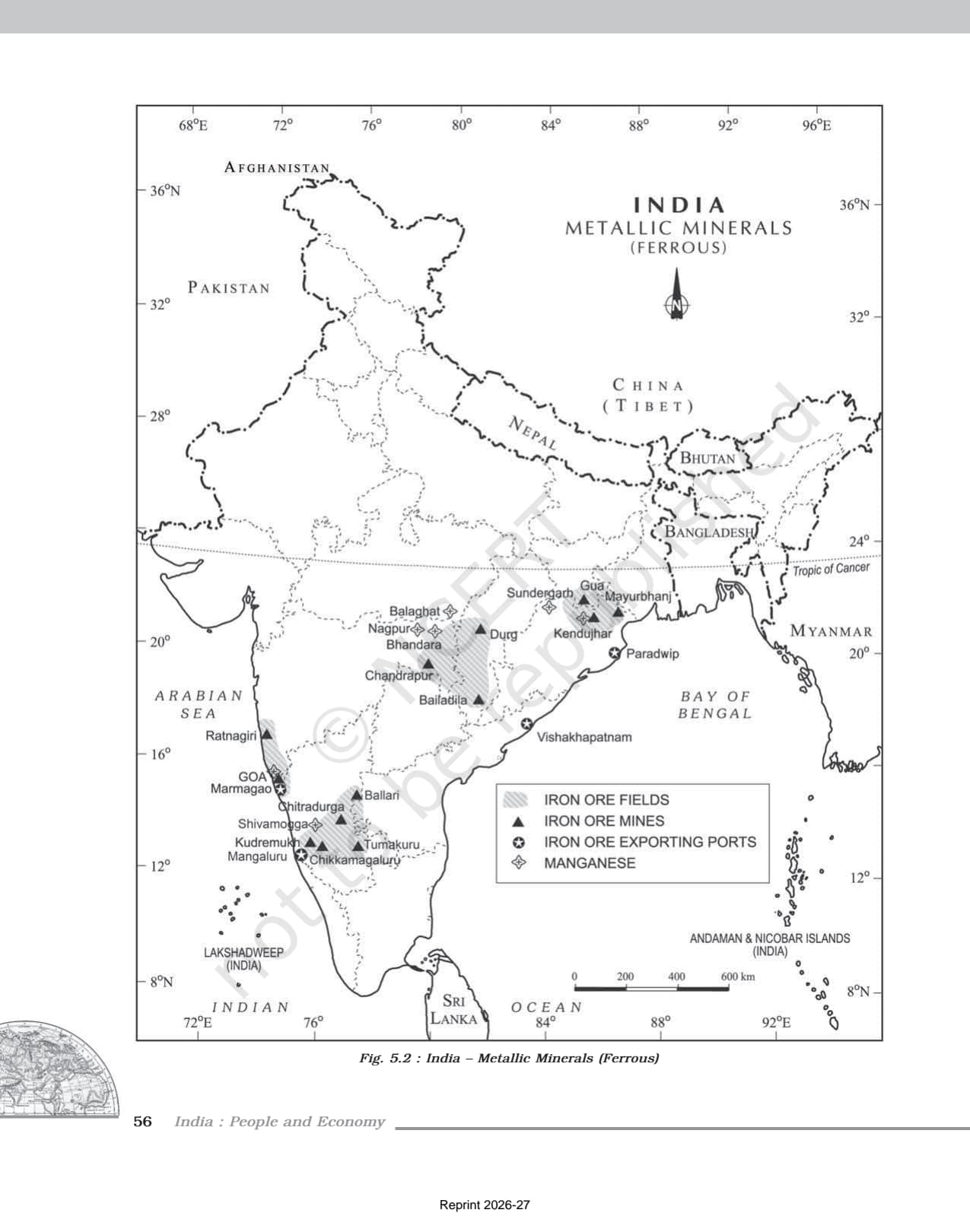
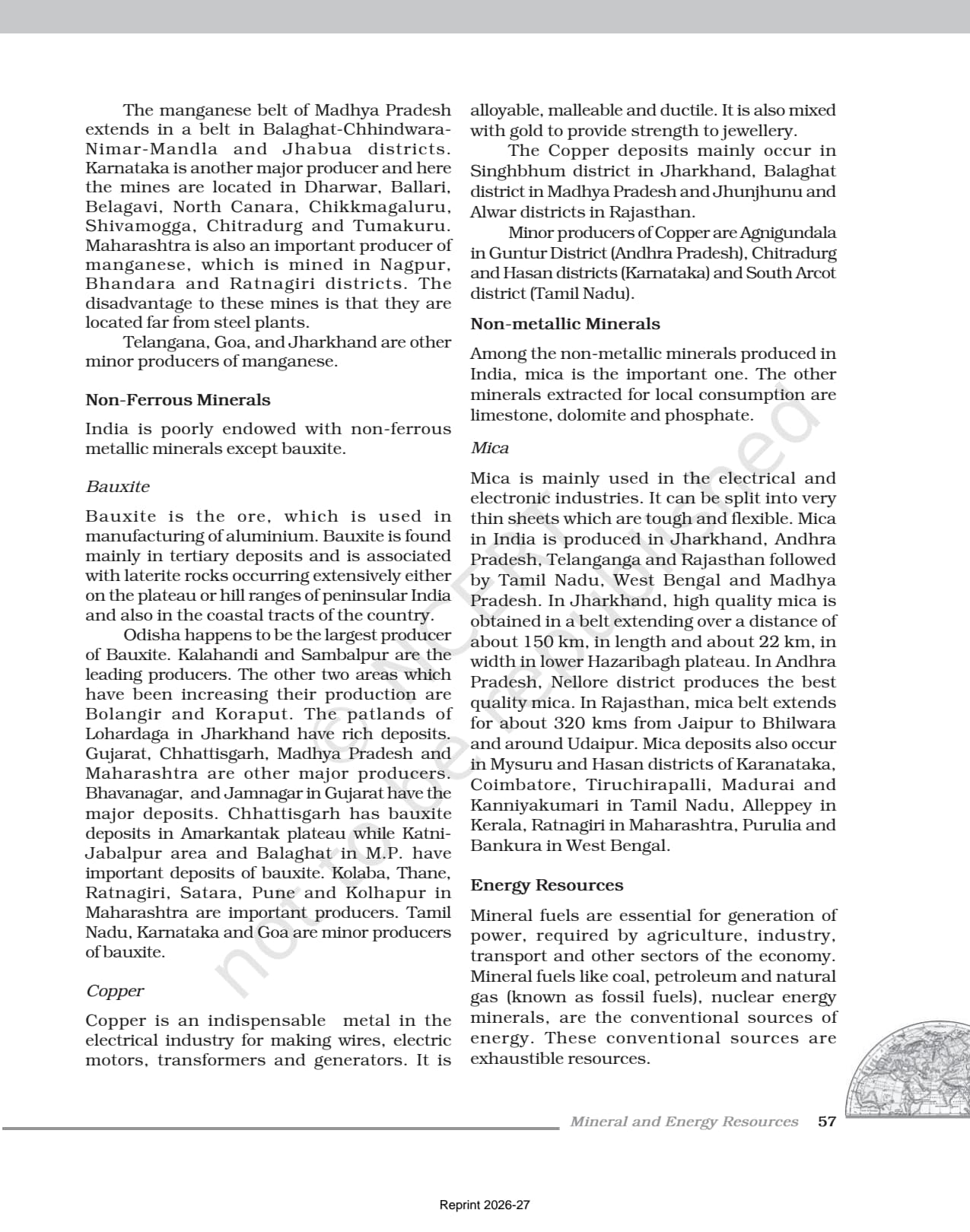
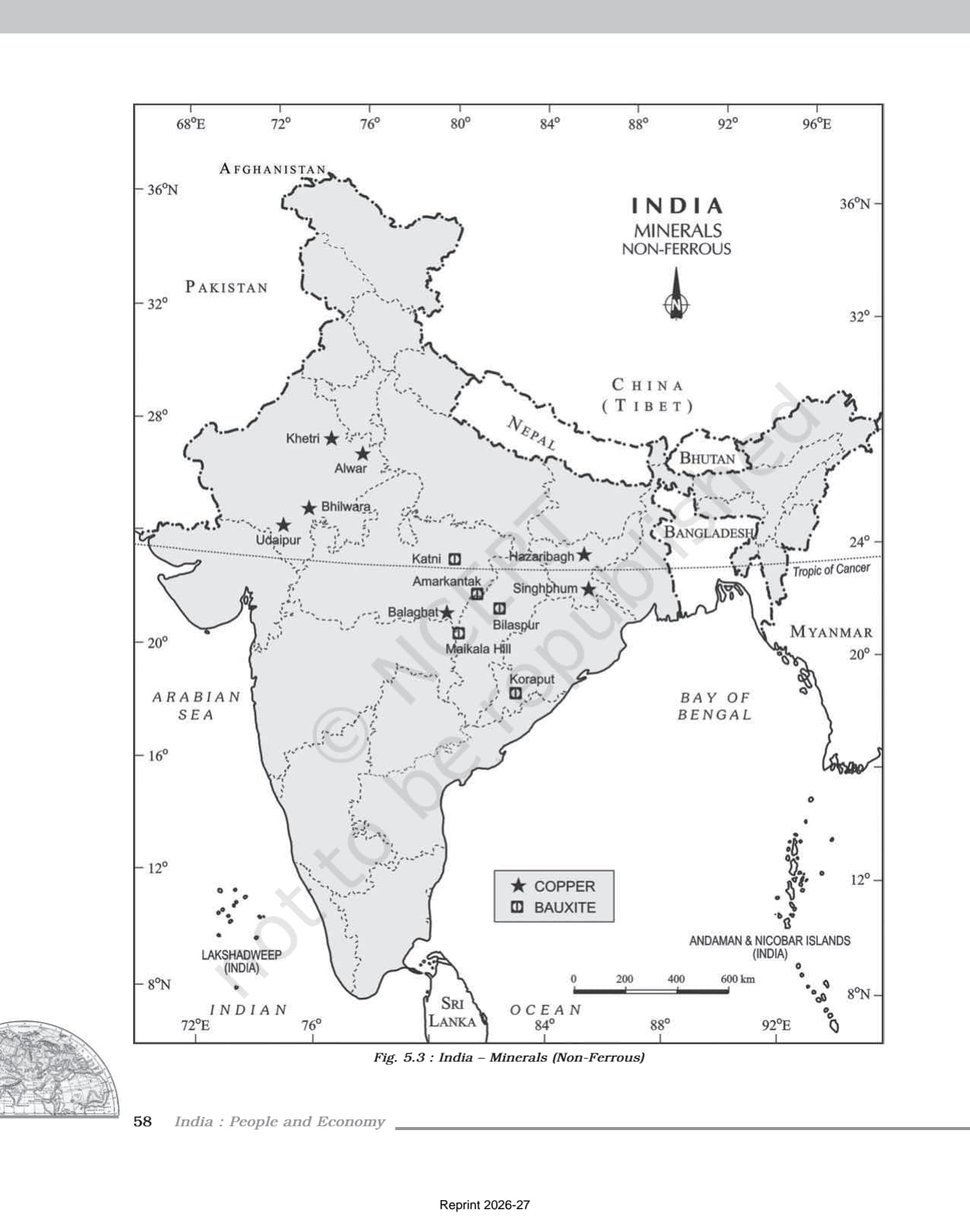
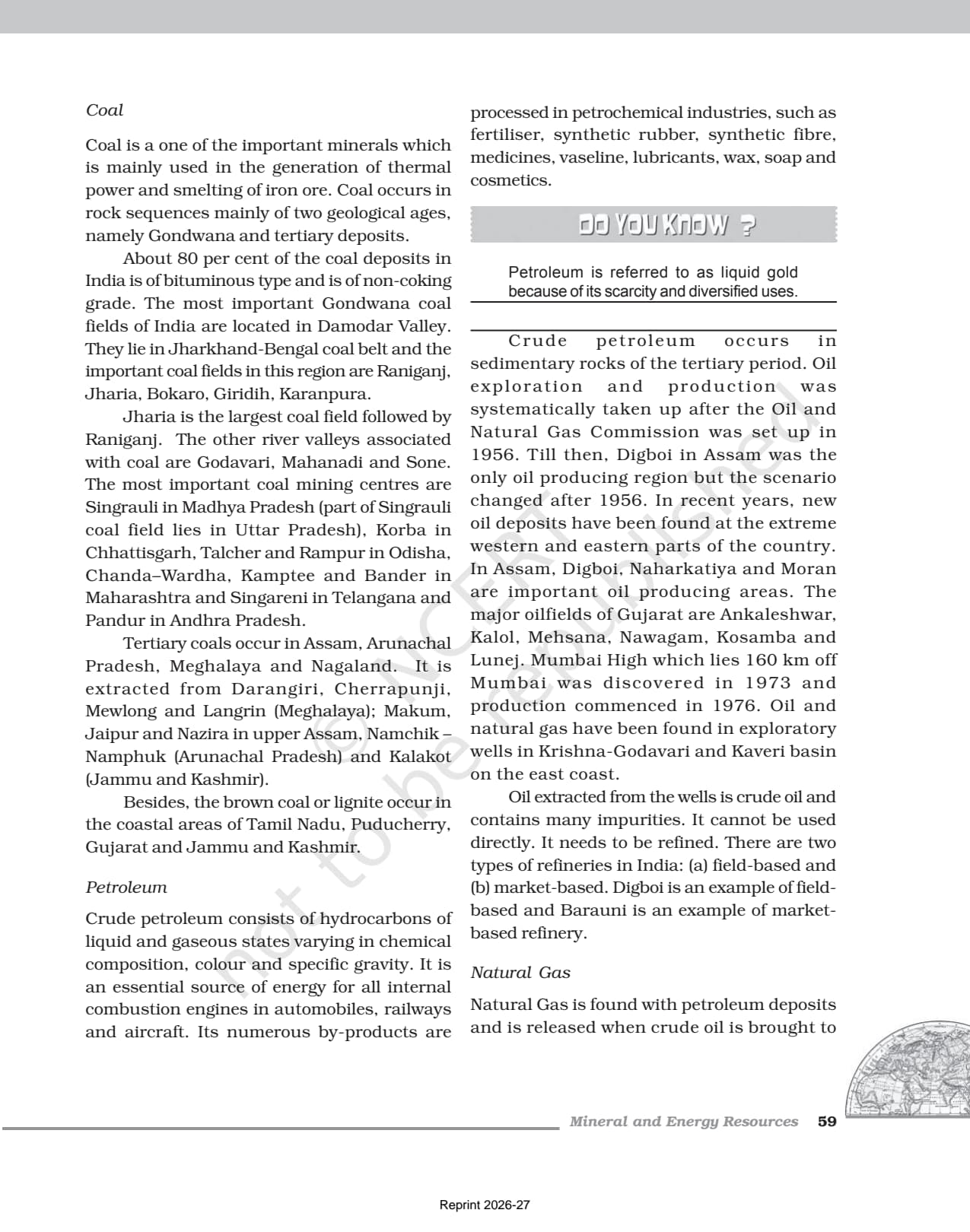
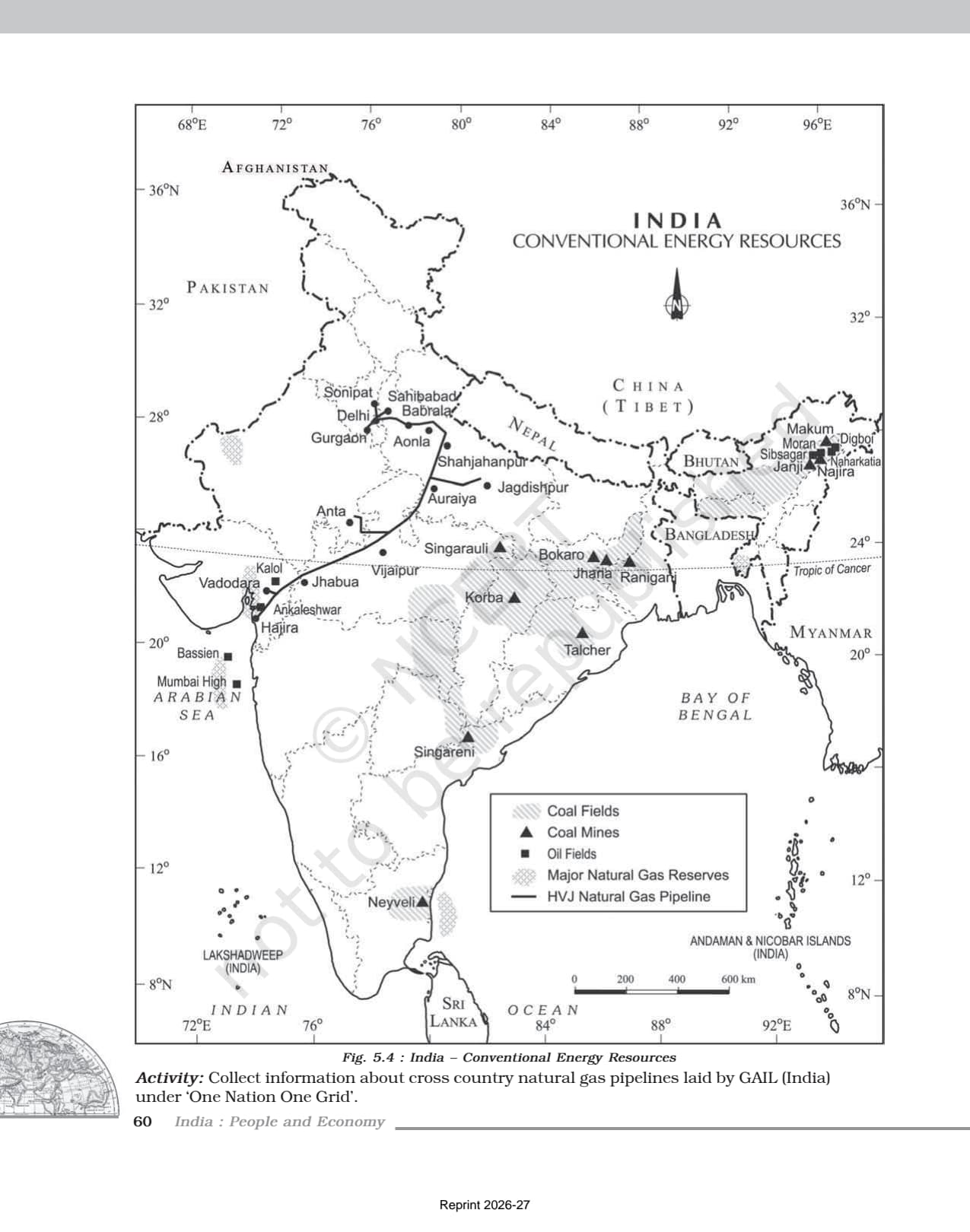
- Official NCERT India: People and Economy Class 12 Chapter 5 PDF covering ferrous and non-ferrous minerals, energy resources, nuclear energy, and non-conventional sources.
- Key exam chapter for CBSE boards, CUET, and UPSC with questions on mineral distribution belts, petroleum basins, and sustainable energy.
- Pair with the matching NCERT Solutions, Notes and Handwritten Notes for complete chapter coverage.
Student Feedback
In a 2026 Collegedunia survey of Class 12 Geography students, 83% said the NCERT textbook PDF was their primary source for Chapter 5 preparation. Students who paired the PDF with the matched Notes and Solutions averaged significantly higher marks on mineral and energy resource questions than those who relied on reference books alone.
What This Chapter Covers in the NCERT Class 12 Book
This chapter is the only document CBSE references when setting board questions on mineral distribution, energy types, and conservation, so students preparing for the 2026-27 paper should read this PDF first. It moves from a classification of minerals to their regional distribution, and then to energy sources. Minerals are divided into metallic and non-metallic types spread across three major belts. The chapter then covers conventional energy (coal, petroleum, natural gas, nuclear) and non-conventional sources (solar, wind, tidal, geothermal, bio-energy), before closing with conservation of mineral resources.
Topics in the Chapter (Section-Wise Map of the NCERT PDF)
The table below maps each section of the mineral and energy resources class 12 PDF to the key concept students need to extract for exams.
| Section | NCERT Sub-topic | Dominant Exam Concept |
|---|---|---|
| 5.1 | Types of Mineral Resources | Ferrous vs non-ferrous; metallic vs non-metallic; organic vs inorganic |
| 5.2 | Distribution of Minerals | Three major belts: North-Eastern Plateau, South-Western Plateau, North-Western Region |
| 5.3 | Ferrous Minerals | Iron ore (haematite, magnetite), manganese, chromite locations |
| 5.4 | Non-Ferrous Minerals | Copper, bauxite, mica, lead-zinc distribution |
| 5.5 | Non-Metallic Minerals | Limestone, gypsum, salt |
| 5.6 | Conventional Energy Sources | Coal fields, petroleum basins, natural gas reserves |
| 5.7 | Nuclear Energy | Uranium, thorium, nuclear power stations |
| 5.8 | Non-Conventional Energy | Solar, wind, tidal, geothermal, bio-energy |
| 5.9 | Conservation of Mineral Resources | Sustainable use, substitution, recycling, export reduction |
Conventional energy and mineral belts together account for the largest share of board questions from this chapter. Non-conventional energy is showing up more often in recent CBSE papers, so give that section equal attention.
Mineral Belts in India
The chapter identifies three major mineral belts plus a fourth Himalayan belt. The exam often asks students to name the minerals and states in each belt, so memorising this belt-wise map is a high-yield revision habit.
| Belt | States Covered | Key Minerals |
|---|---|---|
| North-Eastern Plateau | Jharkhand (Chhotanagpur), Odisha, West Bengal, Chhattisgarh | Iron ore, coal, manganese, bauxite, mica |
| South-Western Plateau | Karnataka, Goa, Tamil Nadu uplands, Kerala | Ferrous metals, bauxite, iron ore, manganese, limestone; monazite and thorium in Kerala |
| North-Western Region | Rajasthan (along Aravali), part of Gujarat | Copper, zinc, gypsum, limestone, building stones; petroleum in Gujarat |
| Himalayan Belt | Eastern and western Himalayas; Assam valley | Copper, lead, zinc, cobalt, tungsten; mineral oil in Assam |
Most major mineral resources occur to the east of a line linking Mangaluru and Kanpur, a one-line fact that appears as a short-answer question. Over 97 per cent of India's coal reserves lie in the Damodar, Sone, Mahanadi and Godavari valleys, while petroleum sits in the sedimentary basins of Assam, Gujarat and Mumbai High.
Key Concepts From the Class 12 Geography Textbook
Reproducing the exact NCERT phrasing in board answers is the fastest route to full marks on theory questions. The core concepts below are drawn straight from the chapter.
Classification of Minerals
Minerals split into metallic and non-metallic types. Metallic minerals are ferrous (with iron, like iron ore and manganese) or non-ferrous (like copper and bauxite). Non-metallic minerals are organic (fossil fuels) or inorganic (mica, limestone, graphite). The chapter stresses that minerals are unevenly distributed, exhaustible, and slow to form, a favourite short-answer point.
Iron Ore Resources
India has the largest iron ore reserve in Asia, mainly haematite and magnetite. About 95 per cent of reserves lie in Odisha, Jharkhand, Chhattisgarh, Karnataka, Goa, Telangana, Andhra Pradesh and Tamil Nadu. These mines sit close to coal fields in the north-eastern plateau, which is why major iron and steel plants cluster there, a link often tested as a HOTS question.
Petroleum Resources
Petroleum reserves lie in sedimentary basins: Assam, Gujarat, and Mumbai High (off-shore in the Arabian Sea), with newer finds in the Krishna-Godavari and Kaveri basins. Petroleum is used as fuel, as raw material for chemicals and fertilisers, and as CNG and PNG. Questions on petroleum basins appear almost every year in CBSE boards and UPSC prelims.
Non-Conventional Energy Sources
The chapter lists five non-conventional sources: solar, wind, tidal, geothermal, and bio-energy. Solar is described as 7 per cent more effective than coal or oil plants, and wind energy as pollution-free and inexhaustible. India has a geothermal plant at Manikaran (Himachal Pradesh) and a bio-energy project at Okhla (Delhi). These exact place names are common one-mark MCQ answers.
Previous Year Question Trends From This NCERT Chapter
CBSE questions from this chapter follow a stable pattern. It regularly contributes 5 to 8 marks, with three-mark short answers on mineral distribution being the most common type. Expect questions on mineral belts, petroleum basins, nuclear power stations, and non-conventional energy in 2026-27.
| Year | Question Type | Most Common Topic | Marks |
|---|---|---|---|
| 2025 | MCQ + short answer + map | Petroleum basins of India | 6 |
| 2024 | Short answer + MCQ | Non-conventional energy sources | 5 |
| 2023 | Short answer + map | Iron ore belt distribution | 5 |
| 2022 | MCQ + short answer | Nuclear power stations | 4 |
| 2020 | Long answer + MCQ | Mineral belts and conservation | 8 |
The most consistent type is a three-mark short answer on the three mineral belts or the conventional energy sources. Map-based questions locating iron ore mines, petroleum basins, or nuclear power stations appear at least once every year.
Connecting This Chapter to the Rest of Class 12 Geography
Chapter 5 links to its neighbours in the India: People and Economy book, extending the resource framework of earlier chapters to minerals and energy and feeding the conservation theme picked up later.
| Connected Chapter | Concept Inherited From Chapter 5 |
|---|---|
| Chapter 3: Land Resources and Agriculture | Natural resource framework; peninsular plateau geology |
| Chapter 4: Water Resources | Resource depletion and conservation logic |
| Chapter 6: Planning and Sustainable Development | Conservation strategies, renewable energy development |
| Chapter 7: Transport and Communication | Role of mineral belts in shaping railway and road corridors |
| Chapter 8: International Trade | Iron ore and mineral exports; strategic resource management |
Quick Glossary From the NCERT Class 12 Geography Chapter
These terms often appear in one-mark MCQs and short answers. Students should be able to define each one in a single line.
- Mineral: A natural substance of organic or inorganic origin with definite chemical and physical properties.
- Ferrous minerals: Minerals that contain iron, such as iron ore, manganese and chromite.
- Non-ferrous minerals: Metallic minerals without iron, such as copper, bauxite and gold.
- Haematite: One of the two main types of iron ore in India, with strong demand for its superior quality.
- Nuclear energy: Energy from uranium and thorium via atomic fission; uranium from Singhbhum, thorium from Kerala and Tamil Nadu monazite sands.
- Geothermal energy: Heat energy from magma or hot springs; India's plant is at Manikaran, Himachal Pradesh.
- Bio-energy: Energy from agricultural residues and municipal or industrial waste; example project at Okhla, Delhi.
Energy Resources: Conventional and Non-Conventional
The chapter divides energy into conventional (exhaustible) and non-conventional (renewable) sources. The textbook calls non-conventional sources "more equitably distributed and environment-friendly", a phrase that has appeared in CBSE marking schemes.
Conventional Energy Sources
- Coal: Over 97 per cent of reserves in Damodar, Sone, Mahanadi and Godavari valleys. Gondwana coal fields are the most important.
- Petroleum: Reserves in Assam, Gujarat, Mumbai High; new finds in Krishna-Godavari and Kaveri basins.
- Natural Gas: Found in Mumbai High and allied fields on the west coast, supplemented by Cambay basin and Krishna-Godavari finds. Used as CNG (transport) and PNG (cooking).
- Nuclear Energy: Uranium from Singhbhum copper belt (Jharkhand) and Rajasthan. Thorium from monazite sands in Kerala and Tamil Nadu. Key plants: Tarapur, Kalpakkam, Narora, Rawatbhata, Kaiga, Kakarapara.
Non-Conventional Energy Sources
- Solar Energy: Tapped via photovoltaics and solar thermal technology. Gujarat and Rajasthan have the greatest potential. Solar is 7% more effective than coal/oil plants.
- Wind Energy: Pollution-free; kinetic energy converted to electrical energy. Favourable conditions in Rajasthan, Gujarat, Maharashtra and Karnataka.
- Tidal Energy: India has potential along the west coast but these have not yet been fully utilised.
- Geothermal Energy: Plant commissioned at Manikaran, Himachal Pradesh.
- Bio-energy: Municipal waste converted to energy at Okhla, Delhi.
Also Explore Other Resources for Class 12 Geography
| Resource | Link |
|---|---|
| NCERT Solutions | Class 12 Geography Chapter 5 NCERT Solutions |
| Revision Notes | Class 12 Geography Chapter 5 Notes |
| Handwritten Notes | Class 12 Geography Chapter 5 Handwritten Notes |
| Subject Hub | Class 12 Geography All Chapters |
All Chapters: Class 12 Geography India People and Economy NCERT Book PDF
| Chapter | NCERT Book PDF |
|---|---|
| Chapter 1 | Population Distribution, Density, Growth and Composition |
| Chapter 2 | Human Settlements NCERT Book PDF |
| Chapter 3 | Land Resources and Agriculture NCERT Book PDF |
| Chapter 4 | Water Resources NCERT Book PDF |
| Chapter 5 | Mineral and Energy Resources NCERT Book PDF (You are here) |
| Chapter 6 | Planning and Sustainable Development NCERT Book PDF |
| Chapter 7 | Transport and Communication NCERT Book PDF |
| Chapter 8 | International Trade NCERT Book PDF |
| Chapter 9 | Geographical Perspective on Selected Issues NCERT Book PDF |
Frequently Asked Questions on Class 12 Geography Chapter 5 NCERT Book PDF
Ques. Where can students download the official NCERT Class 12 Geography Chapter 5 PDF?
Ans. Students can download the official mineral and energy resources class 12 NCERT book PDF directly from the download card at the top of this page. The PDF is the Chapter 5 file from the NCERT India: People and Economy textbook, aligned to the 2026-27 CBSE syllabus.
Ques. What are the three major mineral belts in India according to the NCERT Class 12 Geography chapter?
Ans. The three major mineral belts are: the North-Eastern Plateau Region (Jharkhand, Odisha, West Bengal, Chhattisgarh - rich in iron ore, coal, manganese, bauxite, mica); the South-Western Plateau Region (Karnataka, Goa, Tamil Nadu, Kerala - ferrous metals, bauxite, monazite); and the North-Western Region (Rajasthan along Aravali and part of Gujarat - copper, zinc, gypsum, petroleum).
Ques. What are the two types of iron ore found in India as per the NCERT textbook?
Ans. According to the NCERT chapter, the two main types of iron ore in India are haematite and magnetite. India has the largest reserve of iron ore in Asia. About 95 per cent of reserves are concentrated in Odisha, Jharkhand, Chhattisgarh, Karnataka, Goa, Telangana, Andhra Pradesh and Tamil Nadu.
Ques. Which states are the major petroleum-producing regions of India according to the NCERT Class 12 Geography chapter?
Ans. The NCERT chapter identifies Assam, Gujarat, and Mumbai High (off-shore in the Arabian Sea) as the major petroleum-producing regions. New reserves have also been discovered in the Krishna-Godavari and Kaveri basins along the eastern coast. Mumbai High is the largest single petroleum reserve.
Ques. What are non-conventional energy sources listed in the NCERT Class 12 Geography chapter?
Ans. The NCERT chapter lists five non-conventional energy sources: solar energy (photovoltaics and solar thermal; greatest potential in Gujarat and Rajasthan), wind energy (favourable in Rajasthan, Gujarat, Maharashtra, Karnataka), tidal energy (potential on west coast, not yet fully utilised), geothermal energy (plant at Manikaran, Himachal Pradesh), and bio-energy (Okhla project, Delhi).
Ques. What are the important nuclear power stations mentioned in the NCERT Class 12 Geography chapter?
Ans. The NCERT chapter lists six nuclear power stations: Tarapur (Maharashtra), Rawatbhata near Kota (Rajasthan), Kalpakkam (Tamil Nadu), Narora (Uttar Pradesh), Kaiga (Karnataka), and Kakarapara (Gujarat). The first atomic power station in India was at Tarapur.
Ques. What are the characteristics of mineral resources as described in the NCERT Class 12 Geography textbook?
Ans. The NCERT chapter identifies three key characteristics of minerals: they are unevenly distributed over space; there is an inverse relationship between quality and quantity (good quality minerals are fewer in quantity); and they are exhaustible over time and take long to form geologically. Because of these characteristics, the chapter emphasises the need for conservation.
Ques. Where is uranium found in India according to the NCERT Chapter 5?
Ans. Uranium deposits occur in Dharwar rocks. Geographically, uranium ores are found along the Singhbhum Copper Belt in Jharkhand. They are also present in Udaipur, Alwar and Jhunjhunu districts of Rajasthan, Durg district of Chhattisgarh, Bhandara district of Maharashtra, and Kullu district of Himachal Pradesh.
Ques. What does the NCERT chapter say about conservation of mineral resources?
Ans. The NCERT chapter states that conservation requires developing alternative energy sources (solar, wind, wave, geothermal) to replace exhaustible ones. For metallic minerals, recycling of scrap metals (especially copper, lead, and zinc) is recommended. Using substitutes for scarce metals and reducing exports of strategic minerals are also highlighted. Sustainable development requires integrating economic growth with environmental concerns.
Ques. Is the Class 12 Geography syllabus changing for 2026-27?
Ans. No major structural changes have been announced for 2026-27. The India: People and Economy textbook chapter structure remains unchanged, and the official NCERT PDF on this page is aligned to the 2026-27 CBSE syllabus. CBSE marking schemes continue to reward textbook phrasing in theory answers and accurate map-based responses.
Ques. What is the best order to use the NCERT PDF, Notes, and Solutions for Class 12 Geography Chapter 5?
Ans. Read the NCERT PDF first (cold read noting unfamiliar mineral names and locations). Then open the matching Class 12 Geography Chapter 5 Notes alongside the PDF to build your belt-wise mineral map. Attempt all end-of-chapter questions and verify against the NCERT Solutions. Use the Handwritten Notes for last-mile revision the day before the board exam.



Comments