




These Class 12 Geography Chapter 9 Geographical Perspective on Selected Issues and Problems handwritten notes are a topper's genuine handwritten pages for quick last-mile revision, in line with the 2026-27 CBSE syllabus. They cover all four major issues in the chapter: environmental pollution (water, air, land, noise), urban waste disposal, urban growth and slums, and land degradation with watershed management. Use the PDF in the 24 hours before the board paper.
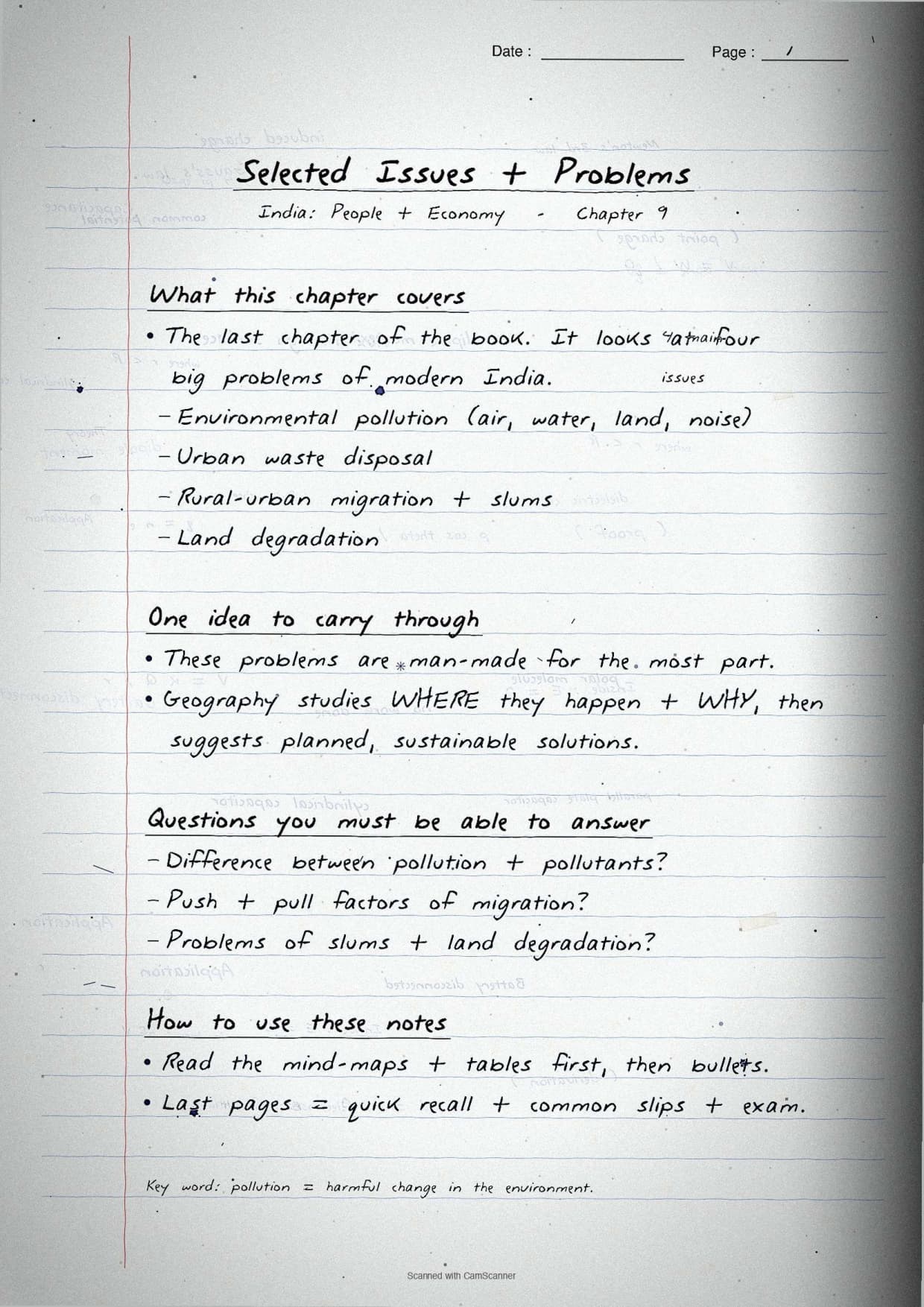
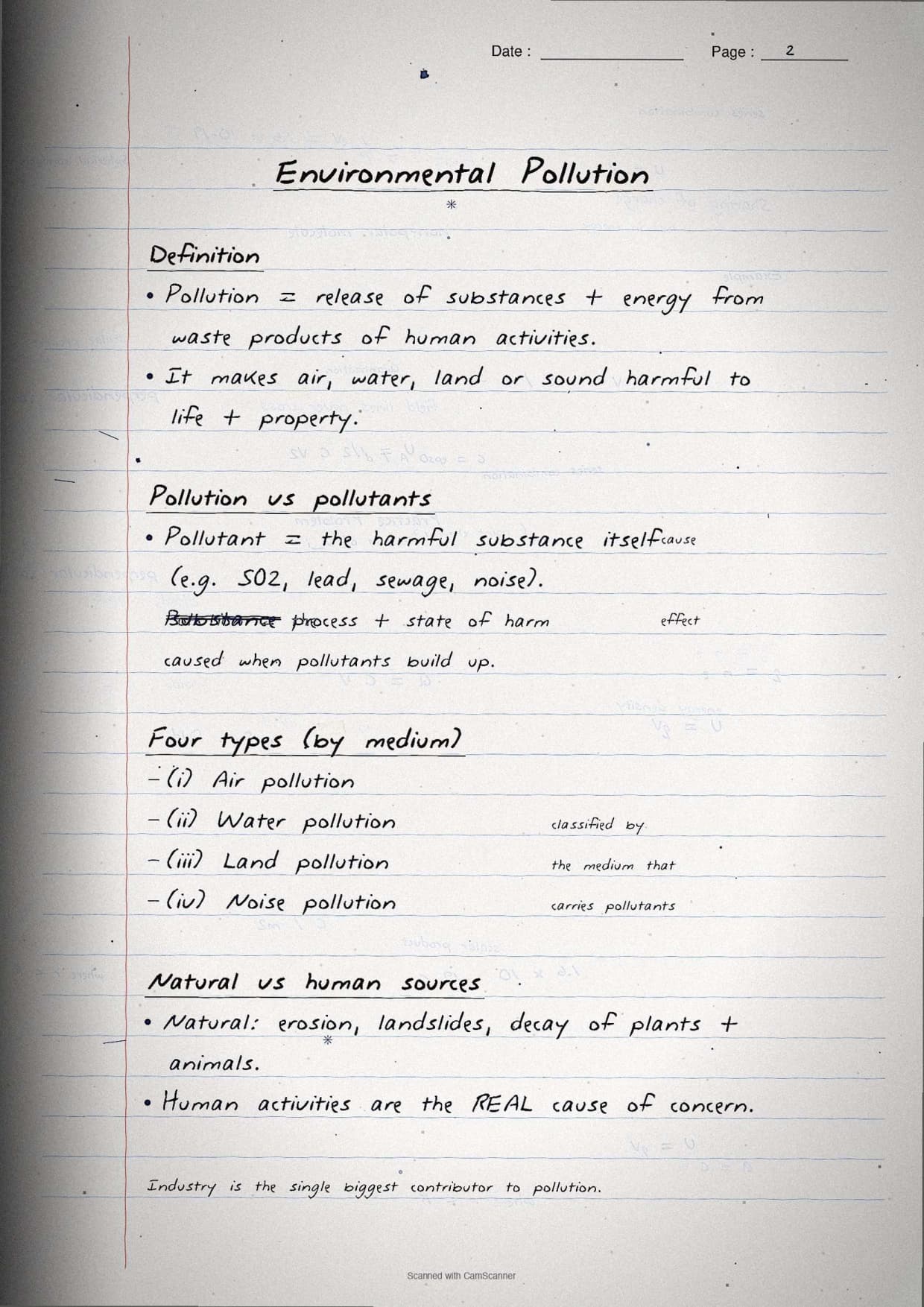
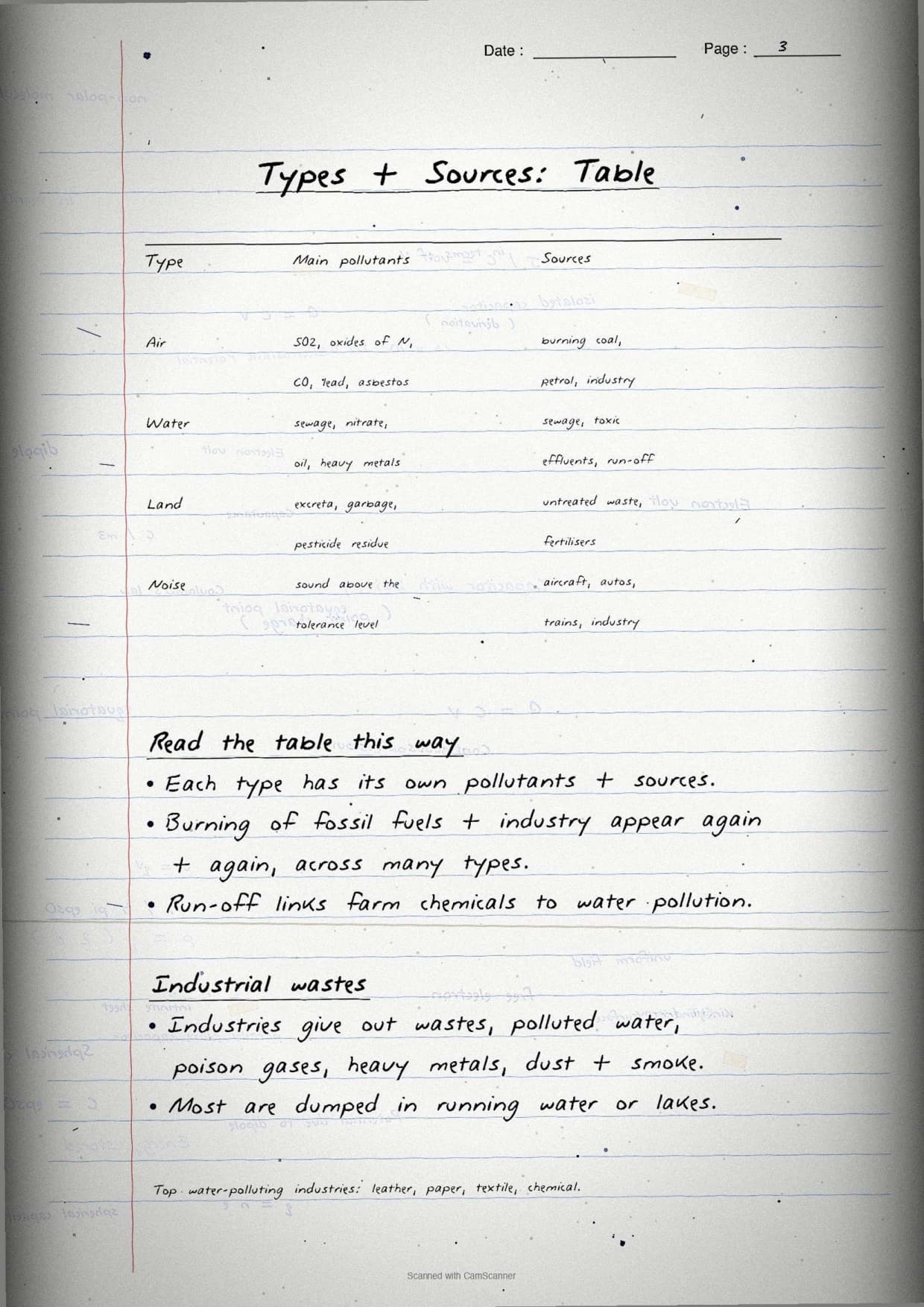
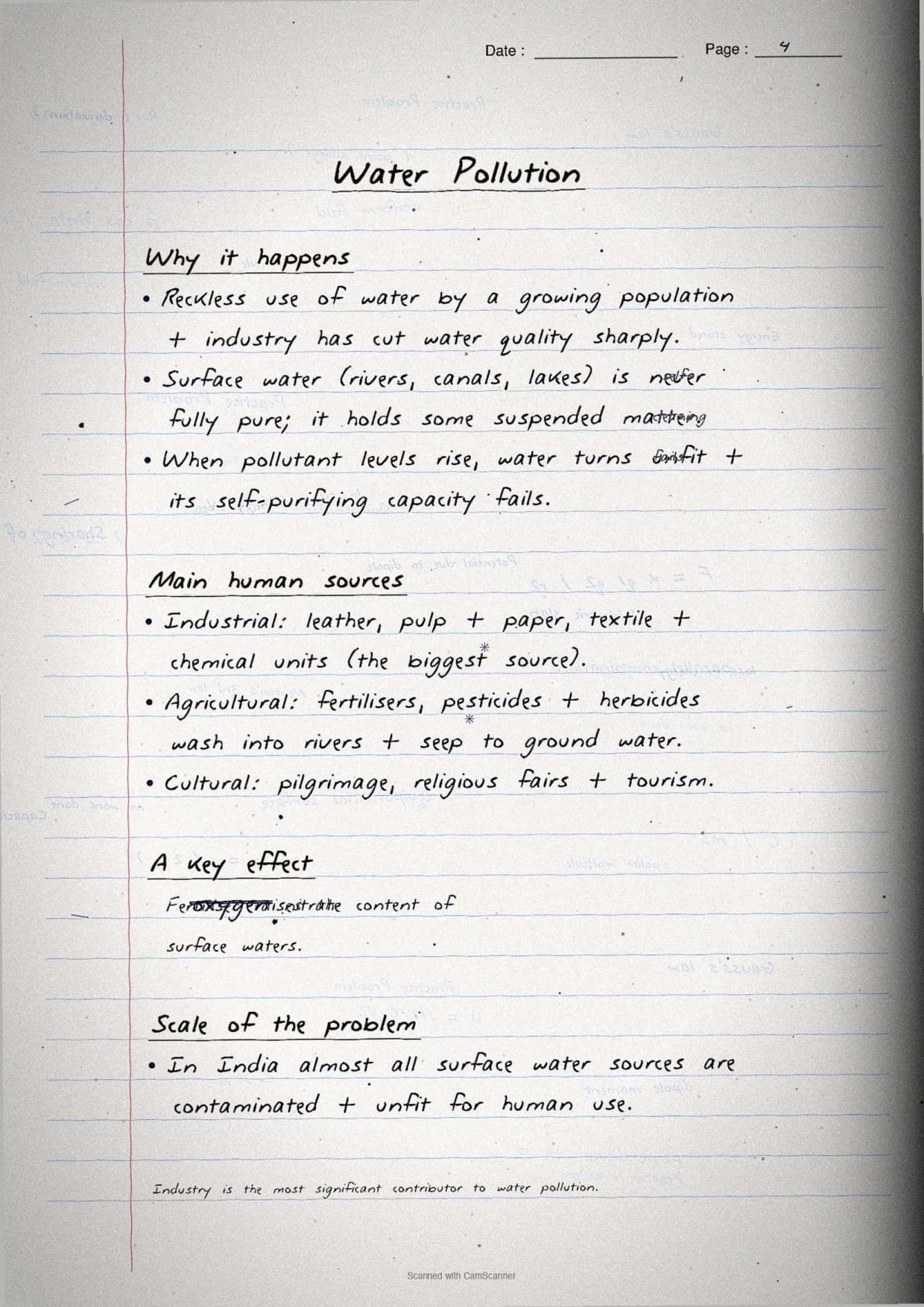
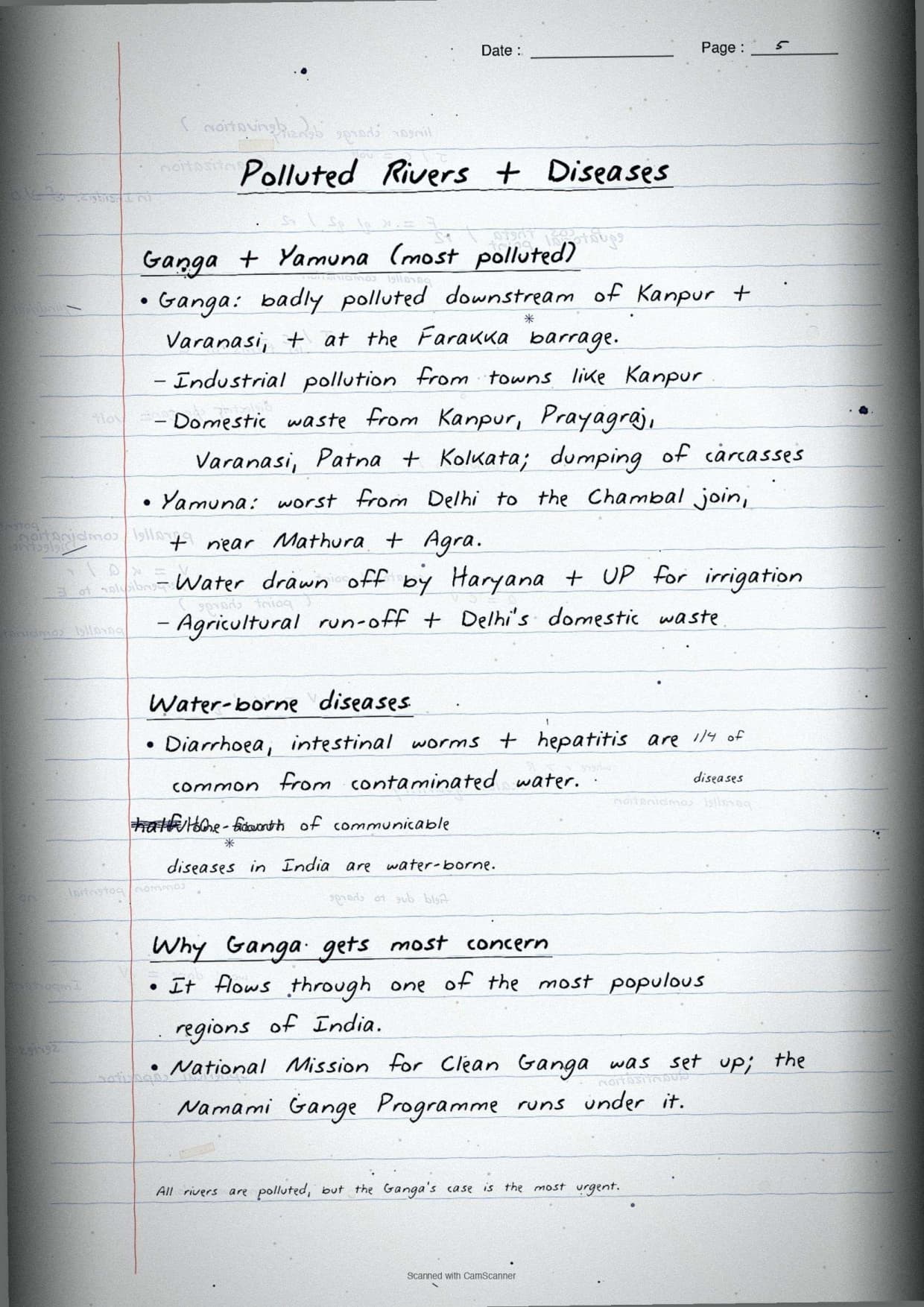
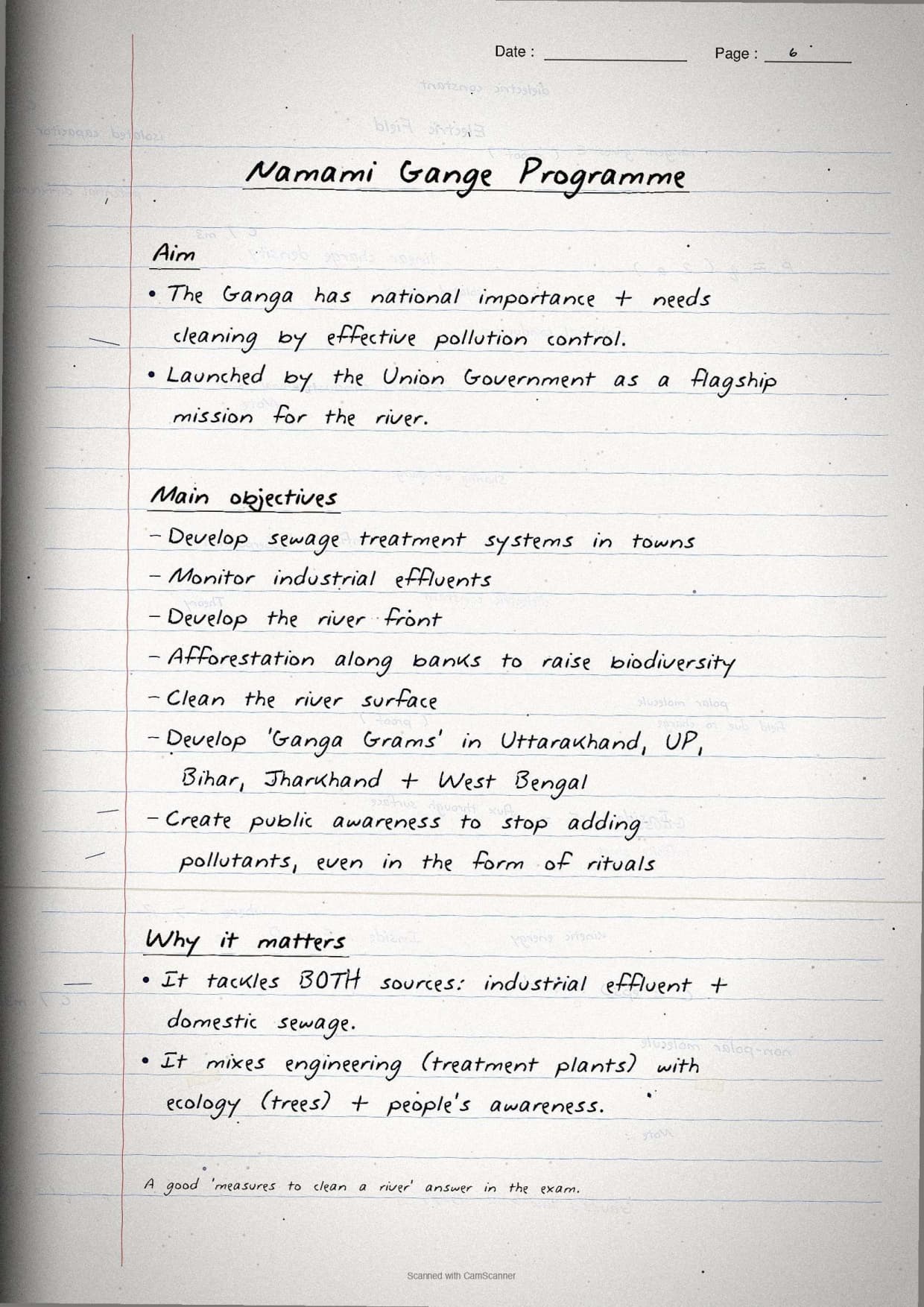
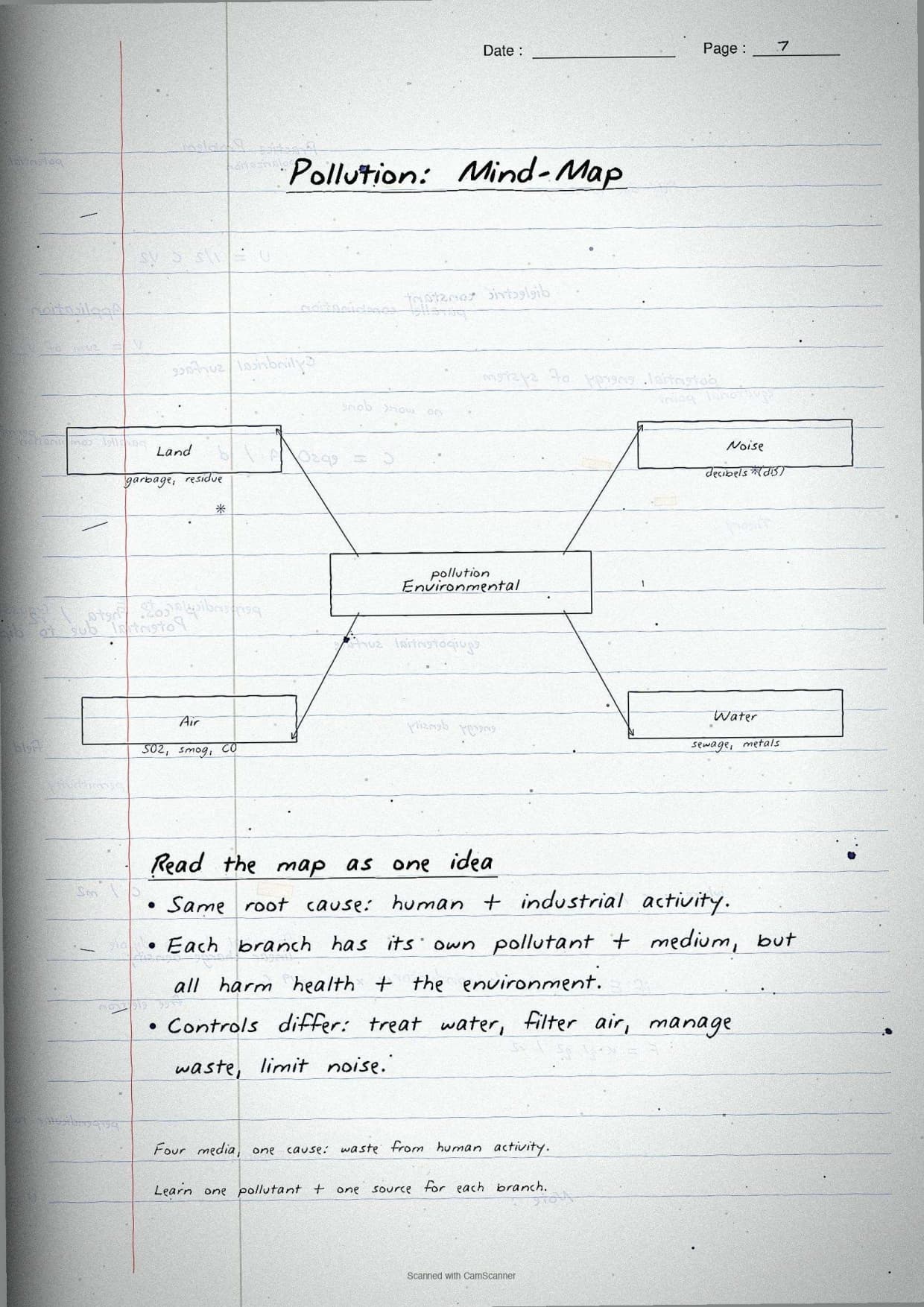
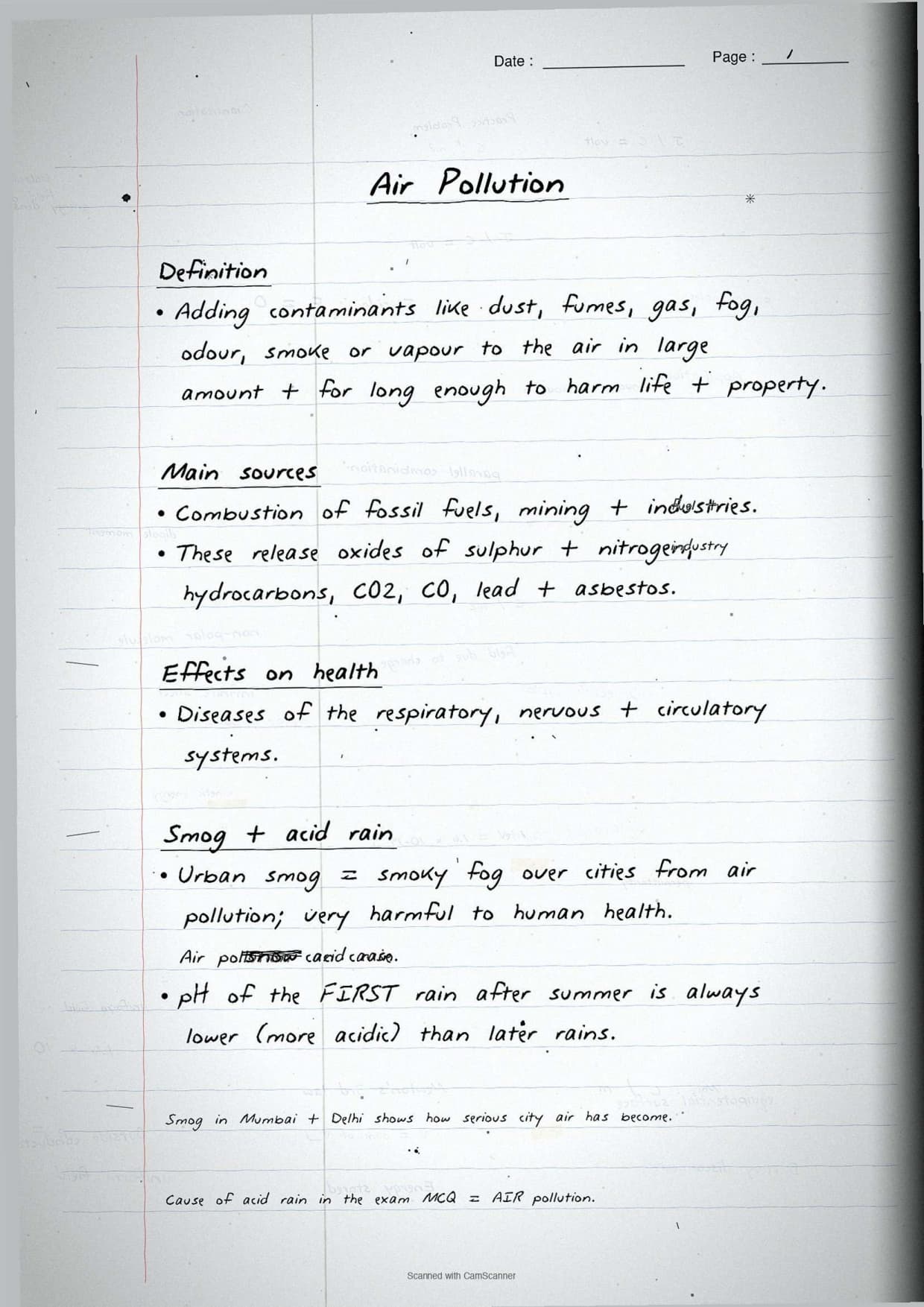
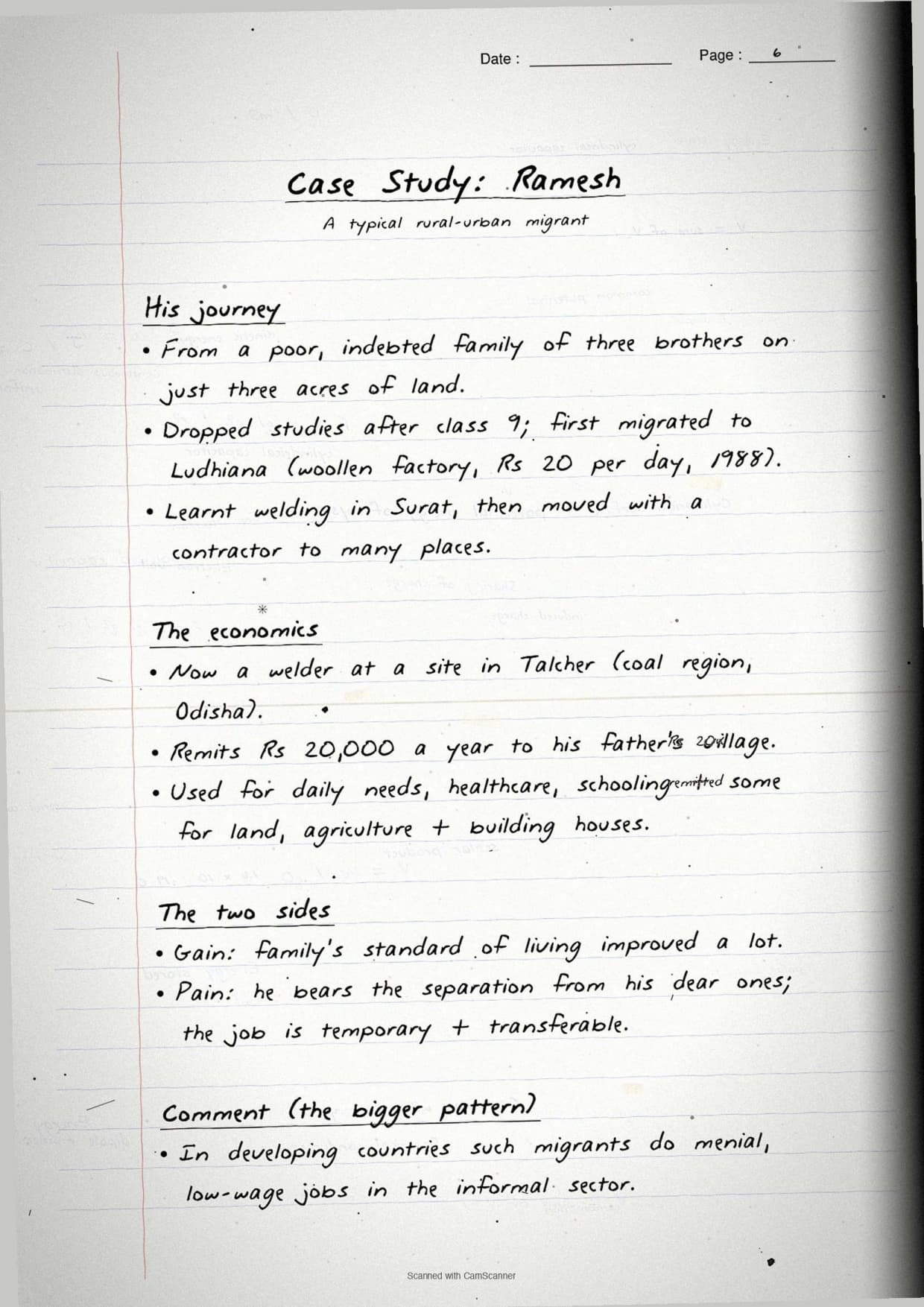
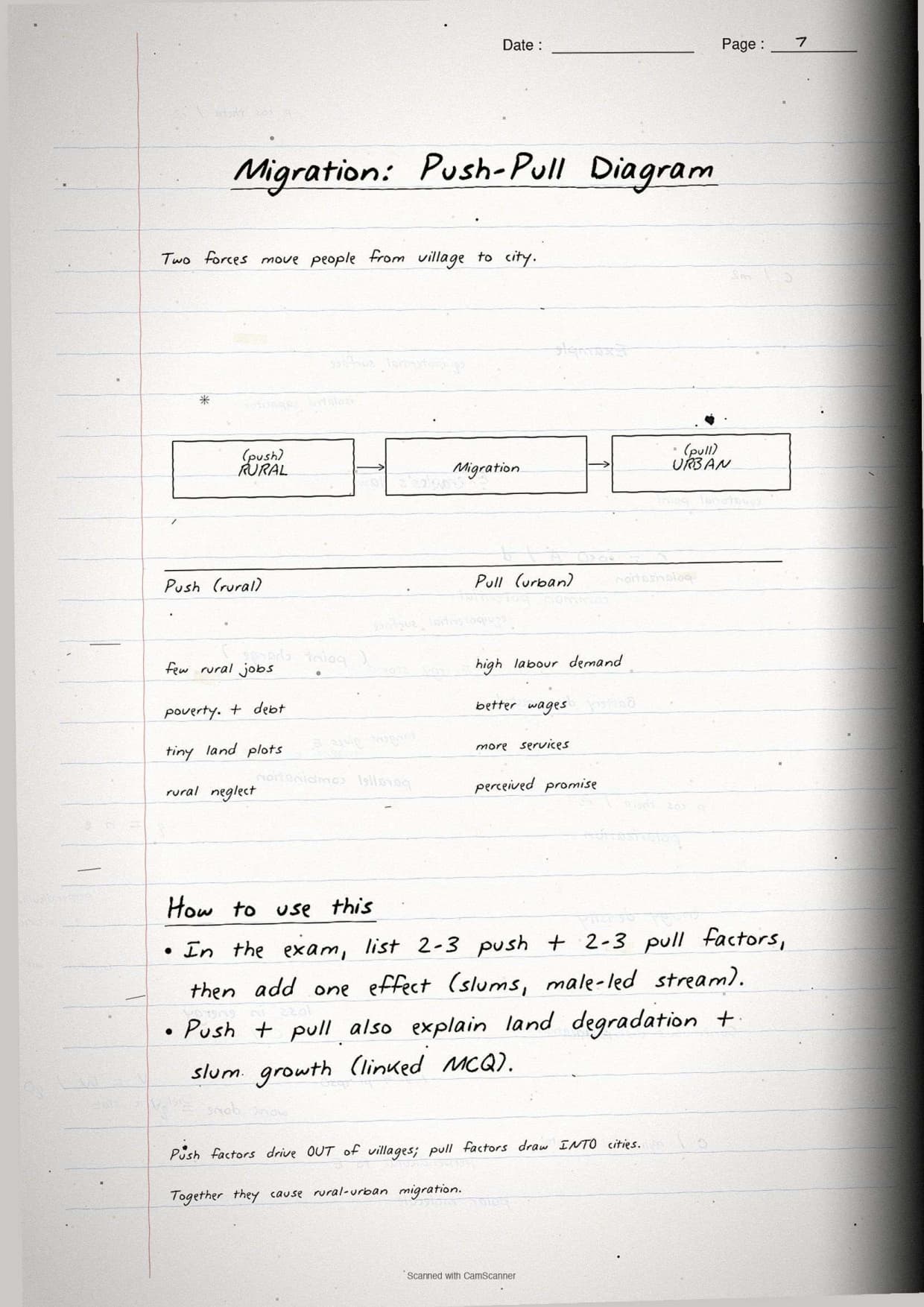
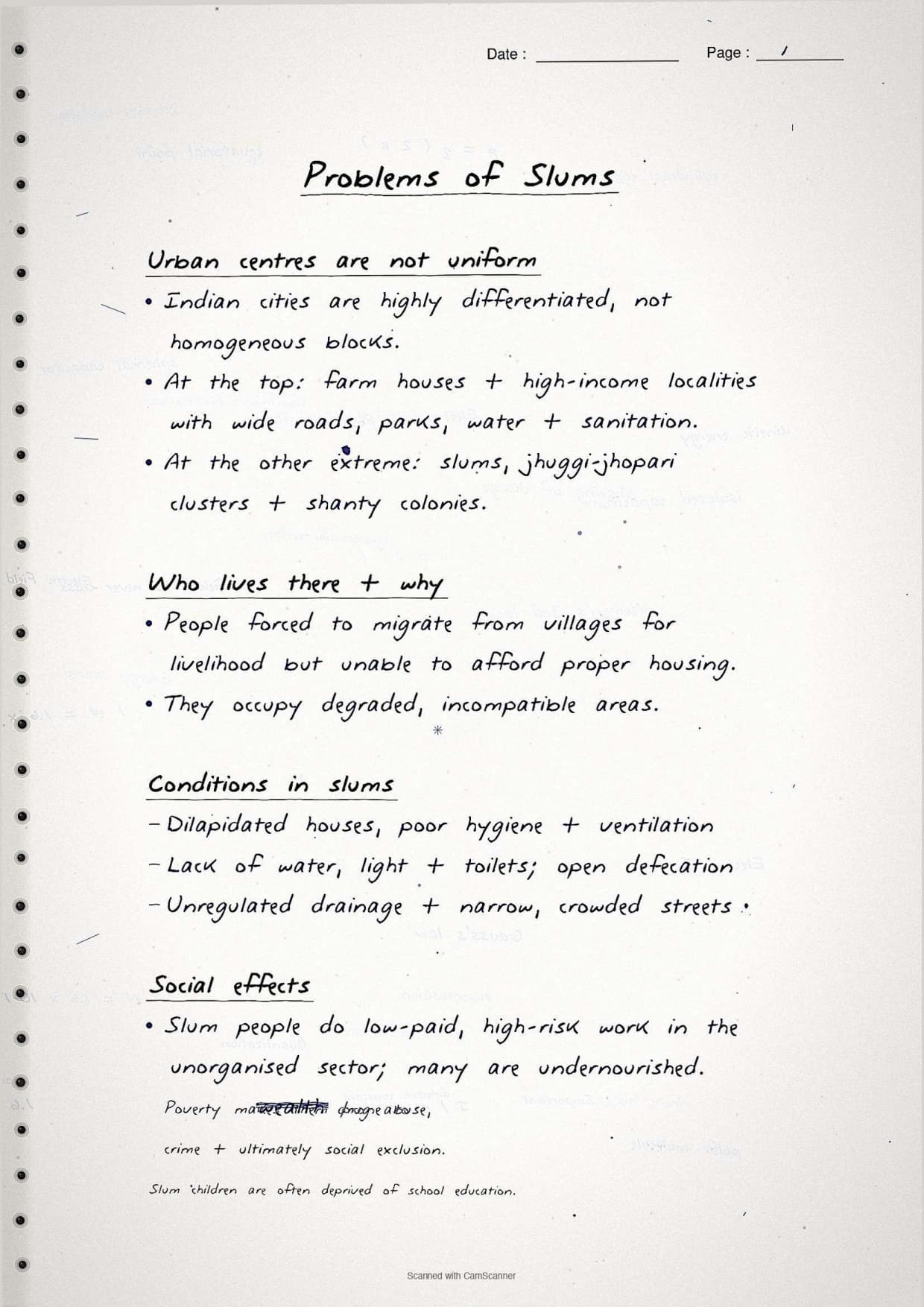
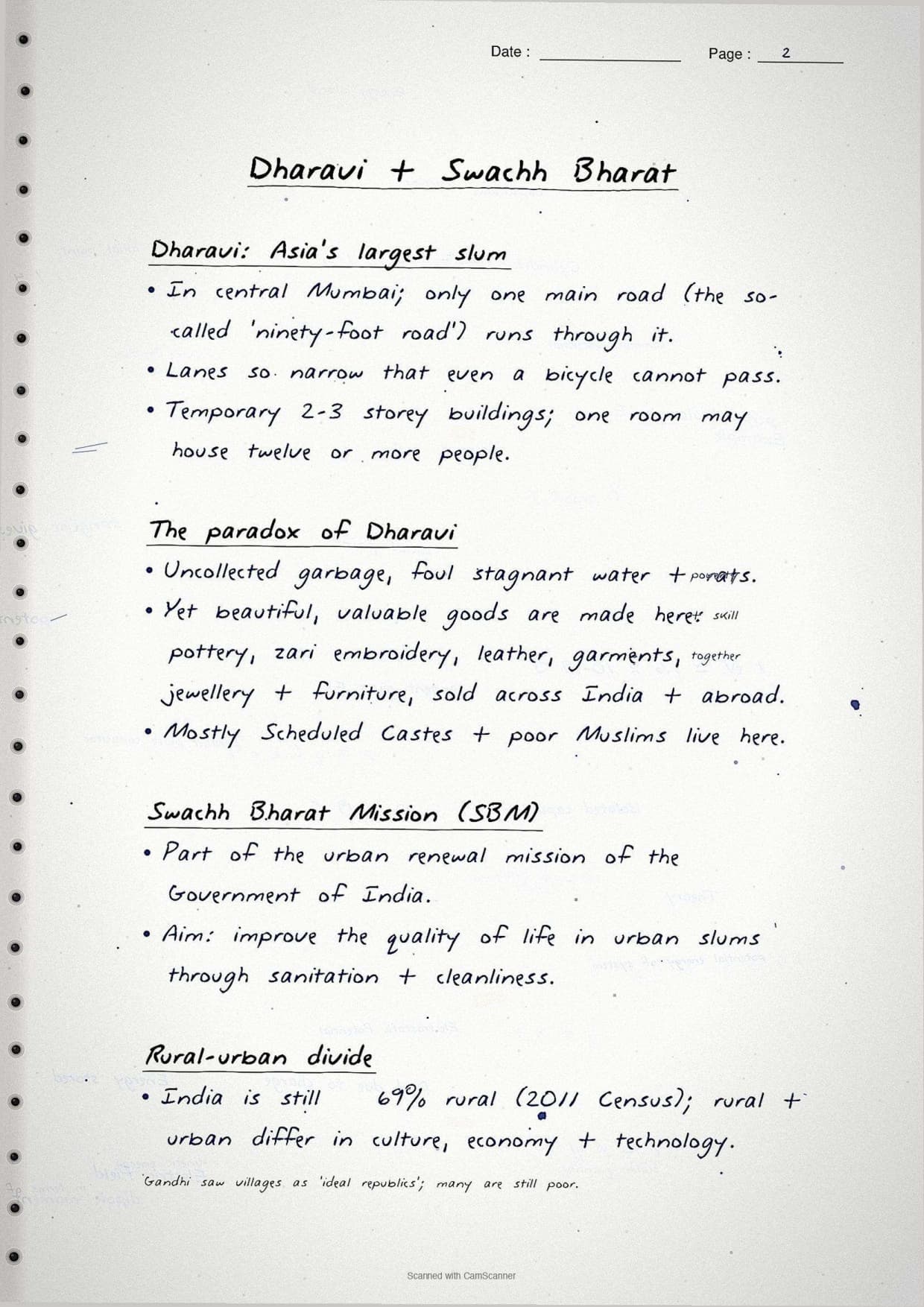
- Topper's handwritten revision notes covering all of CBSE Class 12 Geography India People and Economy Chapter 9.
- 5-6 marks weightage in the Class 12 Geography board paper, with pollution types, urban waste problems, slum causes and land degradation measures worked out by hand in comparison boxes.
- Pairs with the typed NCERT Solutions, typed Notes and the official NCERT Book PDF for the same chapter.

Every page maps to the 2026-27 NCERT India People and Economy textbook and the last five years of CBSE board papers.
Student Feedback
72% of Class 12 students said handwritten notes feel faster to revise than typed PDFs, and most finished one full pass in about 22 minutes.
Source: 2026-27 Class 12 Geography handwritten-notes feedback poll, 9,860 CBSE students.
What These Handwritten Notes Include
The geographical perspective on selected issues and problems class 12 handwritten notes PDF is a 5 to 6 page revision file covering every concept tested in Chapter 9: the four types of environmental pollution (water, air, land, noise), the Ganga and Yamuna river pollution table, the Namami Gange Programme, urban waste disposal, urban slums (push and pull factors), and land degradation with the Jhabua case study. It is built for last-mile revision, not first-time concept building.
| Page | What the page covers | Approx revision time |
|---|---|---|
| Page 1 | Introduction to environmental pollution; classification into water, air, land and noise; NCERT Table 9.1 types and sources. | 5 minutes |
| Page 2 | Water pollution in depth: industrial, agricultural and cultural sources; Ganga and Yamuna river pollution table; Namami Gange Programme objectives. | 6 minutes |
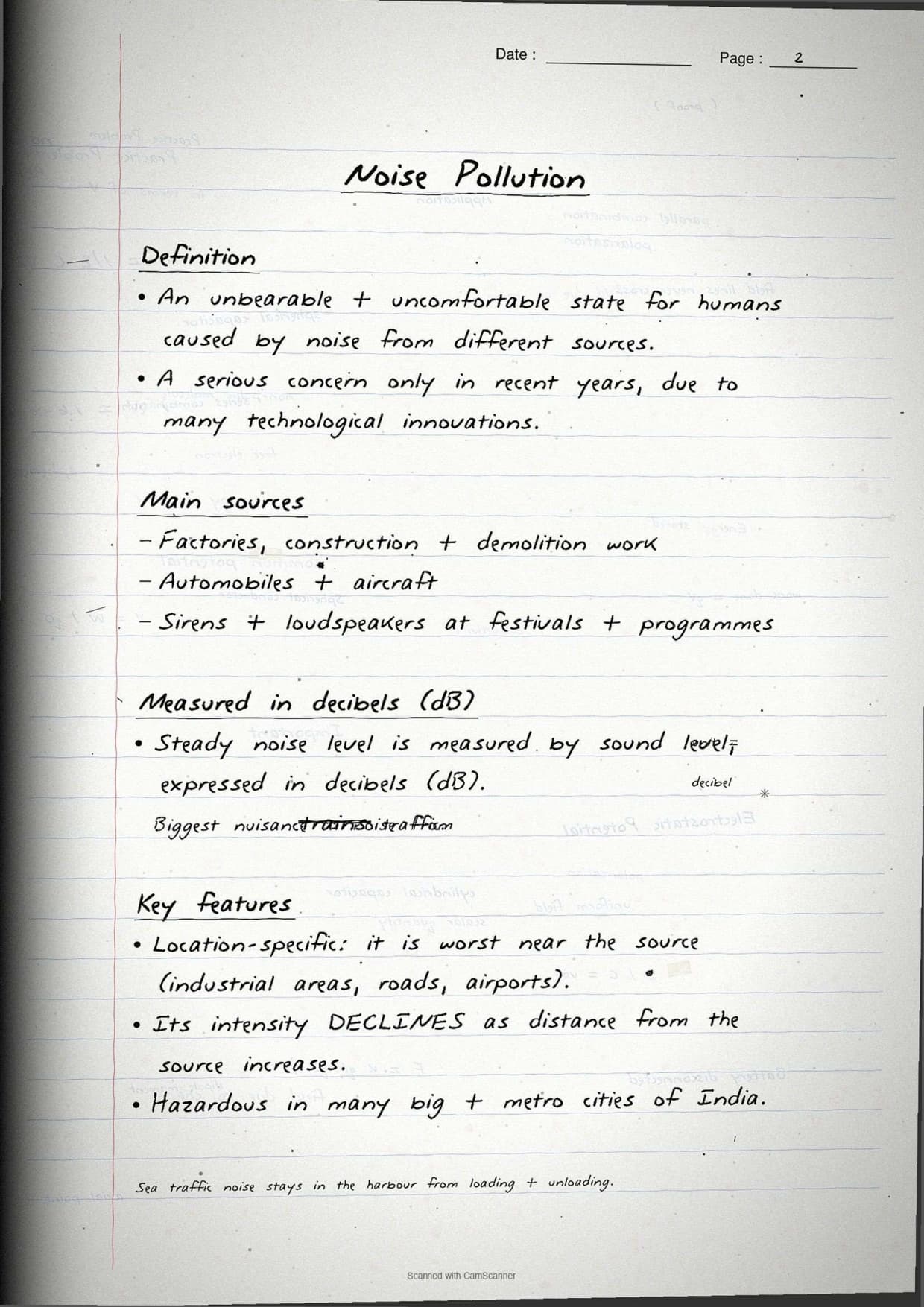
| Page 3 | Air pollution: causes, toxic gases, urban smog, acid rain; noise pollution: sources, decibel measure, location-specific intensity. | 5 minutes |
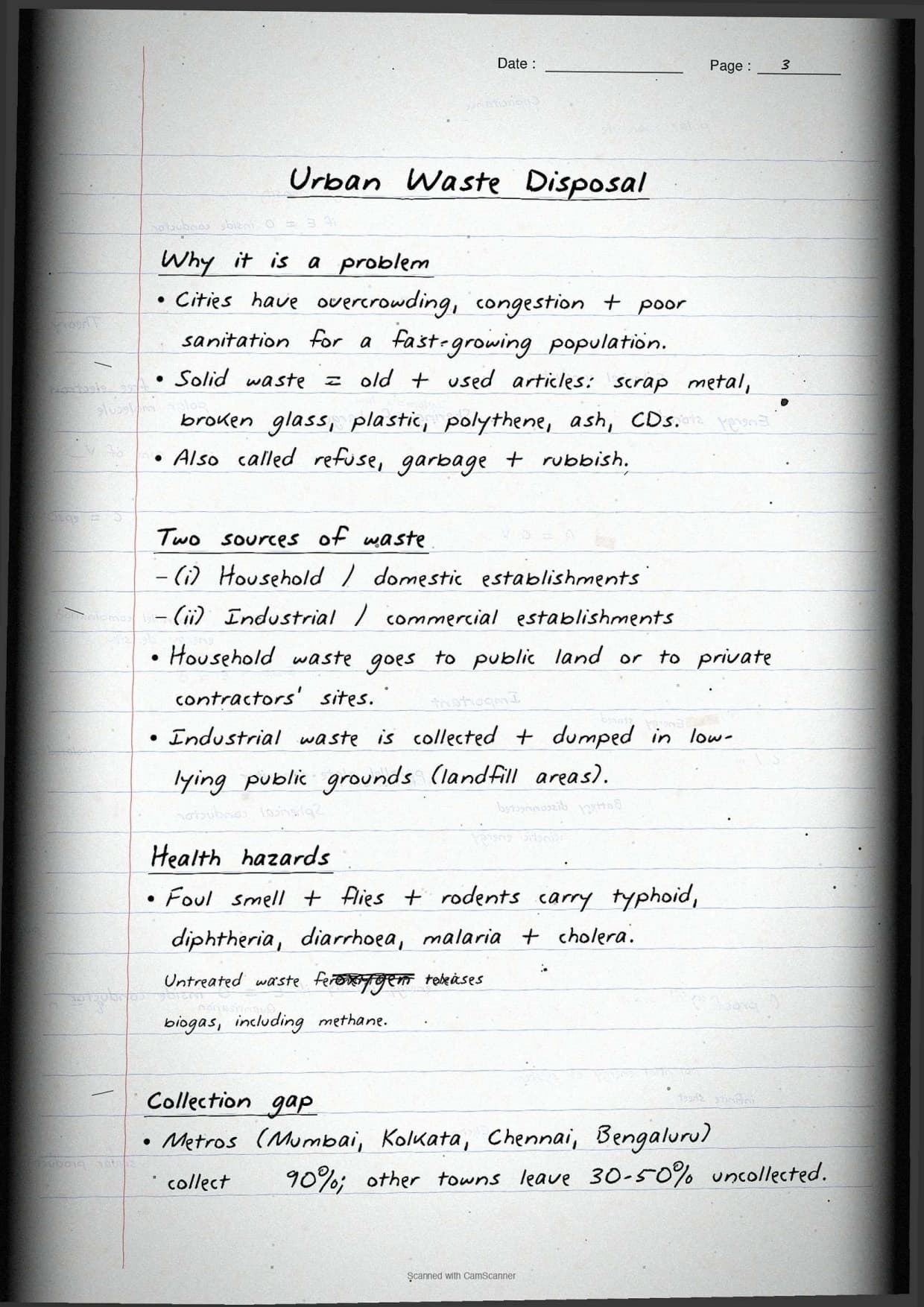
| Page 4 | Urban waste disposal: solid waste categories, municipal solid waste, e-waste; push and pull factors causing urban slum formation. | 5 minutes |
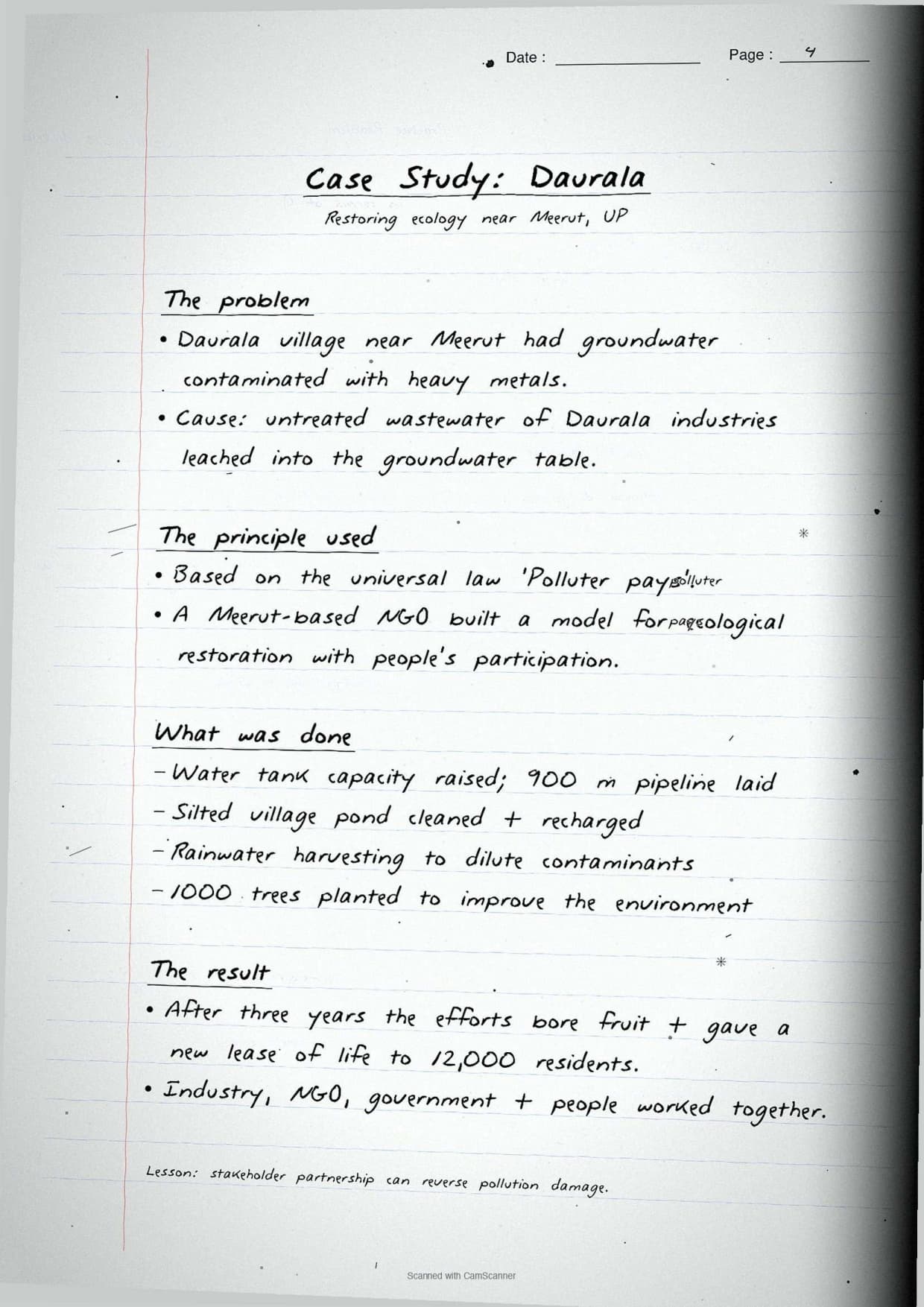
| Page 5 | Land degradation: human vs natural processes, wastelands data; Jhabua case study on watershed management and community participation. | 5 minutes |
Environmental Pollution: All Four Types at a Glance
Environmental pollution is the heart of Chapter 9. NCERT Table 9.1 (types, pollutants and sources) is reproduced on Page 1, because CBSE markers reward students who match the correct pollutant to the correct pollution type.
Water pollution and the river crisis
Water becomes polluted when substances exceed the self-purifying capacity of the water body. Industry is the biggest contributor: leather, pulp and paper, textiles and chemicals. Agriculture adds inorganic fertilisers, pesticides and herbicides that raise nitrate levels, and cultural activities such as pilgrimage and fairs worsen it in river towns.
| Pollution type | Key pollutants | Main sources |
|---|---|---|
| Water pollution | Dissolved and suspended solids, heavy metals (lead, arsenic, mercury), pesticide residues, coliform bacteria | Sewage, industrial effluents, agricultural run-off |
| Air pollution | SO2, NOx, CO, hydrocarbons, lead, asbestos | Combustion of coal/petrol/diesel, mining, industries |
| Land pollution | Human and animal excreta, pesticide residue, alkalinity, radioactive substances | Improper waste disposal, untreated industrial waste, fertilisers |
| Noise pollution | High decibel (dB) levels above tolerance limit | Aircraft, automobiles, trains, industrial processing, loudspeakers |
Tip: Include the "nitrate infiltration" pathway from agricultural run-off to groundwater; answers mentioning only surface run-off score less.
Air pollution and urban smog
Combustion of fossil fuels, mining and industries are the three main sources of air pollution. They release oxides of sulphur and nitrogen, hydrocarbons, carbon dioxide, carbon monoxide, lead and asbestos. Urban smog and acid rain are the CBSE-tested consequences; the first rain after summer has a lower pH from SO2 and NOx built up during the dry season.
Noise pollution and the decibel measure
Noise pollution is noise that is unbearable to human beings, from factories, construction, automobiles, aircraft and loudspeakers. It is measured in decibels (dB) and is location-specific, with intensity dropping as distance from the source increases, the reason industrial workers are more affected than people living far from factories.
Urban Waste Disposal and the Slum Problem
Urban waste disposal and the growth of slums are the two most commonly skipped topics in Chapter 9, but together they carry 3 to 5 marks on average. The notes cover both on Page 4 with cause-effect flow diagrams.
Urban waste disposal: the solid waste crisis
Urban areas generate huge quantities of solid waste from households, institutions, industries and hospitals. Solid waste covers all discarded articles: food scraps, paper, glass, metals, plastics, rubber, chemicals and e-waste. CBSE most often tests three points: the difference between biodegradable and non-biodegradable waste, the hazards of e-waste (heavy metals from discarded electronics), and the inadequate municipal solid waste management in most Indian cities.
Important: CBSE markers look for the words solid waste, sanitary conditions and municipal management in long-answer responses.
Urban slums: push and pull factors
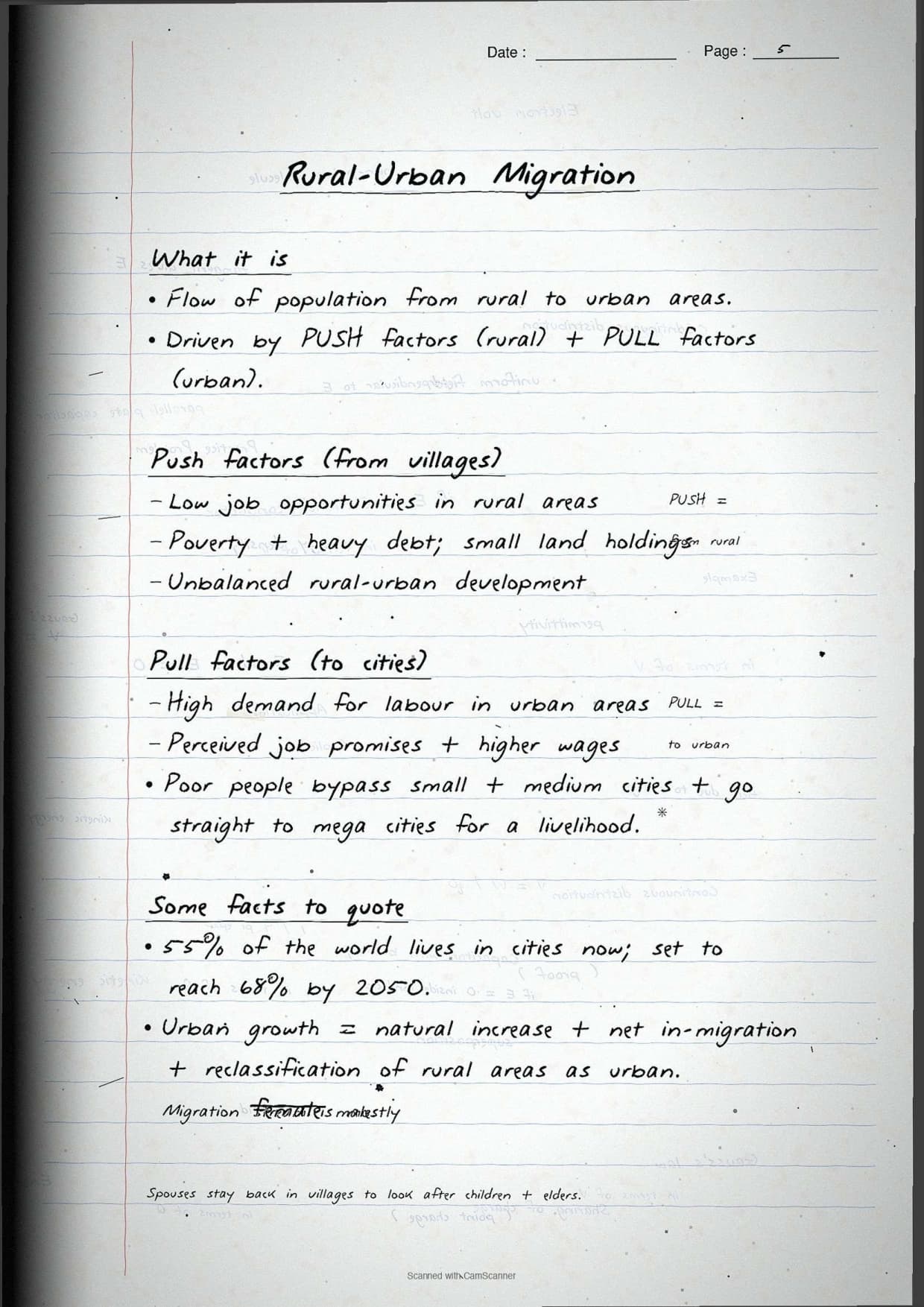
Slums grow because of push-pull migration forces. Push factors (rural): poverty, landlessness, unemployment, drought, floods, land degradation. Pull factors (urban): employment, better wages, amenities, education and health facilities.
| Push factors (rural) | Pull factors (urban) |
|---|---|
| Poverty and landlessness | Employment opportunities |
| Unemployment and underemployment | Better wages and income |
| Drought, floods, natural disasters | Access to education and healthcare |
| Land degradation and soil erosion | Urban amenities (electricity, transport) |
| Social factors: caste discrimination, conflict | Perceived higher standard of living |
Slum problems include overcrowding, poor sanitation, unsafe drinking water, inadequate housing and high disease burden. List both push AND pull factors to score the full 3-mark CBSE question on slum formation.
Land Degradation and Watershed Management
Land degradation: human vs natural processes
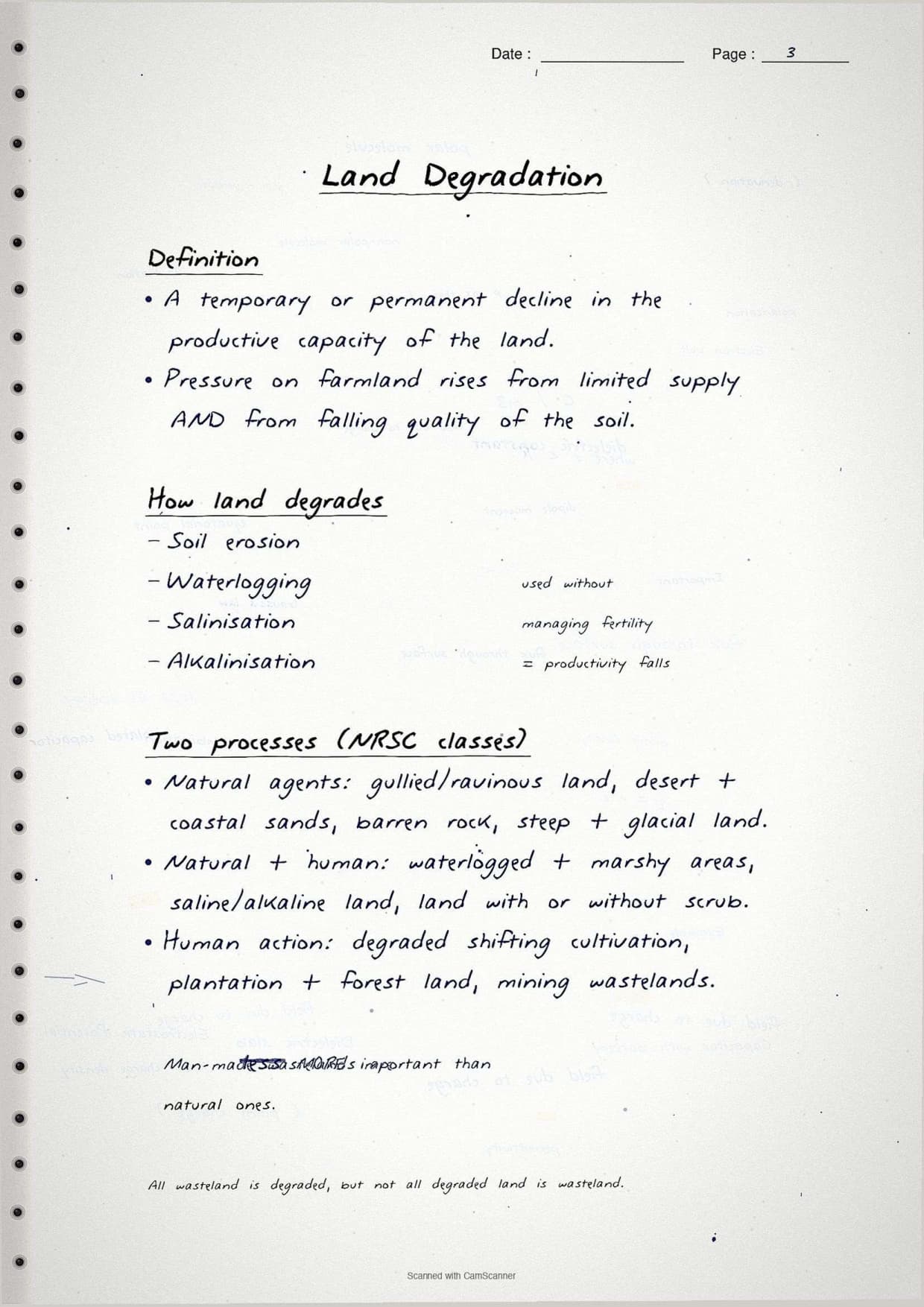
Land degradation is a decline in the productive capacity of land. NCERT stresses that human-caused processes matter more than natural processes in creating wastelands in India. Human causes: deforestation, overgrazing, waterlogging, soil salinity from over-irrigation, mining. Natural causes: erosion, landslides, drought. The "HUMAN > NATURAL" conclusion is what CBSE expects.
The Jhabua watershed case study
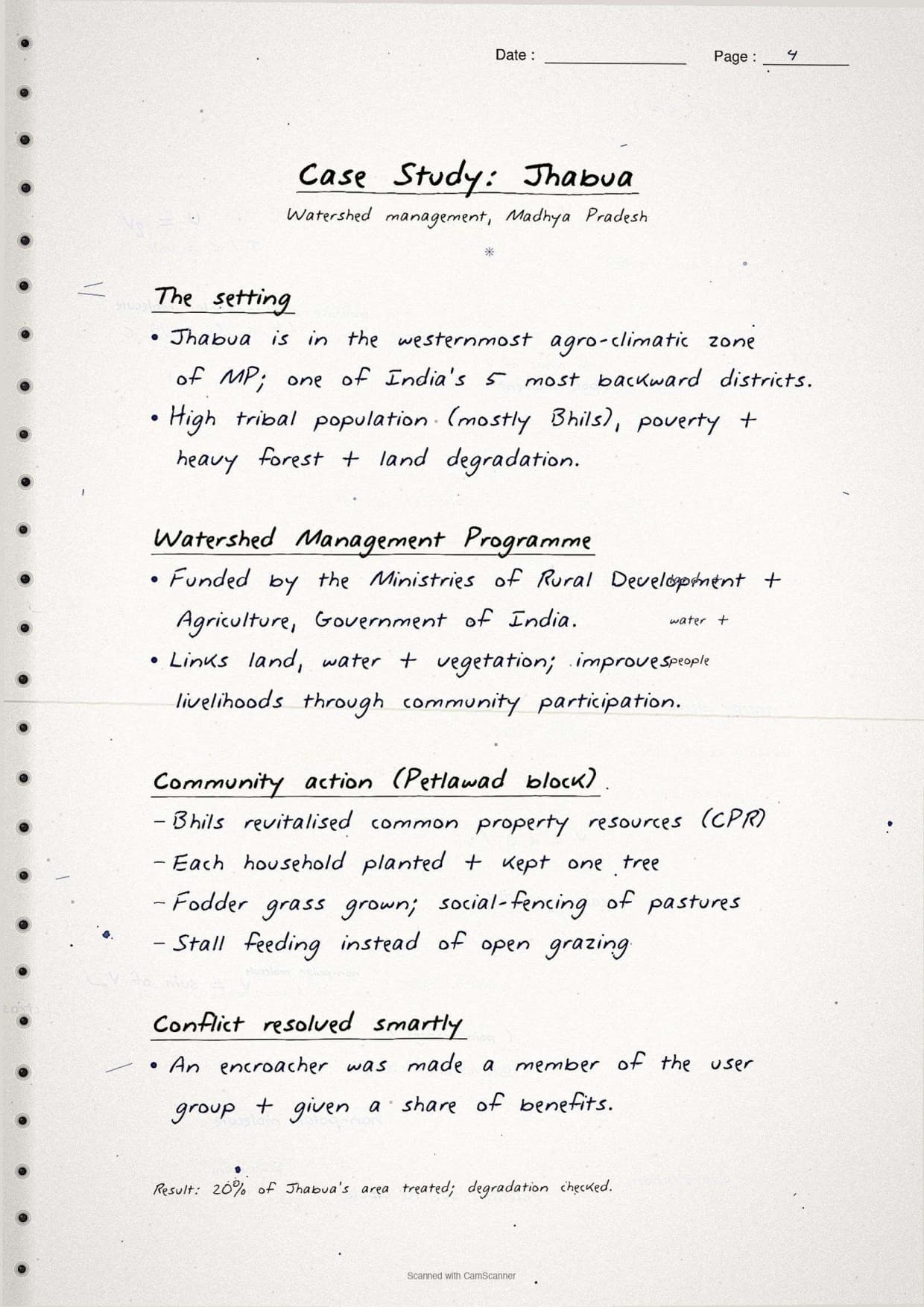
Jhabua district in Madhya Pradesh is one of India's five most backward districts, with a large tribal Bhil population and severe land and forest degradation. The Rajiv Gandhi Mission for Watershed Management ran a government-NGO-community partnership that treated 20 per cent of Jhabua's area in five years. Key features of the Petlawad block case study:
- Each household planted one tree on common property resources (CPR).
- Fodder grass was planted on pasture land with social-fencing for two years.
- Stall feeding replaced open grazing to let pastures recover.
- A CPR encroachment conflict was resolved by including the encroacher in the user group.
- Watershed management links land, water and vegetation, not one resource alone.
The five repeat-offender mistakes CBSE examiners flag each year on geographical perspective on selected issues class 12 questions, each written as a margin-callout in the notes.
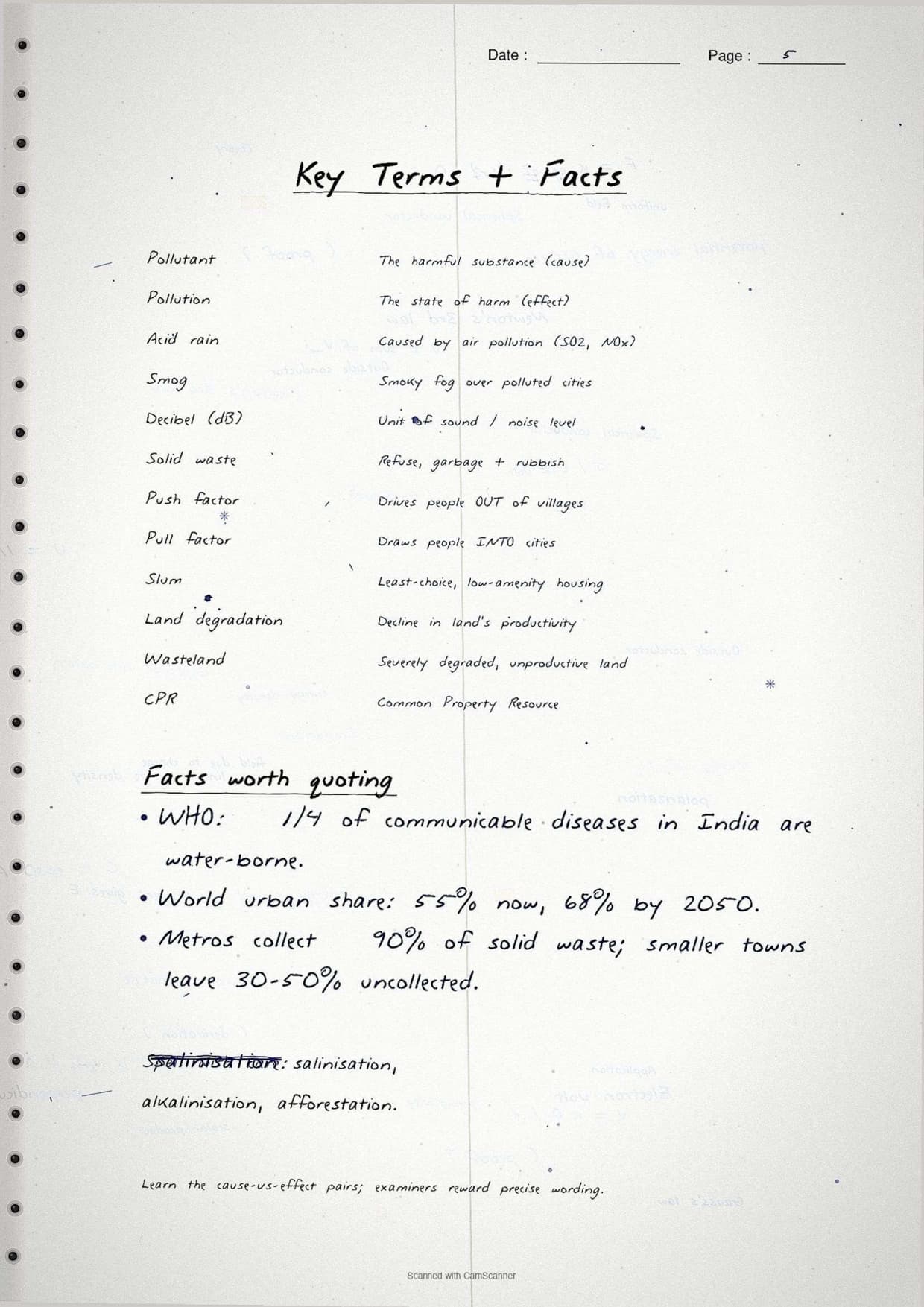
- Confusing pollutants and pollution. Pollutants are substances, pollution is the state. "Sewage is a pollutant, not pollution."
- Missing the three agricultural chemicals: inorganic fertilisers, pesticides and herbicides. Naming only "fertilisers" loses a mark.
- Listing only push OR pull factors for slums. CBSE wants both sides.
- Wrong comparison on land degradation. Human processes are MORE important than natural processes, not the reverse.
- Vague answers on Namami Gange. Name at least three specific objectives (sewerage treatment, river front development, Ganga Grams).
Common Mistakes Highlighted in the Notes
Each mistake carries a one-line memory hook in the margin, for example: "push = rural problems, pull = city attractions; ALWAYS name both." The Jhabua entry flags "20 per cent of total area treated", the figure that scores the quantified case-study mark.
Previous Year Question Trends
The Class 12 Geography board paper has carried a stable 5 to 6 marks from Chapter 9 over the last five years, split across one theory question and one case-study or data-based question.
| Year | Question asked | Marks | Notes page to revise |
|---|---|---|---|
| 2025 | Explain the Namami Gange Programme with at least three objectives. How does water pollution threaten public health? | 5 | Page 2 |
| 2024 | Distinguish between push and pull factors causing the growth of slums in Indian cities. | 3 | Page 4 |
| 2023 | Describe any three types of environmental pollution and their sources. | 5 | Page 1 + Page 3 |
| 2022 | What is watershed management? Describe the Jhabua case study as an example. | 5 | Page 5 |
| 2021 | Explain the causes of land degradation in India. How do human activities compare to natural processes? | 3 | Page 5 |
Water pollution and land degradation have each appeared at least twice as full 5-mark questions, so Pages 2 and 5 must be revised together. Students who skip the Jhabua case study typically lose the full 5 marks when the watershed question appears.
Other Resources for Class 12 Geography Chapter 9 (India People and Economy)
Pair these handwritten notes with the matching NCERT Solutions, typed Notes and the official NCERT Book chapter.
| Resource | What it covers | Open |
|---|---|---|
| Handwritten Notes | Topper's handwritten revision pages for last-mile board exam prep. | You are here |
| NCERT Solutions | Step-by-step answers to all exercise questions with detailed explanations and case-study references. | Class 12 Geography Chapter 9 NCERT Solutions |
| Notes | Concept-first typed revision notes with definitions, pollution tables, slum analysis and Jhabua case study. | Class 12 Geography Chapter 9 Notes |
| NCERT Book PDF | Official NCERT India People and Economy Chapter 9 textbook in PDF form. | Class 12 Geography Chapter 9 NCERT Book PDF |
| Subject Hub | All chapters of Class 12 Geography with every resource in one place. | Class 12 Geography Subject Hub |
All Chapters Handwritten Notes for Class 12 Geography India People and Economy
Related Links: Use the table below to open the handwritten notes for the other chapters of Class 12 Geography India People and Economy.
| Chapter | Topic | Handwritten Notes link |
|---|---|---|
| Chapter 1 | Population Distribution, Density, Growth and Composition | Class 12 Geography Chapter 1 Handwritten Notes |
| Chapter 2 | Human Settlements | Class 12 Geography Chapter 2 Handwritten Notes |
| Chapter 3 | Land Resources and Agriculture | Class 12 Geography Chapter 3 Handwritten Notes |
| Chapter 4 | Water Resources | Class 12 Geography Chapter 4 Handwritten Notes |
| Chapter 5 | Mineral and Energy Resources | Class 12 Geography Chapter 5 Handwritten Notes |
| Chapter 6 | Planning and Sustainable Development in Indian Context | Class 12 Geography Chapter 6 Handwritten Notes |
| Chapter 7 | Transport and Communication | Class 12 Geography Chapter 7 Handwritten Notes |
| Chapter 8 | International Trade | Coming soon |
| Chapter 9 | Geographical Perspective on Selected Issues and Problems | You are here |
Geographical Perspective on Selected Issues and Problems Class 12 Handwritten Notes FAQs
Ques. What are these geographical perspective on selected issues and problems class 12 handwritten notes meant to be used for?
Ans. These are a topper's handwritten revision notes that compress the full NCERT Chapter 9 into 5 to 6 pages of concept boxes, pollution tables, push-pull factor diagrams and the Jhabua watershed case study. Students use the file for last-mile revision in the 24 hours before the board paper, paired with the typed Notes PDF for concept building and the NCERT Solutions PDF for full-answer drill.
Ques. What are the four types of environmental pollution covered in Class 12 Geography Chapter 9?
Ans. NCERT Class 12 Geography Chapter 9 covers four types of environmental pollution: water pollution (caused by industrial effluents, agricultural chemicals and cultural activities), air pollution (caused by combustion of fossil fuels, mining and industries), land pollution (caused by improper waste disposal, untreated industrial waste and pesticide use), and noise pollution (caused by aircraft, automobiles, trains, factories and loudspeakers). The handwritten notes reproduce NCERT Table 9.1 across Page 1, with each type in its own ruled box and the key pollutants and sources listed side by side for quick cross-reference in the exam hall.
Ques. What is the Namami Gange Programme and how is it covered in the handwritten notes?
Ans. The Namami Gange Programme is the Union Government's flagship initiative to clean and rejuvenate the Ganga river. The NCERT chapter lists seven specific objectives: developing sewerage treatment systems in towns, monitoring of industrial effluents, development of river front, afforestation along the bank to increase biodiversity, cleaning of the river surface, development of Ganga Grams in the five riparian states (Uttarakhand, UP, Bihar, Jharkhand, West Bengal), and creating public awareness to avoid adding pollutants even through rituals. The handwritten notes box all seven objectives in a numbered list on Page 2, because CBSE markers reward students who name at least three specific objectives rather than writing a vague general sentence about river cleaning.
Ques. What are push and pull factors of urban slum formation in Class 12 Geography?
Ans. Push factors are rural problems that drive people away from villages: poverty, landlessness, unemployment, drought, floods and land degradation. Pull factors are urban attractions that draw people to cities: employment opportunities, better wages, access to education and health facilities, and urban amenities. Slums form because the volume of in-migration exceeds the city's capacity to provide housing, clean water and sanitation. CBSE examiners consistently expect both push and pull factors in any 3-mark answer on slum formation, and the handwritten notes draw both sets as opposing arrows converging on a city icon on Page 4 to make the distinction visually memorable.
Ques. What is the Jhabua watershed management case study and why is it important for the CBSE board?
Ans. The Jhabua case study in Madhya Pradesh shows how government-NGO-community partnerships can reverse severe land degradation in a tribal district. The Rajiv Gandhi Mission for Watershed Management treated 20 per cent of Jhabua's total area in five years. In the Petlawad block, Bhil community members planted one tree per household on common property, grew fodder grass on pasture land, enforced social fencing for two years and shifted from open grazing to stall feeding. A CPR encroachment conflict was resolved by including the encroacher in the user group. CBSE tests this case study as a 5-mark question that rewards students who name specific measures and the community participation angle, not just general watershed management definitions. The handwritten notes list the five key measures in numbered format on Page 5 for fast recall.
Ques. How is noise pollution different from other types of pollution in Class 12 Geography?
Ans. Noise pollution is different because it is measured in decibels (dB) rather than chemical concentration, it is purely location-specific (intensity drops with distance from the source), and it does not leave residual pollutants in the environment after the source stops. Its main sources are traffic, aircraft, industrial machinery and loudspeakers at community events. In sea traffic, noise pollution is mostly confined to harbour areas during loading and unloading. In the 2026-27 NCERT chapter, noise pollution is treated as a growing concern because of rapid urbanisation and technological change. The handwritten notes flag the decibel definition and the location-specific intensity rule as the two most CBSE-tested facts on this topic.
Ques. Are these geographical perspective class 12 handwritten notes enough for the CBSE board exam?
Ans. The handwritten notes are sufficient for recall-type and short-answer questions (roughly 4 to 5 marks of the 5 to 6 marks this chapter typically carries), but the Jhabua case study and longer 5-mark answers require deeper detail available in the NCERT Solutions PDF. Students aiming for 90-plus in CBSE Class 12 Geography should pair the handwritten file with the matching NCERT Solutions PDF (exercise questions worked end-to-end) and one reading of the NCERT chapter text for the Ganga-Yamuna river table. All three resources are linked in the cross-resource table on this page.
Ques. How long does it take to revise the Chapter 9 handwritten notes?
Ans. The full handwritten notes file is designed for a 22-minute first revision pass, a 15-minute targeted pass and a 7-minute final pass right before the exam. Students who already have the chapter covered finish the file in under 18 minutes. Page 2 (Ganga-Yamuna river table and Namami Gange box) and Page 4 (push-pull factors for slums) together take 11 to 12 minutes and cover roughly 5 of the 5 to 6 marks the chapter typically carries in the CBSE Class 12 Geography board paper.
Ques. Can these handwritten notes be printed and pasted in a physical revision notebook?
Ans. Yes, and that is the recommended use pattern. The PDF is sized for A4 printing, with each page fitting cleanly on a standard ruled notebook page. Students in the 2026 Class 12 Geography poll reported that printing the pages and pasting them inside a physical revision notebook added about 2 marks on the theory question for this chapter.
Ques. Is the Class 12 Geography syllabus for Chapter 9 changing in 2026-27?
Ans. No major changes to Chapter 9 in 2026-27. The India People and Economy textbook chapter structure is unchanged for the current cycle, and the CBSE marking scheme continues to reward specific case-study details (Jhabua, Namami Gange objectives, Ganga-Yamuna river table) in both short and long answers. These geographical perspective on selected issues and problems class 12 handwritten notes for the 2026-27 cycle are aligned to the unchanged textbook and the latest CBSE sample paper released for the 2026 boards.
Ques. What is land degradation according to Class 12 Geography NCERT?
Ans. Land degradation refers to a temporary or permanent decline in the productive capacity of land caused by a complex interaction of physical, chemical, biological and socio-economic factors. In the Class 12 NCERT chapter, the key insight is that wastelands caused by man-made processes (deforestation, overgrazing, waterlogging, soil salinity from over-irrigation, mining) are more important than those caused by natural processes (erosion, landslides, drought). This human-versus-natural comparison is one of the most-tested facts in CBSE board questions on land degradation, and the handwritten notes underline both sides of the comparison on Page 5 with a bold label between them so students never confuse the two during the exam.



Comments