




The Class 12 Sociology Chapter 6 Globalisation and Social Change NCERT Book PDF gives the full original chapter from the Social Change and Development in India textbook, free to read and download, set to the 2026-27 CBSE syllabus. The chapter studies how globalisation reshapes India through its economic, political and cultural sides, the 1991 liberalisation, transnational corporations, and the debate between homogenisation and glocalisation.
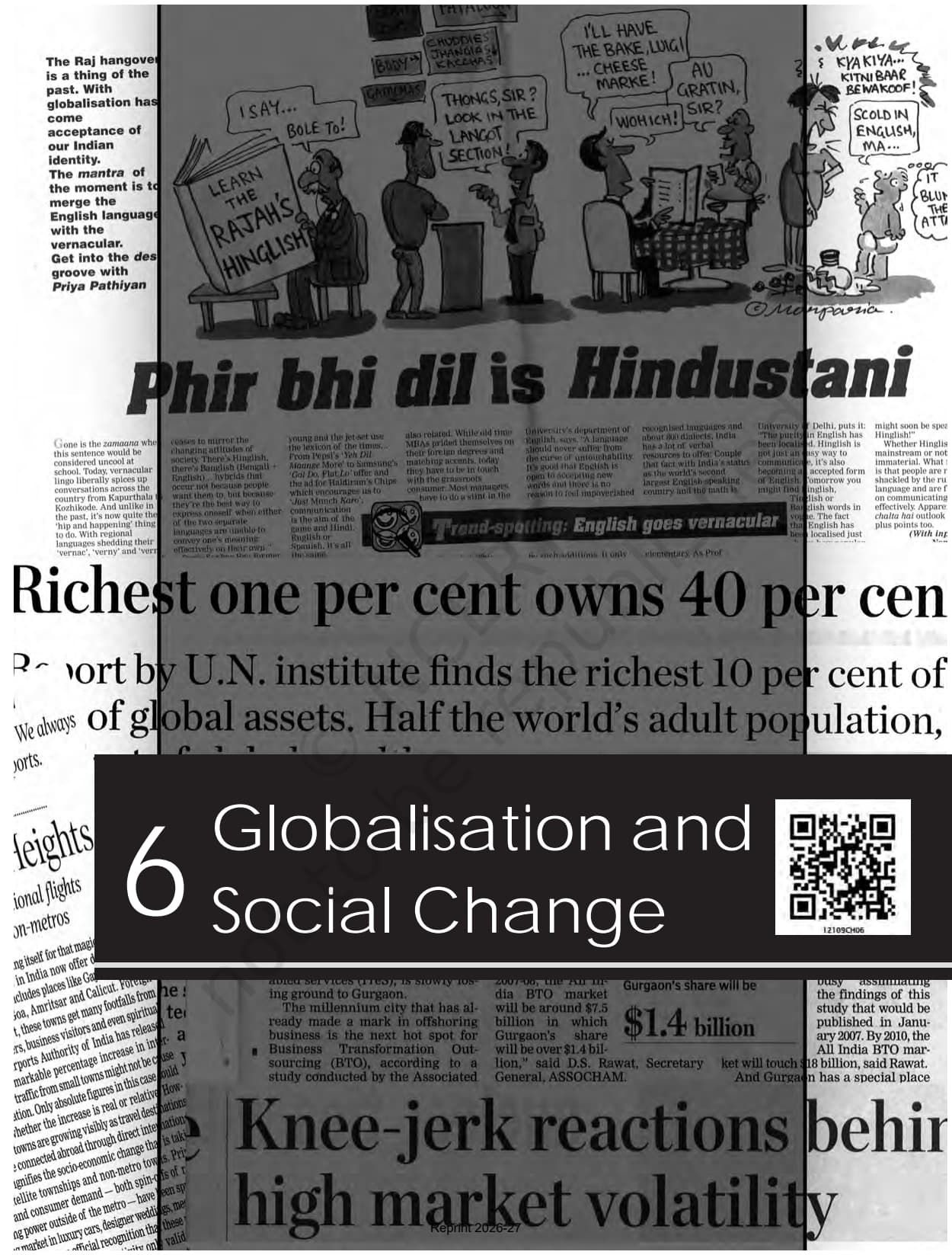
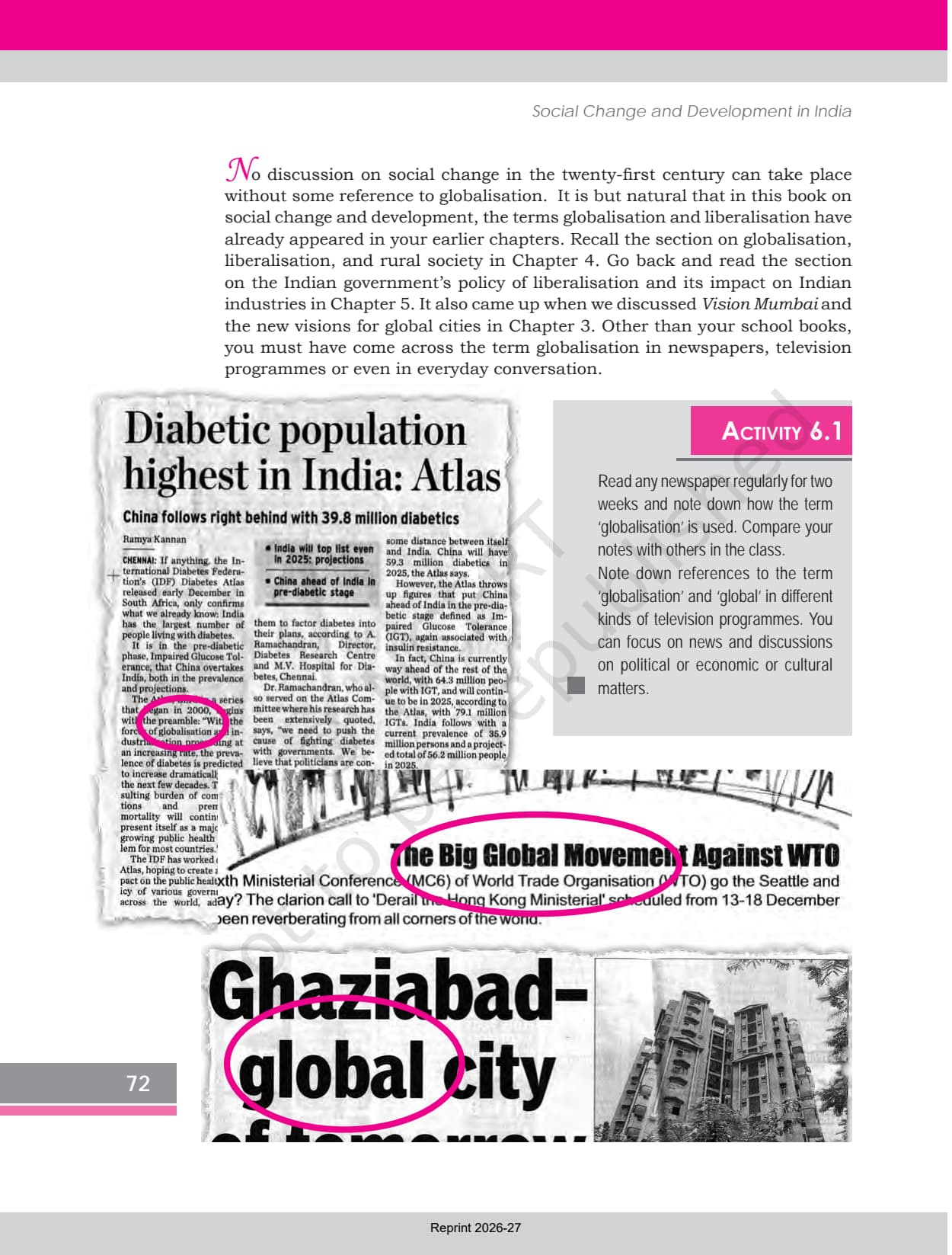
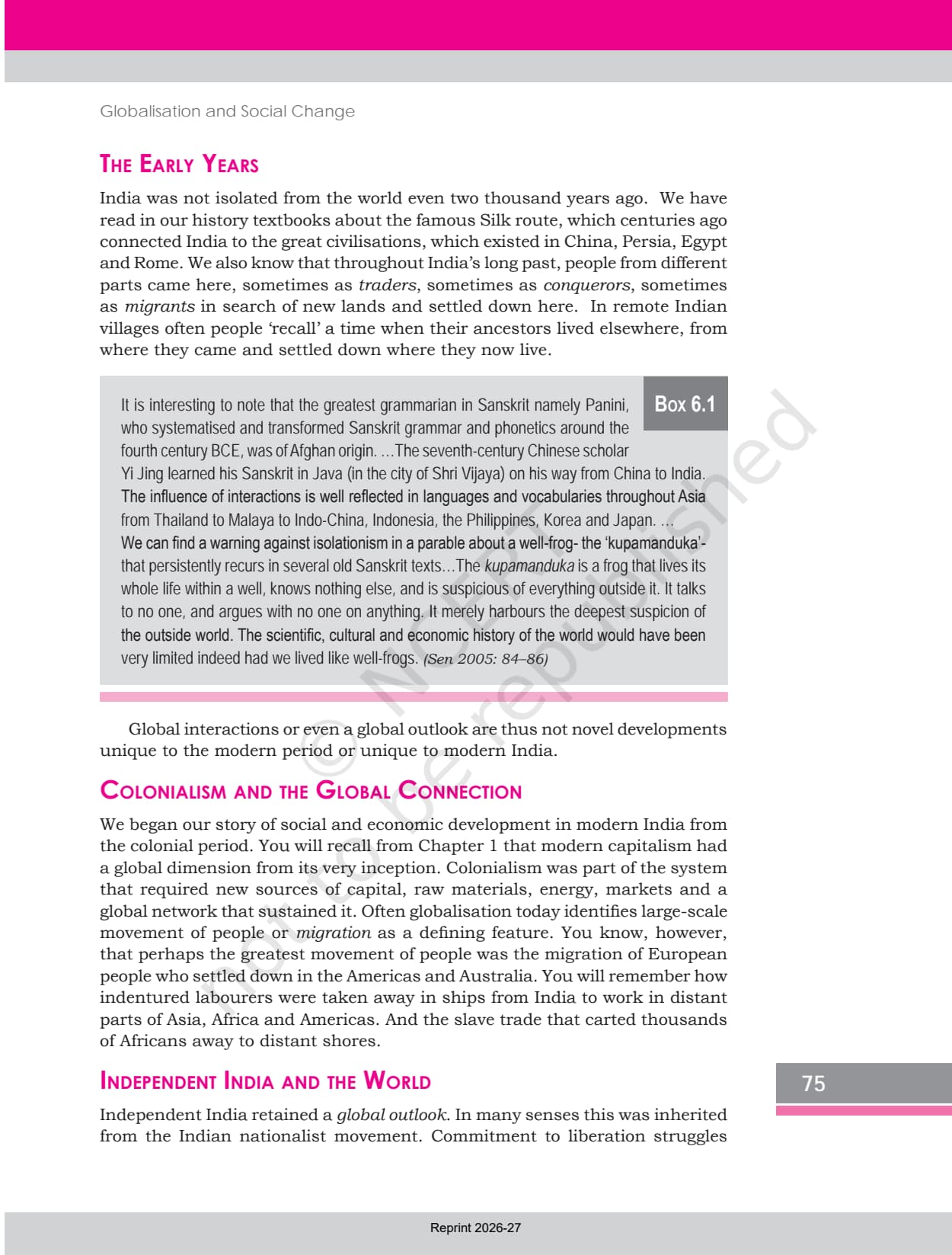
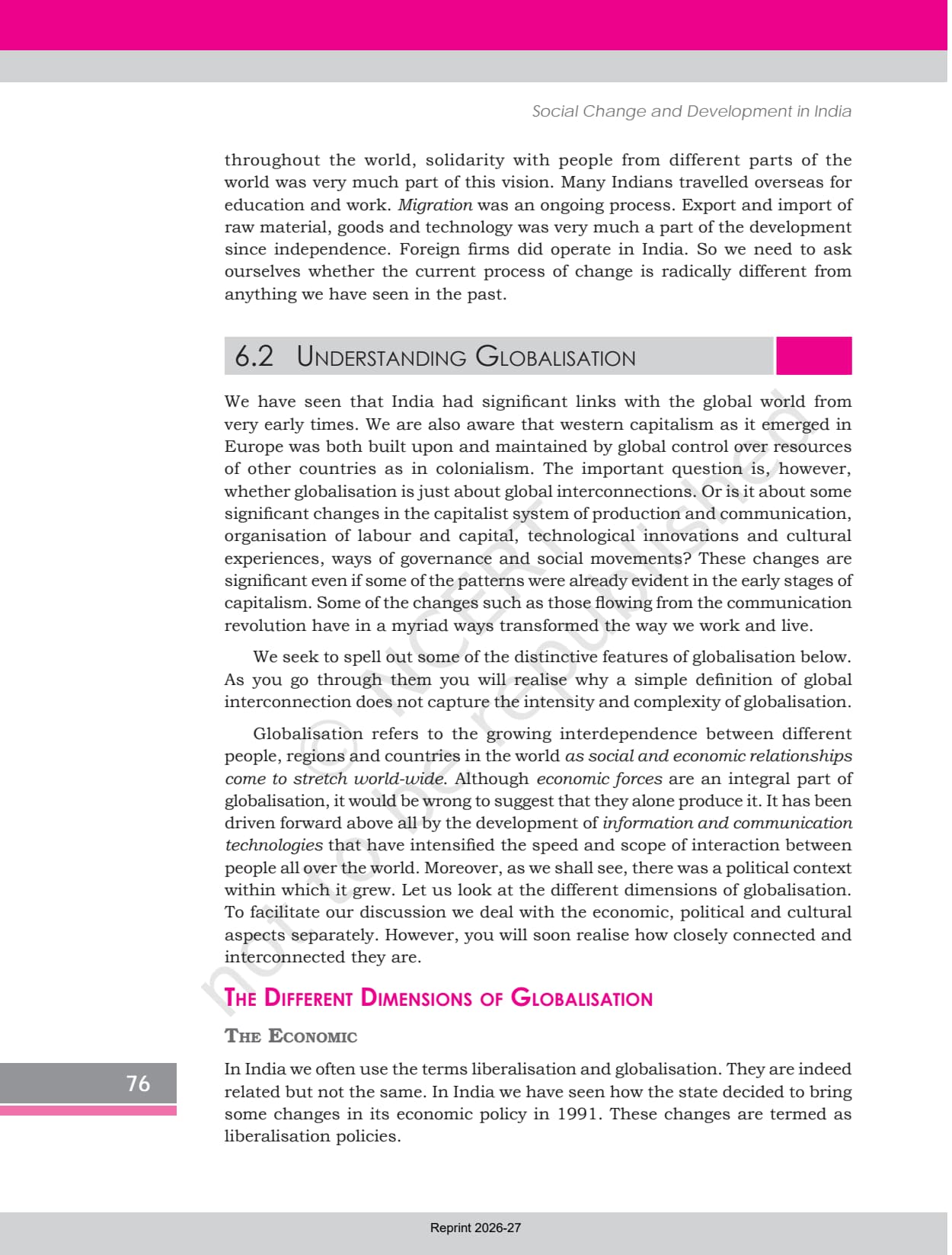
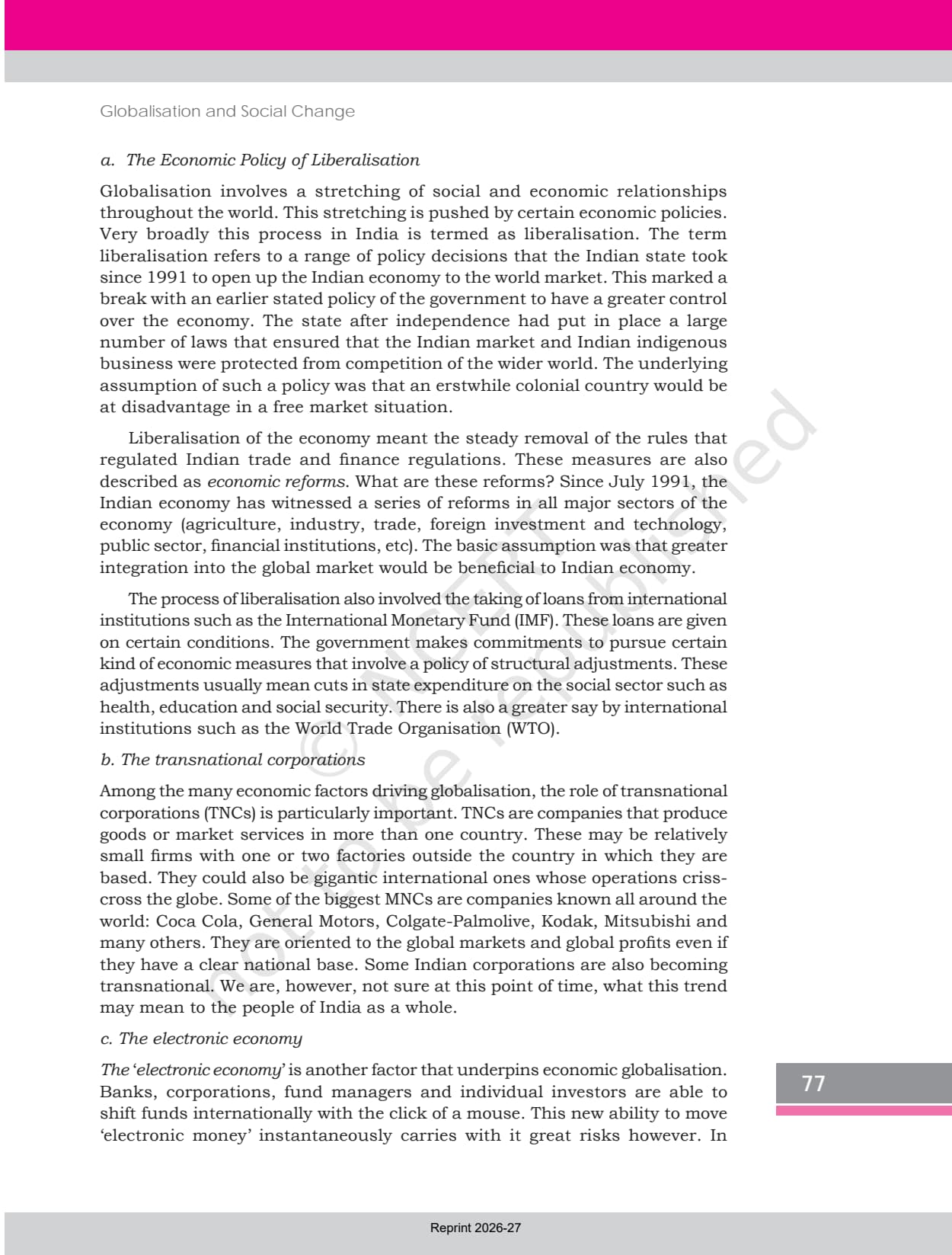
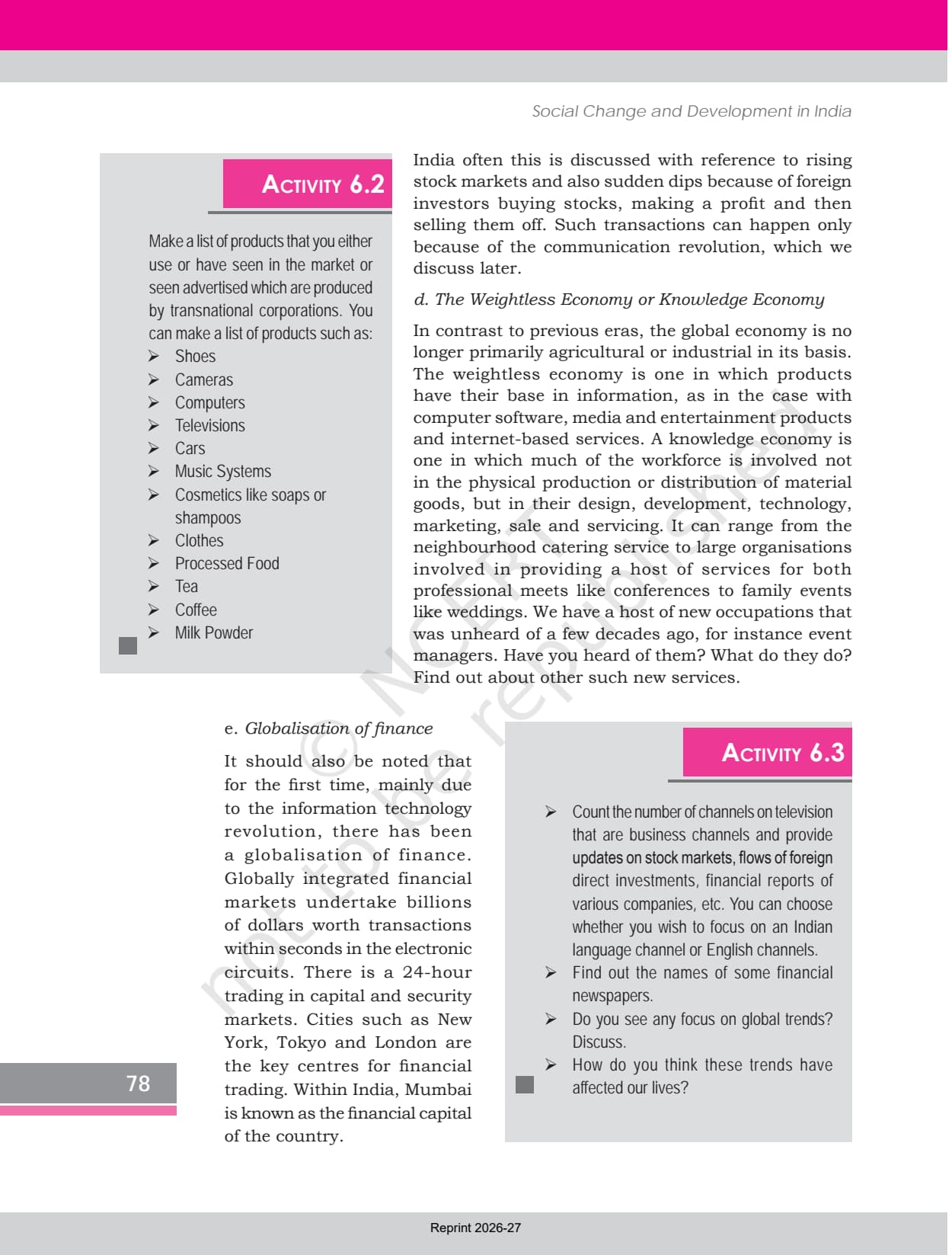
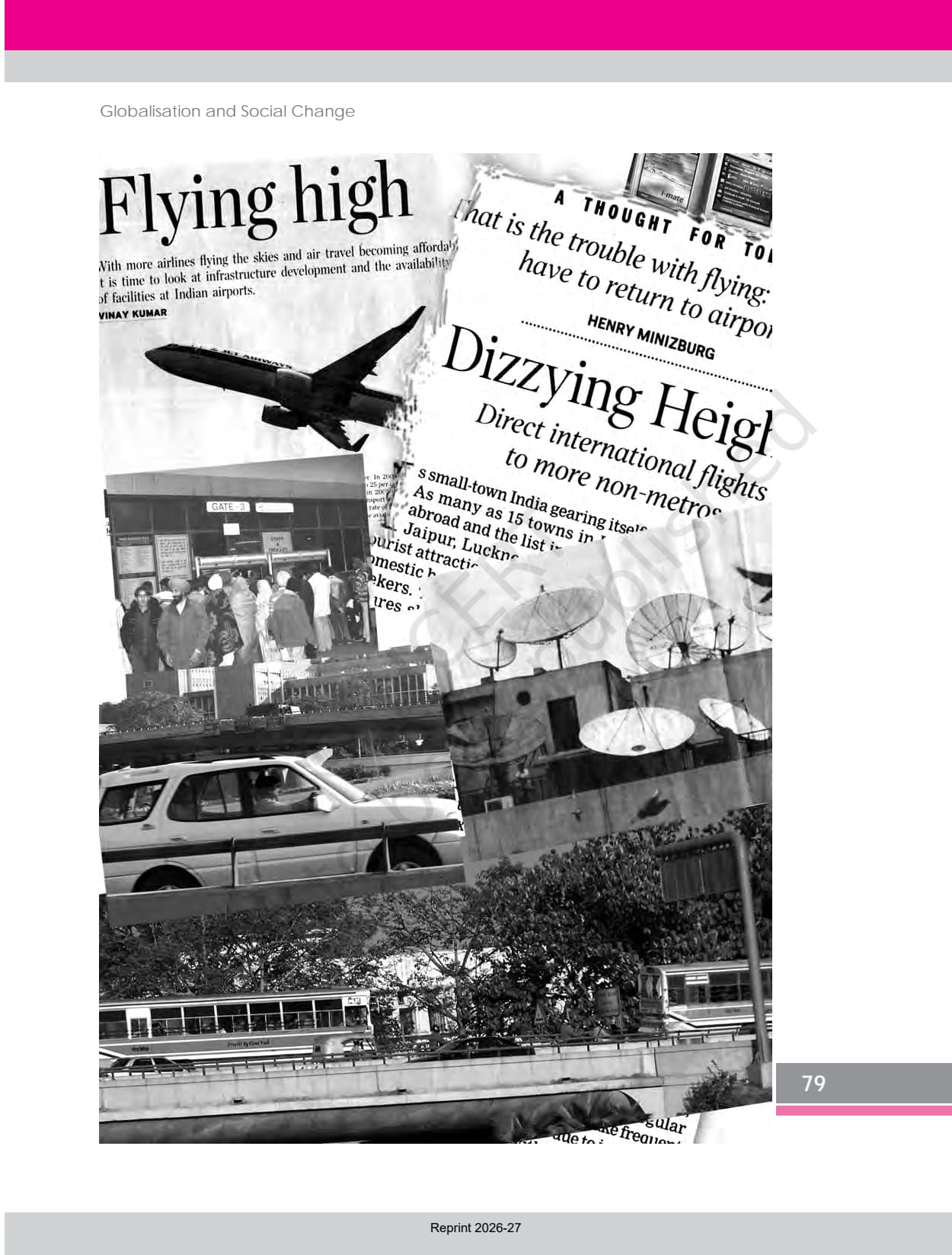
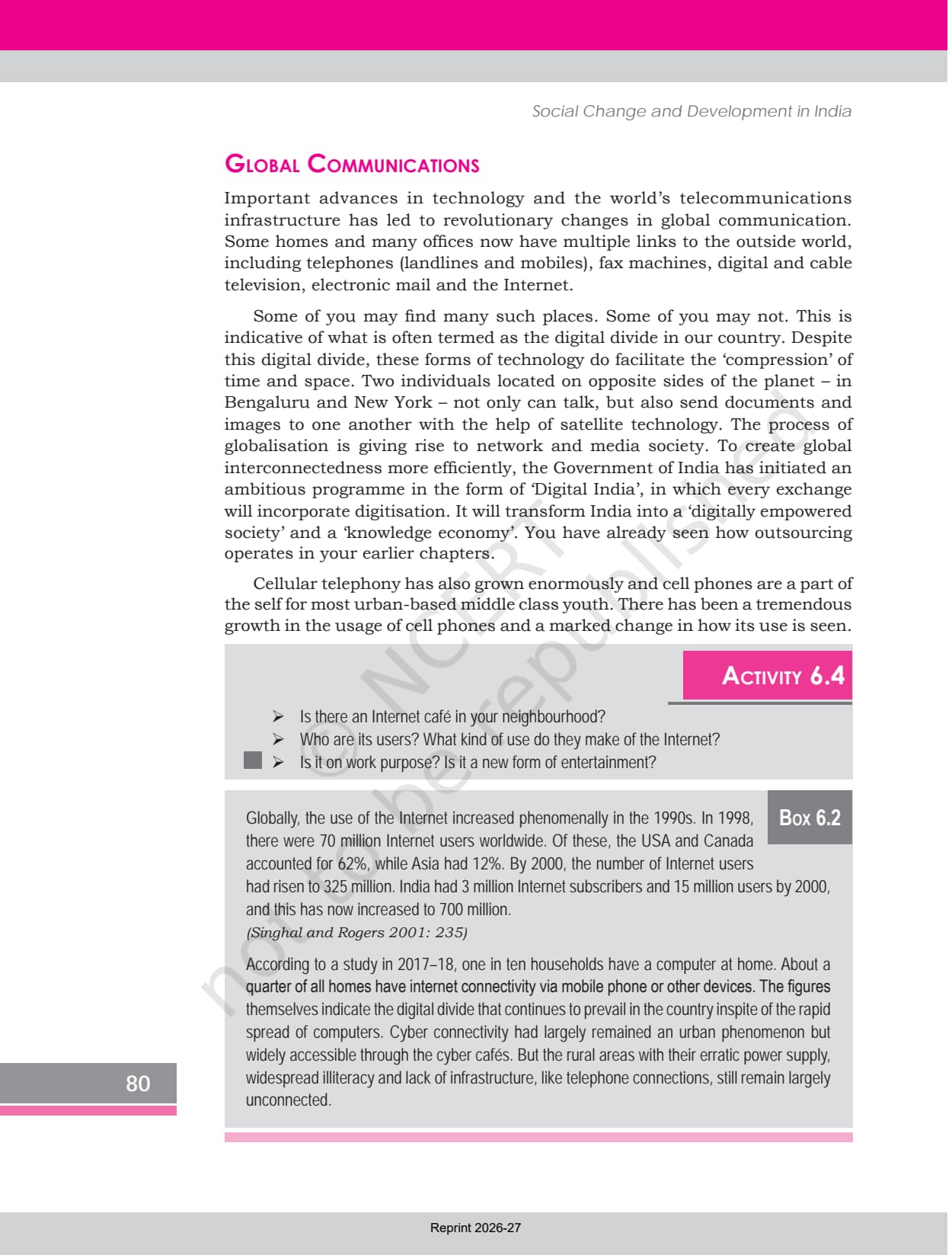
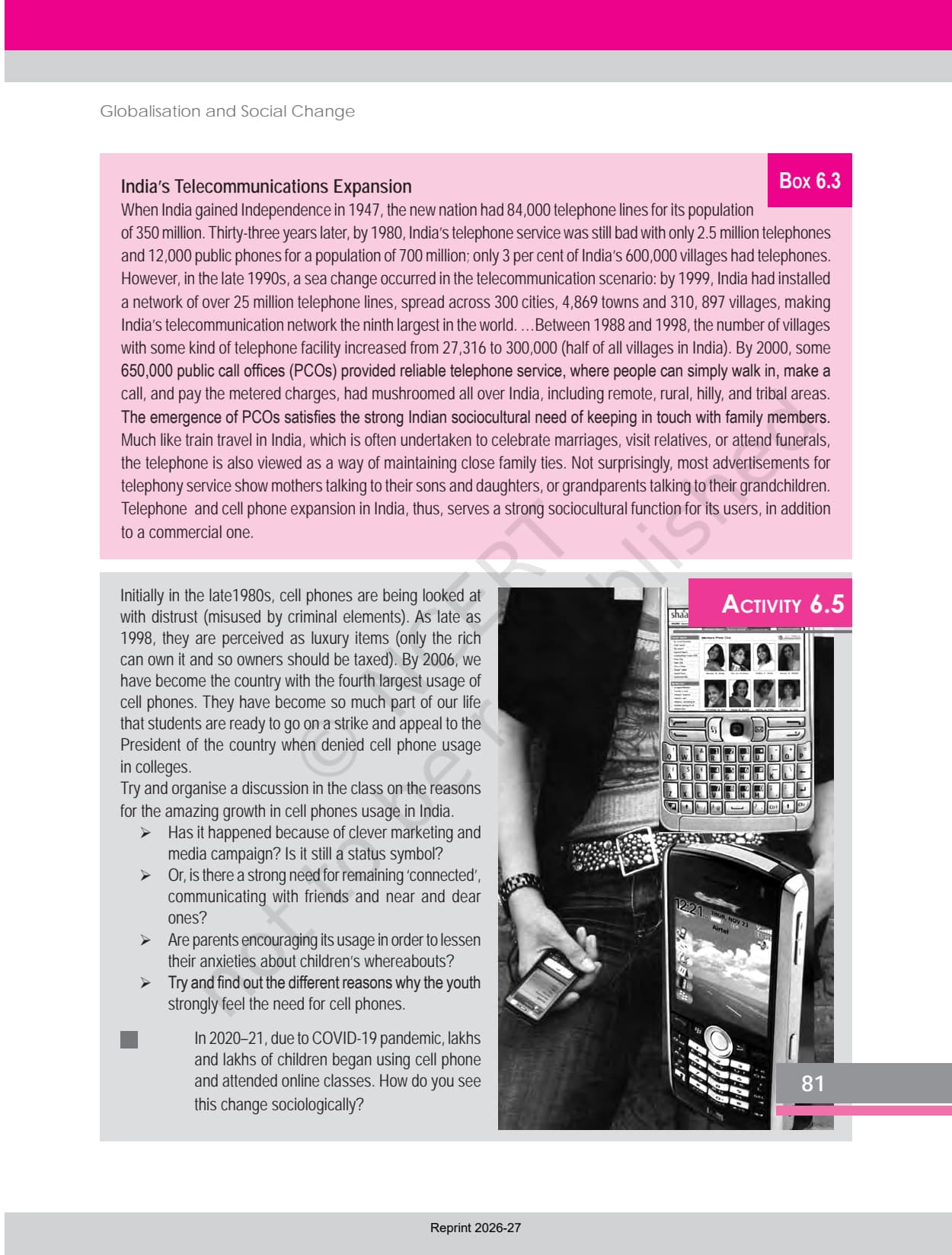
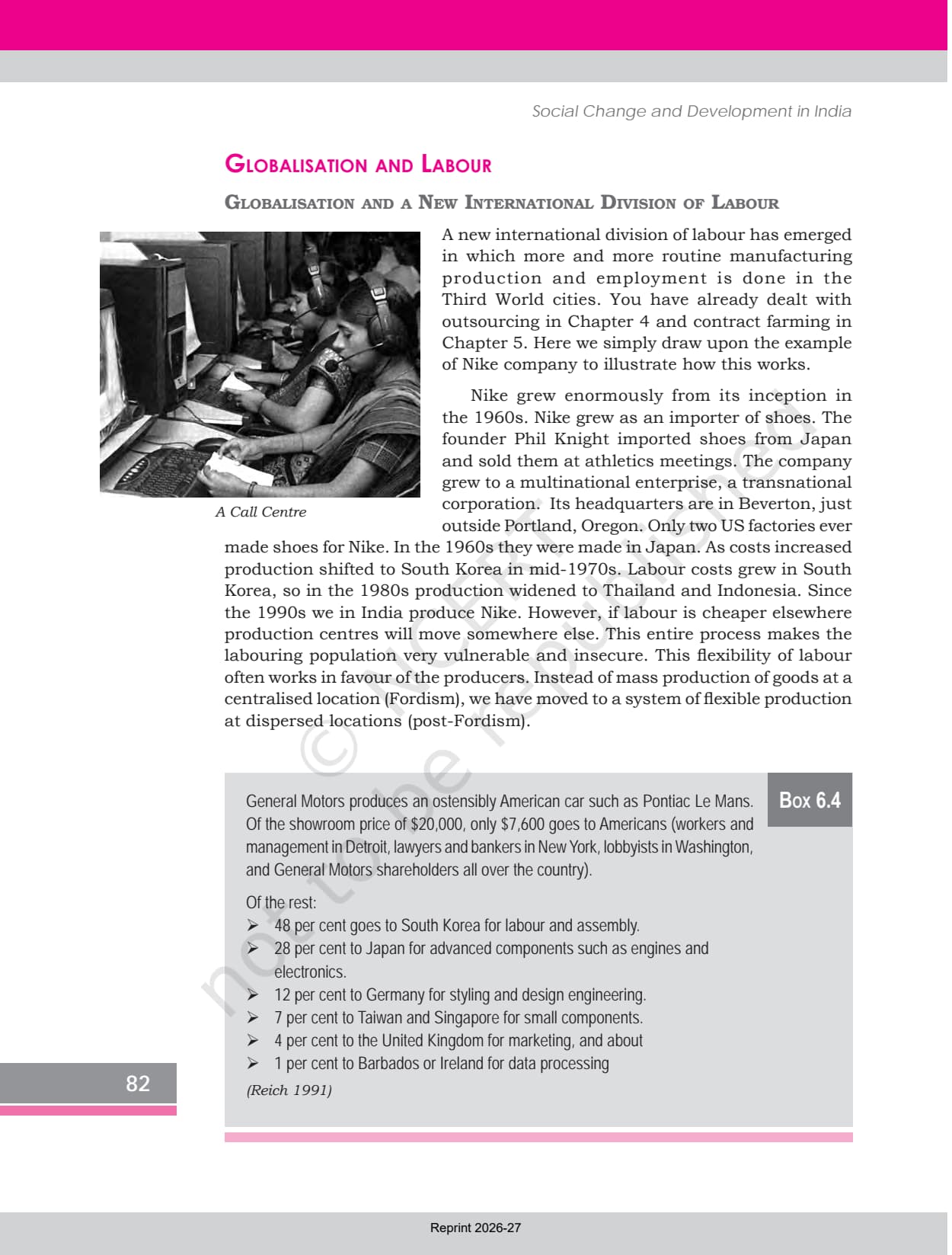
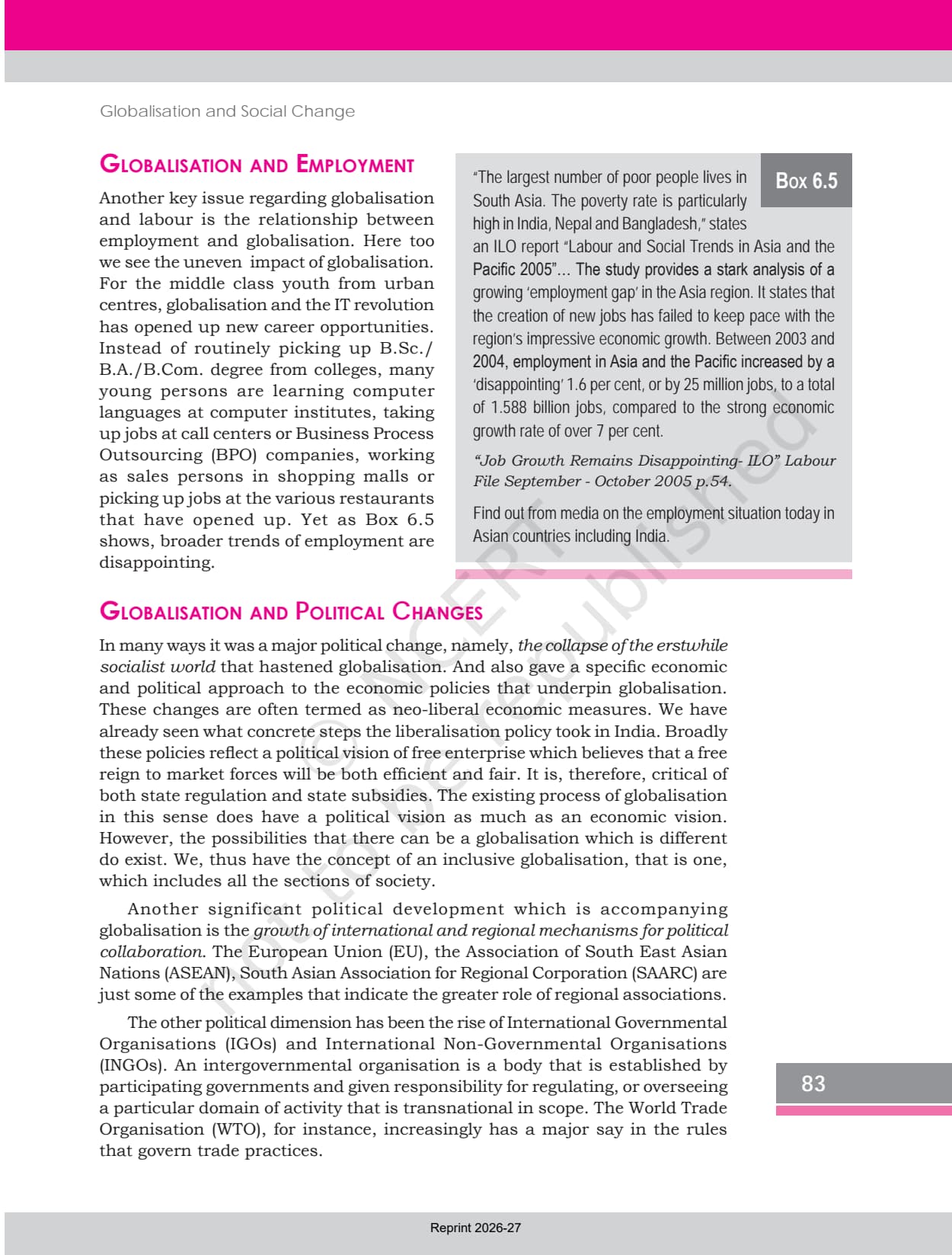
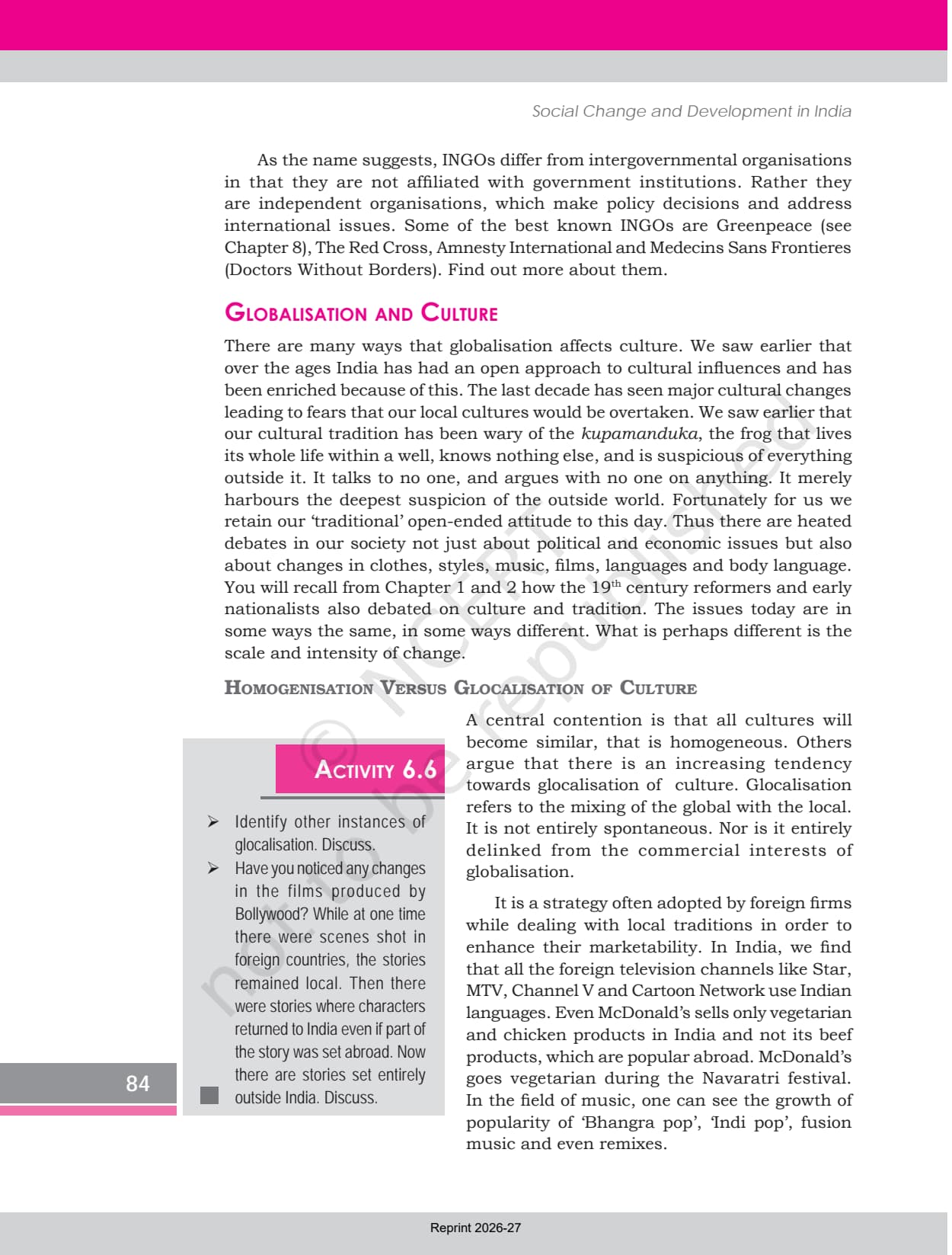
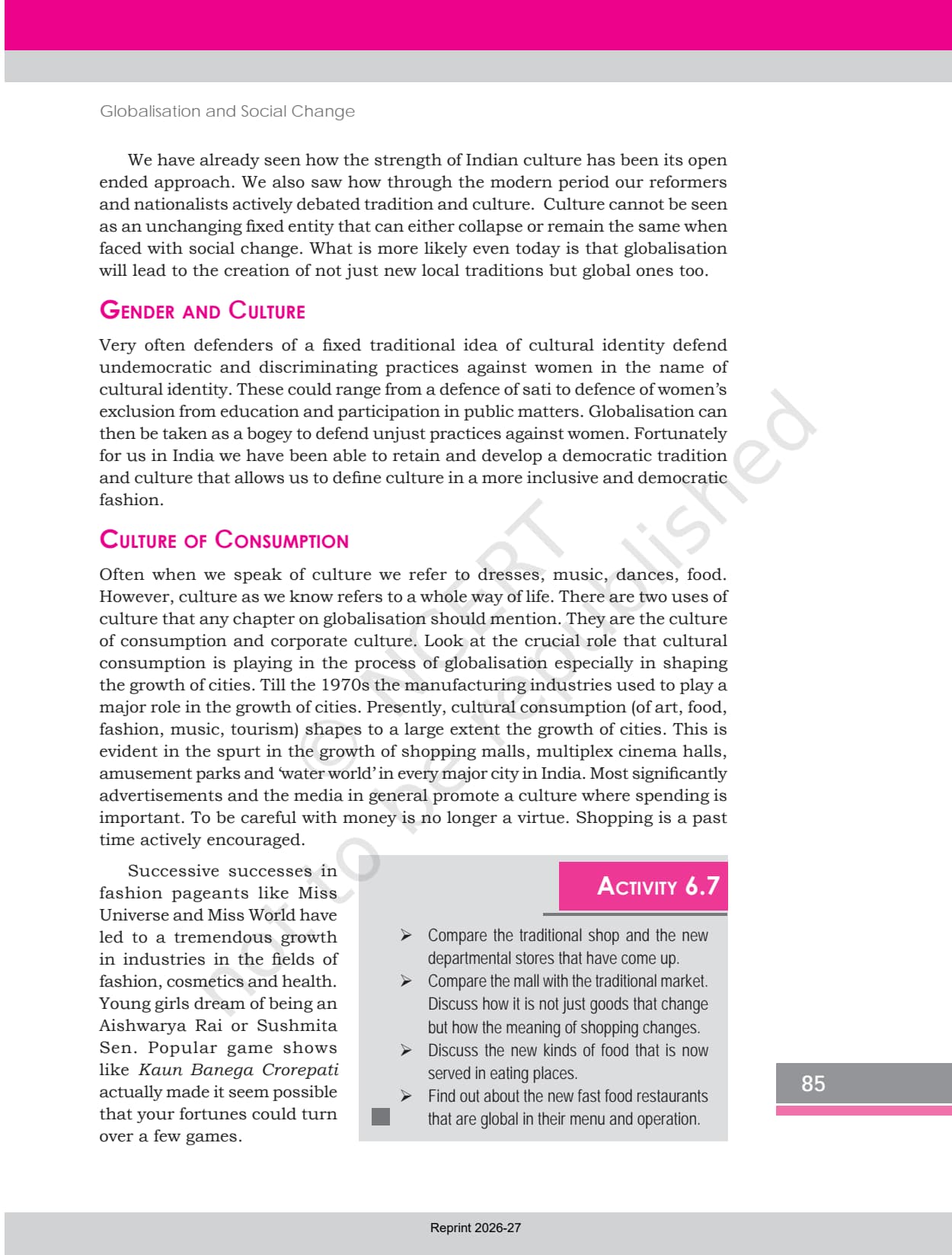
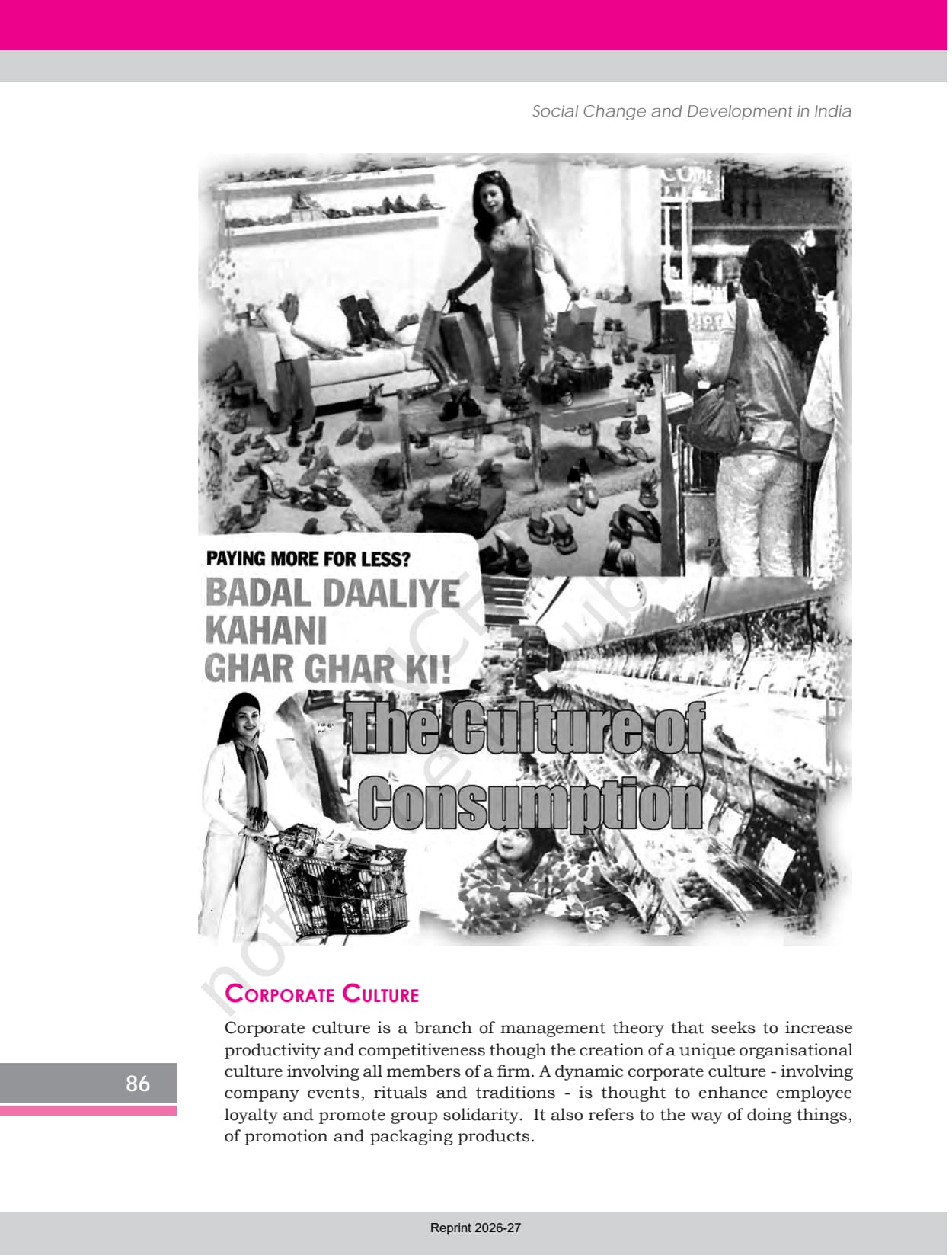
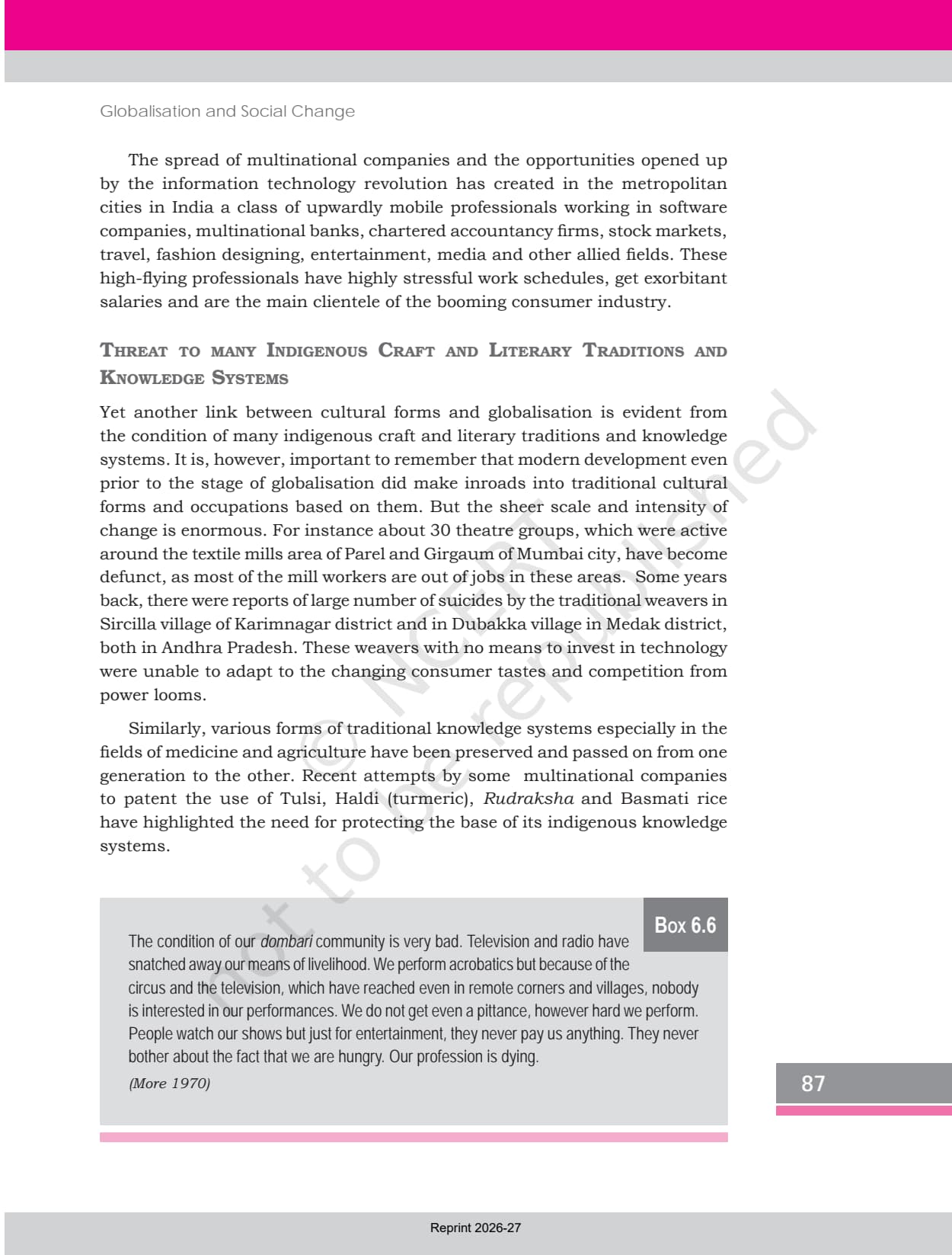
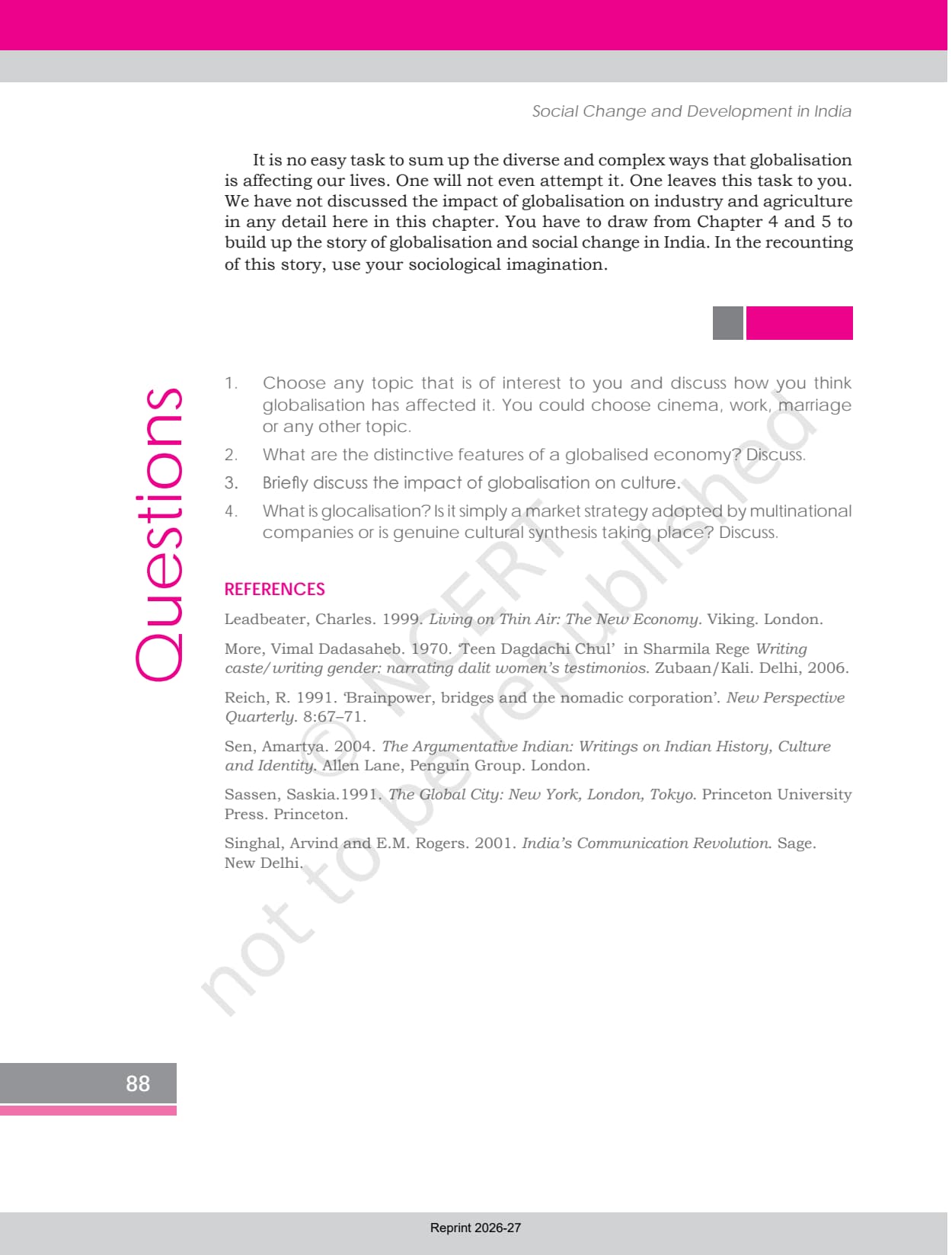
- The complete NCERT Chapter 6 text from the Social Change and Development in India book, in a clean, readable PDF.
- This Class 12 Sociology chapter usually carries 5 to 6 marks per board paper.
- Pairs with the NCERT Solutions, Notes and Handwritten Notes linked lower on this page.
This is the official NCERT Social Change and Development in India Chapter 6 text, hosted free for Class 12 Sociology students and mapped to the latest 2026-27 syllabus.
Student Feedback: In a Collegedunia poll of 8,290 Class 12 Sociology students, 70% of students said they prefer reading the original NCERT chapter PDF before turning to notes for this chapter. Most students keep the Book PDF open to check the exact wording of the glocalisation and liberalisation definitions.
Source: 2026-27 Class 12 Sociology student poll. Sample of 8,290 students from CBSE schools across 12 states.
What the Globalisation and Social Change Chapter Covers
Chapter 6 of Social Change and Development in India looks at how the world's growing interconnections change Indian society. The chapter makes one point clear from the start: globalisation has economic, political and cultural sides that move together. Reading the original NCERT text gives students the exact wording examiners expect.
The chapter is built in clear parts, which the PDF presents in order:
- Understanding globalisation: what the term means and whether global links are really new.
- The economic dimension: liberalisation, transnational corporations and the electronic economy.
- The cultural dimension: homogenisation, glocalisation and the culture of consumption.
Reading the chapter in this order helps students see the shared theme: globalisation is a single process with many sides. That is the idea every board answer should return to.
Key Terms to Watch for in the Chapter
The NCERT chapter introduces a handful of terms that carry the marks in the exam. Spot them as you read, and underline each definition in the PDF.
| Term | Where it appears |
|---|---|
| Globalisation | The opening section, as the growing worldwide interdependence of people and economies. |
| Liberalisation | The economic dimension, as India opening its economy in 1991. |
| Transnational corporation | The economic dimension, as a firm producing across many countries. |
| Glocalisation | The cultural dimension, as the mixing of the global with the local. |
These terms are the backbone of the chapter. A student who can point to each one in the PDF and recall its meaning is well placed for both the short and the long answers.
How the Chapter Is Organised
The PDF moves from understanding globalisation to the economic dimension and then to the cultural dimension, and within each it gives the idea first and the example second. Knowing the layout helps students find any topic fast.
- Understanding pages: the meaning of globalisation and whether global links are new.
- Economic pages: liberalisation, transnational corporations, the electronic and weightless economy, and the new division of labour.
- Cultural pages: homogenisation versus glocalisation, the culture of consumption, and the threat to indigenous crafts.
Because the chapter follows this steady pattern, a student can jump straight to the part they need. The exercise questions at the end map onto the same parts, so the PDF doubles as a revision guide.
How to Read This Chapter for the Board Exam
The NCERT text is the safest source for this chapter, because board answers reward the book's exact phrasing. A simple reading plan makes the most of it.
- Read each part once for the idea, then again to underline the key terms.
- For the economy, note the 1991 liberalisation; for culture, note both homogenisation and glocalisation.
- Finish each part by attempting the matching exercise question from memory.
Students who read the chapter twice in this way, then move to the Solutions, usually write fuller answers because they use the book's own words. The PDF is free, so it can be read on any device.
Download Formats and Languages
The chapter PDF is free and comes in formats that suit different devices and revision styles. The download card at the top of the page carries each option.
- Normal and HD PDF: a normal size for quick downloads and an HD version for clear printing.
- English medium: the full class 12 sociology chapter 6 pdf as it appears in the NCERT Social Change and Development in India book.
- Whole-book pack: the chapter sits inside the complete Social Change and Development in India PDF, so students can read every chapter in one file.
Many students keep the class 12 sociology chapter 6 PDF on their phone for offline reading before a test. A saved copy means the original text is always to hand, even without internet.
How the Book PDF Pairs with the Other Resources
The Book PDF is the source text. To prepare fully, students should read it alongside the other resources for the same chapter, all linked in the table below.
| Resource | Best used for |
|---|---|
| Globalisation and Social Change NCERT Solutions | Full point-wise answers to all 4 exercise questions |
| Globalisation and Social Change Class 12 Notes | A clear typed summary of the economy, culture and glocalisation |
| Globalisation and Social Change Handwritten Notes | Last-minute, one-shot revision in a scanned notebook style |
Tip: read this Book PDF first for the original wording, then use the Notes to summarise and the Solutions to practise the exercise questions.
All NCERT Book PDFs for Class 12 Sociology
The table links the NCERT Book PDF for every chapter in both Class 12 Sociology books, so students can read the whole course in one place. Globalisation and Social Change is highlighted.
| Chapter | NCERT Book PDF |
|---|---|
| Indian Society | |
| Chapter 1 | Introducing Indian Society |
| Chapter 2 | The Demographic Structure of the Indian Society |
| Chapter 3 | Social Institutions - Continuity and Change |
| Chapter 4 | The Market as a Social Institution |
| Chapter 5 | Patterns of Social Inequality and Exclusion |
| Chapter 6 | The Challenges of Cultural Diversity |
| Social Change and Development in India | |
| Chapter 1 | Structural Change |
| Chapter 2 | Cultural Change |
| Chapter 3 | The Constitution and Social Change |
| Chapter 4 | Change and Development in Rural Society |
| Chapter 5 | Change and Development in Industrial Society |
| Chapter 6 | Globalisation and Social Change |
| Chapter 7 | Mass Media and Communications |
| Chapter 8 | Social Movements |
FAQs on Globalisation and Social Change Class 12 NCERT Book PDF
Globalisation and Social Change Class 12 NCERT Book PDF Common Questions
Ques. Where can I download the class 12 sociology chapter 6 NCERT Book PDF?
Ans. You can download the Globalisation and Social Change Class 12 Sociology NCERT Book PDF directly from this page. It is free, follows the 2026-27 NCERT, and carries the full Chapter 6 text from the Social Change and Development in India book.
Ques. Which book is Chapter 6 Globalisation and Social Change from?
Ans. It is Chapter 6 of the Social Change and Development in India textbook, one of the two Class 12 Sociology books. The other book is Indian Society. This chapter covers globalisation, liberalisation, transnational corporations and glocalisation.
Ques. What is the main theme of the chapter?
Ans. The main theme is that globalisation is a single process with economic, political and cultural sides. The chapter shows how India entered globalisation through the 1991 liberalisation and how global forces blend with local culture through glocalisation.
Ques. What is meant by globalisation in this chapter?
Ans. Globalisation is the growing interdependence of the world's people, economies and cultures. The chapter studies its economic side through liberalisation and transnational corporations, and its cultural side through the debate between homogenisation and glocalisation.
Ques. Is reading the NCERT Book PDF enough for the board exam?
Ans. The Book PDF is the most reliable source for the exact wording. For full preparation, pair it with the NCERT Solutions for the four exercise questions and the Notes for quick revision, all linked on this page.



Comments