




These Notes for Class 12 Sociology Chapter 6 Globalisation and Social Change give a clear, short summary of the whole chapter, set to the latest 2026-27 CBSE syllabus. They cover what globalisation means, its economic, political and cultural sides, the 1991 liberalisation, and the debate between homogenisation and glocalisation. Students can use them for fast revision before the board exam.
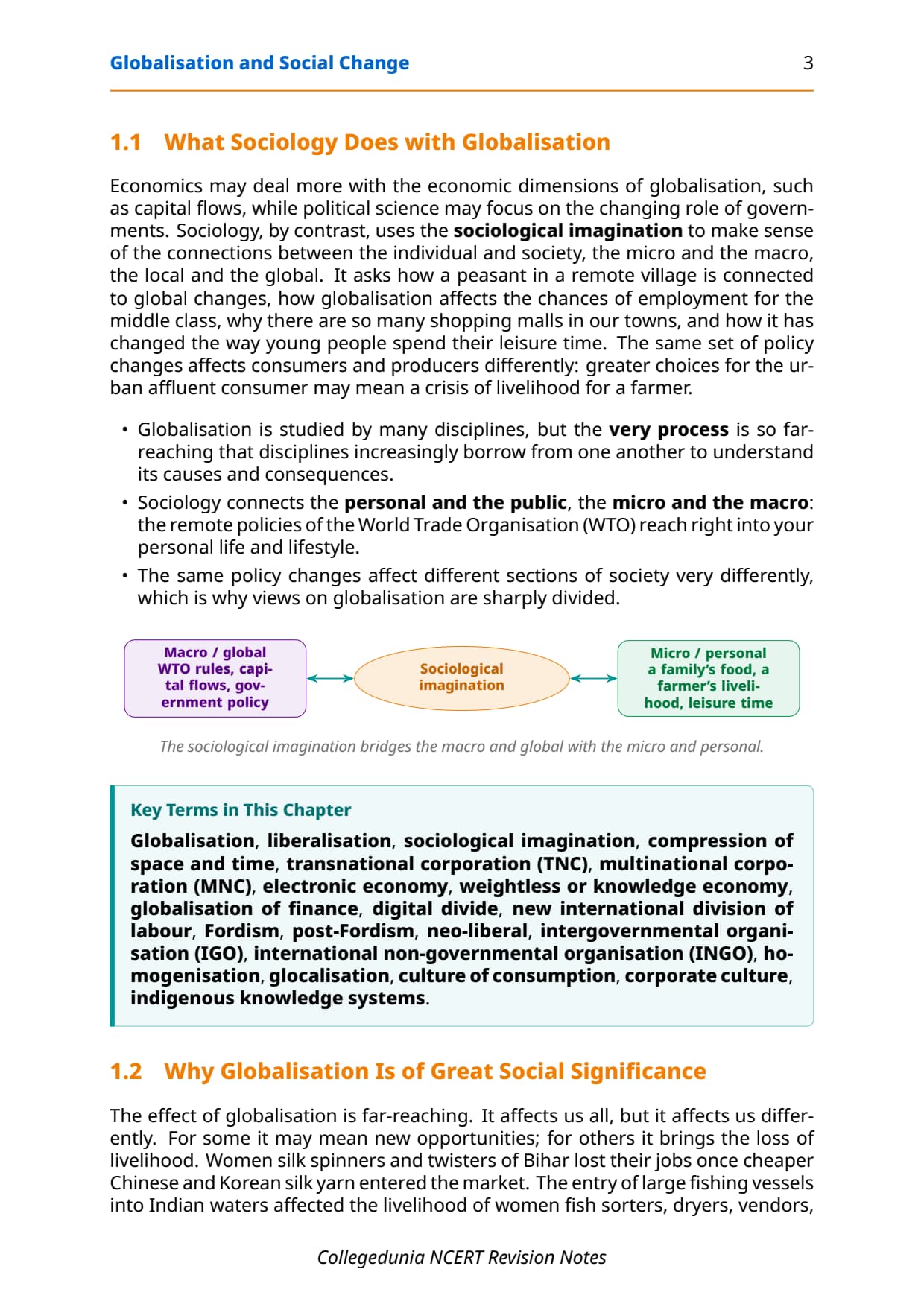
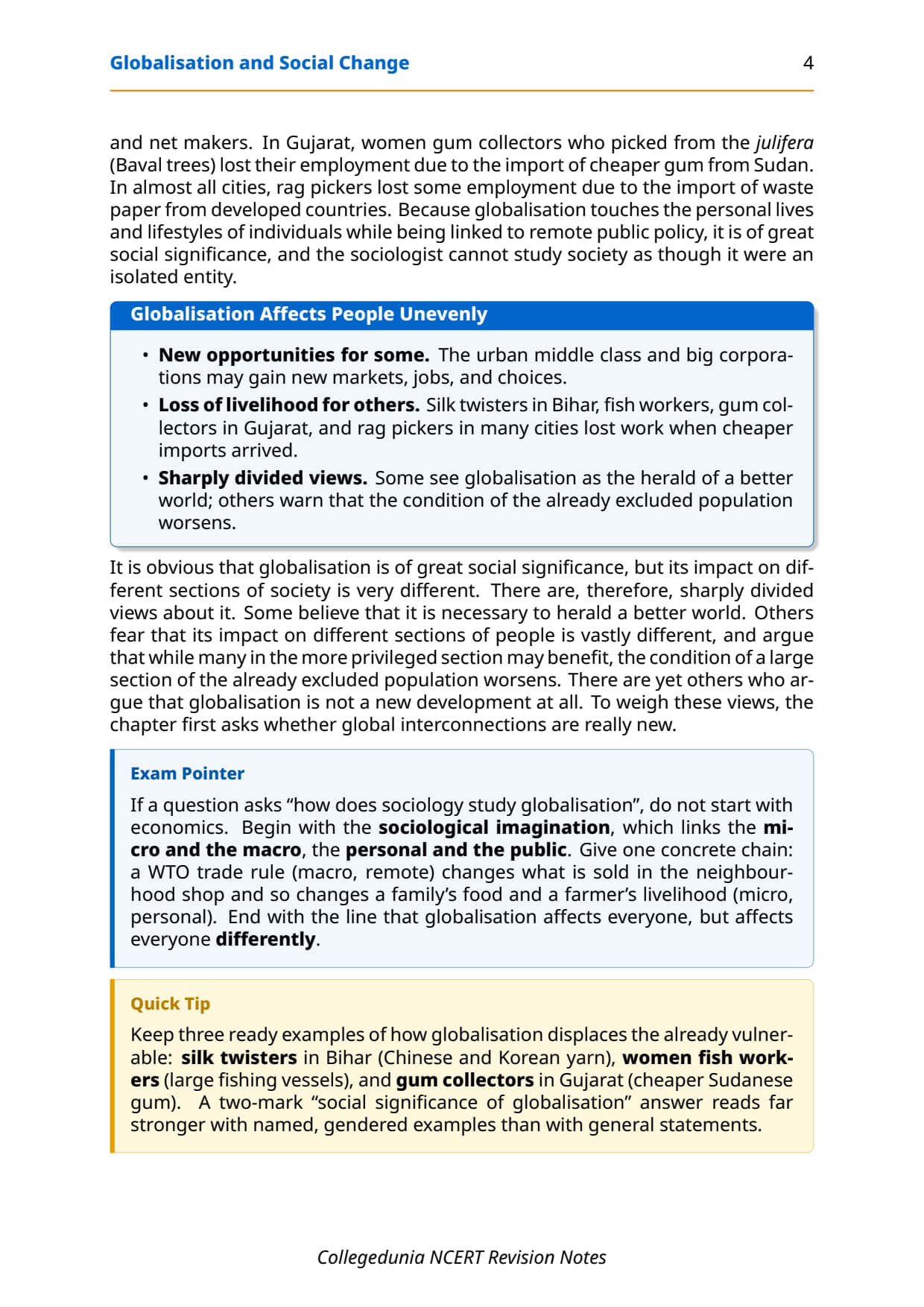
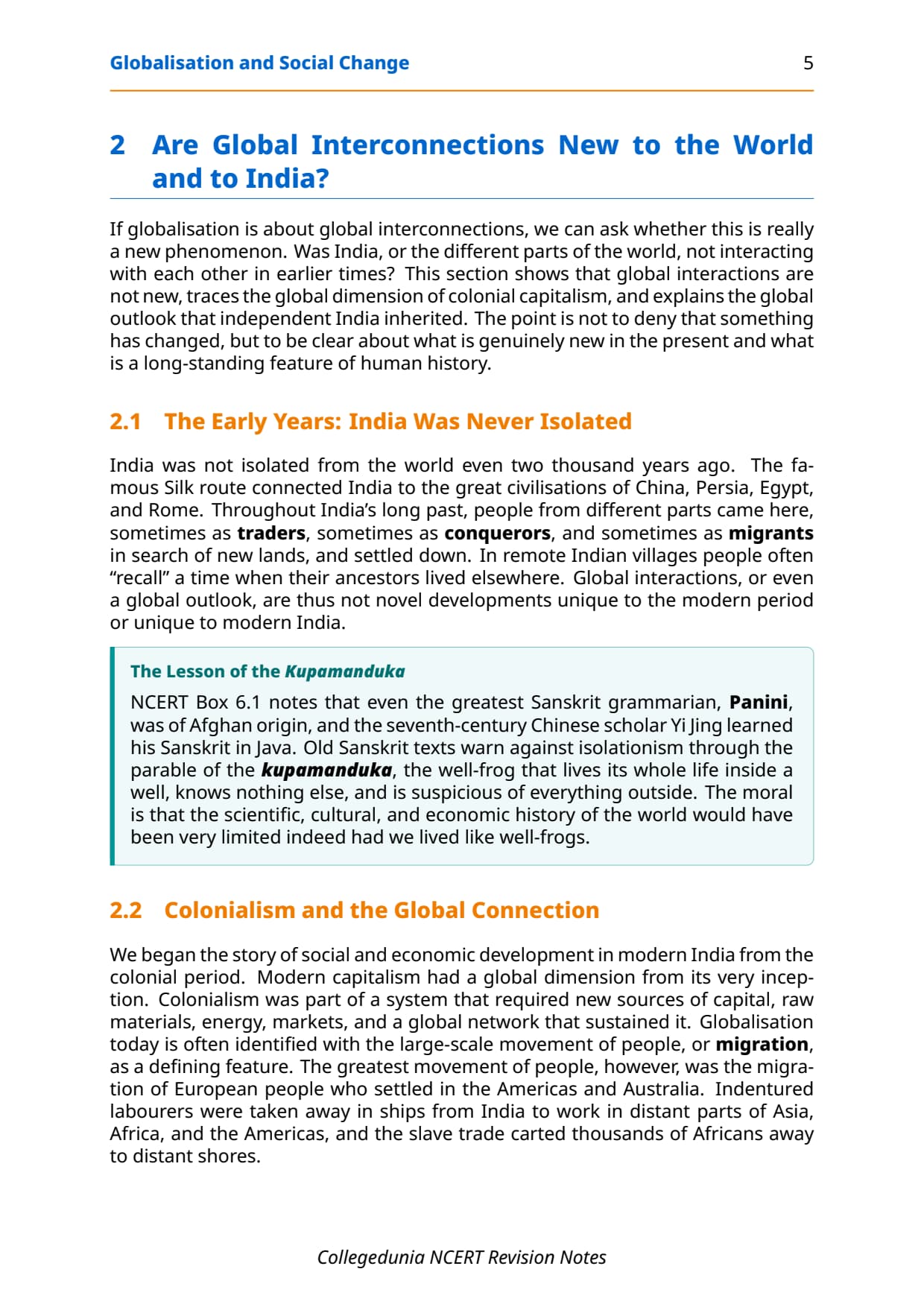
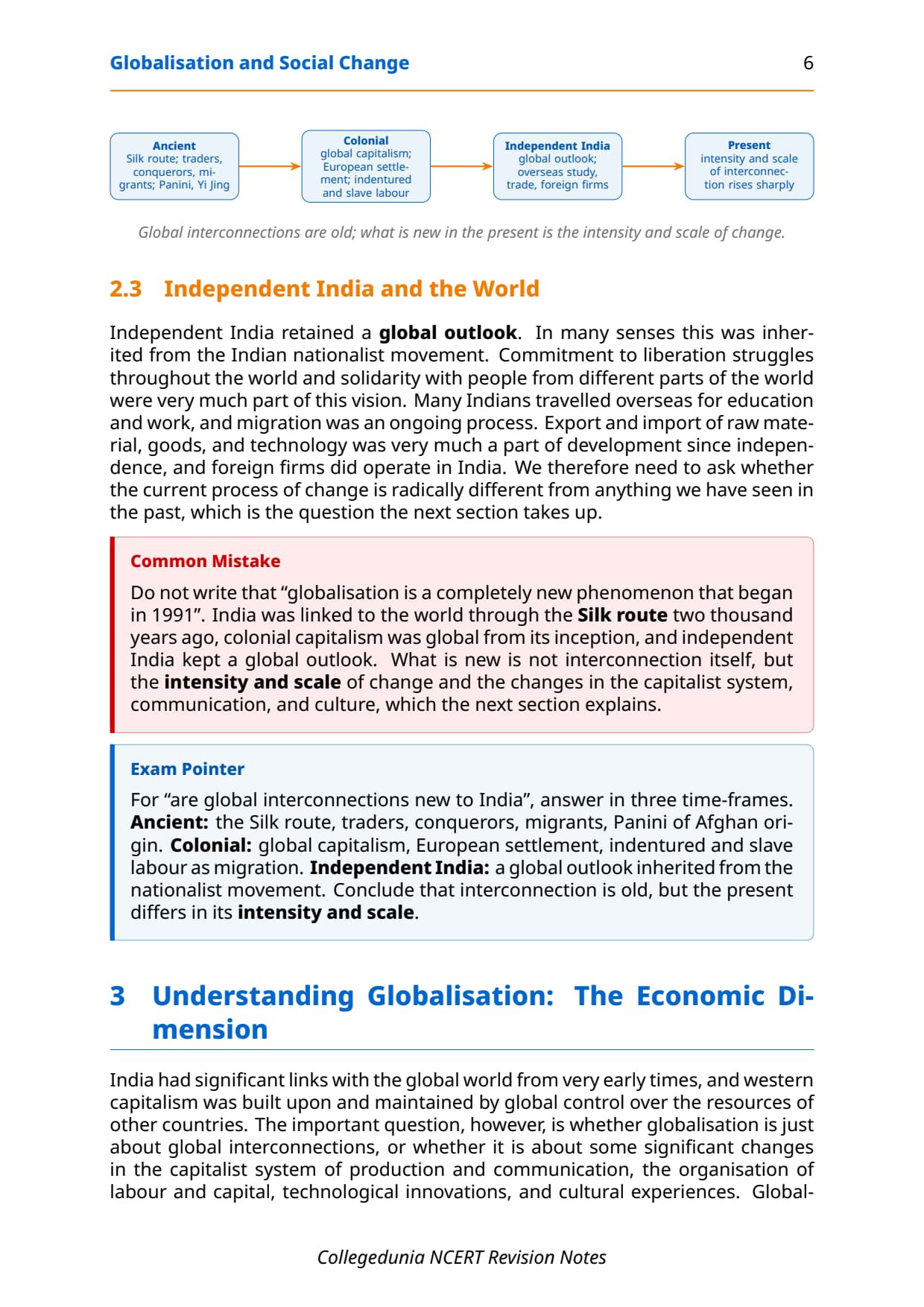
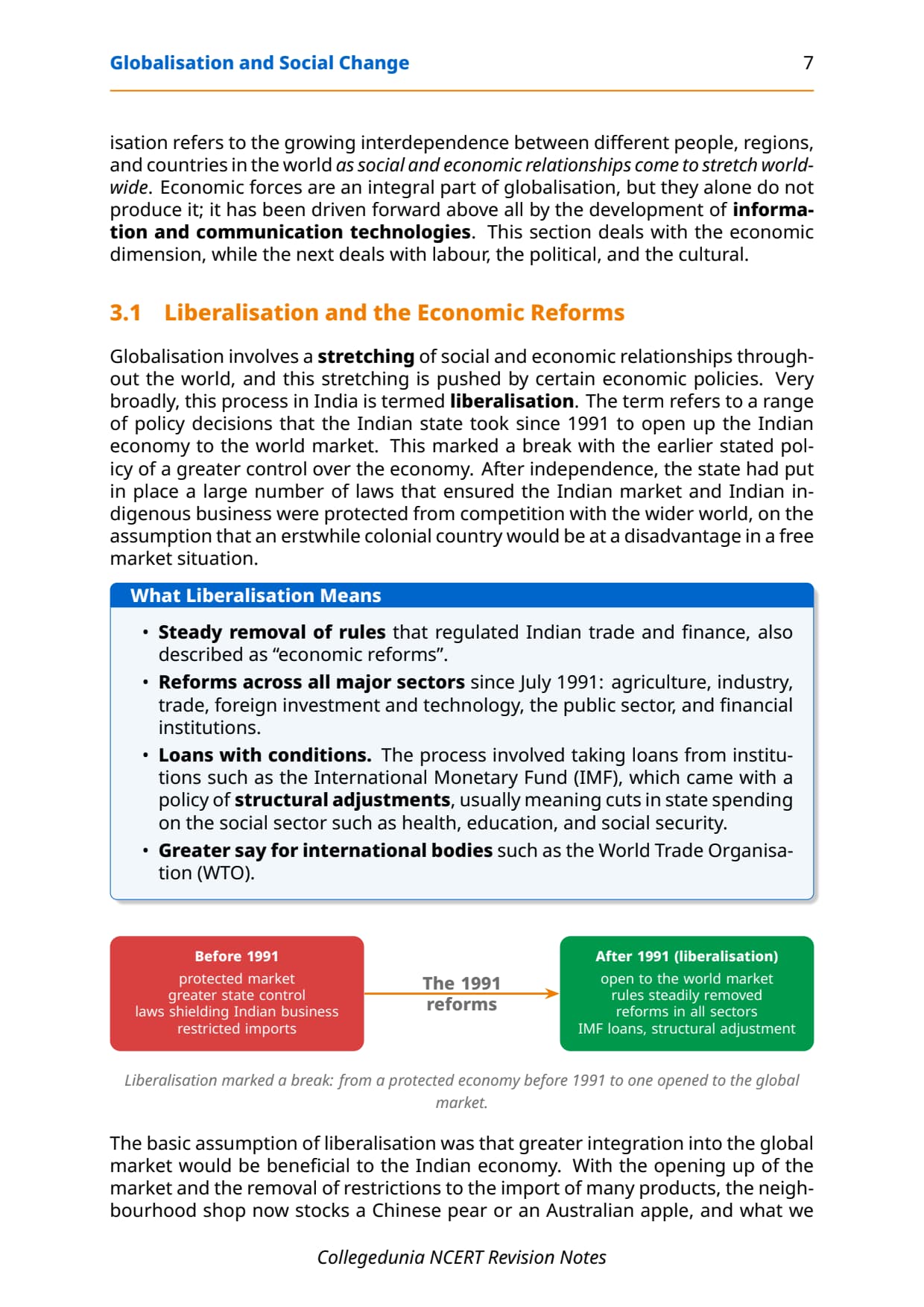
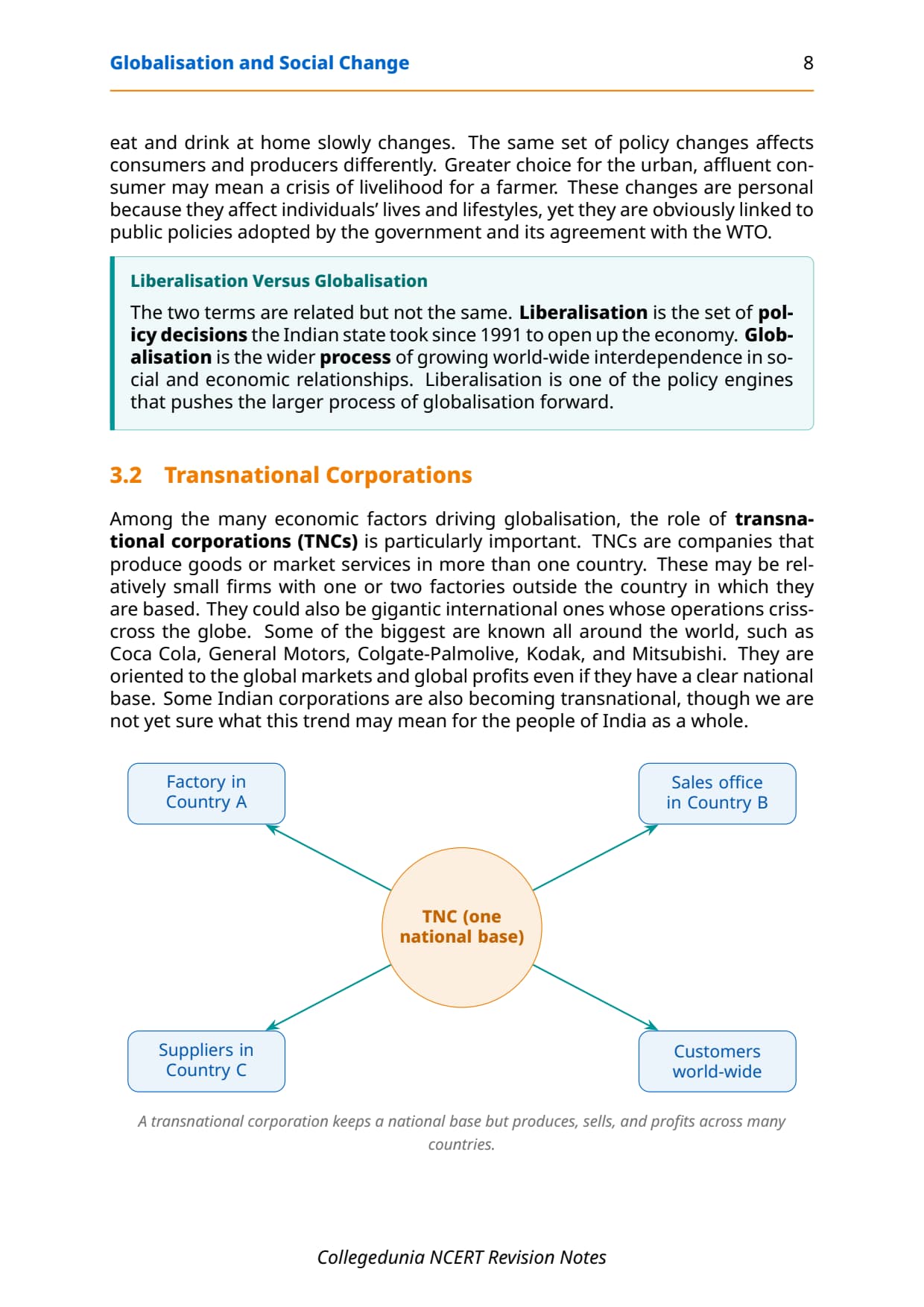
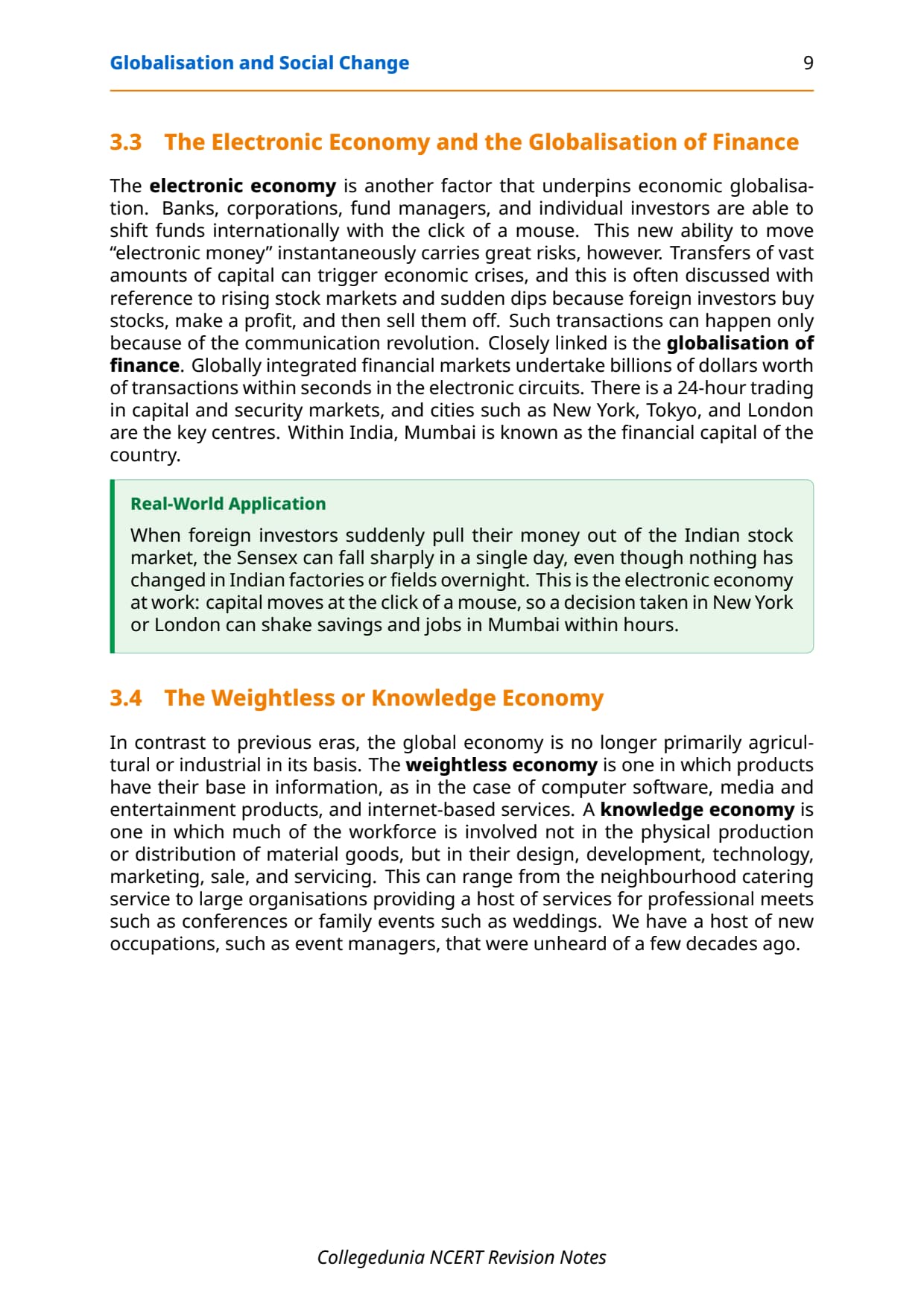
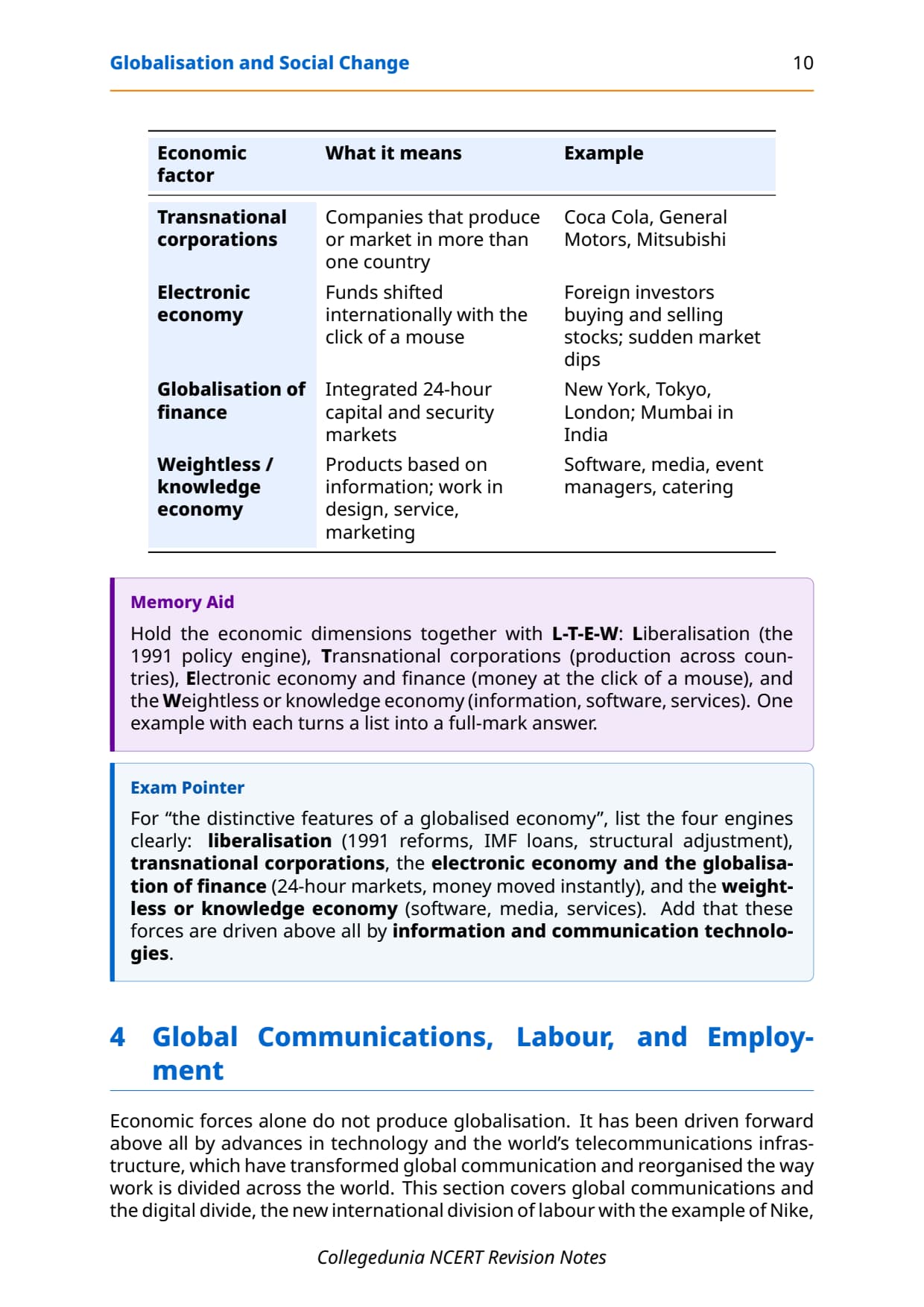
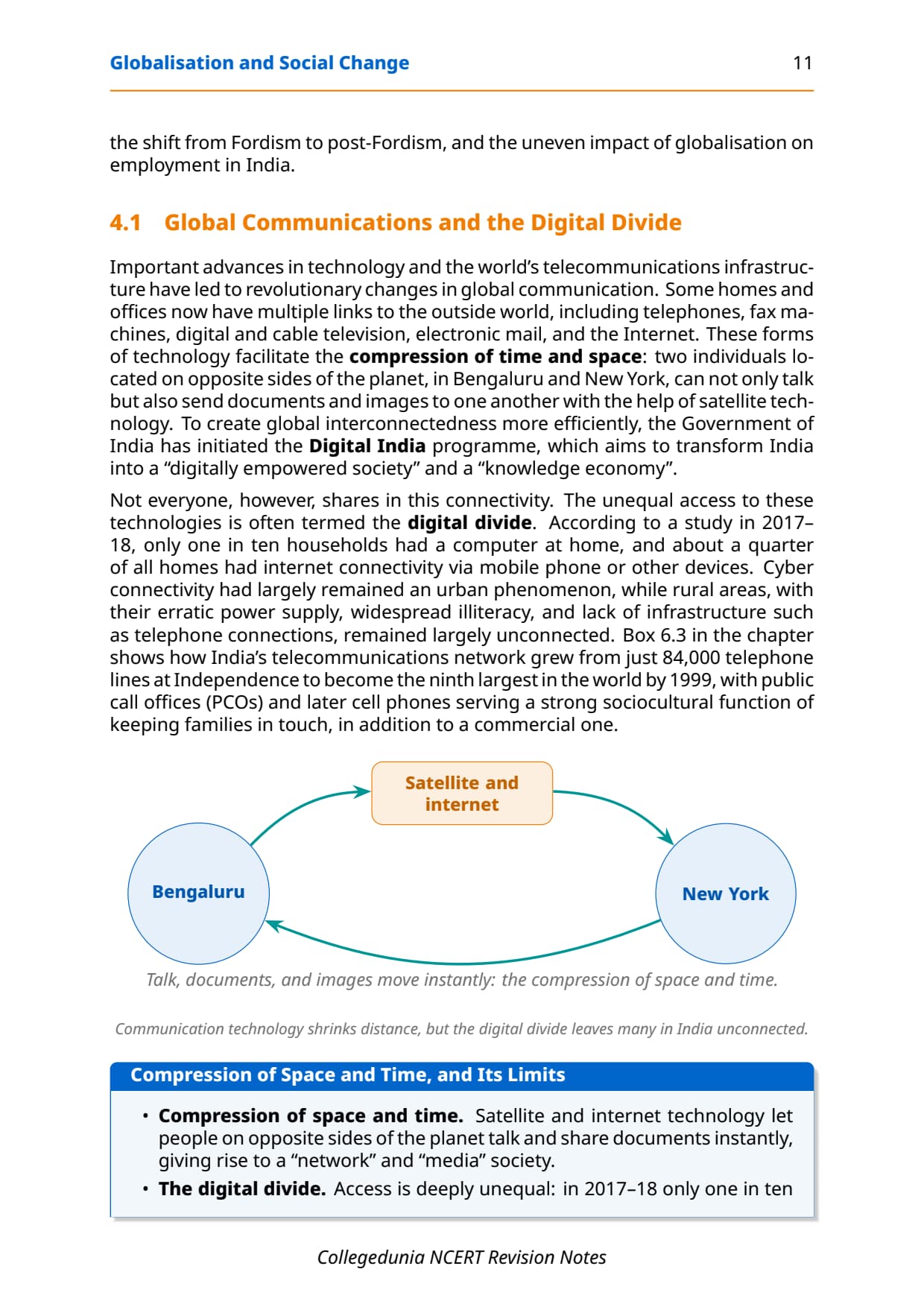
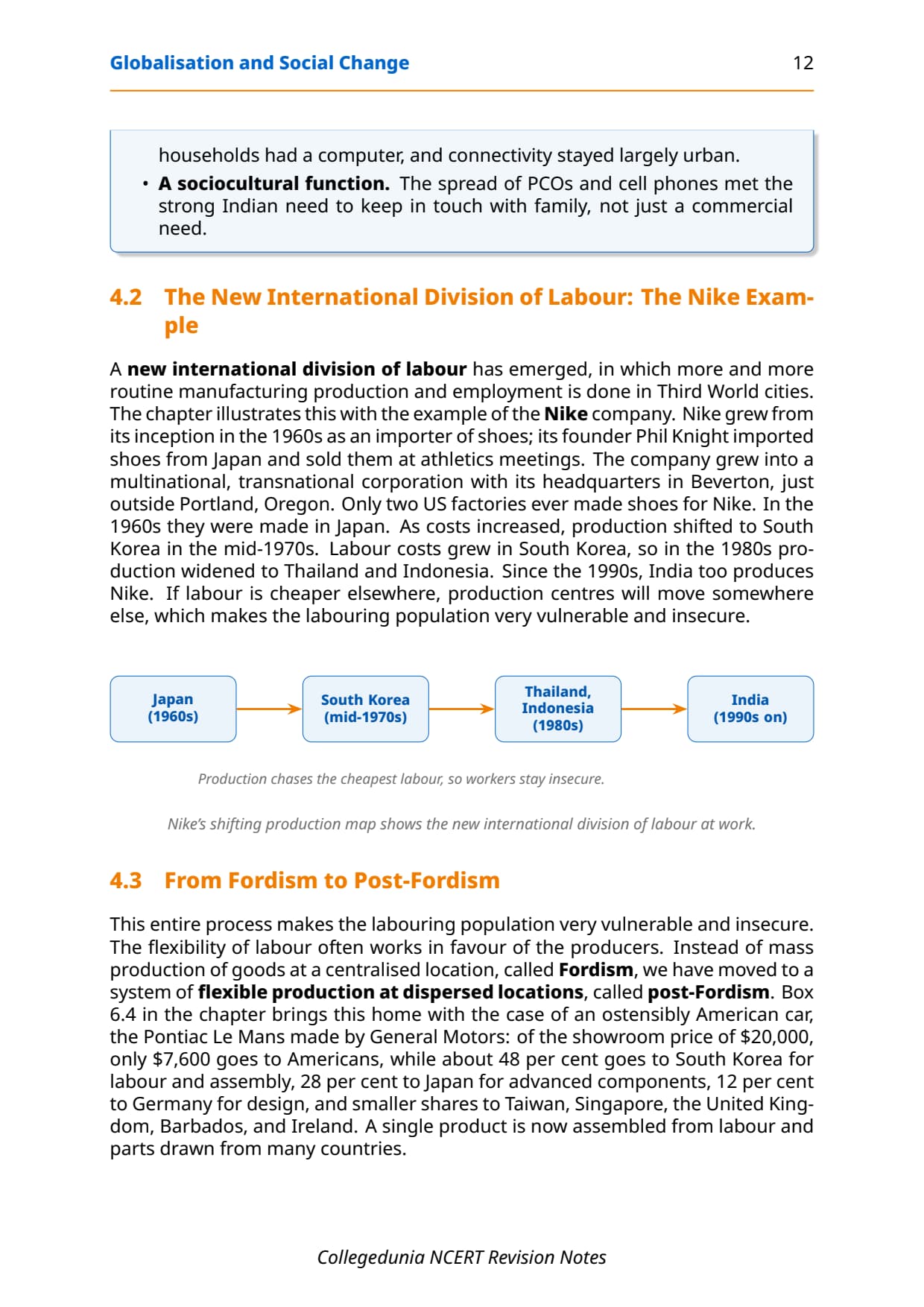
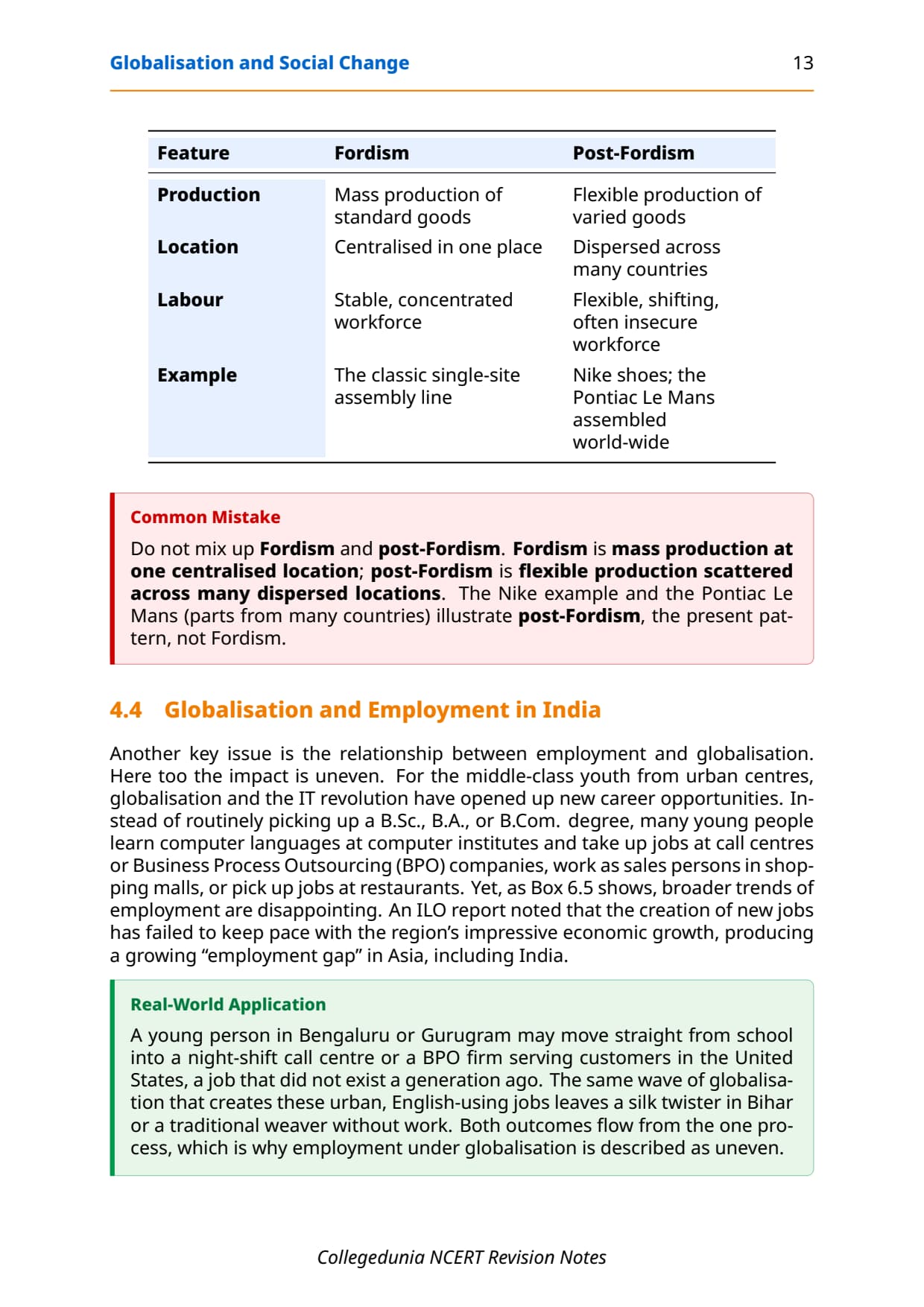
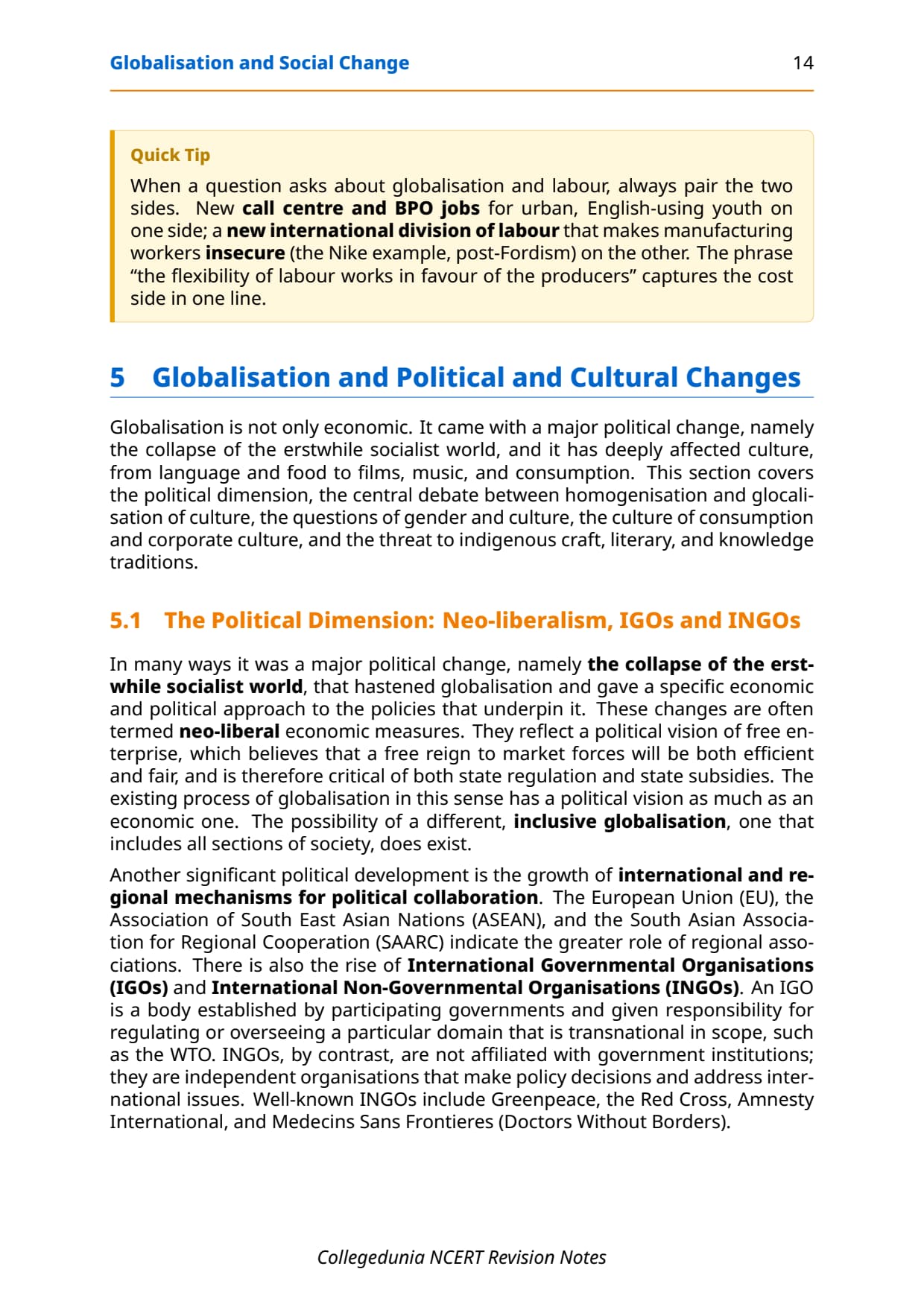
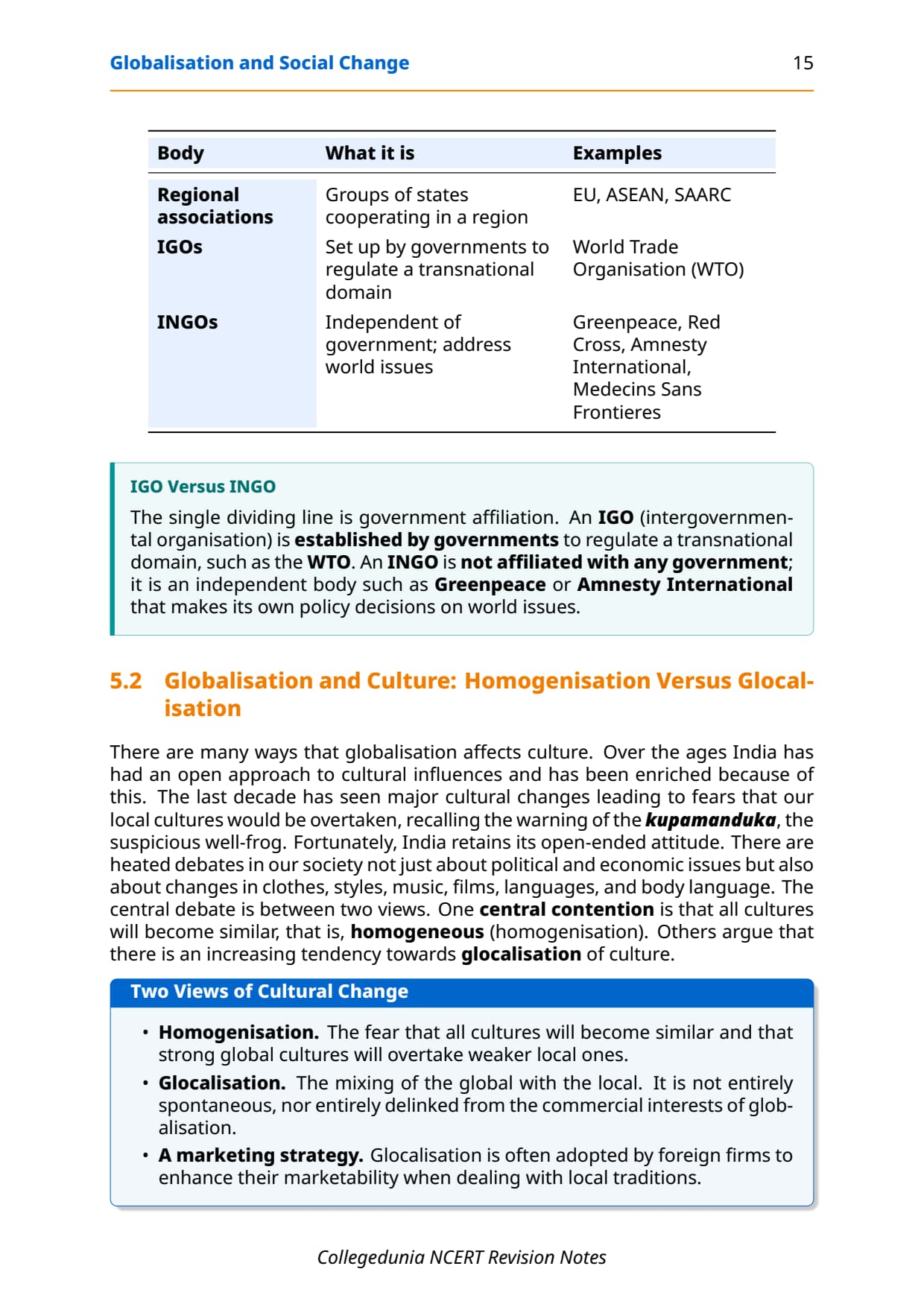
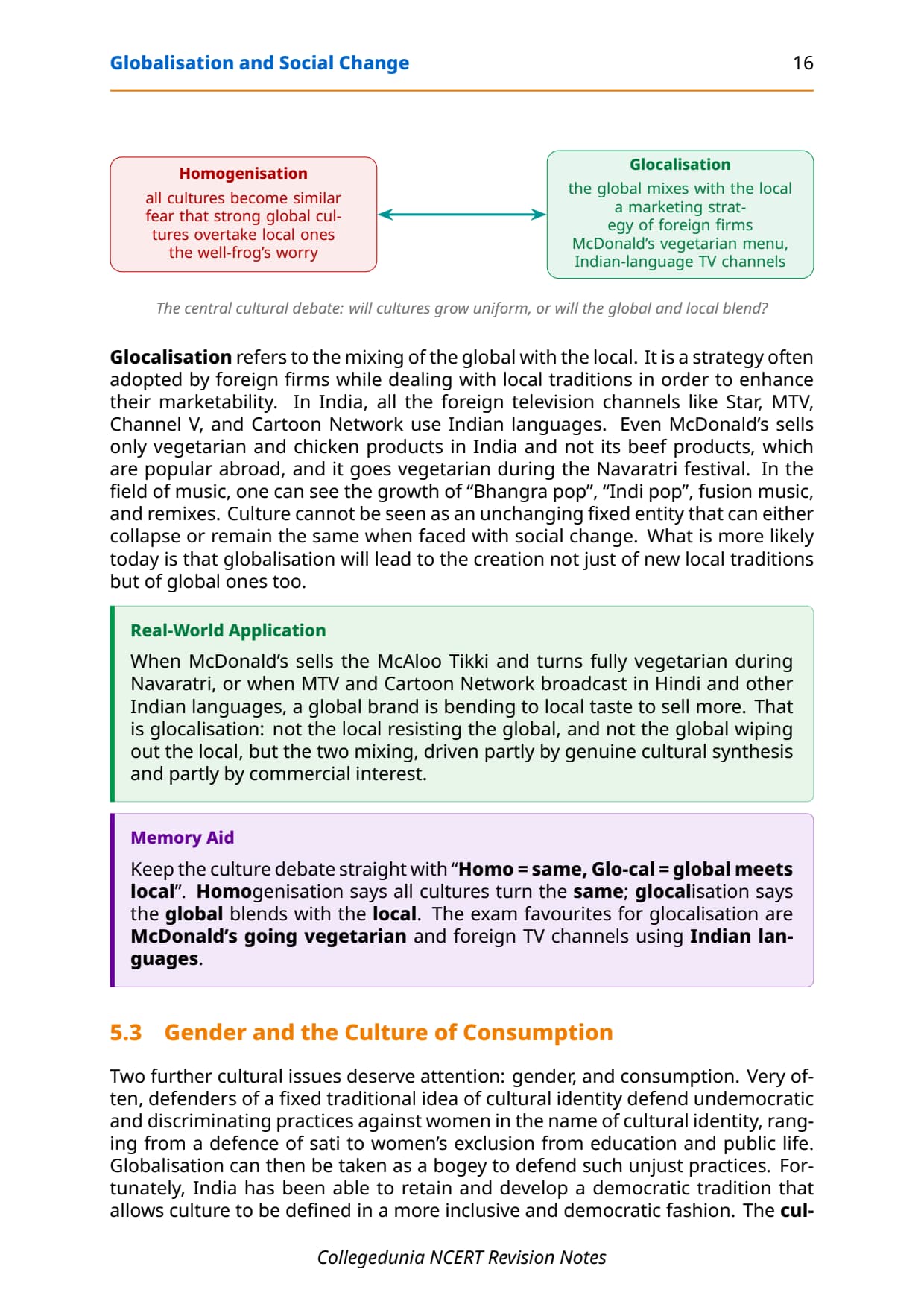
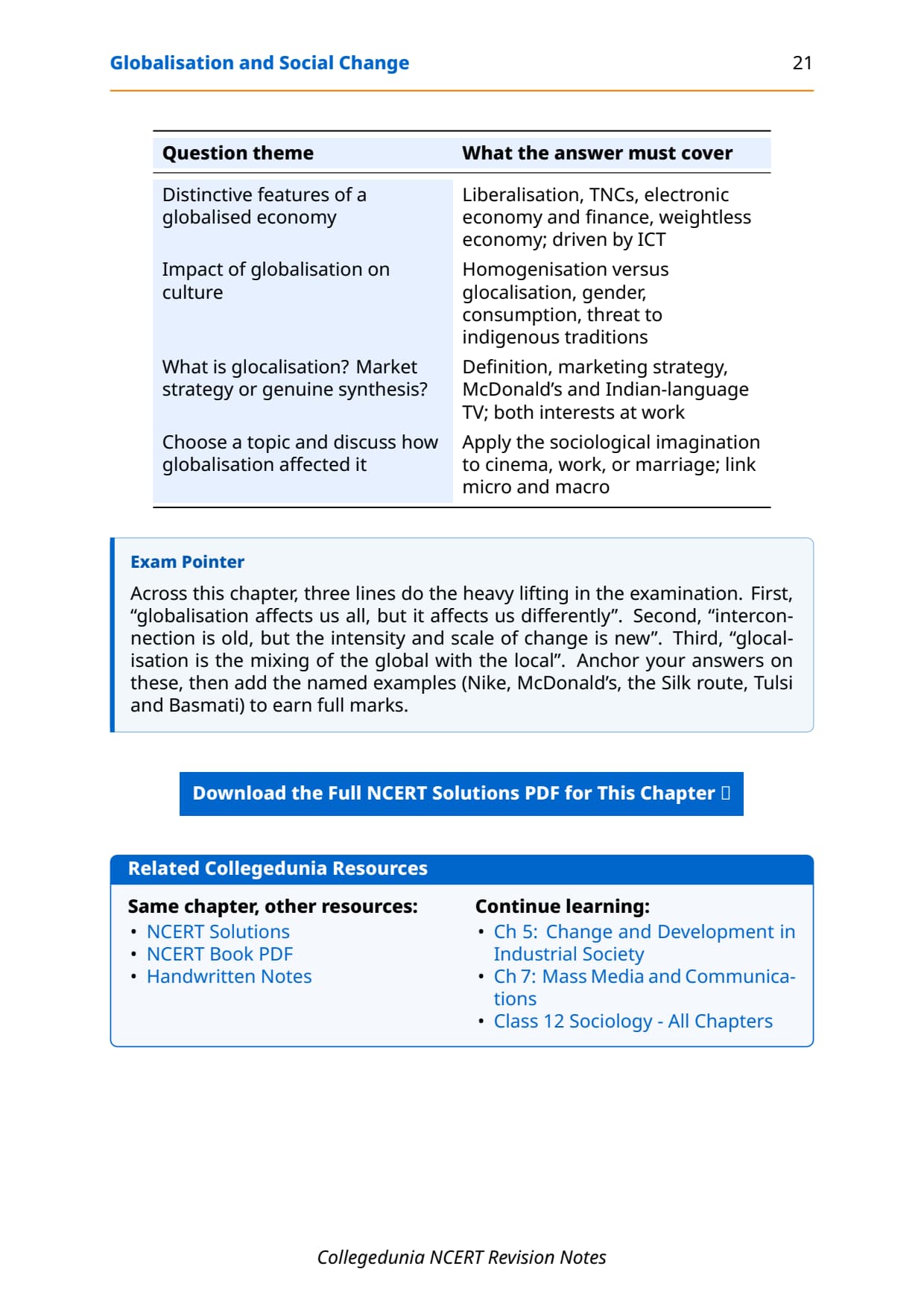
- One-page summary of every topic in Social Change and Development in India Chapter 6.
- This Class 12 Sociology chapter usually carries 5 to 6 marks per board paper.
- Pairs with the NCERT Solutions, Handwritten Notes and Book PDF linked lower on this page.
These Class 12 Sociology Chapter 6 Notes are written by subject experts from the official NCERT Social Change and Development in India textbook, in plain English for quick board revision.
Student Feedback: In a Collegedunia poll of 8,650 Class 12 Sociology students taken before the 2026 boards, 72% of students said a one-page summary of Globalisation and Social Change helped them remember the three dimensions far better than re-reading the textbook. Most students wanted the key terms listed in one place, which these Notes do.
Source: 2026-27 Class 12 Sociology student poll. Sample of 8,650 students from CBSE schools across 13 states.
Globalisation and Social Change Class 12 Notes Overview
Globalisation and Social Change is the sixth chapter of Social Change and Development in India. It explains how the growing interdependence of the world's people, money and ideas changes life in India. The chapter has three sides that students should keep separate in their minds.
- Economic side: liberalisation, transnational corporations and the electronic economy.
- Political side: the changing role of the State and new global rules.
- Cultural side: the debate between homogenisation and glocalisation.
These Notes summarise each side in one place, so students do not have to re-read the full chapter. Keep this overview in mind, then read each section below as a quick recap of the main NCERT points.
The Economic Dimension: Liberalisation and the Globalised Economy
The economic side is where globalisation in India became visible. The chapter ties it to the 1991 liberalisation, when India opened its economy to the world. The Notes below sum up the features of a globalised economy.
- Liberalisation: the State lowers trade barriers and lets foreign firms enter, as India did in 1991.
- Transnational corporations: companies like Coca Cola and General Motors that work across many countries.
- Electronic economy: money and finance moved across the globe at the click of a button.
- Weightless or knowledge economy: products based on information, such as software and media.
- New international division of labour: routine work moves to low-cost countries.
The point to remember is that a globalised economy moves money, information and labour, not just goods. The image below collects the key economic terms for one-look revision.
The Cultural Dimension: Homogenisation versus Glocalisation
The cultural side is the most-asked area in this chapter. The Notes here sum up the central debate so students can recall it fast.
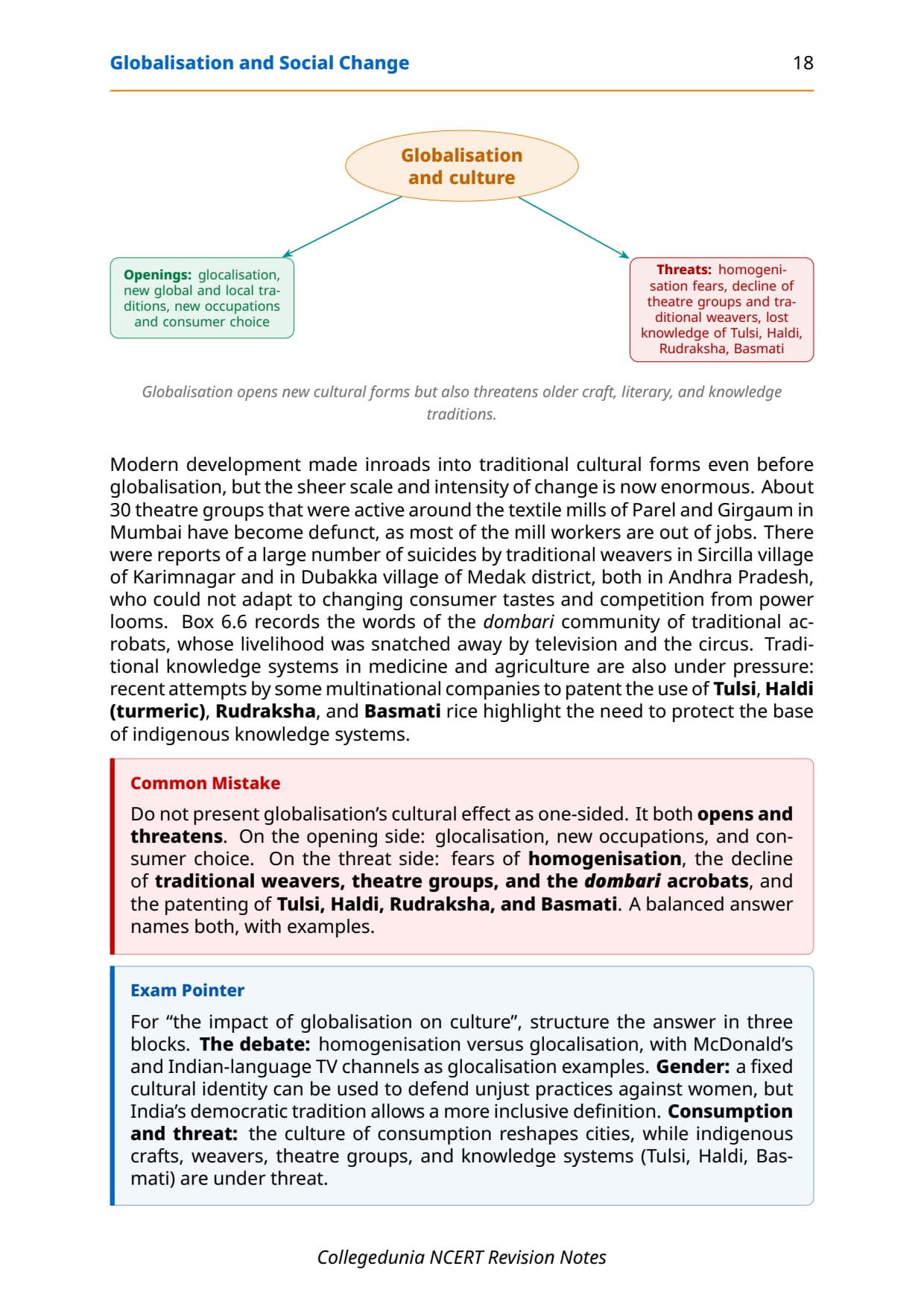
- Homogenisation: the worry that all cultures become similar and local ways vanish.
- Glocalisation: the mixing of global with local, so global products gain a local flavour.
- Culture is not fixed: no culture is pure or unchanging, says the chapter.
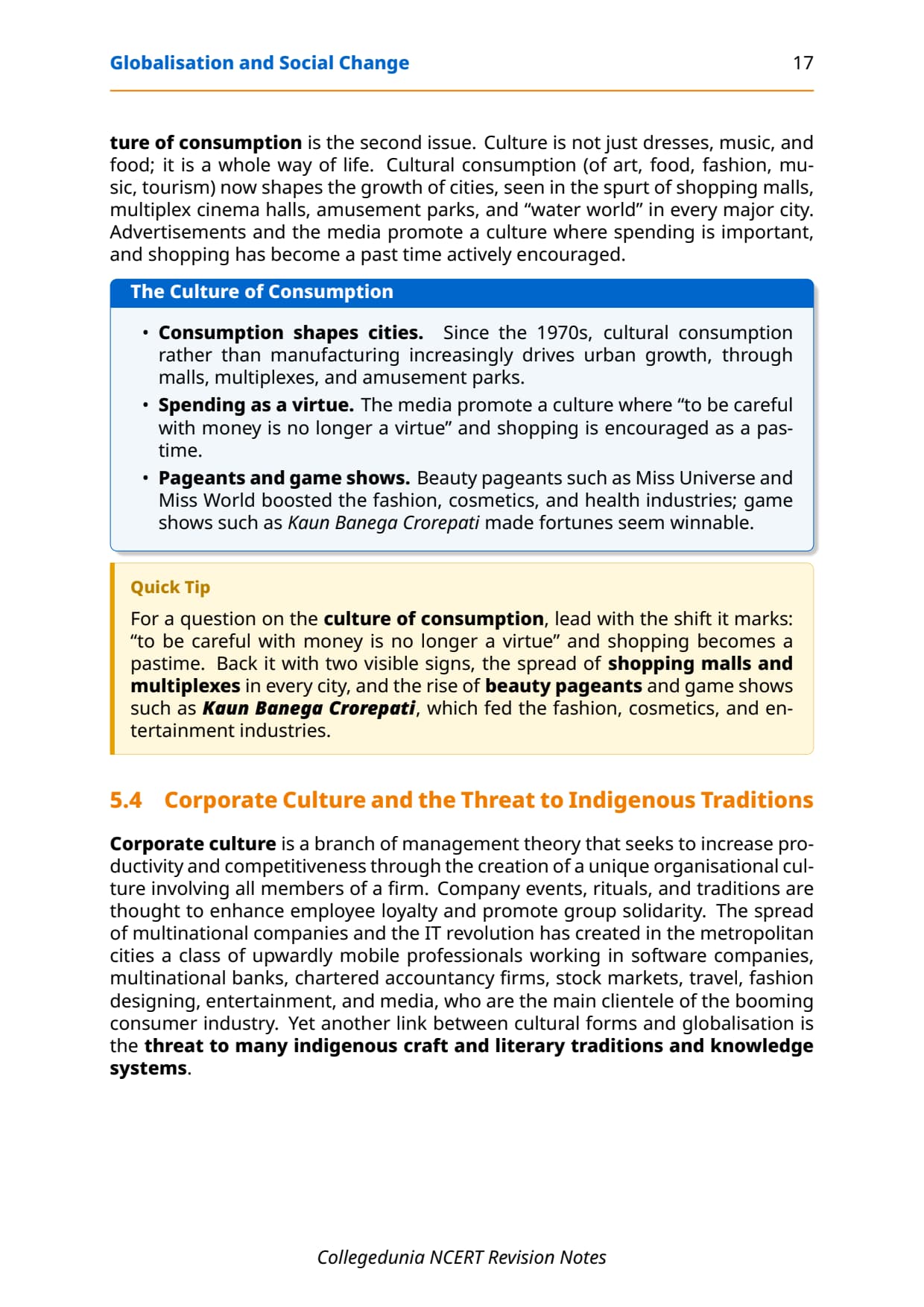
- Culture of consumption: malls, multiplexes and media push a shopping-led lifestyle.
- Threat to crafts: indigenous crafts and knowledge systems can be squeezed out.
The key recall point is that globalisation often blends with local culture rather than wiping it out. Foreign TV channels add Indian content and food chains add Indian dishes, which is glocalisation in action. The image below sets the two views side by side.
Globalisation and Social Change Key Terms to Memorise
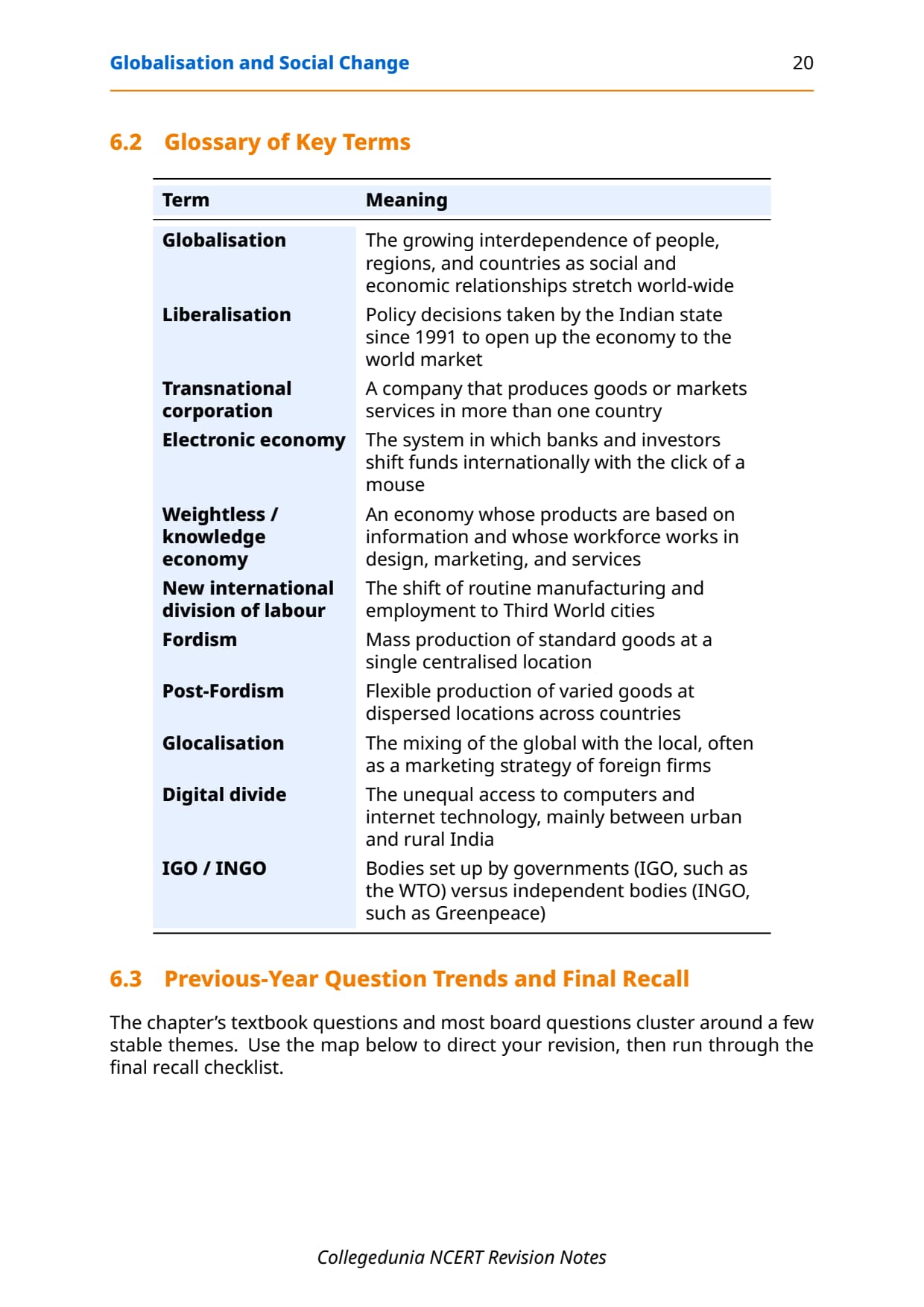
A handful of terms carry most of the marks in this chapter. Learning them in one place saves a lot of time. The table below lists each term with a one-line meaning for quick recall.
| Term | One-line meaning |
|---|---|
| Globalisation | Growing worldwide interdependence of people, money and ideas. |
| Liberalisation | Opening up the economy to global trade, as India did in 1991. |
| Transnational corporation | A company that produces and sells across many countries. |
| Electronic economy | Banking and finance moved across the globe instantly. |
| Homogenisation | The fear that all cultures become similar. |
| Glocalisation | The mixing of the global with the local. |
Students who keep these six terms ready can answer most short questions in globalisation and social change class 12 without re-reading the chapter.
Quick Revision and Last-Minute Recall
For the night before the exam, a short recall list beats re-reading the whole chapter. The points below are the ones examiners reward most.
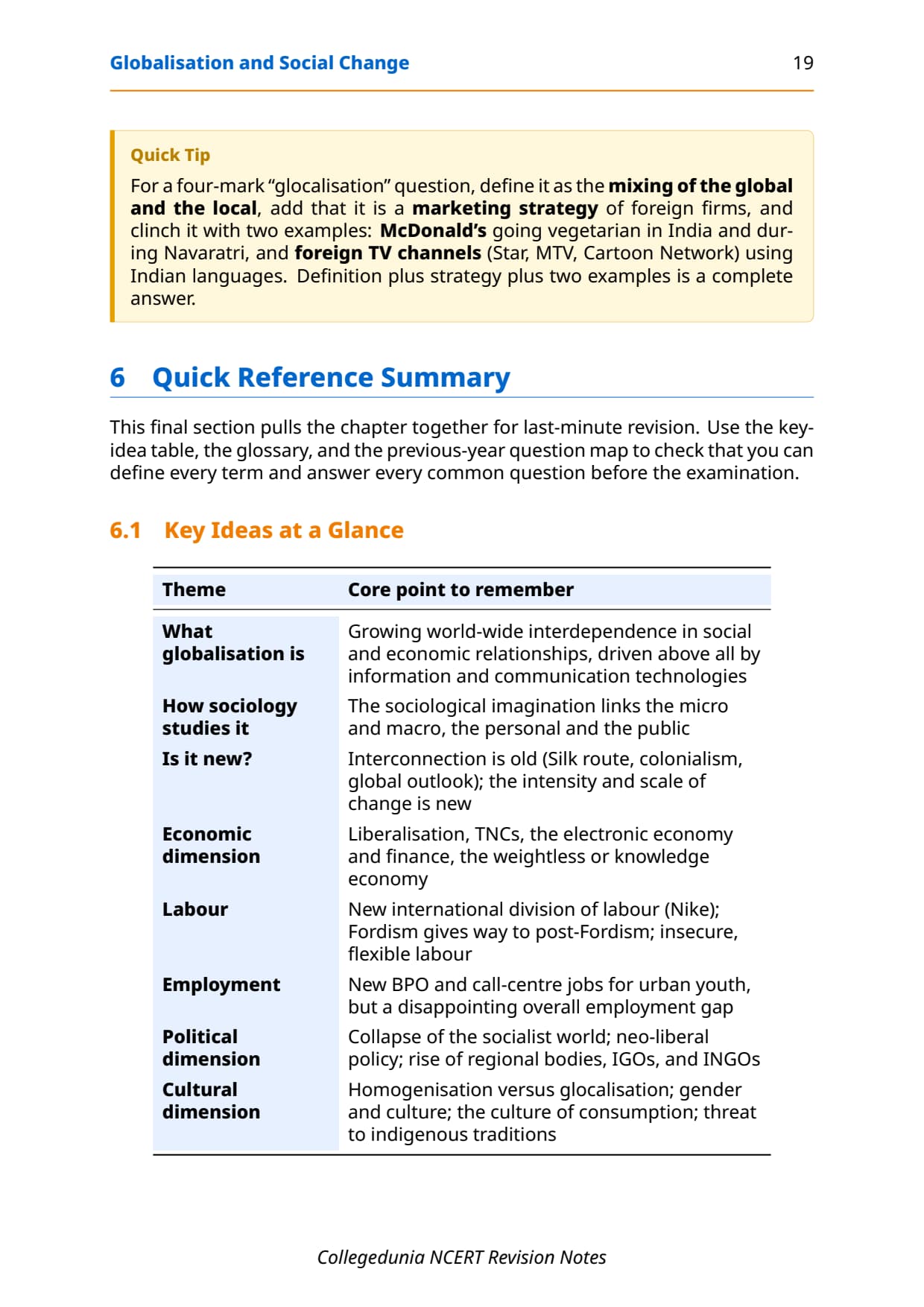
- Globalisation has three sides: economic, political and cultural.
- India entered globalisation mainly through the 1991 liberalisation.
- The globalised economy moves money, information and labour, not just goods.
- Culture is not fixed; globalisation creates new local and global traditions.
- Glocalisation is both a market strategy and real cultural synthesis.
Reading this recall list twice, once a week before and once the night before, fixes the main points well. Keep a clear example for each side, since examples lift a short answer to full marks.
How These Notes Pair with the Solutions and Book PDF
These Notes give the summary. To revise the full chapter, students should use them alongside the other resources for the same chapter, all linked in the table below.
| Resource | Best used for |
|---|---|
| Globalisation and Social Change NCERT Solutions | Full point-wise answers to all 4 exercise questions |
| Globalisation and Social Change Handwritten Notes | Last-minute, one-shot revision in a scanned notebook style |
| Globalisation and Social Change NCERT Book PDF | Reading the original NCERT chapter text |
Tip: read these Notes first to get the map of the chapter, then attempt the Solutions on your own. That order builds memory faster than reading answers straight away.
All Notes for Class 12 Sociology
The table links the Notes for every chapter in both Class 12 Sociology books, so students can move across the course in one click. Globalisation and Social Change is highlighted.
| Chapter | Notes |
|---|---|
| Indian Society | |
| Chapter 1 | Introducing Indian Society |
| Chapter 2 | The Demographic Structure of the Indian Society |
| Chapter 3 | Social Institutions - Continuity and Change |
| Chapter 4 | The Market as a Social Institution |
| Chapter 5 | Patterns of Social Inequality and Exclusion |
| Chapter 6 | The Challenges of Cultural Diversity |
| Social Change and Development in India | |
| Chapter 1 | Structural Change |
| Chapter 2 | Cultural Change |
| Chapter 3 | The Constitution and Social Change |
| Chapter 4 | Change and Development in Rural Society |
| Chapter 5 | Change and Development in Industrial Society |
| Chapter 6 | Globalisation and Social Change |
| Chapter 7 | Mass Media and Communications |
| Chapter 8 | Social Movements |
FAQs on Globalisation and Social Change Class 12 Notes
Globalisation and Social Change Class 12 Sociology Notes Common Questions
Ques. Where can I download the class 12 sociology chapter 6 Notes PDF?
Ans. You can download the Globalisation and Social Change Class 12 Sociology Notes PDF directly from this page. It is free, follows the 2026-27 NCERT, and summarises the whole chapter in plain English.
Ques. What are the three dimensions of globalisation in Class 12 Sociology?
Ans. Globalisation has an economic dimension (liberalisation, transnational corporations and the electronic economy), a political dimension (the changing role of the State), and a cultural dimension (homogenisation versus glocalisation). The Notes cover each side in one place.
Ques. What is glocalisation in short?
Ans. Glocalisation is the mixing of the global with the local. Foreign firms adapt global products to local tastes, such as TV channels adding Indian content or food chains adding Indian dishes. It is both a market strategy and a form of cultural synthesis.
Ques. Why is the 1991 liberalisation important for this chapter?
Ans. The 1991 liberalisation is India's main entry point into globalisation. It opened the economy to global trade, let foreign firms enter, and brought transnational corporations and the electronic economy into Indian life, which the chapter studies in detail.
Ques. Are these Notes enough for the board exam?
Ans. These Notes give a full summary and the key terms, which is enough for fast revision. For full marks, pair them with the NCERT Solutions on this site so you also practise the four exercise answers in your own words.



Comments