




The NCERT Solutions Class 9 Social Science Chapter 6 Democracy answer all 12 items from the Questions and Activities exercise of the 2026-27 Understanding Society textbook. Every answer is written the way you should present it in the exam, covering popular sovereignty, the rule of law, fundamental rights, and the duties of a good citizen.
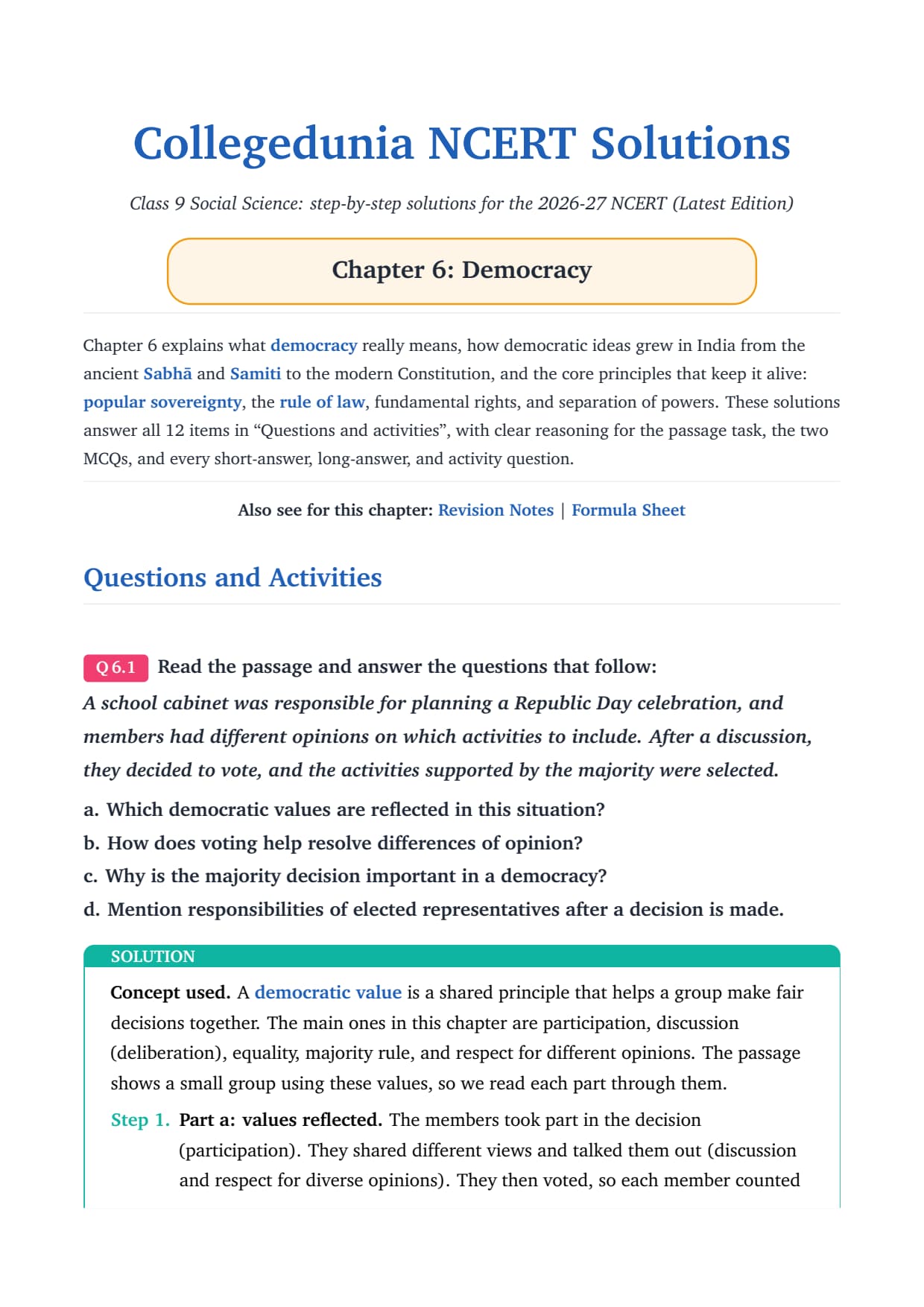
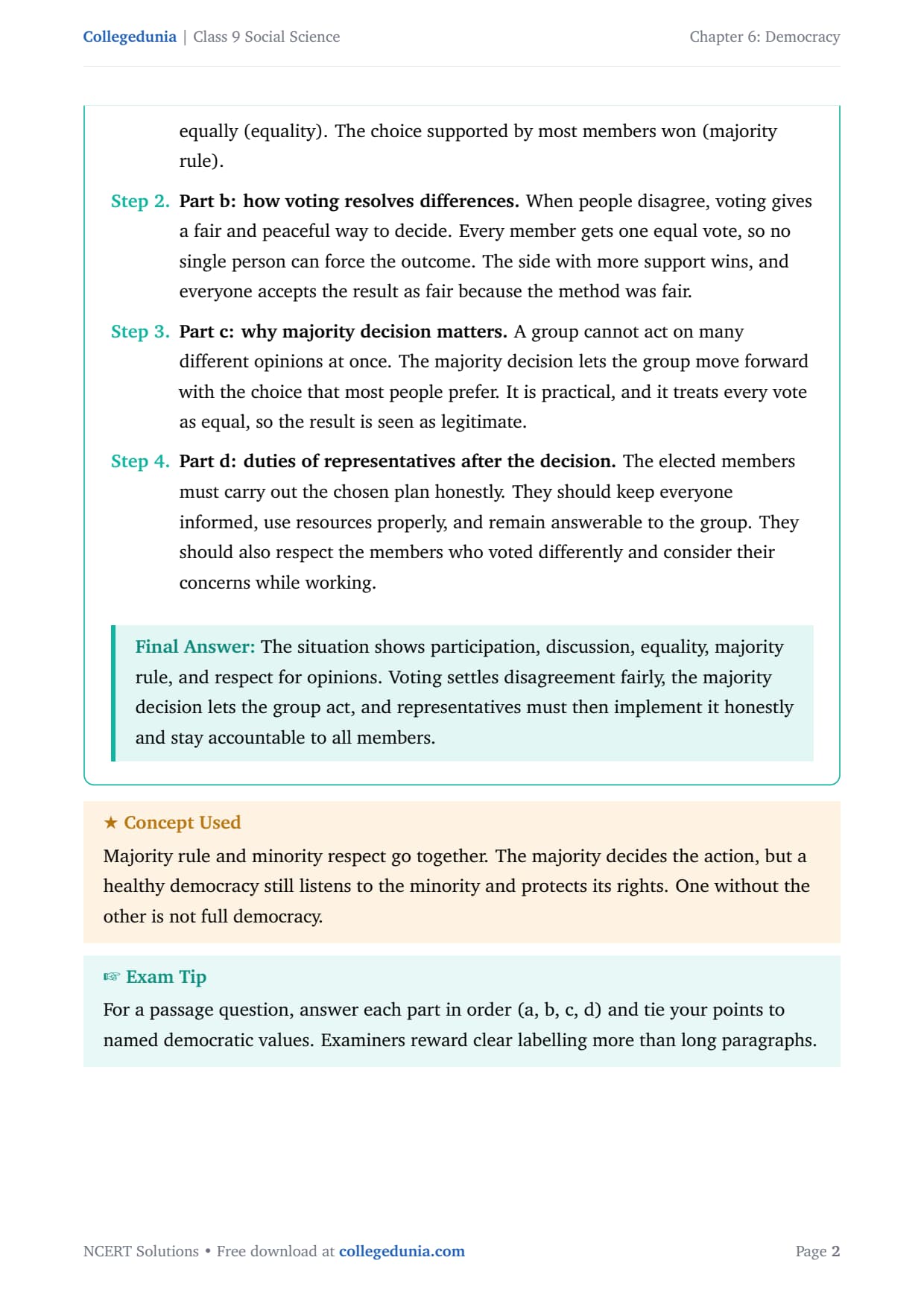
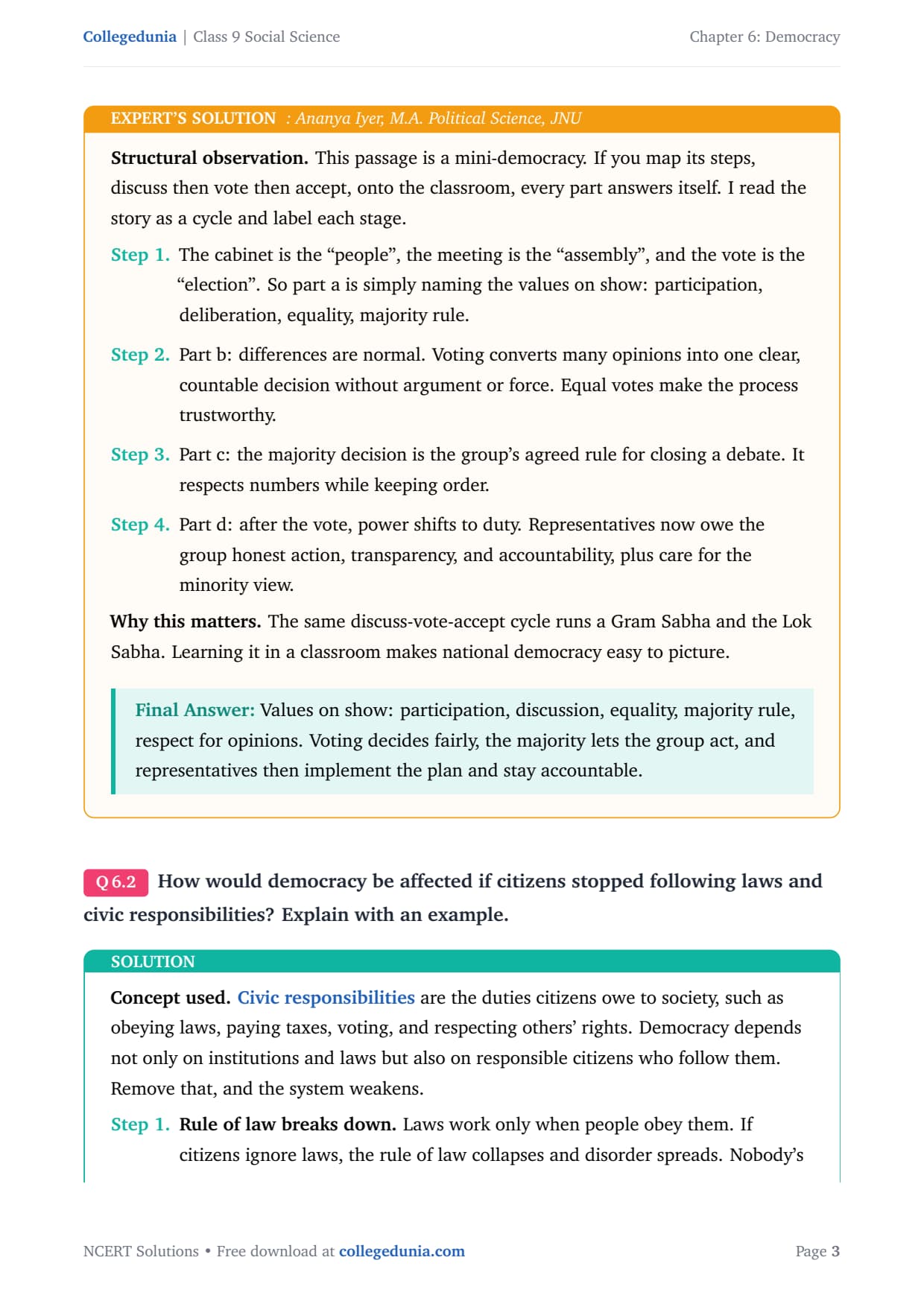
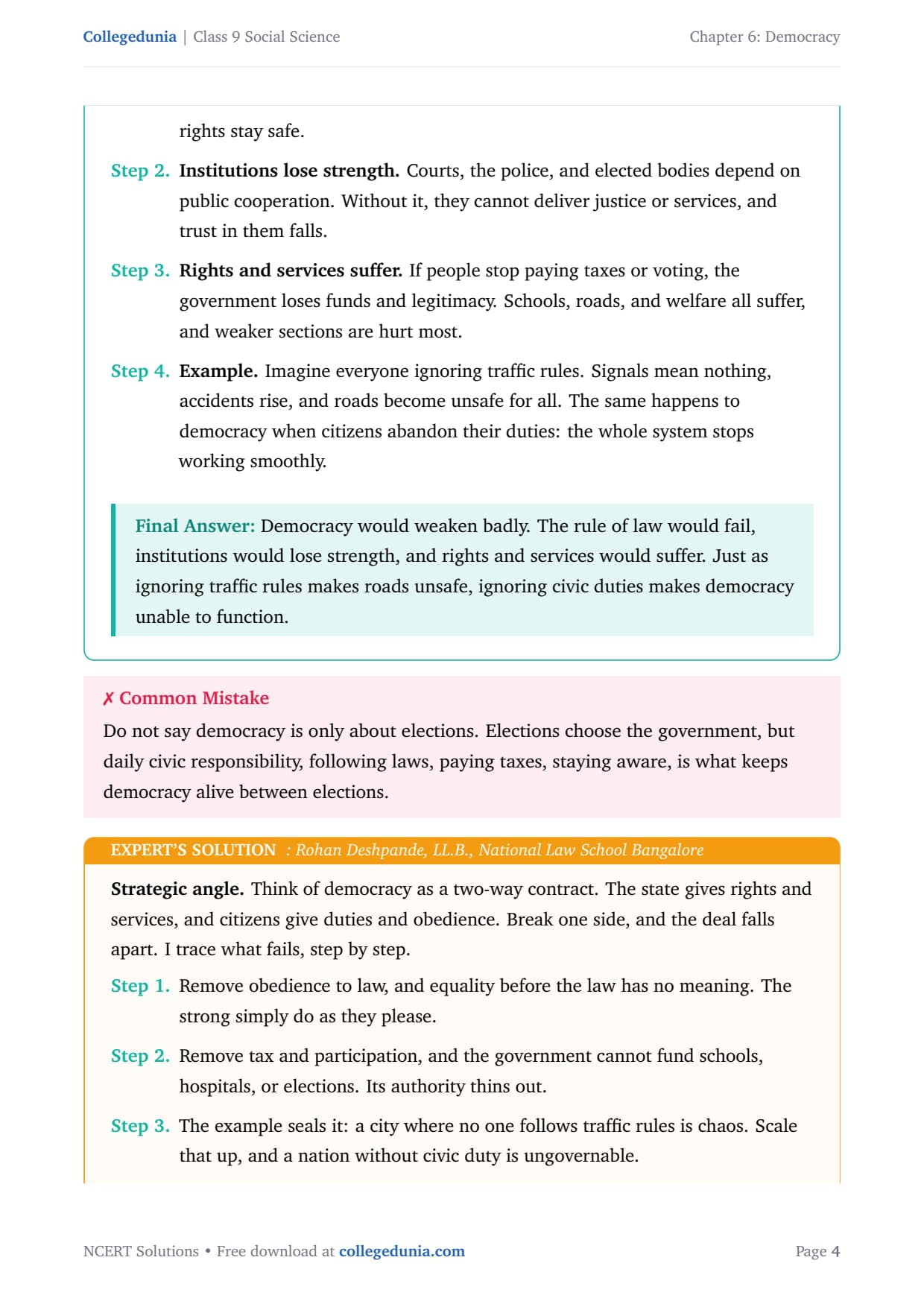
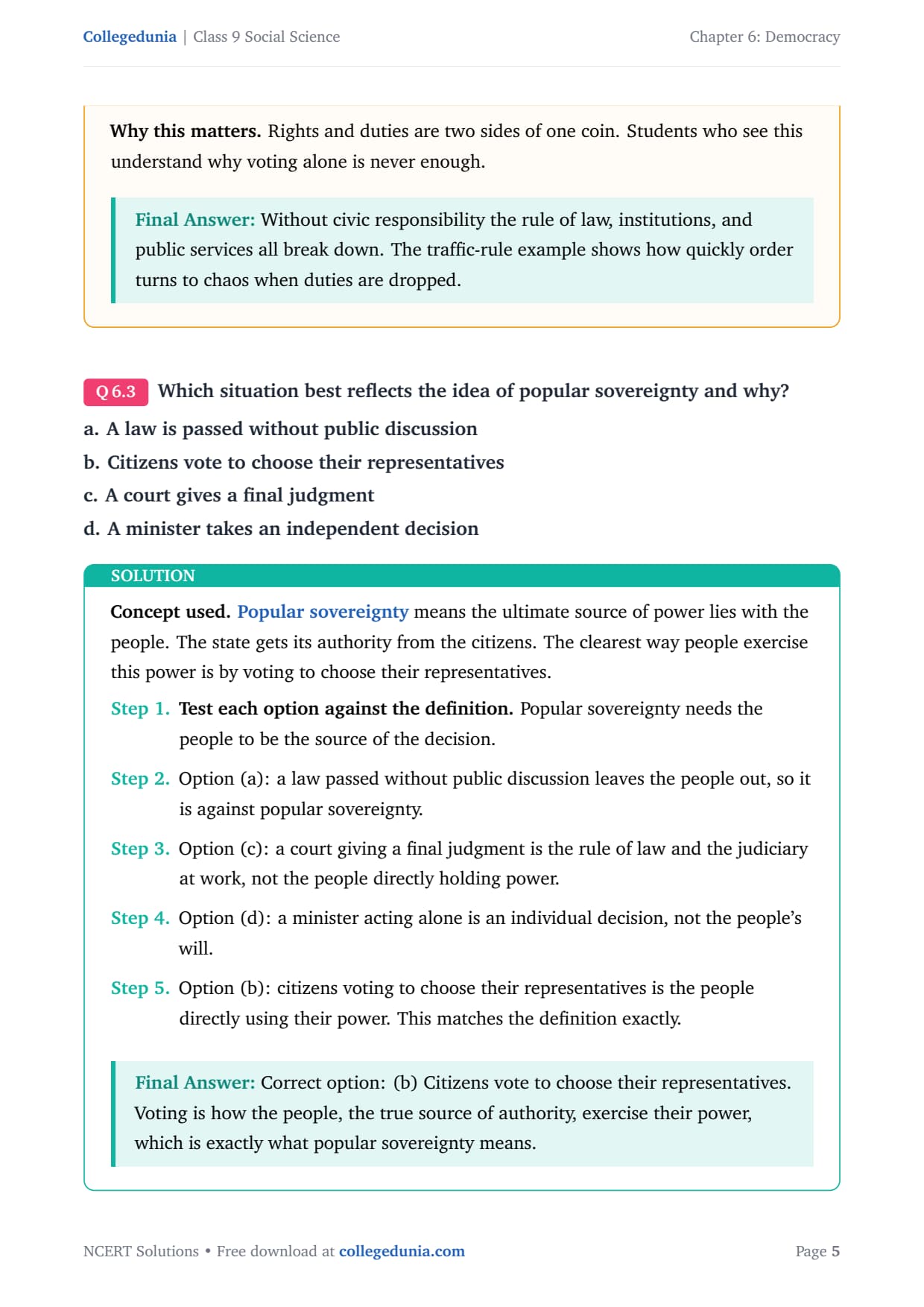
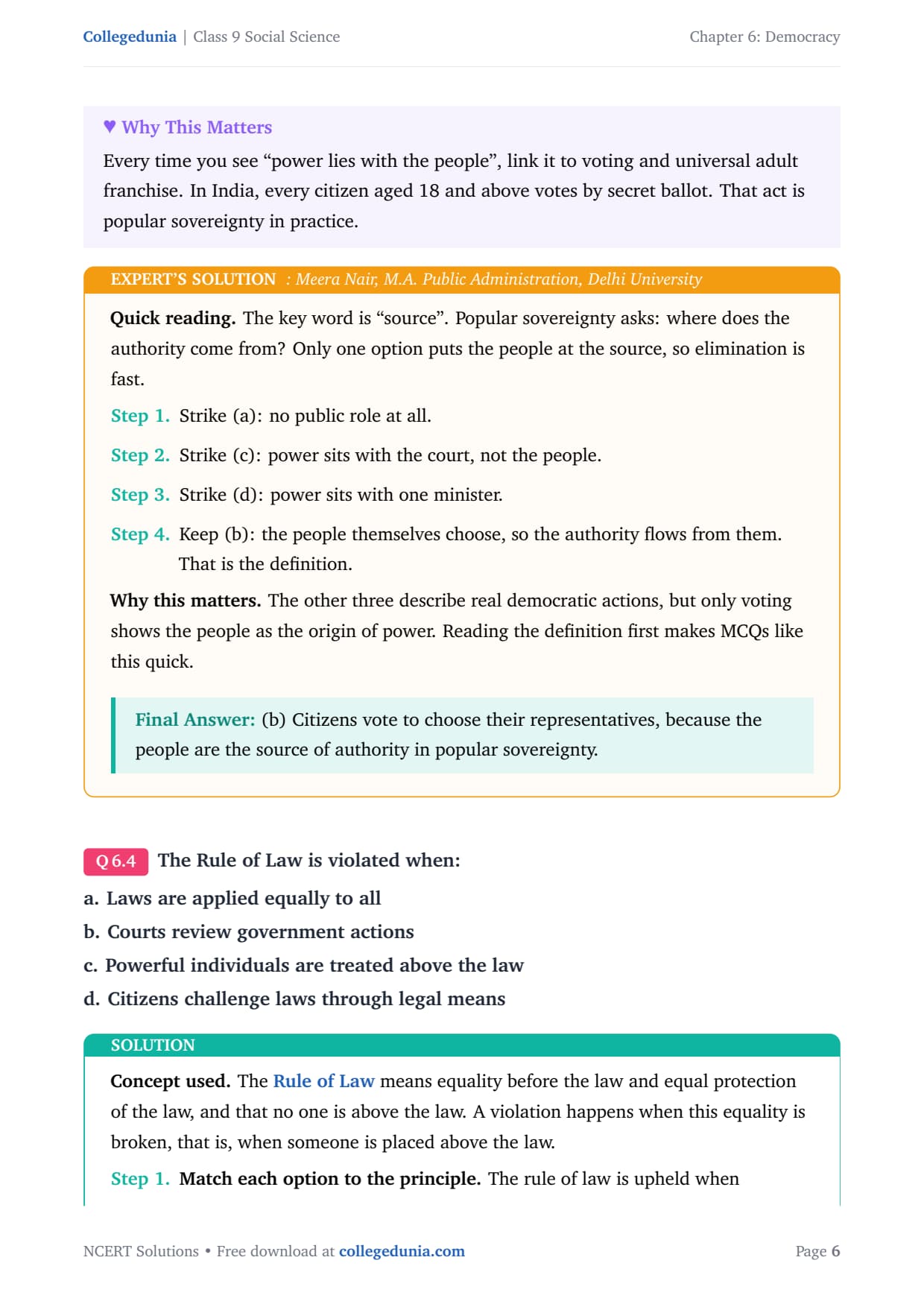
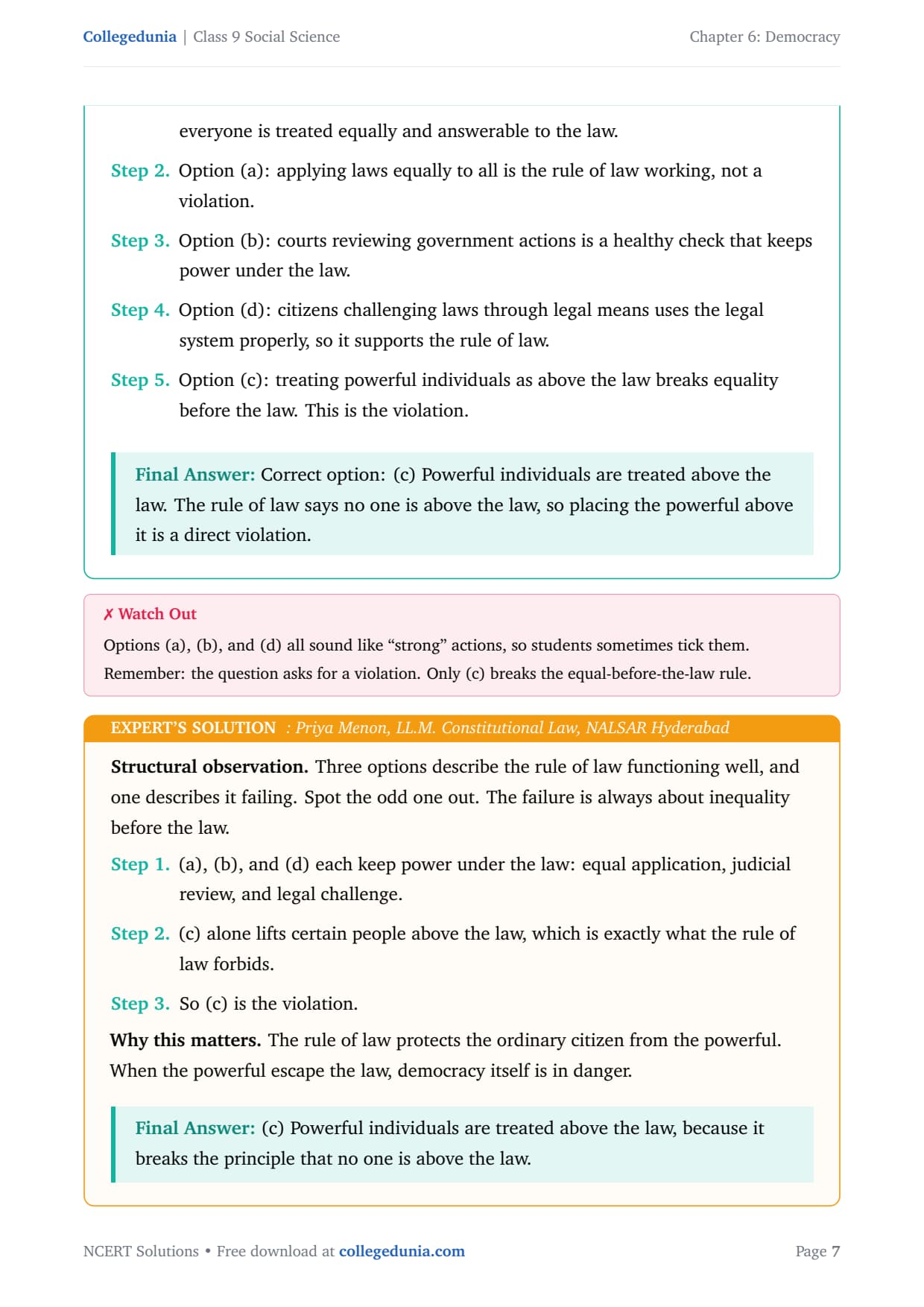
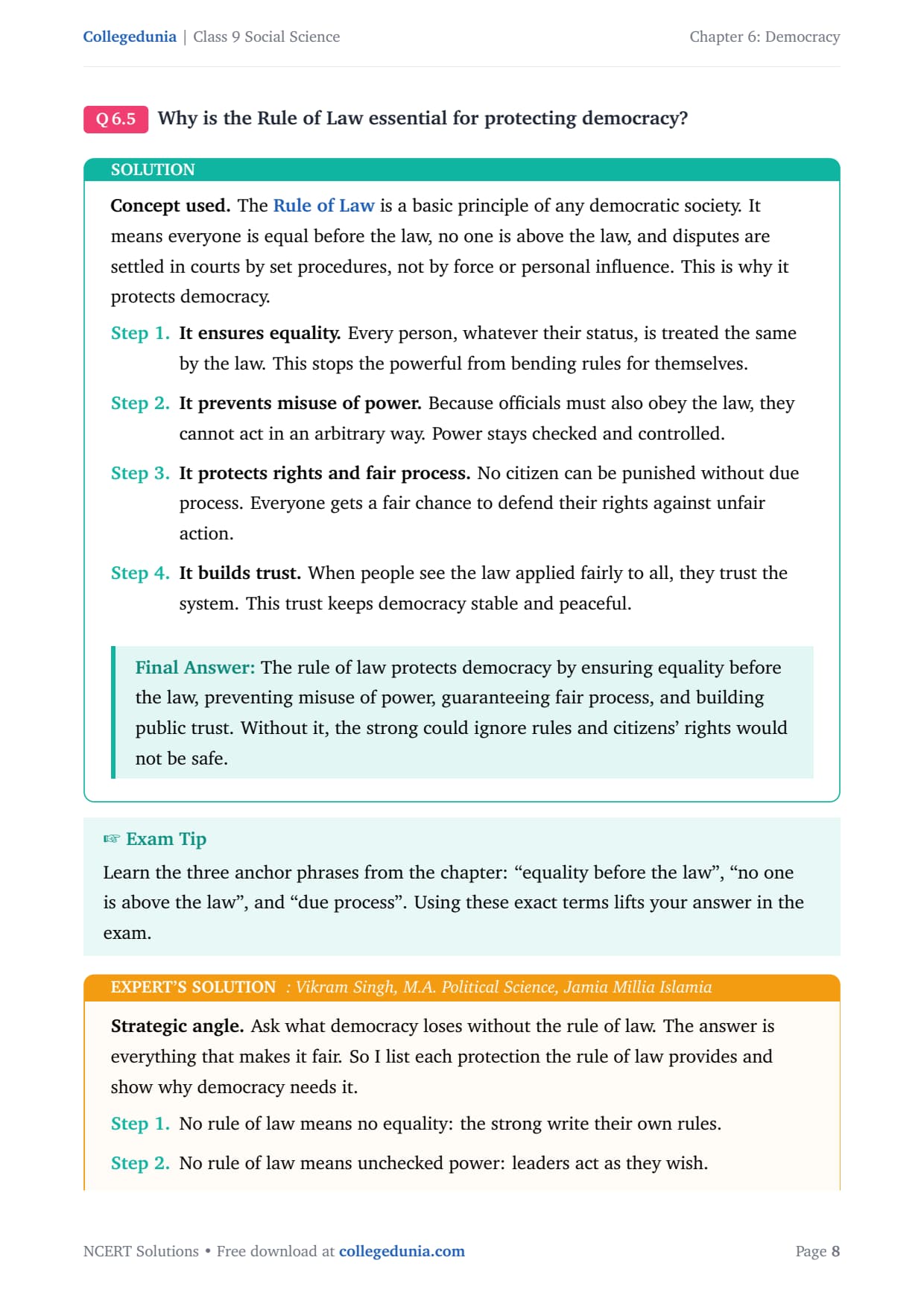
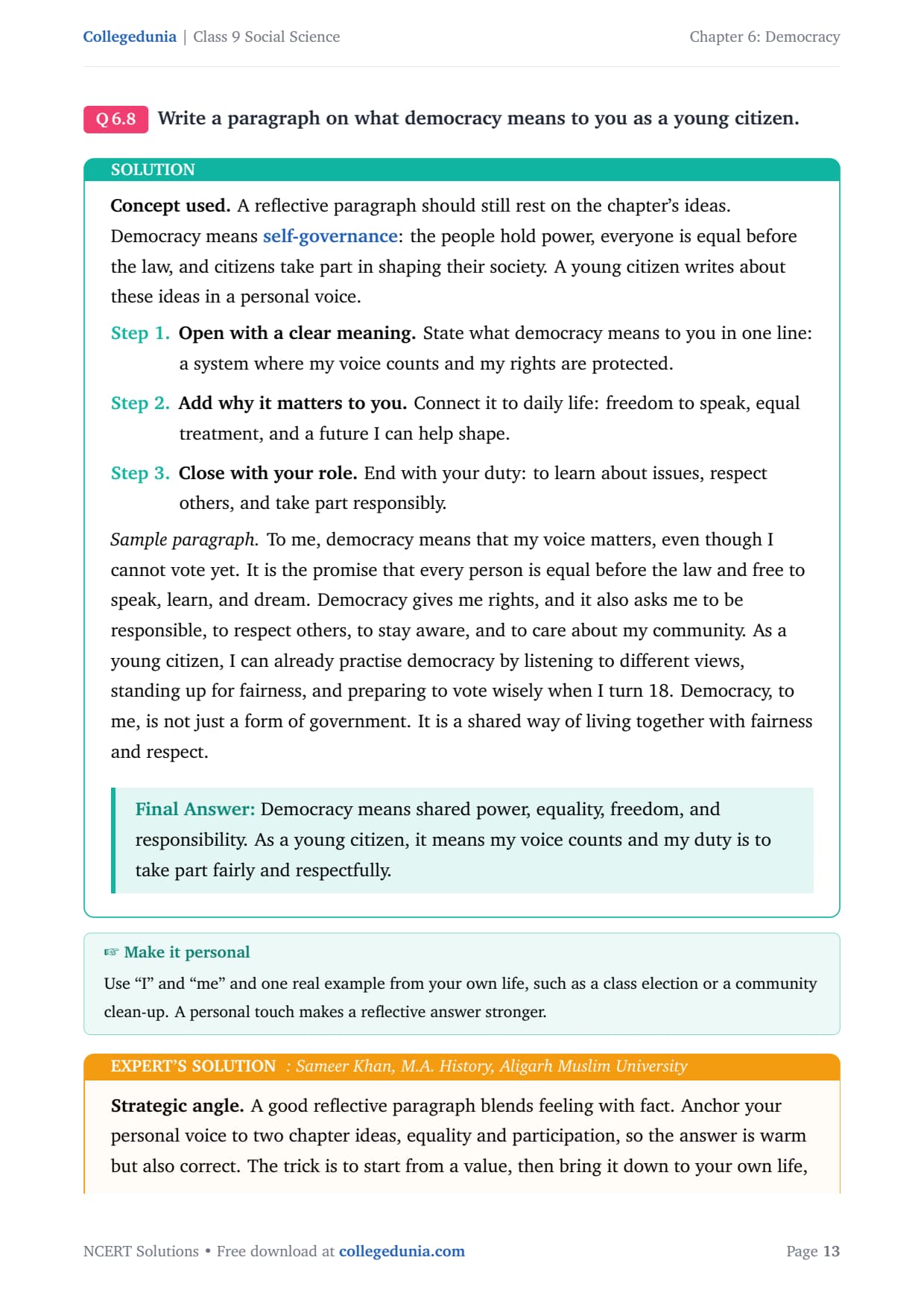
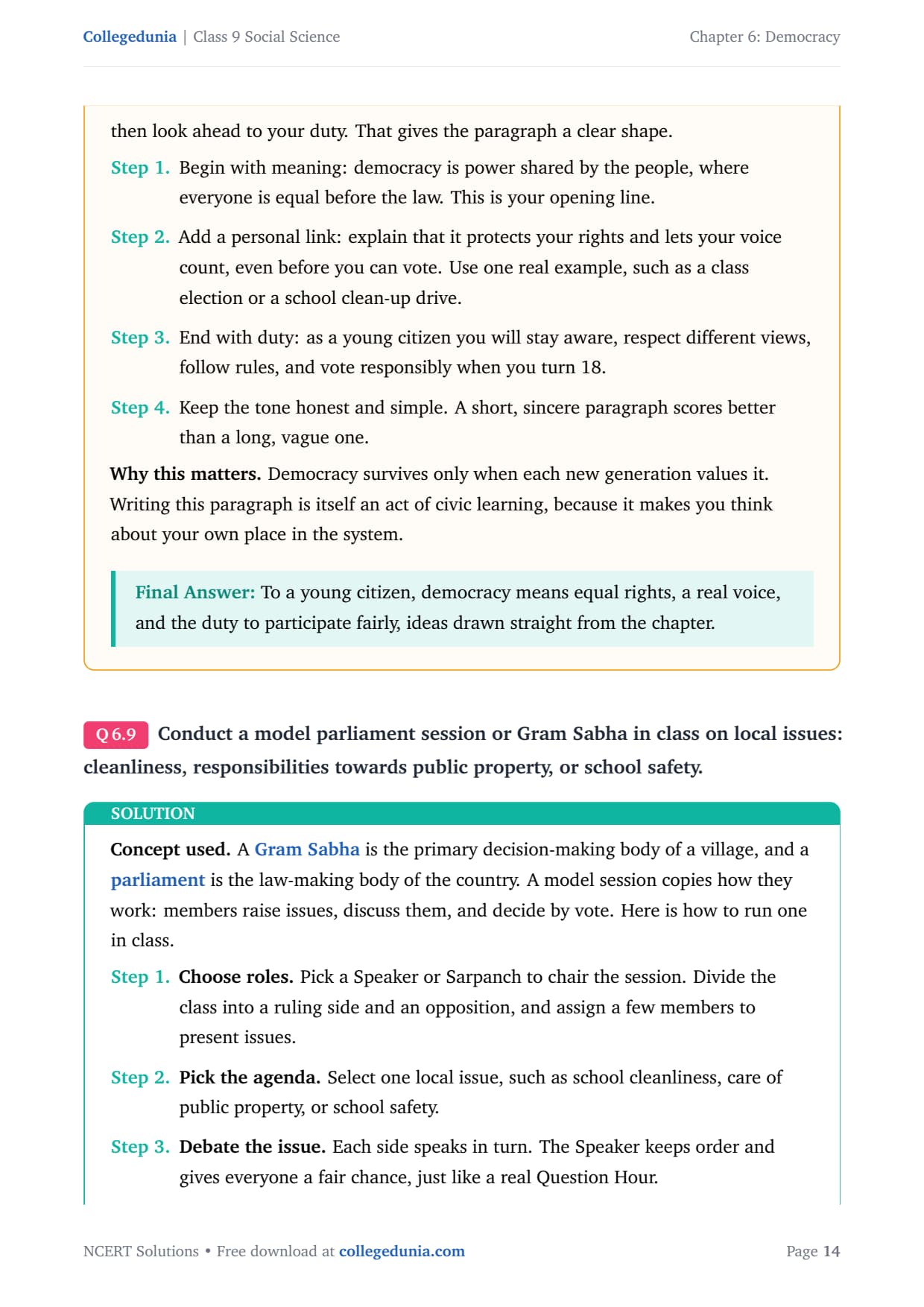
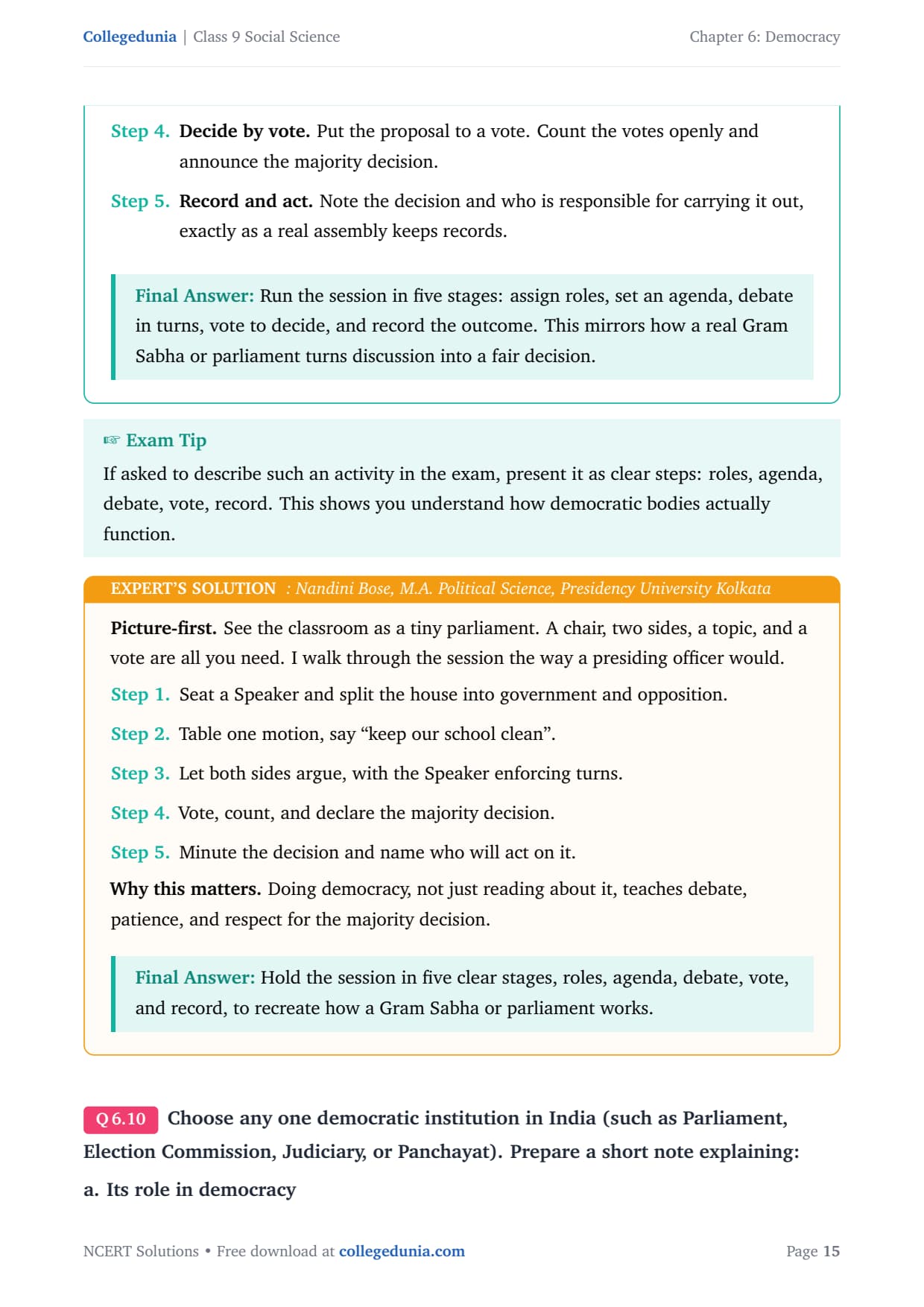
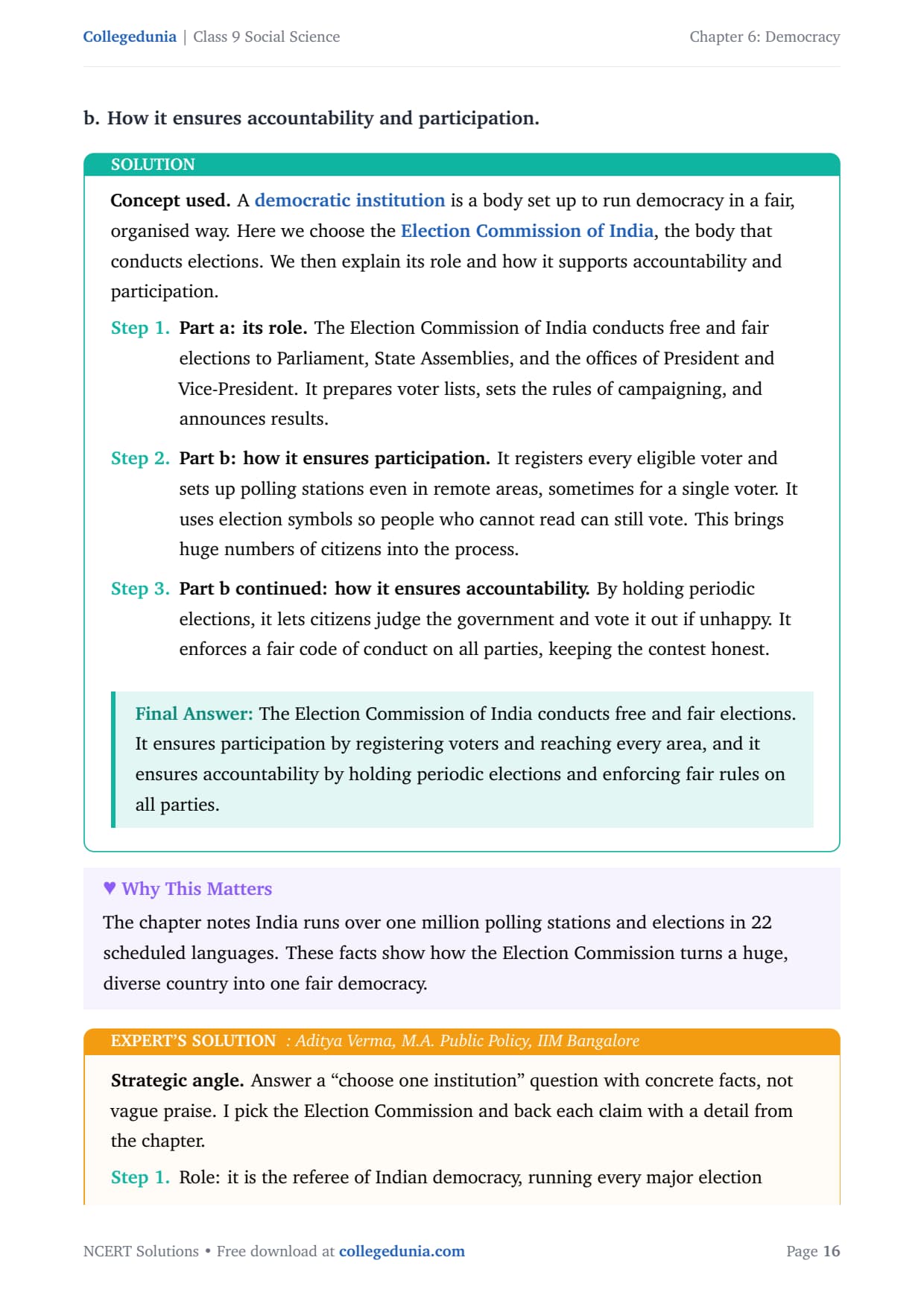
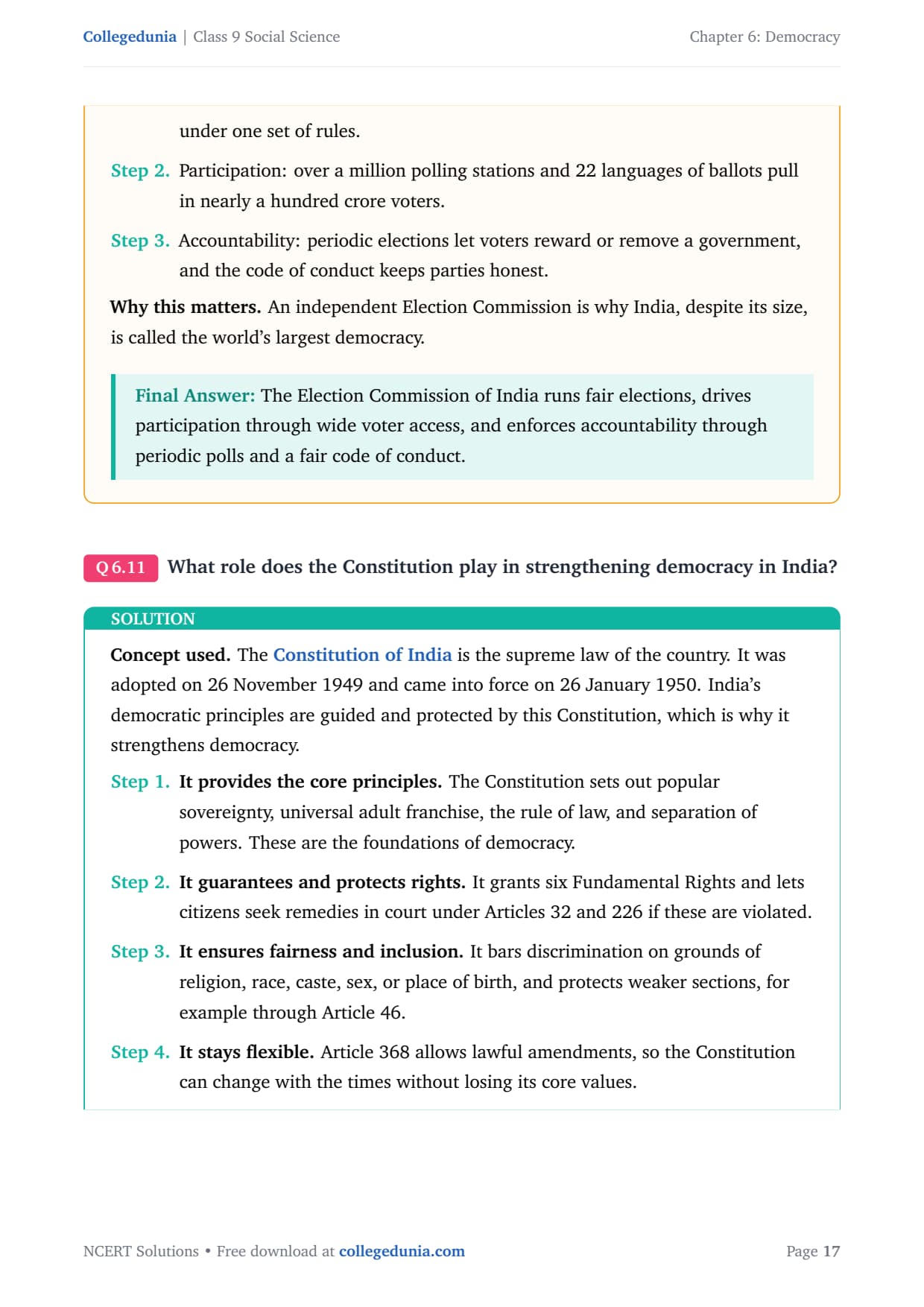
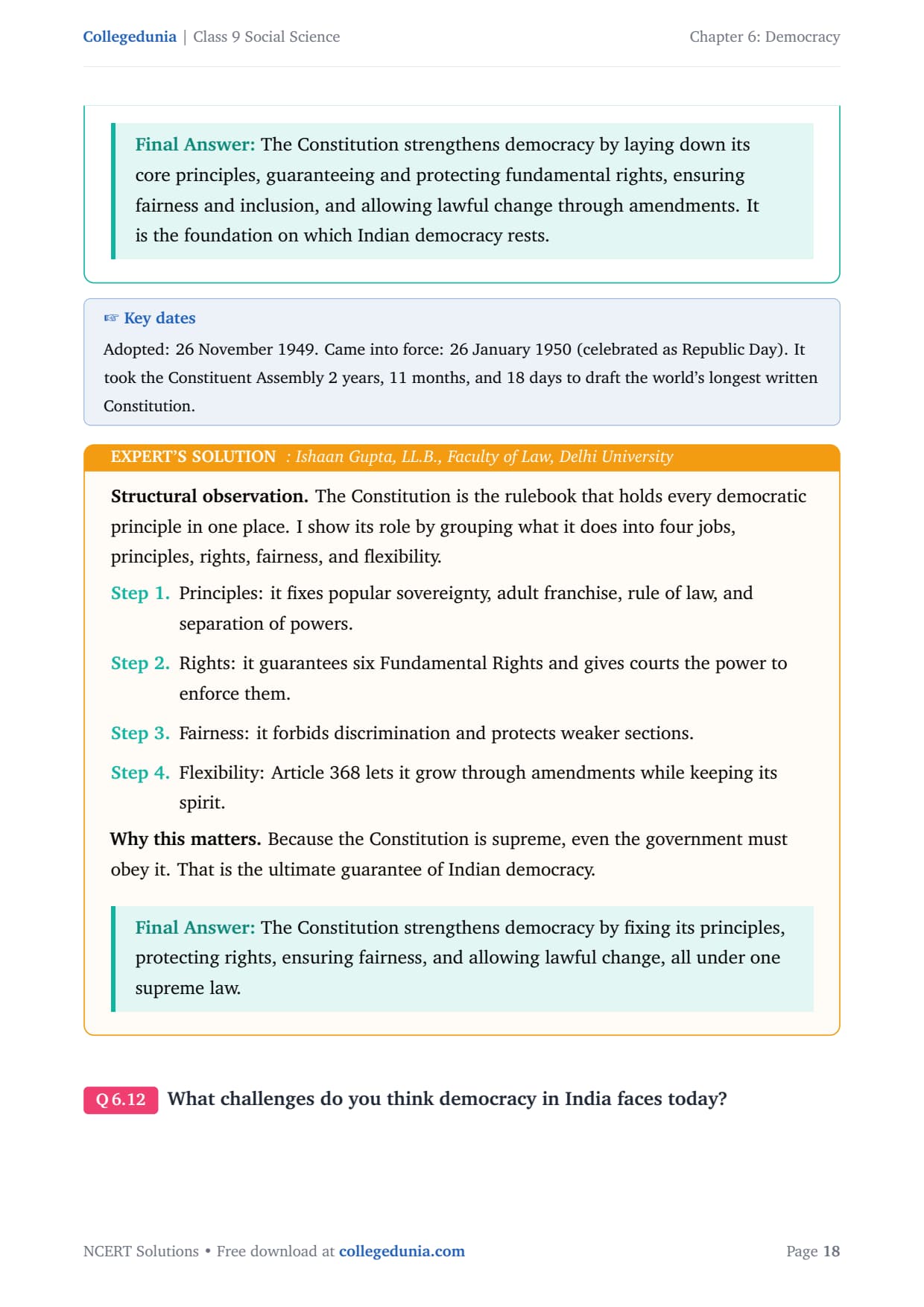
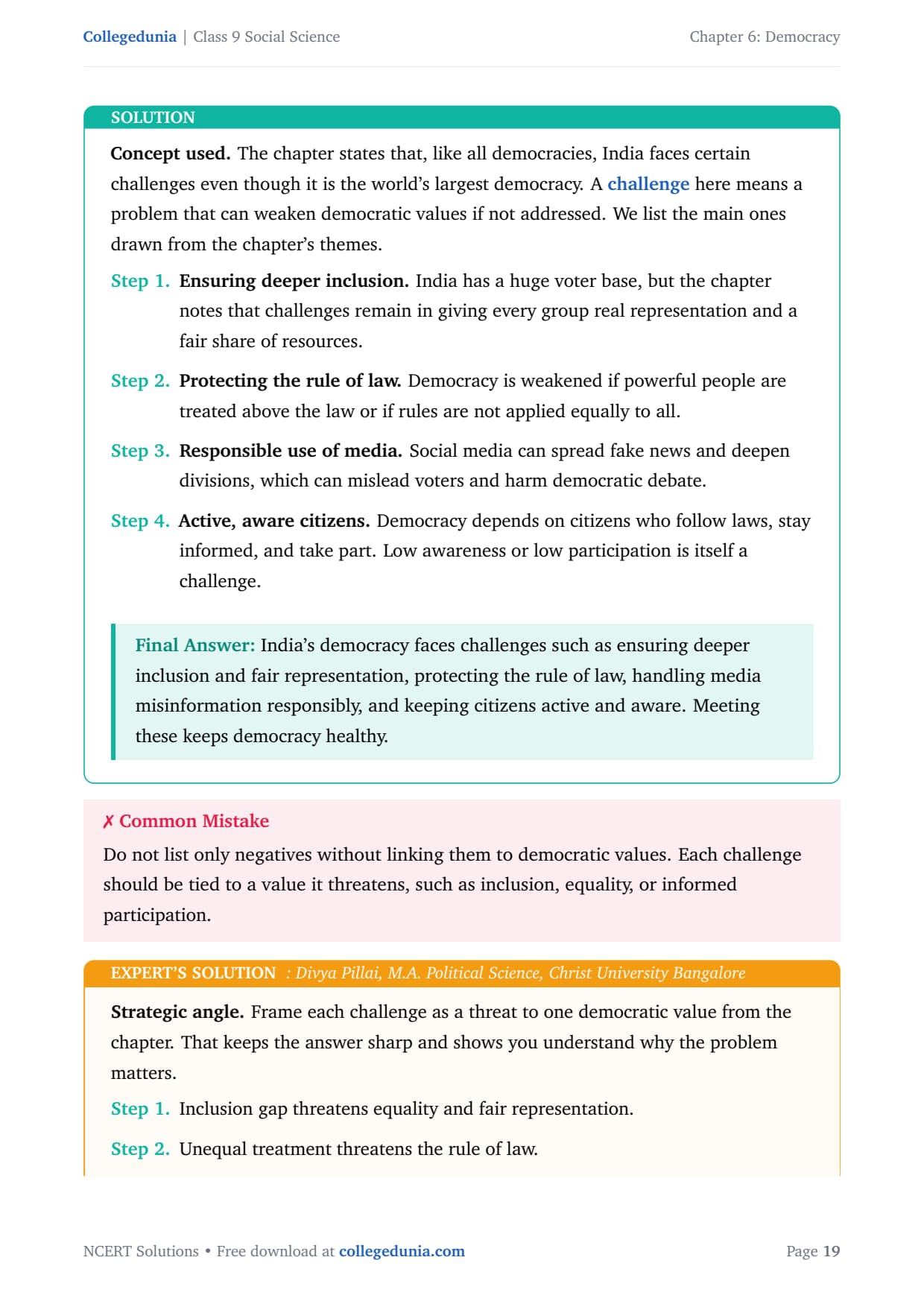
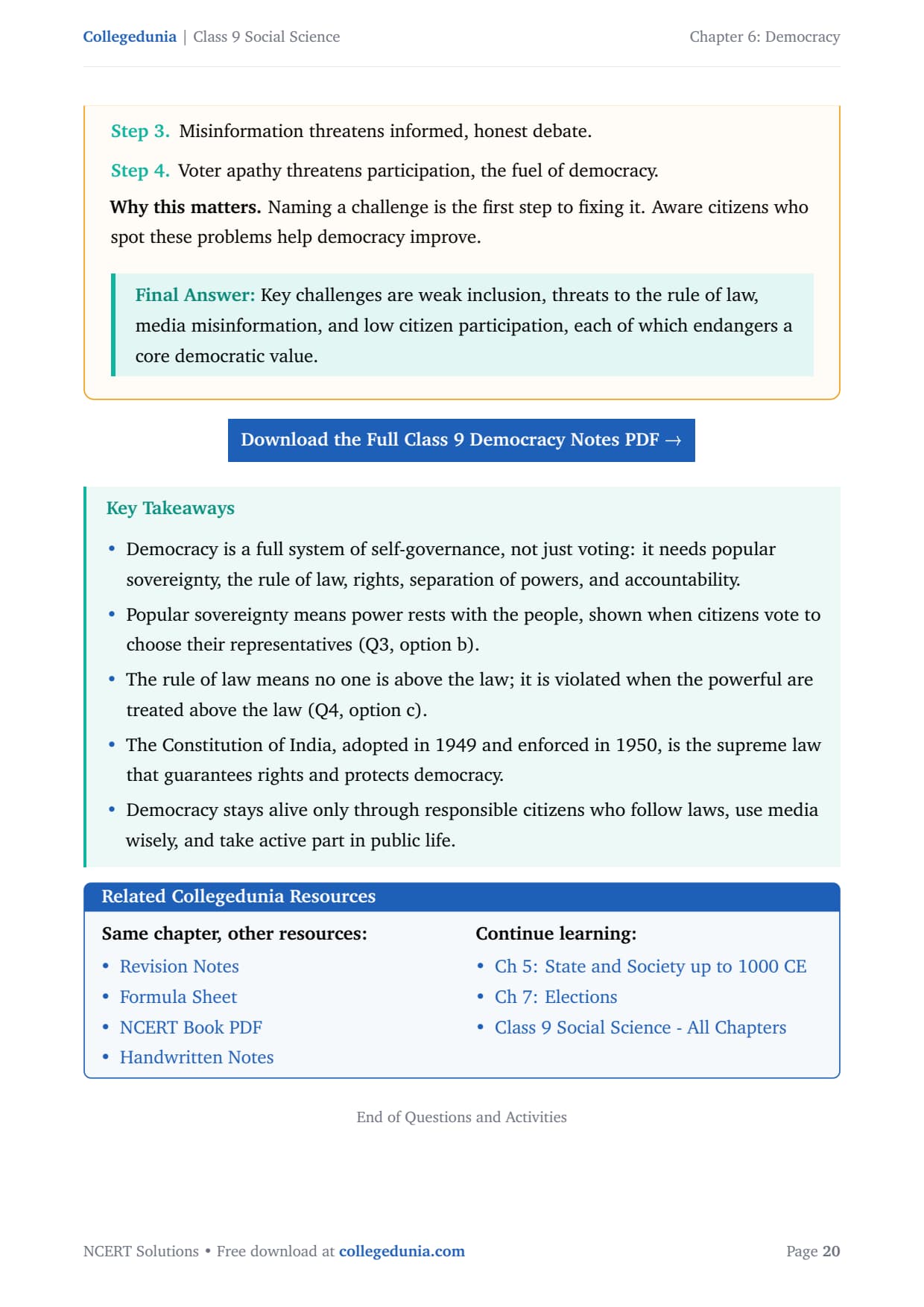
Each solution for Class 9 Social Science Chapter 6 Democracy is written by Collegedunia subject experts, matched to the 2026-27 Understanding Society textbook, and kept in simple exam language.
- 12 solved questions: full answers for every Questions and Activities item, plus an expert version for each one.
- Core ideas: popular sovereignty, the rule of law, fundamental rights, separation of powers, and the role of the Constitution.
- Answer practice: a passage task, two MCQs, and step-by-step models for short-answer, long-answer, and activity questions.
Student Feedback
In a Collegedunia poll of 8,700 Class 9 students before the 2026 exams, 58% said they mixed up popular sovereignty and the rule of law in objective questions. The next most common slip was answering only one part of a two-part question. Students who practised the 12 solved answers here said the MCQs and reasoning questions felt much clearer the second time.
Source: 2026-27 Class 9 Social Science student poll. Sample of 8,700 students from CBSE schools across 11 states.
Exercise Coverage in the Democracy Class 9 Solutions
The Questions and Activities exercise has 12 items. The NCERT Solutions Class 9 Social Science Chapter 6 Democracy group them by type, so you know which to write first and which to practise as a project. The table below shows the split.
| Question type | Questions | What it tests |
|---|---|---|
| Passage-based comprehension | 1 | Democratic values, voting, and majority rule in a school-cabinet story |
| Objective (MCQ) | 2 | Popular sovereignty and when the rule of law is violated |
| Short and long answers | 6 | Civic duties, rule of law, why voting alone is not enough, social media, the Constitution, and challenges |
| Activity and project based | 3 | A reflective paragraph, a model parliament or Gram Sabha, and a note on one institution |
Start with the two MCQs and the short reasoning answers. Finish the passage question next, and keep the activity items for classroom practice after you know the theory.
Democracy Weightage for Class 9 Social Science Exams
This is a core civics chapter in the new integrated Class 9 book. It builds the base for the next chapter on elections. Here is where it sits among the civics-side chapters of the 2026-27 Understanding Society book.
| Chapter | Topic | Typical exam focus |
|---|---|---|
| Chapter 6 | Democracy | Meaning of democracy, popular sovereignty, rule of law, the Constitution |
| Chapter 7 | Elections | Voting process, the Election Commission, free and fair polls |
This chapter carries steady marks because it mixes quick MCQs with short reasoning answers. Learn the core principles once, and the marks come back in every test.
How to Answer Democracy Questions Step by Step
Most marks here come from naming the right principle and giving a clear example. The NCERT Solutions Class 9 Social Science Chapter 6 Democracy use the same method for almost every answer. Follow these steps and you will rarely lose an easy mark.
- Name the principle first. Start by stating the exact term, such as popular sovereignty, the rule of law, or separation of powers, before you explain it.
- Define it in one line. Give the short book meaning. For the rule of law, write that no one is above the law and all are equal before it.
- Add one example. Link the idea to real life, such as voting to choose representatives or the Election Commission running fair polls.
- Answer every part. For a-b or a-d questions, label each part and give a point for each. Missing a part means losing marks.
- Close with a link to democracy. End by showing how the point keeps democracy fair, stable, or accountable.
For MCQs, read the definition in your head first, then strike the wrong options one by one. This turns objective questions into quick, sure marks.
Common Mistakes Students Make in Democracy
Most lost marks in this chapter are simple slips, not gaps in understanding. Watch for the four below when you write your answer.
Mistake 1: Saying democracy is only about elections. Voting chooses the government, but the rule of law, rights, and accountability keep it alive between elections.
Mistake 2: Mixing up popular sovereignty and the rule of law. Popular sovereignty means power rests with the people. The rule of law means no one is above the law.
Mistake 3: Answering only one part of a two-part question. If a question has parts a and b, give clear points for both.
Mistake 4: Listing challenges without linking them to a value. Tie each challenge to the value it threatens, such as equality or fair participation.
Also Check: the full answer for every one of these traps is in the solved questions lower on this page.
Democracy Important Questions and Exam Trends
Exams from this chapter follow a clear pattern. One or two objective questions plus a short reasoning answer is the usual mix. The list below shows the types you should be ready for.
- Popular sovereignty: what it means and how voting shows the people as the source of power.
- Rule of law: the one-line meaning, and when it is upheld or violated.
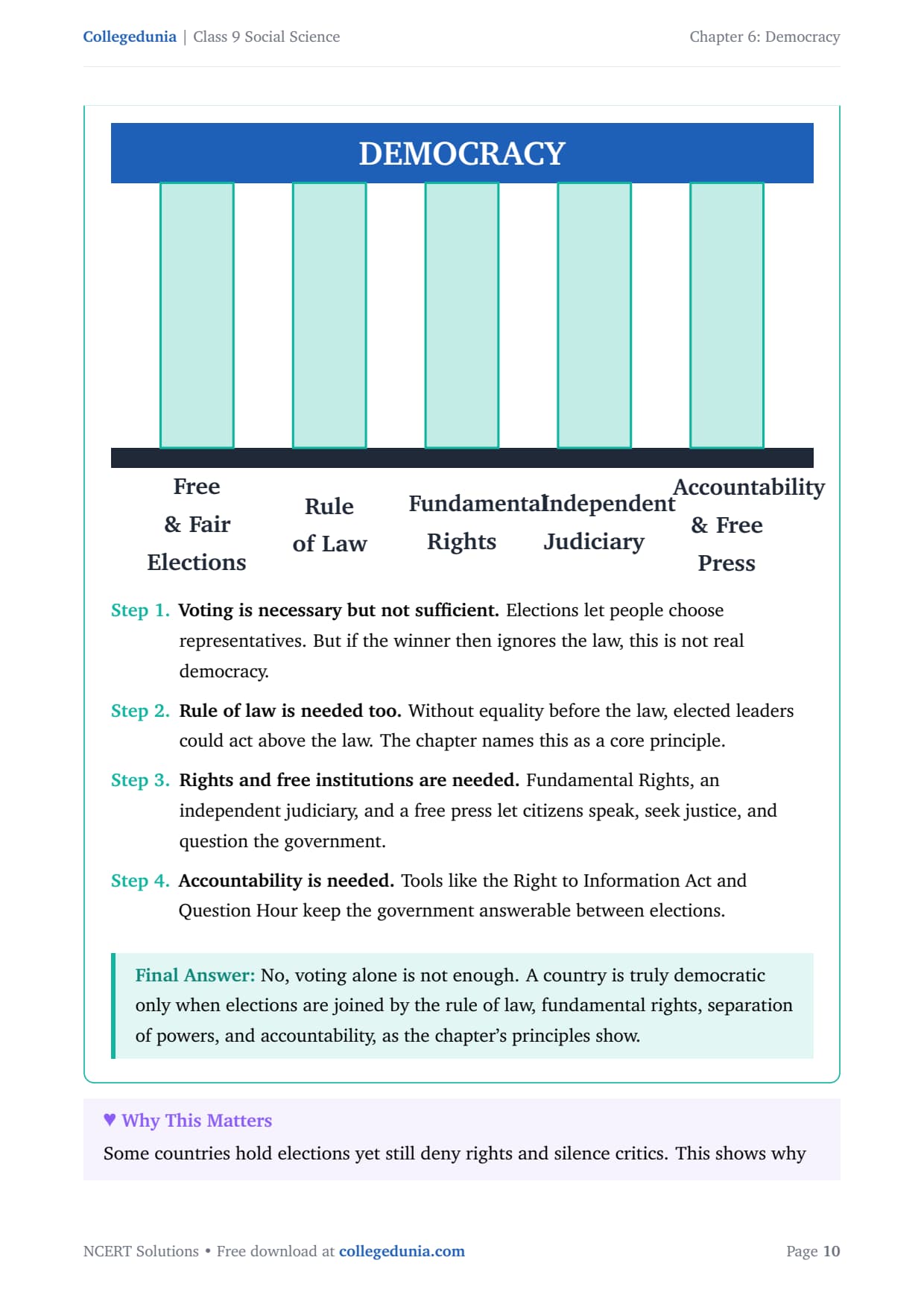
- Pillars of democracy: why voting alone is not enough without rights, courts, and accountability.
- The Constitution: how it protects rights and strengthens democracy in India.
- Citizen duties: why civic responsibility keeps democracy working every day.
The NCERT Solutions Class 9 Social Science Chapter 6 Democracy cover every one of these types in full, so practising the 12 solved questions on this page is enough for the exam.
Other Democracy Class 9 Social Science Resources
Pair these solutions with the notes and the book PDF for the same chapter to revise faster.
| Resource | Link |
|---|---|
| Notes | Democracy Class 9 Notes |
| Handwritten Notes | Democracy Handwritten Notes |
| NCERT Book PDF | Democracy Book PDF |
NCERT Solutions for Democracy: All Chapters of Class 9 Social Science
Once you finish Democracy, use the same step-by-step solutions for the other chapters of the 2026-27 Understanding Society book.
| Chapter | NCERT Solutions |
|---|---|
| Chapter 1 | Understanding Social Science |
| Chapter 2 | Shaping of the Earth's Surface |
| Chapter 3 | Atmosphere and Climate |
| Chapter 4 | Early Humans and Beginning of Civilisation |
| Chapter 5 | State and Society up to 1000 CE |
| Chapter 7 | Elections |
| Chapter 8 | Building Blocks in Economics The Problem of Choice |
| Chapter 9 | The Price Puzzle What Drives the Market |
Democracy Class 9 Social Science Solutions FAQs
How many questions are solved in NCERT Solutions for Class 9 Social Science Chapter 6?
All 12 questions from the Questions and Activities exercise are solved. Each one has a step-by-step answer and an expert version written in simple exam language.
What is the difference between popular sovereignty and the rule of law?
Popular sovereignty means the ultimate power rests with the people, shown when they vote. The rule of law means no one is above the law and all are equal before it. The solutions explain both with clear examples.
Which topics are most important in Class 9 Social Science Chapter 6?
Popular sovereignty, the rule of law, the pillars of democracy, and the role of the Constitution are asked most. The solutions cover each one with a definition and an example.
Are these Class 9 Social Science solutions based on the new 2026-27 book?
Yes. Every answer matches the new integrated Understanding Society textbook for 2026-27. Collegedunia updates the solutions whenever the NCERT content changes.



Comments