




The Class 9 Social Science Notes Chapter 6 Democracy give you a fast, clear revision of the whole chapter from the new Understanding Society textbook. In one place you learn what democracy means, its old roots in India, the main principles, the types of democracy, and how India runs the world's largest democracy for the 2026-27 exam.
Prepared by Collegedunia subject experts from the latest NCERT Understanding Society textbook for the 2026-27 syllabus.
- Full chapter recap: meaning of democracy, its Indian roots, six principles, types of democracy, and India's living democracy.
- Exam ready: key terms, dates, and the six Fundamental Rights, set out in short tables for quick recall.
- Why it matters: Chapter 6 builds the base for Chapter 7 Elections and for later civics topics.
Student Feedback
In a Collegedunia study of 1,080 Class 9 students, 74% said a one-page recap of the six principles of democracy helped them most before a test. About 4 out of 5 rated the key-terms table the clearest part, and many said the timeline of India's democratic roots made the long answers easier to write.
What Class 9 Social Science Notes Chapter 6 Democracy Cover
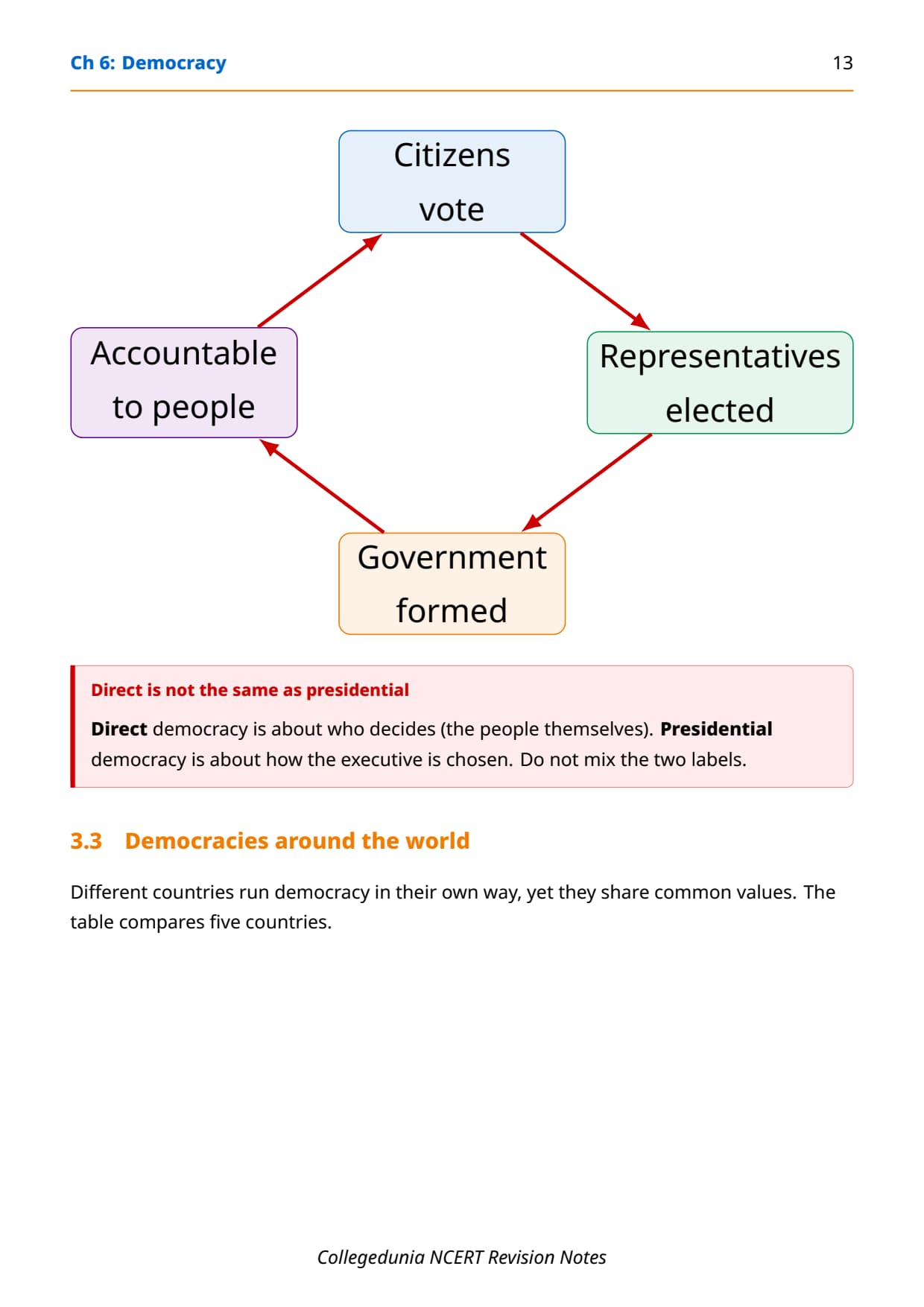
Democracy is a form of government in which power belongs to the people. Citizens choose their representatives through free and fair elections. The Class 9 Social Science Notes Chapter 6 Democracy follow the exact order of the Understanding Society book, so your revision matches the flow of the chapter.
These notes help you recall the main points in minutes:
- Meaning and roots: what democracy means and how democratic ideas grew in India over thousands of years.
- Principles: the six pillars that keep a democracy healthy, from popular sovereignty to a multi-party system.
- Types: direct and representative democracy, plus the parliamentary and presidential forms.
- India in practice: the scale of Indian elections, three tiers of government, and the challenges ahead.
Meaning of Democracy and Its Roots in India in Chapter 6
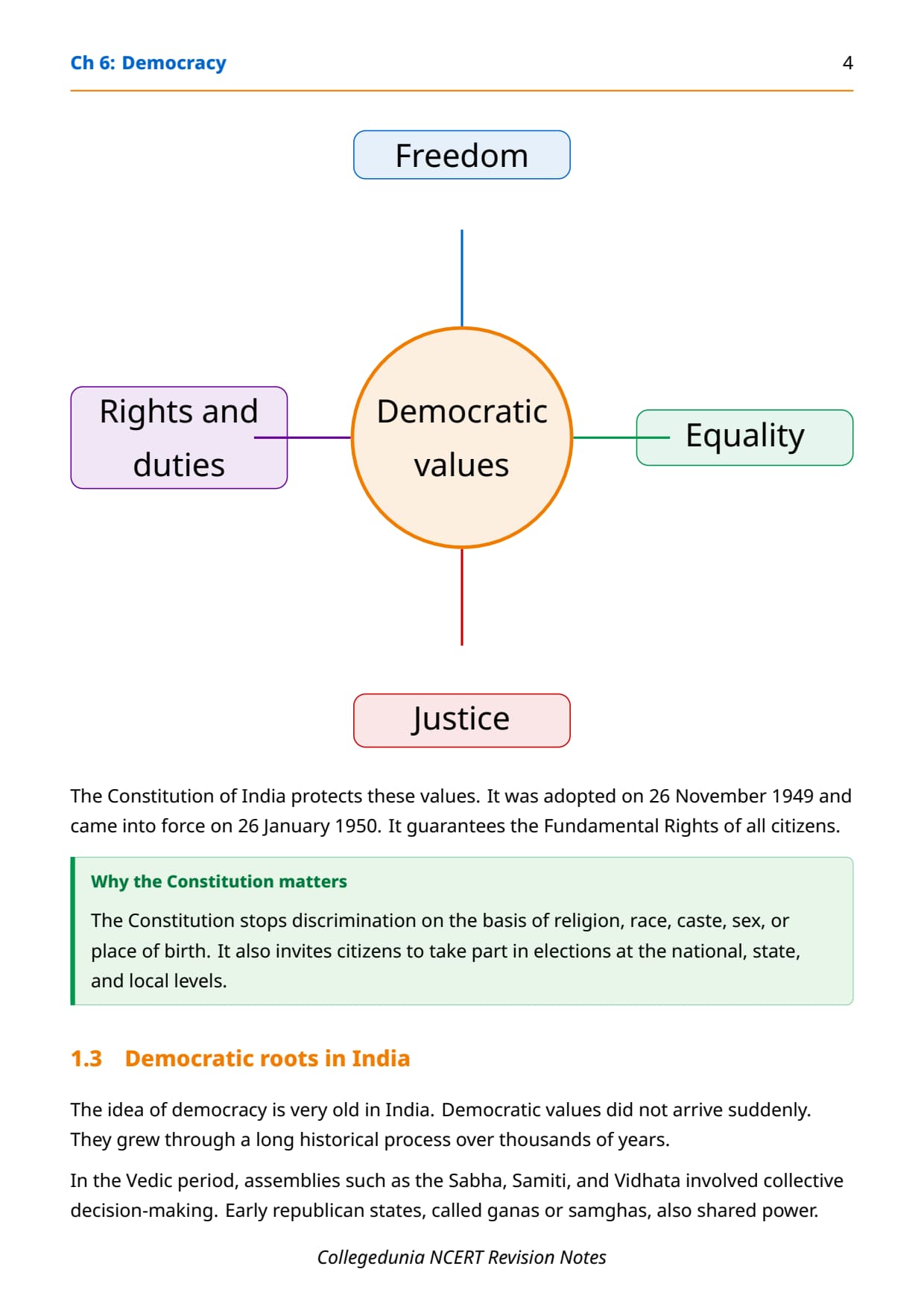
Democracy is a system in which the source of power lies with the citizens. It rests on freedom, equality, justice, rights, and duties. India is the world's largest democracy, with over 140 crore people and a voter base of more than 96.8 crore in 2024.
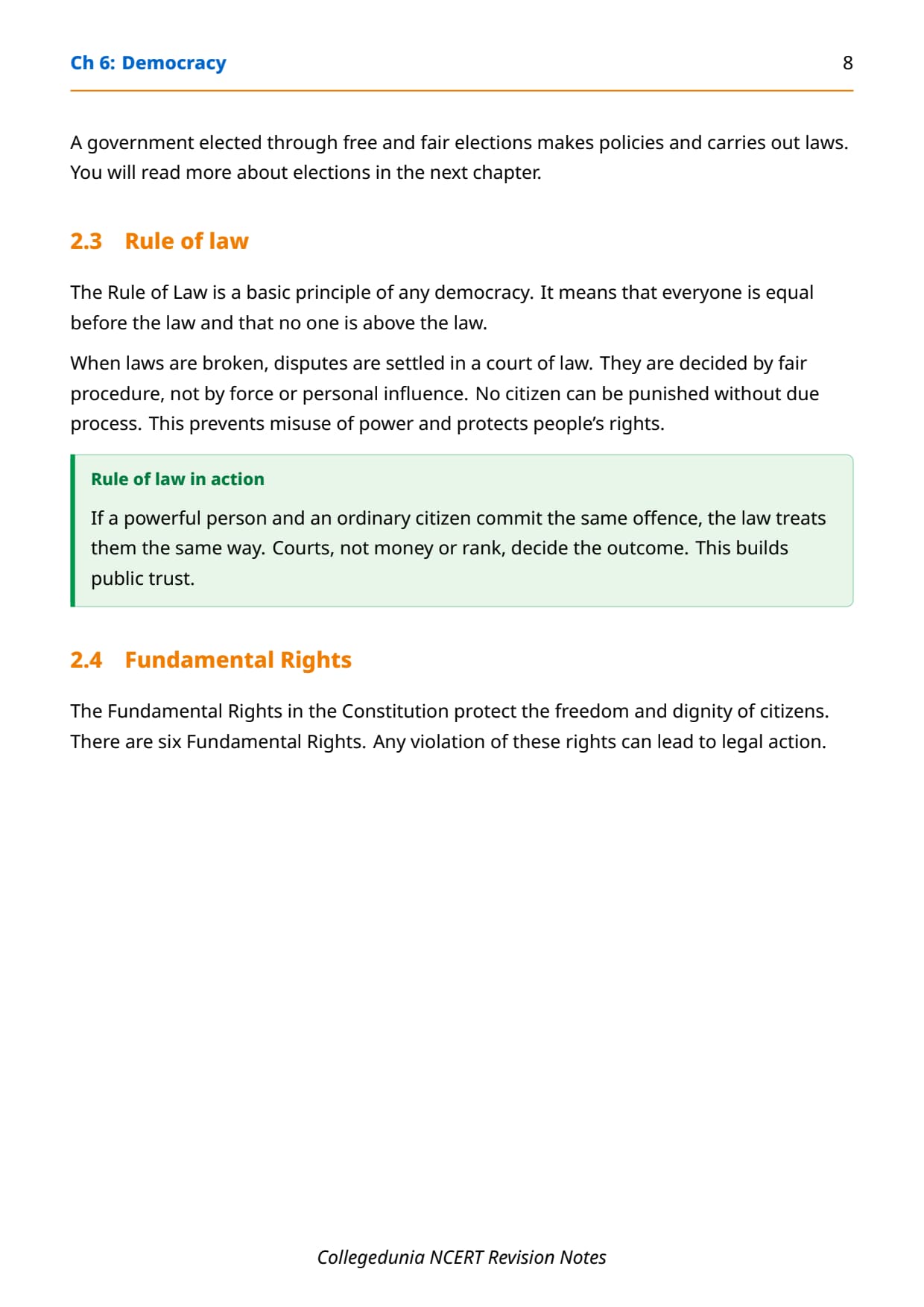
The idea of democracy is very old in India. It did not arrive suddenly. In the Vedic period, assemblies such as the Sabha, Samiti, and Vidhata took collective decisions. Early republican states, called ganas or samghas, also shared power. The Buddhist Samghas chose leaders and decided matters by voting. British rule later limited people's participation, but the freedom struggle revived democratic ideas.
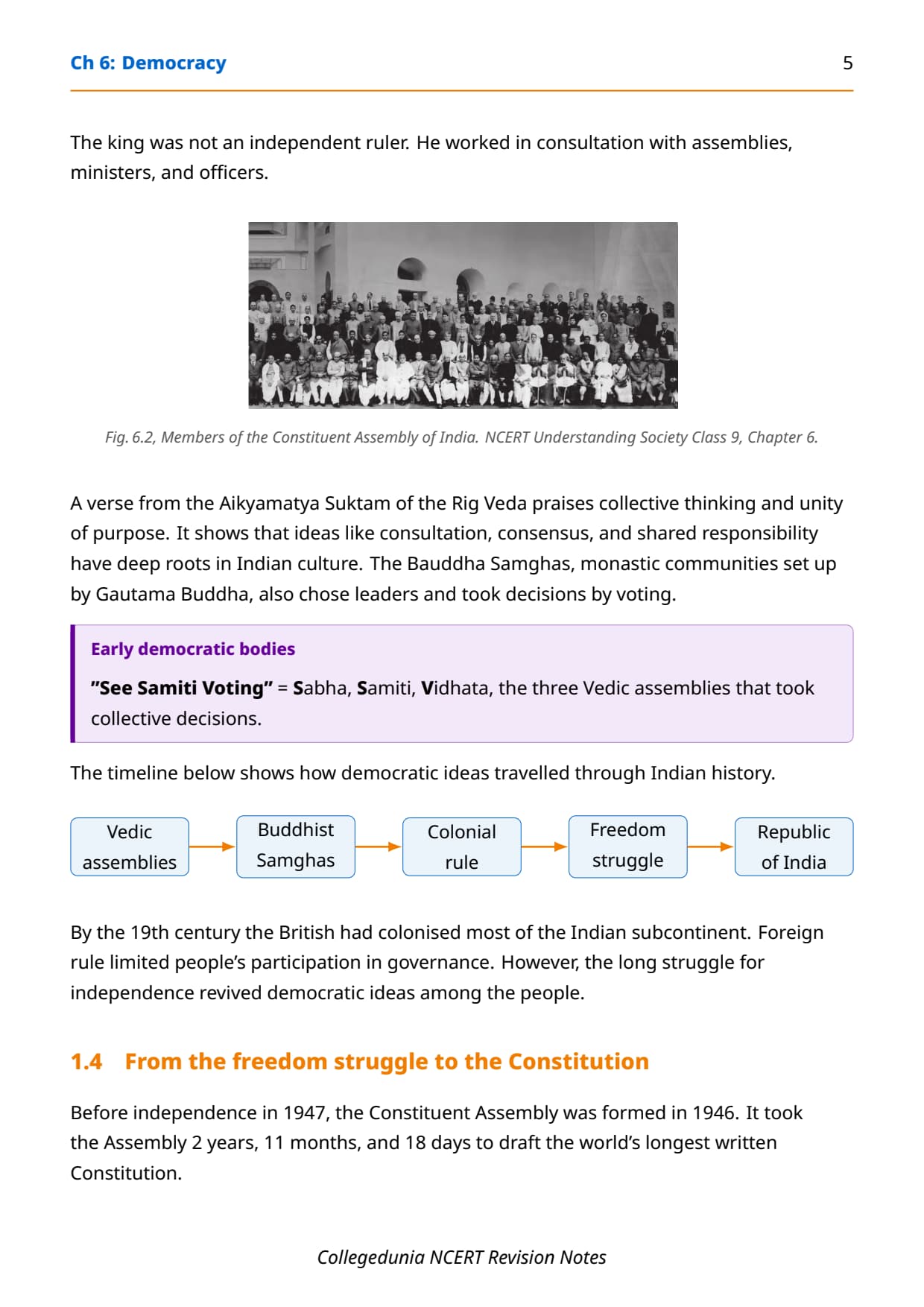
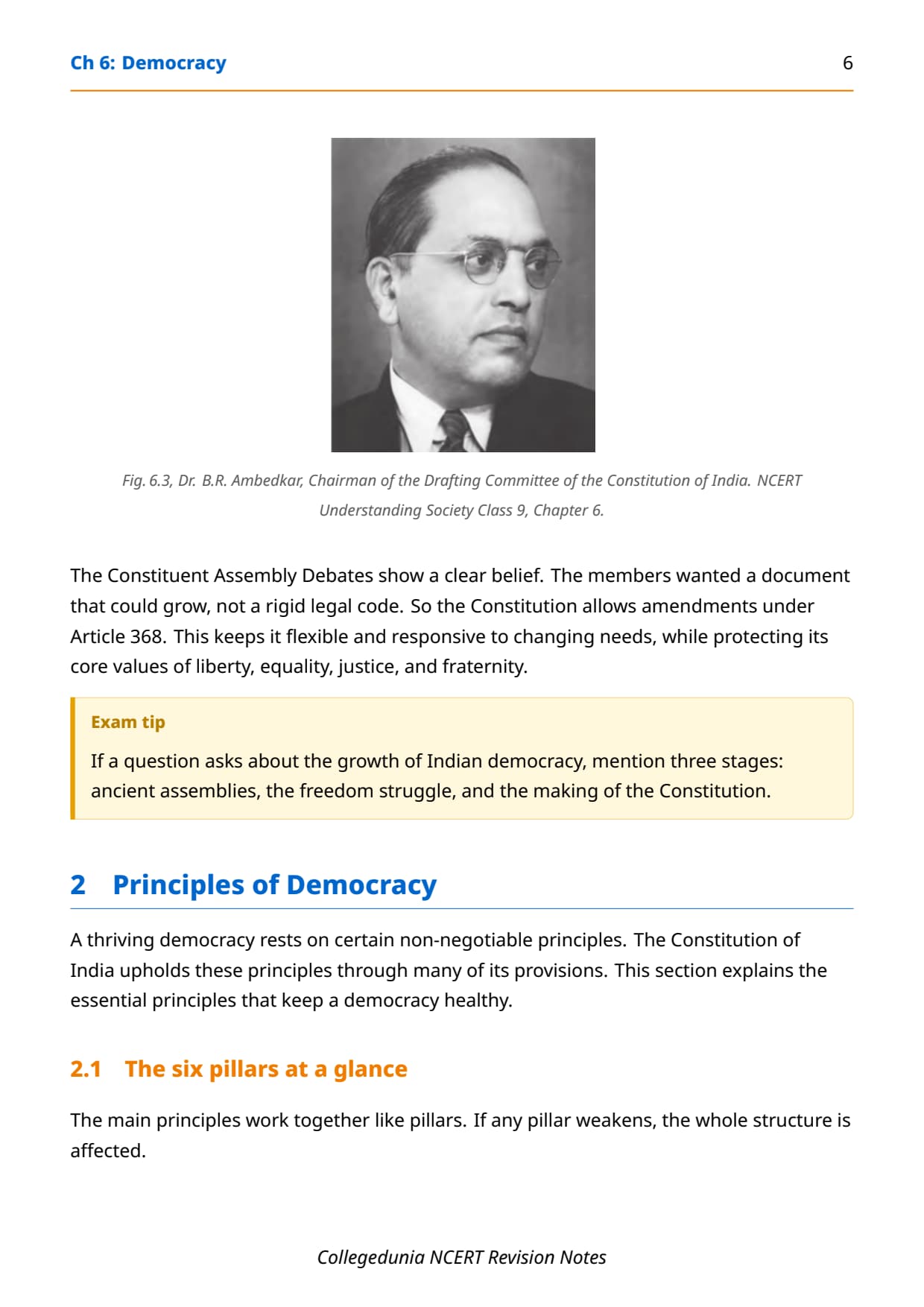
The Constitution of India protects these values. It was adopted on 26 November 1949 and came into force on 26 January 1950. The Constituent Assembly took 2 years, 11 months, and 18 days to draft the world's longest written Constitution, with Dr B.R. Ambedkar as Chairman of the Drafting Committee.
Six Principles of Democracy in Class 9 Social Science Chapter 6
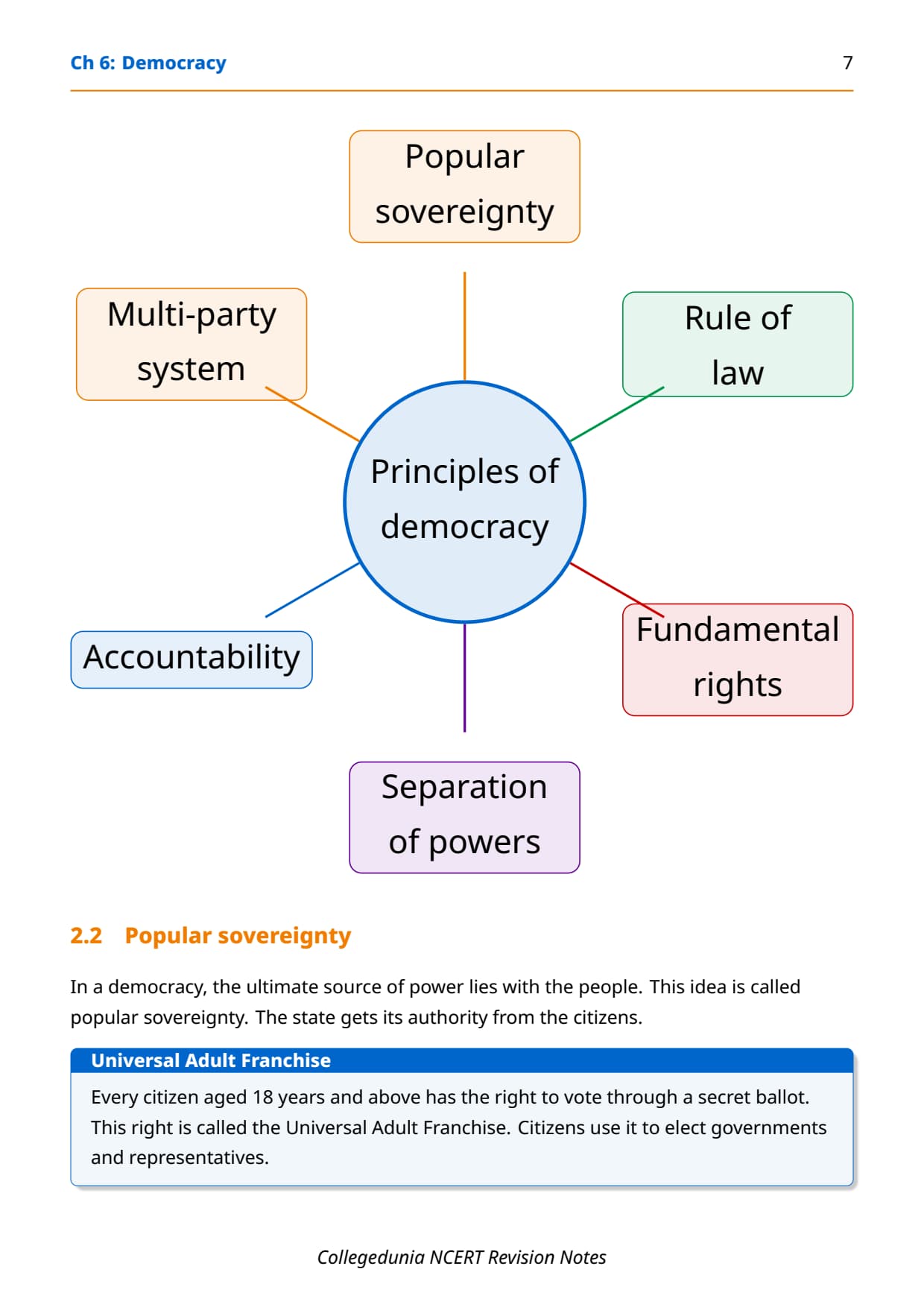
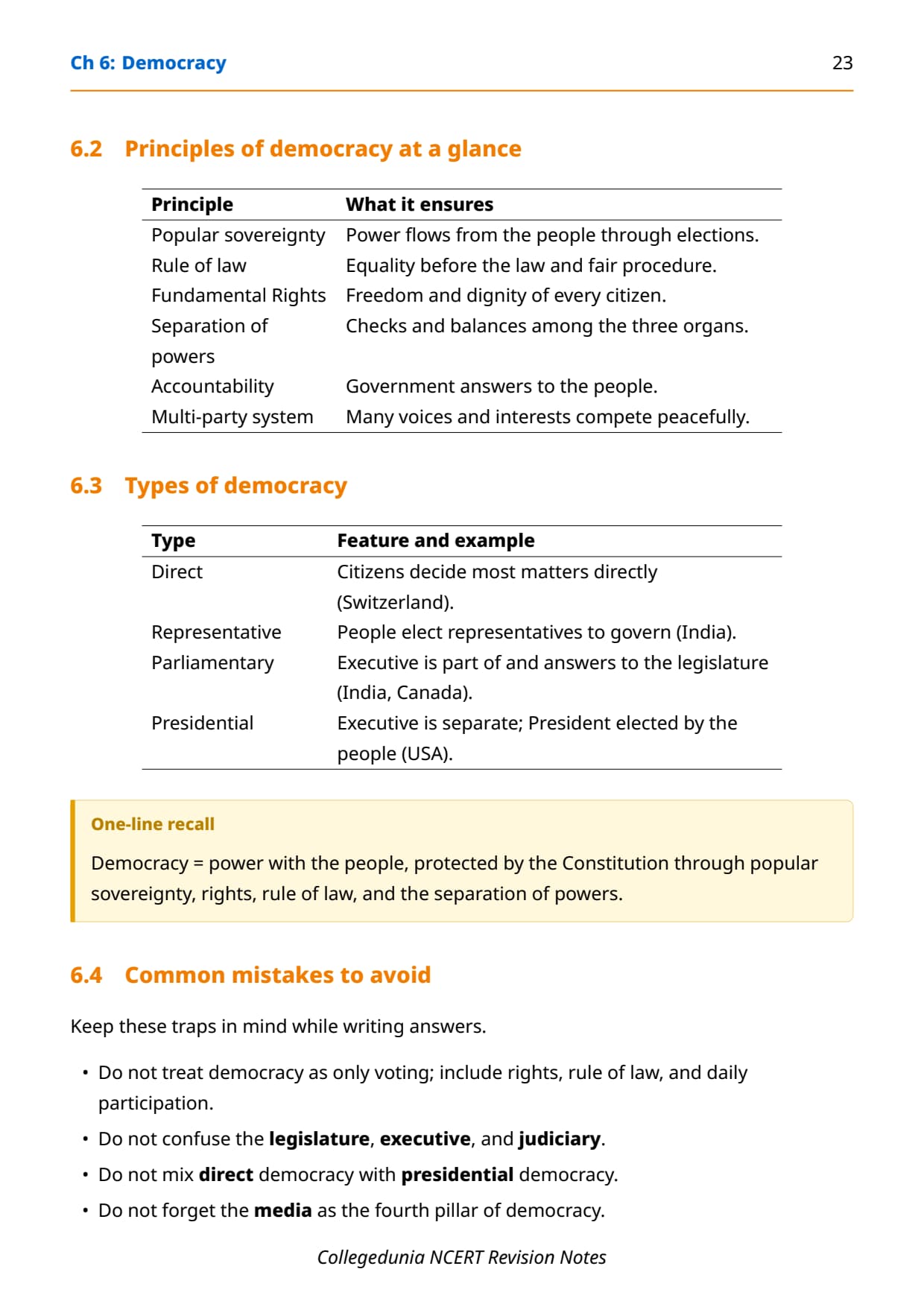
A healthy democracy rests on a few basic principles. The Constitution of India upholds each of them through its provisions. Revise this table well, as one-mark and short-answer questions often come from here.
| Principle | What it ensures |
|---|---|
| Popular sovereignty | Power flows from the people through free and fair elections. |
| Rule of law | Everyone is equal before the law and no one is above it. |
| Fundamental Rights | Protects the freedom and dignity of every citizen. |
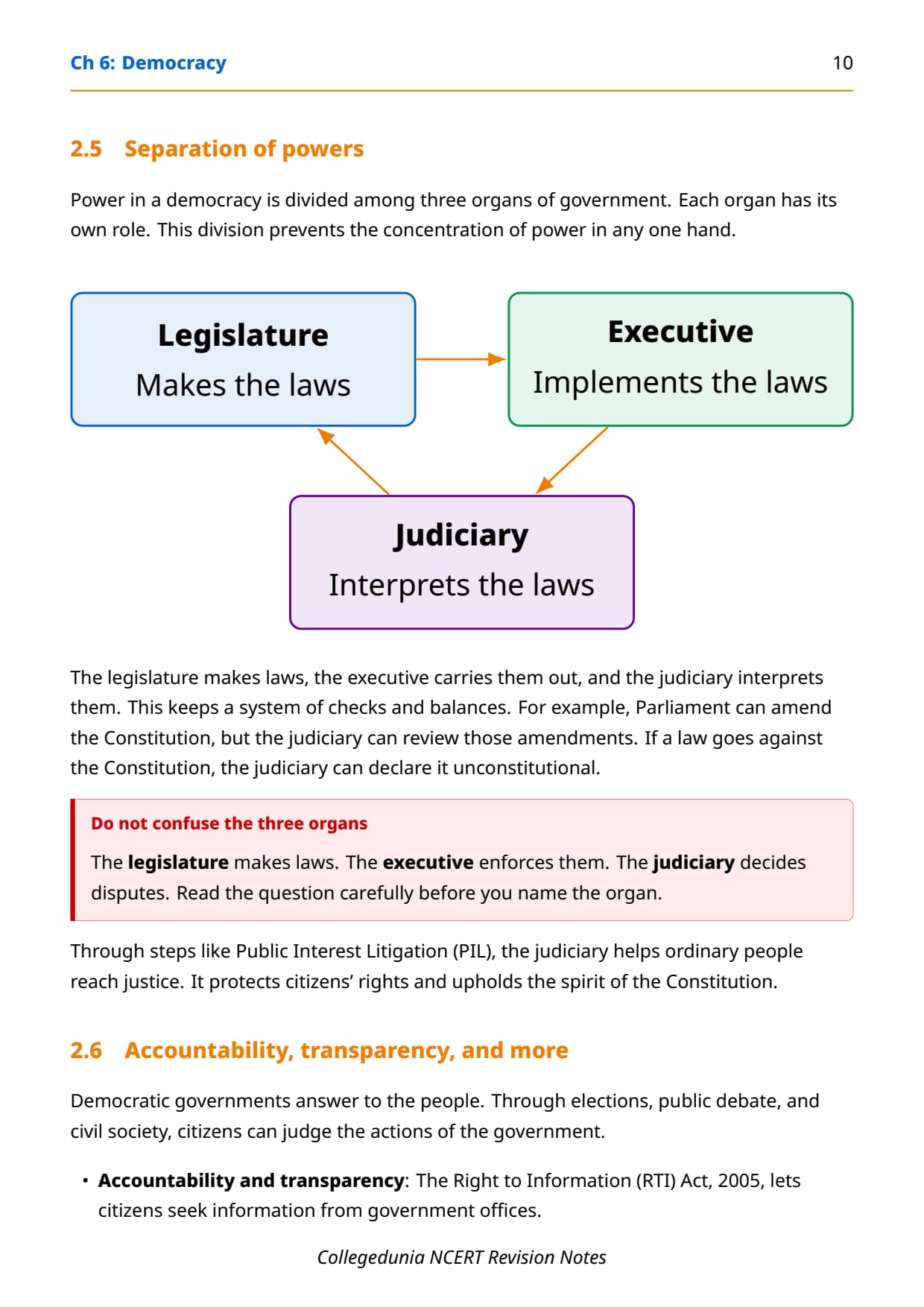
| Separation of powers | Checks and balances among legislature, executive, and judiciary. |
| Accountability | Government answers to the people through elections and the RTI Act. |
| Multi-party system | Many parties compete peacefully; the winner forms the government. |
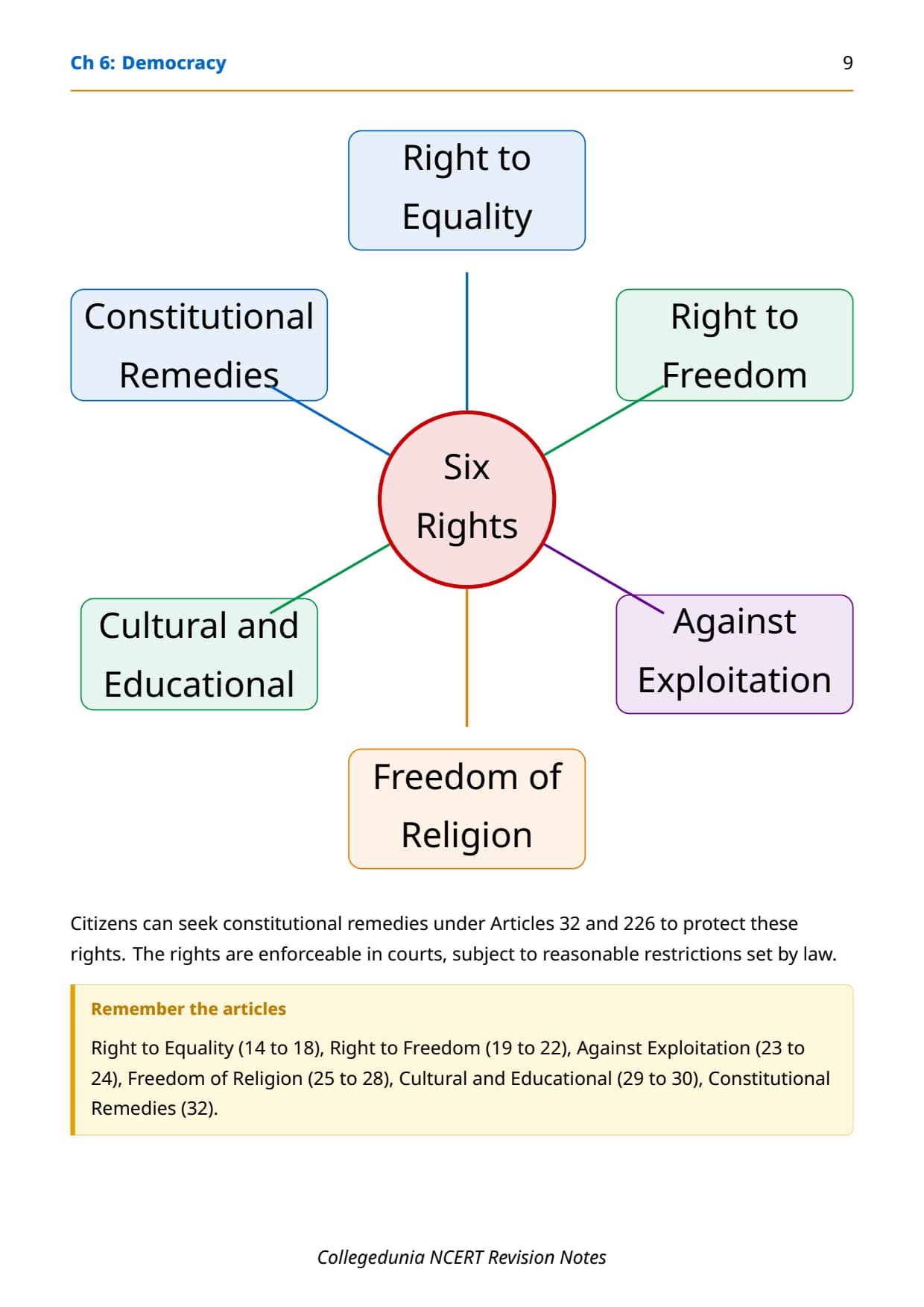
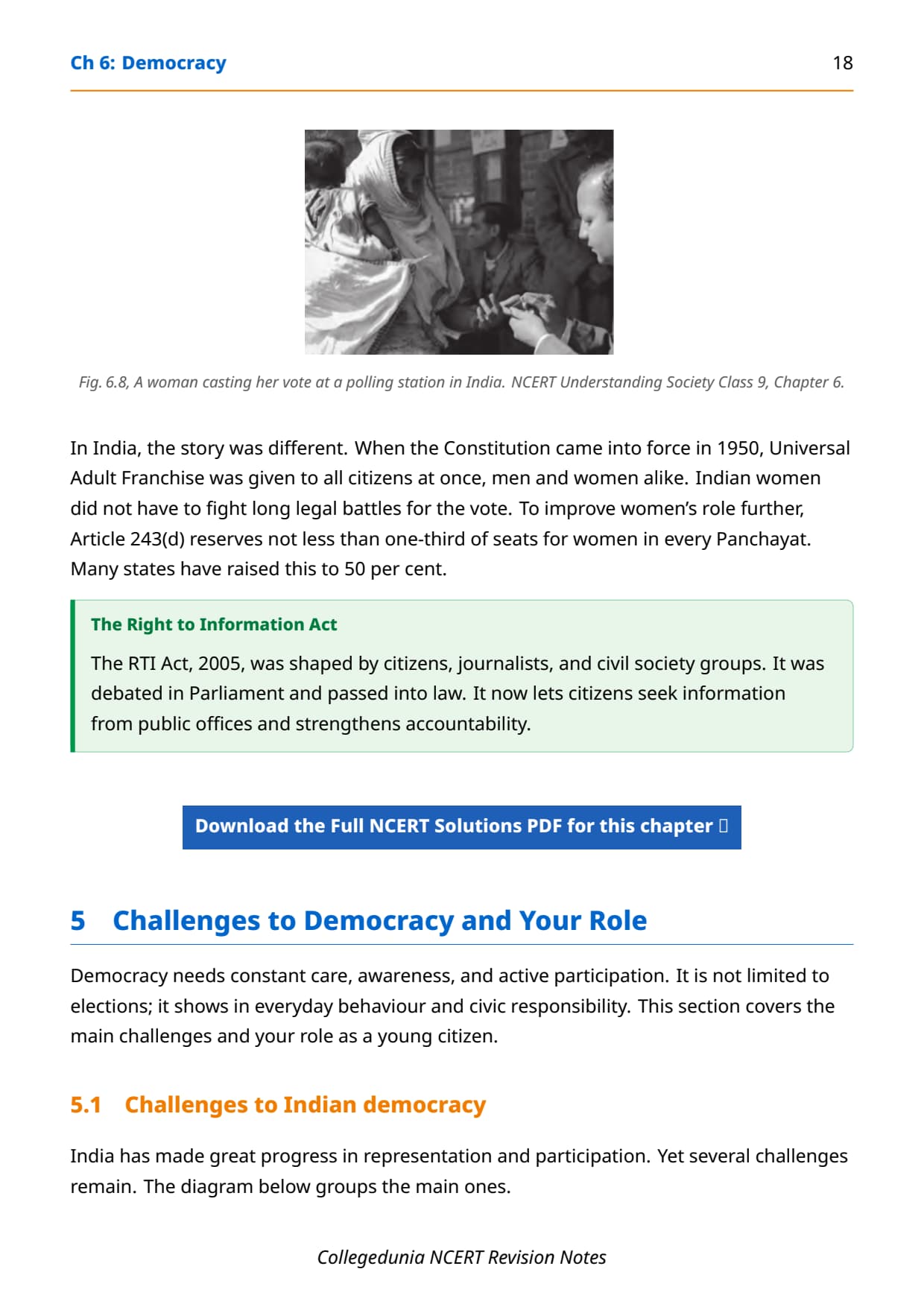
Two ideas support these principles. The Universal Adult Franchise gives every citizen aged 18 and above the right to vote by secret ballot. The six Fundamental Rights are the Right to Equality, Right to Freedom, Right against Exploitation, Right to Freedom of Religion, Cultural and Educational Rights, and the Right to Constitutional Remedies.
Types of Democracy Explained in Chapter 6 Democracy
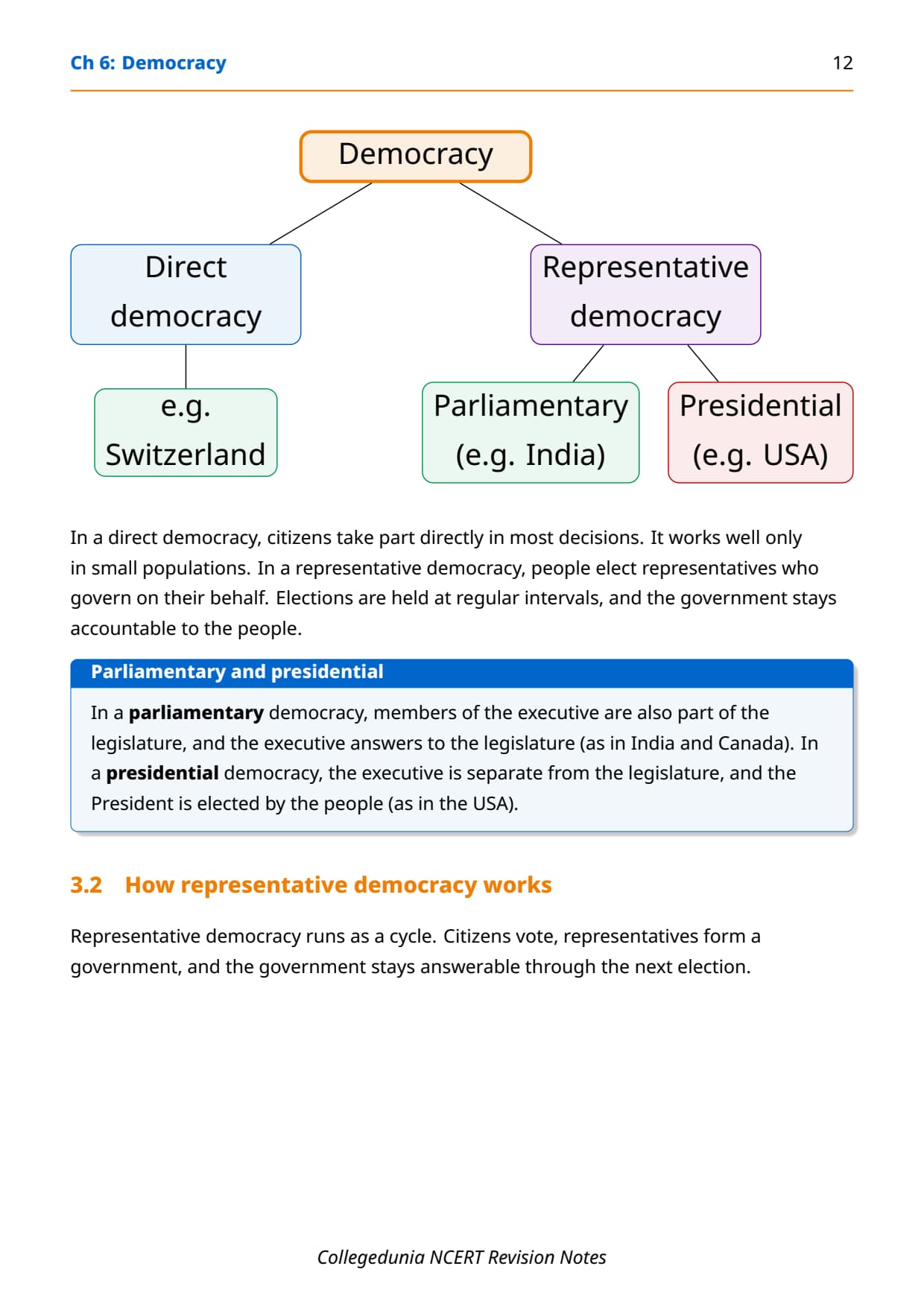
Democracy does not follow one single model. Different countries practise it in their own way, yet they share common values. The table below sorts the main types with an example of each.
| Type | Feature and example |
|---|---|
| Direct democracy | Citizens decide most matters themselves; works in small populations (Switzerland). |
| Representative democracy | People elect representatives who govern on their behalf (India). |
| Parliamentary | The executive is part of and answers to the legislature (India, Canada). |
| Presidential | The executive is separate; the President is elected by the people (USA). |
Keep one difference clear. Direct democracy is about who decides, that is, the people themselves. Presidential democracy is about how the executive is chosen. The two labels answer different questions, so do not mix them.
India's Living Democracy: Key Facts to Revise in Chapter 6
India is a living democracy because its citizens take active part in it. The Class 9 Social Science Notes Chapter 6 Democracy list the numbers and features you should be able to recall in the exam.
- In 2024, India had over 96.8 crore registered voters and more than 2,800 registered political parties.
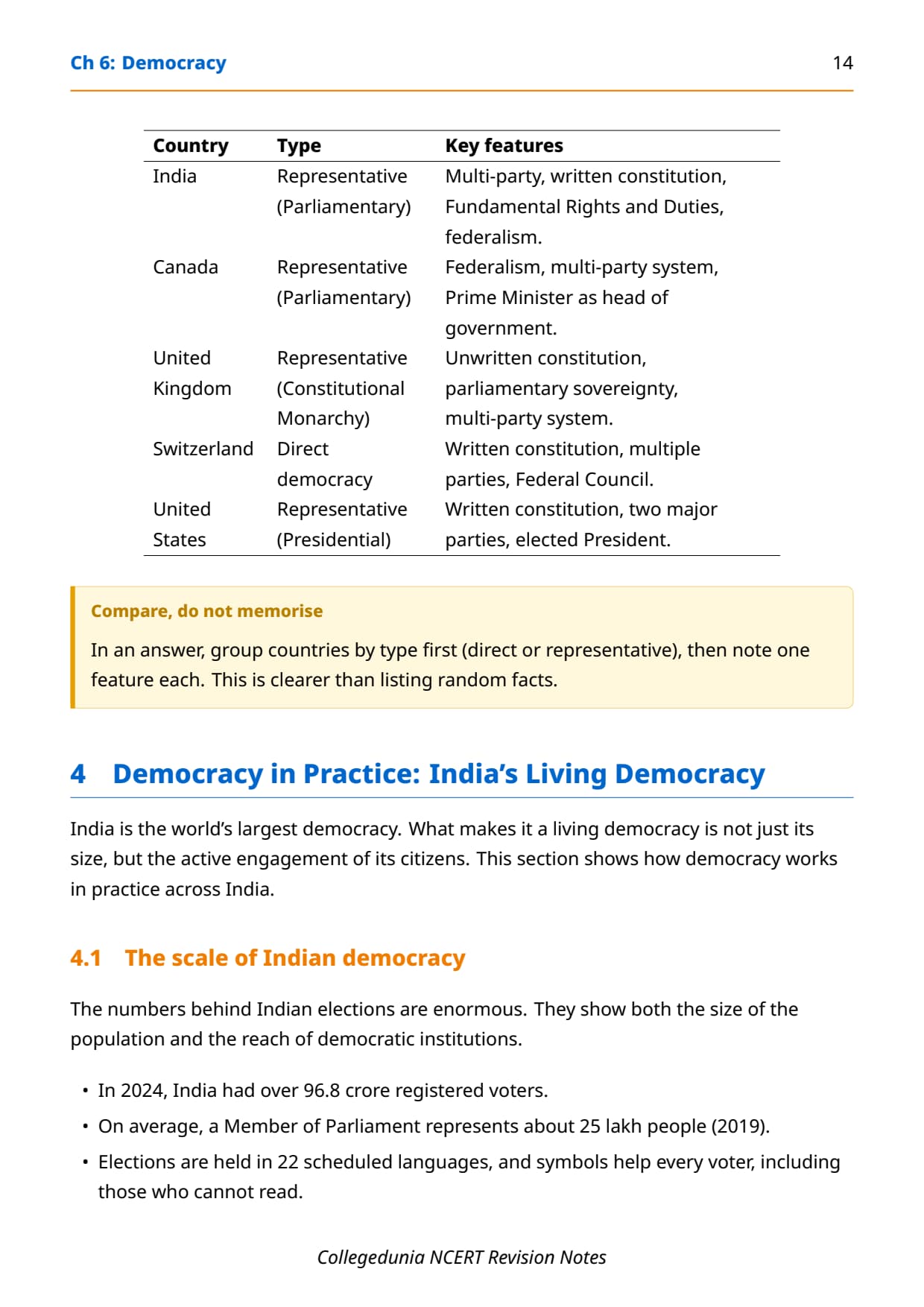
- Elections use 22 scheduled languages and symbols, so every voter can take part, even those who cannot read.
- Over one million polling stations are set up, sometimes a whole booth for a single voter.
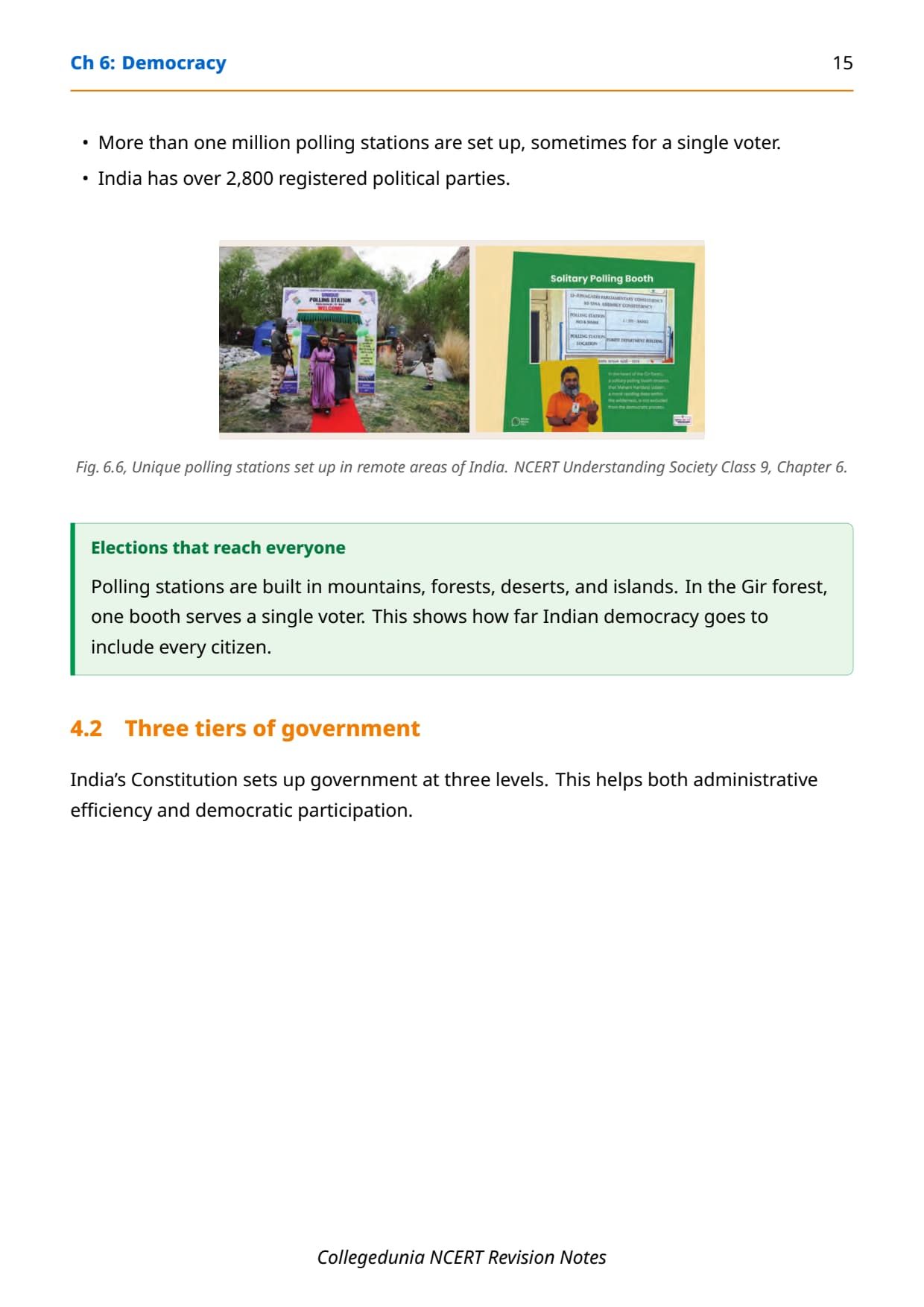
- The Constitution builds government at three levels: the Union, the States, and local bodies.
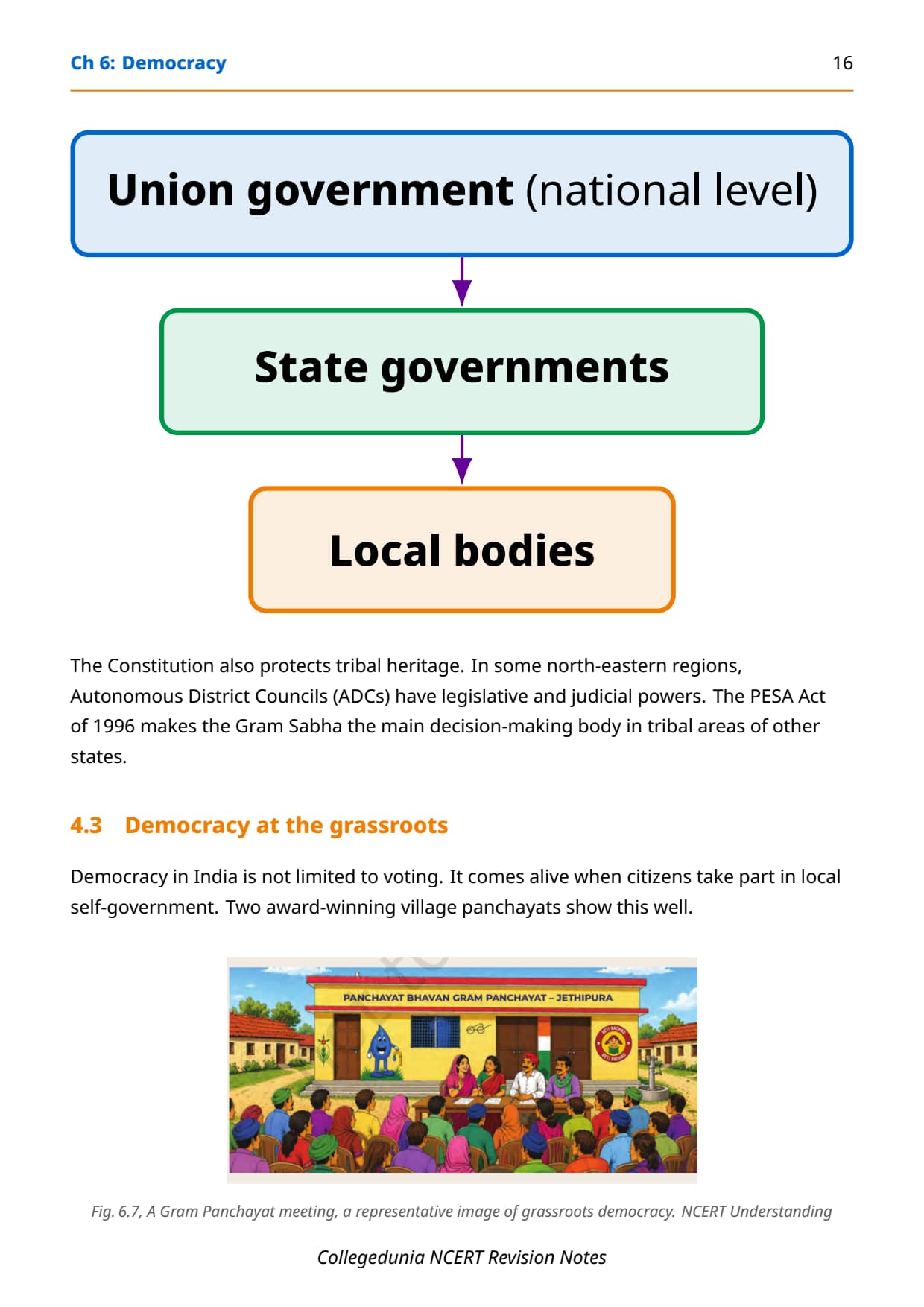
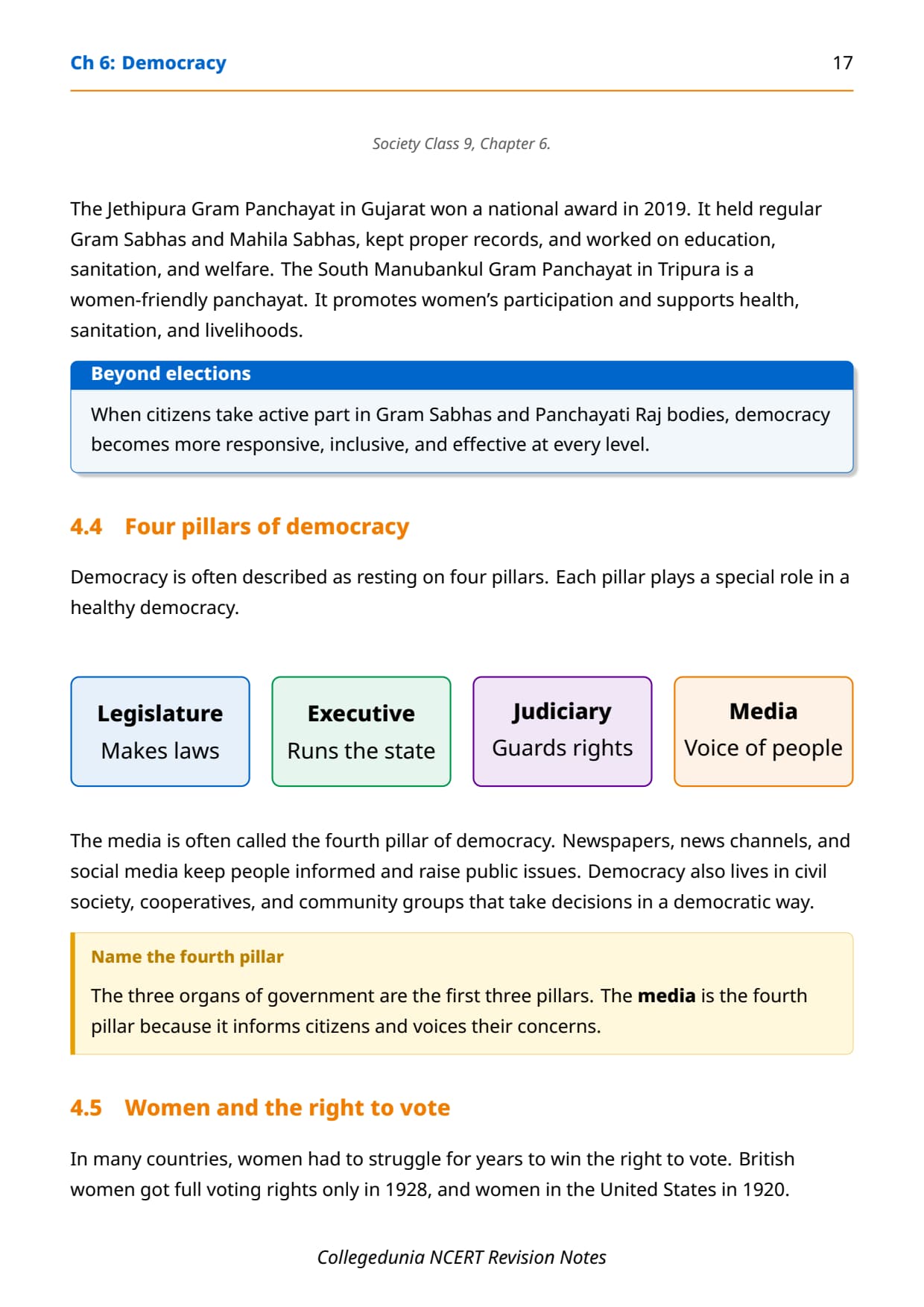
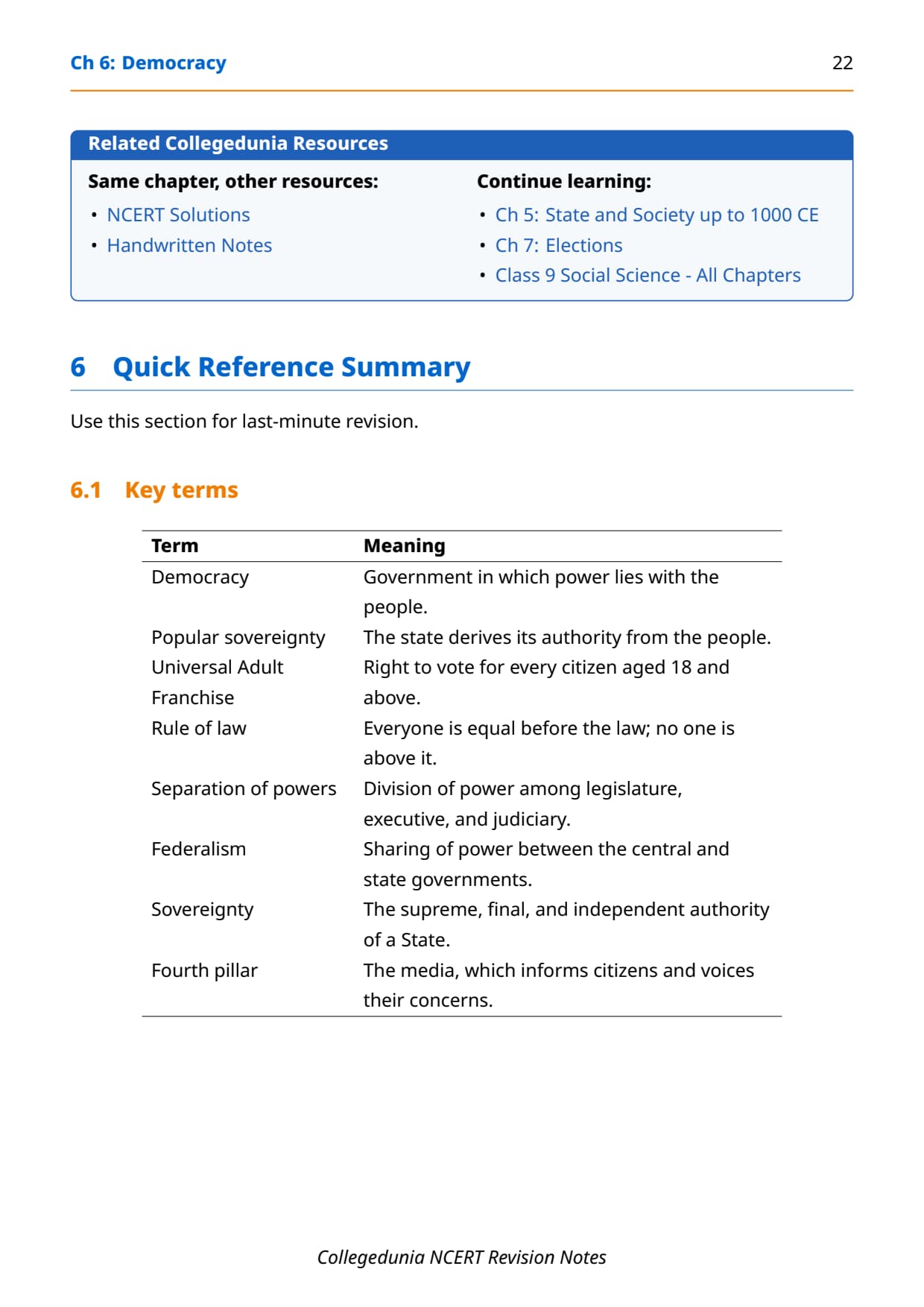
Democracy also comes alive at the grassroots. When citizens join Gram Sabhas and Panchayati Raj bodies, government becomes more responsive. Article 243(d) reserves not less than one-third of Panchayat seats for women, and many states have raised this share to half. The media is often called the fourth pillar of democracy because it keeps people informed.
Challenges to Democracy and Your Role from Chapter 6
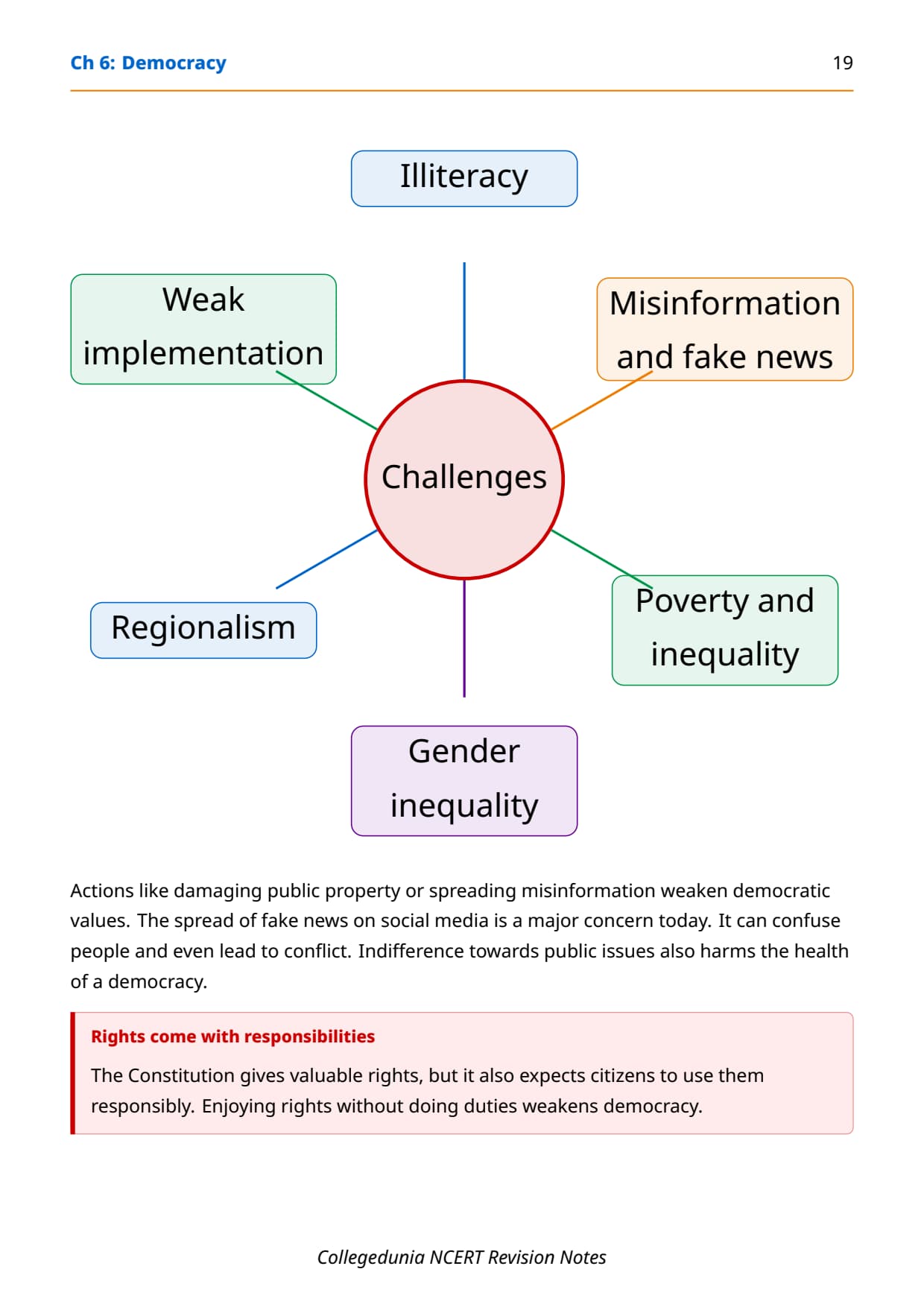
India has made great progress in representation, yet several challenges remain. Illiteracy, poverty and inequality, gender inequality, regionalism, and weak implementation all test the system. The spread of fake news on social media is a major concern today, as it can confuse people and even lead to conflict.
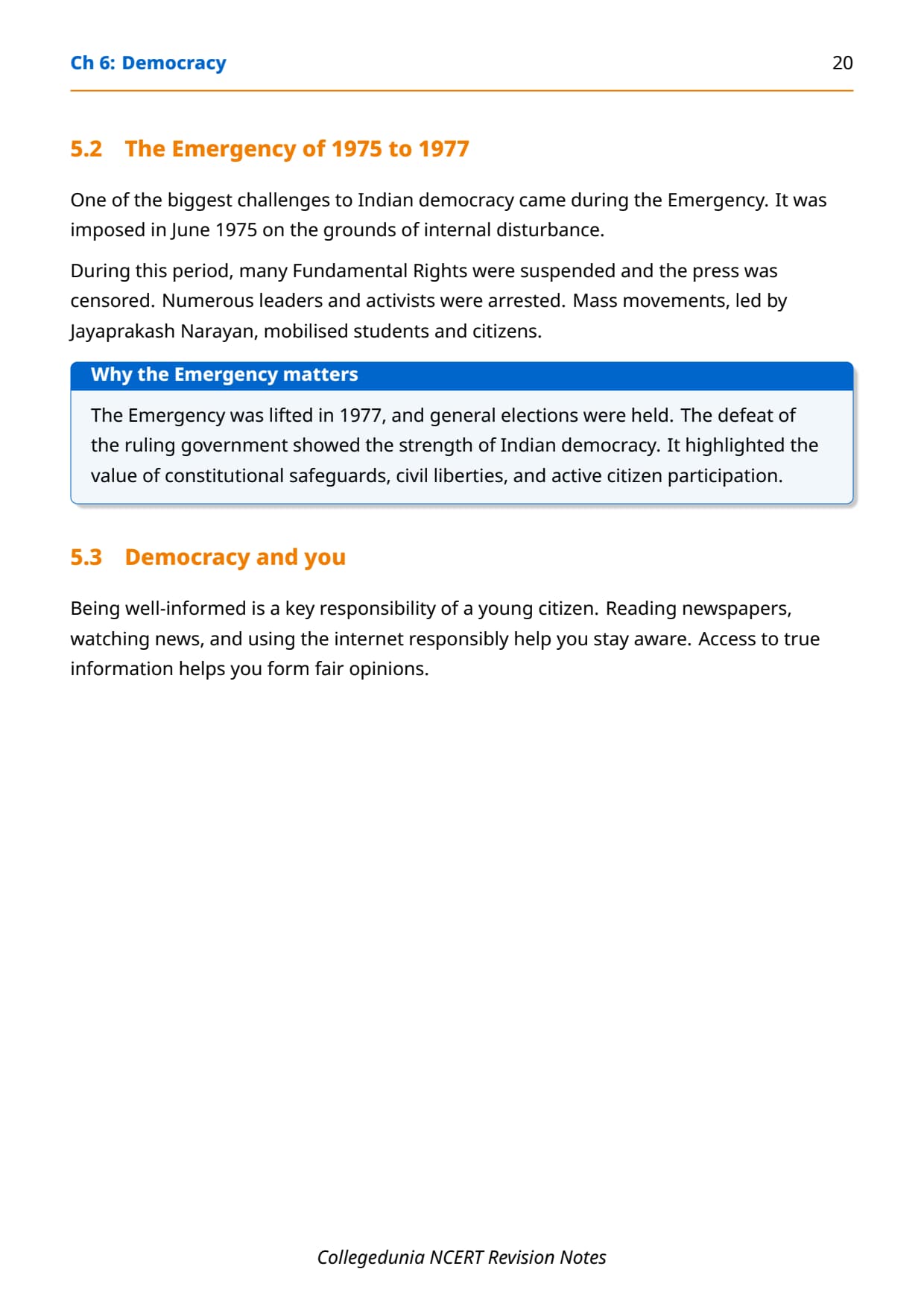
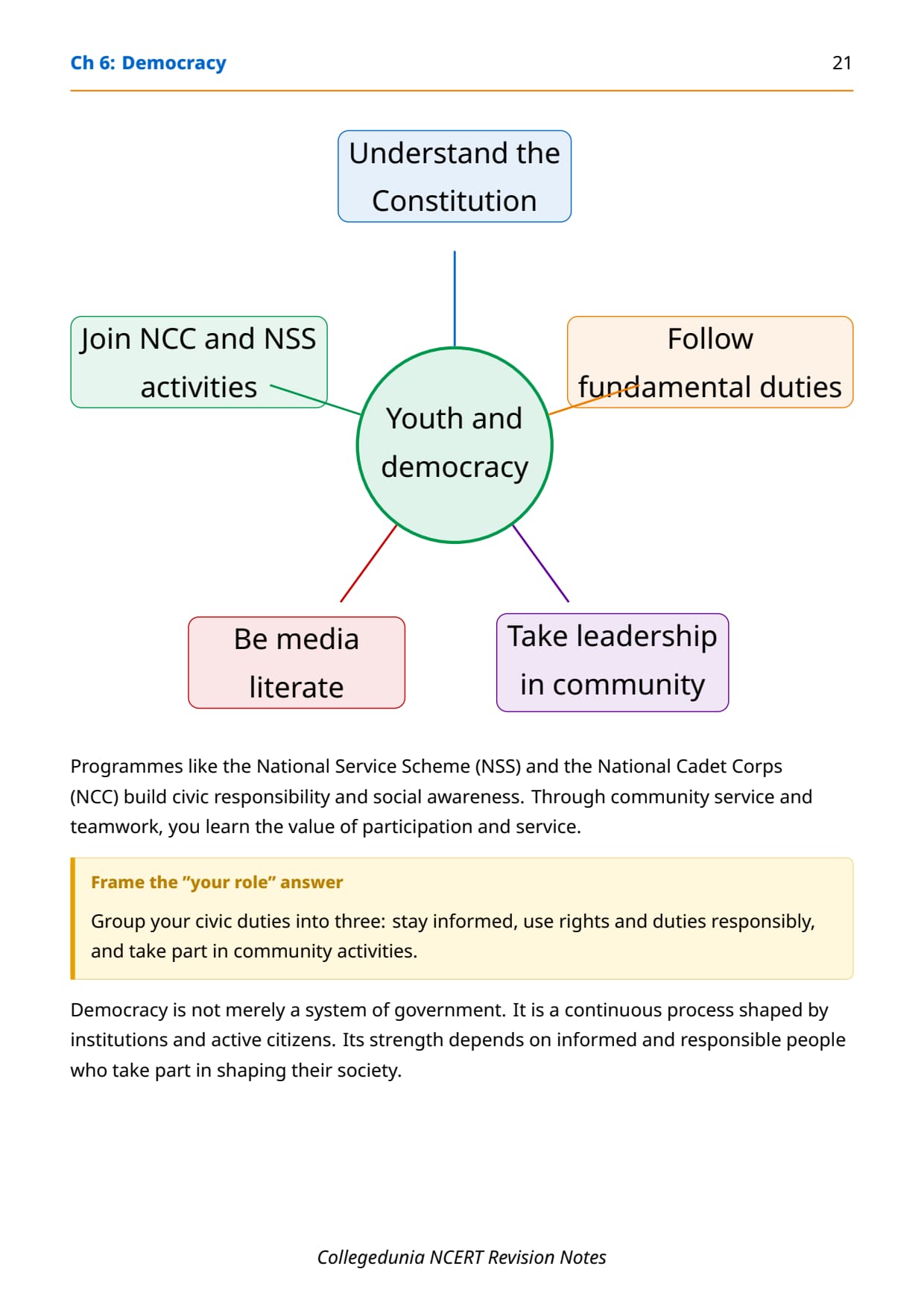
The Emergency of 1975 to 1977 was one of the biggest challenges. Many Fundamental Rights were suspended and the press was censored. When elections were held in 1977, the ruling government lost, which showed the strength of Indian democracy. As a young citizen, your role is simple: stay well informed, use your rights and duties responsibly, and take part in community activities such as the NSS and the NCC.
Common Mistakes and Revision Tips for Chapter 6 Democracy
Most lost marks in this chapter come from small slips, not hard ideas. Fix these while you revise and your answers stay clean.
- Do not confuse the legislature, the executive, and the judiciary, since each has a different role.
- Do not mix direct democracy with presidential democracy, as they answer different questions.
- Do not forget the media as the fourth pillar of democracy.
- Do not enjoy rights while ignoring duties, because both go together in a democracy.
How Collegedunia Notes Help You Revise Chapter 6 Democracy
Collegedunia gives you the full Class 9 Social Science Notes Chapter 6 Democracy as clean, short, and easy revision in one place. Every note follows the new Understanding Society textbook, so your recall matches the exam pattern.
- 2026-27 match: the notes follow the latest NCERT book and its section order.
- Simple English: short lines and everyday words, so a Class 9 student can revise without help.
- Tables ready: principles, types, and key terms are set out for quick last-minute recall.
- Free PDF: download the notes and revise offline before your exam.
Other Democracy Class 9 Social Science Resources
Use the table below to open the other resources for Chapter 6 Democracy and study the chapter in full.
| Resource | Open |
|---|---|
| NCERT Solutions | Democracy Class 9 Social Science NCERT Solutions |
| Handwritten Notes | Democracy Class 9 Social Science Handwritten Notes |
| NCERT Book PDF | Democracy Class 9 Social Science NCERT Book PDF |
NCERT Notes for Class 9 Social Science: All Chapters
Use the table below to open the NCERT Notes for any other chapter of the new Class 9 Social Science Understanding Society book.
| Chapter | NCERT Notes |
|---|---|
| Chapter 1 | Understanding Social Science |
| Chapter 2 | Shaping of the Earth's Surface |
| Chapter 3 | Atmosphere and Climate |
| Chapter 4 | Early Humans and Beginning of Civilisation |
| Chapter 5 | State and Society up to 1000 CE |
| Chapter 7 | Elections |
| Chapter 8 | Building Blocks in Economics: The Problem of Choice |
| Chapter 9 | The Price Puzzle: What Drives the Market |
Democracy Class 9 Social Science Notes FAQs
Where can I download the Class 9 Social Science Notes Chapter 6 Democracy PDF?
You can download the Democracy notes PDF free from this page. Both the Normal and HD versions match the 2026-27 Understanding Society book.
What topics do the Class 9 Social Science Chapter 6 notes cover?
The notes cover the meaning of democracy, its roots in India, the six principles, the types of democracy, India's living democracy, and the main challenges to democracy today.
What are the six principles of democracy in Chapter 6?
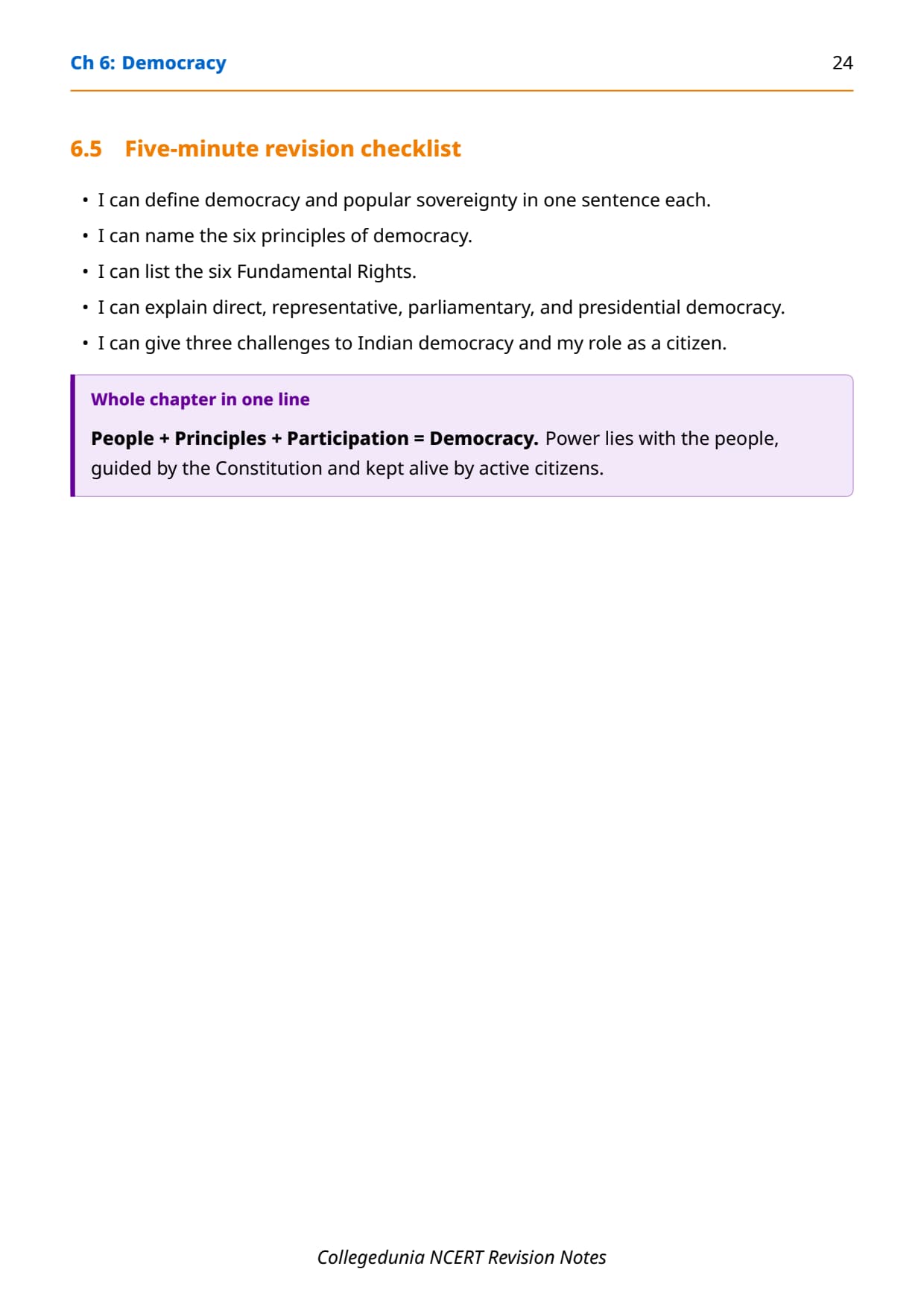
They are popular sovereignty, rule of law, Fundamental Rights, separation of powers, accountability, and a multi-party system. The Constitution of India upholds each of them.
Why is India called the world's largest democracy?
India had over 96.8 crore registered voters in 2024 and more than 2,800 political parties. Every citizen aged 18 and above can vote through the Universal Adult Franchise.



Comments