




The NCERT Solutions Class 9 Social Science Chapter 8 Building Blocks in Economics The Problem of Choice answer all 10 questions from the Questions and Activities exercise of the 2026-27 Understanding Society textbook. Every answer explains scarcity, opportunity cost, and the market, planned and mixed economic systems in clear exam language.
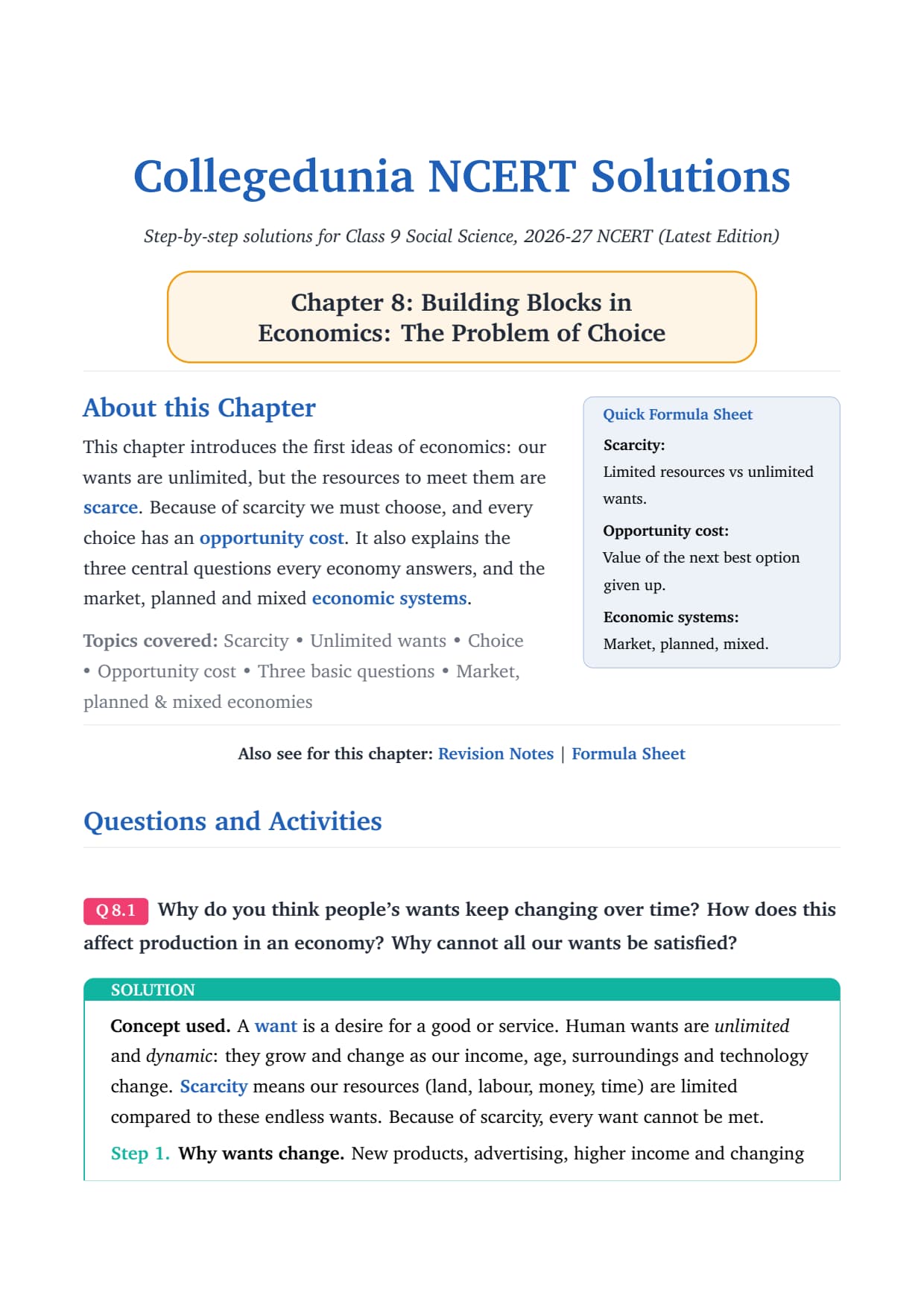
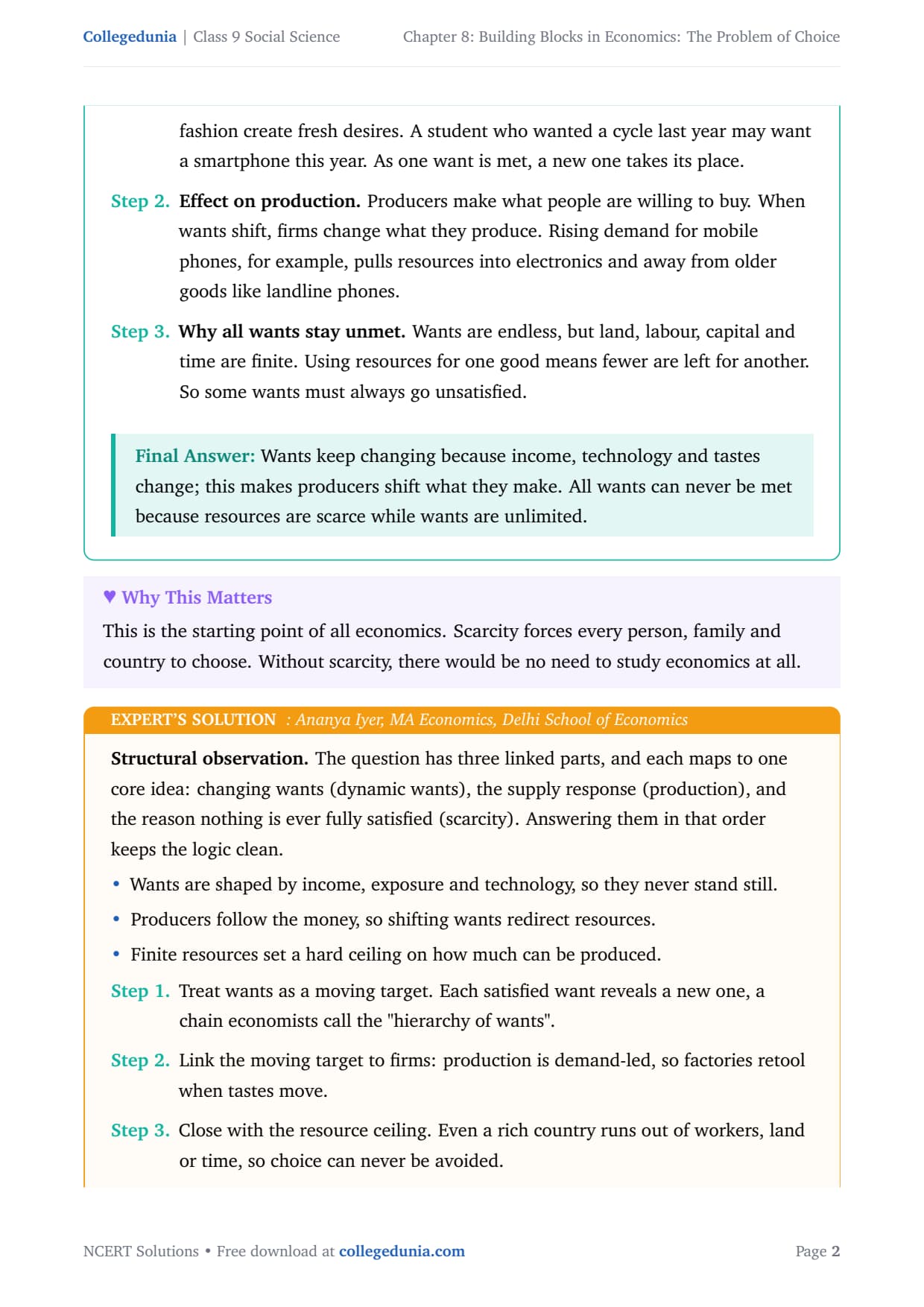
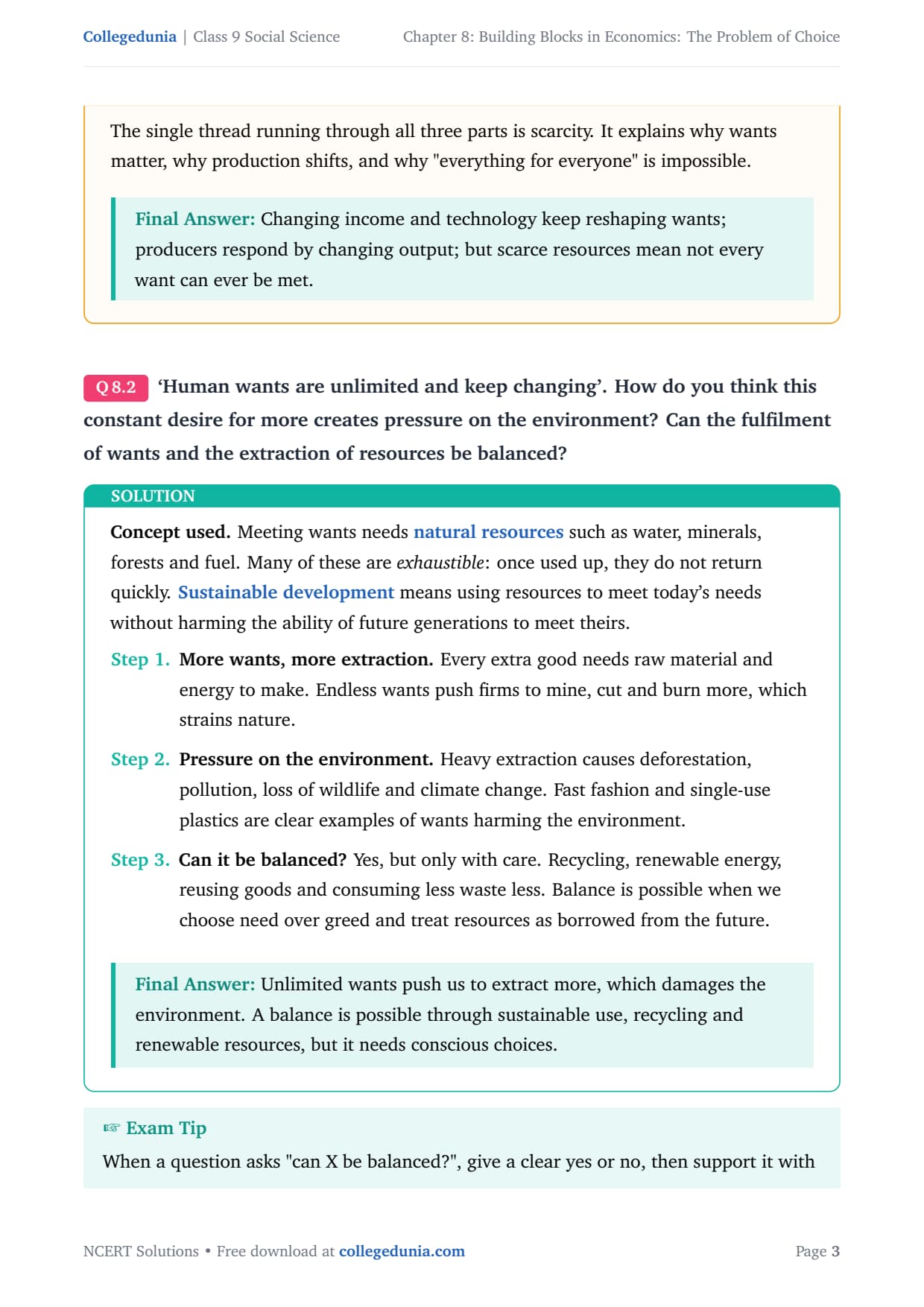
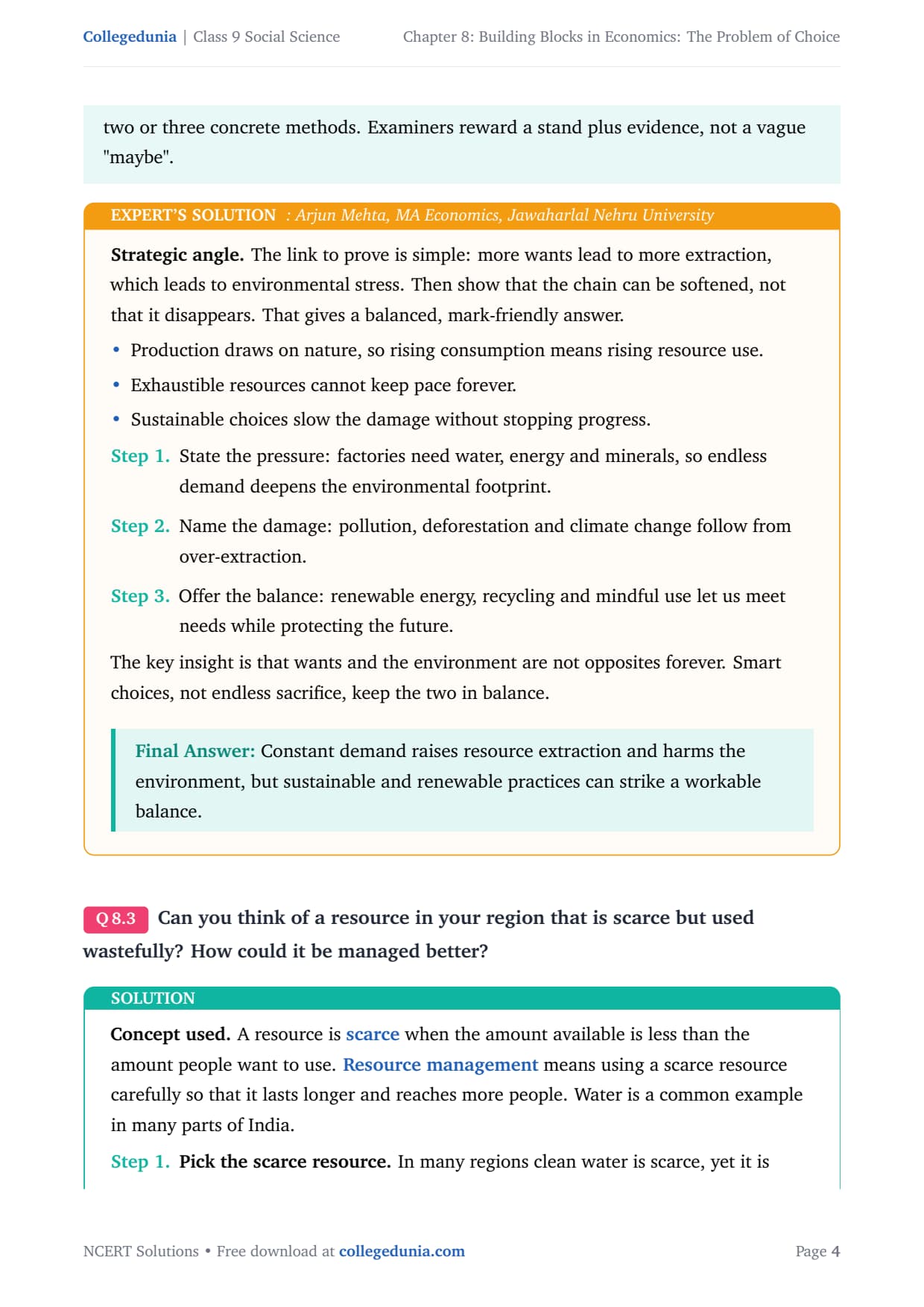
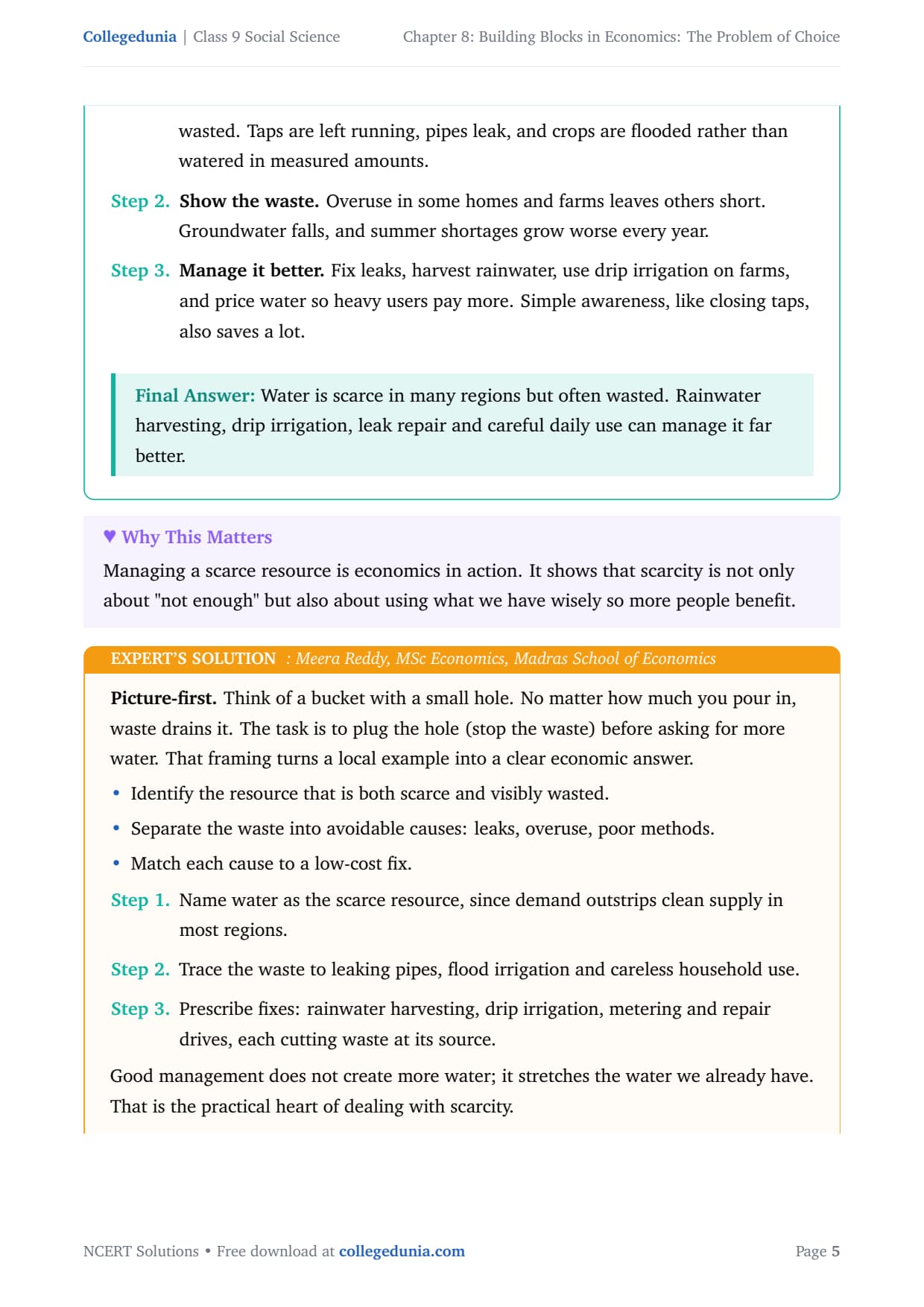
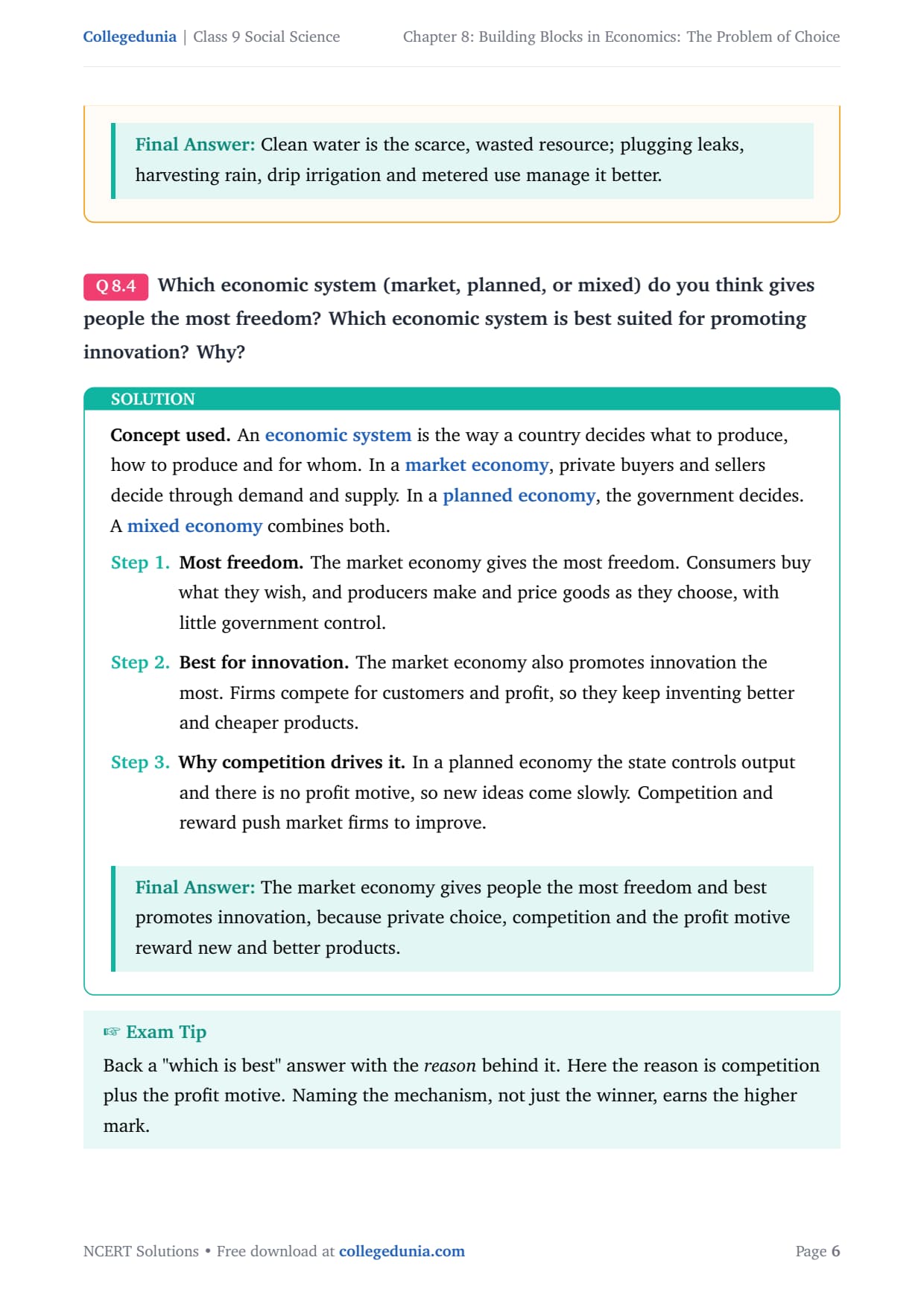
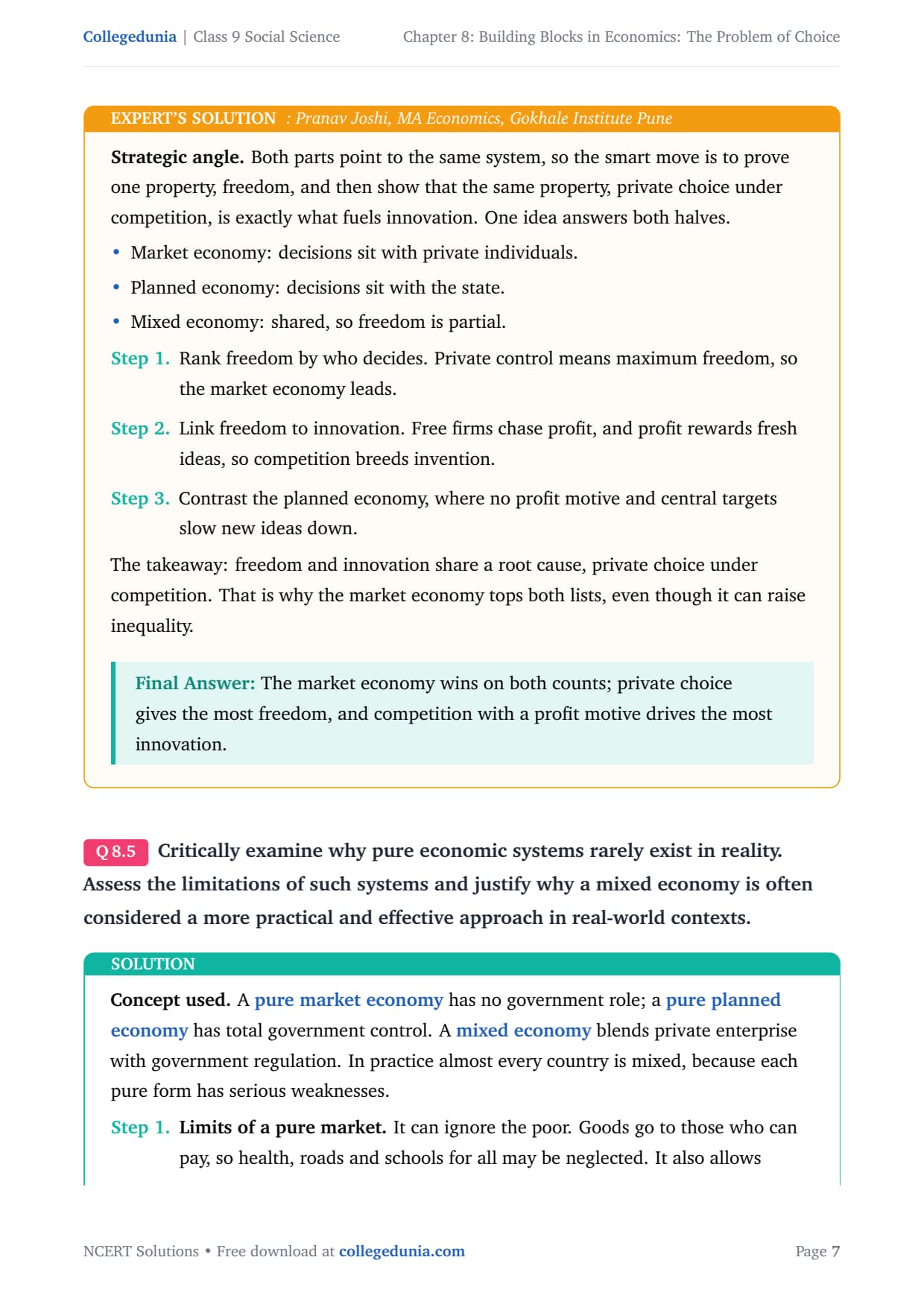
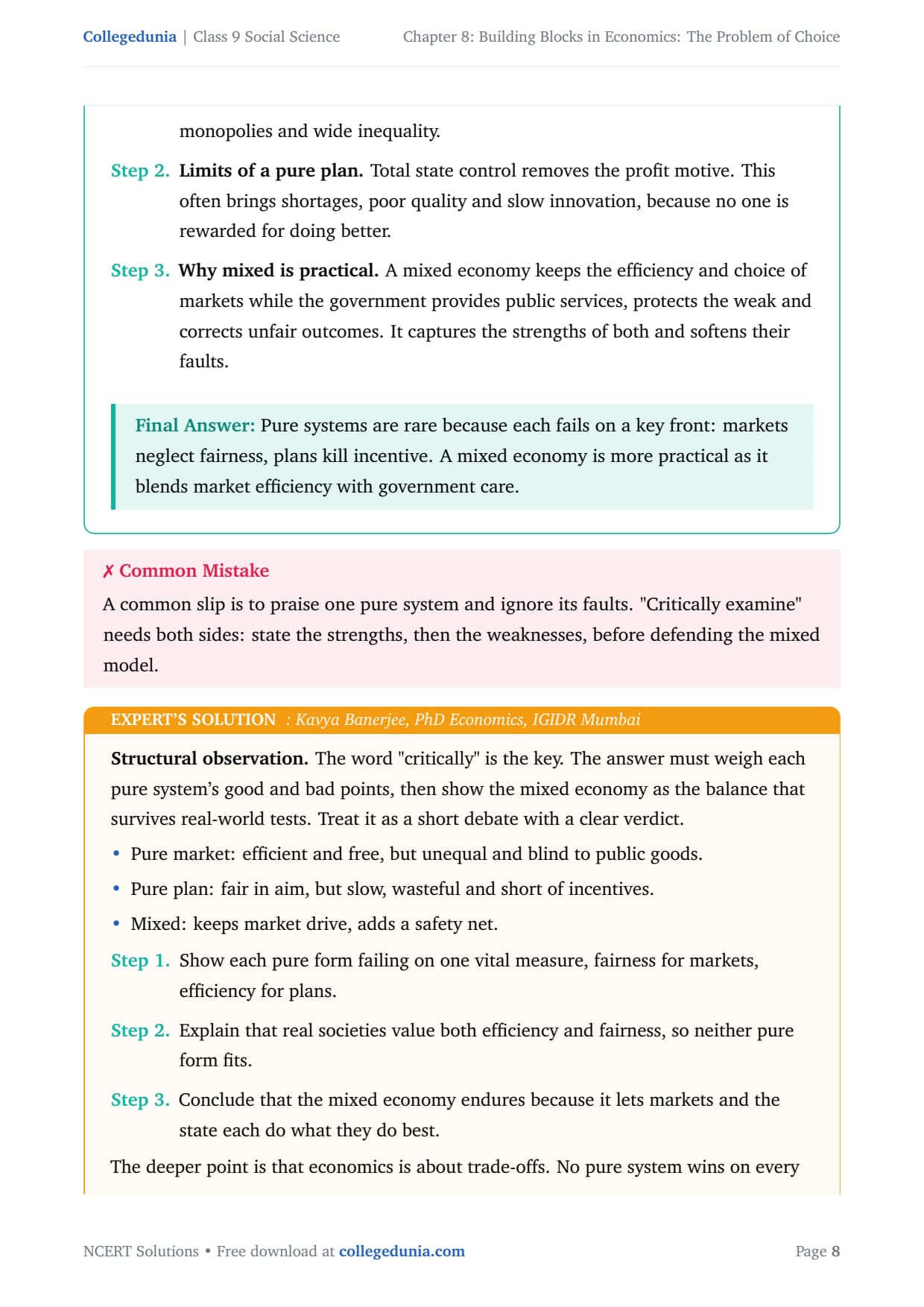
Each solution for Class 9 Social Science Chapter 8 Building Blocks in Economics The Problem of Choice is written by Collegedunia subject experts, matched to the 2026-27 Understanding Society textbook, and kept in simple exam language.
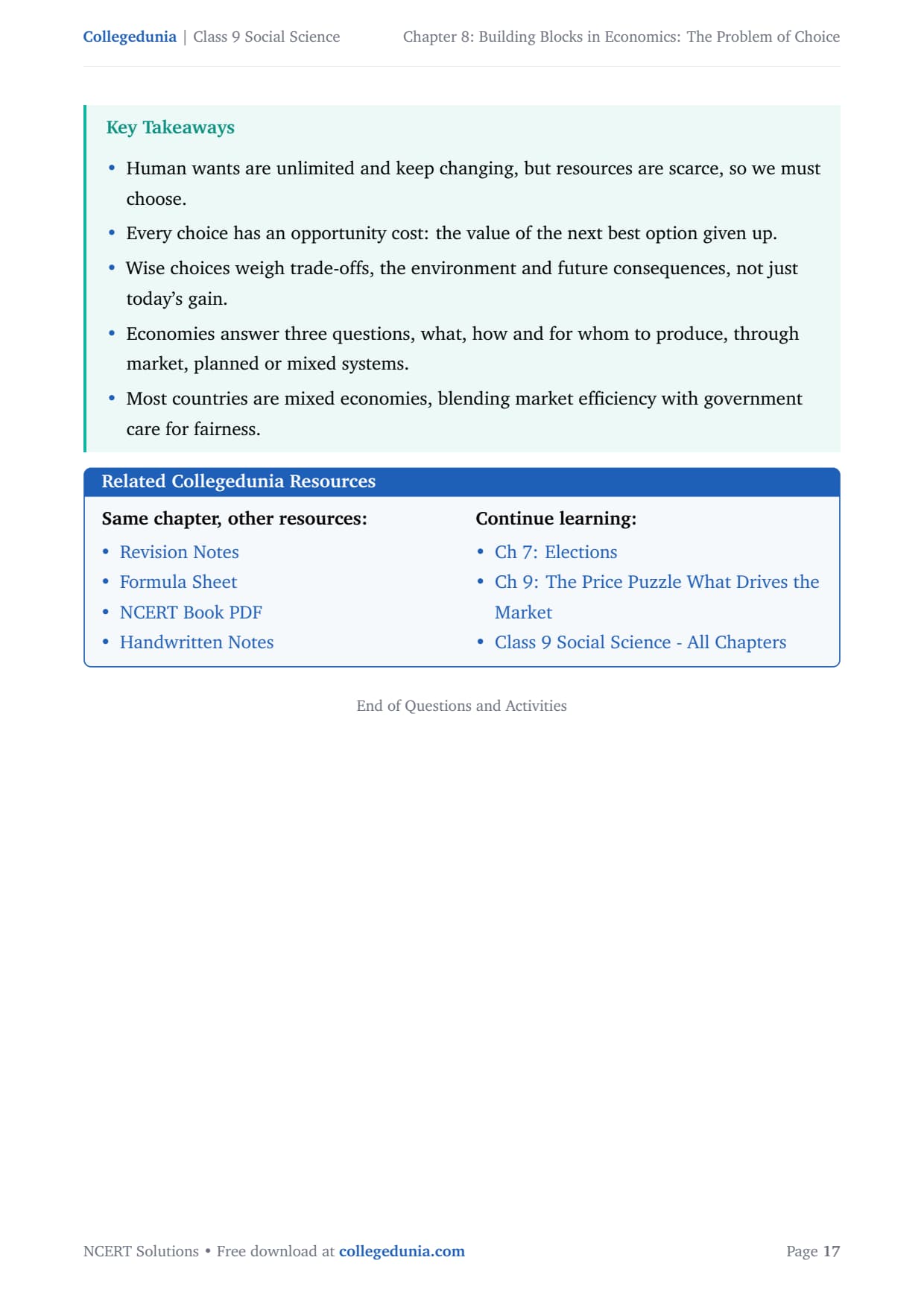
- 10 solved questions: full answers for every Questions and Activities item, plus an expert version for each one.
- Core ideas: scarcity, unlimited wants, choice, opportunity cost, the three basic questions, and market, planned and mixed economies.
- Exam skills: how to take a clear stand, name the opportunity cost, and link activity answers to real examples.
Student Feedback
In a Collegedunia poll of 8,600 Class 9 students before the 2026 exams, 58% said they confused opportunity cost with the money actually spent. The next most common slip was giving a vague answer on economic systems without a reason. Students who practised the 10 solved answers here said the choice and cost questions felt much clearer.
Source: 2026-27 Class 9 Social Science student poll. Sample of 8,600 students from CBSE schools across 11 states.
Exercise Coverage in Building Blocks in Economics The Problem of Choice Class 9 Solutions
The Questions and Activities exercise has 10 items. The NCERT Solutions Class 9 Social Science Chapter 8 Building Blocks in Economics The Problem of Choice group them by type, so you know which to write in full and which to do as a project. The table below shows the split.
| Question type | Questions | What it tests |
|---|---|---|
| Short and long answers | 3 | Why wants change and shift production, how opportunity cost guides choices, and how present choices shape the future |
| Opinion and discussion | 4 | Balancing wants with the environment, freedom and innovation across systems, pure versus mixed economies, and the role of reliable data |
| Multiple choice | 1 | Naming the economic concept in a simple spending choice |
| Activity and project | 2 | A scarce resource in your region and a newspaper report on a production decision |
Start with the short and long answers, then the single multiple choice item on opportunity cost. Save the two activity questions for classroom or project work once the theory is clear.
Building Blocks in Economics The Problem of Choice Weightage for Class 9 Social Science Exams
This is the first economics chapter in the new integrated Class 9 book. It builds the base for the next chapter on markets and prices. Here is where it sits among the economics-side chapters of the 2026-27 Understanding Society book.
| Chapter | Topic | Typical exam focus |
|---|---|---|
| Chapter 8 | Building Blocks in Economics: The Problem of Choice | Scarcity, opportunity cost, economic systems |
| Chapter 9 | The Price Puzzle: What Drives the Market | Demand, supply, and how price is set |
This chapter scores steady marks because it mixes short reasoning answers with clear definitions. Learn scarcity and opportunity cost once, and the marks come back in every test.
How to Answer Building Blocks in Economics The Problem of Choice Questions Step by Step
Most marks here come from clear terms and a firm stand. The NCERT Solutions Class 9 Social Science Chapter 8 Building Blocks in Economics The Problem of Choice follow the same method for almost every answer. Use these steps and you will rarely lose an easy mark.
- Define the key term first. Start with what scarcity, opportunity cost or an economic system means before you explain the example.
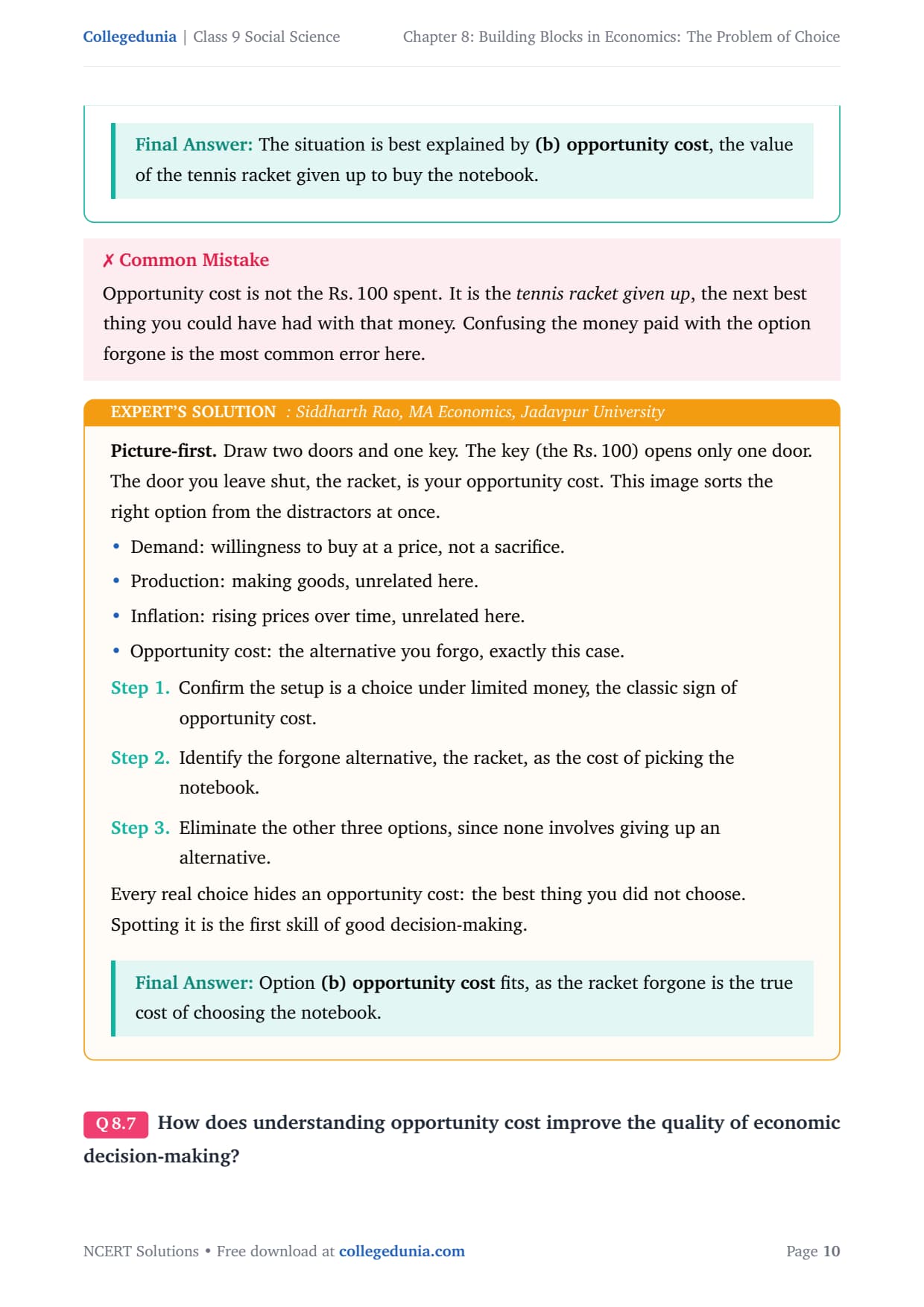
- Name the opportunity cost clearly. It is the next best option you give up, not the money you spend. Say which option was let go.
- Take a clear stand. For "which is best" or "can it be balanced" questions, give a straight yes, no or choice, then back it with a reason.
- Add one real example. A student's pocket money, water in your area, or an onion price story makes the answer feel complete.
- Close with the link. For activity questions, connect your example back to scarcity, choice or the "how much to produce" idea.
For the three basic questions, always name them as what to produce, how to produce, and for whom to produce. Examiners look for all three.
Common Mistakes Students Make in Building Blocks in Economics The Problem of Choice
Most lost marks in this chapter are simple slips, not gaps in understanding. Watch for the four below when you write your answer.
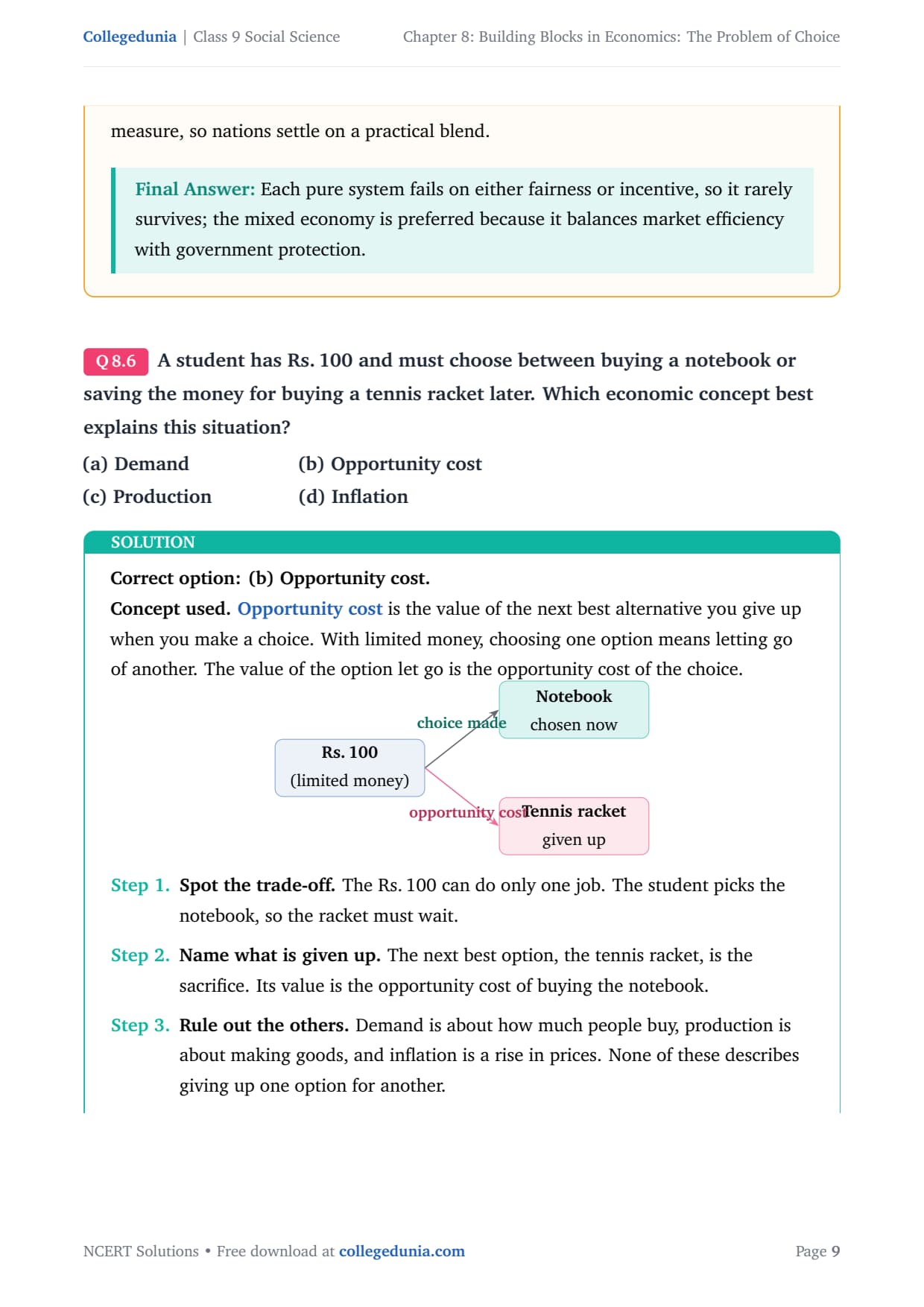
Mistake 1: Treating the money spent as the opportunity cost. The cost is the next best option given up, such as the tennis racket, not the rupees paid.
Mistake 2: Giving a vague "maybe" on system or balance questions. Take a clear stand first, then add two or three reasons.
Mistake 3: Confusing wants with needs. Wants are unlimited and keep changing, while resources to meet them stay scarce.
Mistake 4: Skipping the link in activity answers. Always tie your local example or news story back to a chapter concept.
Also Check: the full answer for every one of these traps is in the solved questions lower on this page.
Building Blocks in Economics The Problem of Choice Important Questions and Exam Trends
Exams from this chapter follow a clear pattern. One definition or reasoning question plus one opinion or example question is the usual mix. The list below shows the types you should be ready for.
- Scarcity and wants: why wants keep changing and why every want can never be met.
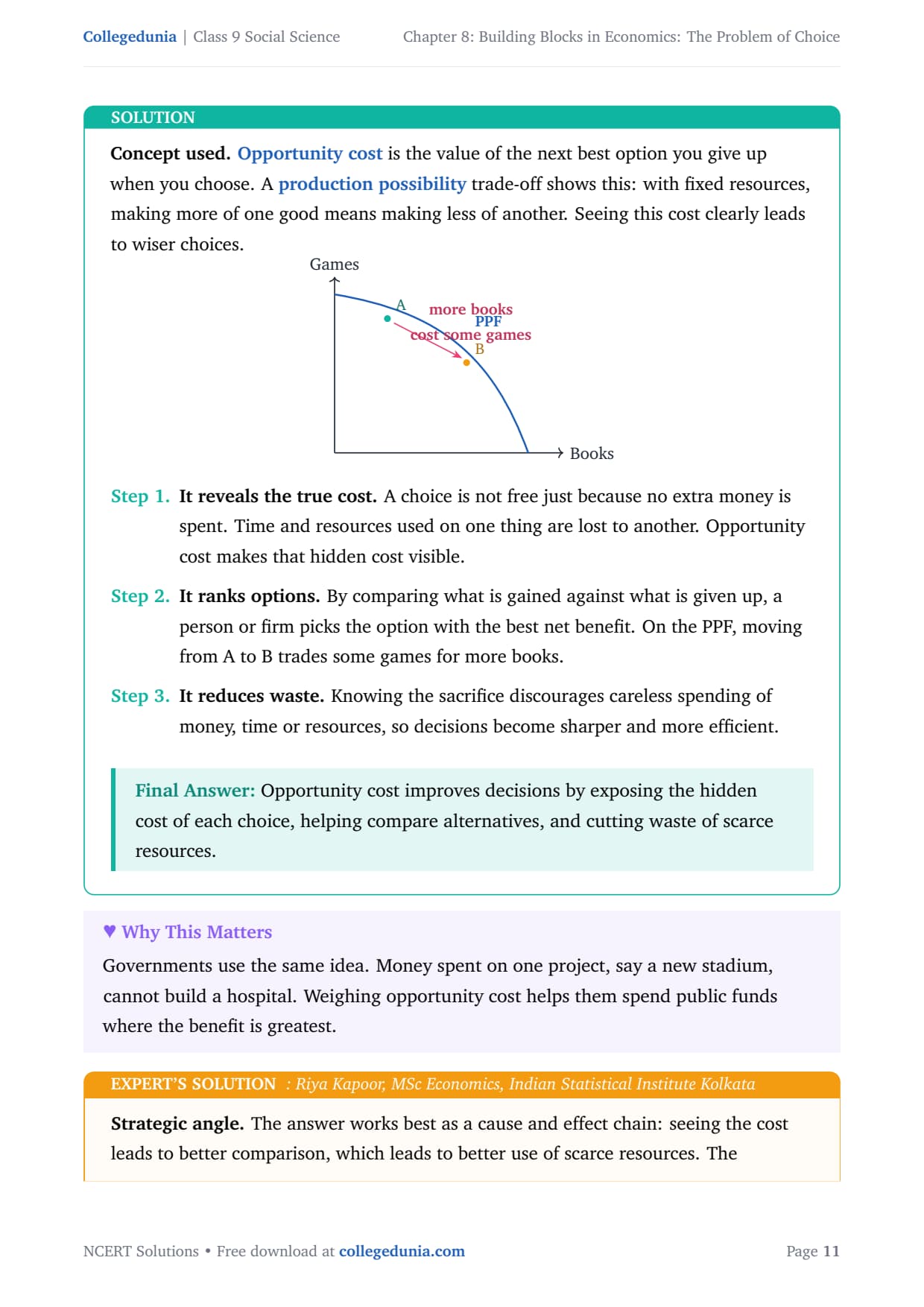
- Opportunity cost: the value of the next best option given up, with a simple spending example.
- Economic systems: how market, planned and mixed economies differ in freedom and innovation.
- Pure versus mixed: why pure systems are rare and why most countries choose a mixed economy.
- Choice and the future: how present decisions and reliable data shape long-term outcomes.
The NCERT Solutions Class 9 Social Science Chapter 8 Building Blocks in Economics The Problem of Choice cover every one of these types in full, so practising the 10 solved questions on this page is enough for the exam.
Other Building Blocks in Economics The Problem of Choice Class 9 Social Science Resources
Pair these solutions with the notes and the book PDF for the same chapter to revise faster.
| Resource | Link |
|---|---|
| Notes | Building Blocks in Economics The Problem of Choice Class 9 Notes |
| Handwritten Notes | Building Blocks in Economics The Problem of Choice Handwritten Notes |
| NCERT Book PDF | Building Blocks in Economics The Problem of Choice Book PDF |
Questions
NCERT Solutions for Class 9 Social Science: All Chapters
Jump to the NCERT Solutions for any other Class 9 Social Science chapter below. Collegedunia keeps a solved page for every chapter of the new book.
| Chapter | NCERT Solutions |
|---|---|
| Chapter 1 | Understanding Social Science |
| Chapter 2 | Shaping of the Earth's Surface |
| Chapter 3 | Atmosphere and Climate |
| Chapter 4 | Early Humans and Beginning of Civilisation |
| Chapter 5 | State and Society up to 1000 CE |
| Chapter 6 | Democracy |
| Chapter 7 | Elections |
| Chapter 9 | The Price Puzzle What Drives the Market |
Building Blocks in Economics The Problem of Choice Class 9 Solutions FAQs
How many questions are solved in NCERT Solutions for Class 9 Social Science Chapter 8?
All 10 questions from the Questions and Activities exercise are solved. Each one has a step-by-step answer and an expert version written in simple exam language.
What is opportunity cost in Class 9 Social Science Chapter 8?
Opportunity cost is the value of the next best option you give up when you make a choice. It is not the money you spend. The solutions explain it with a clear spending example.
What are the three types of economic systems in this chapter?
The chapter covers market, planned and mixed economies. The solutions compare them on freedom and innovation and explain why most countries choose a mixed economy.
Are these Class 9 Social Science solutions based on the new 2026-27 book?
Yes. Every answer matches the new integrated Understanding Society textbook for 2026-27. Collegedunia updates the solutions whenever the NCERT content changes.



Comments