




The Democracy Class 9 Social Science Handwritten Notes are a topper's own neat revision of Chapter 6 from the new Understanding Society book. These class 9 social science handwritten notes chapter 6 Democracy cover the meaning of democracy, its roots in India, the six principles, the types, and today's challenges.
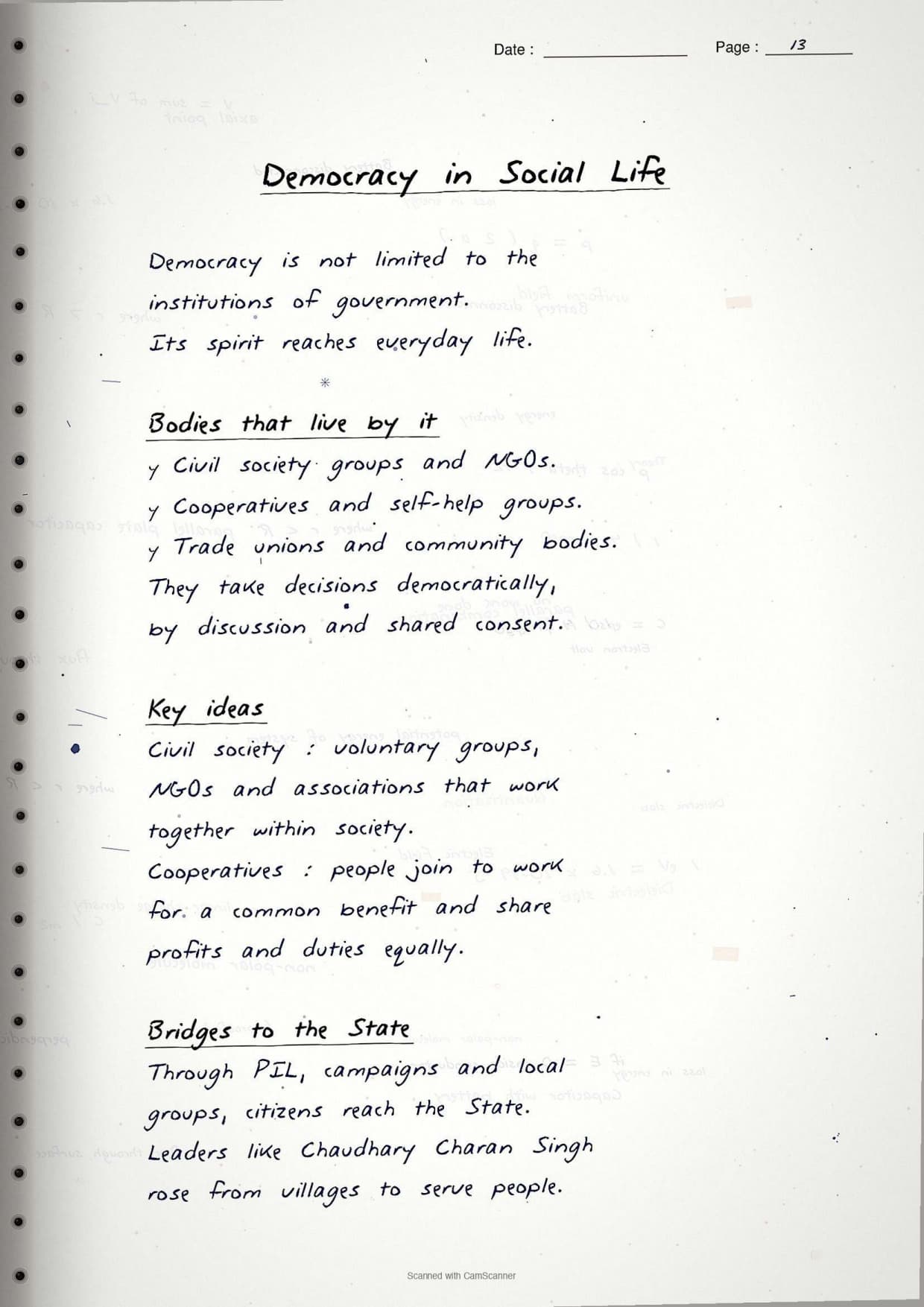
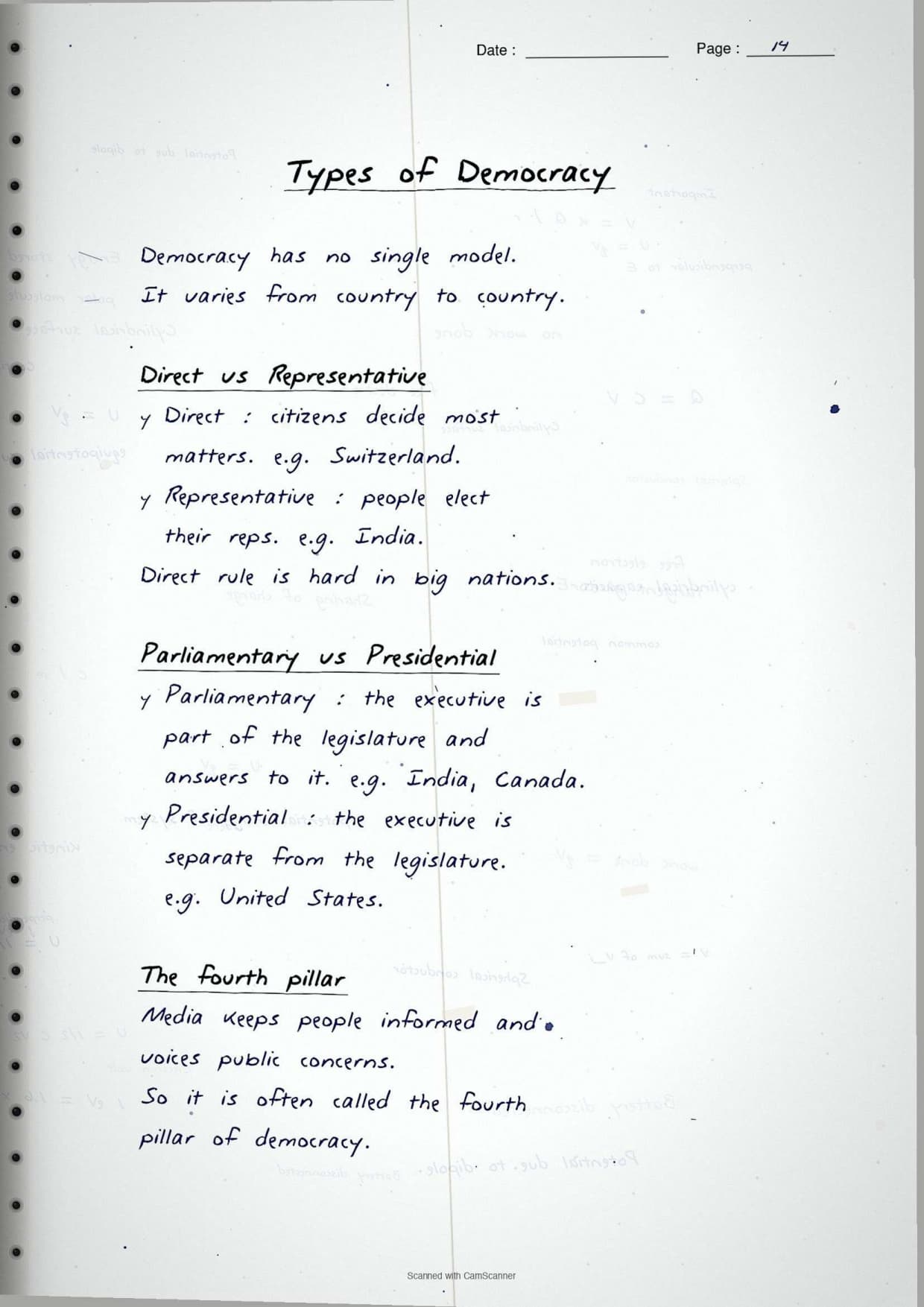
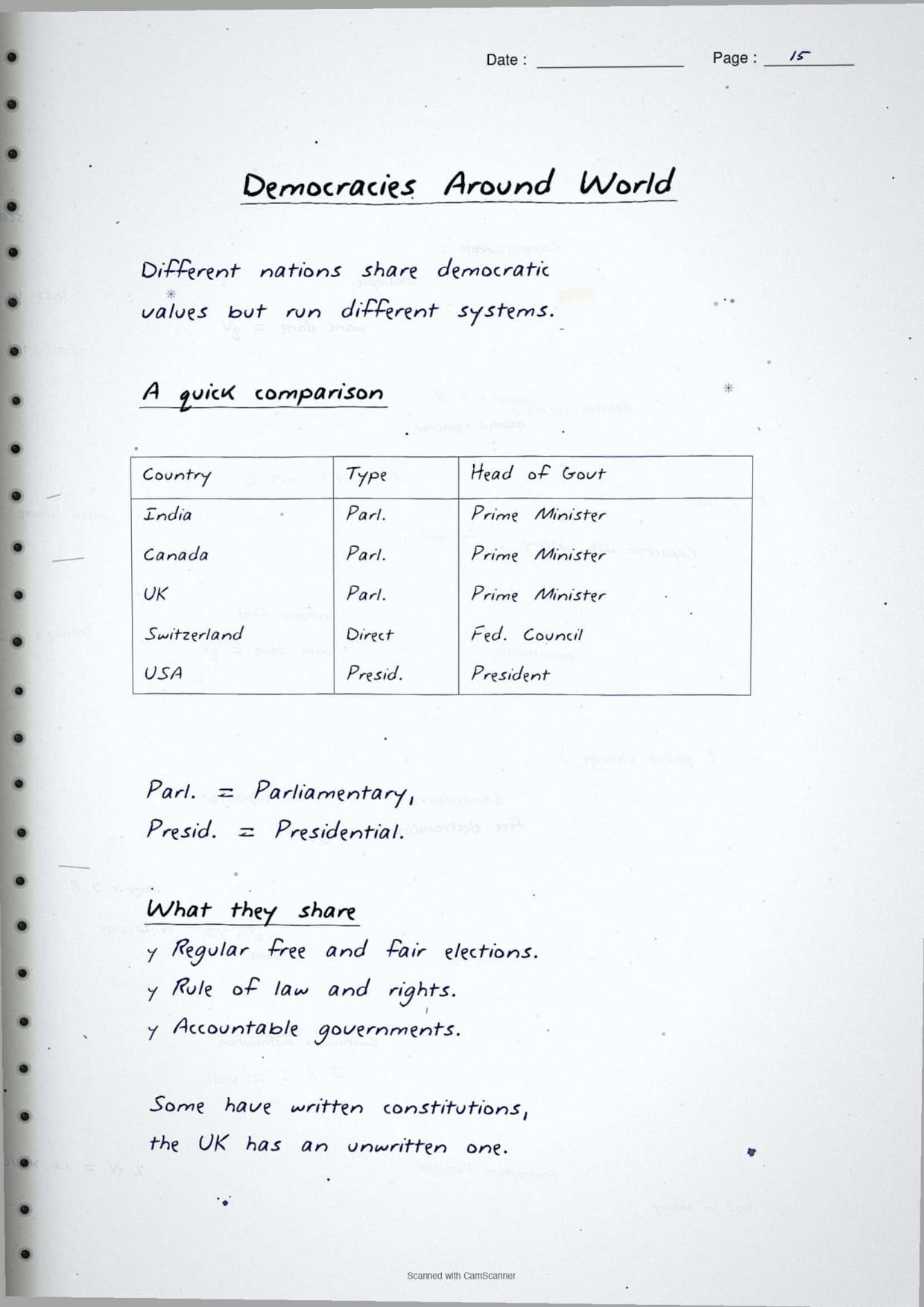
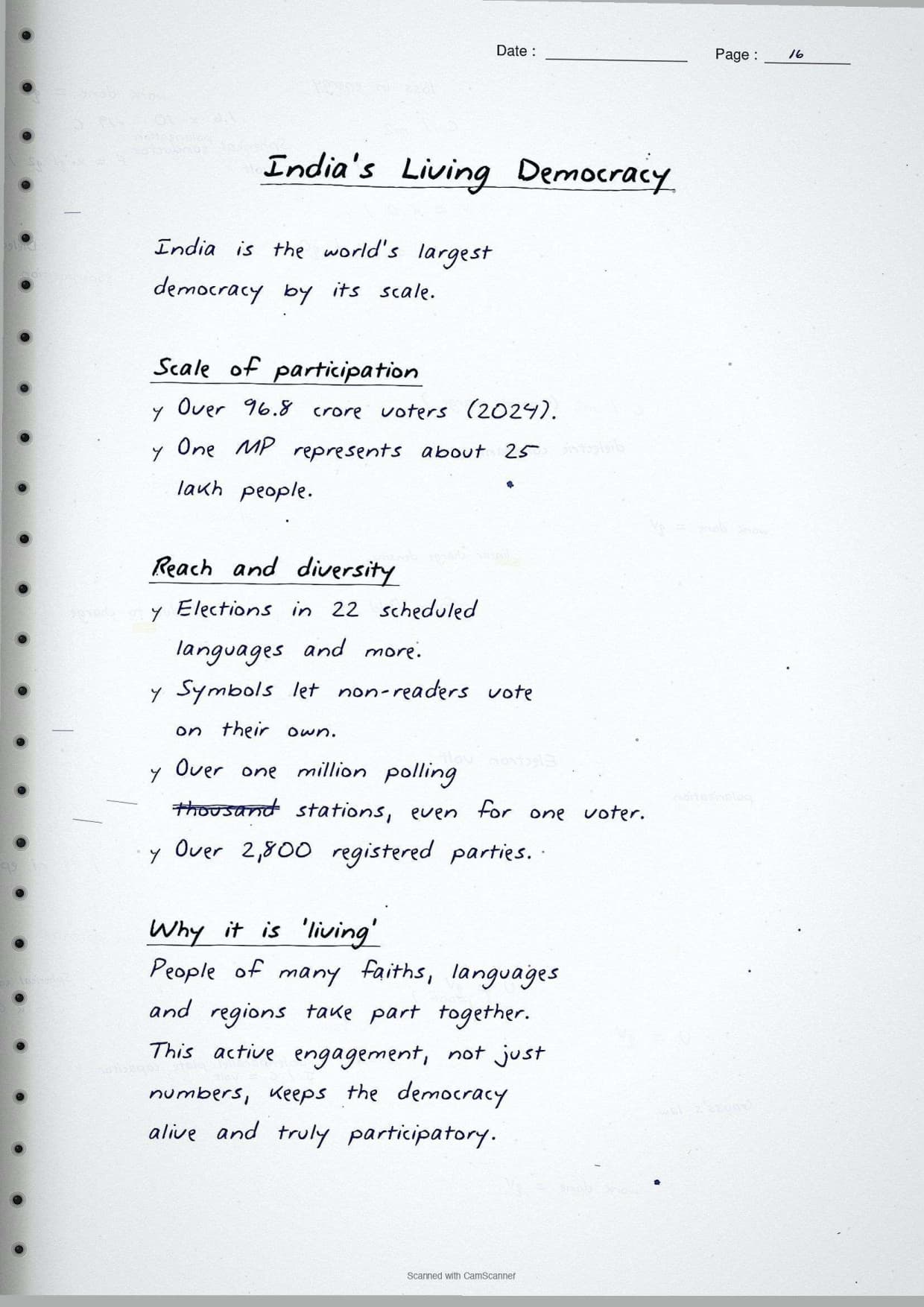
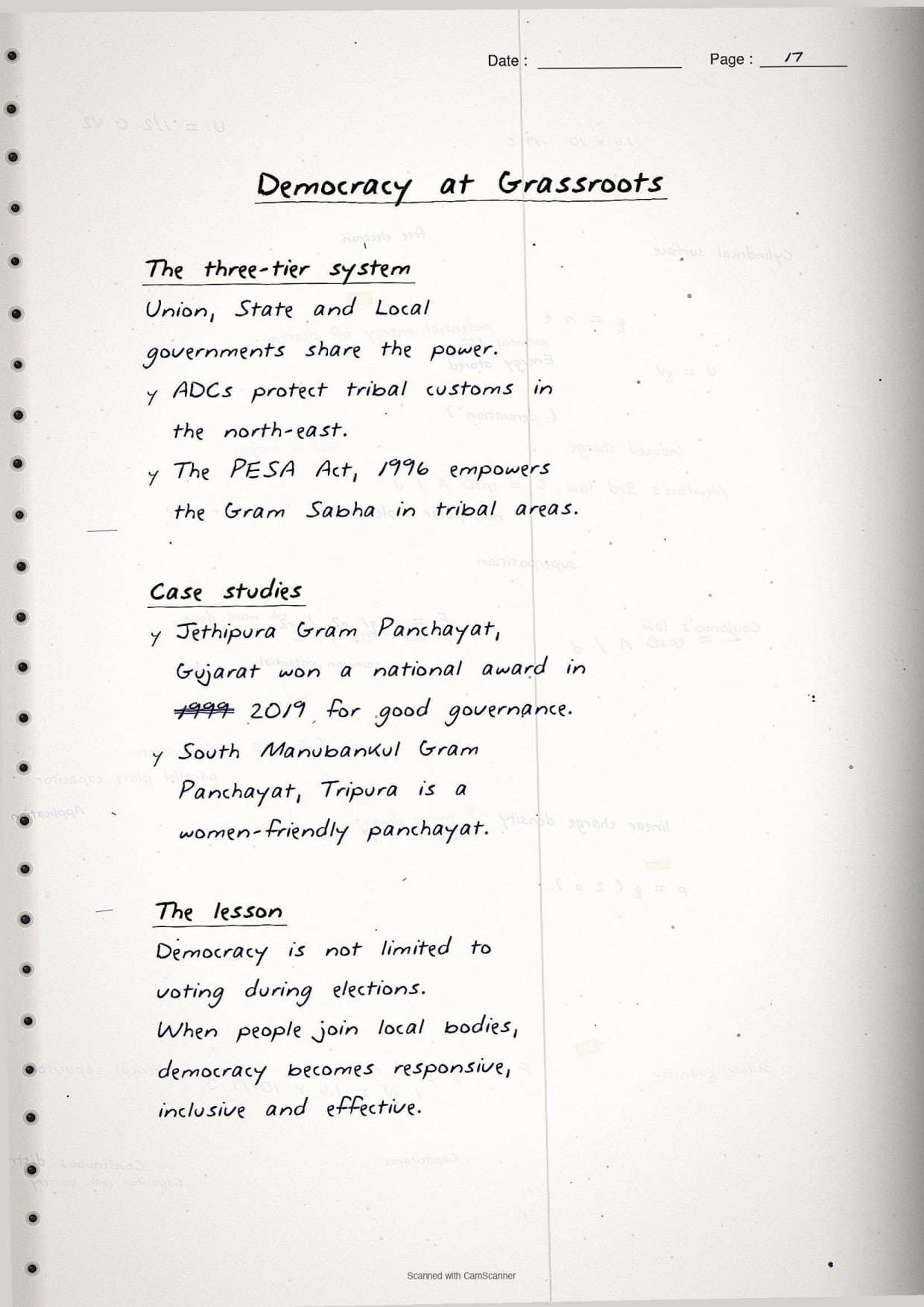
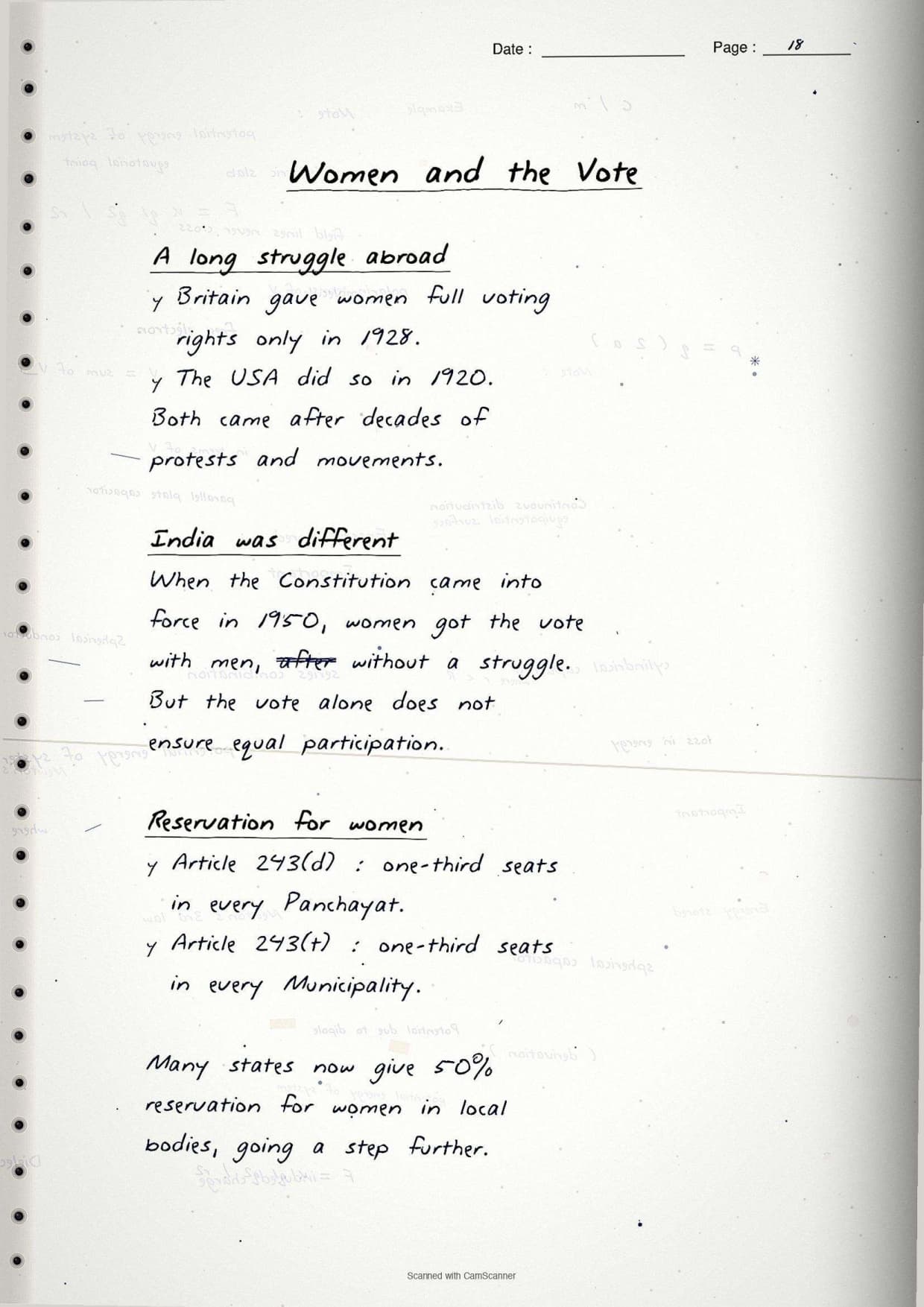
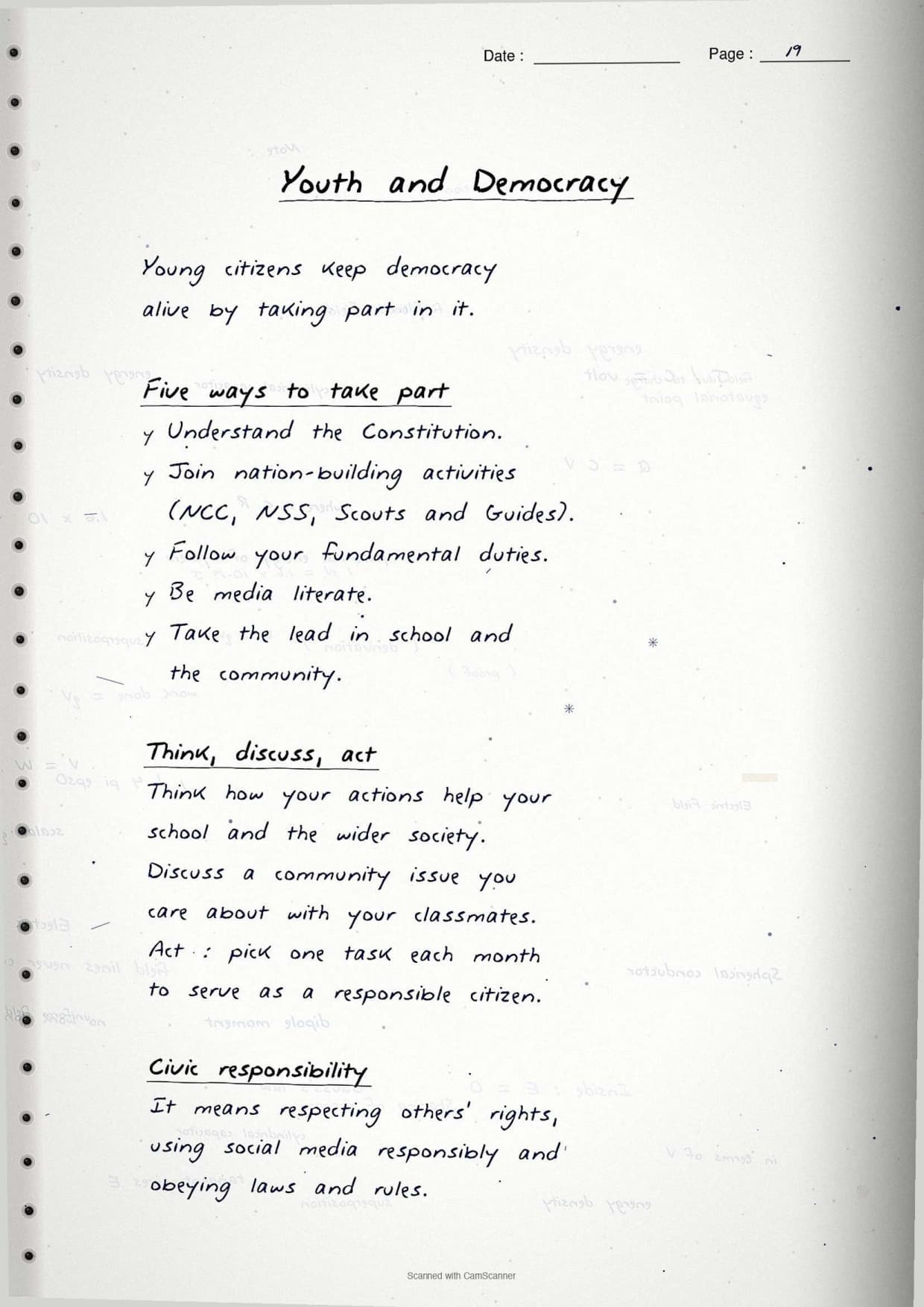
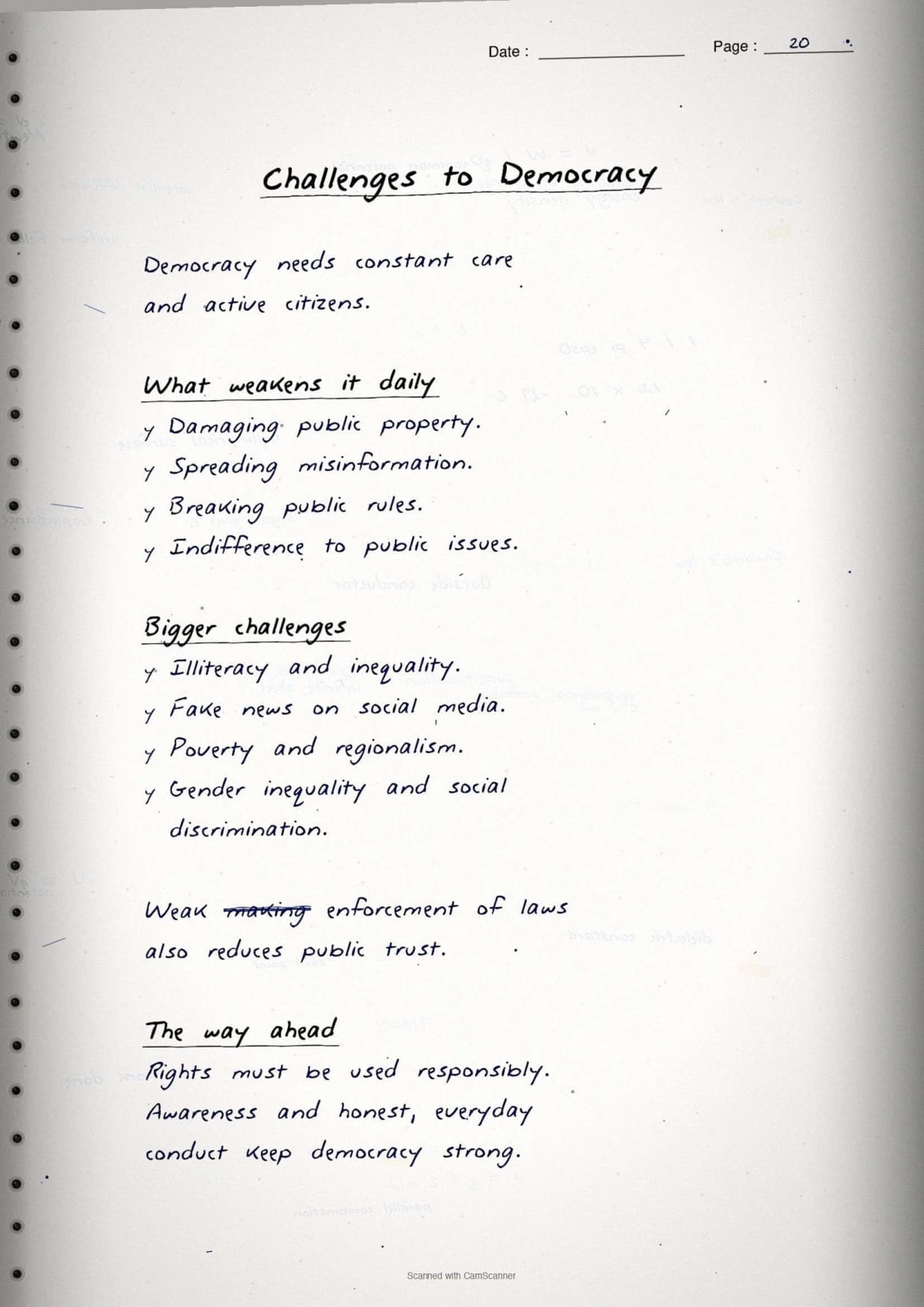
Written by hand and checked against the NCERT textbook, so every date and article number matches the 2026-27 syllabus.
- What you get: the meaning of democracy, its Indian roots, the six principles, the types, India's living democracy, and the main challenges, all hand-written.
- Colour-coded: new sub-topics in red, each key term and article number in a hand-drawn box, and diagrams like the six pillars sketched by hand.
- Why by hand: writing the values, principles, and dates yourself helps you recall them fast in the exam.
Student Feedback
In a Collegedunia study of 1,180 Class 9 students, 81% said hand-written pages of the six principles and the Fundamental Rights were easier to recall than typed notes. About 4 out of 5 rated the boxed article numbers and red-marked mistakes as the most useful part before a test.
Why Use Handwritten Notes for Class 9 Social Science Chapter 6 Democracy
Chapter 6 mixes short definitions with dates, article numbers, and diagrams, so a clean hand-written page saves real time. The class 9 social science handwritten notes chapter 6 Democracy keep one idea per line, with a small chart or example beside it. You revise the whole chapter in one sitting.
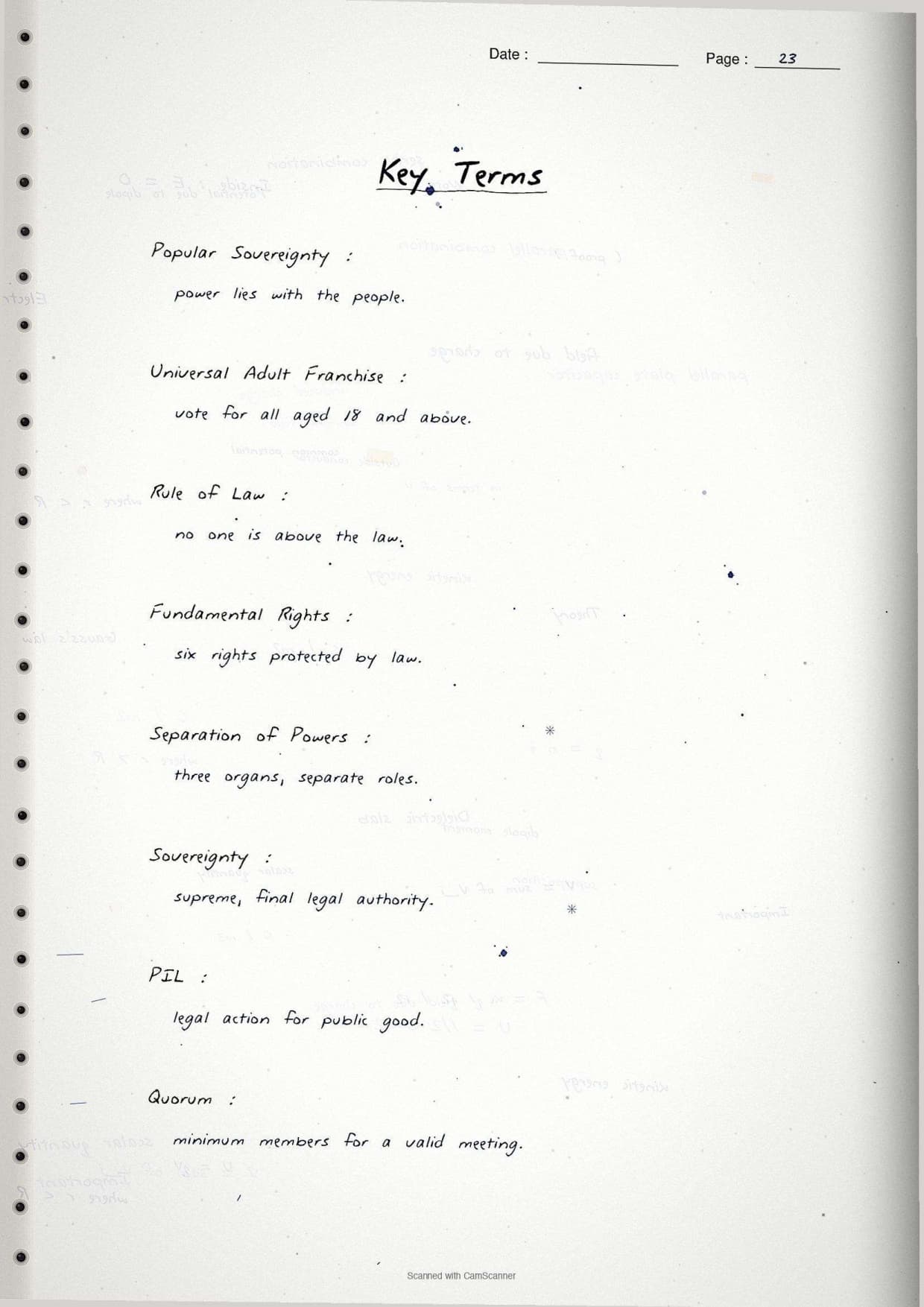
- Each key term, like popular sovereignty or rule of law, sits in its own box.
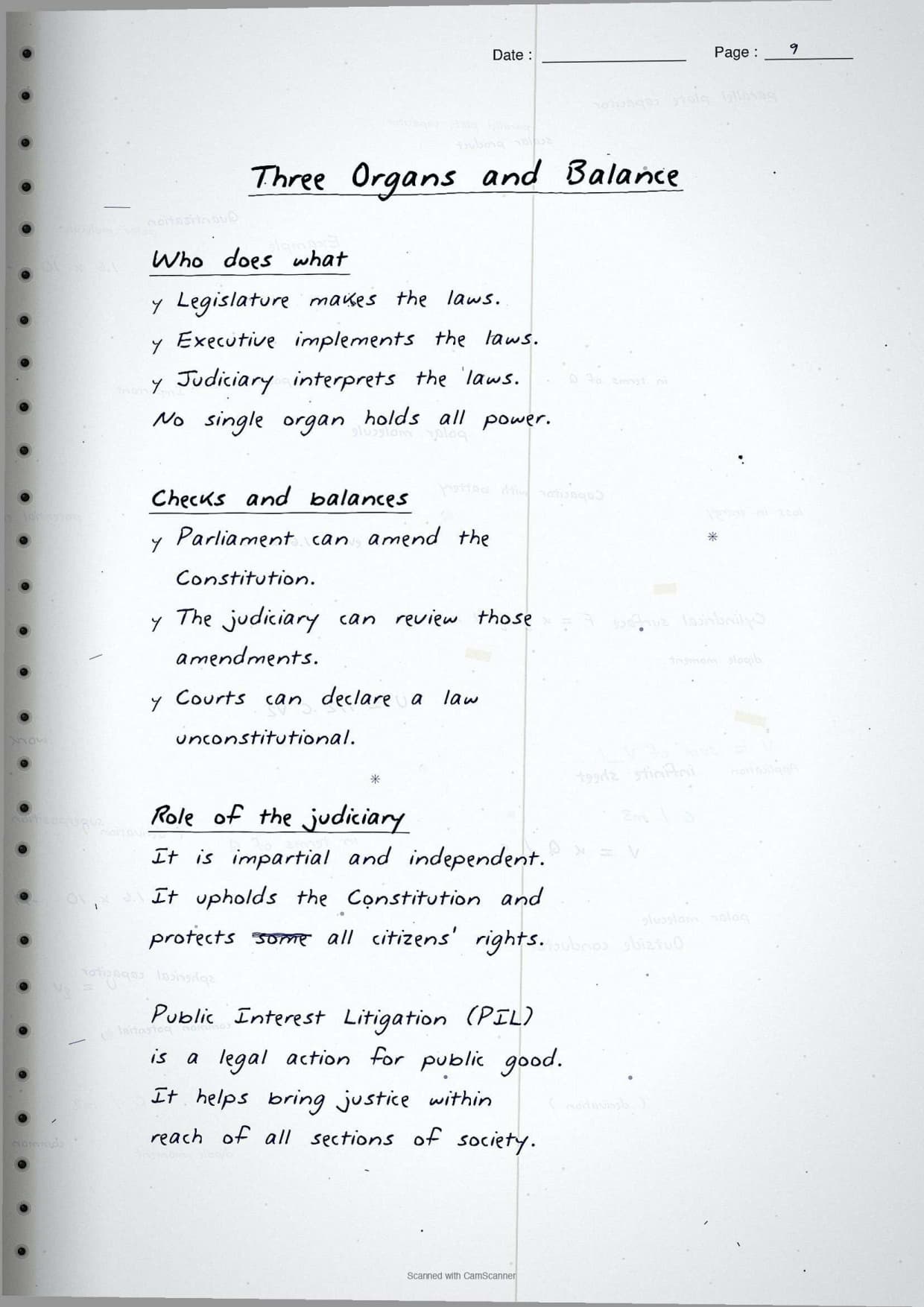
- A quick sketch, such as the six pillars or three organs, is drawn next to the idea it explains.
- Red sub-headings split the chapter into short, easy parts.
What Is Inside the Democracy Class 9 Social Science Handwritten Notes
These class 9 social science handwritten notes chapter 6 Democracy move from the meaning of democracy to its roots in India, then the six principles, the types, India's living democracy, and the challenges. Each idea has a solved example or small diagram beside it. The colour code below tells you what every mark means.
- Red: new sub-topic headings, such as Rule of Law, Separation of Powers, or the Emergency of 1975.
- Boxes: each key term, date, and article number, like Article 368 or 26 January 1950, drawn by hand.
- Blue: examples and country facts, like the number of registered voters in 2024.
What Democracy Means, Written in Your Own Handwriting
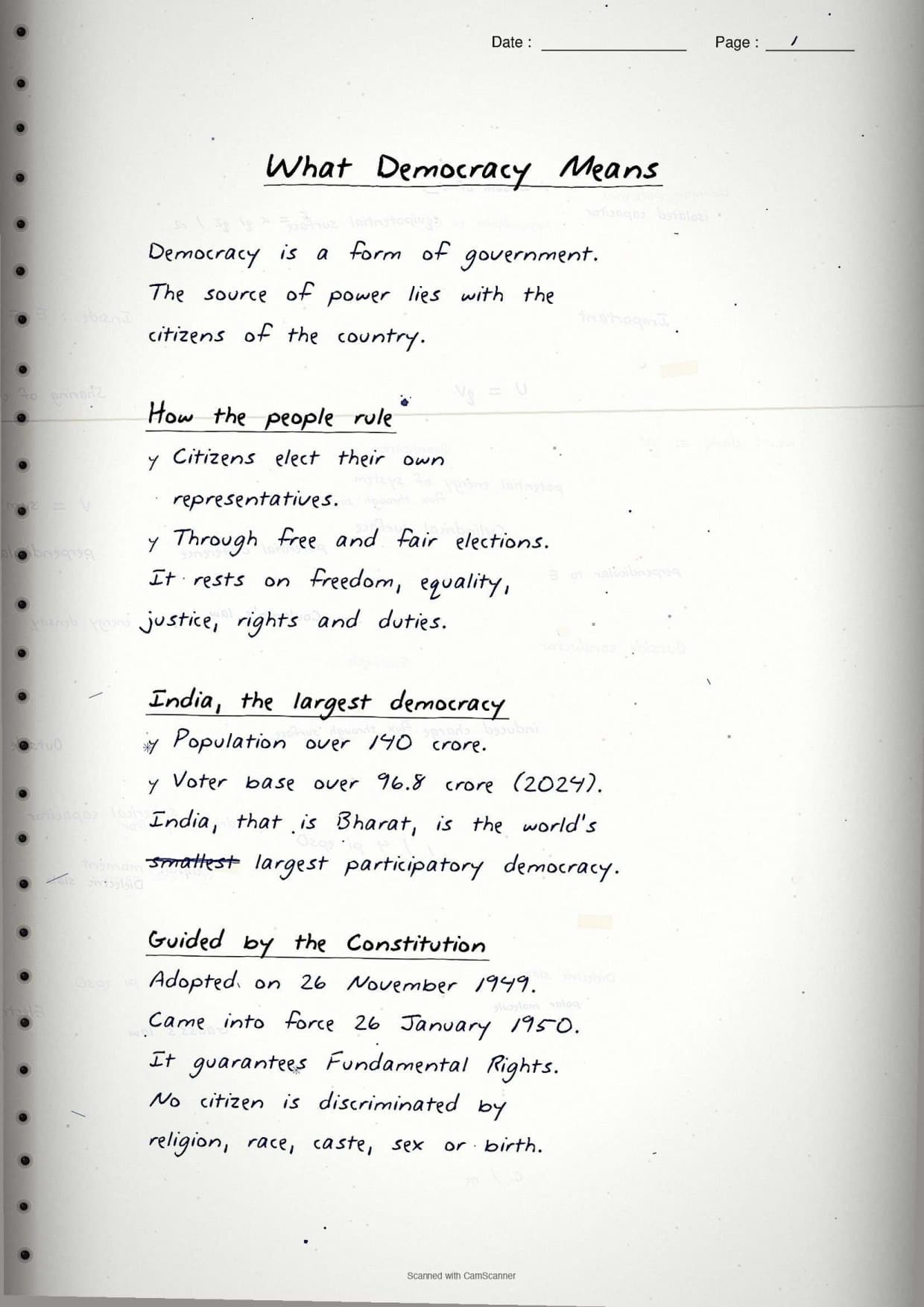
The notes open with a simple, boxed definition. Democracy is a form of government in which power belongs to the people, who choose their representatives through free and fair elections. India is the world's largest democracy. Below it, the four values that democracy rests on are drawn as a small wheel.
- Freedom, Equality, Justice, and Rights and Duties are the four values every democracy stands on.
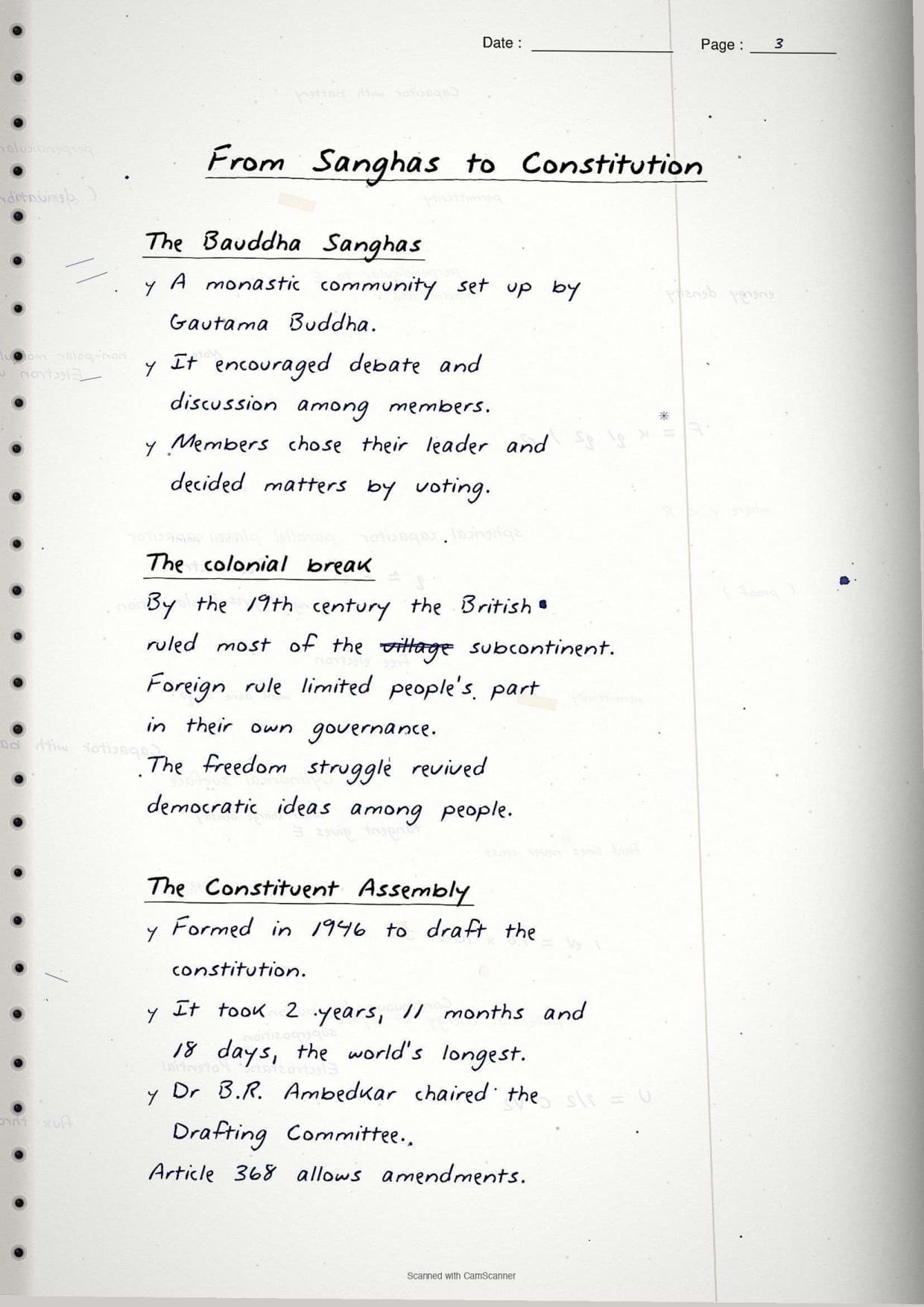
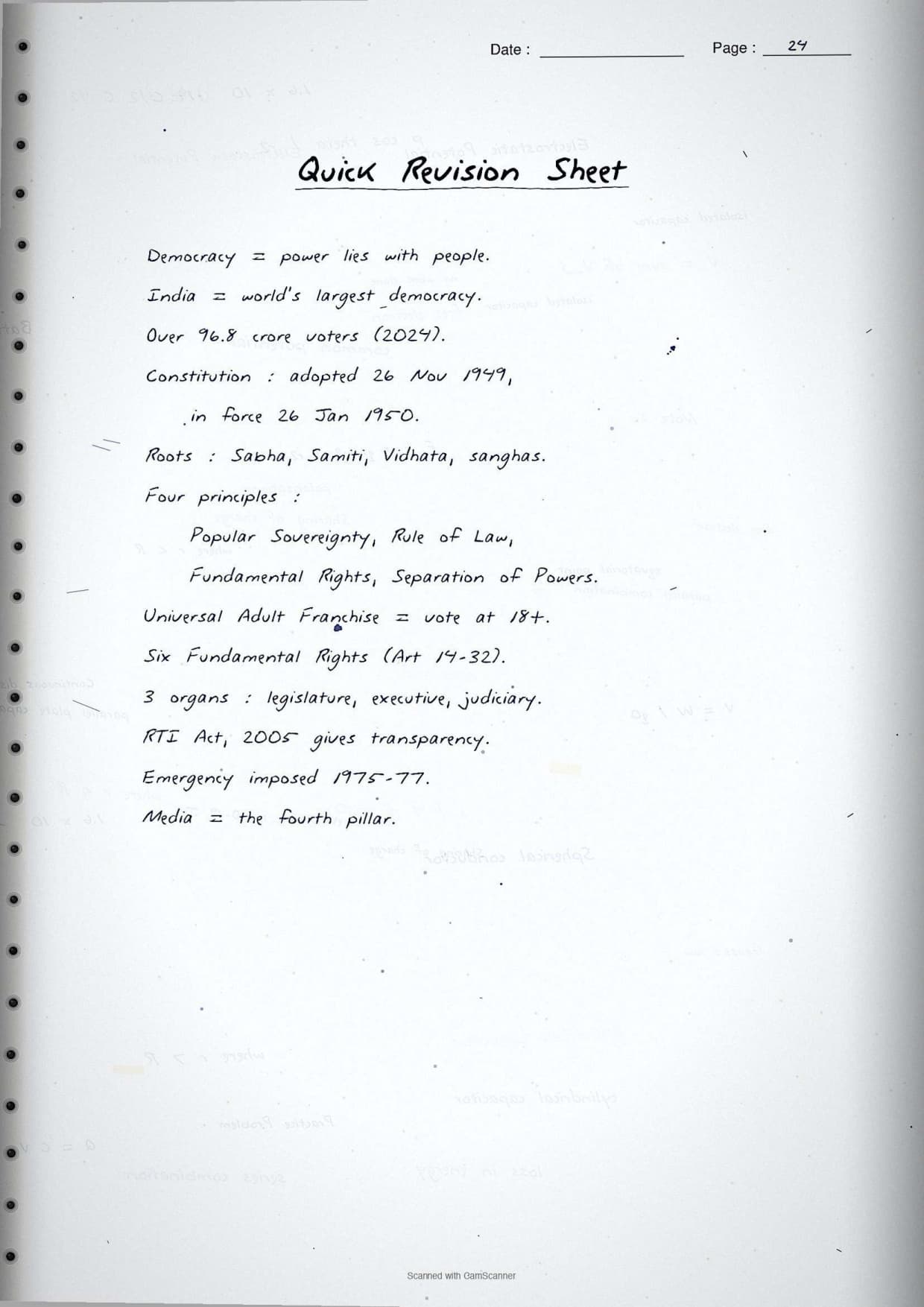
- The Constitution of India protects these values. It was adopted on 26 November 1949 and came into force on 26 January 1950.
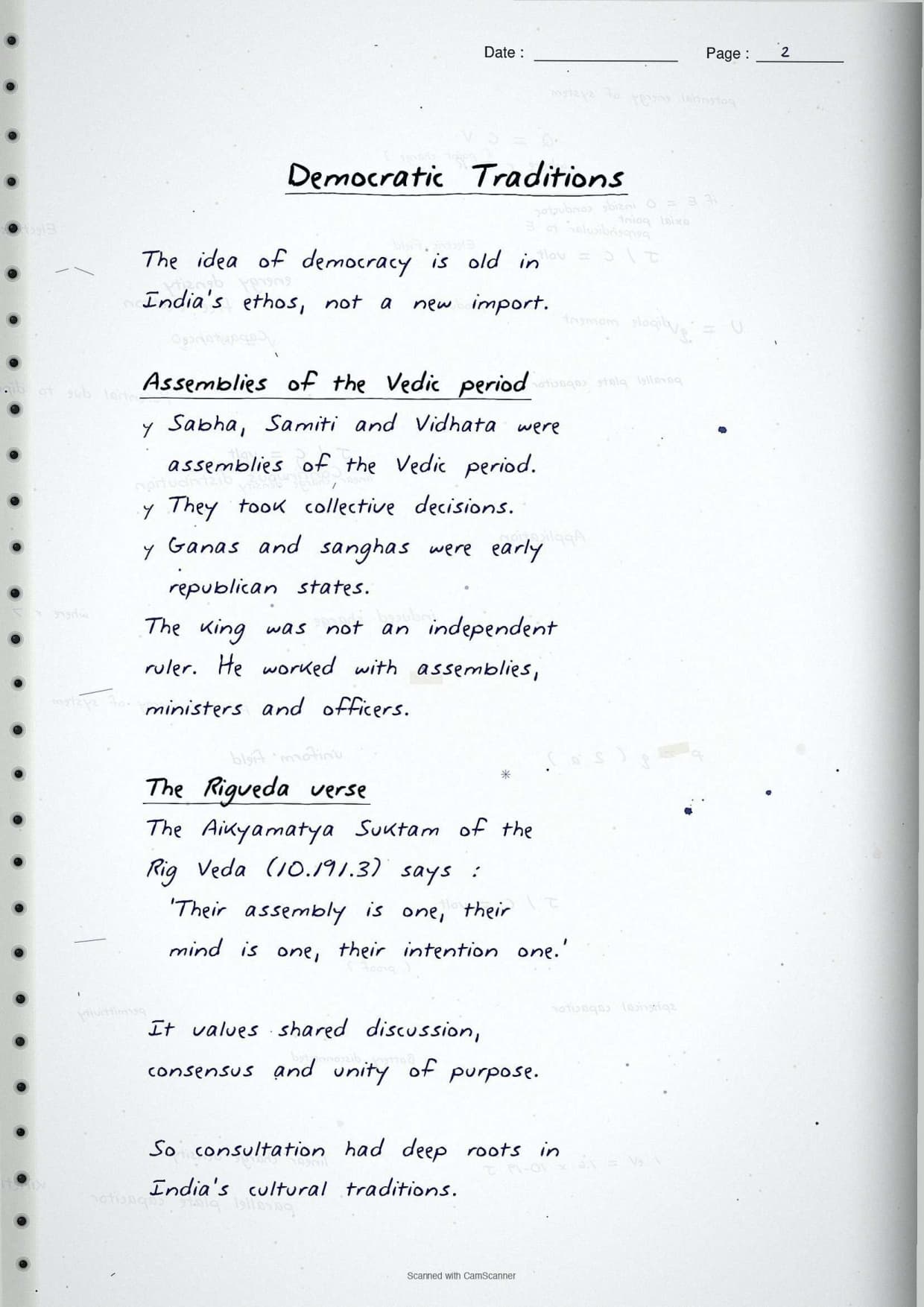
- Democratic roots in India are old: the Vedic Sabha, Samiti, and Vidhata assemblies and the Buddhist Samghas took decisions together.
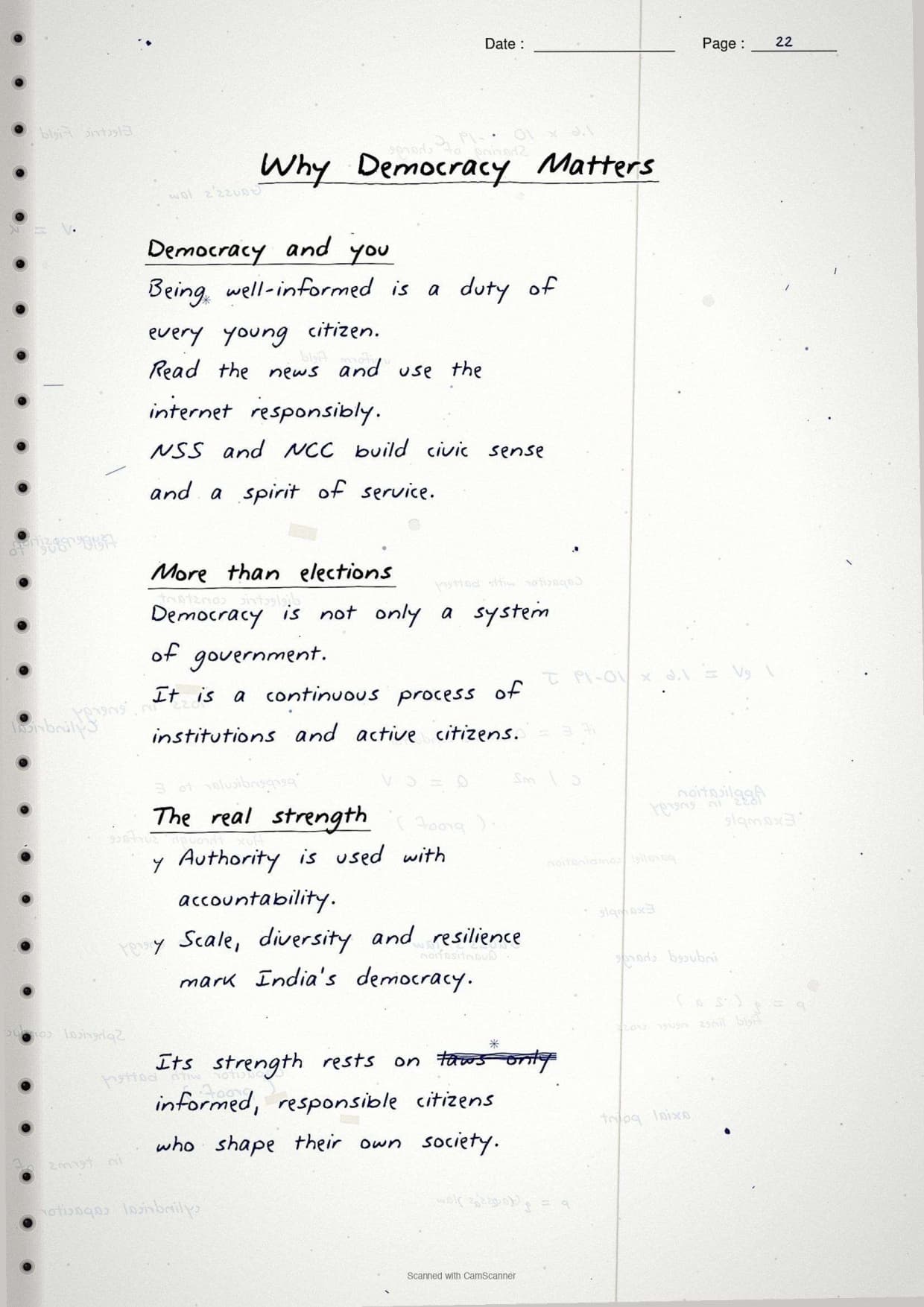
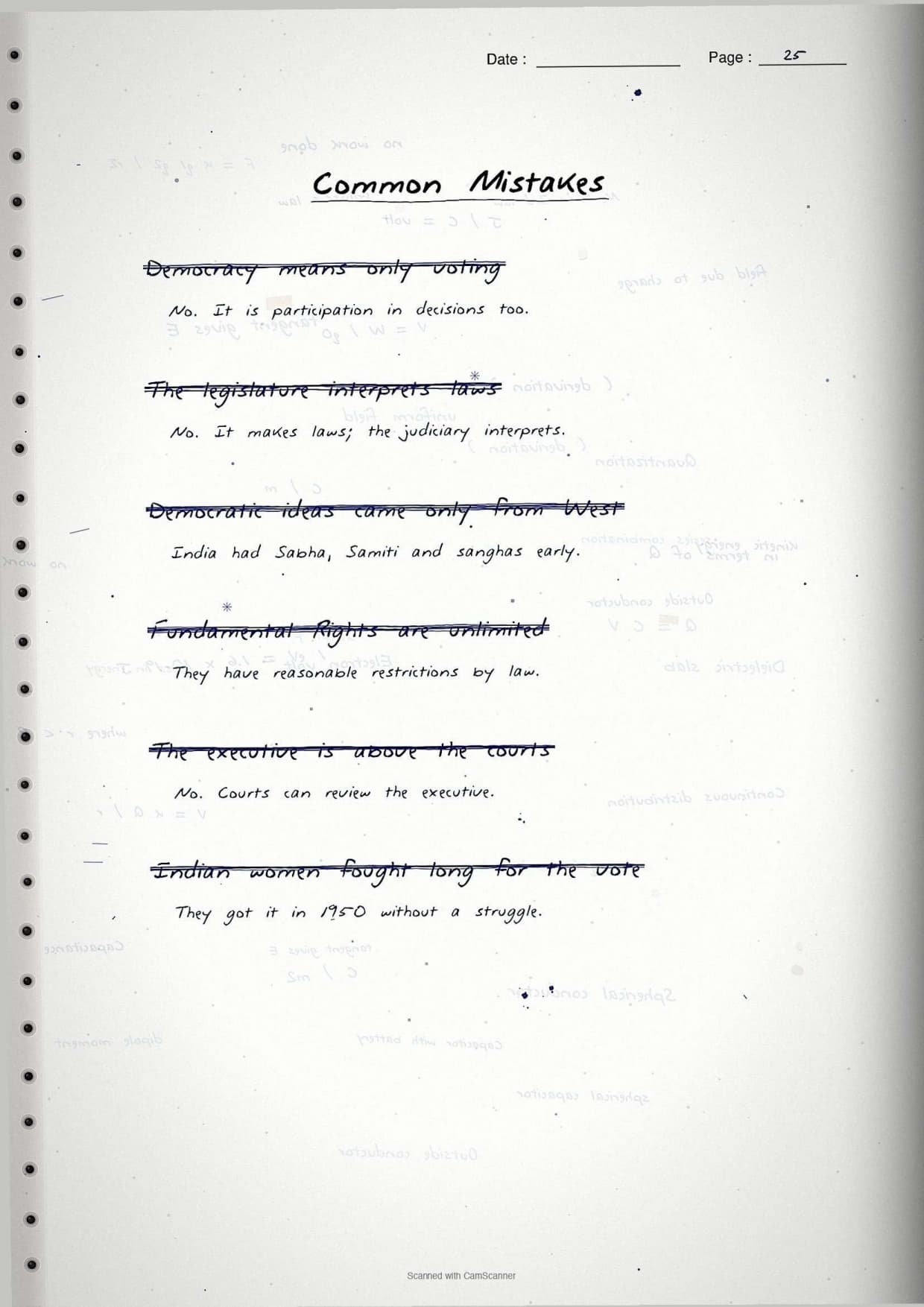
The notes flag one trap in red: democracy is not only voting. It also needs rights, the rule of law, and daily participation by aware citizens.
Six Principles of Democracy Boxed by Hand
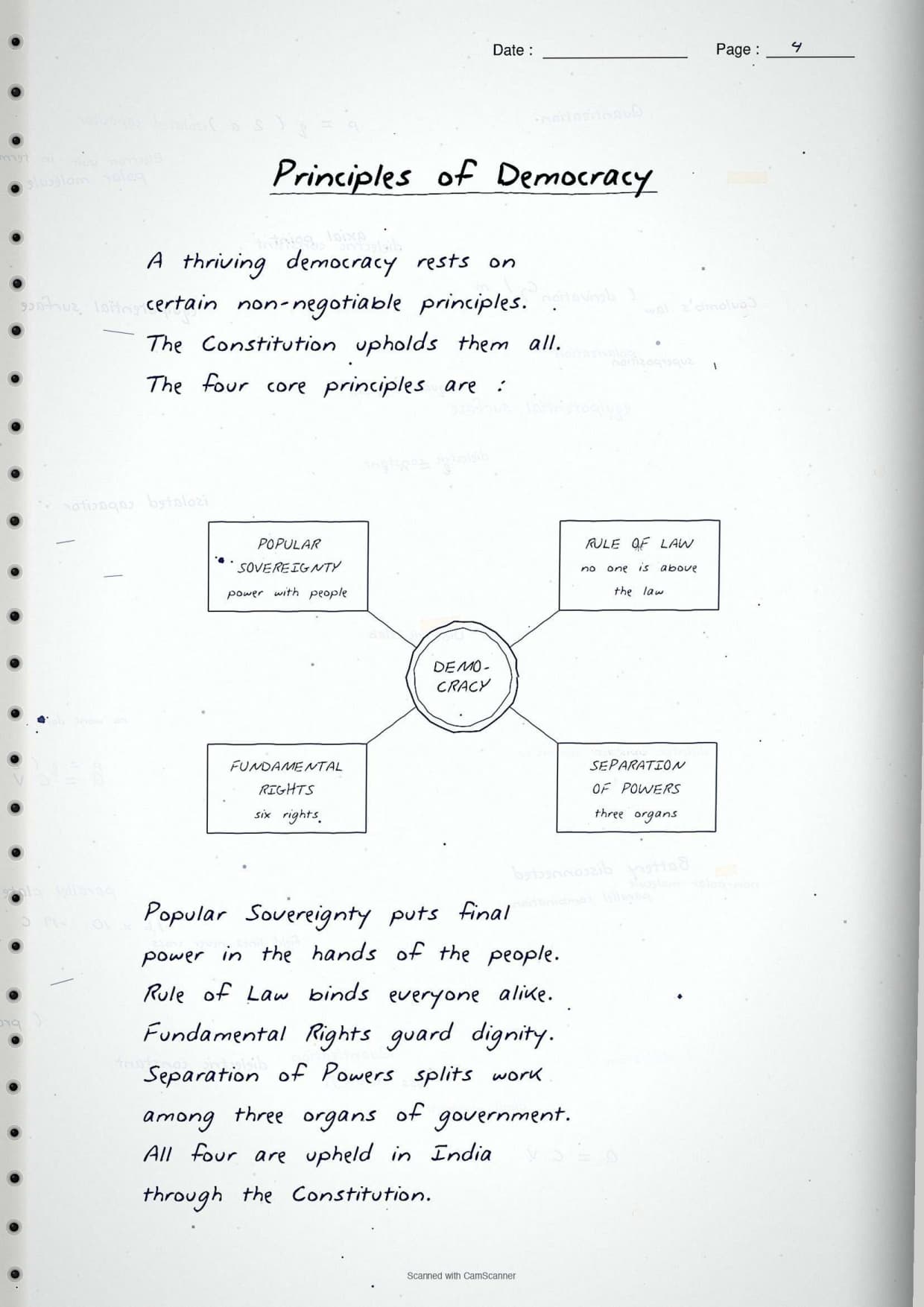
The heart of the chapter is the six principles that keep a democracy healthy. The notes draw them as six pillars, then give each a short boxed line.
| Principle | What it means |
|---|---|
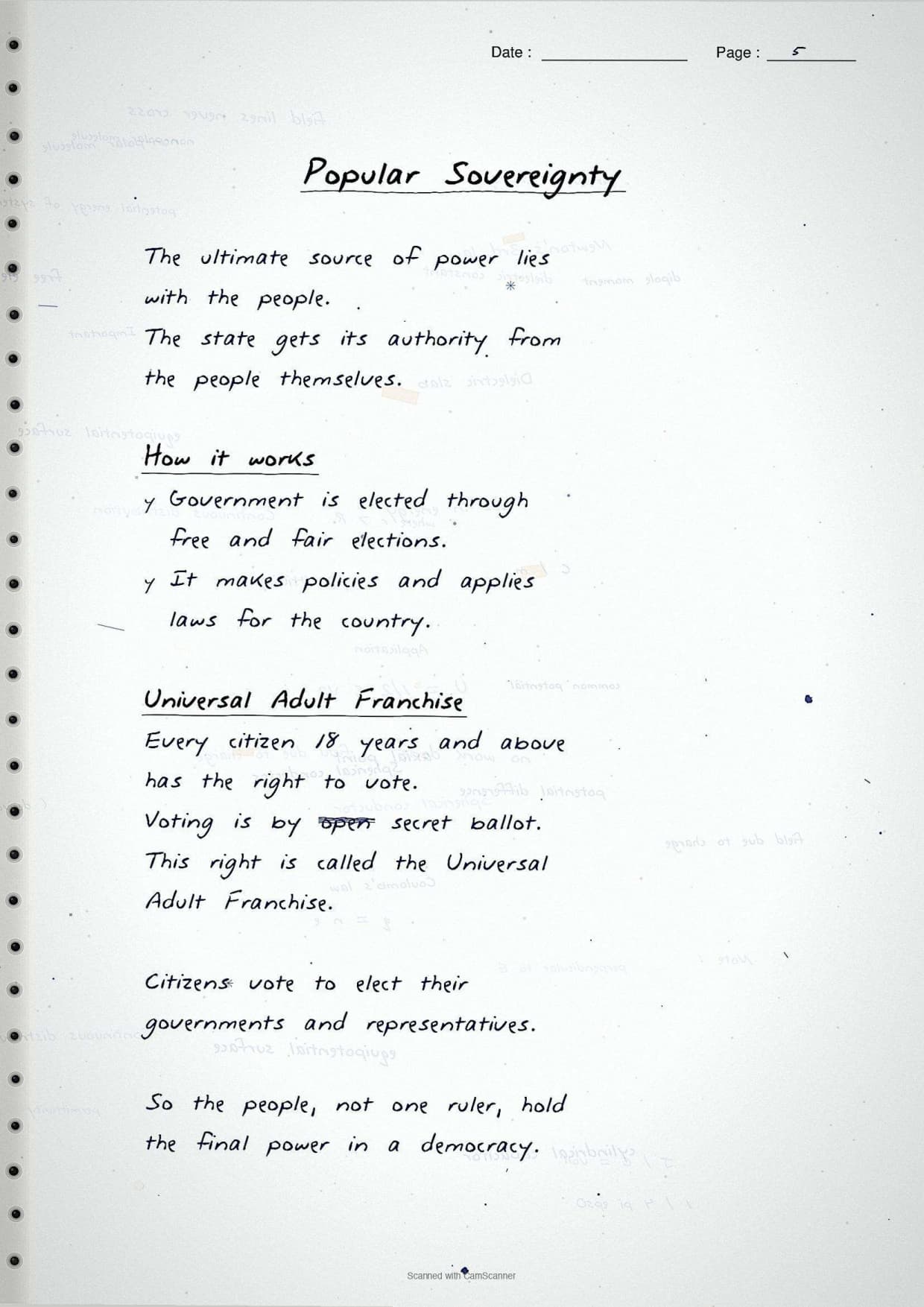
| Popular sovereignty | The ultimate source of power lies with the people, through the Universal Adult Franchise for every citizen aged 18 and above. |
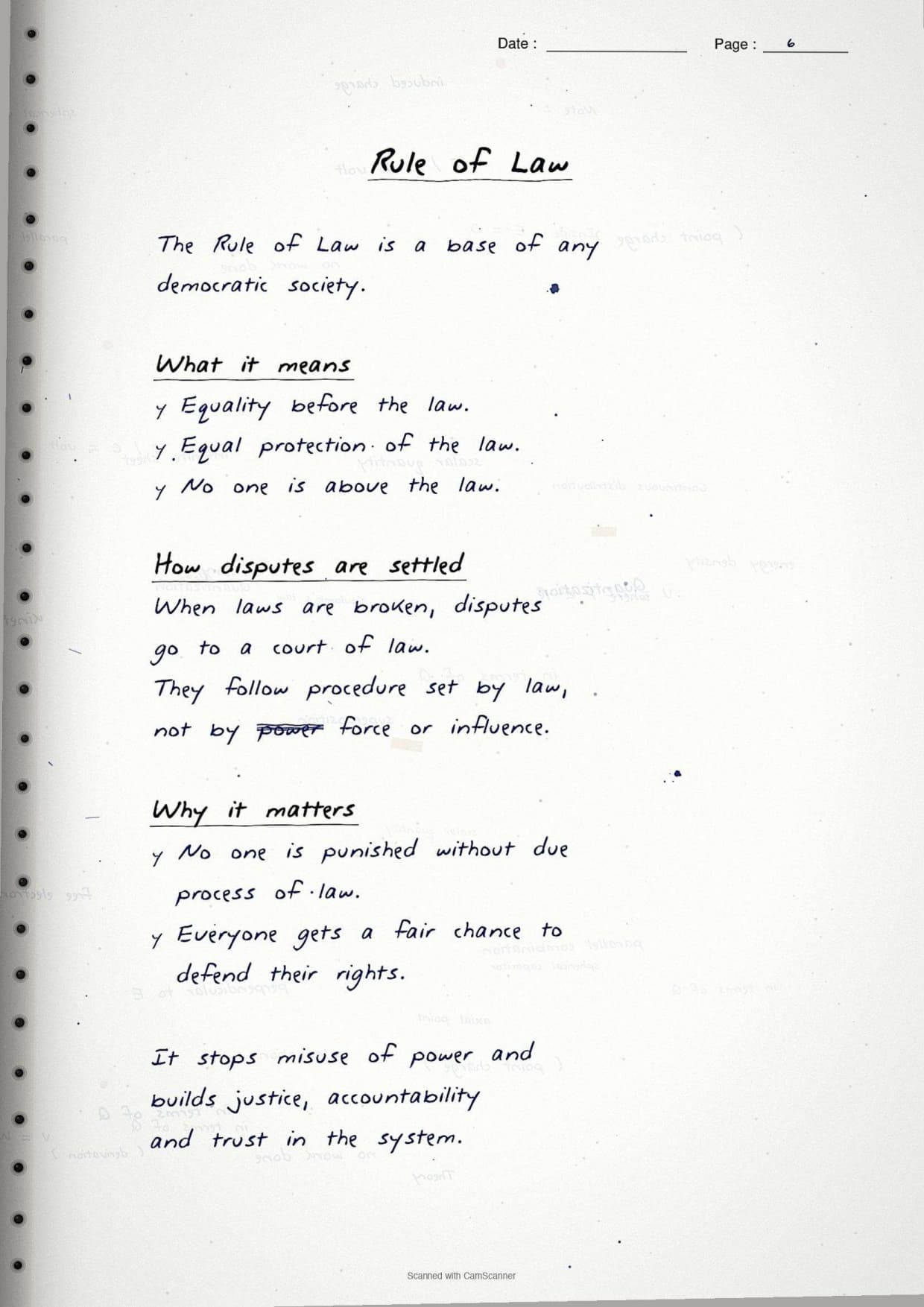
| Rule of law | Everyone is equal before the law, and no one is above it. |
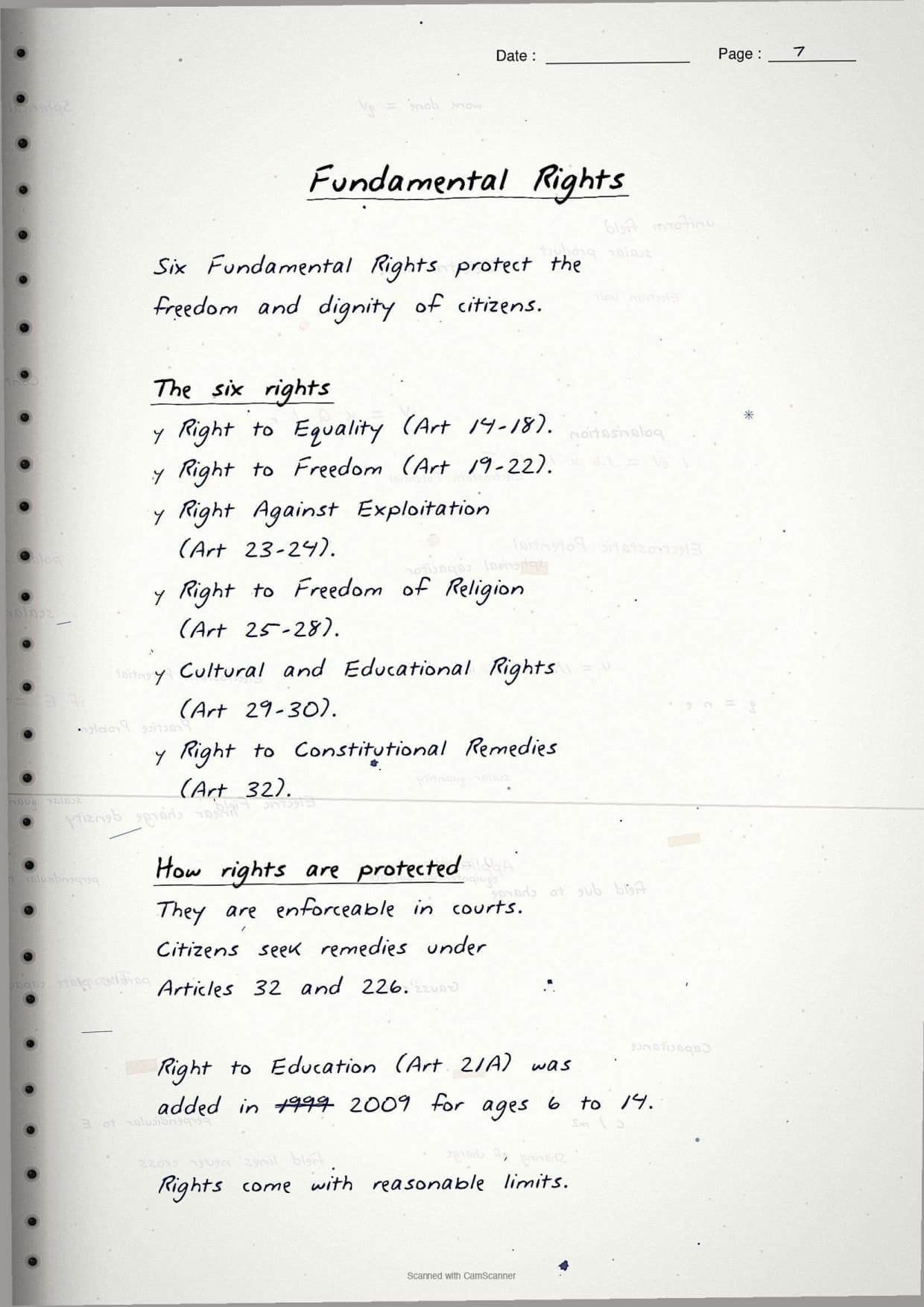
| Fundamental Rights | The six rights that protect the freedom and dignity of citizens. |
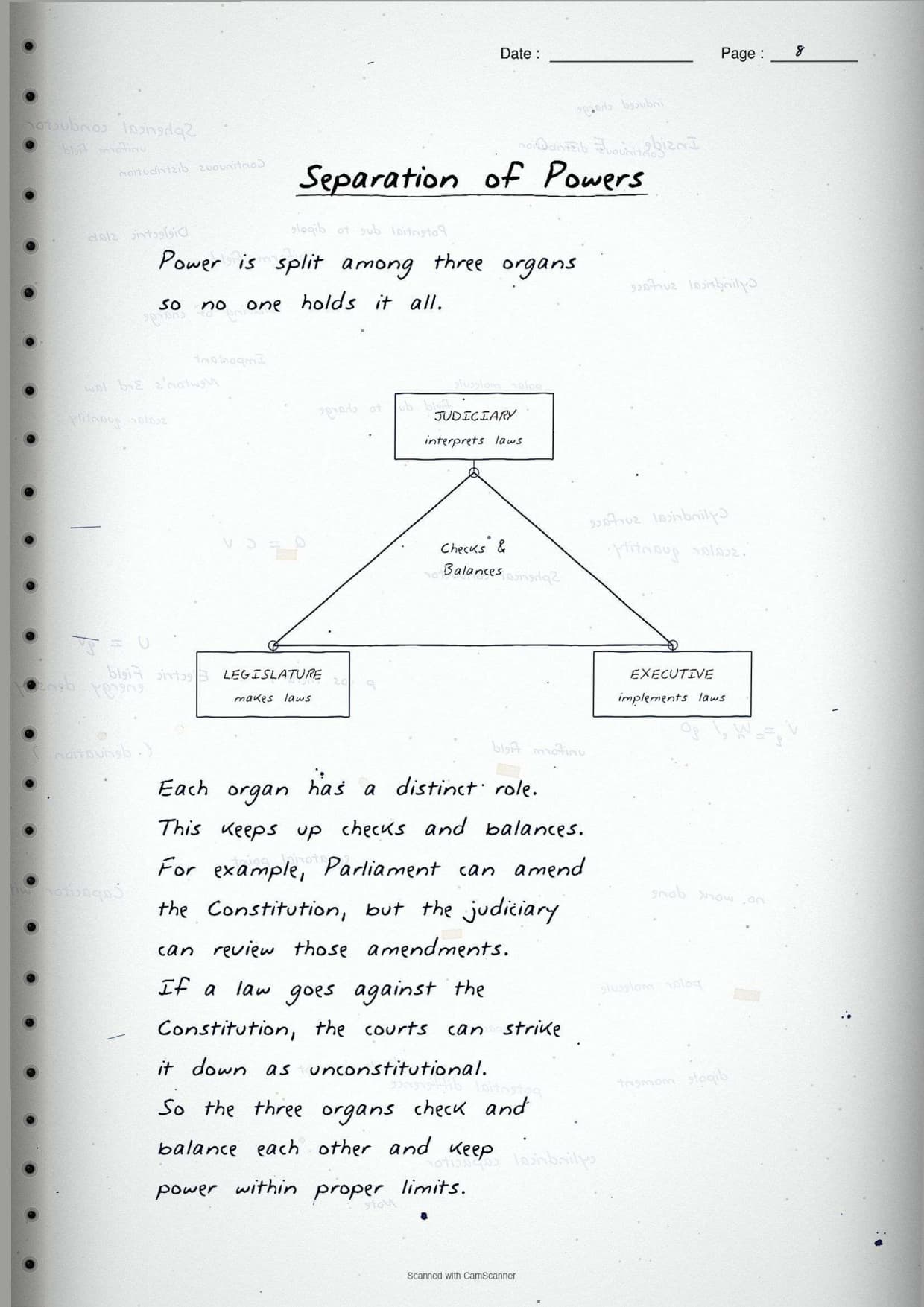
| Separation of powers | Power is split among the legislature, executive, and judiciary. |
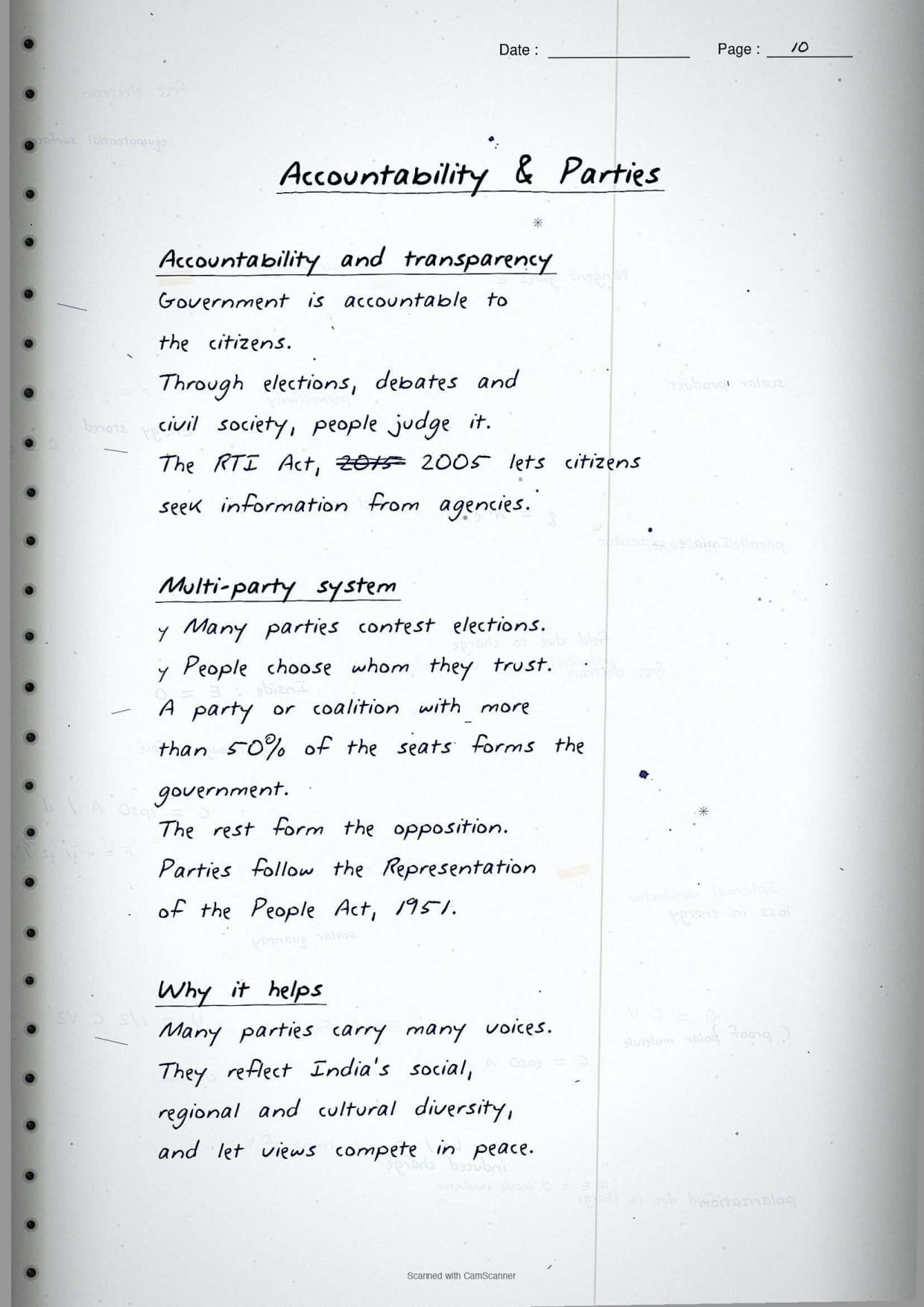
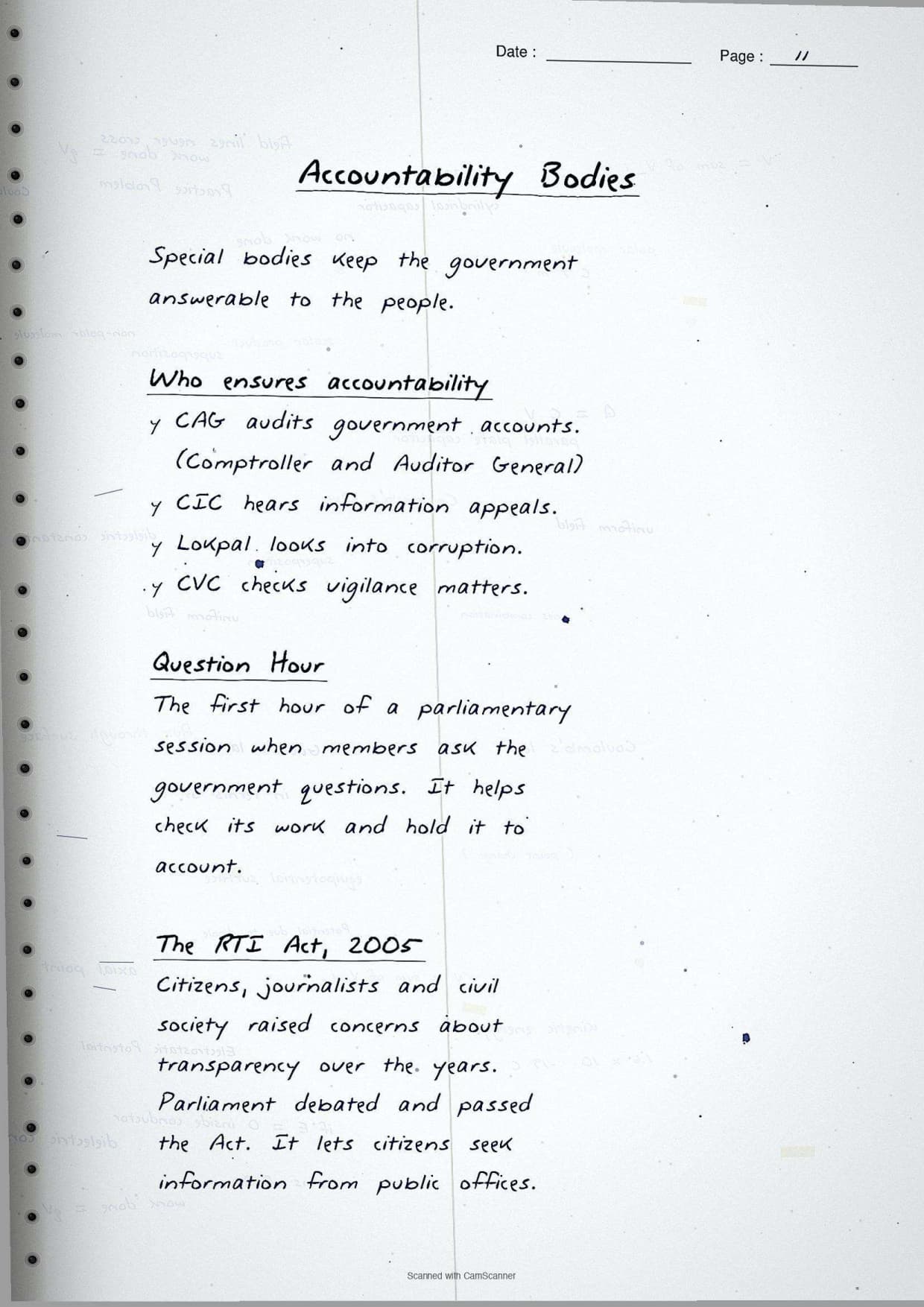
| Accountability | The government answers to the people, helped by the RTI Act, 2005. |
| Multi-party system | Many parties contest elections; the winner forms the government and the rest form the opposition. |
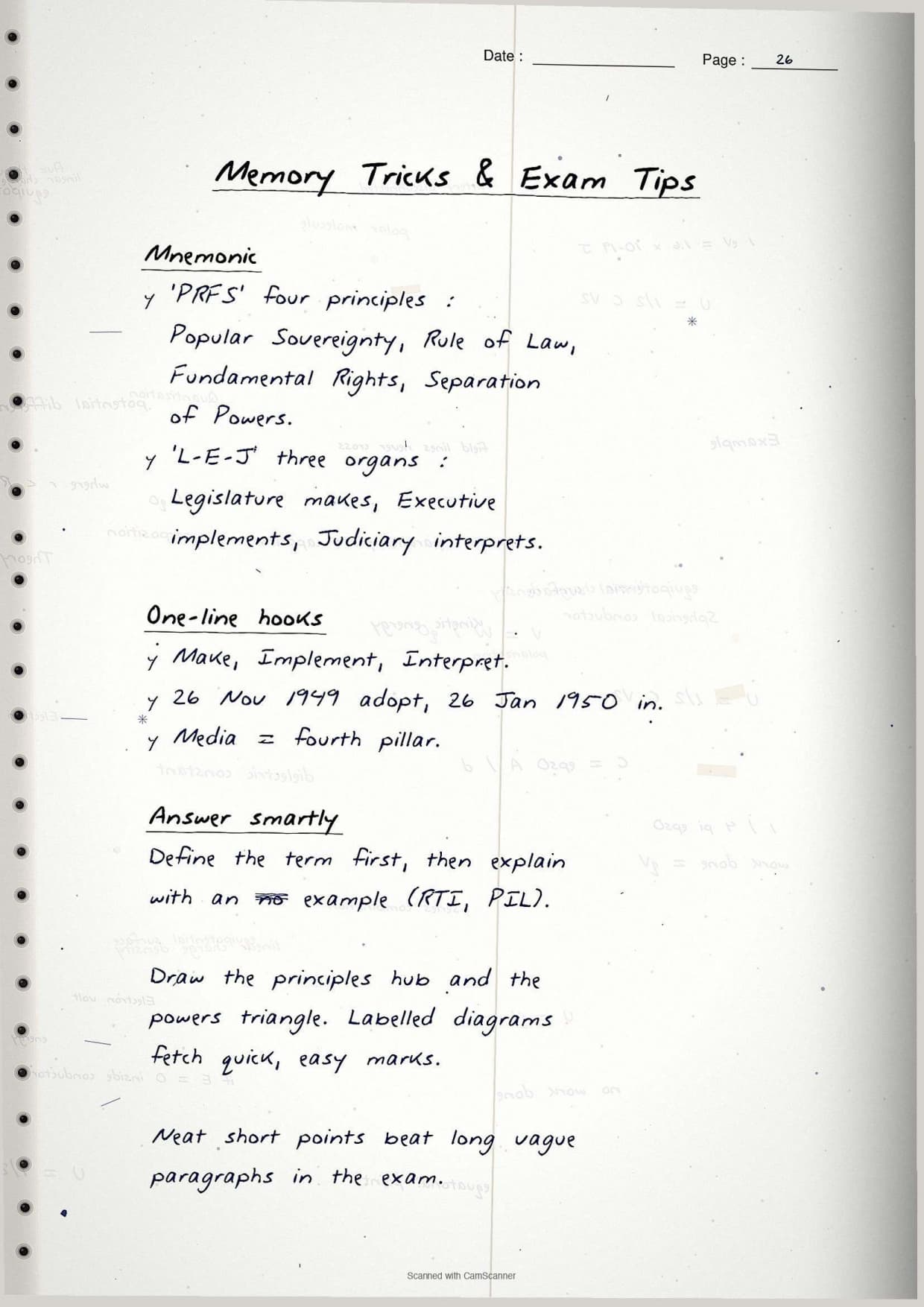
The notes use a hand-drawn mnemonic to lock the six in: People Rule For States, All Matters. Beside it, the six Fundamental Rights are listed with their article numbers.
Types of Democracy: A Hand-Drawn Comparison
Democracy does not follow a single model, so the notes draw a small tree that sorts the types with an example of each. This is a common one-mark question.
| Type | Feature | Example |
|---|---|---|
| Direct | Citizens decide most matters themselves; works only for small populations. | Switzerland |
| Representative | People elect representatives who govern on their behalf. | India |
| Parliamentary | The executive is part of, and answers to, the legislature. | India, Canada |
| Presidential | The executive is separate; the President is elected by the people. | USA |
The notes circle one trap in red: direct democracy is about who decides, while presidential democracy is about how the executive is chosen. Do not mix the labels.
India's Living Democracy Marked in the Notes
The notes show why India is called a living democracy, not just a large one. Blue boxes hold the big numbers, and a small ladder diagram shows the three tiers.
- India had over 96.8 crore registered voters in 2024, and more than one million polling stations.
- Government works at three tiers: the Union, the States, and the local bodies.
- Democracy has four pillars: the legislature, the executive, the judiciary, and the media.
The notes also mark how women got the vote. In India, the Universal Adult Franchise was given to all citizens at once in 1950, so Indian women did not have to fight long legal battles, unlike women in Britain or the United States.
Challenges to Democracy Flagged in Red
The last part lists the challenges a democracy faces and your role as a citizen. Most lost marks here come from missing an example, so the notes box a real one against each point.
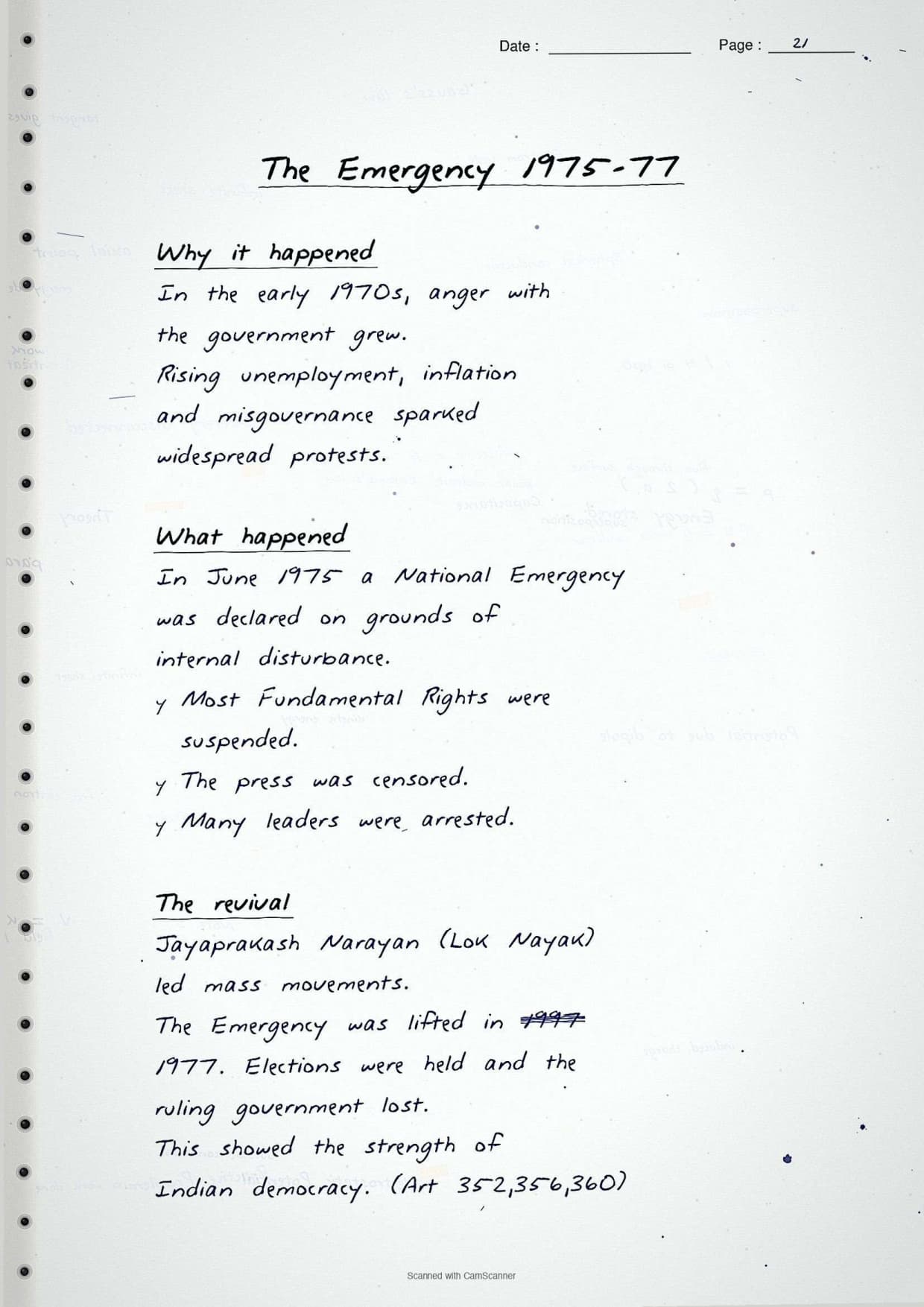
- The Emergency of 1975 to 1977 is boxed as a key example: rights were suspended and the press was censored, but the 1977 election showed the strength of Indian democracy.
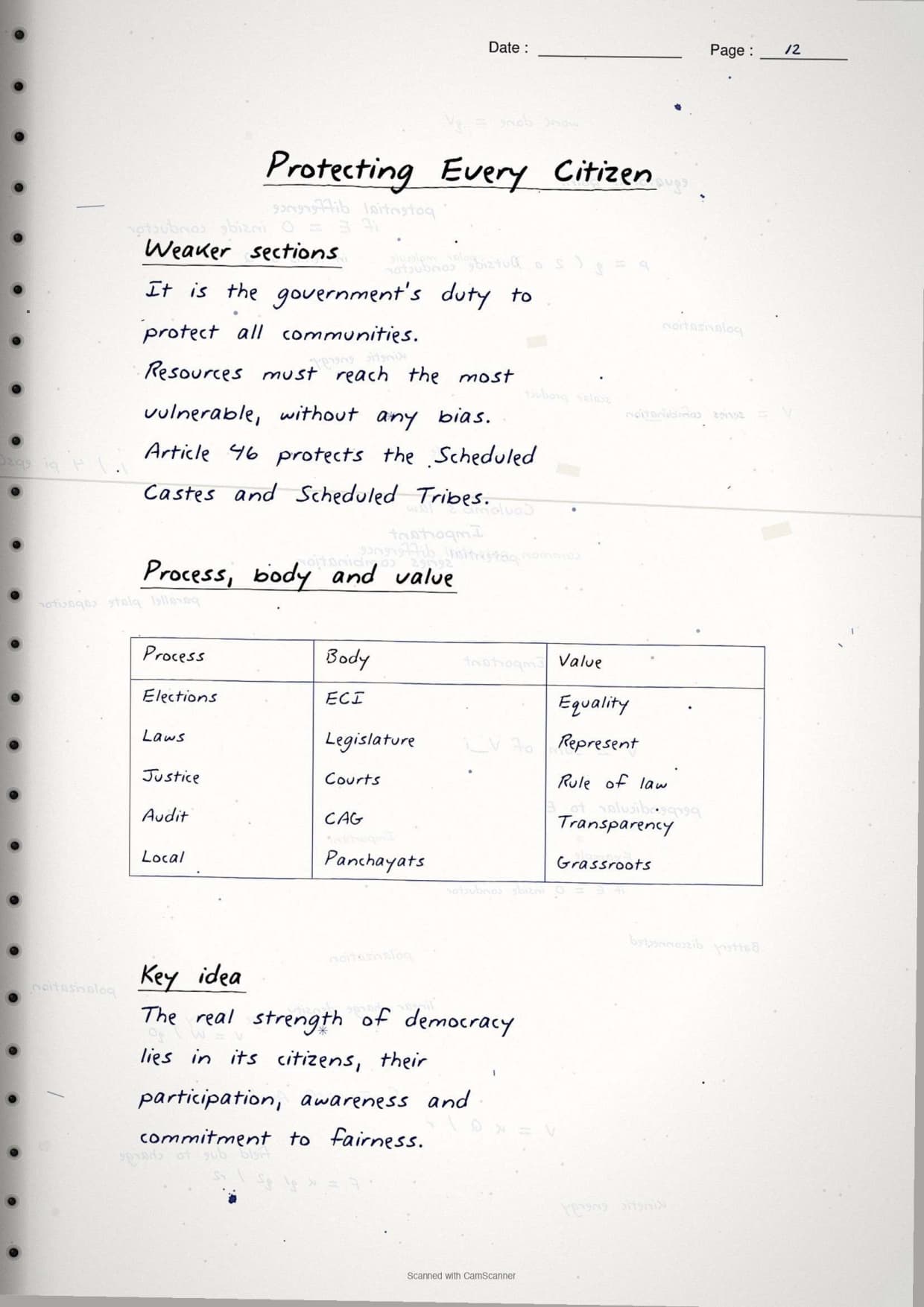
- Rights come with responsibilities, so the notes list your role: stay informed, be media literate, and follow your fundamental duties.
- Joining NSS and NCC activities is one way young citizens build civic responsibility.
Last-Minute Revision with These Handwritten Notes
The night before your exam, the class 9 social science handwritten notes chapter 6 Democracy work as a quick skim. Every boxed term and red heading is a checkpoint, so you can cover the chapter in well under an hour.
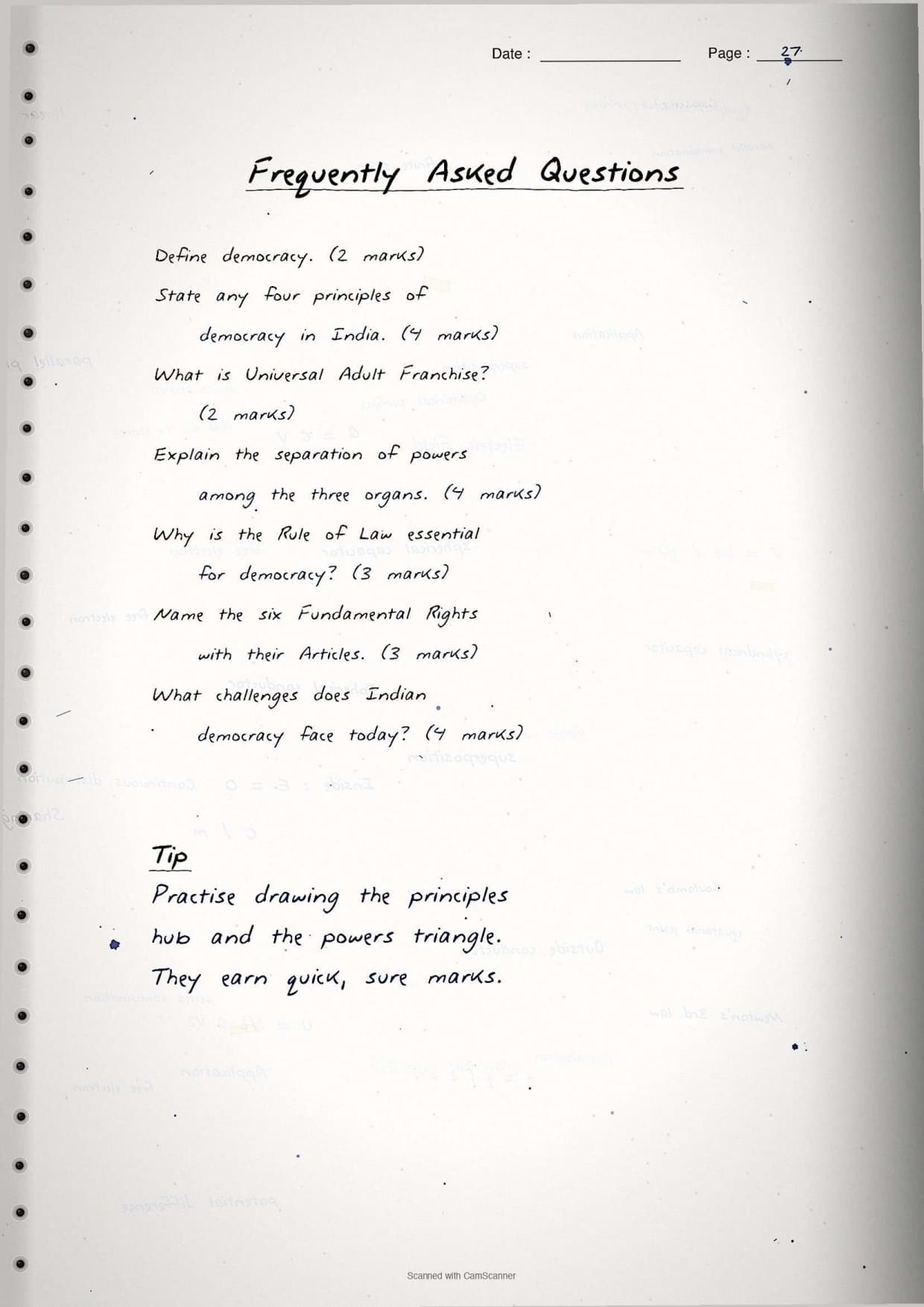
- Define democracy and popular sovereignty in one line each.
- Name the six principles of democracy from their box.
- List the six Fundamental Rights with their article numbers.
- Explain direct, representative, parliamentary, and presidential democracy.
- Give three challenges to Indian democracy and your citizen's role.
- Read the red mistake note before you close the notes.
More Democracy Class 9 Social Science Resources
Use the table below to open the other resources for this chapter.
| Resource | Open |
|---|---|
| Handwritten Notes | Democracy Class 9 Social Science Handwritten Notes |
| NCERT Solutions | Democracy Class 9 Social Science NCERT Solutions |
| Revision Notes | Democracy Class 9 Social Science Notes |
| NCERT Book PDF | Democracy Class 9 Social Science NCERT Book PDF |
NCERT Handwritten Notes for Class 9 Social Science: All Chapters
Use the table below to open the handwritten notes for any other chapter of the book.
| Chapter | Handwritten Notes |
|---|---|
| Chapter 1 | Understanding Social Science |
| Chapter 2 | Shaping of the Earth's Surface |
| Chapter 3 | Atmosphere and Climate |
| Chapter 4 | Early Humans and Beginning of Civilisation |
| Chapter 5 | State and Society up to 1000 CE |
| Chapter 6 | Democracy |
| Chapter 7 | Elections |
| Chapter 8 | Building Blocks in Economics: The Problem of Choice |
| Chapter 9 | The Price Puzzle: What Drives the Market |
Democracy Class 9 Social Science Handwritten Notes FAQs
Are these real handwritten notes for Class 9 Social Science Chapter 6 Democracy?
Yes. They are a topper's own clear handwritten revision notes, with each key term and article number boxed, small diagrams like the six pillars drawn by hand, and sub-headings colour-coded in red.
What does the Democracy chapter cover in these notes?
The notes cover the meaning of democracy, its roots in India, the six principles, the types of democracy, India's living democracy across three tiers, and the challenges to democracy, including the Emergency of 1975.
What are the six principles of democracy in the notes?
They are popular sovereignty, rule of law, Fundamental Rights, separation of powers, accountability, and the multi-party system. The notes use the mnemonic "People Rule For States, All Matters" to help you recall all six.
Is Democracy part of the new Class 9 Social Science book?
Yes. Democracy is Chapter 6 of the new Understanding Society textbook for the 2026-27 syllabus. It leads into Chapter 7, Elections, which builds on the idea of free and fair voting.



Comments