




The NCERT Solutions Class 9 Social Science Chapter 2 Shaping of the Earth's Surface answer all 15 questions from the Questions and Activities exercise of the 2026-27 Understanding Society textbook. Every answer is written the way you should present it in the exam, covering plate tectonics, weathering, erosion, and the landforms made by rivers, glaciers, wind, and groundwater.
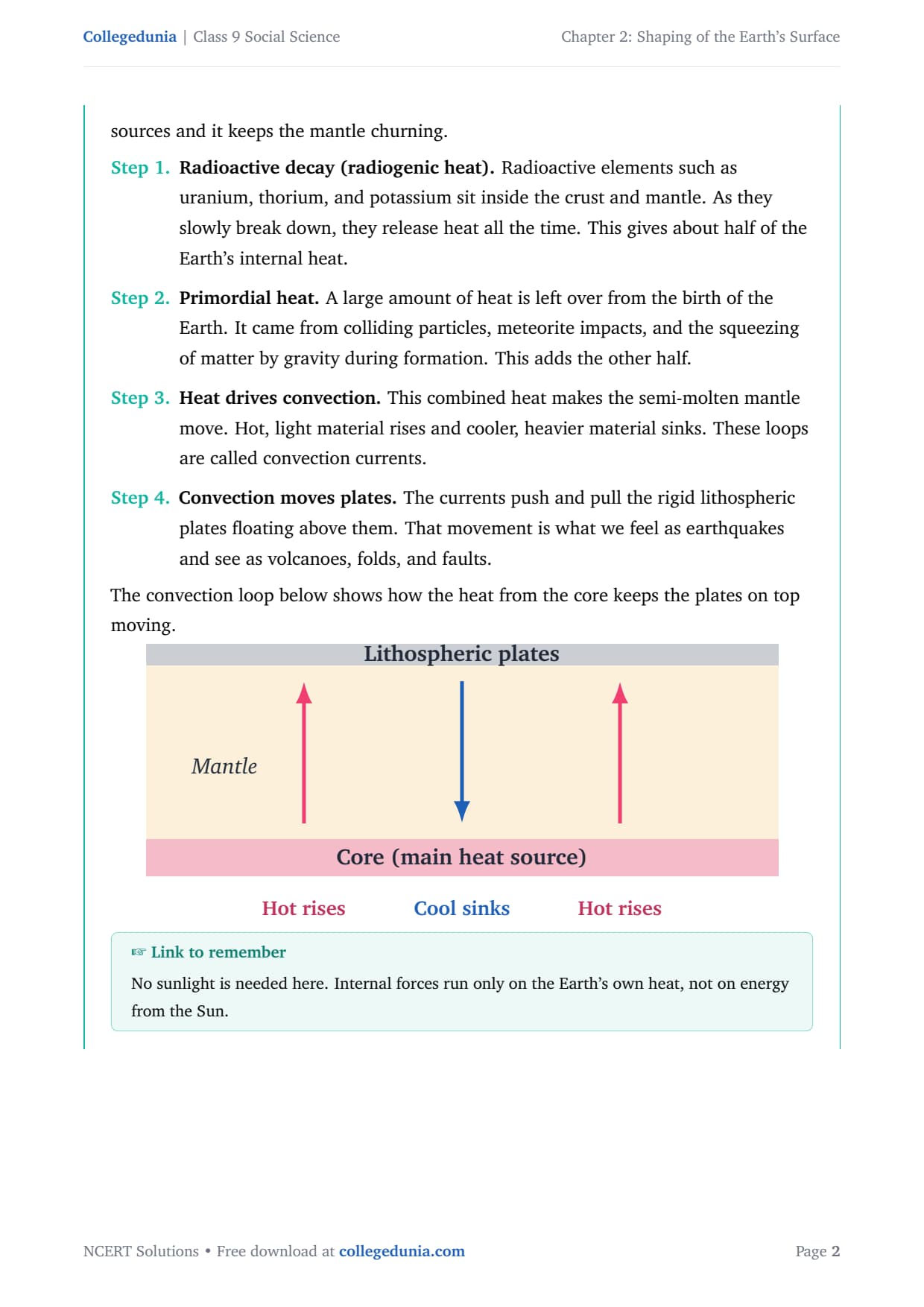
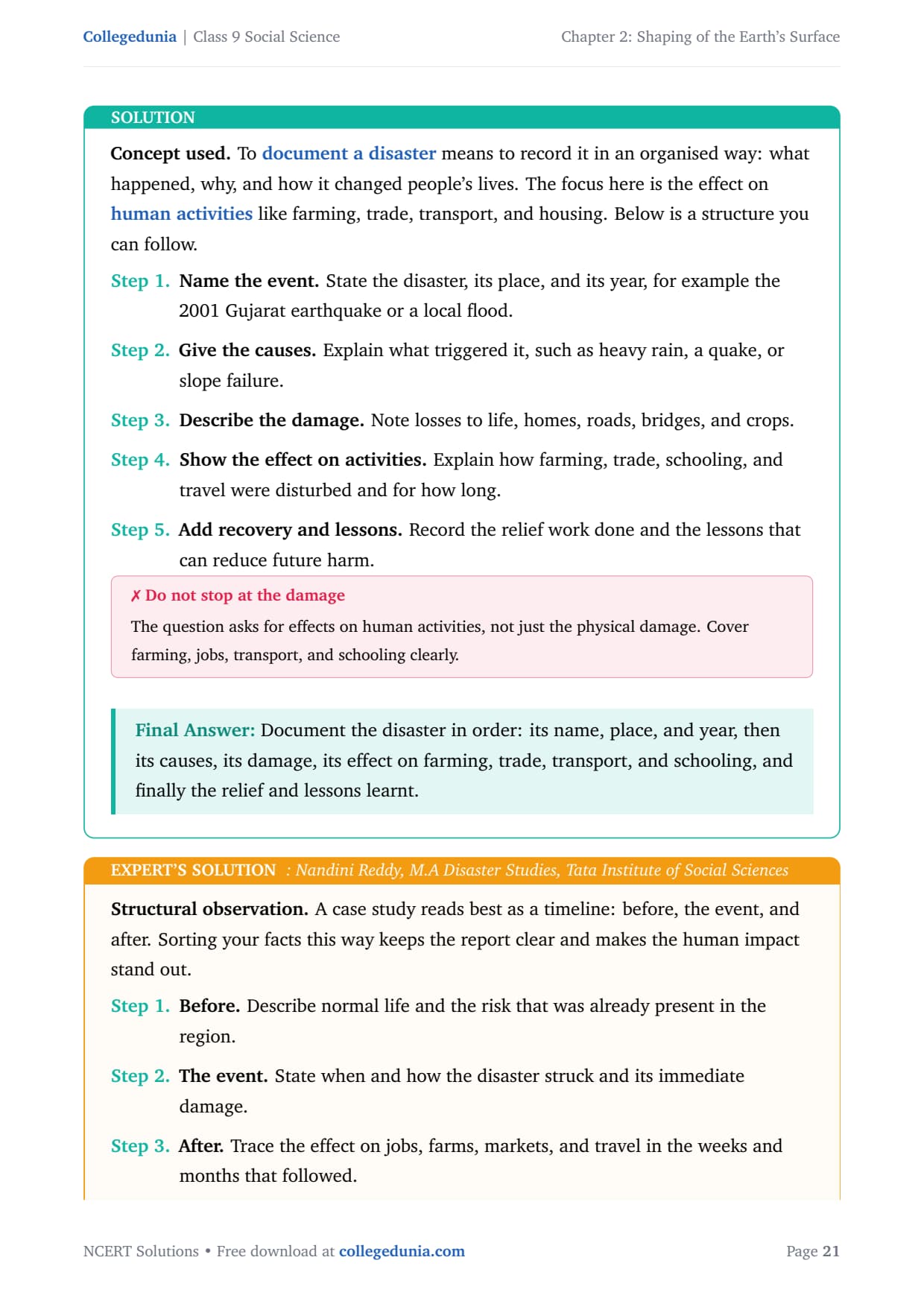
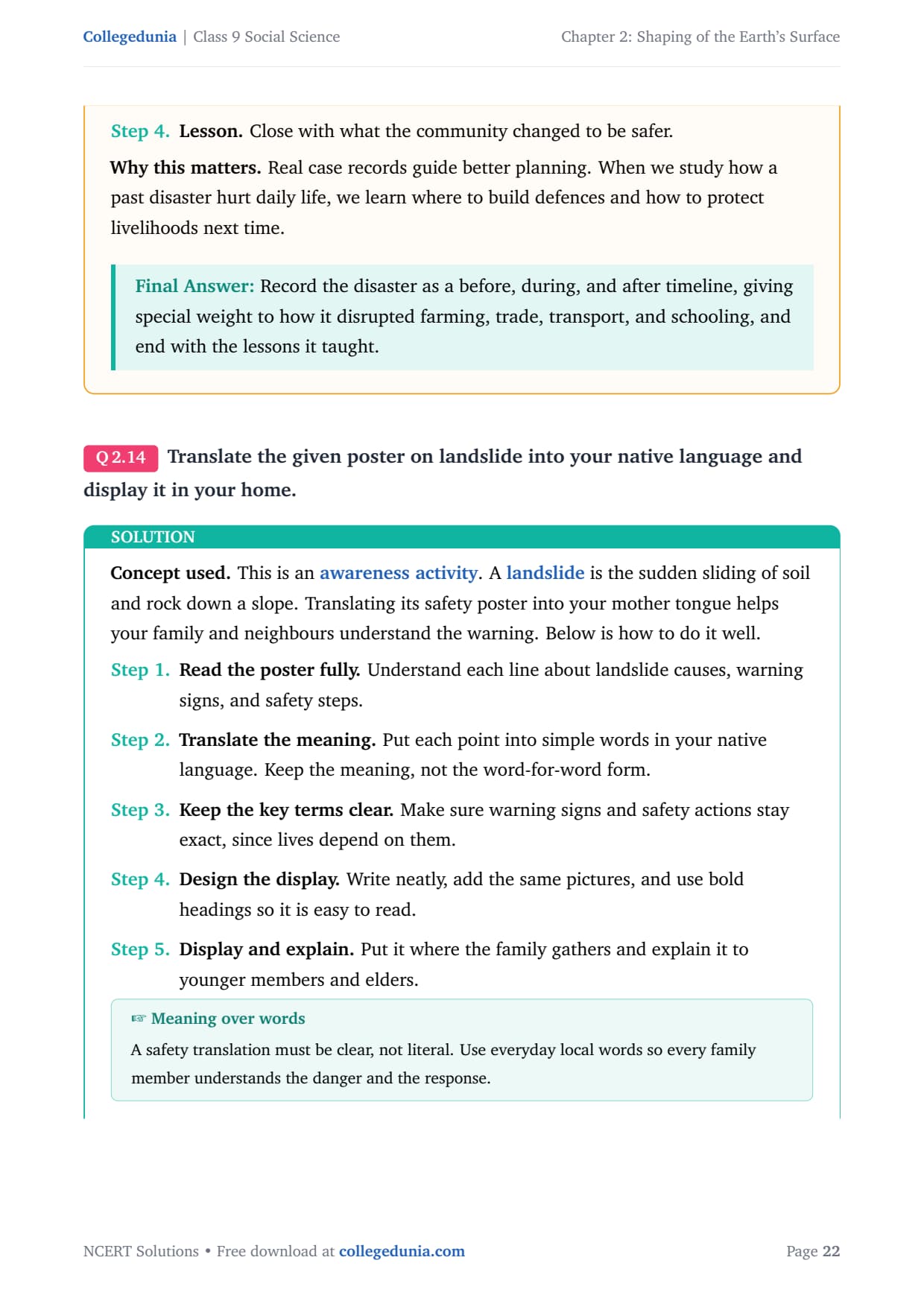
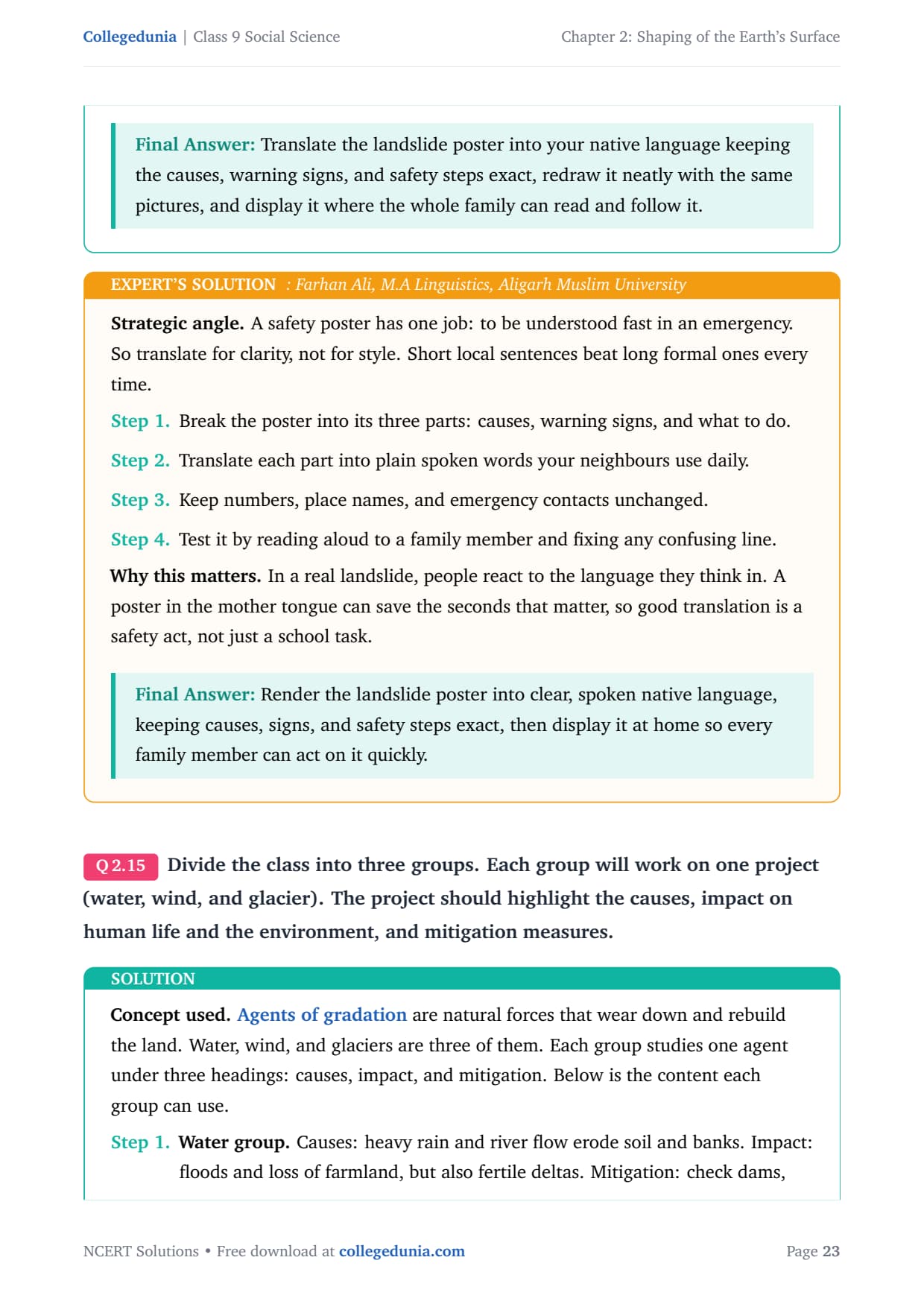
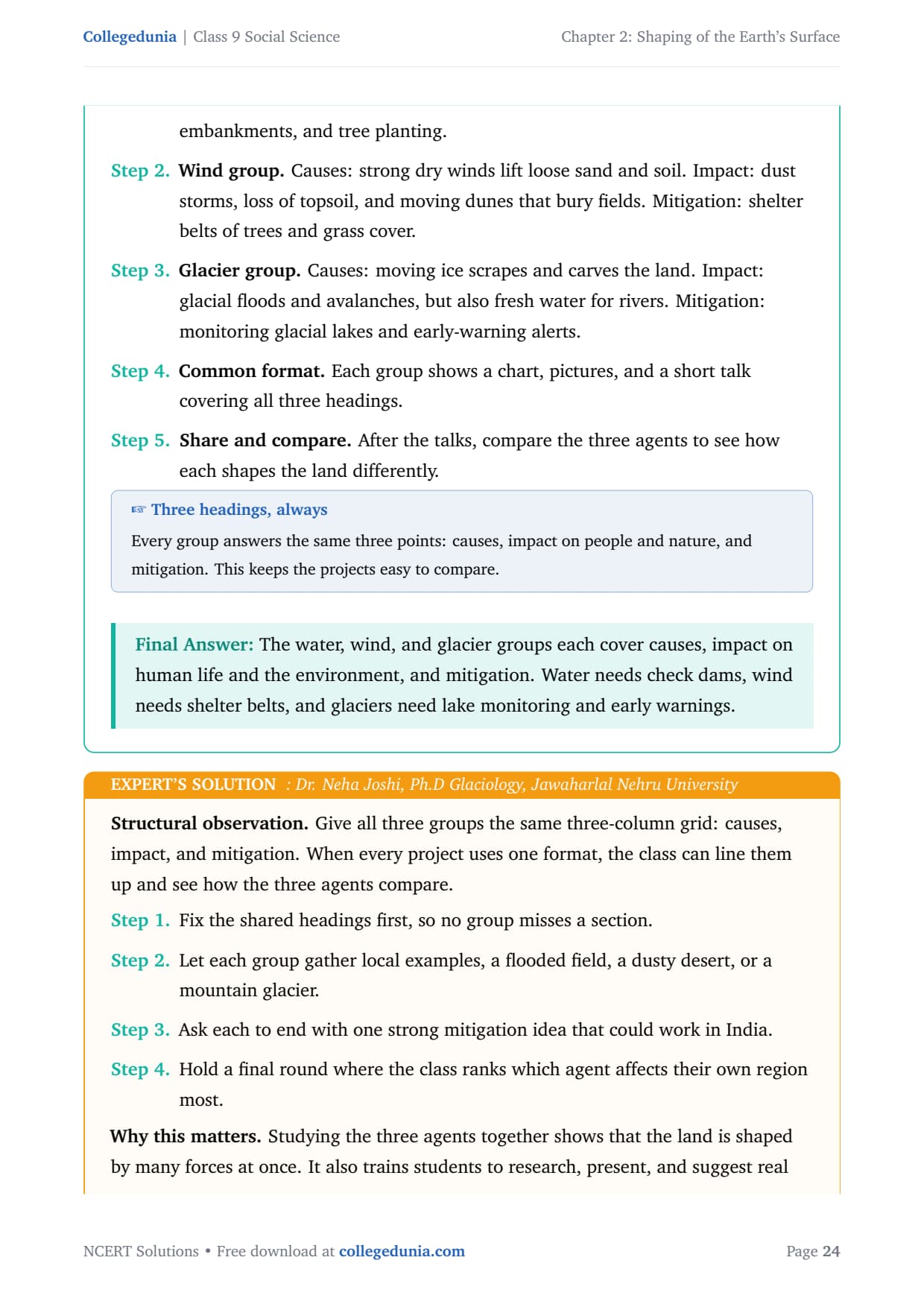
Each solution for Class 9 Social Science Chapter 2 Shaping of the Earth's Surface is written by Collegedunia subject experts, matched to the 2026-27 Understanding Society textbook, and kept in simple exam language.
- 15 solved questions: full answers for every Questions and Activities item, plus an expert version for each one.
- Core ideas: internal (endogenic) and external (exogenic) forces, plate boundaries, weathering versus erosion, and the work of rivers, glaciers, and wind.
- Map and diagram practice: labelled diagrams of a meander and a delta, plus the Ring of Fire and earthquake safety.
Student Feedback
In a Collegedunia poll of 9,200 Class 9 students before the 2026 exams, 61% said they mixed up weathering and erosion in the answer. The next most common slip was leaving diagrams unlabelled. Students who practised the 15 solved answers here said the map and diagram questions felt much easier the second time.
Source: 2026-27 Class 9 Social Science student poll. Sample of 9,200 students from CBSE schools across 12 states.
Exercise Coverage in the Shaping of the Earth's Surface Class 9 Solutions
The Questions and Activities exercise has 15 items. The NCERT Solutions Class 9 Social Science Chapter 2 Shaping of the Earth's Surface group them by type, so you know which to write first and which to practise as a project. The table below shows the split.
| Question type | Questions | What it tests |
|---|---|---|
| Short and long answers | 5 | Sources of internal energy, why earthquakes occur, plate movements, deforestation and erosion |
| Diagram and map based | 3 | Labelling a meander and a delta, and mapping landform disasters |
| Activity and project based | 7 | Models, posters, mitigation plans, and group projects on water, wind, and ice |
Start with the short and long answers, then finish the diagram question on a meander and a delta. The activity items are best done as classroom projects after you know the theory.
Shaping of the Earth's Surface Weightage for Class 9 Social Science Exams
This is a core geography chapter in the new integrated Class 9 book. It sets the base for later chapters on climate and natural resources. Here is where it sits among the geography-side chapters of the 2026-27 Understanding Society book.
| Chapter | Topic | Typical exam focus |
|---|---|---|
| Chapter 2 | Shaping of the Earth's Surface | Internal and external forces, landform diagrams |
| Chapter 3 | Atmosphere and Climate | Layers of the atmosphere, weather versus climate |
This chapter carries steady marks because it mixes short reasoning answers with a labelled diagram. Learn the force types once and the marks come back in every test.
How to Answer Shaping of the Earth's Surface Questions Step by Step
Most marks here come from clear reasoning and neat diagrams. The NCERT Solutions Class 9 Social Science Chapter 2 Shaping of the Earth's Surface use the same method for almost every answer. Follow these steps and you will rarely lose an easy mark.
- Name the force type first. Say if a landform is built by an internal (endogenic) force or worn by an external (exogenic) force before you explain it.
- Keep weathering and erosion apart. Weathering breaks rock in place. Erosion then moves the broken pieces away. Never use the two words for the same step.
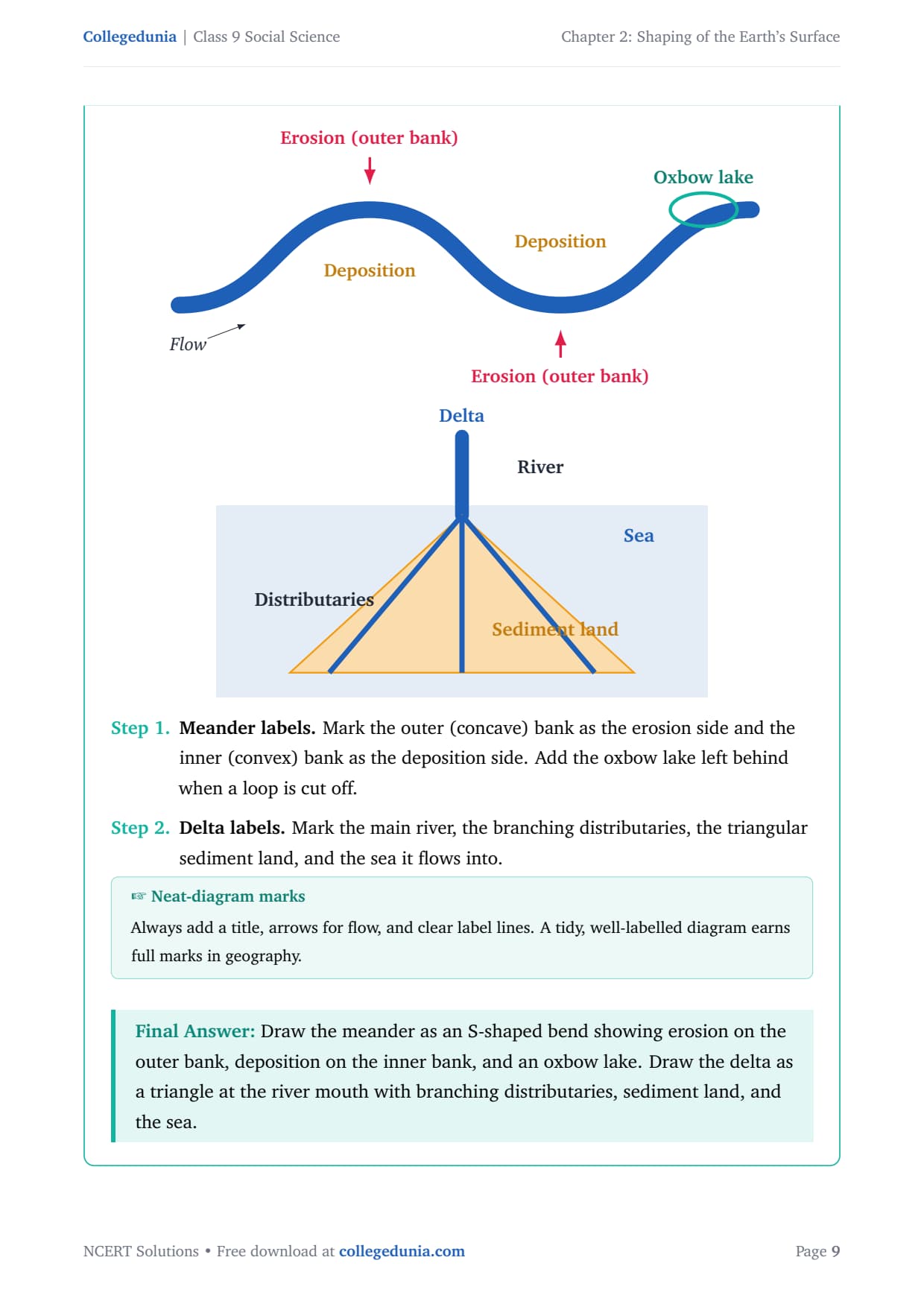
- Label every diagram. For a meander or a delta, mark the parts and the flow direction. An unlabelled diagram loses half the marks.
- Give one example. Add a real place, such as the Ring of Fire for earthquakes or a river delta you know, so the answer feels complete.
- End with the effect on people. For disaster questions, close with one safety or mitigation step.
For map work, always add a title, a north arrow, and a simple key. These three parts turn a rough sketch into a full-mark map.
Common Mistakes Students Make in Shaping of the Earth's Surface
Most lost marks in this chapter are simple slips, not gaps in understanding. Watch for the four below when you write your answer.
Mistake 1: Treating weathering and erosion as the same thing. Weathering breaks rock where it stands. Erosion carries the pieces away.
Mistake 2: Calling every mountain-building force external. Folding and faulting are internal forces driven by heat inside the Earth.
Mistake 3: Drawing a meander or delta with no labels. Mark the river bank, the deposit, and the flow arrow to score full marks.
Mistake 4: Forgetting the safety step in disaster answers. An earthquake or landslide answer should end with one clear precaution.
Also Check: the full answer for every one of these traps is in the solved questions lower on this page.
Shaping of the Earth's Surface Important Questions and Exam Trends
Exams from this chapter follow a clear pattern. One short reasoning question plus a diagram or map question is the usual mix. The list below shows the types you should be ready for.
- Internal and external forces: name the sources of energy inside the Earth and how they move the plates.
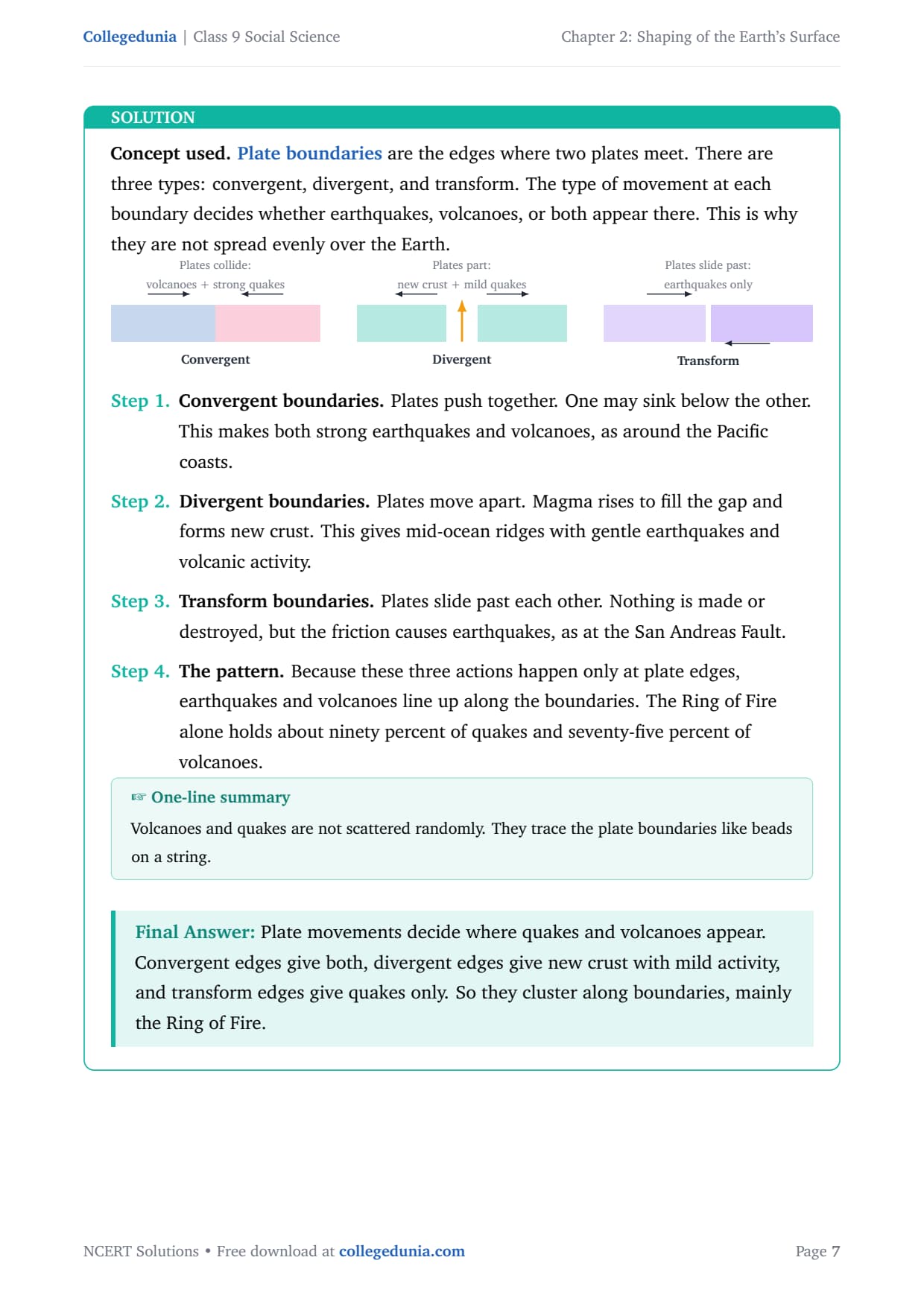
- Earthquakes and volcanoes: why they cluster along plate boundaries such as the Ring of Fire.
- Weathering versus erosion: the one-line difference, with an example of each.
- Landform diagrams: a labelled meander and delta made by running water.
- Disaster safety: precautions for an earthquake-prone or landslide-prone area.
The NCERT Solutions Class 9 Social Science Chapter 2 Shaping of the Earth's Surface cover every one of these types in full, so practising the 15 solved questions on this page is enough for the exam.
Other Shaping of the Earth's Surface Class 9 Social Science Resources
Pair these solutions with the notes and the book PDF for the same chapter to revise faster.
| Resource | Link |
|---|---|
| Notes | Shaping of the Earth's Surface Class 9 Notes |
| Handwritten Notes | Shaping of the Earth's Surface Handwritten Notes |
| NCERT Book PDF | Shaping of the Earth's Surface Book PDF |
Questions
NCERT Solutions for Class 9 Social Science: All Chapters
Jump to the NCERT Solutions for any other Class 9 Social Science chapter below. Collegedunia keeps a solved page for every chapter of the new book.
| Chapter | NCERT Solutions |
|---|---|
| Chapter 1 | Understanding Social Science |
| Chapter 3 | Atmosphere and Climate |
| Chapter 4 | Early Humans and Beginning of Civilisation |
| Chapter 5 | State and Society up to 1000 CE |
| Chapter 6 | Democracy |
| Chapter 7 | Elections |
| Chapter 8 | Building Blocks in Economics The Problem of Choice |
| Chapter 9 | The Price Puzzle What Drives the Market |
Shaping of the Earth's Surface Class 9 Solutions FAQs
How many questions are solved in NCERT Solutions for Class 9 Social Science Chapter 2?
All 15 questions from the Questions and Activities exercise are solved. Each one has a step-by-step answer and an expert version written in simple exam language.
What is the difference between weathering and erosion in this chapter?
Weathering breaks rock into smaller pieces where it stands. Erosion then moves those broken pieces away using rivers, wind, or ice. The solutions explain both with clear examples.
Which diagrams are important in Class 9 Social Science Chapter 2?
The labelled diagrams of a meander and a delta are the most asked. The solutions show how to draw and label both, along with the flow direction, to score full marks.
Are these Class 9 Social Science solutions based on the new 2026-27 book?
Yes. Every answer matches the new integrated Understanding Society textbook for 2026-27. Collegedunia updates the solutions whenever the NCERT content changes.



Comments