




The NCERT Solutions Class 9 Social Science Chapter 9 The Price Puzzle What Drives the Market answer all 12 questions from the Questions and Activities exercise of the 2026-27 Understanding Society textbook. Every answer is written in clear exam language and covers demand, supply, market equilibrium, and the role of the government in the market.
Each solution for Class 9 Social Science Chapter 9 The Price Puzzle What Drives the Market is written by Collegedunia subject experts, matched to the 2026-27 Understanding Society textbook, and kept in simple exam language.
- 12 solved questions: full answers for every Questions and Activities item, plus an expert version for each one.
- Core ideas: the Law of Demand and Law of Supply, market equilibrium, surplus and shortage, and price controls.
- Graph practice: reading a demand and supply diagram, plotting an equilibrium from a schedule, and price-ceiling shortages.
Student Feedback
In a Collegedunia poll of 8,700 Class 9 students before the 2026 exams, 58% said the graph questions on equilibrium worried them the most. The next most common slip was mixing up a surplus with a shortage. Students who practised the 12 solved answers here said the demand and supply diagrams felt far easier the second time.
Source: 2026-27 Class 9 Social Science student poll. Sample of 8,700 students from CBSE schools across 11 states.
Exercise Coverage in The Price Puzzle What Drives the Market Class 9 Solutions
The Questions and Activities exercise has 12 items. The NCERT Solutions Class 9 Social Science Chapter 9 The Price Puzzle What Drives the Market group them by type, so you know which to write first and which to do as a field activity. The table below shows the split.
| Question type | Questions | What it tests |
|---|---|---|
| Reasoning short and long answers | 4 | Income and demand, petrol price effects, drip irrigation and supply, and excess regulation |
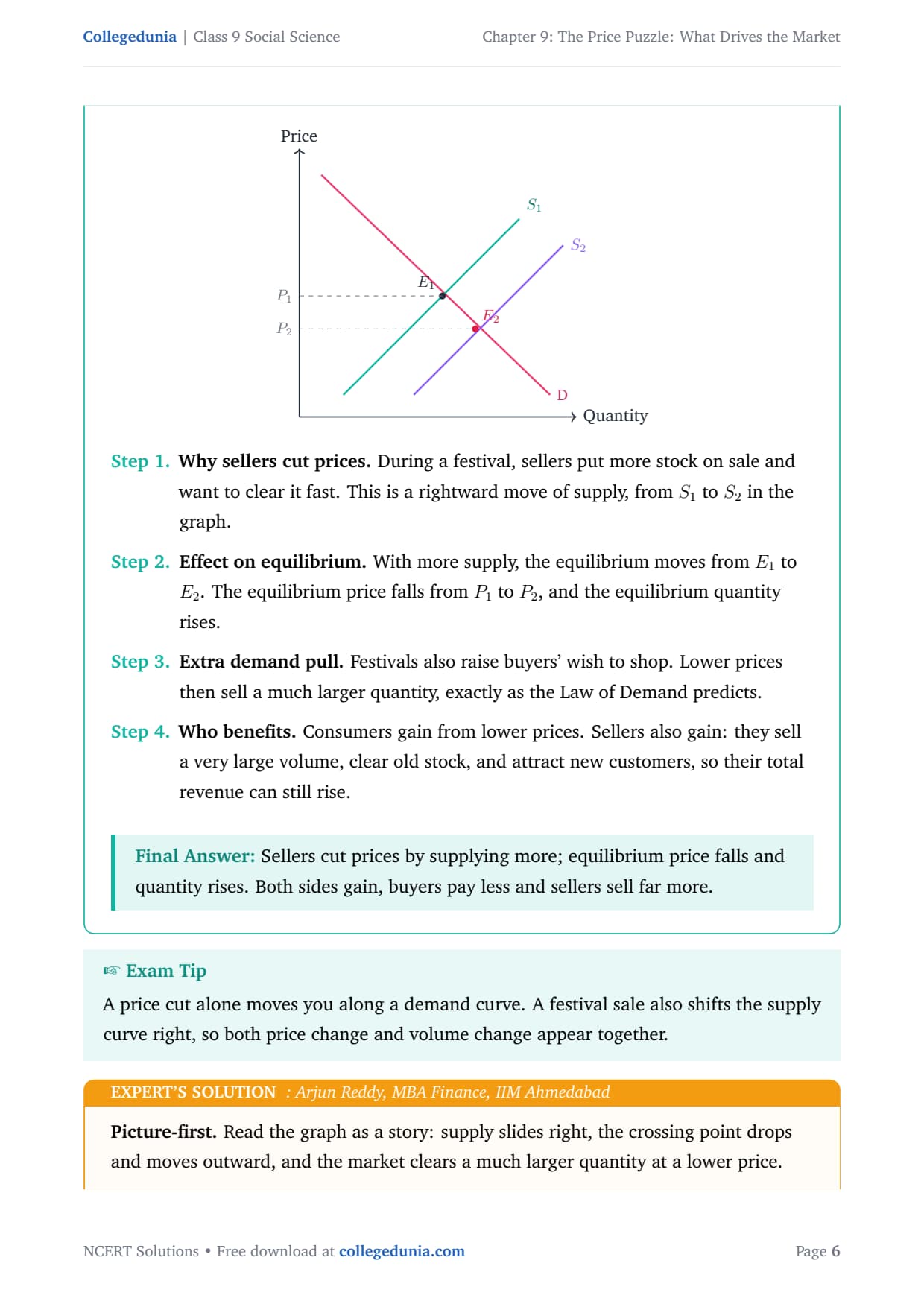
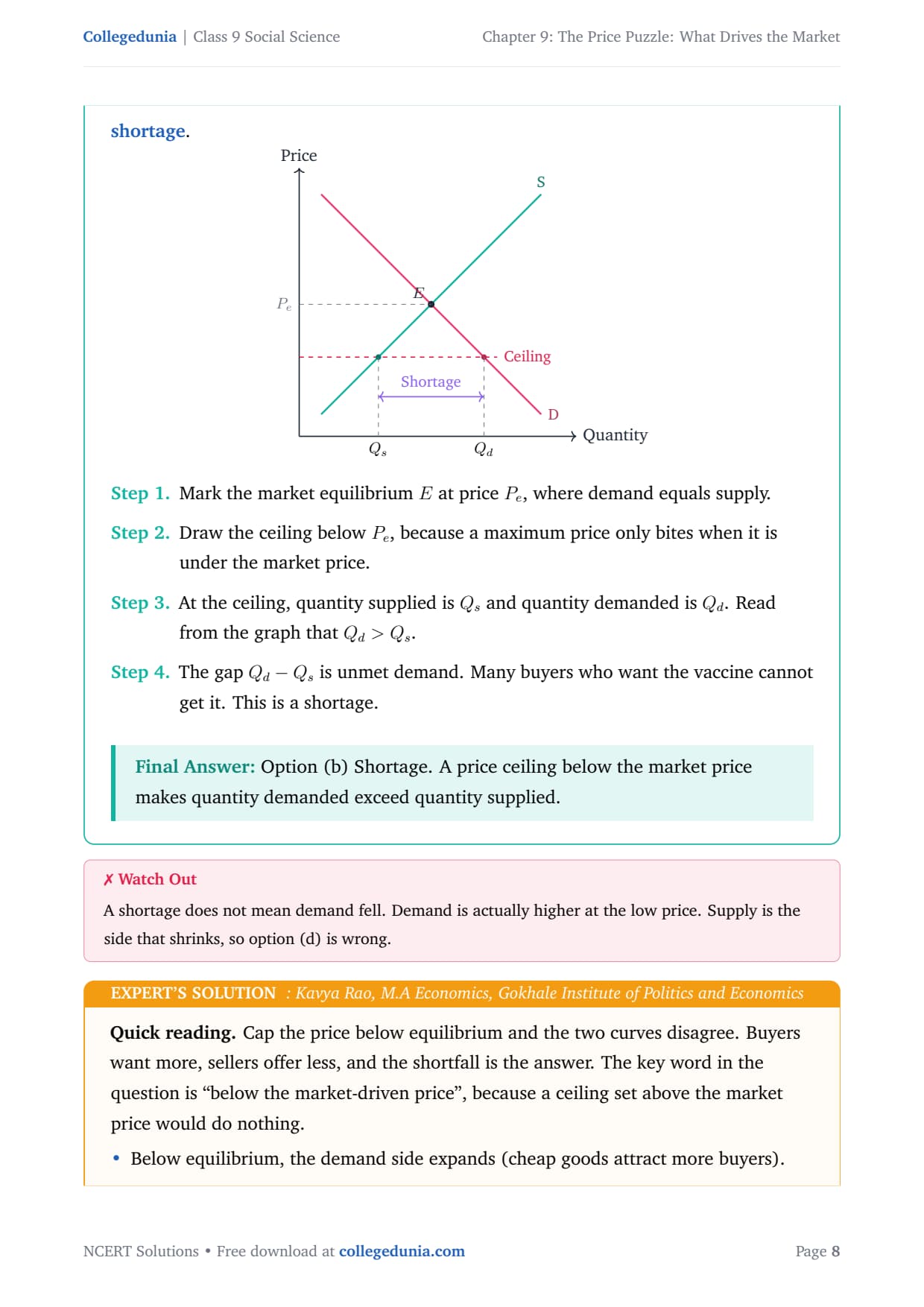
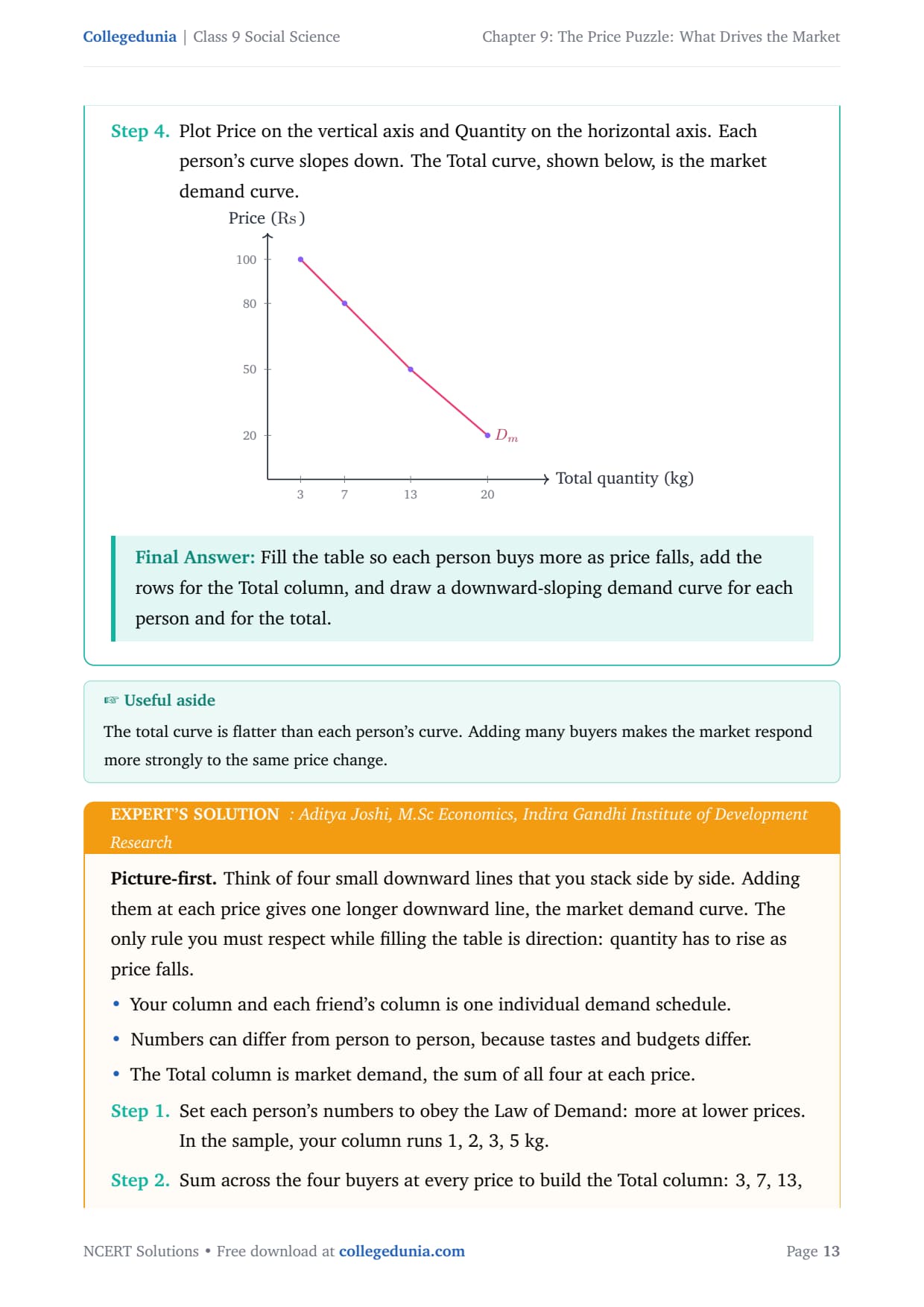
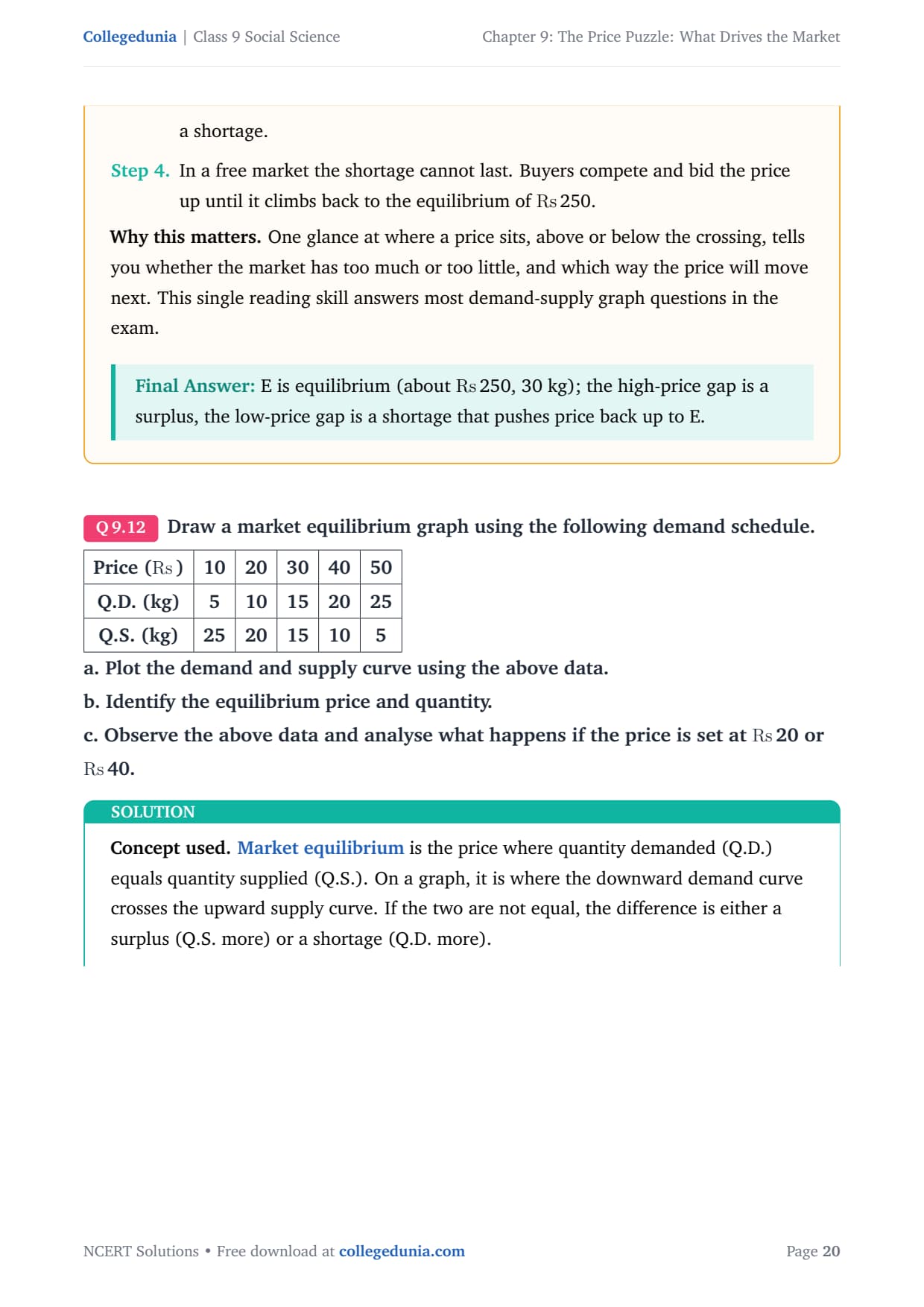
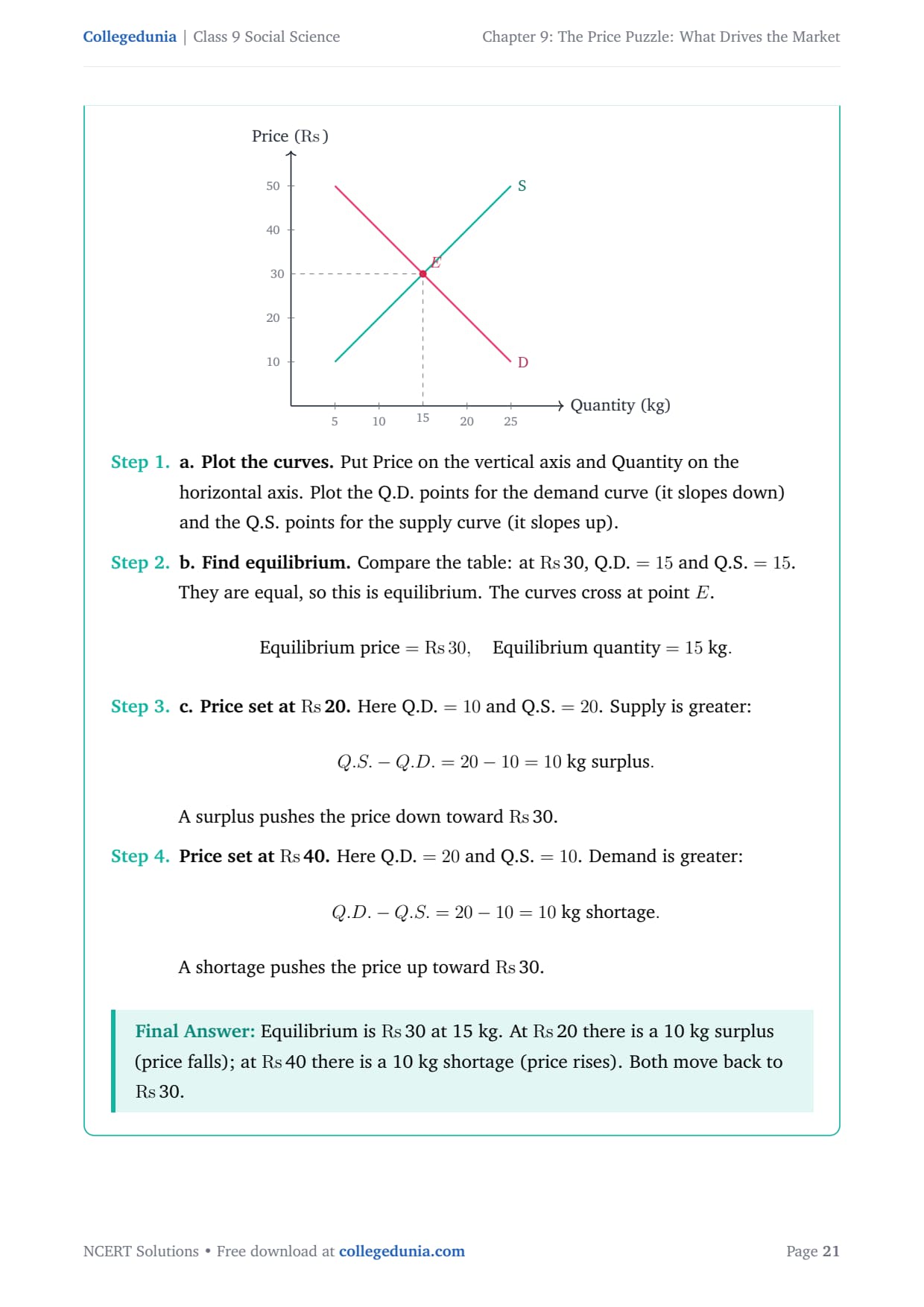
| Graph and schedule based | 4 | Festival-sale equilibrium, a price-ceiling shortage, reading a demand and supply figure, and drawing equilibrium from a schedule |
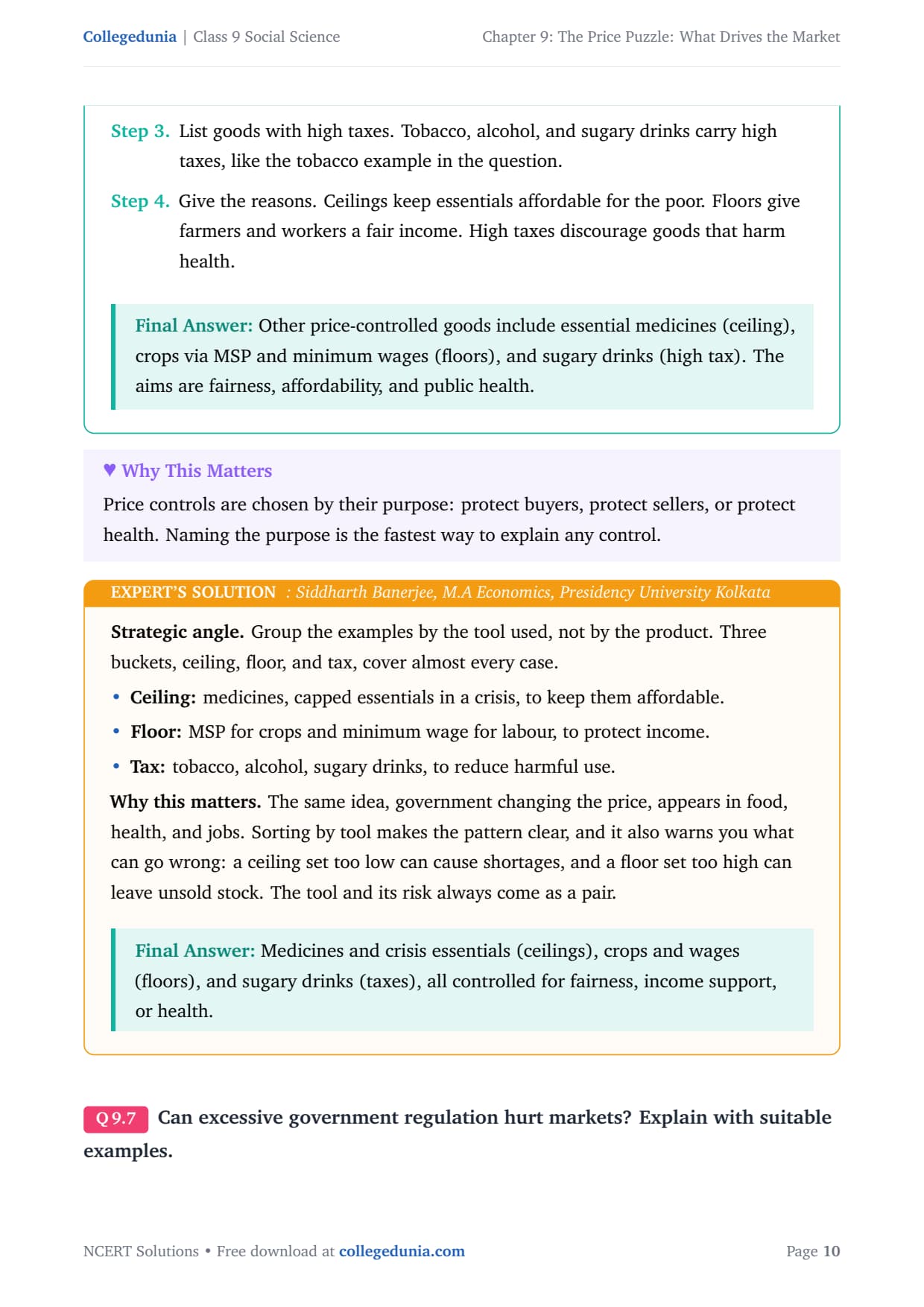
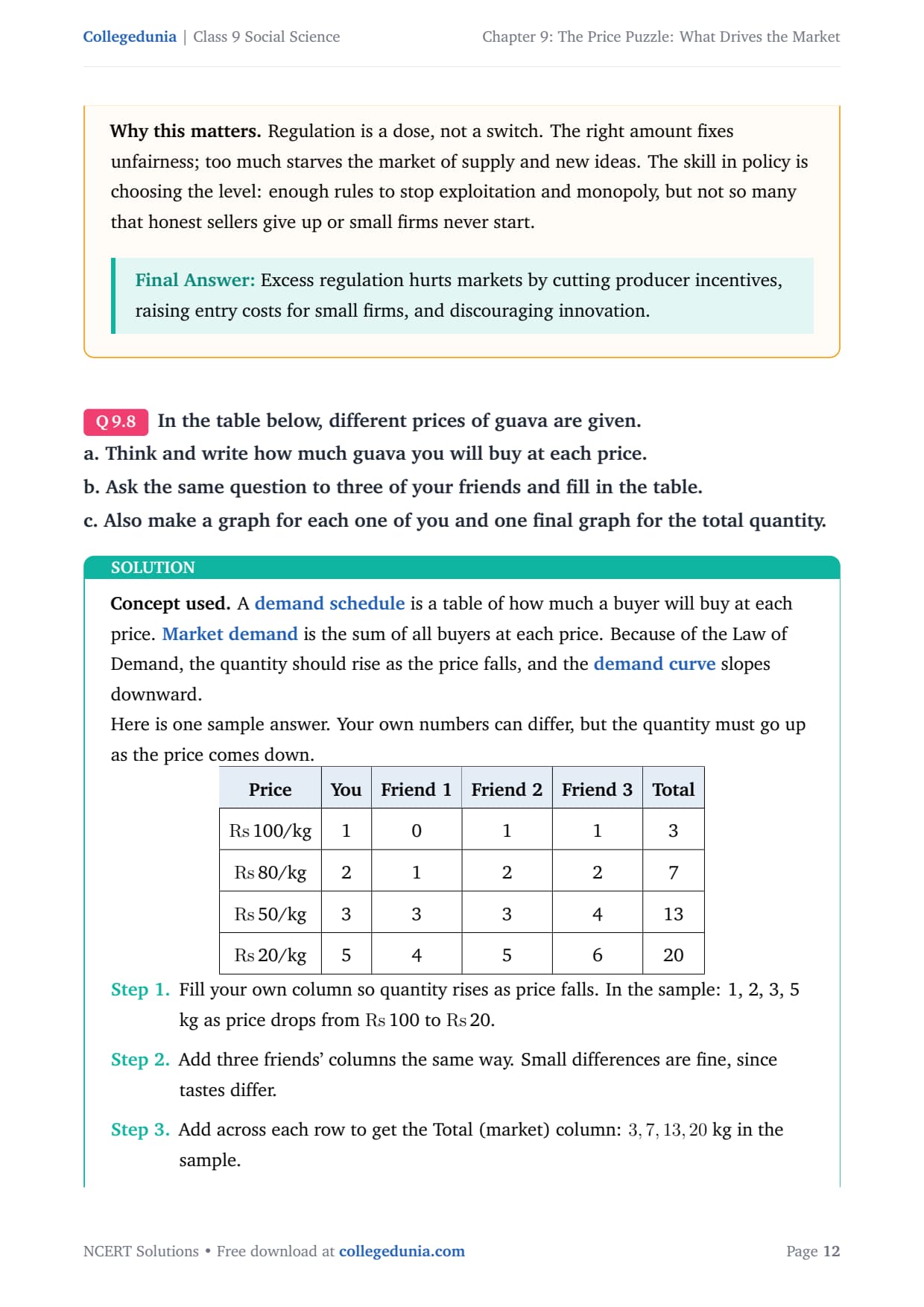
| Activity and field based | 3 | Finding other price controls, a guava demand schedule, and a vegetable-market visit |
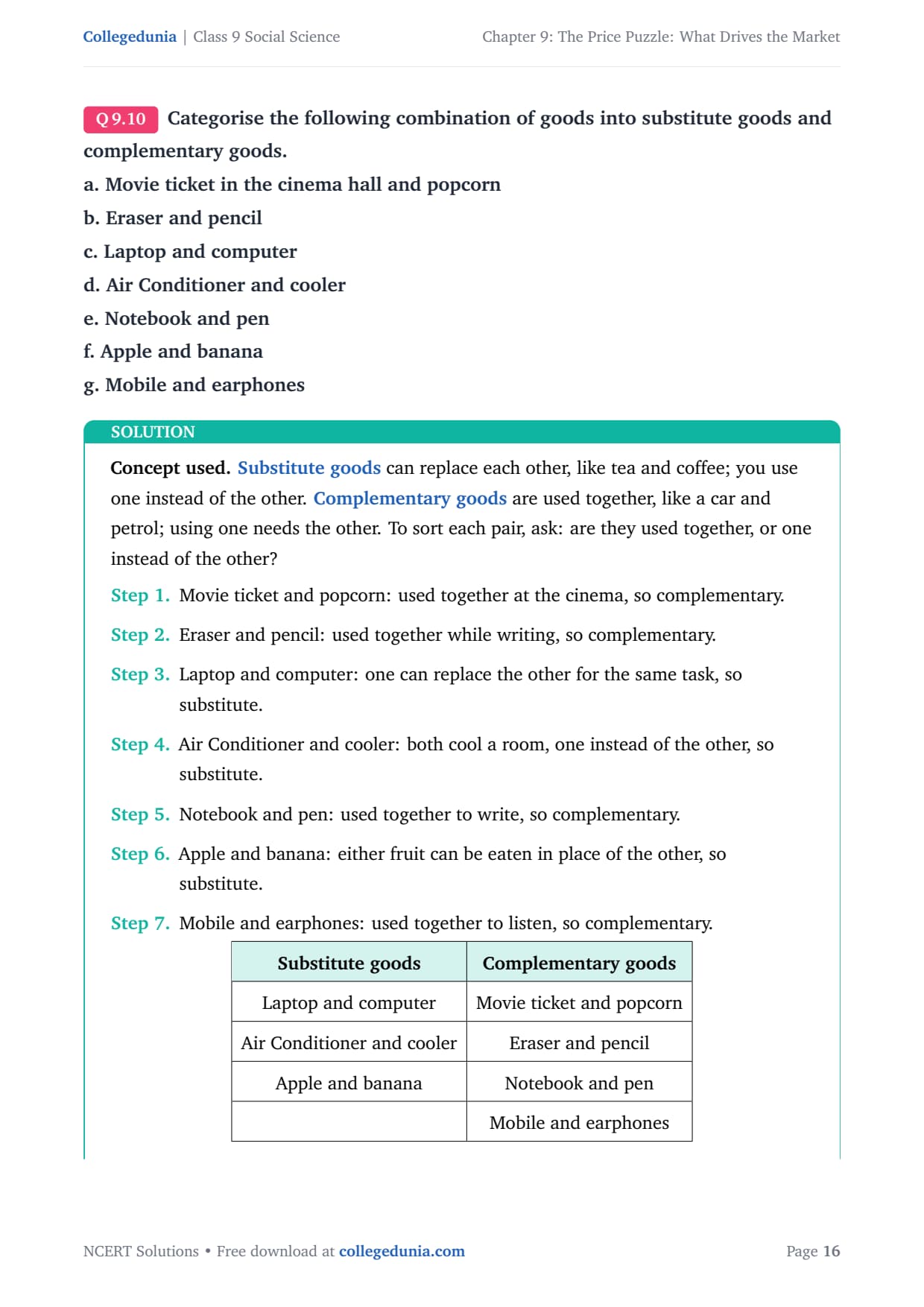
| Categorisation | 1 | Sorting seven pairs of goods into substitutes and complements |
Start with the reasoning answers, then practise the four graph questions until the curves feel natural. The activity items are best done after you know the theory, so the market visit makes sense.
The Price Puzzle What Drives the Market Weightage for Class 9 Social Science Exams
This is the second economics chapter in the new integrated Class 9 book. It follows the ideas of choice and scarcity from Chapter 8 and turns them into demand, supply, and price. Here is where it sits among the economics-side chapters of the 2026-27 Understanding Society book.
| Chapter | Topic | Typical exam focus |
|---|---|---|
| Chapter 8 | Building Blocks in Economics | Scarcity, choice, and opportunity cost |
| Chapter 9 | The Price Puzzle What Drives the Market | Demand, supply, equilibrium graphs, and price controls |
This chapter carries steady marks because it mixes short reasoning answers with a graph. Learn the two laws once and the marks come back in every test.
How to Answer The Price Puzzle What Drives the Market Questions Step by Step
Most marks here come from clear reasoning and neat graphs. The NCERT Solutions Class 9 Social Science Chapter 9 The Price Puzzle What Drives the Market use the same method for almost every answer. Follow these steps and you will rarely lose an easy mark.
- Name the concept first. Say whether the question is about demand, supply, or equilibrium before you explain the change.
- Keep the two laws apart. The Law of Demand says price up, quantity demanded down. The Law of Supply says price up, quantity supplied up.
- Label every graph. Mark Price on the vertical axis, Quantity on the horizontal axis, and the point E where the curves cross.
- Sort related goods. Ask if two goods are used together (complements) or one instead of the other (substitutes), then give the direction of change.
- End with the market result. Say if the change leads to a surplus, a shortage, or a new equilibrium price.
For a shortage or surplus, always state which side is larger. When quantity demanded is more than quantity supplied, the price rises back toward equilibrium.
Common Mistakes Students Make in The Price Puzzle What Drives the Market
Most lost marks in this chapter are simple slips, not gaps in understanding. Watch for the four below when you write your answer.
Mistake 1: Saying a shortage means demand fell. At a low price demand is actually higher; it is supply that shrinks, so the gap is unmet demand.
Mistake 2: Swapping substitutes and complements. Used together means complements, like a mobile and earphones. One instead of the other means substitutes, like tea and coffee.
Mistake 3: Drawing curves the wrong way. The demand curve slopes down and the supply curve slopes up; the point where they cross is the equilibrium.
Mistake 4: Treating a price ceiling above the market price as useful. A maximum price only has an effect when it is set below the equilibrium price.
Also Check: the full answer for every one of these traps is in the solved questions lower on this page.
The Price Puzzle What Drives the Market Important Questions and Exam Trends
Exams from this chapter follow a clear pattern. One reasoning question plus a graph or schedule question is the usual mix. The list below shows the types you should be ready for.
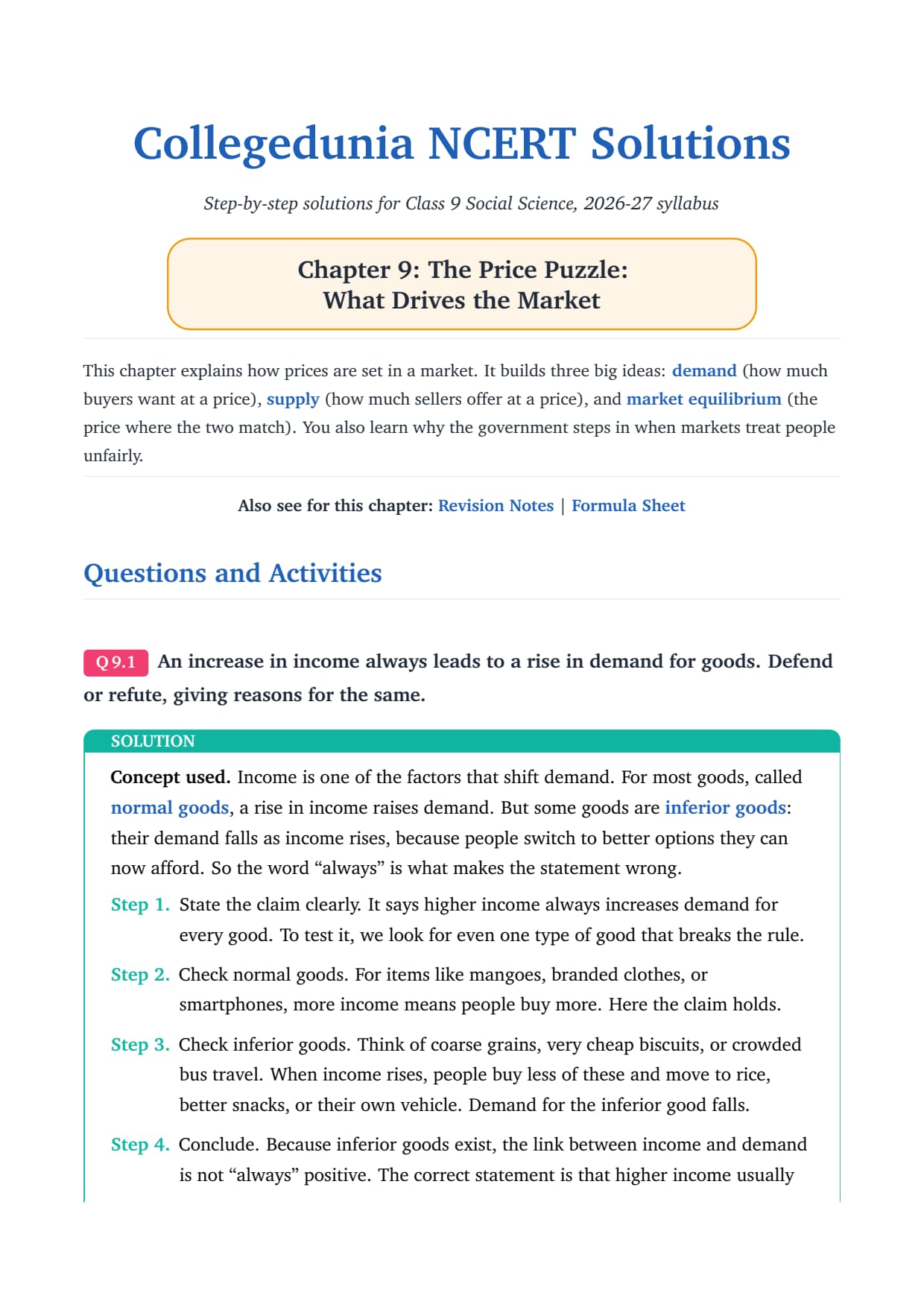
- Demand and income: why higher income raises demand for normal goods but lowers it for inferior goods.
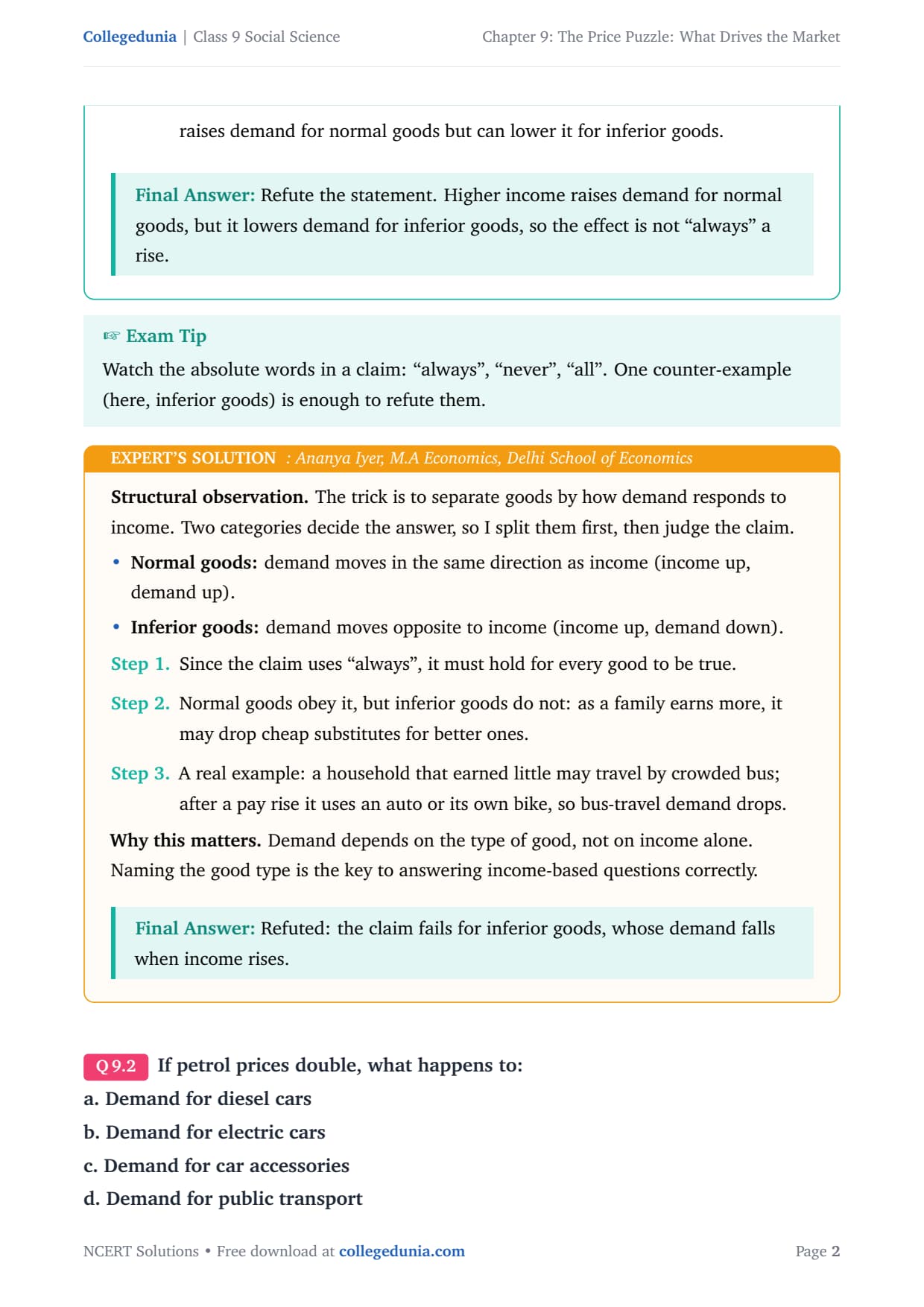
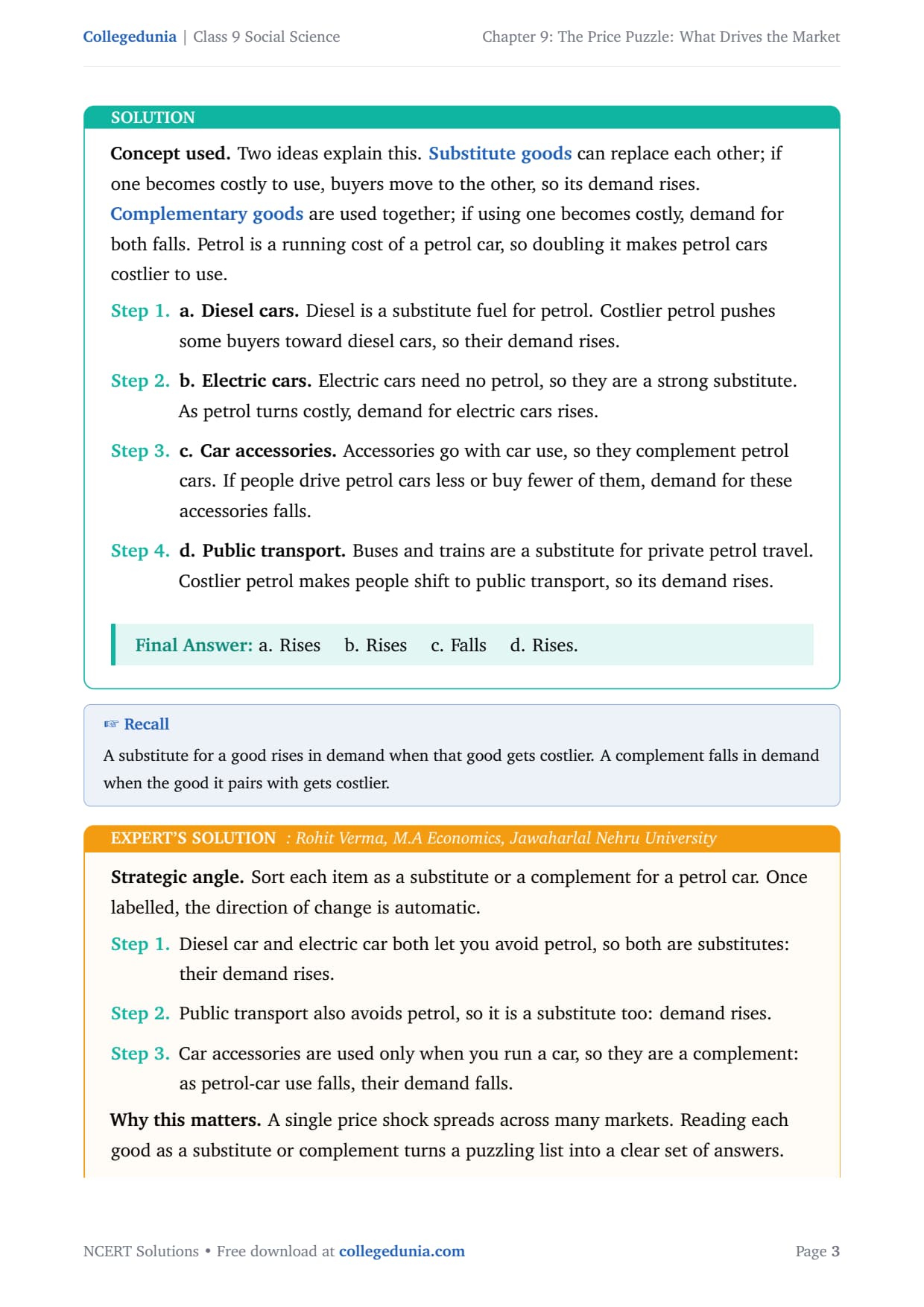
- Substitutes and complements: how a price change in one good moves demand for a related good.
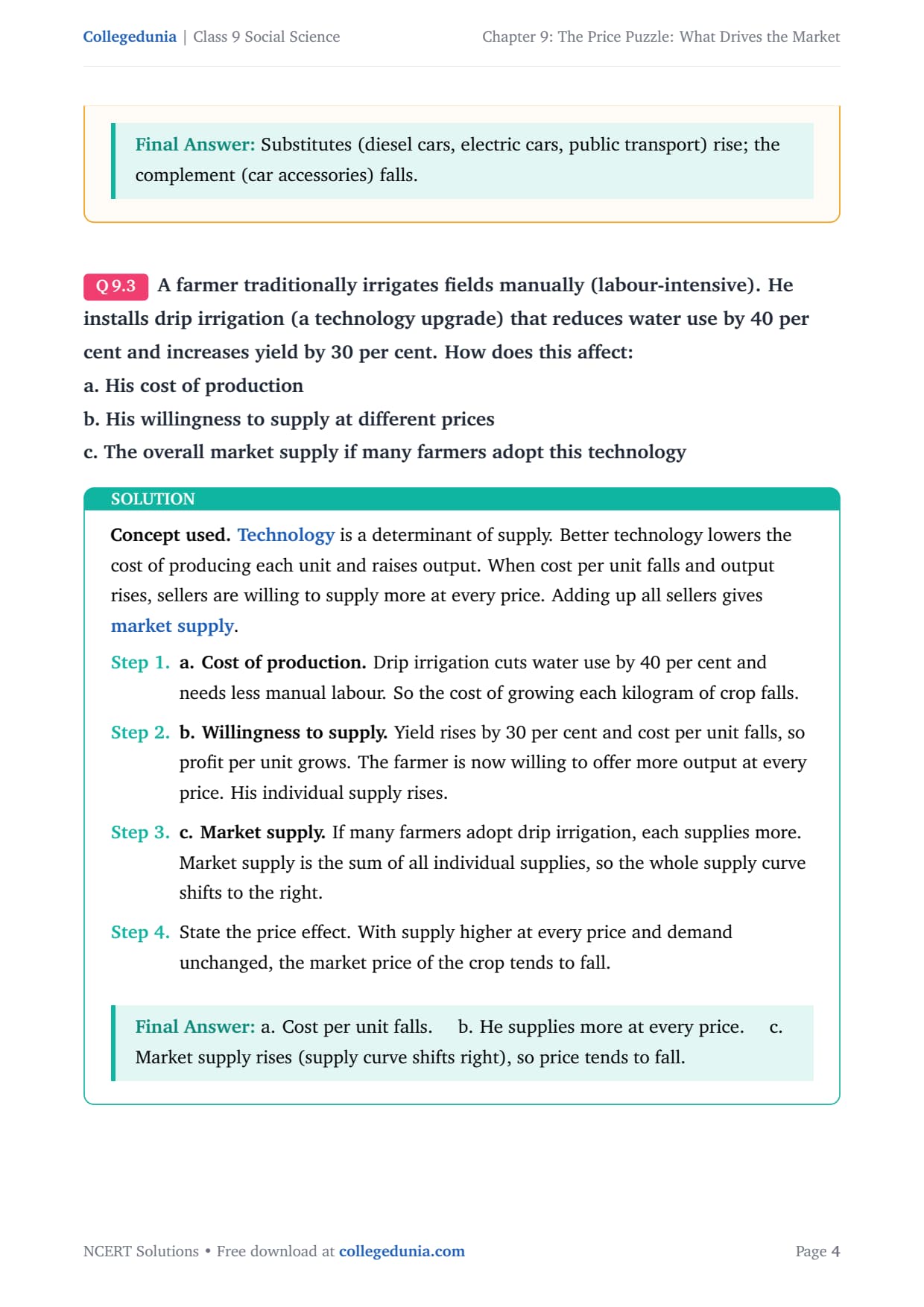
- Supply and technology: how a cost-cutting method shifts the supply curve to the right.
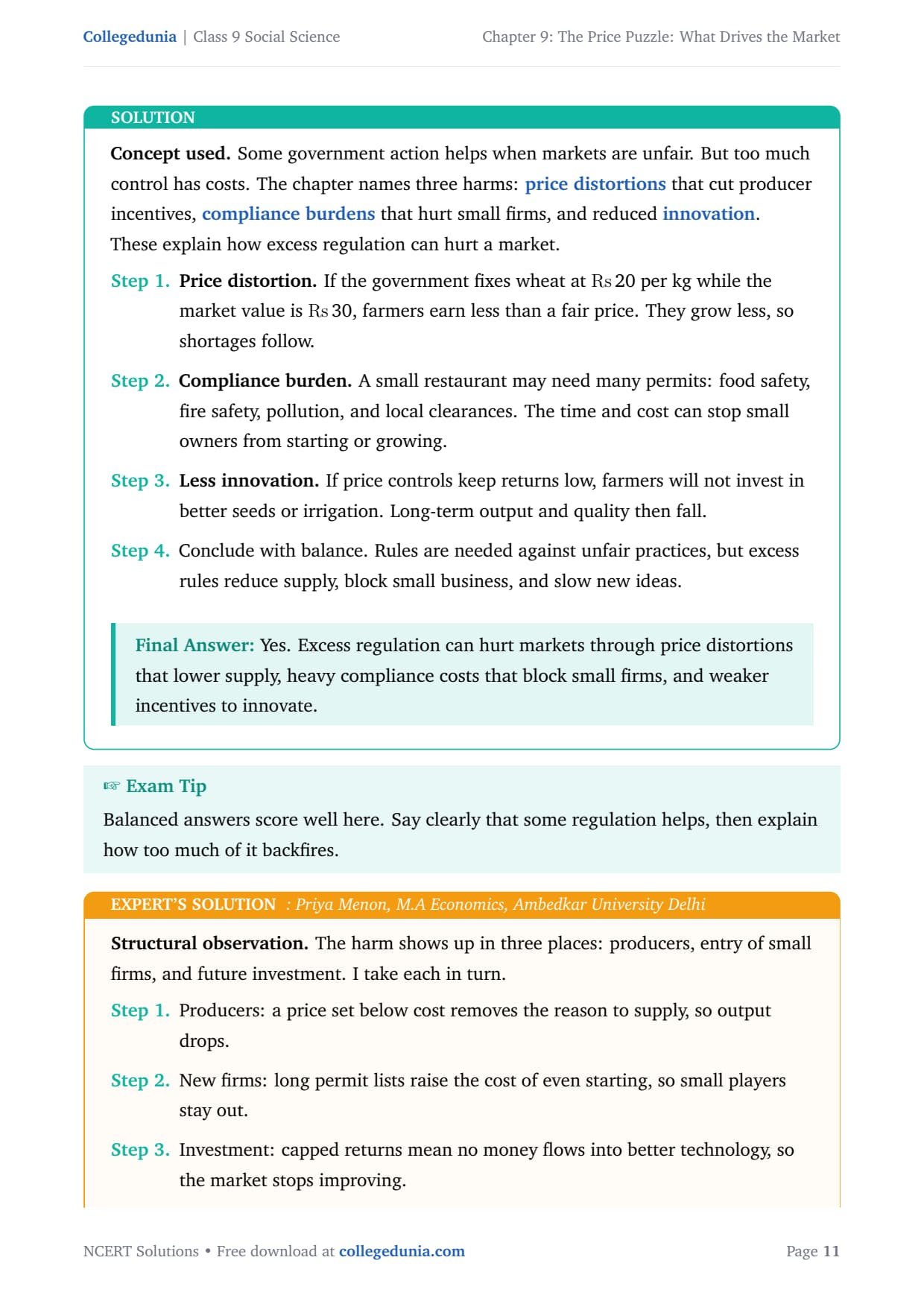
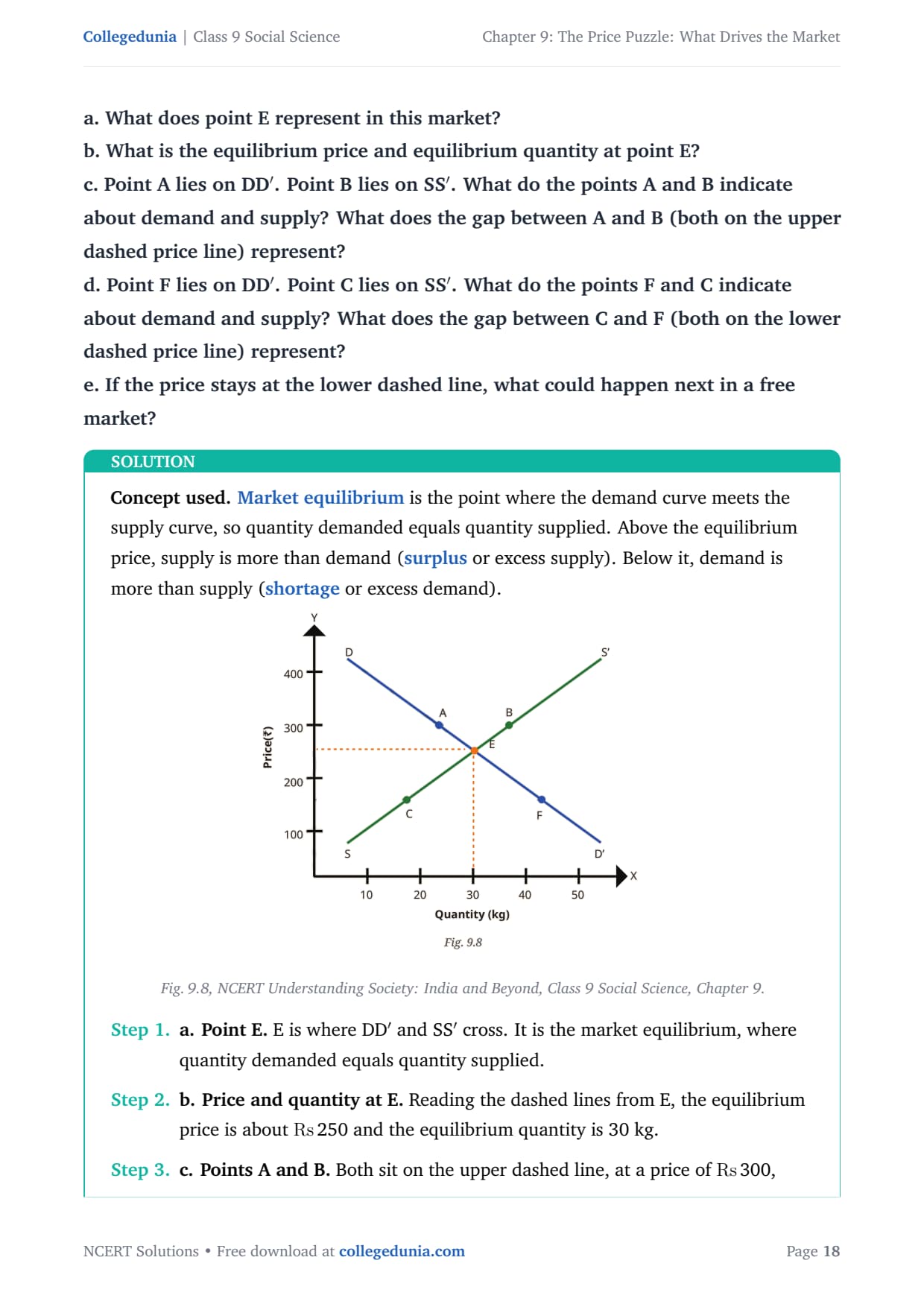
- Equilibrium graphs: reading a demand and supply figure to find the price, quantity, surplus, and shortage.
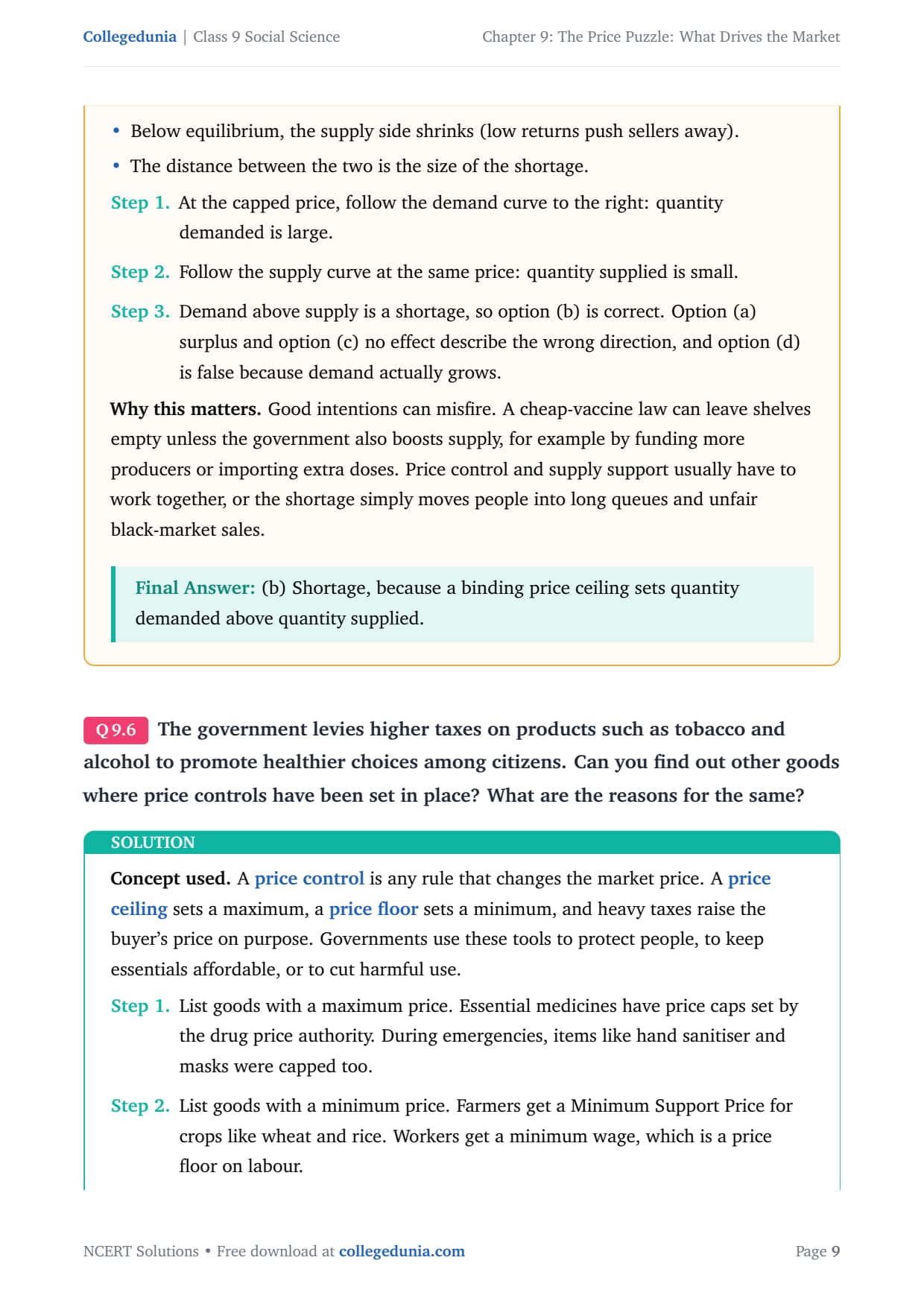
- Price controls: ceilings, floors, and taxes, and why a binding ceiling causes a shortage.
The NCERT Solutions Class 9 Social Science Chapter 9 The Price Puzzle What Drives the Market cover every one of these types in full, so practising the 12 solved questions on this page is enough for the exam.
Questions
NCERT Solutions for Class 9 Social Science: All Chapters
Jump to the NCERT Solutions for any other Class 9 Social Science chapter below. Collegedunia keeps a solved page for every chapter of the new book.
| Chapter | NCERT Solutions |
|---|---|
| Chapter 1 | Understanding Social Science |
| Chapter 2 | Shaping of the Earth's Surface |
| Chapter 3 | Atmosphere and Climate |
| Chapter 4 | Early Humans and Beginning of Civilisation |
| Chapter 5 | State and Society up to 1000 CE |
| Chapter 6 | Democracy |
| Chapter 7 | Elections |
| Chapter 8 | Building Blocks in Economics The Problem of Choice |
The Price Puzzle What Drives the Market Class 9 Solutions FAQs
How many questions are solved in NCERT Solutions for Class 9 Social Science Chapter 9?
All 12 questions from the Questions and Activities exercise are solved. Each one has a step-by-step answer and an expert version written in simple exam language.
What is the difference between a surplus and a shortage in this chapter?
A surplus is when quantity supplied is more than quantity demanded, usually above the equilibrium price. A shortage is when quantity demanded is more than quantity supplied, usually below the equilibrium price.
Which graphs are important in Class 9 Social Science Chapter 9?
The demand and supply equilibrium graph is the most asked. The solutions show how to plot both curves, mark the equilibrium point, and read the surplus and shortage gaps.
Are these Class 9 Social Science solutions based on the new 2026-27 book?
Yes. Every answer matches the new integrated Understanding Society textbook for 2026-27. Collegedunia updates the solutions whenever the NCERT content changes.



Comments