




SNAP Permutations, Combinations and Probability PYQ, free to download as a 34-page PDF. The bank carries 24 solved questions from the 2006 to 2025 papers and takes roughly two days to work through, so split it across counting one day and probability the next.
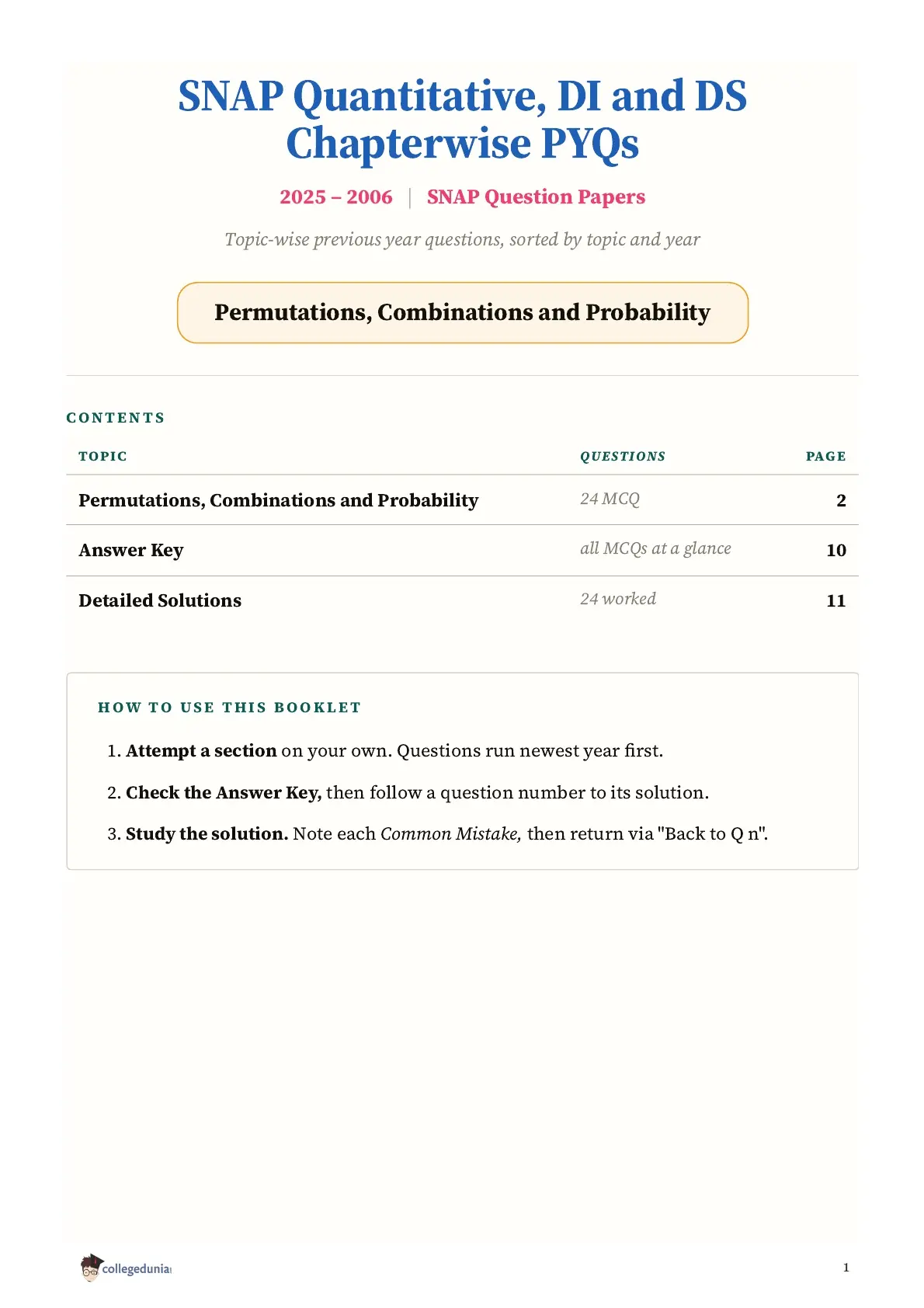
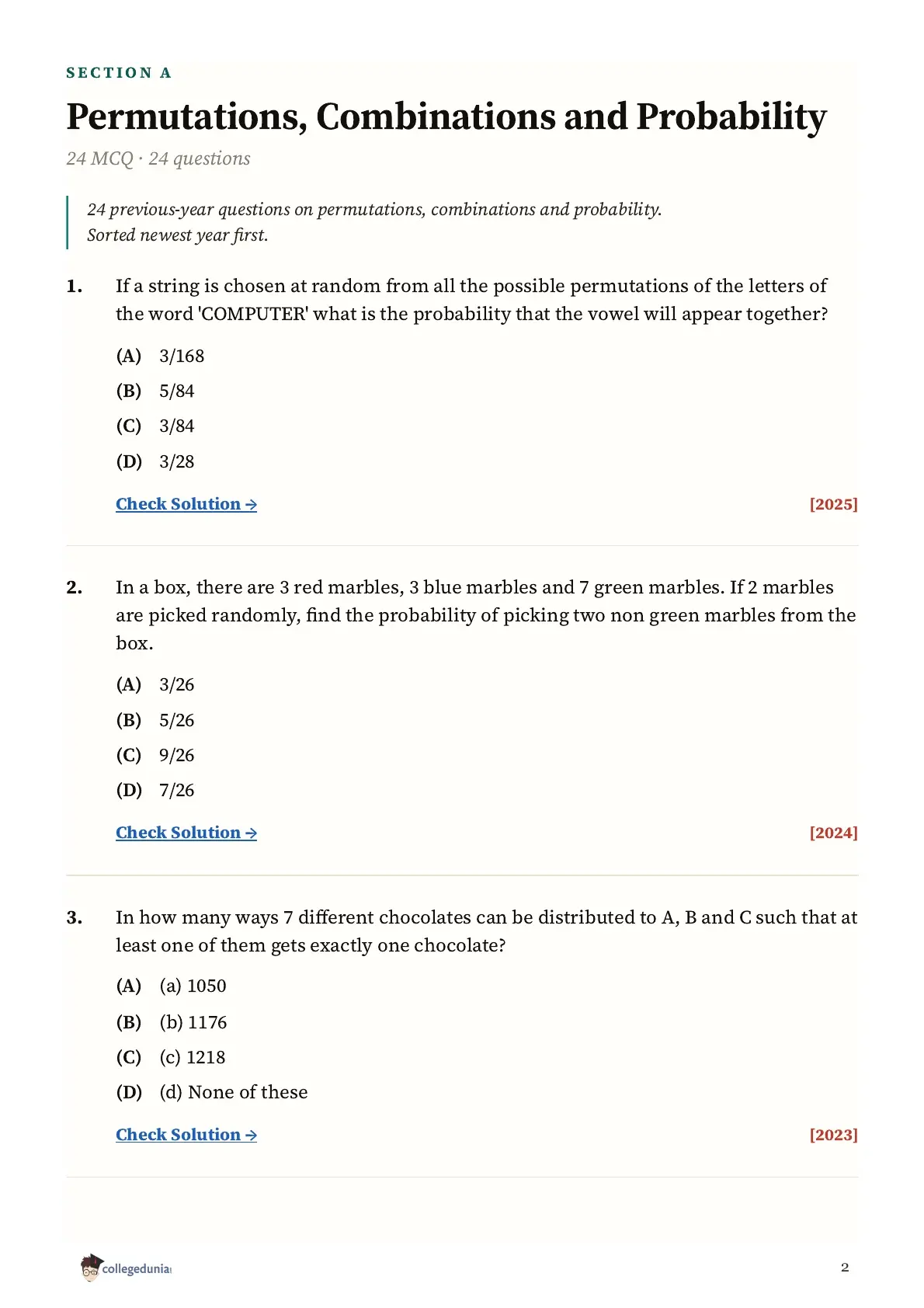
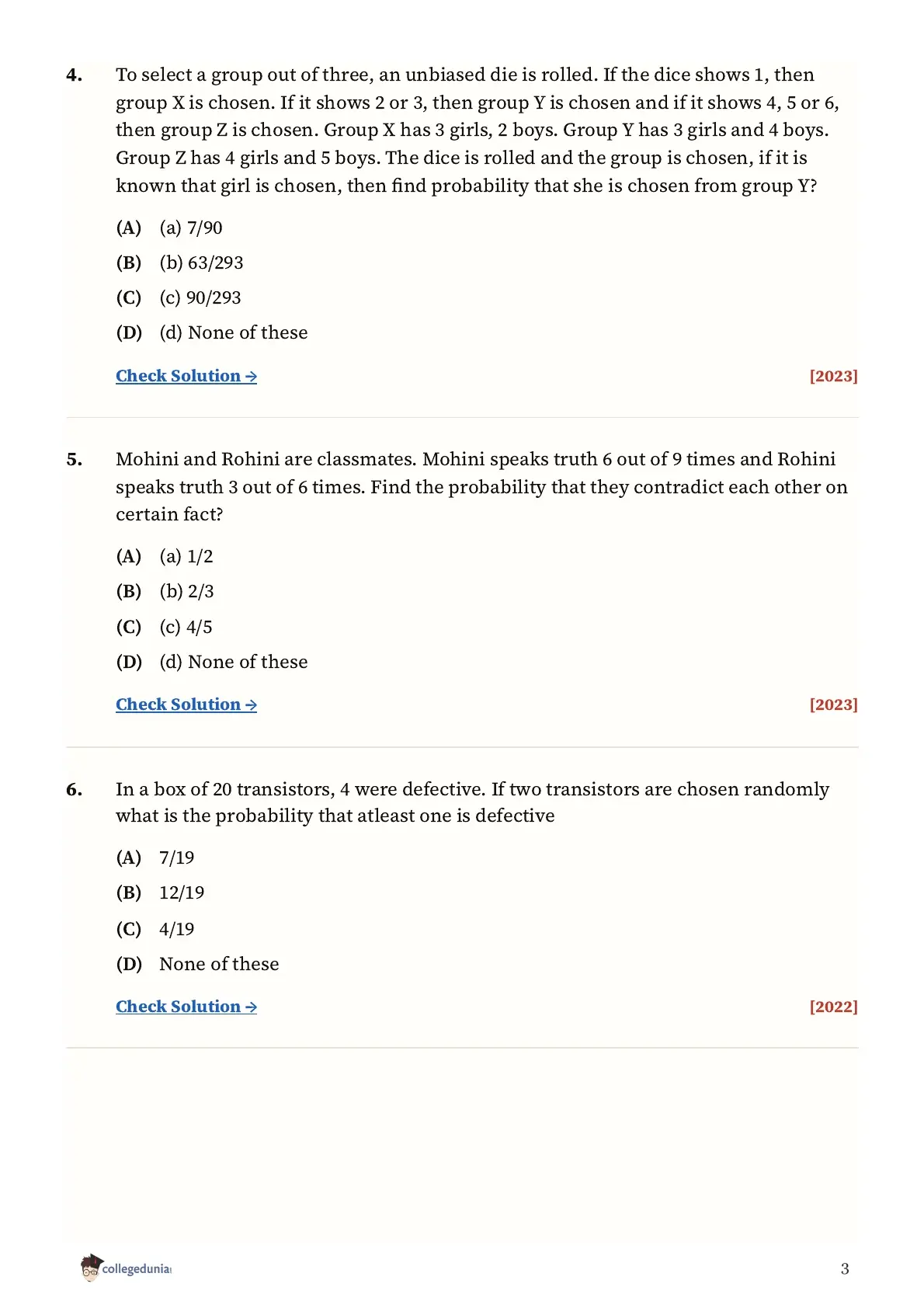
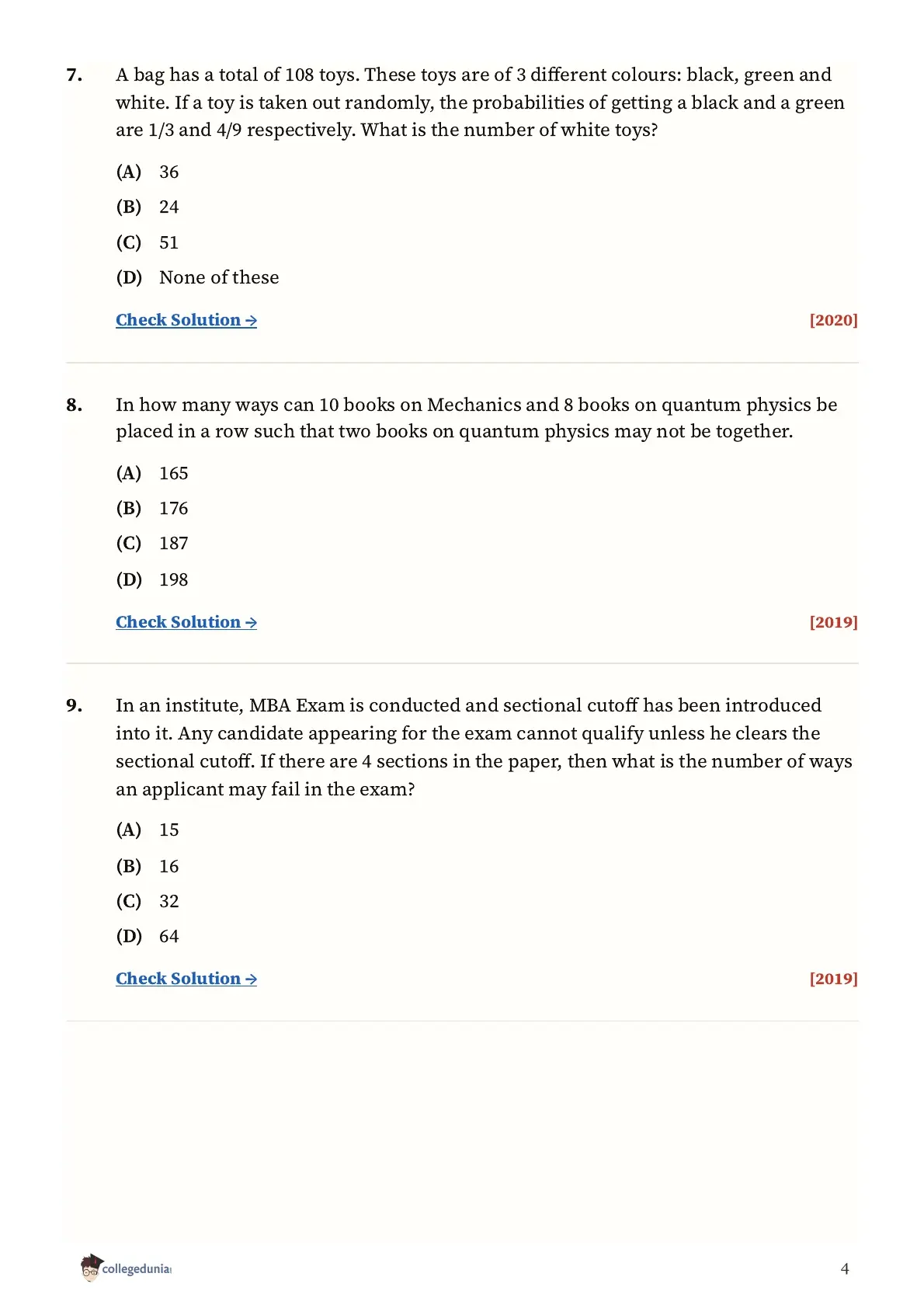
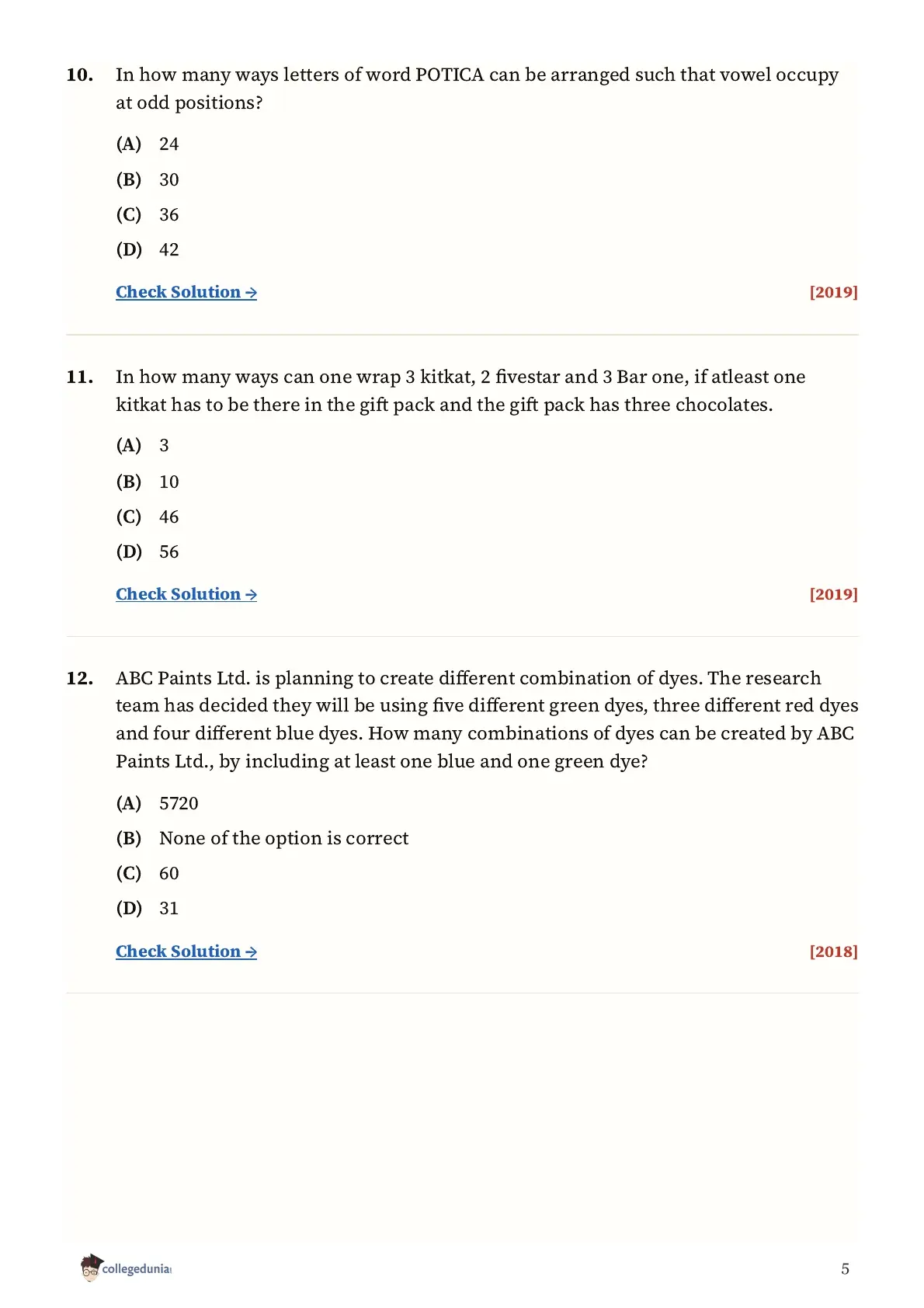
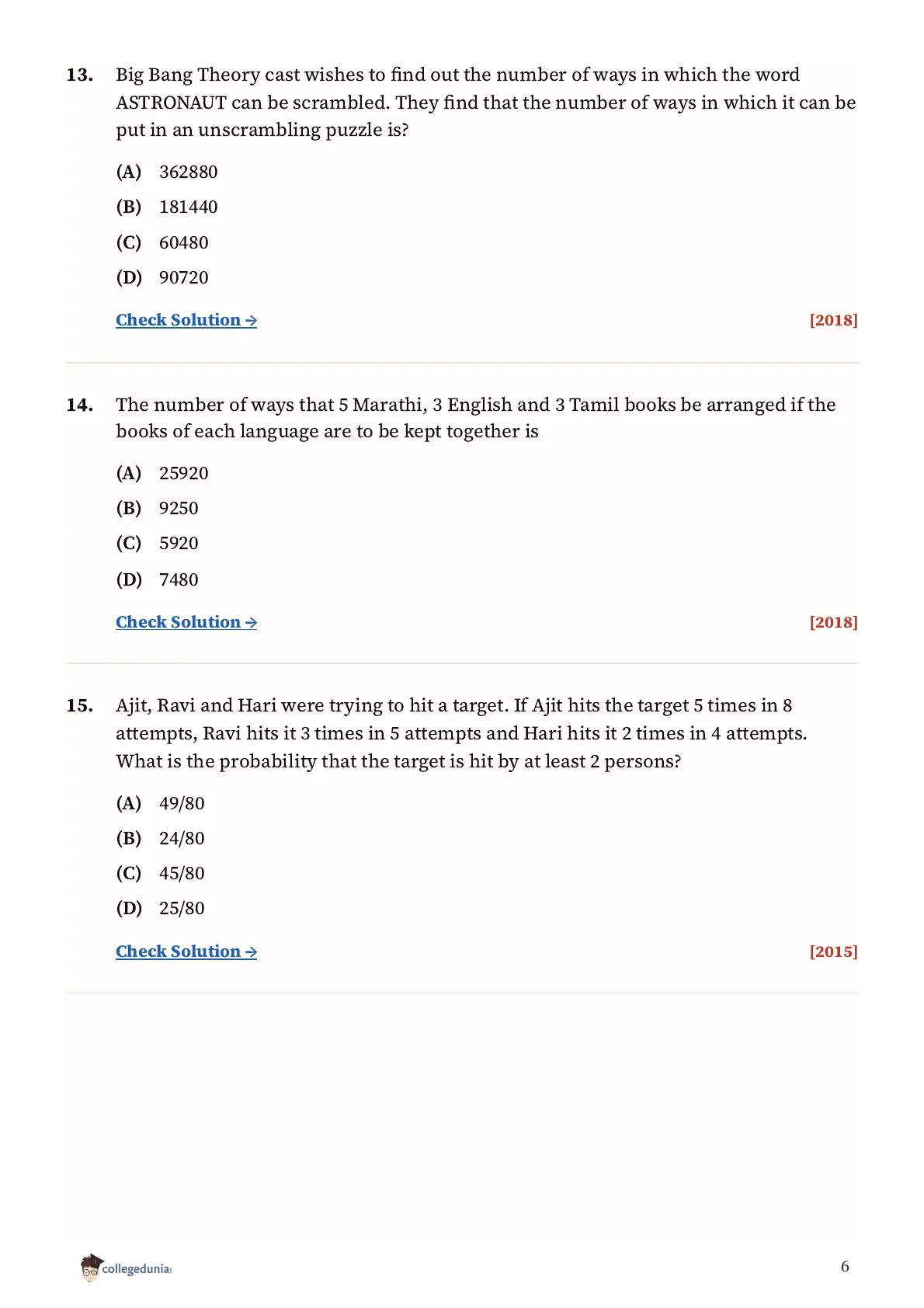
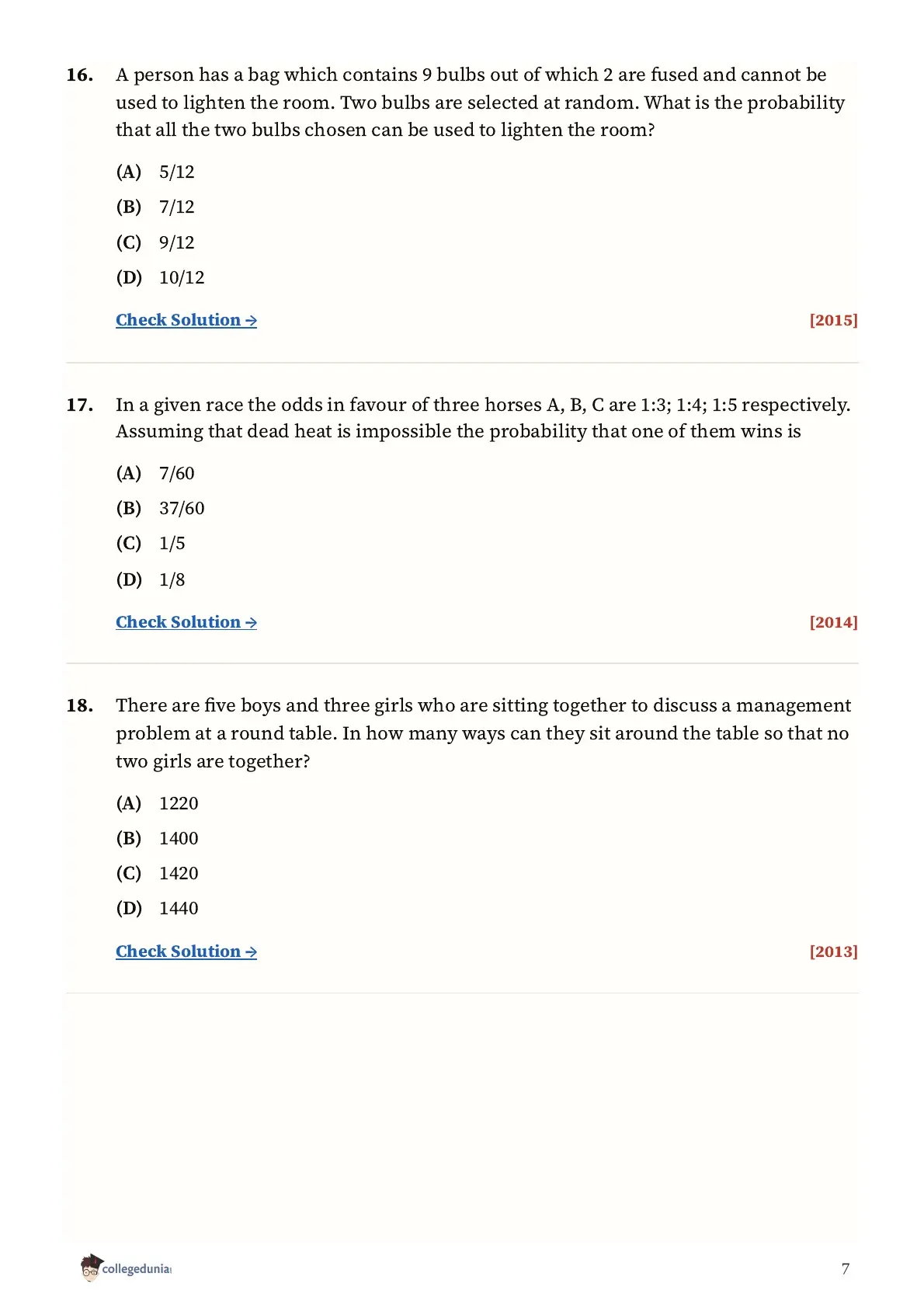
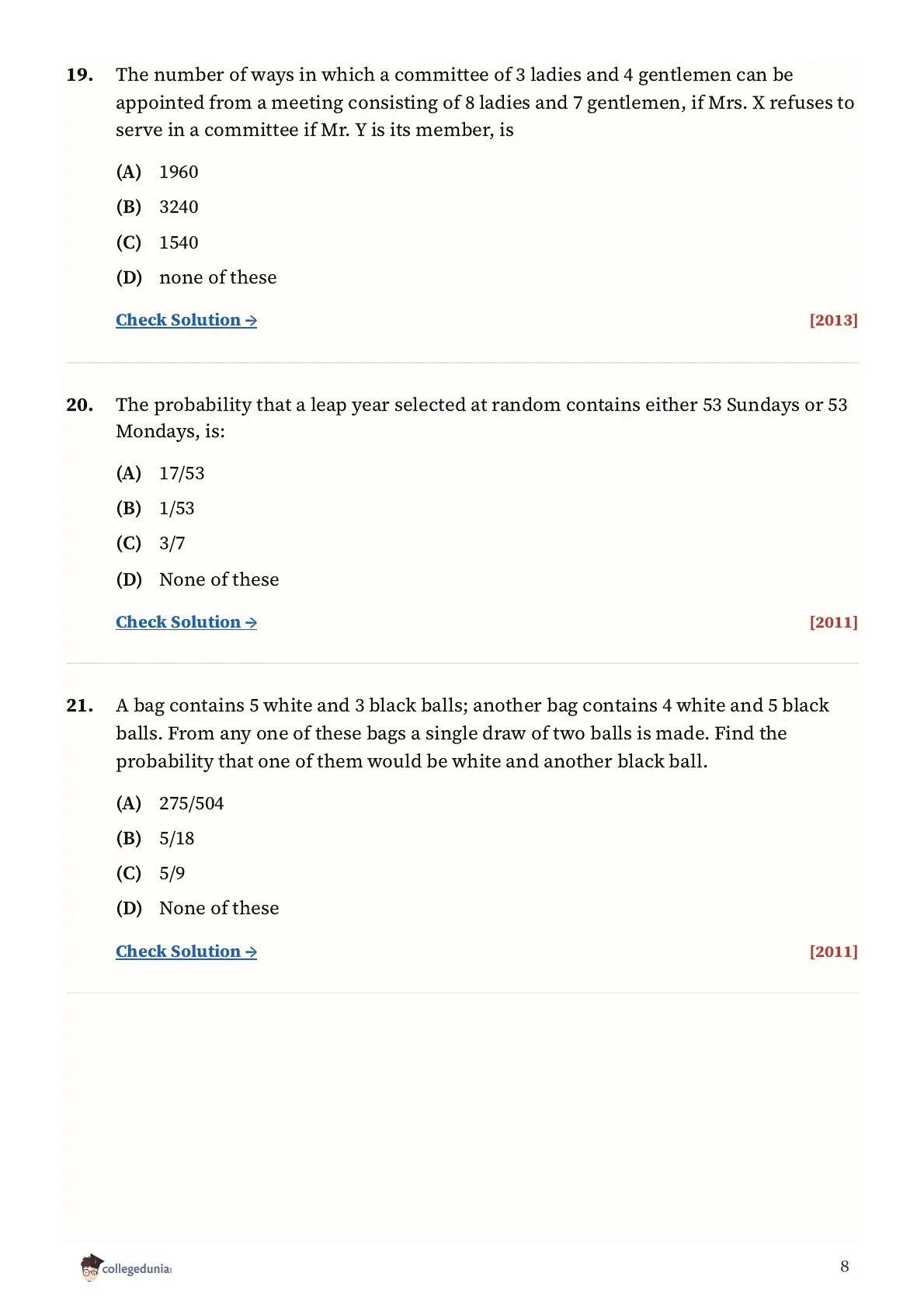
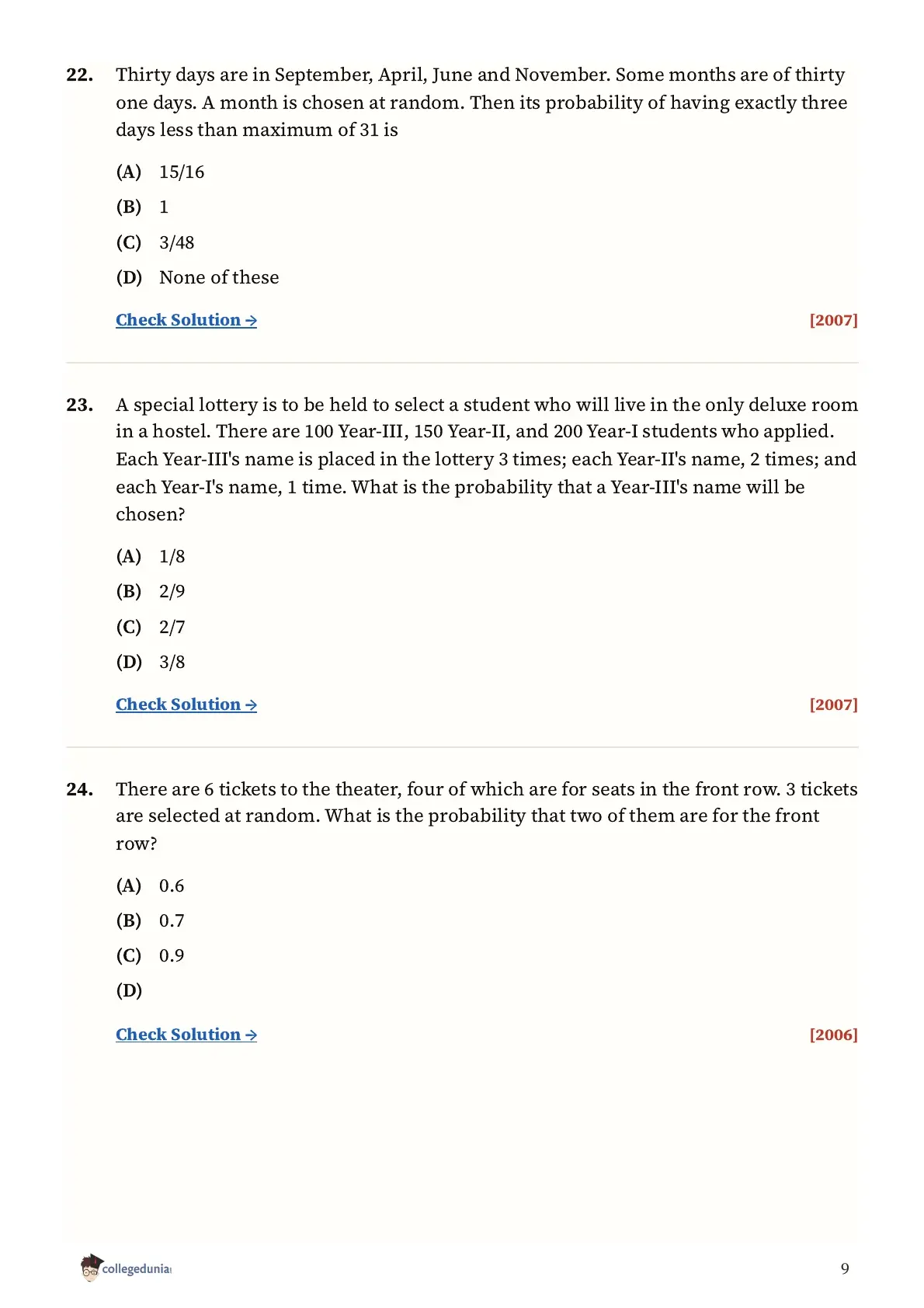
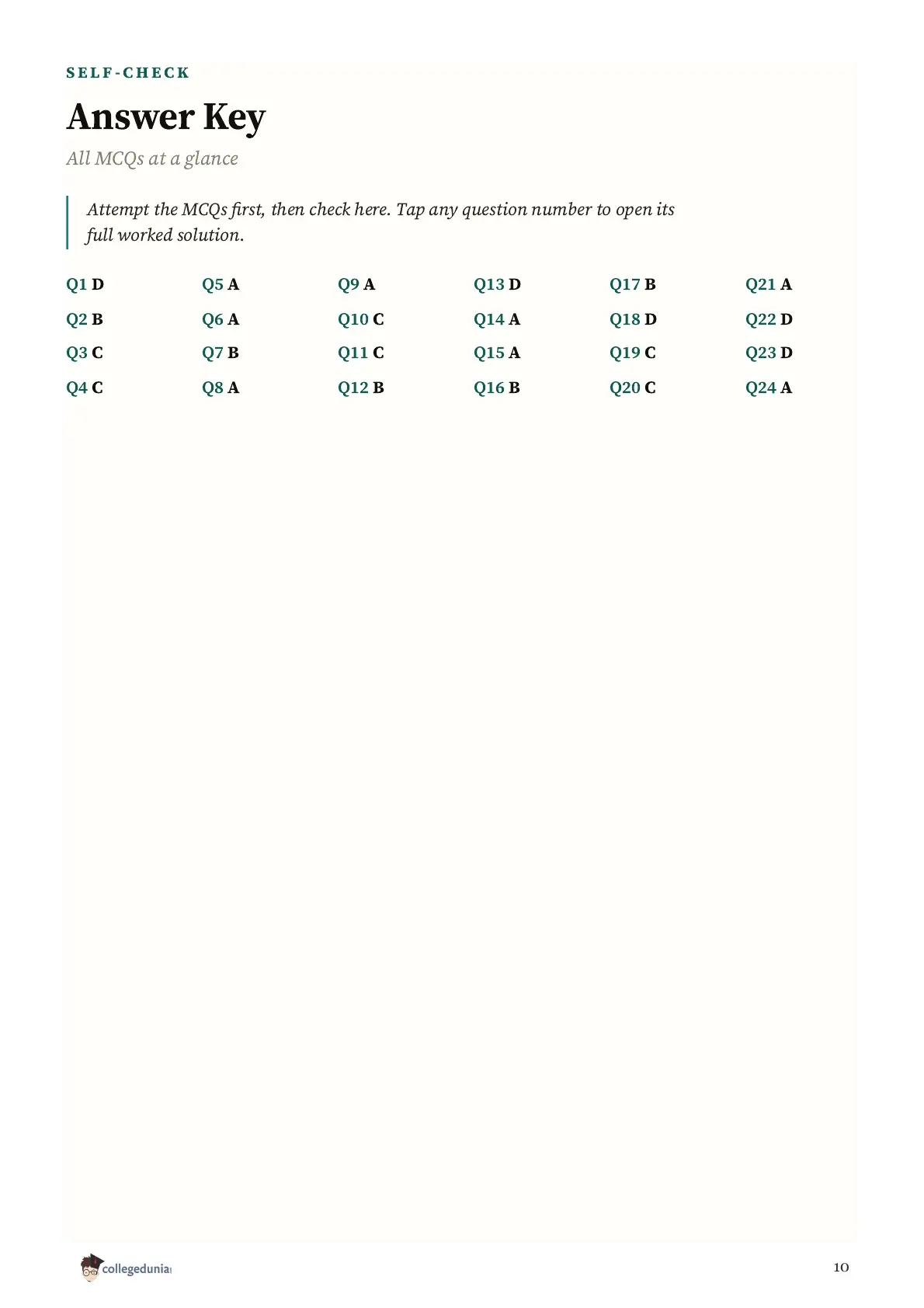
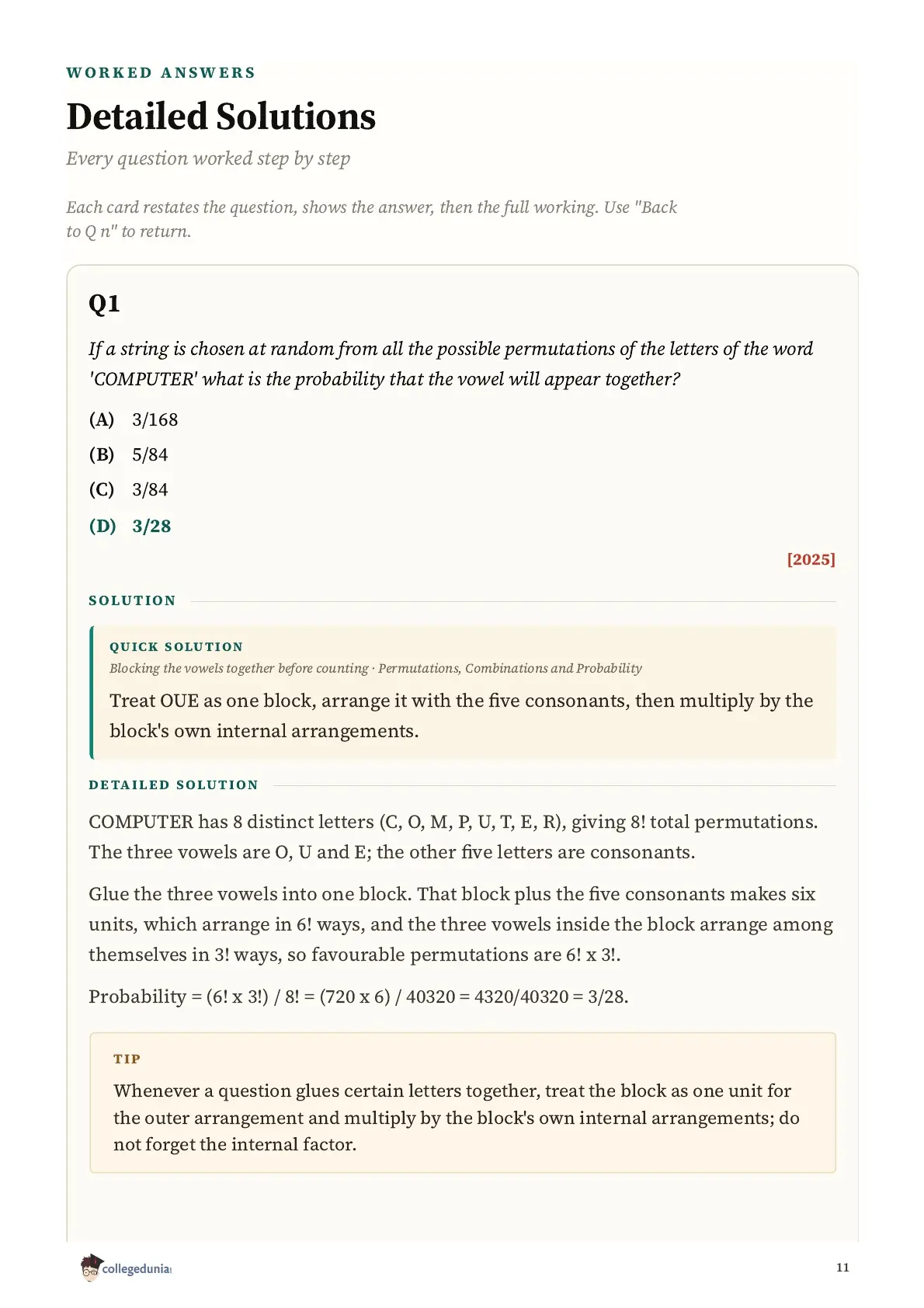
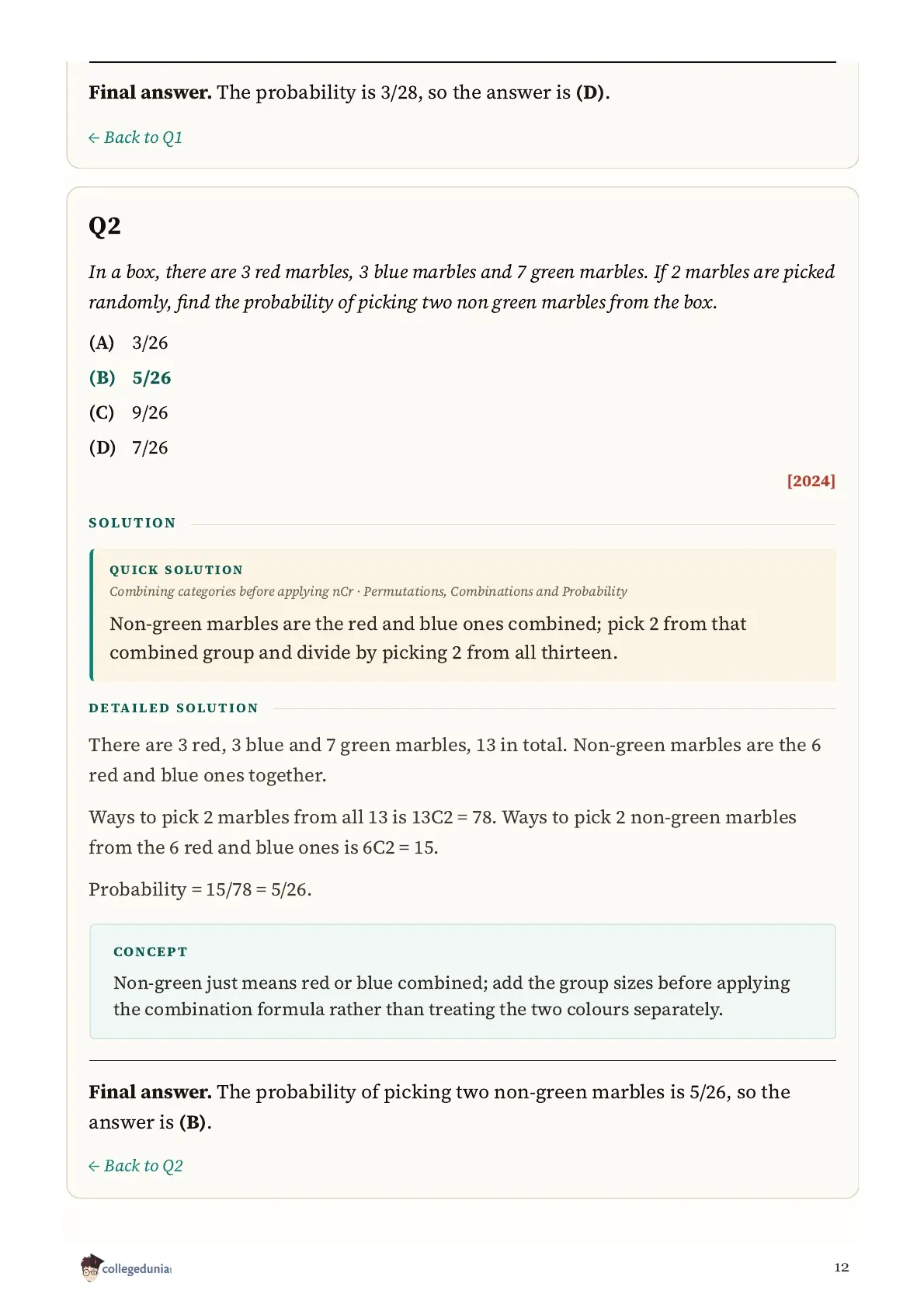
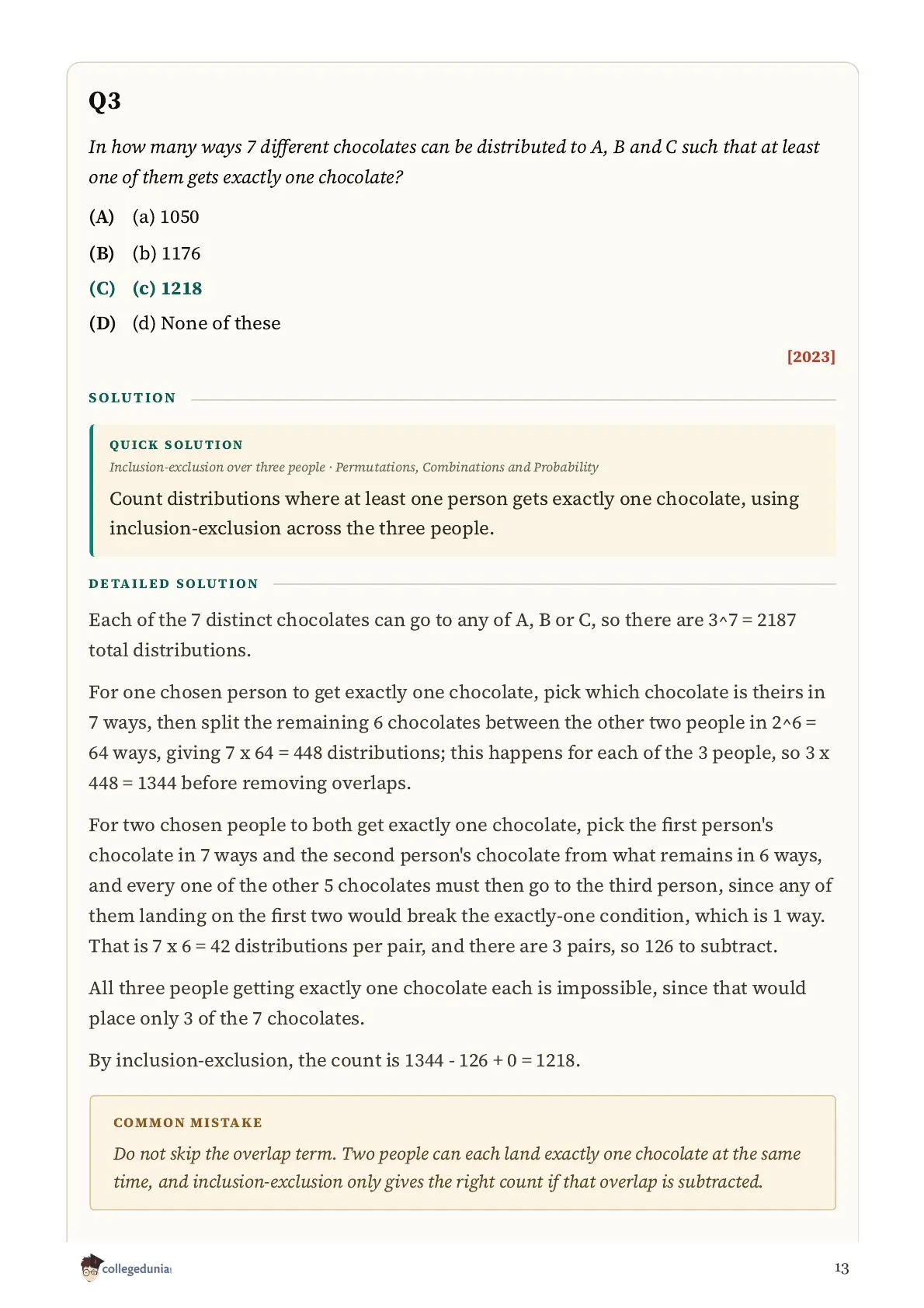
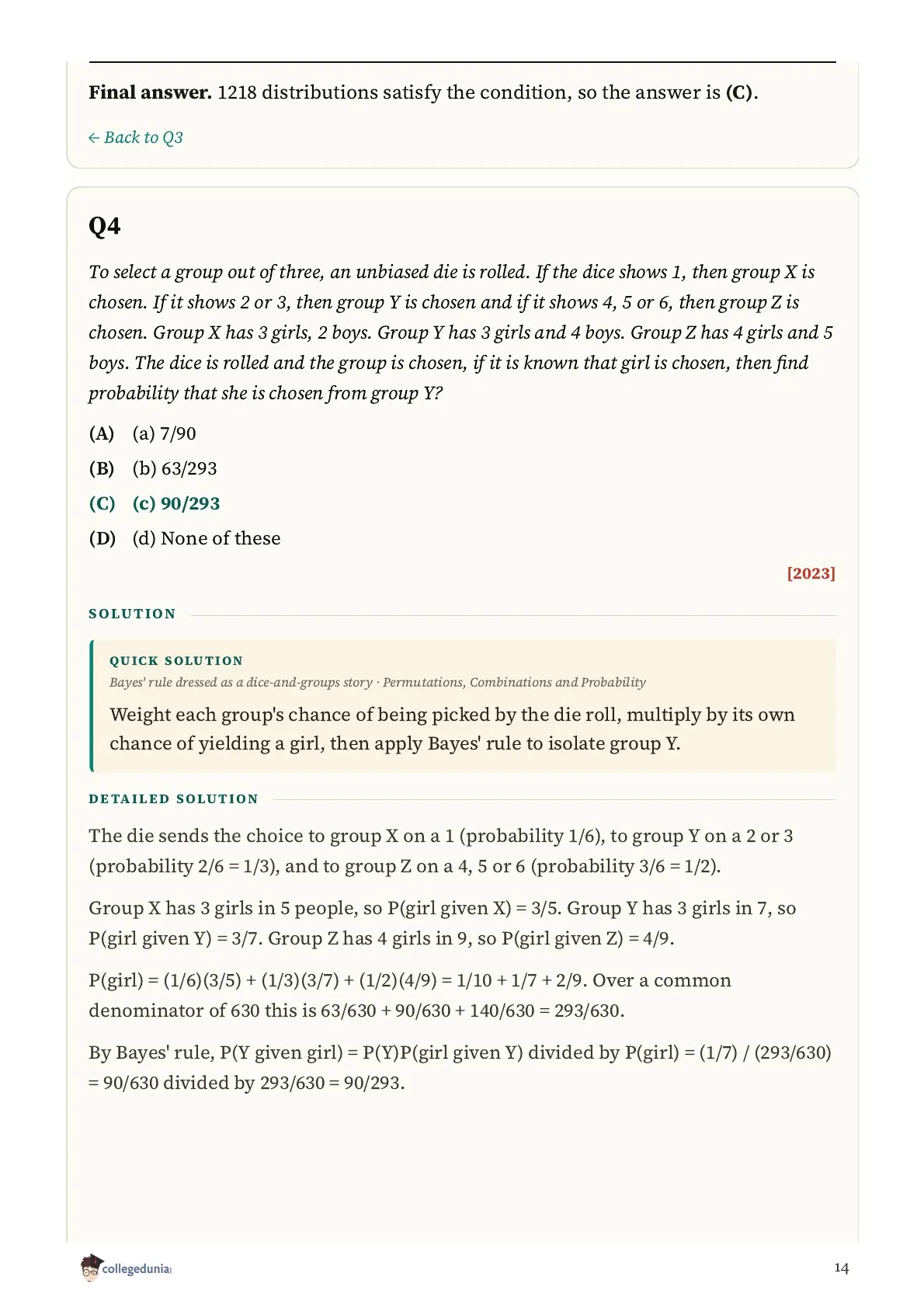
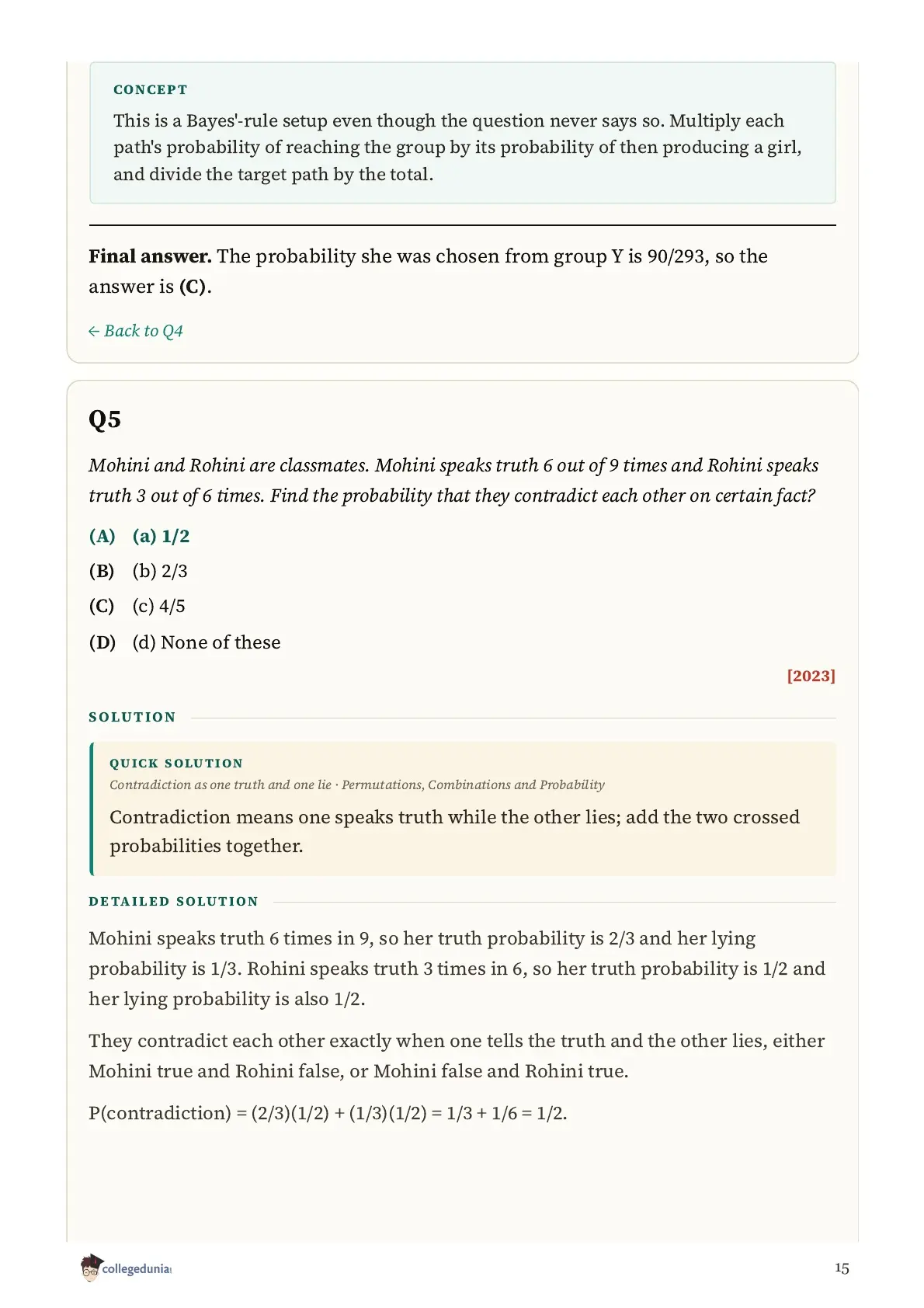
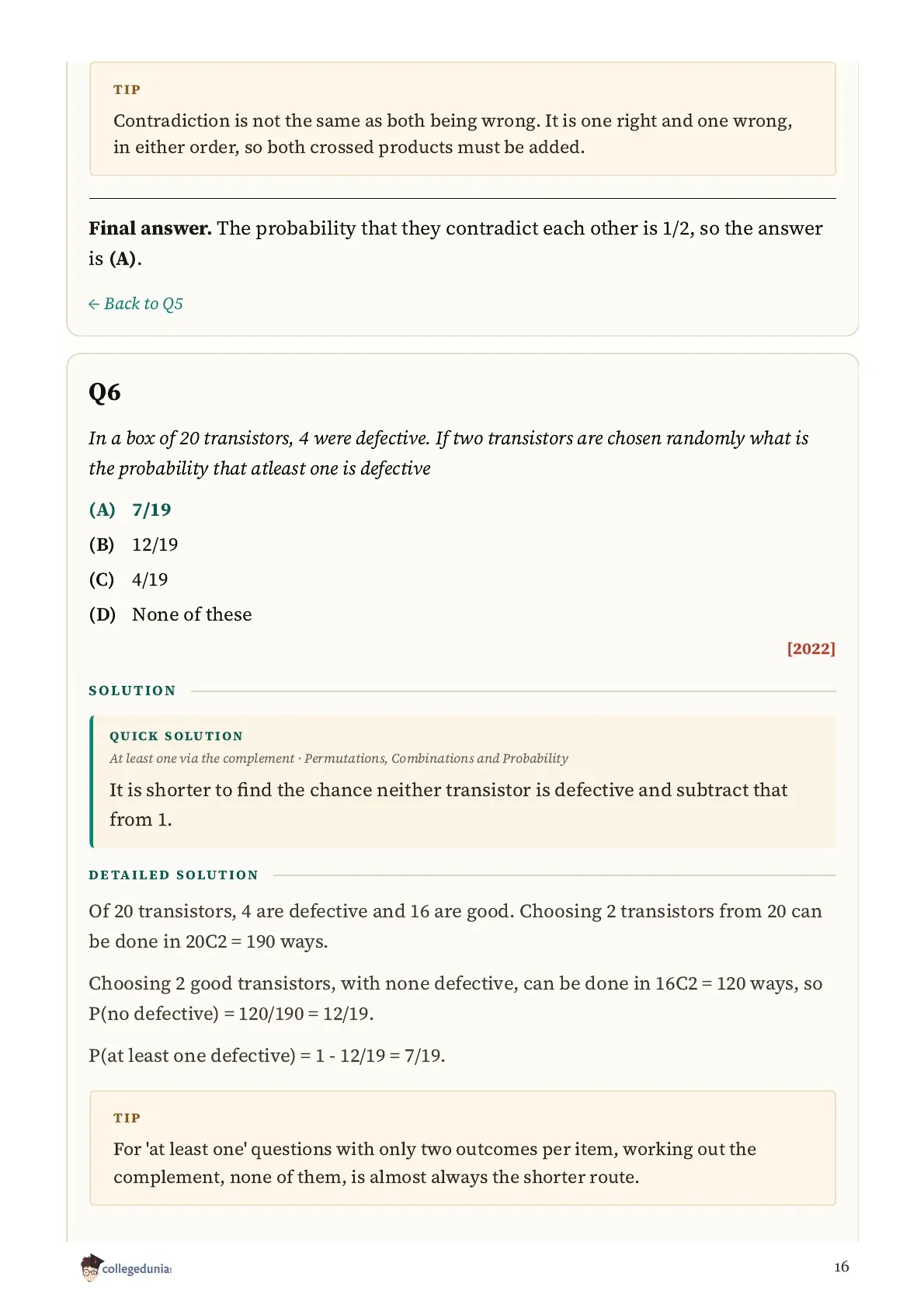
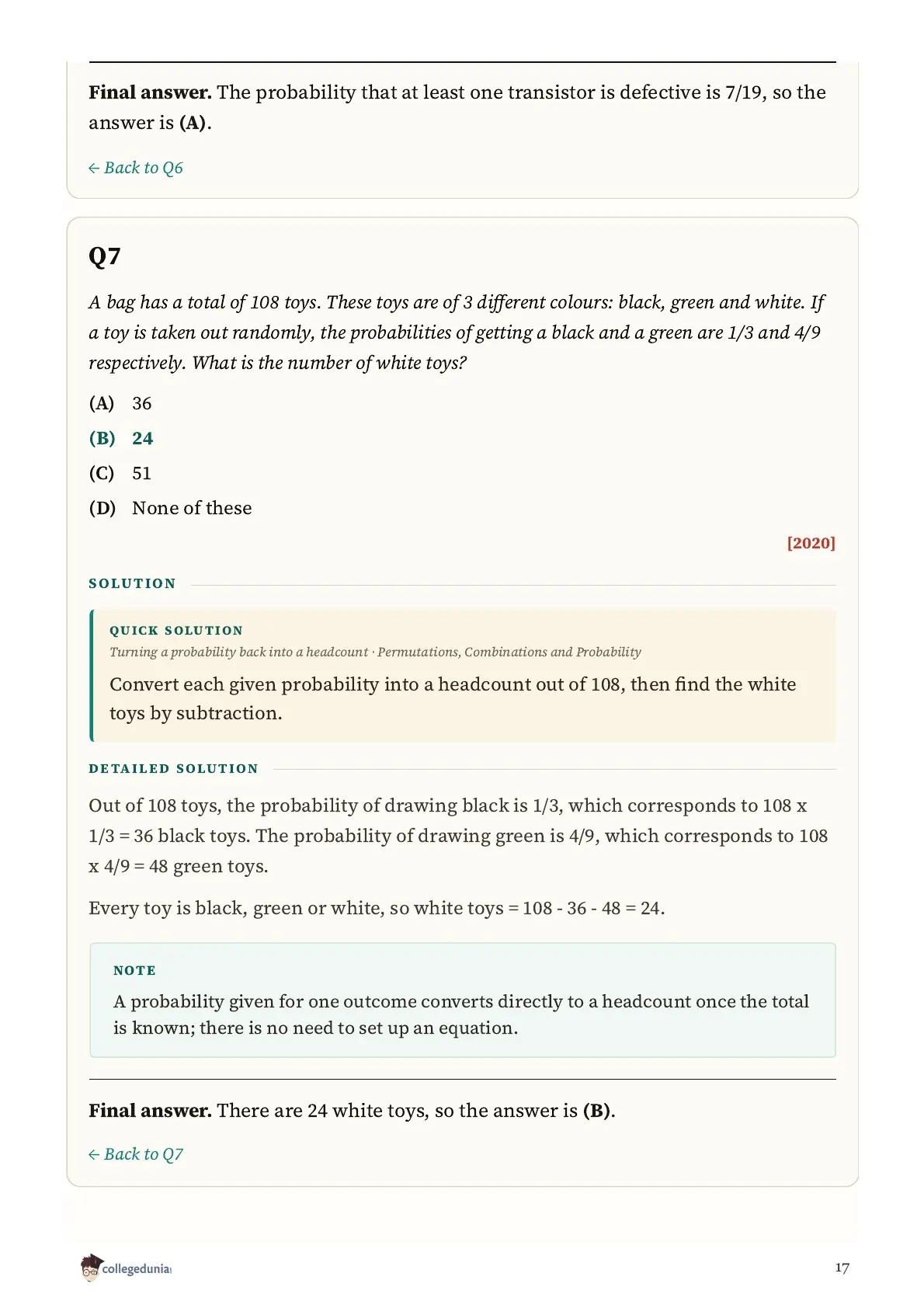
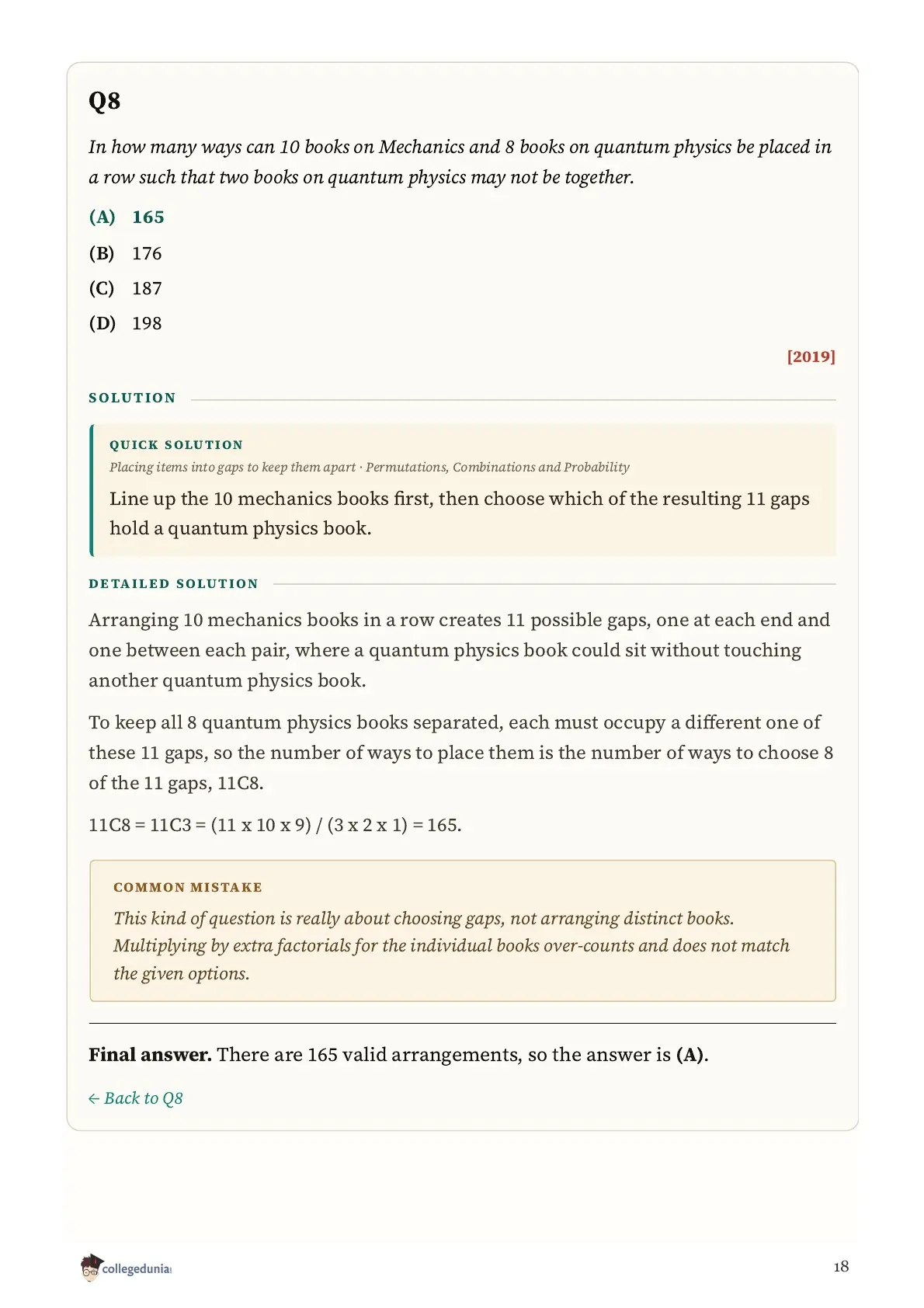
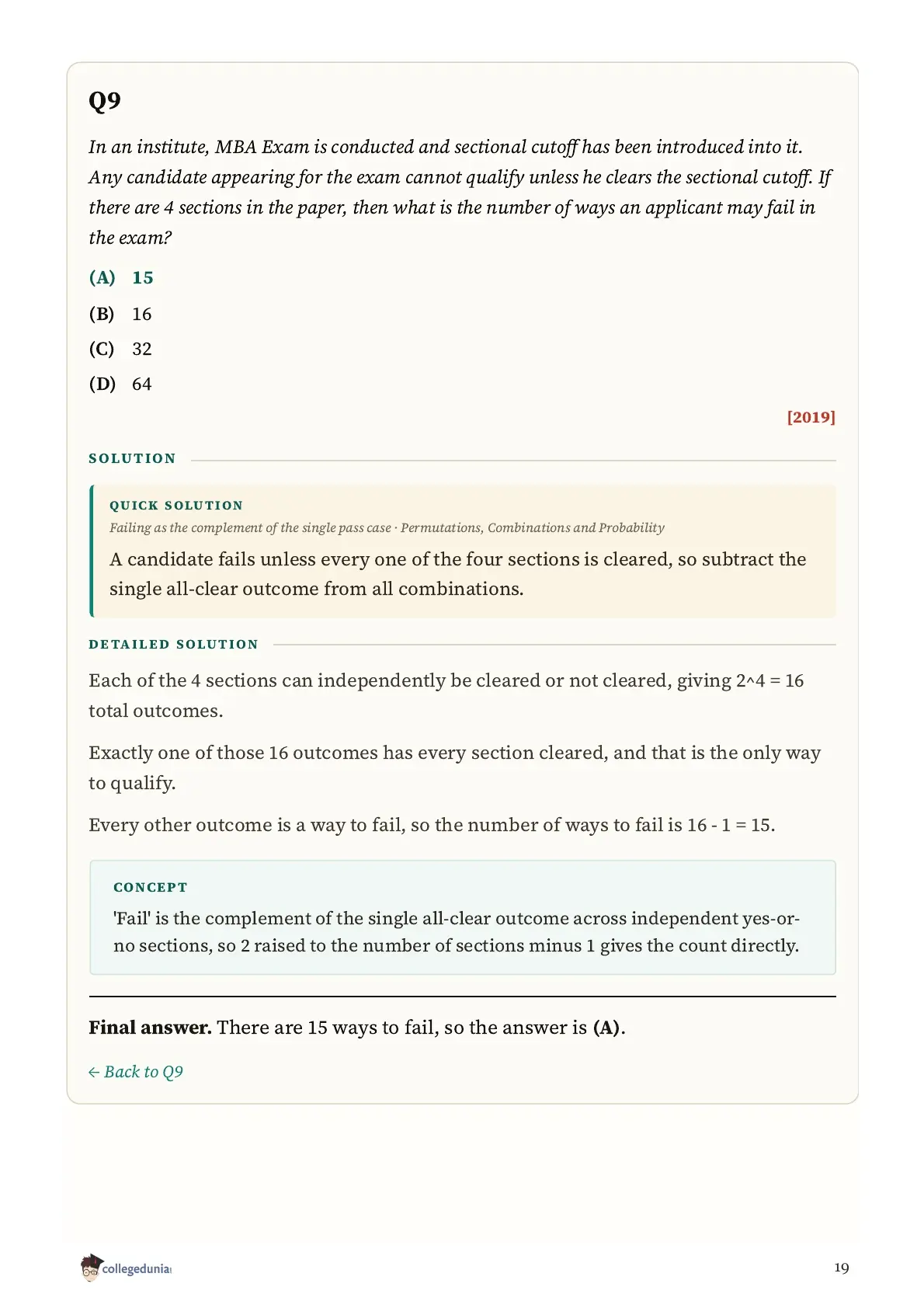
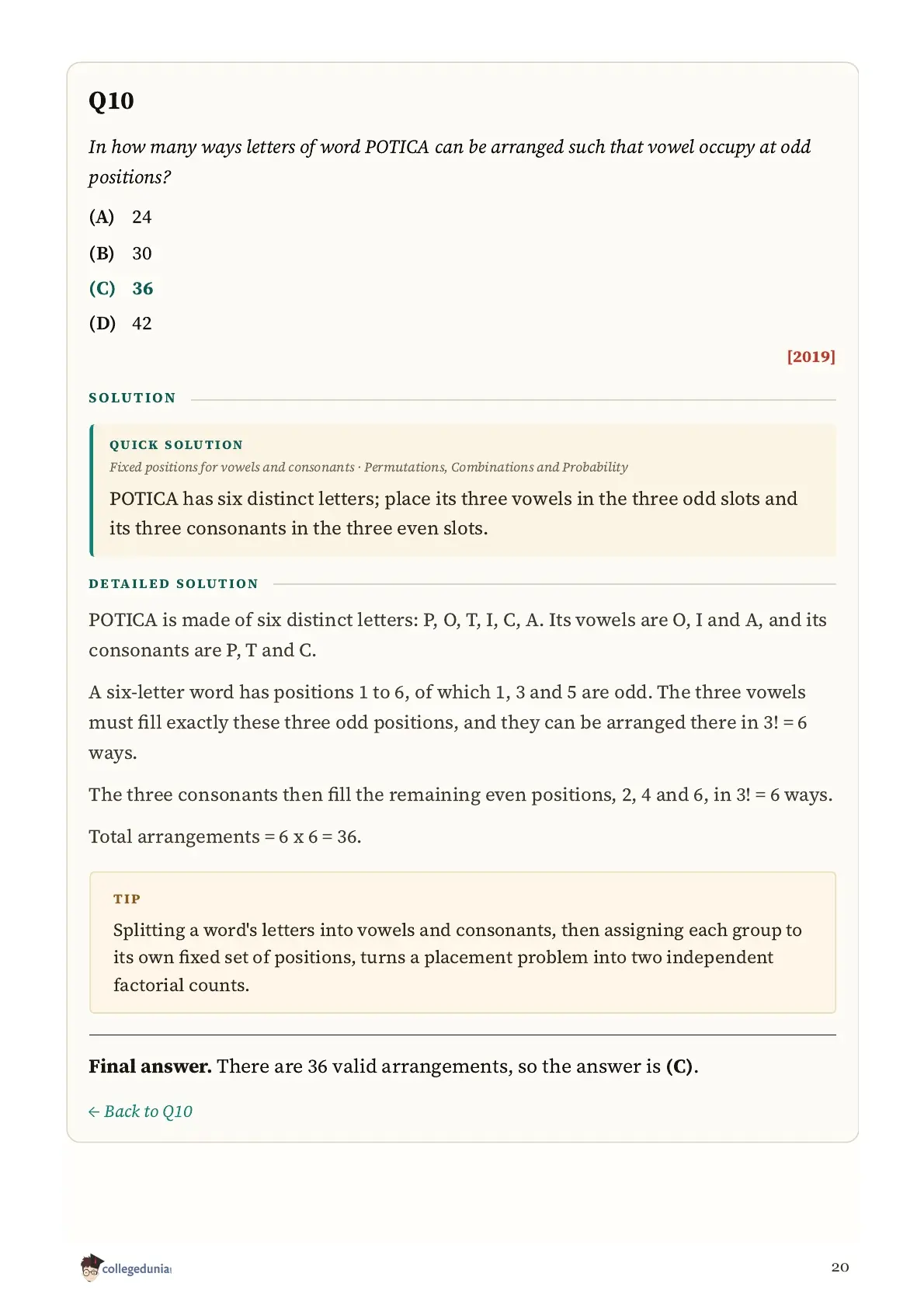
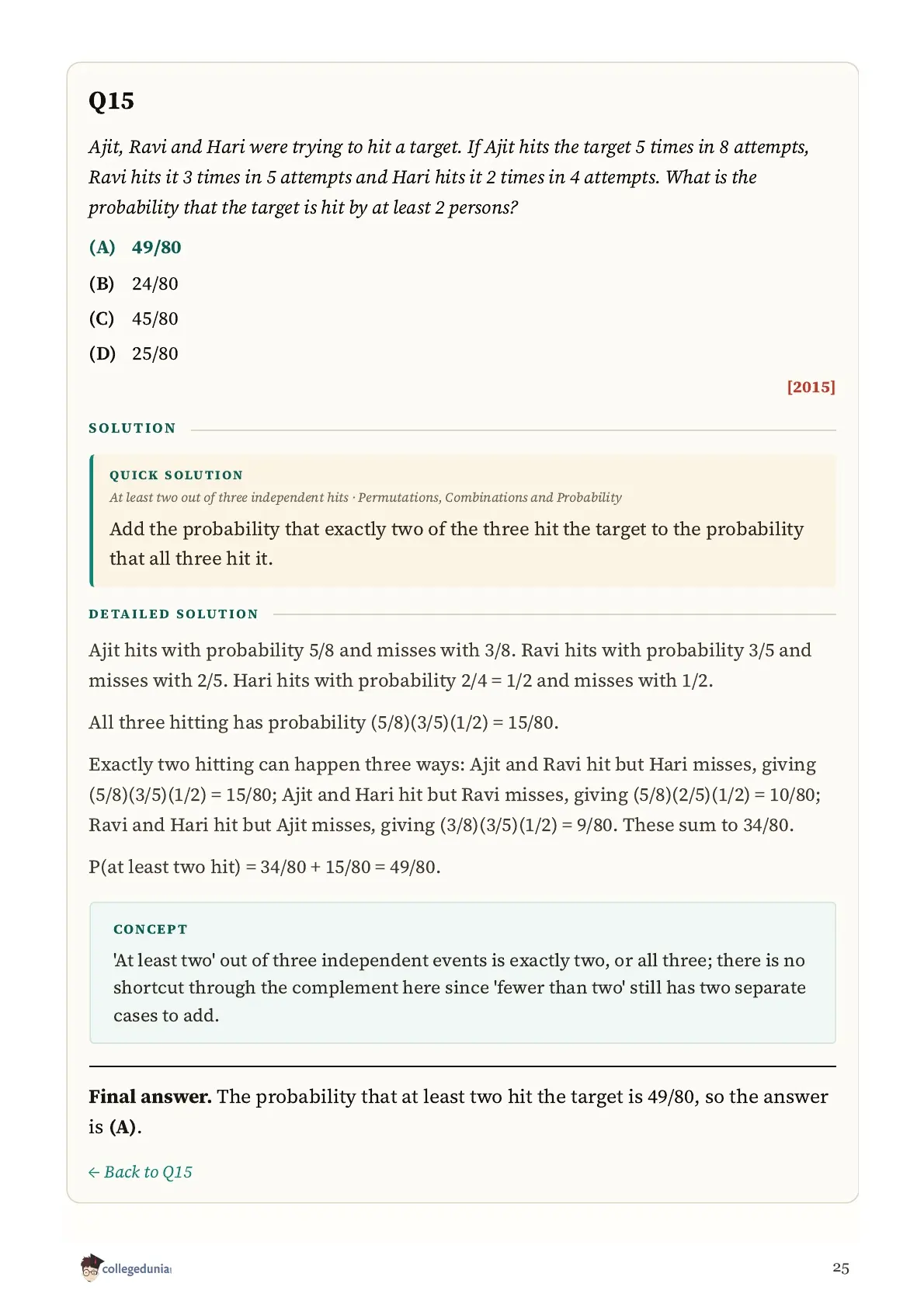
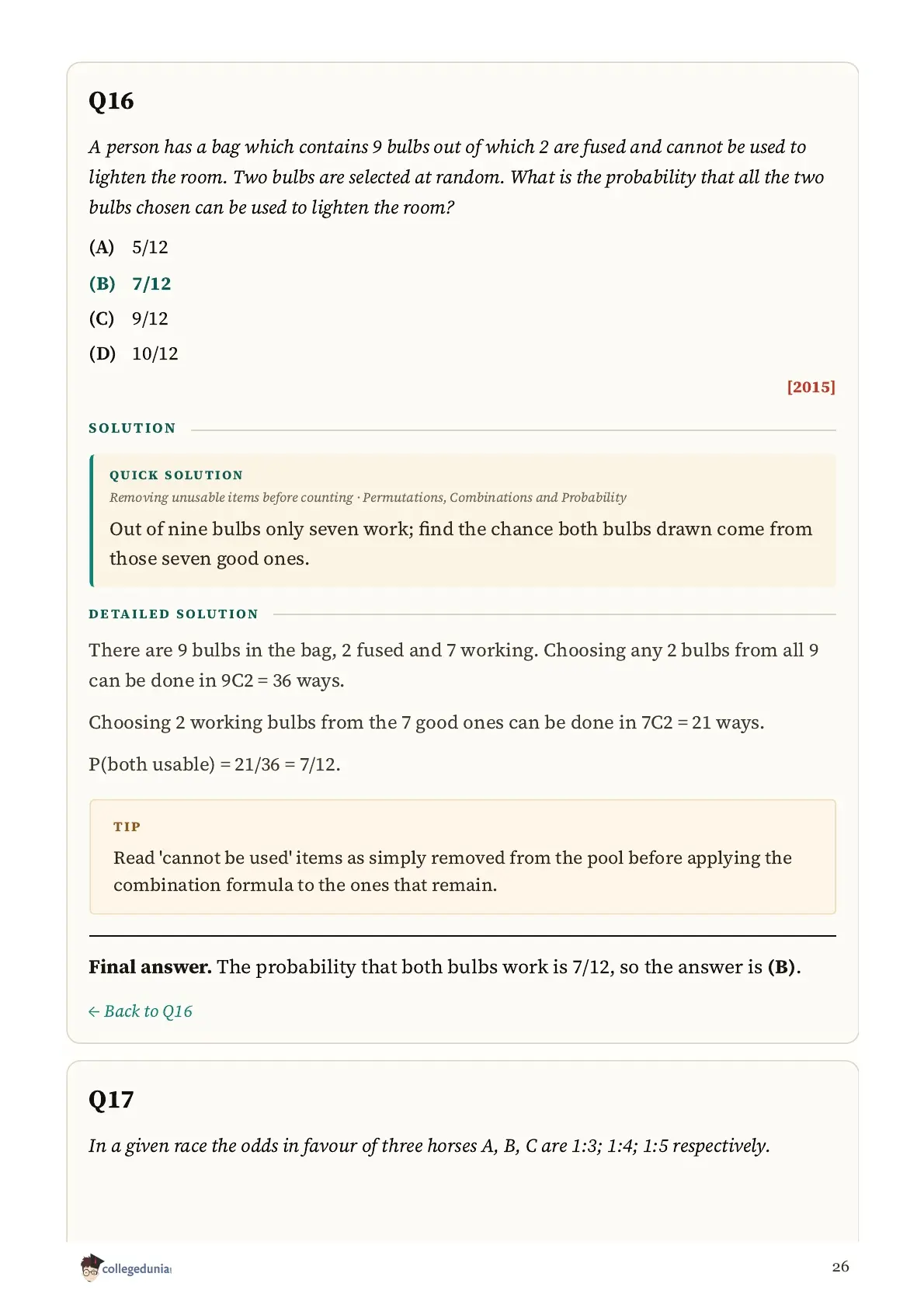
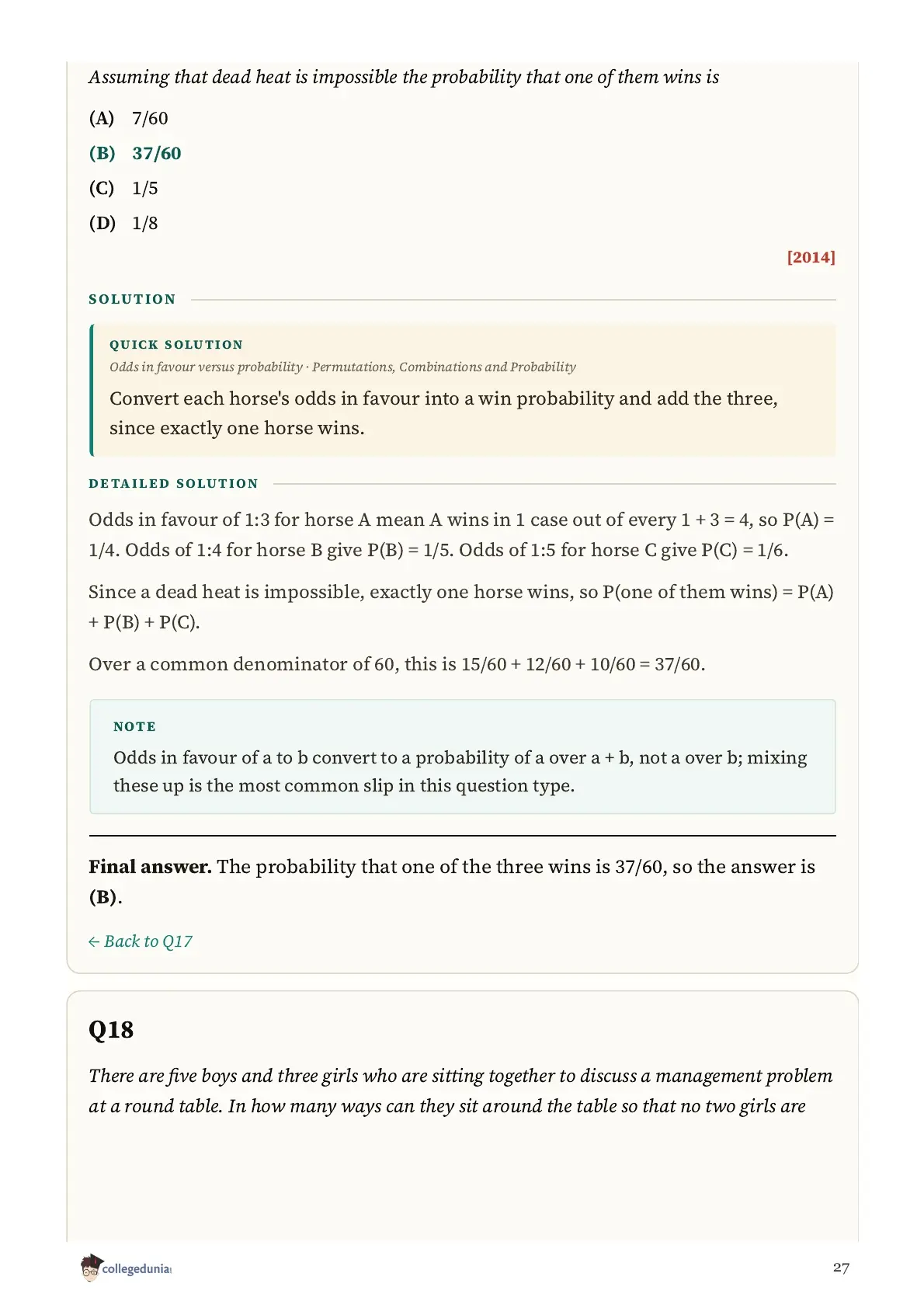
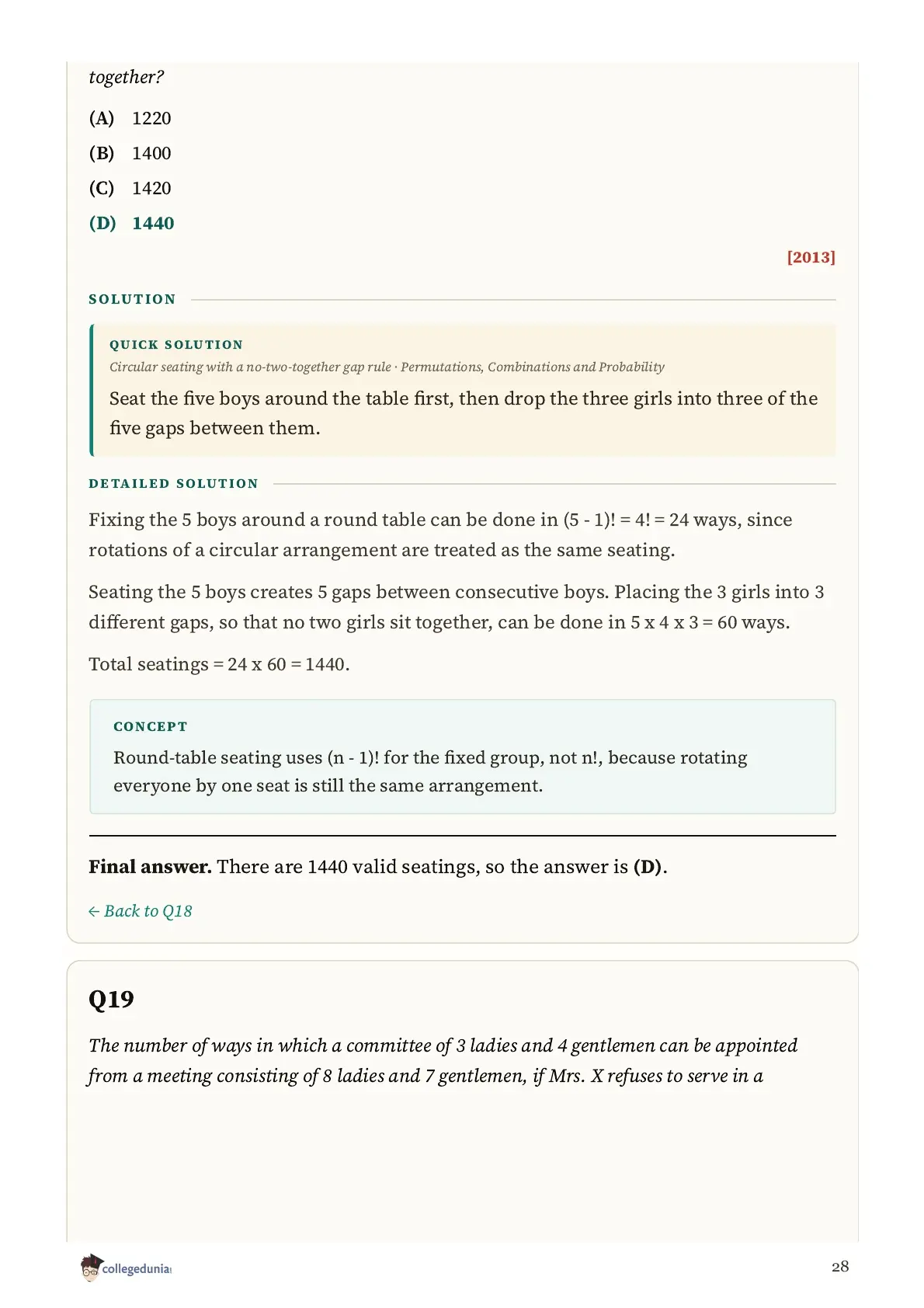
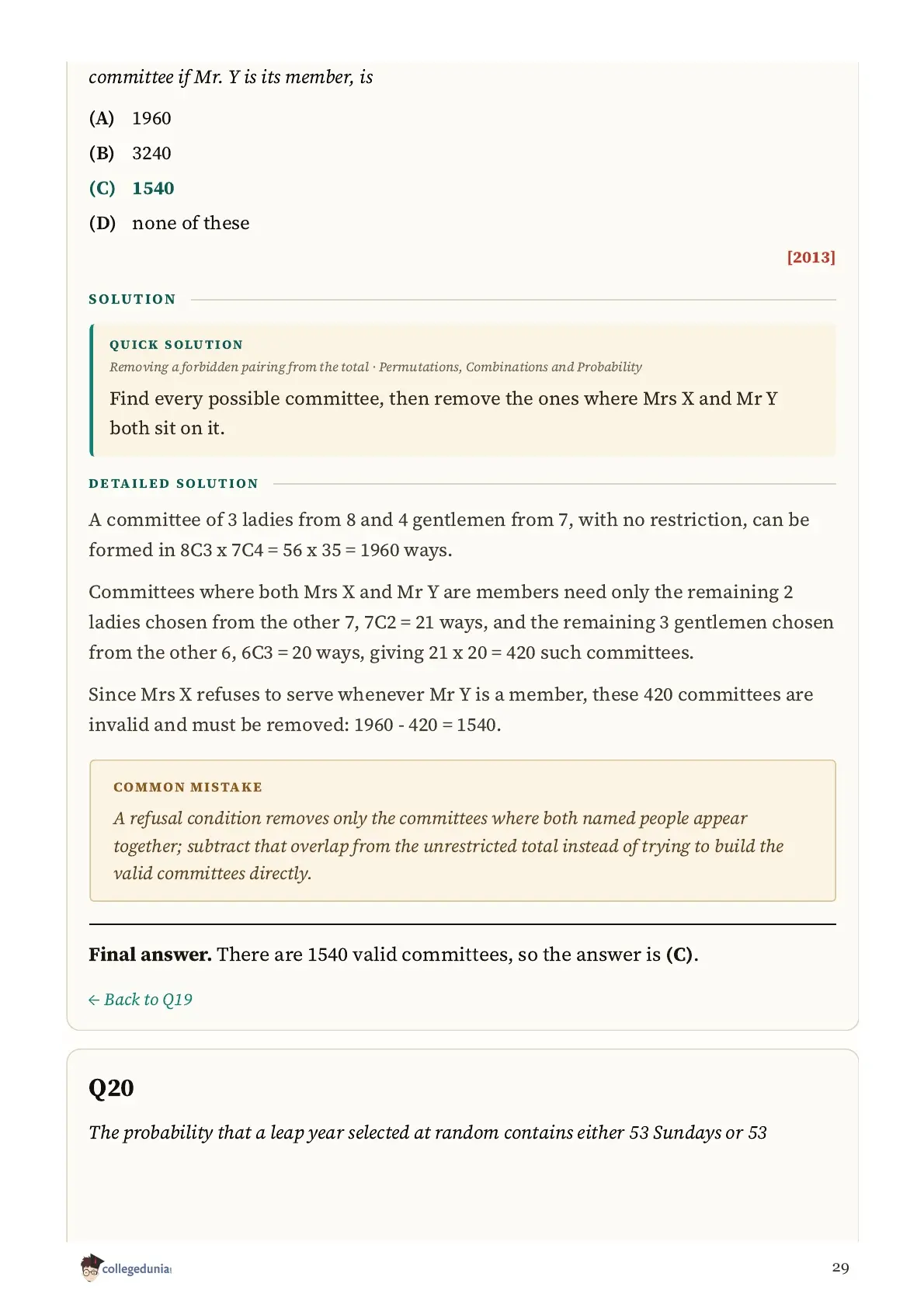
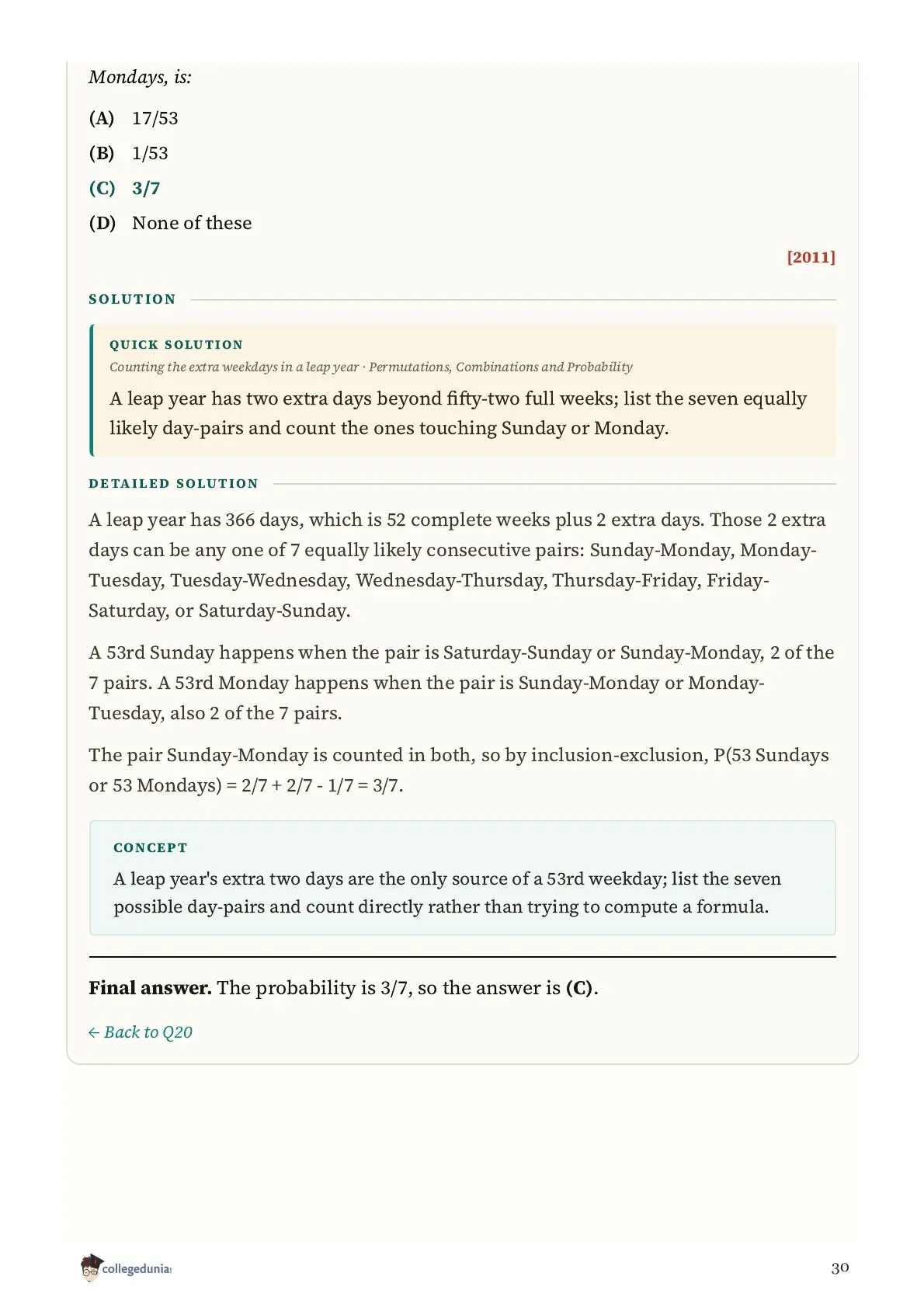
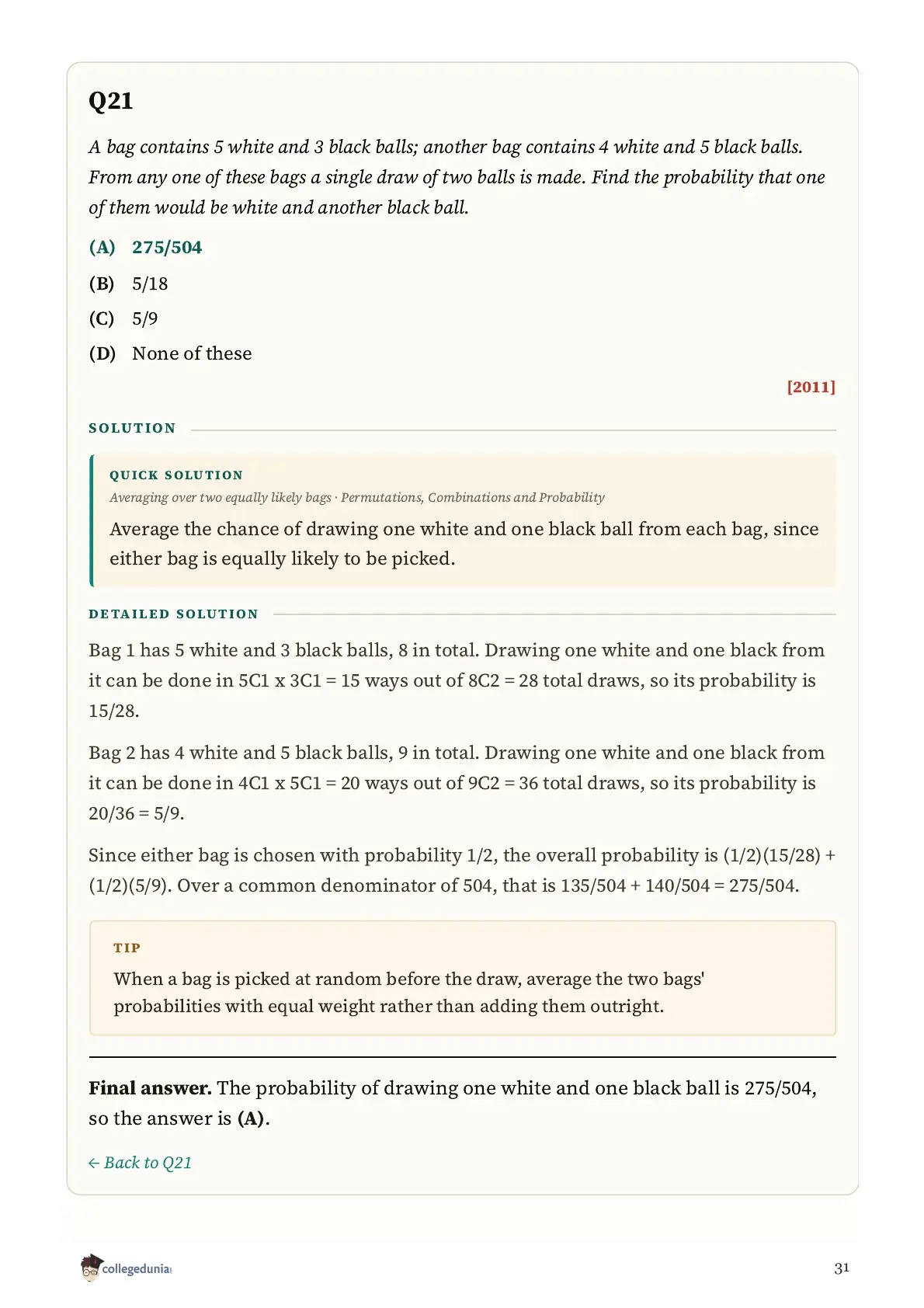
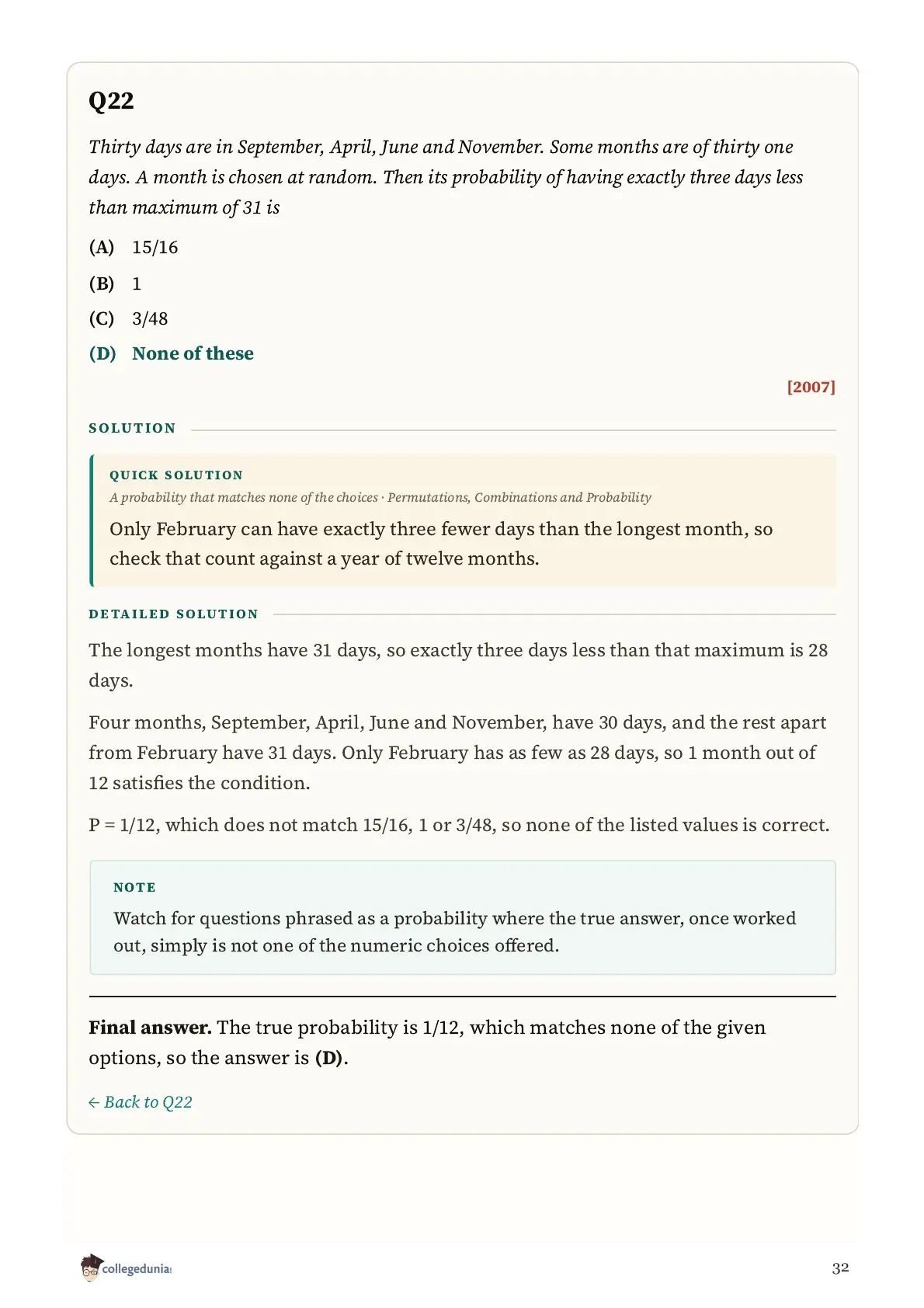
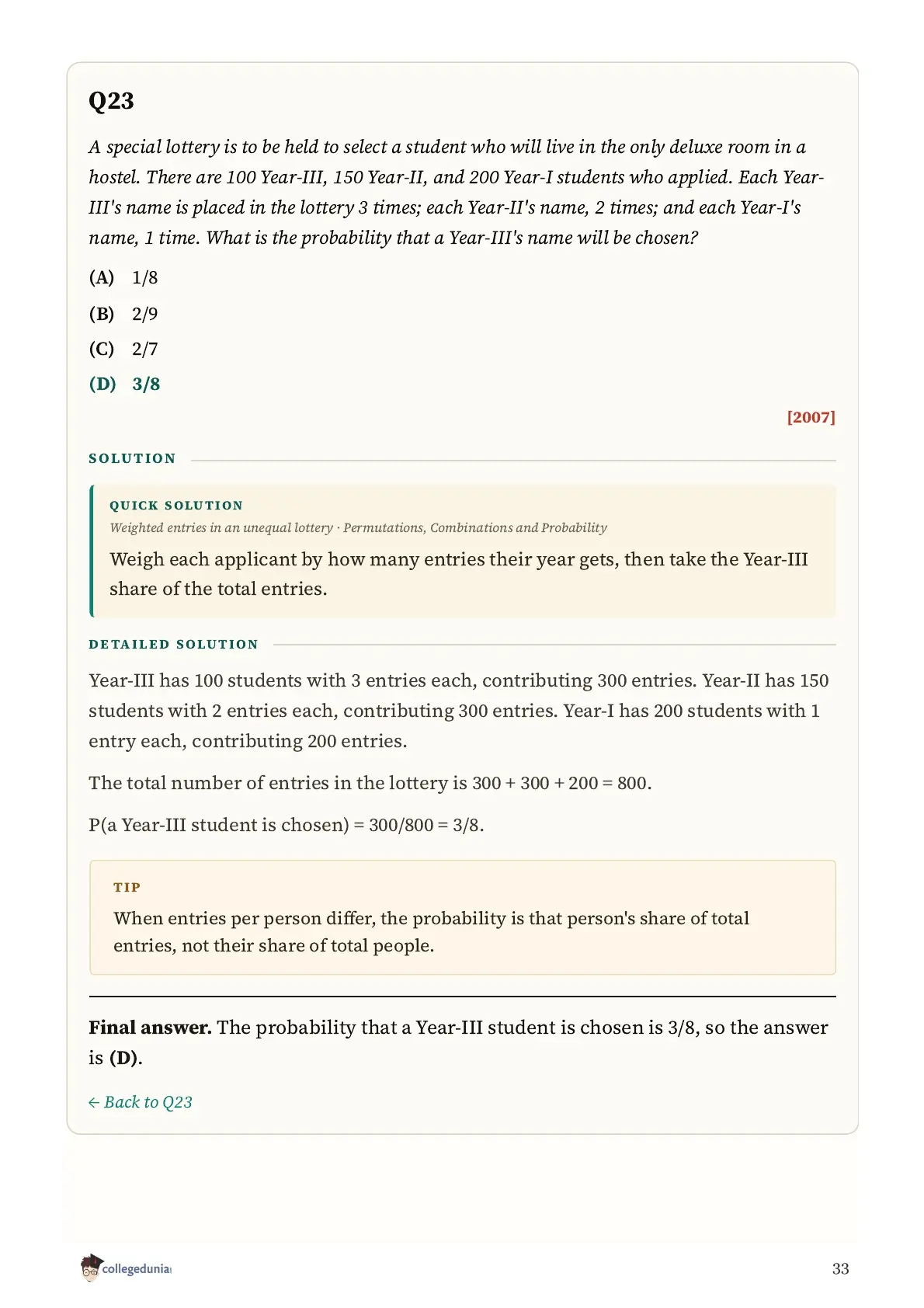
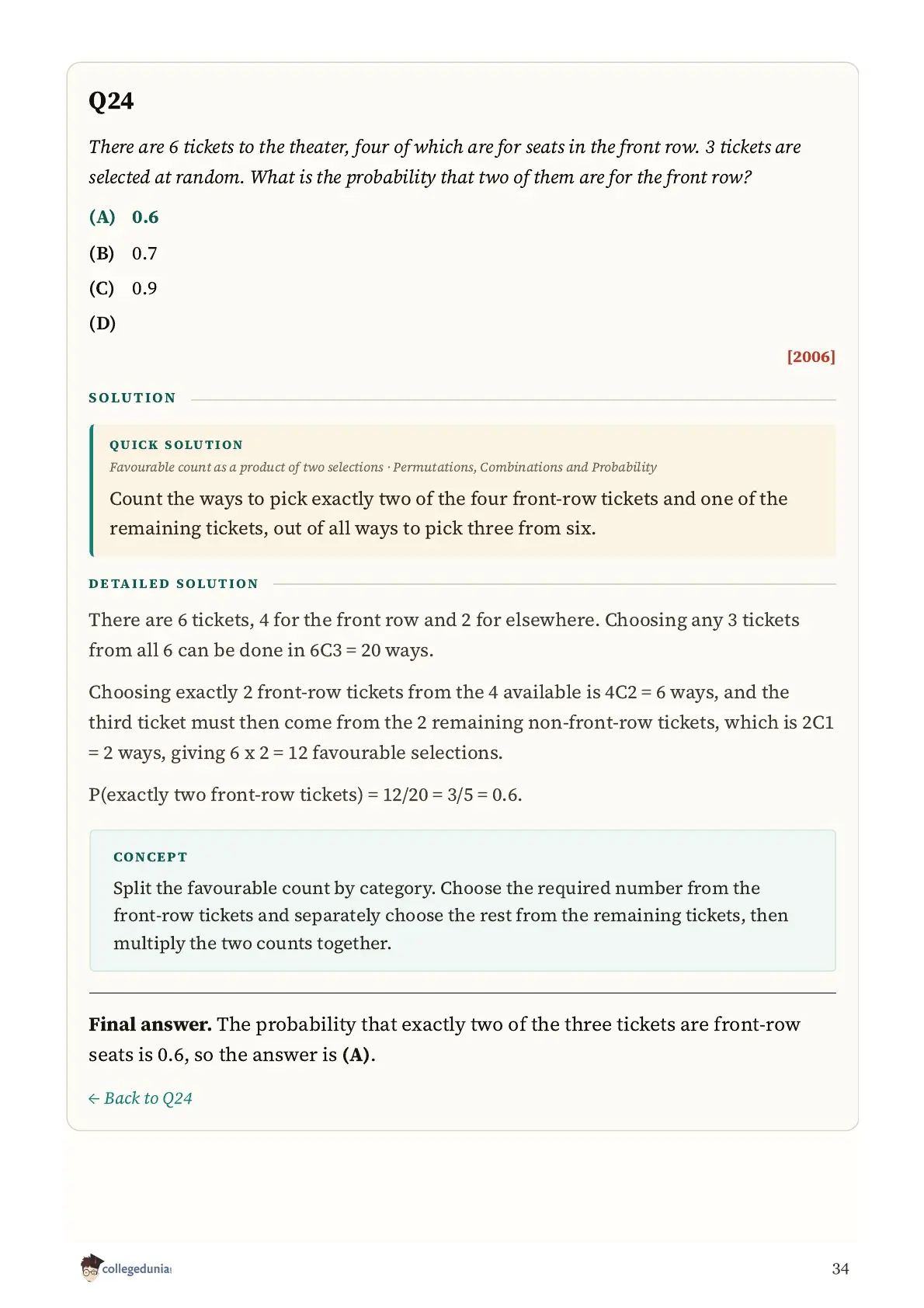
Questions run newest year first, with the options exactly as printed. The answer key follows, then a worked solution for each one.
SNAP Permutations and Probability Weightage
The topic sits in the Quantitative, Data Interpretation and Data Sufficiency section, 20 of SNAP's 60 questions, and has produced at least one question in nearly every paper since 2006.
| Papers | Questions in this bank |
|---|---|
| 2006 to 2010 | 3 |
| 2011 to 2015 | 7 |
| 2018 to 2020 | 8 |
| 2021 to 2025 | 6 |
2018 to 2020 was the densest stretch, at eight questions in three papers. The topic has stayed steady since without dropping away.
What the 24 Questions Cover
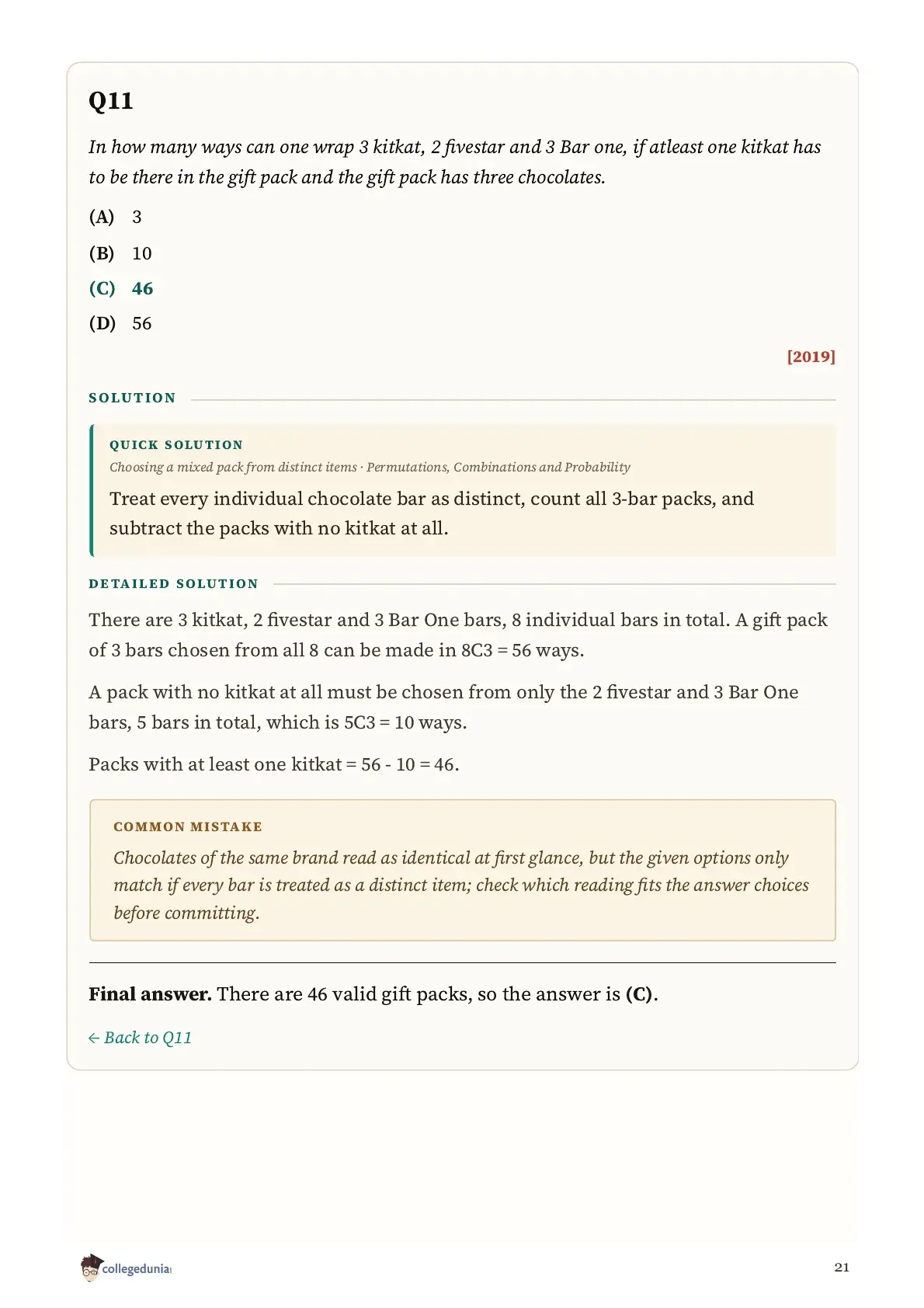
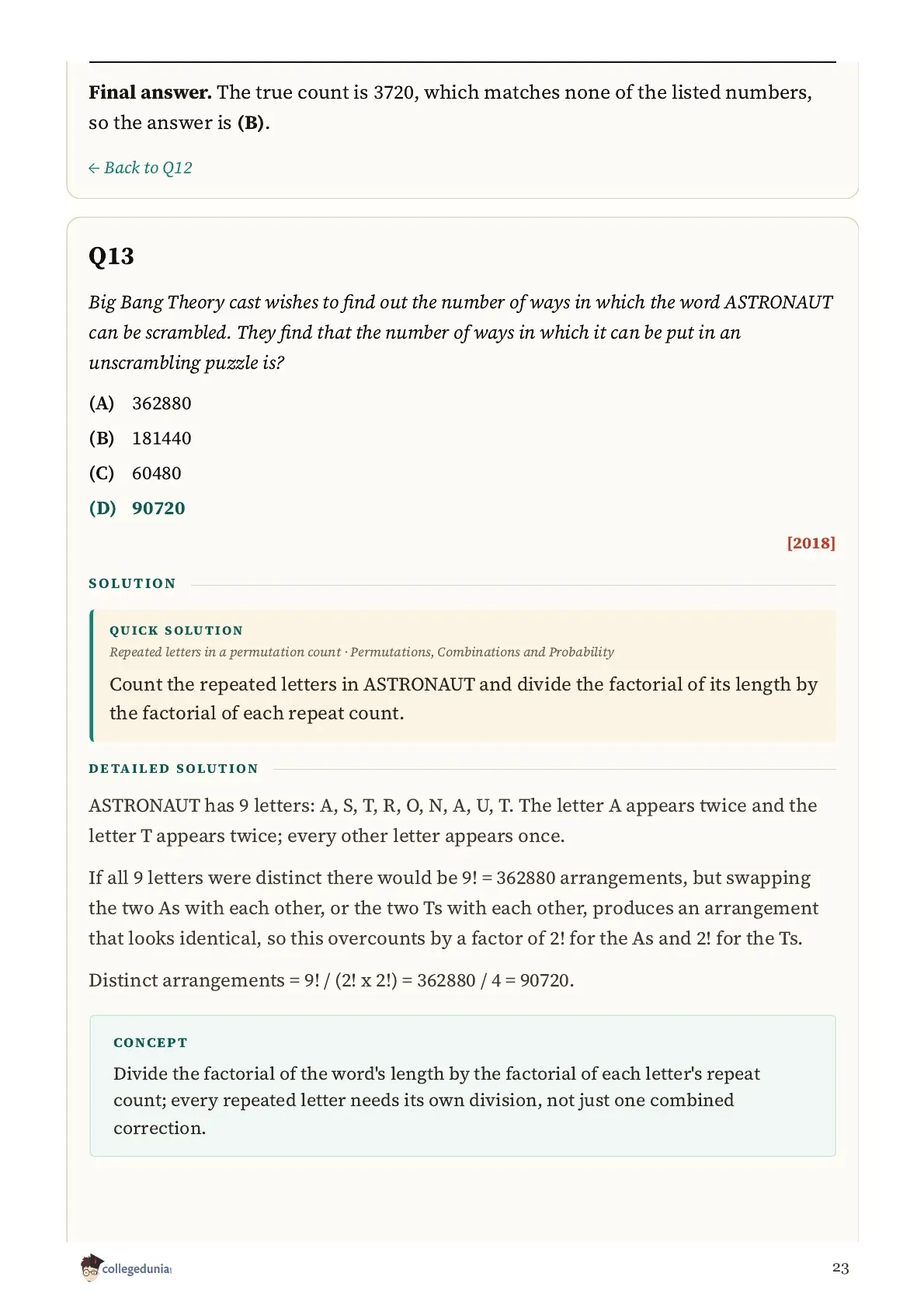
- Word and letter arrangements, including repeated letters and fixed-position vowels
- Distribution and grouping counts, such as splitting distinct items among people under a constraint
- Restricted seating, circular and linear, where certain items must or must not sit together
- Conditional probability, including a Bayes question dressed up as a dice-and-groups story
- Classic engines: odds in favour, weighted lotteries, and the leap-year weekday question that reappears across MBA entrance exams
How to Approach the Set
Three patterns cover most of the counting half. For "at least one", work out the complement first; it is almost always shorter.
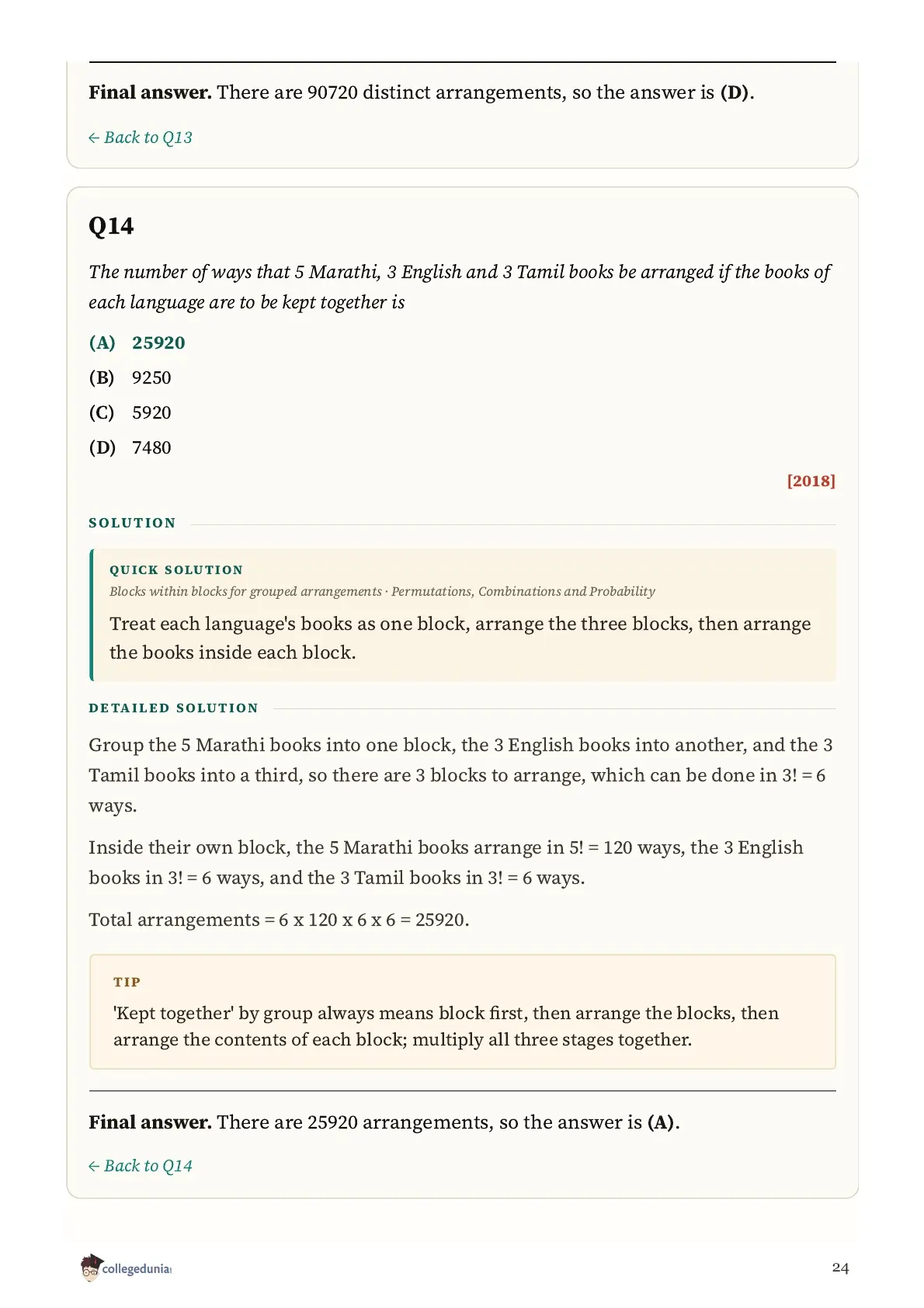
For "must stay apart", arrange the free items and drop the restricted ones into the gaps between them. For "must stay together", glue the group into one block, arrange the outer units, then arrange the block's own contents separately.
Round tables have their own rule: a fixed group arranges in (n minus 1) factorial ways, because a full rotation is the same seating.
On the probability side, when a random selection then produces an outcome, weight each path by its own probability before combining. That is Bayes' rule even when the question never says so, and it covers the whole conditional family here.
When None of the Options Is Right
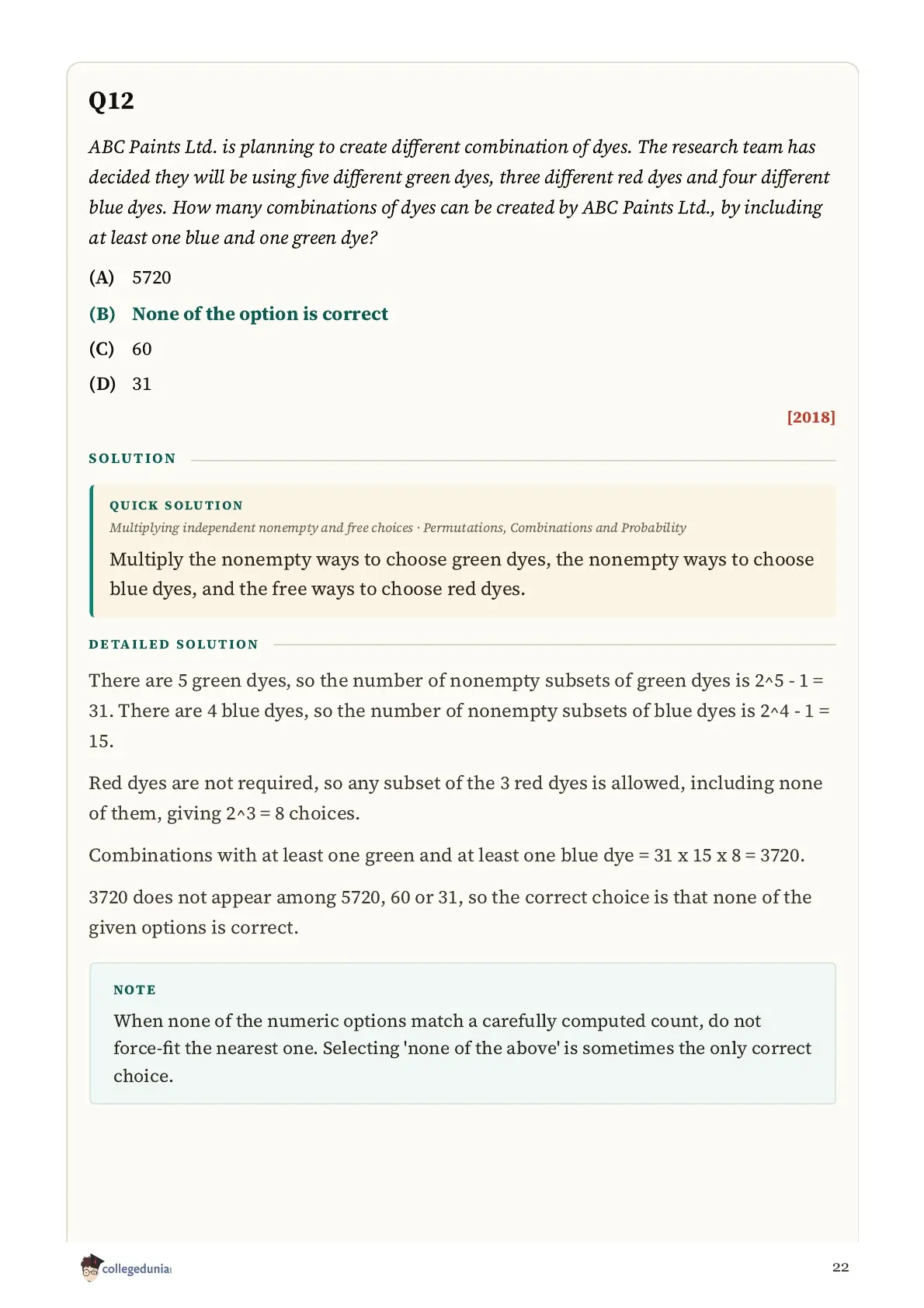
Two of the 24 resolve to an option saying none of the given numbers is correct. Both are worth studying rather than skipping.
One asks how many dye combinations a paint company can create using at least one blue and one green dye. Working it through independent nonempty and free choices gives 3,720, which appears nowhere in the four options.
The other asks for the probability of a month having exactly three fewer days than the longest month. Only February qualifies, giving 1 in 12, again absent from the choices.
Common Mistakes
- Arranging distinct books or bars as if they were identical, which changes the count entirely
- Forgetting the internal arrangement of a glued block after counting the outer units
- Skipping the overlap term when two conditions can both be true at once
- Mixing up odds in favour with plain probability
- Forcing the closest-looking option when the true answer is none of these
Two to Solve First
The 2023 conditional-probability question. A die roll picks one of three groups, then a girl is chosen from it. Weighting each group's chance of being picked against its own chance of yielding a girl, then applying Bayes, is the fastest route through the whole conditional family in this bank.
Then the 2019 restricted arrangement: ten mechanics books and eight quantum physics books in a row, no two physics books touching. Arrange the ten first and count the gaps between them. An intractable count becomes a single combination.
Video Solutions
Source: CATKing
Using the Answer Key
Attempt all 24 before checking anything, allowing about ninety seconds each. Mark the key in one pass, right or wrong only, then read the solution for every miss and every lucky guess. Each opens with a one-line quick solution you can stop at and retry from.
For the wider section, the SNAP Blood Relations PYQs and the SNAP General English topic notes cover the rest of the paper.
SNAP Permutations, Combinations and Probability PYQ FAQs
Ques. How many of these questions come in SNAP?
Ans. One to two most years, inside the Quantitative, Data Interpretation and Data Sufficiency section. The topic has appeared in nearly every paper since 2006.
Ques. Which years does this bank cover?
Ans. 2006 to 2025, with the densest stretch between 2018 and 2020 at eight questions in three papers.
Ques. Why do two answers say none of these?
Ans. Two questions in the original papers are built so the correct numeric answer is not among the four printed options. The solutions show the full working that arrives there rather than forcing the nearest choice.
Ques. Which idea is worth learning first?
Ans. The complement. Any question phrased as "at least one" is usually faster from the other side, and it appears across both the counting and the probability halves of this bank.
Ques. Is this an official SNAP answer key?
Ans. No. Symbiosis does not publish an answer key for SNAP. Every answer here was worked out from the question itself and shown with the full working, so you can check it rather than trust it.
Ques. Can the PDF be downloaded free?
Ans. Yes. All 34 pages can be read on this page and downloaded at no cost.



Comments