



Content Curator
Cytosol and cytoplasm are both cellular components present in organisms. Cells are the basic and founding unit of life for all living organisms on earth. Cytoplasm is the intracellular fluid where one can find all other intracellular components. Cytosol is a part of the cytoplasm where most metabolic activities take place. Water is the major constituent in both cytosol and cytoplasm. There are several differences between cytosol and cytoplasm. The main and most notable difference is that cytosol is simply a component of the cytoplasm while the cytoplasm is the fluid which is surrounded by the cellular membrane.
Key Terms: Cytosol, Cytoplasm, Cell, Nucleus, Cellular Membrane, Cell Organelles, Cytoskeleton, Metabolites, Endoplasmic Reticulum
What is Cytosol?
[Click Here for Sample Questions]
Cytosol is a cellular component found in the cytoplasm and it is often called the matrix of the cytoplasm. The cytosol is fluid in nature and holds the different cell organelles and it is divided into different cell compartments. It is enclosed by the cell membrane and has chloroplast stroma-like structures. It does not contain the nucleus since the cytoplasm itself does not include it. Chemical reactions occur in the cytoplasm because of its fluid nature and composition of water. It is a complex mixture of salt, water, molecules and dissolved ions. The protein filaments in the cytosol form the cytoskeleton filaments.
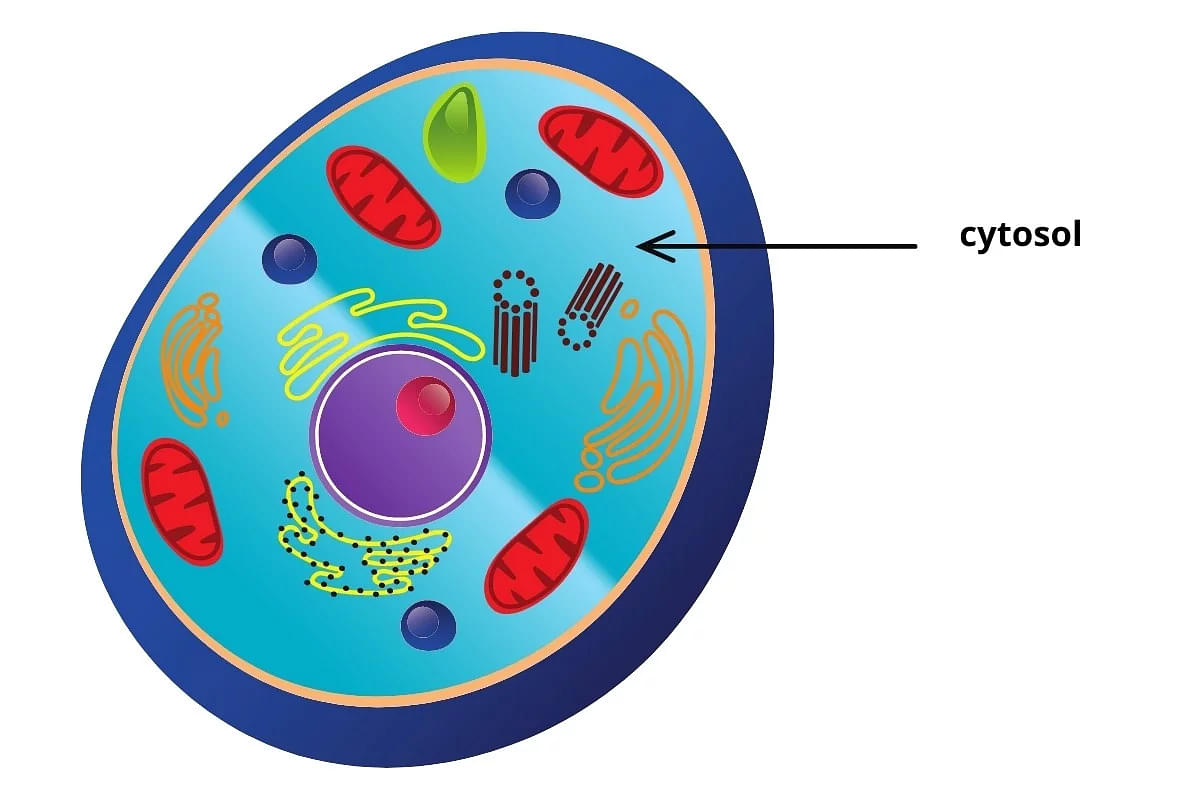
Cytosol
In case of prokaryotic cells, most cellular activities take place in the cytosol. Metabolic reactions are also known to occur in the cytosol. In human cells, cytosol is known to take up 70 percent of the total cell volume. Water makes up most of the content of the cytoplasm. The consistency of the cytosol is more gelatinous-like rather than liquid due to the presence of dissolved molecules and ions. The pH level of the cytosol varies from 7.0 to 7.4 and the diffusion is rather slow for small molecules.
Components of Cytosol
[Click Here for Sample Questions]
Water is the main constituent of cytosol and it also contains several small and large molecules as well as dissolved ions. It consists of other components that include protein which are less than 300 Da in size and take up 20 to 30 percent of the total volume of cytosol. Ions like calcium, sodium, magnesium and chloride are also present in the cytosol. In cells of plants, more than 200,000 small molecules can be dissolved in the cytosol.
The consistency of the cytosol is jelly-like and not watery, therefore molecules take time to travel within it and water enters through osmosis. Calcium ions generally act as a messenger for signaling pathways in the cytosol and the concentration for them is really low. The pH value for cytosol is 7.0 to 7.4.
Other components like crystalline structures, cytoplasmic bodies, stress granules etc can be found in the cytoplasm. Charged macromolecules like proteins and nucleic acids can also be seen. The amount of proteins dissolved in the cytosol is around 200 mg/mL. A filament structure with microtubules and actin filaments is also found in the cytosol. These filaments together comprise a cytoskeleton network.
There are several protein compartments and microcompartments found in plant cells which help in carbon fixation. The high concentration of macromolecules contribute to the crowding effect of macromolecules in the cytosol. Due to this effect, sometimes, cytosol can alter its typical structure .The cytosol is the site for metabolic transportation for precise functioning of the cells.
Functions of Cytosol
[Click Here for Sample Questions]
The cytosol is an important cell component which contributes to the functioning of the cell as a whole. The cytosol is known for inducing activities such as signal transduction, rapid diffusion of large water molecules, biosynthesis of proteins etc. The functions are categorized and explained below.
Structural Support
The volume of the cytosol determines the shape of the cell. The presence of ions and molecules in the cytosol decides the amount of water that can travel in and out of the cell through osmosis. In plant cells hydrostatic pressure or turgor pressure is essential for maintaining stability to each cell and tissue. The pressure affects opening and closing of stomata in plant cells. Cytosol creates the space to promote the movement of various constituents from one organelle to another and from the cell membrane to the organelles.
Signal Transduction or Cell to Cell Communication
For the proper functioning of tissue systems and organs in general, signal transduction is very much essential. During synaptic transmission, cytosol is transported to the presynaptic membrane to be released to the synaptic cleft before reaching the postsynaptic membrane. By coming in contact with specific transmitters the receptors influence a specific type of action. Thus, cell to cell communication is induced which is required for smooth functioning of the organs and organ systems.
Transportation of Metabolites
Cytosol facilitates the transportation of metabolites in the cell structure. Small molecules diffuse easily through the cytosol like amino acids while large hydrophobic molecules like sterols and fatty acids are transported via binding mechanism. Molecules subjected to endocytosis are transported through vesicles in the cytosol. Various biological reactions take place in the case of prokaryotes which are influenced by cytosol. In case of animals, activities like glycolysis, translation, pentose phosphate pathway and gluconeogenesis occur in the cytoplasm. A lot of metabolic activities take place in the cytosol for which it is known as the prime source for transportation of metabolites.
What is Cytoplasm?
[Click Here for Sample Questions]
Cytoplasm is the intracellular fluid which is surrounded by the cell membrane in the cell. Cytosol is a component of the cytoplasm while cytoplasm is the part of the cell that holds all the cell organelles. The cytoplasm is translucent and gelatinous in nature. It has all organelles of the cell except for the nucleus and it is colloidal, semi-fluid in nature which is also highly viscous in nature. In prokaryotic cells all the cellular structures are present in the cytoplasm.
Most of the cytoplasmic organelles are surrounded by an external membrane. They include endoplasmic reticulum which consist of a series of flattened sacs, smooth endoplasmic reticulum without surface ribosomes, golgi apparatus which has membranous sacs and vesicles, mitochondria which is the powerhouse of the cell, centrosome, peroxisome and cytoskeleton. A structured diagram is given below.

Cytoplasm
Components of Cytoplasm
[Click Here for Sample Questions]
The cytoplasm usually consists of three main components: cytosol, cytoplasmic organelles and cytoplasmic inclusions. Cytoplasm contains all the cellular organelles which induce several functions in the organ and the body as a whole. Cytoplasm acts as a sol-gel, which means that it sometimes acts as a solution and sometimes as a solid mass. Some of the cytoplasmic organelles are discussed below.
Endoplasmic Reticulum
The endoplasmic reticulum is a wide network of membranes and there are some flattened sacs present in it. The outer area of the endoplasmic reticulum consists of membrane bound ribosomes which work in translation for assembling proteins. Its functions include protein folding, protein transport and protein quality control.
Golgi Apparatus
The golgi apparatus is a membrane bound cytoplasmic organelle which consists of vesicles and membranous sacs. It contains membrane infolds called cisternae. Proteins and lipids are usually transported to the golgi apparatus through transport vesicles. These proteins undergo changes within the golgi apparatus.
Mitochondria
Mitochondria is also a membrane bound organelle in the cytoplasm and it is often regarded as ‘the powerhouse of the cell’. The organelles have a highly folded inner membrane which forms the cisternae. The mitochondrial matrix, intermembrane space and outer membrane are also components of mitochondria. Mitochondria is used for ATP production which helps in powering the cell.
Some other cell organelles are centrosome, peroxisome and cytoskeleton. The cytoplasm also has various cytoplasmic inclusions like fats, glycogen, crystals, melanin and residual bodies.
Functions of Cytoplasm
[Click Here for Sample Questions]
Cytoplasm is required in a large number of cellular activities. Almost all metabolic activities functioning happen in the cytoplasm because it contains the cell organelles. Cell division and glycolysis are important functions which are induced by the cytoplasm. The large glass-like structure of cytoplasm keeps the organelles embedded in the structure of the cell. Cytosol in the cytoplasm is responsible for cytokinesis, which is a process of cytoplasmic division followed by nuclear division. The cytosol functions mainly depend on the cytoplasmic functions.
Differences between Cytosol and Cytoplasm
[Click Here for Sample Questions]
The differences between cytosol and cytoplasm are tabulated below:
| Cytosol | Cytoplasm |
|---|---|
| The cytosol is the liquid constituent of the cytoplasm where all cell organelles are suspended. | The cytoplasm is the gelatinous, viscous fluid present in the cell structure and surrounded by a membrane which contains the cytosol. |
| The cytosol is made up of water, soluble ions, small and large water-soluble molecules and proteins. | The cytoplasm is composed of water, enzymes, lipids, nucleic acids, amino acids, carbohydrates and non-inorganic ions. |
| Cytosol does not have a large diversity. | Compared to cytosol, cytoplasm has a fairly large diversity. |
| In prokaryotic cells, all the chemical reactions occur in the cytosol. | The cytoplasm has bigger responsibilities like glycolysis and cell division. |
| The cytosol reaches the molecules that are dissolved and suspended in the liquid form in the right position. | The cytoplasm freezes the molecules in their respective positions for faster metabolism. |
| Smaller reactions such as signal transduction and protein synthesis take place in the cytosol. | Metabolic activities such as glycolysis and cell division take place in the cytoplasm. |
Things to Remember
- Cytoplasm is the intracellular fluid where one can find all other intracellular components.
- Cytosol is a part of the cytoplasm where most metabolic activities take place.
- Cytosol is composed of water, several small and large molecules as well as dissolved ions.
- The main functions of cytosol include structural support, signal transduction/cell to cell communication and transport of metabolites.
- The main functions of cytoplasm include metabolic activities, cell division and glycolysis.
- The major components of cytoplasm are endoplasmic reticulum, golgi apparatus and mitochondria.
- Cytoplasm has a larger diversity compared to cytosol.
Sample Questions
Ques. Are cytoplasm and cytosol the same? (2 Marks)
Ans. Cytoplasm is the thick, viscous solution which is enclosed by the cell membrane and holds all the cell organelles except for the nucleus. On the other hand, cytosol is the cellular component found in the cytoplasm which is responsible for a lot of metabolic activities. Though these two can be confused, cytosol and cytoplasm are not the same thing.
Ques. What is cytosol made of? (2 Marks)
Ans. Cytosol contains a large concentration of macromolecules as well as smaller organic molecules. The molecules include amino acids, nucleic acids, fatty acids, simple sugars, glucose. There are also ions of sodium, potassium, calcium and other elements which are present in the cytosol.
Ques. What is the water content in cytosol? (2 Marks)
Ans. The main component of cytosol is water. Water constitutes approximately 70% of the volume of cytosol and proteins constitute 20-30% of the total volume of cytosol.
Ques. What is the insoluble part of cytoplasm? (2 Marks)
Ans. Cytoplasmic inclusions which are the small particles of insoluble substances suspended in the cytoplasm are known as cytoplasmic inclusions.
Ques. Is cytoplasm present in animal cells? (2 Marks)
Ans. Cytoplasm is present in animal cells and it has a gel-like consistency made of mostly water which fills cells around the nucleus. It includes proteins, molecules, salts, sugars, amino acids, carbohydrates and nucleotides.
Ques. What is the job of cytoplasm? (2 Marks)
Ans. The main job of the cytoplasm is to hold the components of the cell and protect them from damage. It stores molecules required for cellular processes and is responsible for giving the cell its shape.
Ques. Where is cytosol found? (2 Marks)
Ans. Cytosol is found in both prokaryotes and eukaryotes. Both eukaryotic and prokaryotic cells contain membrane-bound cell organelles like nucleus, mitochondria, endoplasmic reticulum, golgi apparatus, lysosomes and peroxisomes. They also contain similar membranes, cytosol and cytoskeletal elements.
Ques. What are the main components of cytoplasm? (2 Marks)
Ans. The cytoplasm is formed of two parts: the cytosol and cell organelles. Cytosol is the jelly-like substance found in cells which provides the medium required for biochemical reactions.
Check-Out:



Comments