



Content Curator
Fly Life Cycle has four stages that move from eggs to larvae and from pupae to adult. During this part of cycle, larvae are also called as maggots. Adult female fly mates and then lays an egg. There are four stages for a fly’s life cycle – the egg stage, the larval stage, the pupa stage, and then the adult stage. Flies play an important role in the pollination of flowers and the food chain. House flies are the most common flies known to all.
| Table of Contents |
Key Terms: Lifecycle, Fly, Biology, Fertilization, Food Chain, Hatching, Eggs, Larva, Pupa
Introduction to Fly Life Cycle
[Click Here for Sample Questions]
A male fly chases down a female fly and mates, the female fly then lays an egg. The eggs are laid on surfaces, generally moist areas where decaying matter is present, maybe a trash can, grass, or feces.
Flies don’t stick together while nesting or after mating, they are generally solitary insects. The females don’t have maternal instincts either, they don’t take care of the eggs after laying them. The female fly just lays eggs where there is adequate food for the egg and is a suitable environment for hatching.
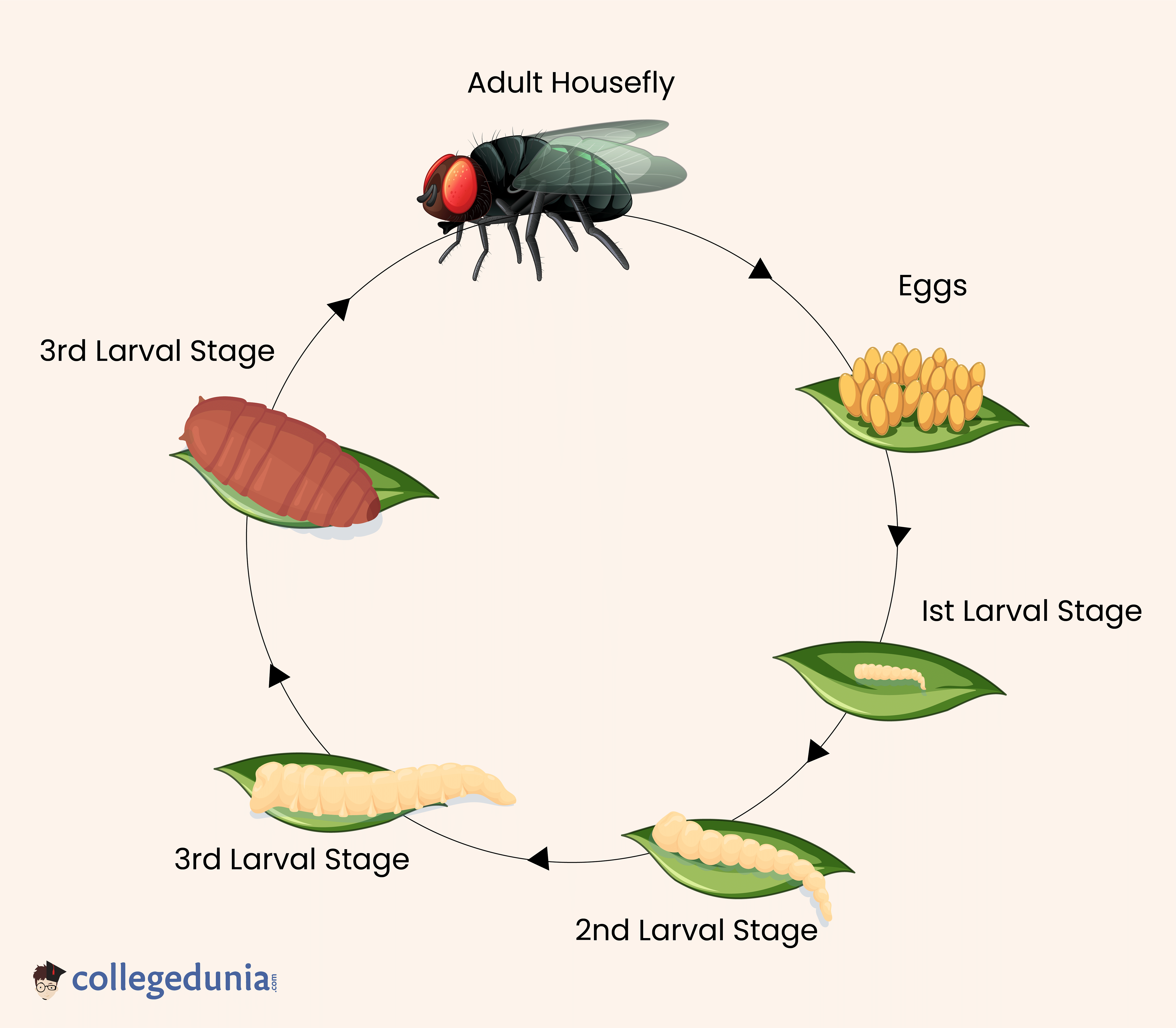
Housefly Life Cycle
Fly Life Cycle Stages
[Click Here for Sample Questions]
Egg, larval, pupa, and adult stages are the four stages of fly life cycle:
-
Stage 1: Egg Stage
Around three hundred eggs are laid by a female fly in a day. It takes eight to twenty hours for the eggs to hatch. After hatching the eggs, the young ones enter into the Larval stage, also known as maggots.
-
Stage 2: Larval Stage
After the hatching of eggs, the young larvae are formed, which are also known as maggots. They have sections to their body and are fleshy-looking. They have a hooked mouthpart used for feeding. They feed on fluids from their body. They look very similar to wriggly worms. They shed layers of their skin as they double in size in nearly two days. At this stage they molt several times, becoming larger and larger. Molting is a process in which larval stage organisms shed their exoskeleton to grow a new one.
Also Read: Ant Life Cycle
Instar
- Larval becomes 5mm before shedding its exoskeleton during the first instar.
- For the second instar, the larva becomes 10 mm before shedding the skin.
- For the third instar, the larval body is around 15 – 20 mm.
According to climate, this stage completes at different time phases. In warm climates, it is completed in 3 days, and in cold climates, it can take up to 8 weeks. After their third molt, they enter the third stage, the pupa stage.
Stage 3: Pupa Stage
At this stage, the skin turns dark and hardens. Fly, now called Pupa, becomes stationary and does not feed or move. It gets covered by hard larval skin, the pupa along with this skin is called puparium. It is like a protective shell that helps the fly to grow fully. The body segments and appendages are grown at this stage.
The fly has a swollen bump on its head at this stage. With the help of this bump, the fly breaks the shell. After the fly becomes an adult, the swollen bump gets deflated. Under warm conditions, this stage lasts for 4 to 6 days.
Stage 4: Adult Stage
In adult stage, pupa emerge from the puparium. It is now ready to mate as they are sexually mature. Flies here feed on their body fluid proteins. They fly to different locations for food and are not stationary like the pupa stage. After feed and mate, they look out for a proper environment to lay their eggs, and thus cycle continues.
Also Read: Lifecycle of Silkworm
Things to Remember
- Eggs are laid on surfaces, generally moist areas where decaying matter is present, maybe a trash can, grass, or feces.
- It takes eight to twenty hours for the eggs to hatch. After hatching the eggs, the young ones enter into the larval stage, also known as maggots.
- Larva has sections to their body and is fleshy-looking. They have a hooked mouthpart used for feeding. They feed on fluids from their body.
- Larval becomes 5mm before shedding its exoskeleton during the first instar. For the second instar, the larva becomes 10 mm before shedding the skin. For the third instar, the larval body is around 15 – 20 mm.
- At pupa stage, skin turns dark and hardens. Pupa becomes stationary and does not feed or move.
- In the adult stage, pupa emerges out of puparium. It is now ready to mate as they are sexually mature. Flies here feed on their body fluid proteins.
Sample Questions
Ques. Write a note of the pupa stage of the life cycle of a fly. (3 Marks)
Ans. Third stage of a fly life cycle is the pupa stage. At this stage, the skin turns dark and hardens. Fly does not feed or move and becomes stationary. It gets covered by hard larval skin, the pupa along with this skin is called puparium. It is like a protective shell that helps the fly to grow fully.
Body segments and appendages are grown at this stage. The fly has a swollen bump on its head at this stage. With the help of this bump, the fly breaks the shell. After the fly becomes an adult, the swollen bump gets deflated. Under warm conditions, this stage lasts for 4 to 6 days.
Ques. Why are flies seen around a dump and moist environments? (3 Marks)
Ans. A male fly chases down a female fly and mates, the female fly then lays an egg. The eggs are laid on surfaces, generally moist areas where decaying matter is present, maybe a trash can, grass, or feces.
Flies don’t stick together while nesting or after mating, they are generally solitary insects. The females don’t have maternal instincts either, they don’t take care of the eggs after laying them. The female fly just lays eggs where there is adequate food for the egg and is a suitable environment for hatching.
Ques. Explain the Larval stage of fly life cycle. (4 Marks)
Ans. After the hatching of eggs, the young larva is formed, which are also known as maggots. They have sections to their body and are fleshy-looking. They have a hooked mouthpart used for feeding. They feed on fluids from their body. They look very similar to wriggly worms. They shed layers of their skin as they double in size in nearly two days. At this stage they molt several times, becoming larger and larger.
Molting is a process in which larval stage organisms shed their exoskeleton to grow a new one. In the Instar phase, the larval becomes 5mm before shedding its exoskeleton during the first instar. For the second instar, the larva becomes 10 mm before shedding the skin. For the third instar, the larval body is around 15 – 20 mm. According to the climate, this stage completes at different time phases.
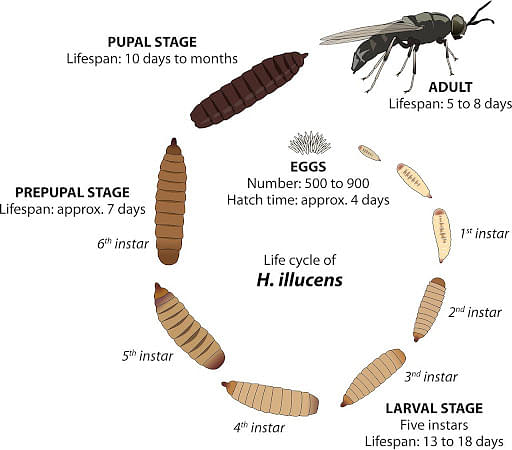
Image: Larval Stage of Fly Life Cycle
Ques. Draw a life cycle of a housefly. (3 Marks)
Ans.
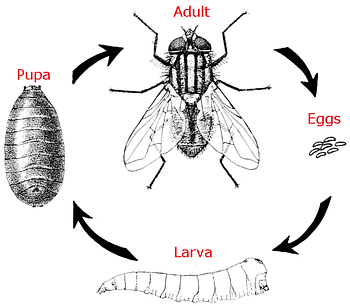
Image: Life Cycle of Housefly
Ques. What do flies eat? (2 Marks)
Ans. Flies commonly eat moist and damp environment food. It can be a dead and decaying matter. They are mostly found near trash cans and areas which are dirty or damp. It is important to know what they eat, to avoid infestation. Food not disposed of or stored properly is a feast to them. Flies can also carry diseases and hence should be avoided.
Ques. What is the instar phase/stage in the larval stage? (3 Marks)
Ans. Flies shed layers of their skin as they double in size in nearly two days. At the Larval stage, they molt several times, becoming larger and larger. Molting is a process in which larval stage organisms shed their exoskeleton to grow a new one in the instar stage.
Larval becomes 5mm before shedding its exoskeleton during the first instar. For the second instar, the larva becomes 10 mm before shedding the skin. For the third instar, the larval body is around 15 – 20 mm.
Check-Out:



Comments