



Education Journalist | Study Abroad Lead
Hypertension is a combination of high blood pressure and mental stress. It is a medical condition that arises when the blood pressure of a person abruptly shoots up. The data of the World Health Organisation (WHO) reveals that about 1 million people are suffering from hypertension. This number can significantly go up to 1.57 million by 2025. Let us discuss the definition, causes, symptoms, and treatment of hypertension.
| Table of Content |
What is hypertension?
A sudden rise in blood pressure along with mental stress is termed hypertension. It damages our cardiovascular system. People suffering from hypertension usually have their blood pressure more than 140 over 90 mm. Arteries are the blood vessels that carry blood, a fluid connective tissue, to all the parts of our body. Blood carries with itself the energy and oxygen required by our body. Blood pressure is regarded as the force of blood against these arteries.
Hypertension is diagnosed by the measurement and observation of blood pressure. The first reading is the systolic pressure and the second reading is the diastolic pressure. Systolic blood pressure measures the pressure in our arteries when our heart pumps the blood all through the body. While the diastolic blood pressure is the one that measures the blood pressure in our arteries when our heart rests and refills the blood.
Read More: Blood Composition
Types of Hypertension
Usually, hypertension is divided into two types:
- Primary hypertension
- Secondary hypertension
- Primary Hypertension - Also known as essential hypertension, Primary hypertension is the most prevalent form of hypertension with no identifiable cause.
- Secondary Hypertension - Secondary hypertension is caused by some sort of underlying medical condition. It can affect our heart, kidney, arteries, or endocrine system.

Symptoms of Hypertension
It is recommended to keep a regular check on blood pressure to prevent hypertension. High blood pressure is asymptomatic due to which it is often regarded as ‘the silent killer.’ There are no specific symptoms or indications of hypertension. However, the following symptoms should not be ignored as they can be an indication of hypertension;
- Dizziness
- Bleeding Nose
- Chest Pain
- Heart attack
- Headaches
- Visual Changes
- Shortness of Breath
- Flushing or Blushing
- Narrowing of blood vessels
- Formation of plagues in the blood vessels

Symptoms of Hypertension
Causes Of Hypertension
The lifestyle of a person is a major cause of high blood pressure or hypertension. Factors like acute stress, not-so-favorable environment, wrong food intakes like fatty food, tobacco, alcohol, etc contribute to the problem of hypertension. It can be controlled through proactive steps like physical exercise, meditation, restricting the intake of junk food, etc.
The factors contributing to hypertension also includes:
- Diabetes
- Pregnancy
- Cushing syndrome
- Hyperthyroidism
- Kidney problems
- Obesity
- Adrenal hyperplasia
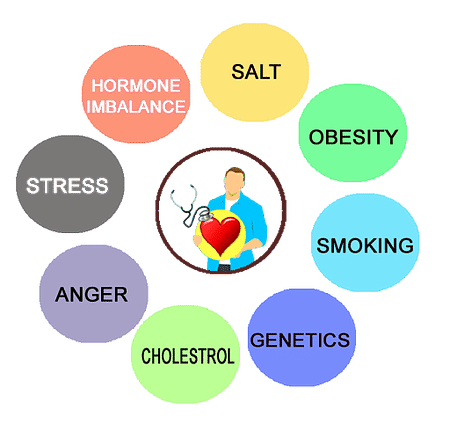
Hypertension Causes
Diagnosis of Hypertension
A sphygmomanometer is used to measure a person’s blood pressure during the process of diagnosis. Diagnosis of hypertension includes the observation of atleast three different readings along with additional tests. Additional tests may include -
- Kidney ultrasound imaging,
- Urine tests,
- Blood tests
- Electrocardiogram or ECG Test
Prevention of Hypertension
Preventing oneself from chronic diseases like hypertension becomes very important in today's era. The following steps are considered essential for preventing hypertension -
- Since high blood pressure and obesity go hand in hand, it is recommended to undertake weight loss techniques like proper diet and exercise.
- Do not consume food with a high amount of LDL (low-density lipoprotein) cholesterol.
- Make meditation and other stress buster activities a part of your daily routine.
- Avoid consumption of alcohol, tobacco, etc.
- Include more Calcium and Vitamin D in your diet.
- Reduce the intake of Sodium in the diet.
Hypertension can turn into a serious issue if left unchecked. However, it is easy to control through diet changes and regular exercise. Eating a low-fat protein diet with plenty of fruits and vegetables and whole grains can help moderate the blood pressure.
Read More : Autotrophic Nutrition
Things to Remember based on Hypertension
- Hypertension is a sudden rise in blood pressure along with mental stress.
- There are two types of hypertension: Primary and Secondary hypertension.
- Dizziness, Chest Pain, Shortness of breath, and visual changes are some of its symptoms.
- The lifestyle of a person is a major cause of high blood pressure.
- To diagnose hypertension, a sphygmomanometer is used.
- Regular exercise and a low-fat diet can help control hypertension.
- About one-third of individuals above the age of 20, in the year 2017-18 were diagnosed with high blood pressure and most of them were under antihypertensive medications.
Hypertension (High Blood Pressure)
Sample Questions based on Hypertension
Ques. What is hypertension? What instrument is used for its diagnosis? 2 marks
Ans. Hypertension refers to high blood pressure and mental pressure. An instrument called a sphygmomanometer is used to diagnose a person’s blood pressure.
Ques. What causes hypertension? 2 marks
Ans. Hypertension, also known as high blood pressure, is majorly caused by the lifestyle of a person. Various factors such as acute stress, fatty foods, not-so-favorable environment, tobacco, alcohol intake, etc contribute to the problem of hypertension.
Read More : Important questions on life processes
Ques. What are diastolic and systolic pressure? 2 marks
Ans. Systolic blood pressure measures the pressure in our arteries when our heart pumps the blood all through the body.
The diastolic blood pressure is the one that measures the blood pressure in our arteries when our heart rests and refills the blood.
Ques. What is the normal blood pressure? 2 marks
Ans. The normal value for systolic pressure is less than 120 while for diastolic pressure, it should be less than 80 mmHg.
Ques. Name 3 ways high blood pressure can be controlled. 3 marks
Ans. The ways through which we can control hypertension are:
- Not consuming food with a high amount of cholesterol.
- Avoiding consumption of alcohol, tobacco, etc.
- Reducing the sodium intake in the diet.



Comments