



Content Writer
Spontaneous Combustion is a chemical reaction that occurs when fuel (hydrocarbon) and oxygen come into contact. When fuel and oxygen react, heat and light energy are released.
- Spontaneous Combustion is also known as Spontaneous Ignition.
- The reaction is followed by self-heating, which finally leads to autoignition.
- The flame is made up of heat and light energy.
- It is employed in vehicle engines, rocket engines, and a variety of other machines.
- So, for a spontaneous combustion reaction, the formula is:
Hydrocarbon + Oxygen = Heat energy
- This heat energy will also generate light in the form of a flame when it is released.
- The flames are the visible element of the response.
Key Terms: Spontaneous Combustion, Ignition, Rapid Combustion, Flammable, Fire Extinguishers, Combustion, Hydrocarbon, Oxygen, Heat Energy, Flames, Exothermic Reaction, Temperature
What is Spontaneous Combustion?
[Click Here for Sample Questions]
Spontaneous combustion is a type of combustion reaction in which a material on its own bursts into flames. It occurs due to an exothermic internal reaction, which causes an increase in temperature.
- Spontaneous Combustion does not require any external energy to begin the process.
- Due to self-heating, this combustion begins spontaneously at room temperature.
- Spontaneous combustion can occur when combustible stuff, such as hay or coal, is kept in bulk.
- This reaction begins when a material's internal oxidation causes a thermal process.
When a substance reaches its ignition point temperature and has enough oxygen to begin the combustion process, the substance begins to burn spontaneously.
- Internal processes, which are generally heat-evolving or exothermic, cause the temperature to rise inside the material.
- This type of reaction is particularly common in compounds with a low ignition temperature.
- The temperature rises above the ignition point, and combustion will happen in the presence of sufficient oxygen.
- The reaction of alkali metals with water is an example.

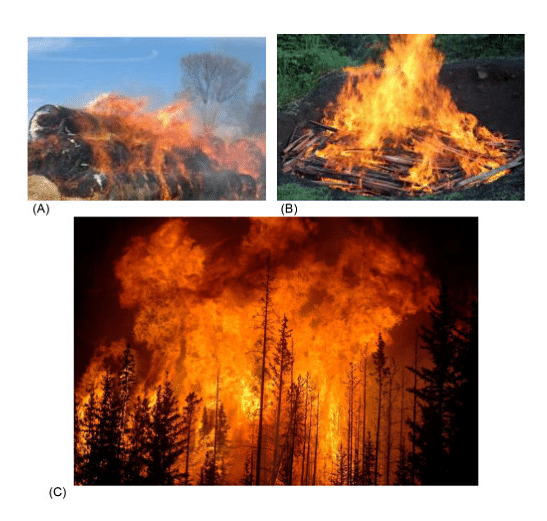
Examples of Spontaneous CombustionExample: The examples of spontaneous combustion are as folllows:
|
Causes of Spontaneous Combustion
[Click Here for Sample Questions]
The heating of the material to its auto-ignition temperature causes spontaneous combustion. This occurs in some circumstances when the surface area exposed to the air is insufficient to allow for heat dissipation.
- The heat cannot be evacuated to the outside atmosphere, and the temperature of the substance continues to rise until it catches fire.
- In addition, the more insulating the material is, the greater the risks of spontaneous igniting.
- The oxidation of the substance has been recognized as the source of the heating.
Take oily rags, which are used in the engine rooms of merchant ships, workshops, and businesses worldwide. They should be carefully disposed of after usage. Tossing the rags in a corner or a heap is a recipe for disaster.
- When rags are piled together, the rags in the middle heat up but are unable to escape their heat to the environment, causing them to catch fire.
- The same holds for a pile of manure, compost, and coal kept in bulk.
- One thing to keep in mind is that the faster the material warms up, the faster the temperature rises.
- Smouldering and heated material exposed to air for an extended period can potentially ignite a fire or cause an explosion.
Read More:
| Chapter Related Concepts | ||
|---|---|---|
| History of Clothing Material | ||
| Loss of Biodiversity | ||
Affected Material Section
[Click Here for Sample Questions]
The list of affected material are as follows:
Hay
Hay is one of the most commonly used materials in spontaneous combustion. The process is initiated by microbiological activity, which results in the fermentation of hay.
- It limits the supply of oxygen which is available in the hay.
- Moisture is an important element of the process.
Charcoal
When charcoal is prepared freshly, then it will catch fire easily. The material is exposed to air for a period of a total of eight days. Temperature and wood are some of the factors in the preparation of charcoal.
Coal
Studies regarding coal being self-heated have been prepared for many years. The process of self-heating decreases with an increase in the rank of coal. Lignite coals are the most coal in comparison to bituminous coals.
Humans
Humans are involved in the process of spontaneous combustion. They are external sources of fire which are responsible for igniting nearby flammable materials and other sources.
Confirmed
Confirmed it consists of compost piles and hay piles, which may self-ignite due to the heat generated by bacterial fermentation. When they are exposed to oxygen, it results in the ignition of the coal.
- This leads to insufficient ventilation for cooling.
Prevention of Spontaneous Combustion
[Click Here for Sample Questions]
There are number of ways for prevention of spontaneous combustion are as follows:
- Good housekeeping is the most popular and useful advice for avoiding spontaneous combustion.
- Garbage should be properly separated, and the bin for oily rags should be covered so that oxygen does not cause oxidation.
- If the oily rags must be reused, they should be stretched out to dry to allow the heat to escape into the sky.
- Bulk coal should be kept with care to avoid spontaneous combustion.
- Temperatures in the hold should be tested regularly aboard ships.
When a fire is impending, carbon dioxide stocked in bulk should be utilized, and hatches should be cooled from the outside with water sprays before being opened until firefighting tugs or a port are reached.
- Temperatures in hay bales stored in storehouses must be monitored regularly.
- It is harmful if it goes beyond 150 degrees F and should be assessed daily.
- Small bales should not have more than 20 to 22 per cent moisture to minimize hay fires, and stacking to promote ventilation is a good idea.
When storing materials that might spontaneously ignite, they must be carefully monitored and safely kept, with adequate ventilation, heat dissipation, and appropriate fire extinguishing media.
Read More:
| Class 8 Chemistry Related Concepts | ||
|---|---|---|
| Group 15 Elements | ||
| Monomers | ||
Things to Remember
- Spontaneous combustion can occur when a substance with a low ignition temperature (hay, straw, peat, etc.) begins to produce heat.
- If there is enough oxidizer, such as oxygen, and fuel available to maintain the thermal runaway process, combustion occurs.
- These compounds can burn, ignite, and self-ignite.
- To avoid mishaps, combustible compounds must be handled with care.
- When oxygen combines with another element, it produces heat and light, which is known as combustion.
- At room temperature, spontaneous combustion occurs.
- The gradual oxidation of the material generates the heat necessary for spontaneous combustion.
- It is most experienced by compounds with a low ignition temperature.
Sample Questions
Ques. It has been noted that hydrocarbon fire extinguishers are utilized instead of soda-acid fire extinguishers at gas stations and airports. There are several causes for this. (3 marks)
Ans. Oil-related fires are more likely to break out at gas stations and airports. A soda-acid fire extinguisher will not operate in this case since it includes water or utilizes water to put out the flames by cooling down the area.
- Water is heavier than oil, it sinks to the bottom, leaving the fire uncontrollable.
- In this situation, a hydrocarbon fire extinguisher comes in handy since it includes turkey red oil, which causes carbon dioxide gas to froth under pressure.
- To control fire, the foam covers the surface of the burning material and dispels the supply of air.
Ques. Explain how the water in the paper cup boils without burning. (2 marks)
Ans. When we heat a paper cup filled with water, the heat is quickly transmitted to the water in the cup. The temperature of the water continues to rise until it reaches its boiling point and begins to boil. The paper cup does not reach its ignition temperature because the heat is constantly transferred to water throughout this process. As a result, it does not burn.
Ques Describe the benefits of using CNG as fuel. (5 marks)
Ans. Today, the use of diesel and gasoline as automotive fuels is a major source of air pollution. These fuels emit unburned carbon particles during burning, which are very toxic and hazardous to living things and the environment.
- These small particles are harmful contaminants that cause respiratory illnesses like asthma.
- Carbon monoxide gas is produced when these fuels are not completely burned. It's a highly toxic gas.
- Most fuels emit carbon dioxide into the atmosphere when they are burned.
- One of the key drivers of global warming is increased carbon dioxide emissions into the atmosphere.
- CNG (Compressed Natural Gas) is replacing diesel and petrol as automotive fuels since CNG emits hazardous pollutants in extremely small quantities. CNG is a more environmentally friendly fuel.
- It saves a lot of money on gas.
- As a result, the usage of CNG in cars has significantly decreased pollution in our cities.
Ques. Describe the fundamentals of a fire extinguisher's operation. (5 marks)
Ans. Water is the most used fire extinguisher; it works when wood and paper are on fire, but it may conduct electricity and harm those attempting to extinguish the fire.
- Water is also not suitable for fires involving oil and petrol; because water is heavier than oil, it sinks below the oil, allowing the oil to continue to burn on top.
- Carbon dioxide is the finest extinguisher for electrical equipment and combustible materials on fire.
- Because it is heavier than oxygen, it covers the fire, cutting off the fuel-oxygen interaction and allowing the fire to be controlled.
- It also lowers the temperature of the fuel.
- Carbon dioxide is kept as a liquid in cylinders at high pressure for this function.
Ques. Describe global warming and the factors that contribute to it? (4 marks)
Ans. The cause of global warming is an increase in the average temperature of the Earth's atmosphere and oceans, which is caused by an increasing population.
- This leads to increased use of fossil fuels and agriculture, which releases carbon dioxide gas, which causes global warming.
- An increased population leads to increased use of fossil fuels and agriculture.
- It will releases carbon dioxide gas, which causes global warming; an increased population.
- It leads to an increase in the number of people who release carbon dioxide gas during the respiration process, which contributes to global warming.
Ques. Instead of soda-acid fire extinguishers, hydrocarbon fire extinguishers are seen at gas stations and airports. Give justifications for your decision? (3 marks)
Ans. There is a greater risk of oil-related fires at gas stations and airports. A soda-acid fire extinguisher will not operate in this case since it includes water or utilizes water to put out the flames by cooling down the area.
- Water is heavier than oil, it sinks to the bottom, leaving the fire uncontrollable.
- In this situation, a hydrocarbon fire extinguisher comes in handy since it includes turkey red oil, which causes carbon dioxide gas to froth under pressure.
- The foam covers the burning chemicals and eliminates the supply of air to control fire.
Ques. Write a concise explanation of the causes of forest fires? (3 marks)
Ans. Forest fires are caused by a variety of factors, including:
- If lightning strikes forest trees or places, forest fires may result.
- Fires started by humans.
- During the summer's intense heat, dried grass catches fire in certain locations. It quickly spreads across the forest from this grass.
- Forest fires can also be started by sparks from a rockfall in a hilly area.
- Forest fires can also be caused by volcanic eruptions.
Ques. Why does rubbing the matchstick on the side of the matchbox cause it to start burning? (3 marks)
Ans. Antimony trisulphide and potassium chlorate are used to make the matchstick's head. Powdered glass and a small amount of red phosphorous make up the rubbing surface.
- When the matchstick is struck against the rubbing surface, part of the red phosphorus is transformed to white phosphorus.
- It combines with potassium chlorate in the matchstick head to provide enough heat to ignite antimony trisulphide.
- It ignite the matchstick and starting the combustion process.
Ques. Why is LPG preferable to wood as a home fuel? (3 marks)
Ans. For millennia, wood has been utilized as a home and industrial fuel. Coal and other fuels, such as LPG, have, nevertheless, supplanted wood. When compared to wood, LPG has a substantially larger calorific value.
- As a result, when LPG is burned, it generates significantly more heat than an identical quantity of wood.
- When wood is burned, a lot of smoke is created, which is dangerous to humans, but LPG does not emit any smoke.
- When wood is burned fully, a lot of ash is left behind, however when LPG is burned totally, no solid residue is left behind.
- LPG is a cleaner fuel than wood since it does not pollute the environment.
- We must, however, chop trees for wood which will lead to deforestation which is quite harmful to the environment.
Ques. Describe the full combustion process? (2 marks)
Ans. The flammable material is completely burned in this sort of combustion. There is no residue left behind. During or after this sort of combustion, no ash or smoke is produced. Most gases, including hydrocarbons, undergo this kind of burning. Hydrocarbons create carbon dioxide, water, and heat when they are burned.
Ques. Give the example of spontaneous combustion with explaination? (3 marks)
Ans. The rate of spontaneous combustion might be fast or slow. It can occur because of a chemical reaction or because of a sensitive substance reacting with air or water. Chemicals, elements, hydrocarbon compounds, or a combination of these can be used. Combustion Examples:
- To heat your home, you can use wood or coal.
- Using Petrol or Diesel to power your vehicle
- To cook on your cooktop, use natural gas or liquefied petroleum gas (LPG).
- In thermal power plants, for the generation of energy
- Fireworks
Read More:



Comments