




NCERT Exemplar Solutions for Class 11 Physics Chapter 7 Gravitation solve all 38 questions from the Exemplar book. Every MCQ, Very Short Answer, Short Answer and Long Answer problem is worked out in full. The free PDF on this page runs to 62 pages and follows the 2026-27 syllabus.
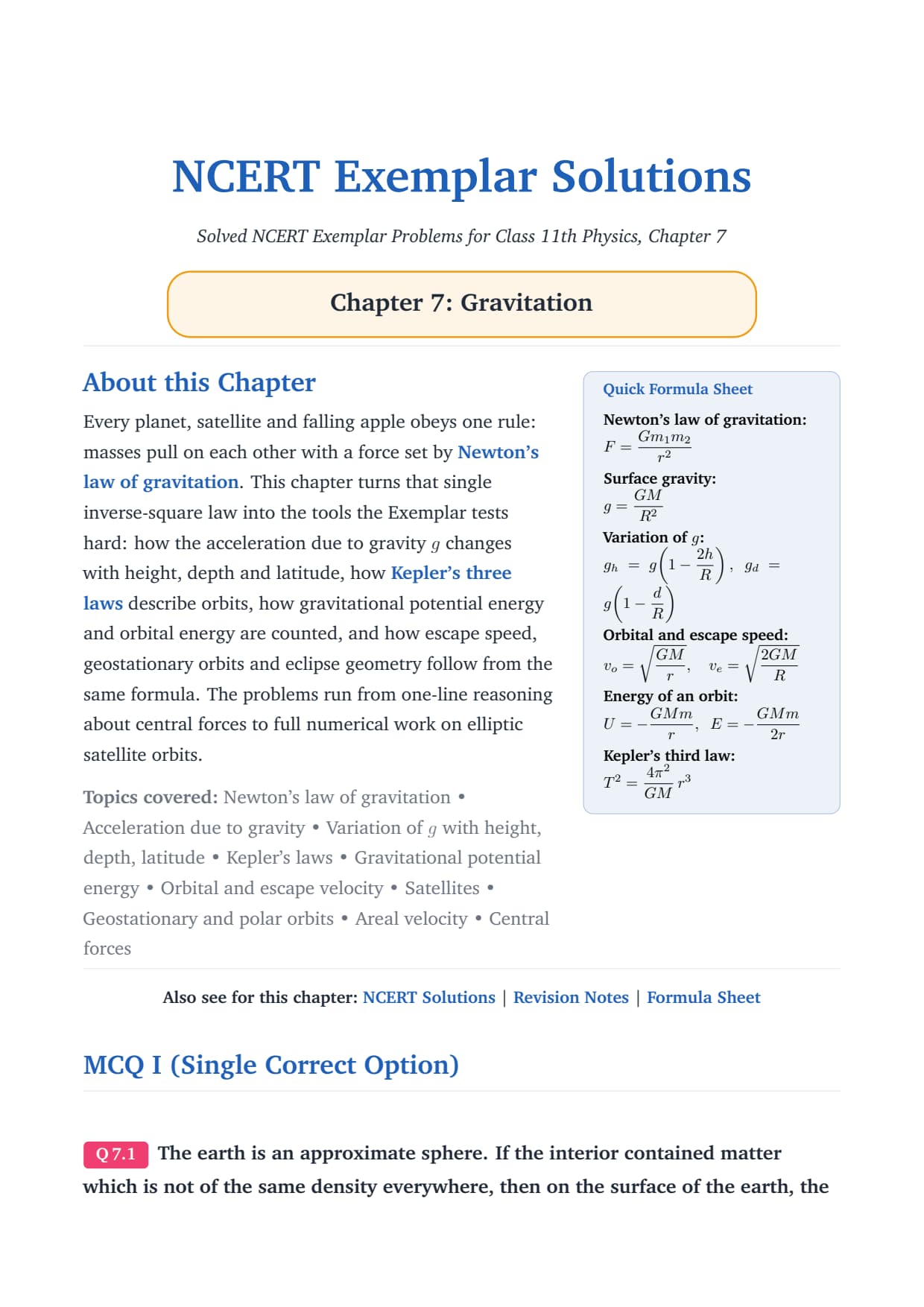
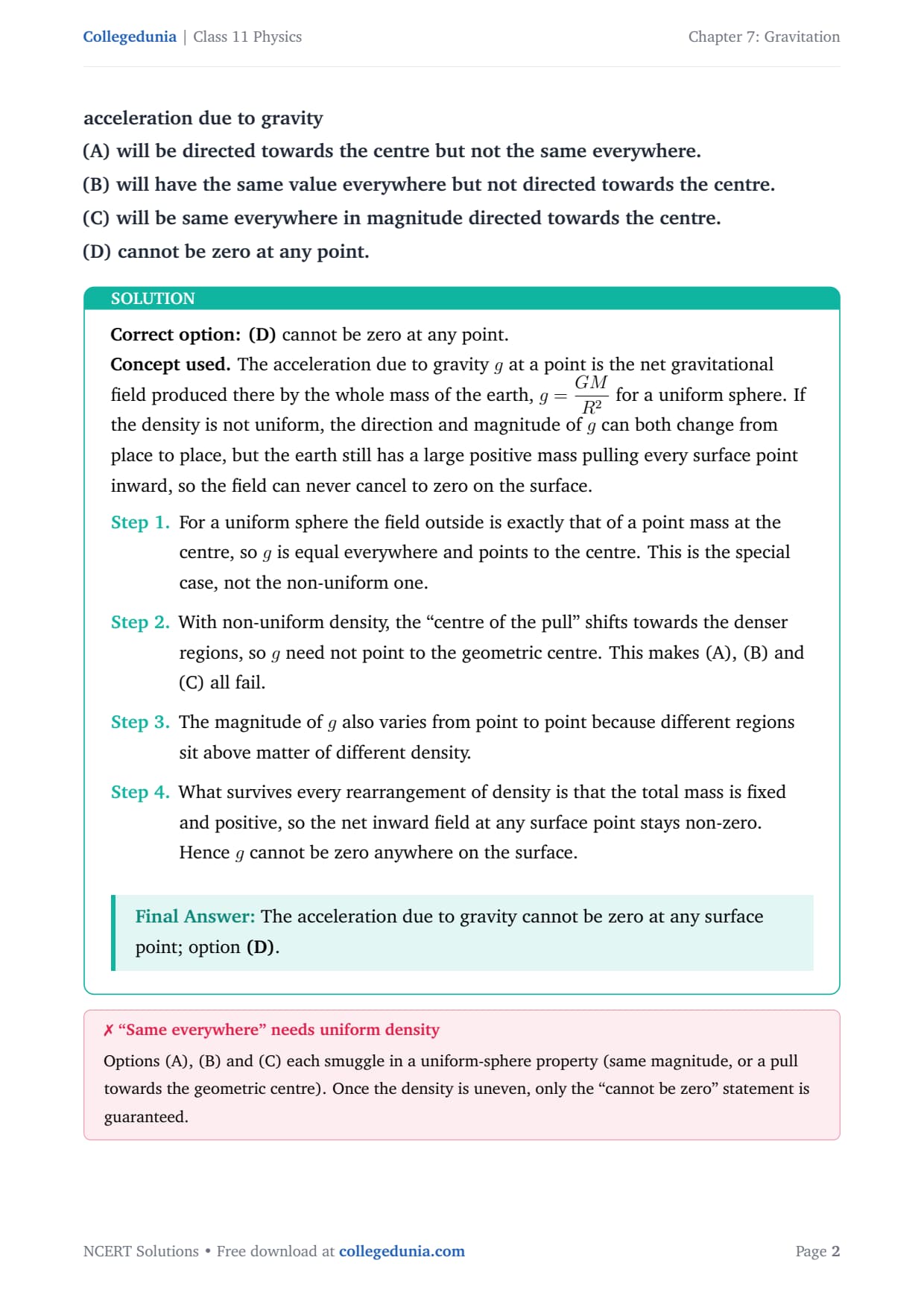
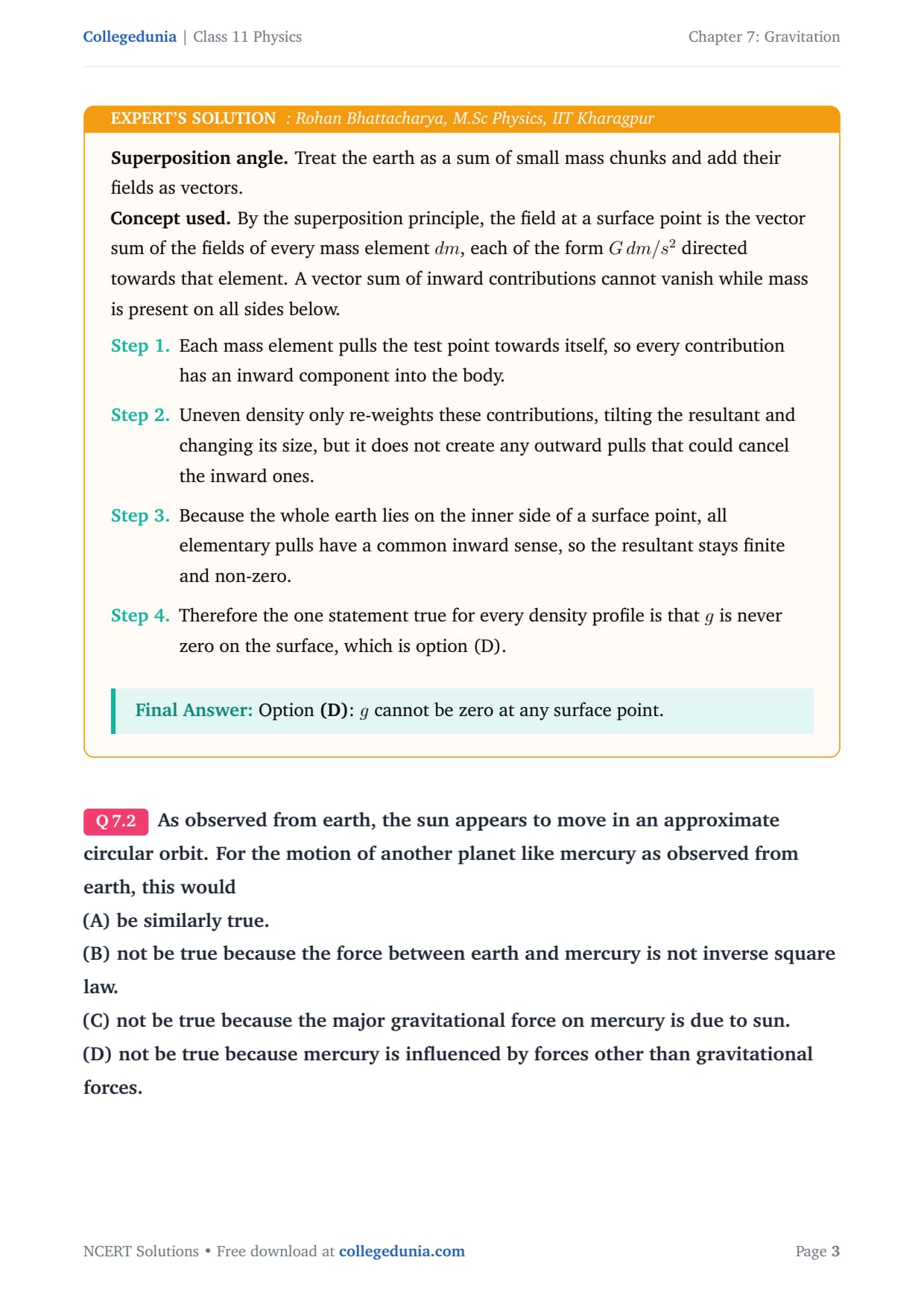
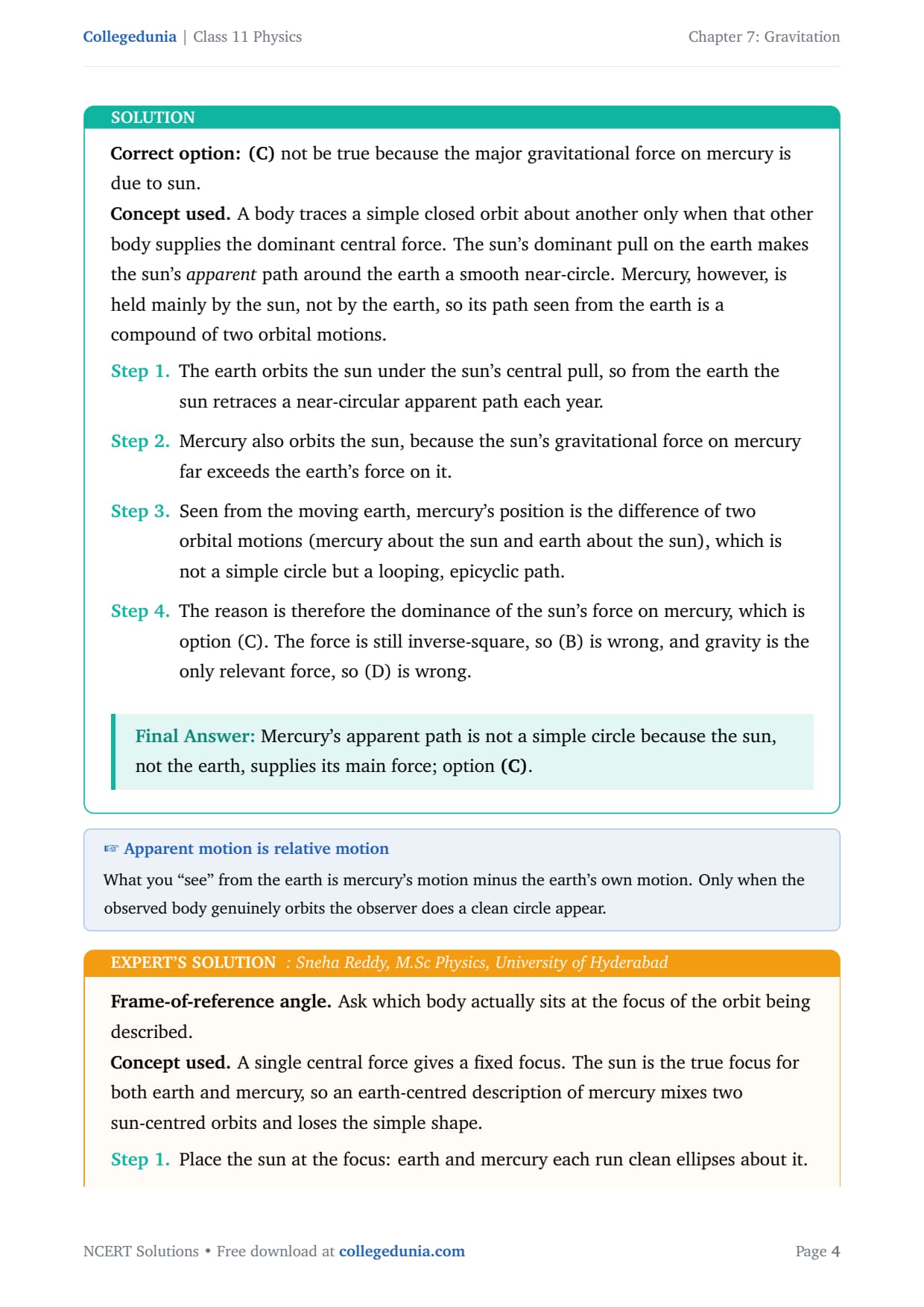
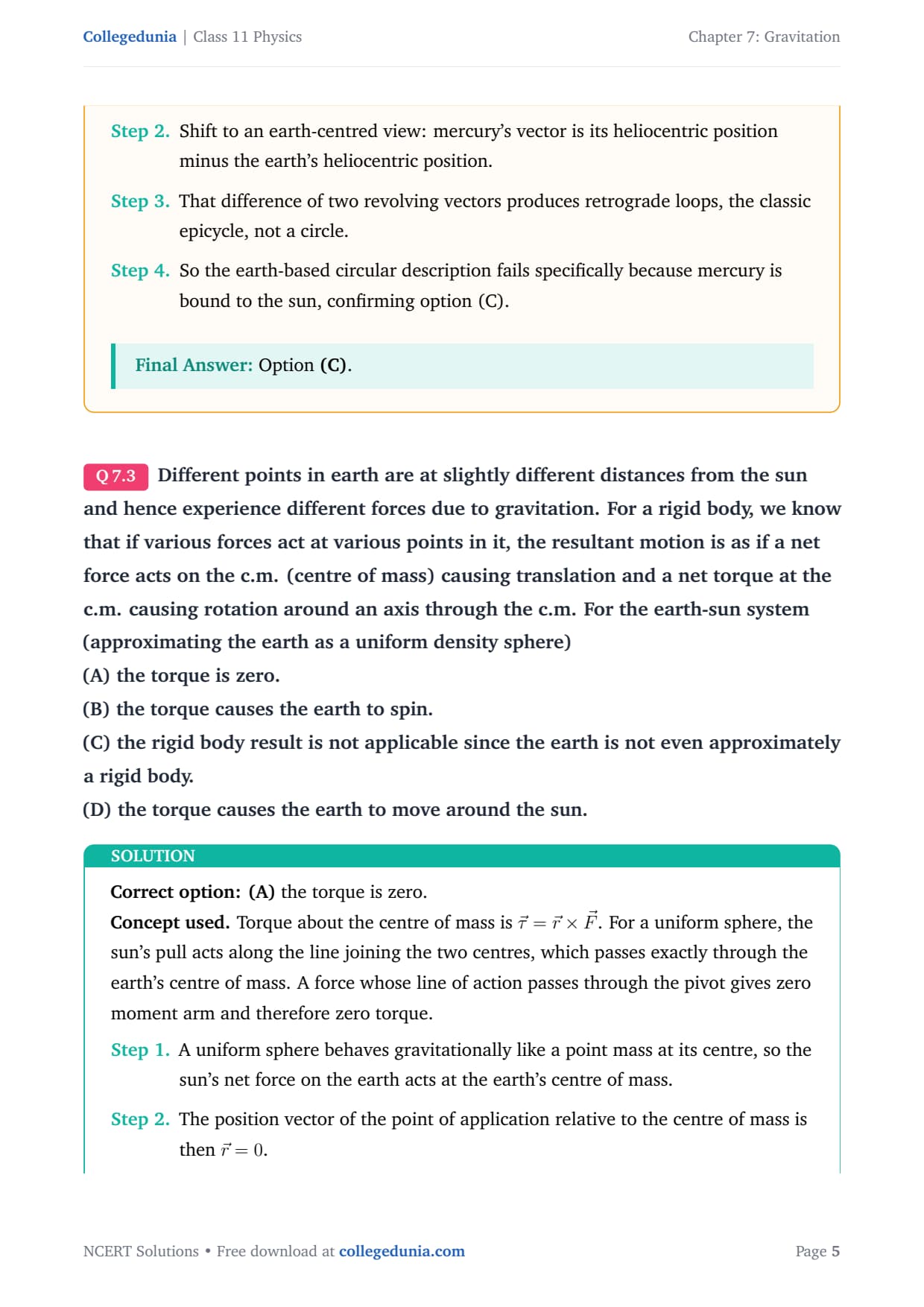
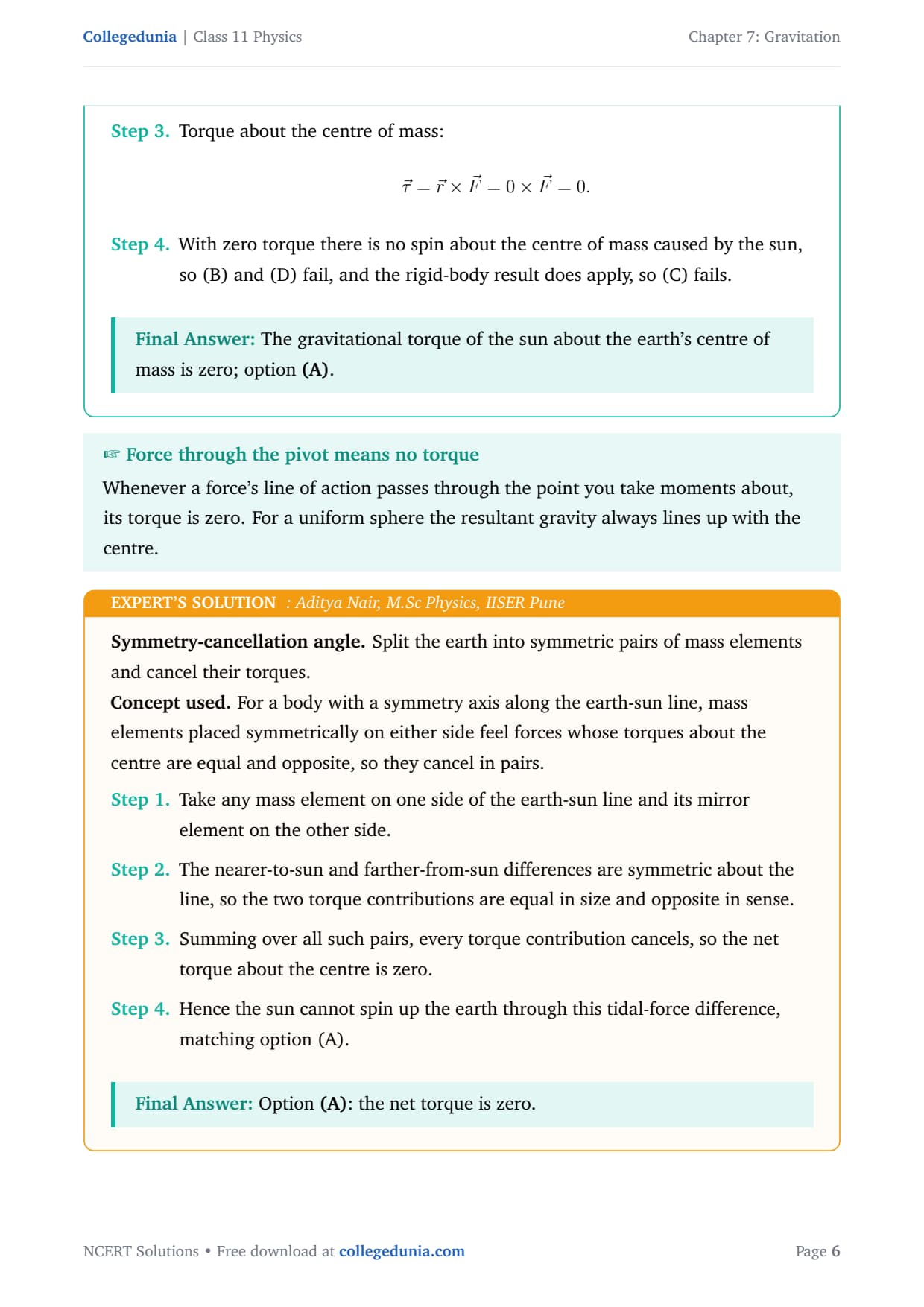
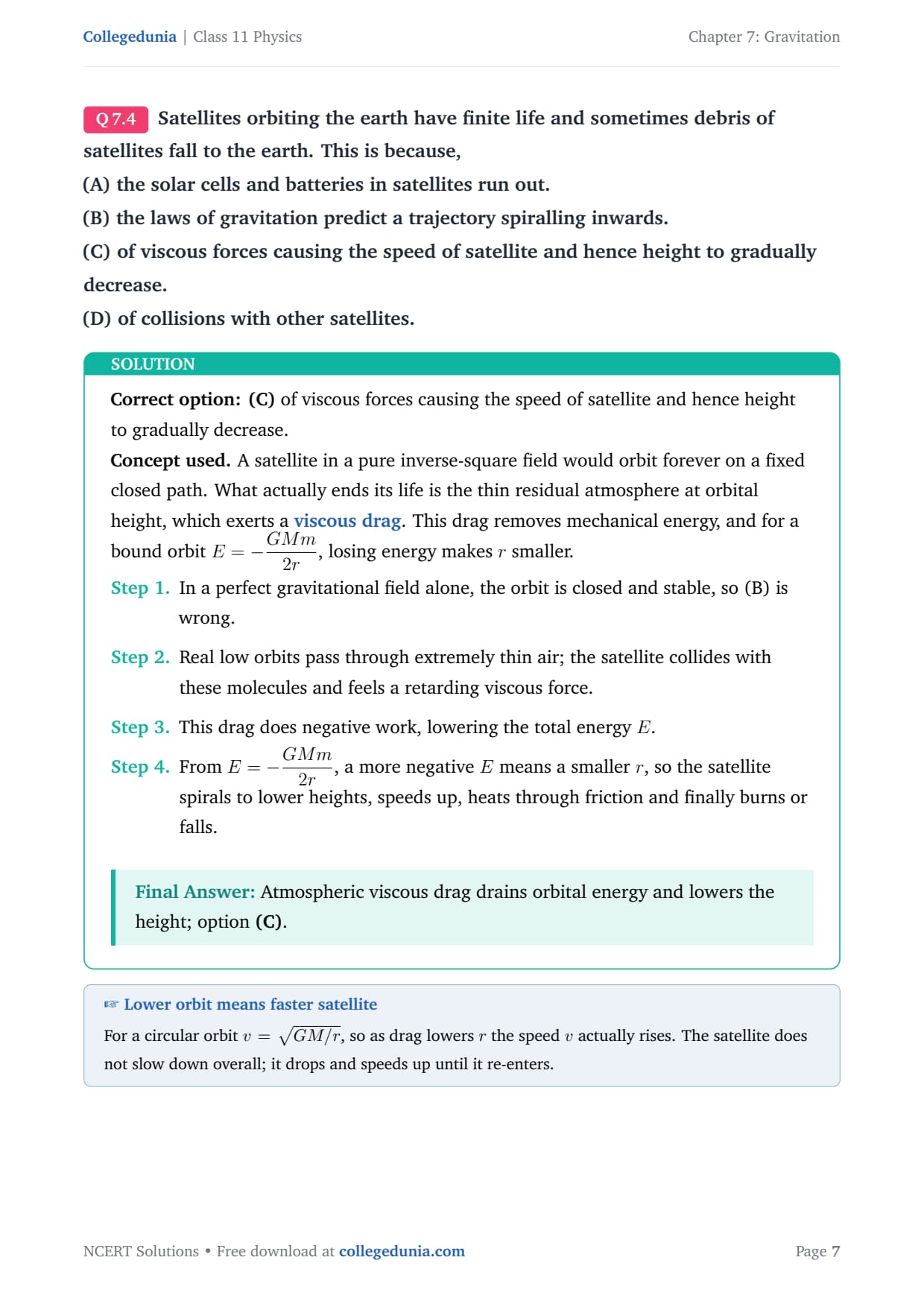
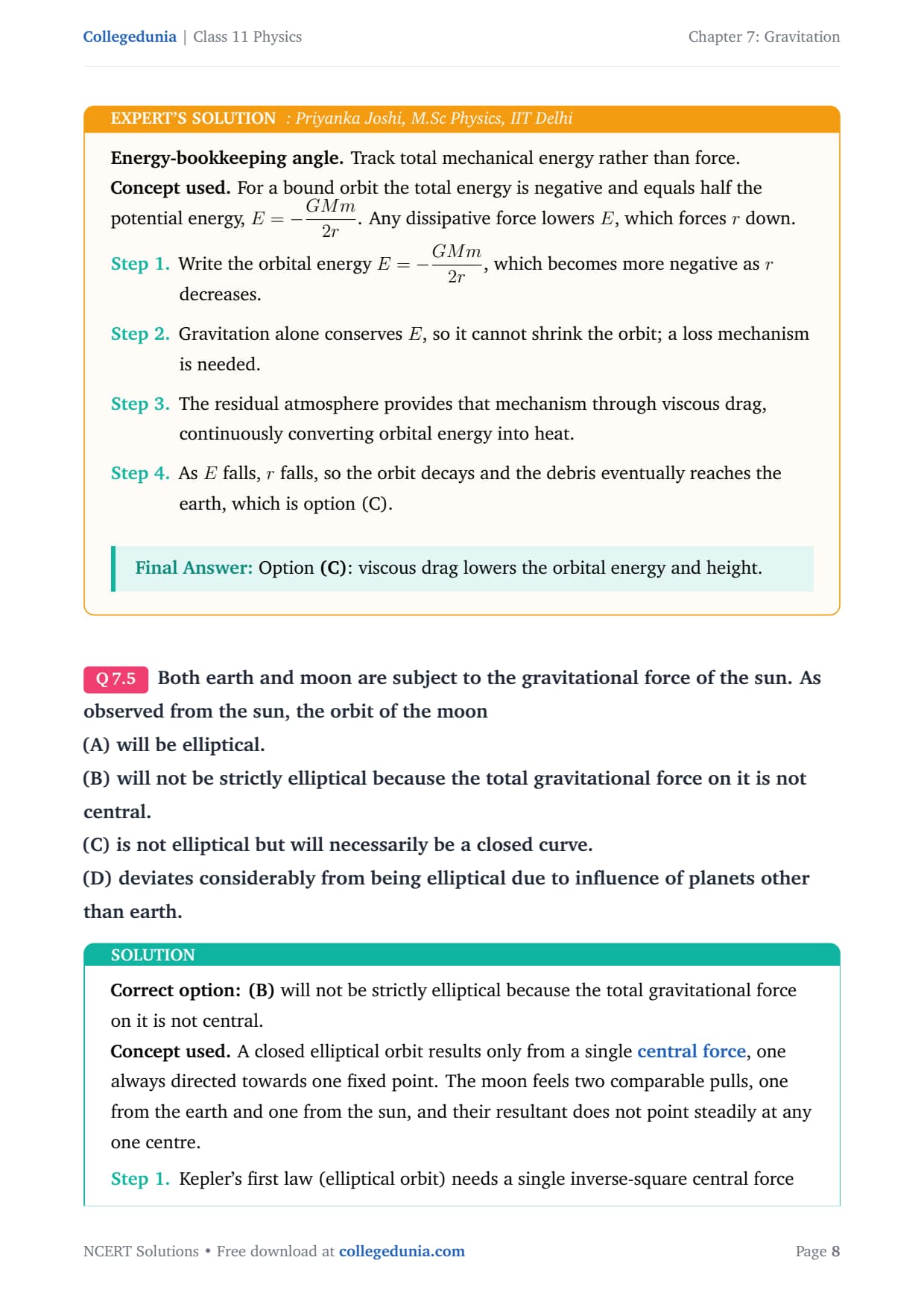
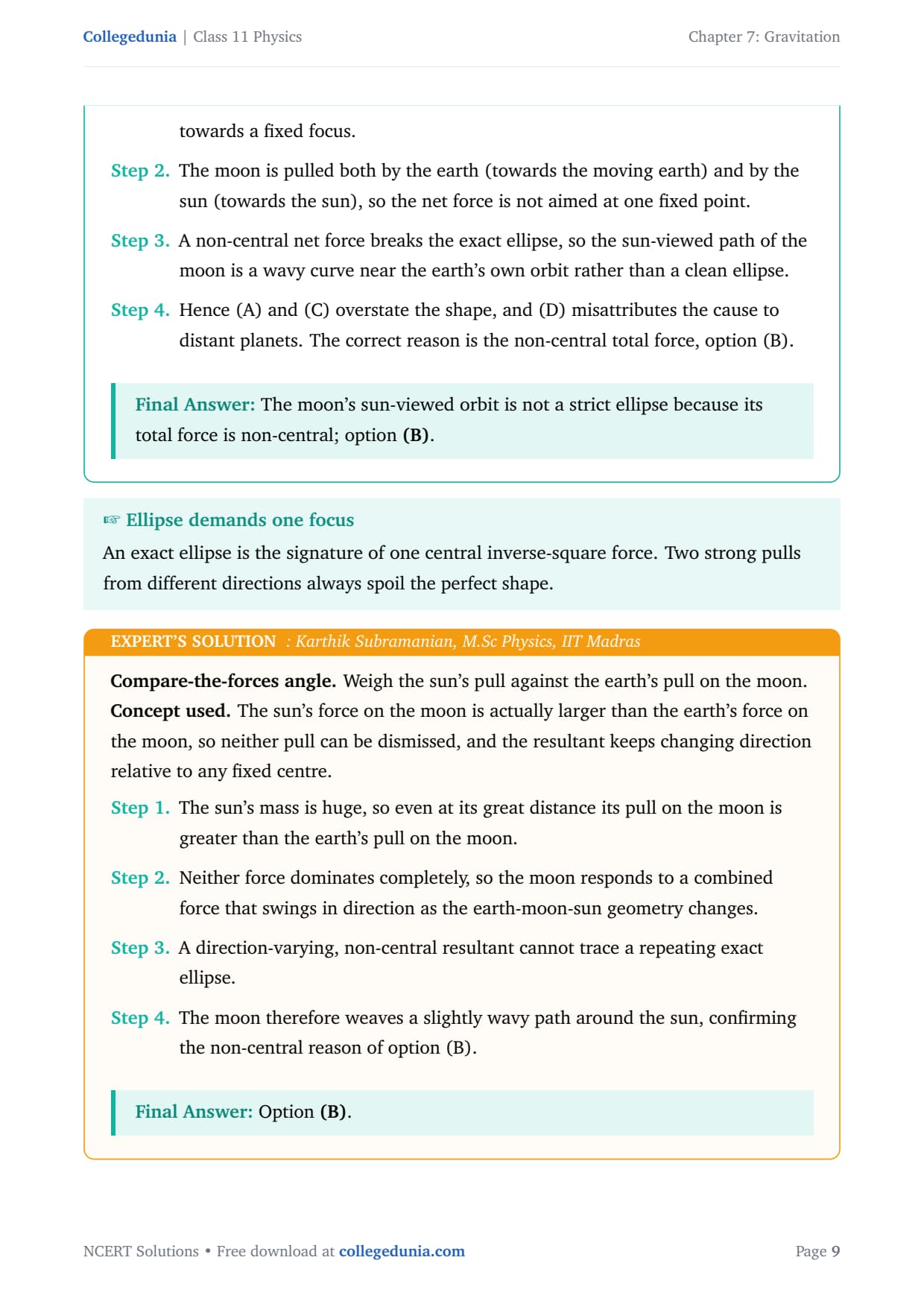
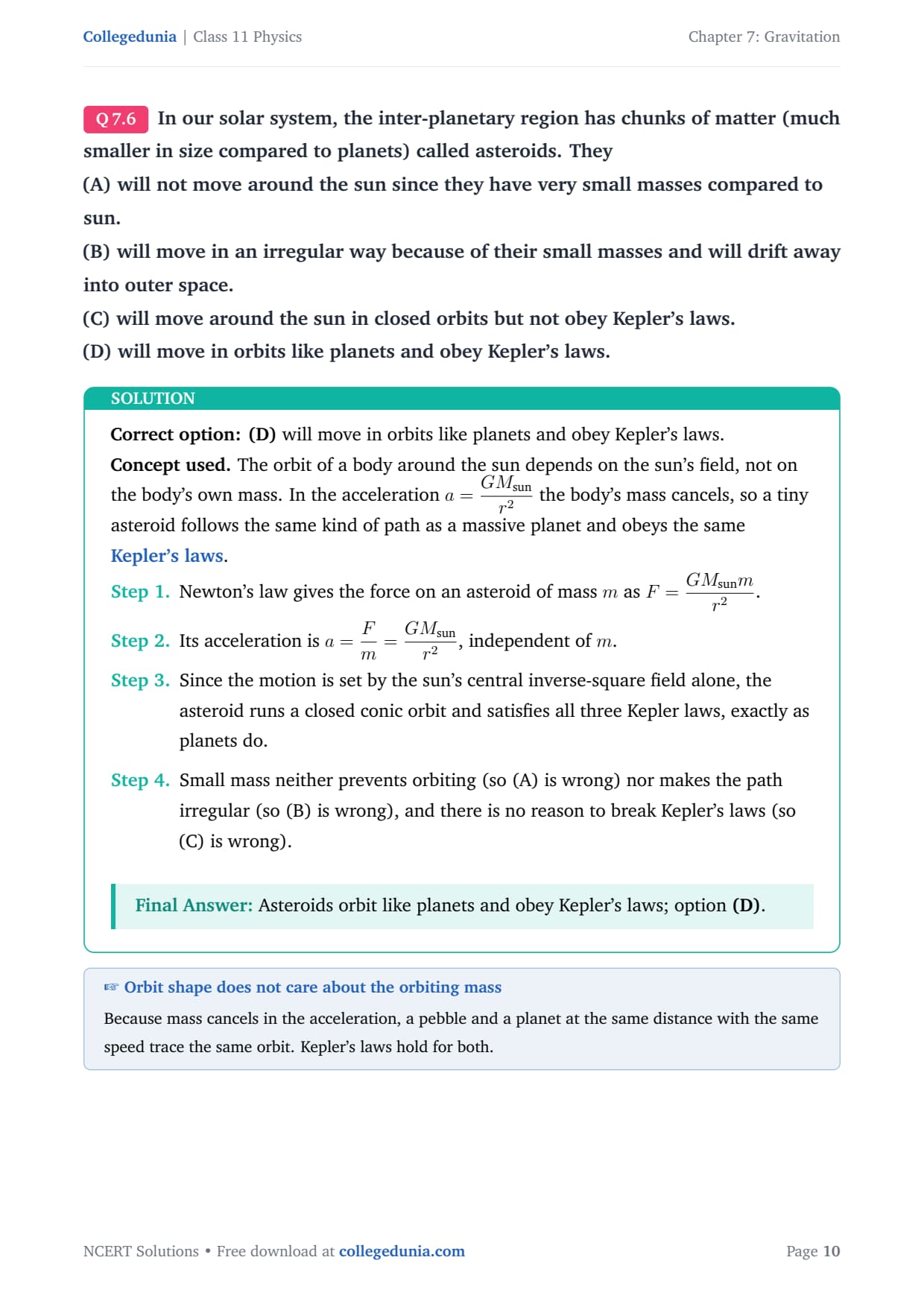
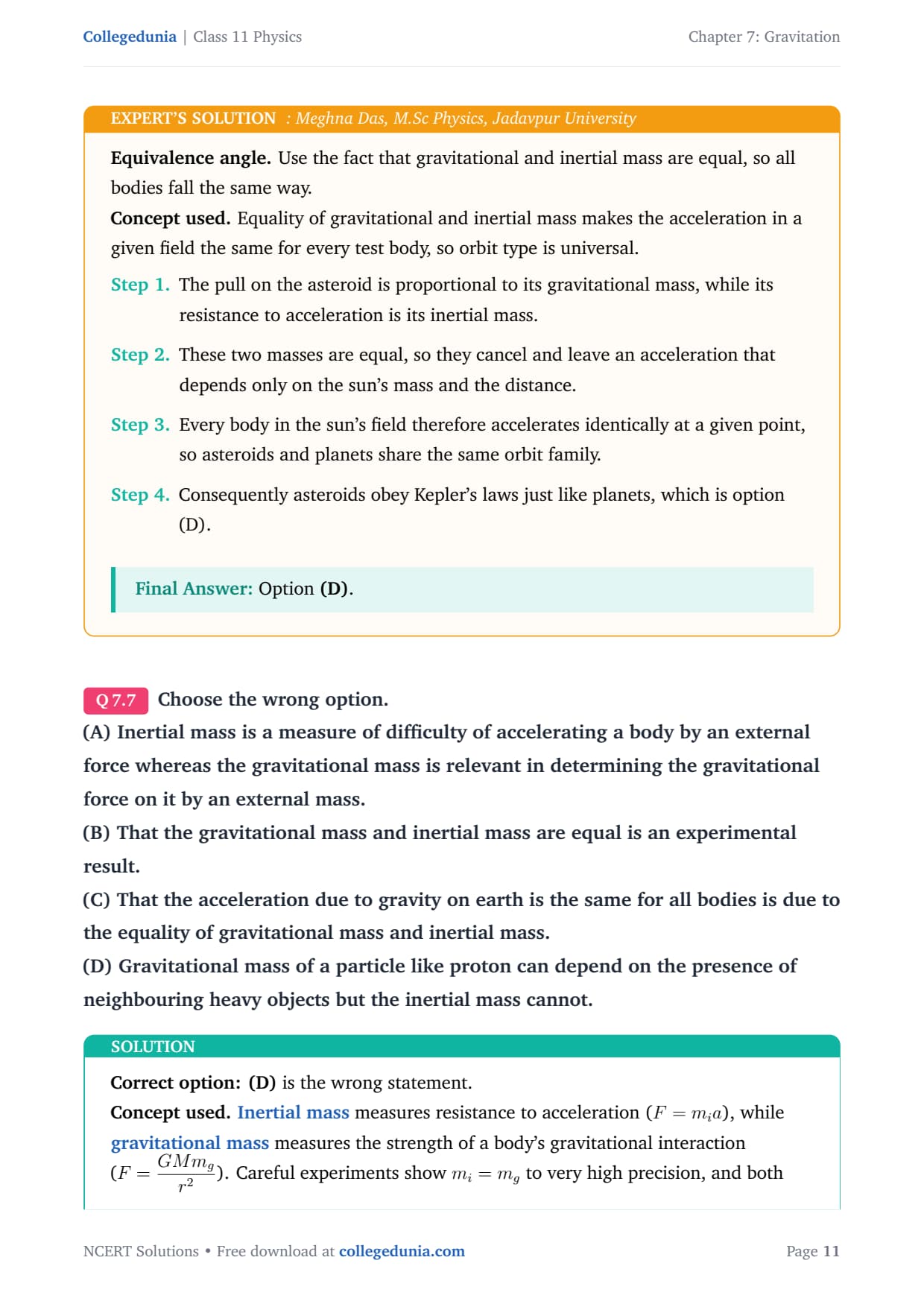
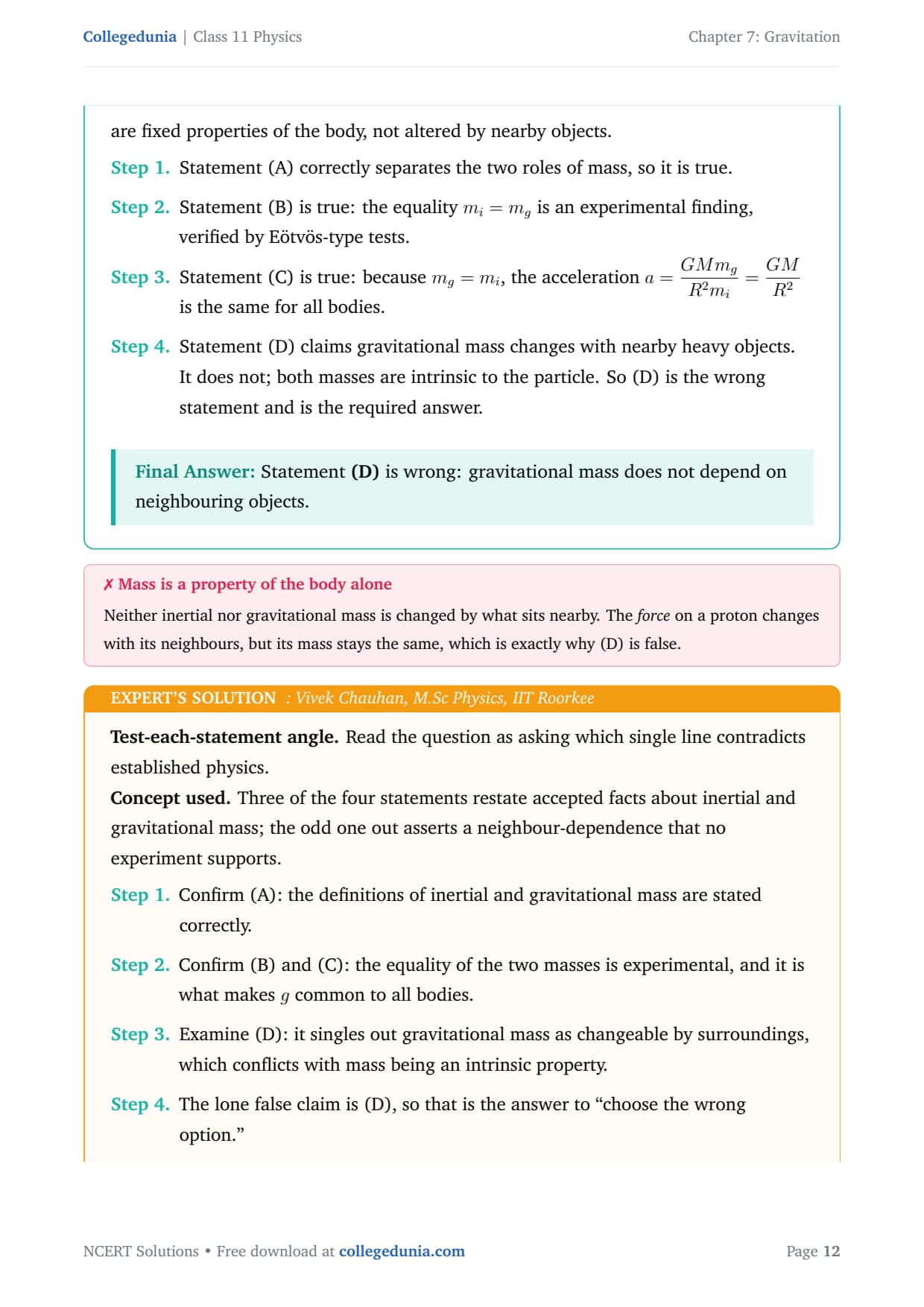
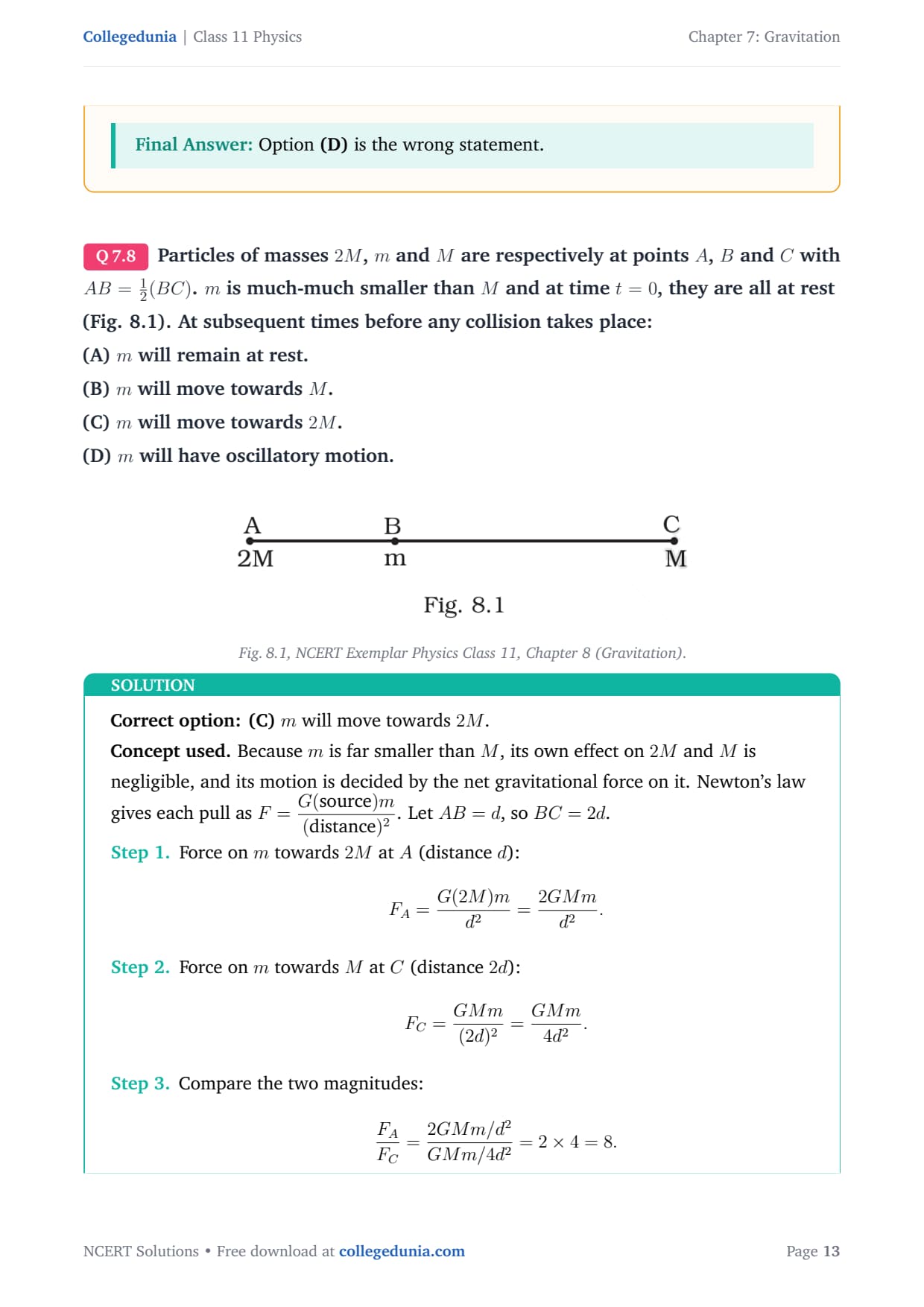
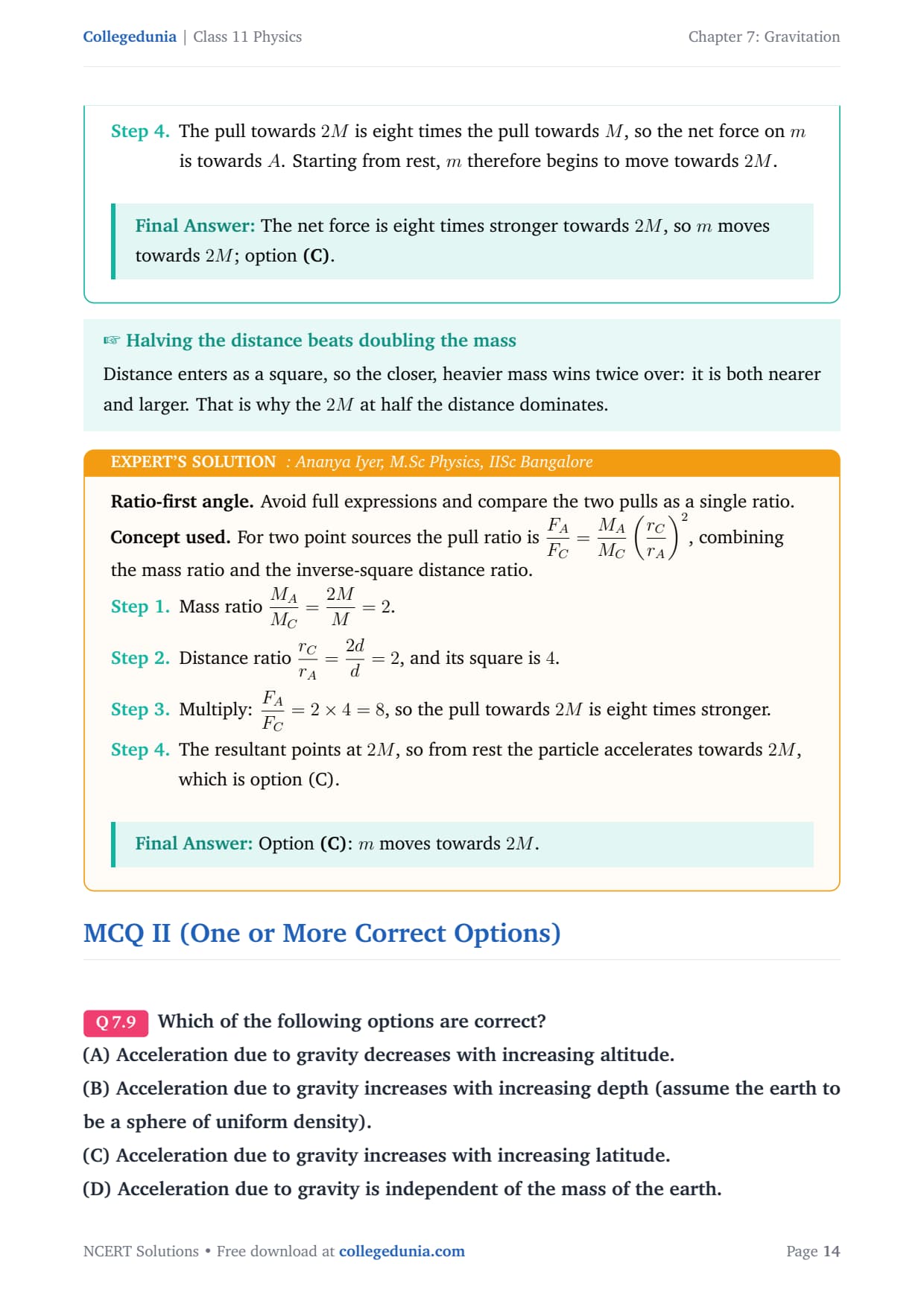
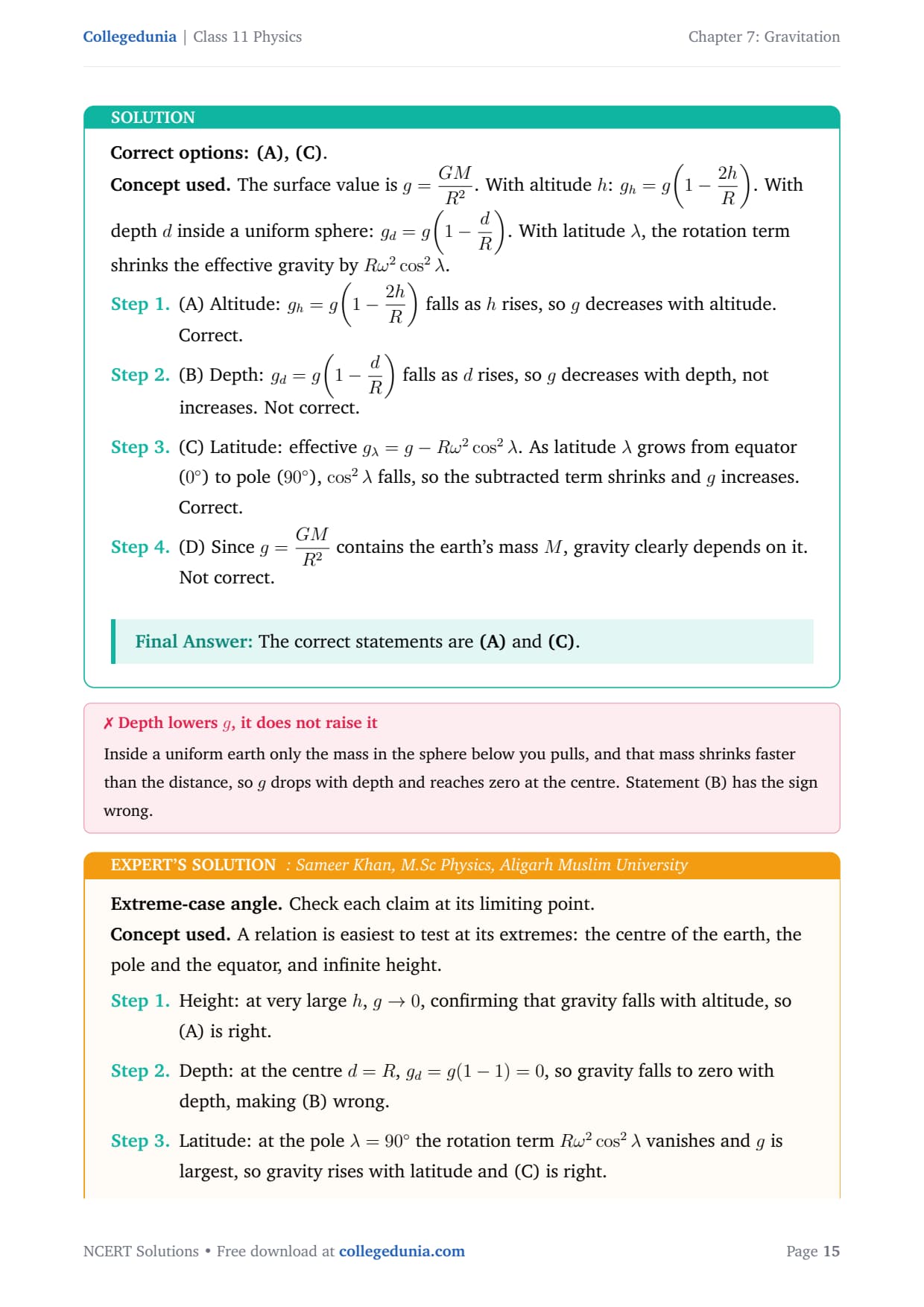
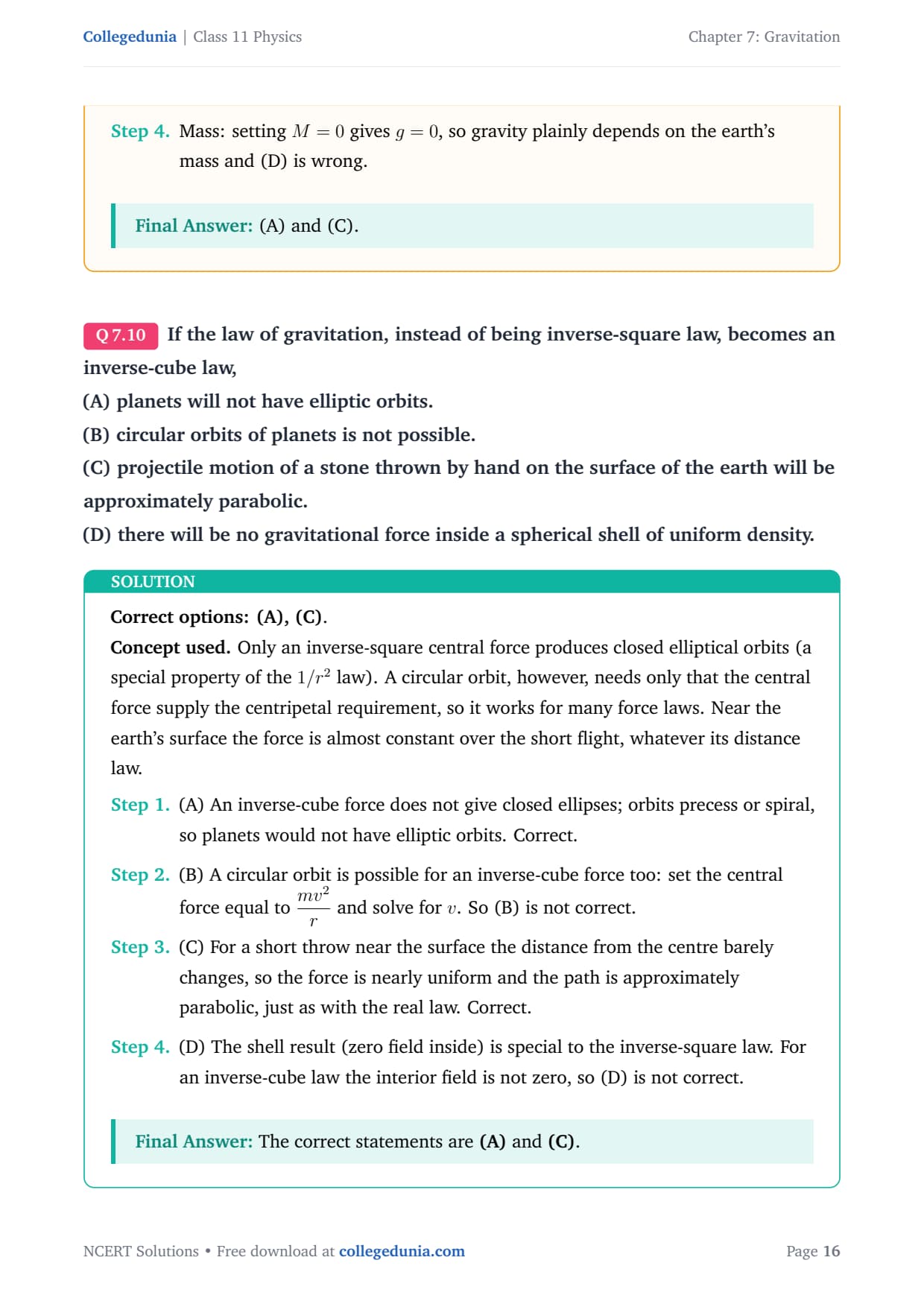
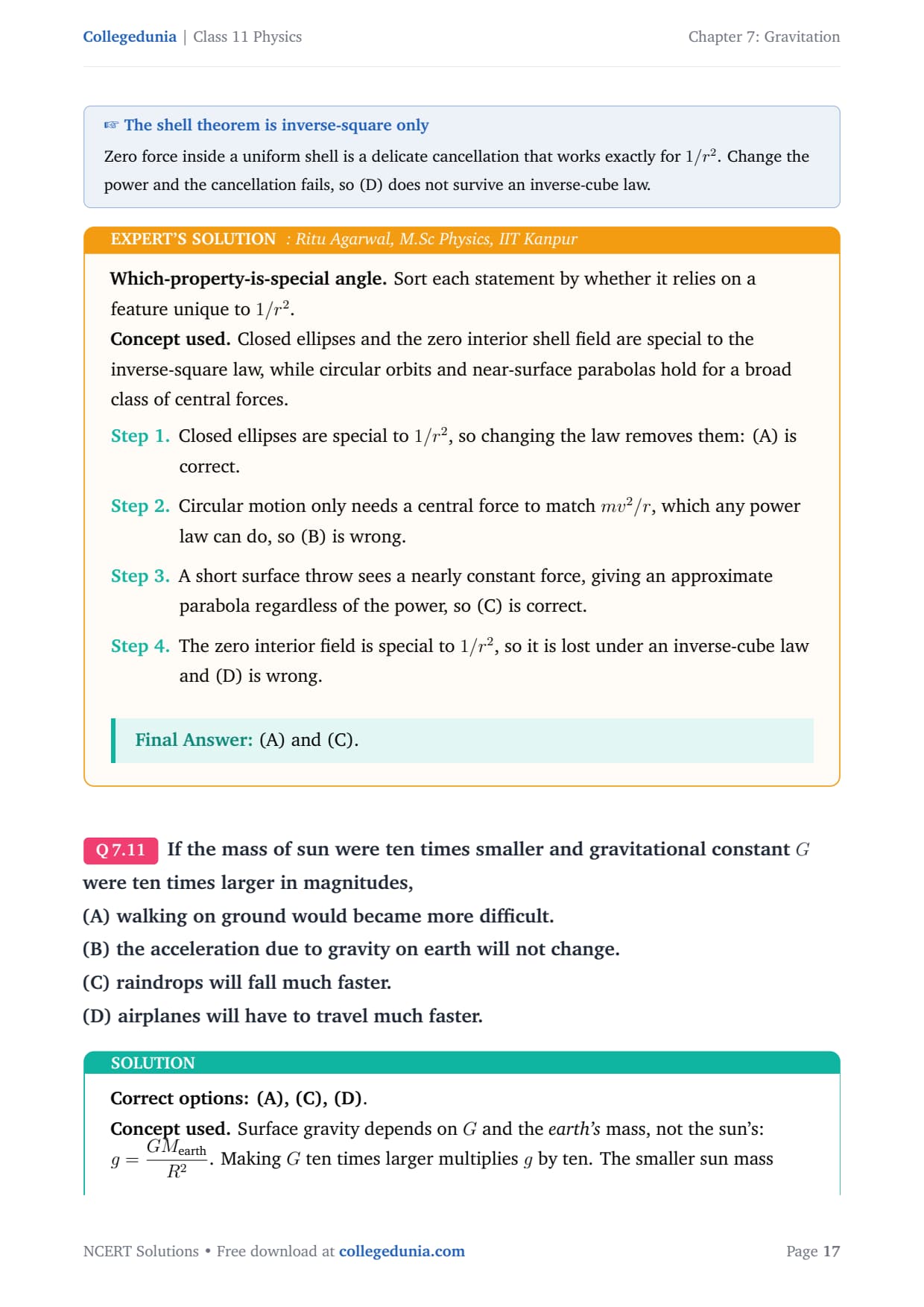
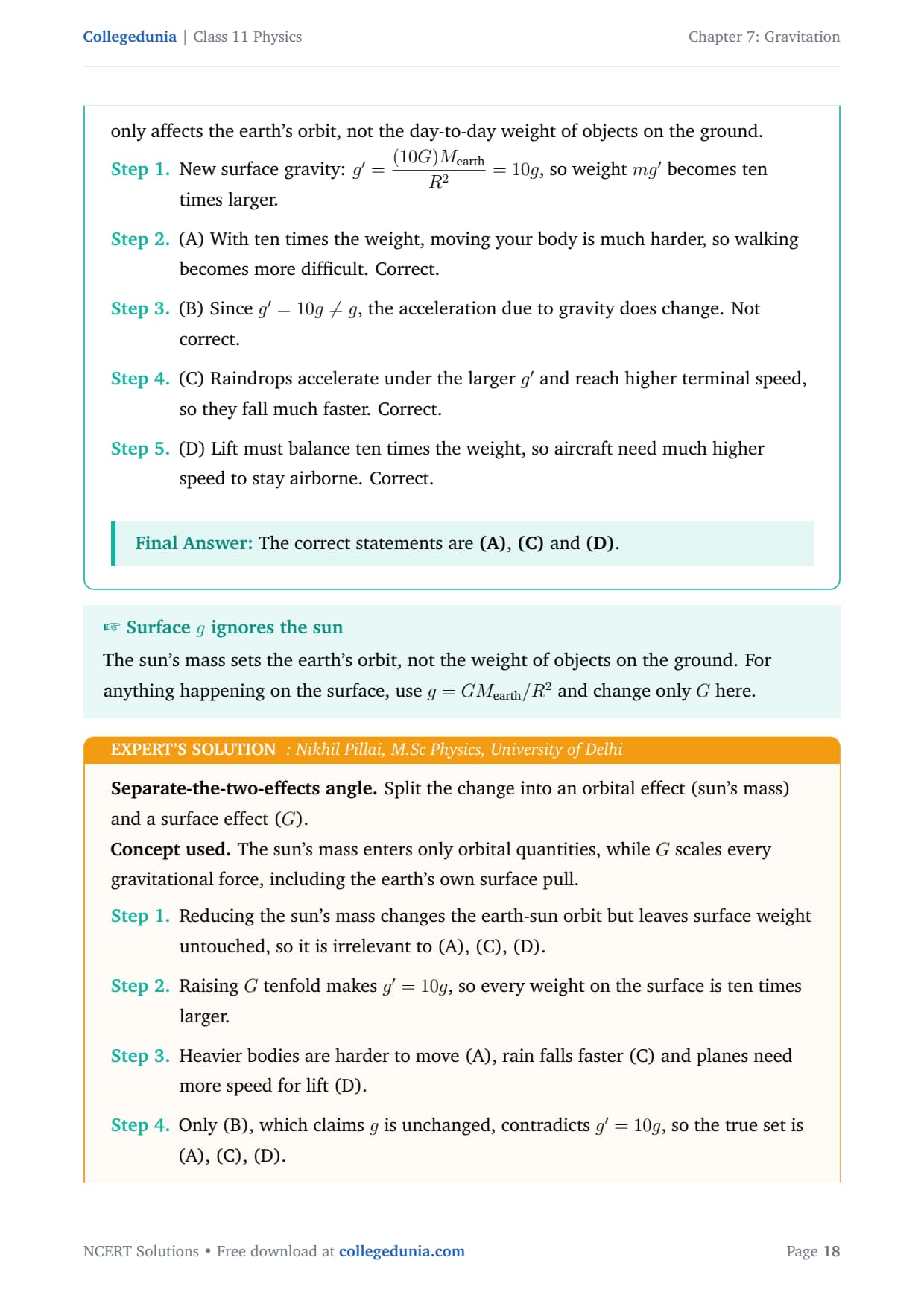
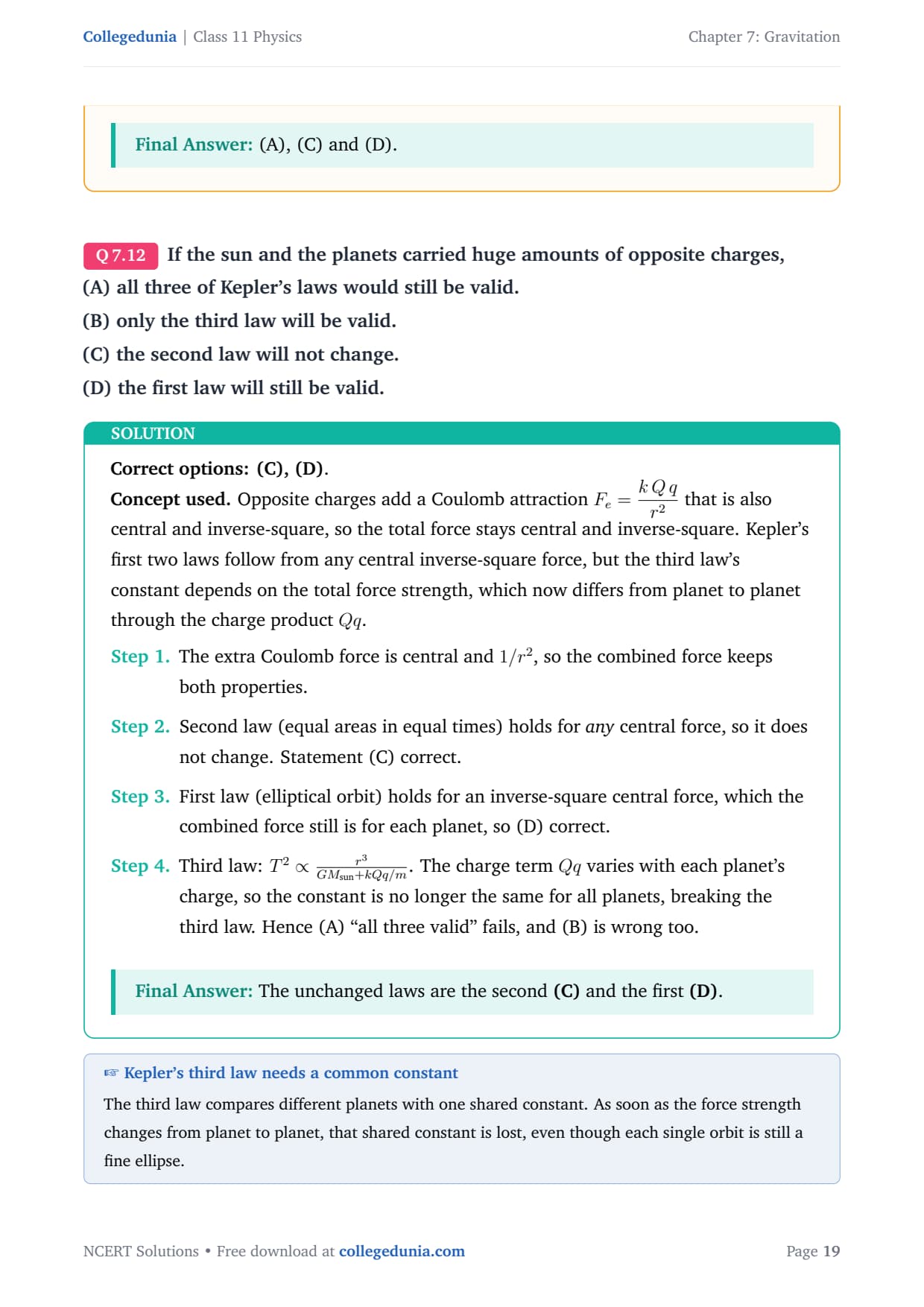
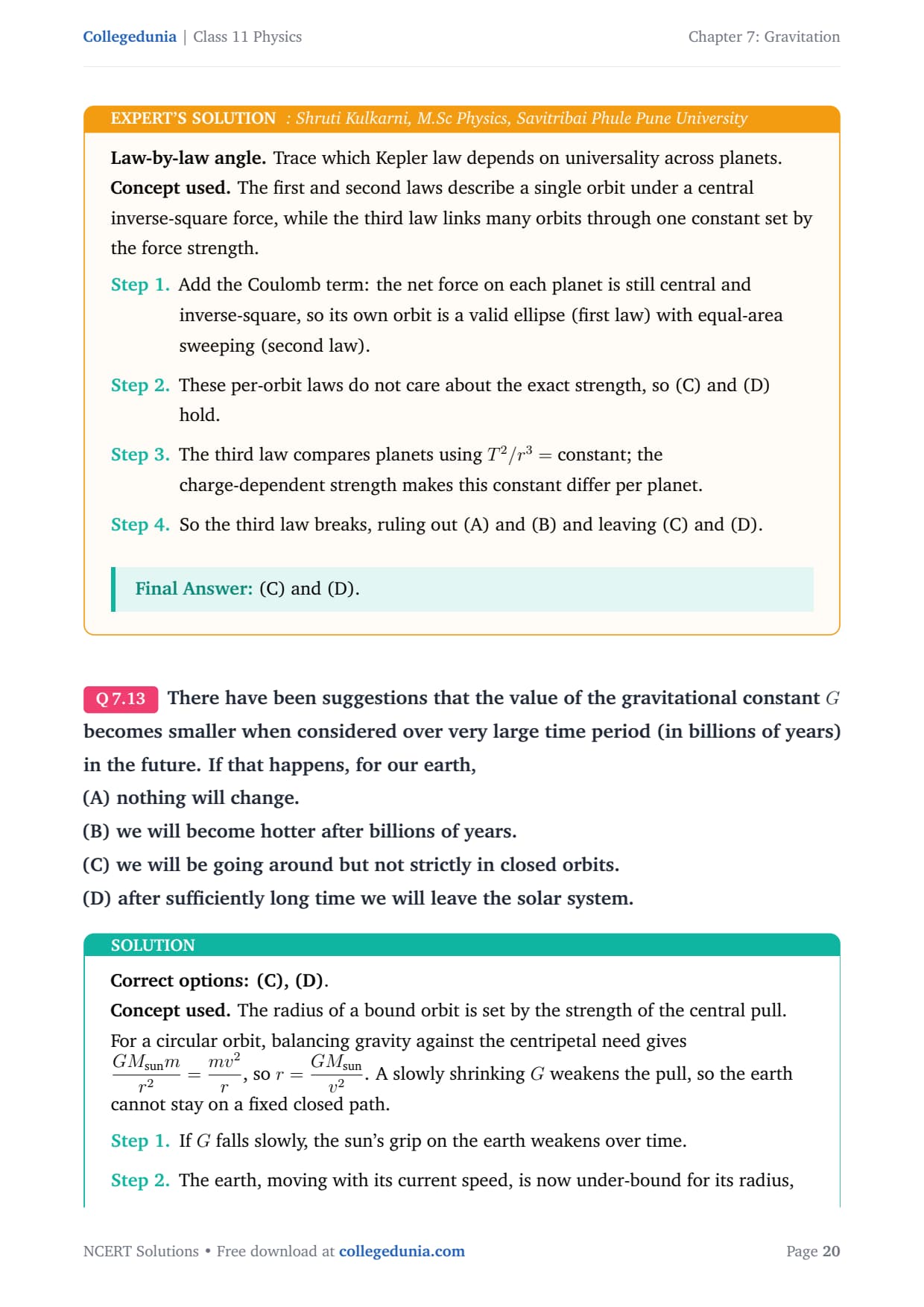
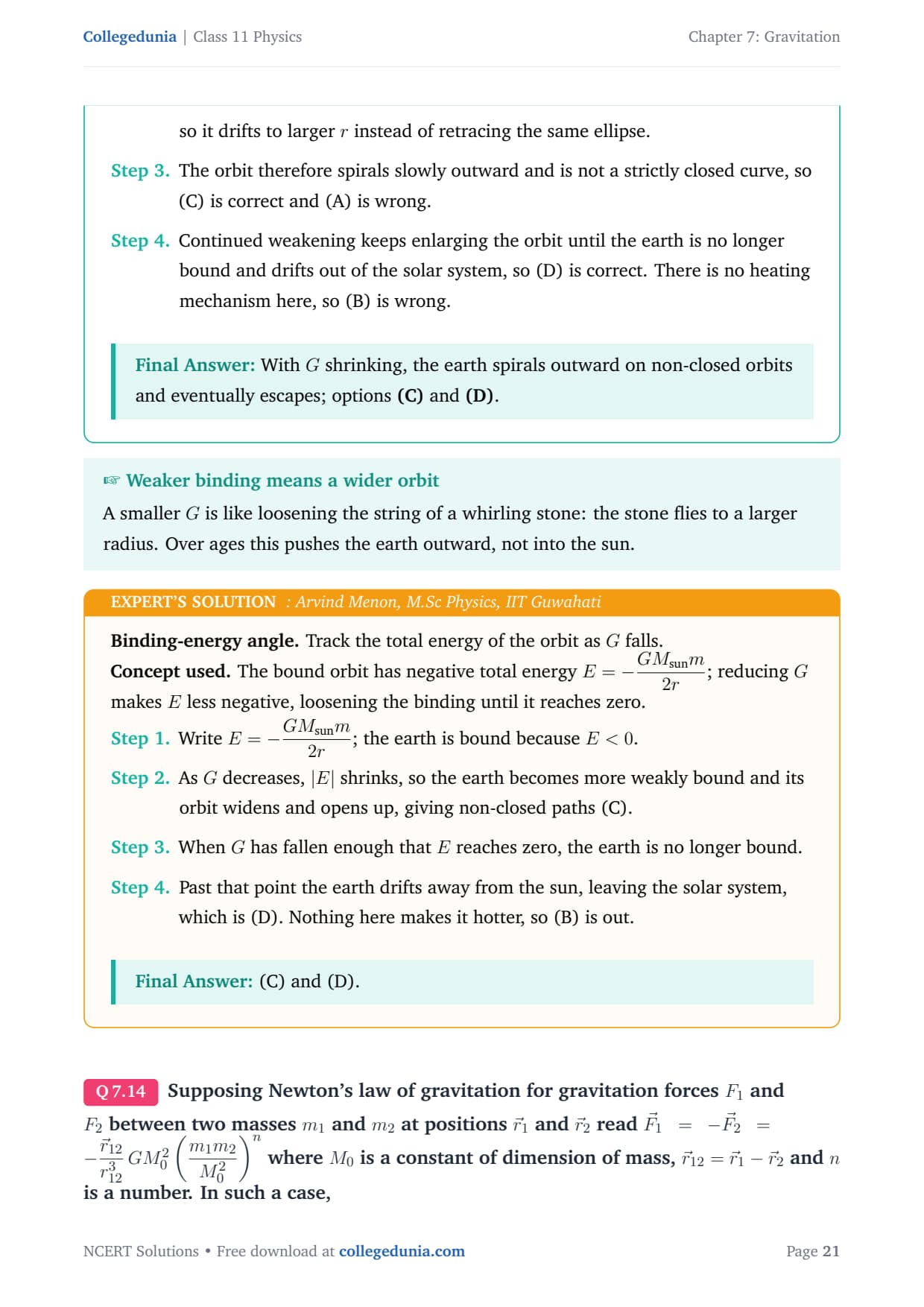
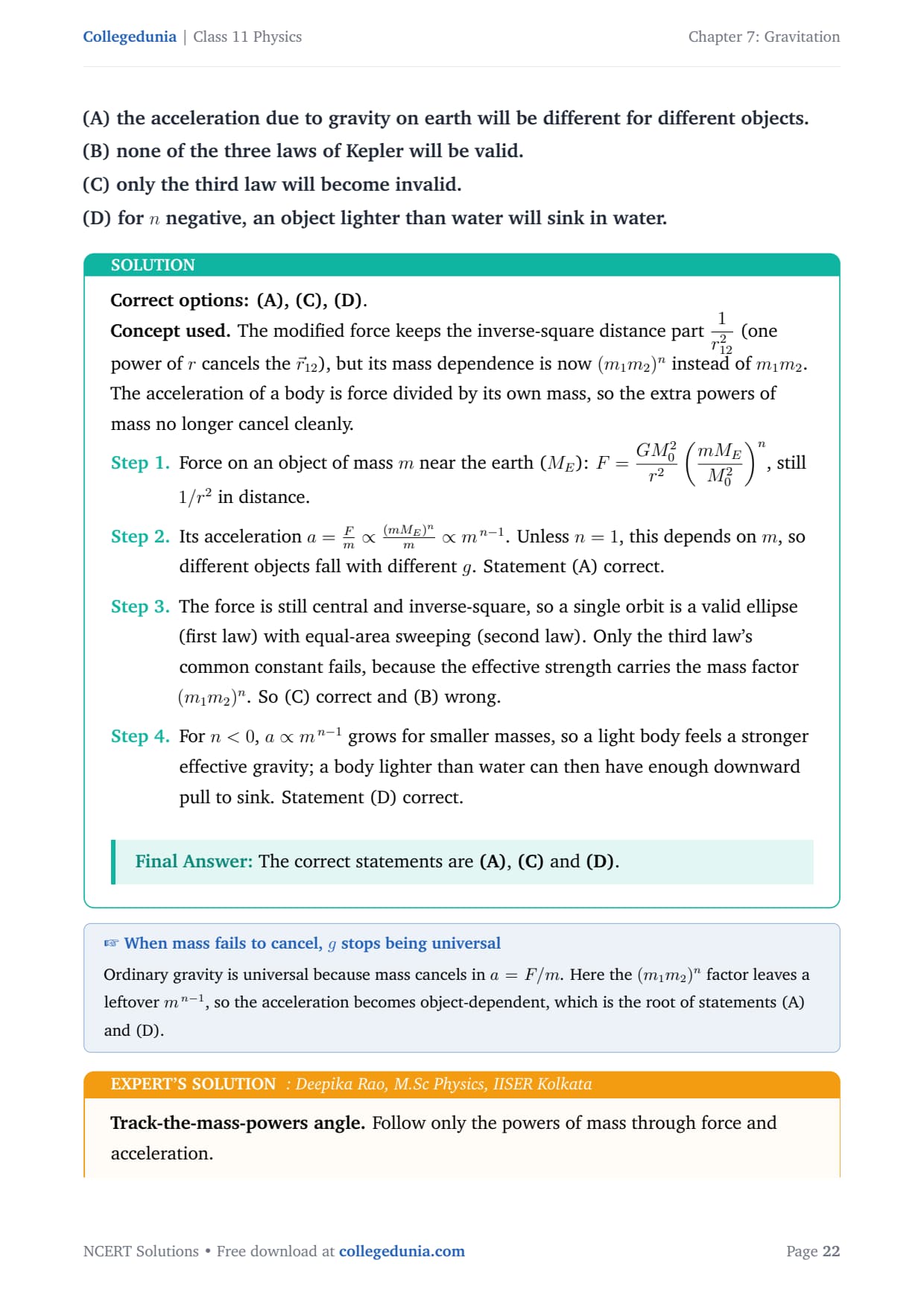
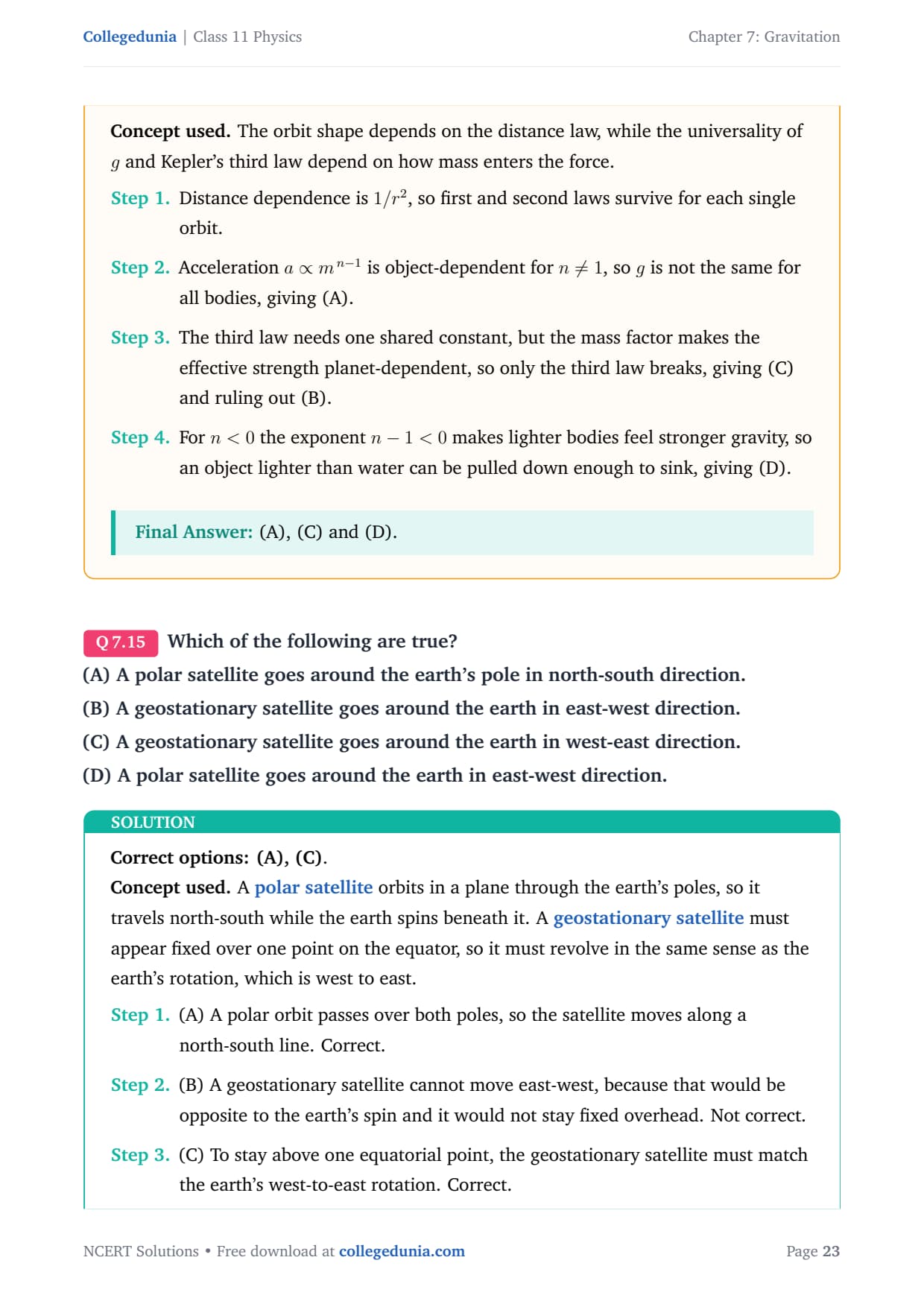
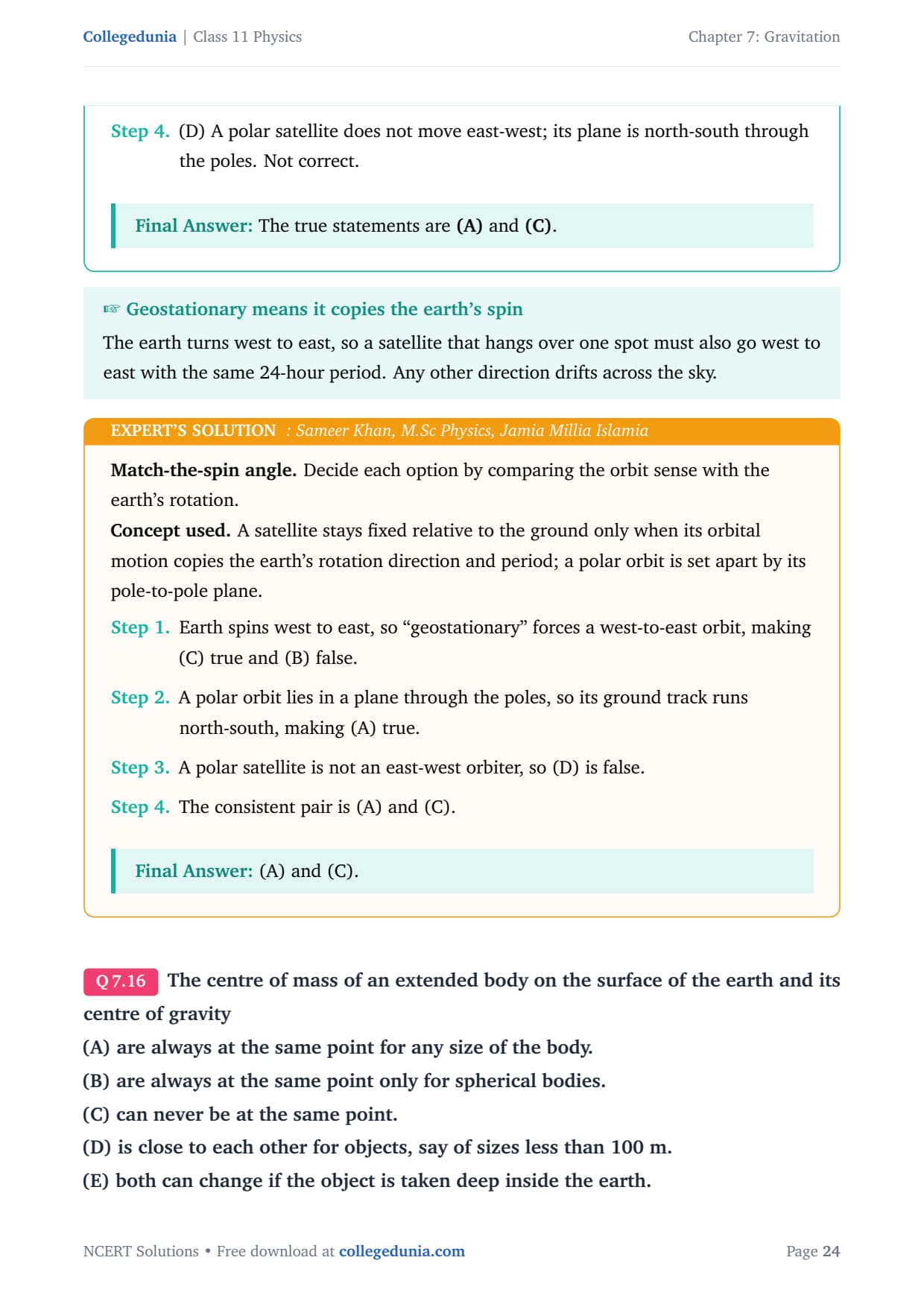
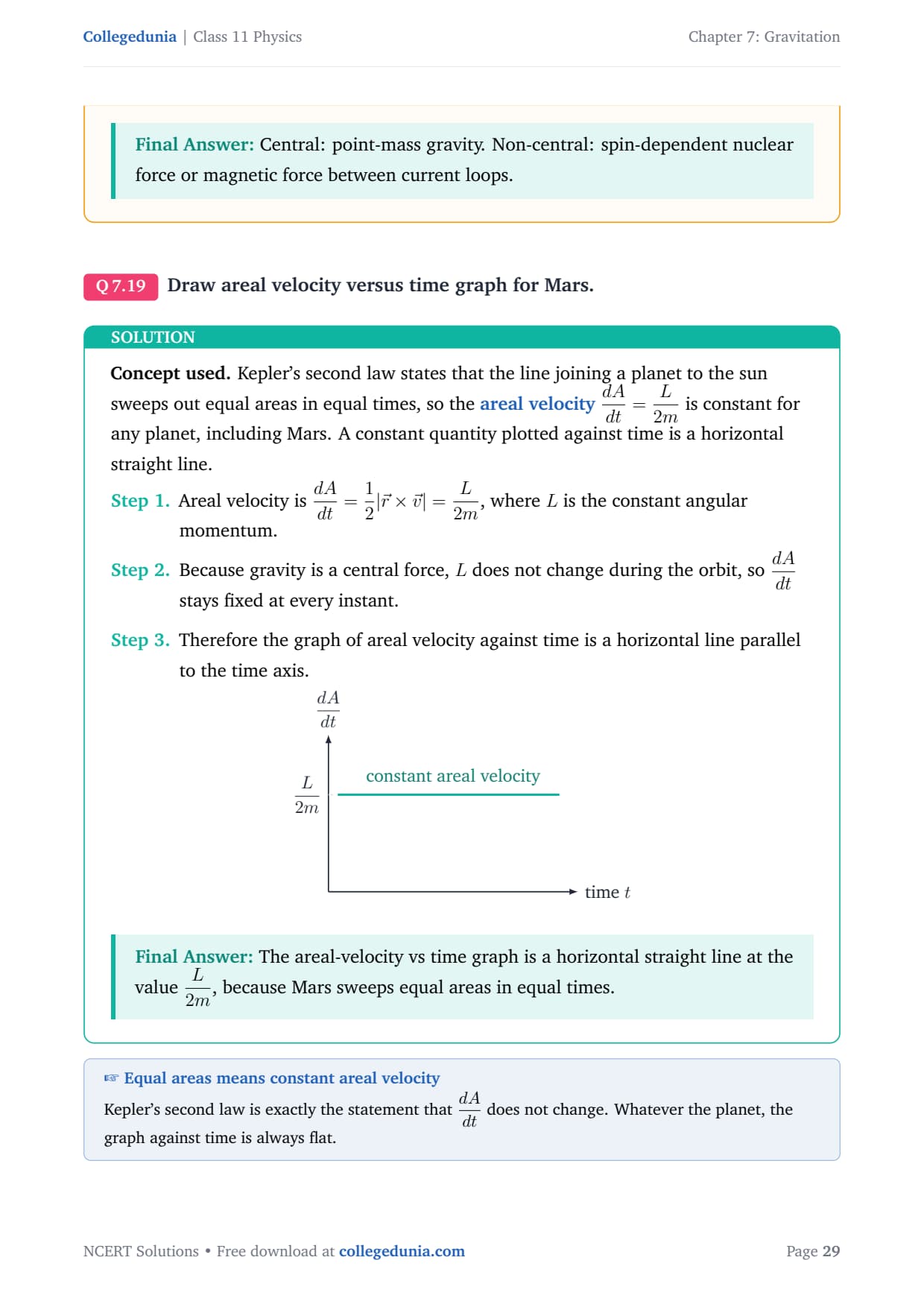
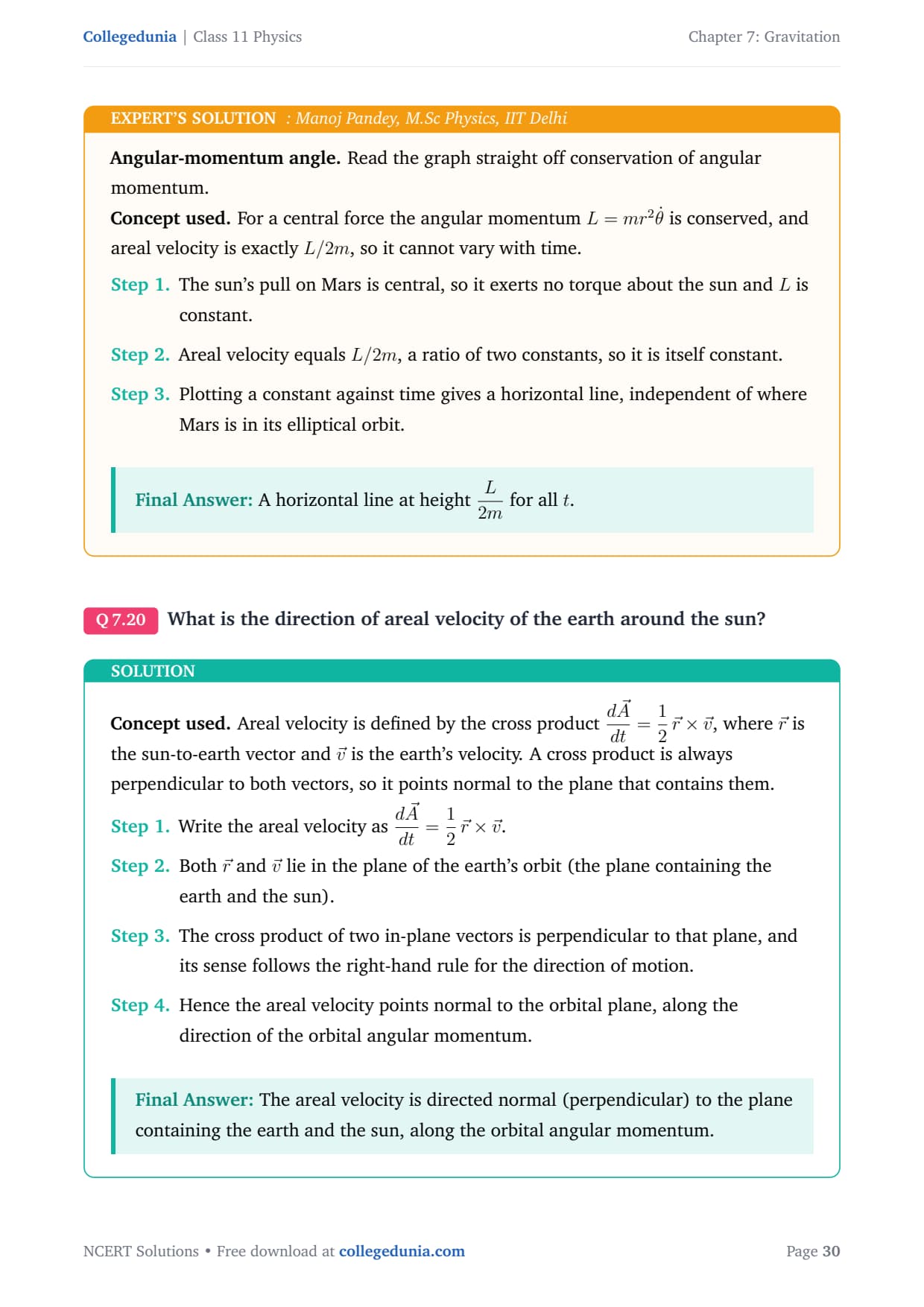
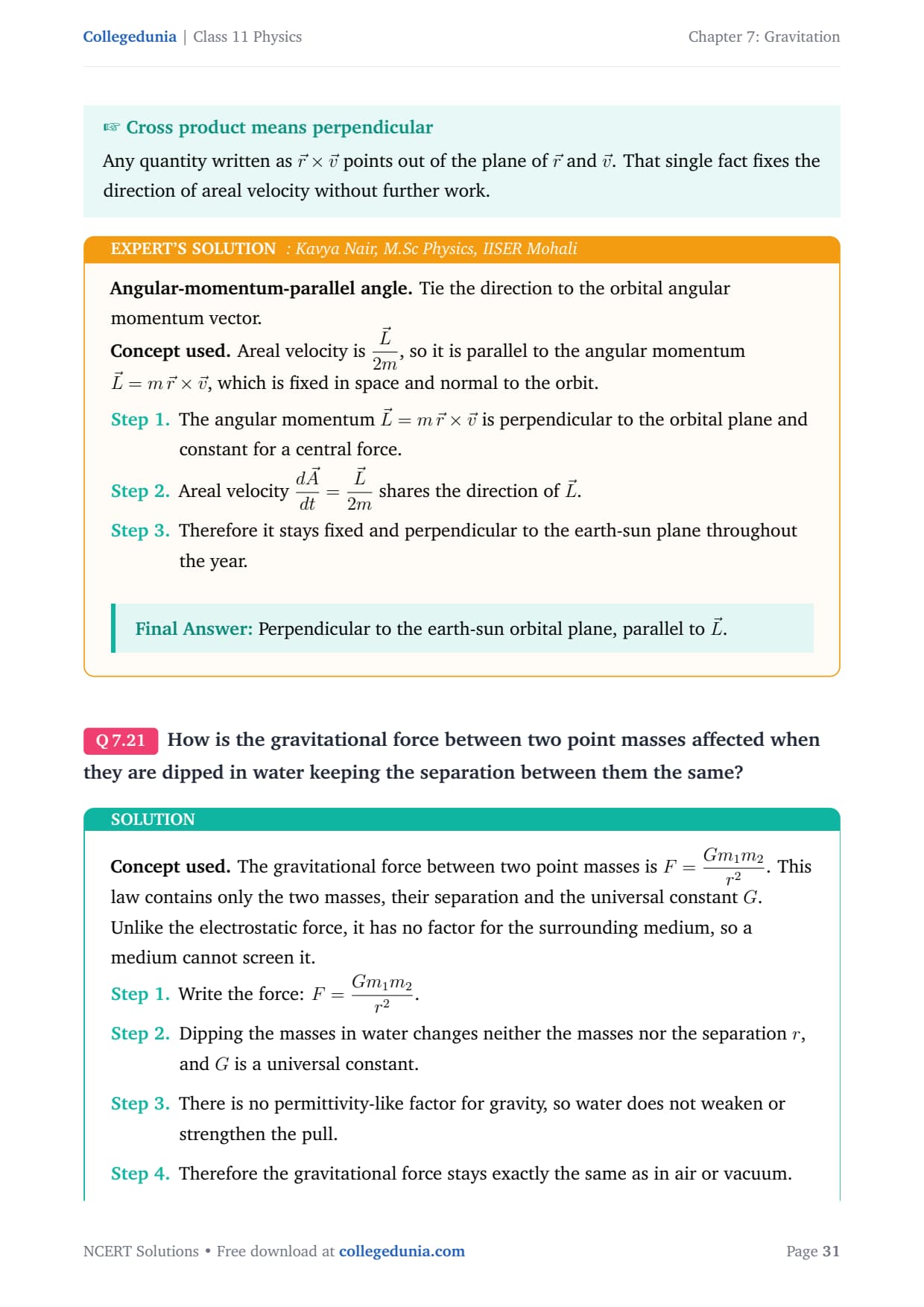
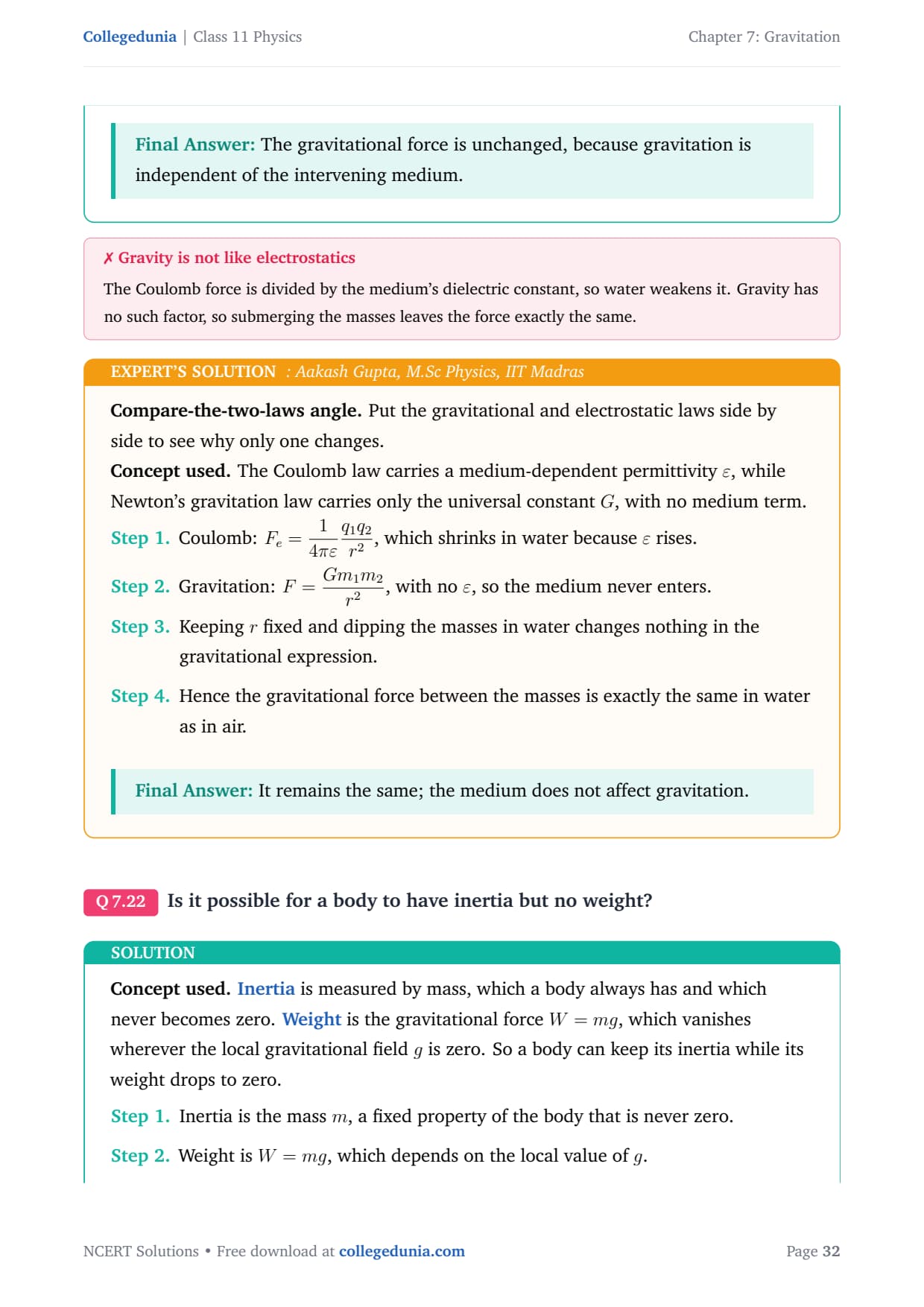
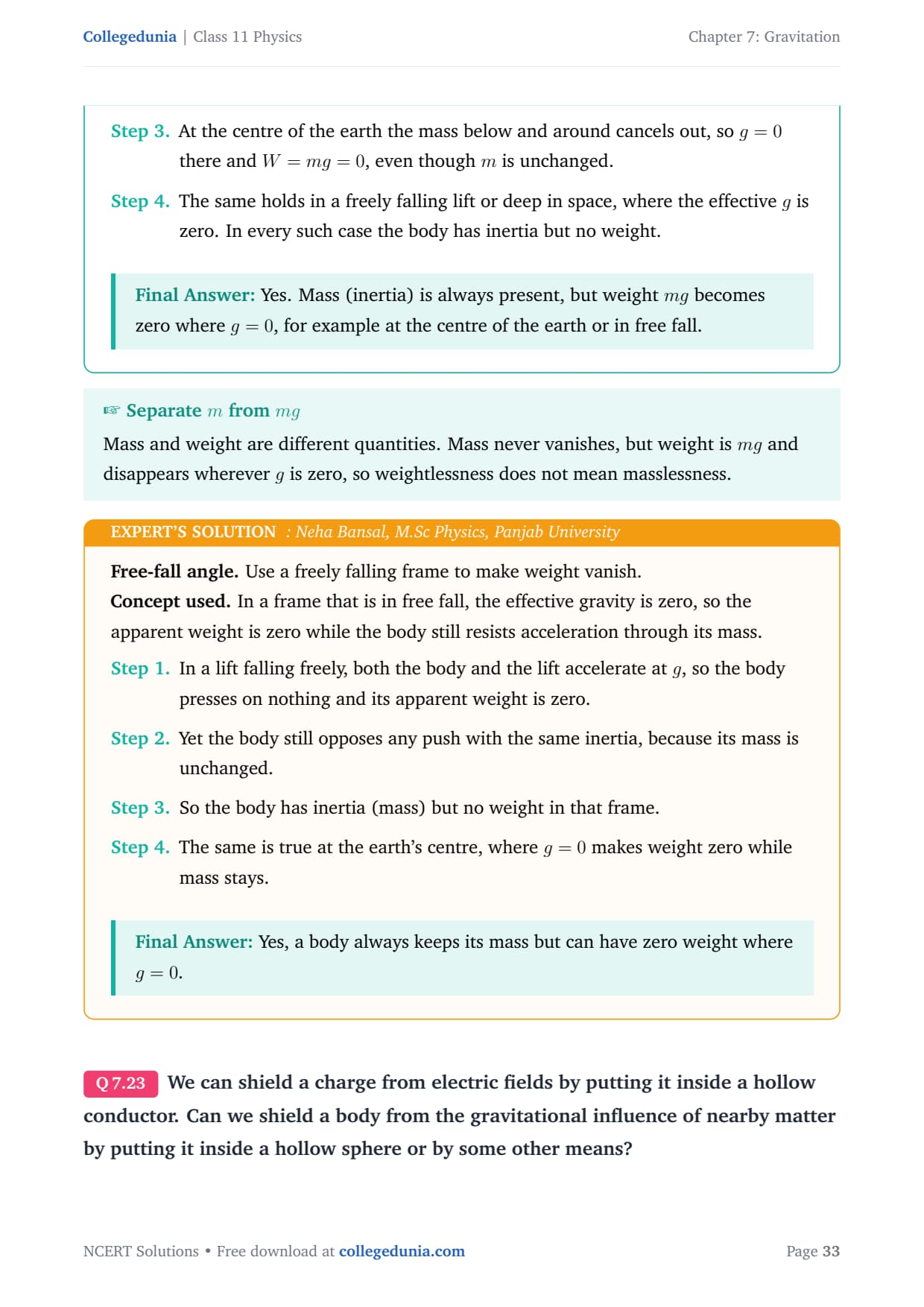
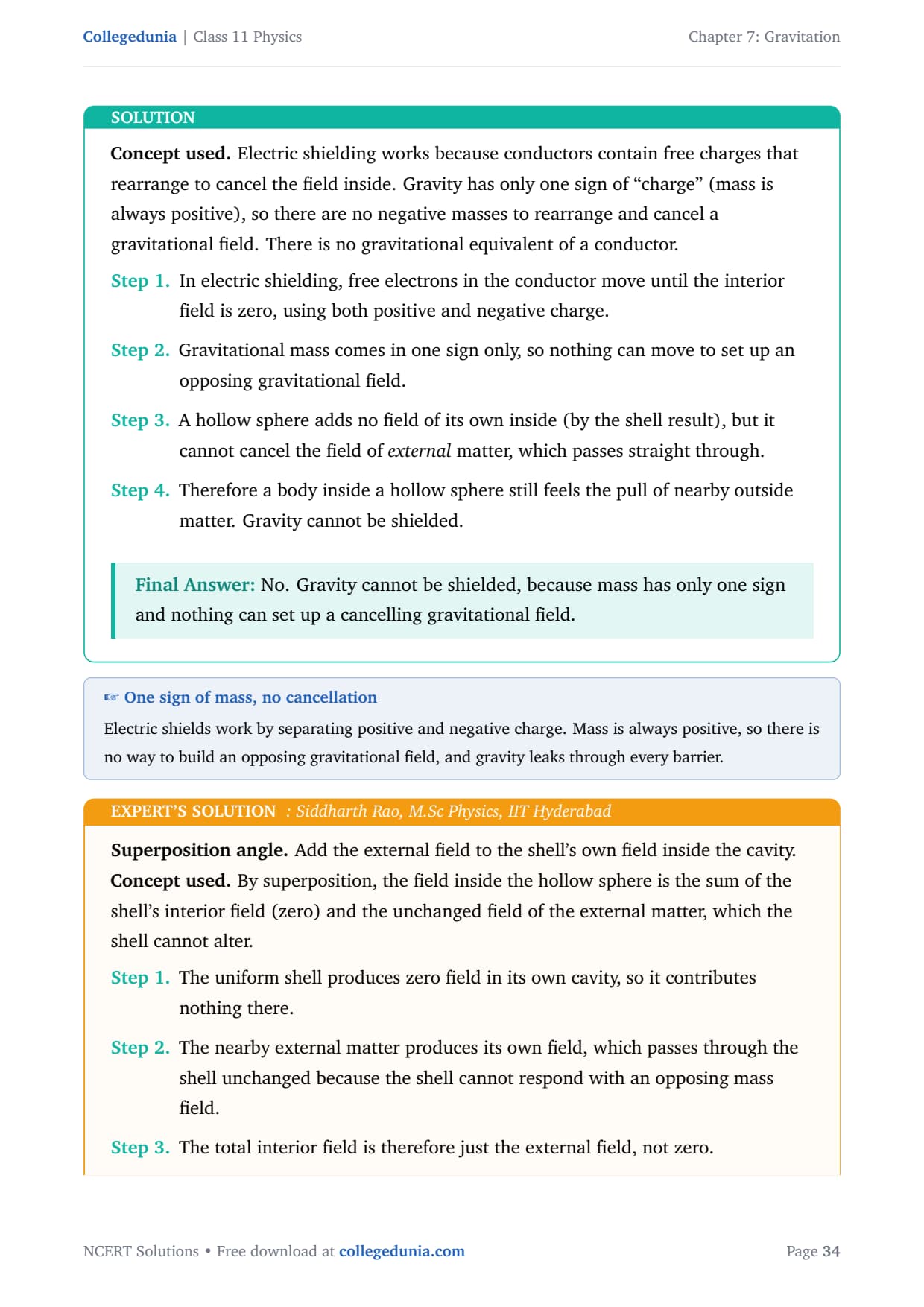
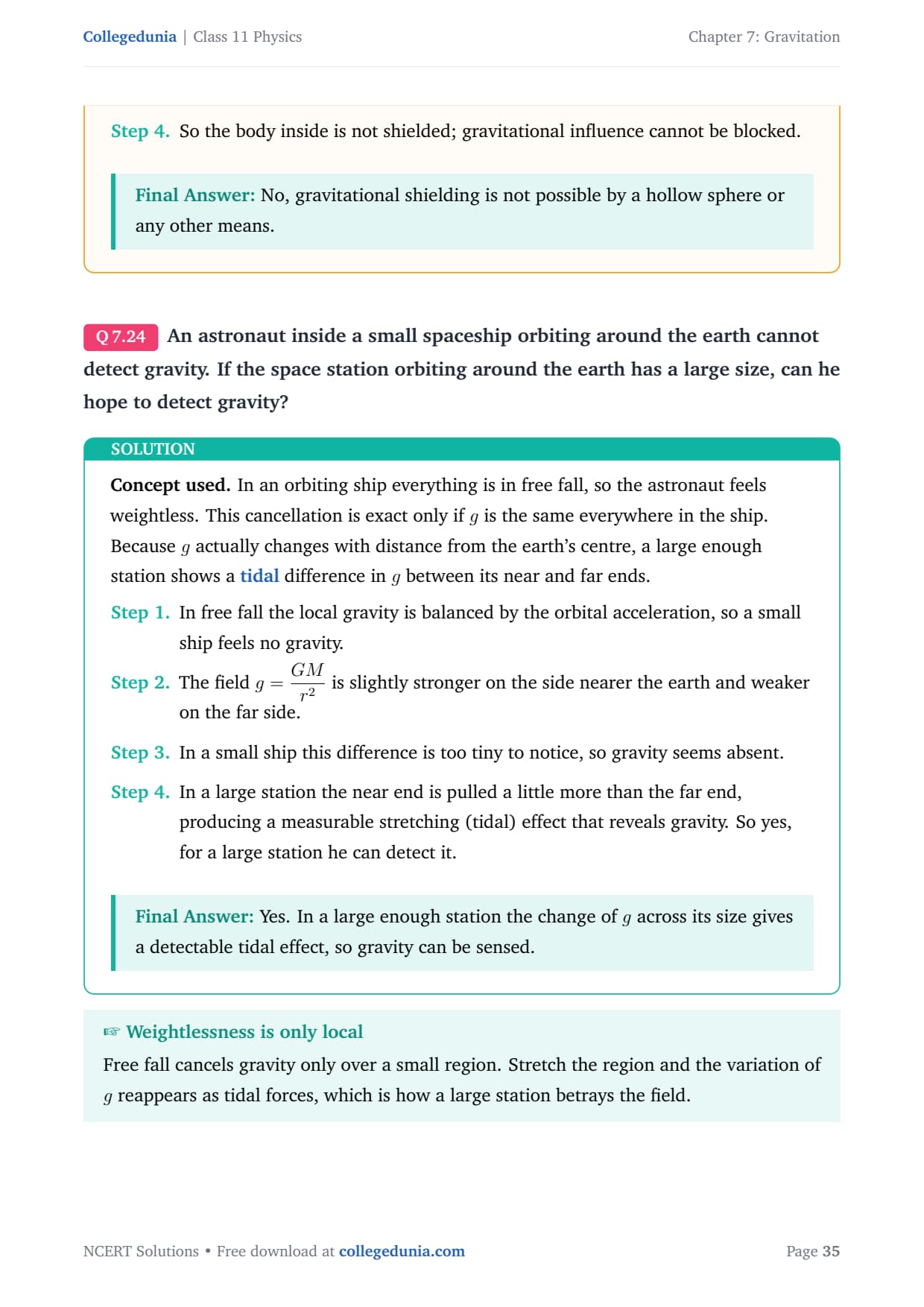
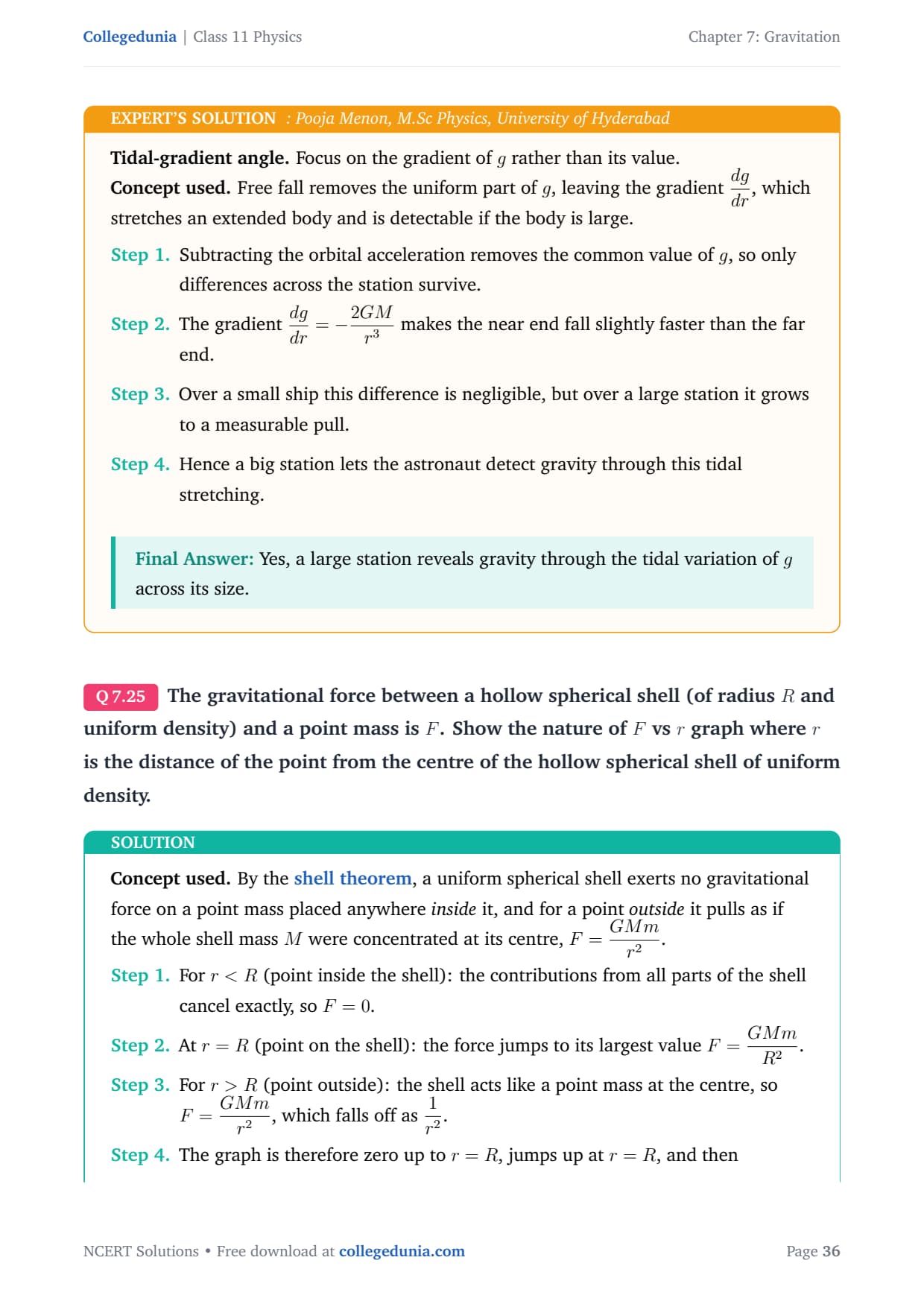
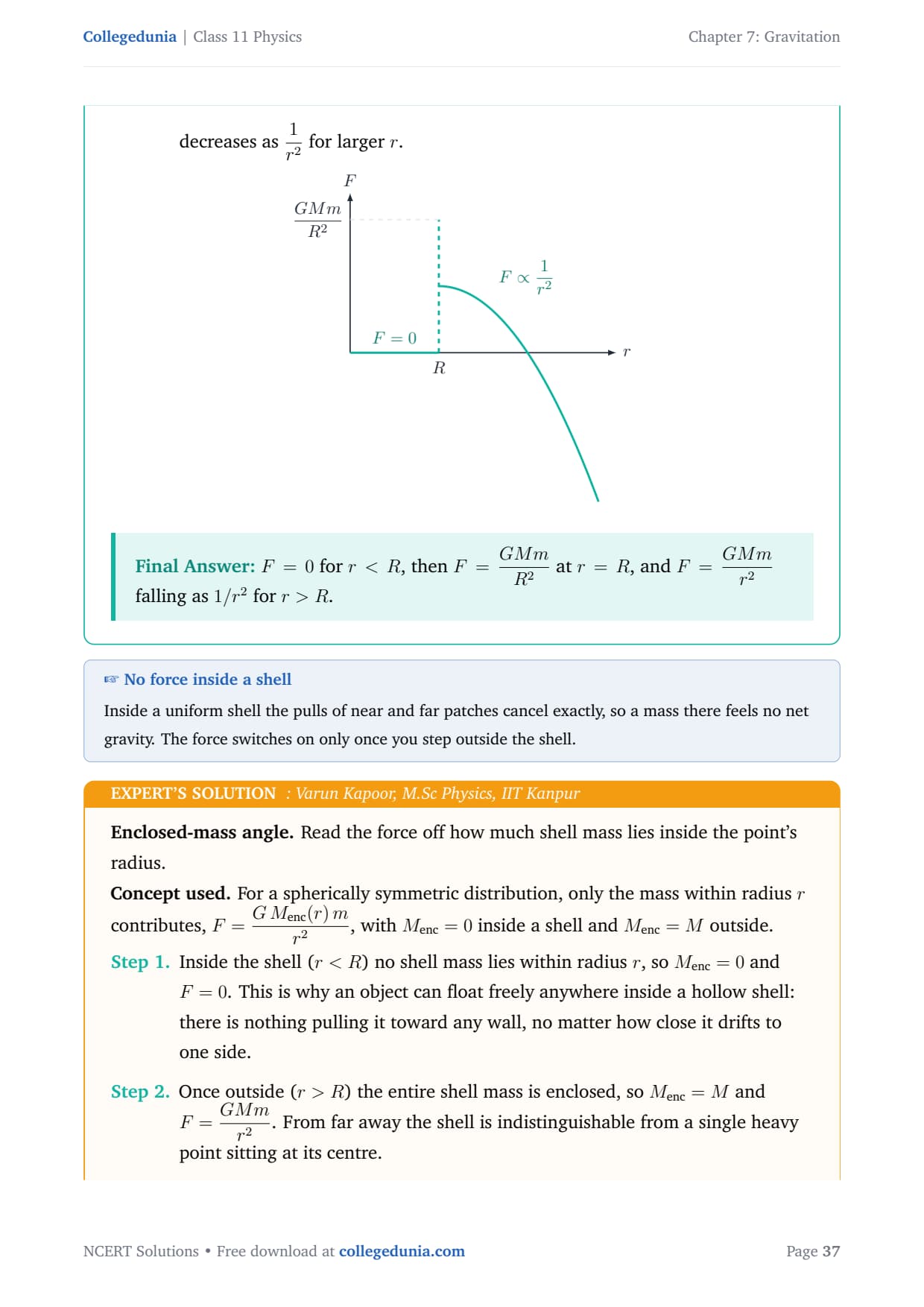
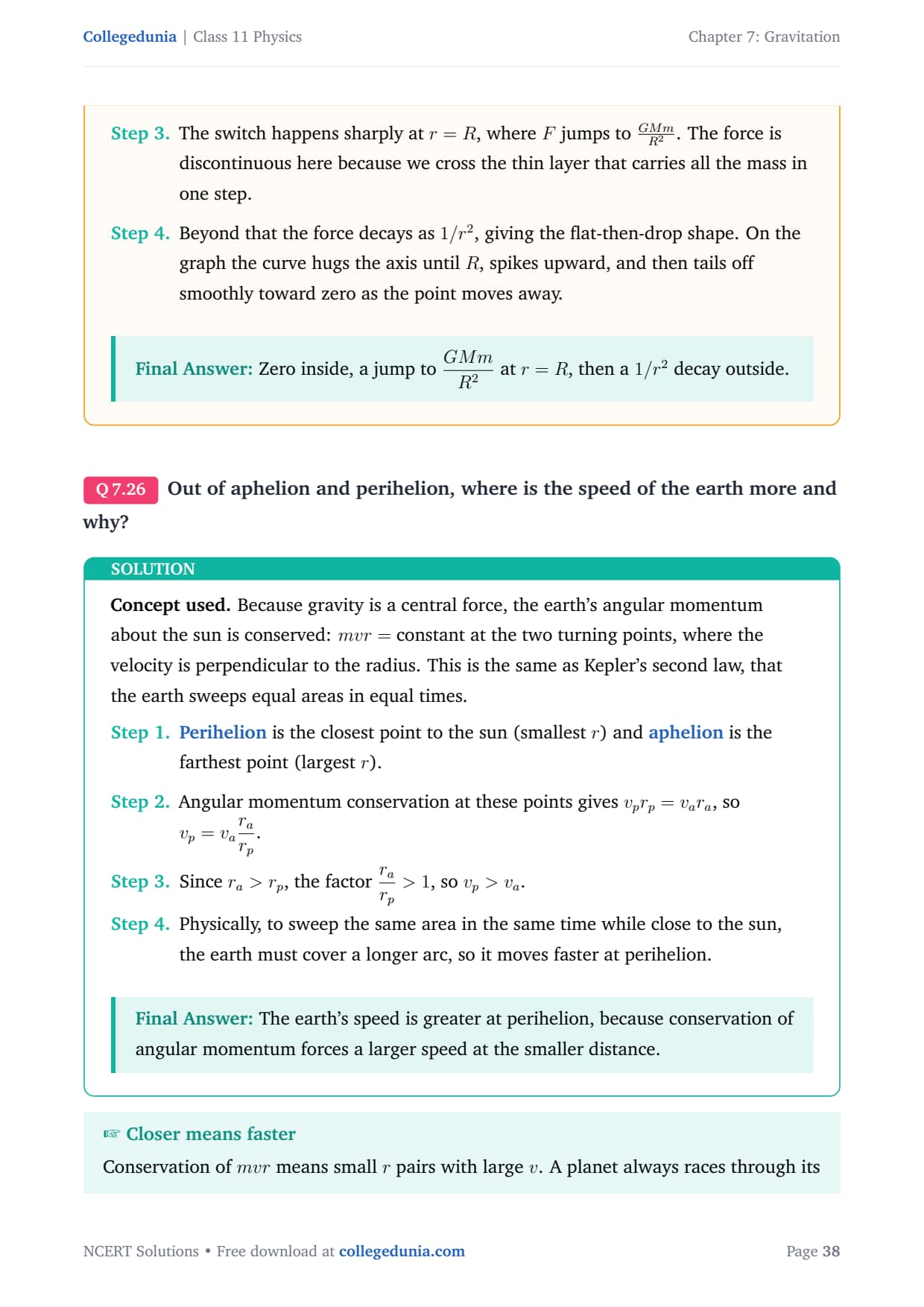
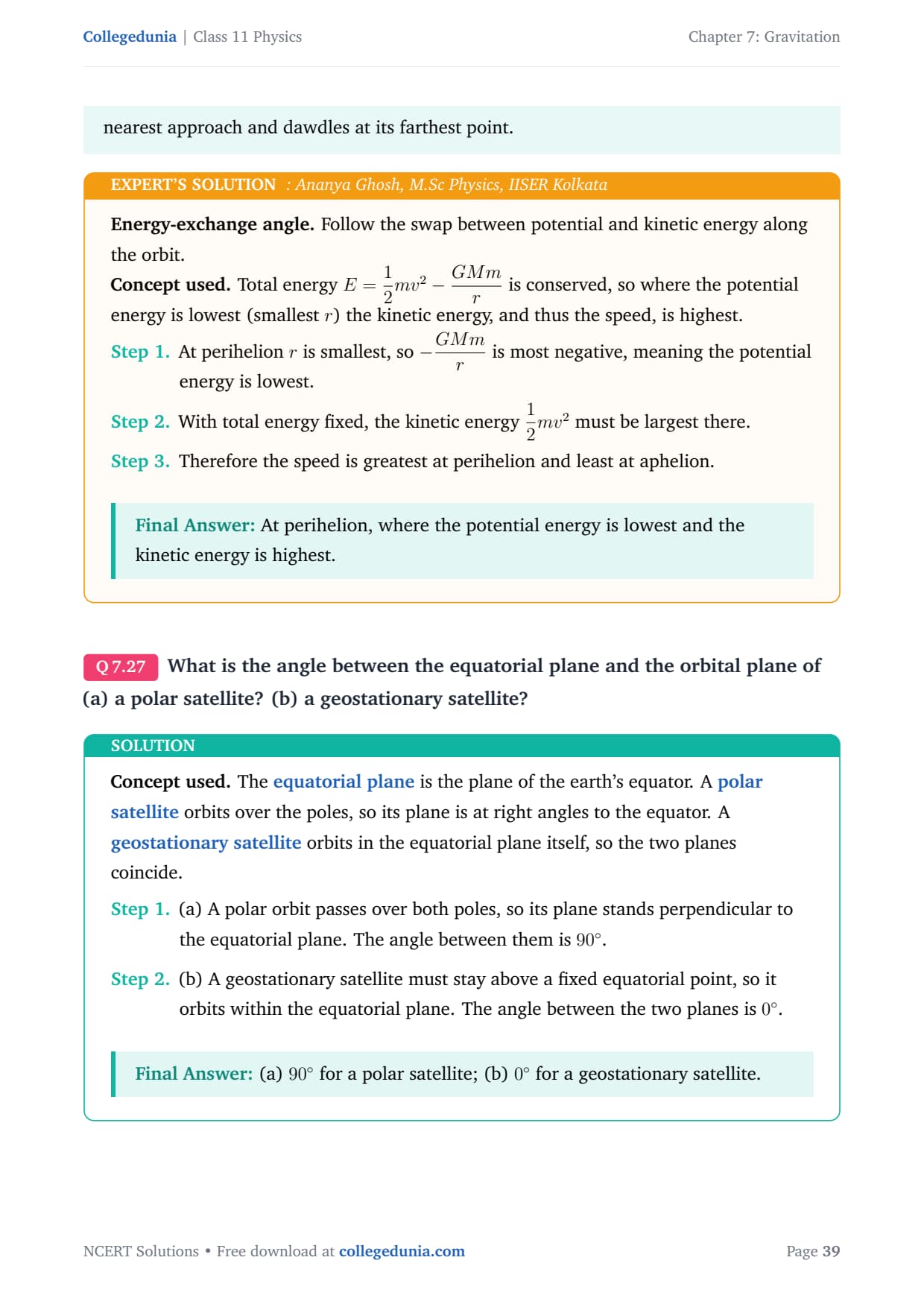
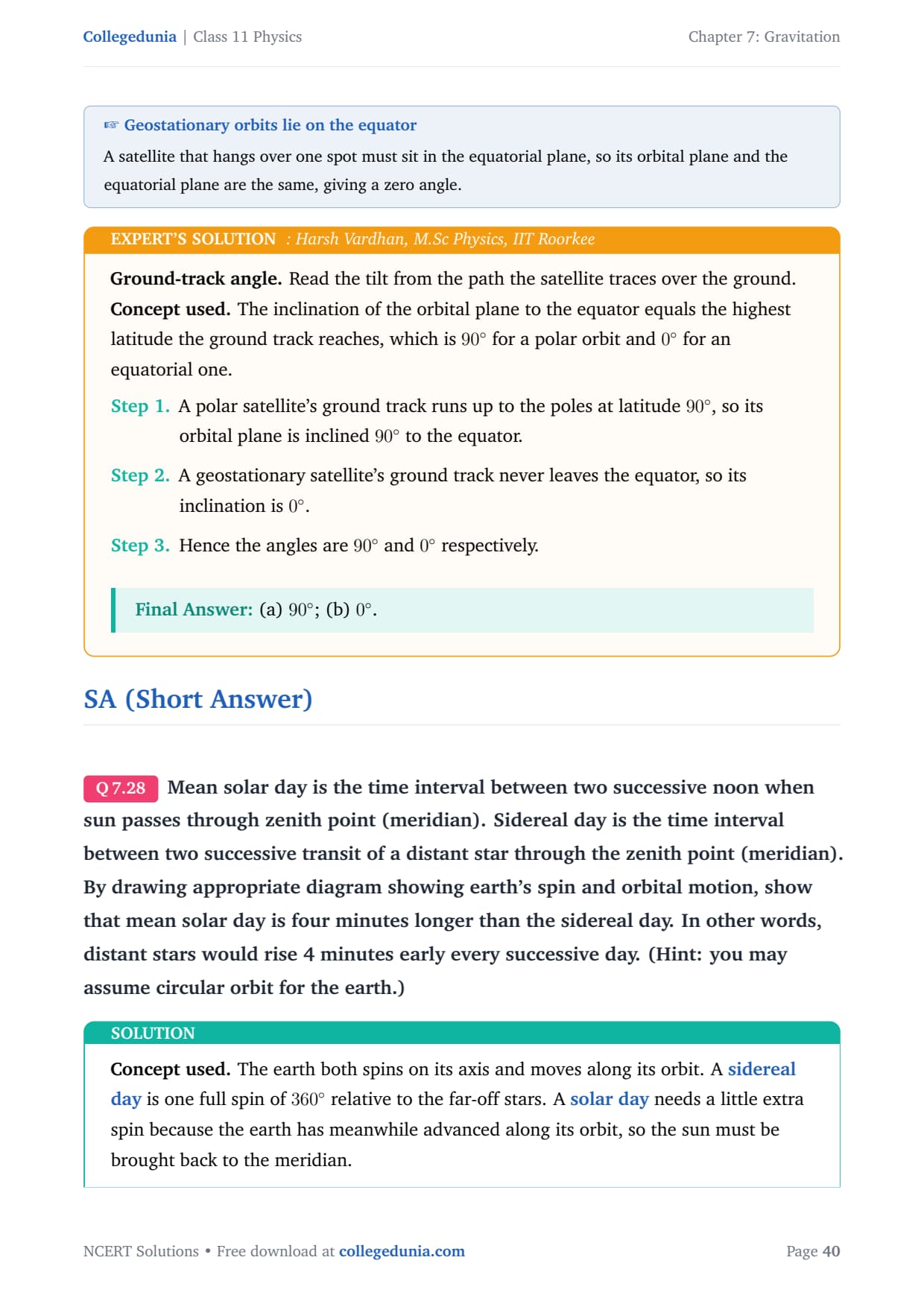
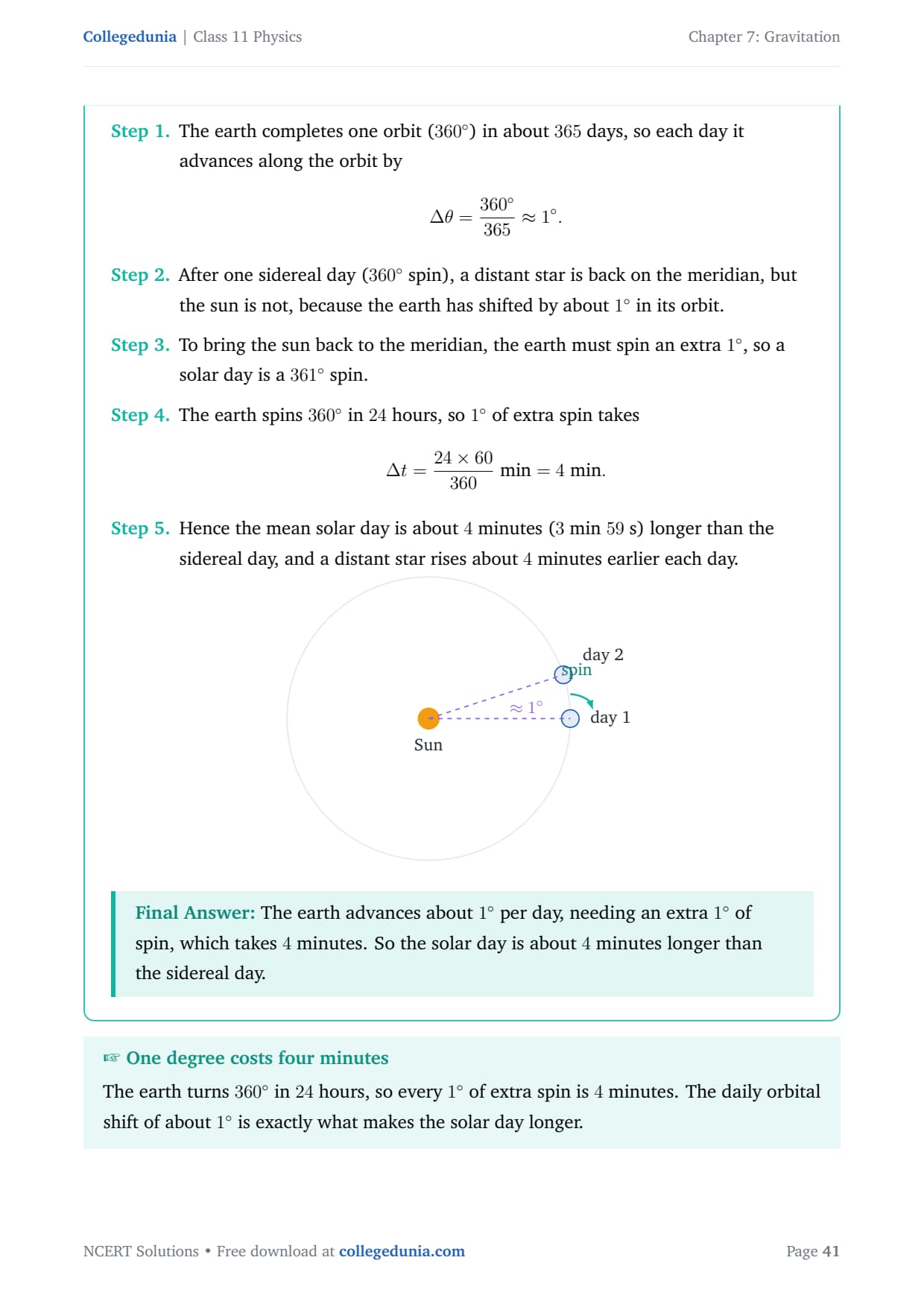
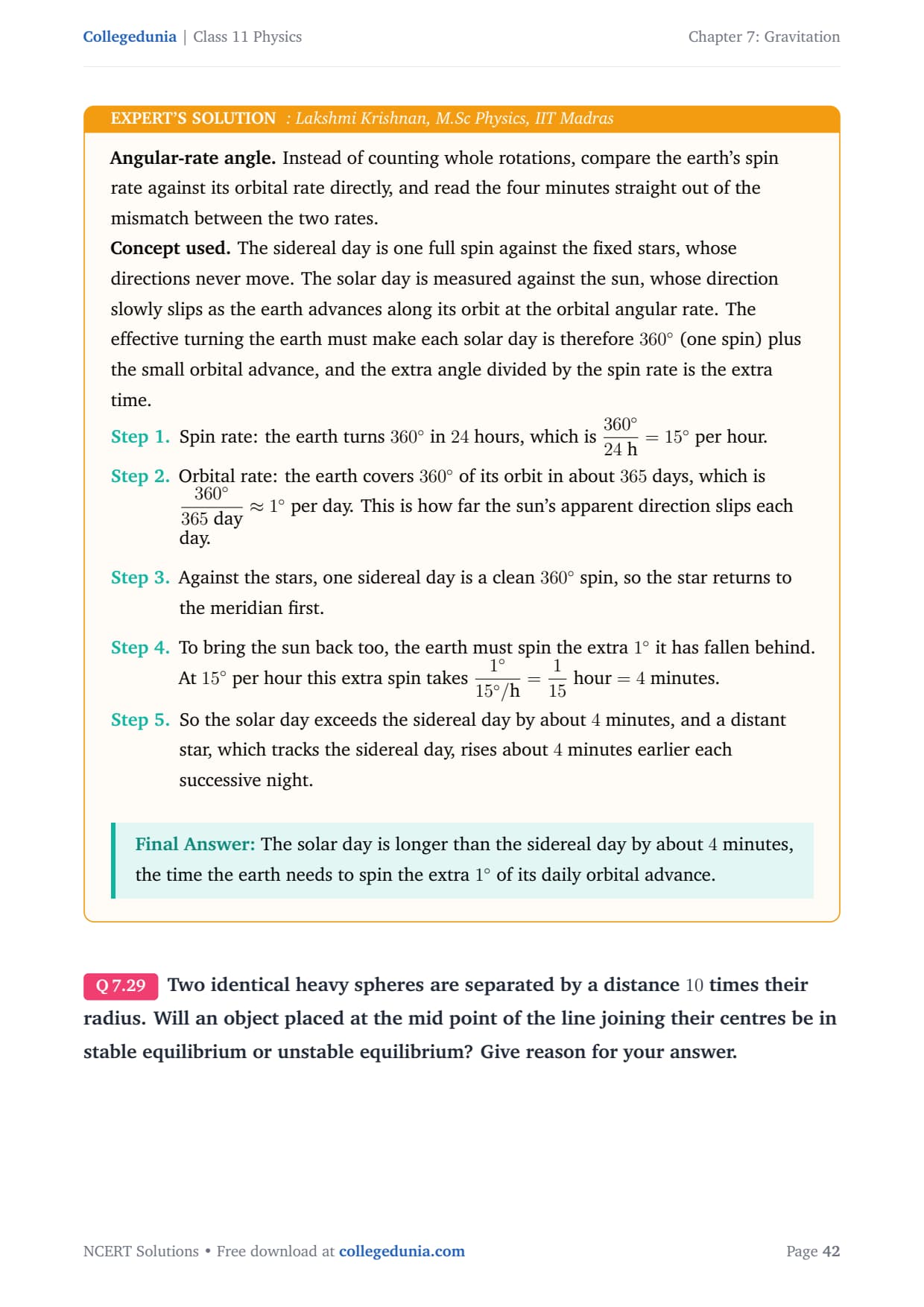
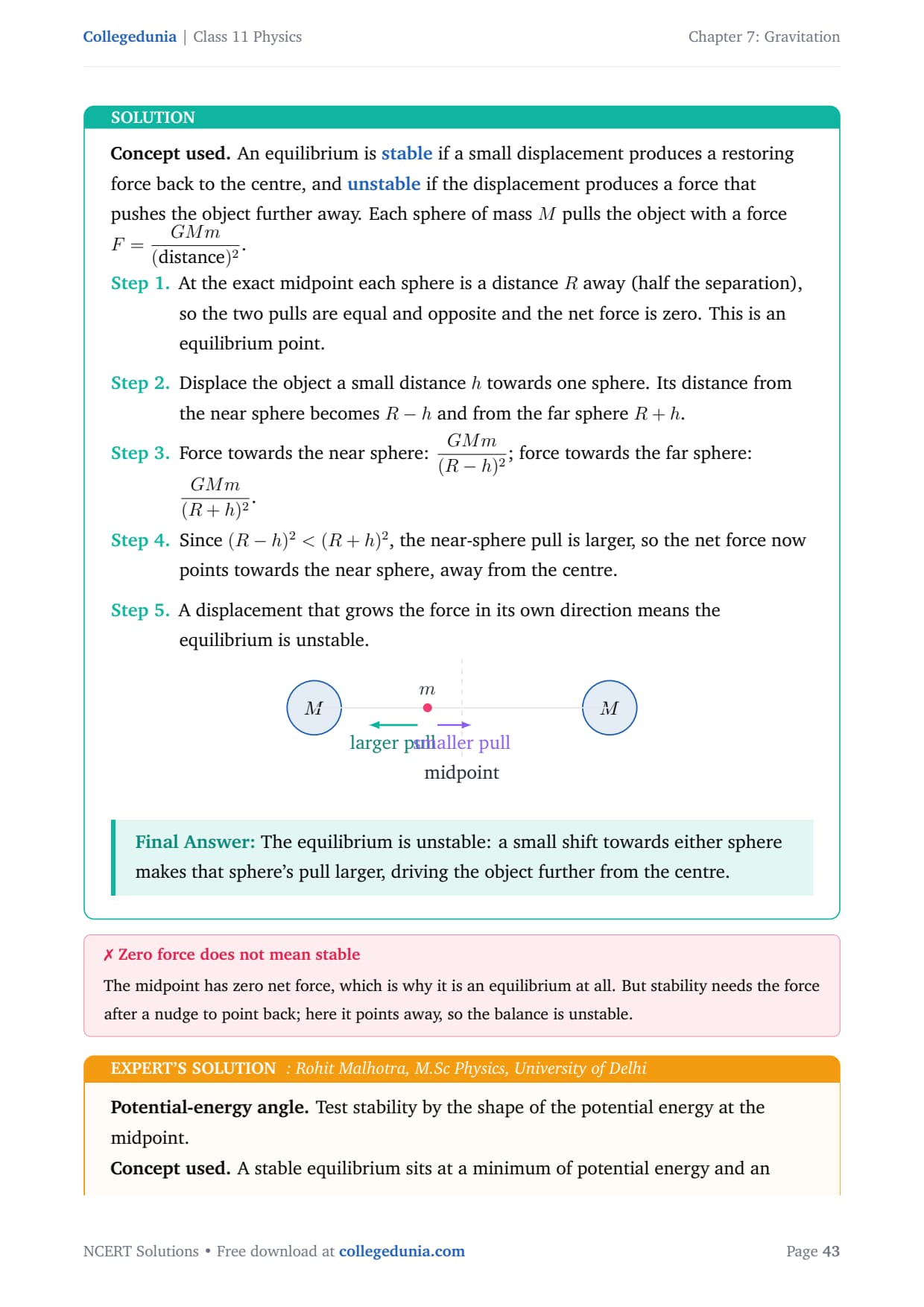
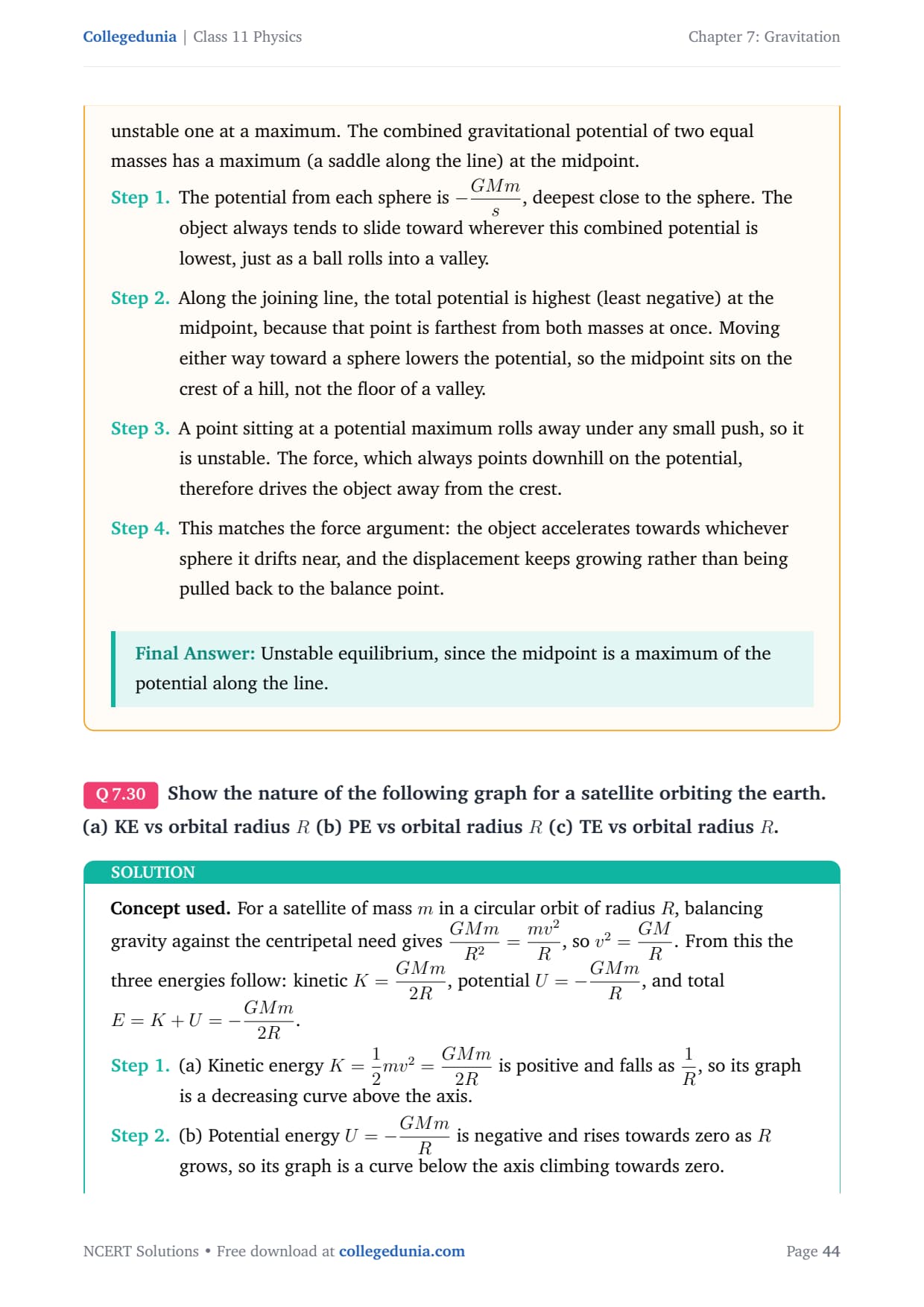
One inverse-square law runs this whole chapter. From it come the variation of g with height and depth, Kepler's three laws, orbital energy and escape speed. The Exemplar tests each of these far harder than the textbook exercise does.
- CBSE Weightage: 4 to 5 marks, usually one short answer on g or satellite energy
- JEE Main Weightage: 1 to 2 questions per year, most often on orbital energy or Kepler's third law
- NEET Weightage: 1 to 2 questions per year from escape speed, satellites and variation of g
Every answer checked against the official NCERT Exemplar answer key, with the full working shown for each of the 38 questions.
Why This Chapter Is Numbered 8 in the Exemplar Book
Students often open the Exemplar and think they have the wrong chapter. The problems are printed as 8.1 to 8.38, not 7.1 to 7.38. This is not an error.
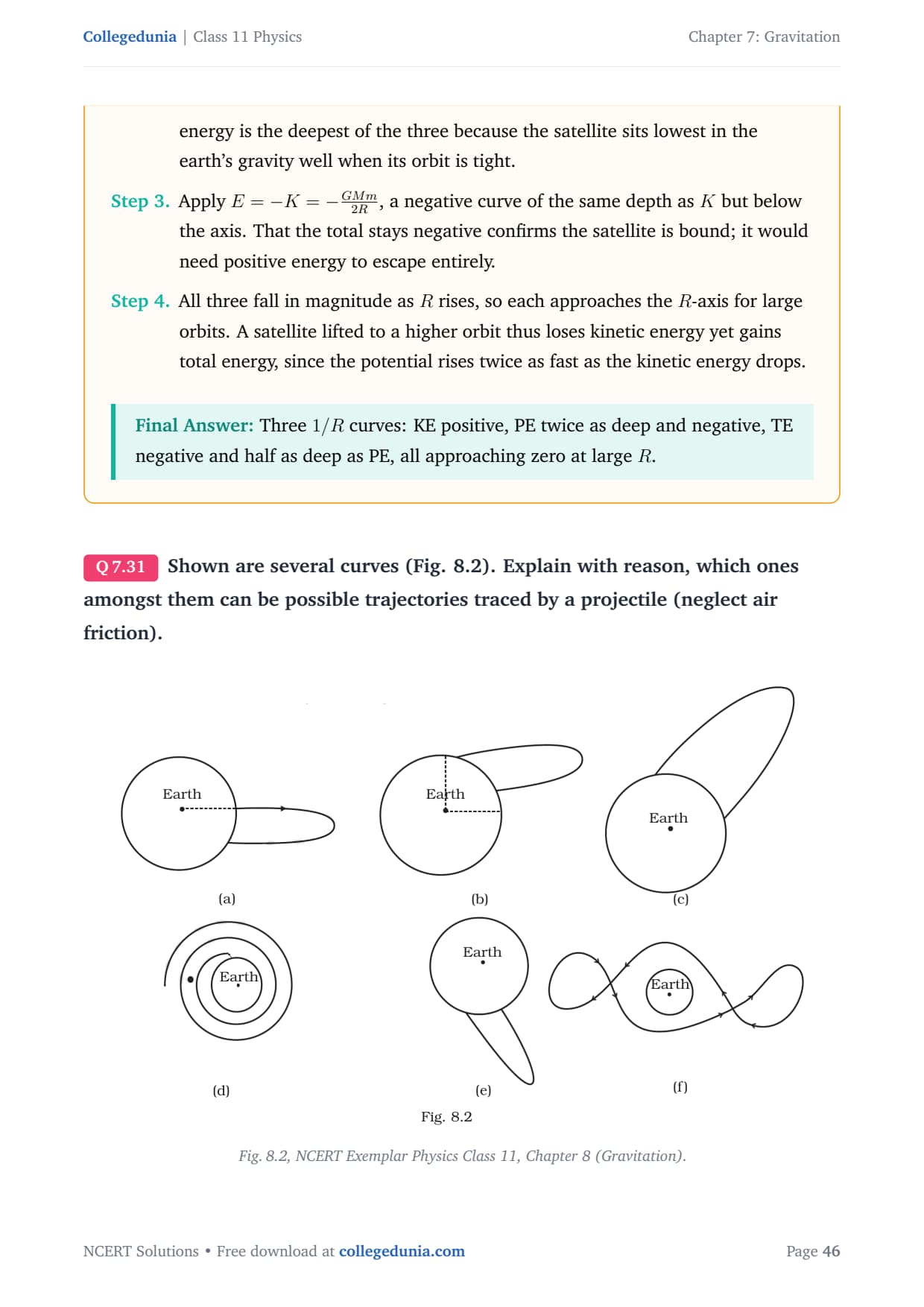
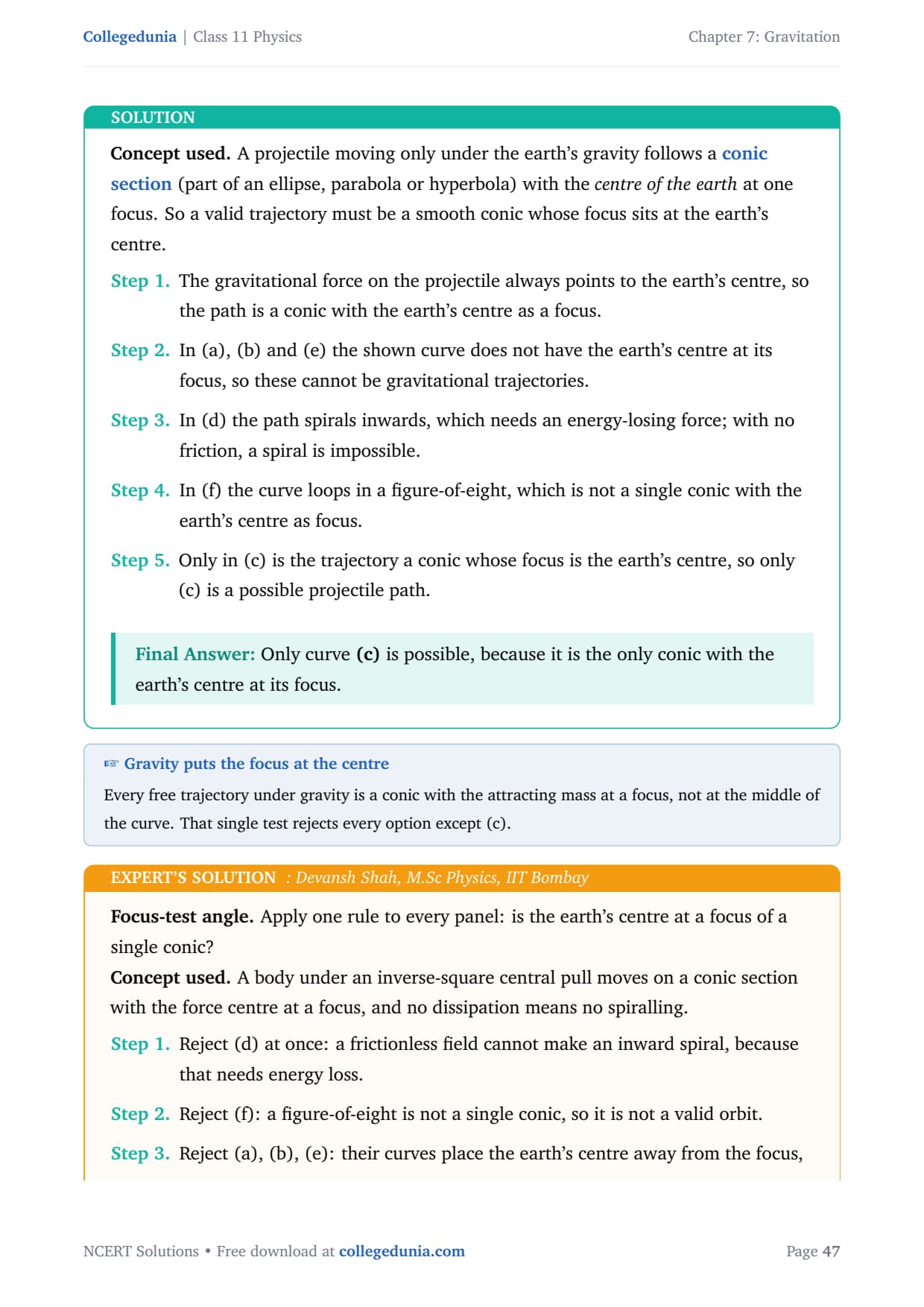
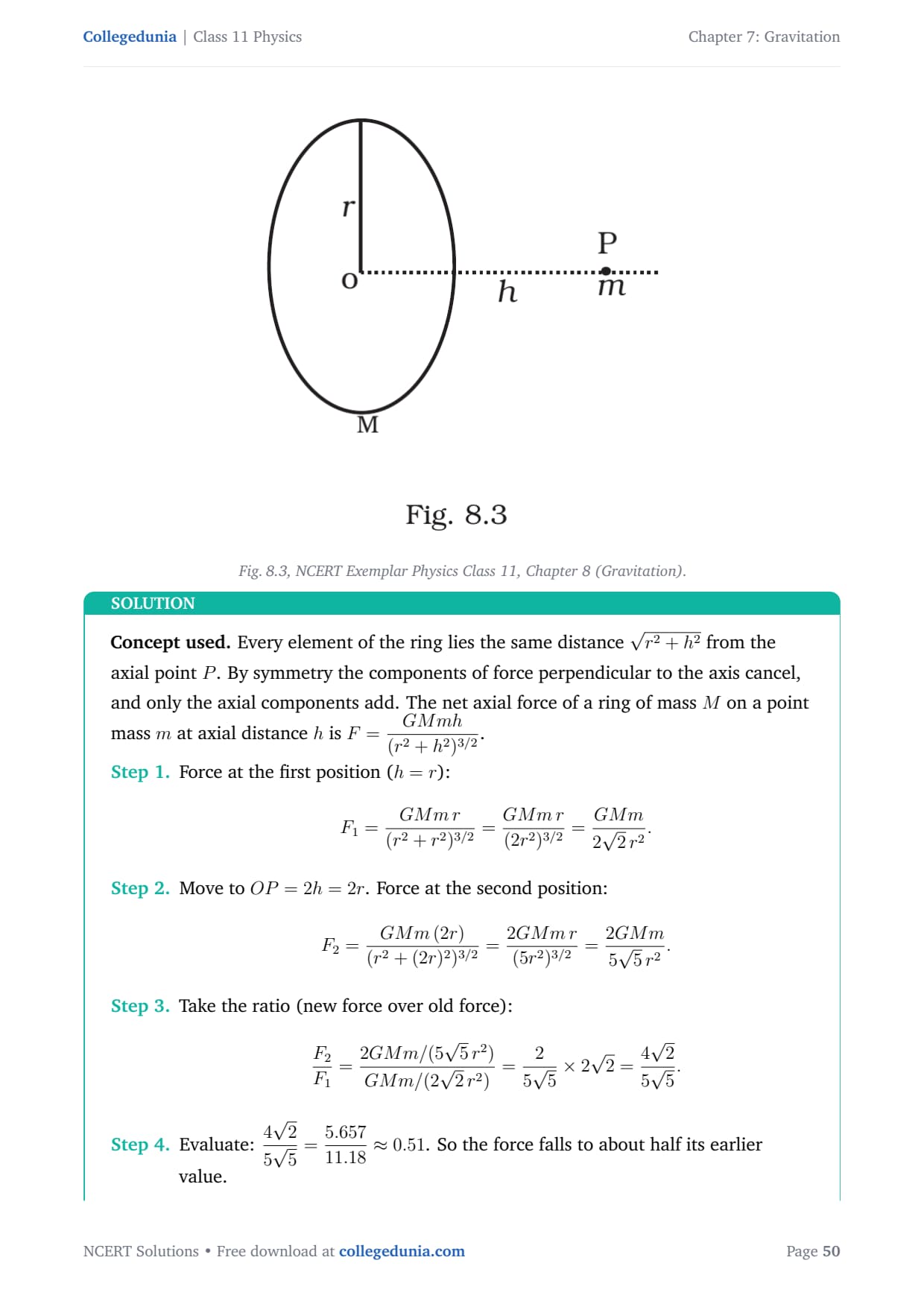
The Exemplar still follows the older textbook order, where Gravitation sat at number 8. The new edition moved it to Chapter 7. The content is identical, only the number differs. Our PDF uses the new Chapter 7 label, so a figure the book calls Fig. 8.2 appears in the solution you expect.
Topics Covered in the Class 11 Physics Gravitation Exemplar
The 38 questions spread across a small set of ideas. Each returns in Class 12 electrostatics, where the same inverse-square maths reappears with charges in place of masses.
- Newton's law of gravitation: the force F = Gm1m2/r2 and the shell theorem behind it
- Variation of g: how gravity changes with height, with depth and with latitude
- Kepler's laws: orbits, areal velocity and the period-radius relation
- Energy and escape: potential energy, total orbital energy and escape speed
- Satellites: geostationary and polar orbits, plus central and non-central forces
Question Types in the Gravitation NCERT Exemplar
The split below matters when you plan revision. The VSA set is the largest, and those eleven one-line questions carry most of the chapter's traps.
| Question Type | Count | What It Tests |
|---|---|---|
| MCQ I (single correct) | 8 | Reasoning about orbits, torque and satellite decay |
| MCQ II (one or more correct) | 8 | Ruling out every wrong option, not just spotting one right one |
| VSA (Very Short Answer) | 11 | One-line reasoning on shielding, weight, areal velocity |
| SA (Short Answer) | 6 | Graphs and short numerical work on energy and equilibrium |
| LA (Long Answer) | 5 | Full numerical problems on geostationary and elliptic orbits |
Key Formulas Used in the Gravitation Exemplar
Nearly every question reduces to one of these. The PDF names the formula before using it, so you can see which rule is doing the work in each step.
- Newton's law: F = Gm1m2/r2, with G = 6.67 × 10⁻¹¹ N m2 kg-2
- Surface gravity: g = GM/R2
- Variation of g: gh = g(1 − 2h/R) with height, and gd = g(1 − d/R) with depth
- Orbital and escape speed: vo = √(GM/r) and ve = √(2GM/R)
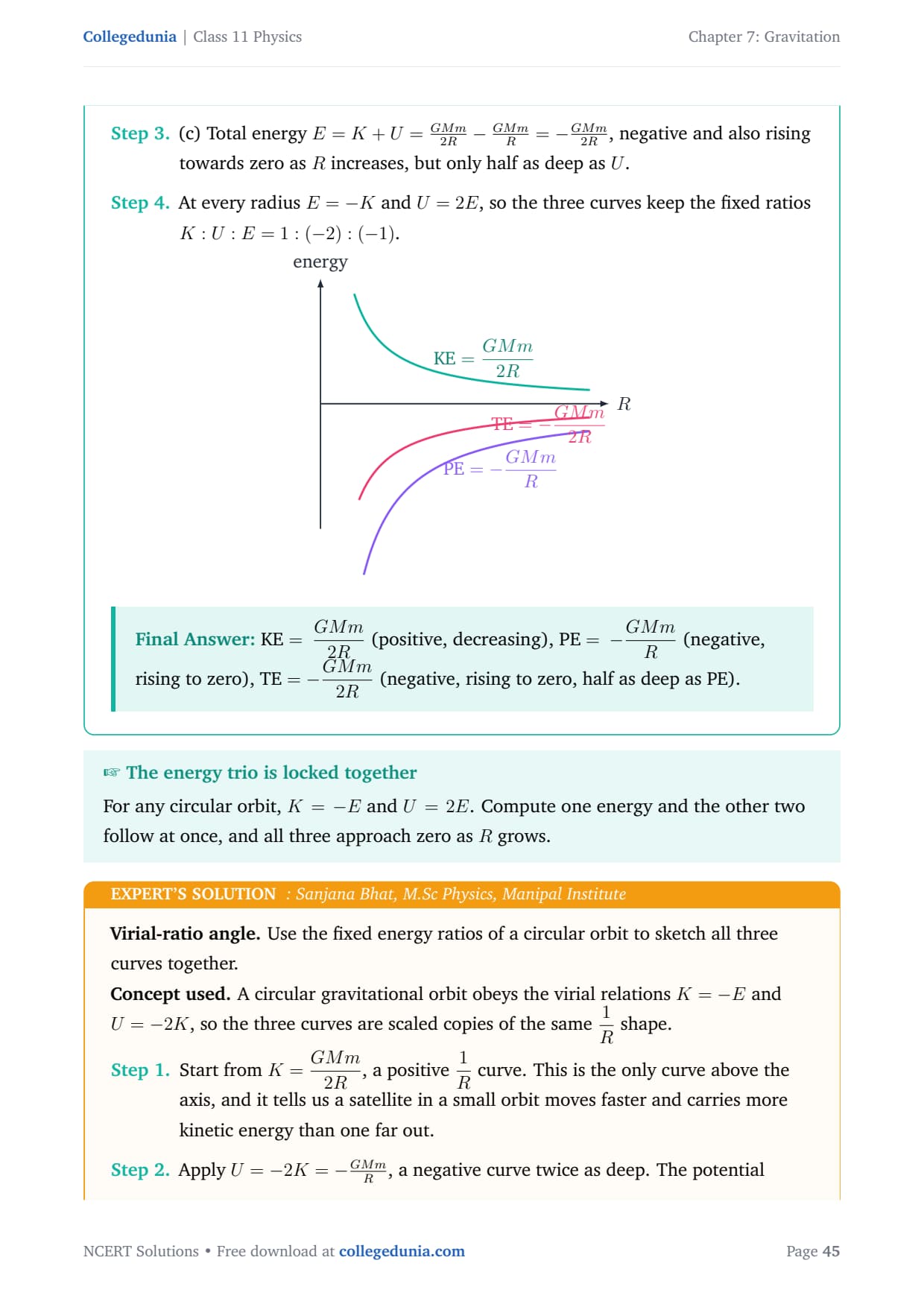
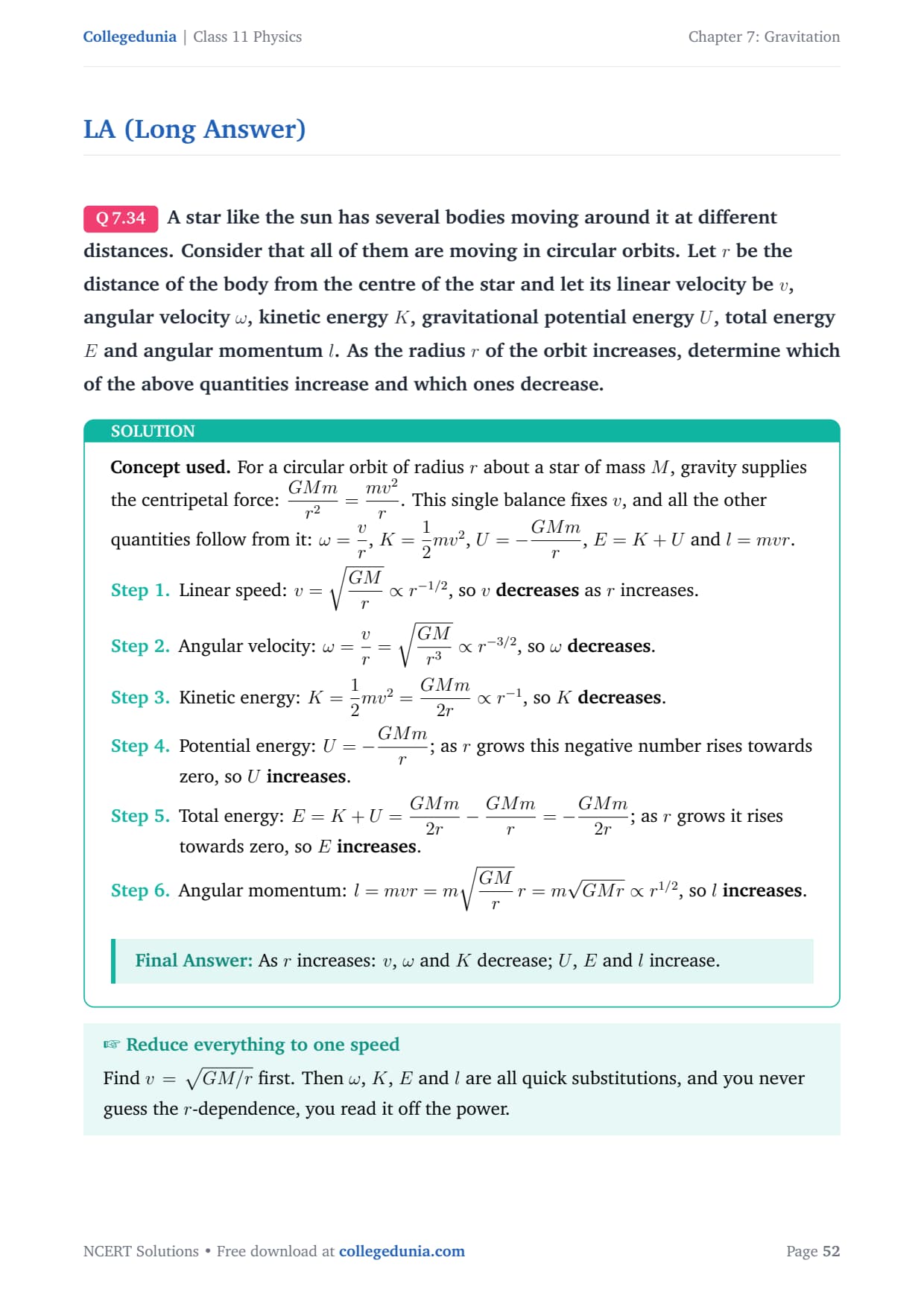
- Orbital energy: U = −GMm/r and total energy E = −GMm/2r
- Kepler's third law: T2 = (4π2/GM) r3
Common Mistakes Students Make in Gravitation
The Exemplar sets these traps deliberately. Each one is flagged in the PDF at the question where it bites.
- Depth and height are not symmetric: g falls with depth and reaches zero at the centre. The formula for depth uses d/R, not 2d/R.
- Gravity has no medium factor: Question 21 asks what happens when two masses are dipped in water. The Coulomb force divides by the dielectric constant, but gravity does not. The force is unchanged.
- Zero force is not stable equilibrium: in Question 29, an object at the midpoint between two heavy spheres feels no net force, yet a nudge pushes it further away. The equilibrium is unstable.
- Uniform-sphere habits: Question 1 makes the earth's density uneven. Only "g cannot be zero anywhere on the surface" survives; g need not point at the geometric centre.
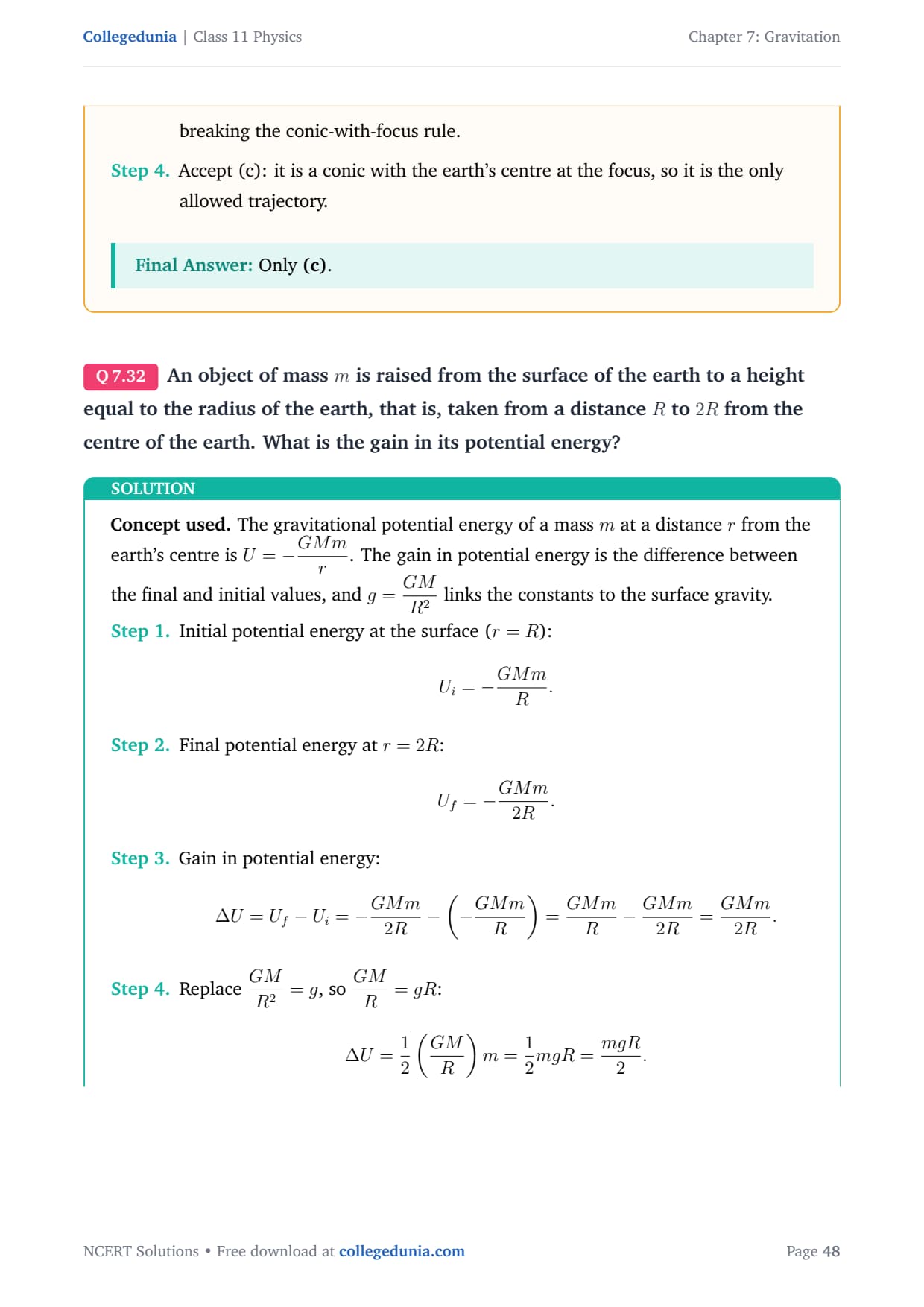
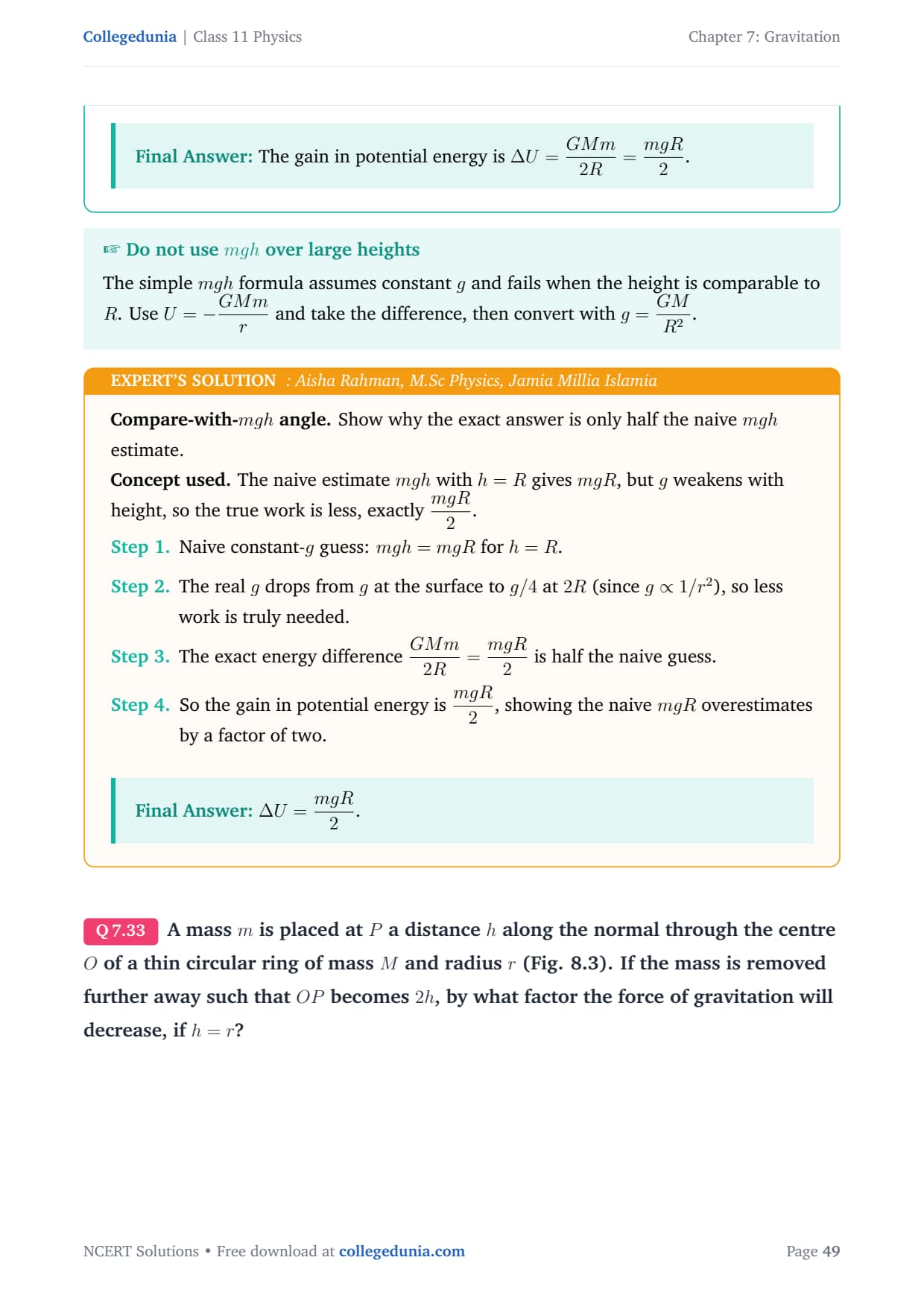
One more is worth naming. Raising a mass from R to 2R does not cost mgR. Because U = −GMm/r is not linear, the true gain is mgR/2, and the flat mgh shortcut overestimates it by a factor of two.
How the Exemplar Steps Up from the Class 11 Physics Textbook
The textbook hands you a formula and asks you to substitute. The Exemplar asks which formula applies, and often why the tempting one does not.
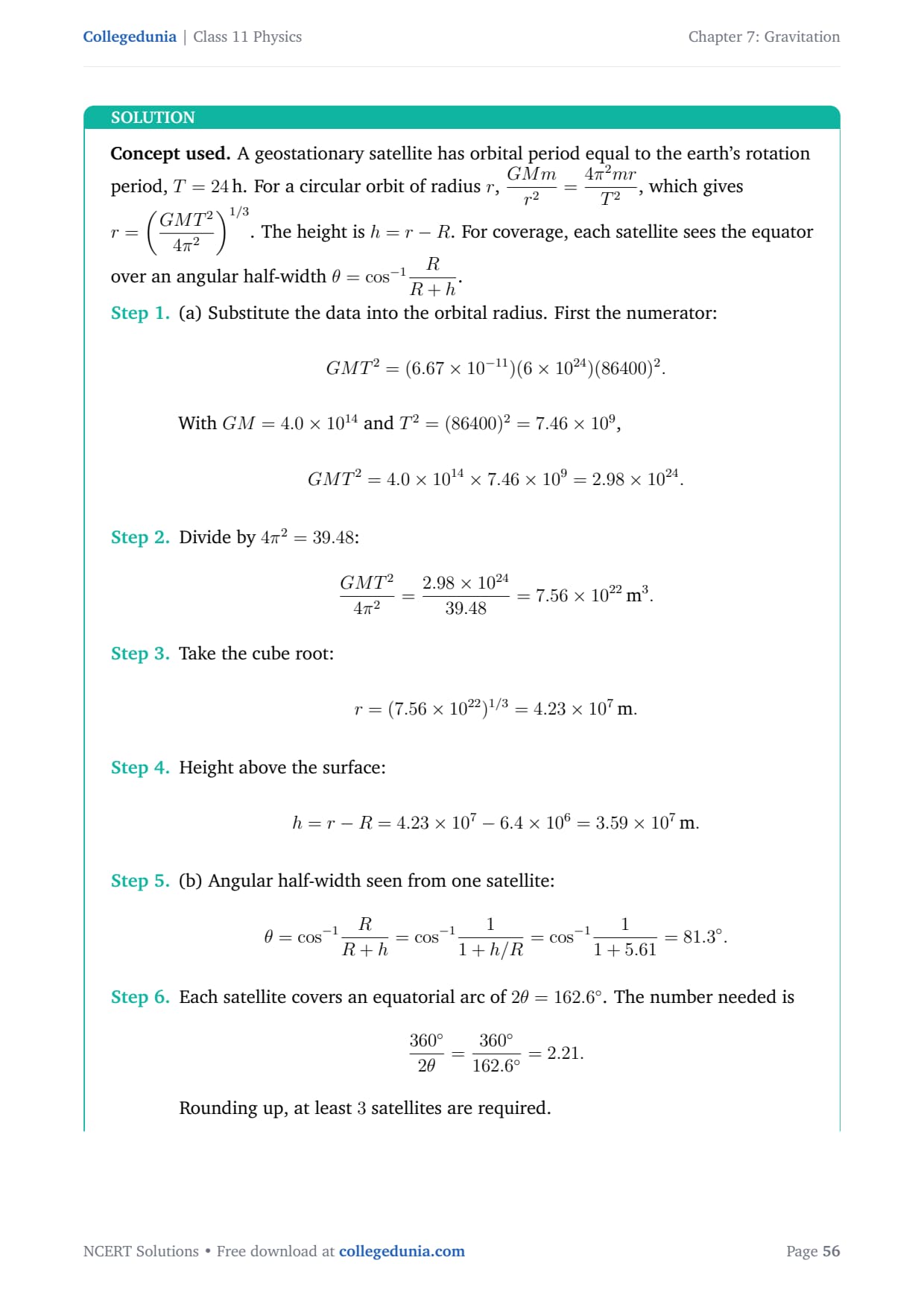
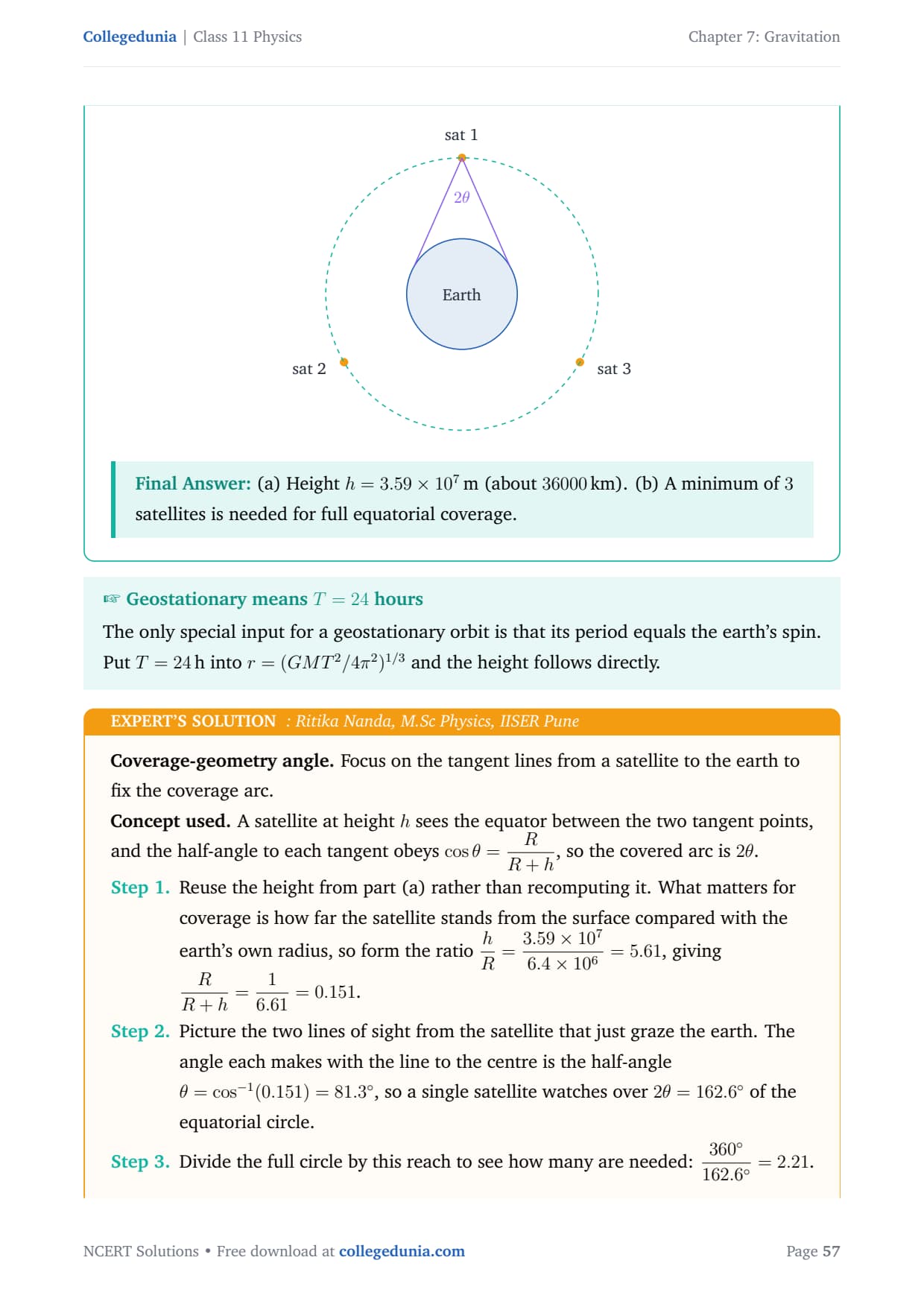
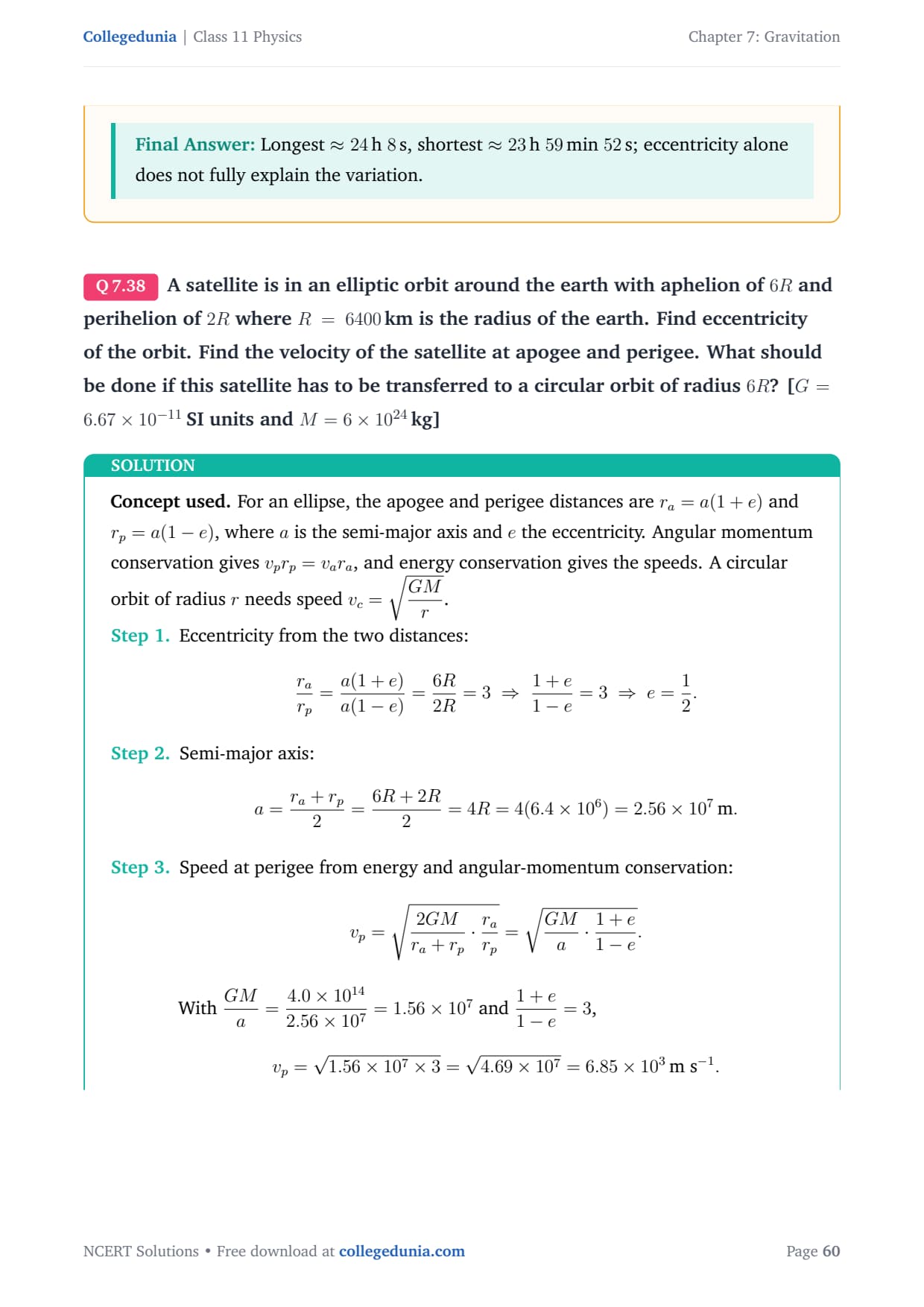
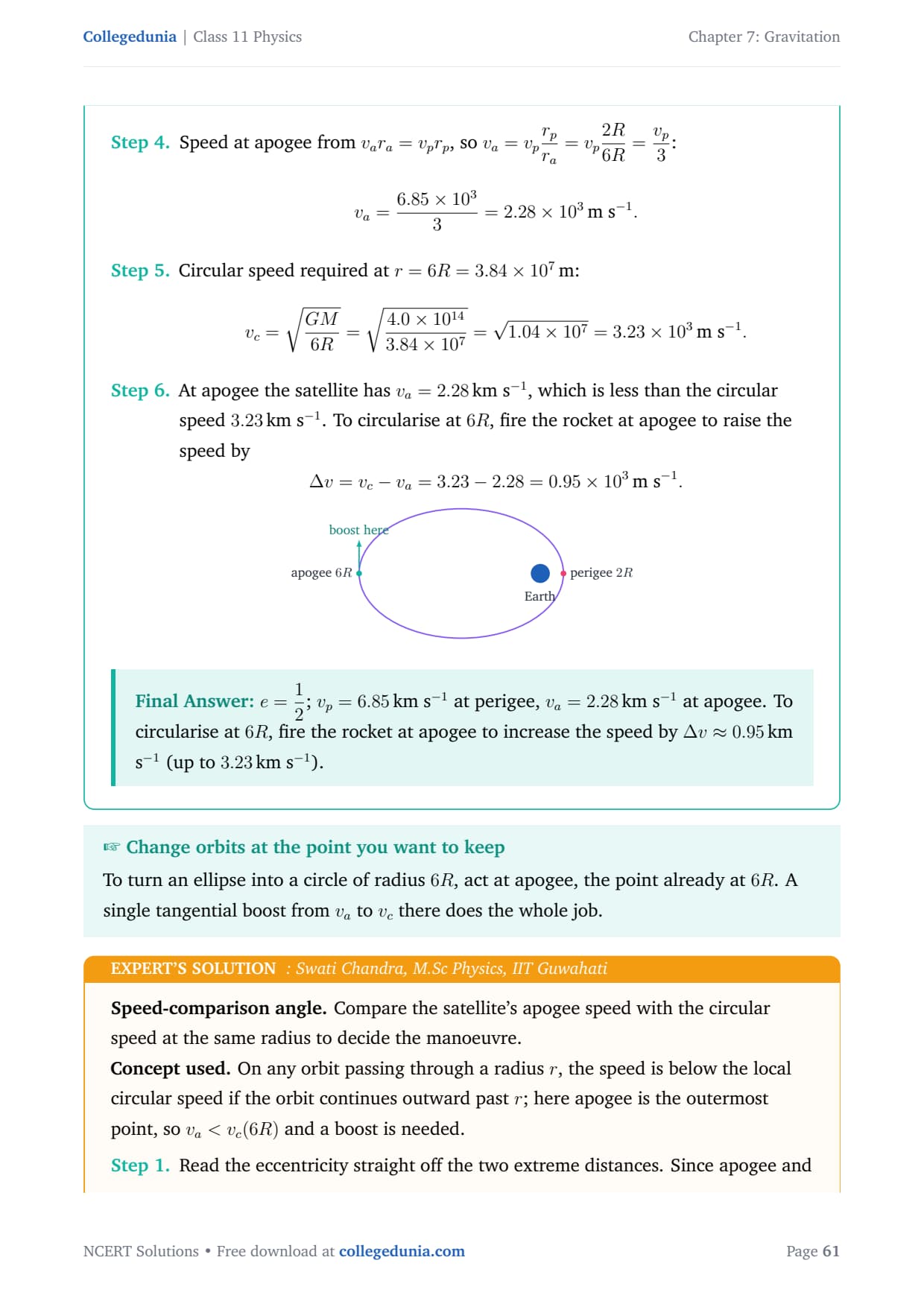
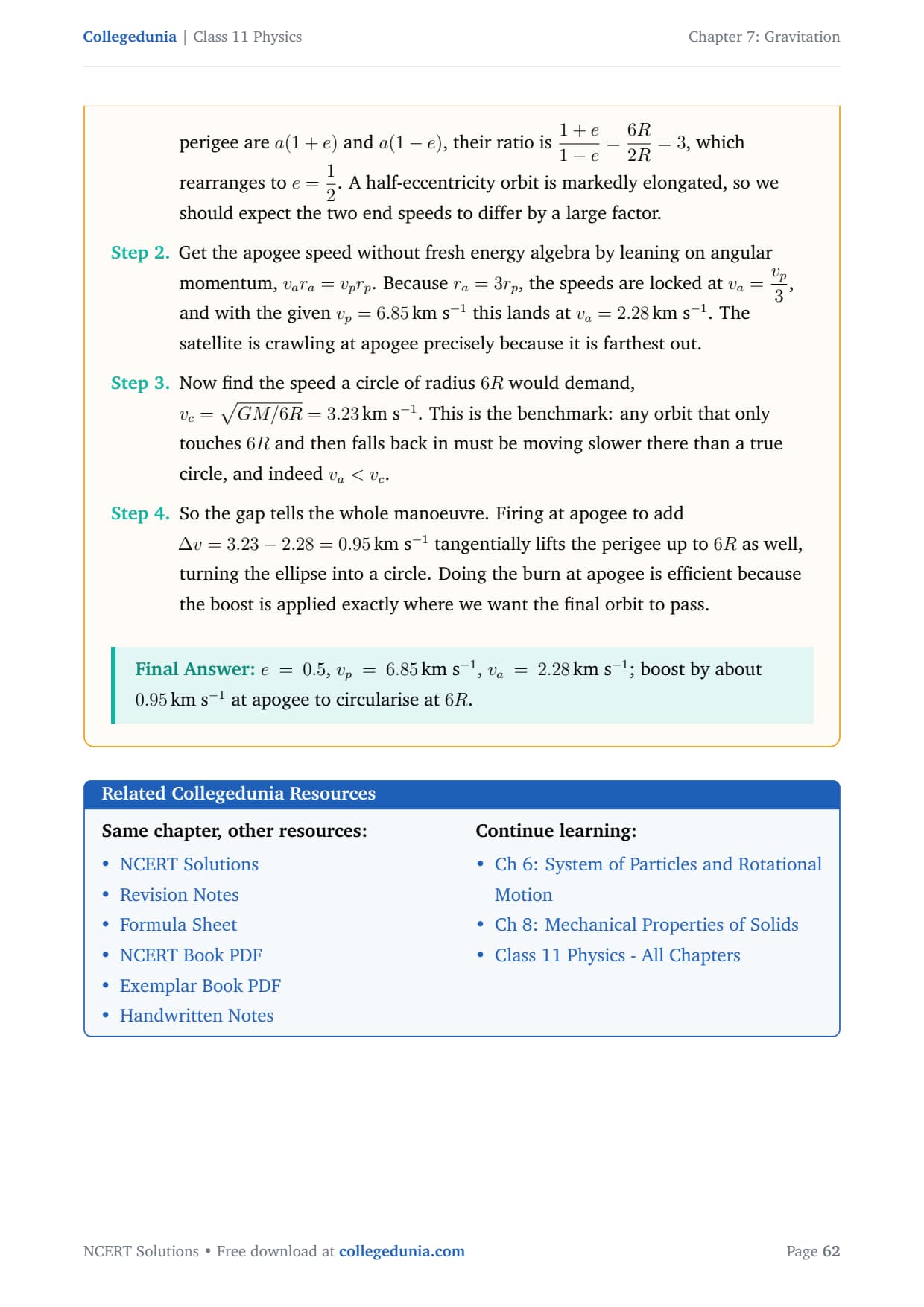
The Long Answer set shows the gap clearly. Question 36 asks for the height of a geostationary satellite and then for how many are needed to cover the globe. The answers are 3.59 × 10⁷ m and a minimum of three satellites. The second half is geometry, not gravitation, and it catches students who stop once the number comes out. Question 38 goes further, taking an elliptic orbit with aphelion 6R and perihelion 2R to an eccentricity of 0.5 and speeds of 2.28 km/s and 6.85 km/s.
How to Use These NCERT Exemplar Solutions for Boards, JEE and NEET
Attempt each question before opening the solution. Reading a worked answer feels productive, but the Exemplar rewards the struggle.
- Boards: the VSA and SA questions match the 2 and 3 mark board pattern closely
- JEE Main: start with the MCQ II set, which tests orbital energy the way JEE does
- NEET: the MCQ I set covers the recall-level satellite questions NEET repeats
Student Feedback
Students using Collegedunia's Class 11 Physics Exemplar Solutions told us the energy questions gave them the most trouble. Around 7 in 10 said the step-by-step format helped most on the elliptic-orbit problems, where the textbook offers no comparable practice.
Other Resources for Class 11 Physics Gravitation
Collegedunia has the full study set for this chapter. Read the Notes first, then use the Exemplar once the basics hold.
Also Check:
- NCERT Solutions for Class 11 Physics Chapter 7
- Class 11 Physics Chapter 7 Notes
- Class 11 Physics Chapter 7 Handwritten Notes
- Class 11 Physics Chapter 7 NCERT Book PDF
- Class 11 Physics Chapter 7 Exemplar Questions with Solutions
NCERT Exemplar Solutions for Other Class 11 Physics Chapters
Every chapter below has the same step-by-step treatment and a free PDF.
Gravitation Class 11 Physics NCERT Exemplar Solutions FAQs
Ques. How many questions are there in the Class 11 Physics Gravitation Exemplar?
Ans. Chapter 7 has 38 questions. They are split into 8 MCQ I, 8 MCQ II, 11 Very Short Answer, 6 Short Answer and 5 Long Answer questions. All 38 are solved in the free PDF on this page.
Ques. Why does the Exemplar book number Gravitation as Chapter 8?
Ans. The Exemplar still follows the older textbook order, in which Gravitation was Chapter 8, so its problems are printed as 8.1 to 8.38. The new edition places the chapter at number 7. The questions and the content are the same, and our solutions use the new Chapter 7 numbering.
Ques. Does the gravitational force between two masses change when they are dipped in water?
Ans. No. It stays exactly the same. The electrostatic force is divided by the dielectric constant of the medium, so water weakens it, but Newton's law of gravitation has no such factor. This is Question 21 in the Very Short Answer set.
Ques. What is the gain in potential energy when a mass is raised from R to 2R?
Ans. The gain is mgR/2, not mgR. Potential energy is U = −GMm/r, which is not linear in r, so the flat mgh formula does not apply over a distance this large. Working the difference between the two values gives exactly half of mgR.
Ques. How many geostationary satellites are needed to cover the whole earth?
Ans. Three. Question 36 first asks for the height of a geostationary orbit, which comes to 3.59 × 10⁷ m above the surface. From that height each satellite sees roughly a third of the equator, so three of them spaced evenly give full coverage.



Comments