




These Class 12 Geography Chapter 6 Tertiary and Quaternary Activities handwritten notes are a topper's genuine handwritten revision pages, written by hand page by page for quick last-mile revision in line with the 2026-27 CBSE syllabus. They cover all key ideas in the chapter: types of tertiary services, trade and transport, tourism, quaternary and quinary activities, outsourcing, and the digital divide. Use the PDF in the 24 hours before the board paper.
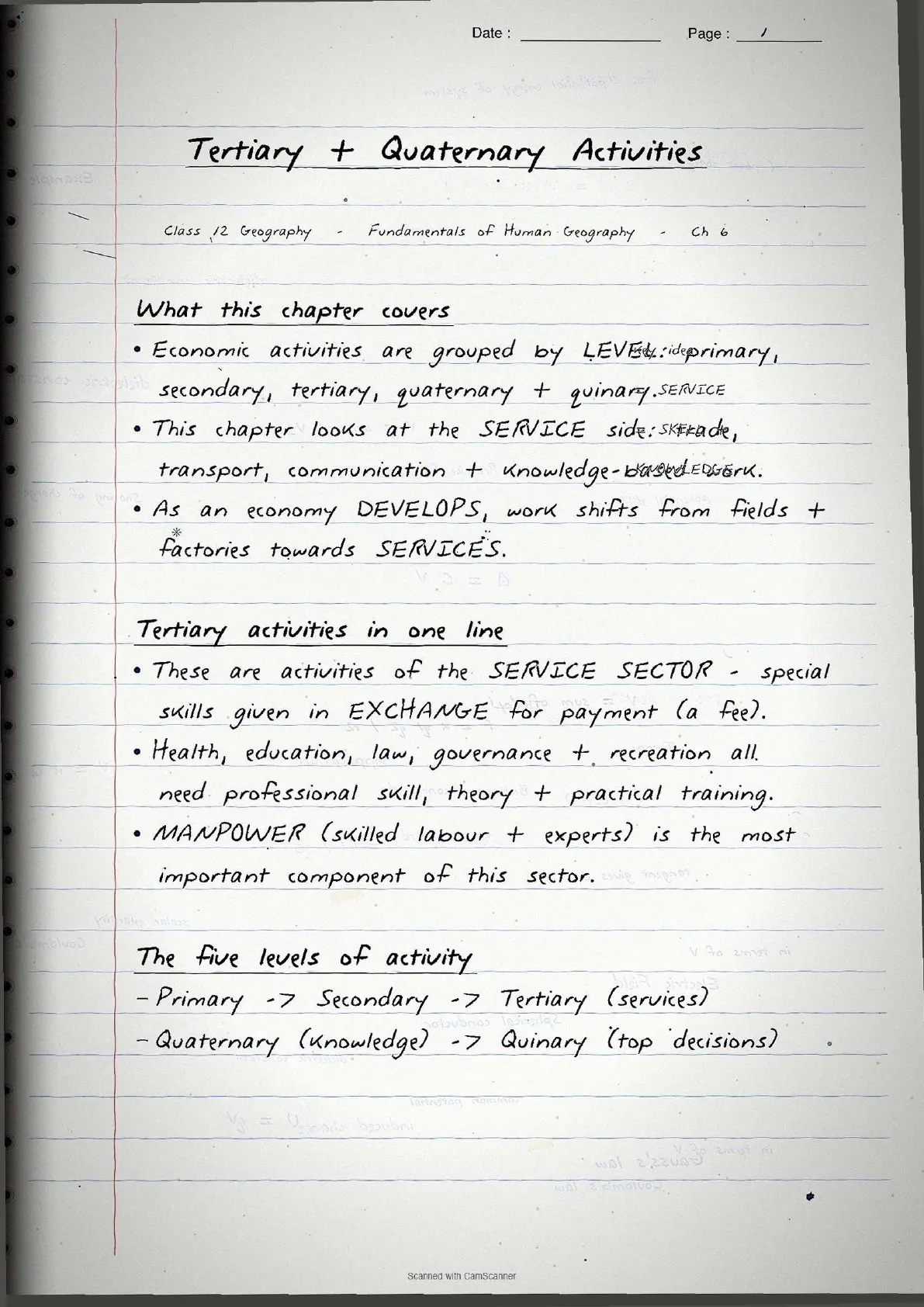
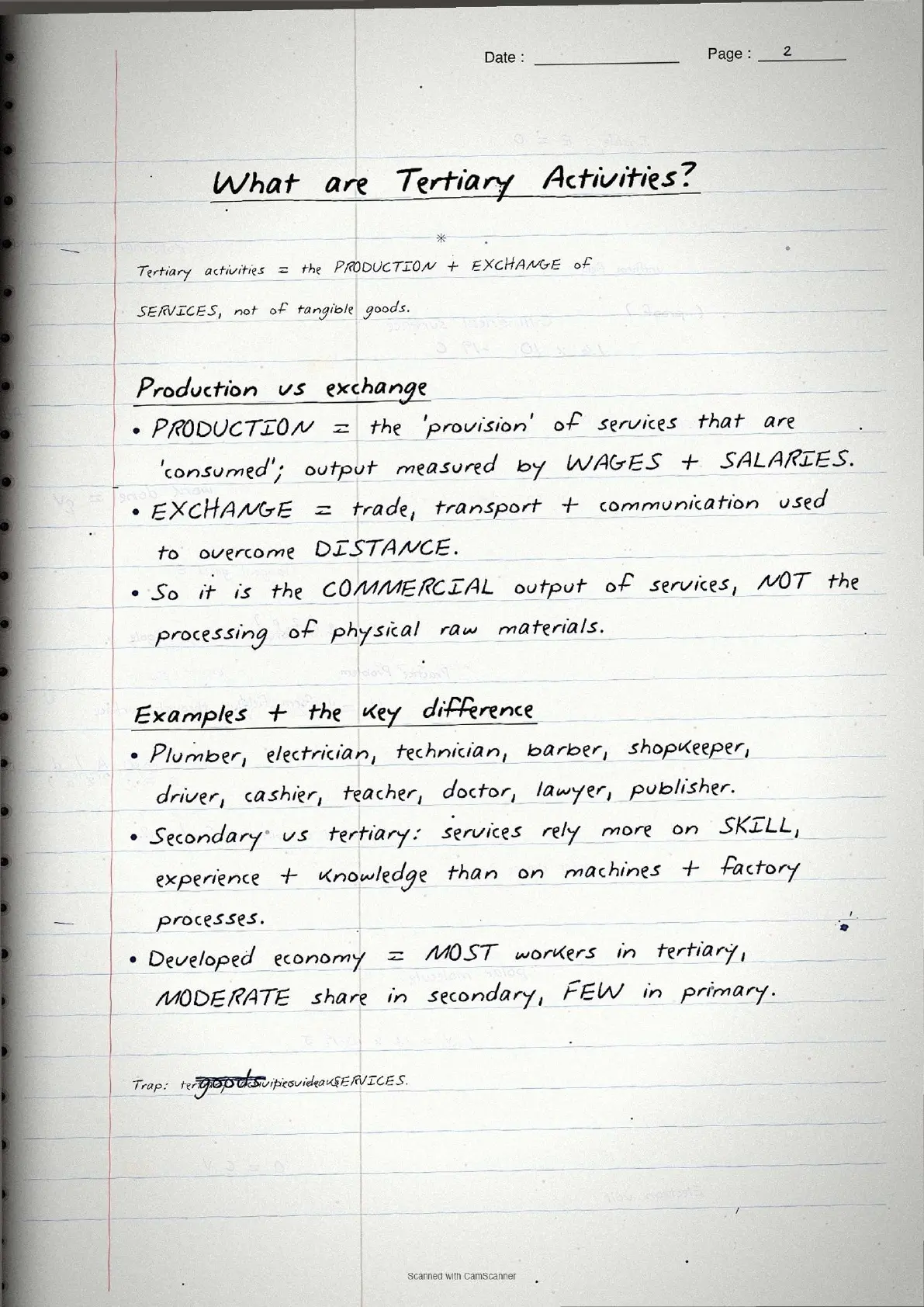
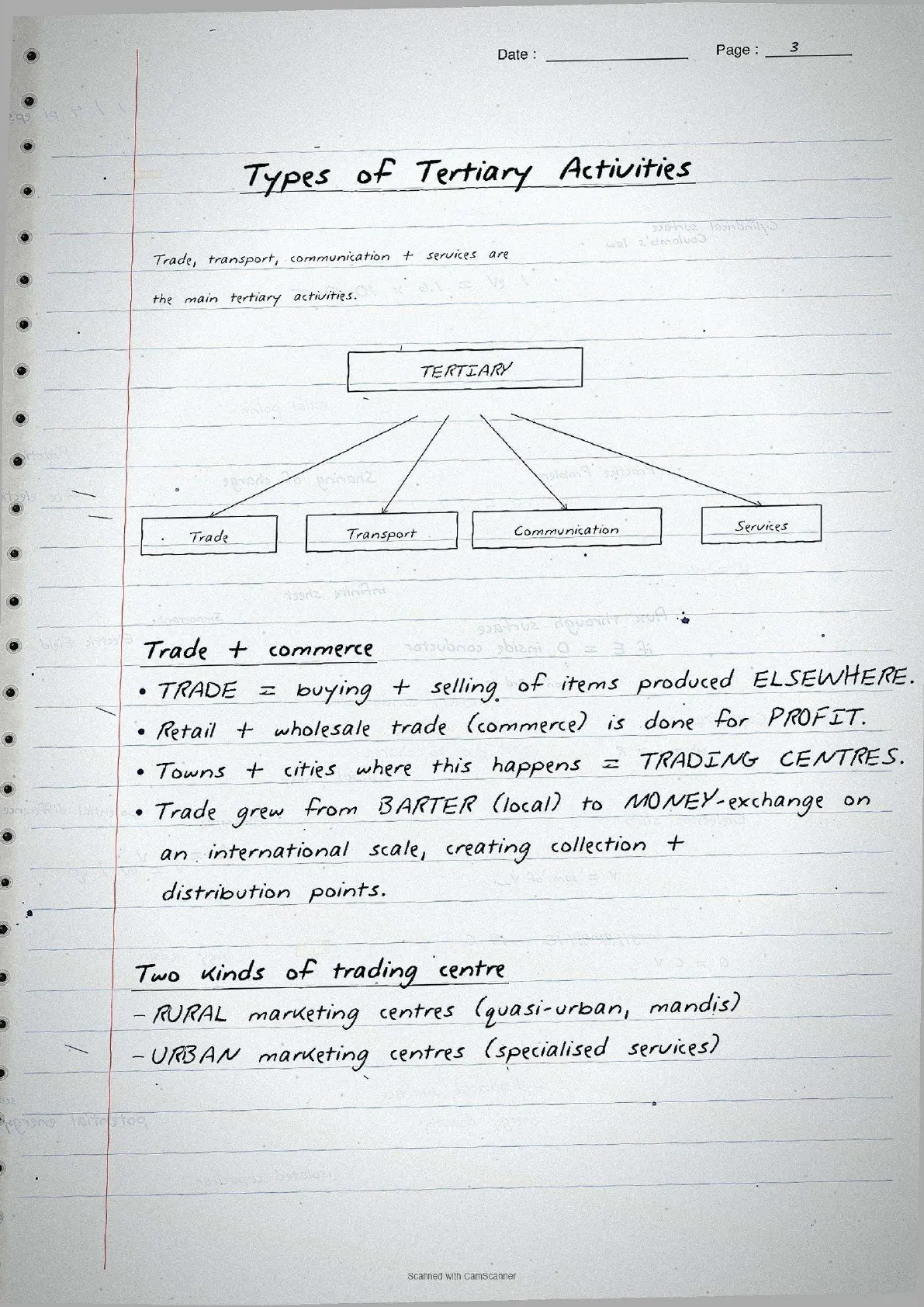
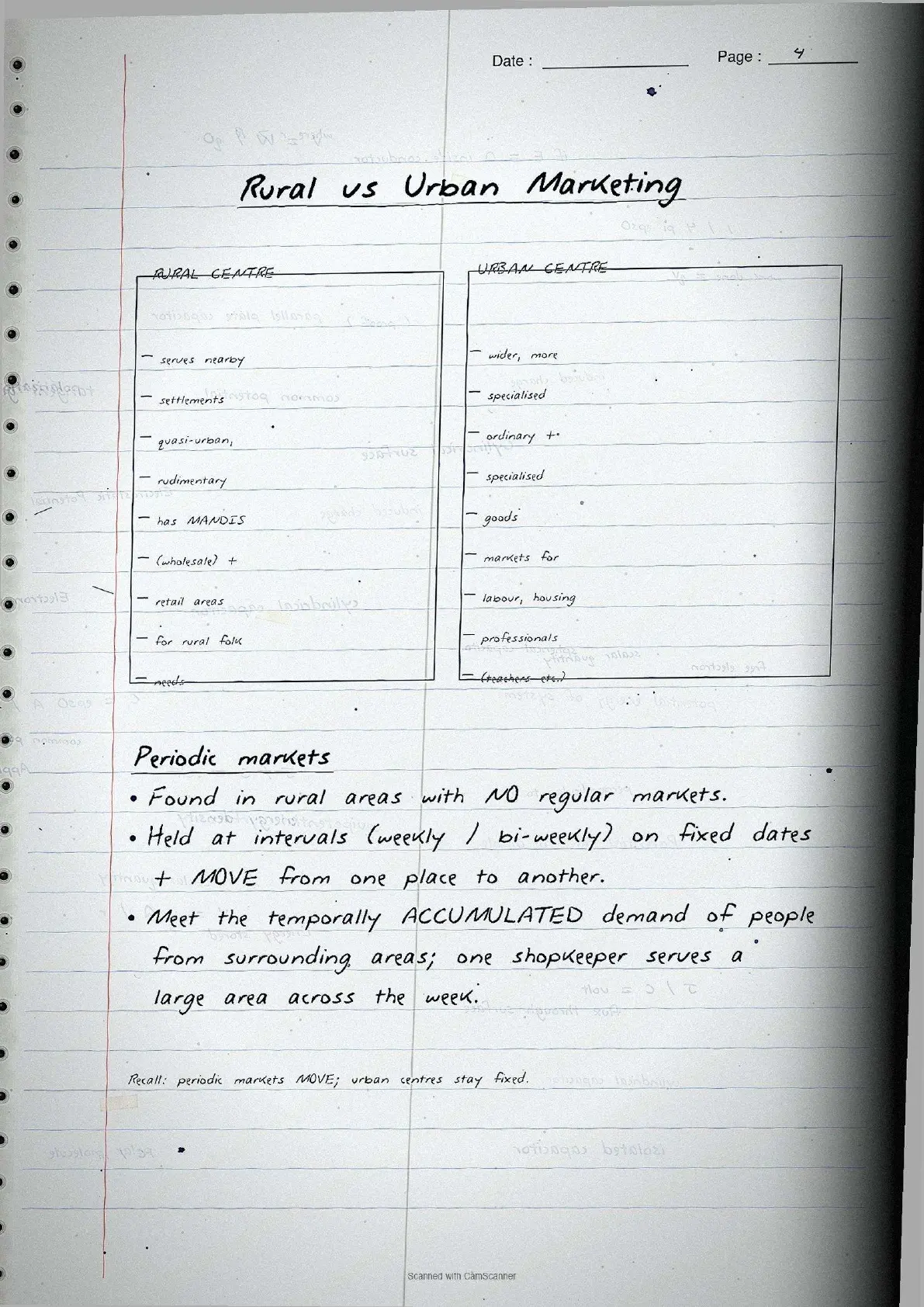
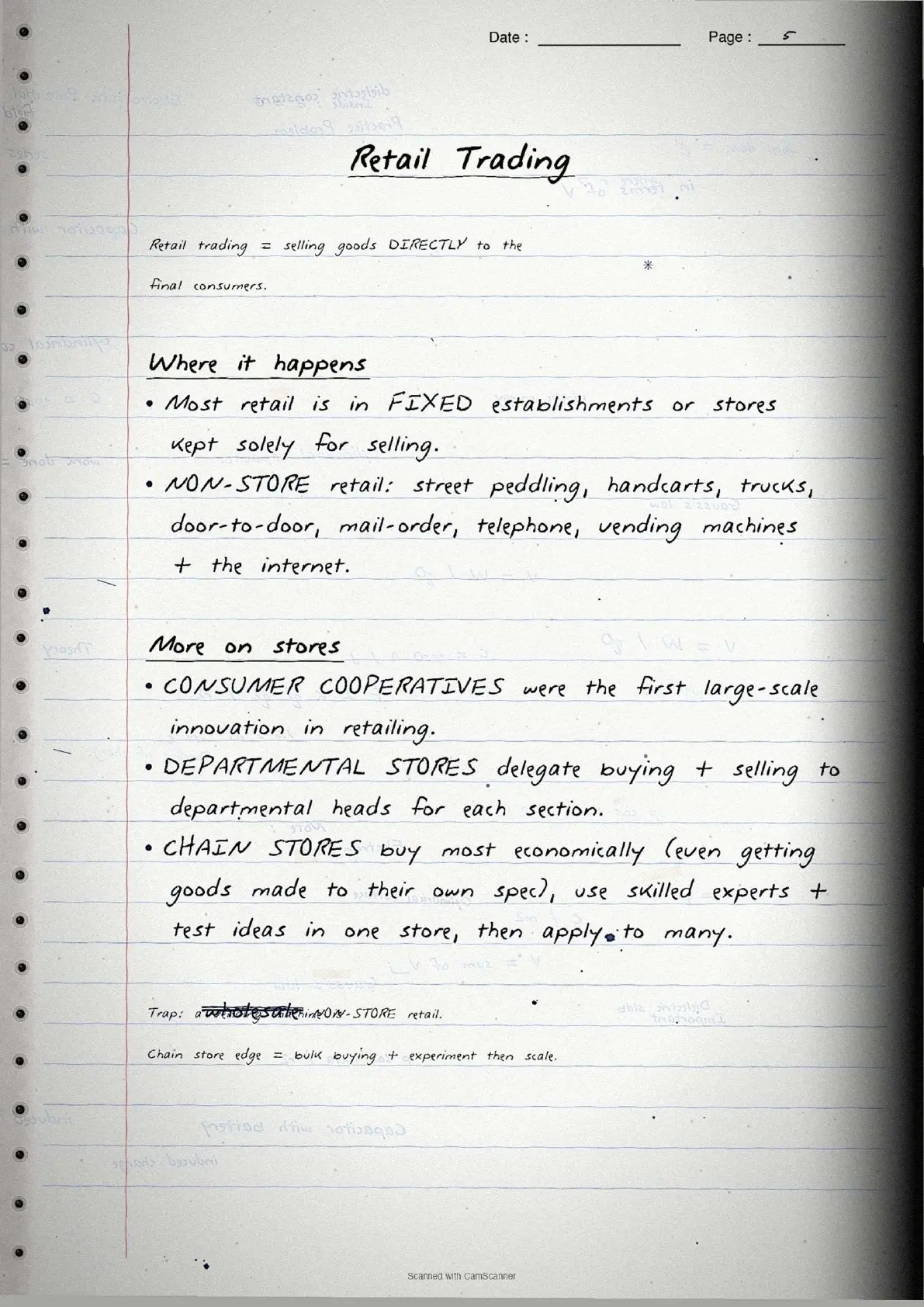
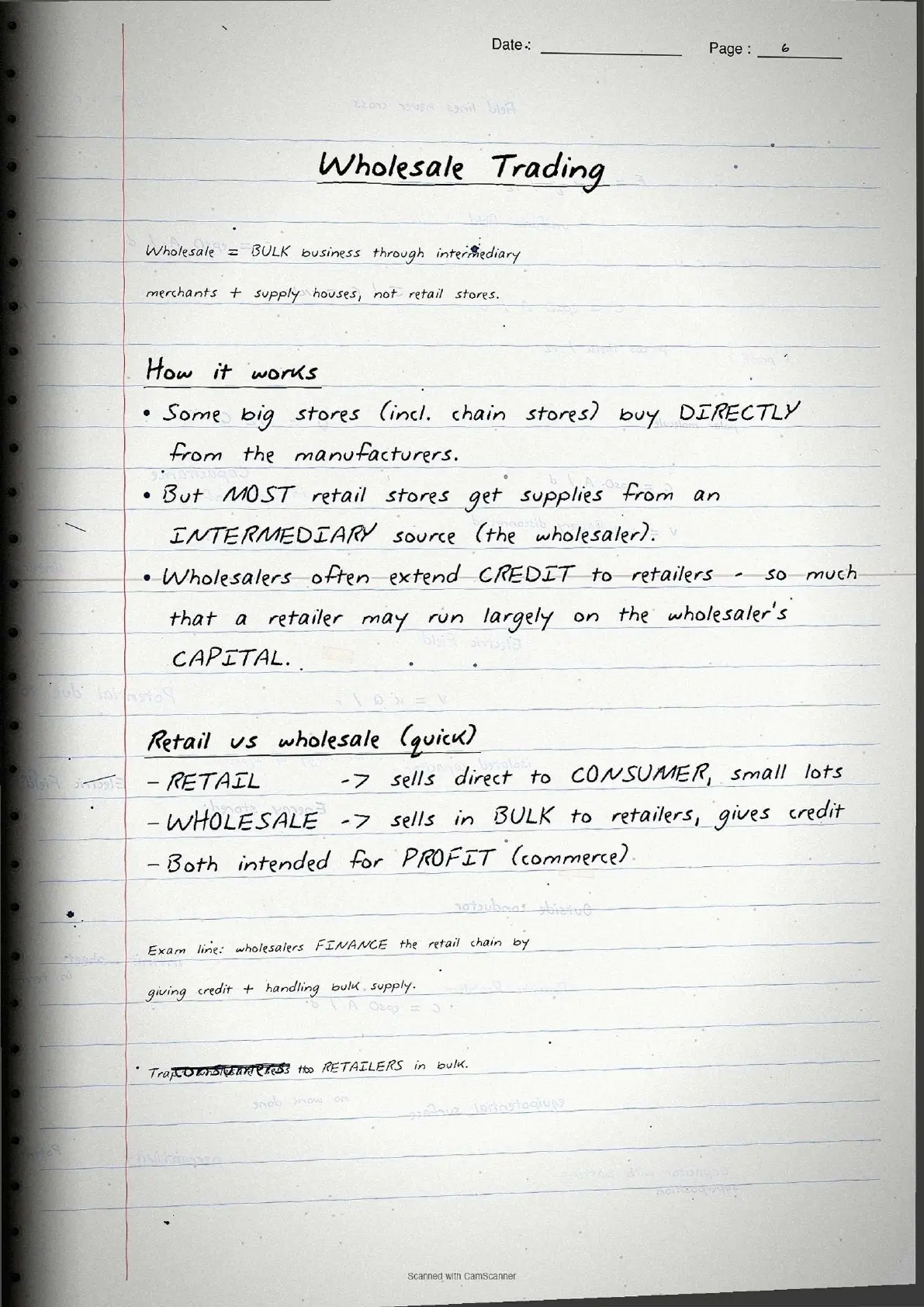
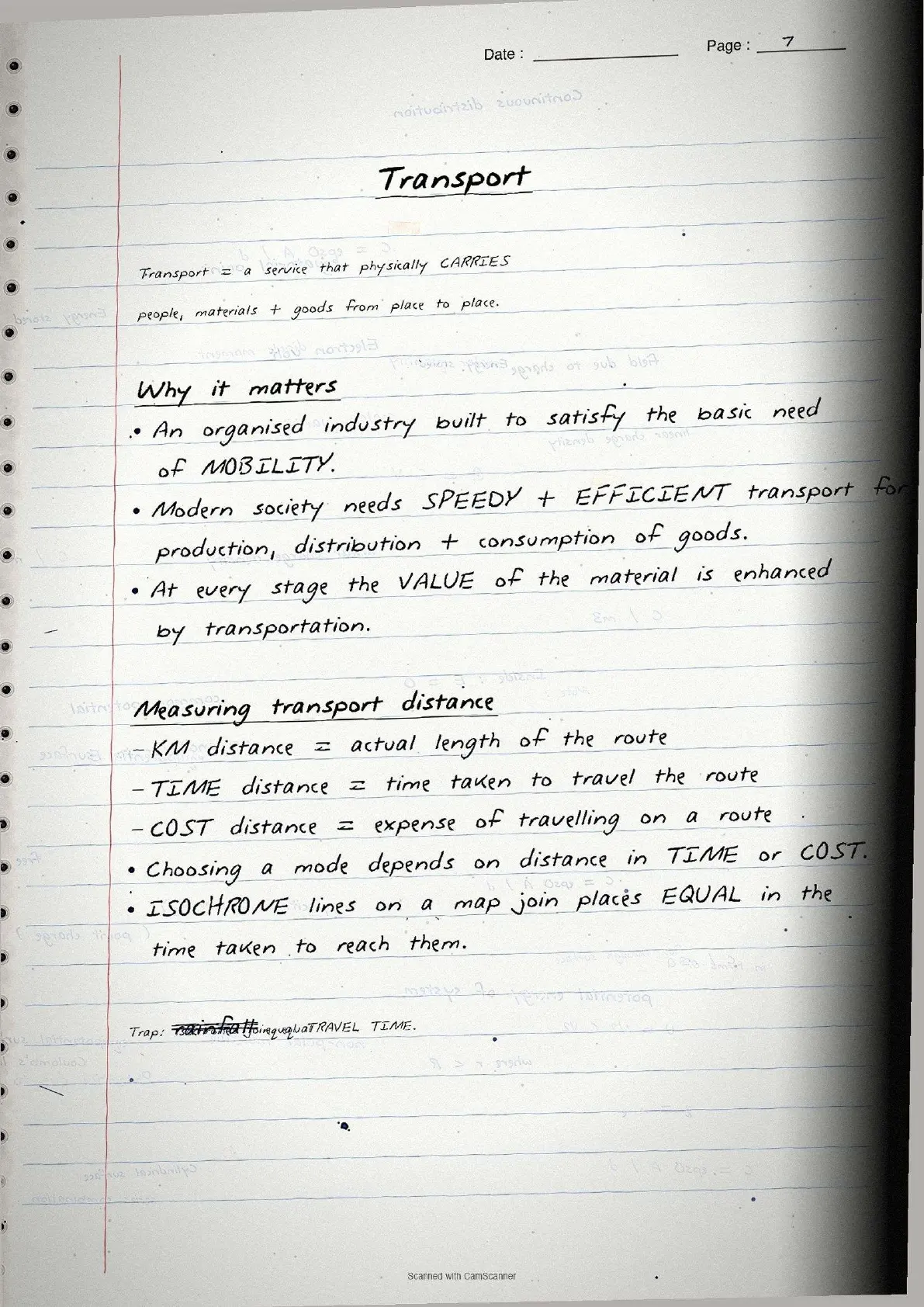
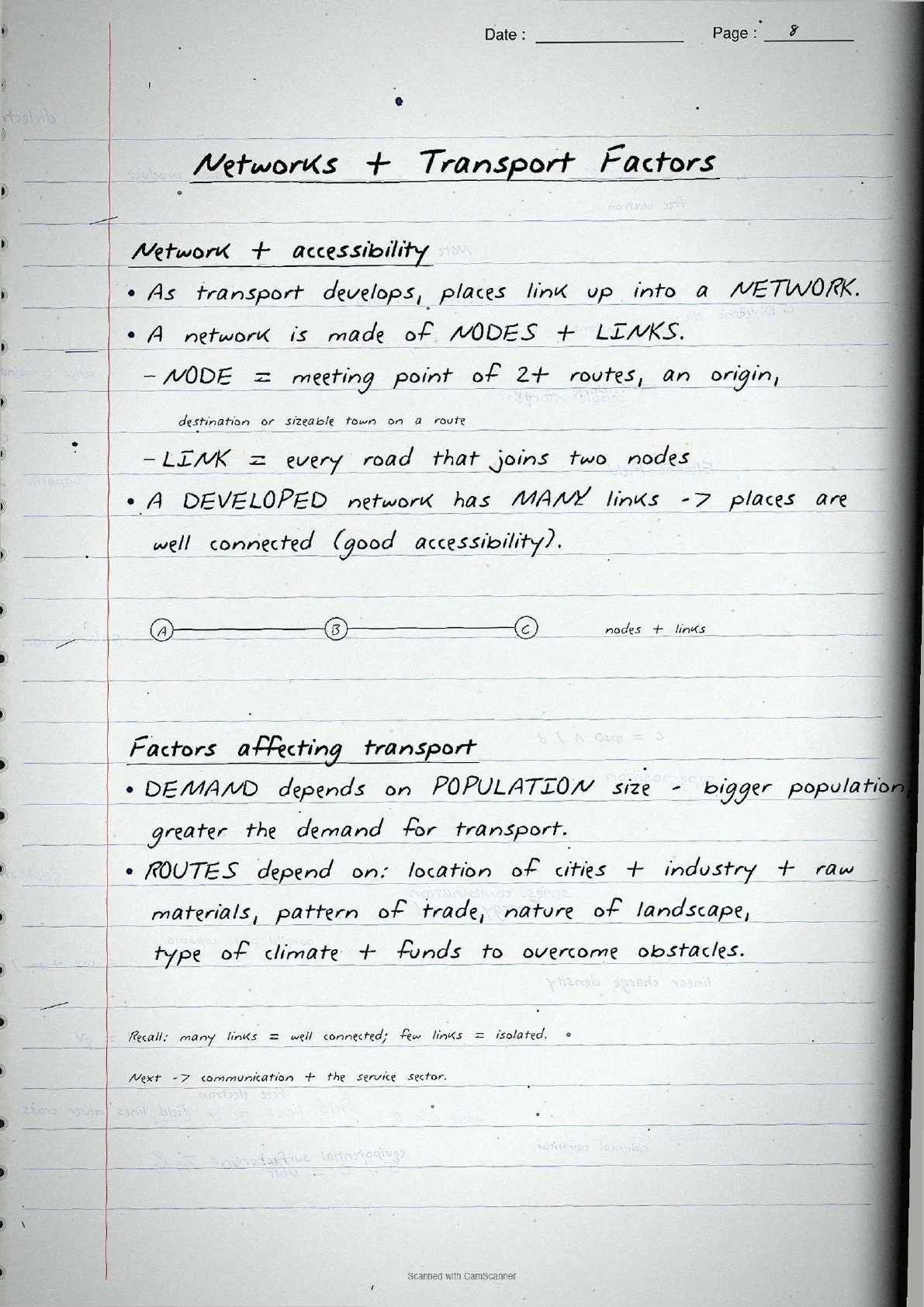
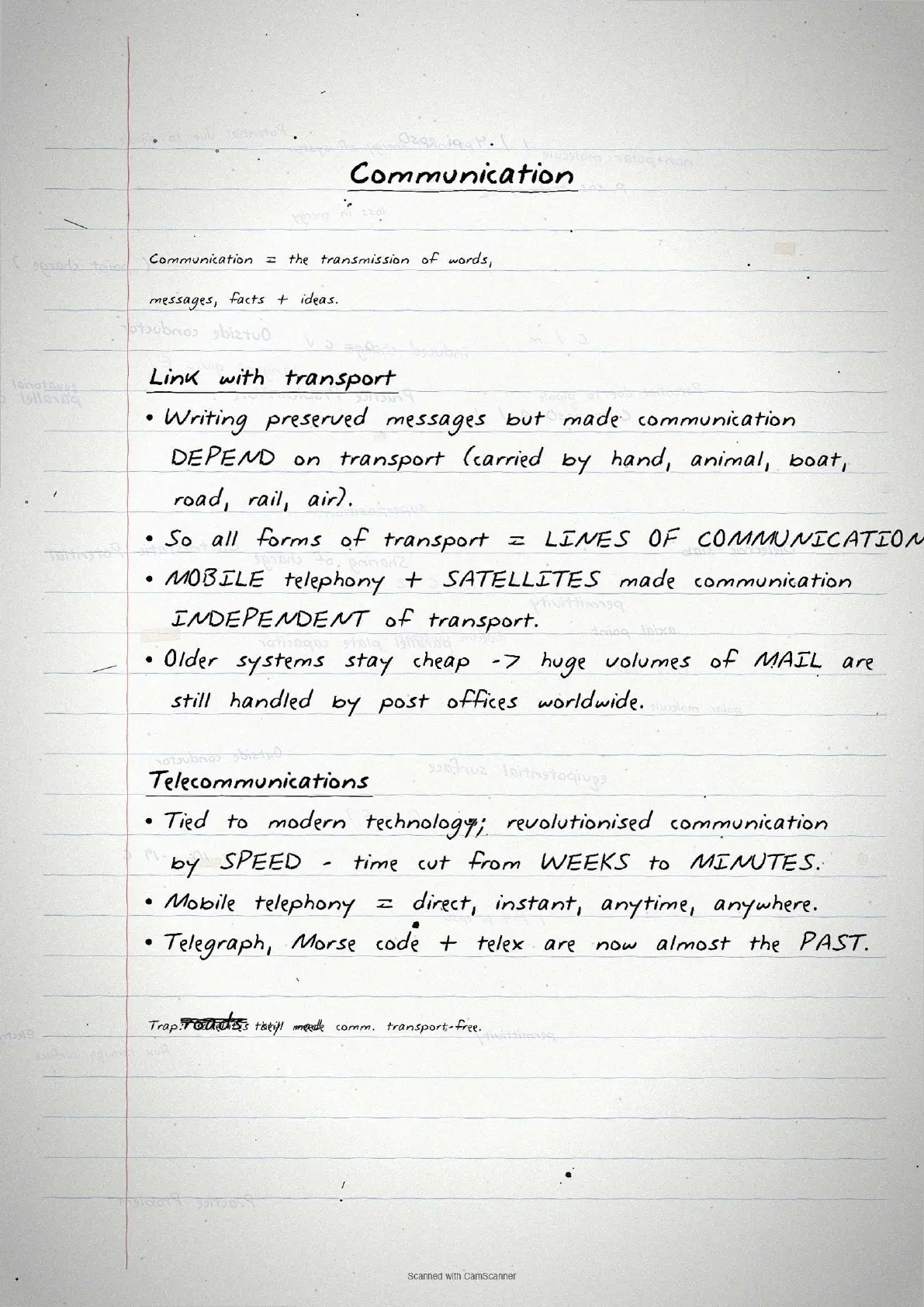
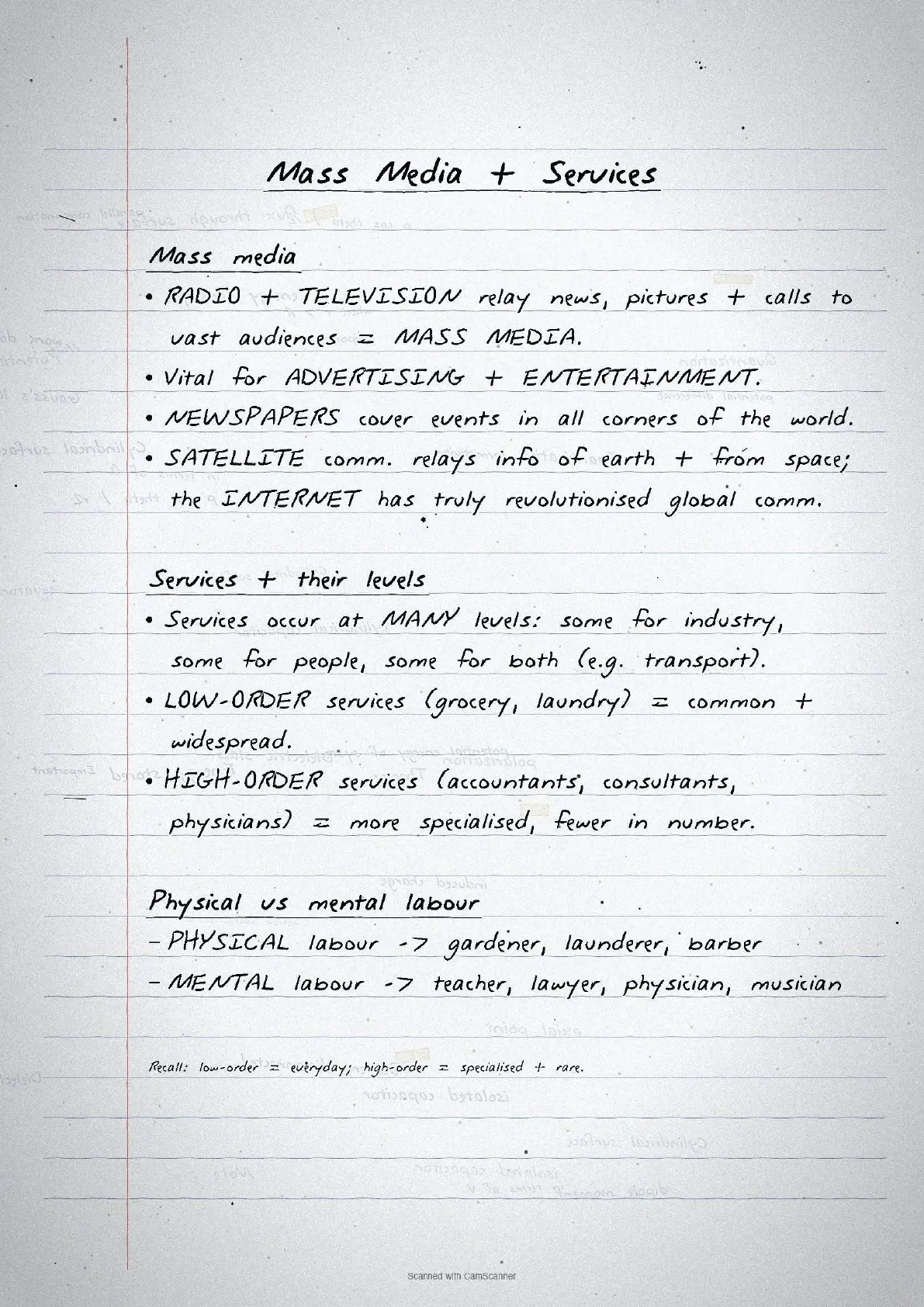
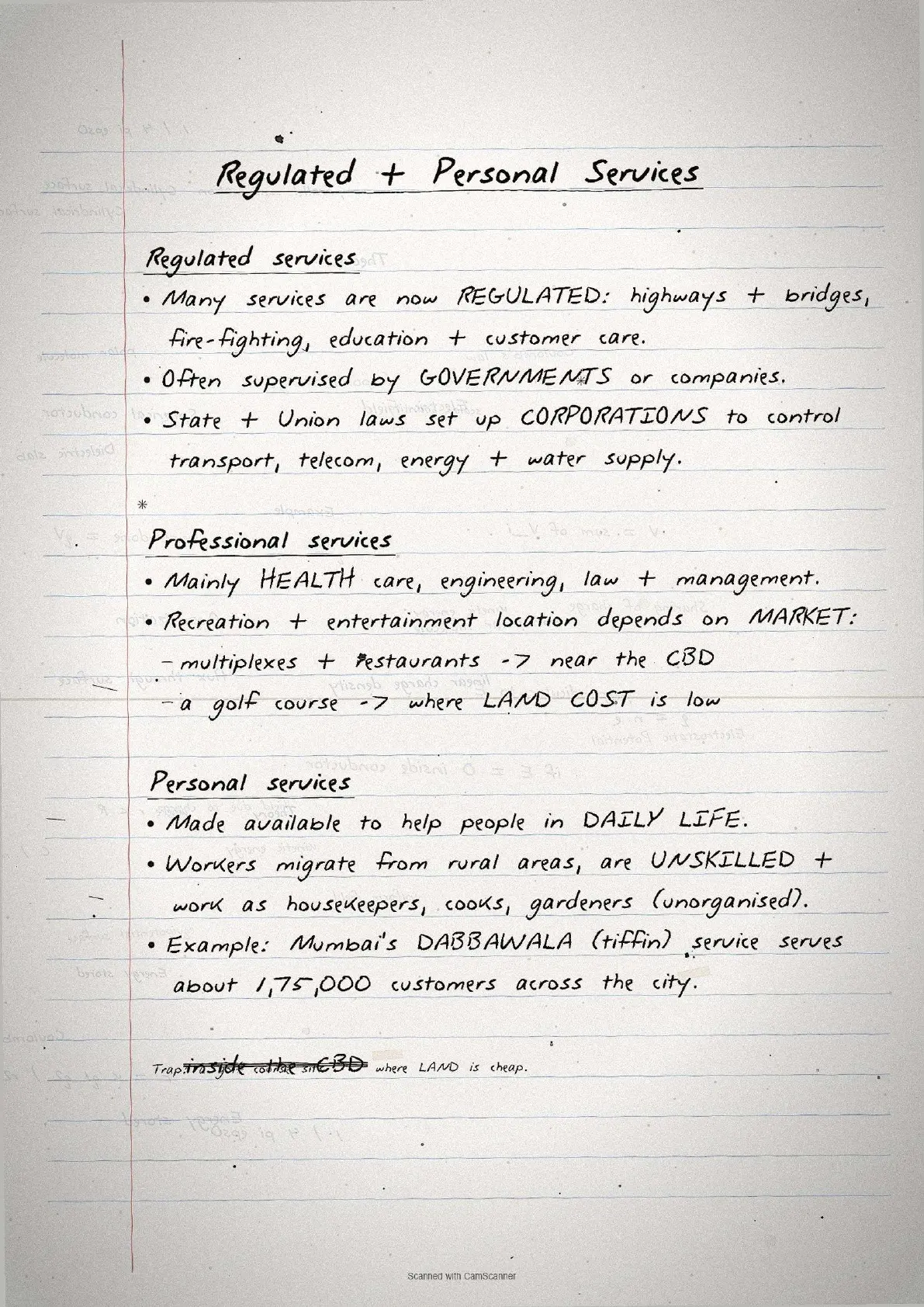
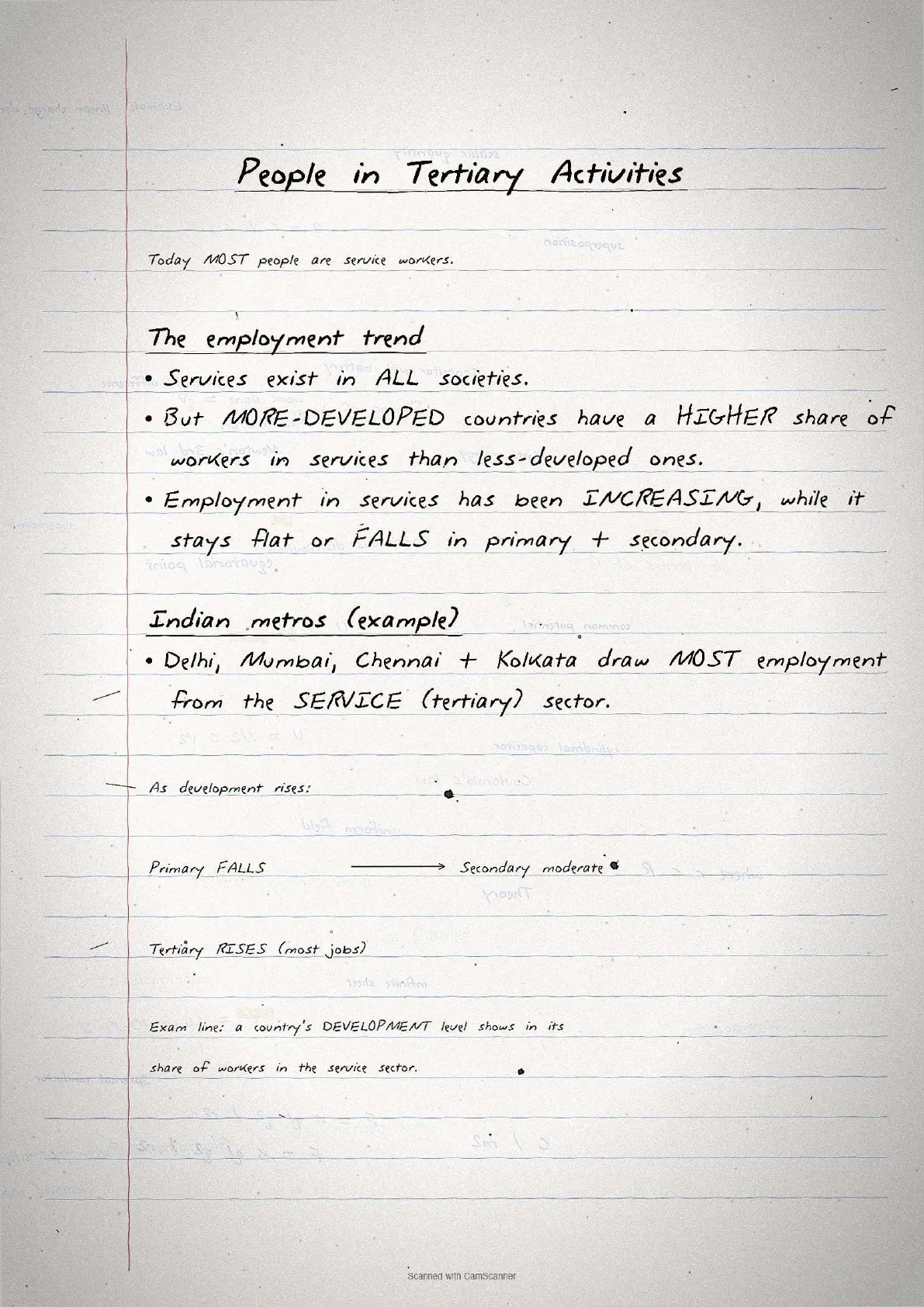
- Topper's handwritten revision notes covering all of CBSE Class 12 Geography Fundamentals of Human Geography Chapter 6.
- 5-6 marks weightage in the Class 12 Geography board paper, with tertiary vs quaternary distinctions, tourism types and outsourcing shown in hand-drawn comparison boxes.
- Pairs with the NCERT Solutions, typed Notes and the official NCERT Book PDF for the same chapter.
These handwritten notes are a topper's genuine revision pages, mapped to the 2026-27 NCERT Fundamentals of Human Geography textbook and cross-checked against the last five years of CBSE Class 12 Geography board papers.
Student Feedback
68% of Class 12 students in our 2026-27 poll of 9,870 students said handwritten notes feel faster to scan than typed PDFs in the final 48 hours, and toppers reported that pasting these pages into their revision notebook added about 2 marks on the 5-mark question for this chapter.
What These Handwritten Notes Include
These tertiary and quaternary activities class 12 handwritten notes are handwritten revision pages built for last-mile revision, not first-time concept building. They cover every idea tested in CBSE Class 12 Geography Chapter 6: tertiary (service sector) activities, types of trade, transport distance measures, network concepts, tourism and its factors, quaternary and quinary activities, and the differences between outsourcing, offshoring, BPO and KPO. Use the PDF in the 24 hours before the board paper.
| Page | What the page covers | Approx revision time |
|---|---|---|
| Page 1 | Definition of tertiary activities, types of trade (retail vs wholesale), rural and urban marketing centres, periodic markets. | 5 minutes |
| Page 2 | Transport: km/time/cost distance, isochrone lines, network nodes and links, factors affecting transport, telecommunications. | 6 minutes |
| Page 3 | Tourism: definition, tourist regions, four tourist attraction factors (climate, landscape, history, culture), medical tourism and India. | 5 minutes |
| Page 4 | Quaternary activities, quinary activities (gold collar), outsourcing, BPO vs KPO, digital divide. | 5 minutes |
Key Concepts in Handwritten Style
The concept sheet is the highest-leverage block in the file. The table below lists every definition and key idea students need to memorise for the board paper, in the order they appear in the notes. Each definition sits inside its own box for quick visual recall.
| Concept | Handwritten definition (as drawn) | NCERT exercise Q |
|---|---|---|
| Tertiary Activities | Service sector activities involving skilled labour, professional training and knowledge; output measured in wages and salaries | Q3(i) |
| Retail Trading | Sale of goods directly to consumers; includes fixed stores and non-store formats (peddling, mail-order, internet) | Q2(i) |
| Wholesale Trading | Bulk business through intermediary merchants; retailers largely operate on wholesaler's capital | Q2(i) |
| Periodic Markets | Rural markets held on specified dates, rotating across locations; serves temporally accumulated demand | Q1(i) |
| Transport Distance | Three types: km distance (actual route length), time distance (time taken), cost distance (expense of travel) | Q2(ii) |
| Isochrone Lines | Lines on a map joining places equal in travel time from a centre point | Q2(ii) |
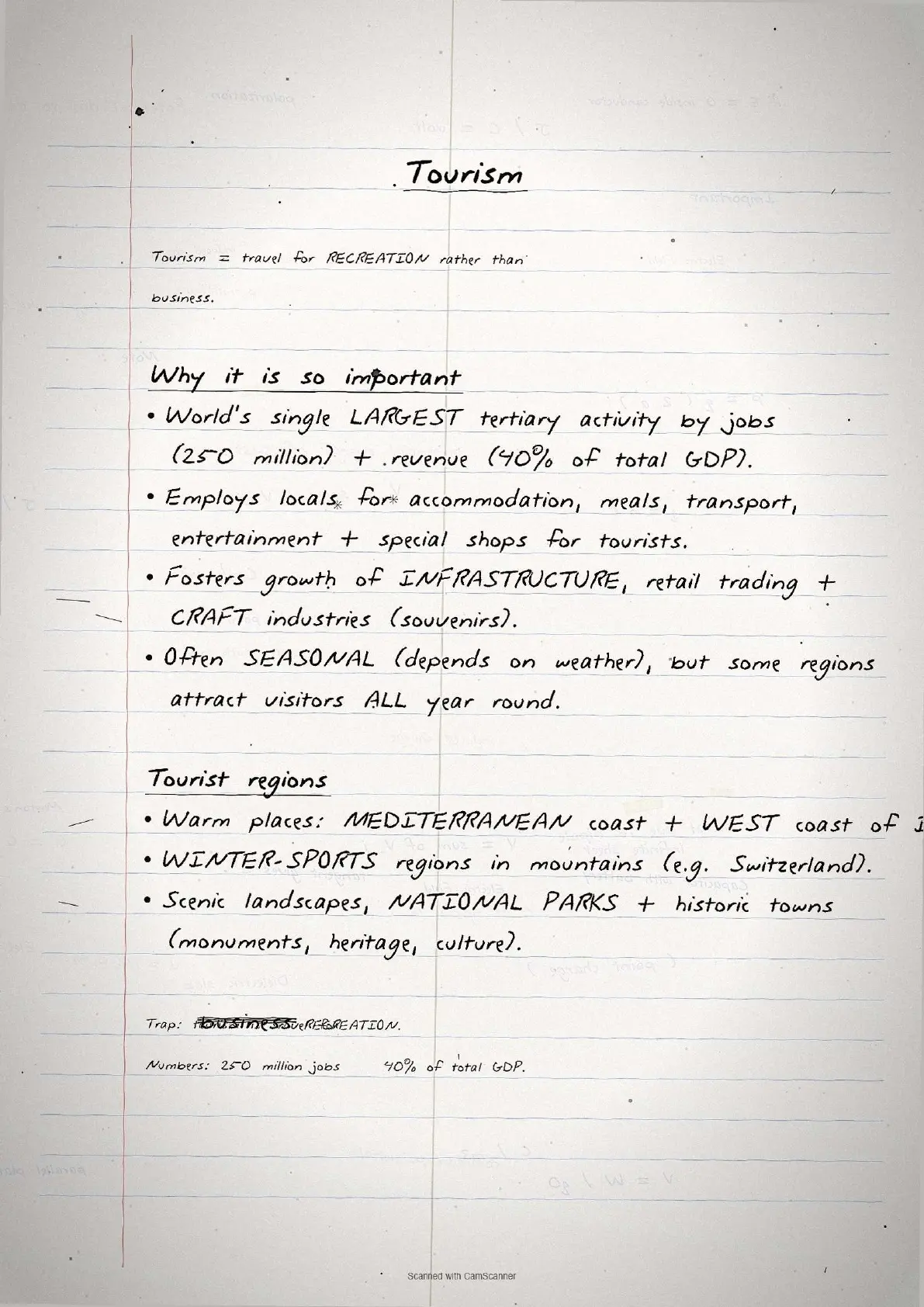
| Tourism | Travel for recreation rather than business; world's largest tertiary activity (250 million jobs, 40% of world GDP) | Q3(i) |
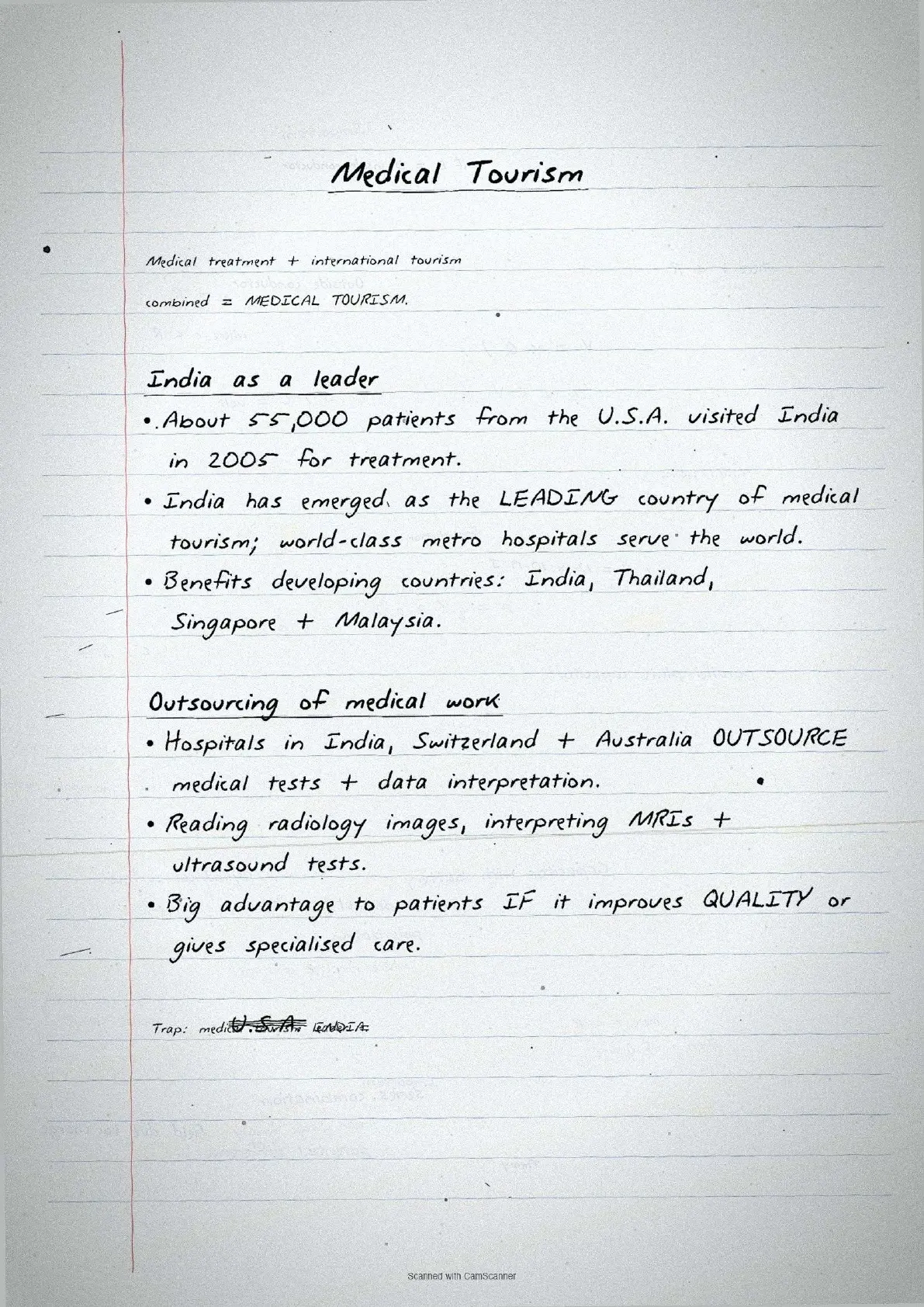
| Medical Tourism | Combining medical treatment with international travel; India leads globally with world-class hospitals in metro cities | Q2(iii) |
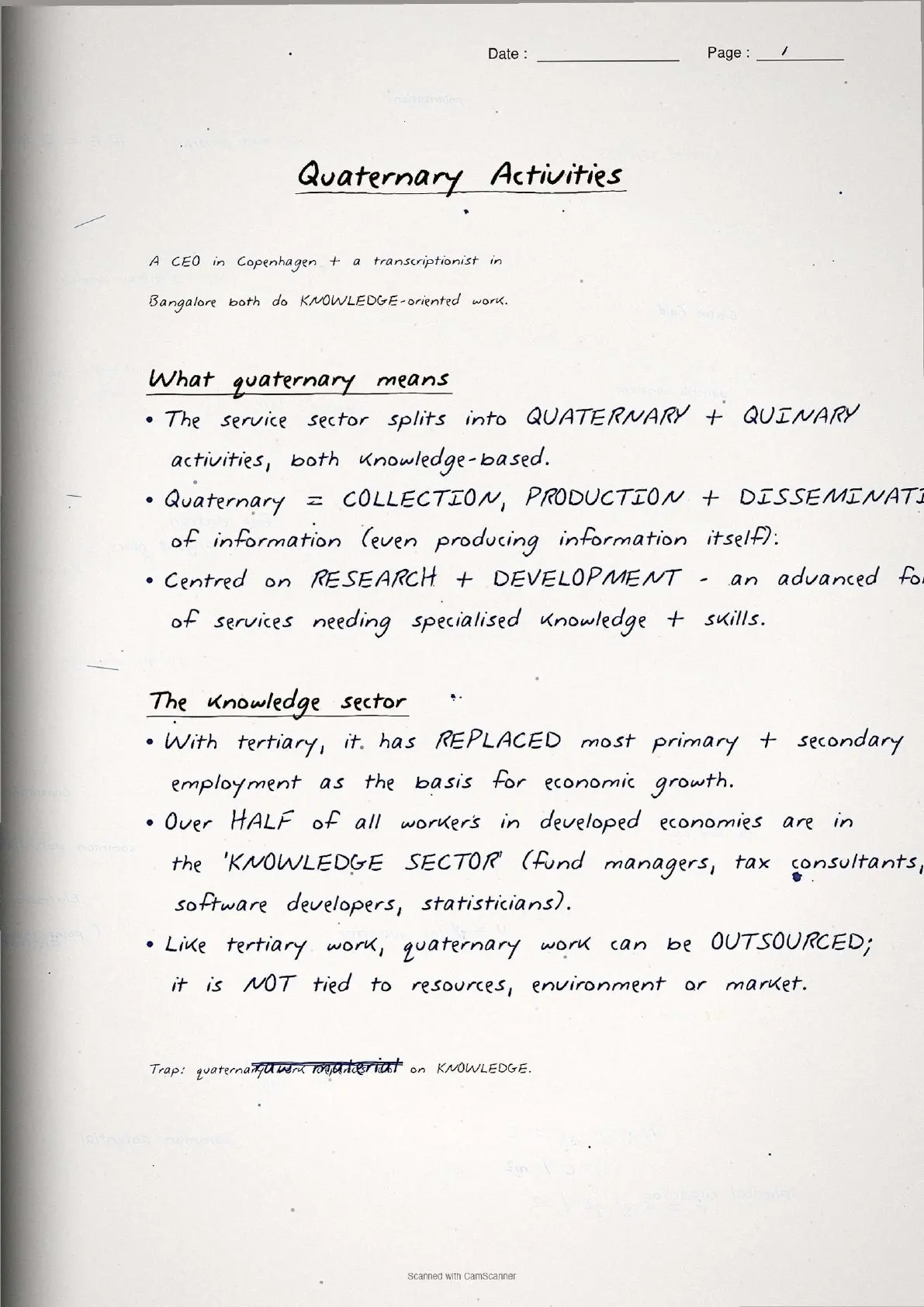
| Quaternary Activities | Knowledge-based services: collection, production and dissemination of information; research and development; can be outsourced | Q2(ii) |
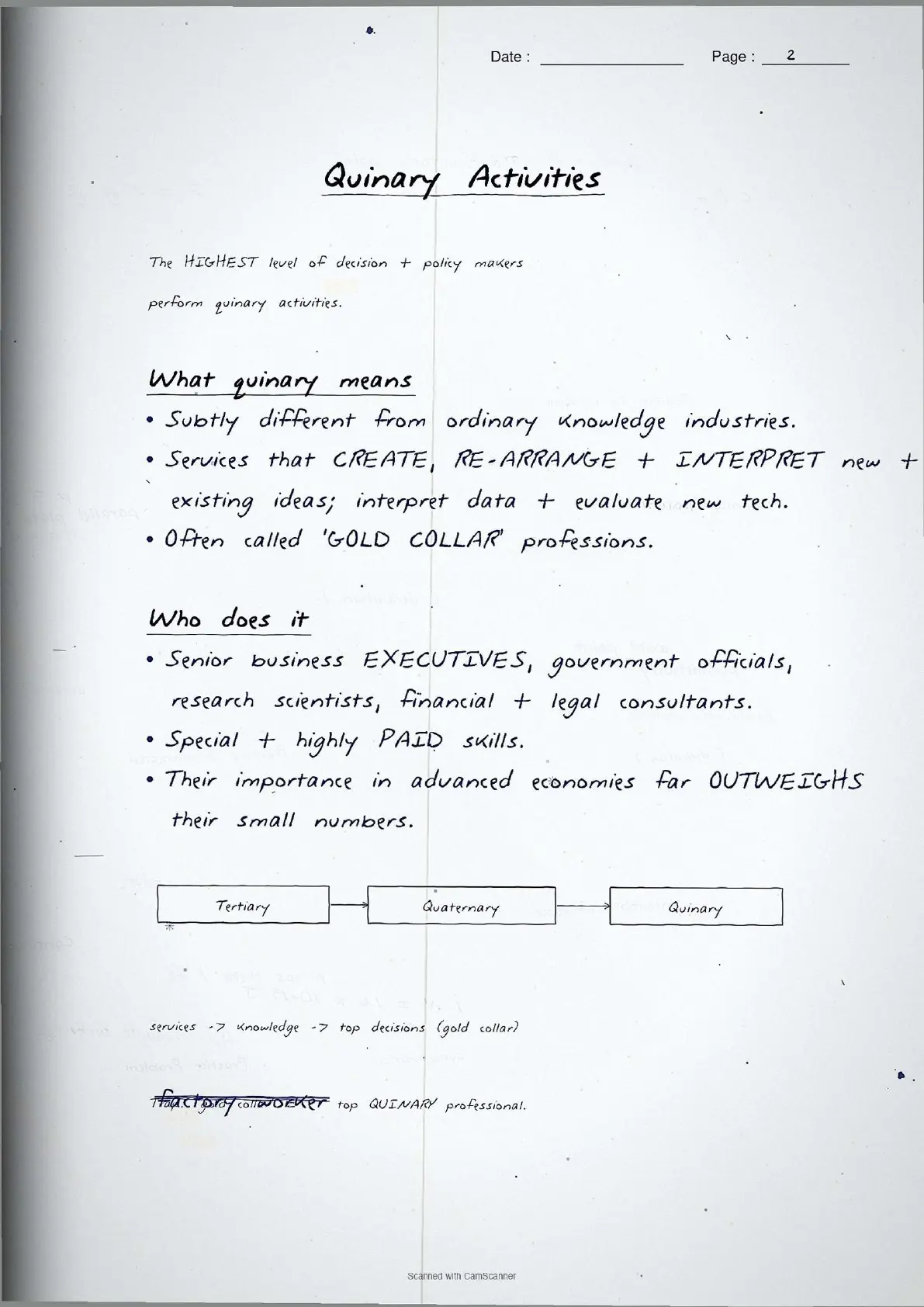
| Quinary Activities | Gold-collar professions; highest decision makers (senior executives, govt officials, research scientists); creation and re-arrangement of new ideas | Q1(iv) |
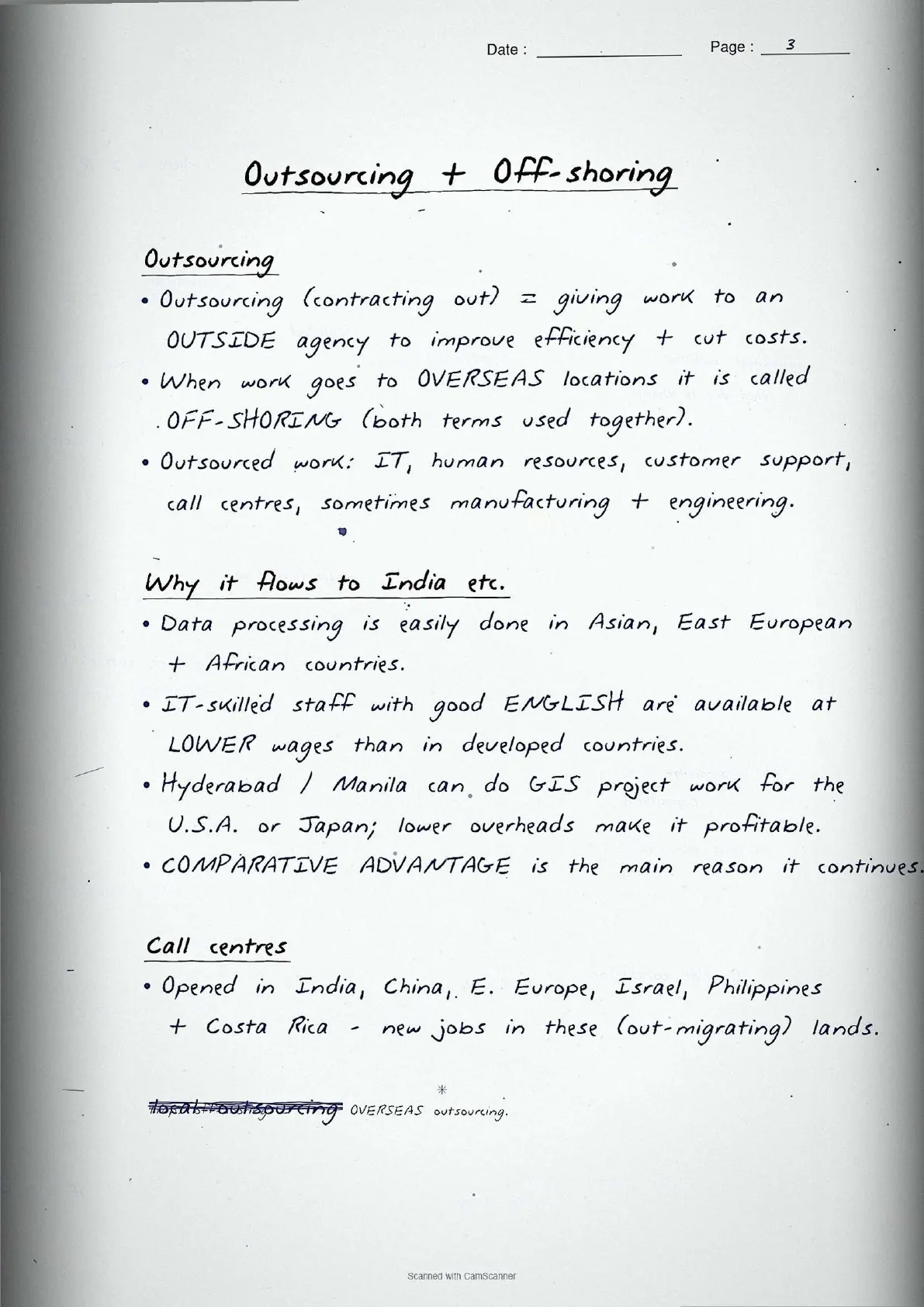
| Outsourcing / Offshoring | Giving work to an outside agency (outsourcing); when done across borders = offshoring; reduces costs and increases efficiency | Q1(vi) |
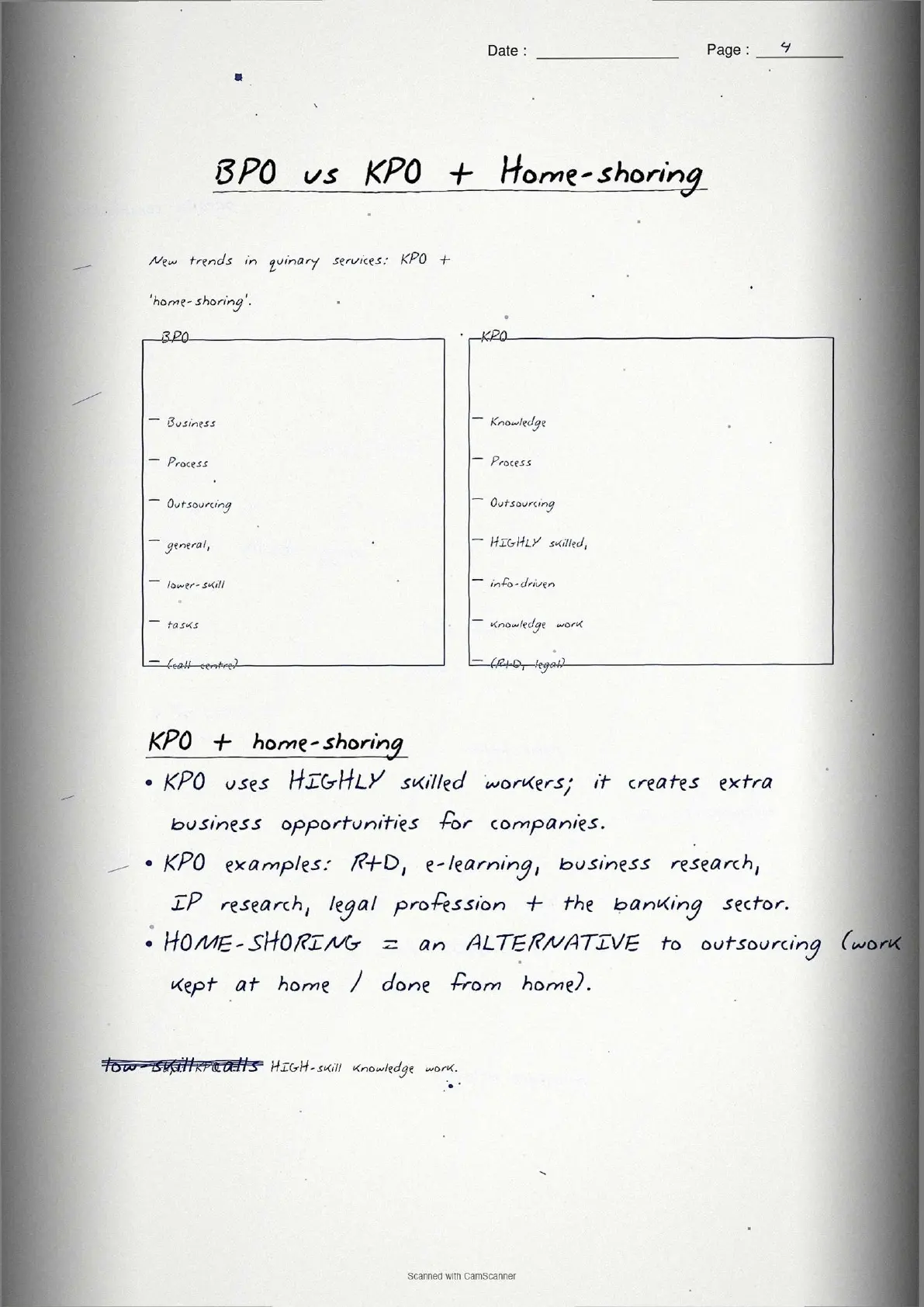
| BPO vs KPO | BPO = routine business processes (call centres, HR); KPO = highly skilled knowledge work (R and D, legal, banking sector) | Q1(vi) |
| Digital Divide | Uneven distribution of ICT access and benefits across and within countries; developed nations surged ahead, developing nations lag | Q2(iv) |
Tip: Each concept sits in its own box with a corner arrow to a real-world example (quaternary points to "software developer in Bengaluru", quinary to "gold-collar CEO of an MNC"). Revising from visual blocks helps students recall key terms faster on exam day.
Tertiary Activities: Trade, Transport and Services
Tertiary activities form the service backbone of every economy. NCERT Chapter 6 covers trade, transport, communication and professional services as the main types, and the notes give each type its own page with comparison boxes.
Trade and Commerce
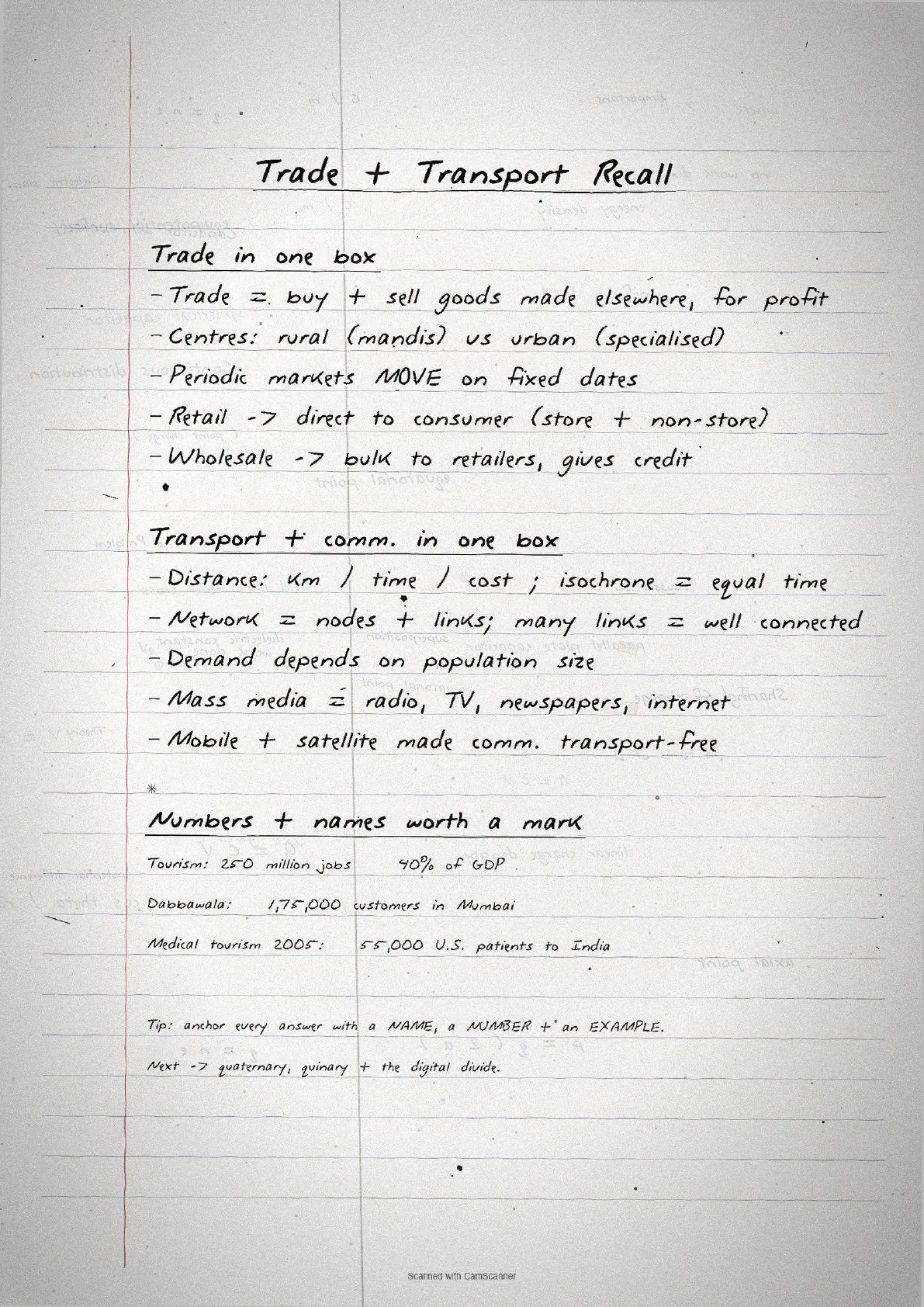
Trade is buying and selling of items produced elsewhere. The chapter divides trading centres into rural marketing centres (quasi-urban, basic goods, mandis and periodic markets) and urban marketing centres (specialised goods, labour markets, housing, professional services). The rural-vs-urban box mirrors the format CBSE uses in "distinguish between" questions.
Transport
Transport moves people, materials and goods from place to place. The three measures of transport distance are km distance (route length), time distance (time taken) and cost distance (expense of travel). Isochrone lines join points equal in travel time and are the most-tested map-skill term here. Networks grow by adding nodes (meeting points of two or more routes) and links (the road between two nodes).
Tourism
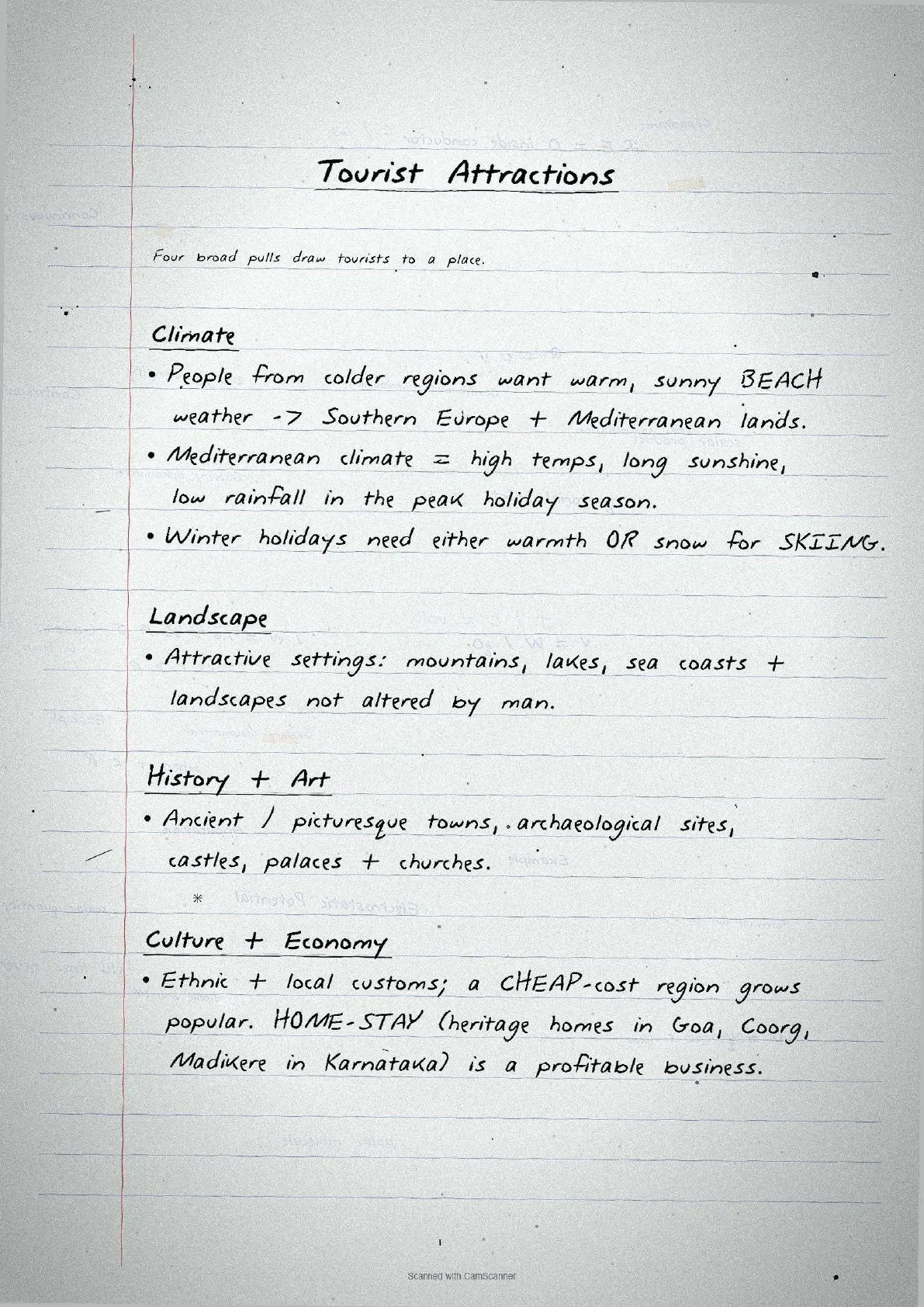
Tourism is the world's single largest tertiary activity, employing 250 million people and contributing 40 per cent of world GDP. The four factors that attract tourists are climate, landscape, history and art, and culture and economy. India has emerged as the leading country for medical tourism, with about 55,000 US patients visiting in 2005 alone.
Important: The four tourist attraction factors (climate, landscape, history, culture) appear regularly as a 4 or 5-mark question. Write one specific example for each factor. Always write the example alongside the factor name in your answer script.
Quaternary and Quinary Activities
The quaternary and quinary sections are the most examiner-favourite part of Chapter 6, and the notes give the distinction a full page. Students who blur the two sectors together typically lose the 3-mark "distinguish" question.
| Feature | Quaternary Activities | Quinary Activities |
|---|---|---|
| Nature | Knowledge-based; collection, production, dissemination of information; research and development | Highest decision-making; creation and re-arrangement of new ideas; interpretation of new technologies |
| Collar colour | White collar (knowledge workers) | Gold collar (super-specialised professionals) |
| Examples | Mutual fund managers, tax consultants, software developers, statisticians, university teachers | Senior business executives, government officials, research scientists, financial and legal consultants |
| Can be outsourced? | Yes; not tied to resources or location | Rarely; highly personalised decision-making |
| Sector importance | Over half of workers in developed economies are in the knowledge sector | Importance far outweighs their numbers in advanced economies |
The outsourcing ecosystem sits within these two sectors. BPO handles routine processes like call centres and HR; KPO handles skilled knowledge work such as R and D, legal, e-learning and banking. India, China, Eastern Europe and the Philippines are the main destinations because they offer skilled workers with good English at lower wages.
Common Mistakes Highlighted in the Notes
The six repeat-offender mistakes CBSE examiners flag each year on tertiary and quaternary activities class 12 questions. Each one appears as a margin callout beside the relevant concept box.
- Saying quaternary and quinary are completely separate sectors. Quinary is a subdivision of the quaternary sector. They are related: both are knowledge-based, but quinary is the top-tier of decision-making within it.
- Confusing outsourcing and offshoring. Outsourcing = giving work to an outside agency (can be within the same country). Offshoring = outsourcing ACROSS national borders. They are often used together, but the terms are technically distinct.
- Calling BPOs "higher" than KPOs. KPO is more advanced than BPO: KPO workers are more skilled and handle knowledge-driven tasks. A BPO agent handles a call; a KPO analyst handles research. NCERT Exercise Q1(vi) directly tests this.
- Listing only one type of transport distance. The NCERT textbook gives all three: km distance, time distance and cost distance. Any exam answer mentioning only km distance misses two types and loses marks.
- Writing "tourism is the largest service sector" without the numbers. Examiners reward the specific data: 250 million jobs and 40 per cent of world GDP. Write both figures when describing tourism's scale.
- Forgetting that quaternary activities can be outsourced. Students often assume knowledge-based work cannot be outsourced. The NCERT textbook explicitly states quaternary activities CAN be outsourced and are not tied to resources or market location.
Each mistake carries a one-line "remember this" note. The BPO vs KPO hook reads "KPO = skills + knowledge; BPO = process + routine".
Previous Year Question Trends
The CBSE Class 12 Geography board paper has carried a stable 5 to 8 marks from Chapter 6 over the last five years, usually split across one 3-mark short answer and one 5-mark long answer. The notes are built around this pattern.
| Year | Question asked | Marks | Notes page to revise |
|---|---|---|---|
| 2025 | Distinguish between quaternary and quinary activities with examples + what is digital divide? | 5 + 3 | Page 4 |
| 2024 | Explain four factors that attract tourists to a region with examples | 5 | Page 3 |
| 2023 | What is outsourcing? How has it benefited developing countries like India? | 5 | Page 4 |
| 2022 | Describe the significance of tourism as a tertiary activity + short note on medical tourism in India | 3 + 2 | Page 3 |
| 2021 | MCQ on quinary activities + 3-mark short note on BPO and KPO | 1 + 3 | Page 4 |
The 5-mark question rotates between tourism factors, quaternary-quinary distinctions and outsourcing, so all four pages should be revised together, not selectively.
PDF Format, Printing and Languages
The PDF is sized for both A4 printing and mobile reading, runs 3 to 4 pages, and prints cleanly on a black-and-white printer.
| Format | Use case | File size |
|---|---|---|
| A4 print (recommended) | Paste pages inside a physical revision notebook for last-mile revision. | ~1.4 MB |
| Mobile PDF | Scroll on a phone in the 30 minutes before the exam. | Same file |
| Tablet annotation | Open in a PDF annotation app and add personal margin notes. | Same file |
The current PDF is English-medium only. Hindi-medium notes for this chapter are on the 2026-27 roadmap and will appear on the same URL once published.
Other Resources for Class 12 Geography Chapter 6 Tertiary and Quaternary Activities
Pair these handwritten notes with the matching NCERT Solutions, typed Notes and the official NCERT Book chapter for Class 12 Geography Chapter 6.
| Resource | What it covers | Open |
|---|---|---|
| Handwritten Notes | Topper's handwritten revision pages for last-mile board exam prep. | You are here |
| NCERT Solutions | Step-by-step answers to all exercise questions with detailed explanation and CBSE-aligned reasoning. | Class 12 Geography Chapter 6 NCERT Solutions |
| Notes | Concept-first typed revision notes with definitions, activity comparison tables and common mistakes. | Class 12 Geography Chapter 6 Notes |
| NCERT Book PDF | Official NCERT Fundamentals of Human Geography Chapter 6 textbook in PDF form. | Class 12 Geography Chapter 6 NCERT Book PDF |
| Subject Hub | All chapters of Class 12 Geography with every resource in one place. | Class 12 Geography Subject Hub |
All Chapters Handwritten Notes for Class 12 Geography Fundamentals of Human Geography
Related Links: Use the table below for the handwritten notes of other chapters of Class 12 Geography Fundamentals of Human Geography. Every chapter uses the same concept boxes and margin-callout common mistakes.
| Chapter | Topic | Handwritten Notes link |
|---|---|---|
| Chapter 1 | Human Geography: Nature and Scope | Class 12 Geography Chapter 1 Handwritten Notes |
| Chapter 2 | The World Population: Distribution, Density and Growth | Class 12 Geography Chapter 2 Handwritten Notes |
| Chapter 3 | Human Development | Class 12 Geography Chapter 3 Handwritten Notes |
| Chapter 4 | Primary Activities | Class 12 Geography Chapter 4 Handwritten Notes |
| Chapter 5 | Secondary Activities | Class 12 Geography Chapter 5 Handwritten Notes |
| Chapter 6 | Tertiary and Quaternary Activities | You are here |
| Chapter 7 | Transport and Communication | Class 12 Geography Chapter 7 Handwritten Notes |
| Chapter 8 | International Trade | Class 12 Geography Chapter 8 Handwritten Notes |
Tertiary and Quaternary Activities Class 12 Handwritten Notes FAQs
Ques. What are these tertiary and quaternary activities class 12 handwritten notes meant to be used for?
Ans. They are a topper's handwritten revision file that compresses the full NCERT Chapter 6 into 3 to 4 pages of concept boxes, activity-comparison tables and margin-callout common mistakes. Students use the file for last-mile revision in the 24 hours before the board paper, paired with the typed Notes for concept building and the NCERT Solutions for answer-writing practice.
Ques. What are tertiary activities in Class 12 Geography?
Ans. Tertiary activities in Class 12 Geography are service sector activities that involve providing specialised skills, knowledge and experience rather than producing tangible goods. They include trade (retail and wholesale), transport (moving people and materials), communication (transmitting messages), professional services (doctors, lawyers, teachers) and recreation. The NCERT textbook defines tertiary activities as commercial output of services rather than physical goods, and their output is indirectly measured in terms of wages and salaries. Manpower is the most important input for the tertiary sector.
Ques. What are quaternary activities according to NCERT Class 12?
Ans. Quaternary activities, according to the NCERT Class 12 Geography Chapter 6 textbook, are knowledge-based services that involve the collection, production and dissemination of information, as well as research and development. They are an advanced form of services requiring specialised knowledge and technical skills. Examples include mutual fund managers, tax consultants, software developers, statisticians, university teachers, and personnel in hospitals, offices and accounting firms. Over half of all workers in developed economies are in the knowledge sector, which is the quaternary sector. Unlike many tertiary activities, quaternary activities can also be outsourced.
Ques. What is the difference between quaternary and quinary activities?
Ans. The main difference is the level of decision-making and specialisation. Quaternary activities are knowledge-based services: collecting, producing and distributing information and carrying out research and development. Quinary activities are a subdivision of the quaternary sector and represent the highest tier: creation, re-arrangement and interpretation of new and existing ideas, and the use and evaluation of new technologies. Quinary workers are often called "gold collar" professionals, meaning senior business executives, government officials, research scientists and financial or legal consultants. Their numbers are small but their importance to the economy is very high. The handwritten notes draw both in a side-by-side box on Page 4 with the key phrase "Quinary = top-tier of Quaternary".
Ques. What is outsourcing and how is it different from offshoring?
Ans. Outsourcing is giving work to an outside agency in order to improve efficiency and reduce costs. Offshoring specifically means outsourcing that involves transferring work to overseas locations, meaning across national borders. Both terms are often used together in practice. Business activities that are outsourced include information technology, human resources, customer support, call centre services and sometimes manufacturing and engineering. India, China, Eastern Europe, Israel, the Philippines and Costa Rica are the main destinations for outsourced work because they offer skilled workers with good English language ability at lower wages than in the source countries. The key NCERT point is that outsourcing reduces costs and increases efficiency for the company that outsources the work.
Ques. What is the digital divide in Class 12 Geography?
Ans. The digital divide, in Class 12 Geography Chapter 6, refers to the uneven distribution of ICT access and benefits across the globe. Opportunities emerging from information and communication technology development are not available equally to all countries. Developed countries have surged forward while developing countries have lagged behind, creating a global digital divide. The divide also exists within countries: in a large country like India or Russia, metropolitan centres have far better digital connectivity than peripheral rural areas. The deciding factor for any country is how quickly it can provide ICT access and its benefits to its citizens.
Ques. What are the factors that attract tourists to a region according to NCERT?
Ans. The NCERT Class 12 Geography textbook lists four main factors that attract tourists to a region. First, climate: most tourists from colder regions look for warm, sunny weather for beach holidays or snow-covered slopes for skiing. Second, landscape: attractive environments such as mountains, lakes, sea coasts and unspoiled natural areas draw tourists. Third, history and art: ancient or picturesque towns, archaeological sites, castles, palaces and churches have potential attractiveness. Fourth, culture and economy: ethnic customs, local traditions and affordable costs attract tourists, and home-stay options like heritage homes in Goa and Coorg have emerged as profitable tourism businesses. All four factors appear on Page 3 of the handwritten notes in a compass-rose layout.
Ques. How many marks does Chapter 6 Tertiary and Quaternary Activities carry in CBSE Class 12 Geography?
Ans. Chapter 6 Tertiary and Quaternary Activities typically carries 5 to 8 marks in the CBSE Class 12 Geography board exam, usually split as one 3-mark short-answer question and one 5-mark long-answer question. Common question types include: distinguish between quaternary and quinary activities, explain factors attracting tourists, describe the significance of tourism, explain outsourcing and its advantages for developing countries, and short note on digital divide or medical tourism. The handwritten notes are structured around exactly this question pattern, with dedicated pages for trade and transport, tourism, and the quaternary-quinary-outsourcing section.
Ques. Is the Class 12 Geography syllabus for tertiary and quaternary activities changing in 2026-27?
Ans. No major changes for 2026-27. The Fundamentals of Human Geography textbook chapter structure is unchanged for the current cycle, and the CBSE marking scheme continues to reward precise definitions with examples and structured answers with relevant points. These tertiary and quaternary activities class 12 handwritten notes for the 2026-27 cycle are aligned to the unchanged textbook and the latest CBSE sample paper released for the 2026 boards.
Ques. Can these handwritten notes be printed and pasted in a physical revision notebook?
Ans. Yes, and that is the recommended use pattern. The PDF is sized for A4 printing, with each page fitting cleanly inside a standard notebook page. Toppers in the 2026 Class 12 Geography student poll reported that printing these pages and pasting them into their revision notebook added about 2 marks on the 5-mark long-answer question, because the concept boxes match the visual recall needed when writing a structured answer in the exam hall.
Ques. What is medical tourism and why is India a leading destination?
Ans. Medical tourism is the combination of medical treatment with international tourism activity. It occurs when patients travel to another country to receive healthcare, taking advantage of lower costs, shorter waiting times or world-class facilities not available in their home country. India has emerged as the leading country of medical tourism in the world because it has world-class hospitals in metropolitan cities that cater to patients from across the globe. About 55,000 patients from the USA visited India in 2005 alone for treatment. Other leading medical tourism destinations include Thailand, Singapore and Malaysia. Beyond treatment, India also handles outsourced medical interpretation of radiology images and MRI scans for hospitals in countries like Switzerland and Australia.



Comments