




The class 9 social science notes chapter 3 Atmosphere and Climate give you a quick, clear revision of the whole chapter. In one place you get the make-up of the atmosphere, its five layers, the difference between weather and climate, the seasons of India, how the monsoon works, and why climate change matters.
Prepared by Collegedunia's subject team and matched to the 2026-27 Understanding Society syllabus.
- Full concept revision: composition of the air, the five layers, weather versus climate, seasons, the monsoon, and climate change in one set of notes.
- Facts ready: nitrogen 78% and oxygen 21%, the troposphere as the weather layer, and the two Indian monsoons.
- Why it matters: Chapter 3 builds the base for map work and later geography topics in the CBSE Class 9 exam.
Student Feedback
In a Collegedunia study of 1,120 Class 9 students, 78% said a one-page revision of the atmosphere layers helped them most before a test. About 4 out of 5 rated the weather versus climate table the clearest part, and many said the two-monsoon comparison made map questions feel easy.
What You Revise in Class 9 Social Science Chapter 3 Atmosphere and Climate
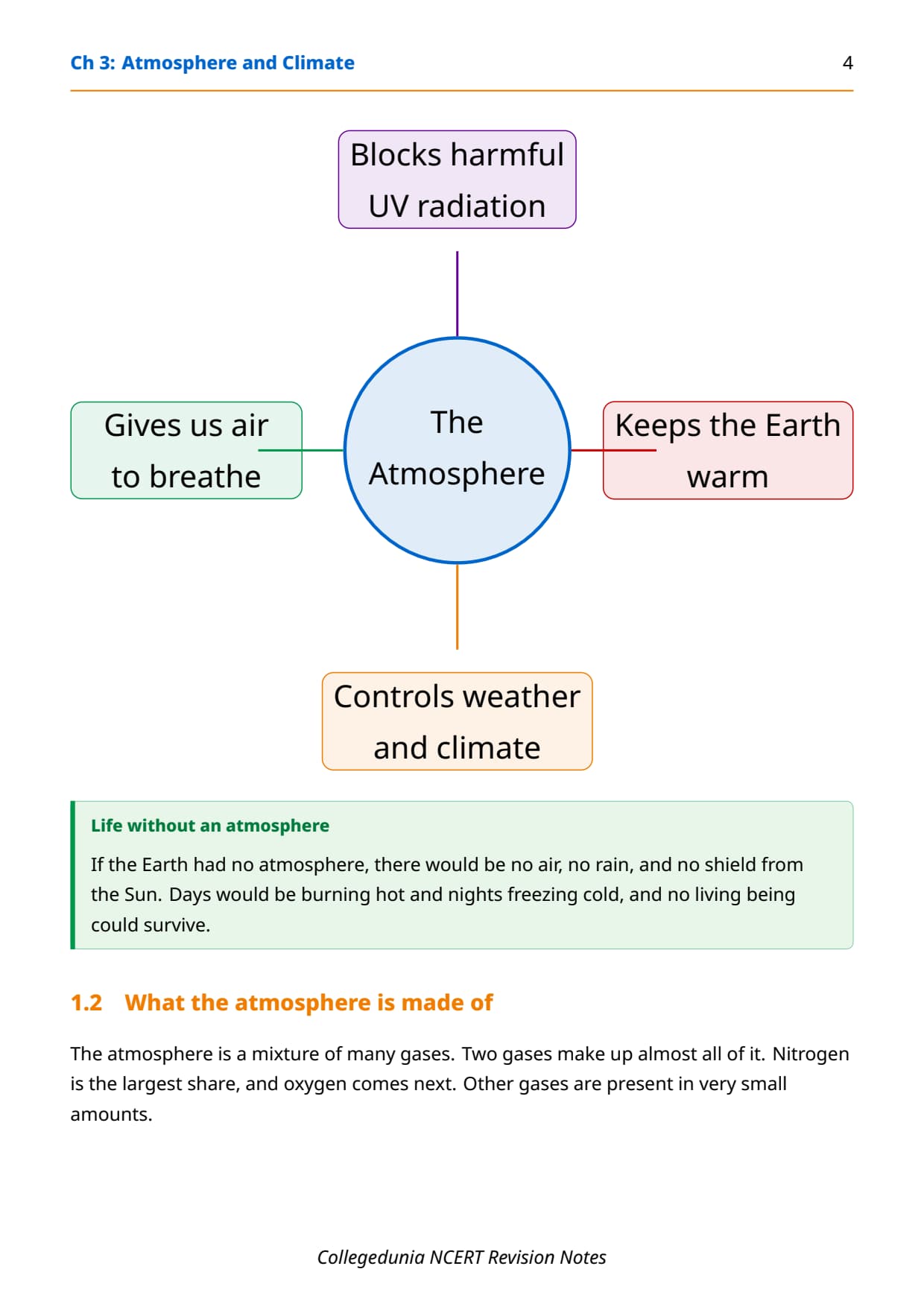
The atmosphere is the blanket of gases held around the Earth by gravity. It gives us air, shields us from harmful rays, and drives all weather. The class 9 social science notes chapter 3 Atmosphere and Climate cover every idea in the order the Understanding Society book uses, so your revision follows the same flow as the chapter.
These notes help you recall the core points in minutes:
- The atmosphere: what it is made of and the four main jobs it does for life.
- Five layers: troposphere, stratosphere, mesosphere, thermosphere, and exosphere.
- Weather and climate: short-term conditions versus the long-term average, plus their five elements.
- Seasons and monsoon: India's four seasons and how the two monsoons form.
What the Atmosphere Is Made Of in Class 9 Social Science Chapter 3 Atmosphere and Climate
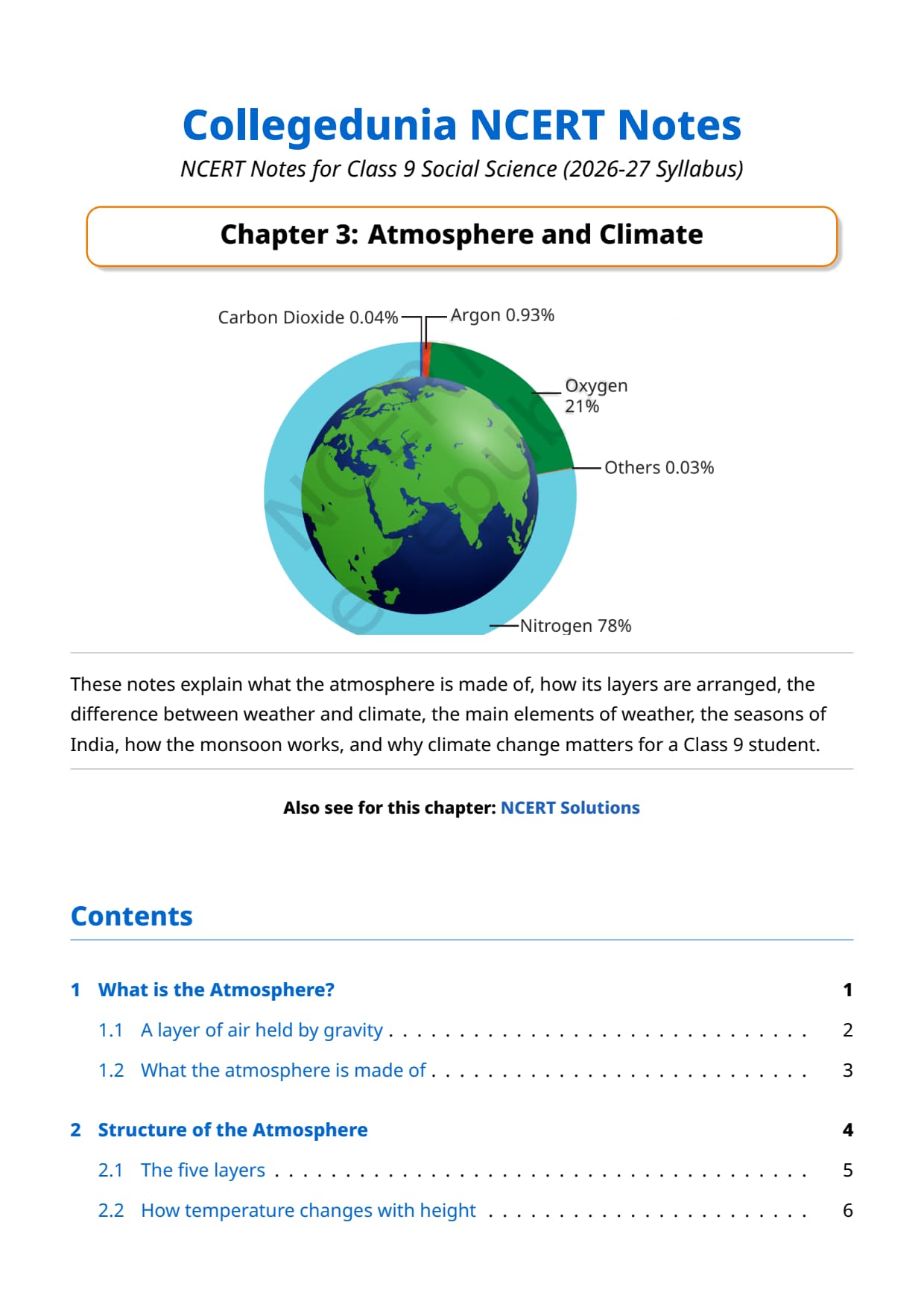
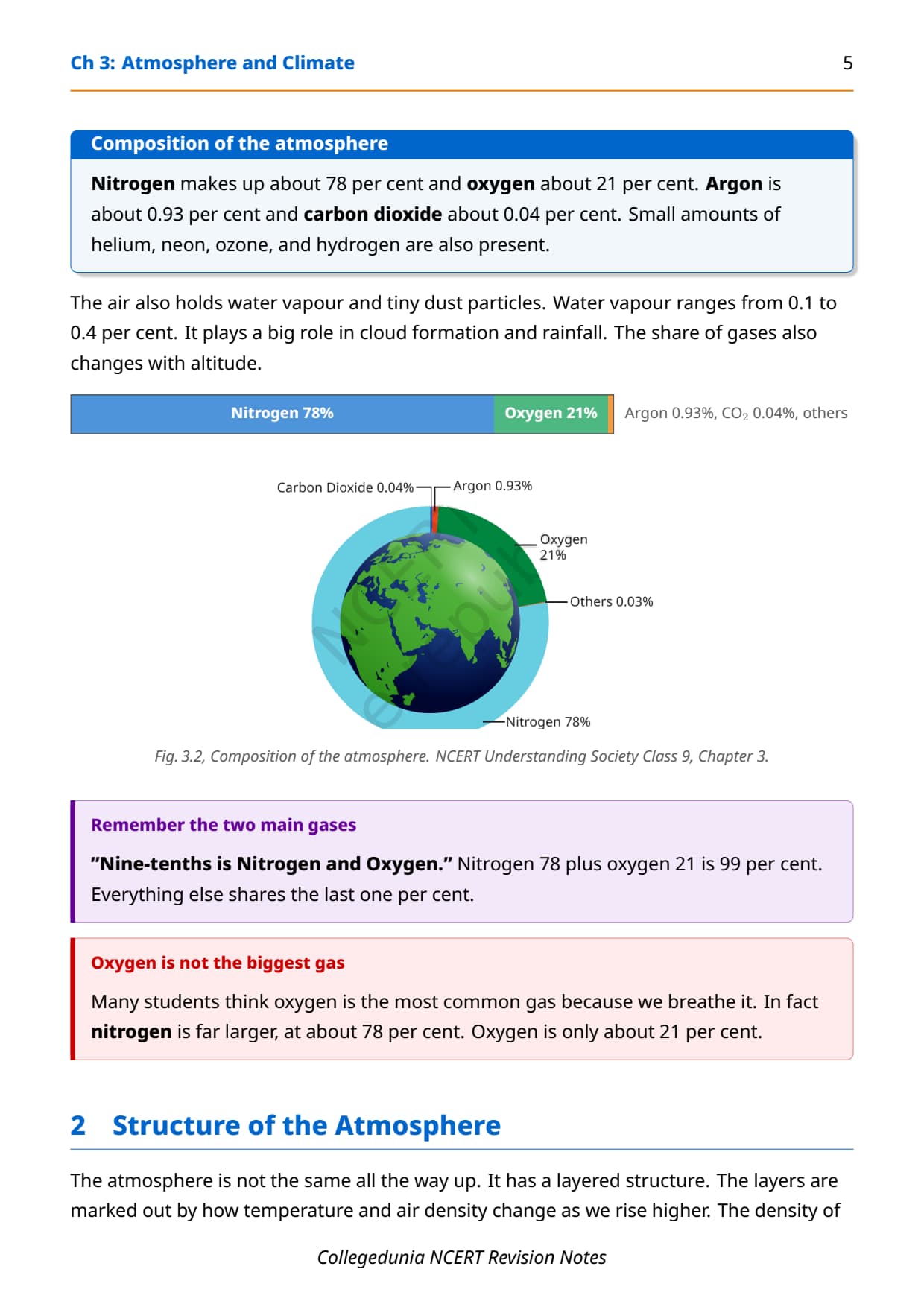
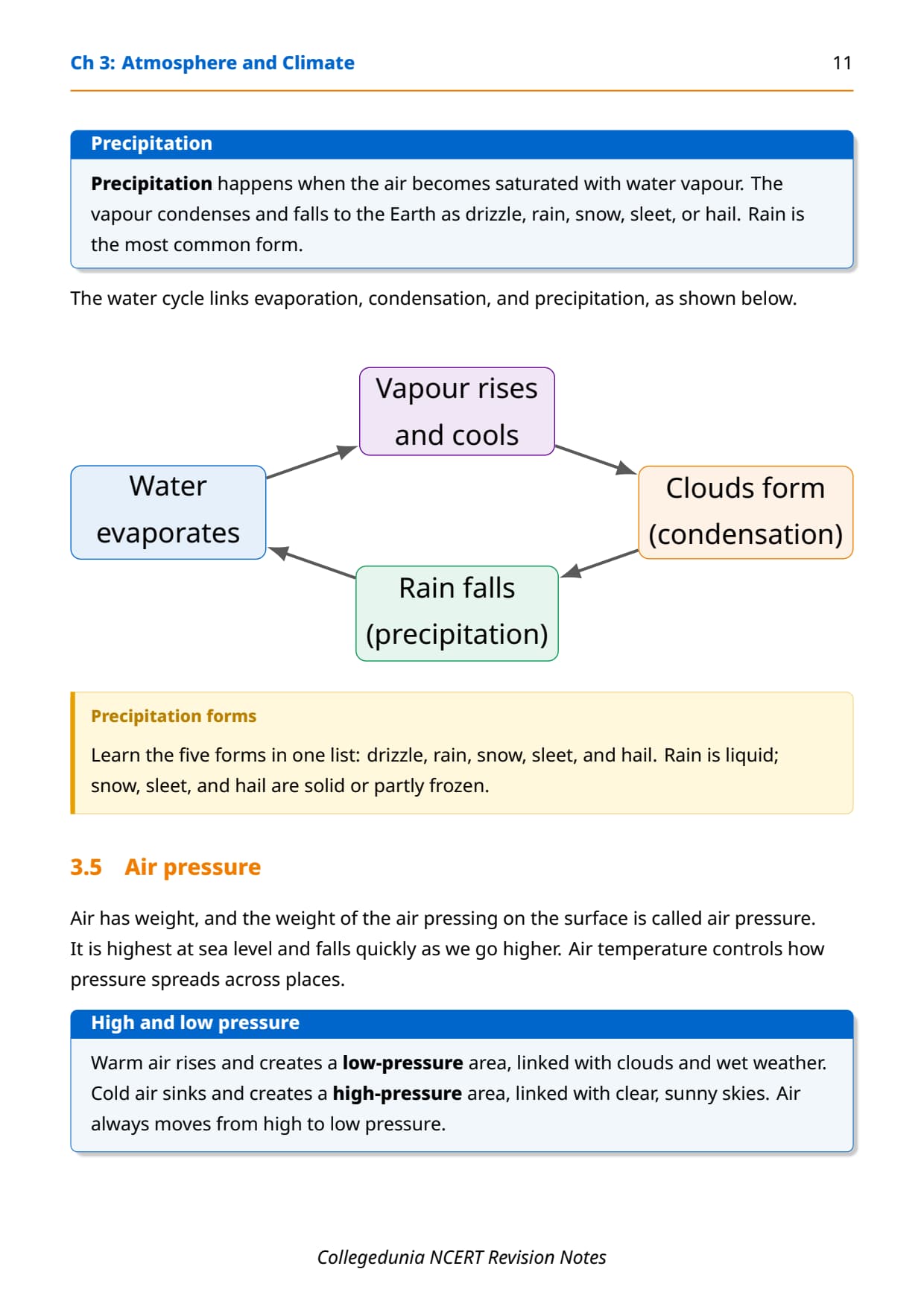
Almost all of the air is just two gases. Nitrogen takes the largest share and oxygen comes next, while other gases stay in tiny amounts. The air also holds a little water vapour and dust, which help clouds and rain to form.
| Gas | Share of the air | Why it matters |
|---|---|---|
| Nitrogen | About 78% | The largest part of the air. |
| Oxygen | About 21% | The gas living beings breathe. |
| Argon | About 0.93% | An inert gas in small amount. |
| Carbon dioxide | About 0.04% | Used by plants; traps heat. |
The Five Layers of the Atmosphere: Class 9 Social Science Chapter 3 Notes
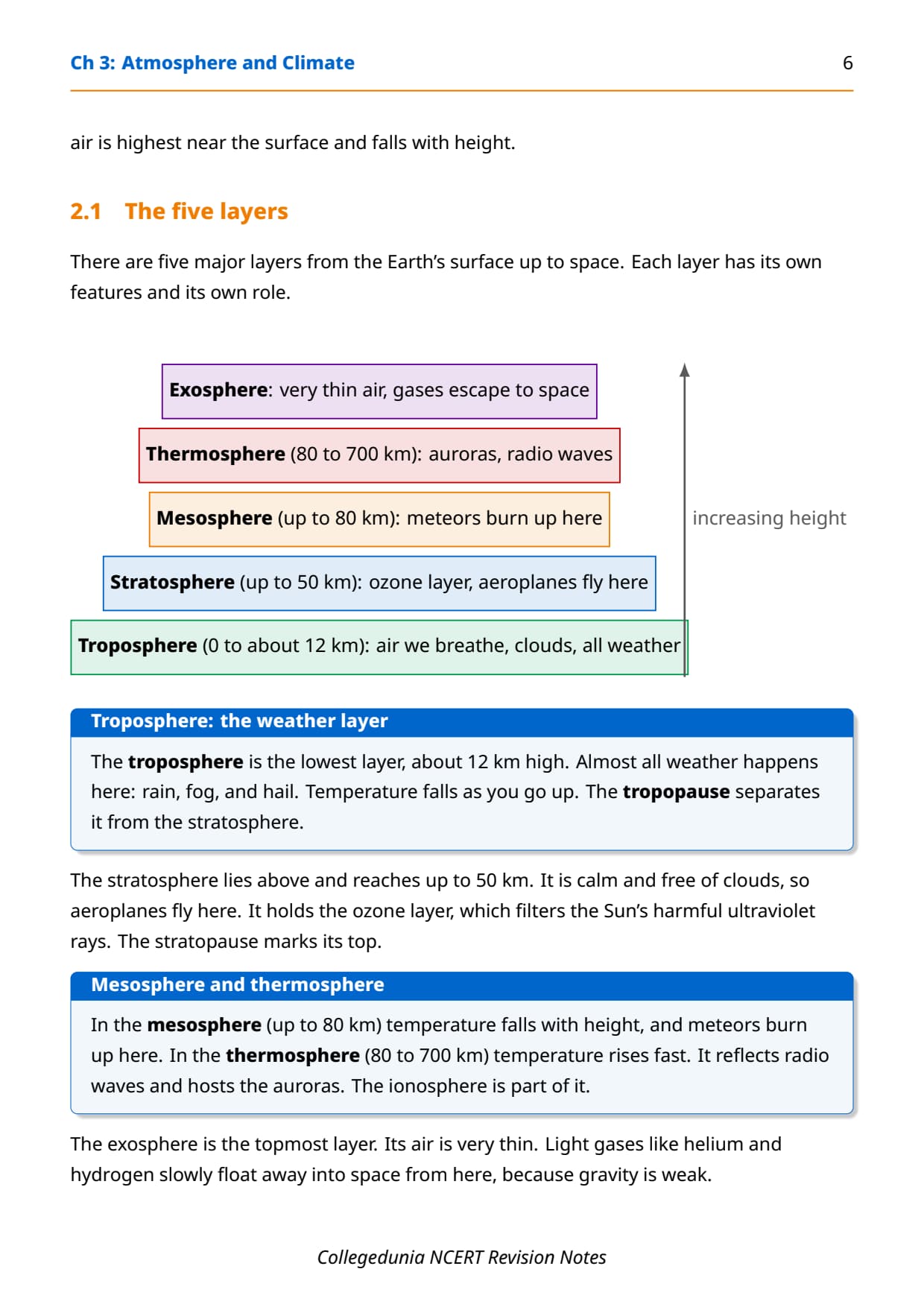
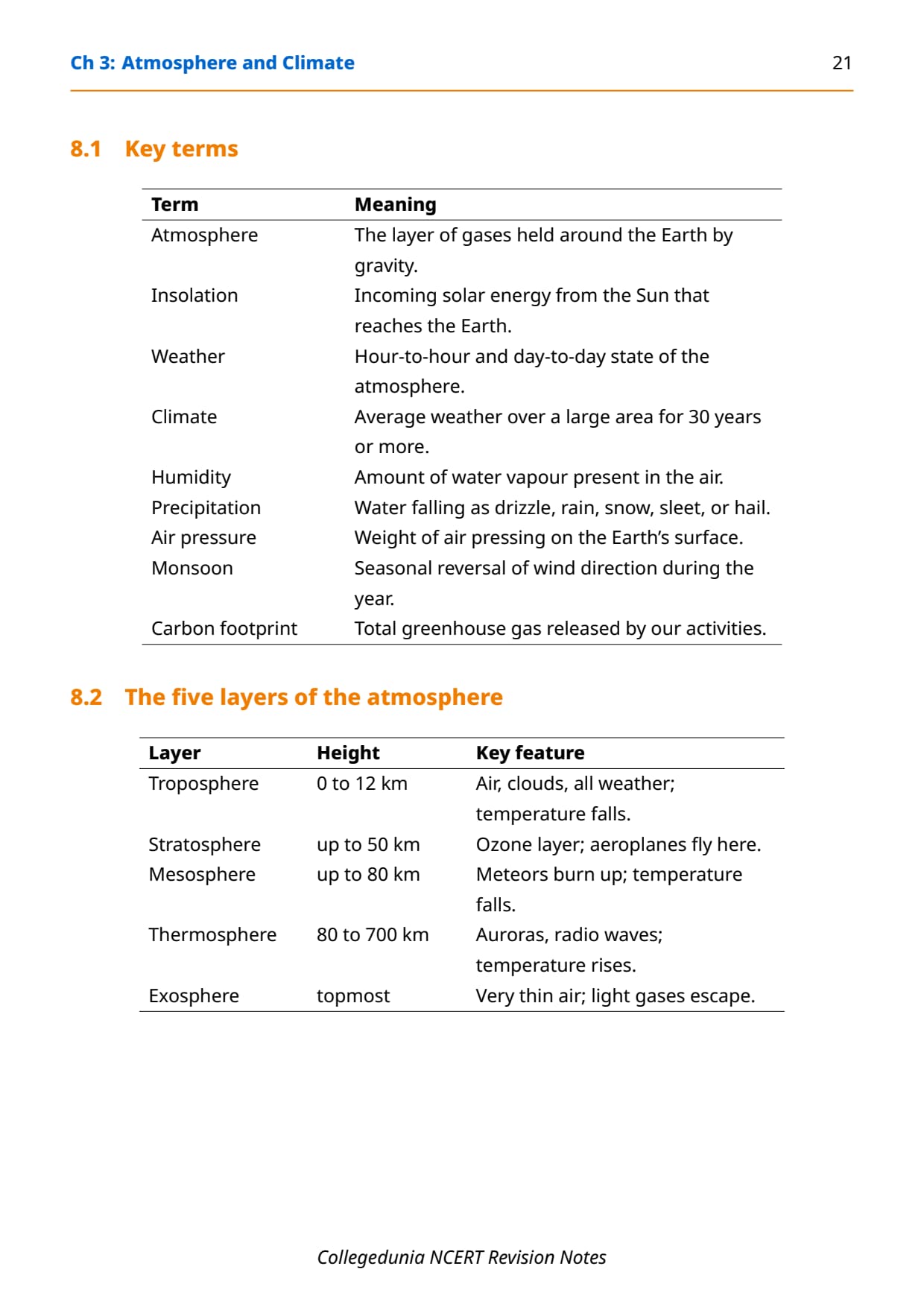
The atmosphere is not the same all the way up. It has five layers, marked out by how temperature and air density change with height. The table below lists each layer with its main feature, which is one of the most asked points from this chapter.
| Layer | Height | Key feature |
|---|---|---|
| Troposphere | 0 to about 12 km | Air we breathe, clouds, and all weather; temperature falls with height. |
| Stratosphere | Up to 50 km | Holds the ozone layer; aeroplanes fly here. |
| Mesosphere | Up to 80 km | Meteors burn up here; temperature falls. |
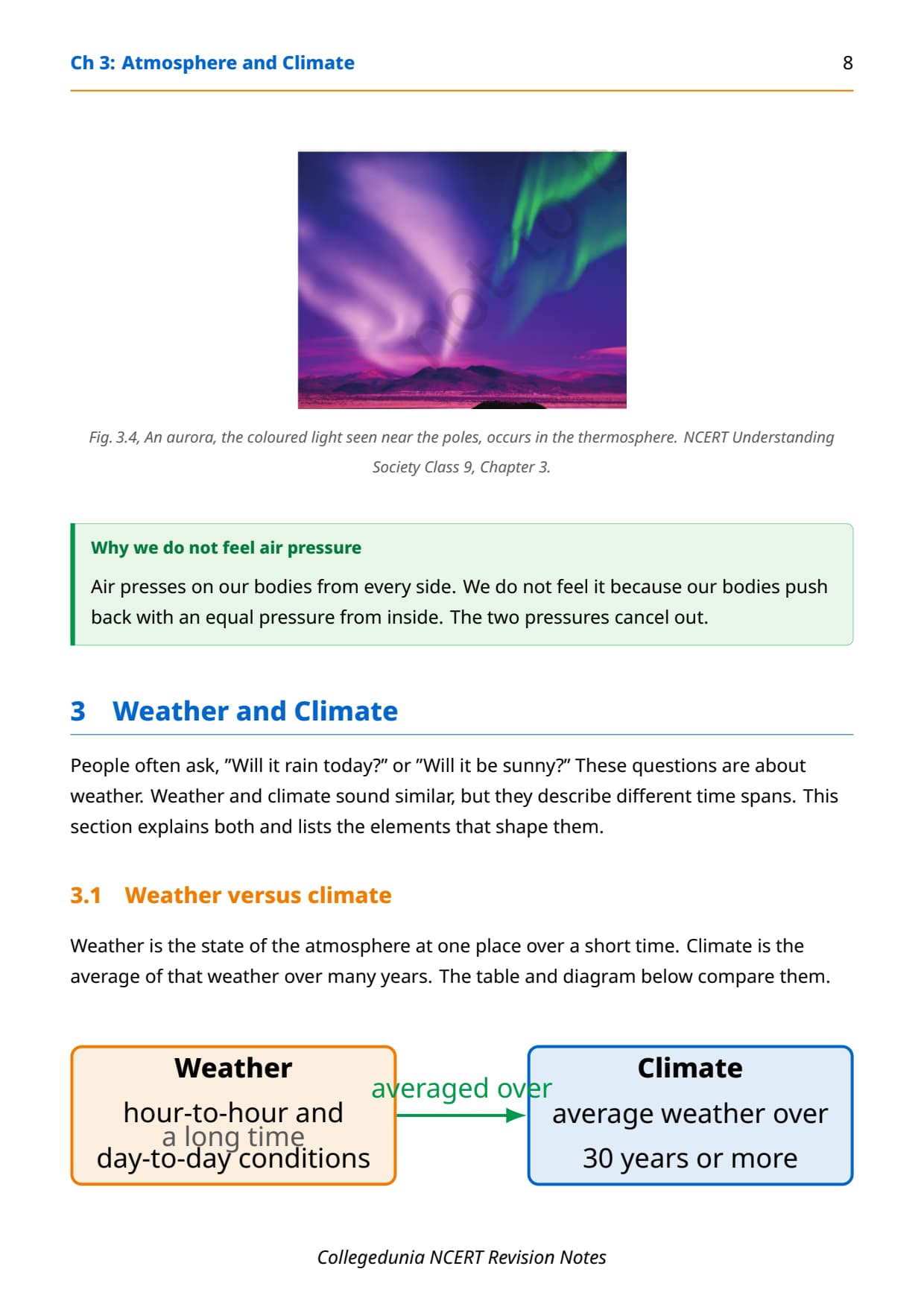
| Thermosphere | 80 to 700 km | Auroras and radio waves; temperature rises fast. |
| Exosphere | Topmost | Very thin air; light gases escape into space. |
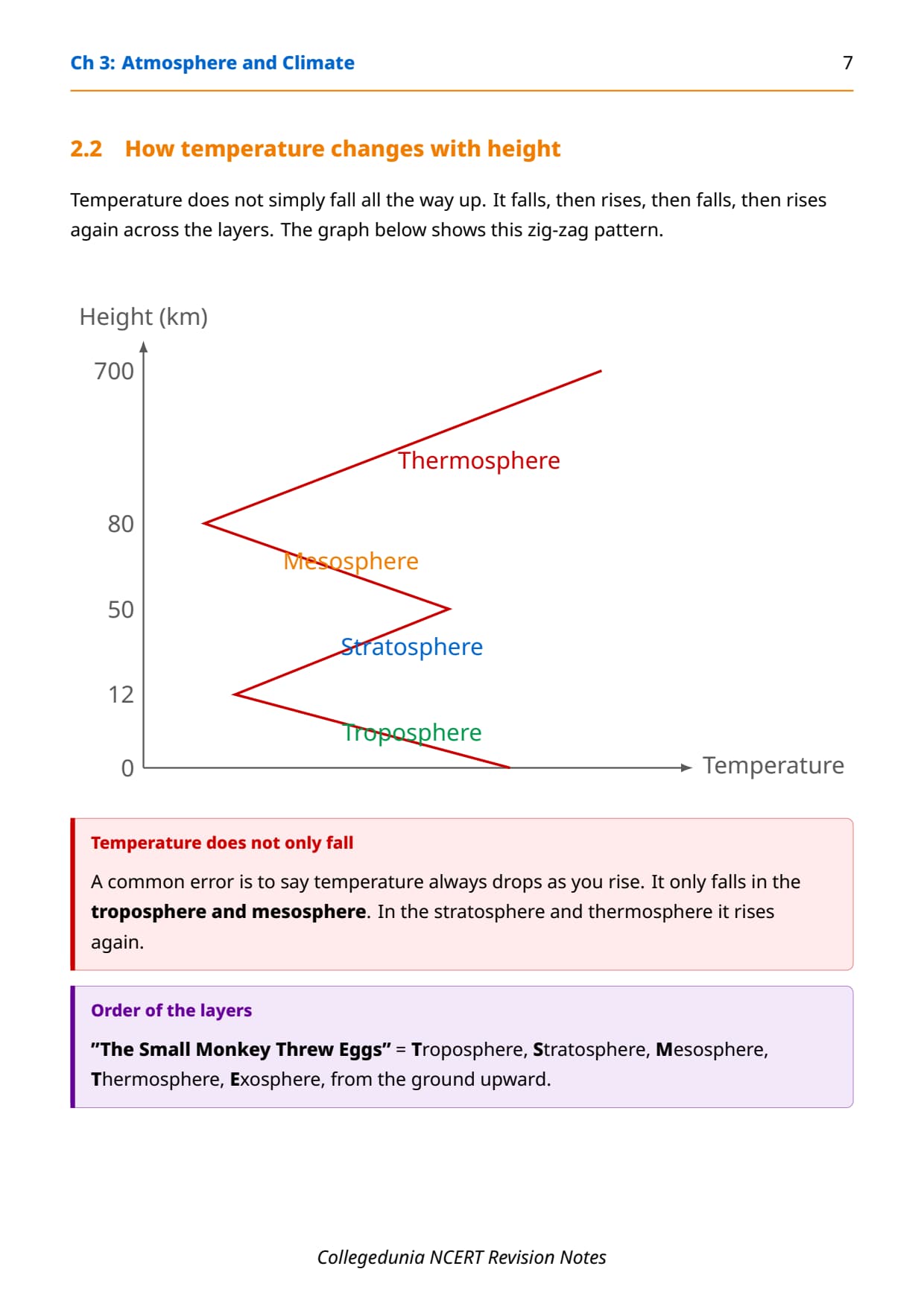
To learn the order from the ground up, remember the sentence "The Small Monkey Threw Eggs" for Troposphere, Stratosphere, Mesosphere, Thermosphere, and Exosphere. Note that temperature does not only fall as you rise. It rises again in the stratosphere and the thermosphere.
Weather and Climate in Class 9 Social Science Chapter 3 Atmosphere and Climate
Weather and climate sound similar, but they cover different time spans. This is a favourite exam point, so revise both clearly. Weather is the state of the atmosphere at one place over a short time. Climate is the average of that weather over many years, usually thirty or more.
| Feature | Weather | Climate |
|---|---|---|
| Time span | Hour to hour, day to day | Thirty years or more |
| Changes | Changes quickly | Stays steady over years |
| Example clue | "today", "this week" | "usually", "over many years" |
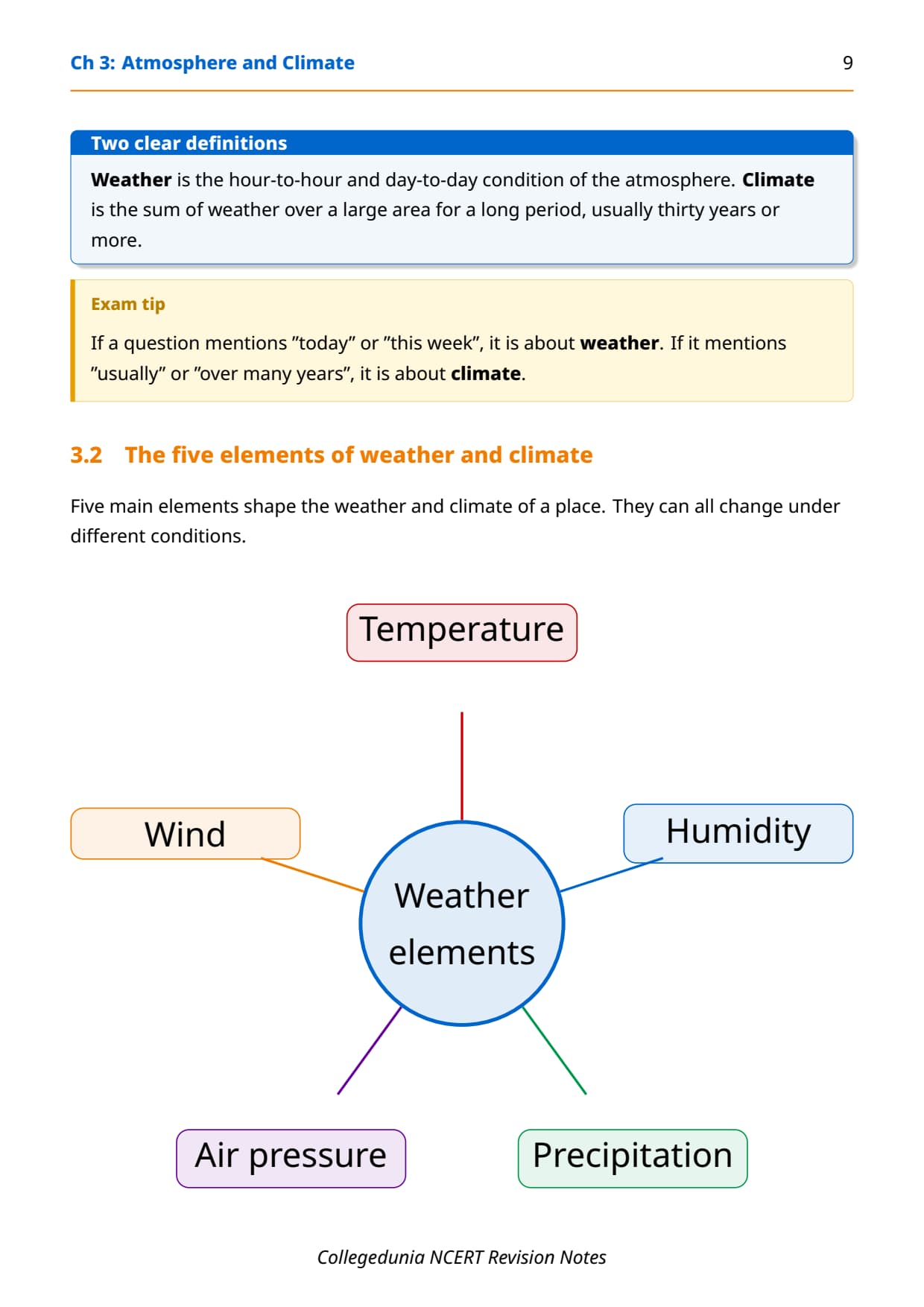
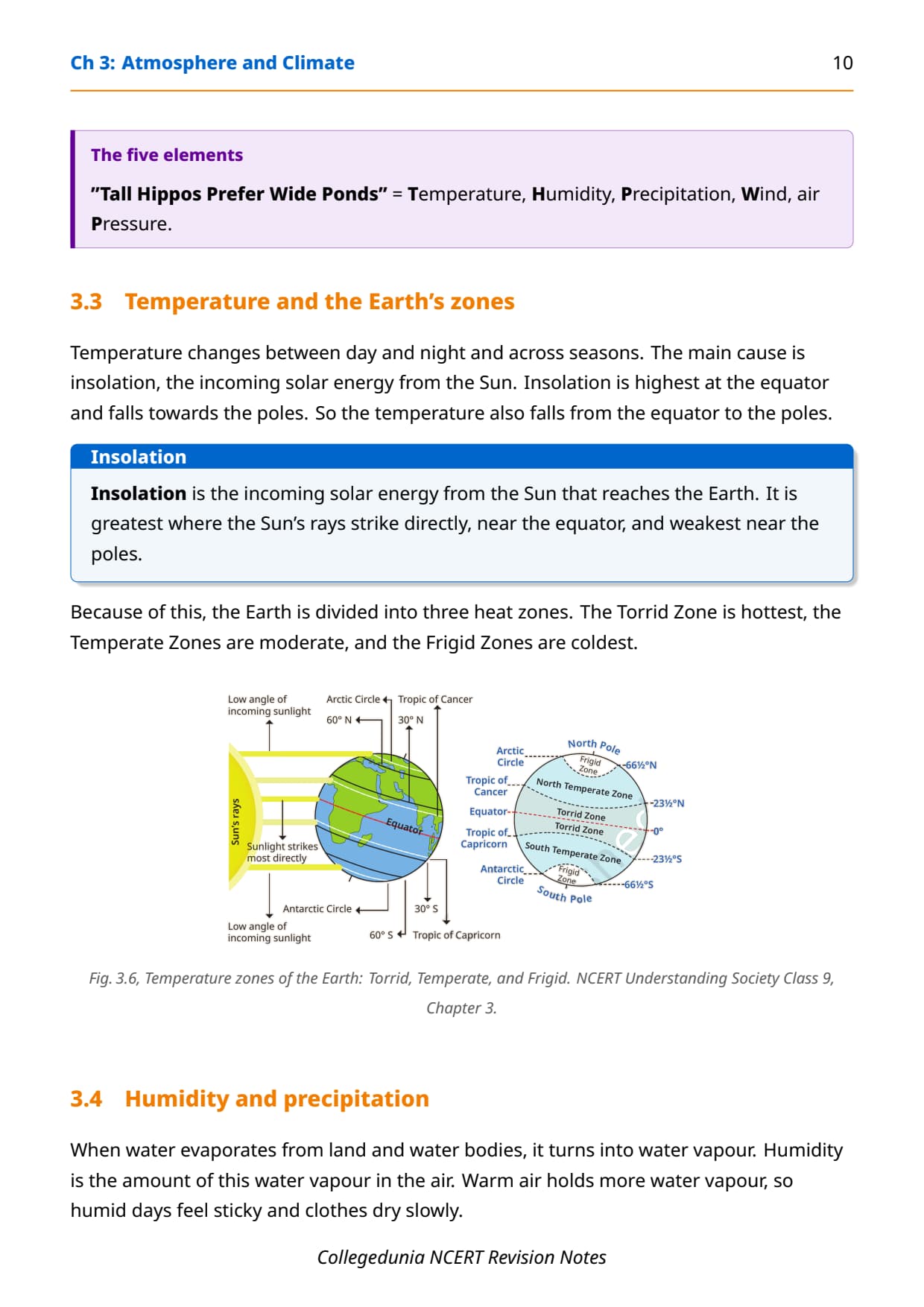
Both are shaped by five elements: temperature, humidity, precipitation, wind, and air pressure. A quick way to recall them is "Tall Hippos Prefer Wide Ponds". Temperature depends on insolation, the incoming solar energy from the Sun, which is highest at the equator and falls towards the poles.
Seasons and the Monsoon in Class 9 Social Science Chapter 3 Atmosphere and Climate
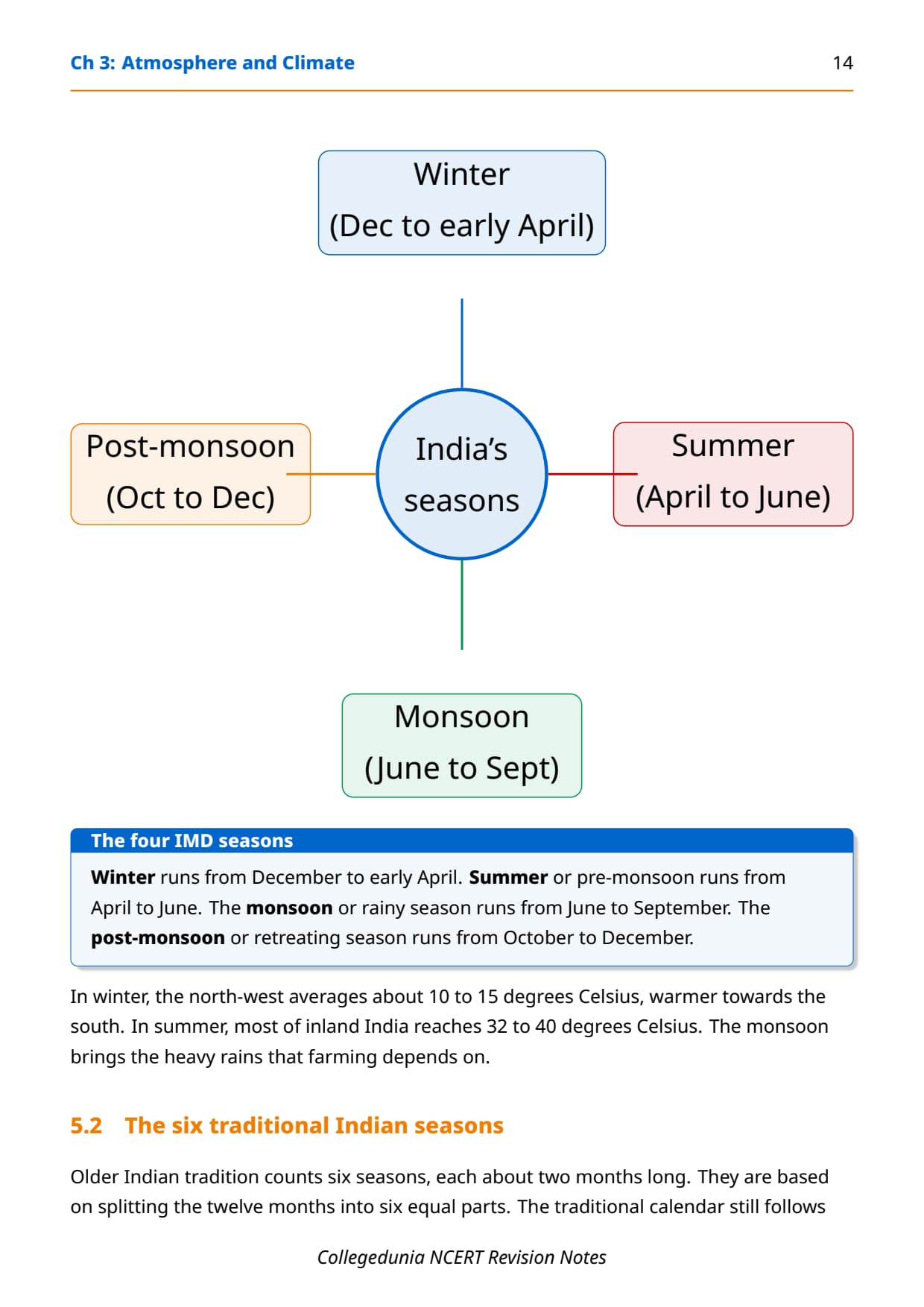
The class 9 social science notes chapter 3 Atmosphere and Climate make this topic simple. India has a tropical monsoon climate, so its seasons are set by the monsoon winds. The India Meteorological Department recognises four main seasons: winter, summer, the monsoon, and the post-monsoon. The word monsoon comes from the Arabic word mausim, meaning season, because the winds reverse with the seasons.
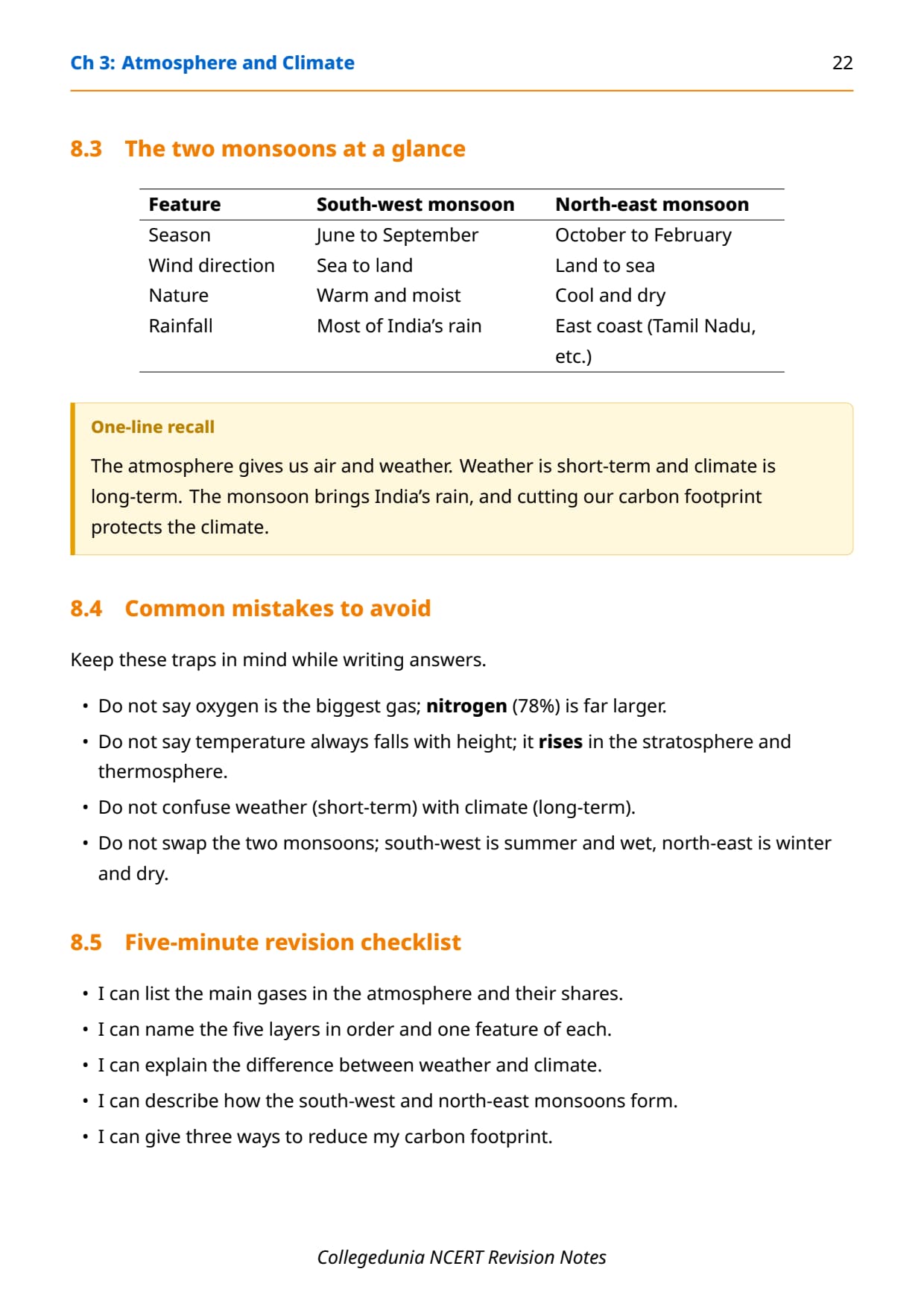
| Feature | South-west monsoon | North-east monsoon |
|---|---|---|
| Season | June to September | October to February |
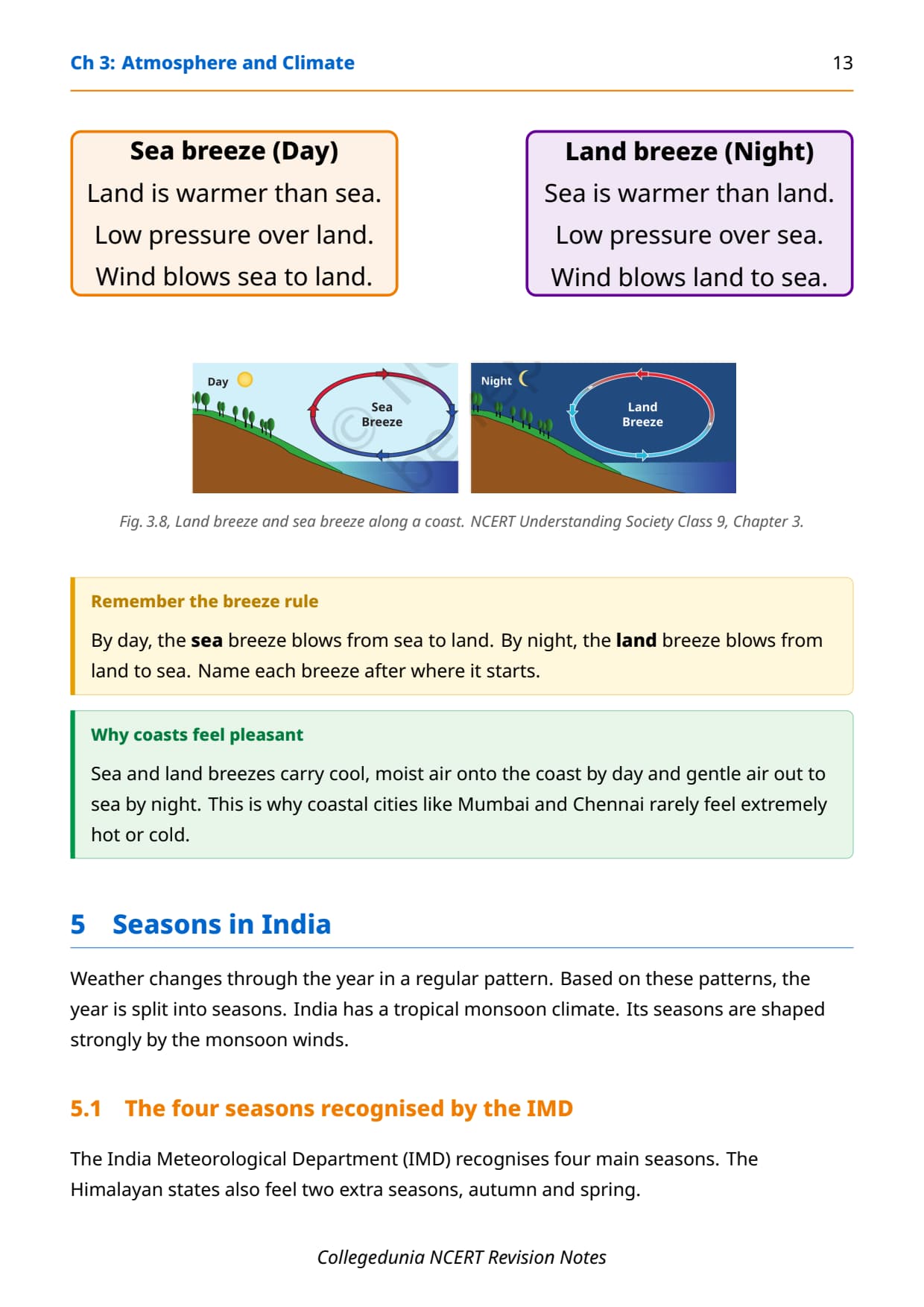
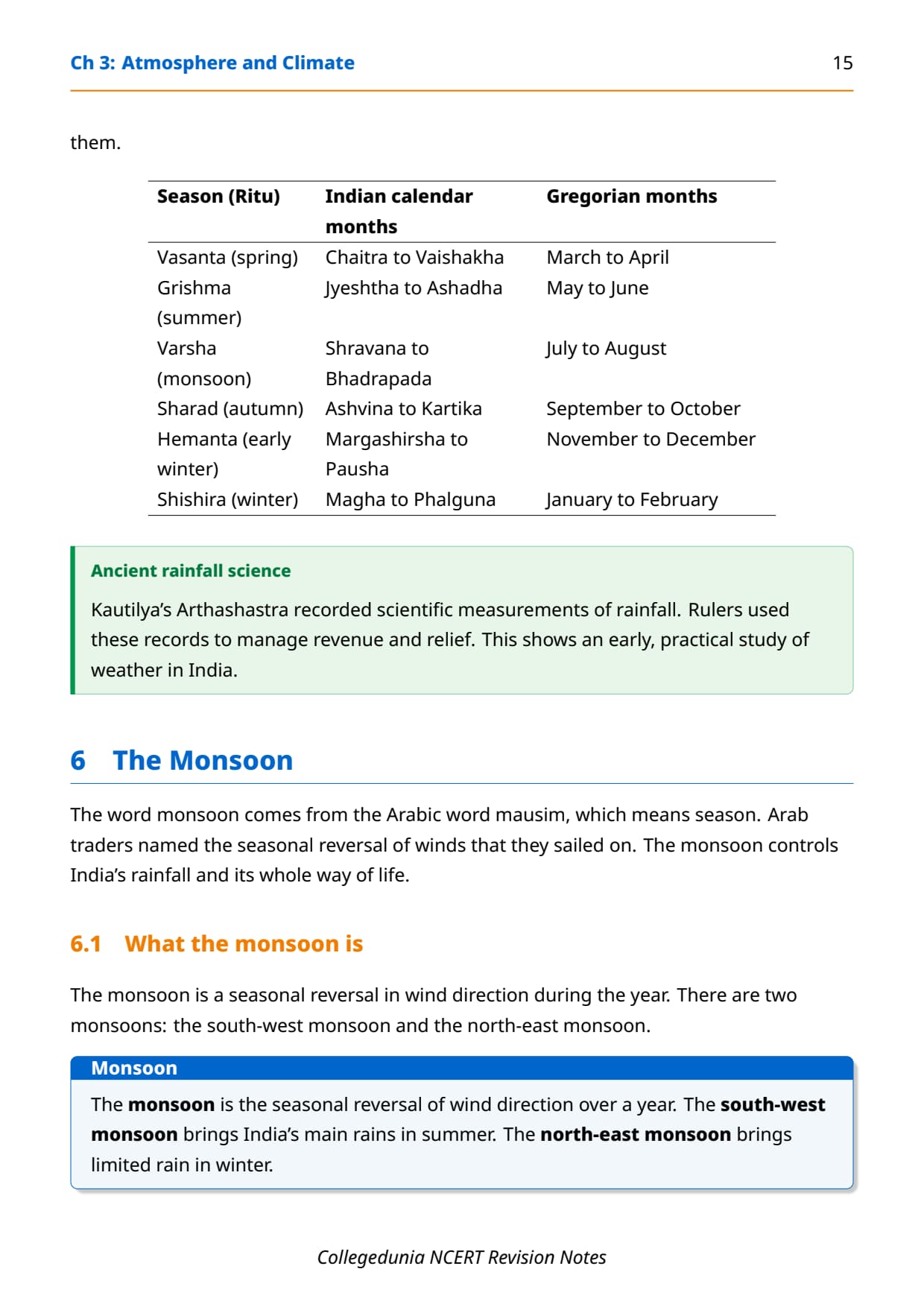
| Wind direction | Sea to land | Land to sea |
| Nature | Warm and moist | Cool and dry |
| Rainfall | Most of India's rain | East coast, mainly Tamil Nadu |
Climate Change and Carbon Footprint Notes for Chapter 3 Atmosphere and Climate
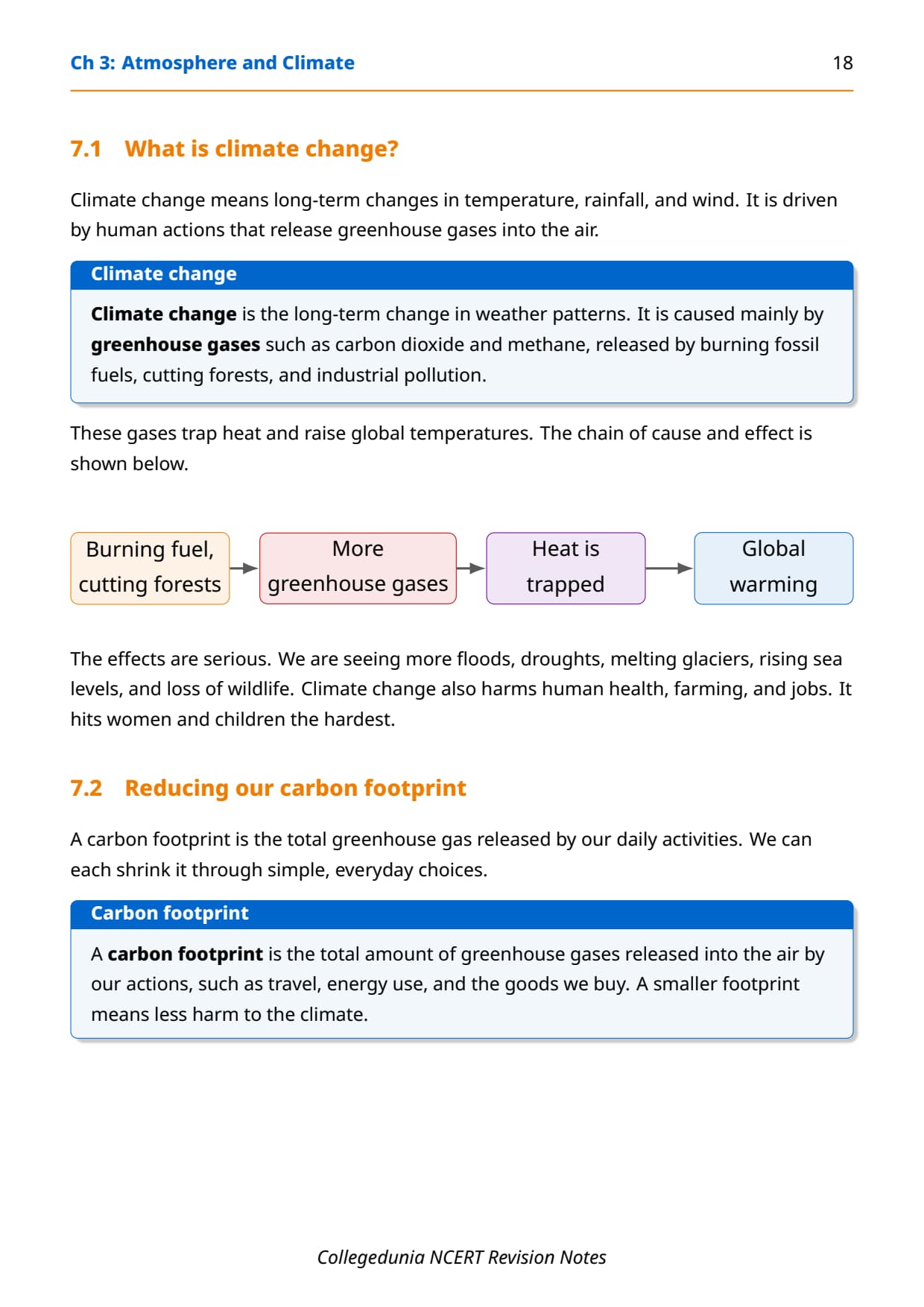
Climate change is a long-term shift in temperature, rainfall, and wind. It is caused mainly by greenhouse gases like carbon dioxide and methane, released by burning fossil fuels, cutting forests, and industrial pollution. These gases trap heat and raise global temperatures.
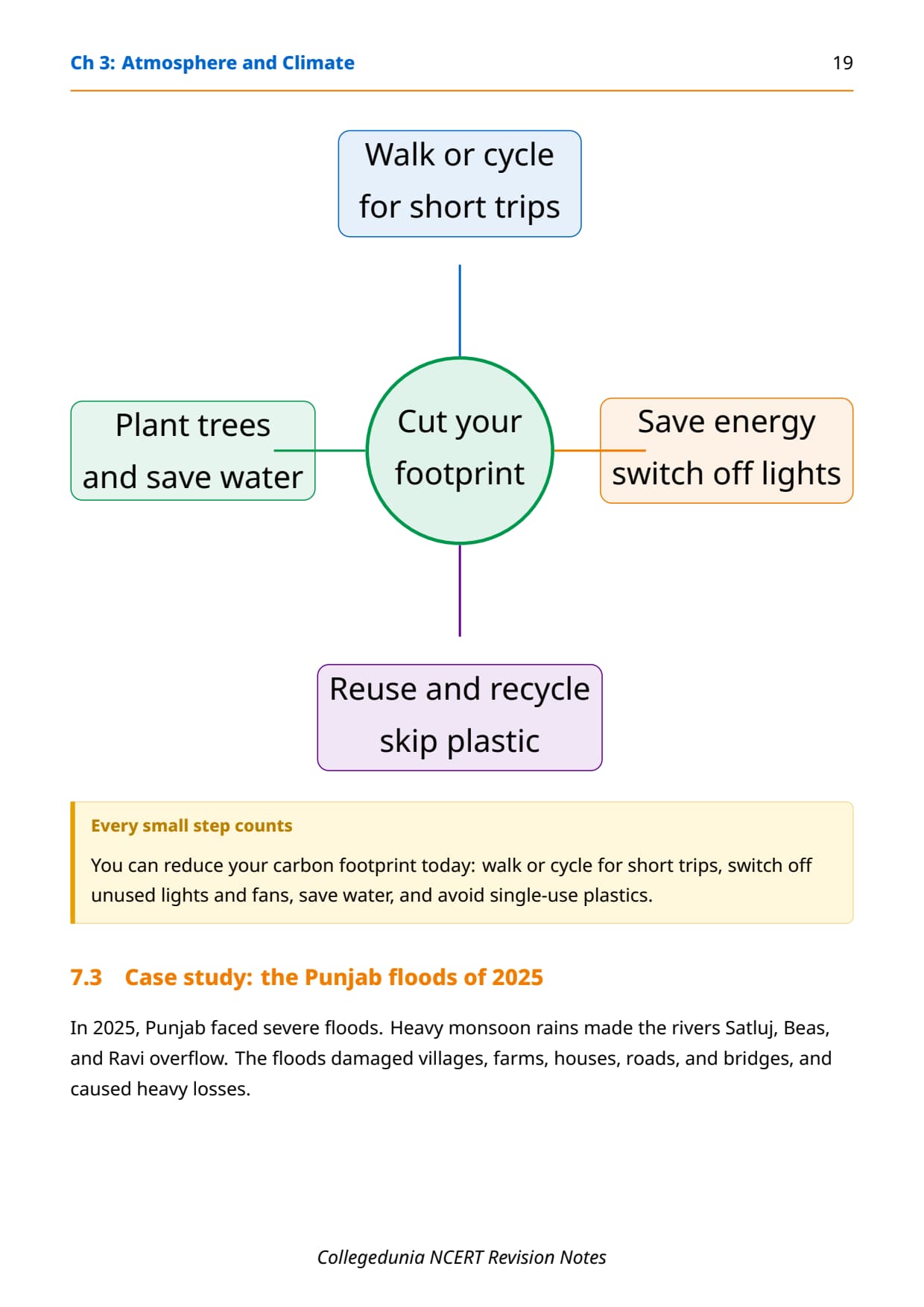
The effects are serious: more floods, droughts, melting glaciers, rising sea levels, and loss of wildlife. A carbon footprint is the total greenhouse gas released by our daily actions. You can shrink yours with simple choices:
- Walk or cycle for short trips instead of using a vehicle.
- Switch off unused lights and fans to save energy.
- Reuse and recycle, and avoid single-use plastics.
- Plant trees and save water at home and school.
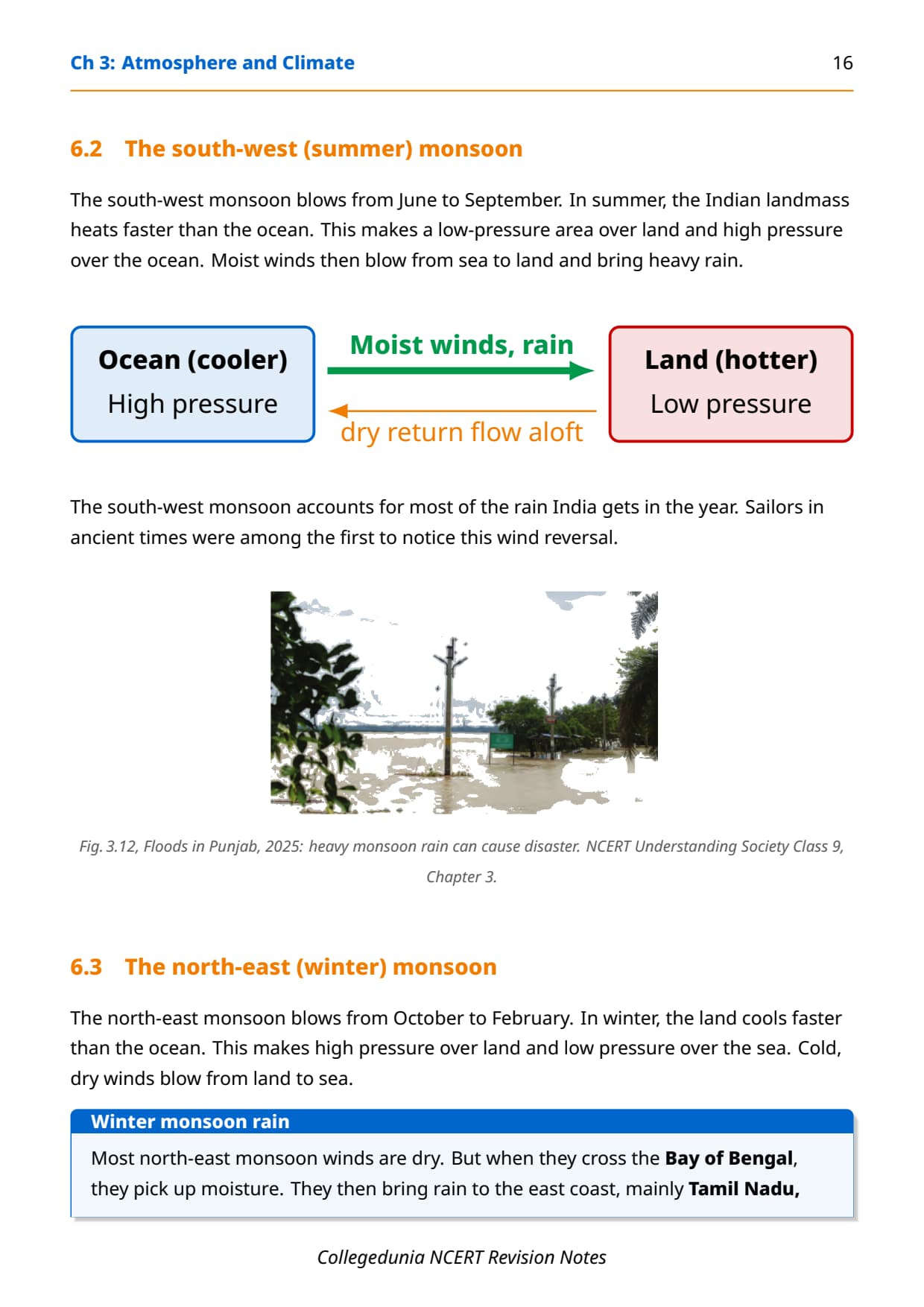
The Punjab floods of 2025 are a useful case study. Heavy monsoon rain made the Satluj, Beas, and Ravi overflow. Weak embankments and homes built too close to rivers made the damage worse, showing how natural and human causes combine.
Revision Strategy and Common Mistakes for Class 9 Social Science Chapter 3 Atmosphere and Climate
The class 9 social science notes chapter 3 Atmosphere and Climate also flag the traps that cost easy marks. Most lost marks in this chapter come from small slips, not hard ideas. Fix these while you revise and your answers stay clean.
- Do not say oxygen is the biggest gas; nitrogen at 78% is far larger.
- Do not confuse weather (short-term) with climate (long-term).
- Do not swap the two monsoons; south-west is summer and wet, north-east is winter and dry.
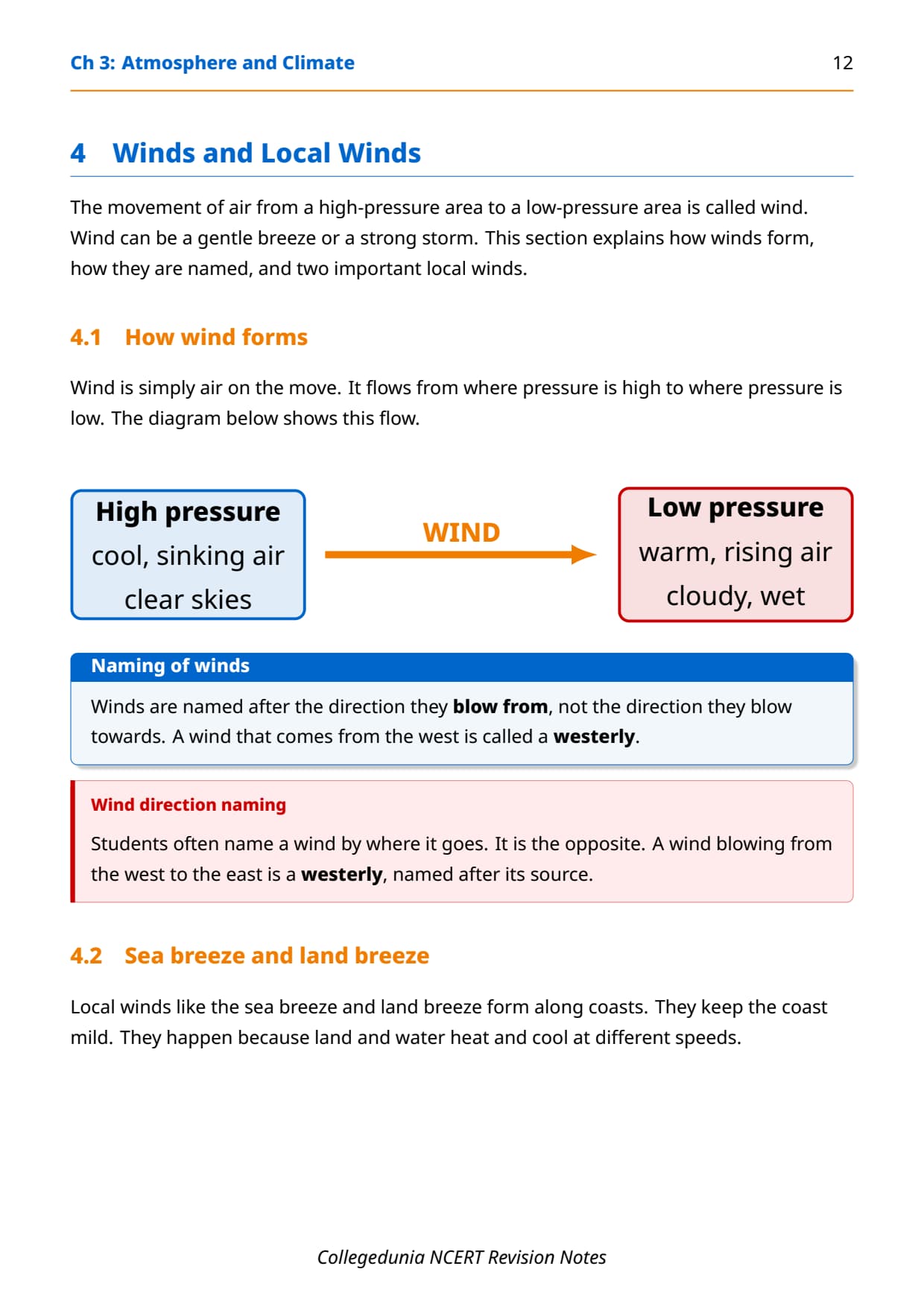
- Remember that winds are named after the direction they blow from, not towards.
How Collegedunia Notes Help You Revise Atmosphere and Climate
Collegedunia gives you the full class 9 social science notes chapter 3 Atmosphere and Climate as clean, short, easy-to-read revision in one place.
- 2026-27 match: every note follows the new Understanding Society textbook.
- Simple English: short lines and everyday words, so a Class 9 student can revise without help.
- Tables ready: the five layers, weather versus climate, and the two monsoons in one view.
- Free PDF: download the notes and revise offline before your exam.
Other Atmosphere and Climate Class 9 Social Science Resources
Also Check: open the other resources for this chapter using the table below.
| Resource | Open |
|---|---|
| Revision Notes | Atmosphere and Climate Class 9 Social Science Notes |
| NCERT Solutions | Atmosphere and Climate Class 9 Social Science NCERT Solutions |
| Handwritten Notes | Atmosphere and Climate Class 9 Social Science Handwritten Notes |
| NCERT Book PDF | Atmosphere and Climate Class 9 Social Science NCERT Book PDF |
NCERT Notes for Class 9 Social Science: All Chapters
Related Links: use the table below to open the NCERT Notes for any other chapter of the Class 9 Social Science Understanding Society book.
| Chapter | NCERT Notes |
|---|---|
| Chapter 1 | Understanding Social Science |
| Chapter 2 | Shaping of the Earth's Surface |
| Chapter 3 | Atmosphere and Climate |
| Chapter 4 | Early Humans and Beginning of Civilisation |
| Chapter 5 | State and Society up to 1000 CE |
| Chapter 6 | Democracy |
| Chapter 7 | Elections |
| Chapter 8 | Building Blocks in Economics: The Problem of Choice |
| Chapter 9 | The Price Puzzle: What Drives the Market |
Atmosphere and Climate Class 9 Social Science Notes FAQs
Ques. Where can I download the Class 9 Social Science Chapter 3 Atmosphere and Climate Notes PDF?
Ans. You can download the Atmosphere and Climate Notes PDF free from this page. Both the Normal and HD versions match the 2026-27 Understanding Society book.
Ques. What topics do the Chapter 3 Atmosphere and Climate notes cover?
Ans. The notes cover the make-up of the atmosphere, its five layers, weather versus climate, the elements of weather, India's seasons, the monsoon, and climate change.
Ques. What is the difference between weather and climate?
Ans. Weather is the hour-to-hour and day-to-day state of the atmosphere at one place. Climate is the average of that weather over a large area for thirty years or more.
Ques. What are the two monsoons in India?
Ans. The south-west monsoon blows from the sea from June to September and brings most of India's rain. The north-east monsoon blows from the land in winter and is mostly dry.



Comments