




These class 9 social science notes chapter 4 Early Humans and Beginning of Civilisation give you a fast, clear revision of the whole chapter. In one place you get how humans evolved in Africa, the three Stone Age stages, the Neolithic shift to farming, and the four Bronze Age river-valley civilisations for the 2026-27 exam.
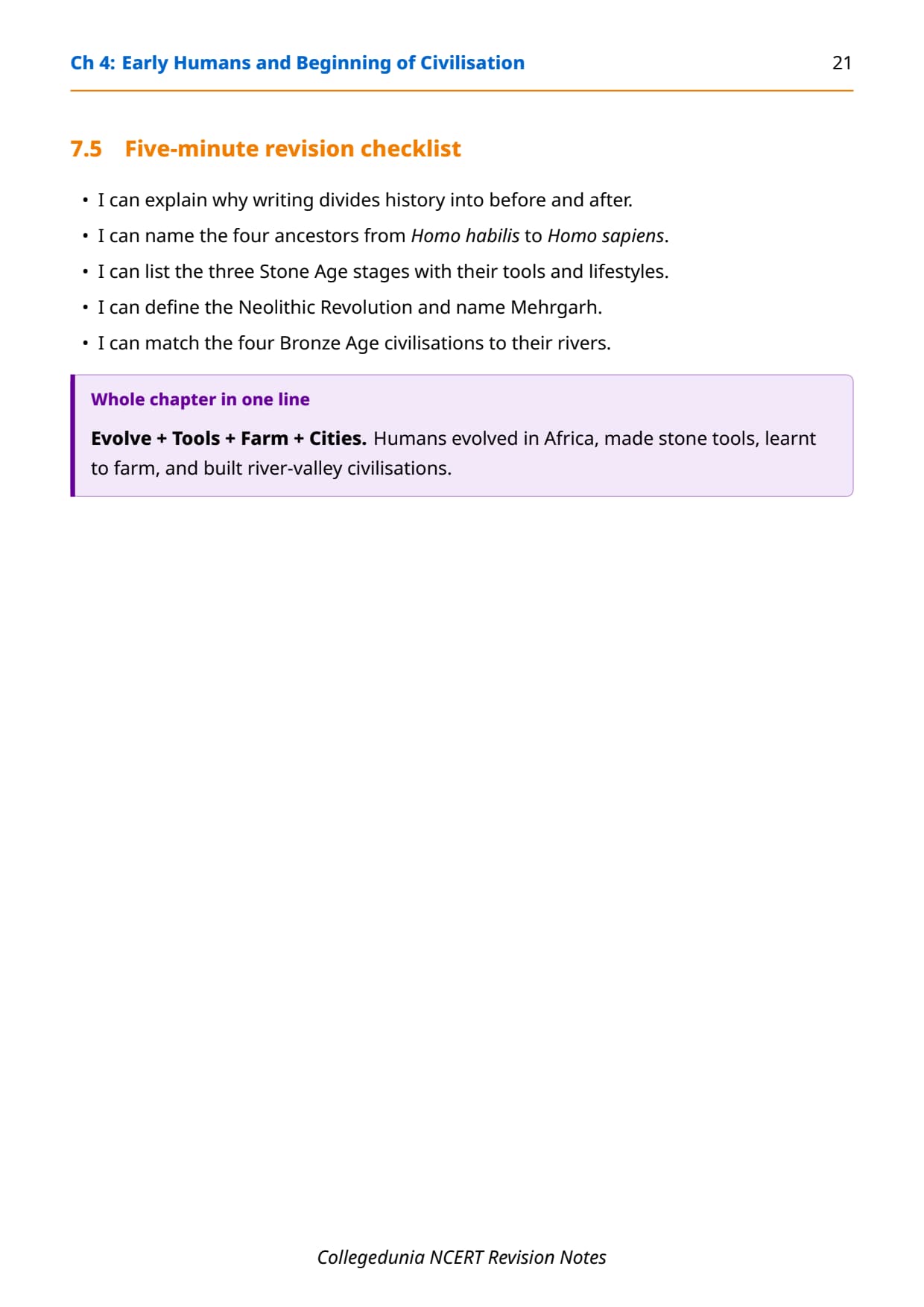
Prepared by the Collegedunia Social Science team, matched line by line to the new NCERT Understanding Society textbook for the 2026-27 syllabus.
- Full revision: evolution out of Africa, Palaeolithic to Neolithic, Mehrgarh, and the Sindhu-Sarasvati civilisation in one set of notes.
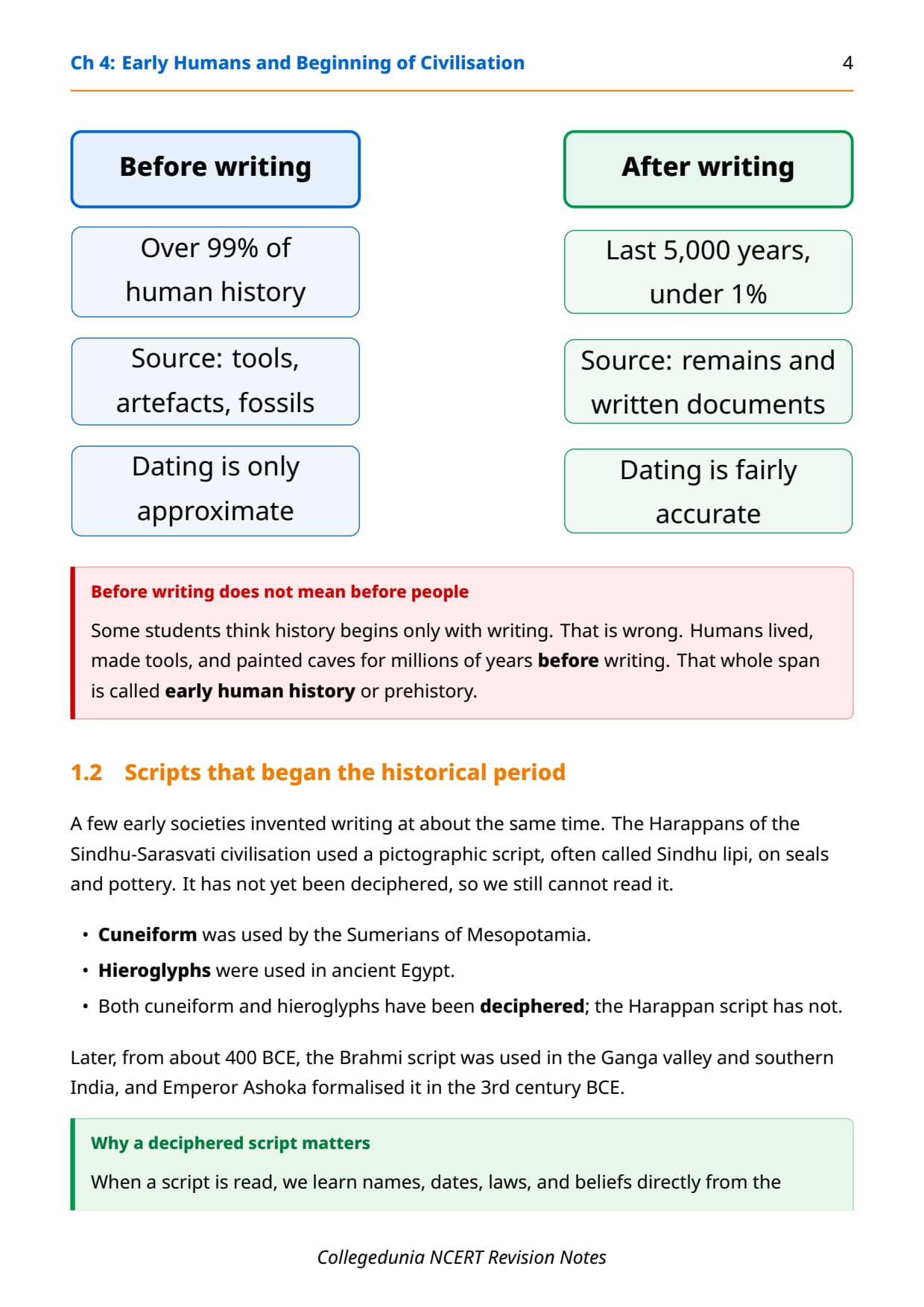
- Timeline ready: writing began about 5,000 years ago, so over 99 per cent of human history is prehistory.
- Exam focus: key terms, a Stone Age table, and a four-civilisation comparison you can revise in minutes.
Student Feedback
In a Collegedunia study of 1,120 Class 9 students, 78% said a one-page timeline of the Stone Age helped them most before a test. About 4 out of 5 rated the four Bronze Age civilisations table the clearest part of these class 9 social science notes chapter 4 Early Humans and Beginning of Civilisation.
What You Revise in Class 9 Social Science Chapter 4 Early Humans and Beginning of Civilisation
Chapter 4 tells the long story of human history before writing. It moves from our first ancestors in Africa to the world's first cities. These notes follow the same order as the Understanding Society textbook, so your revision matches the chapter flow.
You revise the core ideas in minutes:
- Before writing: most of the human past is prehistory, studied through archaeology, tools, and fossils.
- Evolution: humans evolved in Africa and slowly spread across the world.
- Stone Age: the Palaeolithic, Mesolithic, and Neolithic stages, marked by better tools.
- First cities: the Neolithic Revolution led to villages, then to the Bronze Age river-valley civilisations.
Before Writing and How We Know Early Human History
Human history stretches back about 3 million years, but writing began only about 5,000 years ago. So more than 99 per cent of our past falls before writing. That whole span is called early human history, or prehistory, and we study it mainly through archaeology.
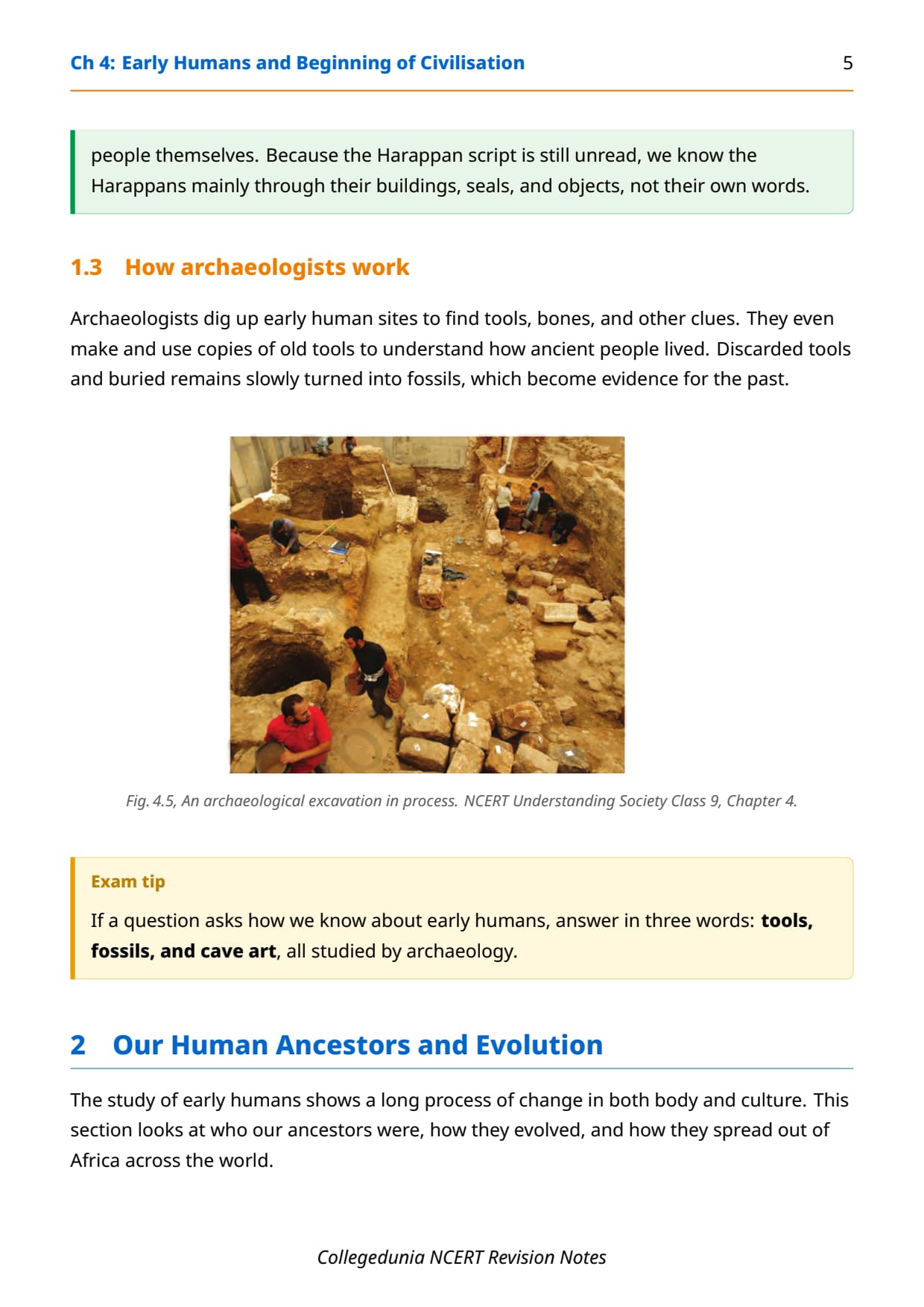
Archaeologists dig up old sites and read the clues that early people left behind. Three sources matter most for the exam:
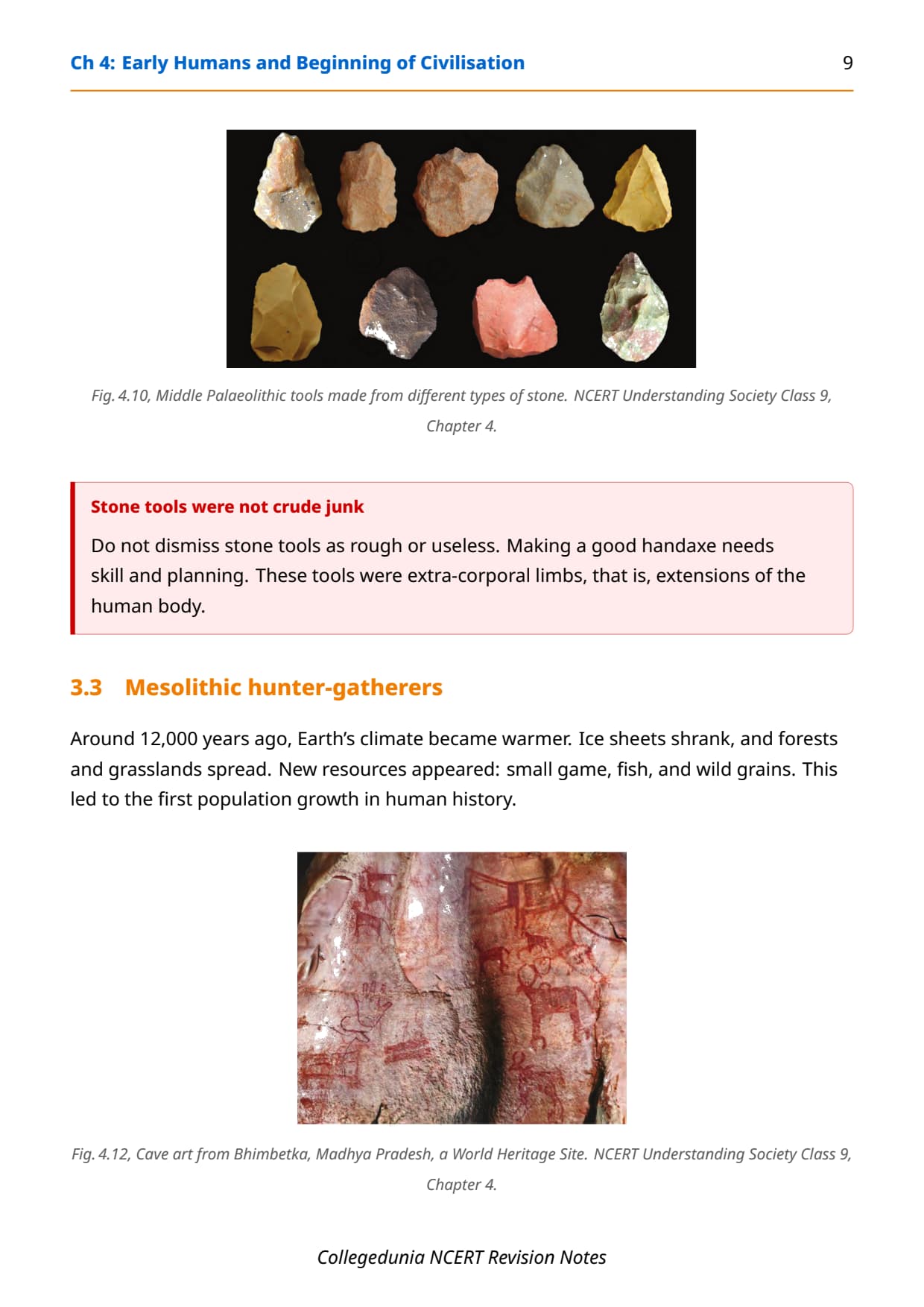
- Tools: stone tools show how people got their food and how their skills grew.
- Fossils: bones and remains slowly turned to stone tell us about early bodies.
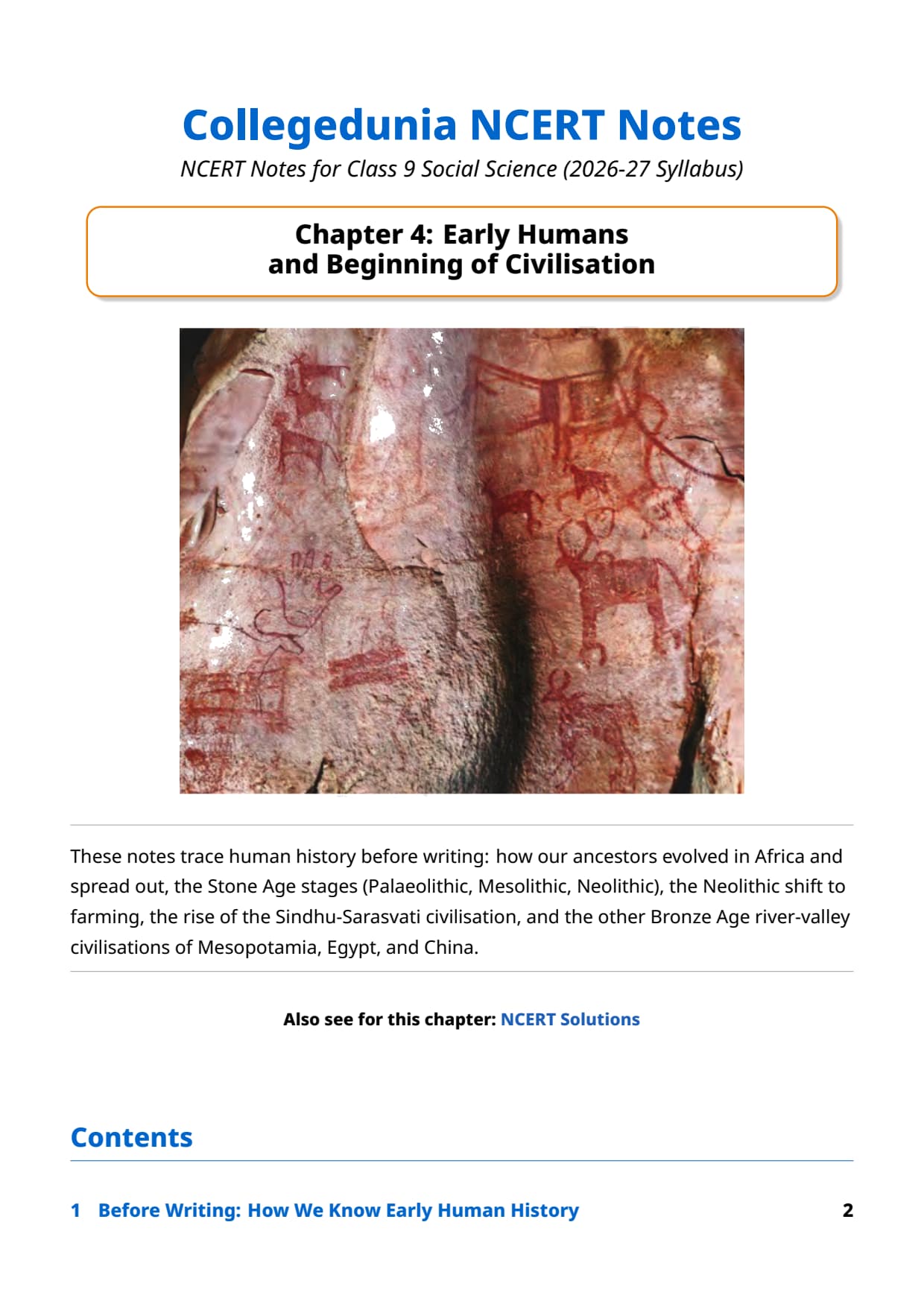
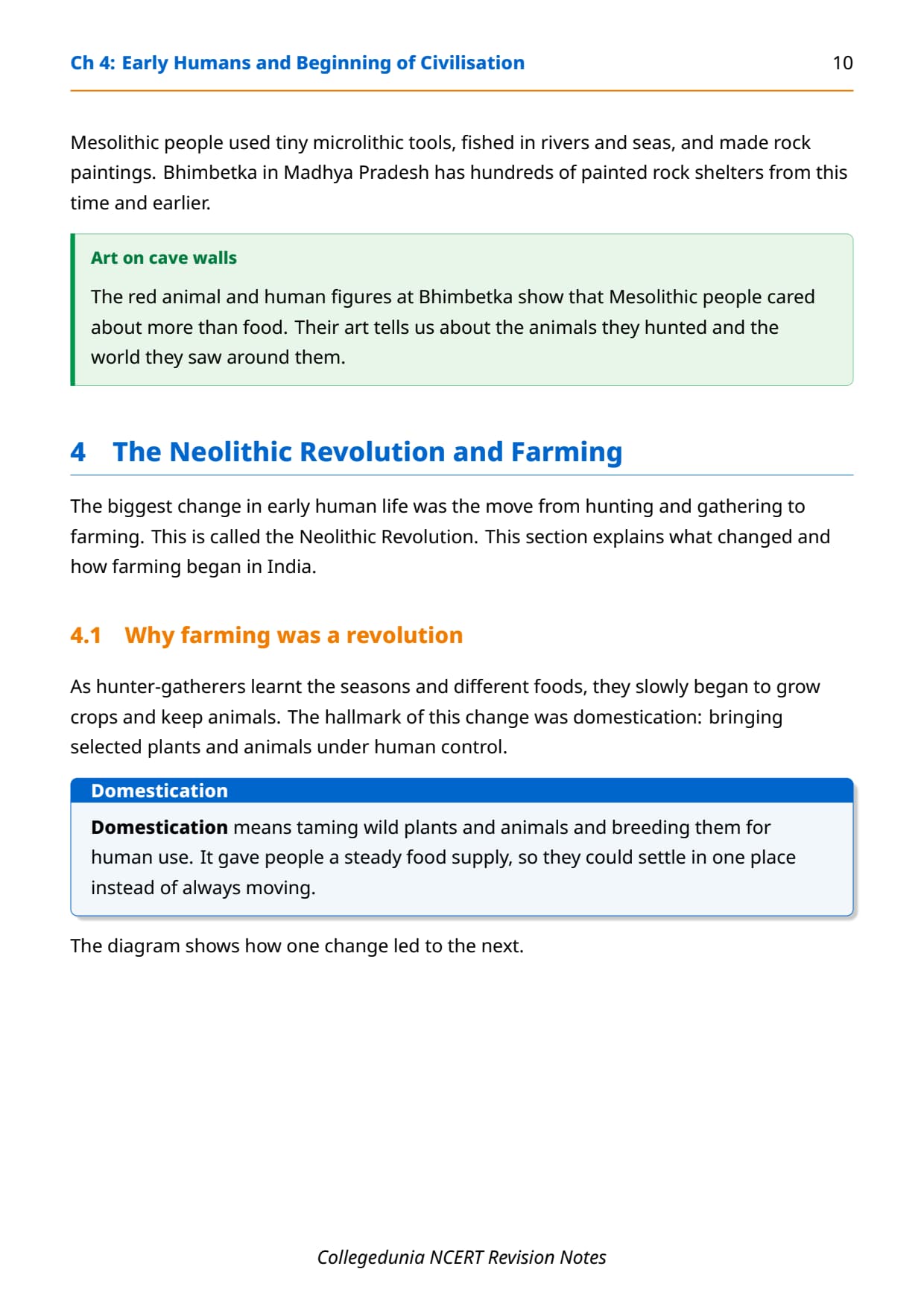
- Cave art: paintings, like those at Bhimbetka, show the animals and world people saw.
Writing marks the start of the historical period. A few societies invented scripts at about the same time: cuneiform in Mesopotamia and hieroglyphs in Egypt, both now deciphered. The Harappan script on seals is still unread, so we know the Harappans mainly through their objects.
Human Ancestors and the Stone Age in Chapter 4 Early Humans and Beginning of Civilisation
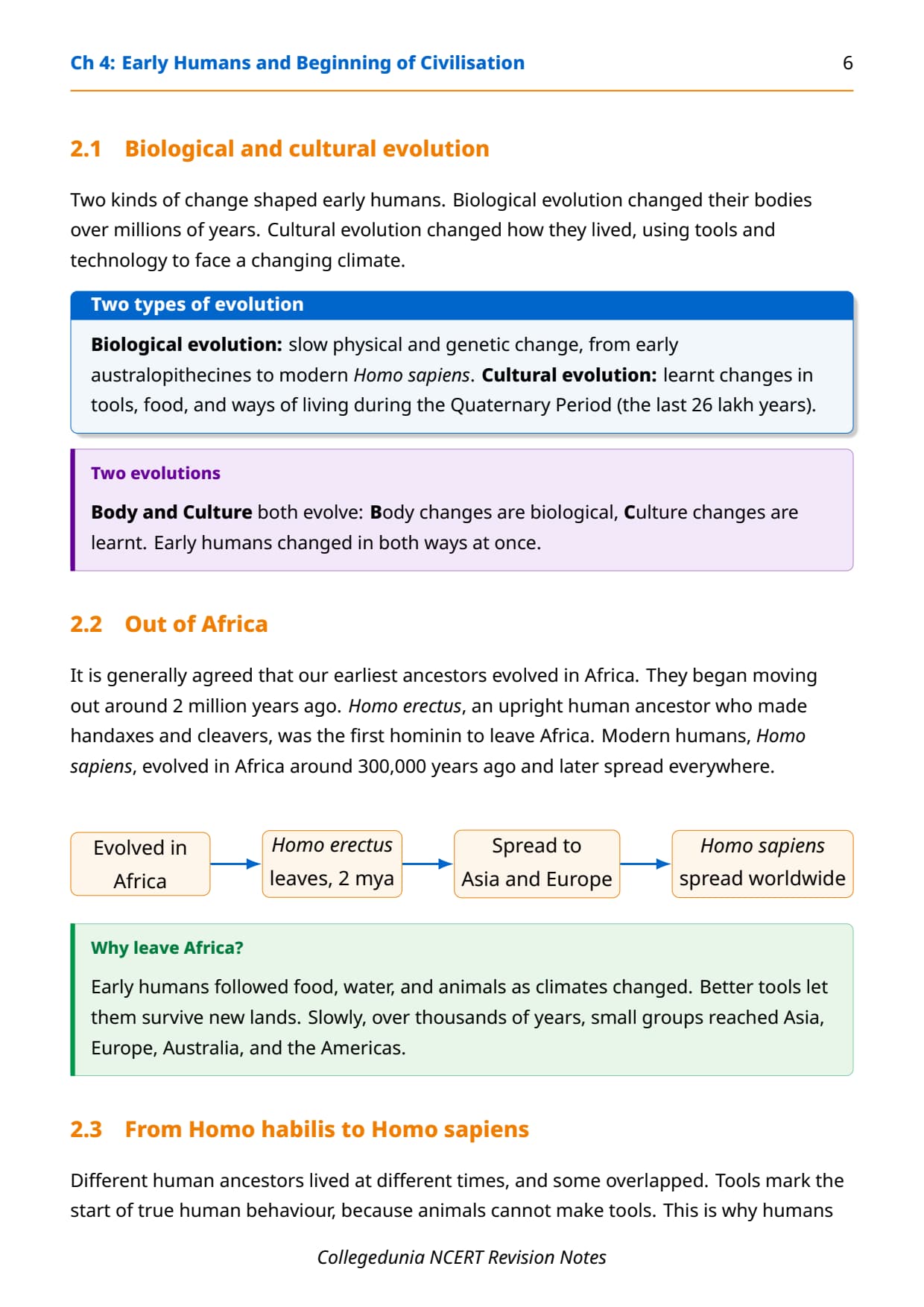
Two kinds of change shaped early humans. Biological evolution changed their bodies over millions of years. Cultural evolution changed how they lived, using tools to face a changing climate. Our earliest ancestors evolved in Africa and began moving out around 2 million years ago.
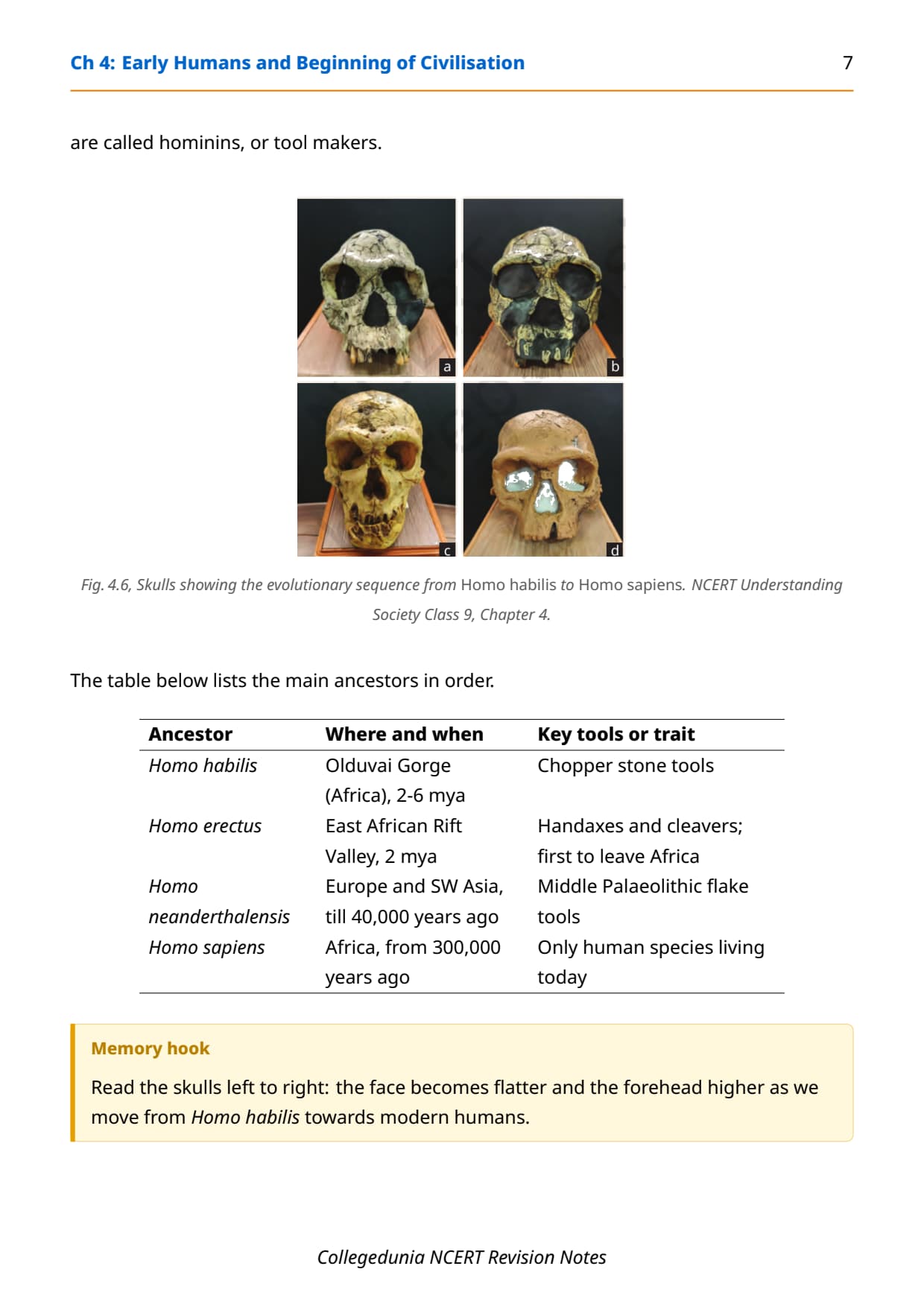
The main ancestors, in order, are easy to recall for a quick answer:
| Ancestor | Where and when | Key trait or tool |
|---|---|---|
| Homo habilis | Olduvai Gorge, Africa, about 2 million years ago | First chopper stone tools |
| Homo erectus | East African Rift Valley, 2 million years ago | Handaxes; first to leave Africa |
| Homo neanderthalensis | Europe and SW Asia, till 40,000 years ago | Flake tools |
| Homo sapiens | Africa, from about 300,000 years ago | The only human species today |
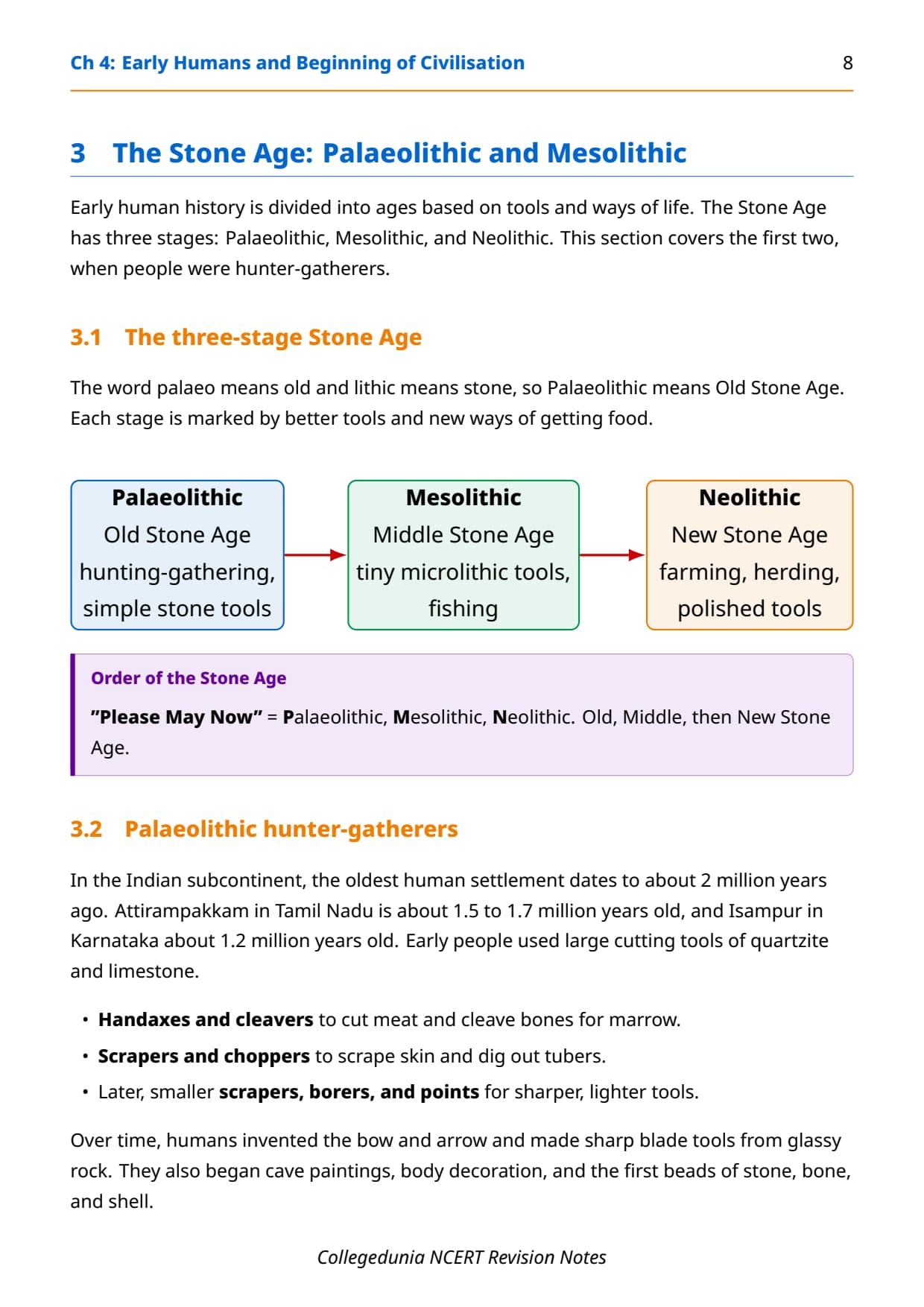
The Stone Age itself has three stages. The class 9 social science notes chapter 4 Early Humans and Beginning of Civilisation set them out simply:
- Palaeolithic (Old Stone Age): hunting and gathering with handaxes, cleavers, and scrapers.
- Mesolithic (Middle Stone Age): tiny microlithic tools, fishing, and rock art at Bhimbetka.
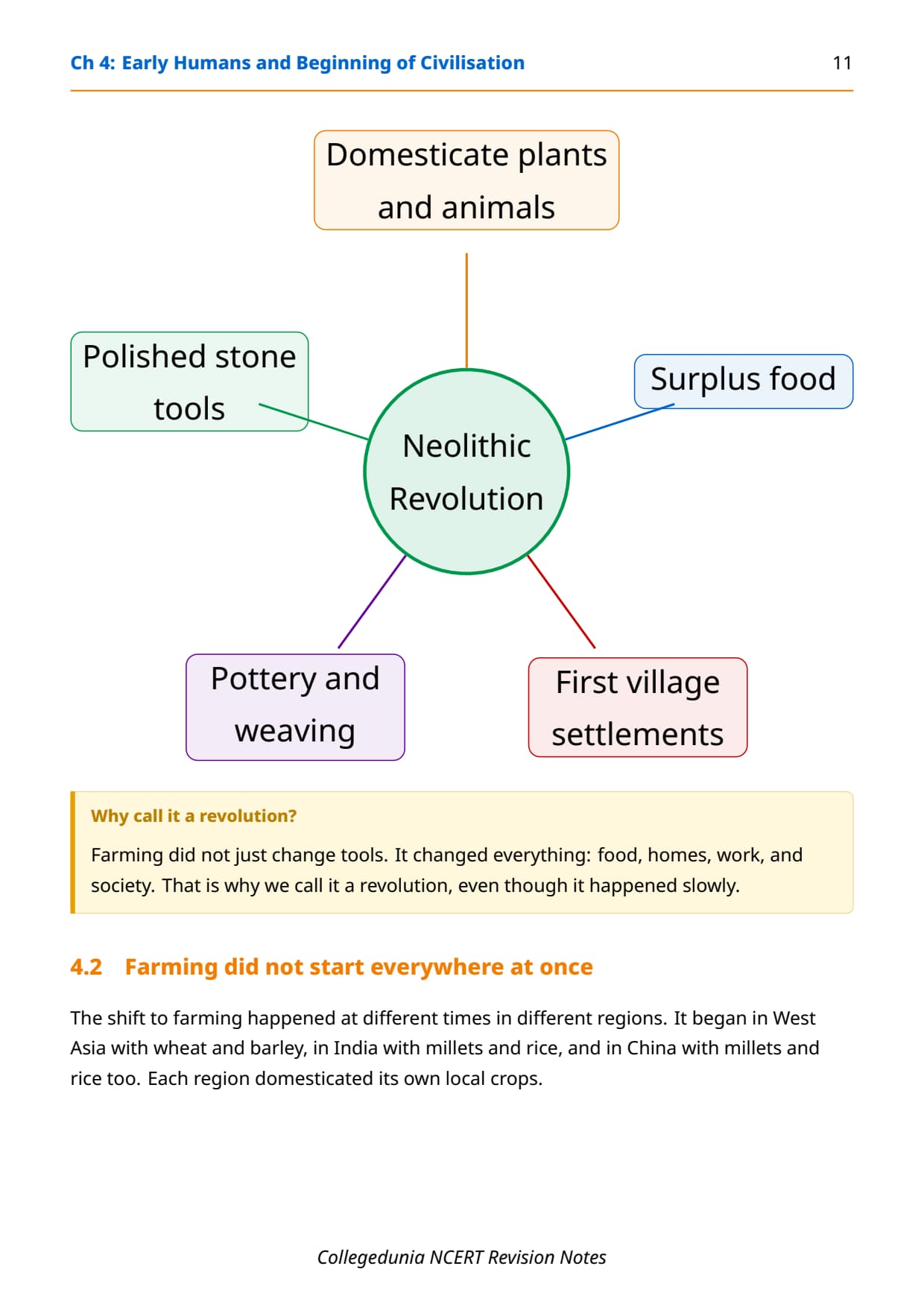
- Neolithic (New Stone Age): polished tools, farming, herding, and the first villages.
The Neolithic Revolution and Farming: Chapter 4 Revision Notes
The biggest change in early life was the move from hunting and gathering to farming. This is called the Neolithic Revolution. The hallmark of the change was domestication, which means taming and breeding plants and animals for human use. A steady food supply let people settle in one place.
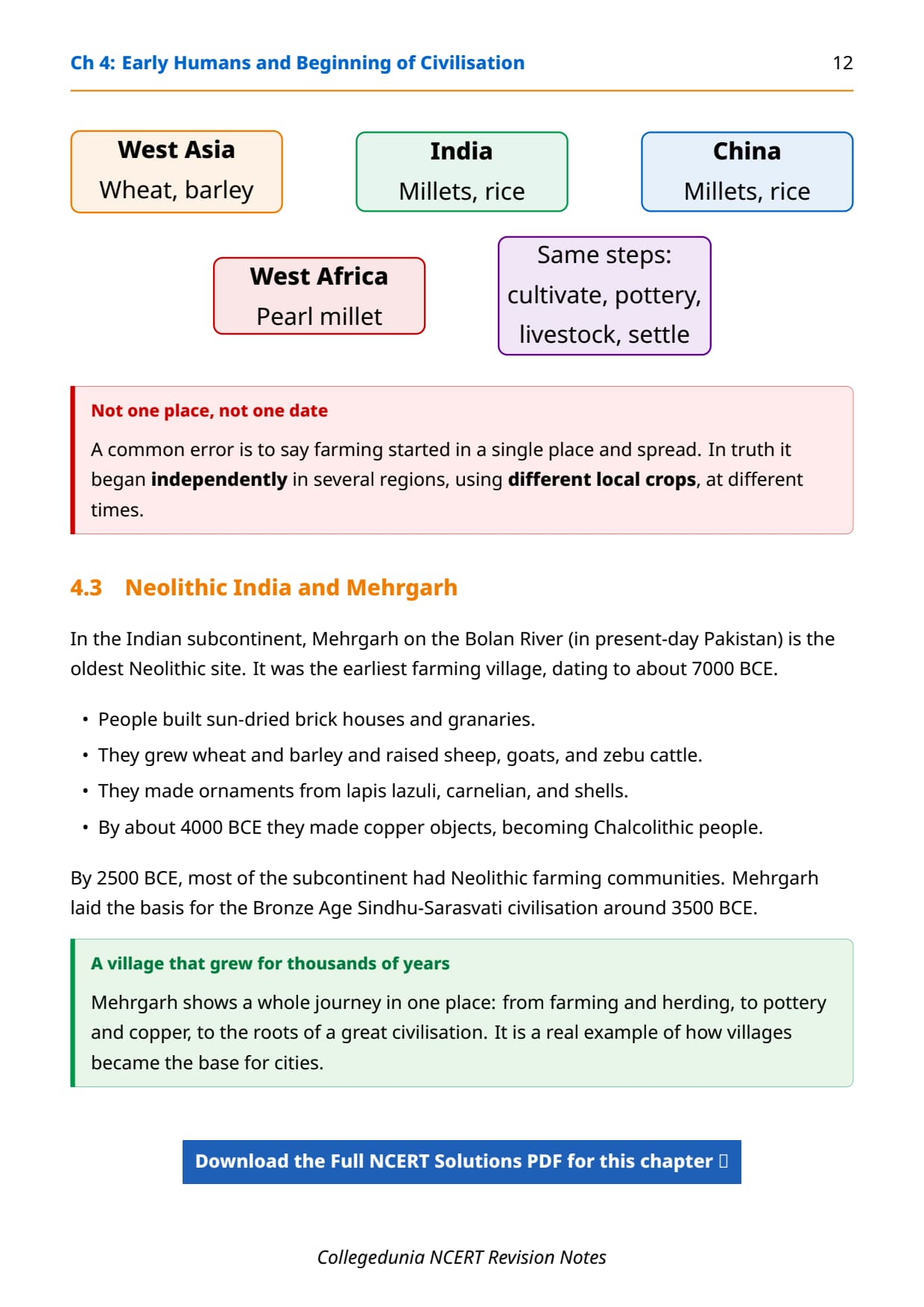
Farming did not begin everywhere at once. It started independently in several regions, each using its own local crops:
- West Asia: wheat and barley were the first crops.
- India: millets and rice were grown early.
- China: millets and rice, along the great rivers.
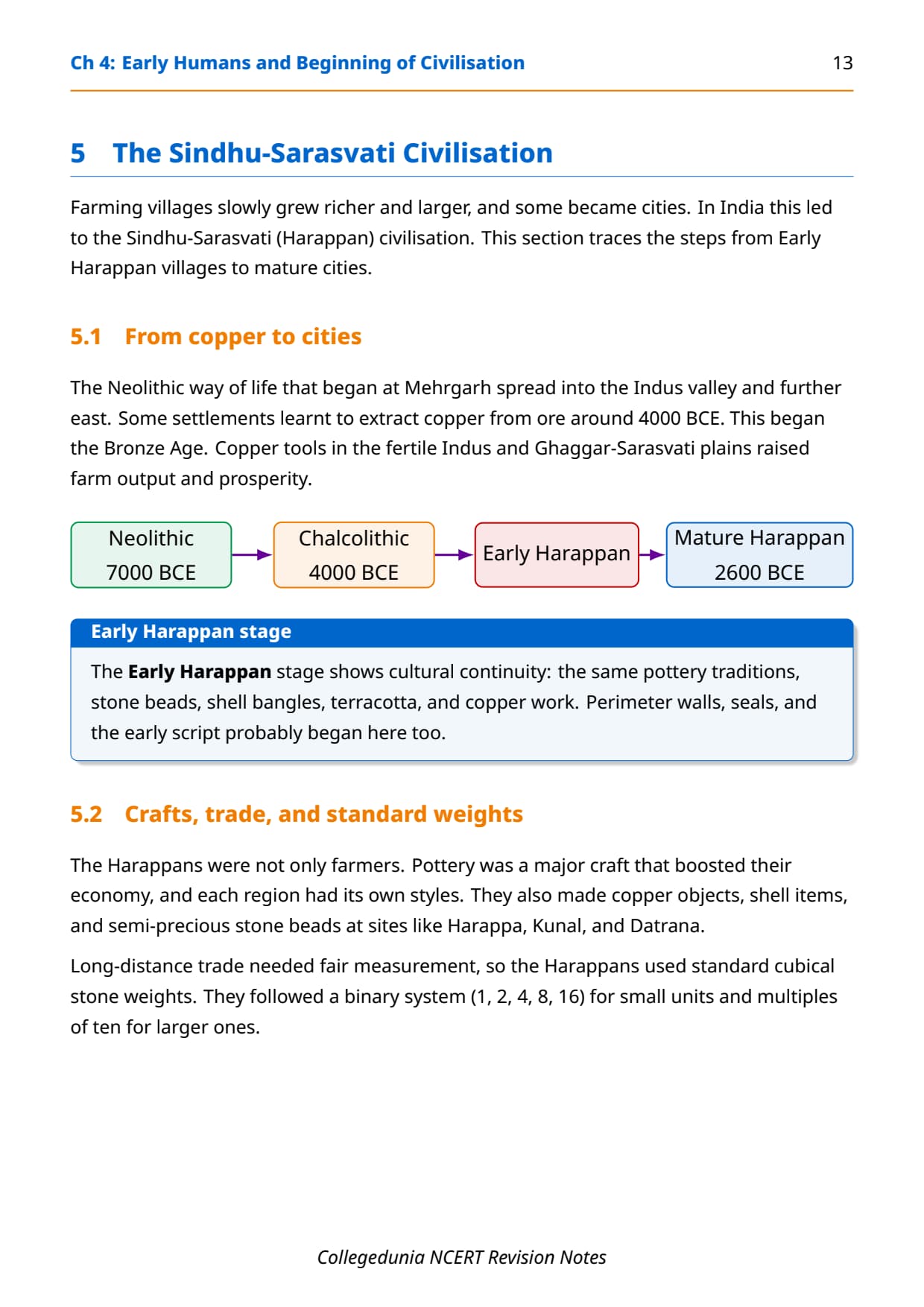
In the Indian subcontinent, Mehrgarh on the Bolan River is the oldest Neolithic site, dating to about 7000 BCE. People there built brick houses and granaries, grew wheat and barley, and raised sheep, goats, and cattle. By about 4000 BCE they made copper objects, which laid the base for the Bronze Age Sindhu-Sarasvati civilisation.
Sindhu-Sarasvati and the Bronze Age Civilisations in Chapter 4
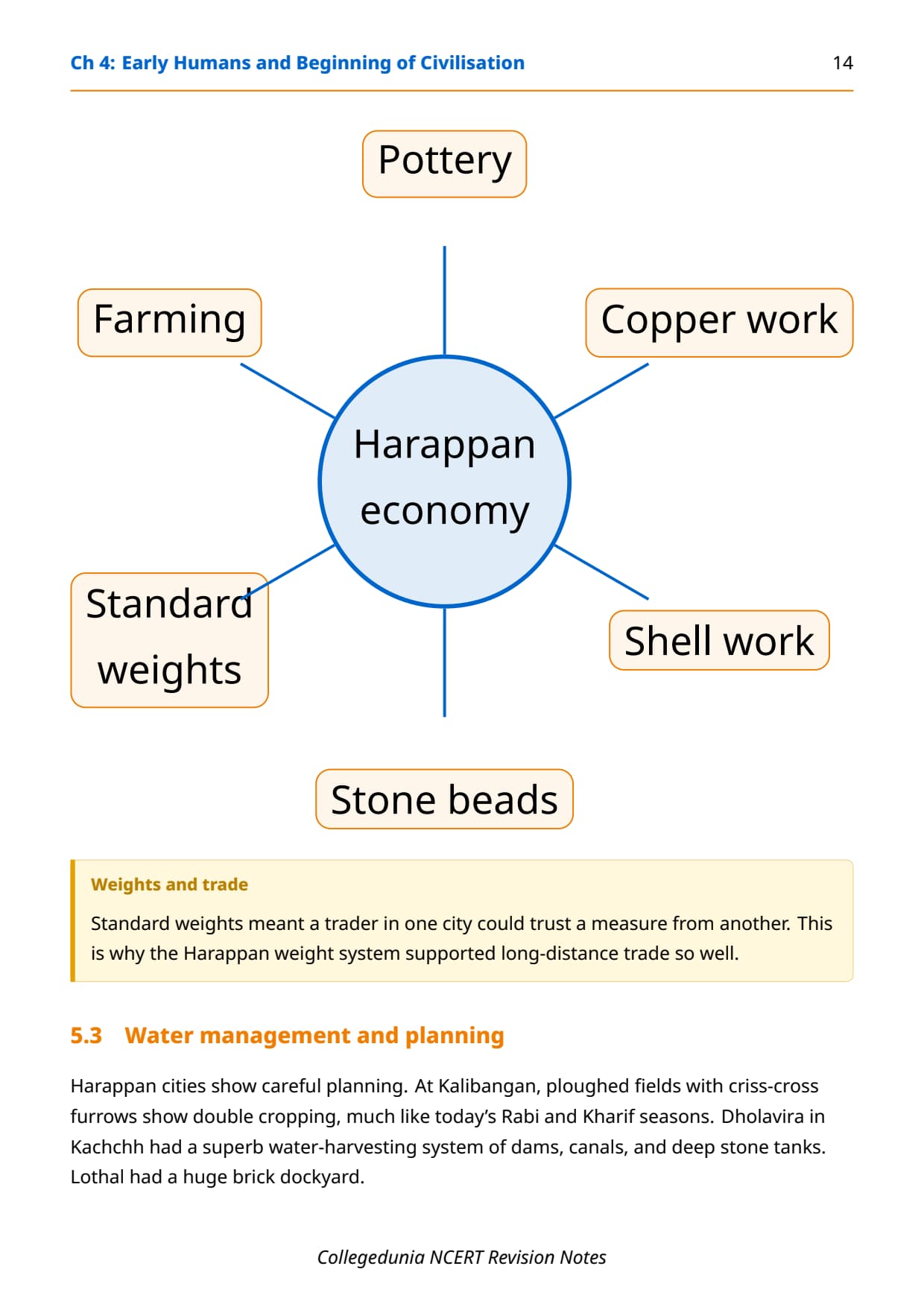
Farming villages slowly grew larger and richer, and some became cities. In India this led to the Sindhu-Sarasvati, or Harappan, civilisation around 2600 BCE. Its cities show careful planning: standard stone weights for trade, brick drainage, and water systems at Dholavira, ploughed fields at Kalibangan, and a dockyard at Lothal.
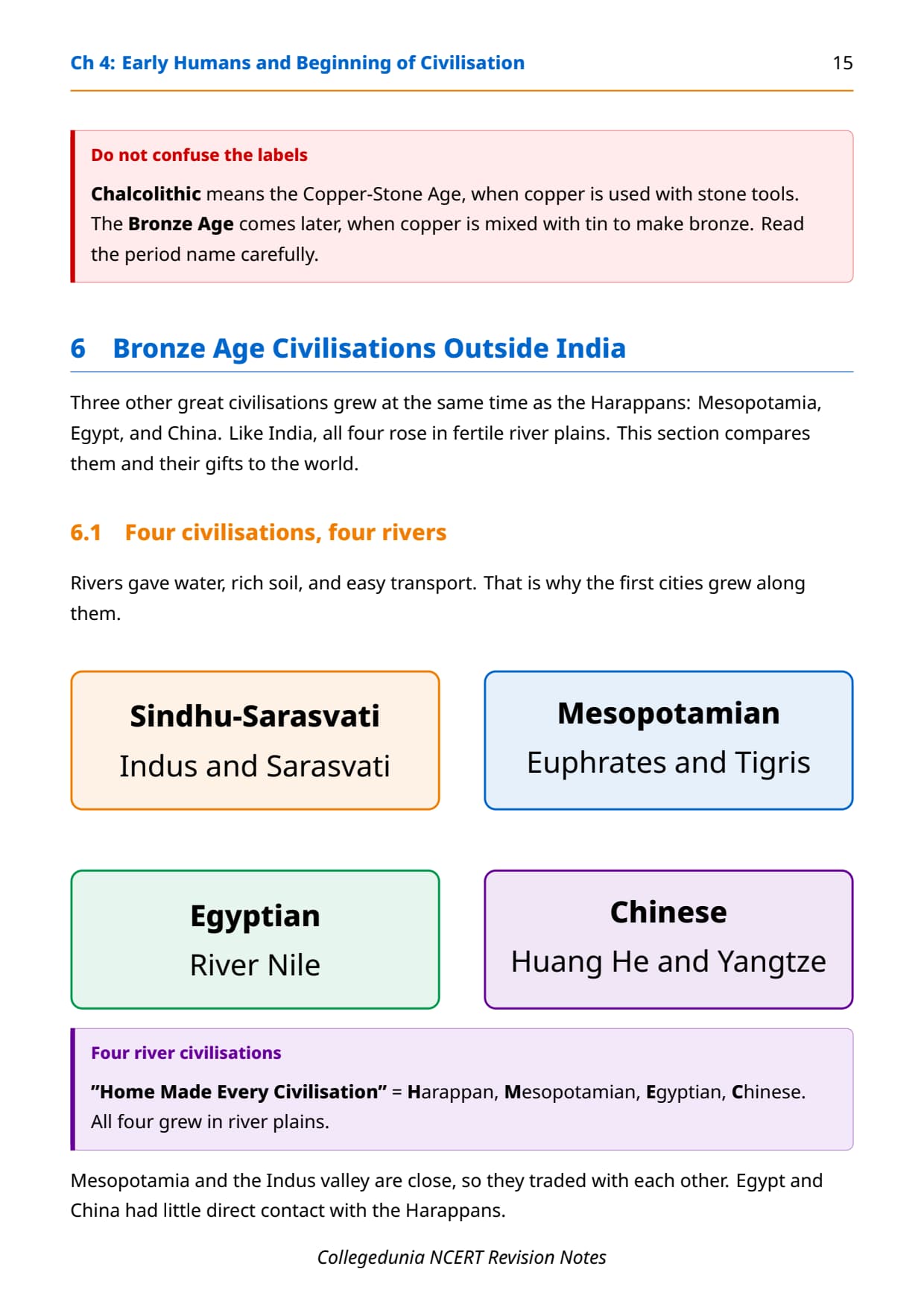
Three other great civilisations grew at the same time. Like India, all four rose in fertile river plains, which gave water, rich soil, and easy transport.
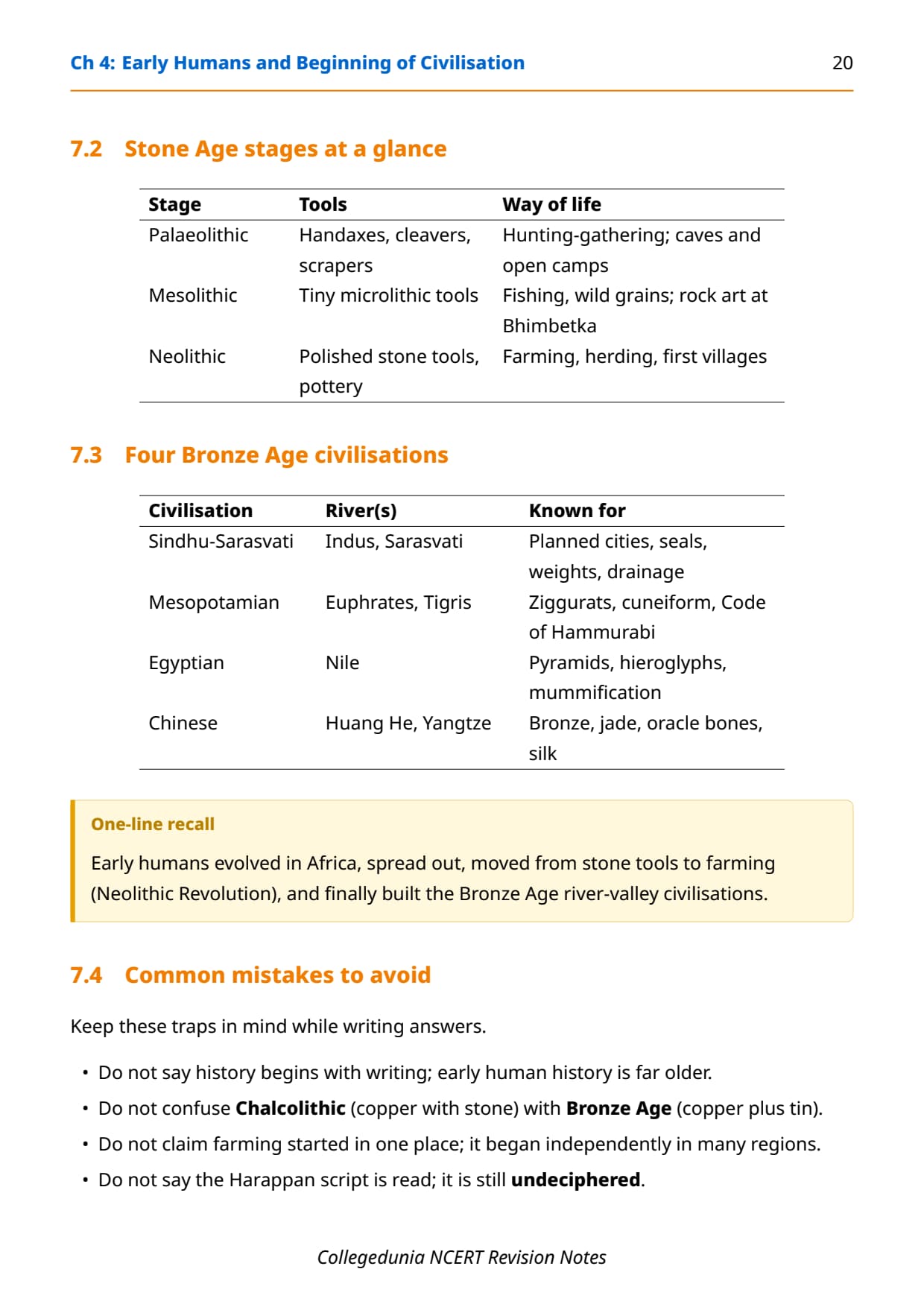
| Civilisation | River(s) | Known for |
|---|---|---|
| Sindhu-Sarasvati | Indus and Sarasvati | Planned cities, seals, standard weights, drainage |
| Mesopotamian | Euphrates and Tigris | Ziggurats, cuneiform, Code of Hammurabi |
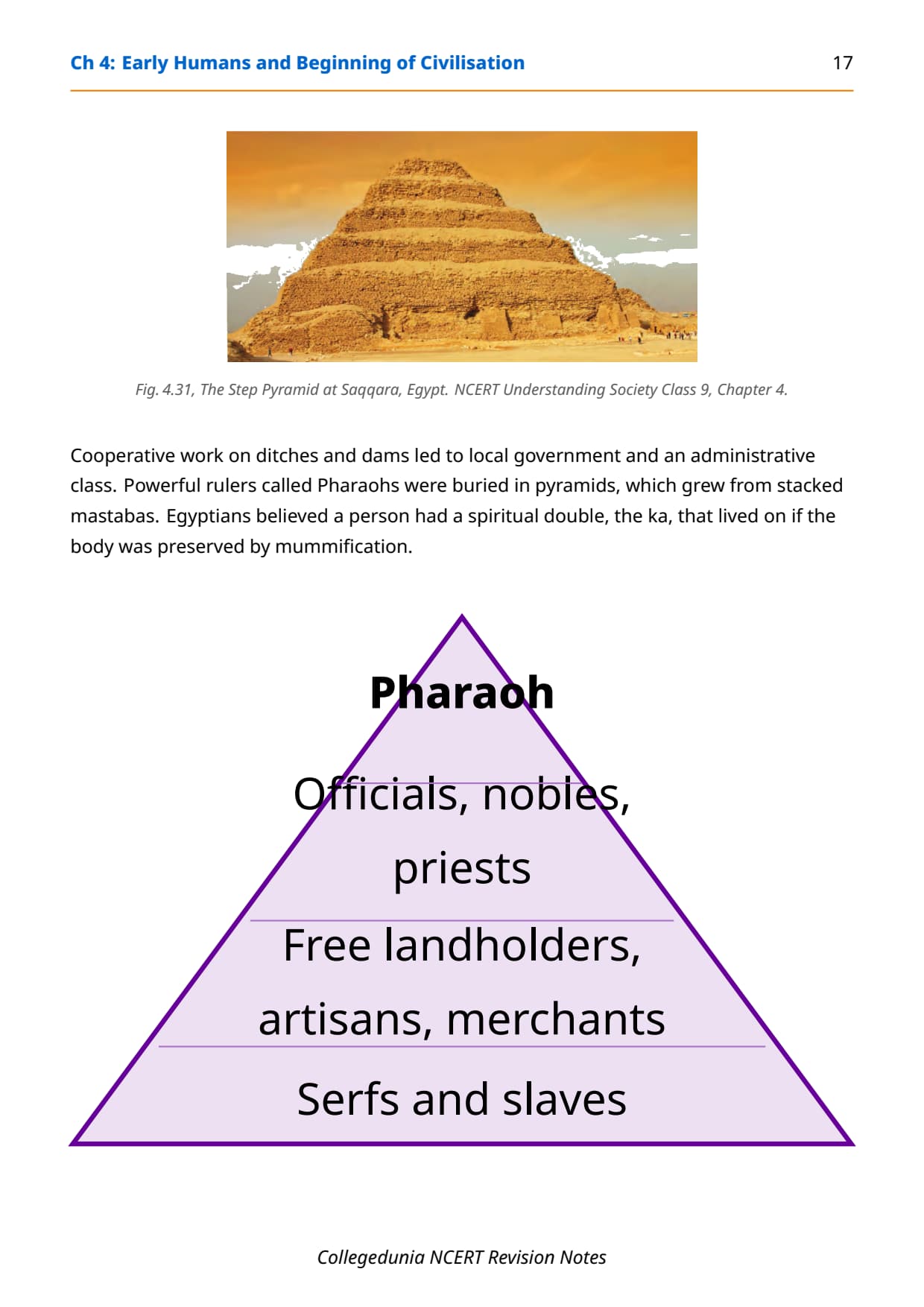
| Egyptian | Nile | Pyramids, hieroglyphs, mummification |
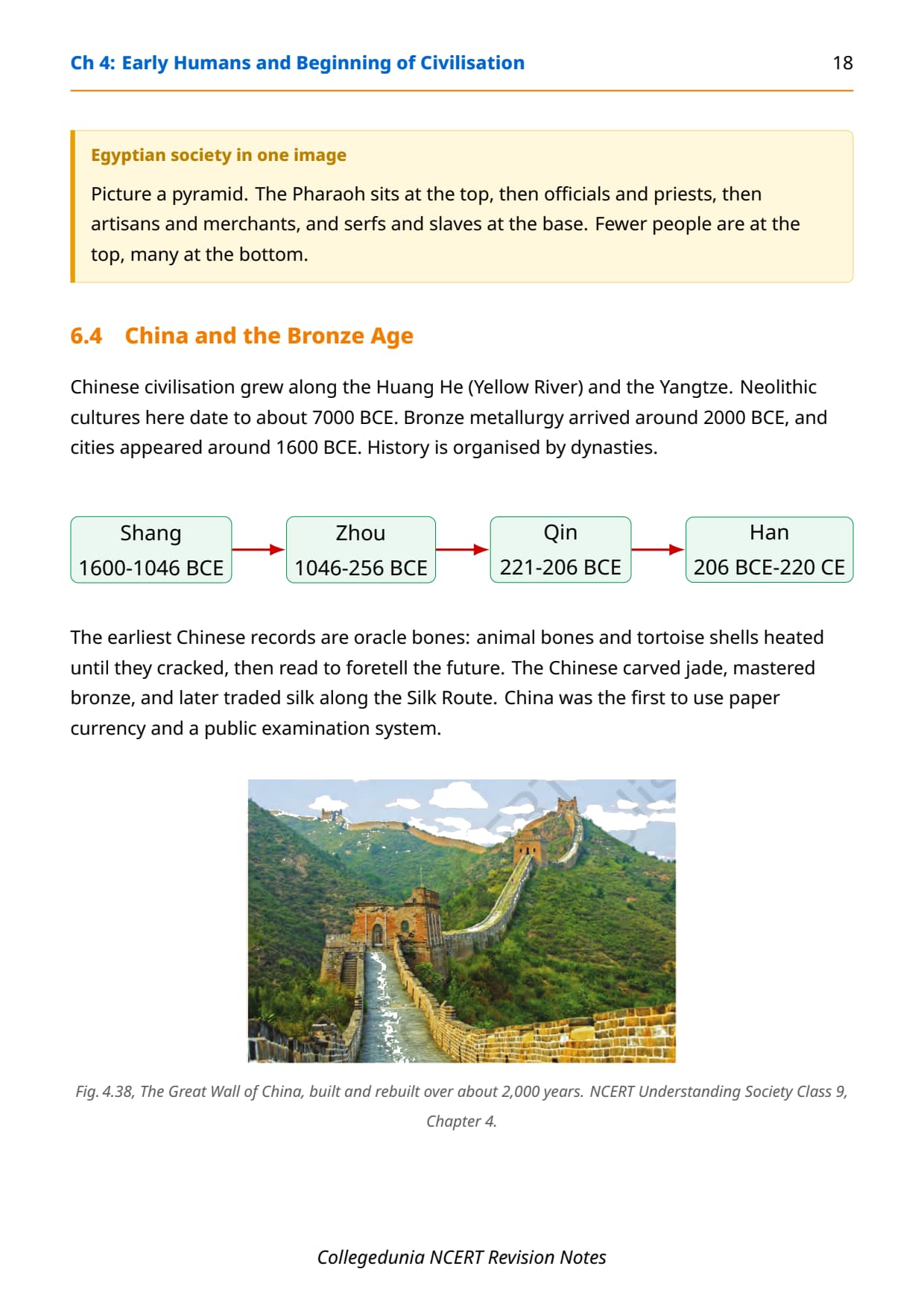
| Chinese | Huang He and Yangtze | Bronze, jade, oracle bones, silk |
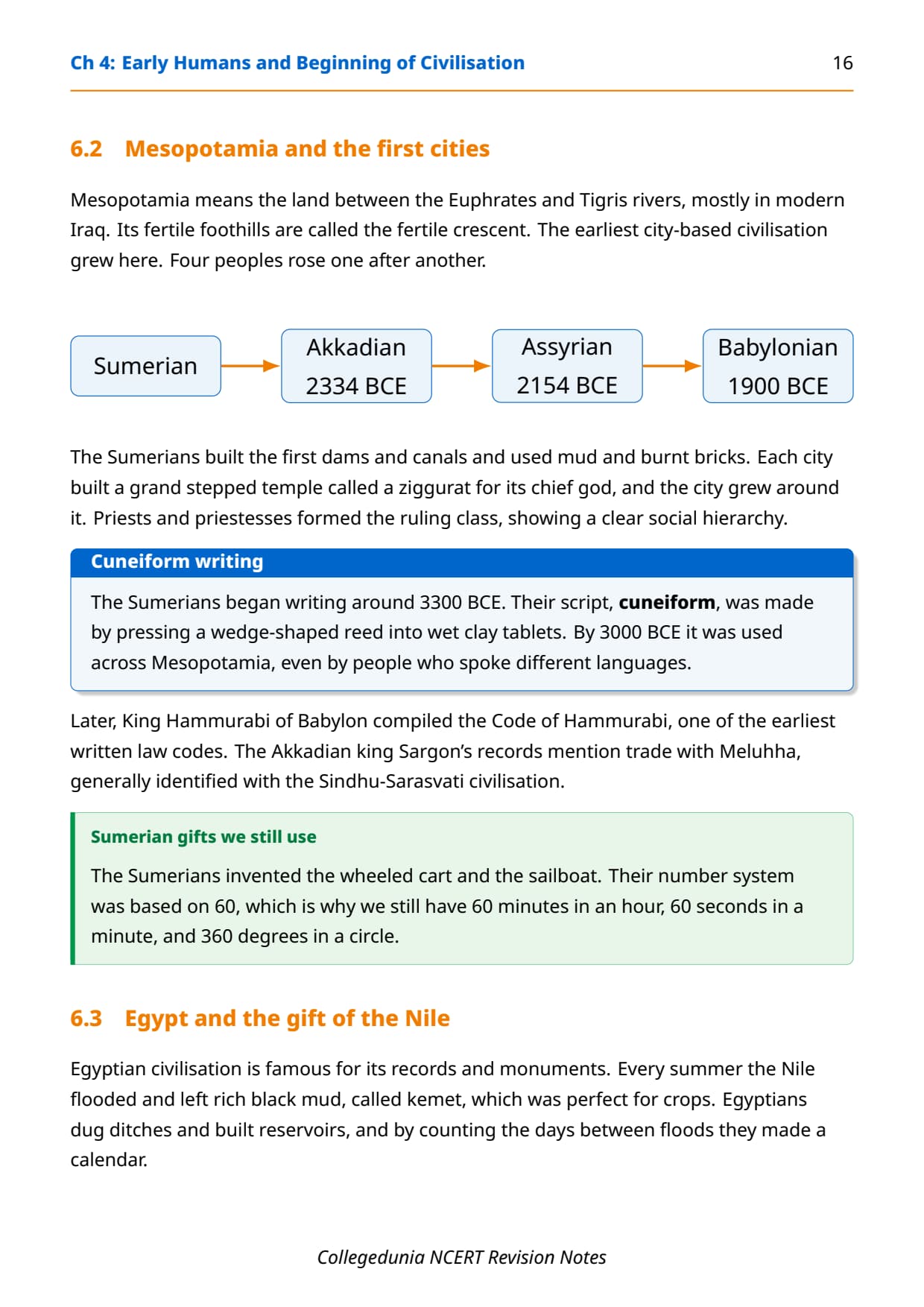
Some links are worth remembering. Mesopotamia and the Indus valley were close, so they traded with each other; Akkadian records mention trade with Meluhha, generally identified with the Sindhu-Sarasvati civilisation. The Sumerian number system, based on 60, is why we still have 60 minutes in an hour and 360 degrees in a circle.
Key Terms and Timeline for Class 9 Social Science Chapter 4 Early Humans and Beginning of Civilisation
Use this quick list for last-minute revision. These terms come up again and again in the class 9 social science notes chapter 4 Early Humans and Beginning of Civilisation and in short-answer questions.
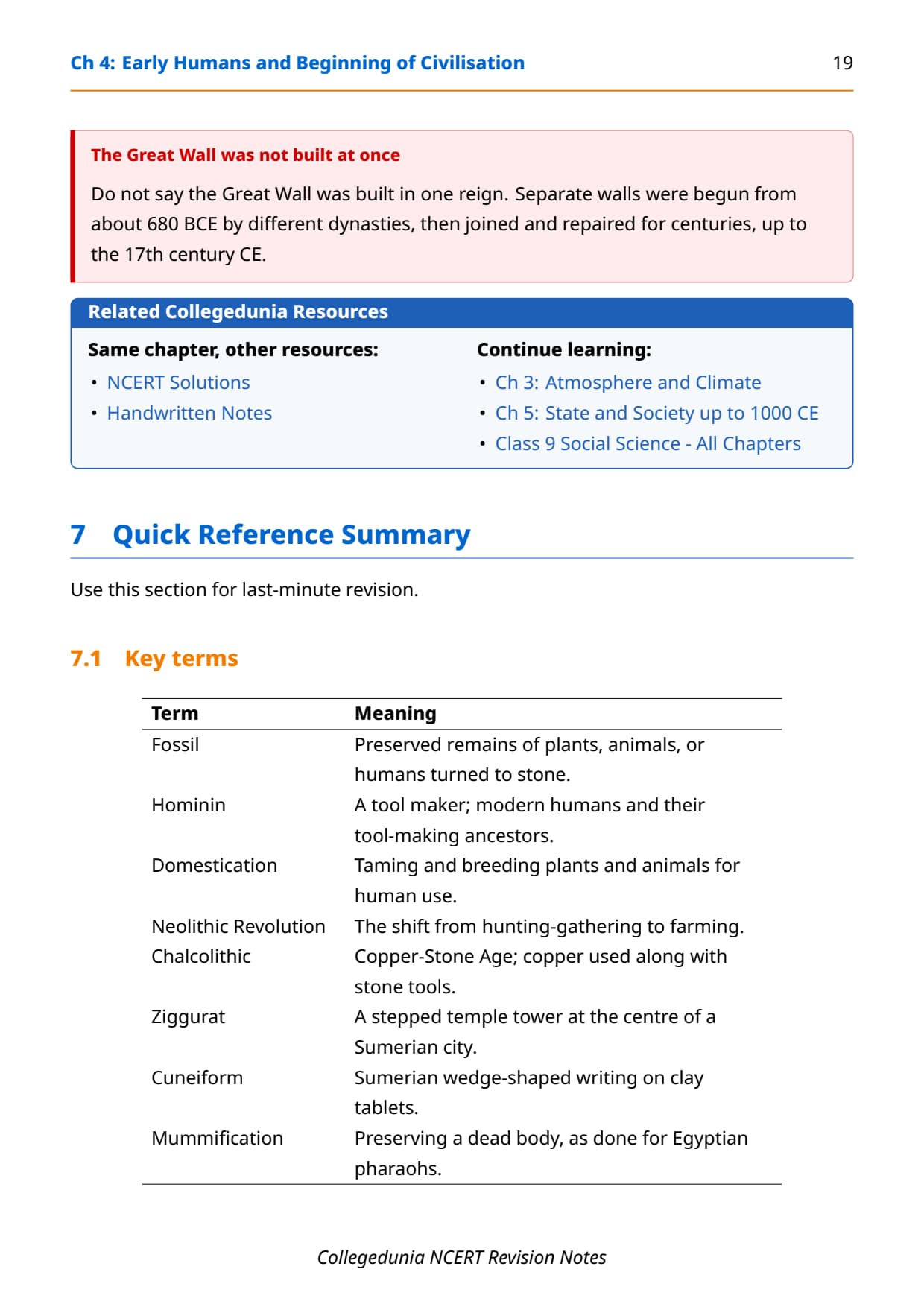
| Term | Meaning |
|---|---|
| Fossil | Preserved remains of a plant, animal, or human turned to stone. |
| Hominin | A tool maker; modern humans and their tool-making ancestors. |
| Domestication | Taming and breeding plants and animals for human use. |
| Neolithic Revolution | The shift from hunting-gathering to farming. |
| Chalcolithic | The Copper-Stone Age, when copper was used with stone tools. |
| Cuneiform | Sumerian wedge-shaped writing pressed into clay tablets. |
Keep the timeline simple: humans evolved in Africa, spread out, moved from stone tools to farming in the Neolithic Revolution, and finally built the Bronze Age river-valley civilisations.
Common Mistakes and Quick Revision Tips for Early Humans and Beginning of Civilisation
Most lost marks in this chapter come from small slips, not hard ideas. Fix these while you revise and your answers stay clean.
- Do not confuse Chalcolithic (copper with stone) with the Bronze Age (copper mixed with tin).
- Do not claim the Harappan script has been read; it is still undeciphered.
- Do not dismiss stone tools as crude; a good handaxe needs real skill and planning.
- Do not say the Great Wall of China was built in one reign; it was joined and repaired over about 2,000 years.
How Collegedunia Notes Help You Revise Chapter 4 Early Humans and Beginning of Civilisation
Collegedunia gives you the full class 9 social science notes chapter 4 Early Humans and Beginning of Civilisation as clean, short, easy-to-read revision in one place.
- 2026-27 match: every note follows the new Understanding Society textbook, chapter by chapter.
- Simple English: short lines and everyday words, so a Class 9 student can revise without help.
- Table ready: the Stone Age stages and the four civilisations sit in easy tables for fast recall.
- Free PDF: download the notes and revise offline before your exam.
Other Early Humans and Beginning of Civilisation Class 9 Social Science Resources
Open the other resources for this chapter to practise answers and download the source book alongside your revision.
NCERT Notes for Class 9 Social Science: All Chapters
Use the table below to open the NCERT Notes for any other chapter of the new Class 9 Social Science Understanding Society book.
| Chapter | NCERT Notes |
|---|---|
| Chapter 1 | Understanding Social Science |
| Chapter 2 | Shaping of the Earth's Surface |
| Chapter 3 | Atmosphere and Climate |
| Chapter 4 | Early Humans and Beginning of Civilisation |
| Chapter 5 | State and Society up to 1000 CE |
| Chapter 6 | Democracy |
| Chapter 7 | Elections |
| Chapter 8 | Building Blocks in Economics: The Problem of Choice |
| Chapter 9 | The Price Puzzle: What Drives the Market |
Early Humans and Beginning of Civilisation Class 9 Social Science Notes FAQs
Ques. Where can I download the Class 9 Social Science Chapter 4 Early Humans and Beginning of Civilisation notes PDF?
Ans. You can download the notes PDF free from this page. Both the Normal and HD versions match the 2026-27 Understanding Society book.
Ques. What topics do the Chapter 4 notes cover?
Ans. The notes cover life before writing, human evolution out of Africa, the three Stone Age stages, the Neolithic Revolution and Mehrgarh, and the four Bronze Age river-valley civilisations.
Ques. What is the Neolithic Revolution in simple words?
Ans. It is the slow shift from hunting and gathering to farming. Its hallmark was domestication, taming plants and animals, which gave a steady food supply and led to the first villages.
Ques. Which four Bronze Age civilisations should I remember?
Ans. The Sindhu-Sarasvati (Indus and Sarasvati), Mesopotamian (Euphrates and Tigris), Egyptian (Nile), and Chinese (Huang He and Yangtze) civilisations. All four grew in fertile river plains.



Comments