




The Class 9 Social Science Handwritten Notes Chapter 3 Atmosphere and Climate are a topper's own neat revision of the new Understanding Society textbook. Every idea, from the gases in the air and the five layers to weather, climate, the monsoon, and the carbon footprint, is written by hand with key terms boxed.
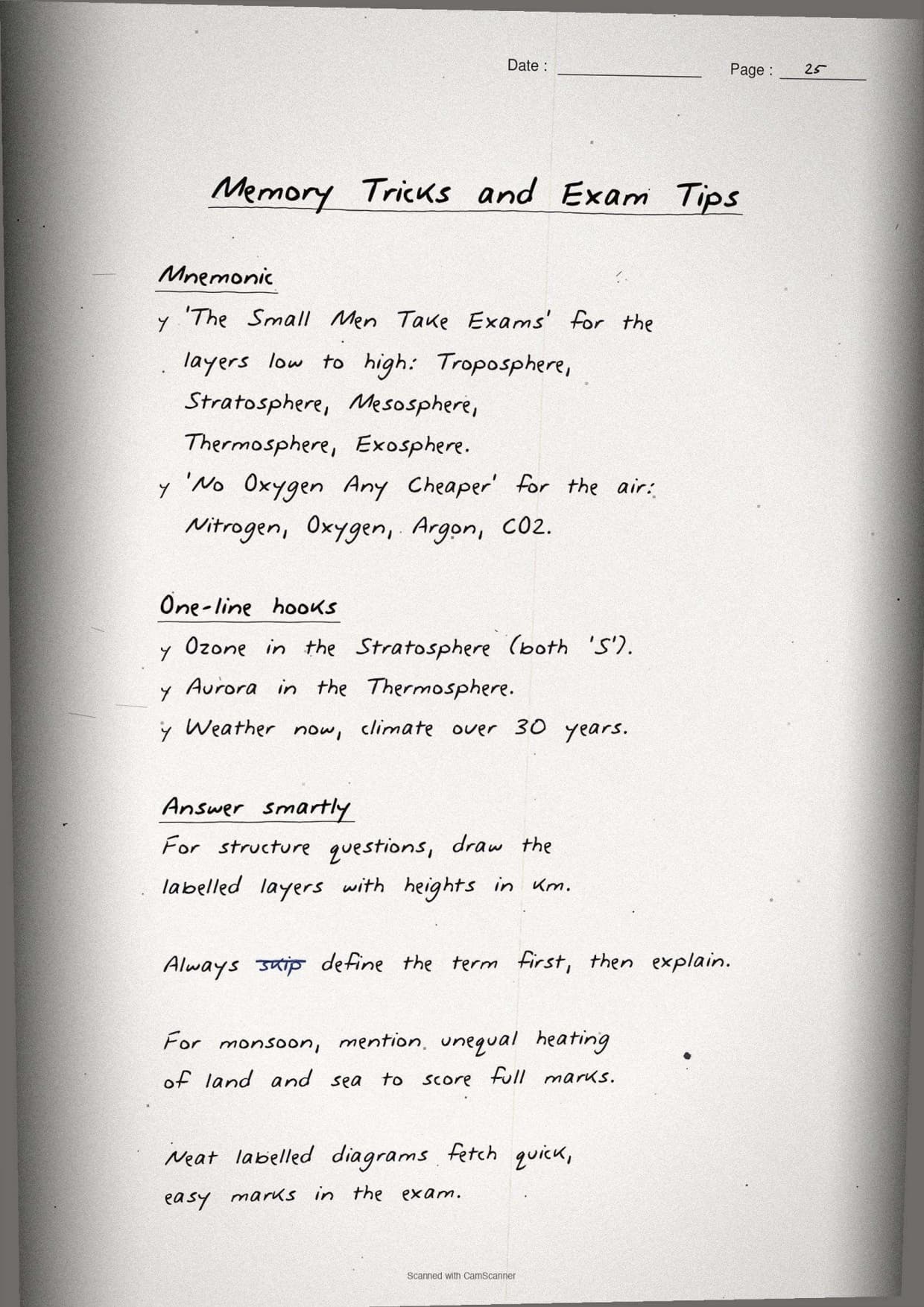
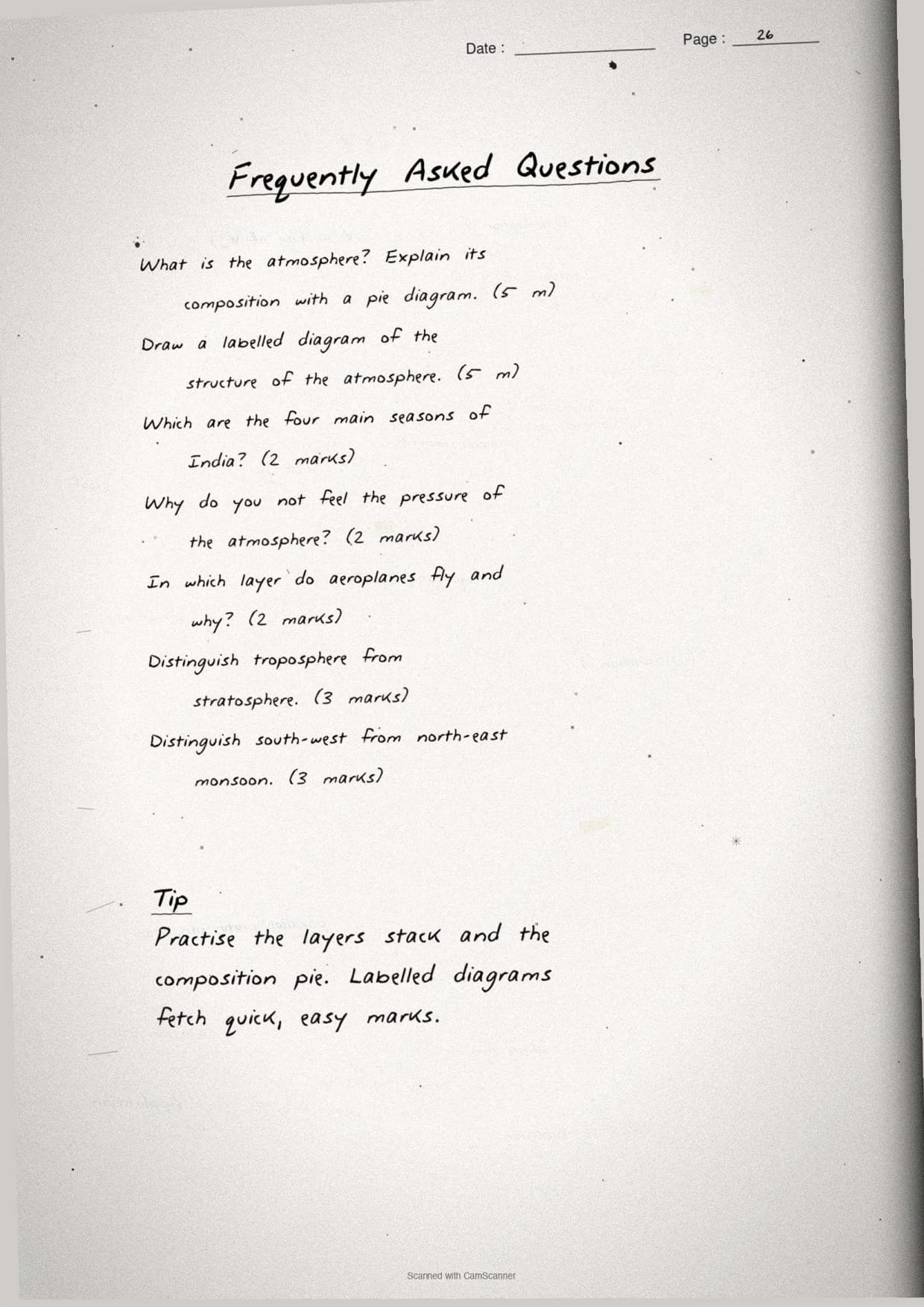
Written and cross-checked by a Class 9 Social Science topper, so every definition matches the 2026-27 syllabus.
- What you get: the make-up of the atmosphere, its five layers, weather versus climate, winds, India's seasons, the two monsoons, and the carbon footprint, all in clear handwriting.
- Colour-coded: new sub-topics in red, every definition and rule in a hand-drawn box, and case notes in blue.
- Why by hand: writing each definition and small map by hand helps you recall the terms fast in the exam.
Student Feedback
In a Collegedunia study of 1,180 Class 9 students, 81% said hand-written pages of the five layers and the two monsoons were easier to recall than typed notes. About 4 out of 5 rated the boxed definitions and red-marked mistakes as the most useful part before a test.
Why Use Class 9 Social Science Handwritten Notes Chapter 3 Atmosphere and Climate
Chapter 3 packs many small facts: gas percentages, five layers, two monsoons, and clear definitions. A clean hand-written page saves time. The Class 9 Social Science Handwritten Notes Chapter 3 Atmosphere and Climate keep one idea per line, with a small diagram beside it, so nothing runs together. You revise the whole chapter in one sitting.
- Each definition, like weather or climate, sits in its own hand-drawn box.
- A quick sketch of the layers or water cycle sits next to the idea it explains.
- Red sub-headings split the chapter into short, easy parts.
- The wording is plain, like a senior explaining the topic.
What Is Inside the Atmosphere and Climate Handwritten Notes PDF
The PDF runs to 22 pages of neat, hand-written revision. It moves from the make-up of the atmosphere and its five layers, to weather and climate, winds, India's seasons, the two monsoons, and climate change and the carbon footprint. The colour code below tells you what every mark means in the Class 9 Social Science Handwritten Notes Chapter 3 Atmosphere and Climate.
- Red: new sub-topic headings, such as Insolation, Monsoon, or Carbon Footprint.
- Boxes: each definition and rule, like weather versus climate, drawn by hand.
- Blue: examples and case notes, such as the Punjab floods of 2025.
Composition and Layers of the Atmosphere in the Notes
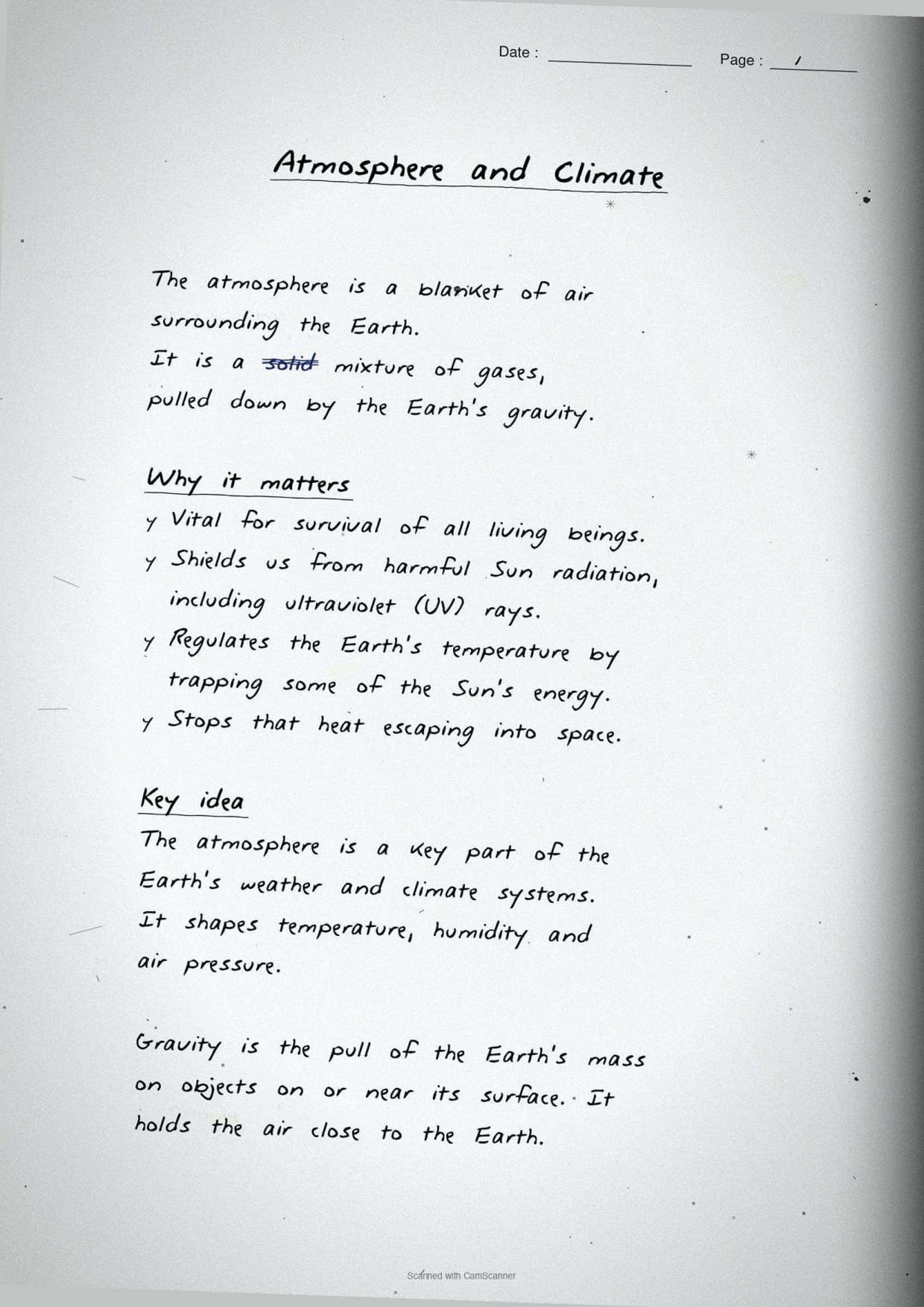
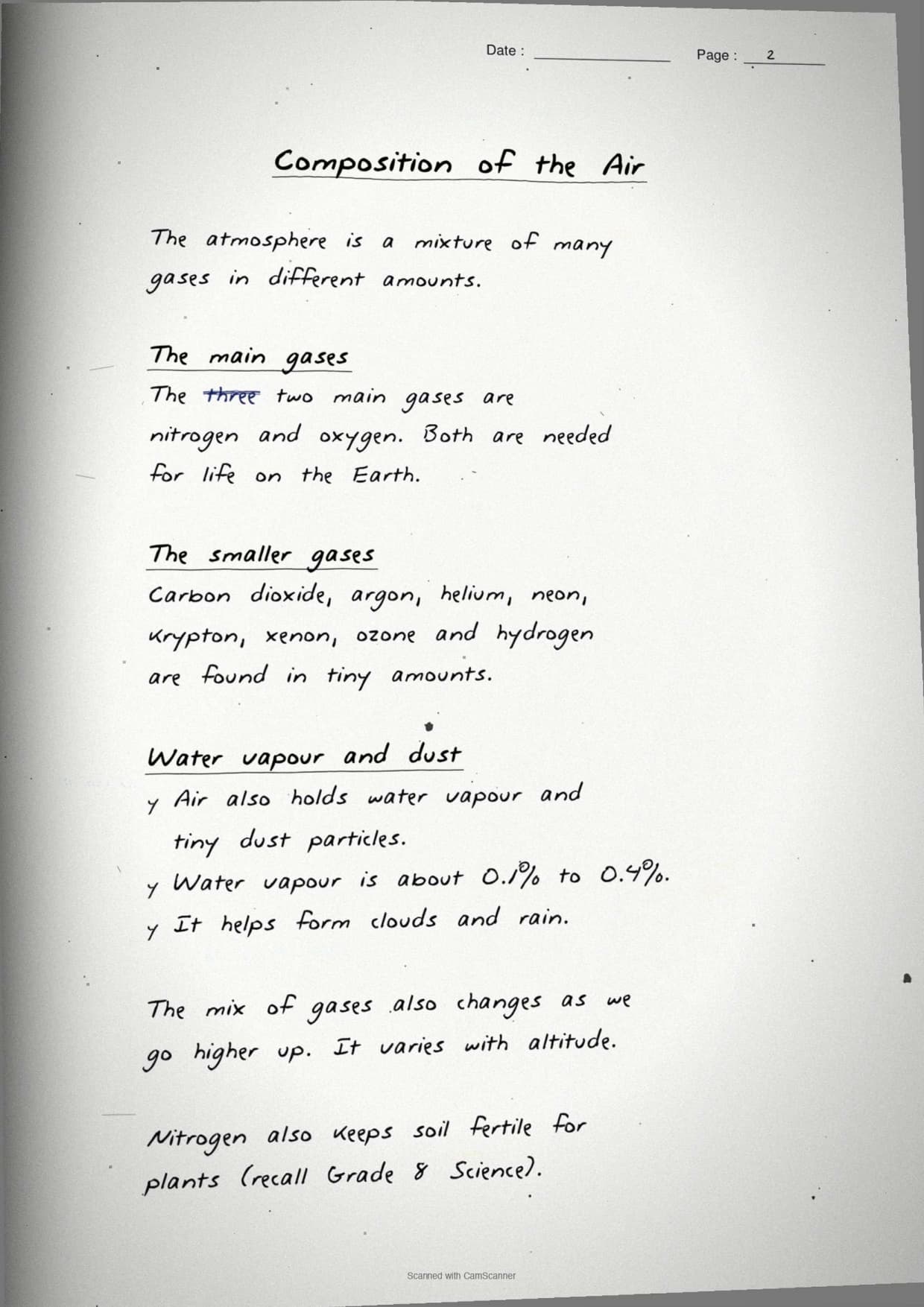
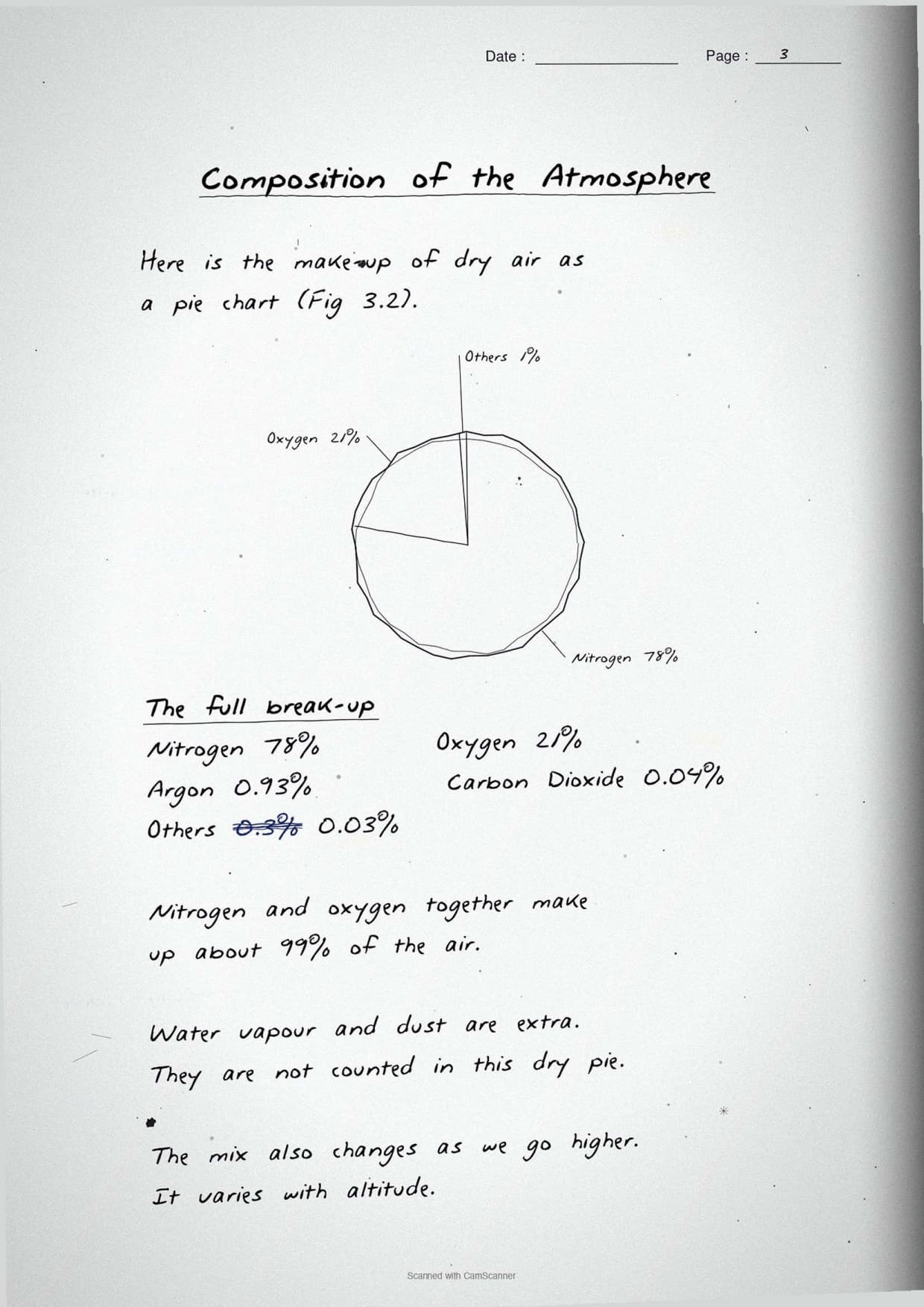
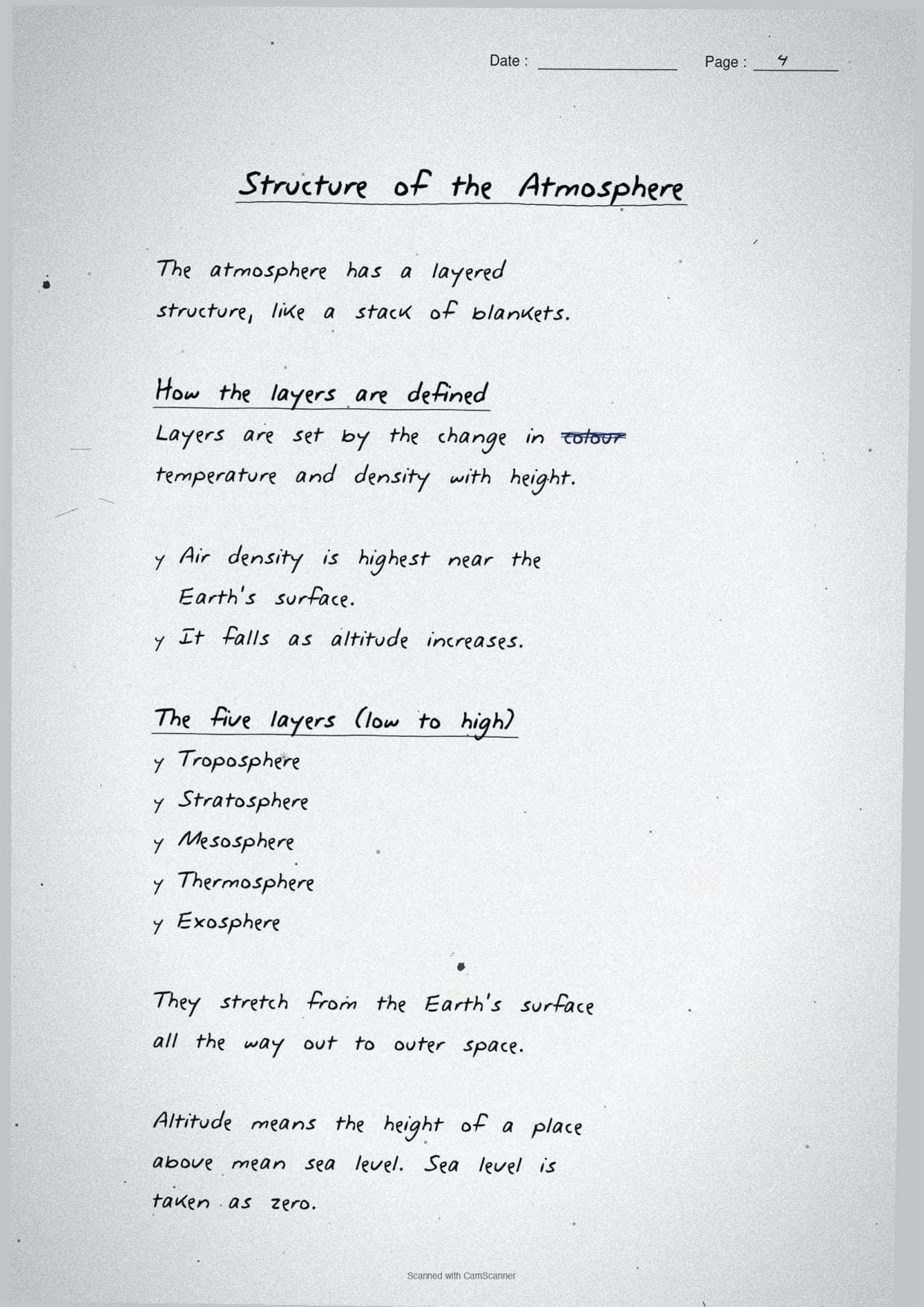
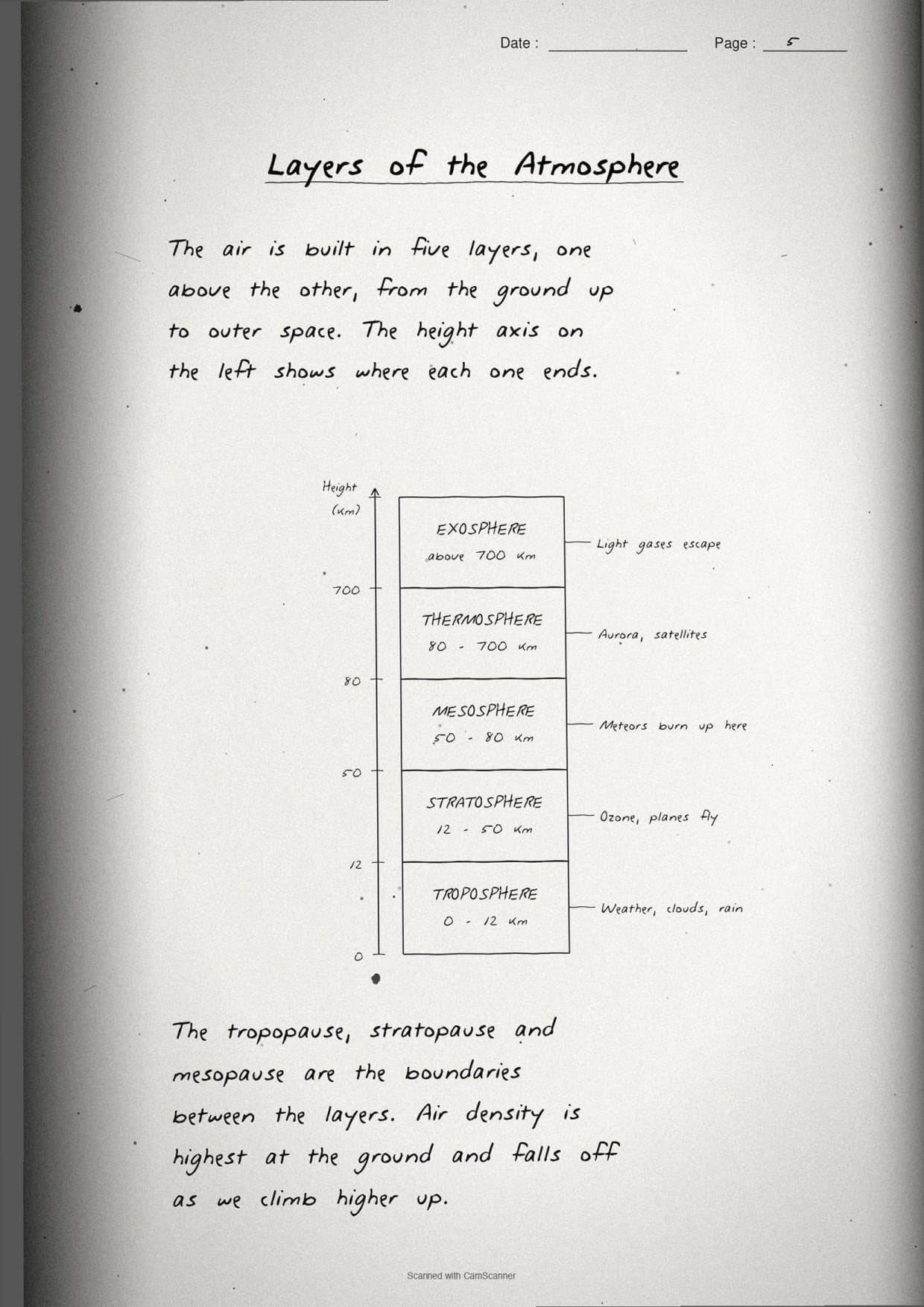
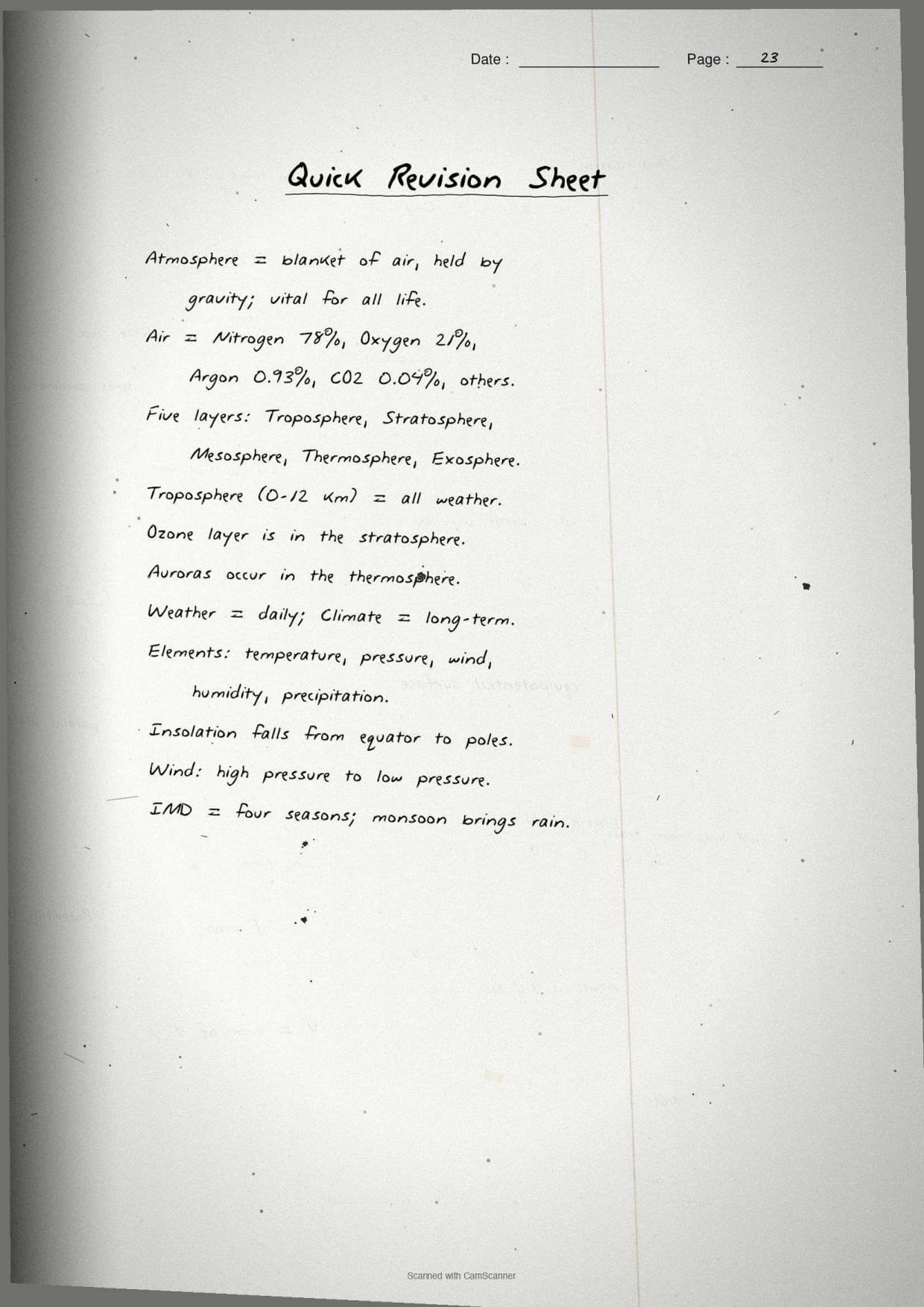
The notes open with what the atmosphere is: a blanket of gases held around the Earth by gravity. Nitrogen makes up about 78 per cent and oxygen about 21 per cent, boxed so you do not mix it up. Above the surface, the air is split into five layers, each drawn as a labelled band.
| Layer | Height | Key feature |
|---|---|---|
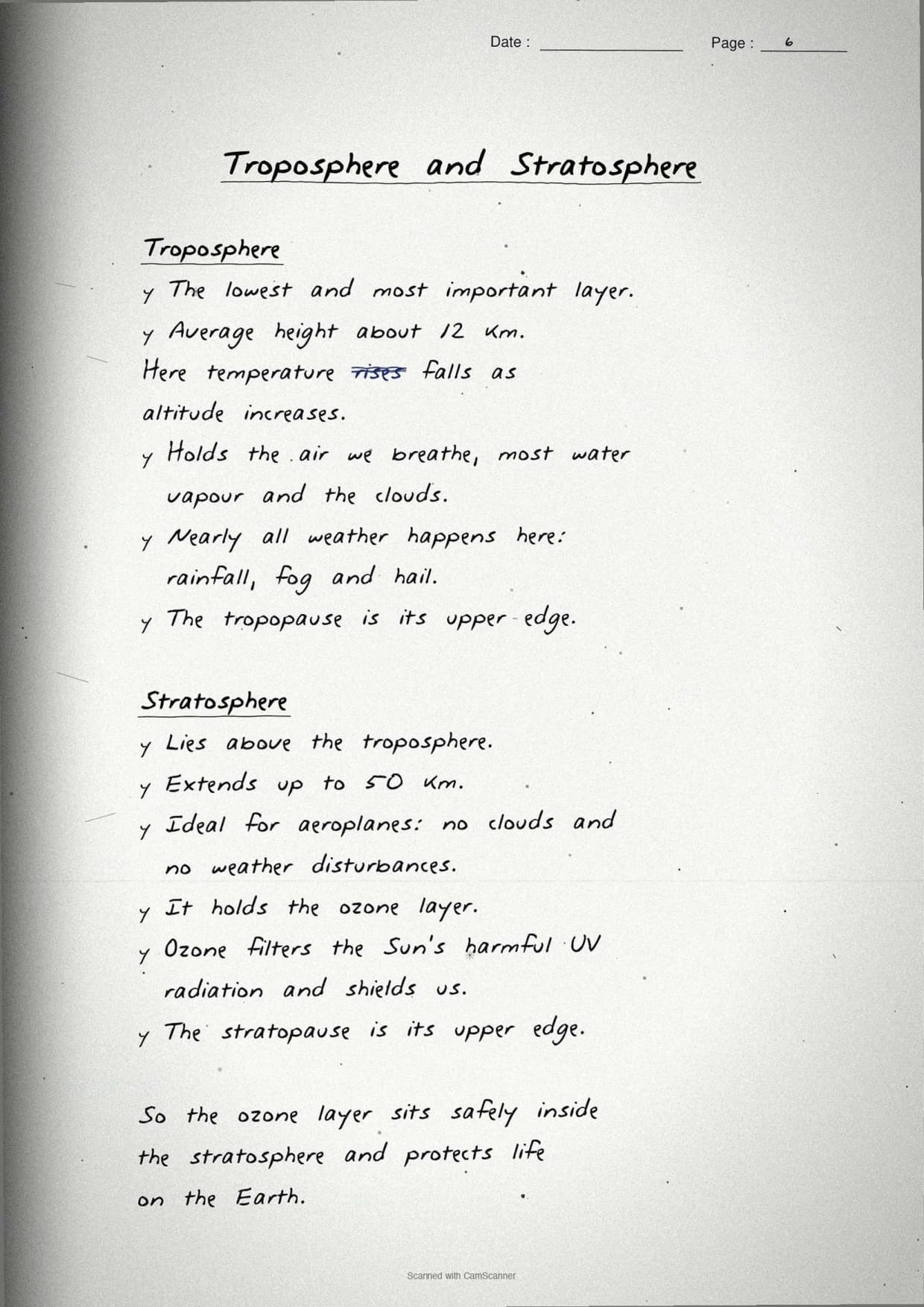
| Troposphere | 0 to 12 km | Air we breathe, clouds, all weather; temperature falls. |
| Stratosphere | up to 50 km | Holds the ozone layer; aeroplanes fly here. |
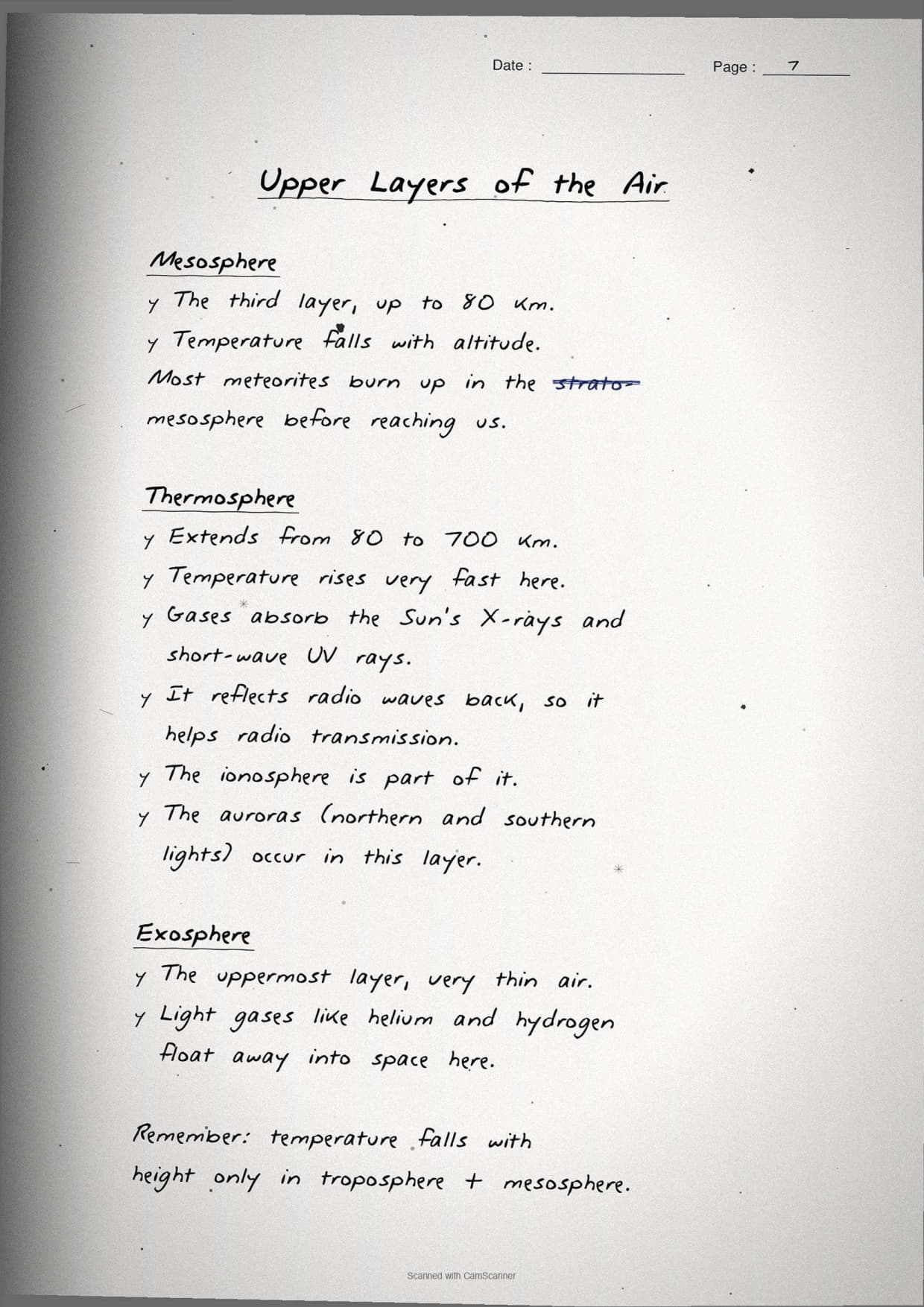
| Mesosphere | up to 80 km | Meteors burn up; temperature falls. |
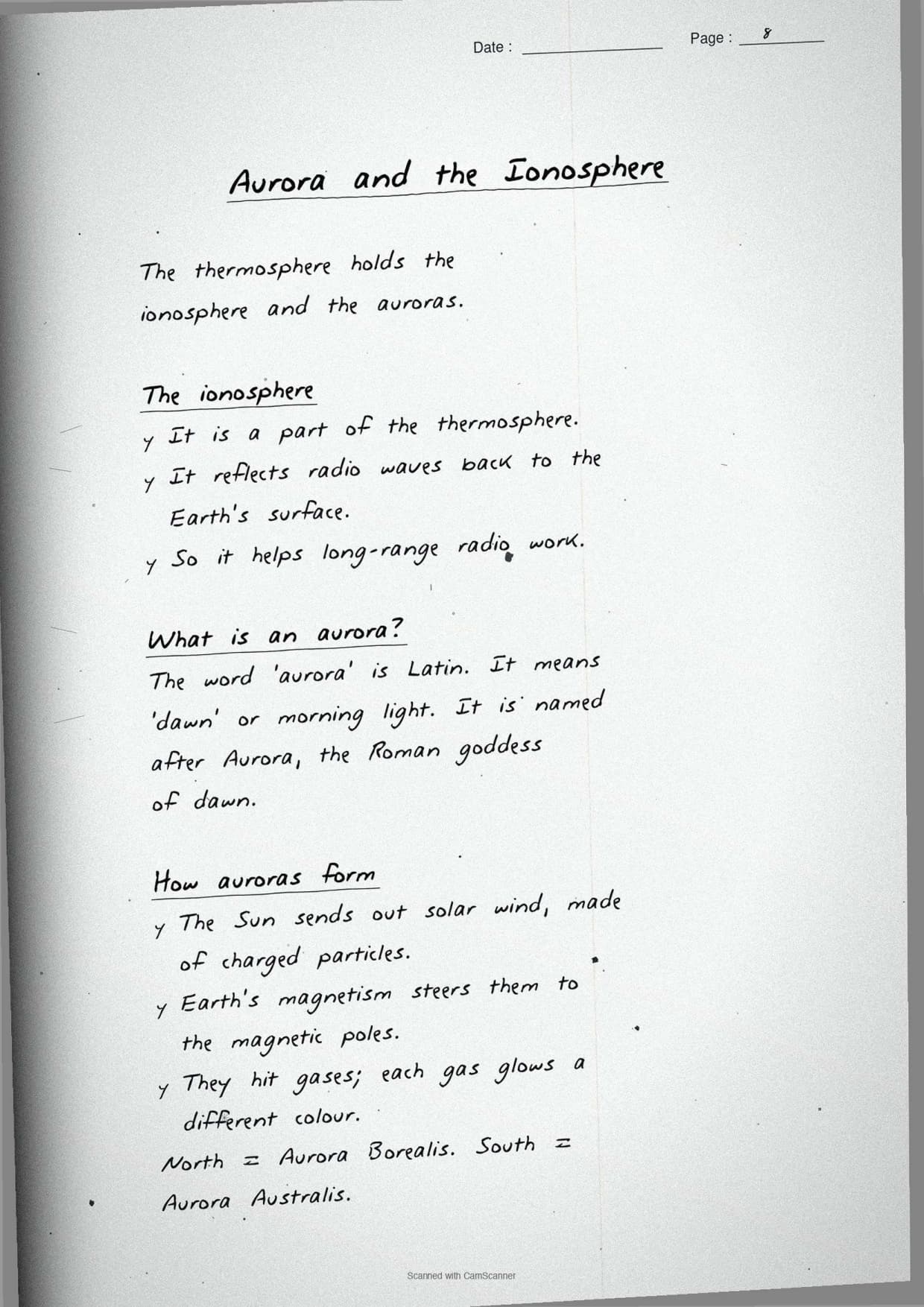
| Thermosphere | 80 to 700 km | Auroras and radio waves; temperature rises. |
| Exosphere | topmost | Very thin air; light gases escape to space. |
The notes flag one trap in red: temperature does not fall all the way up. It drops in the troposphere and mesosphere but rises again in the stratosphere and thermosphere. A hand-drawn graph shows it.
Weather, Climate, and the Five Elements Marked by Hand
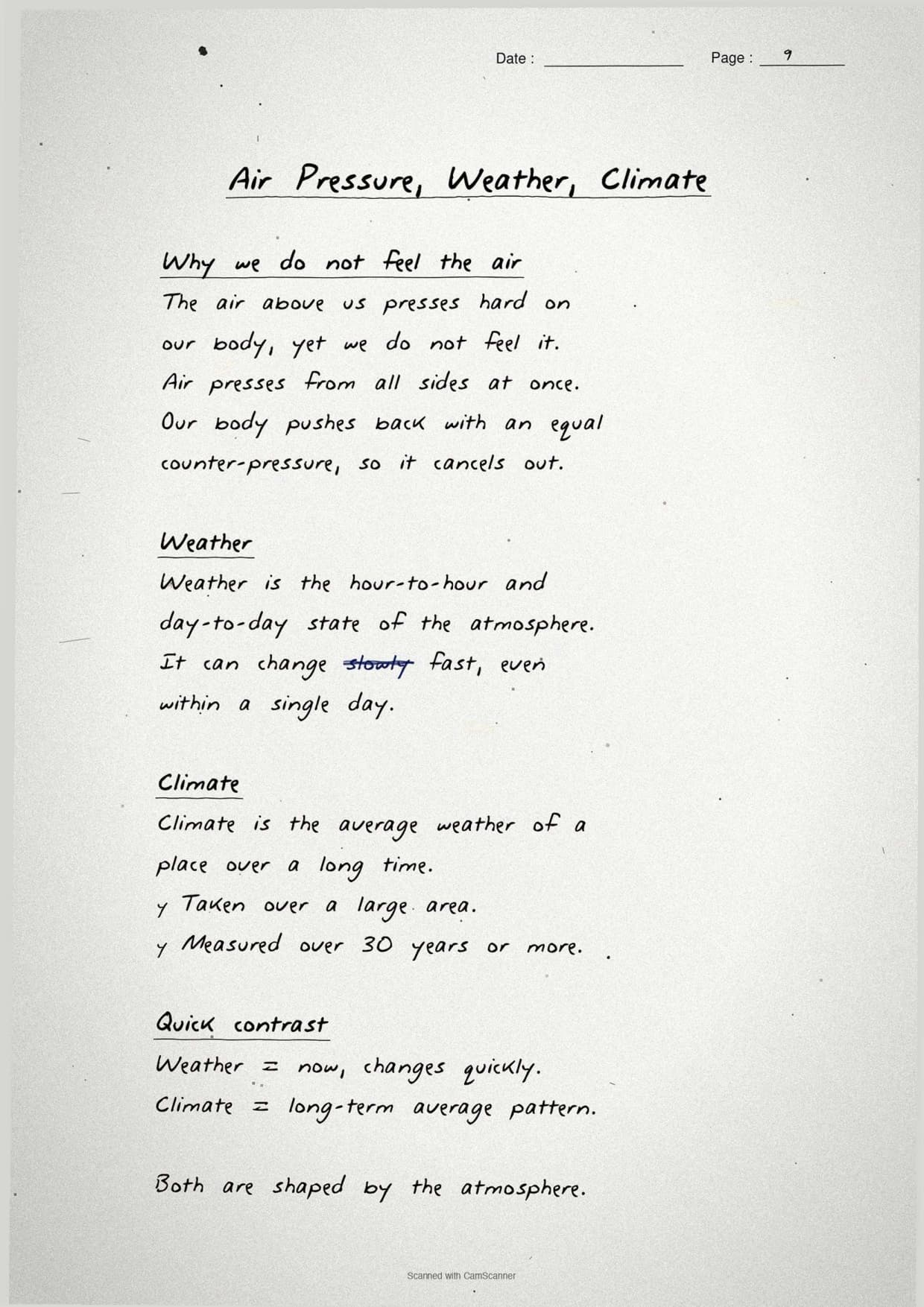
Weather and climate sound alike, so the notes place them side by side in a box. This pair is the most common one-mark question, so use the Class 9 Social Science Handwritten Notes Chapter 3 Atmosphere and Climate to fix it early.
| Point | Weather | Climate |
|---|---|---|
| Time span | Hour-to-hour and day-to-day | Average over 30 years or more |
| Area | One place | A large area |
| Clue word | "today" or "this week" | "usually" or "over many years" |
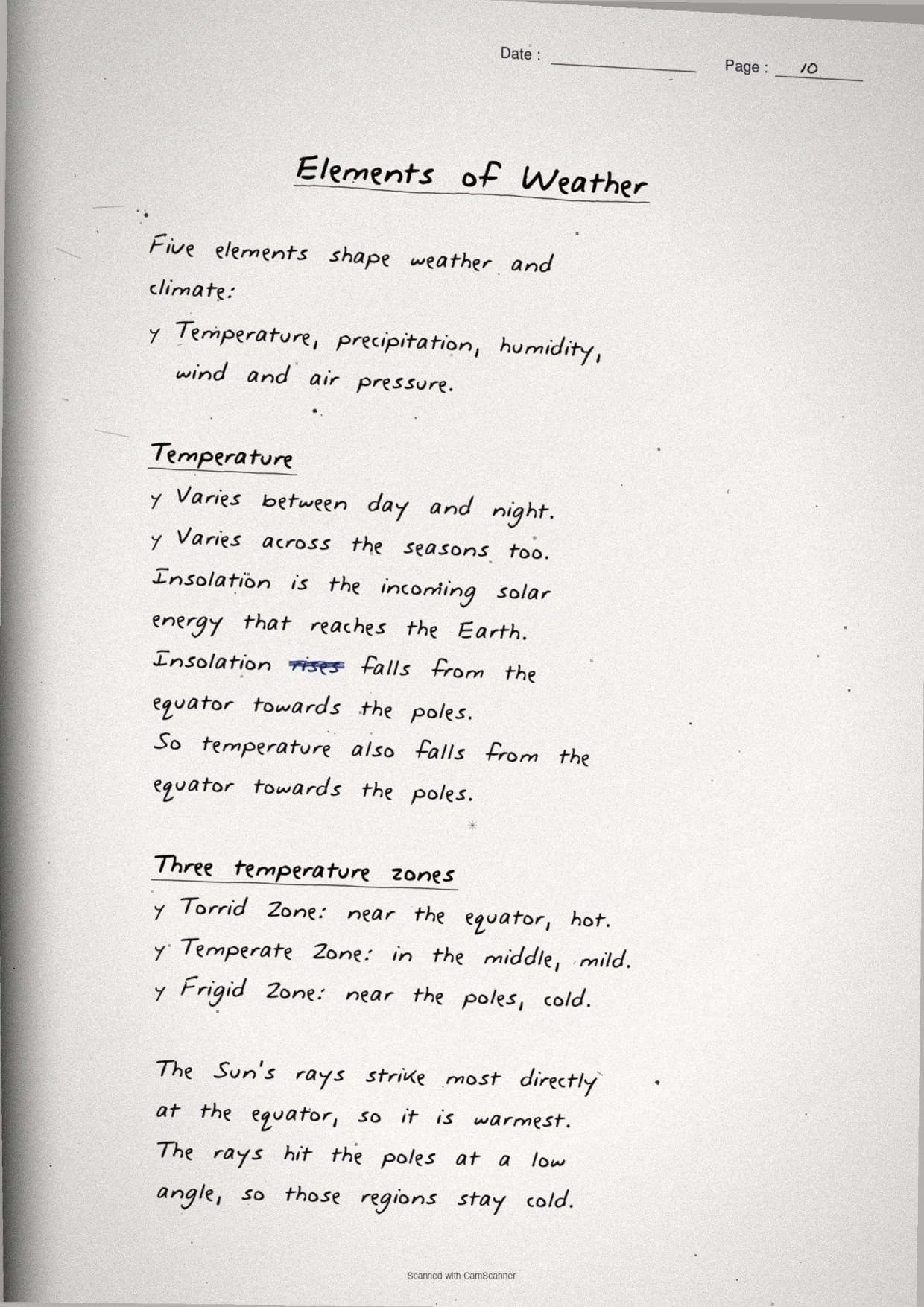
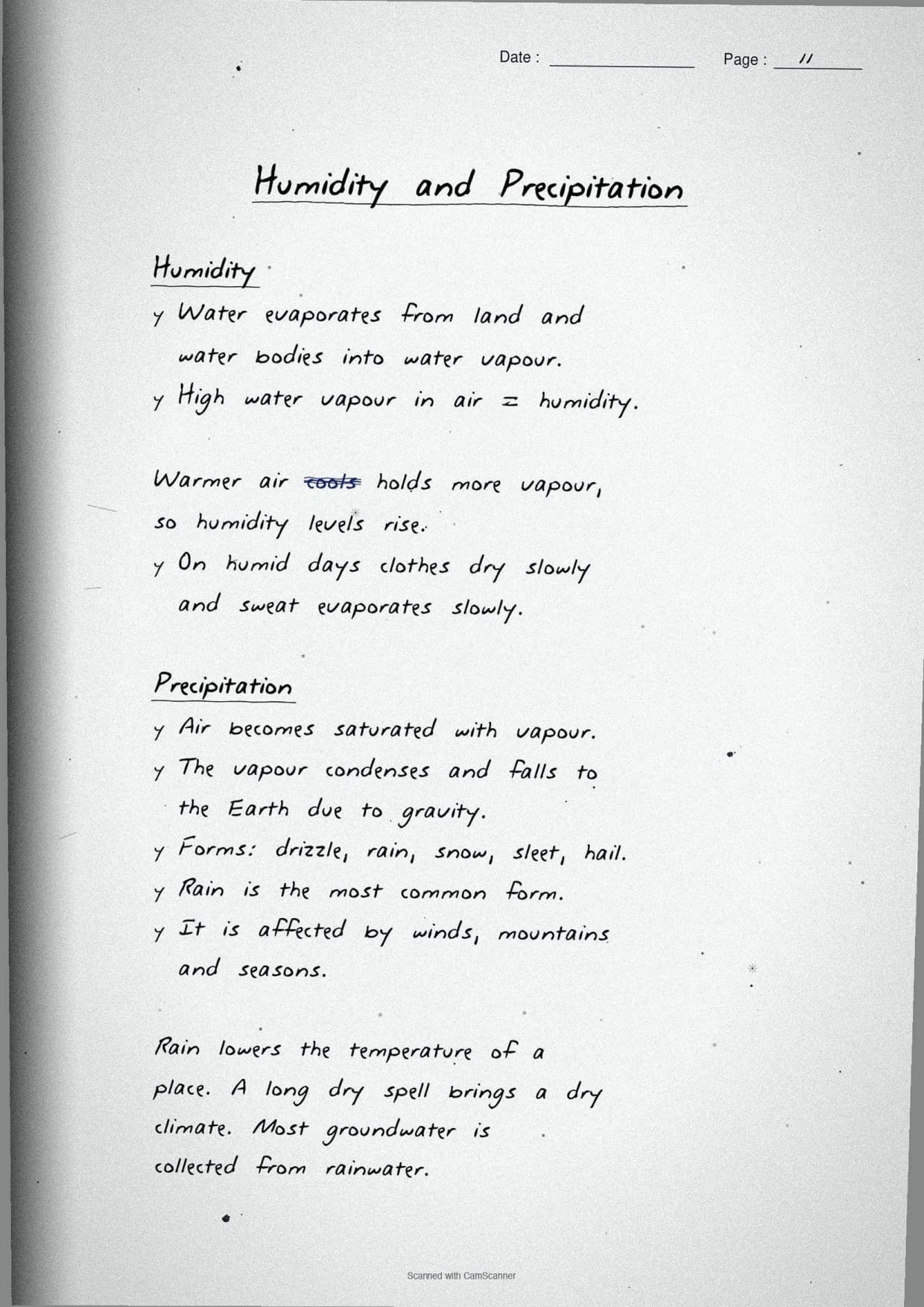
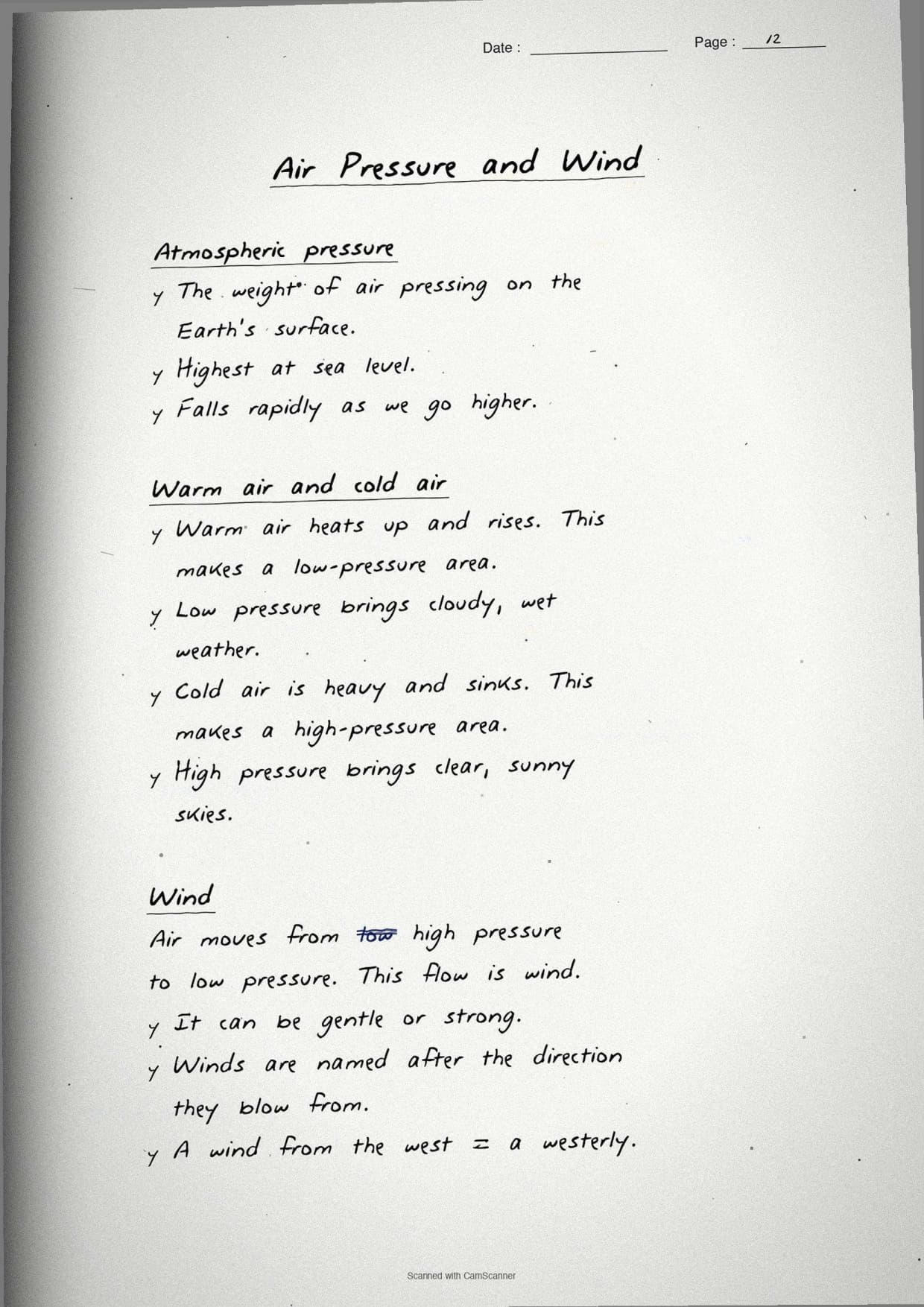
Five elements shape both weather and climate, and the notes list them with the mnemonic "Tall Hippos Prefer Wide Ponds" for temperature, humidity, precipitation, wind, and air pressure. Insolation drives temperature and splits the Earth into the Torrid, Temperate, and Frigid zones, while warm air makes low pressure and cold air makes high pressure.
Winds, Seasons, and the Monsoon Compared in the Notes
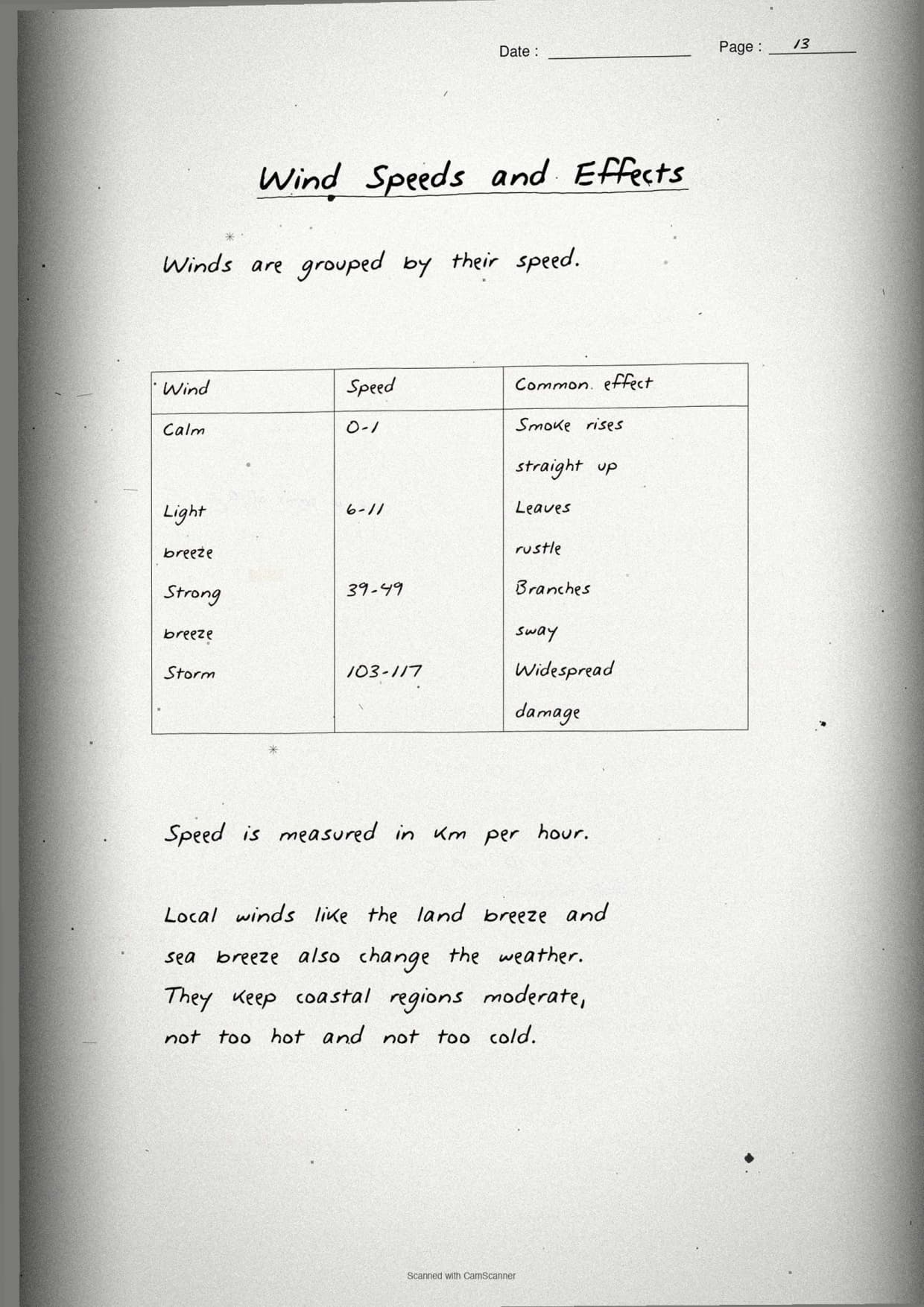
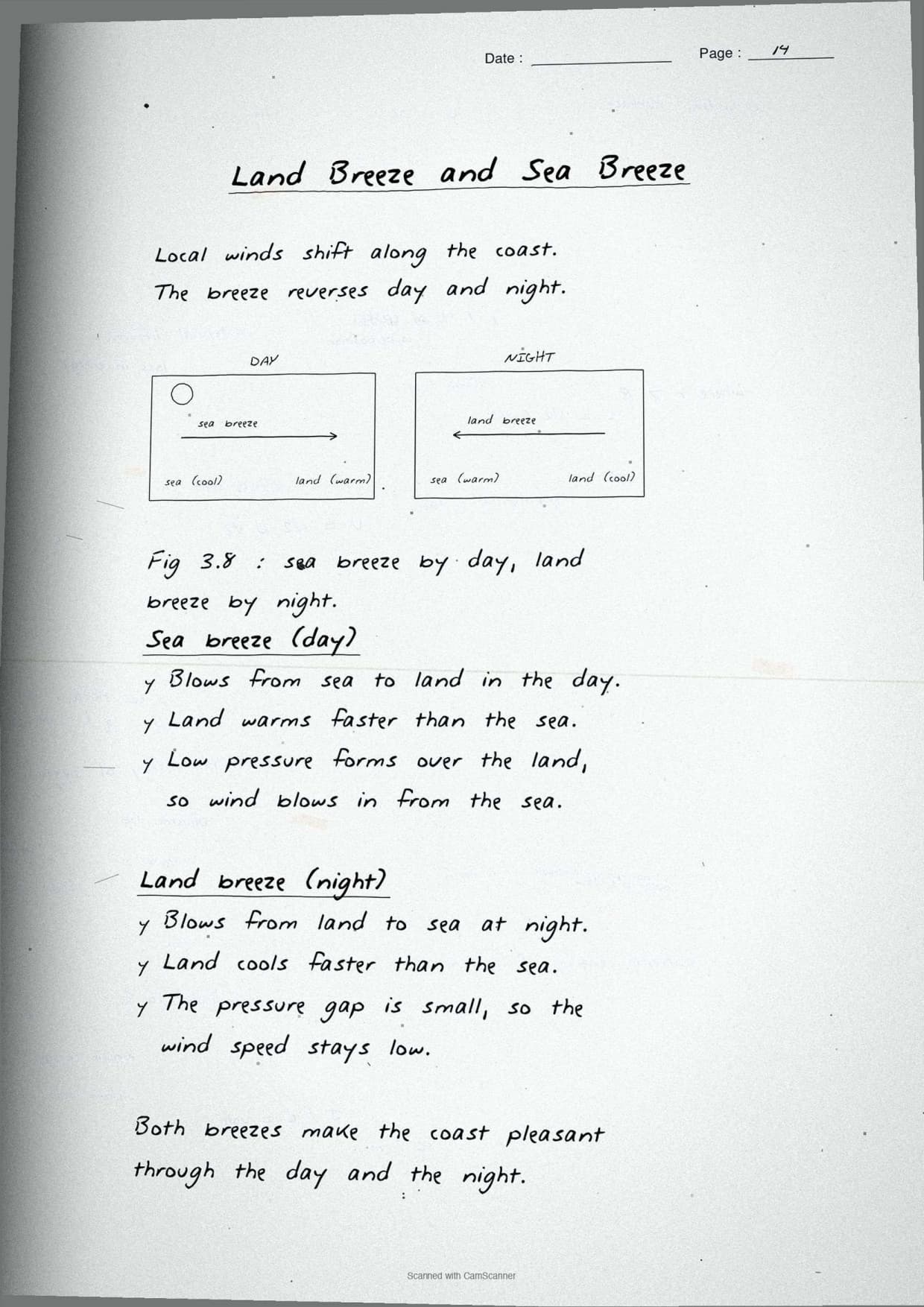
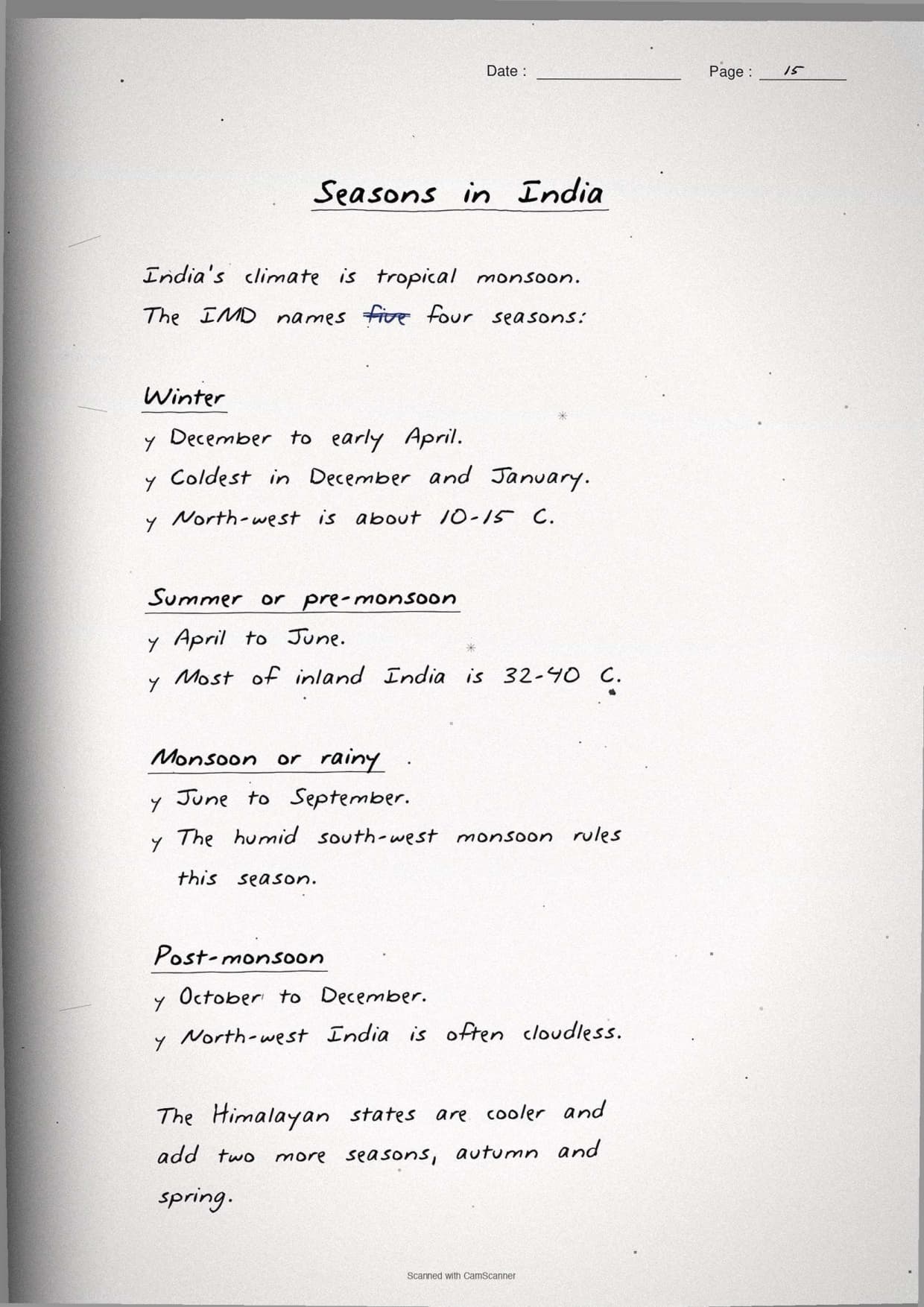
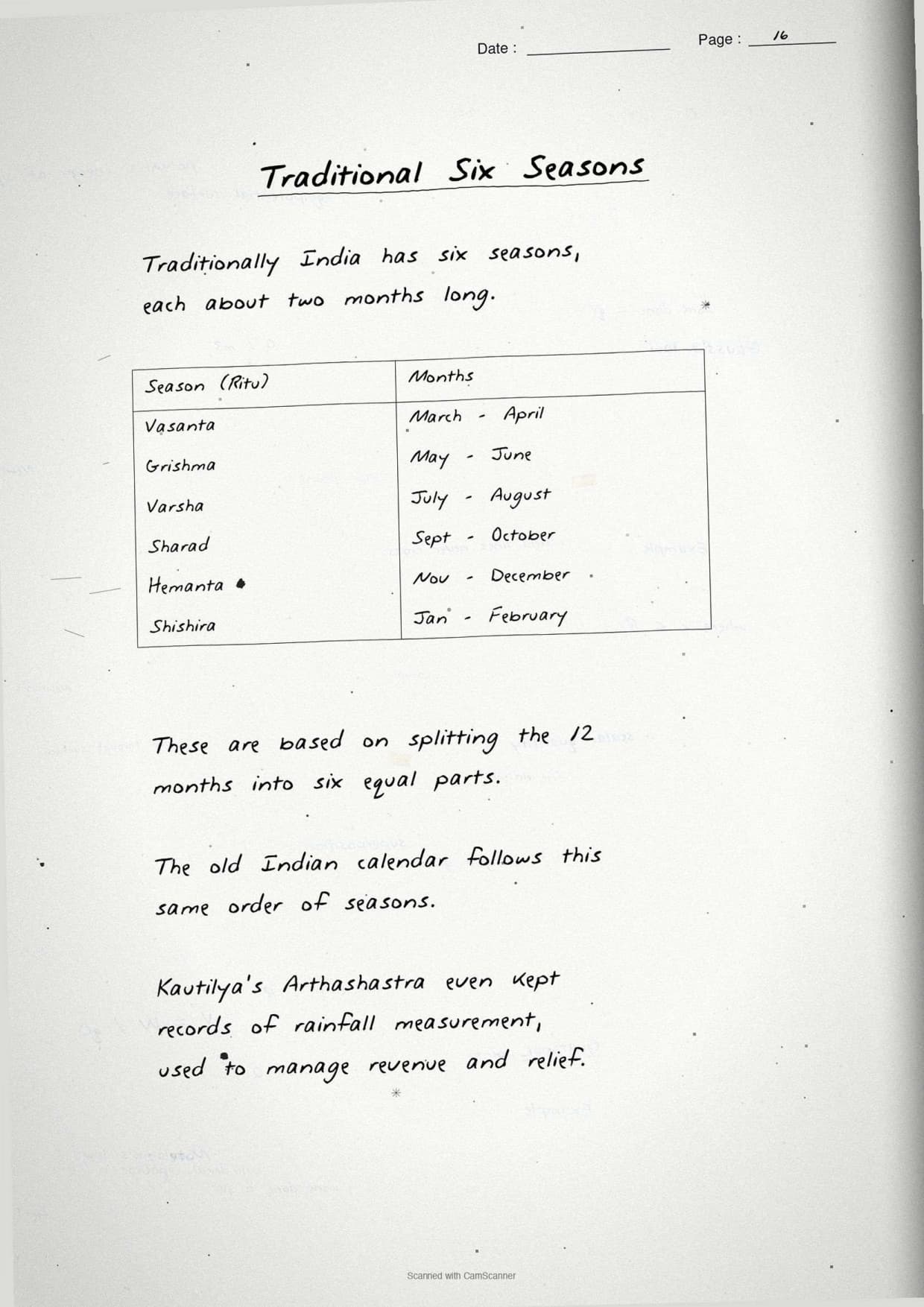
Wind is air moving from high pressure to low pressure, and a wind is named after the direction it blows from. Local winds get a small coast sketch: the sea breeze blows from sea to land by day, the land breeze from land to sea by night. India's four IMD seasons and six traditional ritus are boxed side by side.
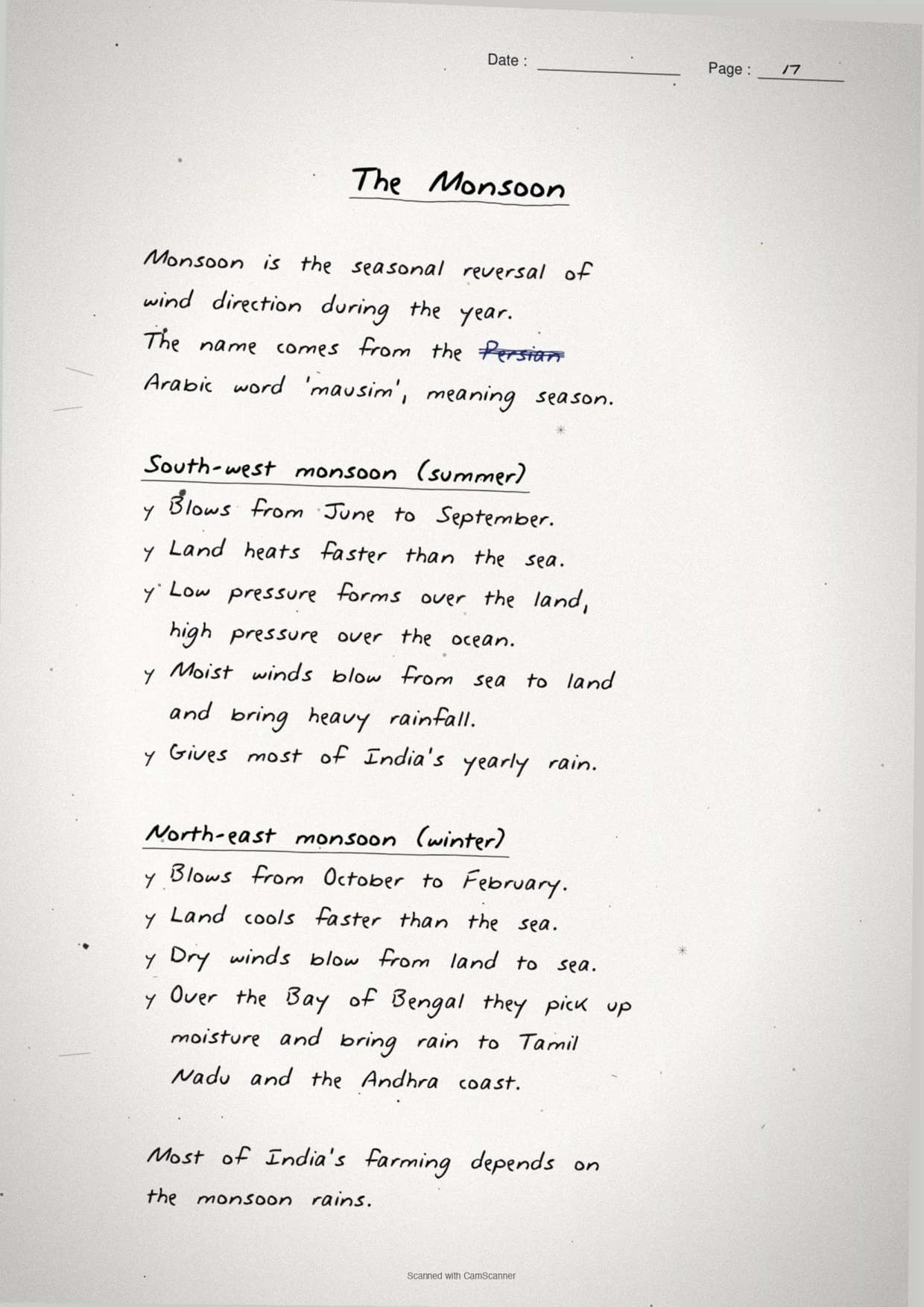
| Feature | South-west monsoon | North-east monsoon |
|---|---|---|
| Season | June to September | October to February |
| Wind direction | Sea to land | Land to sea |
| Nature | Warm and moist | Cool and dry |
| Rainfall | Most of India's rain | East coast, mainly Tamil Nadu |
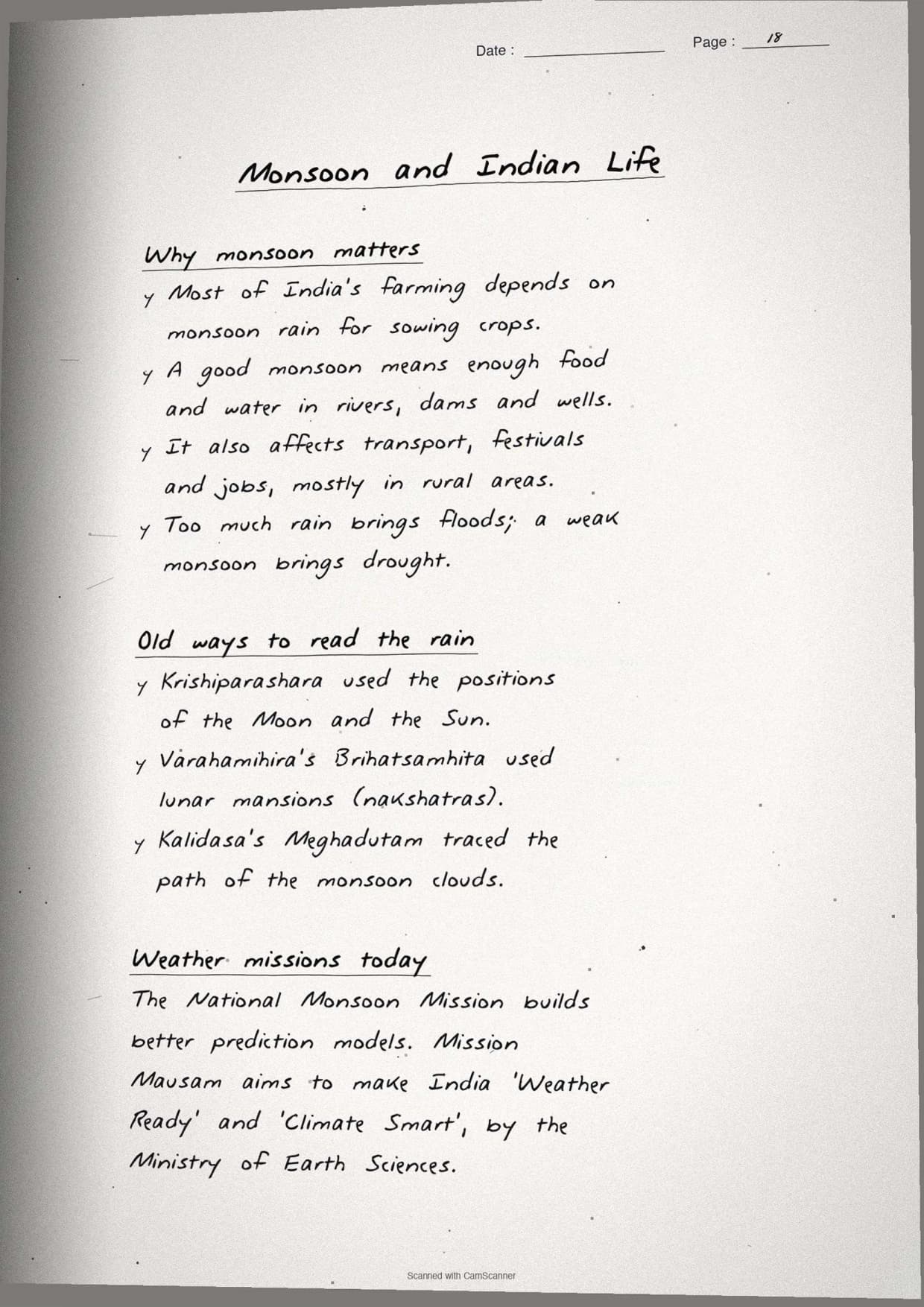
The notes sum the monsoon with the line "Summer Sea, Winter Land": the summer monsoon blows in from the sea, and the winter monsoon blows out from the land. A blue note adds that most of India's farming depends on south-west monsoon rain.
Climate Change and Carbon Footprint Notes for Chapter 3
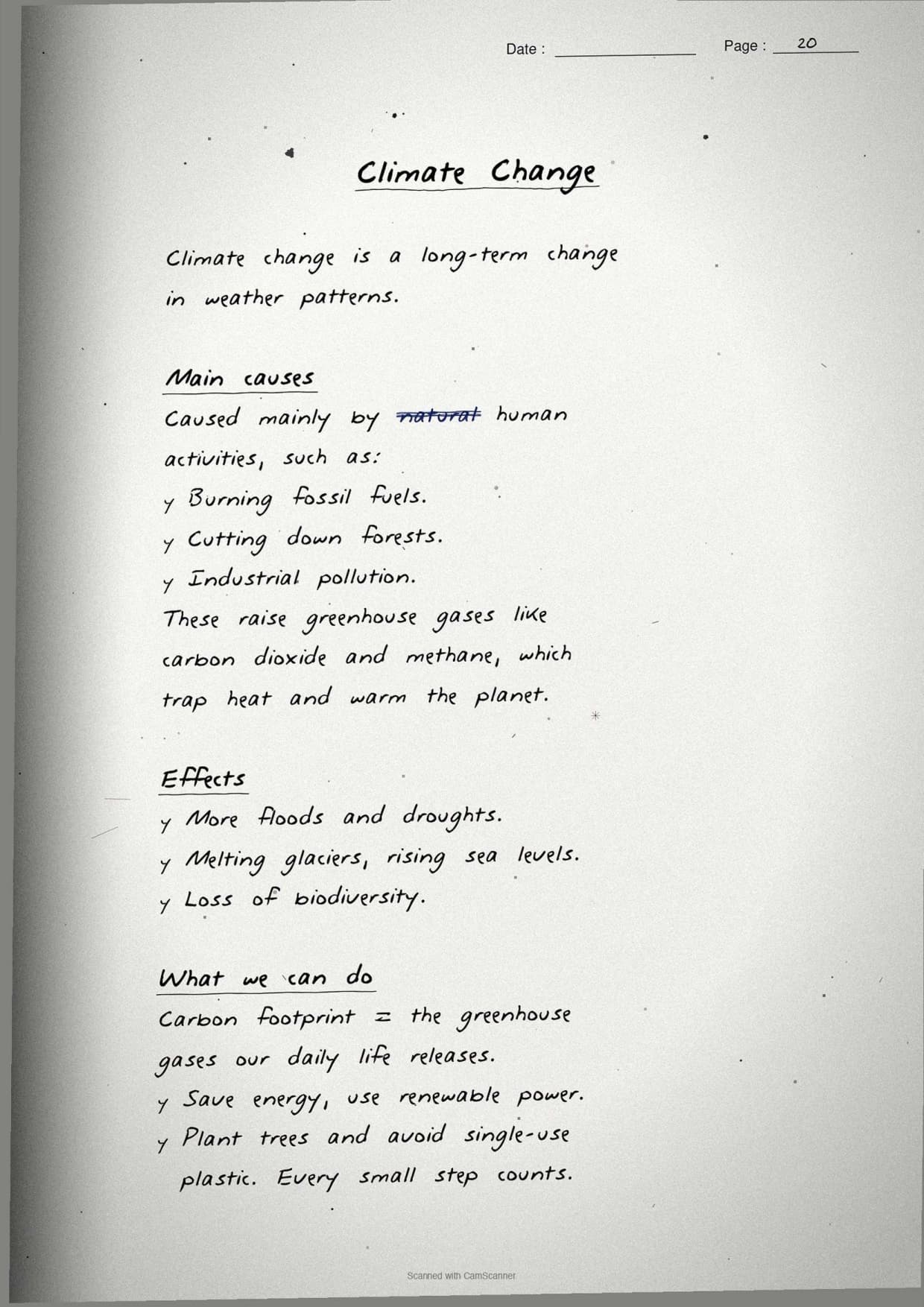
The last part turns to climate change, the long-term shift in weather driven by greenhouse gases like carbon dioxide and methane. The notes draw the chain as boxes: burning fuel and cutting forests release gases, the gases trap heat, and global warming follows.
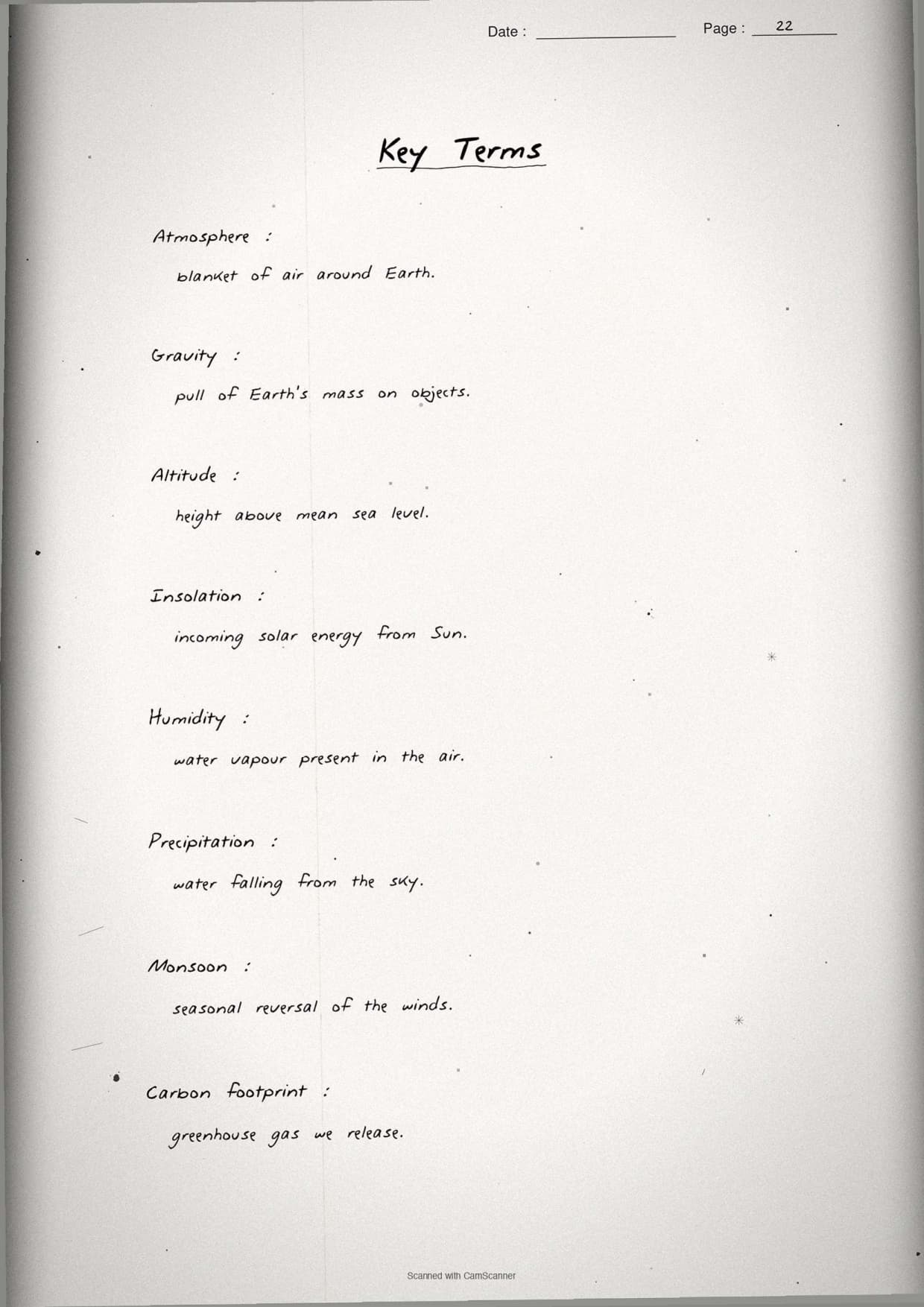
- Carbon footprint: the total greenhouse gas from your daily travel, energy use, and shopping.
- Cut it by: cycling short trips, switching off unused lights and fans, saving water, and skipping single-use plastic.
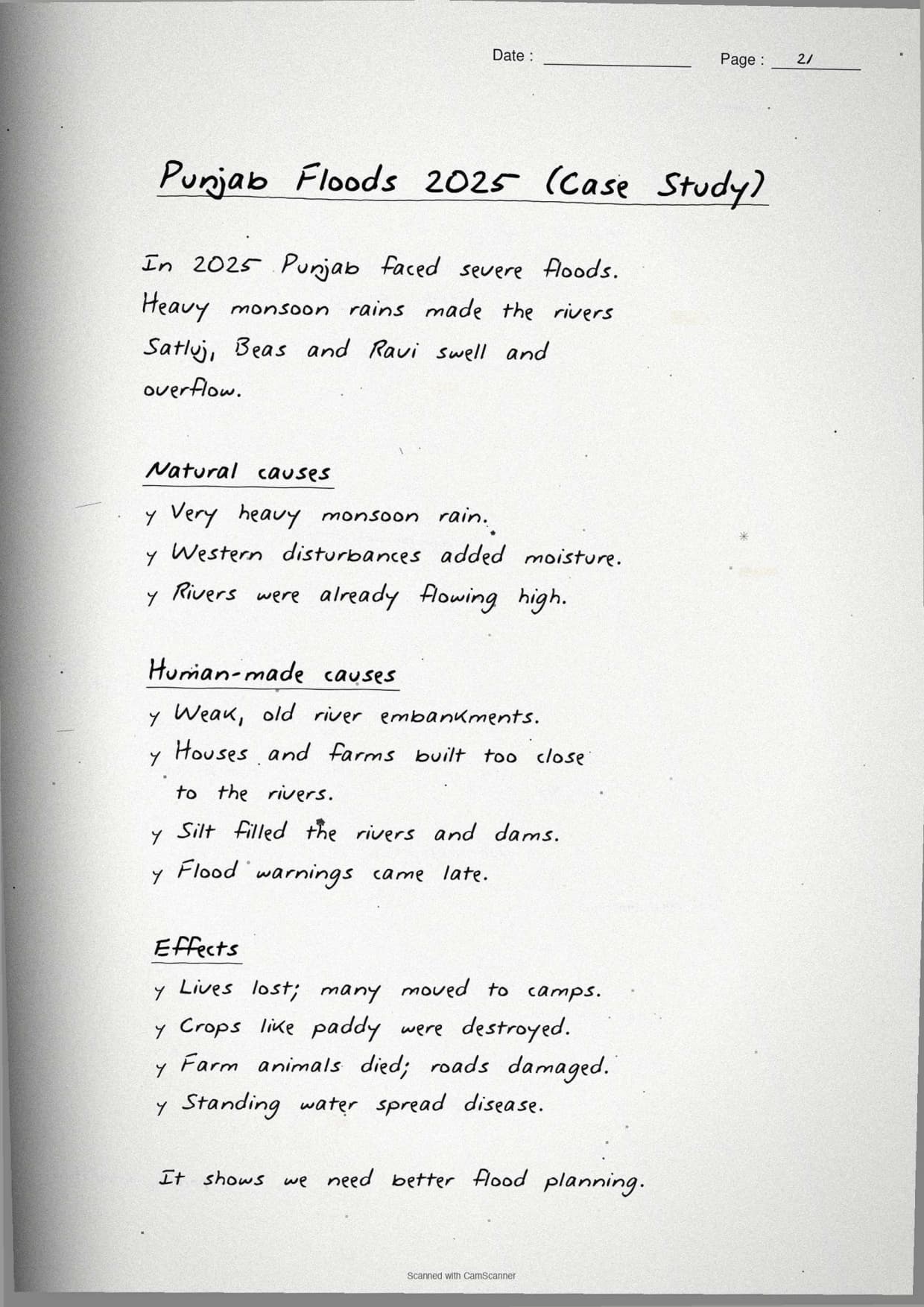
- Case note in blue: the Punjab floods of 2025, where heavy monsoon rain and weak embankments made the Satluj, Beas, and Ravi overflow.
Common Mistakes in Atmosphere and Climate Flagged in Red
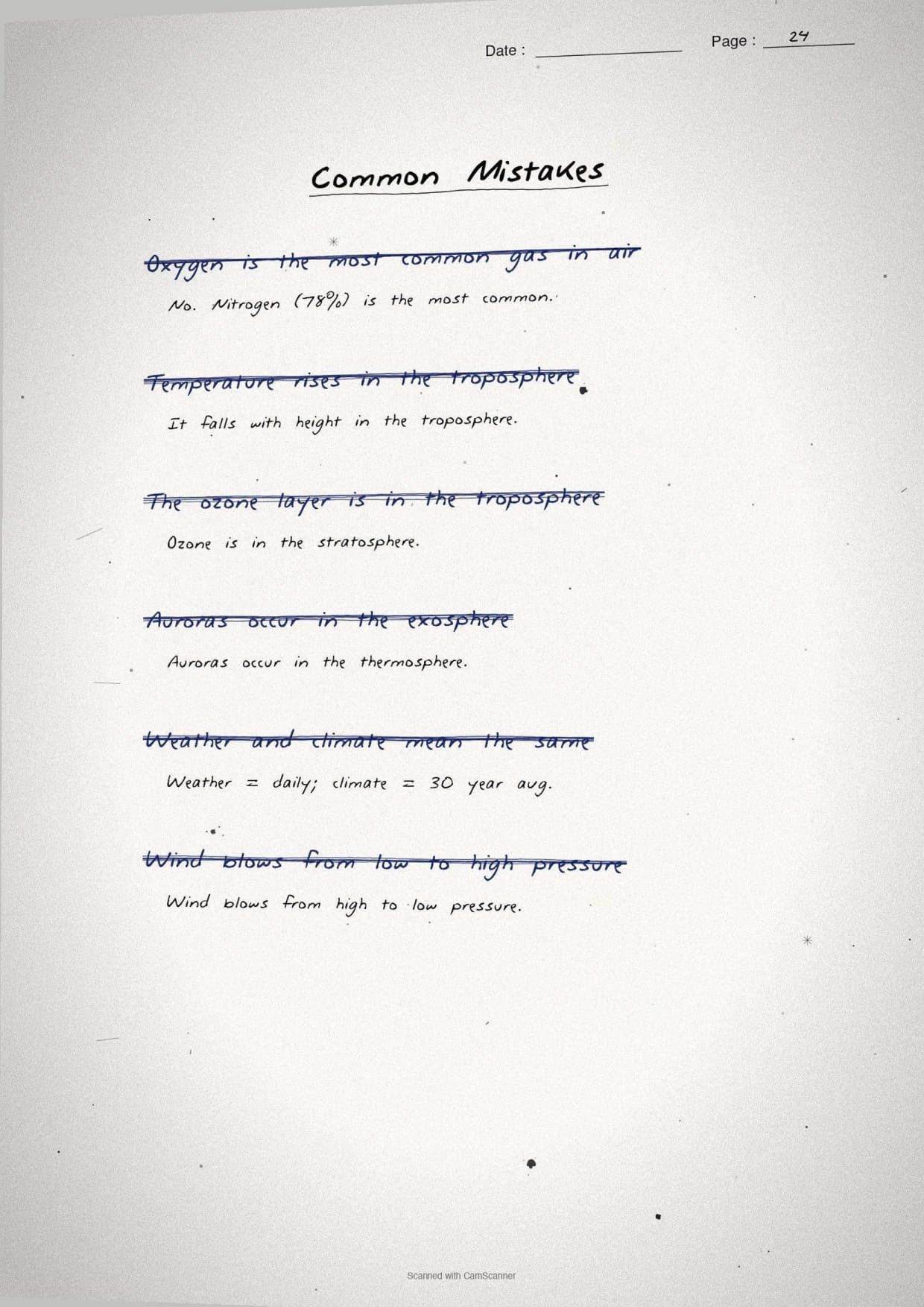
Most lost marks in this chapter come from small mix-ups, not hard ideas. The notes circle these in red so you fix them as you revise.
- Saying temperature always falls with height; it rises again in the stratosphere and thermosphere.
- Confusing weather (short-term, one place) with climate (long-term, large area).
- Swapping the monsoons; the south-west is summer and wet, the north-east is winter and dry.
- Naming a wind by where it goes; a wind is named after where it blows from.
Last-Minute Revision with These Handwritten Notes
The night before your exam, the Class 9 Social Science Handwritten Notes Chapter 3 Atmosphere and Climate work as a quick skim. Every boxed definition and red heading is a checkpoint, so you cover the whole chapter in under an hour.
- State the shares of nitrogen and oxygen in the atmosphere.
- Name the five layers in order and one feature of each.
- Give the difference between weather and climate in one line.
- Explain how the two monsoons form.
- List three ways to reduce your carbon footprint.
- Read the red mistake notes before you close the file.
More Atmosphere and Climate Class 9 Social Science Resources
Use the table below to open other Collegedunia resources for this chapter of the new Understanding Society book.
| Resource | Open |
|---|---|
| Handwritten Notes | Atmosphere and Climate Class 9 Social Science Handwritten Notes |
| NCERT Solutions | Atmosphere and Climate Class 9 Social Science NCERT Solutions |
| Revision Notes | Atmosphere and Climate Class 9 Social Science Notes |
| NCERT Book PDF | Atmosphere and Climate Class 9 Social Science NCERT Book PDF |
NCERT Handwritten Notes for Class 9 Social Science: All Chapters
Use the table below to open the handwritten notes for any other chapter of the new Understanding Society book.
| Chapter | Handwritten Notes |
|---|---|
| Chapter 1 | Understanding Social Science |
| Chapter 2 | Shaping of the Earth's Surface |
| Chapter 3 | Atmosphere and Climate |
| Chapter 4 | Early Humans and Beginning of Civilisation |
| Chapter 5 | State and Society up to 1000 CE |
| Chapter 6 | Democracy |
| Chapter 7 | Elections |
| Chapter 8 | Building Blocks in Economics: The Problem of Choice |
| Chapter 9 | The Price Puzzle: What Drives the Market |
Atmosphere and Climate Class 9 Social Science Handwritten Notes FAQs
Ques. How many pages are the Atmosphere and Climate Class 9 Social Science handwritten notes?
Ans. The handwritten notes run to 22 pages. They cover the full chapter, from the make-up of the atmosphere and its five layers to weather and climate, winds, India's seasons, the two monsoons, and the carbon footprint, with a boxed definition for each term.
Ques. Are these real handwritten notes?
Ans. Yes. They are a topper's own clear handwritten revision notes, with each definition boxed, small maps and diagrams drawn by hand, and sub-headings colour-coded in red.
Ques. What is the difference between weather and climate in these notes?
Ans. Weather is the hour-to-hour and day-to-day state of the atmosphere at one place. Climate is the average of that weather over a large area for 30 years or more. The notes box both side by side so you never mix them up.
Ques. Is Atmosphere and Climate part of the new Class 9 Social Science book?
Ans. Yes. Atmosphere and Climate is Chapter 3 of the new Understanding Society textbook for the 2026-27 syllabus. It covers the atmosphere, its layers, weather and climate, India's seasons, the monsoon, and climate change.



Comments