




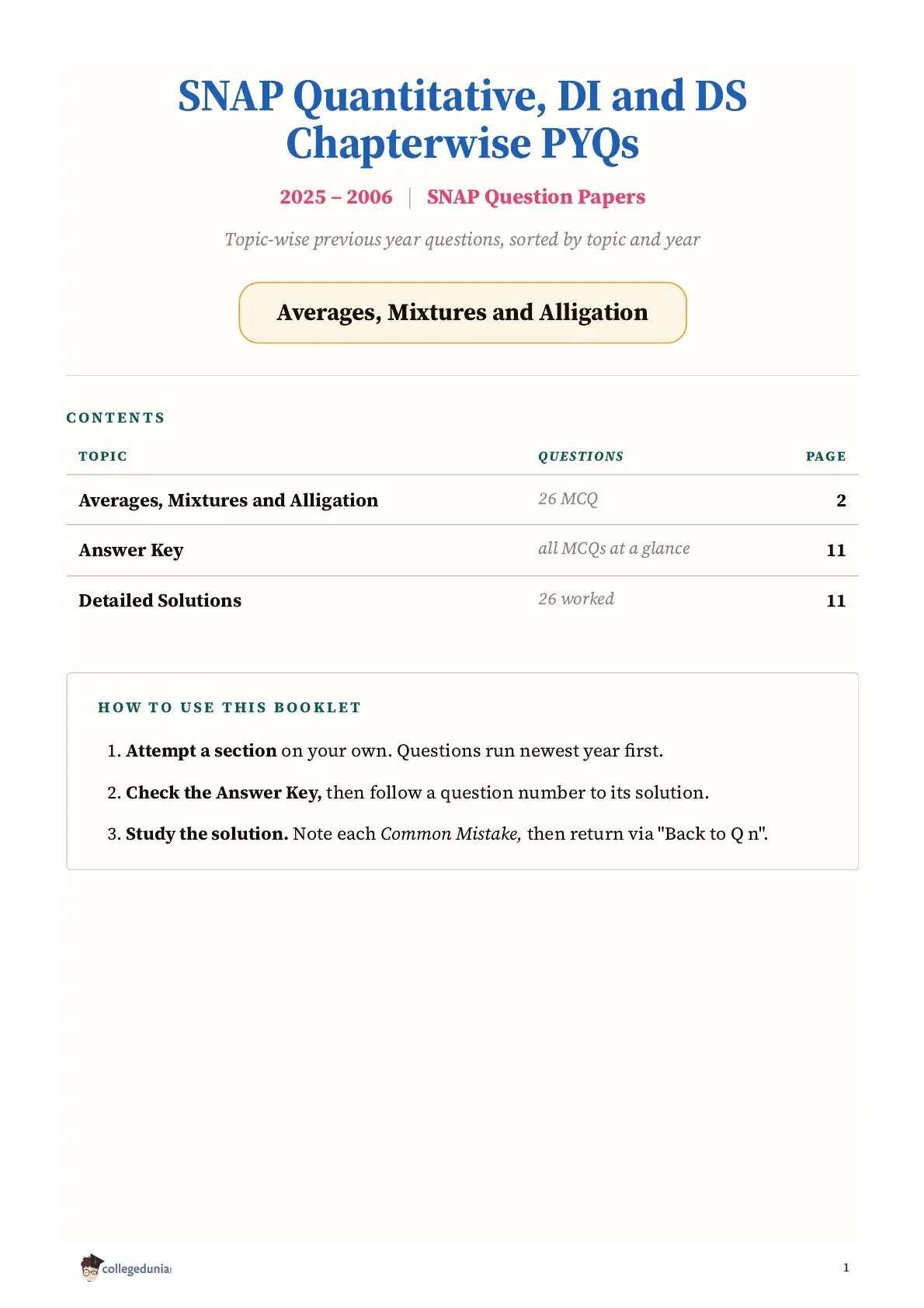
SNAP Averages, Mixtures and Alligation PYQ, free to download as a 38-page PDF. The bank carries 26 solved questions from the 2006 to 2025 papers and takes roughly two days to work through, so split it across plain averages one day and mixtures the next.
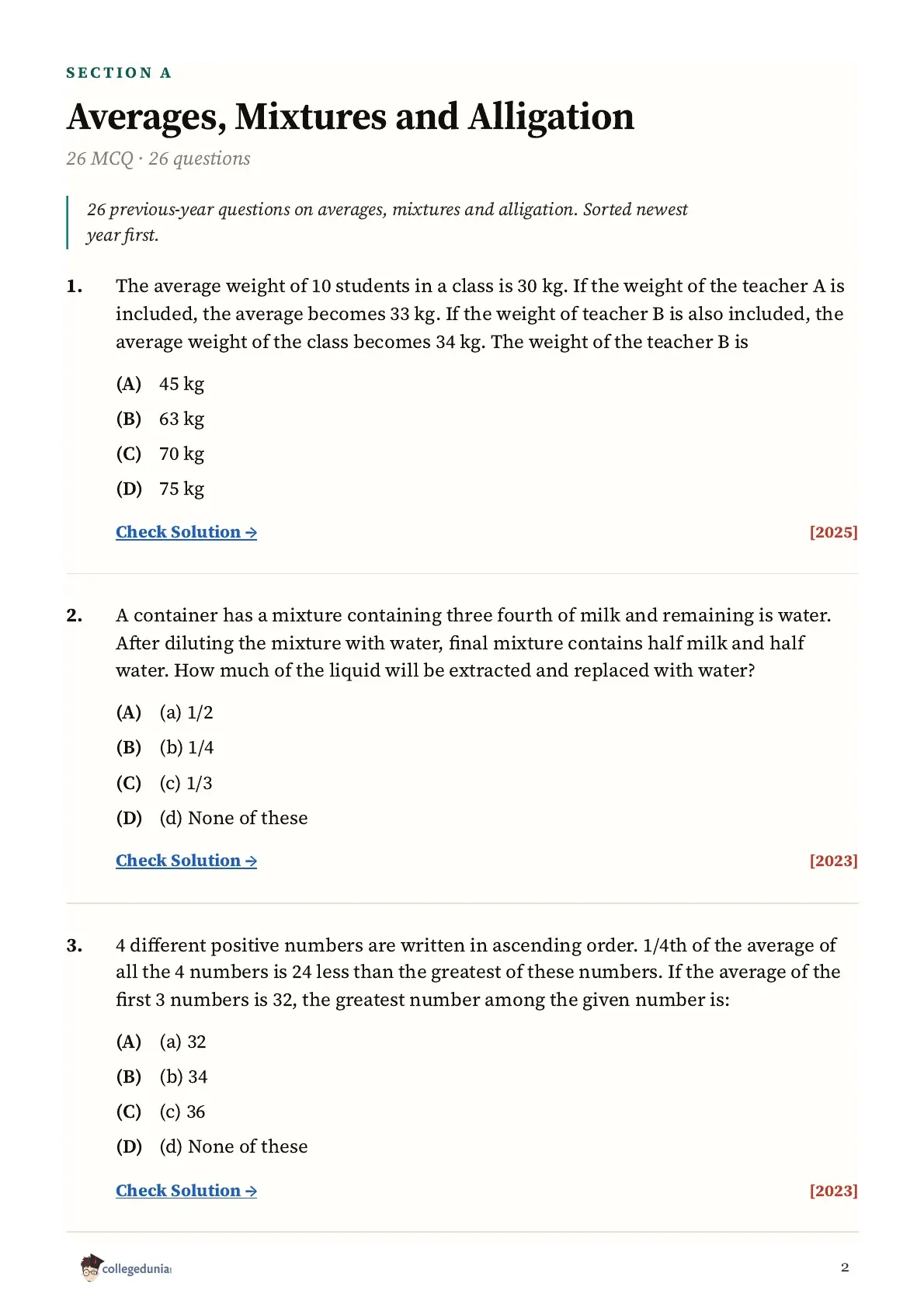
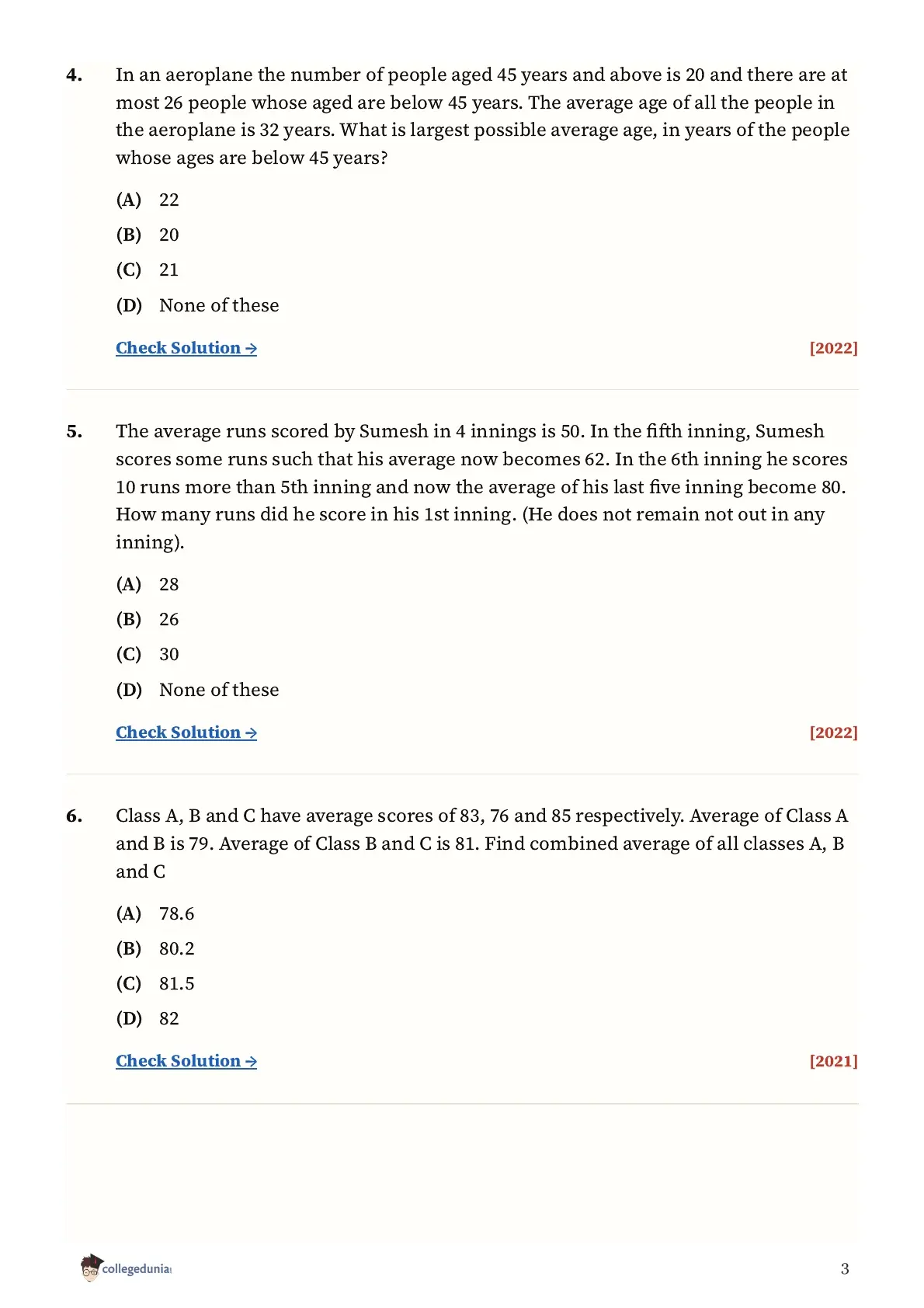
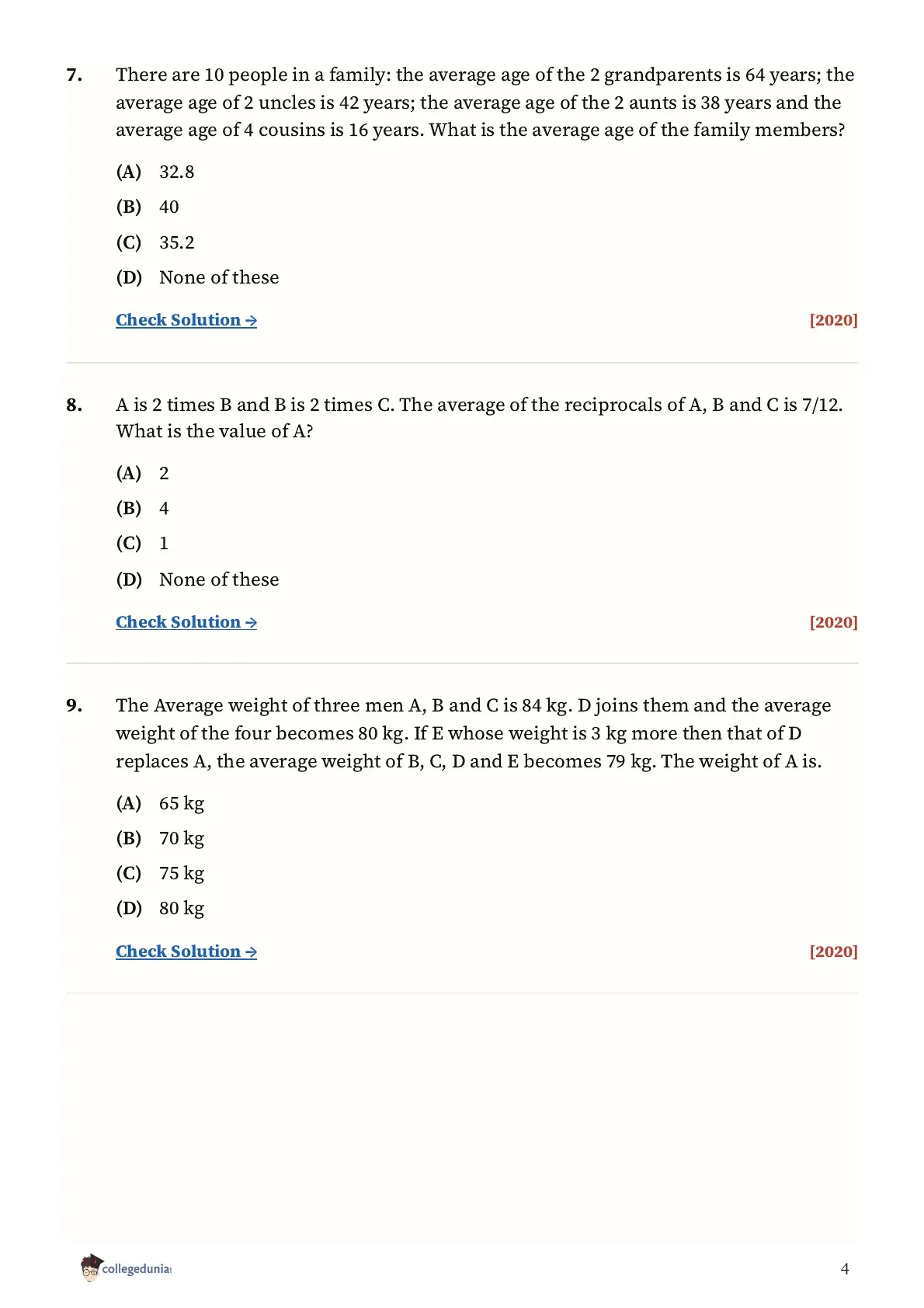
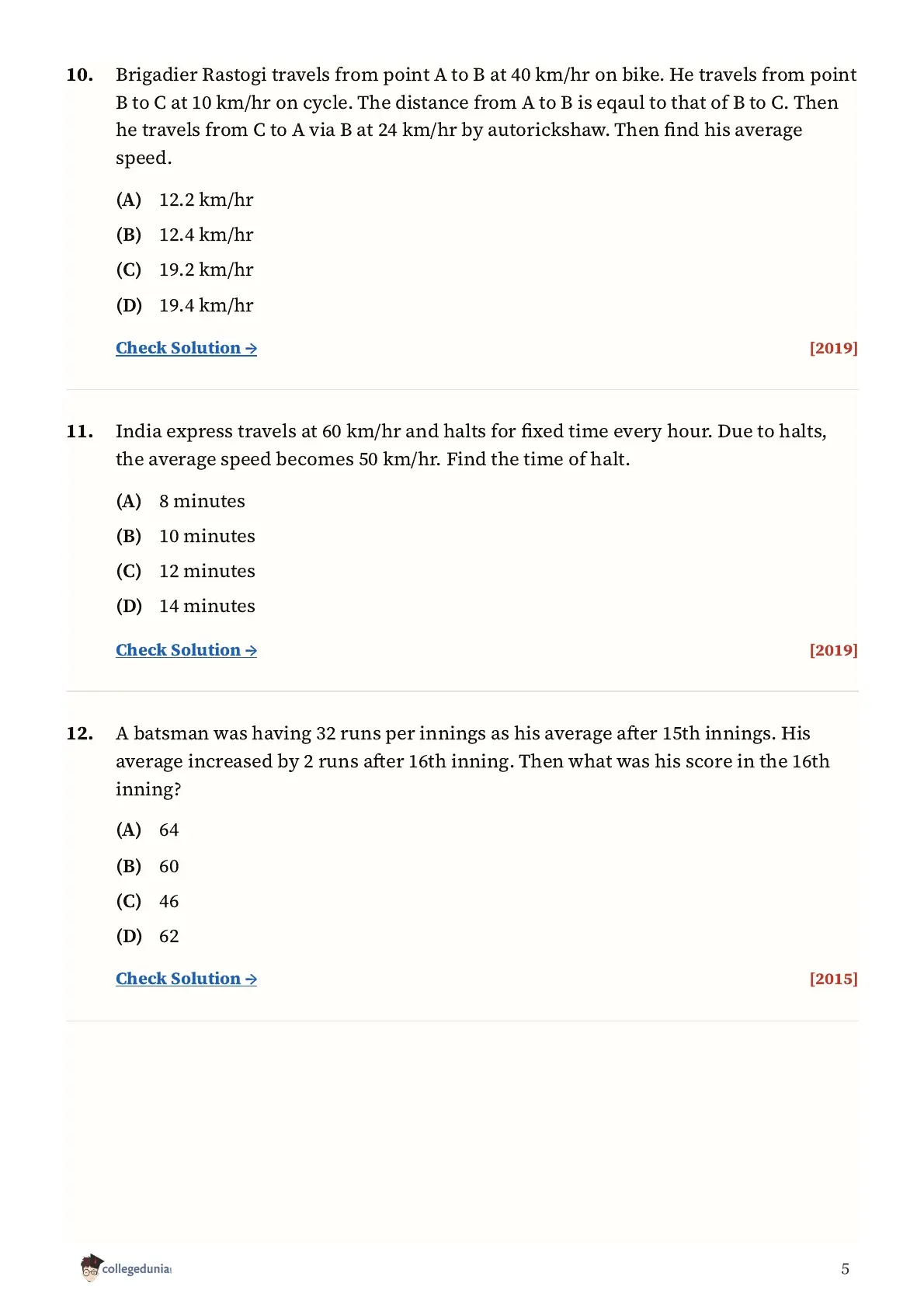
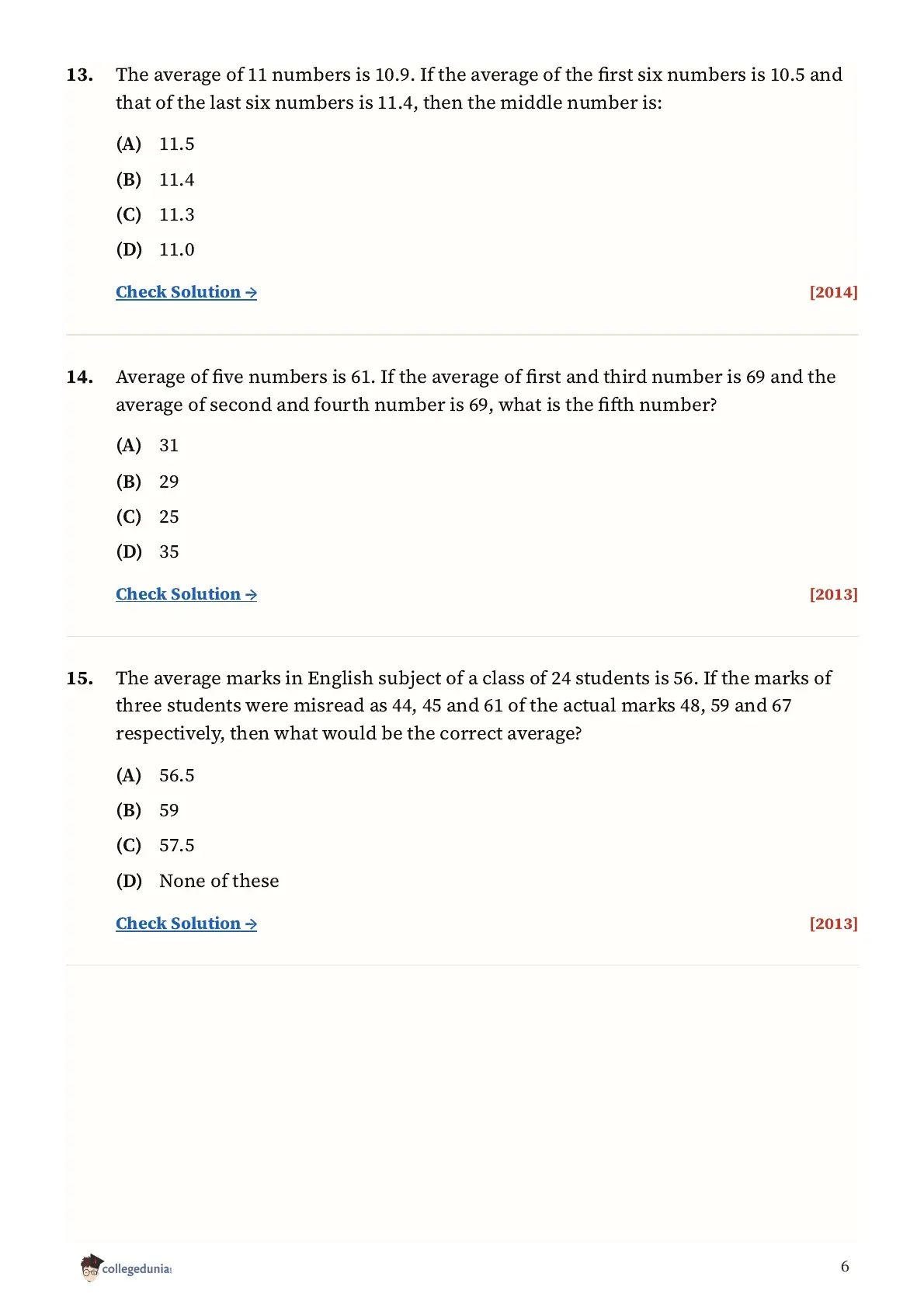
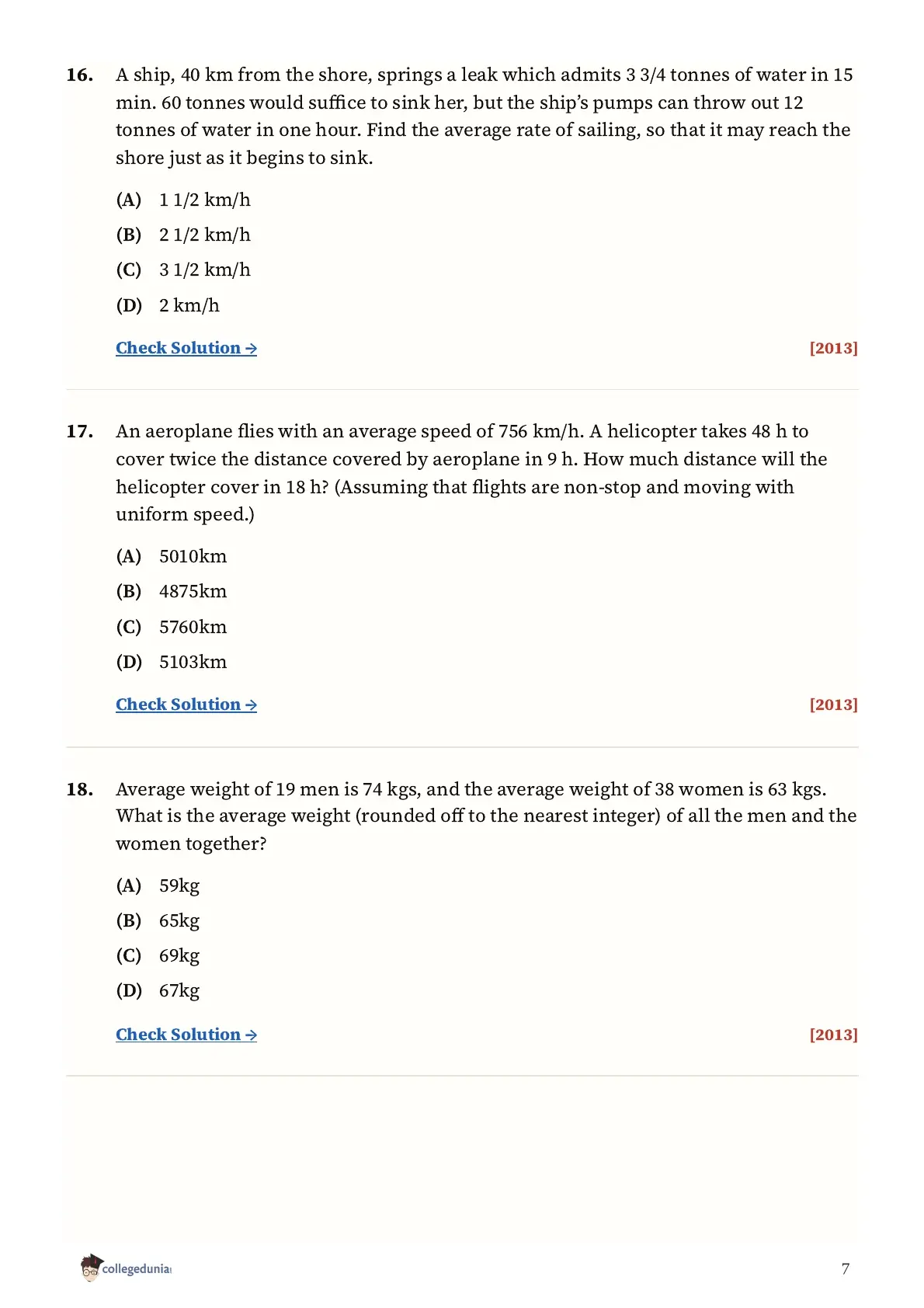
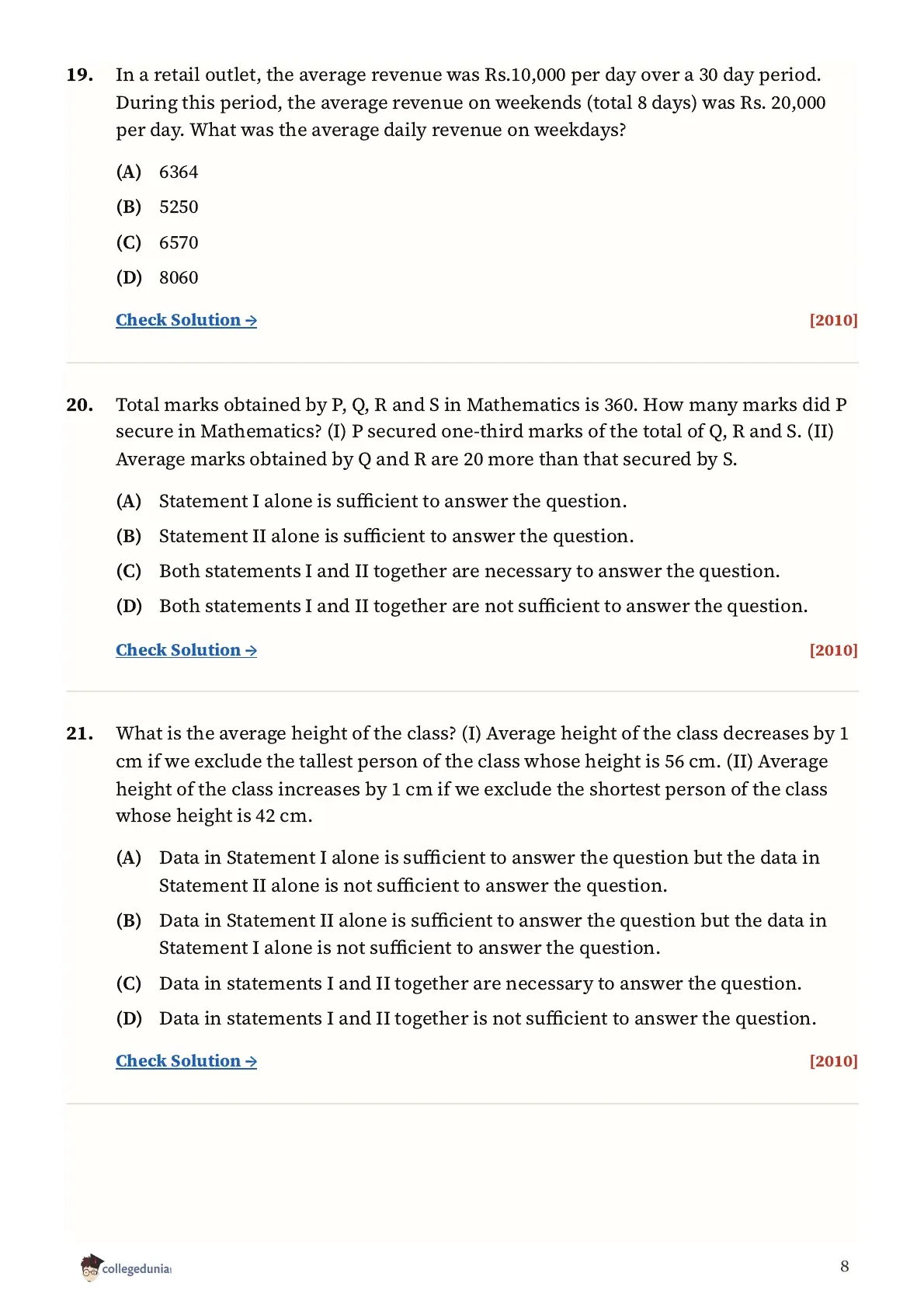
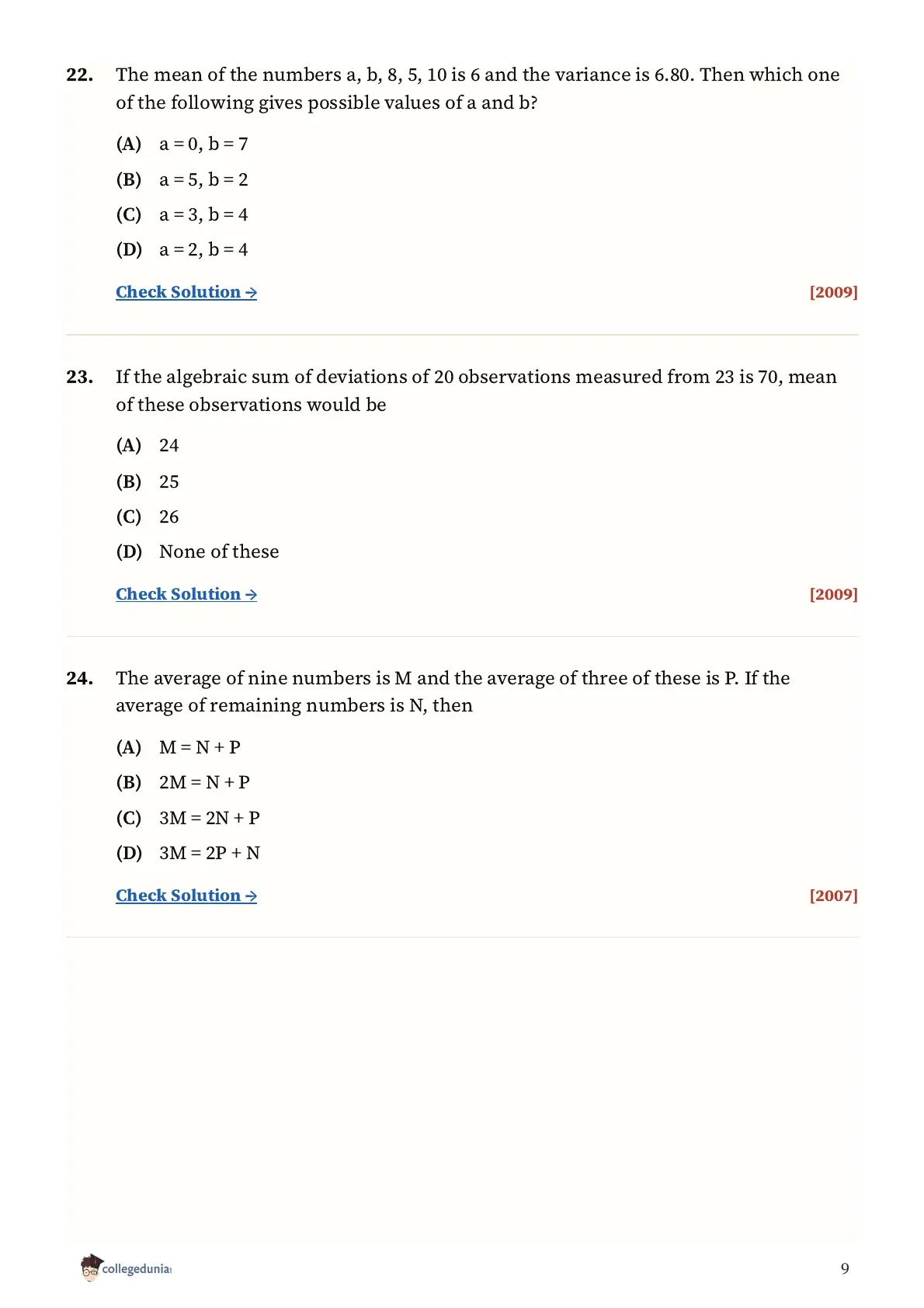
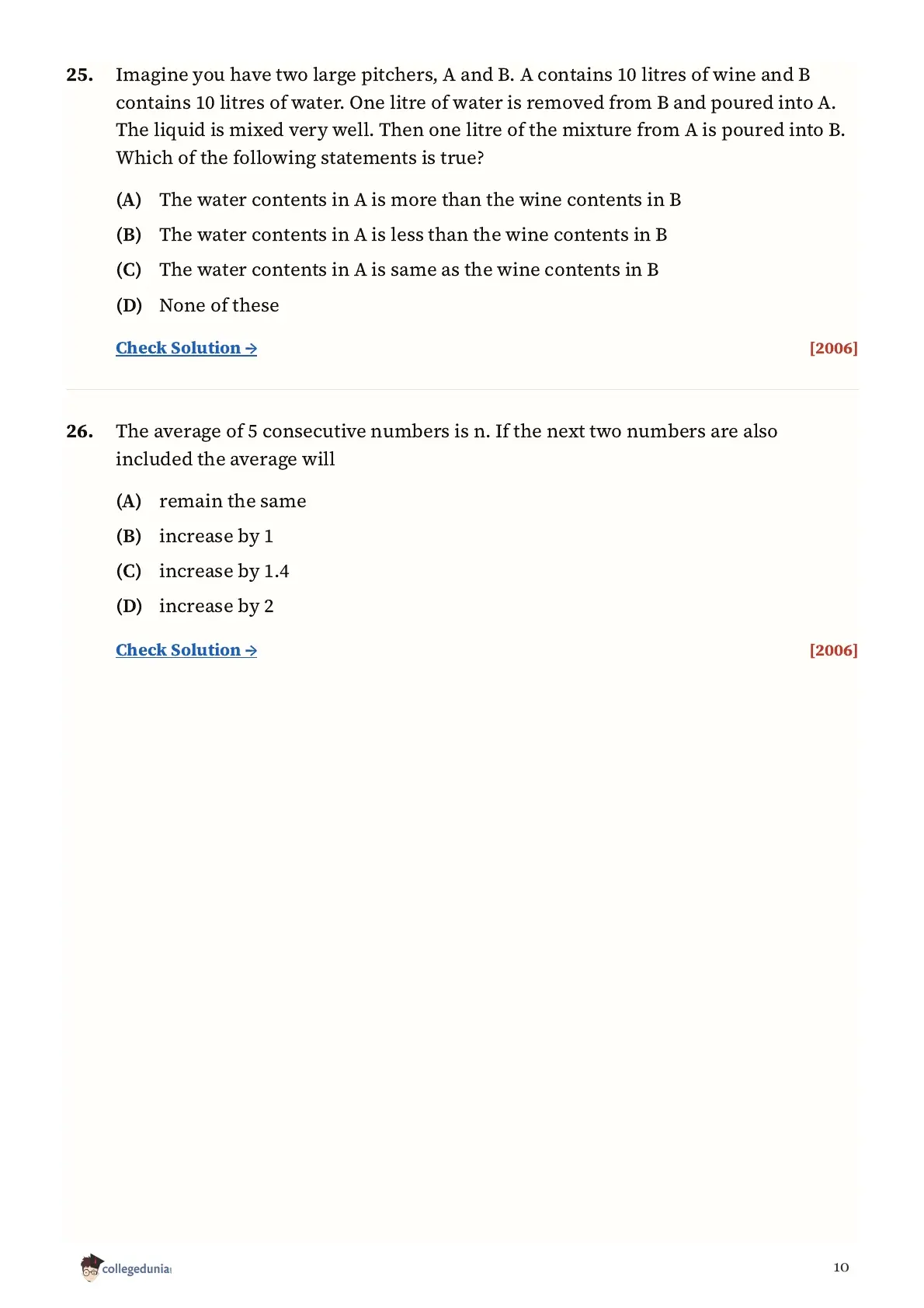
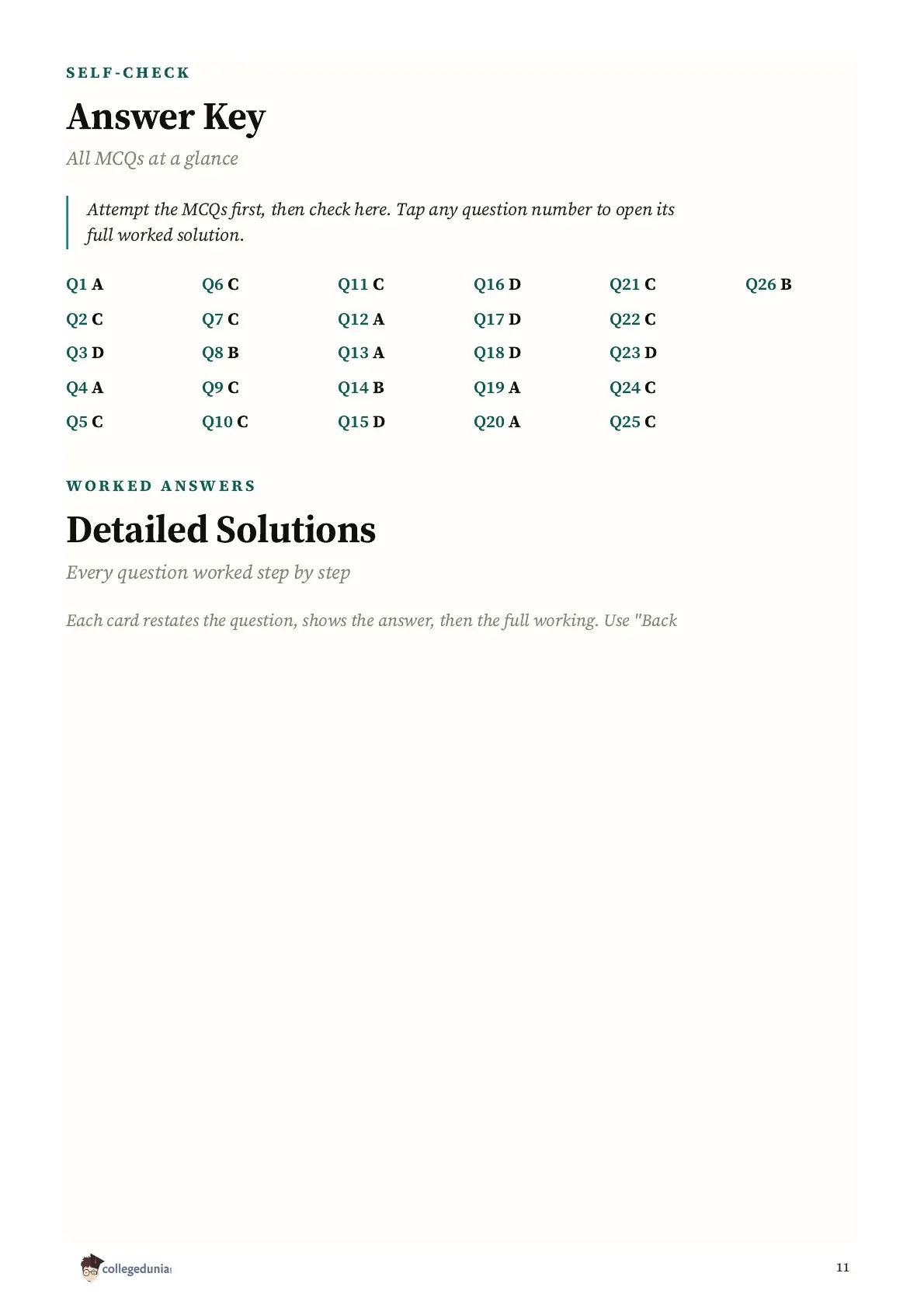
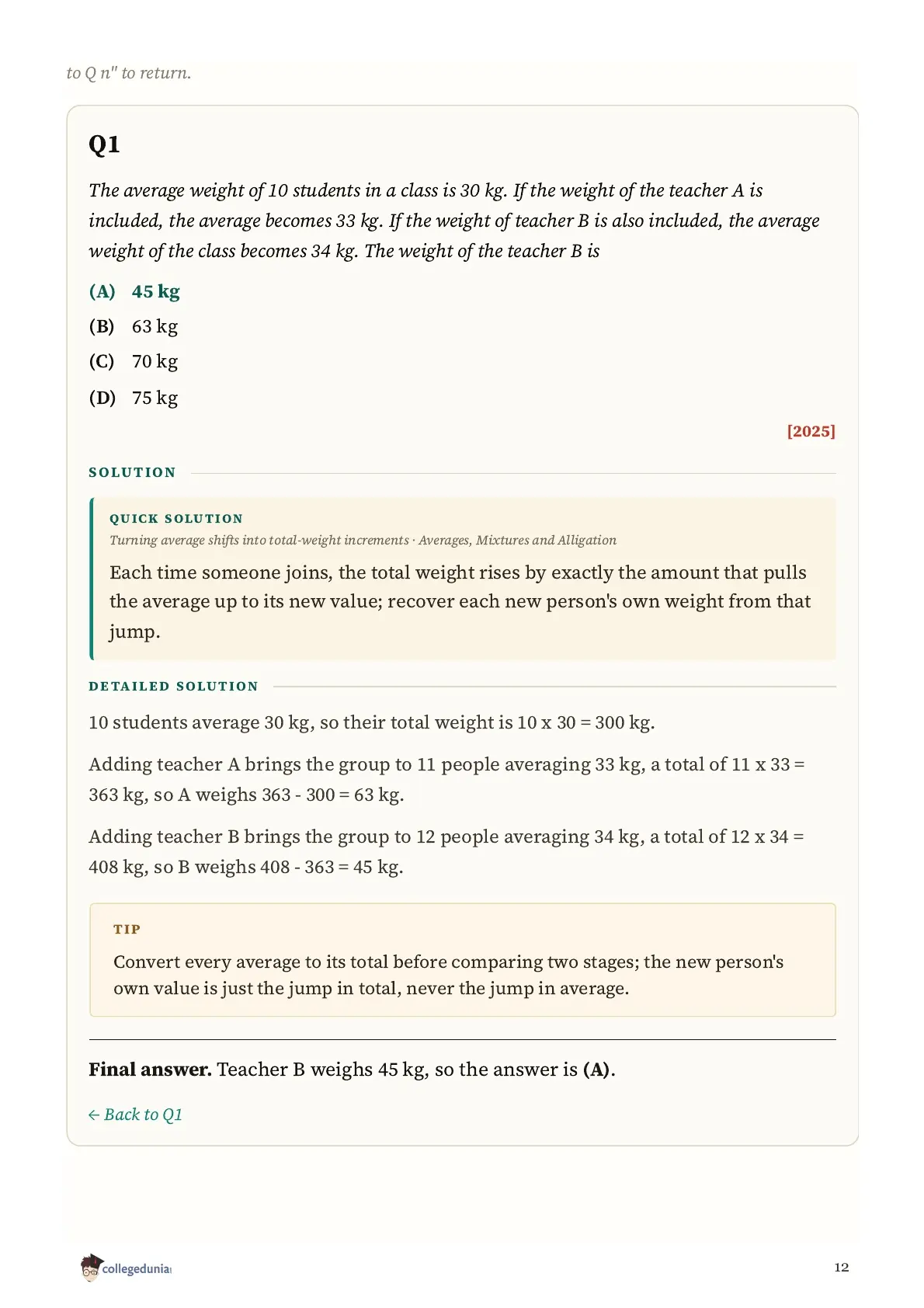
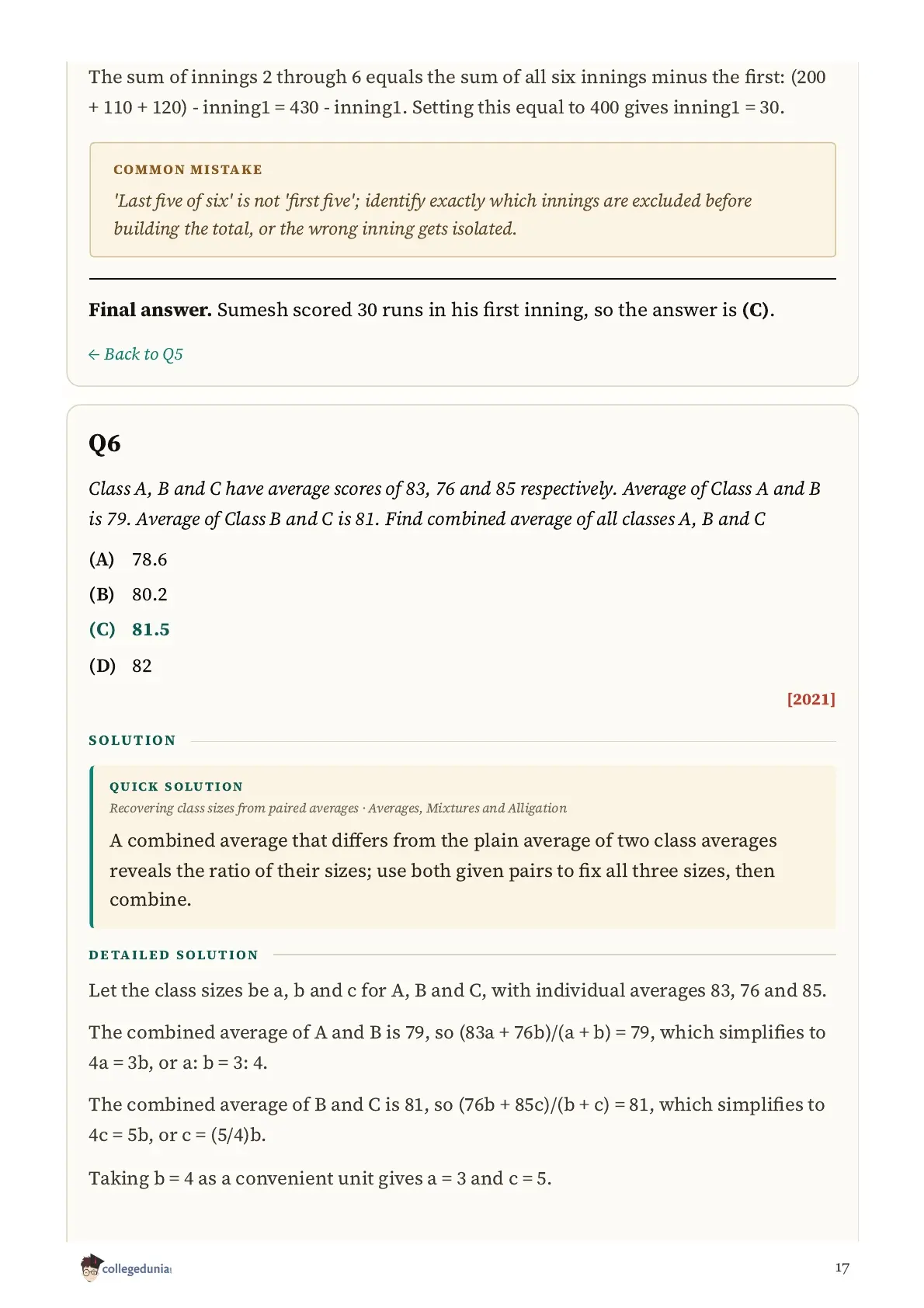
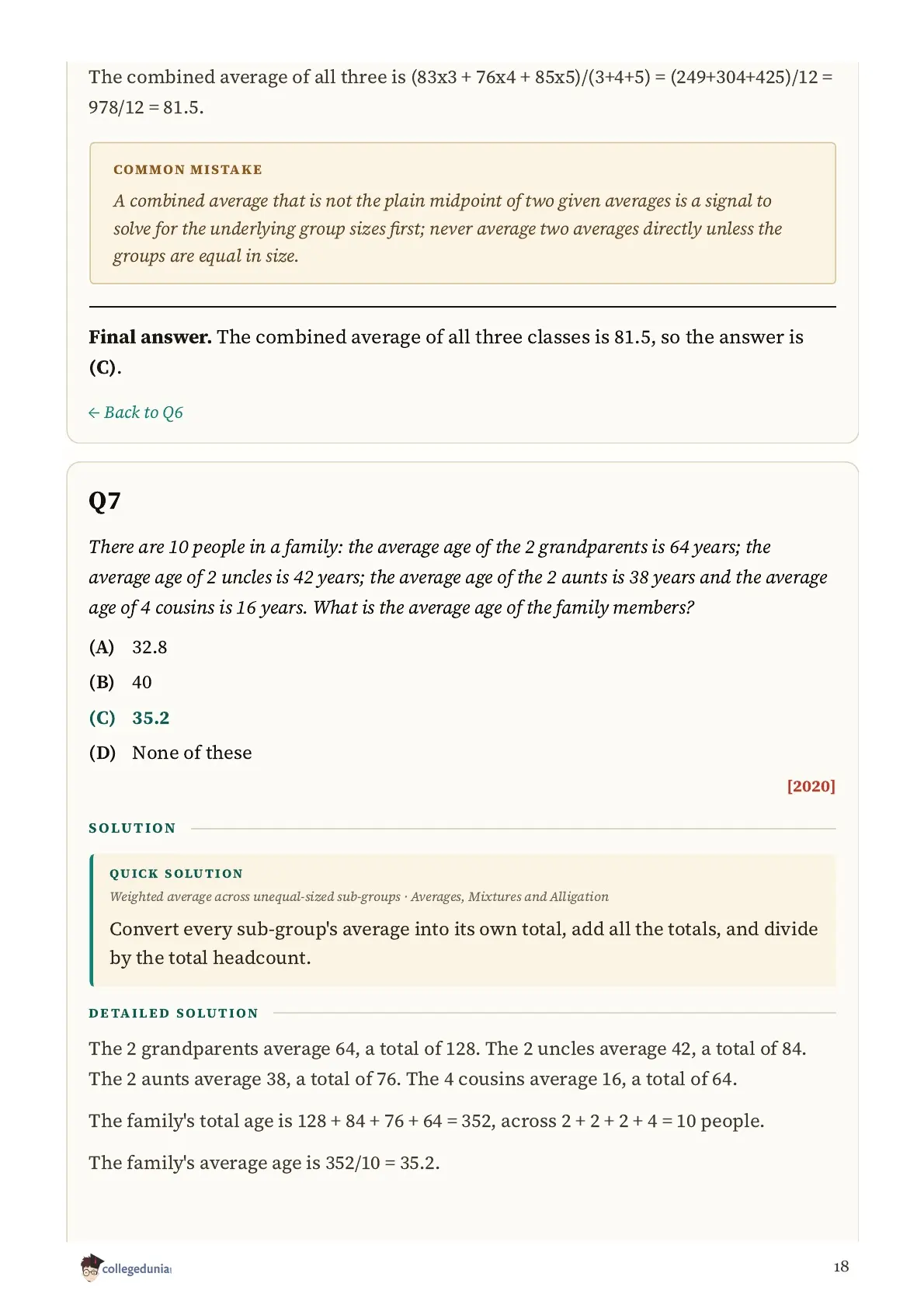
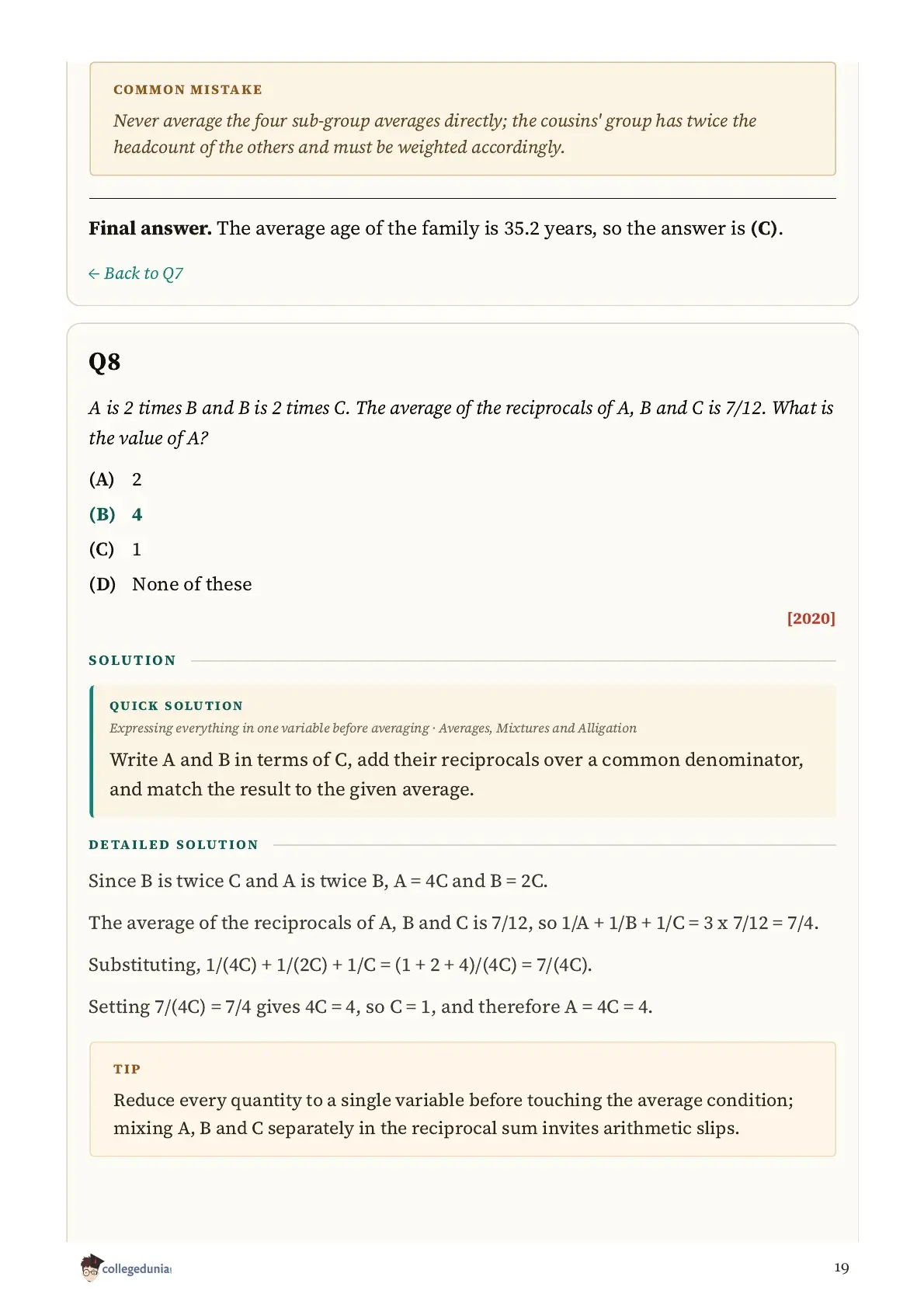
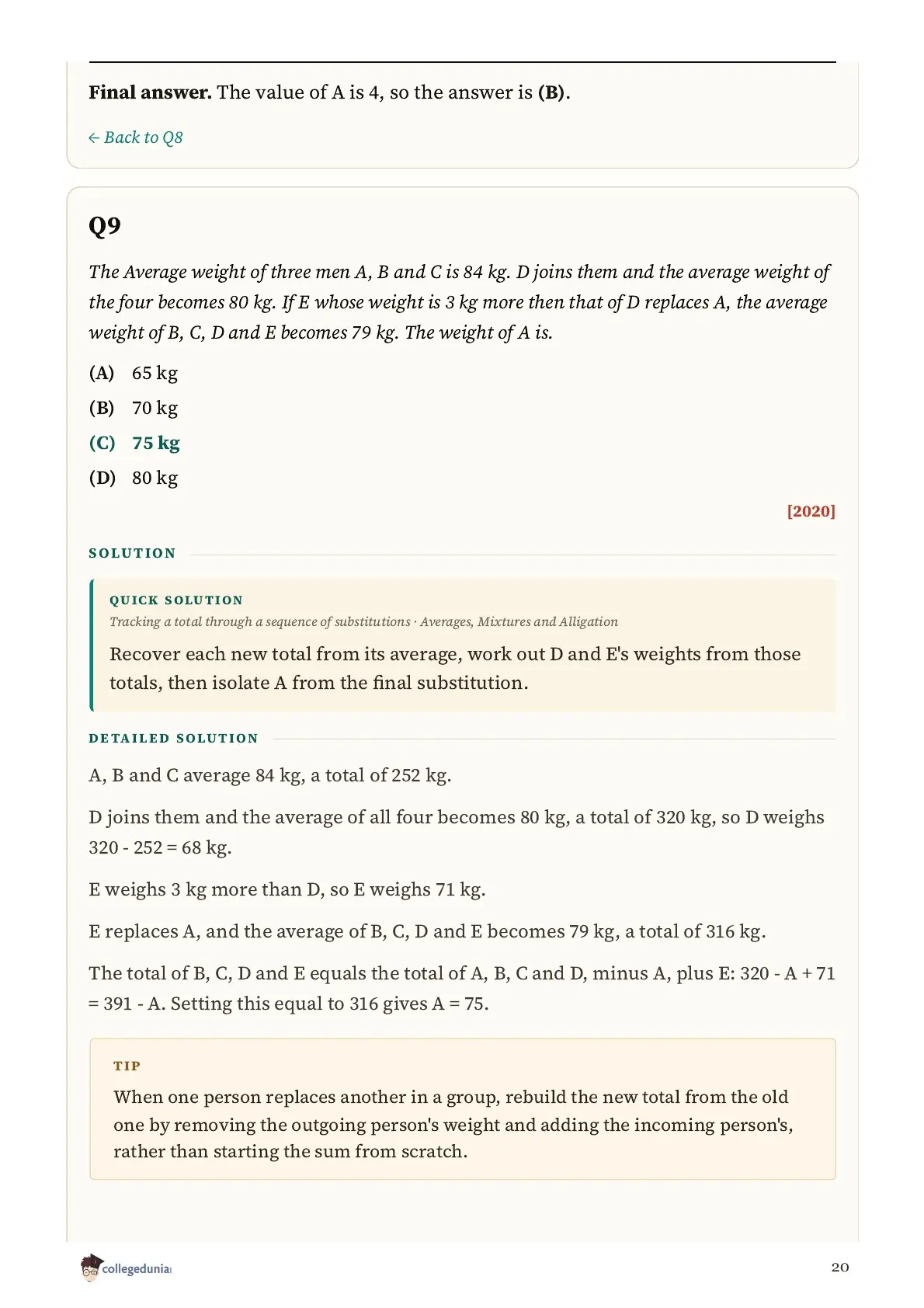
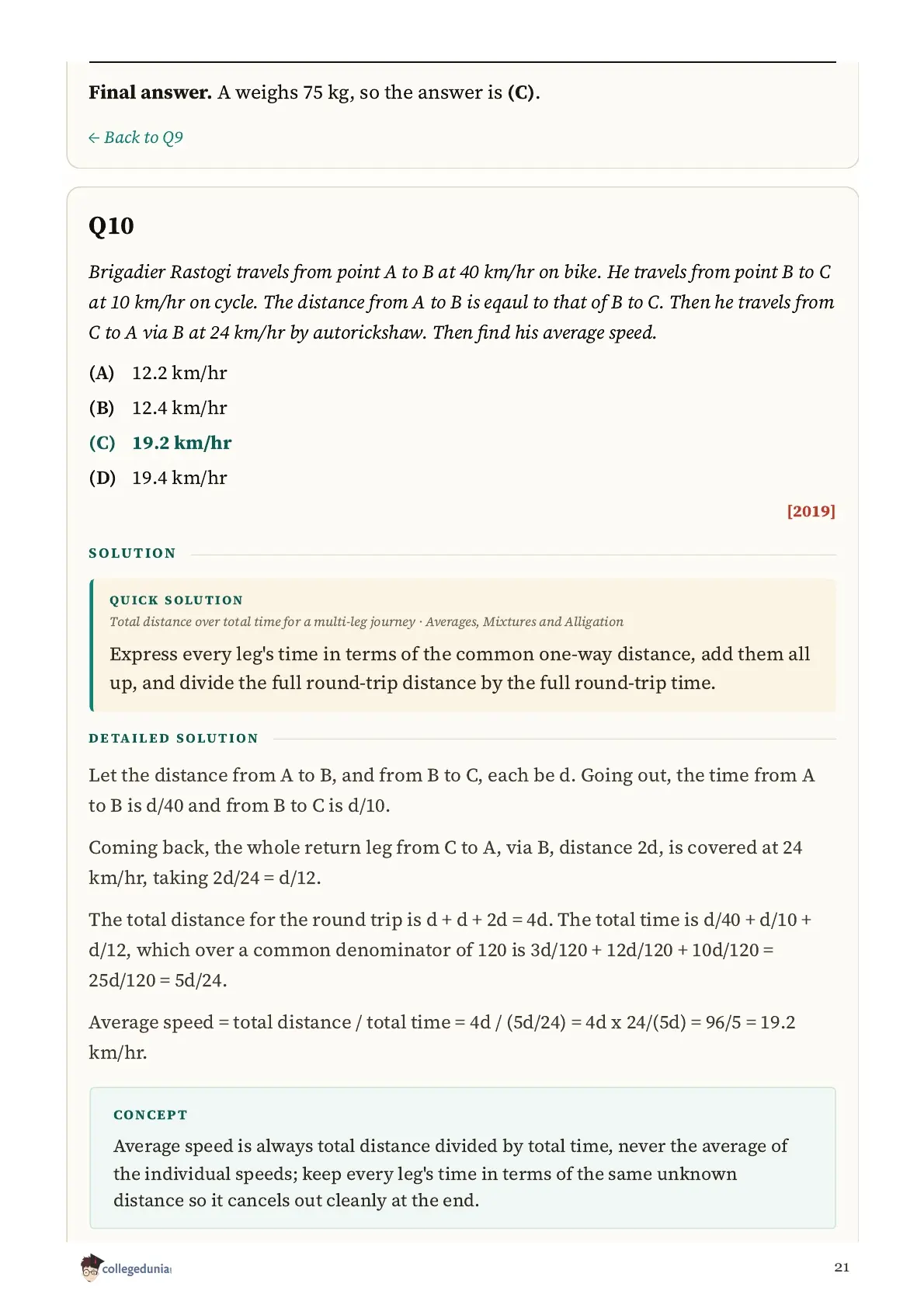
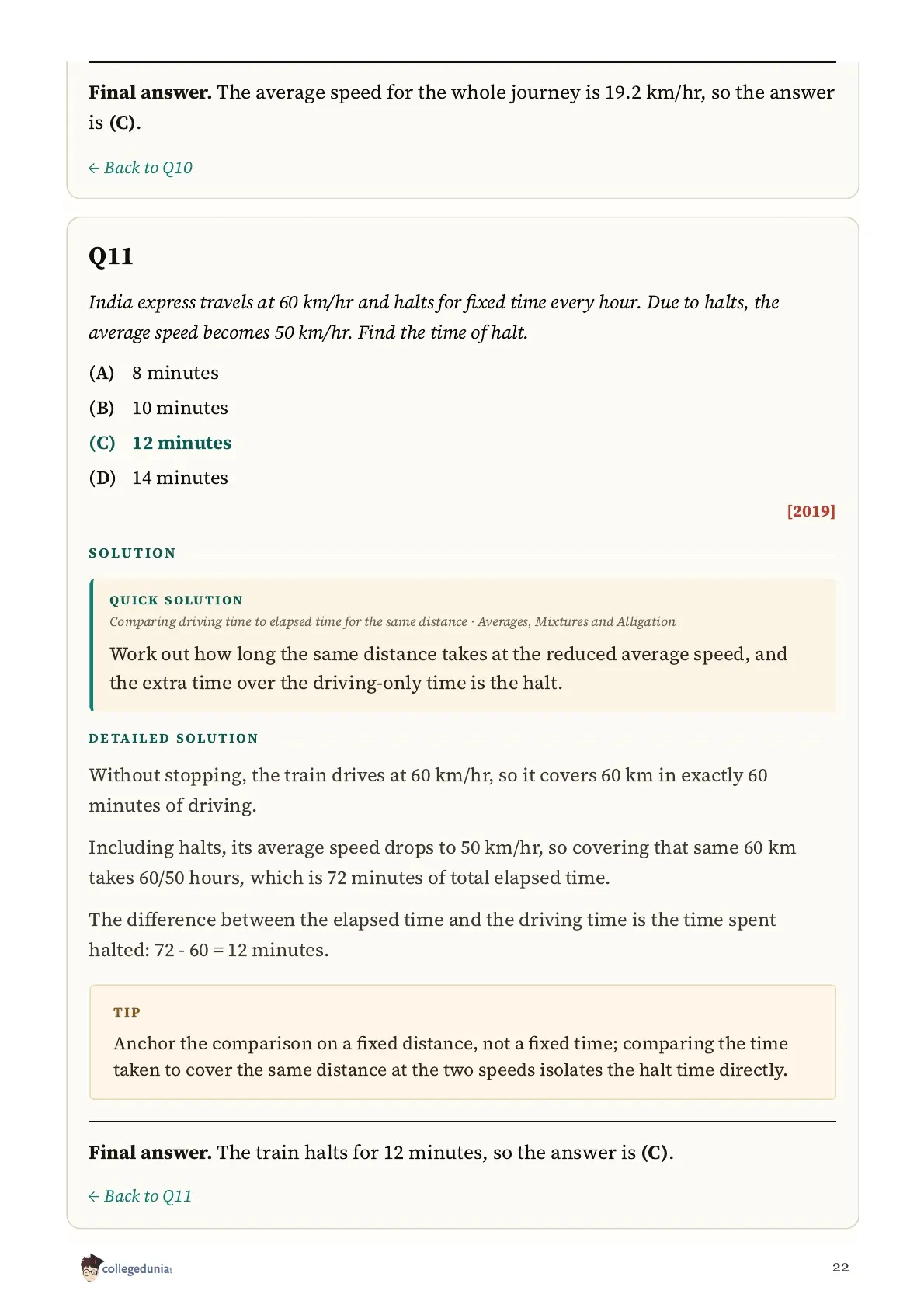
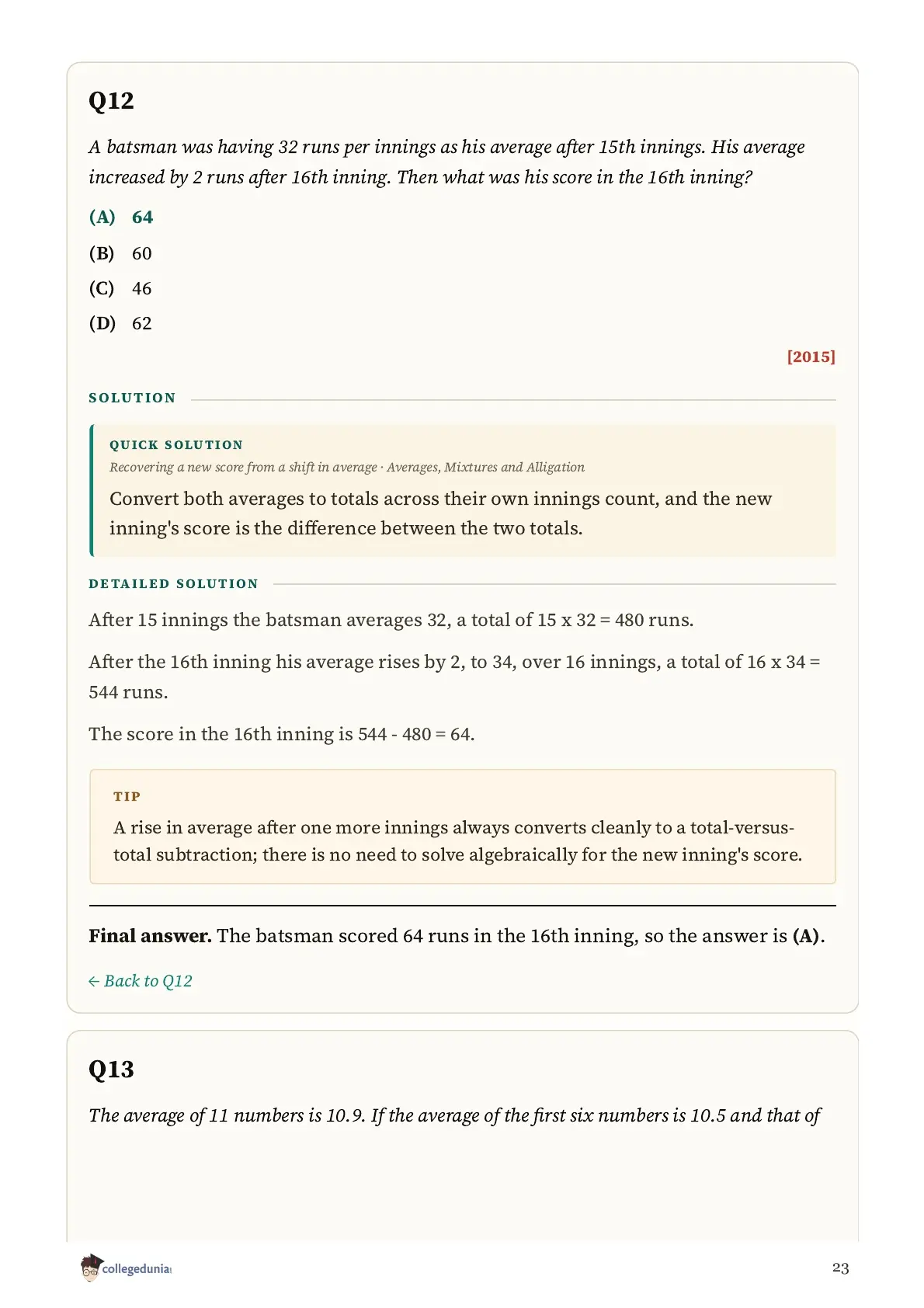
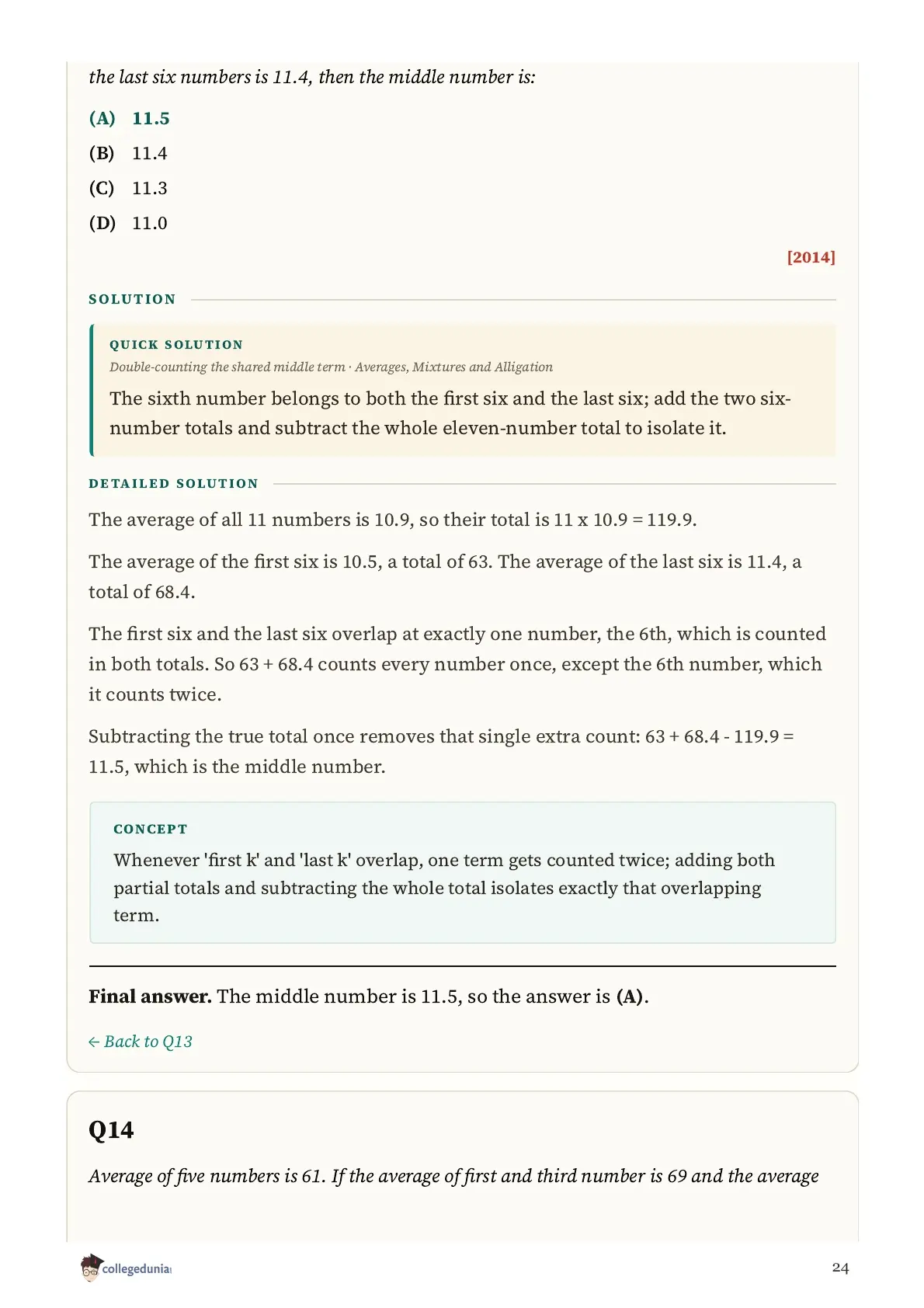
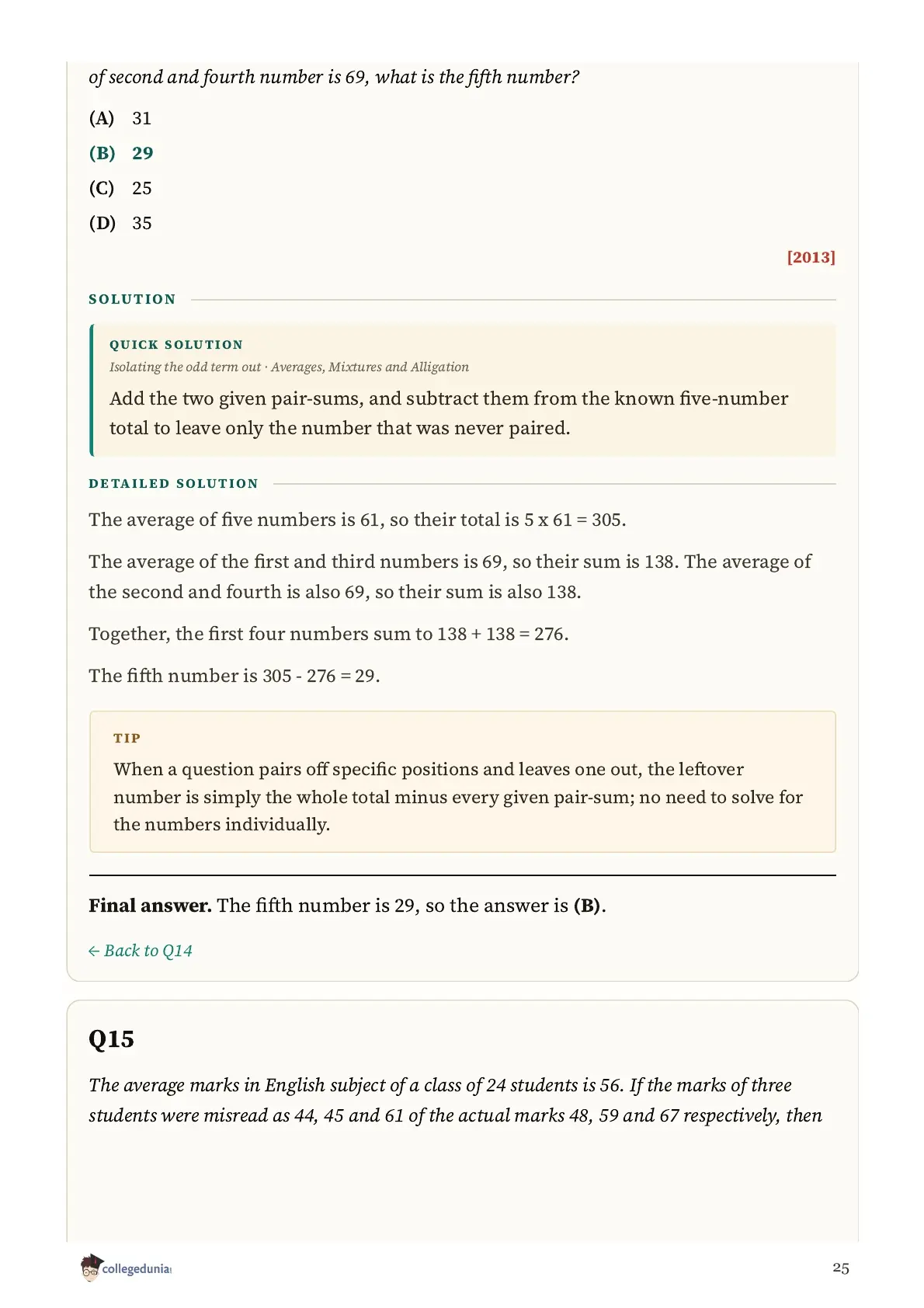
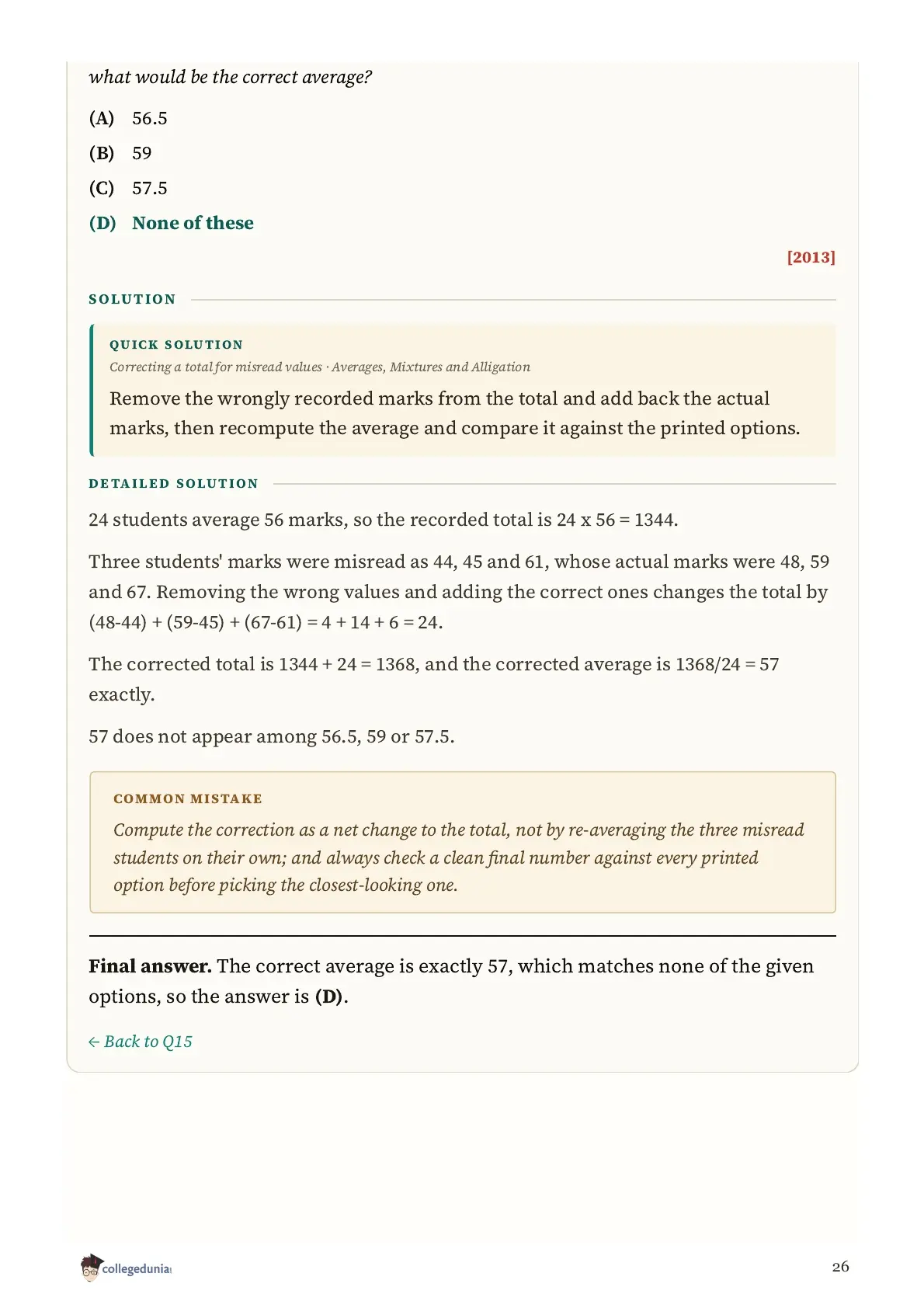
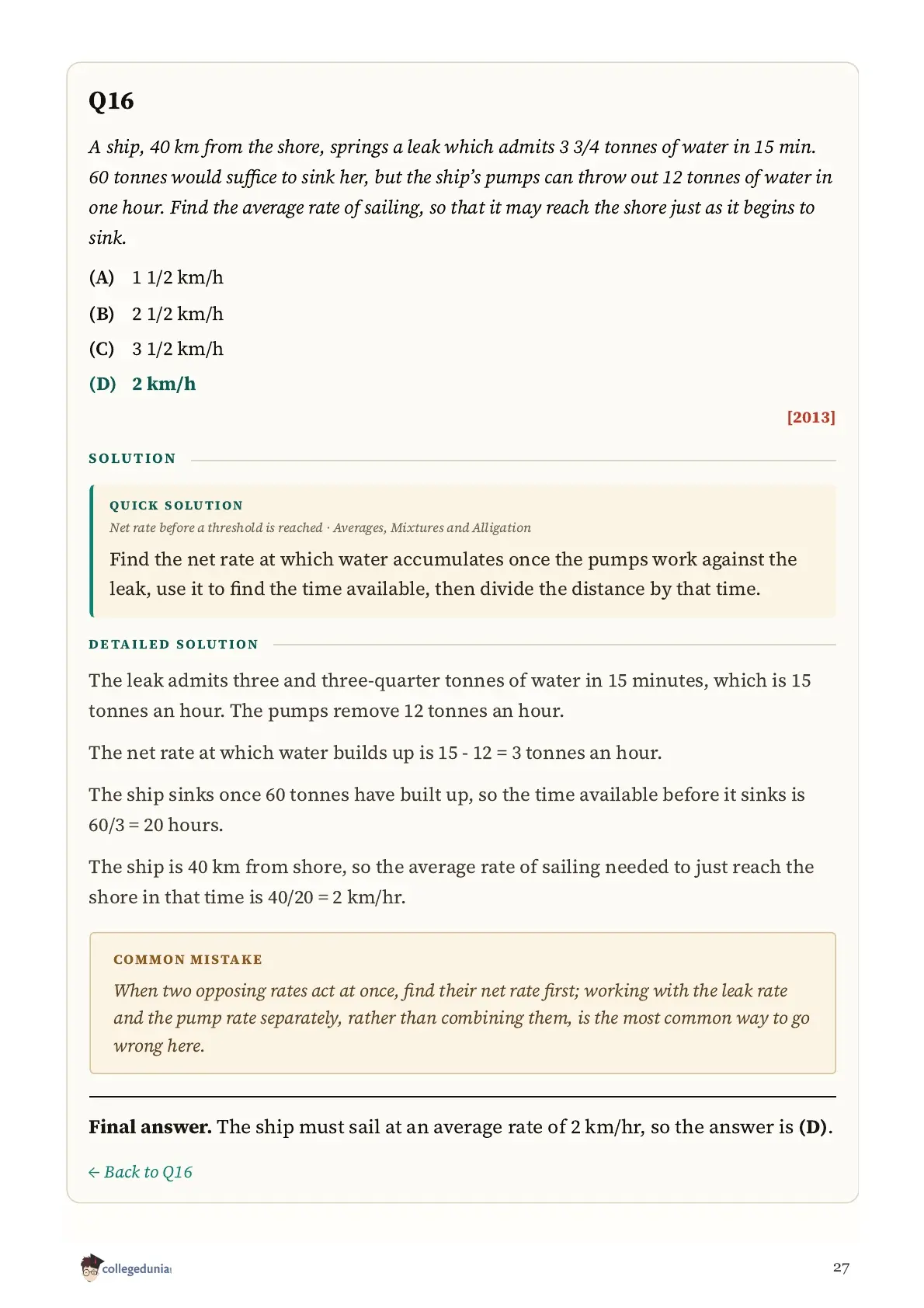
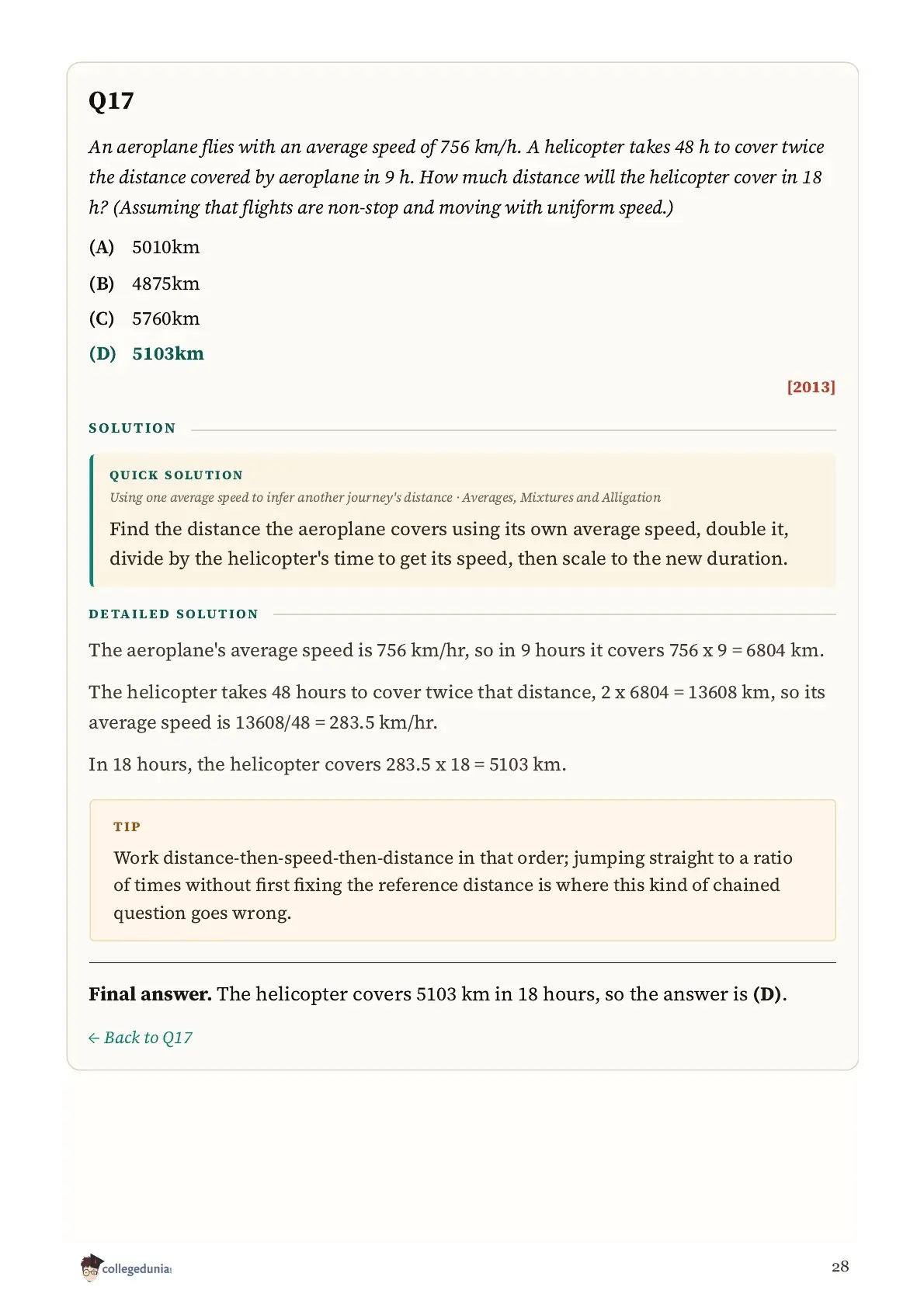
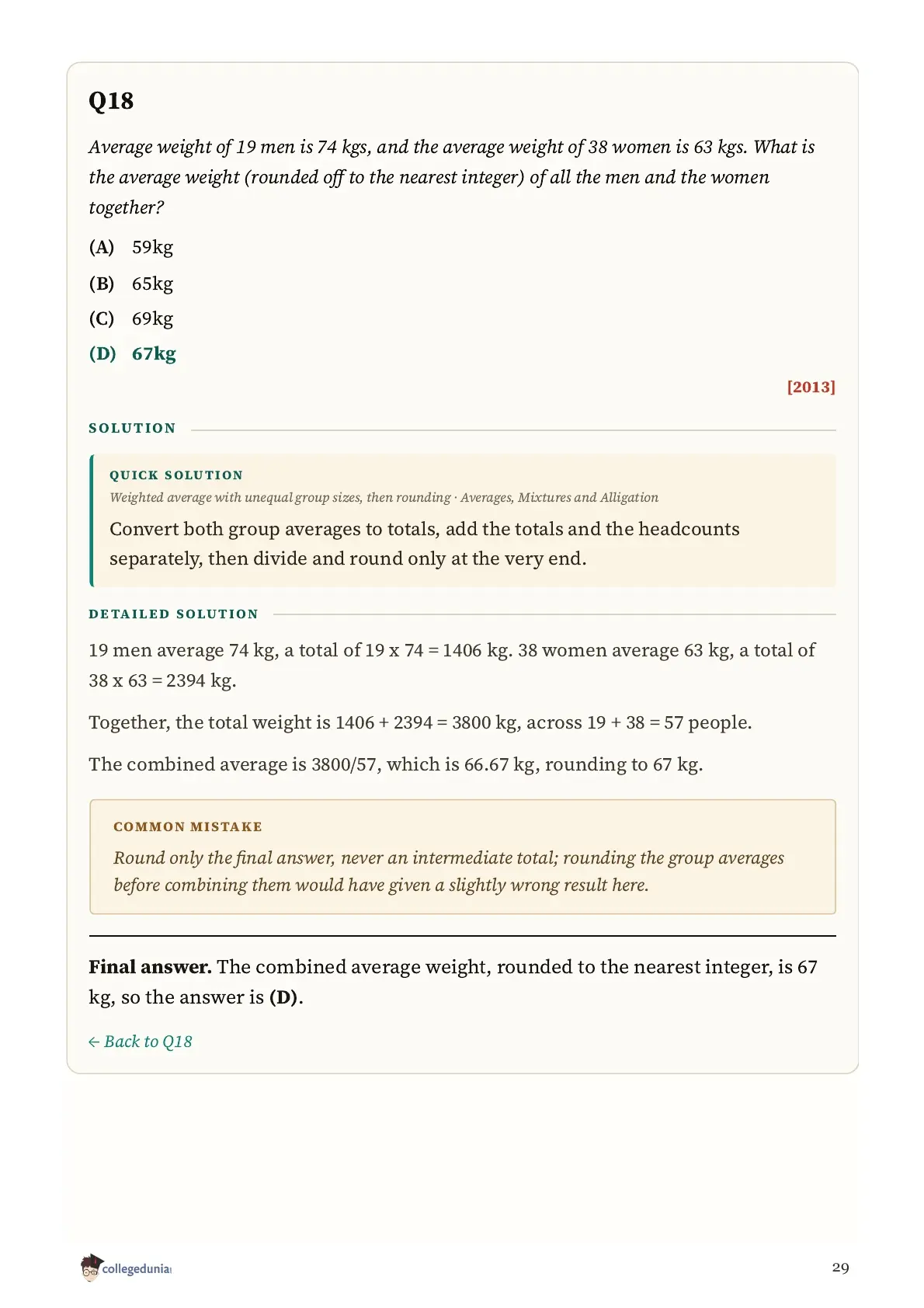
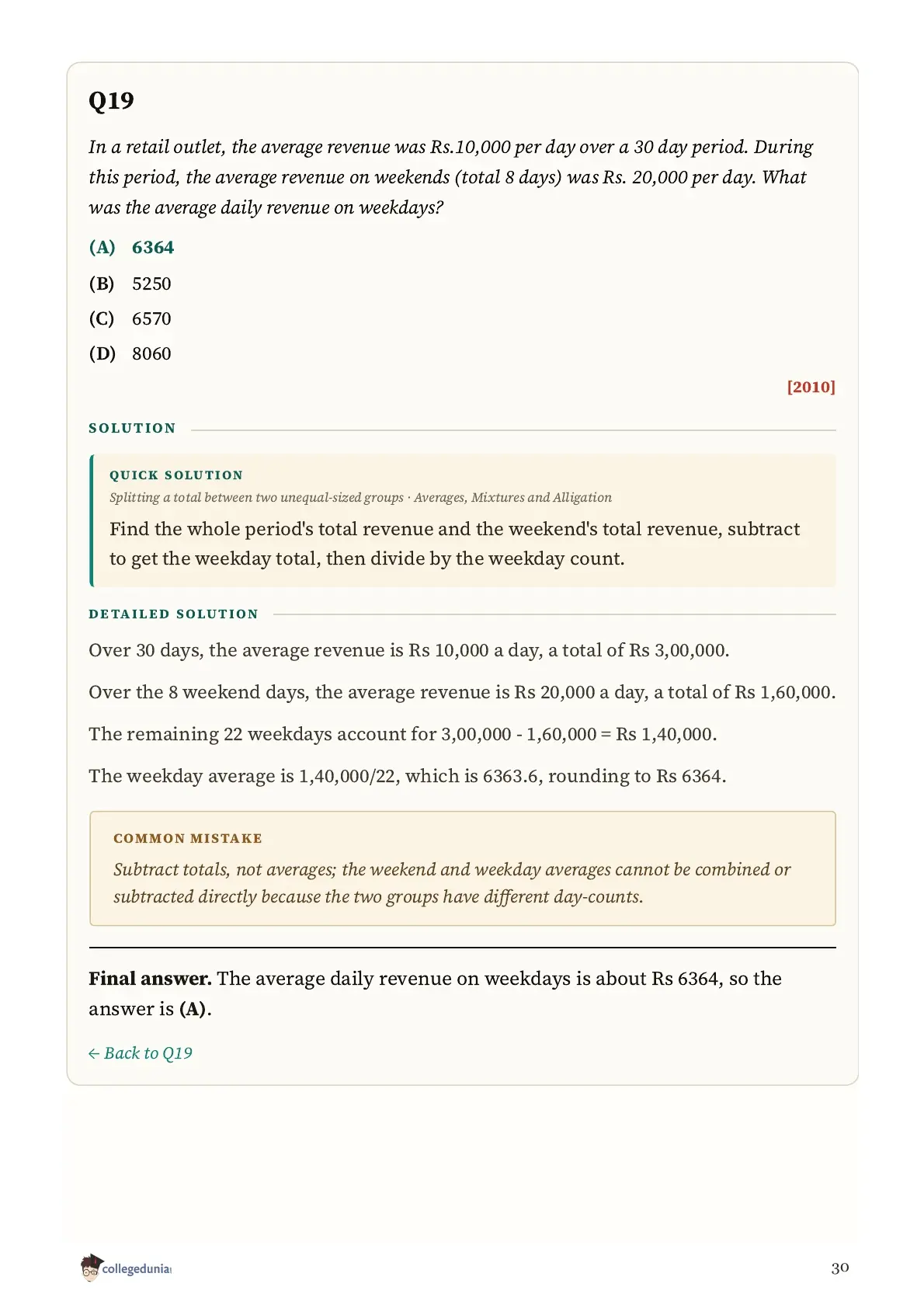
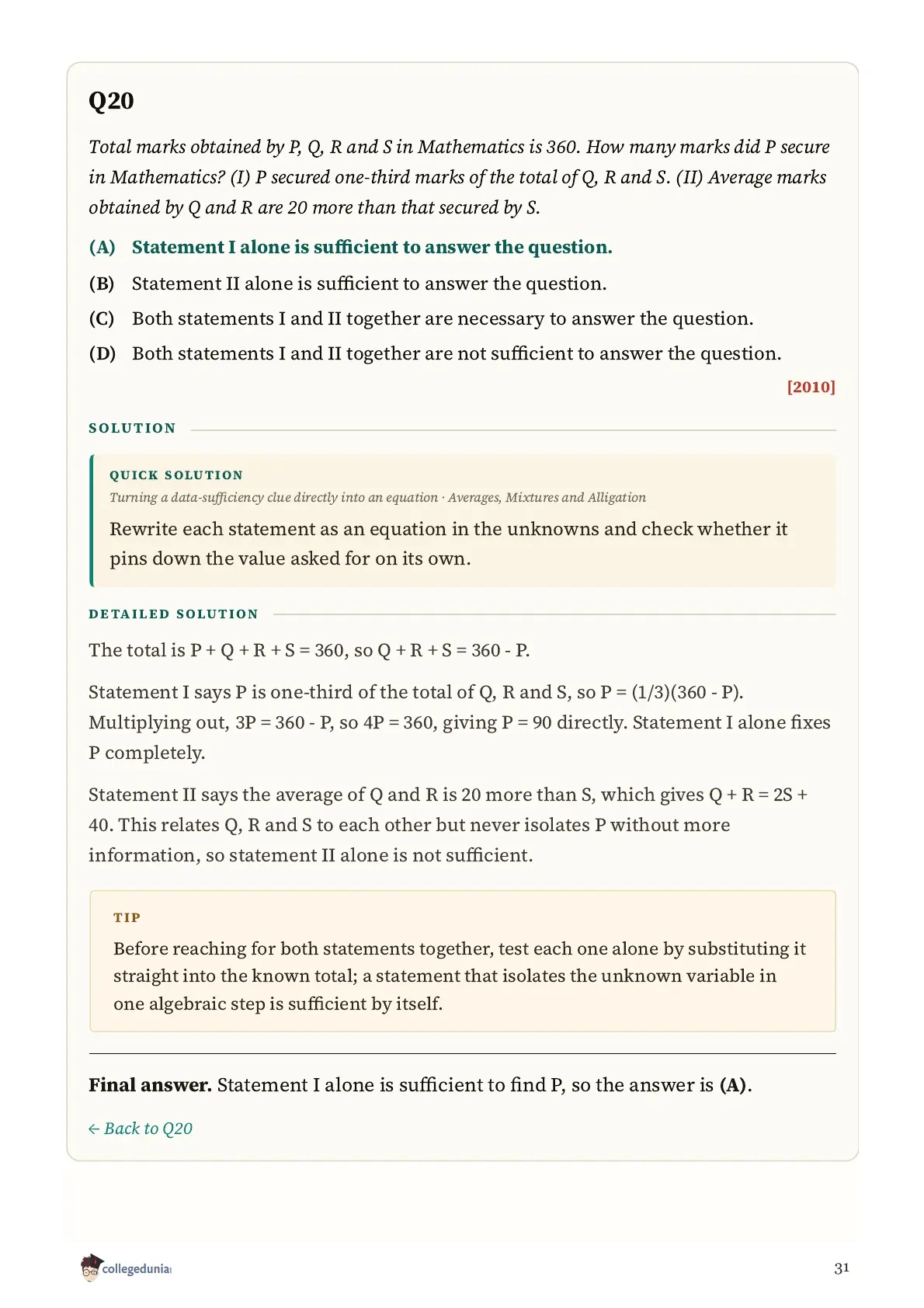
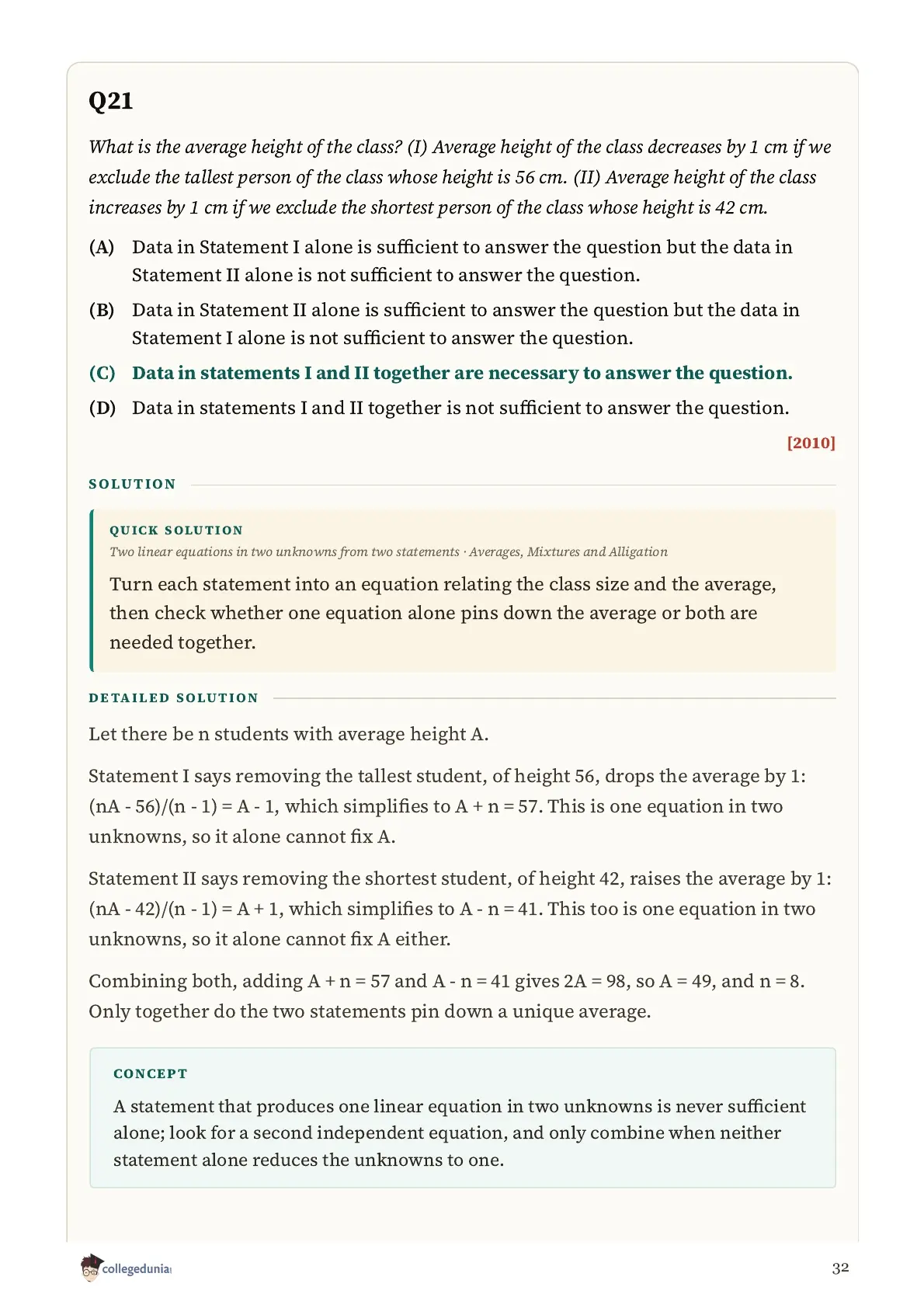
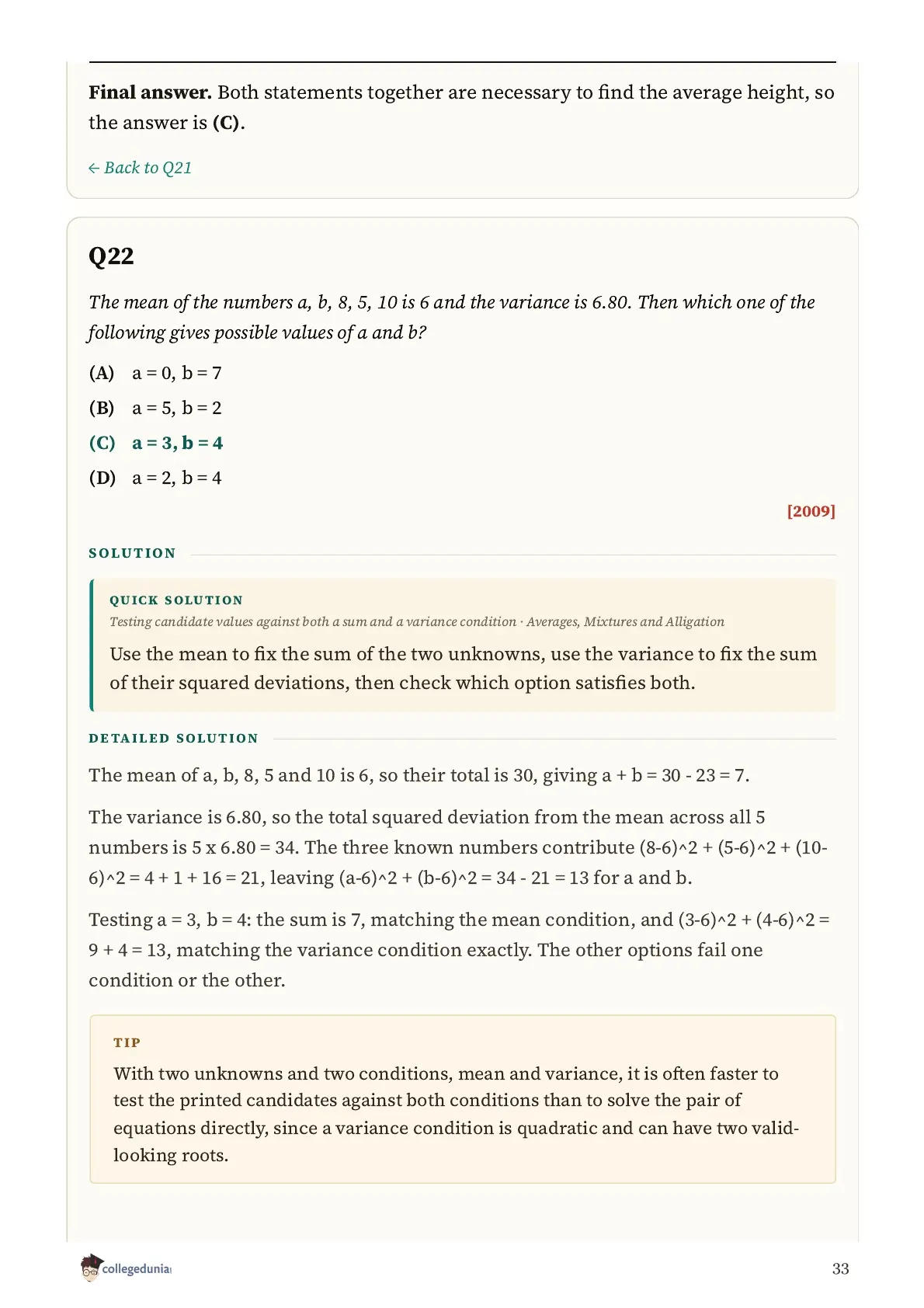
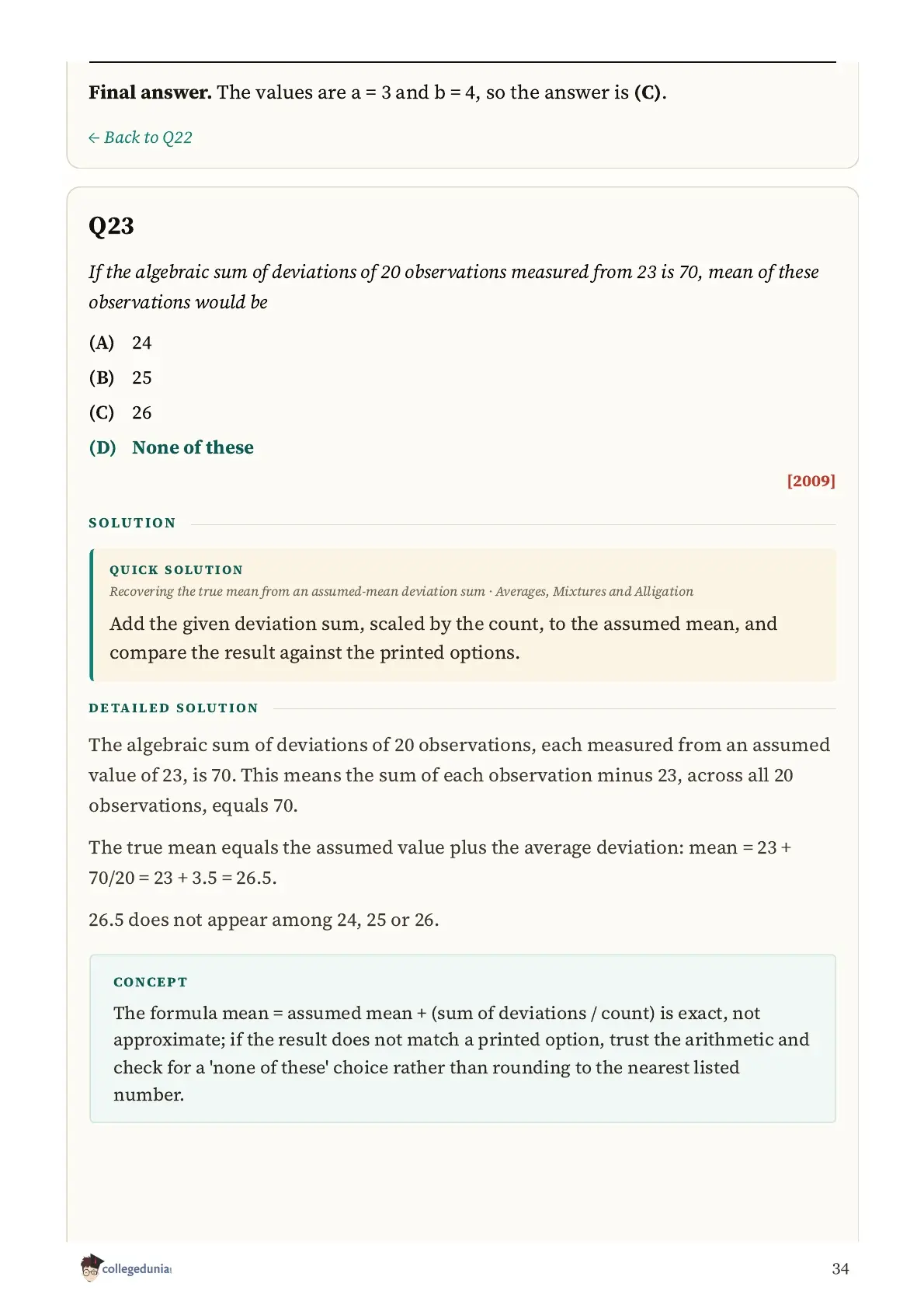
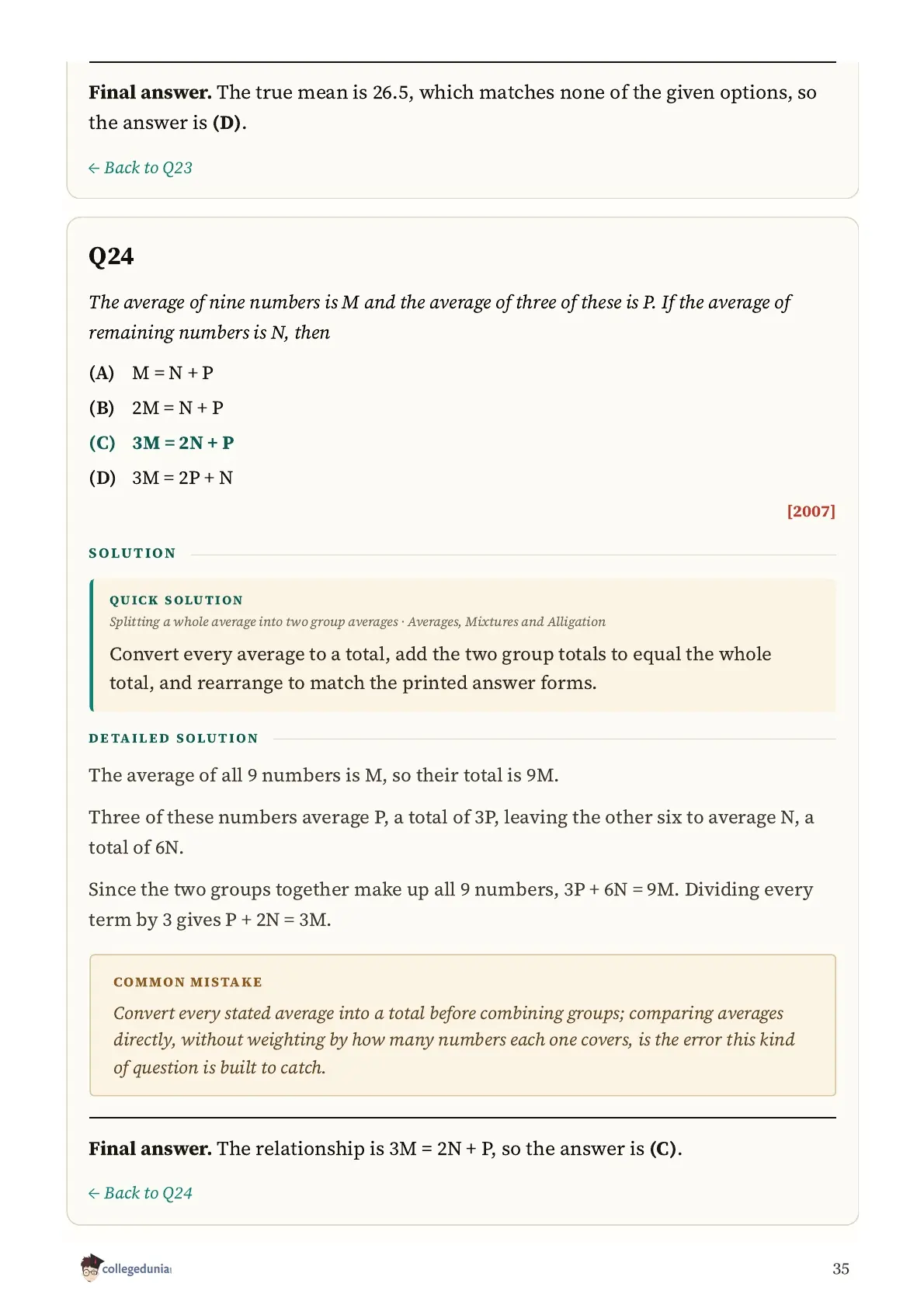
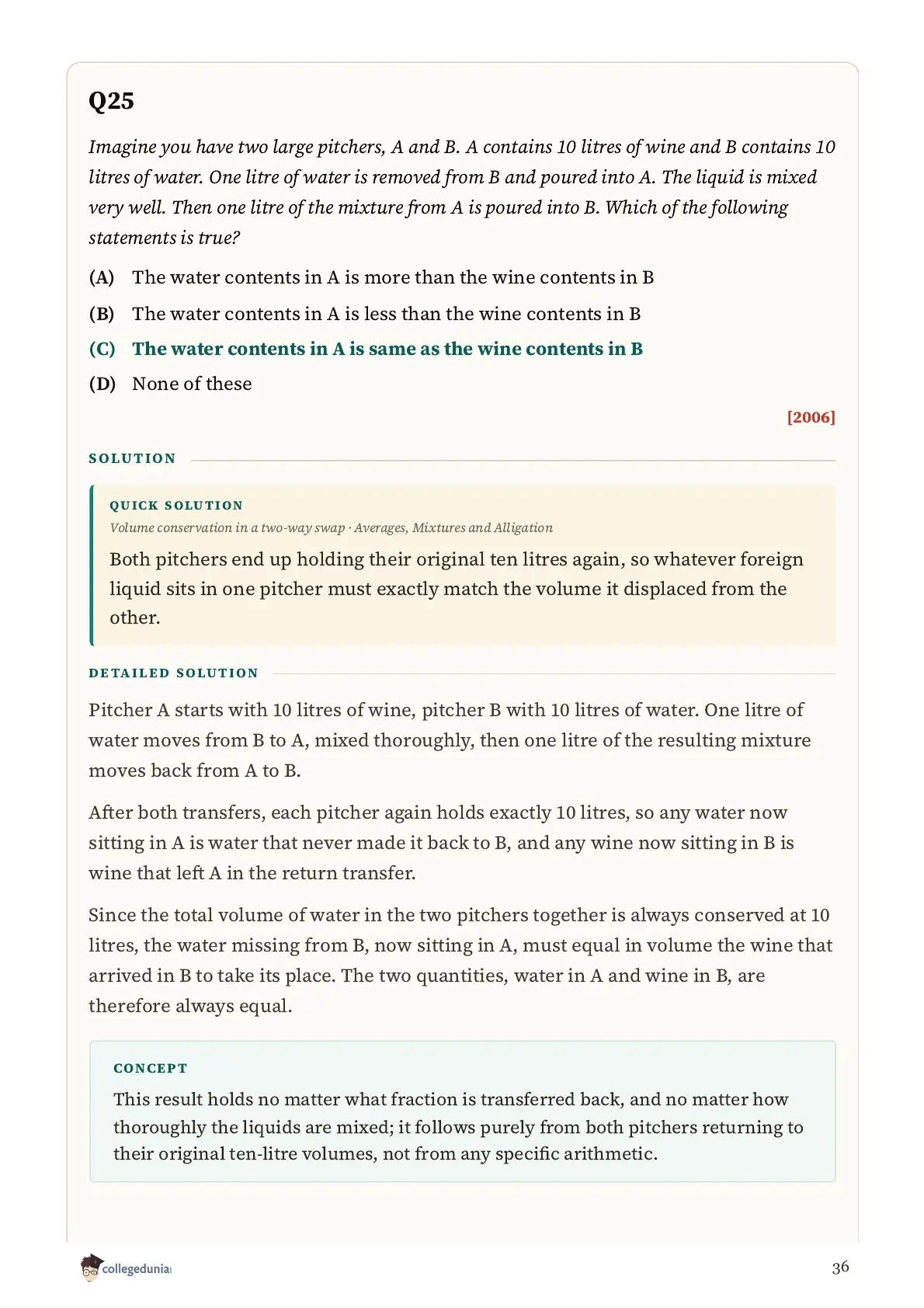
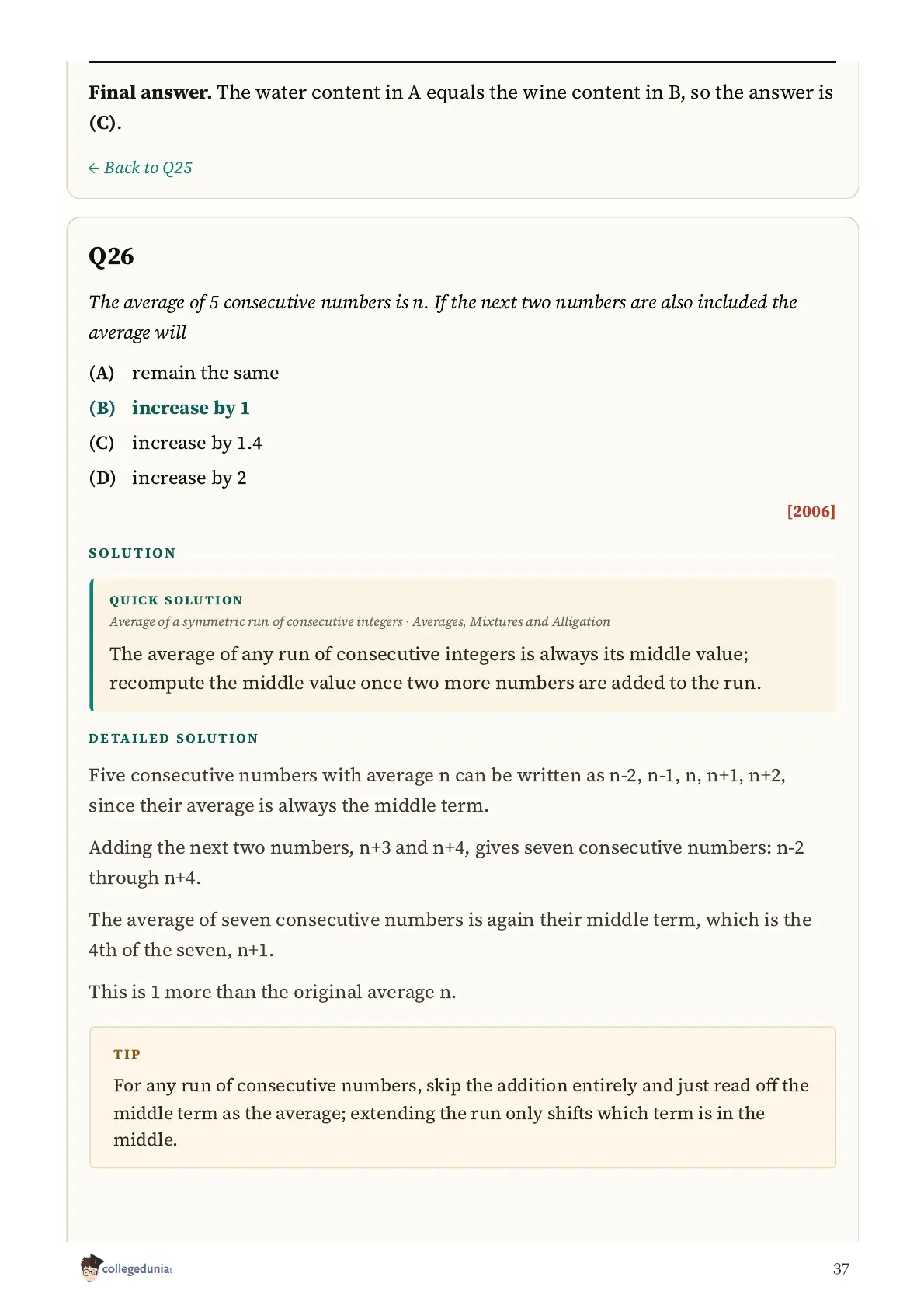
Questions run newest year first, with the options exactly as printed. The answer key follows, then a worked solution for each one.
SNAP Averages Weightage
Averages sits in the Quantitative, Data Interpretation and Data Sufficiency section, which is 20 of SNAP's 60 questions. It has appeared in almost every paper since 2006, usually one to three questions.
| Papers | Questions in this bank |
|---|---|
| 2006 to 2010 | 8 |
| 2011 to 2015 | 7 |
| 2018 to 2020 | 5 |
| 2021 to 2025 | 6 |
The spread is even across two decades, which is the useful thing here: the older papers are not stale. An averages question from 2006 tests exactly what a 2025 one does.
What the 26 Questions Cover
- Average shifts, where someone joins, leaves or replaces another and the average moves by a stated amount
- Weighted averages across sub-groups of unequal size, including recovering group sizes from a combined average
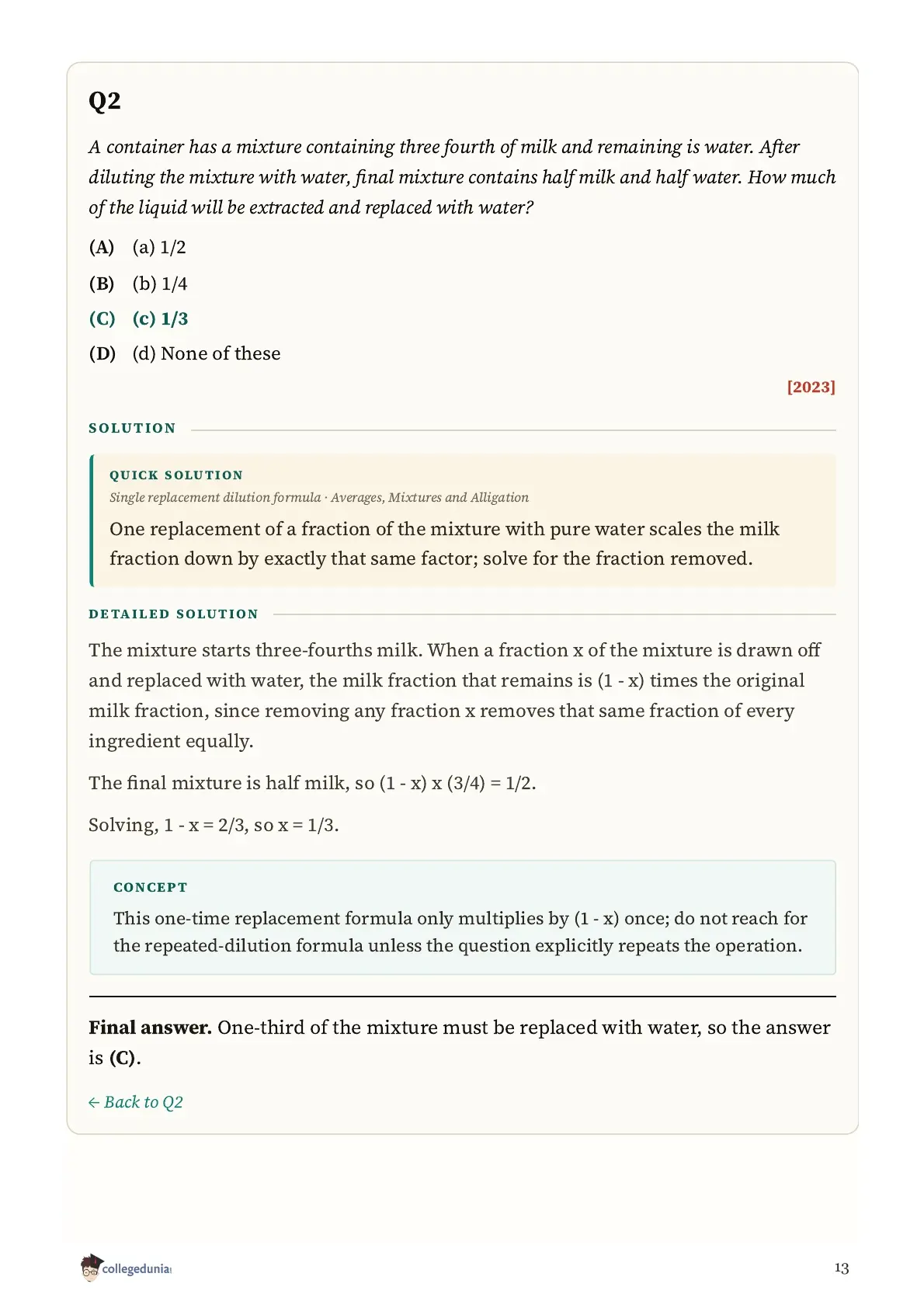
- Mixture and replacement, where part of a solution is drawn off and topped up with water
- Average speed over multi-leg journeys, and halt-time questions built on the same idea
- Data sufficiency, where the average is the unknown and each statement must be tested alone
- Statistical variants, including variance and the assumed-mean deviation formula
How to Approach the Set
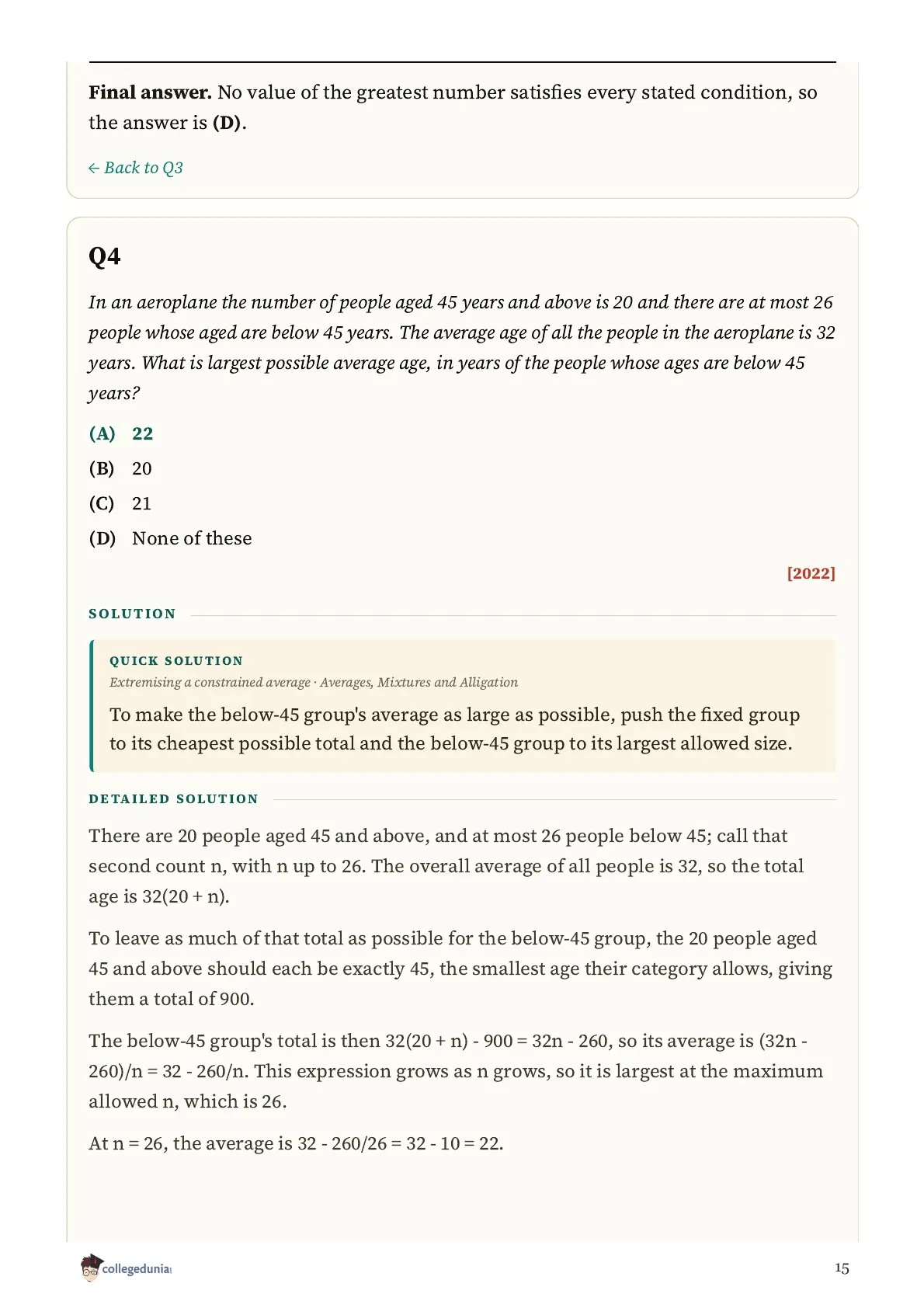
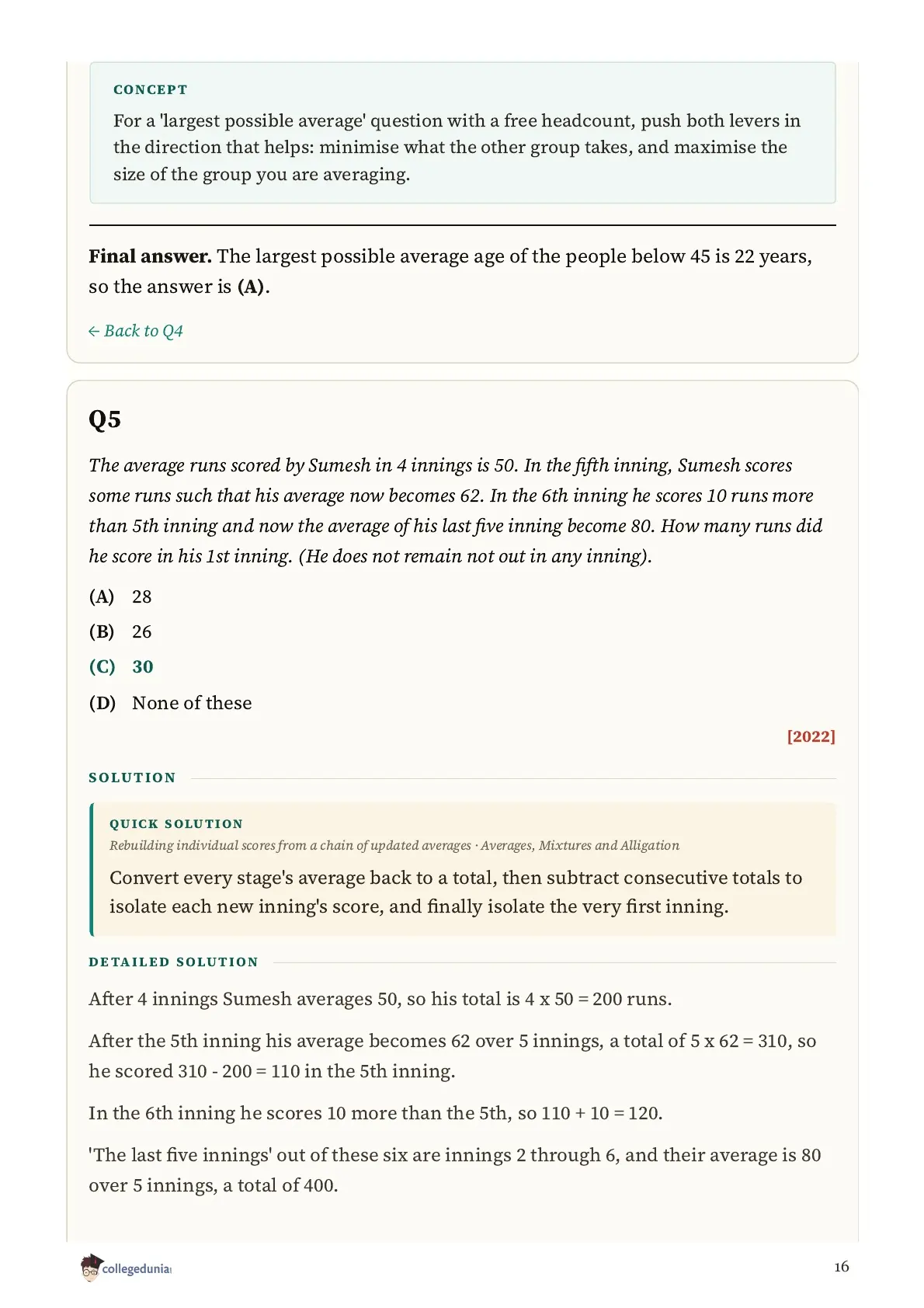
Convert every average into a total before comparing two stages. A person's own value is the jump in the total, never the jump in the average, and that one habit disposes of most of the join-and-leave questions in the bank.
When a combined average is not the midpoint of two group averages, the groups are different sizes. Solve for those sizes first; nothing else in the question will work until you do.
Two things are worth memorising outright. For a single mixture replacement the remaining fraction of the original liquid scales by one minus the fraction removed, once and only once. And average speed is total distance over total time, never the average of the speeds.
When None of the Options Is Right
Three of the 26 resolve to "none of these", which is a high proportion and worth expecting. Each rewards trusting clean arithmetic over the nearest-looking choice.
One corrects a class average after three students' marks were misread, and lands on exactly 57 against options of 56.5, 59 and 57.5. Another gives the algebraic sum of deviations from an assumed mean of 23 and works out to exactly 26.5.
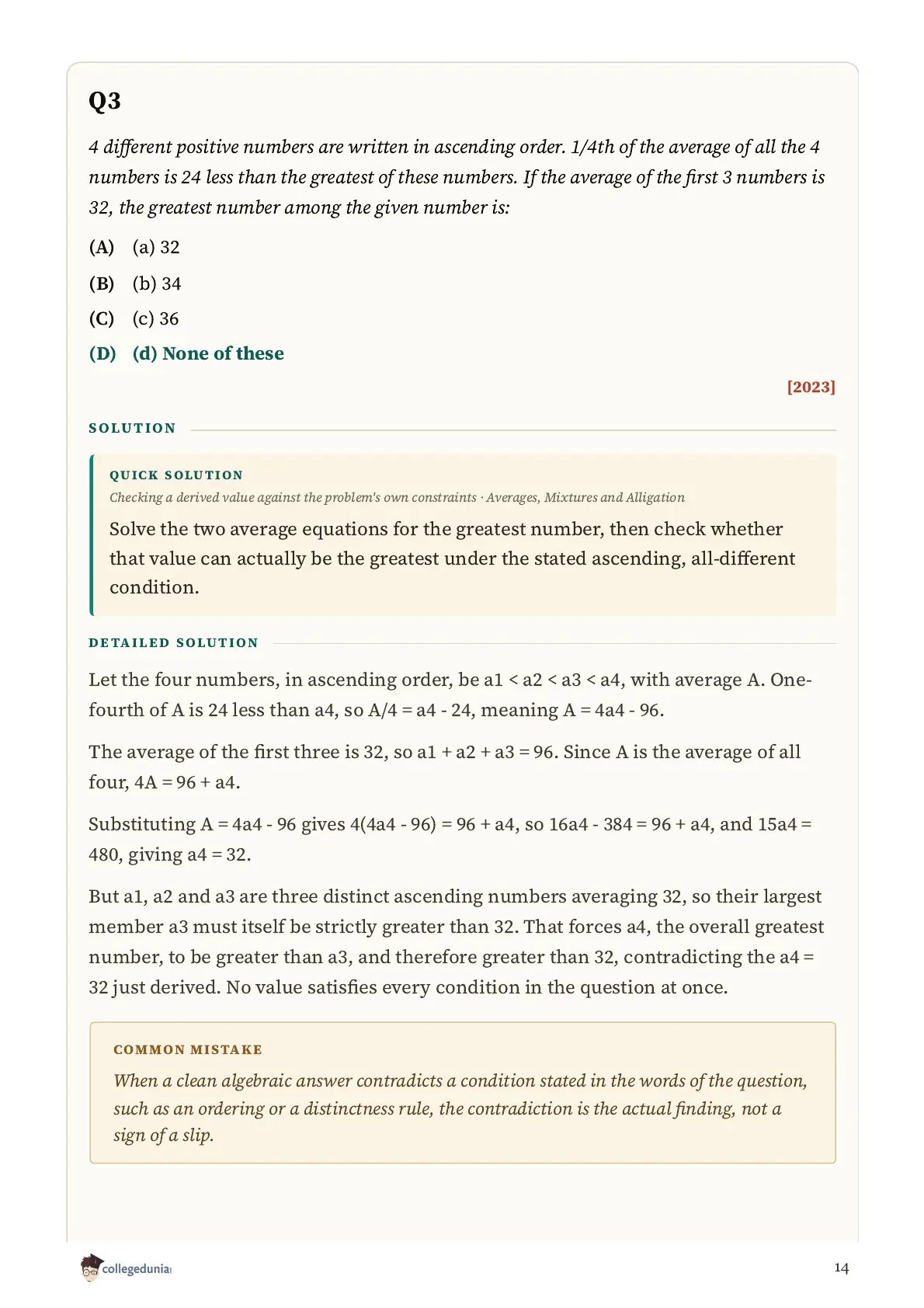
The third is subtler. Its two average conditions give a greatest number of 32, but the question also insists the four numbers are distinct and ascending, which makes 32 impossible. The contradiction is the finding.
Common Mistakes
- Averaging two group averages directly when the groups are different sizes
- Rounding an intermediate total. Round only the final answer
- Forgetting that the first six and the last six of eleven numbers overlap at one term
- Reading "last five of six innings" as the first five
- Forcing the closest-looking option when the true answer is none of these
Two to Solve First
The 2021 combined-averages question. Three classes with known averages, plus two pairwise combined averages, and it wants the overall figure. The combined numbers are not midpoints, which is the clue that the class sizes differ and have to be recovered before anything can be combined.
Then the 2006 wine and water swap. A litre of water goes into the wine, the mixture is stirred, and a litre comes back. The answer follows from both pitchers ending at their original volume rather than from tracking concentrations, and the argument works for any transfer size.
Video Solutions
Source: MBA Pathshala
Using the Answer Key
Attempt all 26 before checking anything, allowing about ninety seconds each. Mark the key in one pass, right or wrong only, then read the solution for every miss and every lucky guess. Each opens with a one-line quick solution you can stop at and retry from.
For the rest of the section, the SNAP Permutations, Combinations and Probability PYQs and the SNAP Blood Relations PYQs cover the other repeated topics in the same format.
SNAP Averages, Mixtures and Alligation PYQ FAQs
Ques. How many averages questions come in SNAP?
Ans. Usually one to three, inside the Quantitative, Data Interpretation and Data Sufficiency section. Averages has appeared in almost every paper since 2006, which makes it one of the most reliable topics to prepare.
Ques. Which years does this bank cover?
Ans. 2006 to 2025, spread evenly across the two decades. Averages questions do not date, so the older papers are still worth attempting.
Ques. Why do three answers say none of these?
Ans. Three questions in the original papers are built so the correct value is not among the four printed options, and one is internally contradictory once its own ordering condition is applied. The solutions show the working that arrives there rather than forcing the nearest choice.
Ques. What should I revise first?
Ans. Converting averages to totals, and weighted averages with unequal group sizes. Between them they cover most of the bank. Mixture replacement is a smaller idea with one formula worth learning exactly.
Ques. Is this an official SNAP answer key?
Ans. No. Symbiosis does not publish an answer key for SNAP. Every answer here was worked out from the question itself and shown with the full working, so you can check it rather than trust it.
Ques. Can the PDF be downloaded free?
Ans. Yes. All 38 pages can be read on this page and downloaded at no cost.



Comments