




SNAP Series PYQ, free to download as a 27-page PDF. The bank carries 20 solved questions from the 2006 to 2025 papers and takes roughly one day to work through, so treat it as a single focused sitting.
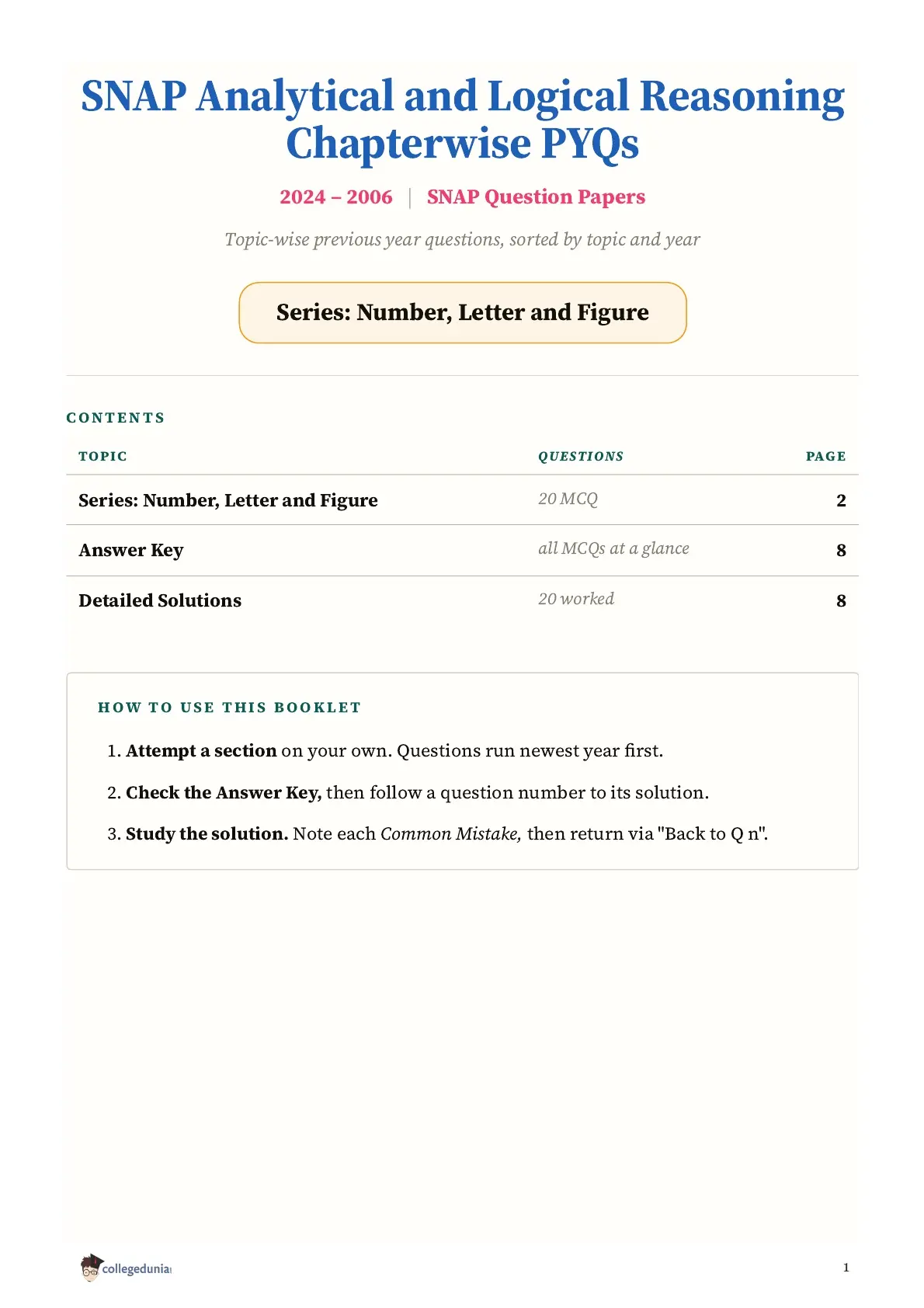
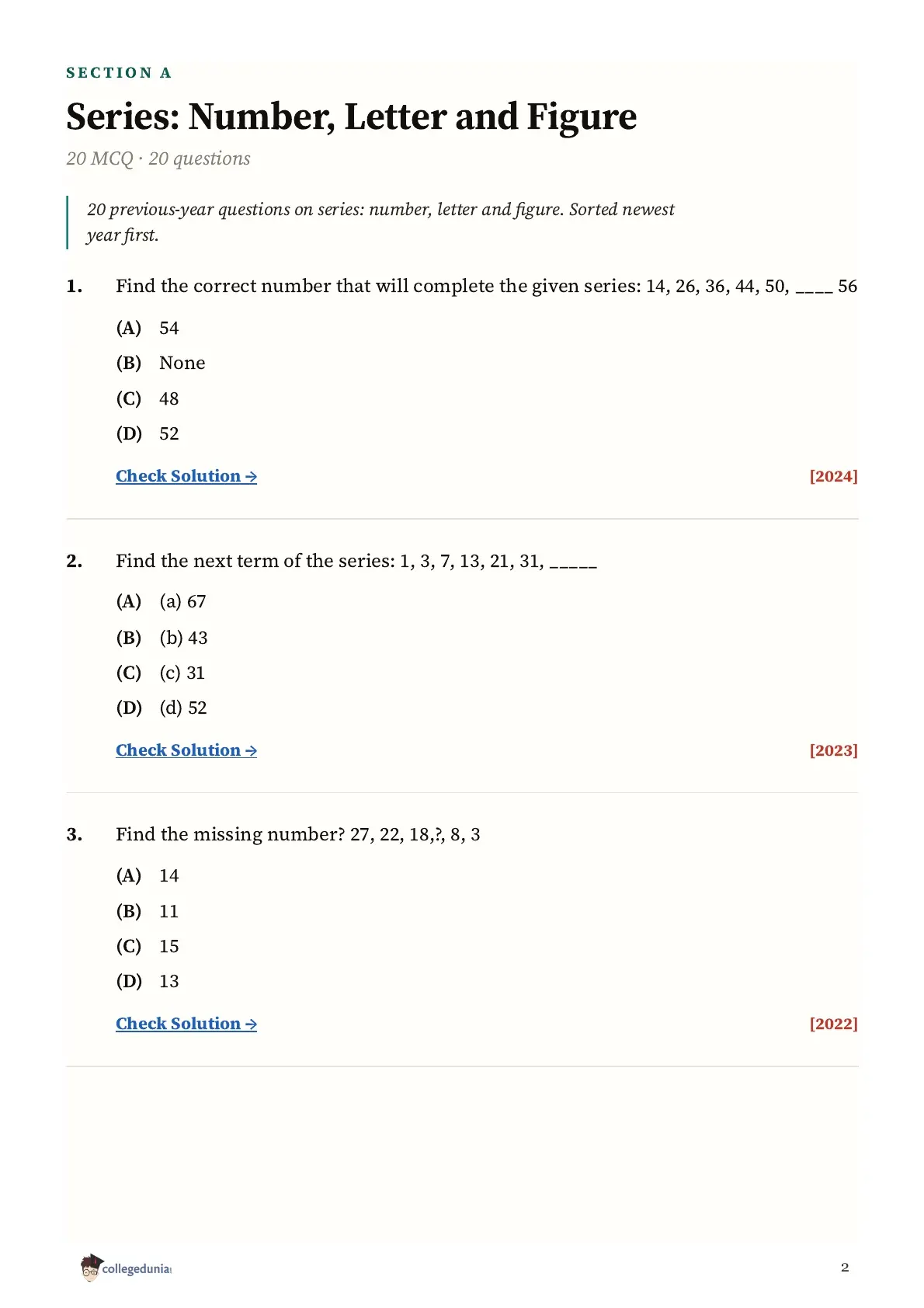
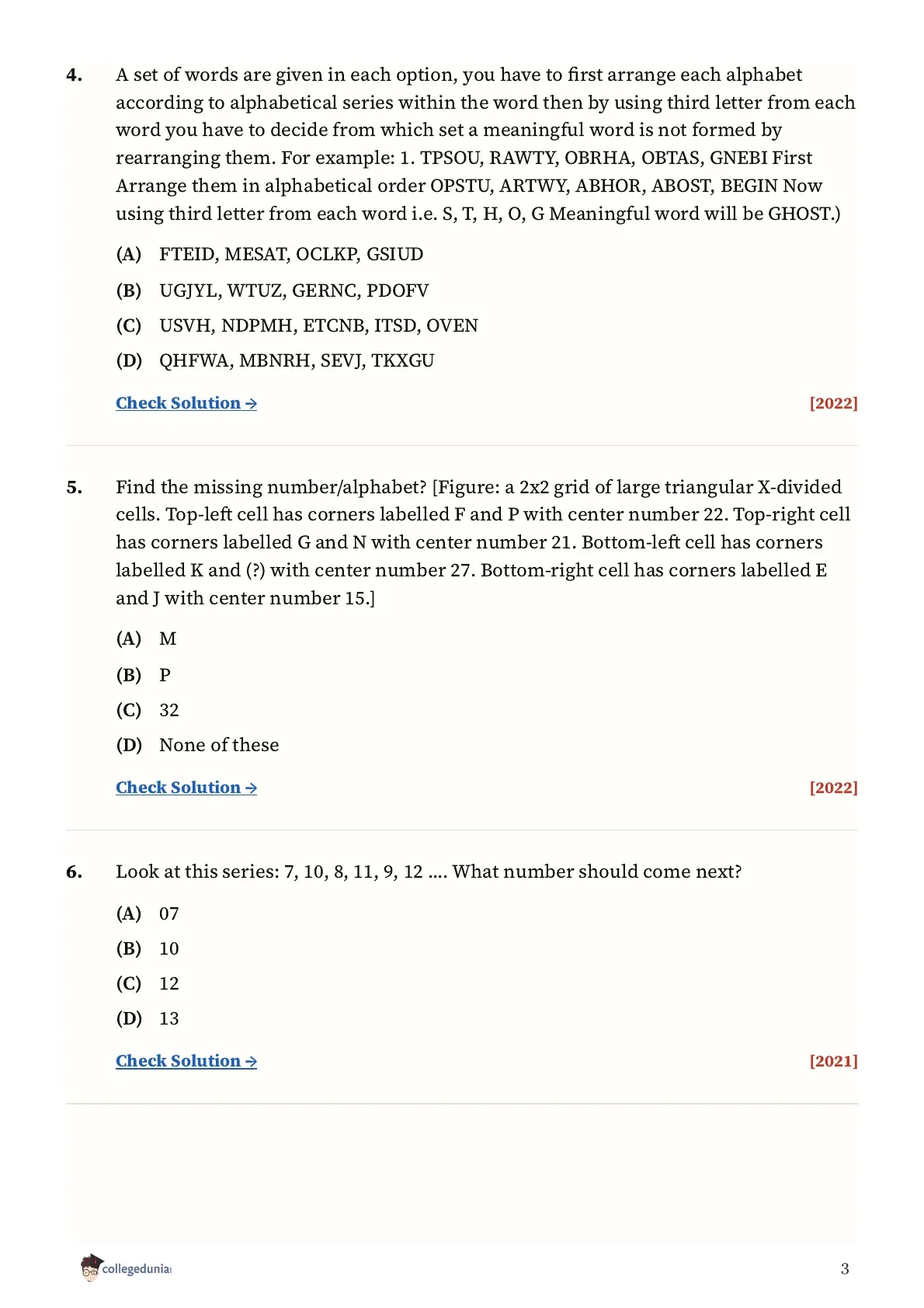
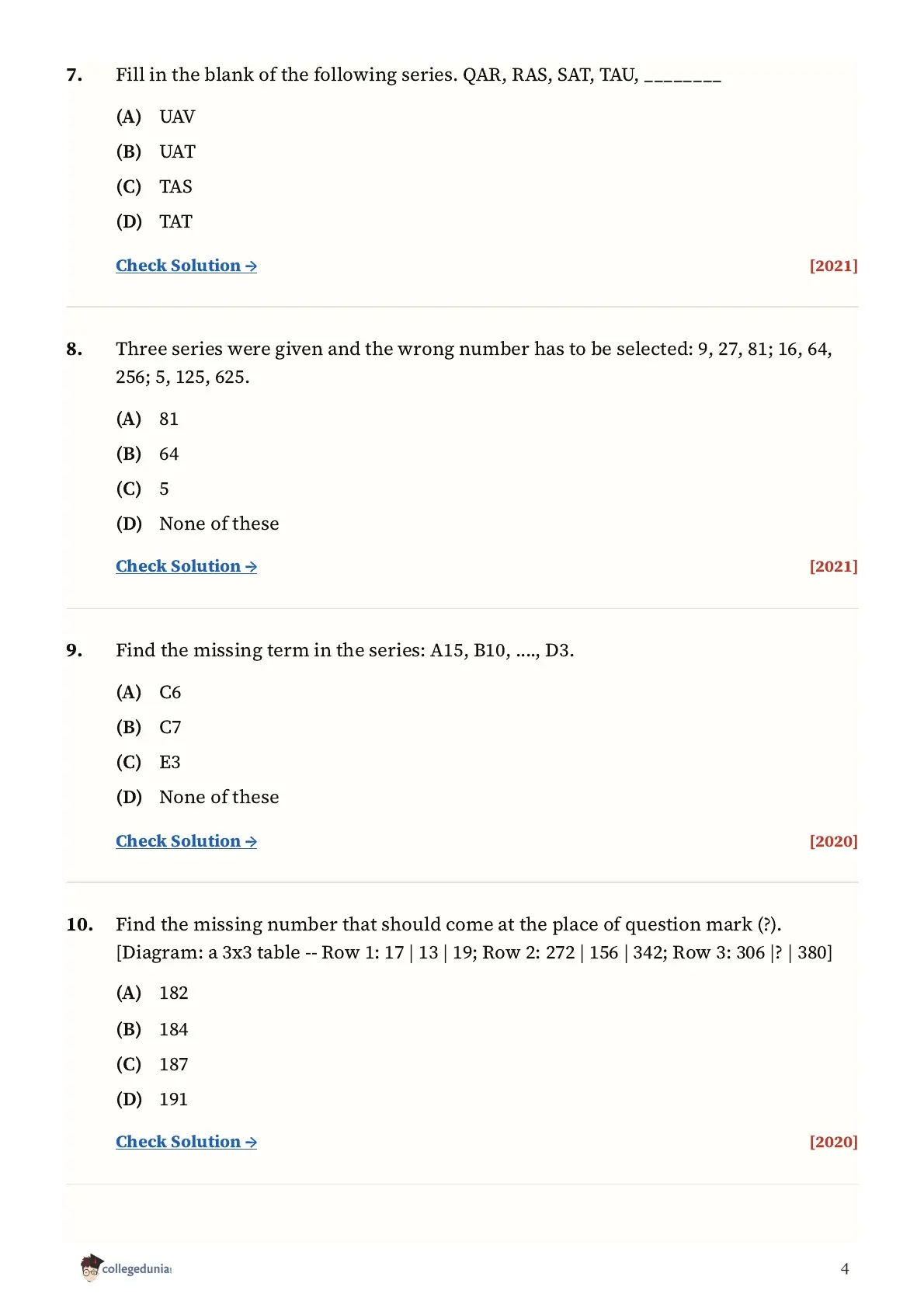
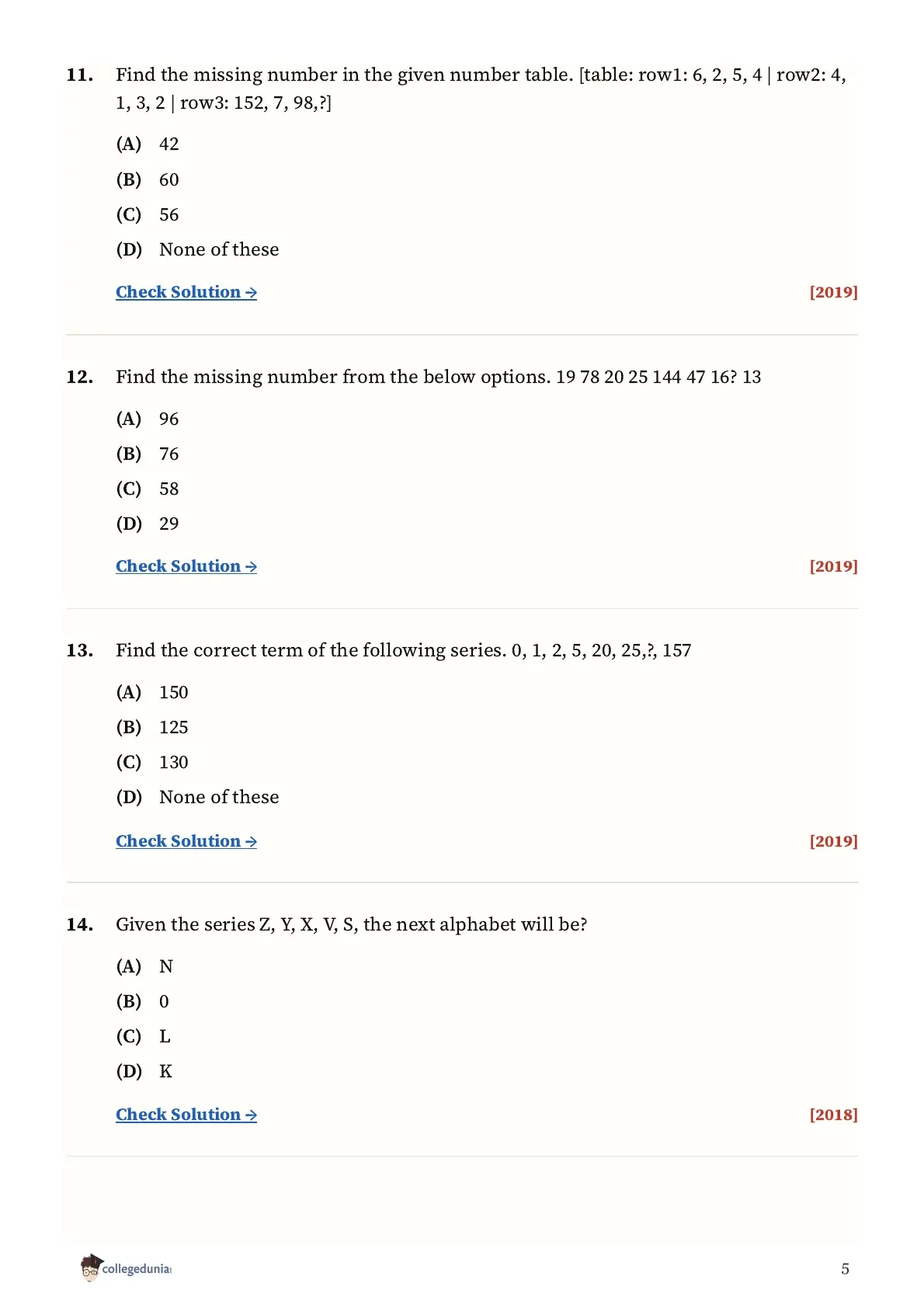
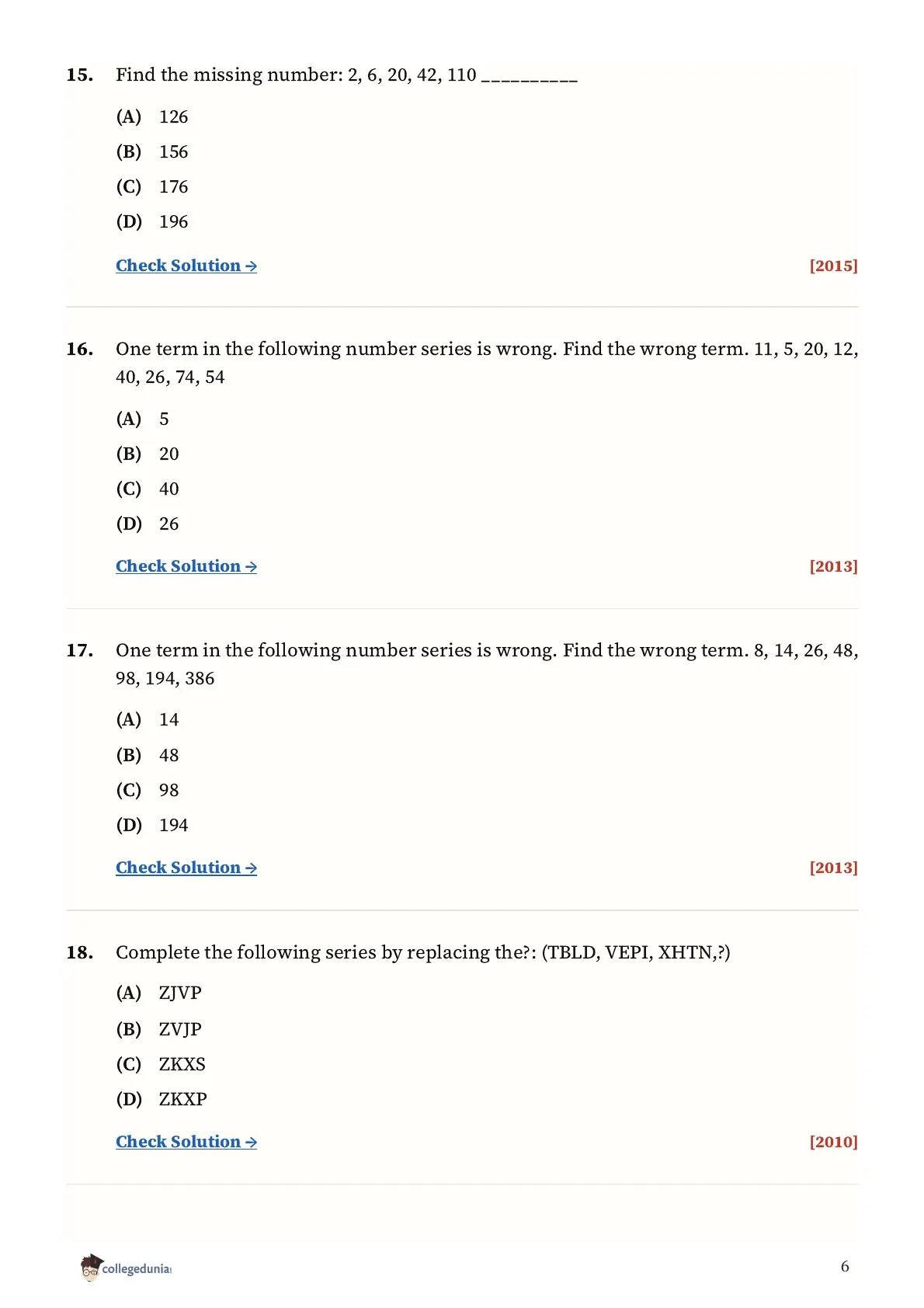
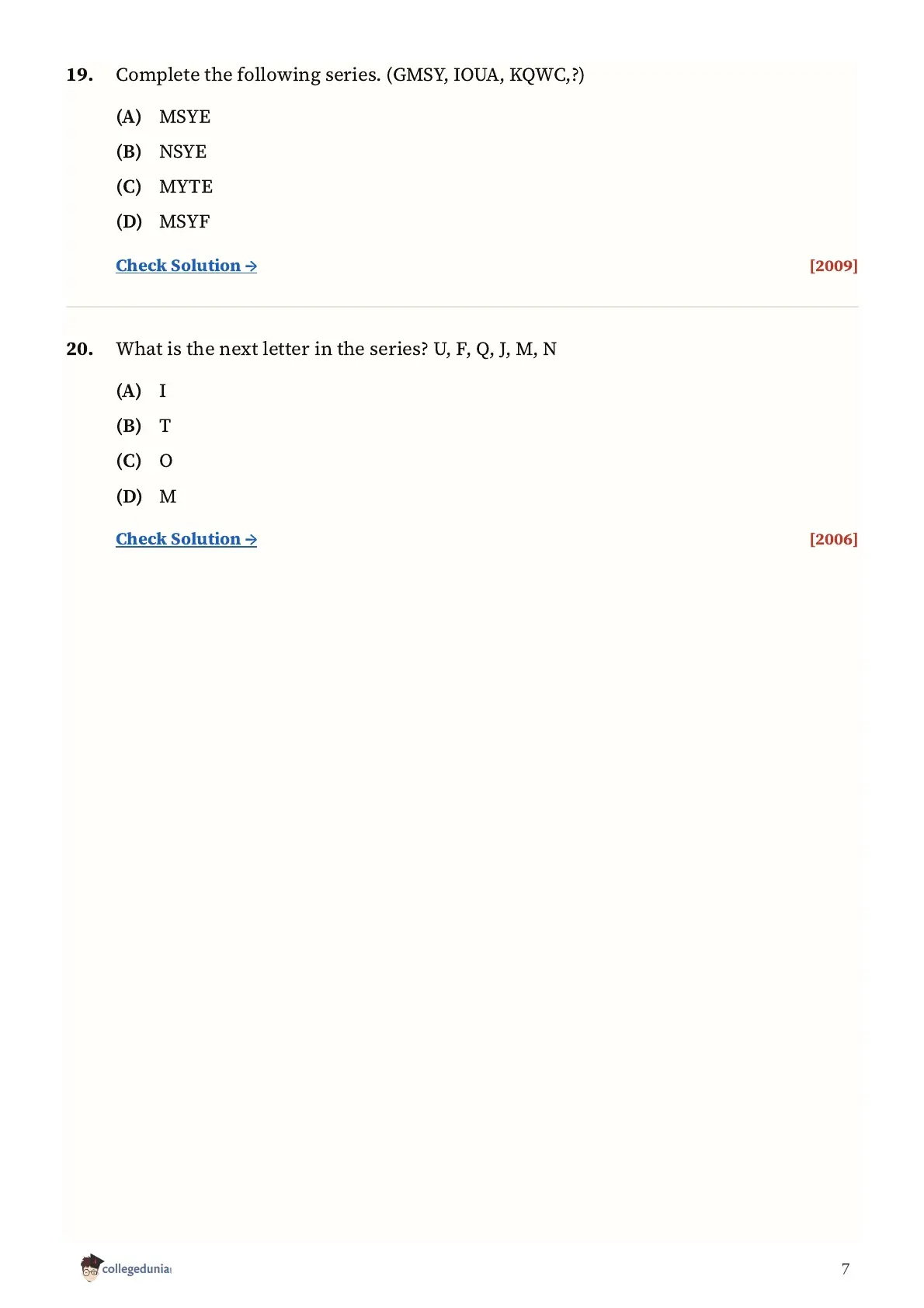
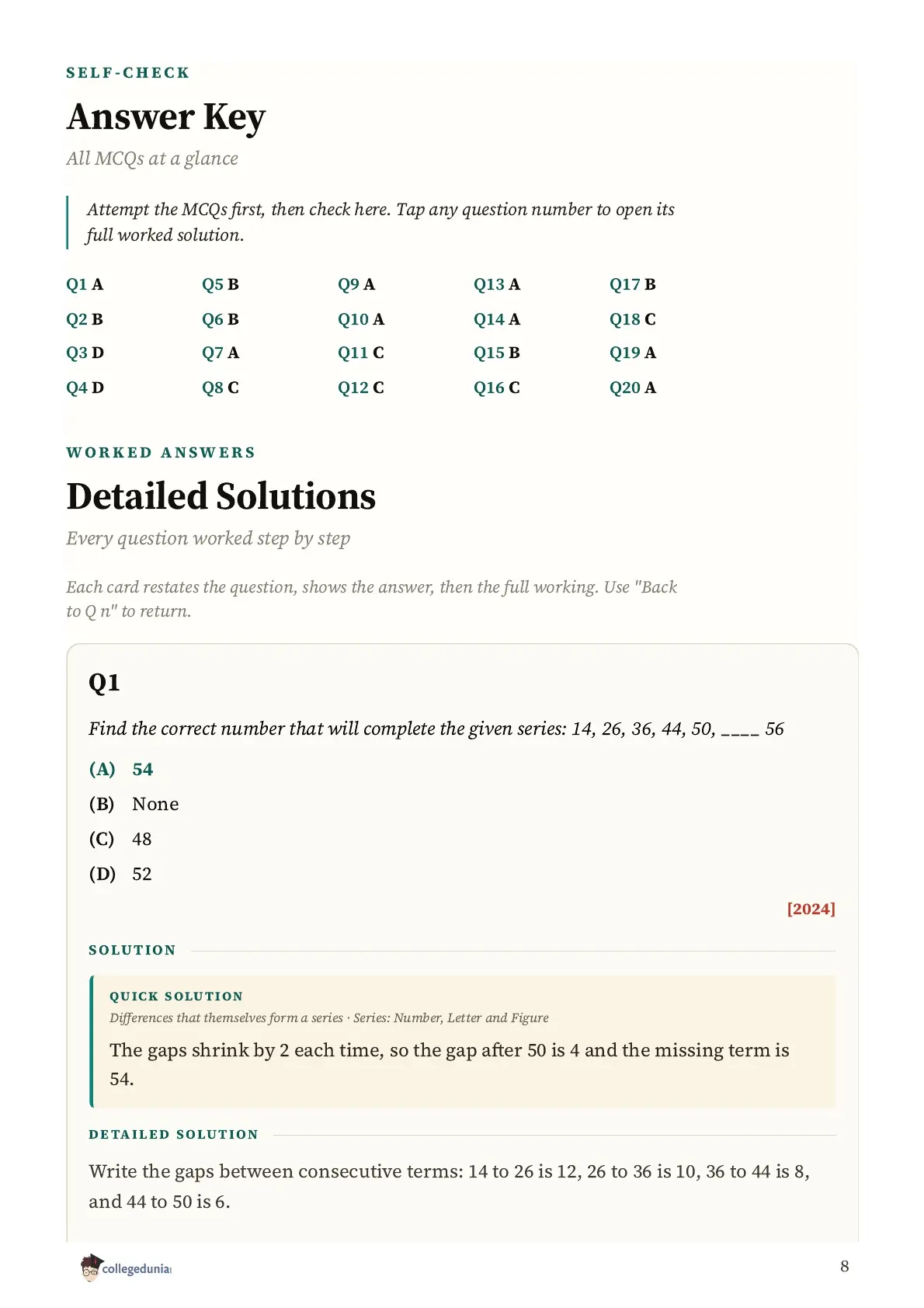
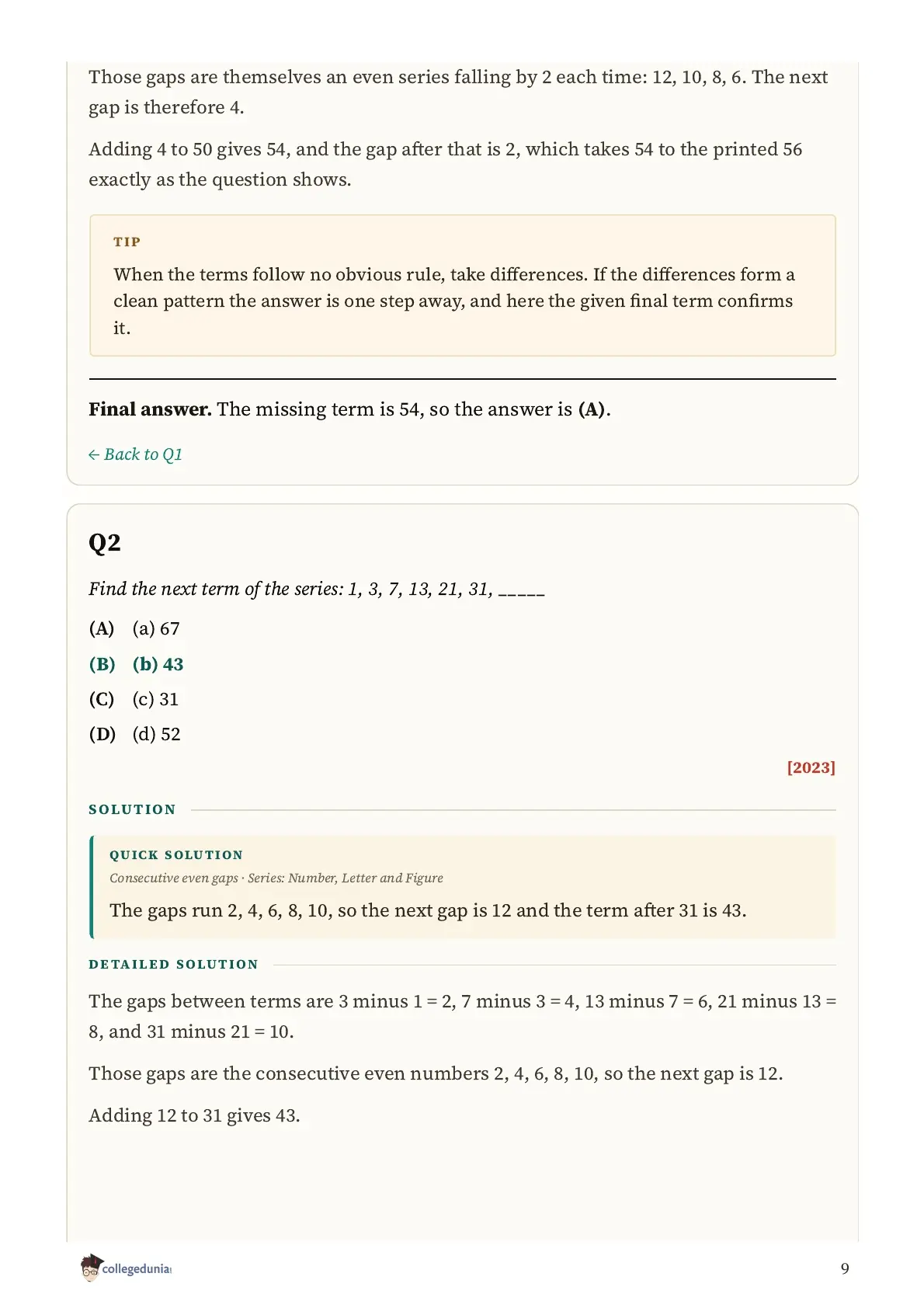
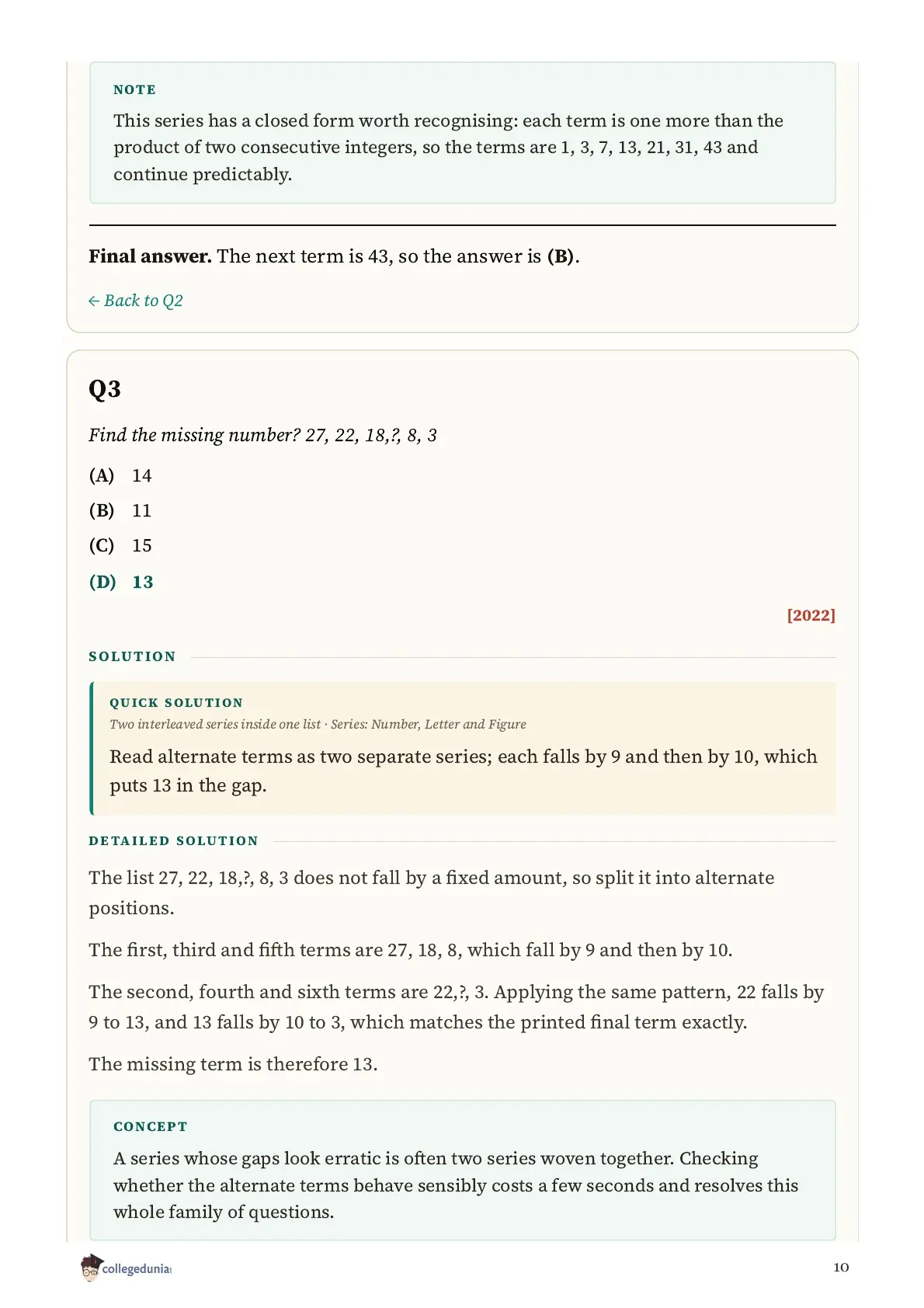
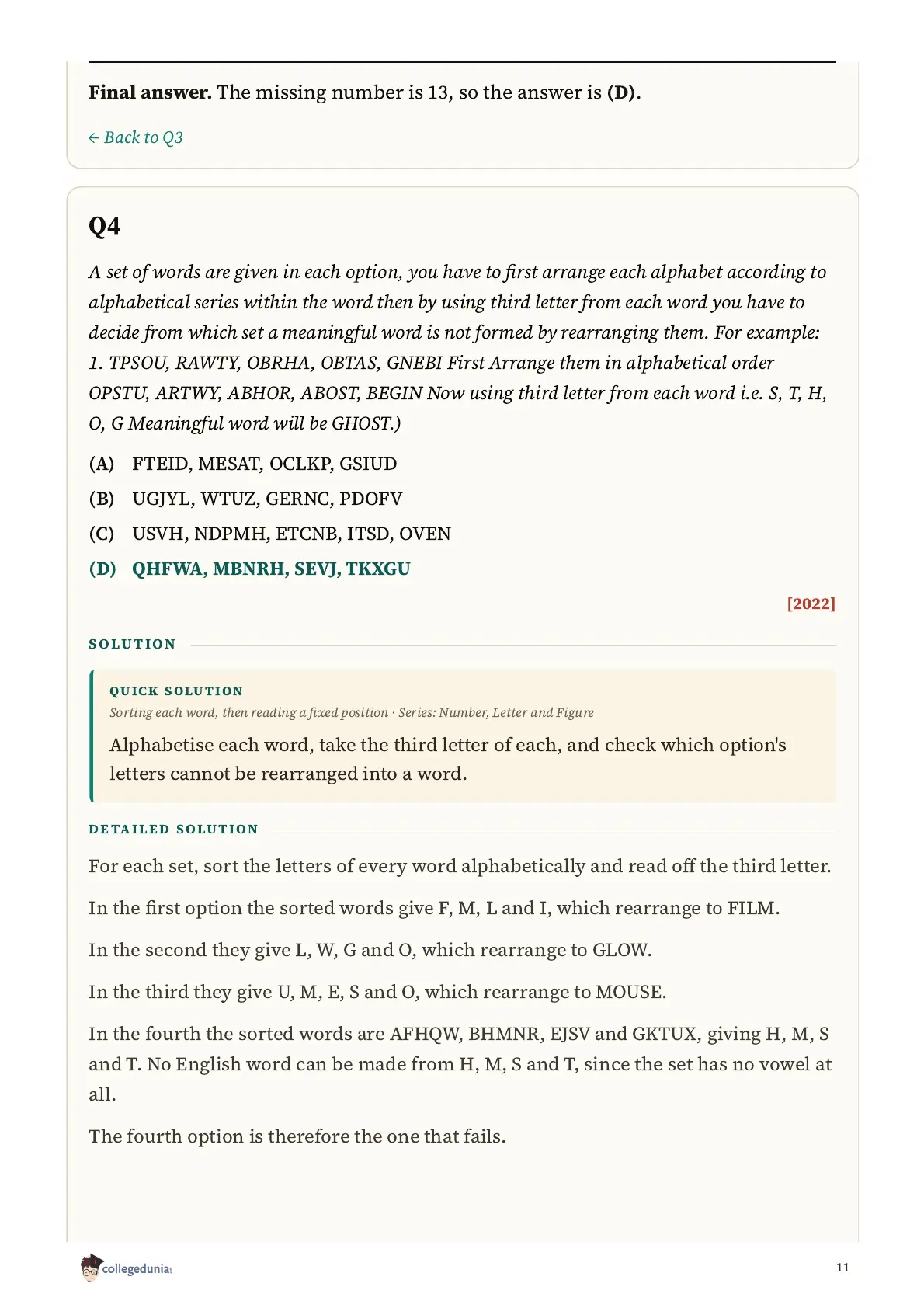
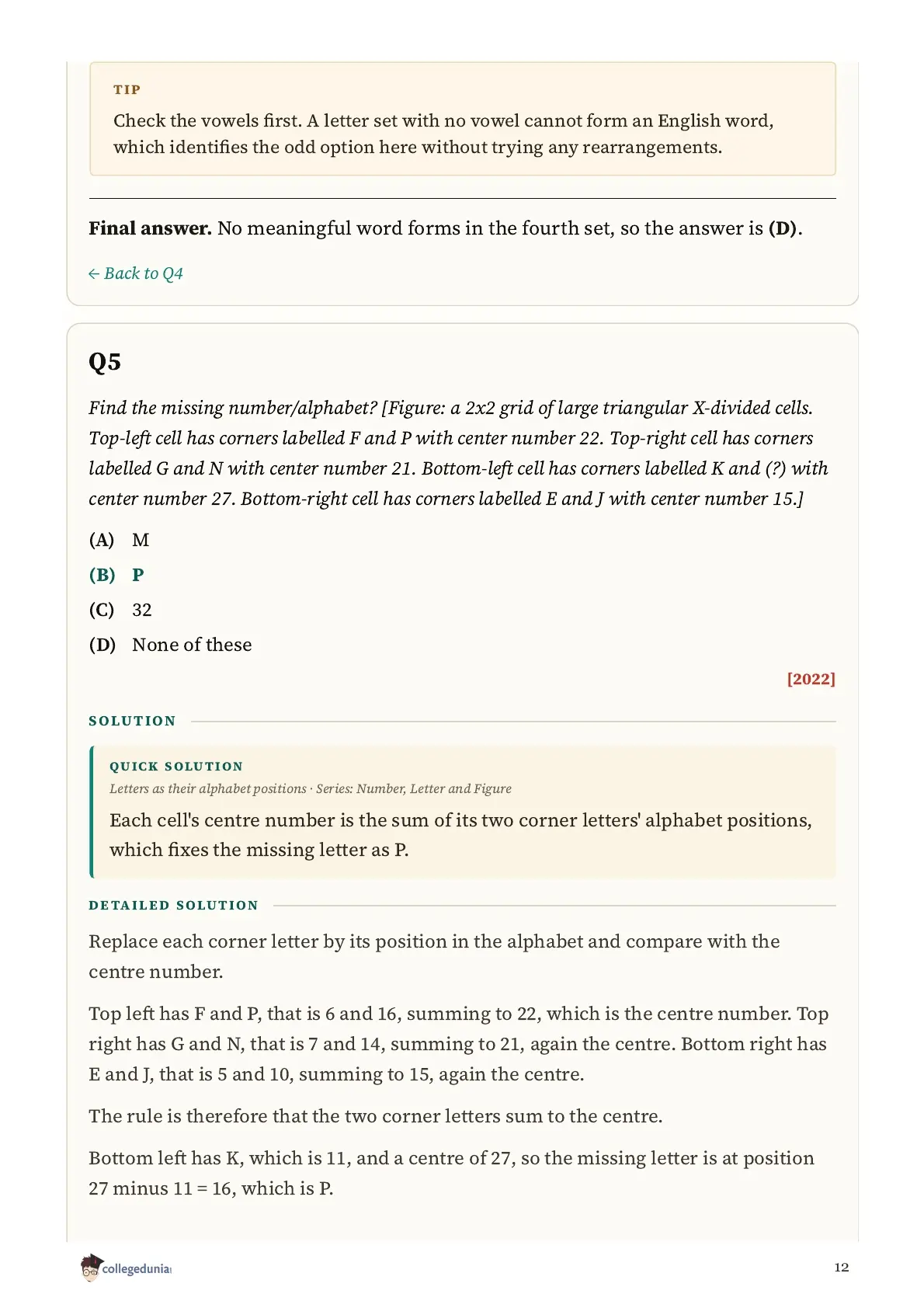
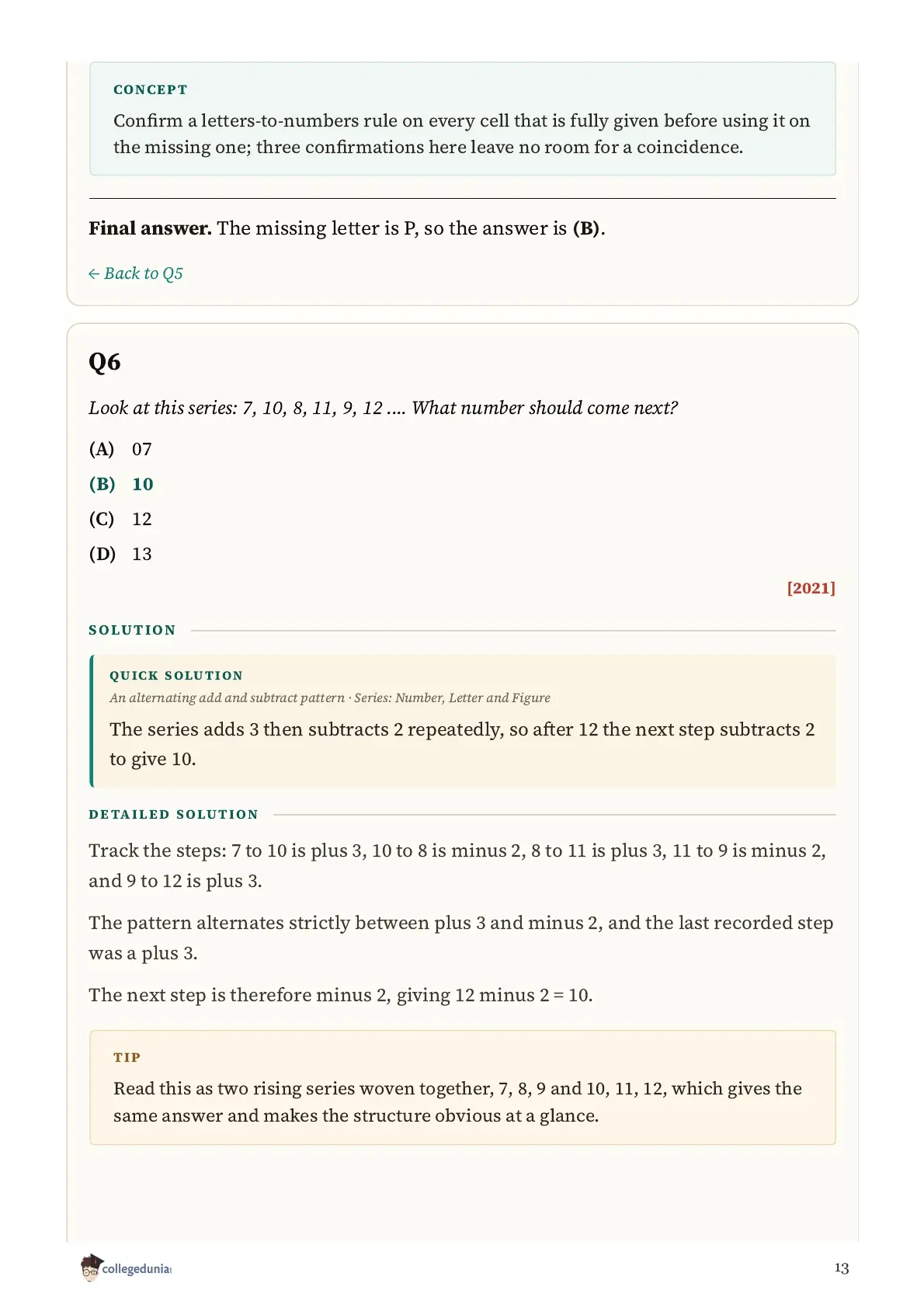
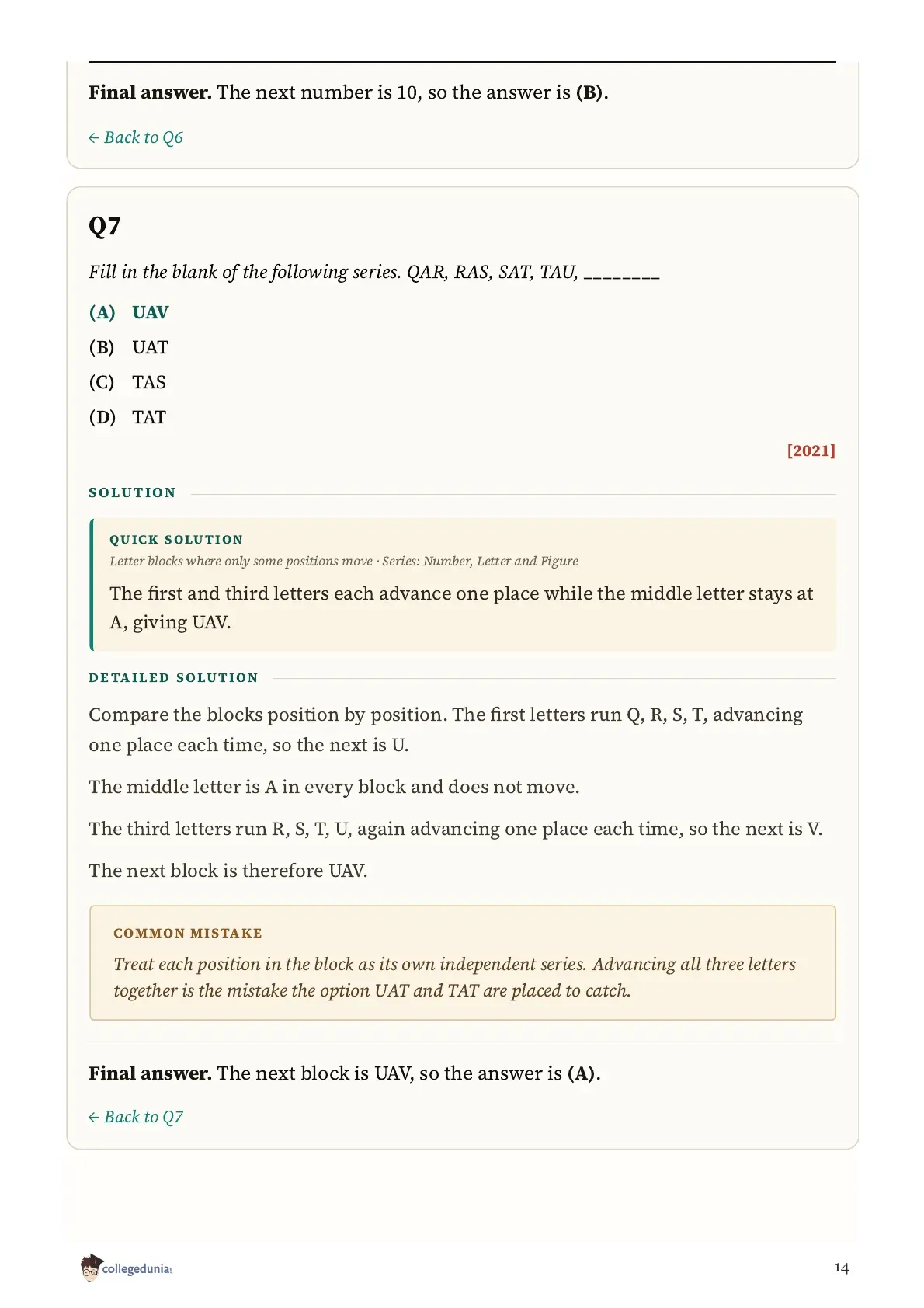
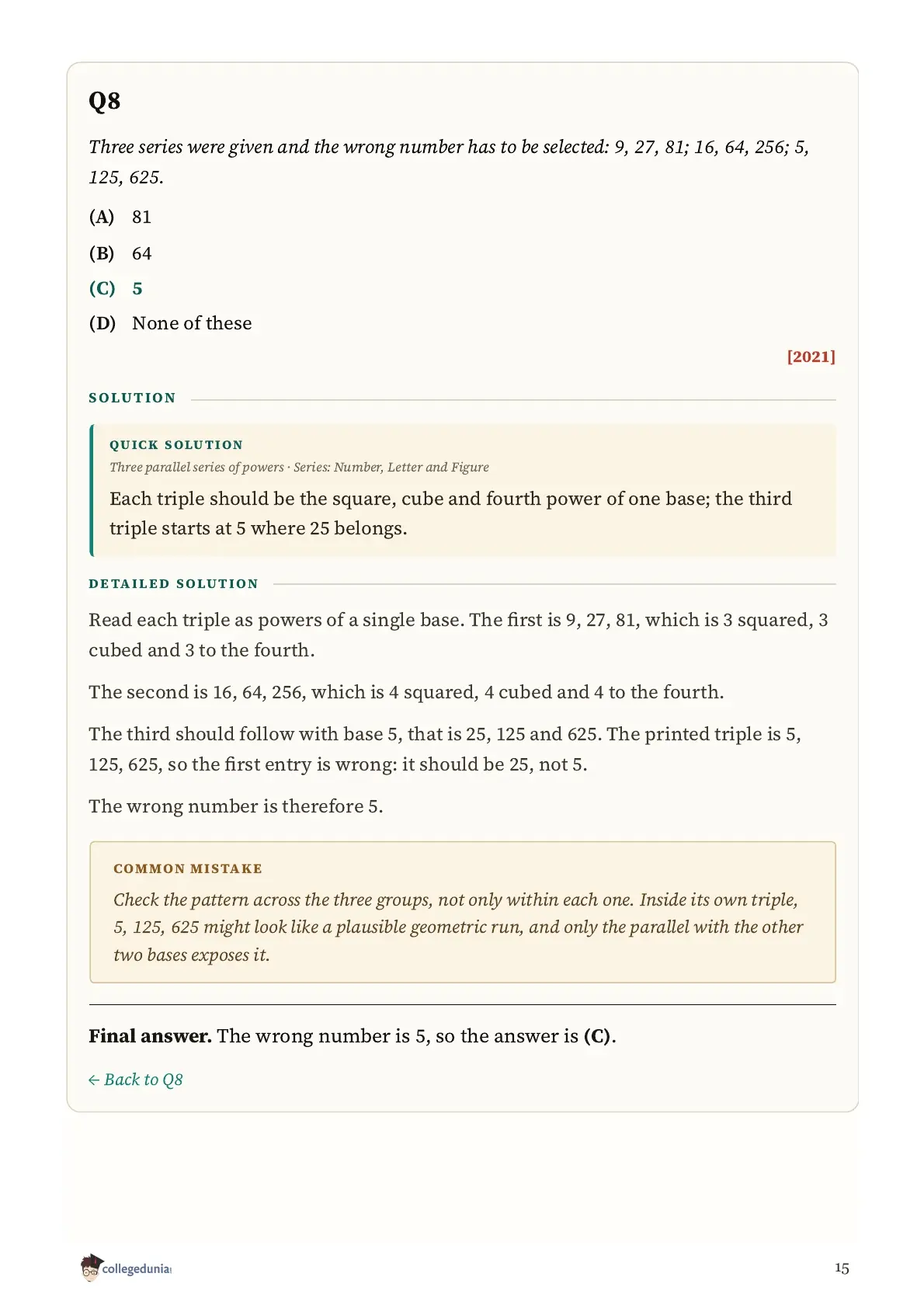
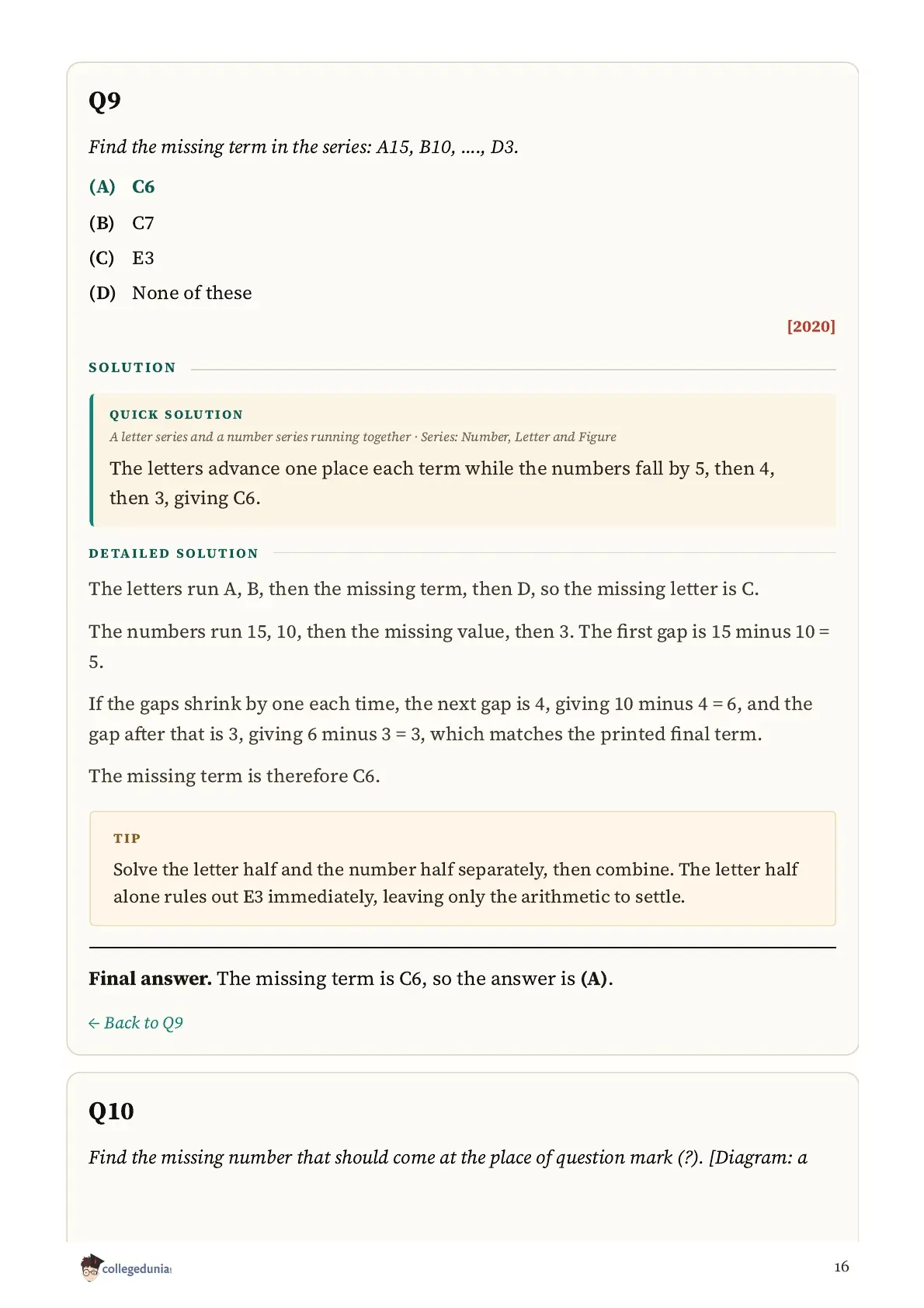
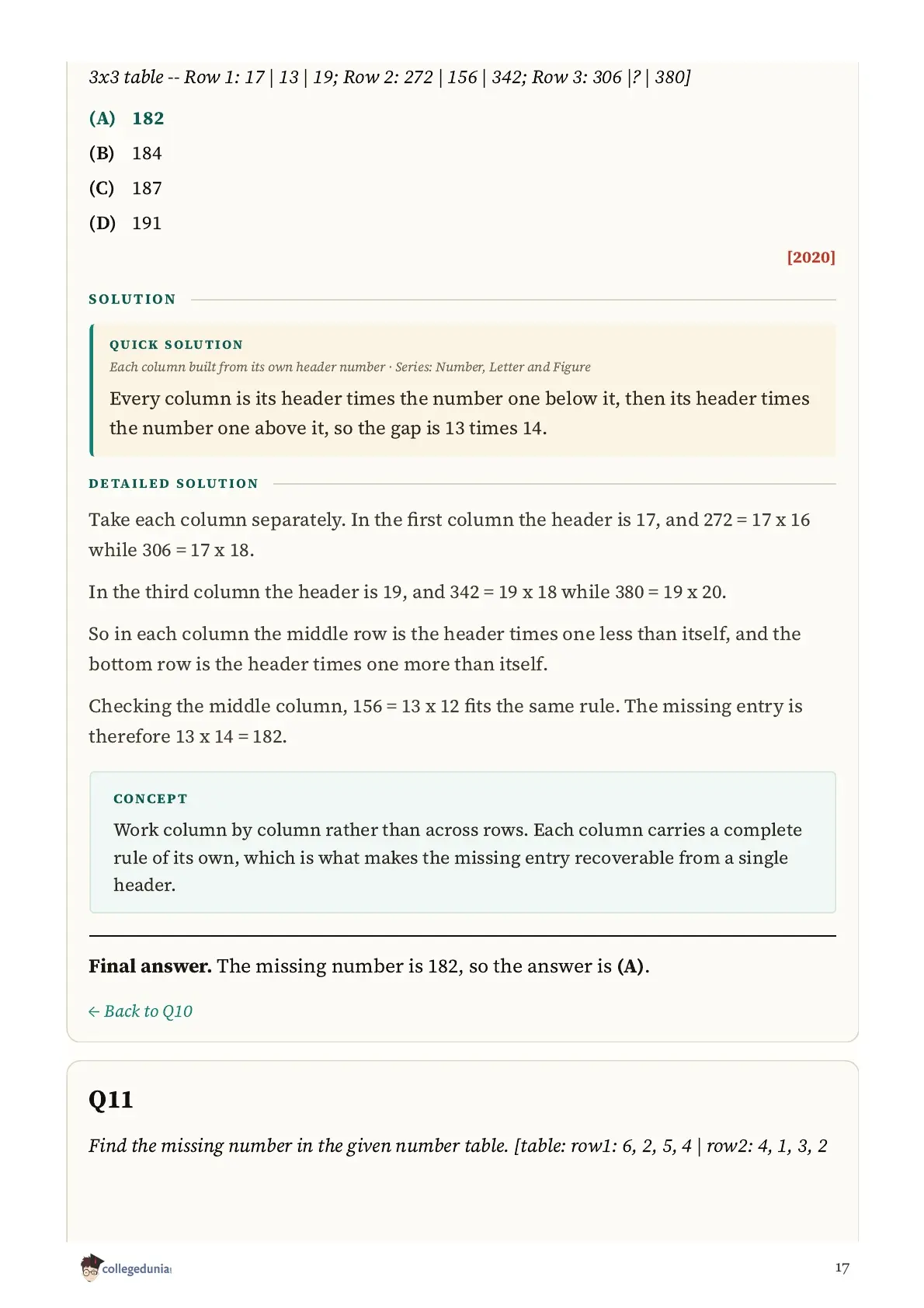
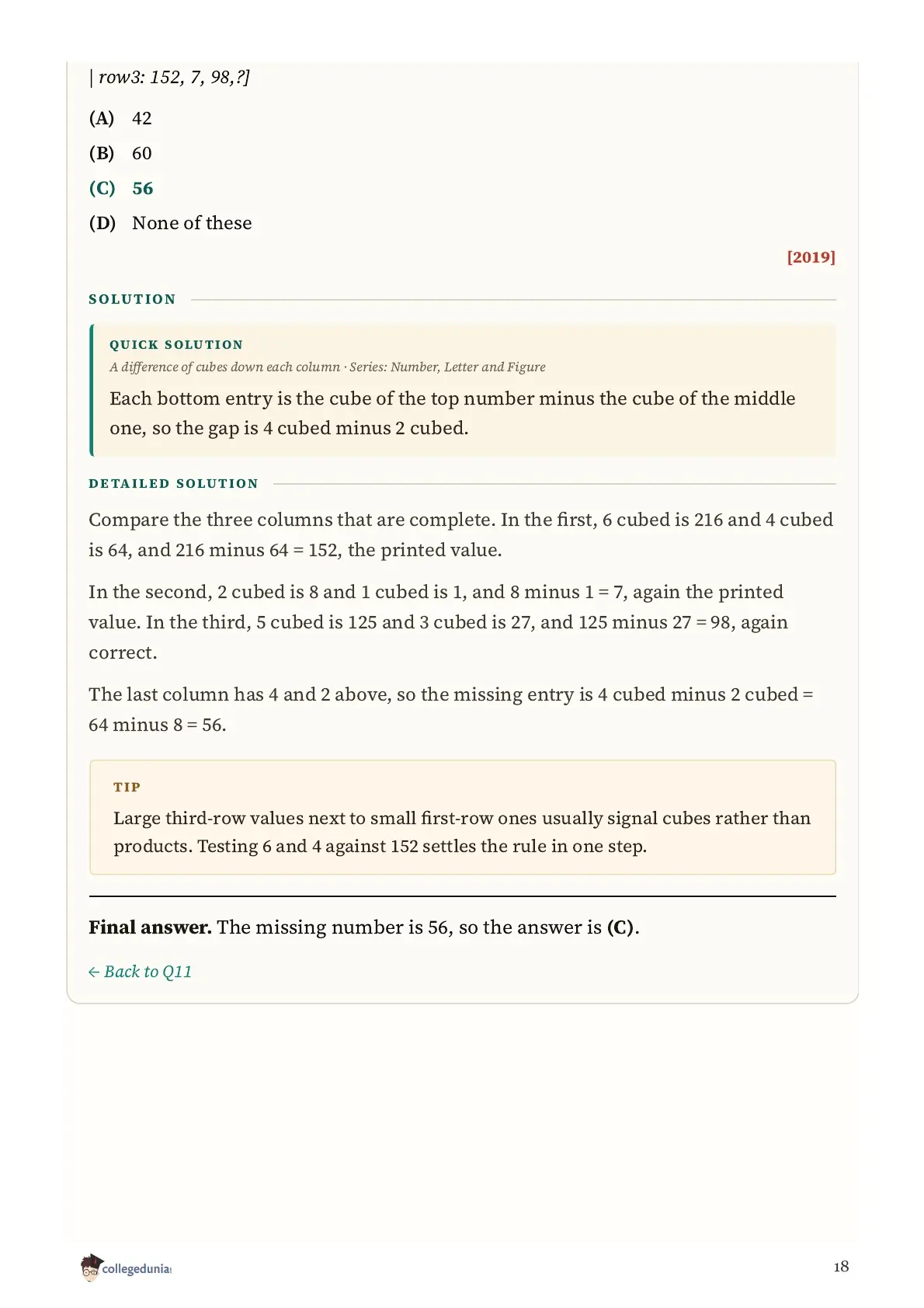
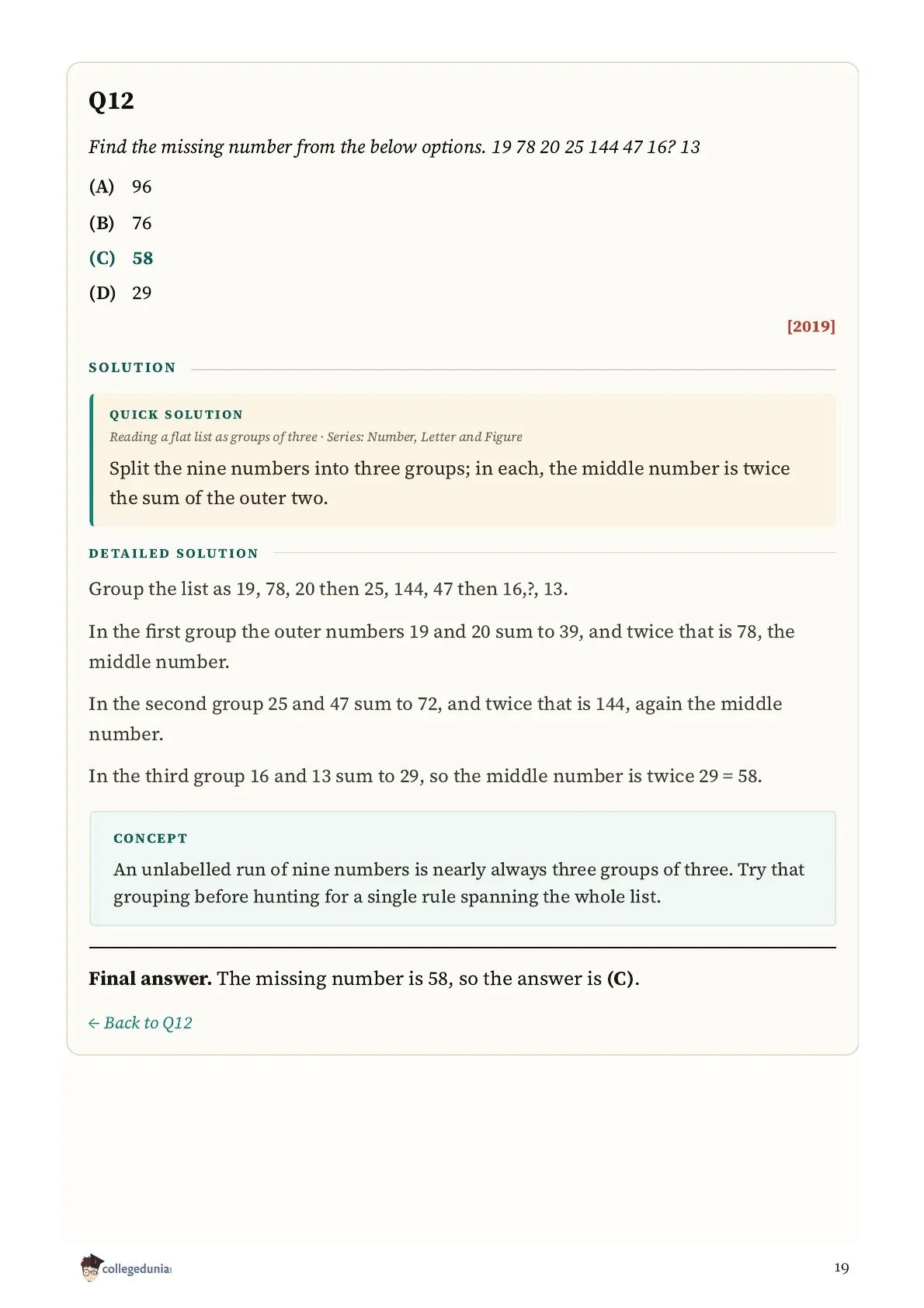
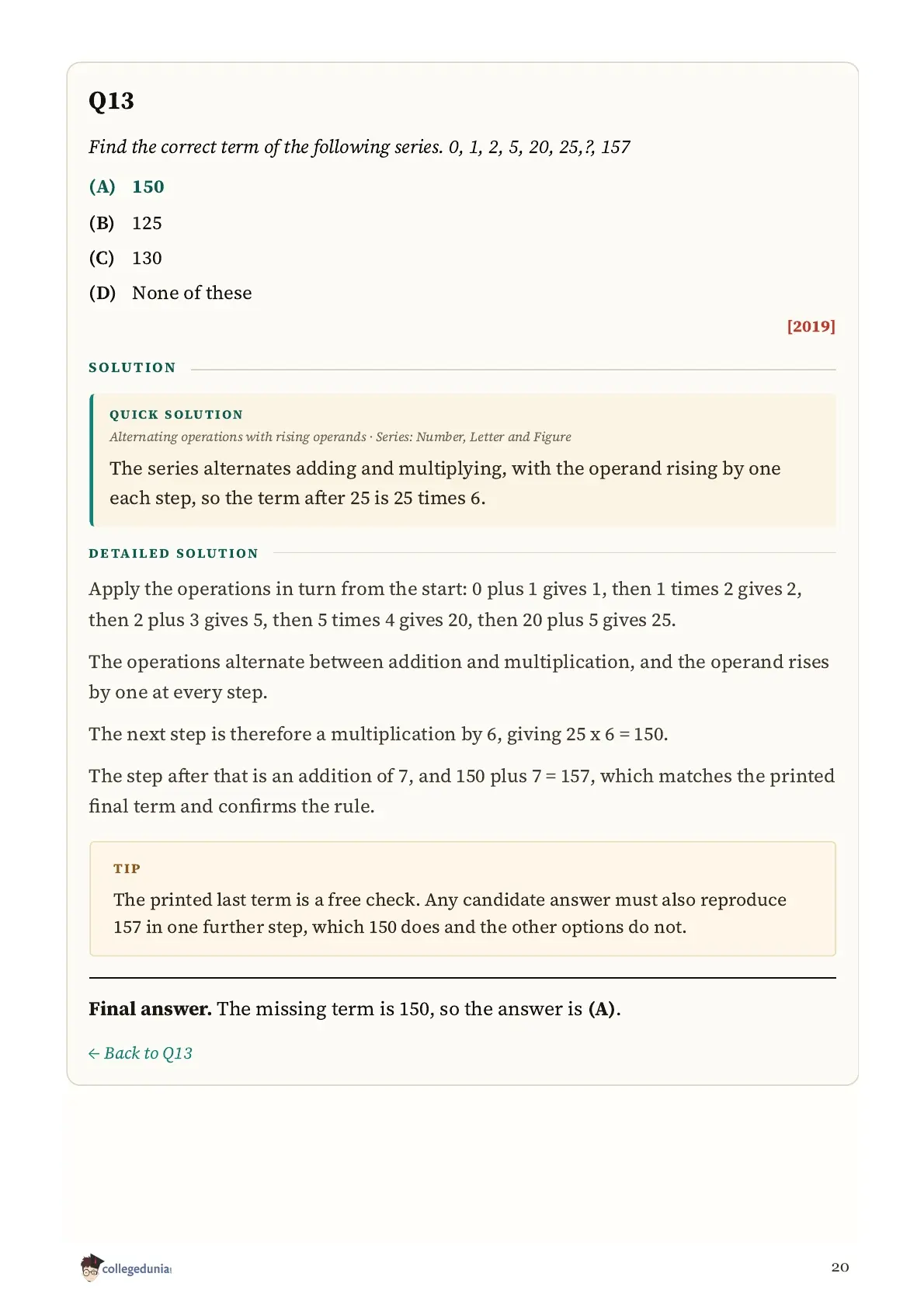
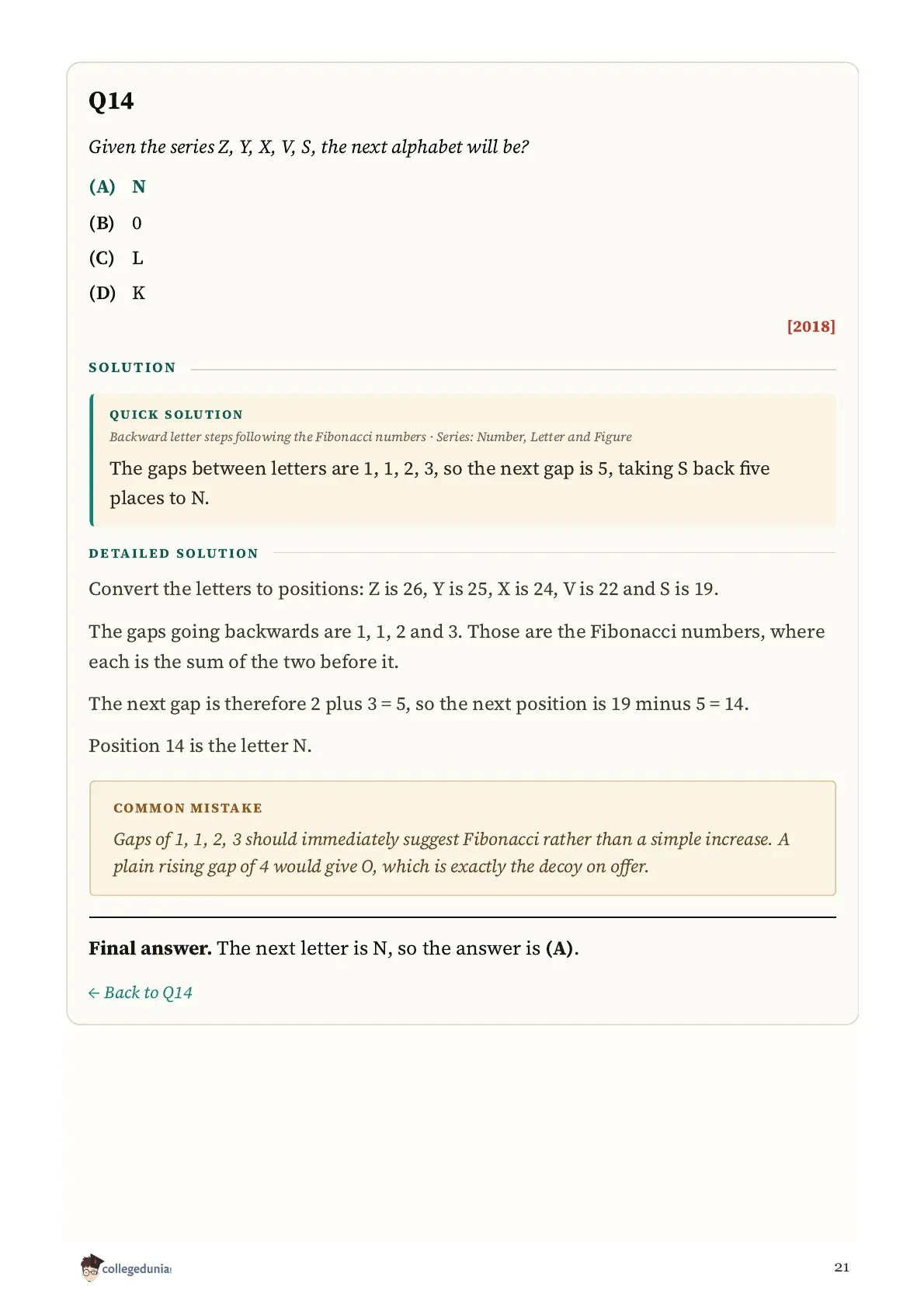
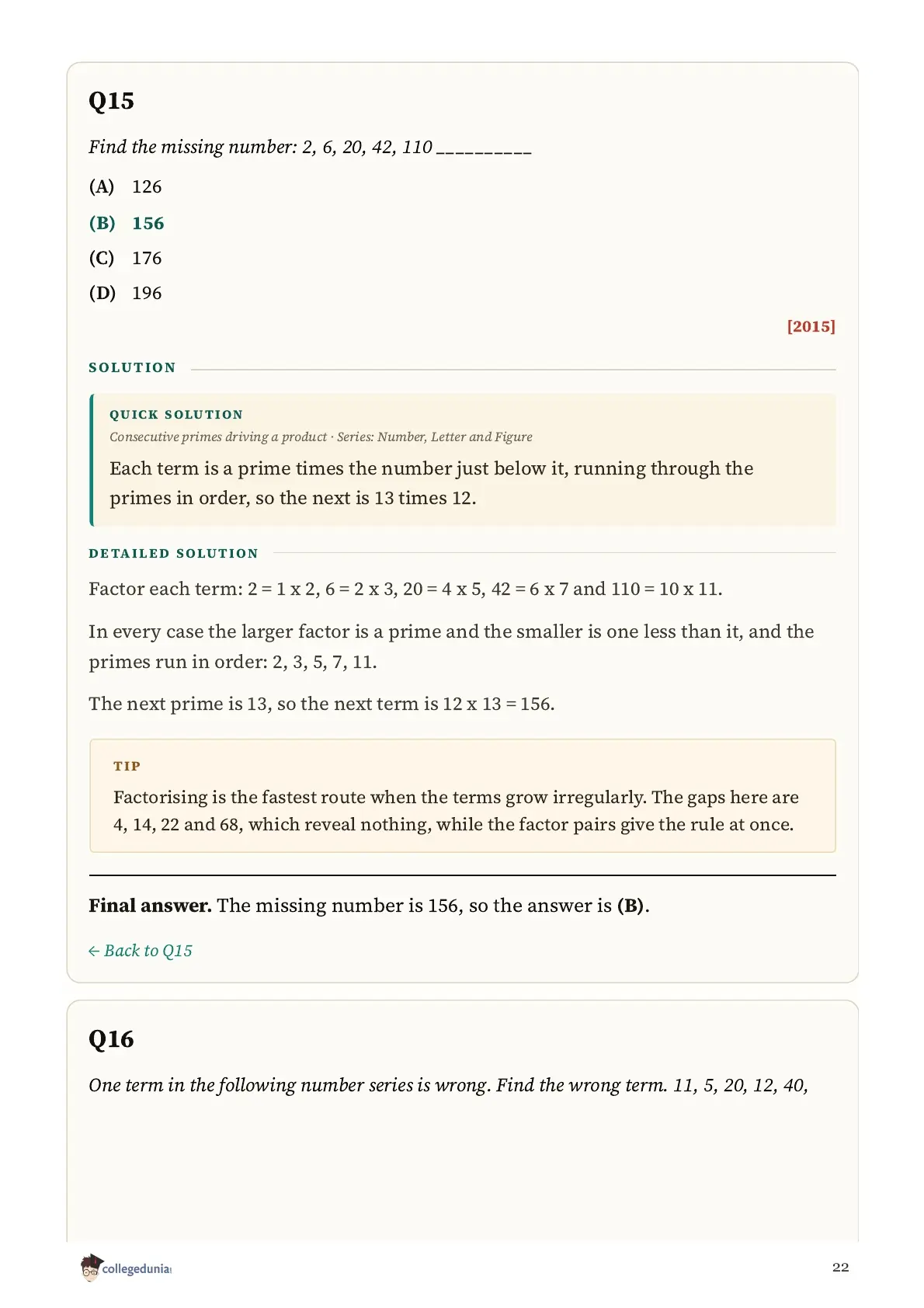
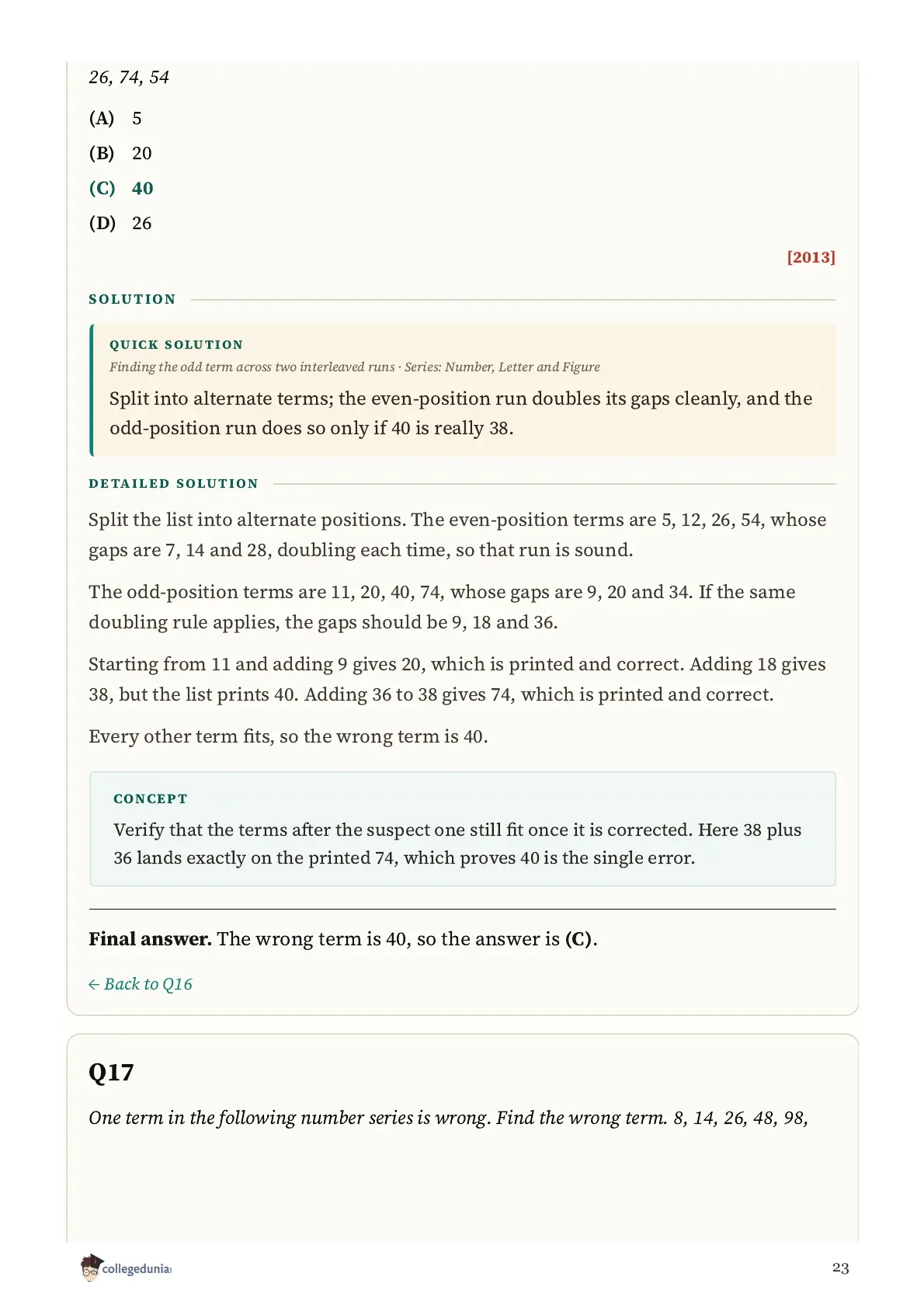
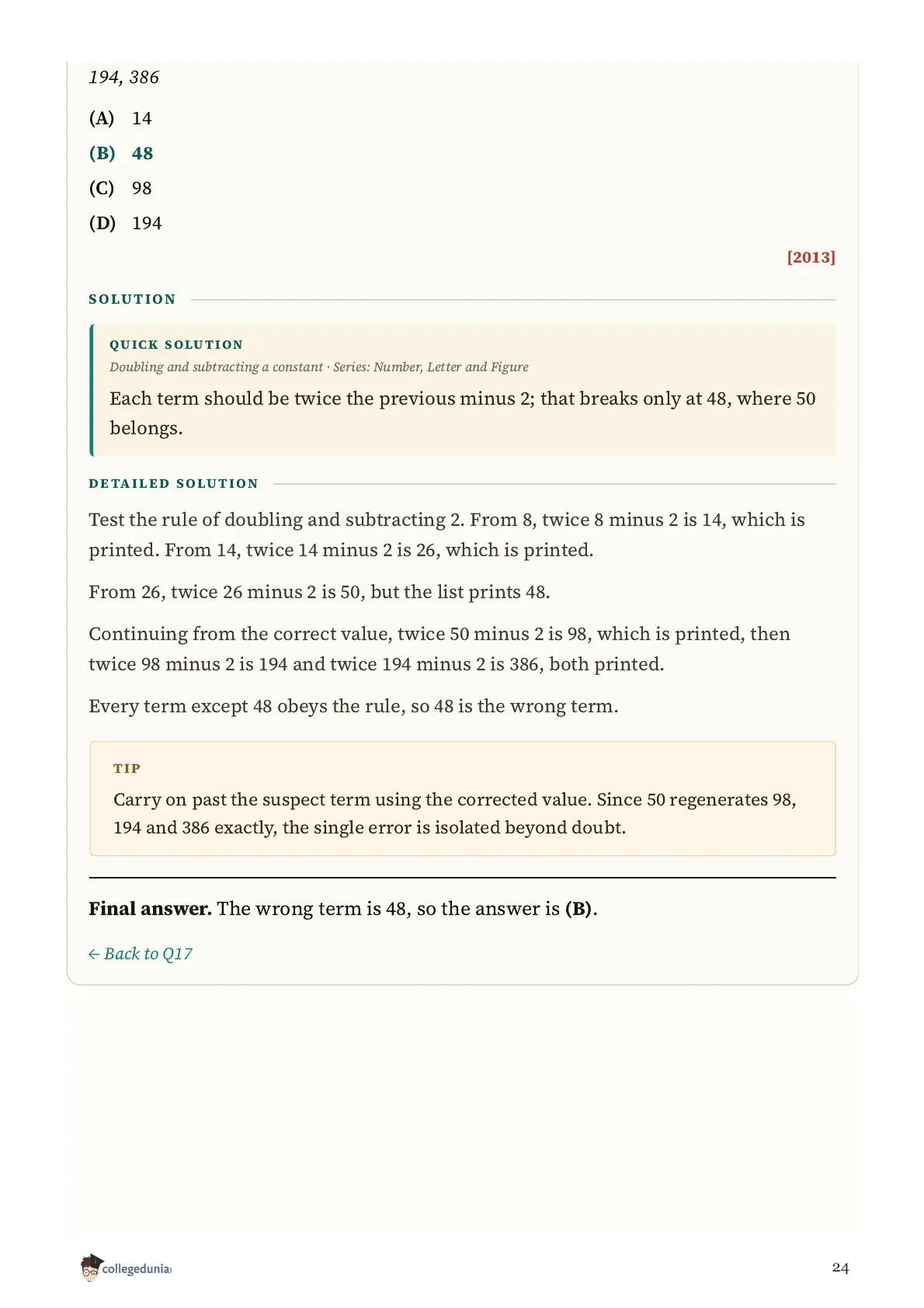
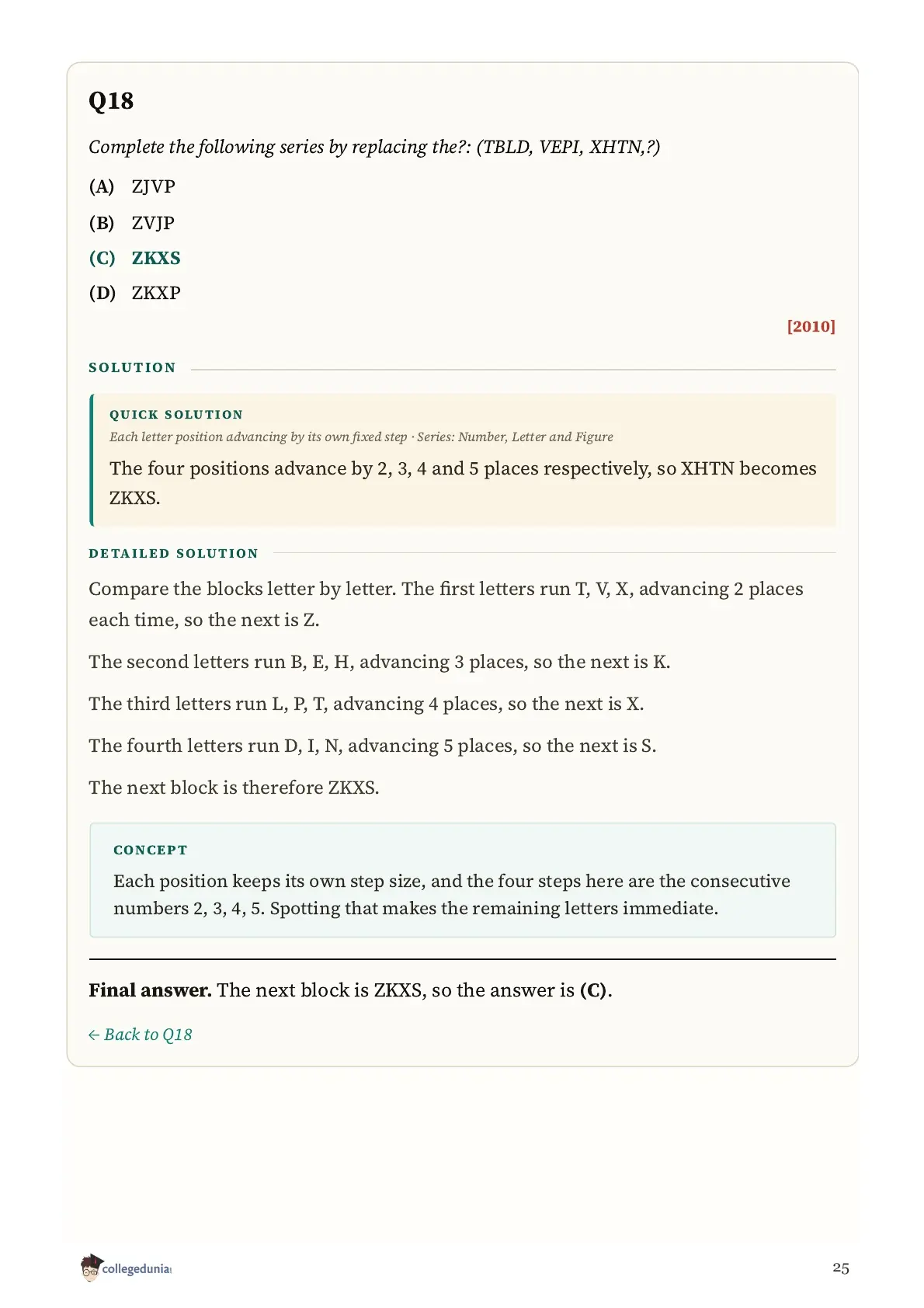
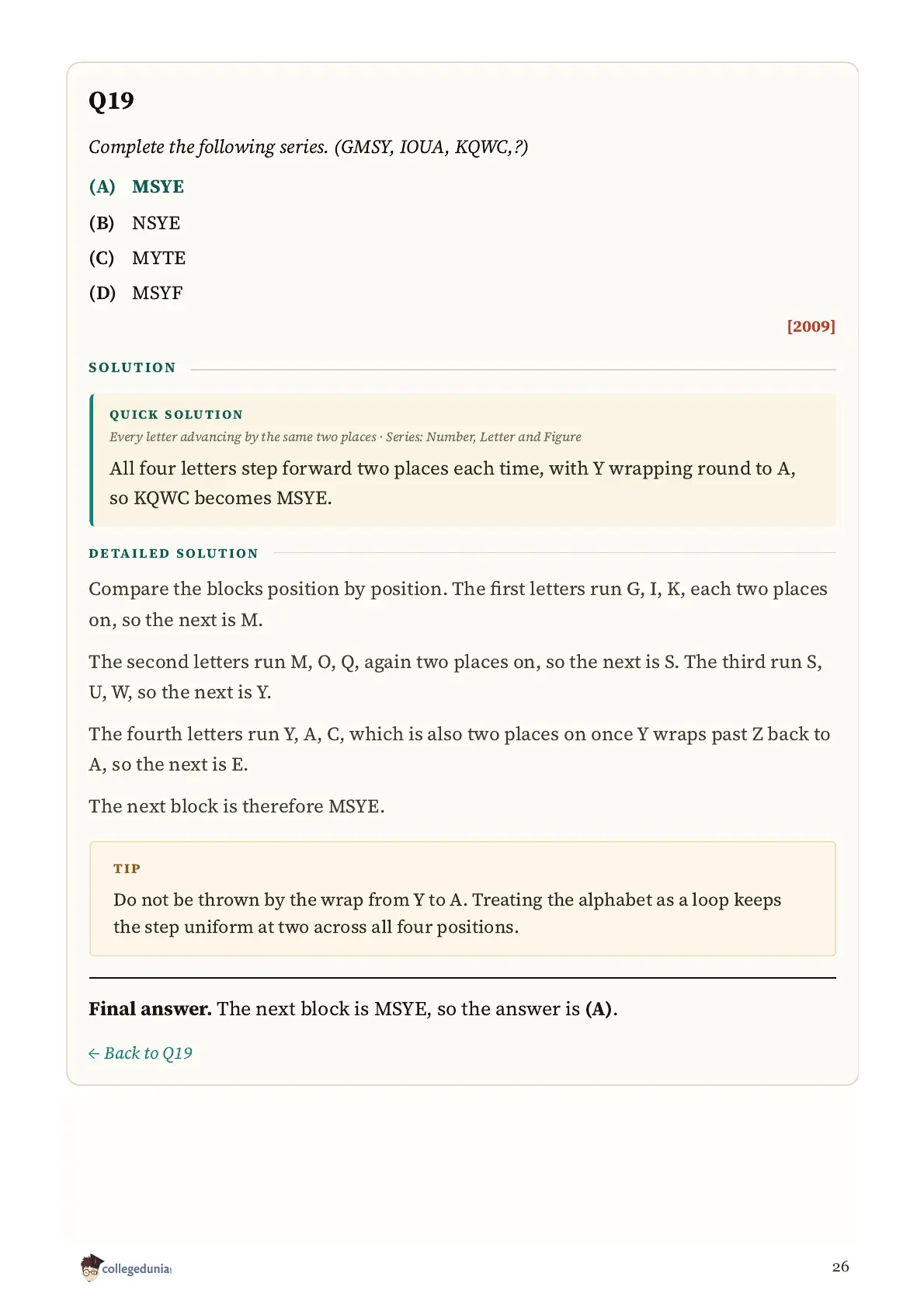
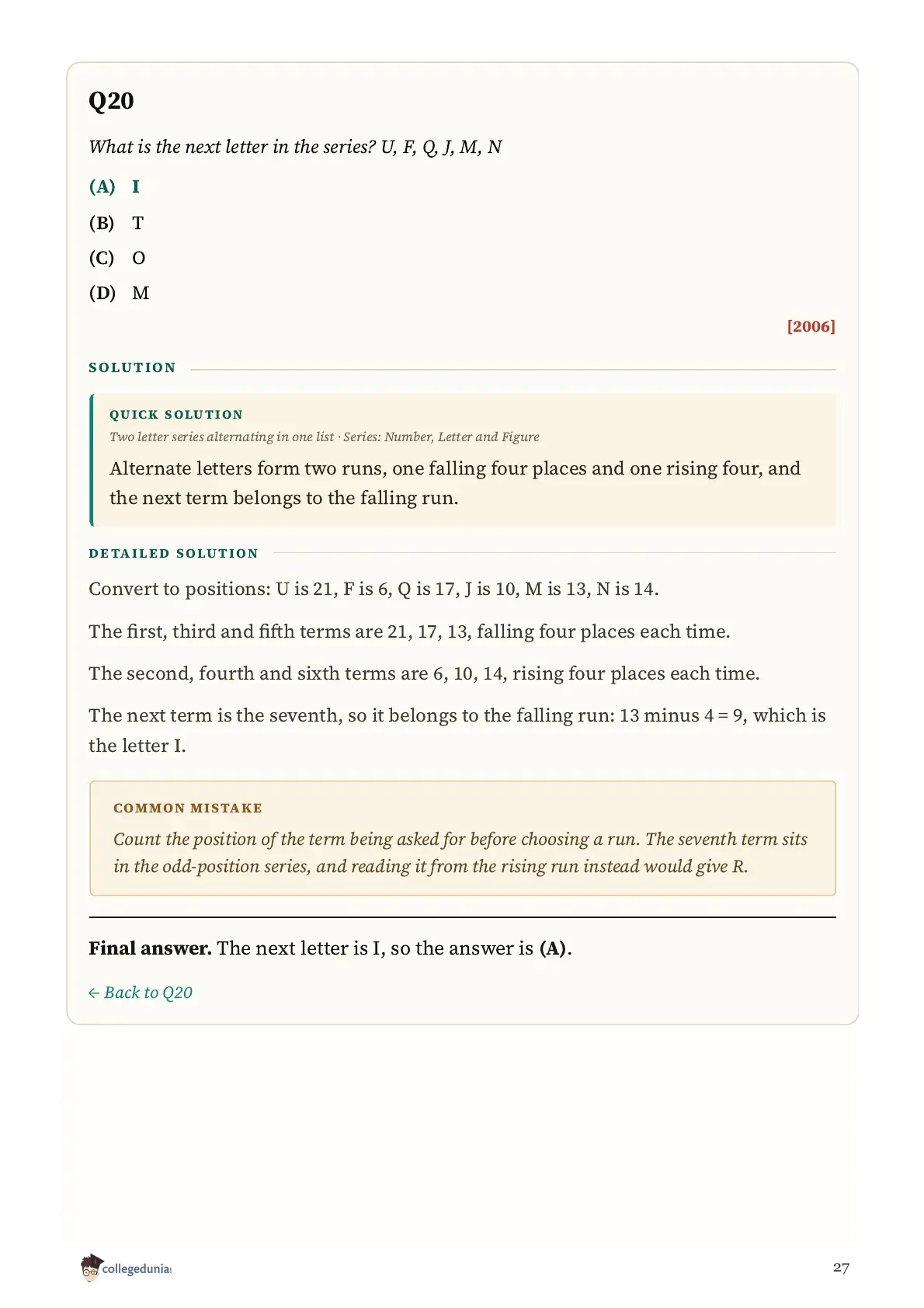
Questions run newest year first, with the options exactly as printed. The answer key follows, then a worked solution for each one.
SNAP Series Weightage
Series sits in Analytical and Logical Reasoning, the largest section in SNAP at 25 of the 60 questions. One to three series questions appear in almost every paper, and they are among the fastest marks available.
| Papers | Questions in this bank |
|---|---|
| 2006 to 2010 | 3 |
| 2011 to 2015 | 3 |
| 2018 to 2020 | 6 |
| 2021 to 2025 | 8 |
The recent papers use series more than the older ones did: eight of the twenty come from 2021 onward.
What the 20 Questions Cover
These are number and letter series only. The chapter is named for figure series too, but both figure questions in the source papers show their sequences as diagrams whose options came through empty, so printing them would have meant four blank choices under an unanswerable question.
- Difference series, where the gaps between terms form their own pattern
- Interleaved series, where alternate terms belong to two separate runs
- Letter blocks, where each position advances by its own fixed step
- Wrong-term questions, which ask you to find the one entry that breaks the rule
- Grids and tables, where a rule runs down each column or across each group
- Letters as numbers, where alphabet positions are added or subtracted
How to Approach the Set
Take differences first. If the gaps form a clean pattern the answer is one step away, and that disposes of roughly half the bank without further thought.
If the gaps look erratic, two things are worth trying before anything else. Test whether alternate terms form two separate runs, and factorise the terms. Factor pairs often reveal a rule the differences hide completely.
In letter blocks, treat each position as its own series rather than moving all the letters together. And on wrong-term questions, do not stop at the suspect entry: carry on past it with the corrected value and check the later terms still fit.
Common Mistakes
- Advancing every letter in a block when one position is meant to stay fixed
- Reading gaps of 1, 1, 2, 3 as a simple increase rather than as Fibonacci
- Taking the next term from the wrong run when two series are interleaved
- Judging a triple on its own when the rule only shows up across the parallel groups
- Stopping at the first entry that looks wrong without checking the terms after it
Two to Solve First
The 2019 alternating-operations question. The series 0, 1, 2, 5, 20, 25 alternates adding and multiplying, with the operand rising by one each step. Its printed final term of 157 acts as a free check on any candidate answer, which is exactly how a series question should be verified.
Then the 2015 question where primes hide in the factors. The terms 2, 6, 20, 42, 110 have gaps of 4, 14, 22 and 68, which reveal nothing. Factorising gives 1 times 2, 2 times 3, 4 times 5, 6 times 7 and 10 times 11, and the larger factors are the primes in order.
Video Solutions
Source: MBA Pathshala
Using the Answer Key
Attempt all 20 before checking anything, allowing about a minute each. Mark the key in one pass, right or wrong only, then read the solution for every miss and every lucky guess. Each solution names the rule and shows it holding against every printed term before applying it to the gap.
For the rest of the section, the SNAP Blood Relations PYQs cover the other repeated reasoning topic, and the SNAP Averages, Mixtures and Alligation PYQs do the same for quant.
SNAP Series PYQ FAQs
Ques. How many series questions come in SNAP?
Ans. One to three in almost every paper, inside Analytical and Logical Reasoning, which carries 25 of the 60 questions. They are among the fastest marks in the paper once the standard rules are recognised.
Ques. Which years does this bank cover?
Ans. 2006 to 2025, weighted towards the recent papers: eight of the twenty come from 2021 onward.
Ques. Does this booklet include figure series?
Ans. No. The chapter is named for number, letter and figure series, but the two figure questions in the source papers depend on diagrams we cannot reproduce and their options came through empty, so this set is number and letter series only.
Ques. What is the fastest way to crack a number series?
Ans. Take differences first, then test alternate terms, then factorise. Those three passes in that order will solve almost every series question in this bank, and each takes a few seconds.
Ques. Is this an official SNAP answer key?
Ans. No. Symbiosis does not publish an answer key for SNAP. Every answer here was worked out from the question itself and shown with the full working, so you can check it rather than trust it.
Ques. Can the PDF be downloaded free?
Ans. Yes. All 27 pages can be read on this page and downloaded at no cost.



Comments