




SNAP Simple and Compound Interest PYQ, free to download as a 25-page PDF. The bank carries 17 solved questions from the 2006 to 2025 papers and takes roughly one day to work through, so treat it as a single focused sitting.
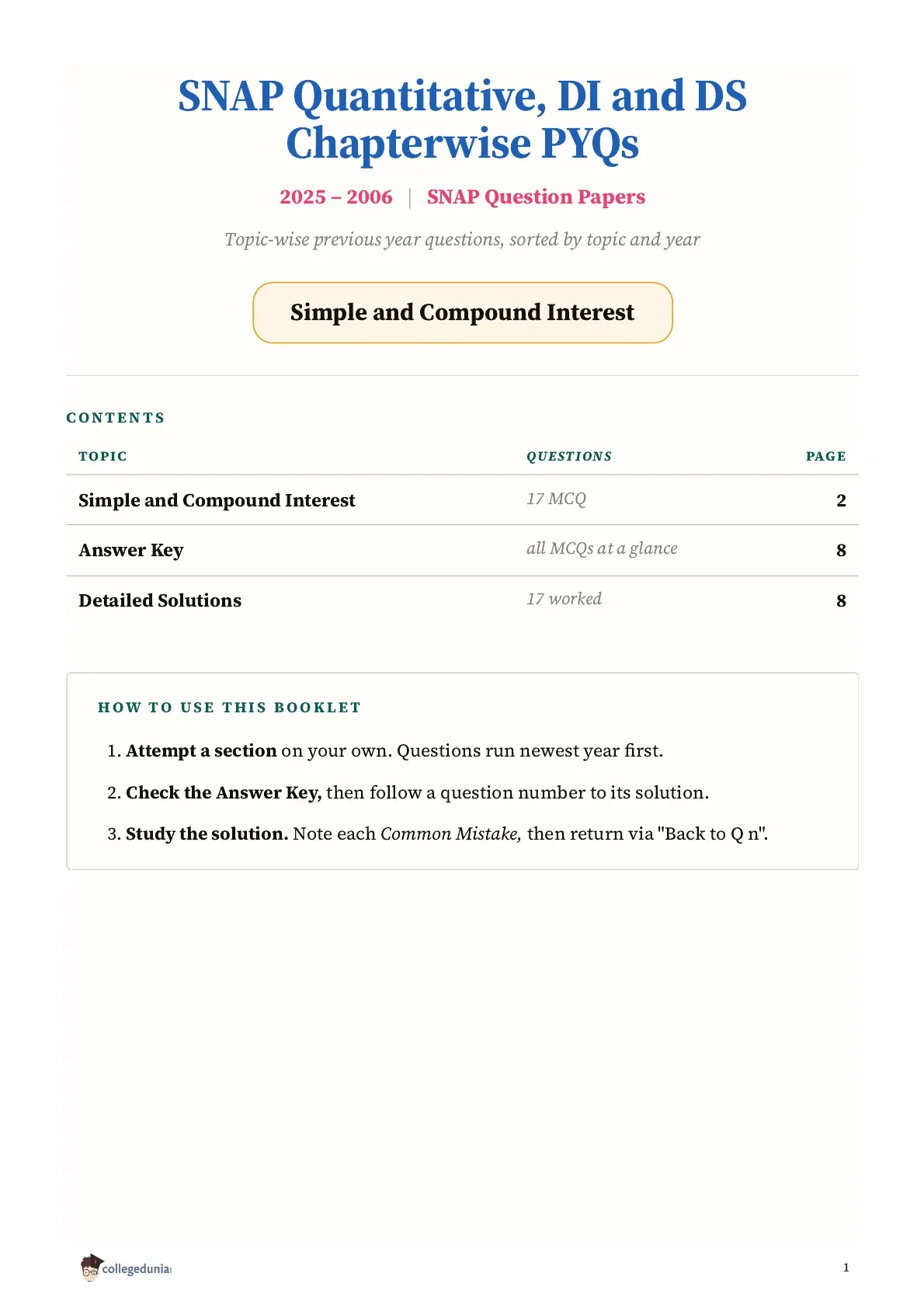
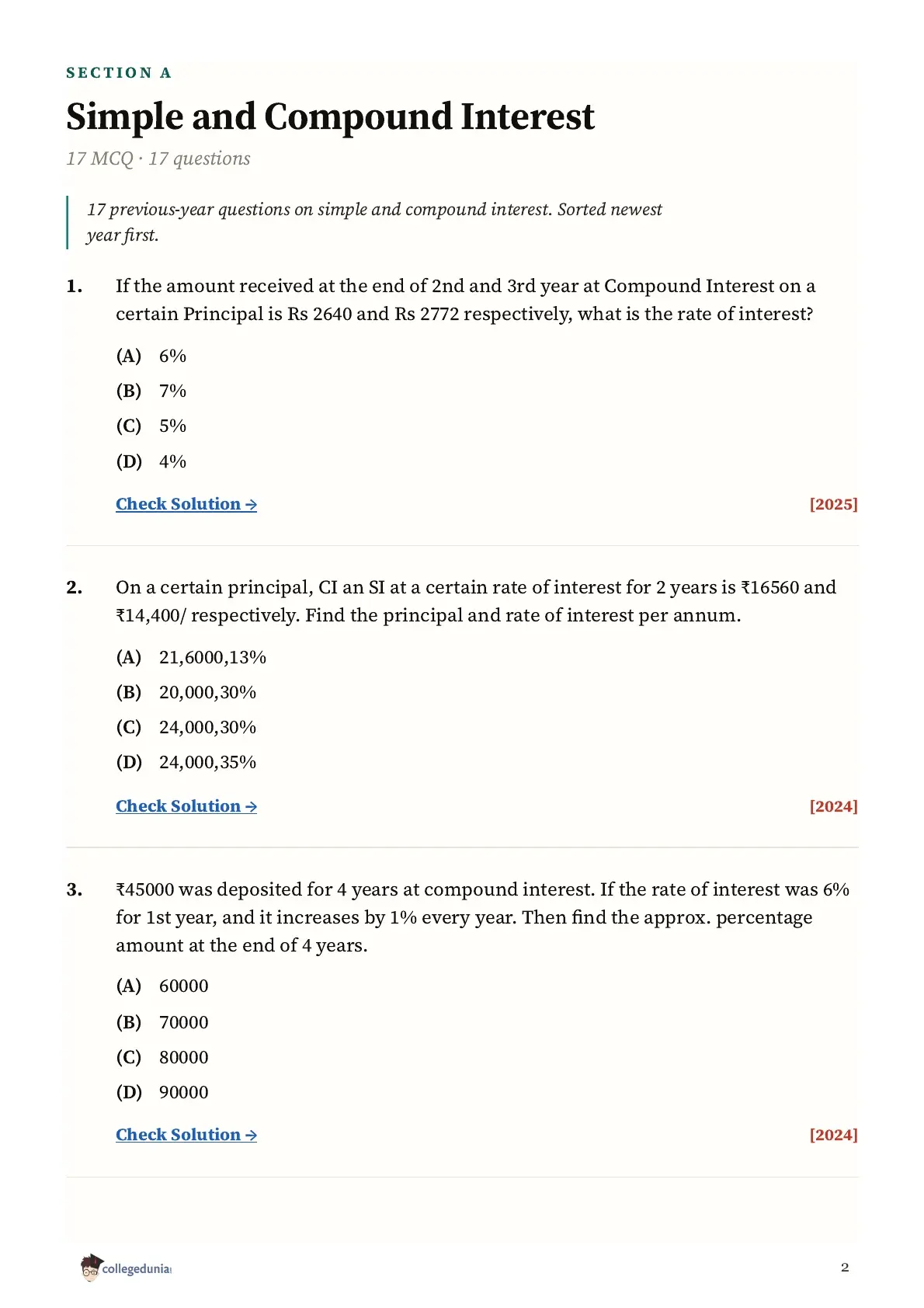
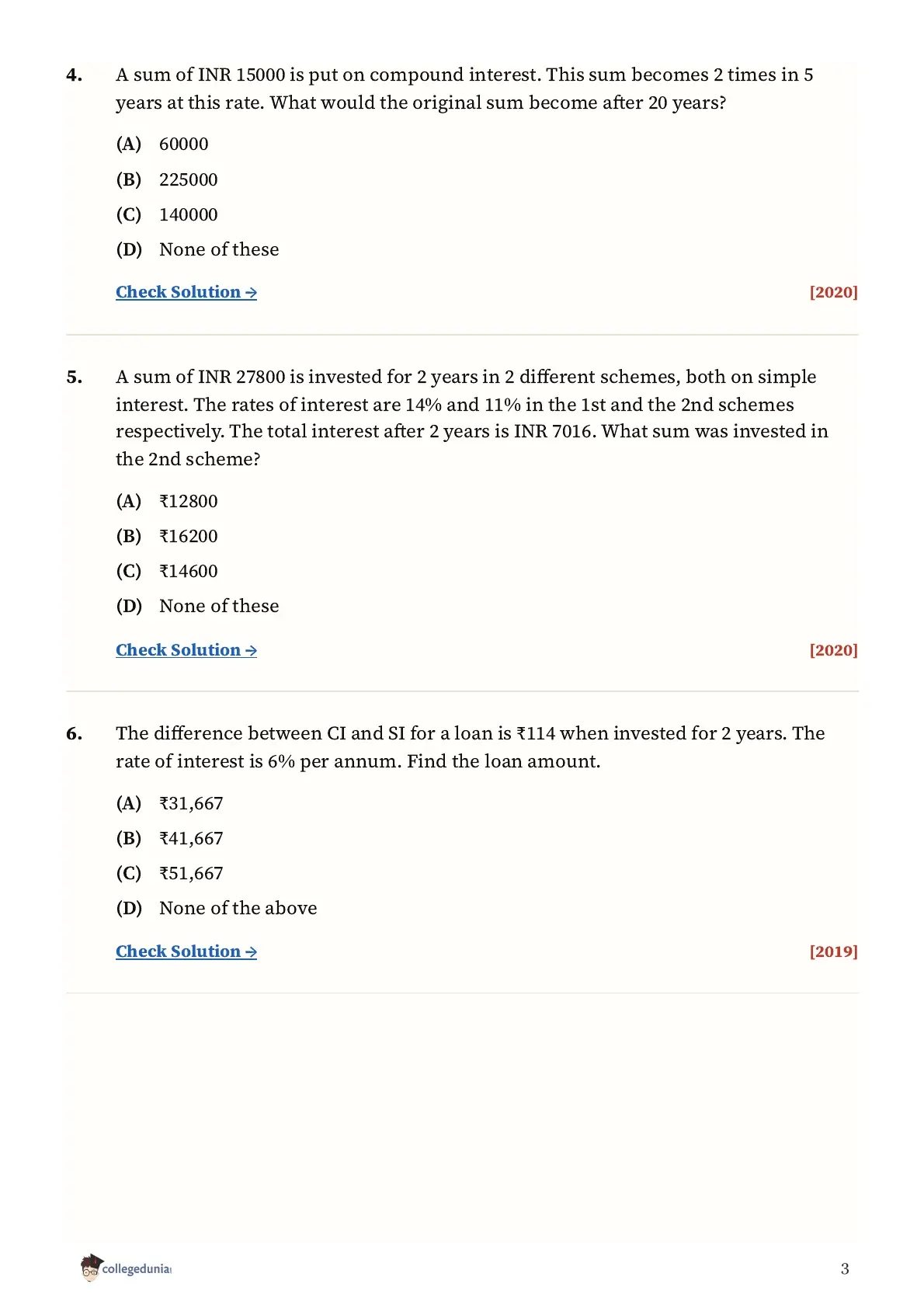
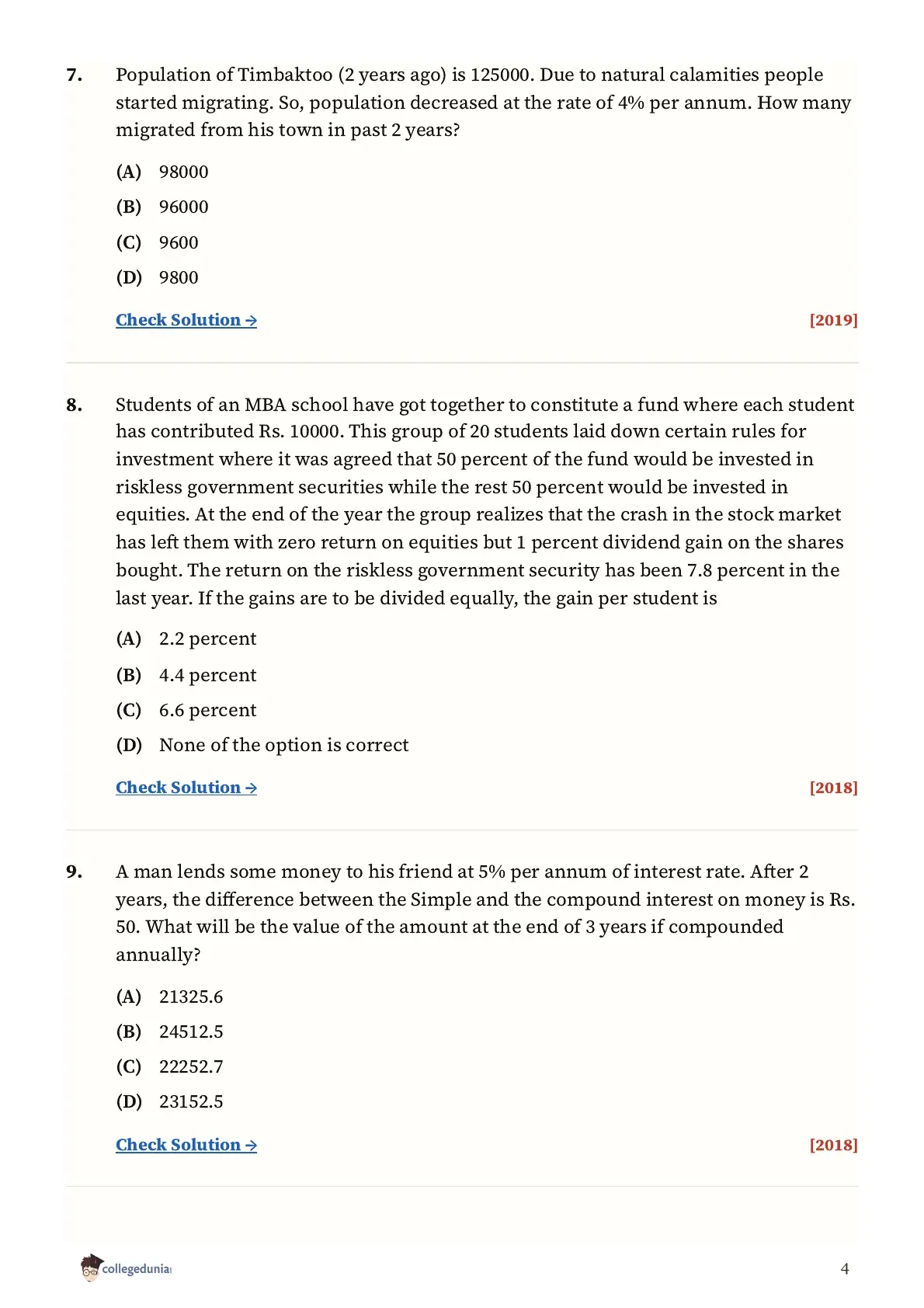
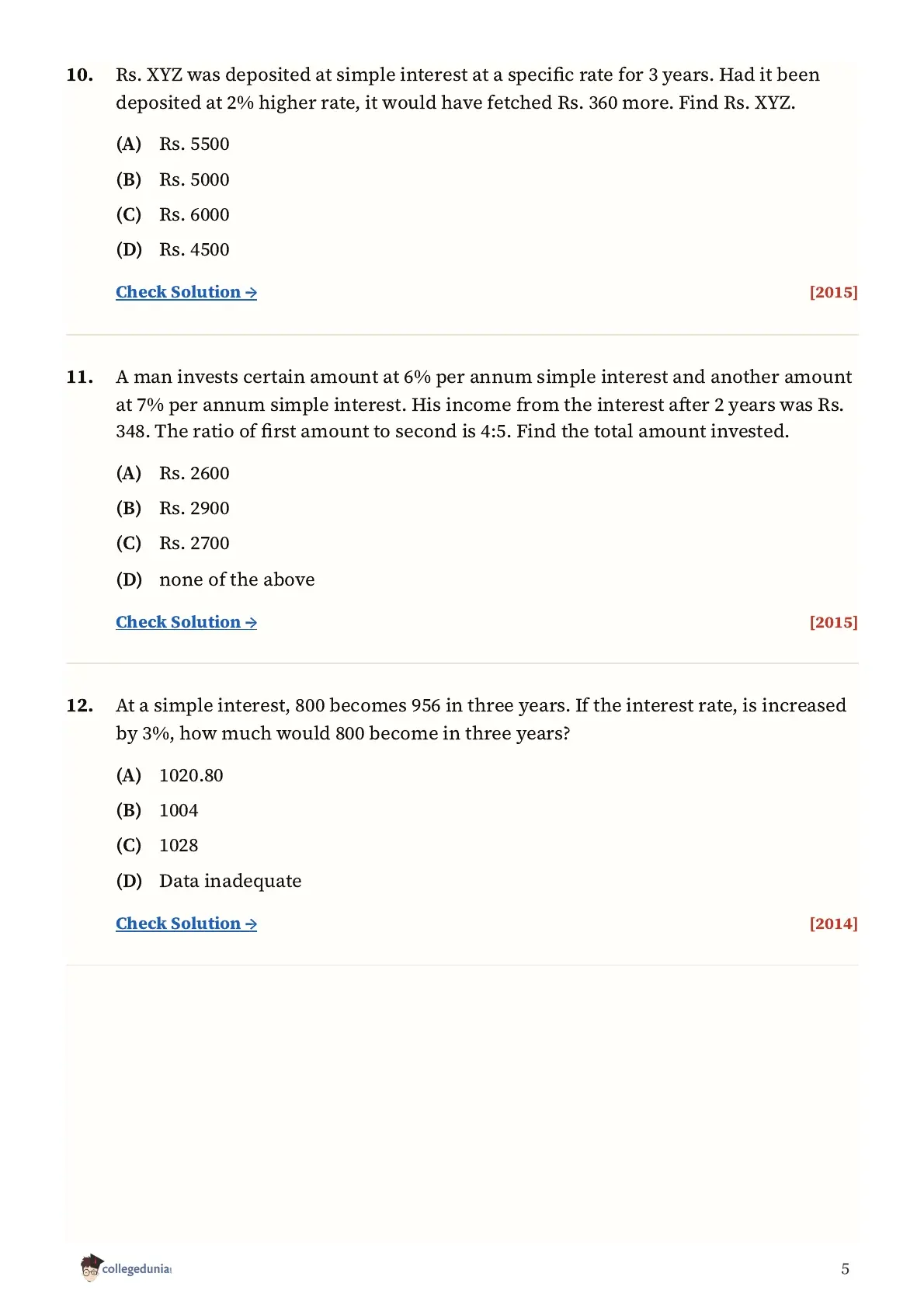
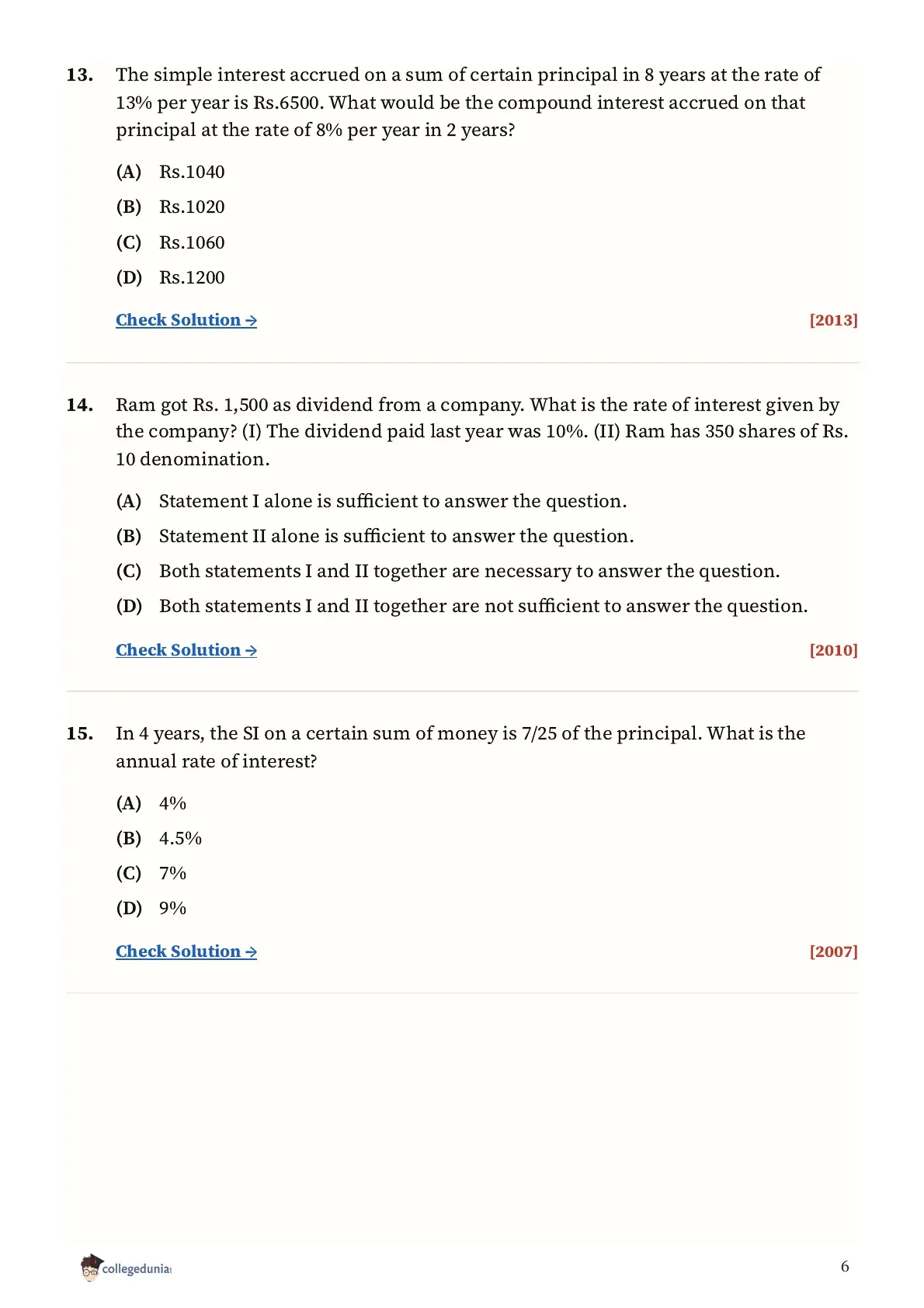
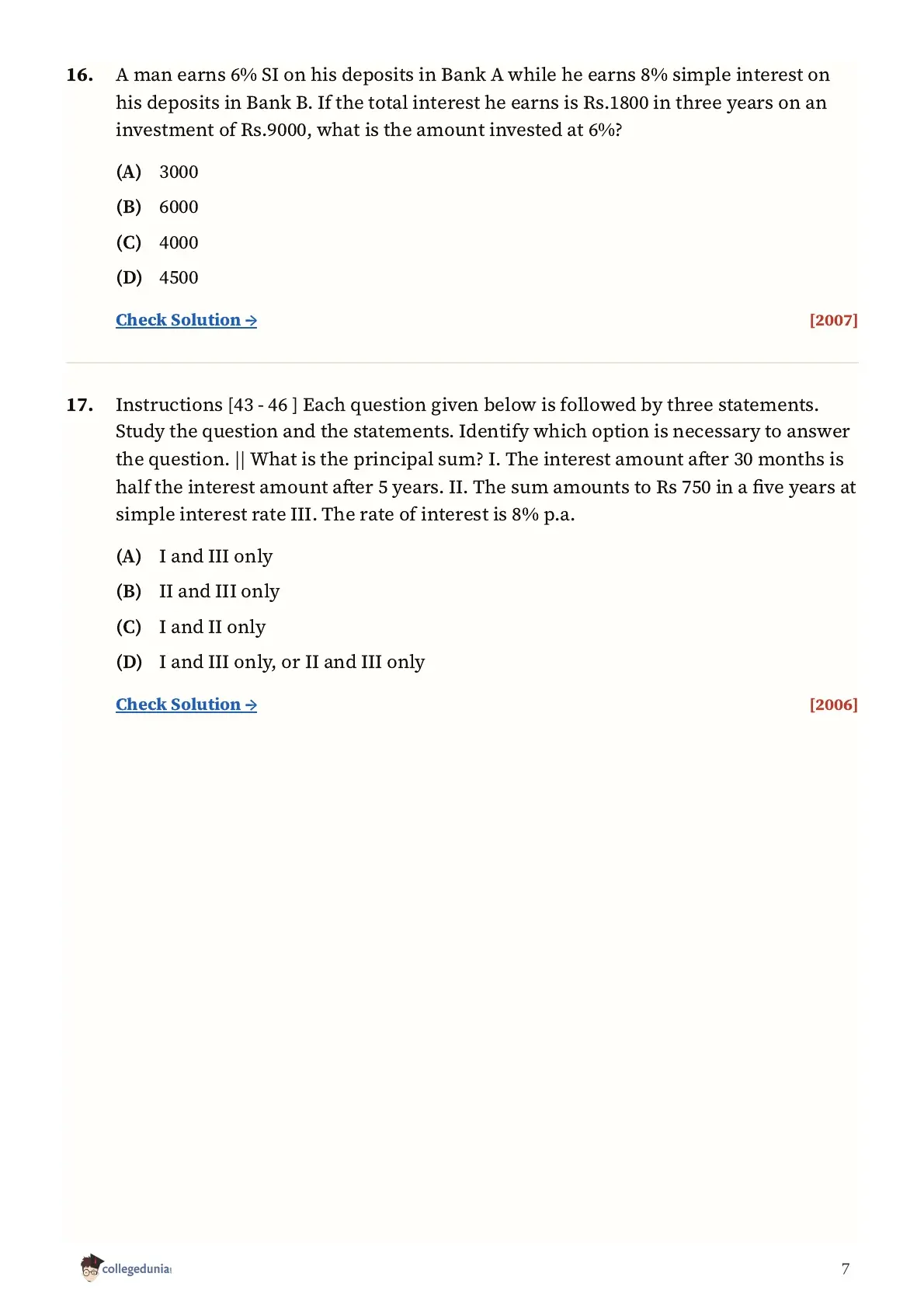
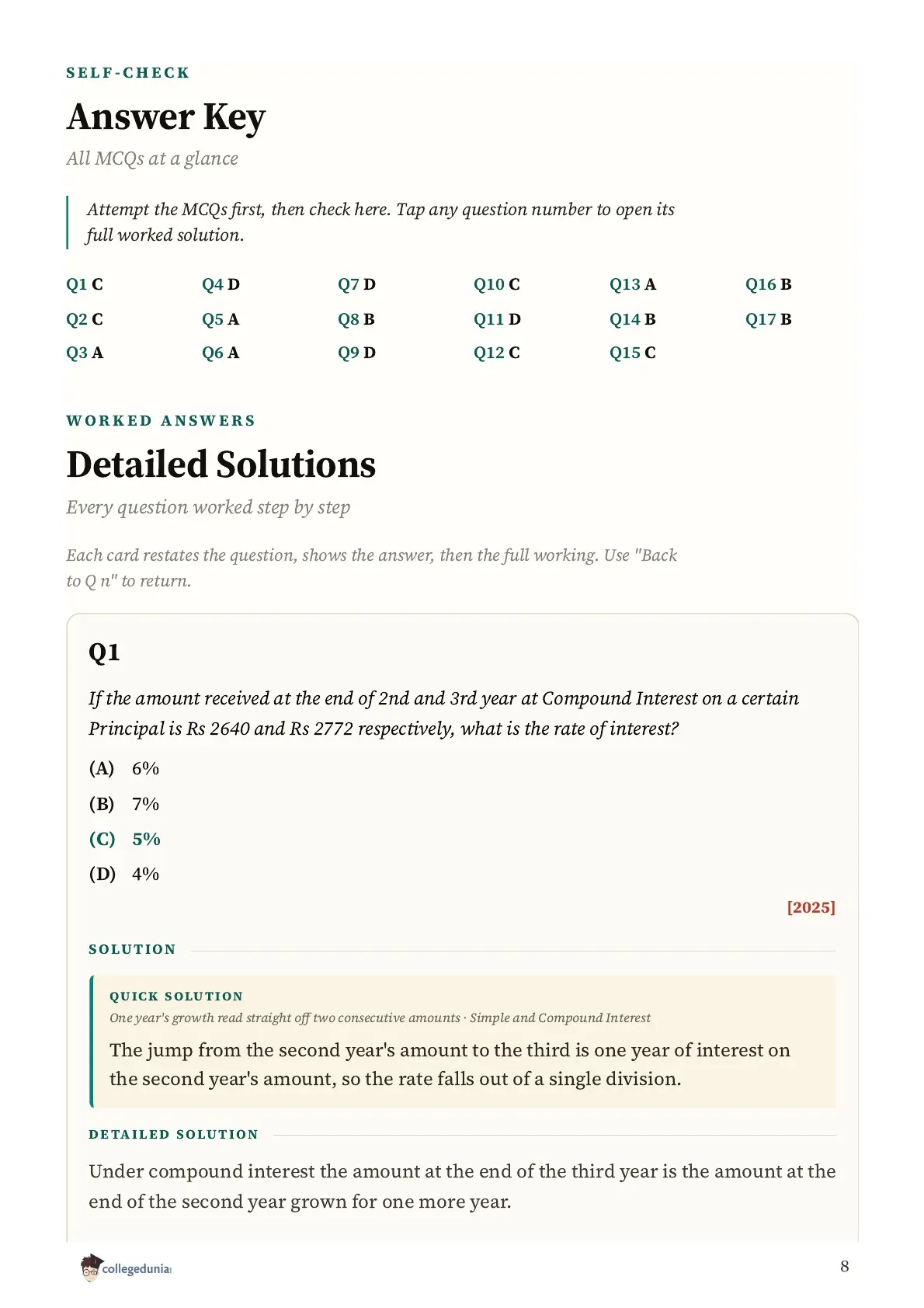
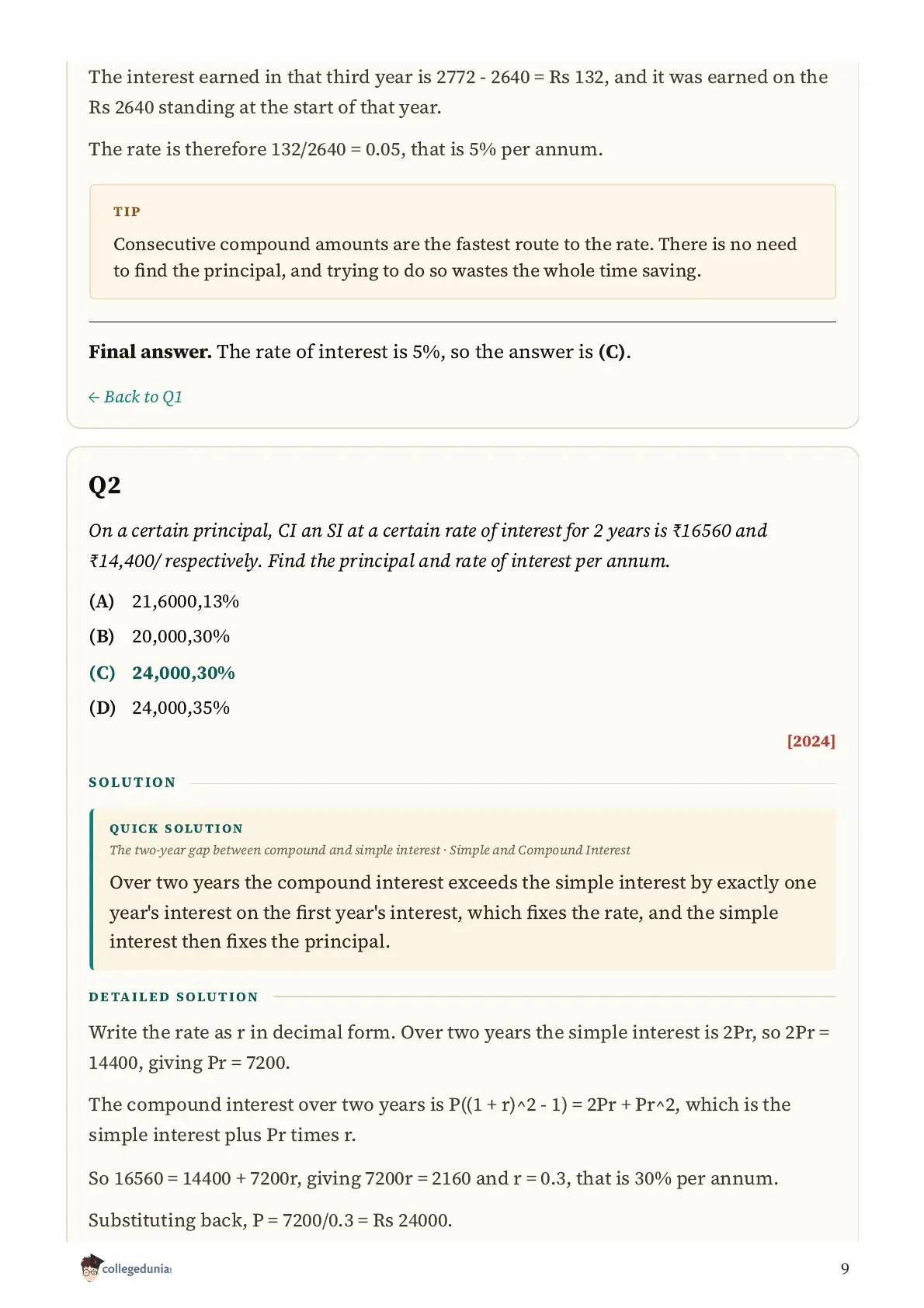
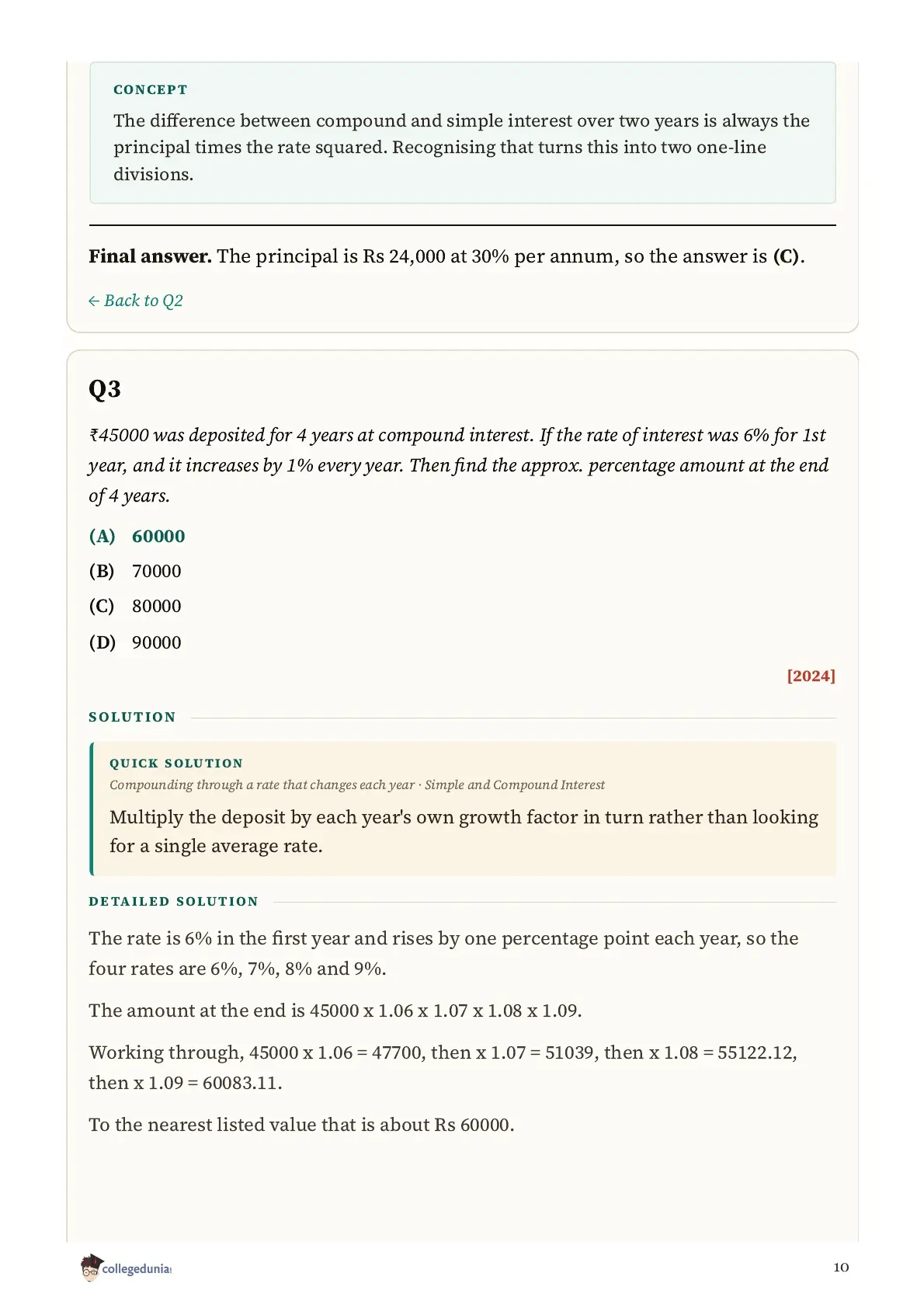
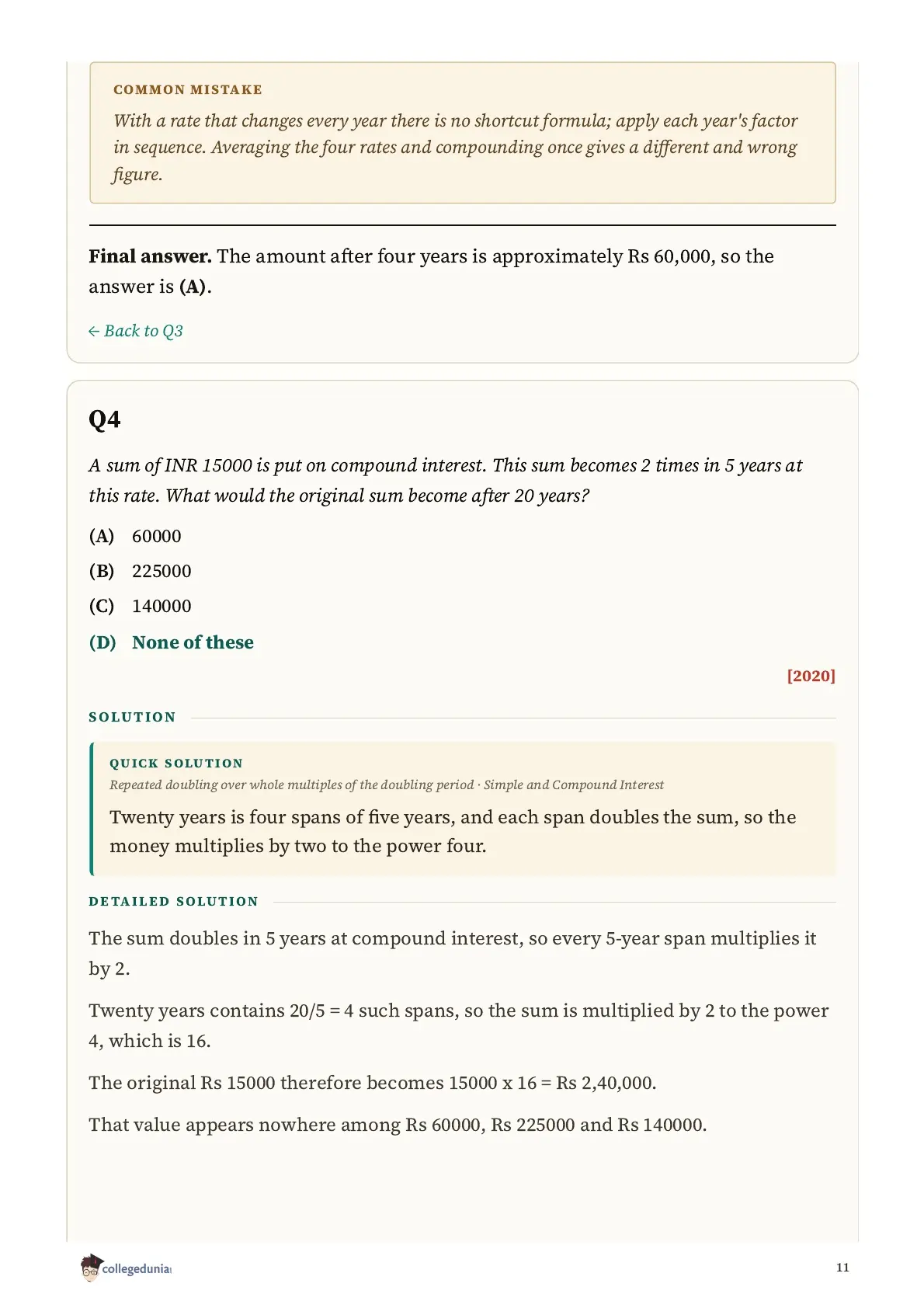
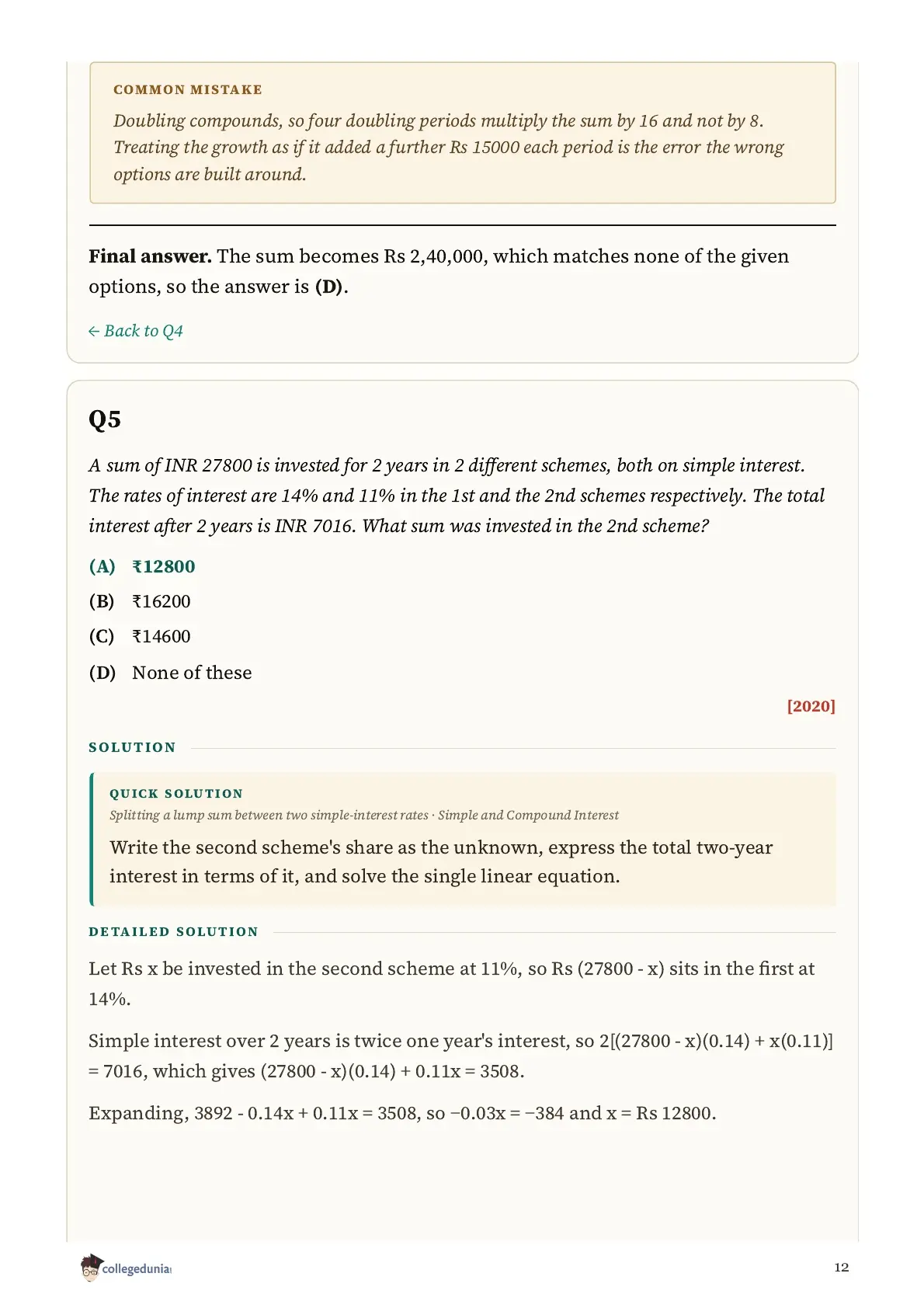
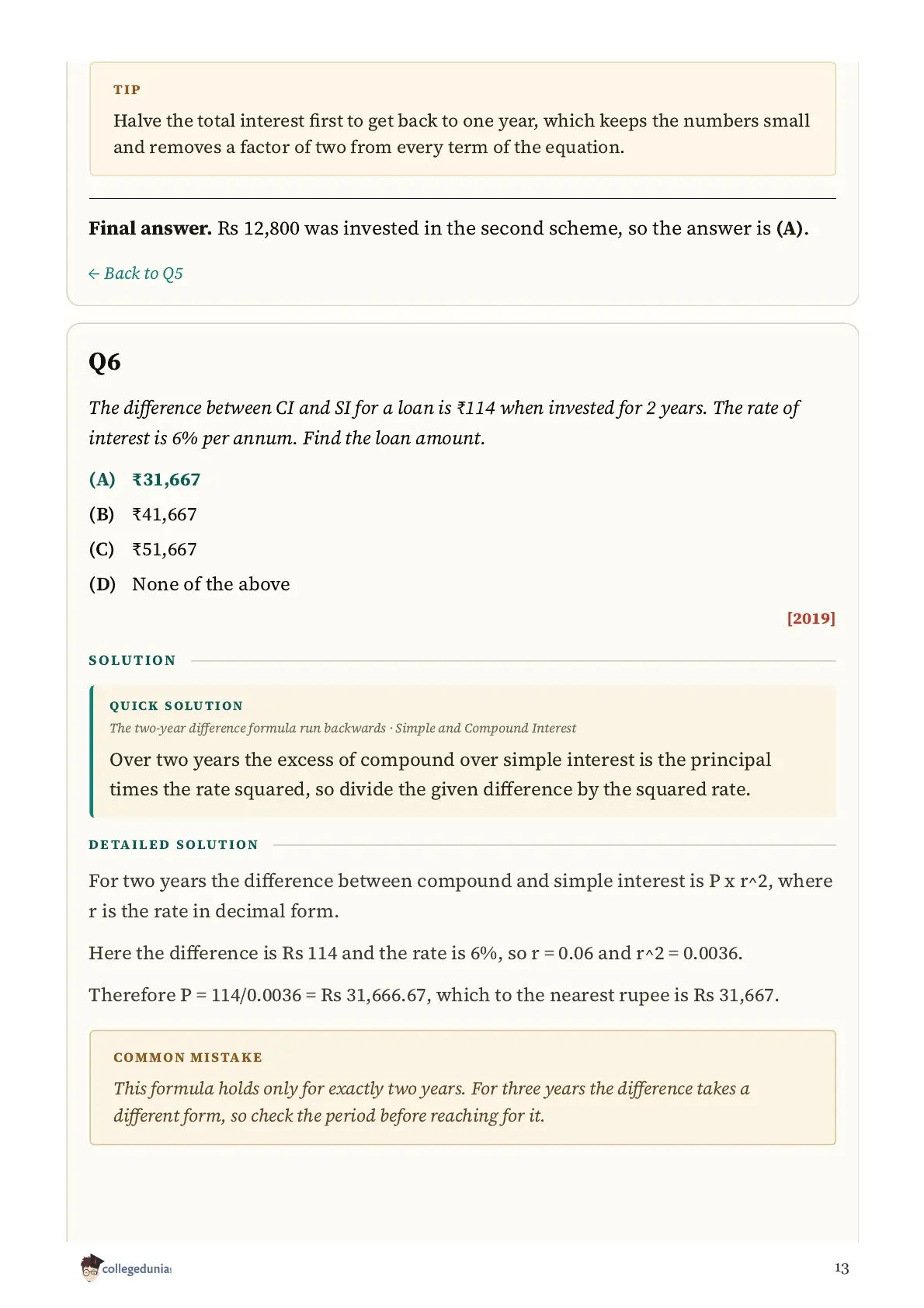
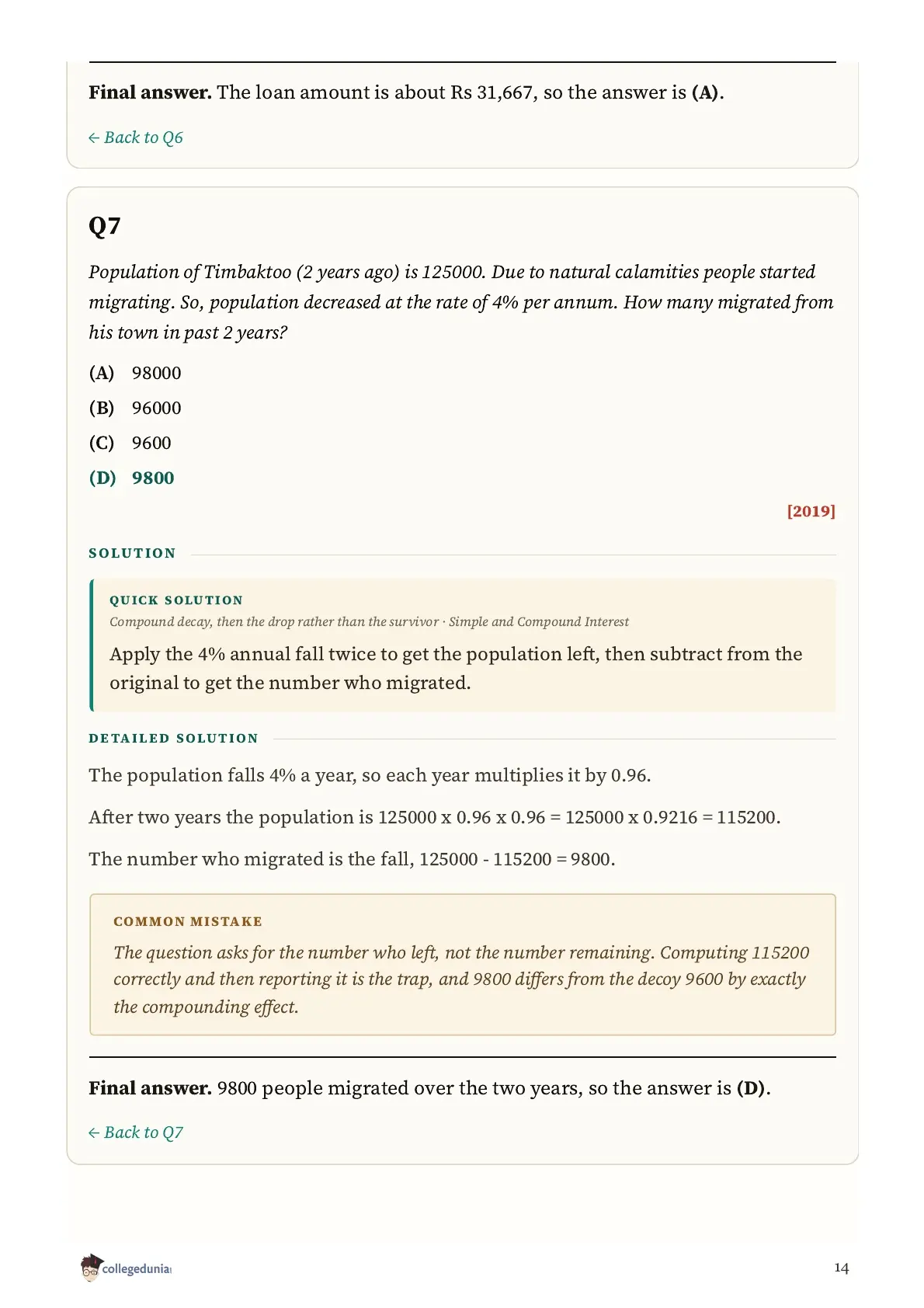
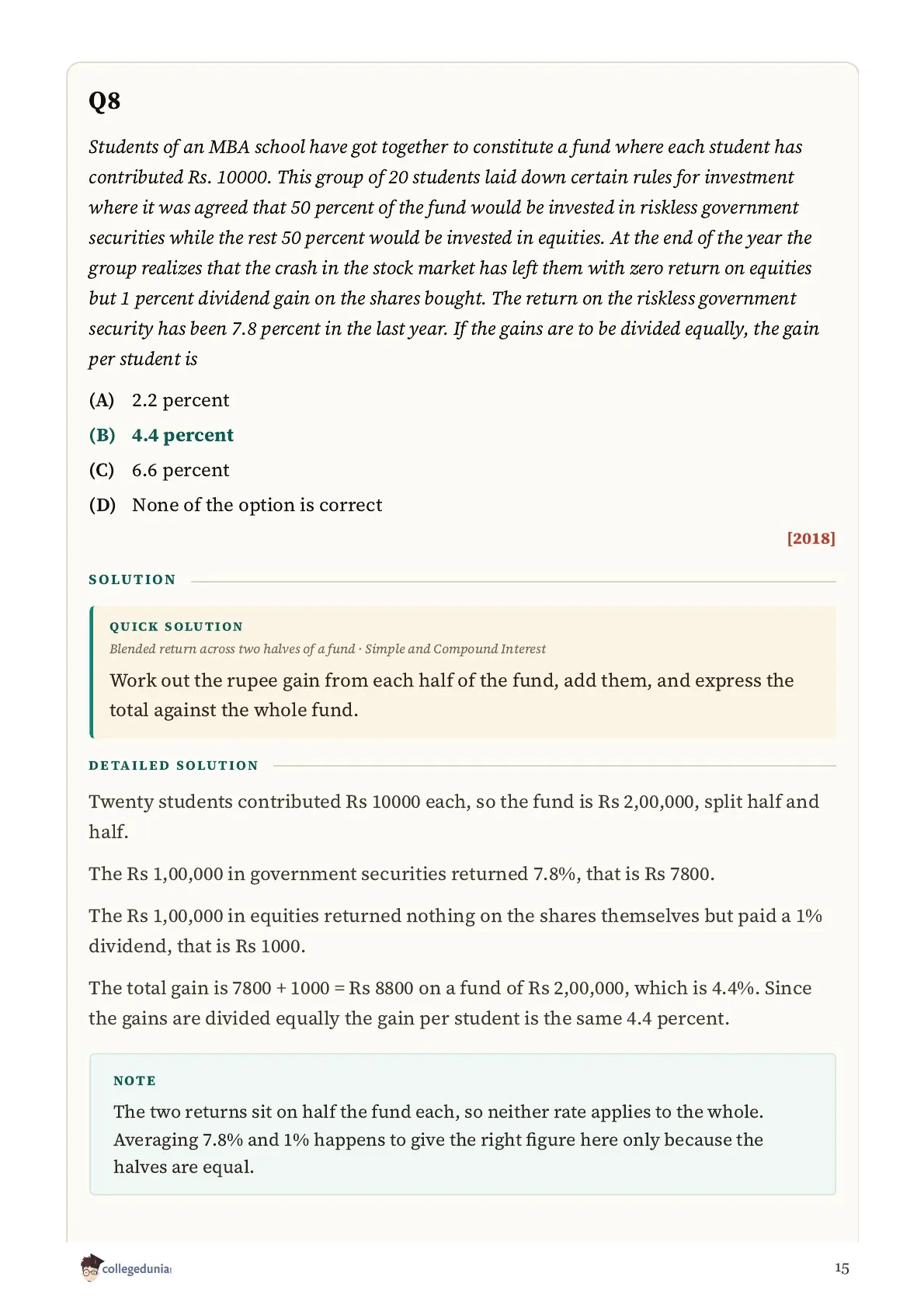
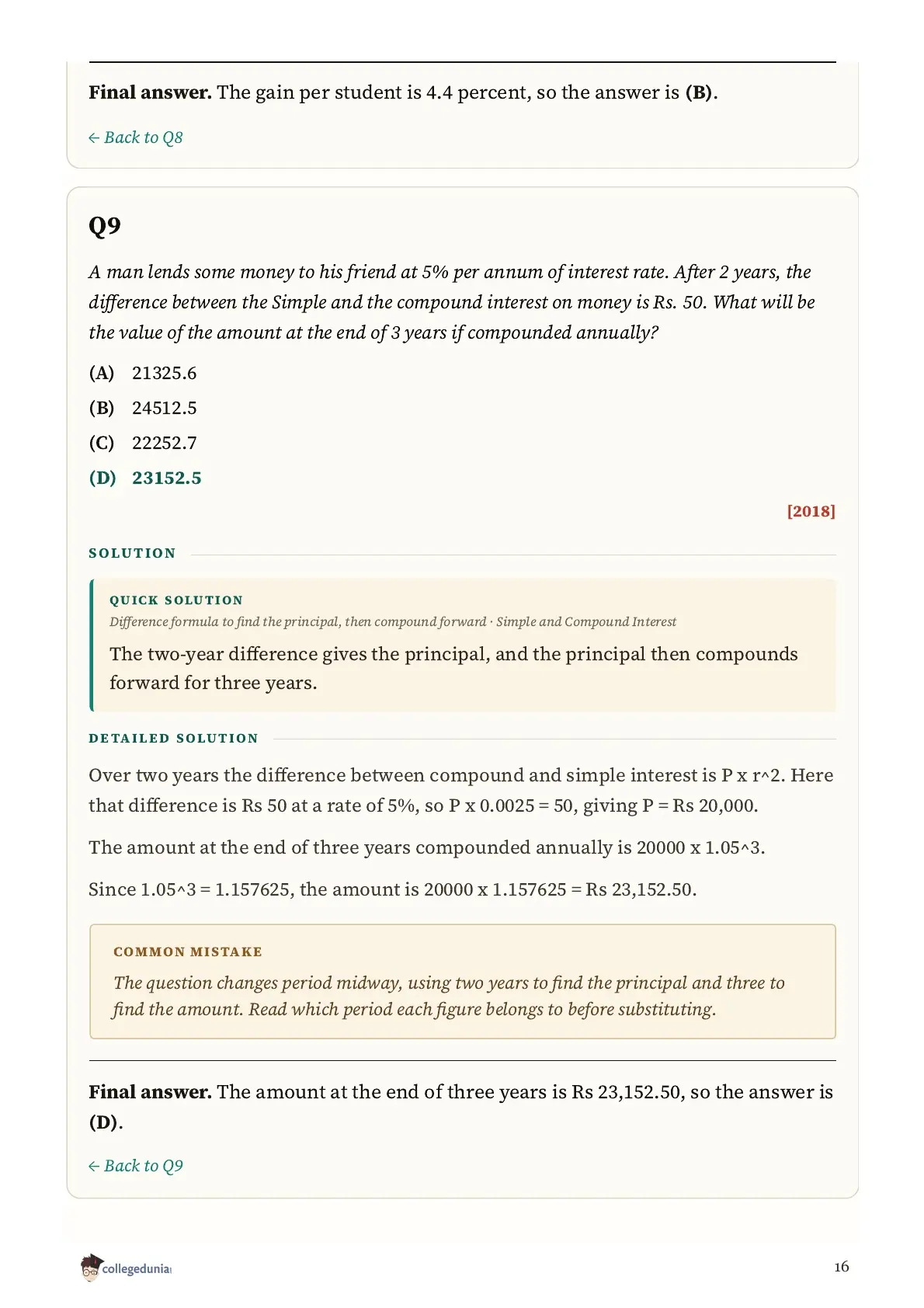
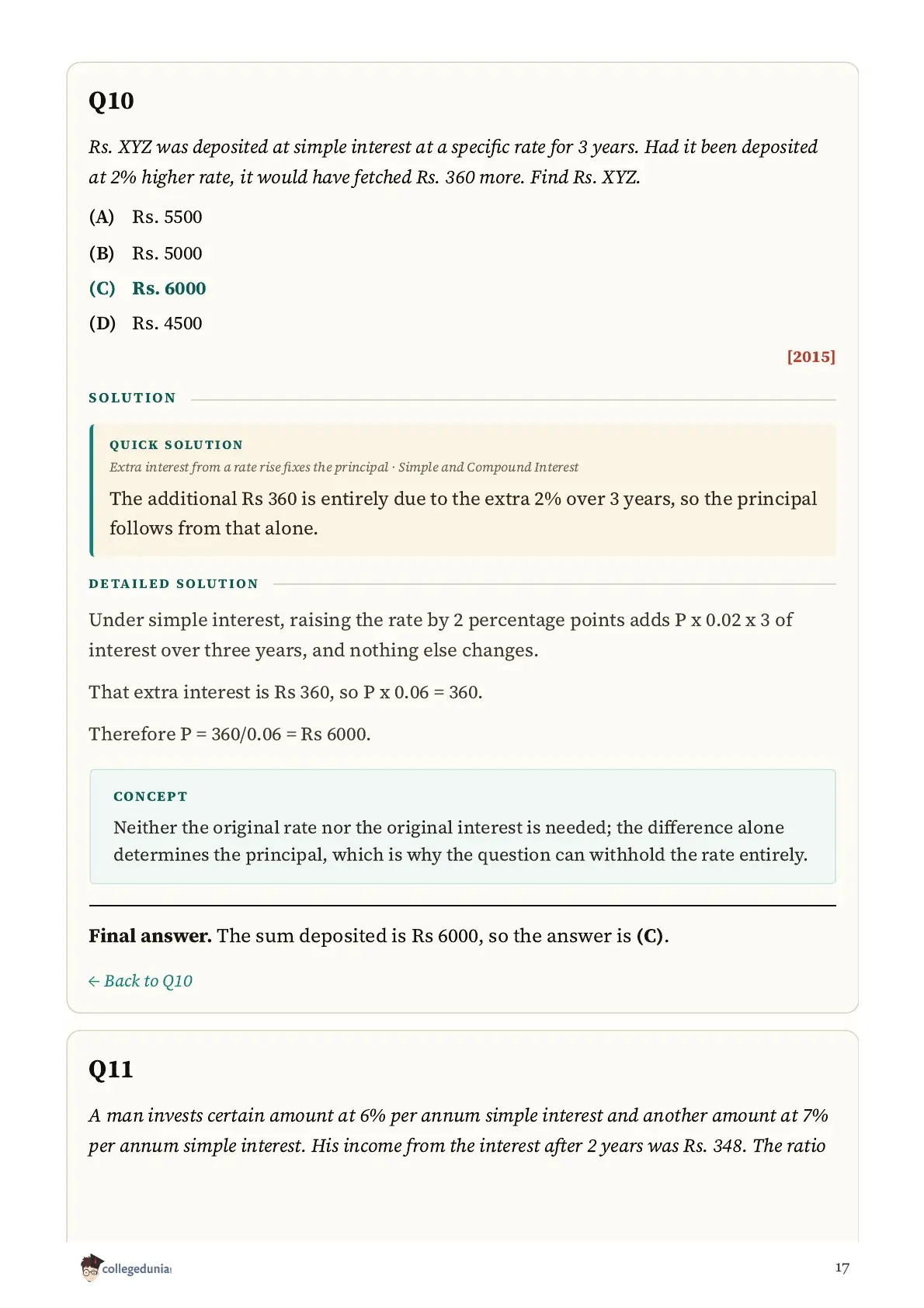
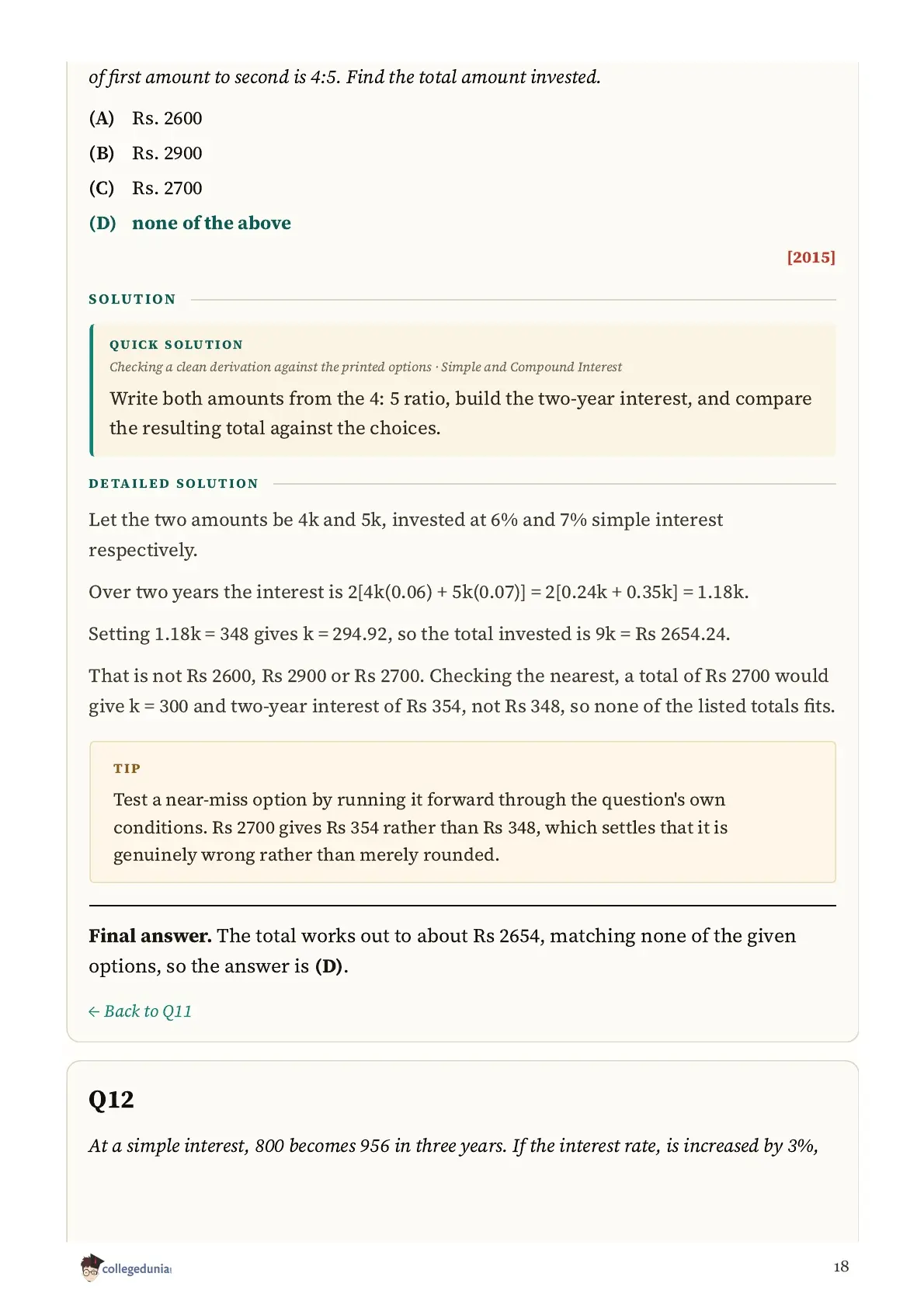
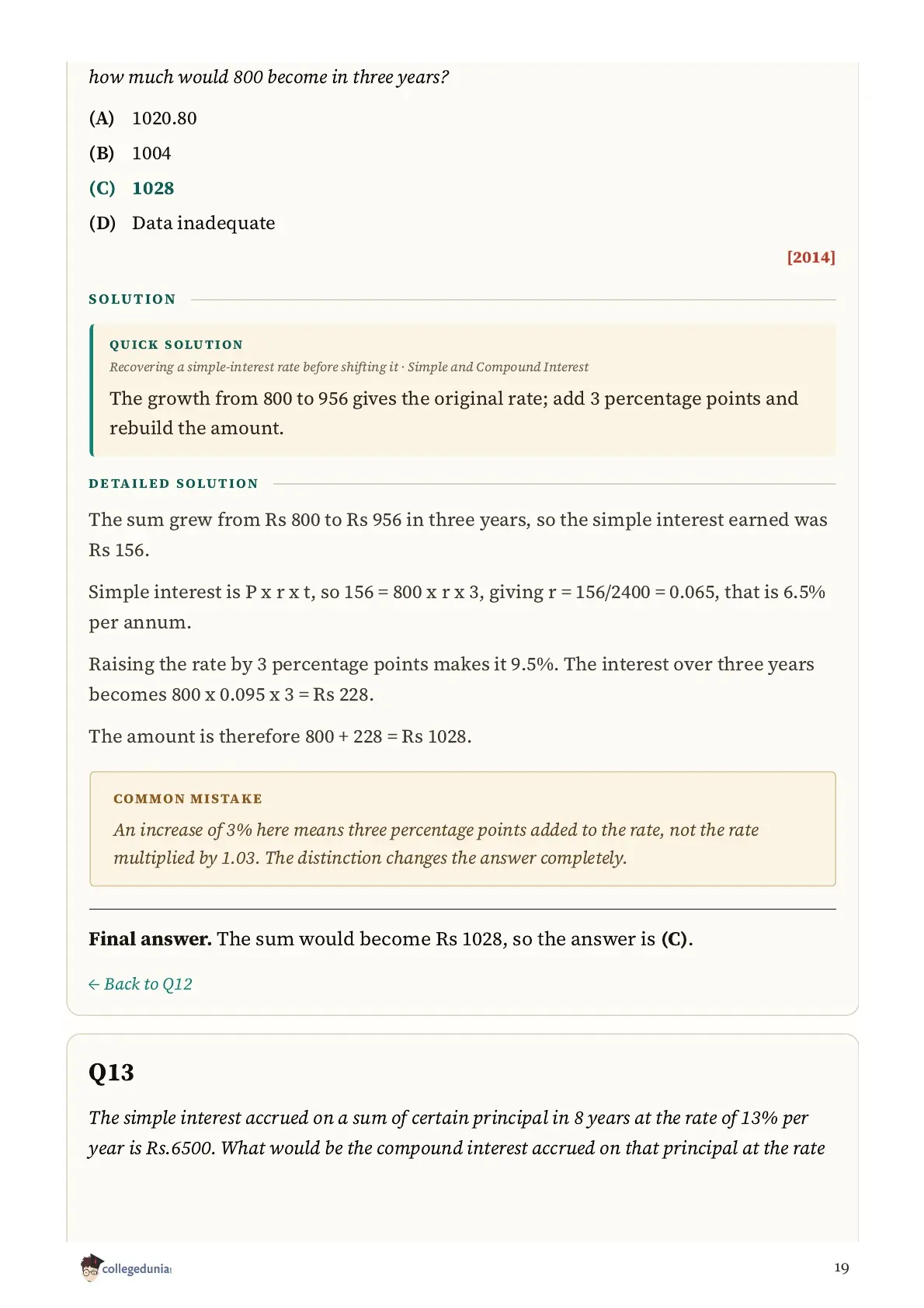
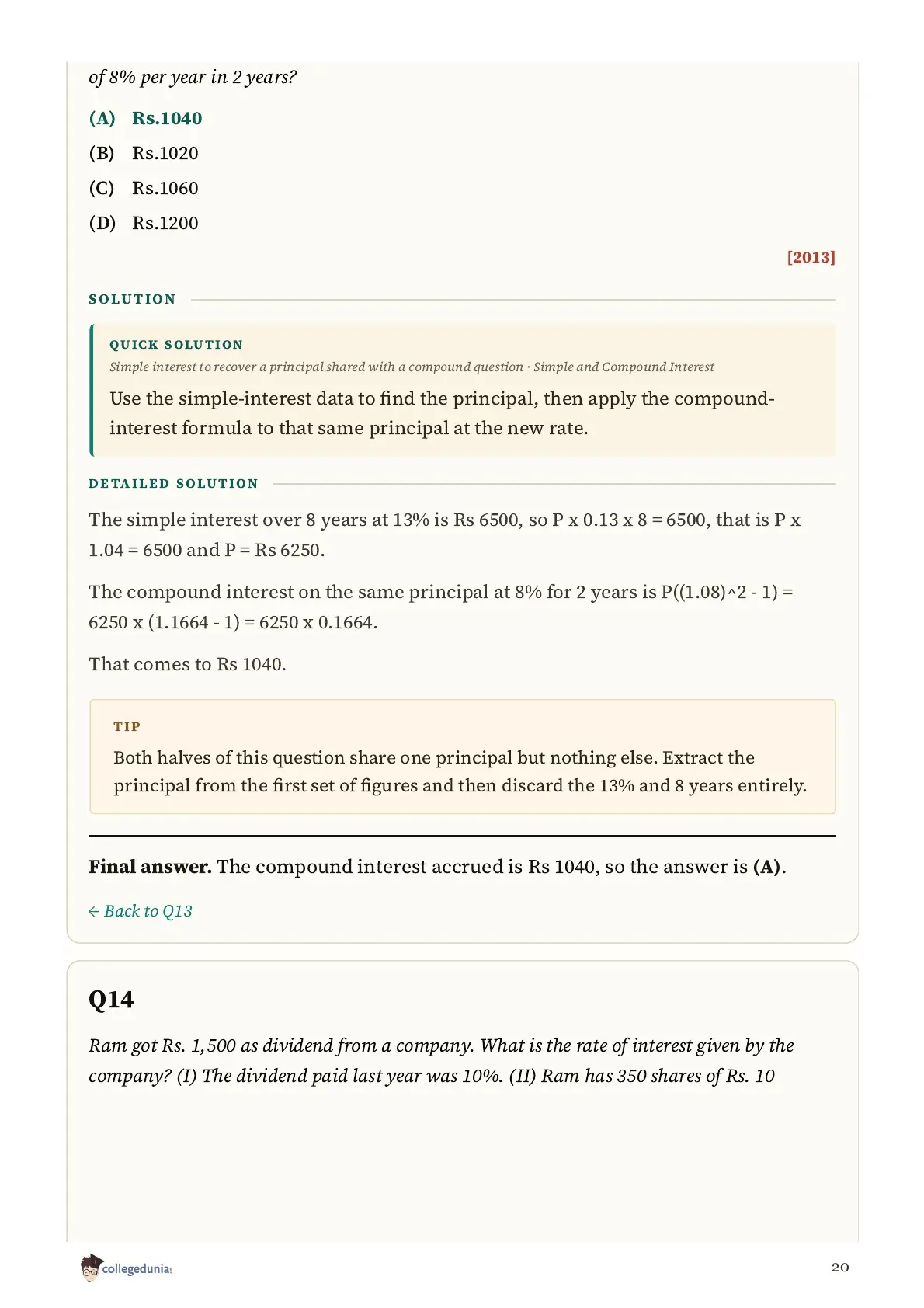
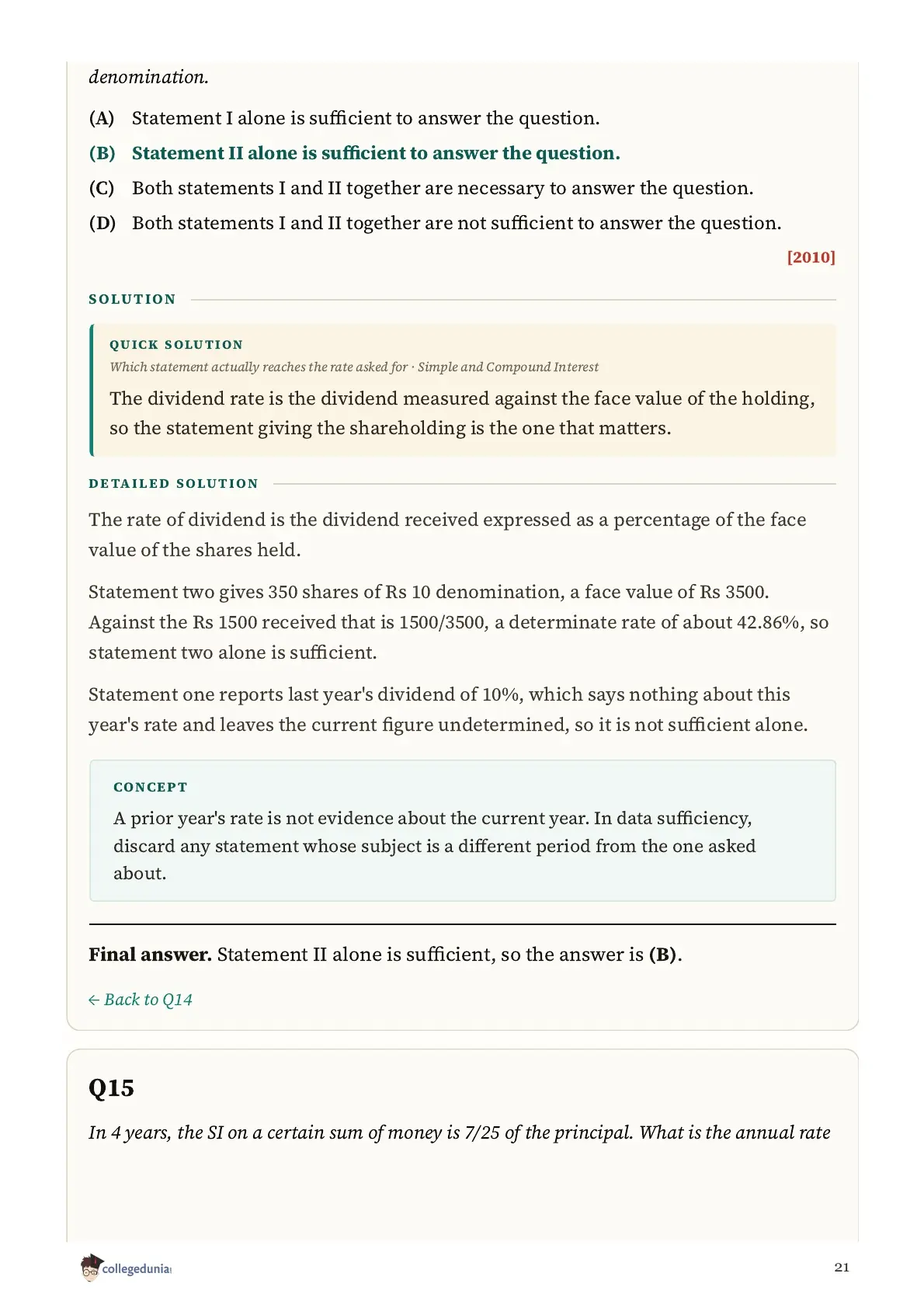

Questions run newest year first, with the options exactly as printed. The answer key follows, then a worked solution for each one.
SNAP Interest Weightage
Interest sits in the Quantitative, Data Interpretation and Data Sufficiency section, 20 of SNAP's 60 questions. It is a small topic with a fixed set of moves, which makes it one of the highest returns in the paper for the time invested.
| Papers | Questions in this bank |
|---|---|
| 2006 to 2010 | 4 |
| 2011 to 2015 | 4 |
| 2018 to 2020 | 6 |
| 2021 to 2025 | 3 |
One to two questions a paper is the pattern. The whole topic can be revised in an evening, which is why it repays attention out of proportion to its size.
What the 17 Questions Cover
- The two-year gap between compound and simple interest, the single most repeated idea in the set
- Splitting a lump sum between two schemes at different rates
- Rates that change every year, where each year's factor must be applied in turn
- Doubling and compound decay, including a population question that is compound interest in disguise
- Data sufficiency, where one statement turns out to carry no information at all
Formulas Worth Memorising
- Over two years, compound interest exceeds simple interest by the principal times the rate squared
- Two consecutive compound amounts give the rate directly, since their difference is one year's interest on the earlier amount
- Compound growth over whole doubling periods multiplies. Four periods give sixteen times, not eight
How to Approach the Set
The two-year identity does most of the work. Given both interests for the same principal and rate, their gap fixes the rate in one step and the principal in the next, and five questions in this bank lean on it.
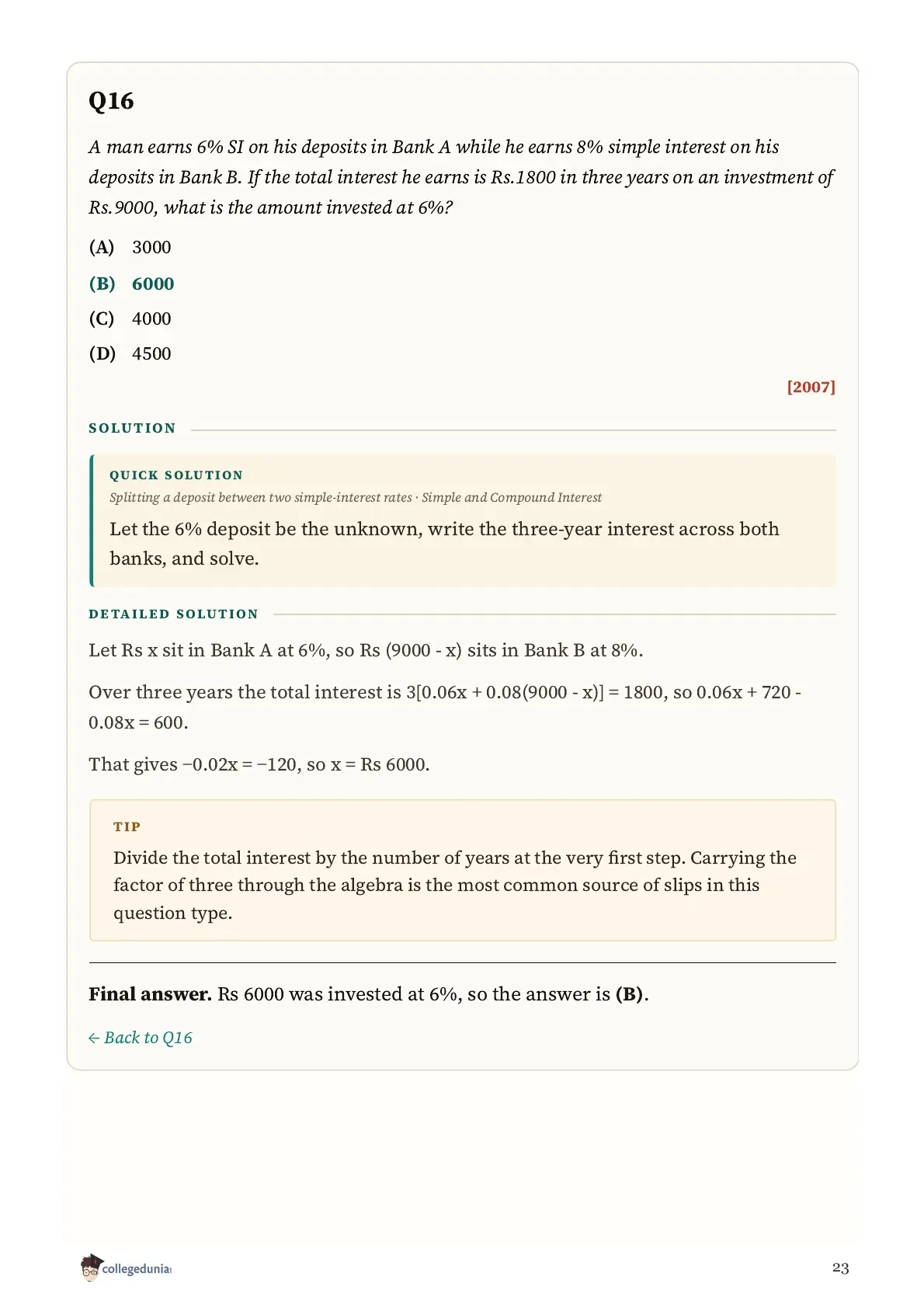
In simple-interest problems, divide out the time factor before anything else. It shrinks every term of the equation and usually leaves arithmetic you can finish in your head.
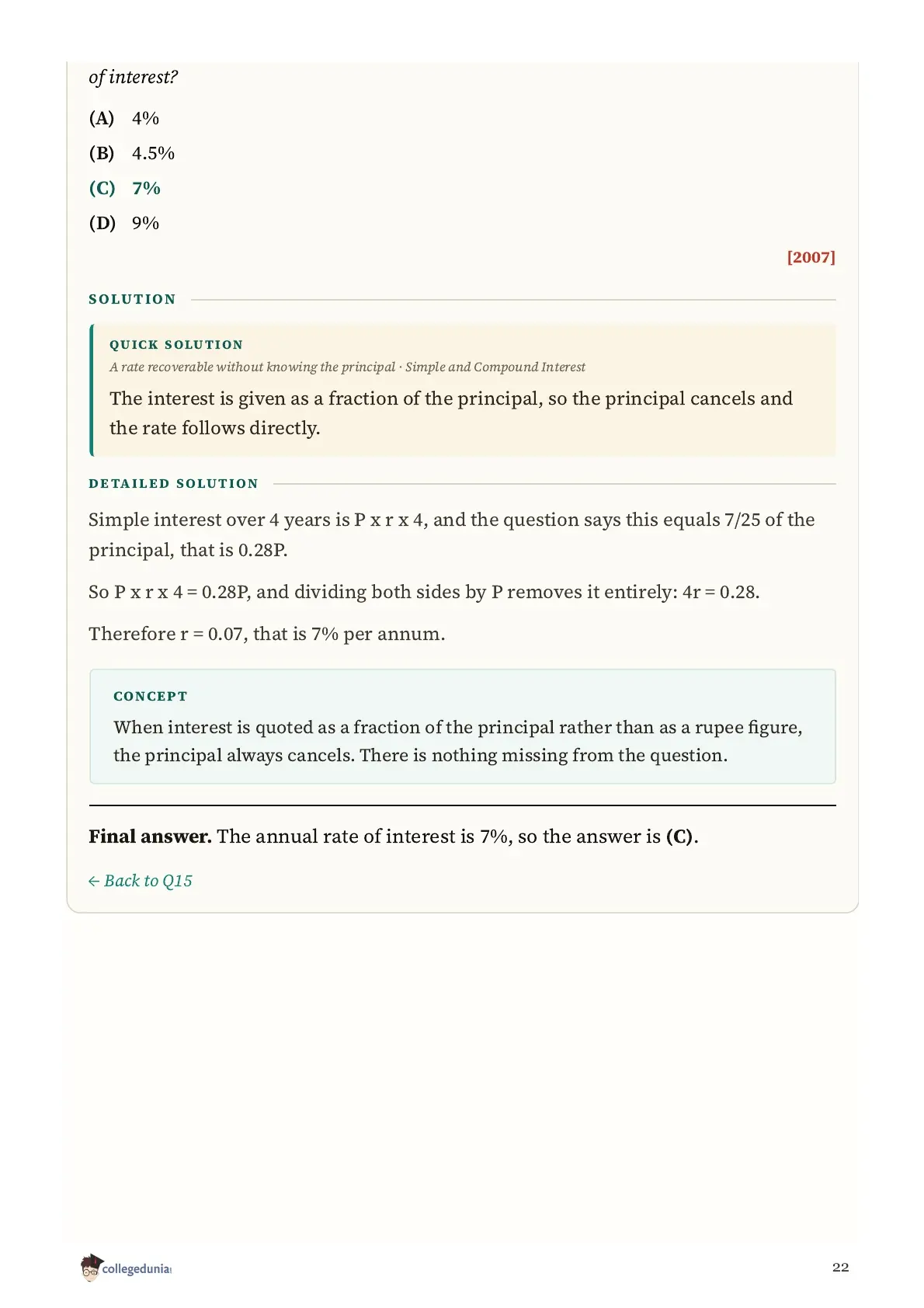
When interest is quoted as a fraction of the principal, the principal cancels. Nothing is missing from the question, which is worth knowing before you start hunting for a value that was never given.
When None of the Options Is Right
Three of the 17 resolve to "none of these", a high proportion for such a small set.
One asks what a sum doubling every five years becomes after twenty. The answer is sixteen times the original, Rs 2,40,000, while the options top out at Rs 2,25,000. Another splits an investment 4:5 at 6% and 7% and totals about Rs 2654, against options of Rs 2600, Rs 2700 and Rs 2900.
We checked that second one by running the nearest option forward: Rs 2700 produces Rs 354 of interest, not the Rs 348 stated, so it is genuinely wrong rather than rounded.
Common Mistakes
- Using the two-year difference formula on a period that is not two years
- Reporting the population that remains when the question asks how many left
- Reading a 3% increase as multiplying the rate by 1.03 rather than adding three percentage points
- Treating repeated doubling as addition, so four periods give eight times instead of sixteen
- Averaging a changing annual rate and compounding once, instead of applying each year's own factor
Two to Solve First
The 2024 compound-against-simple question over two years, because four other questions in this set reuse the identity it teaches.
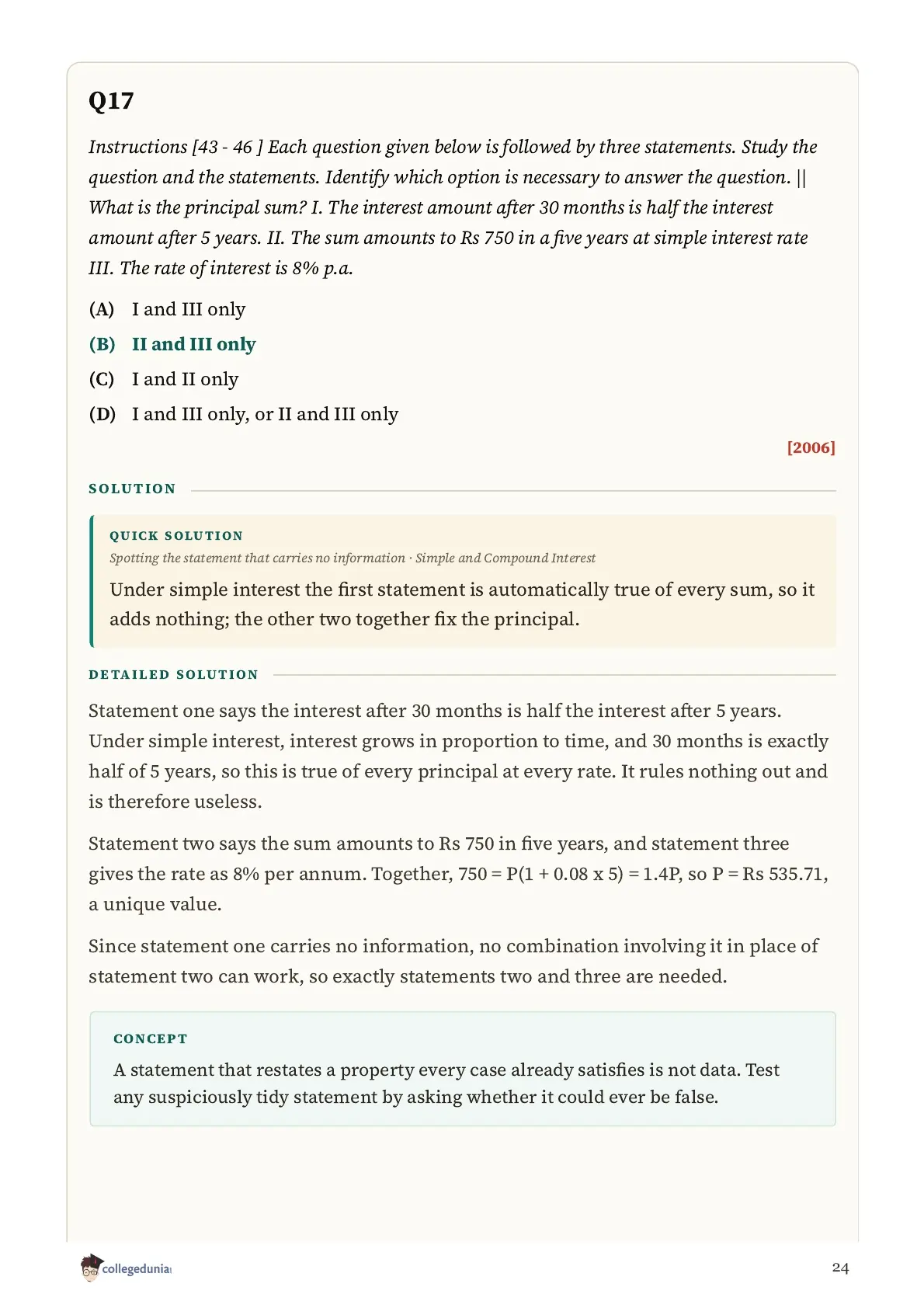
Then the 2006 data sufficiency question, for a different reason. One of its statements says the interest after 30 months is half the interest after 5 years. Under simple interest that is true of every sum at every rate, so it rules nothing out and cannot contribute to an answer at all.
Video Solutions
Source: MBA Pathshala
Using the Answer Key
Attempt the whole set before checking anything, allowing about ninety seconds each. Mark the key in one pass, right or wrong only, then read the solution for every miss and every lucky guess. Each opens with a one-line quick solution you can stop at and retry from.
For the rest of the section, the SNAP Averages, Mixtures and Alligation PYQs and the SNAP Blood Relations PYQs cover other repeated topics.
SNAP Simple and Compound Interest PYQ FAQs
Ques. How many interest questions come in SNAP?
Ans. One to two a paper, inside the Quantitative, Data Interpretation and Data Sufficiency section. The topic is small and formula-driven, which makes it one of the best returns on preparation time in the whole paper.
Ques. Which years does this bank cover?
Ans. 2006 to 2025, with the densest stretch between 2018 and 2020.
Ques. Why do three answers say none of these?
Ans. Three questions in the original papers are built so the correct value is not among the options. Where an option was close we ran it back through the question's own conditions to confirm it genuinely does not fit.
Ques. Which formula is worth learning first?
Ans. The two-year gap between compound and simple interest, which equals the principal times the rate squared. It is the most repeated idea in the set and unlocks five of the seventeen questions on its own.
Ques. Is this an official SNAP answer key?
Ans. No. Symbiosis does not publish an answer key for SNAP. Every answer here was worked out from the question itself and shown with the full working, so you can check it rather than trust it.
Ques. Can the PDF be downloaded free?
Ans. Yes. All 25 pages can be read on this page and downloaded at no cost.



Comments