




SNAP Time, Speed, Distance and Trains PYQ, free to download as a 36-page PDF. The bank carries 25 solved questions from the 2006 to 2025 papers and takes roughly two days to work through, so split it across average speed and trains.
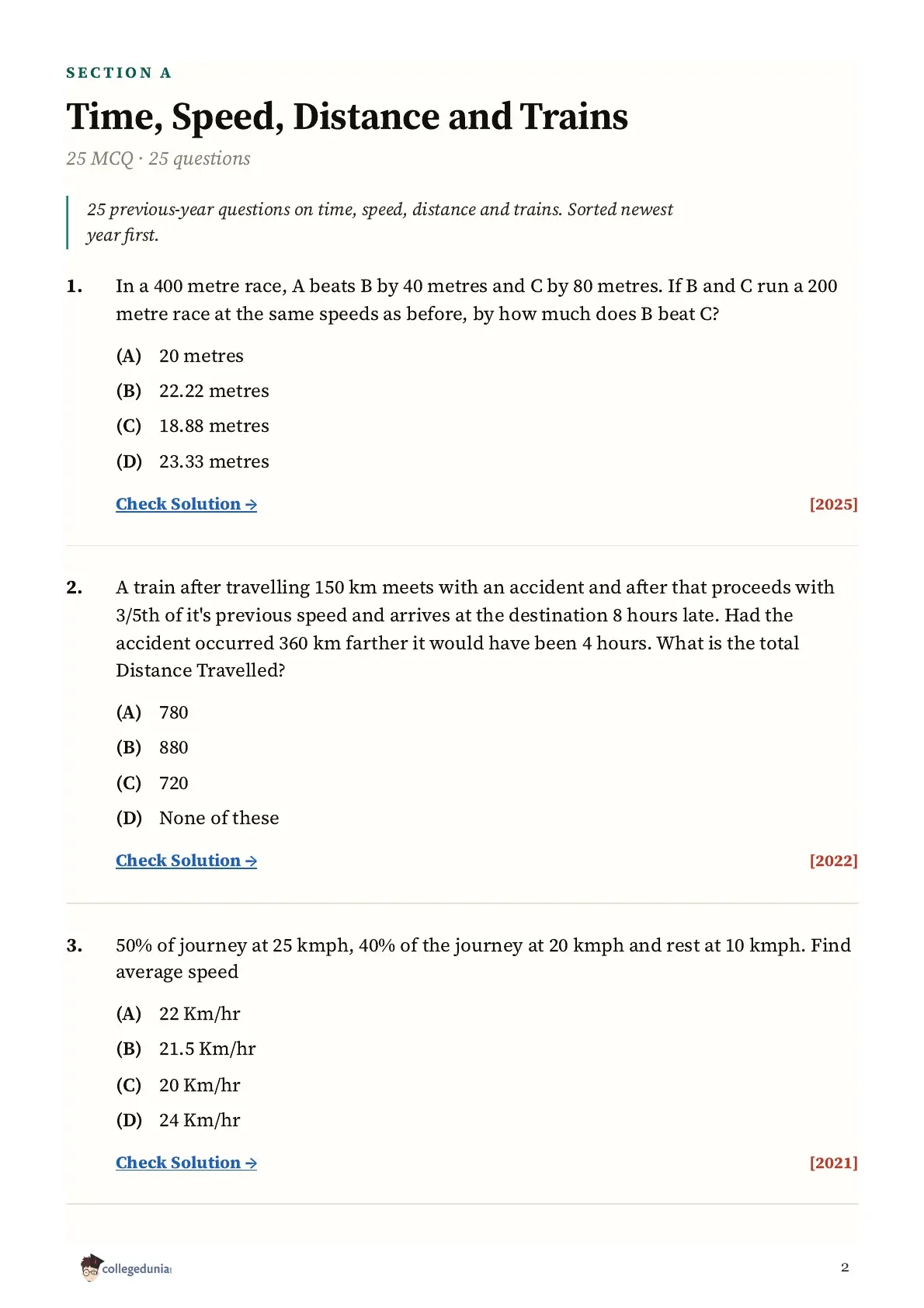
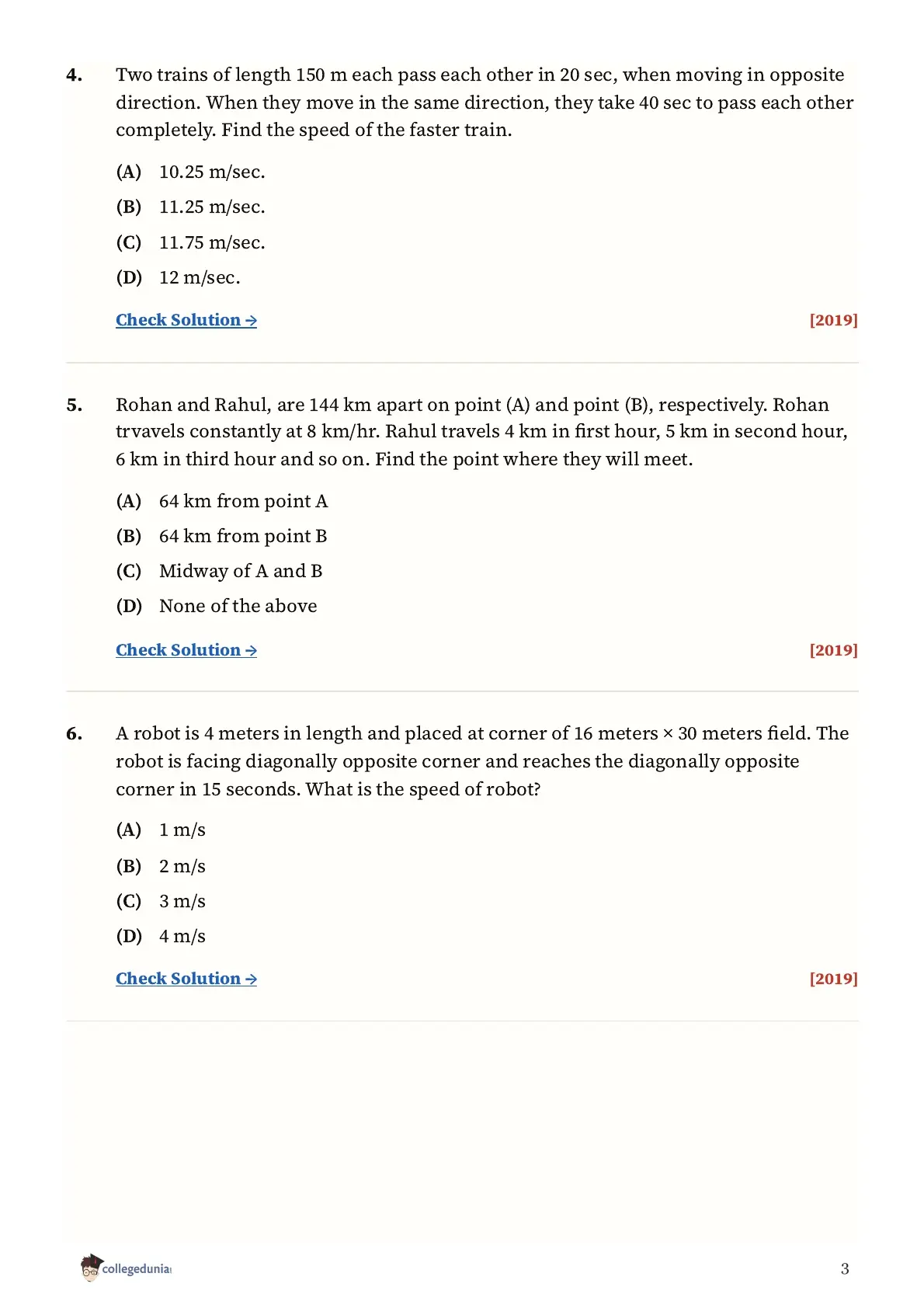
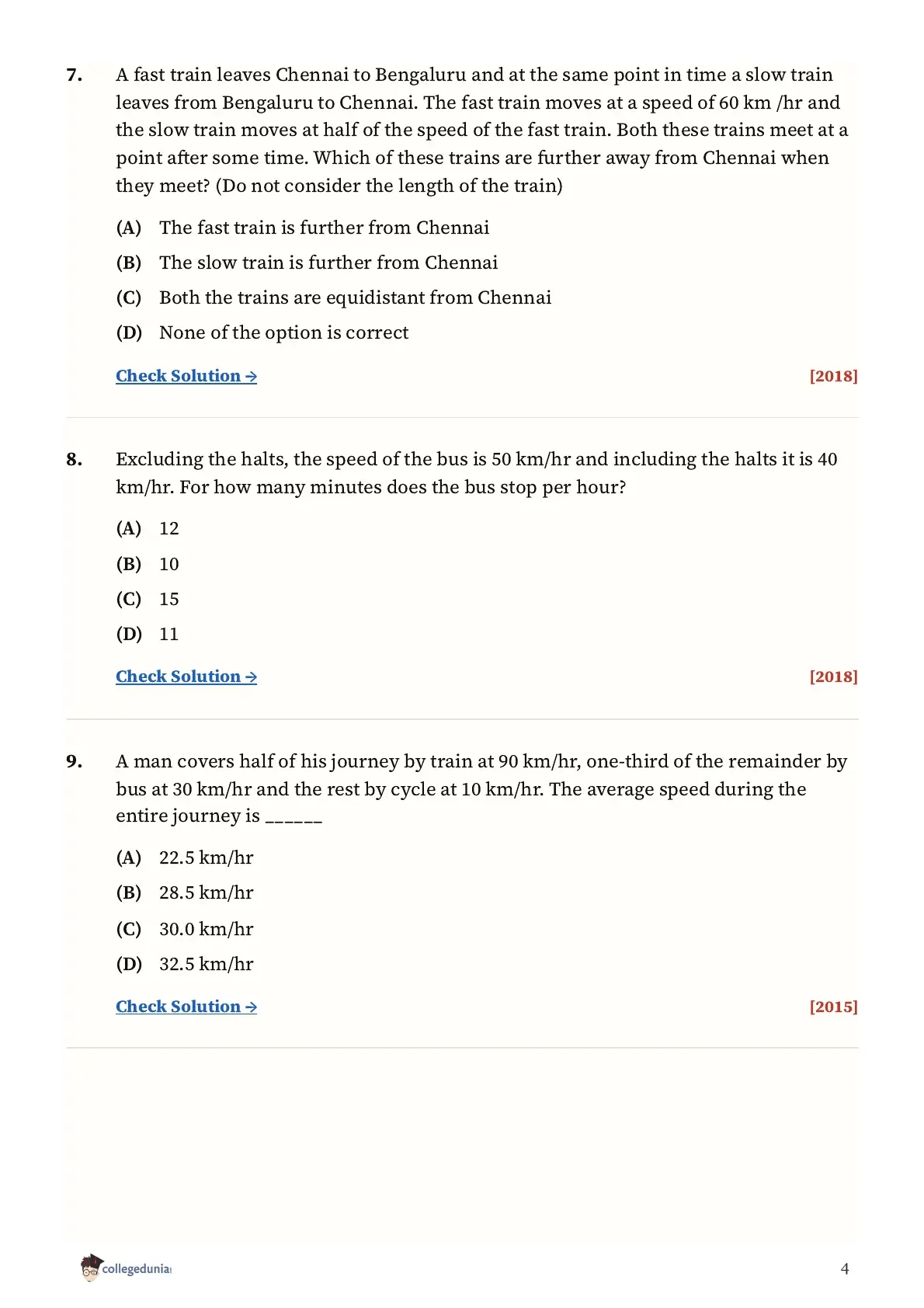
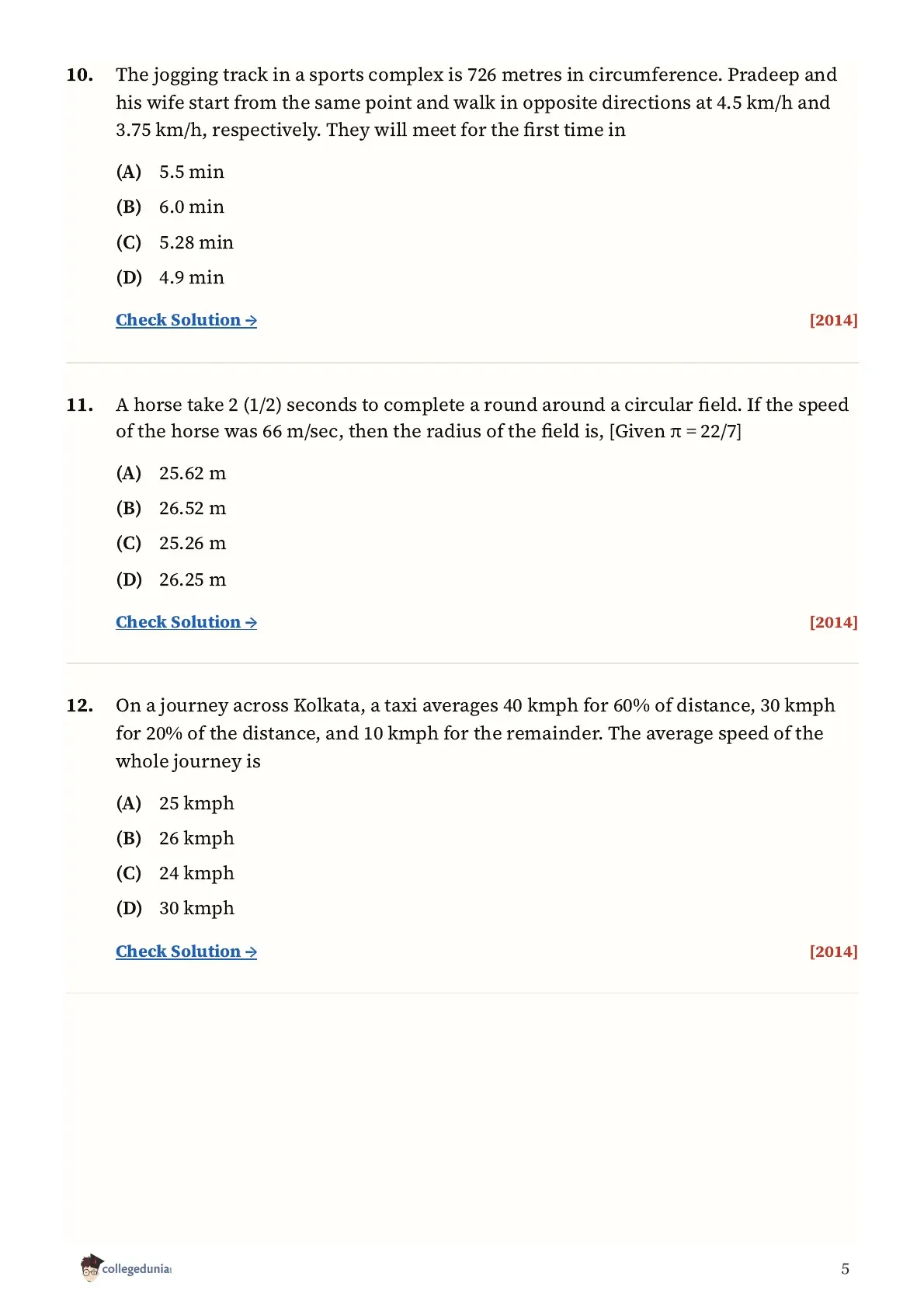
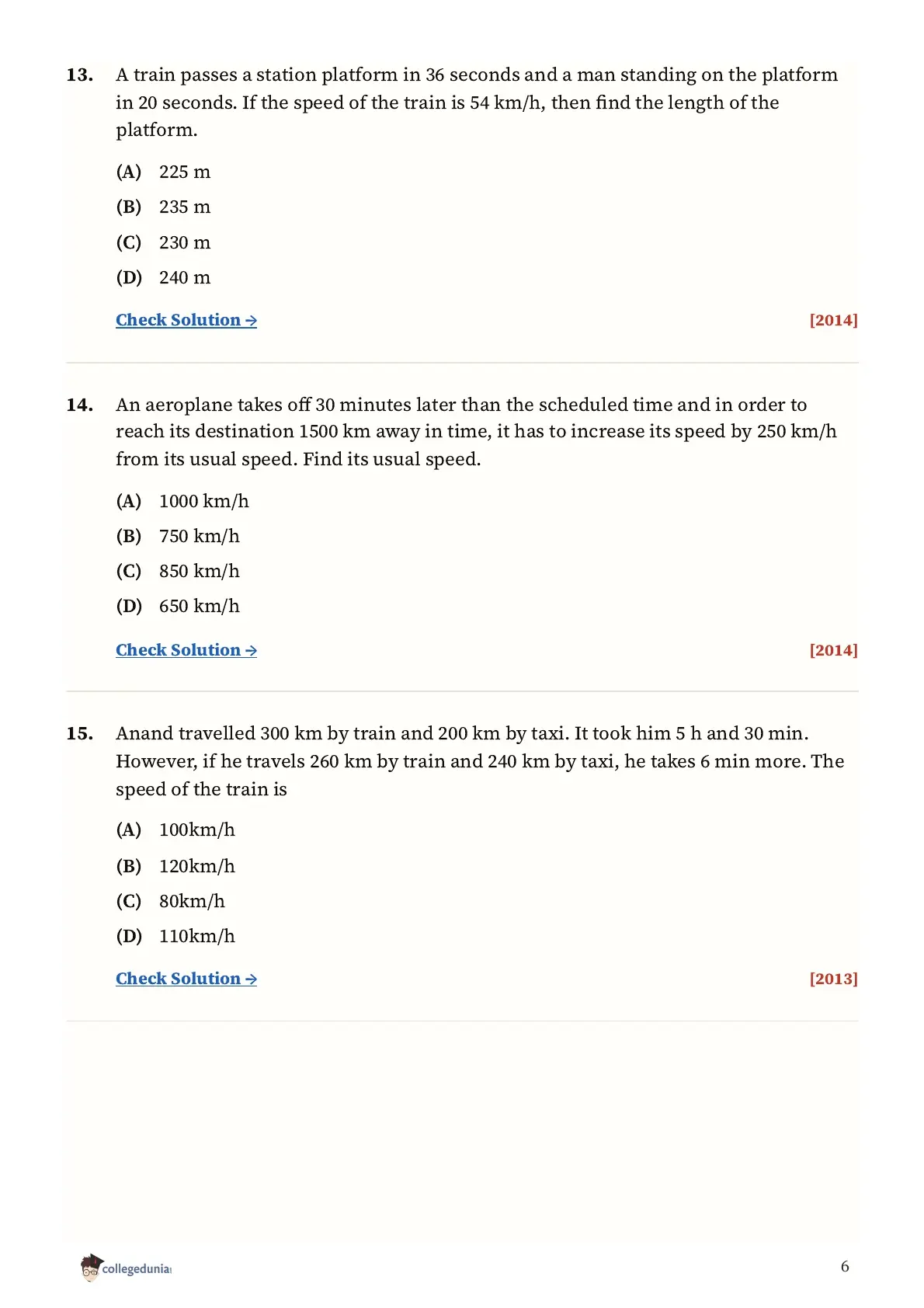
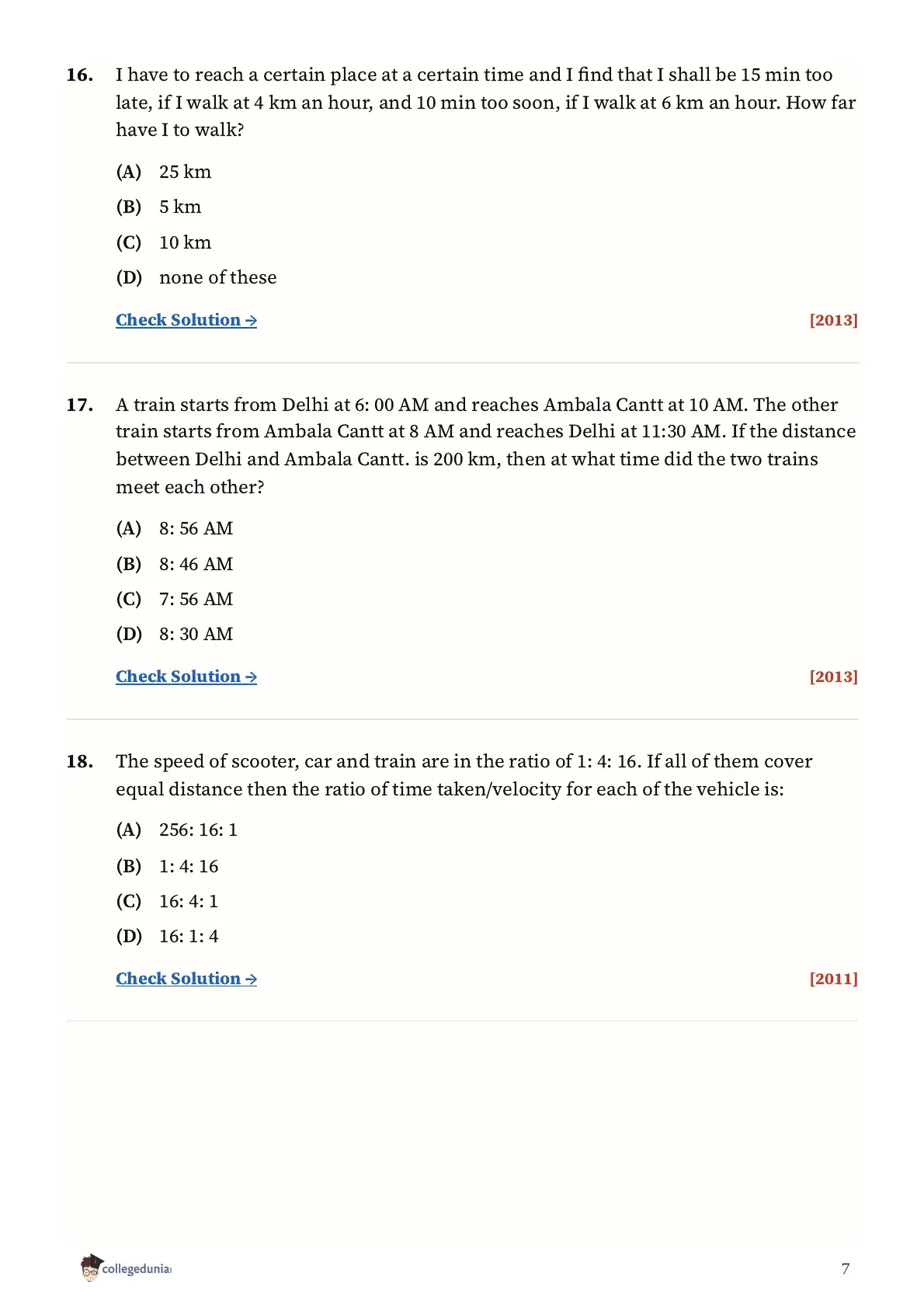
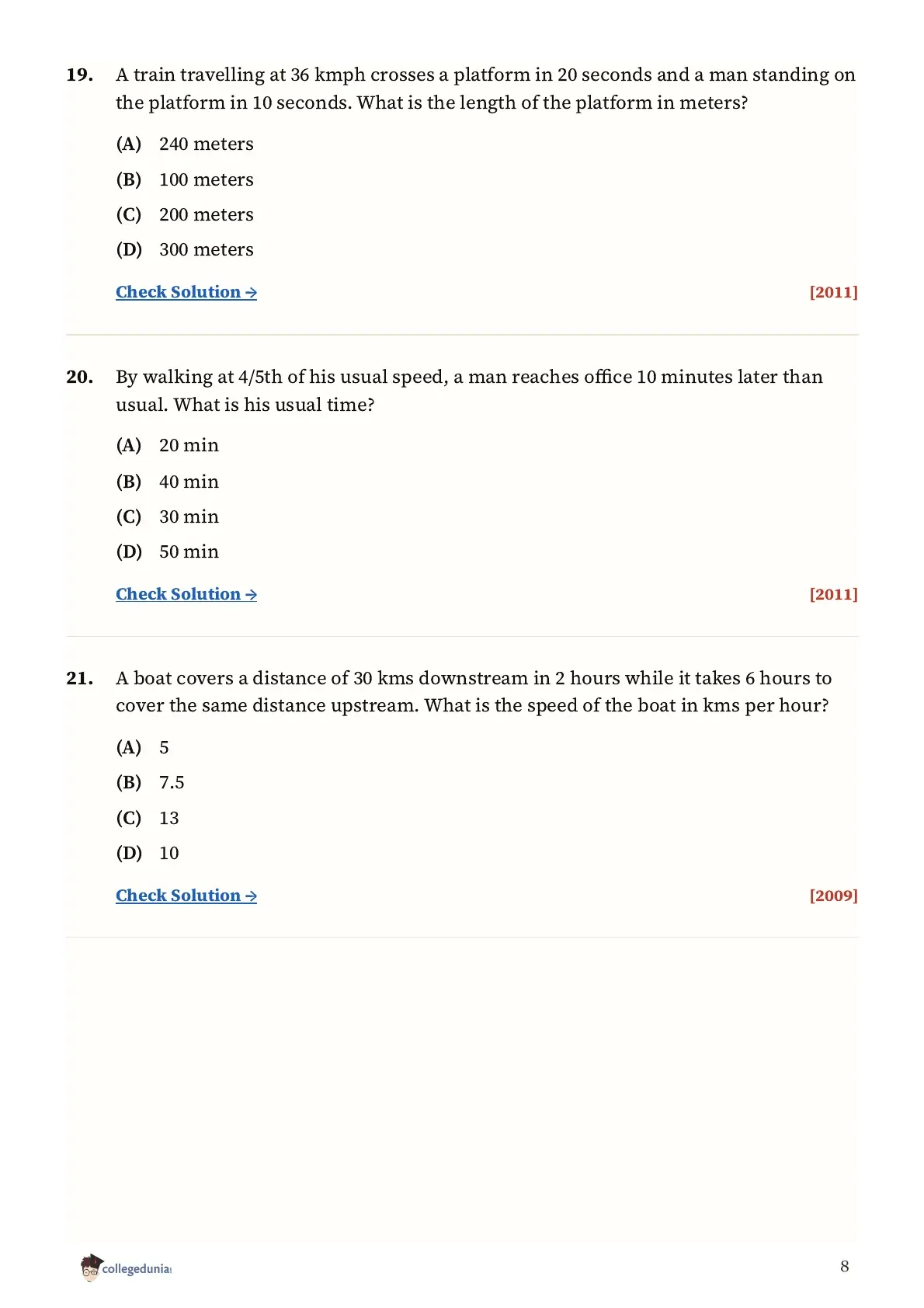
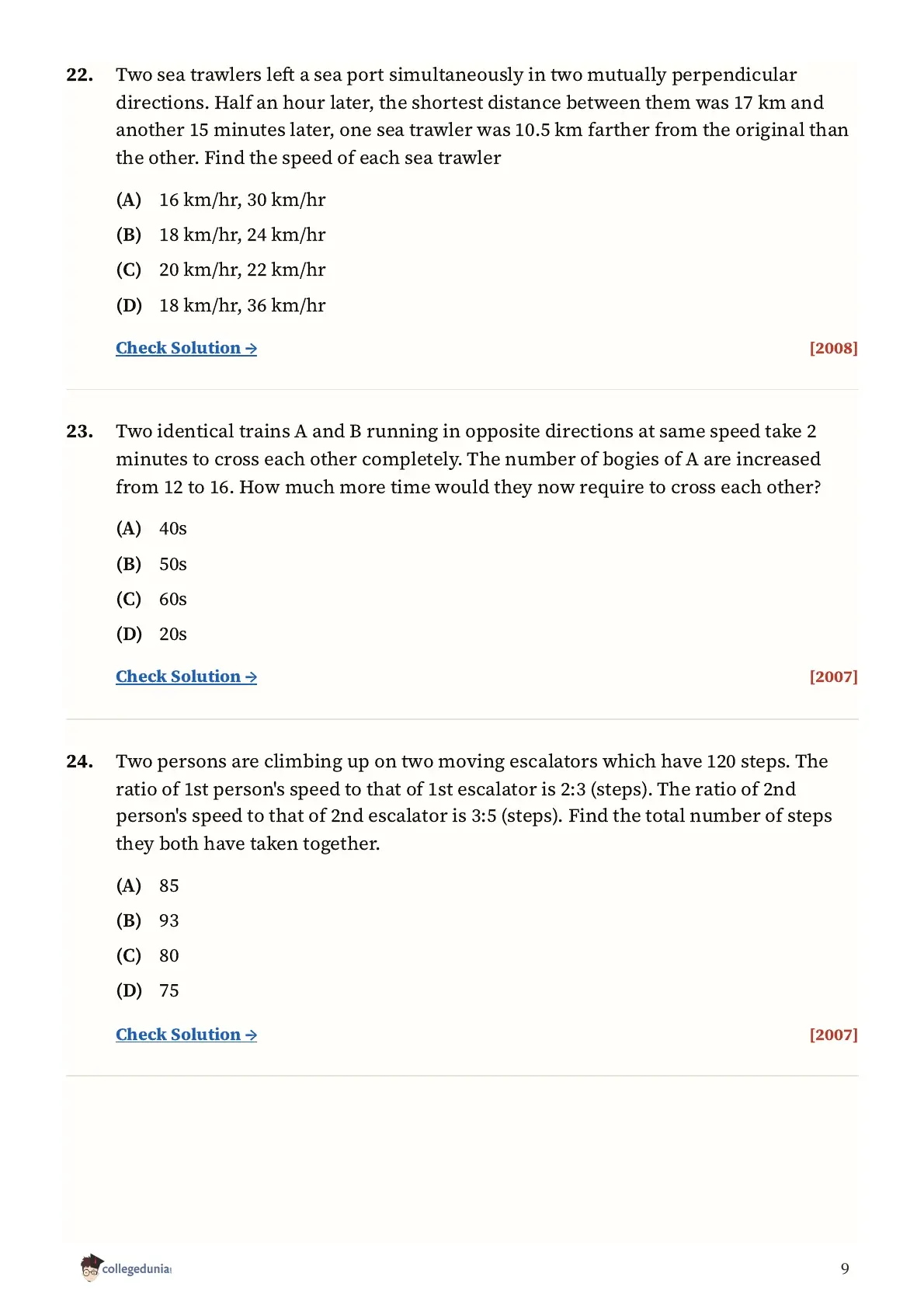

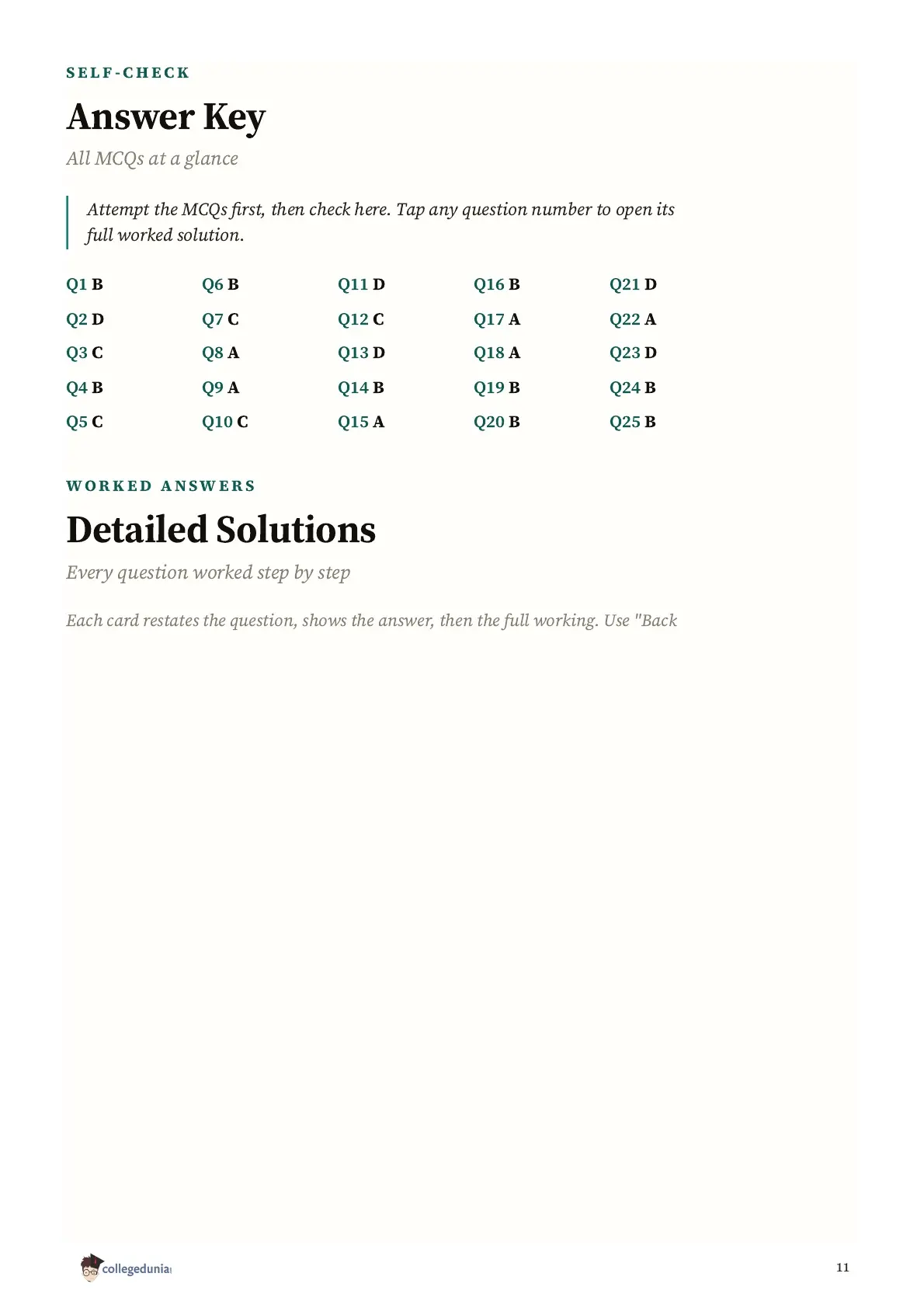
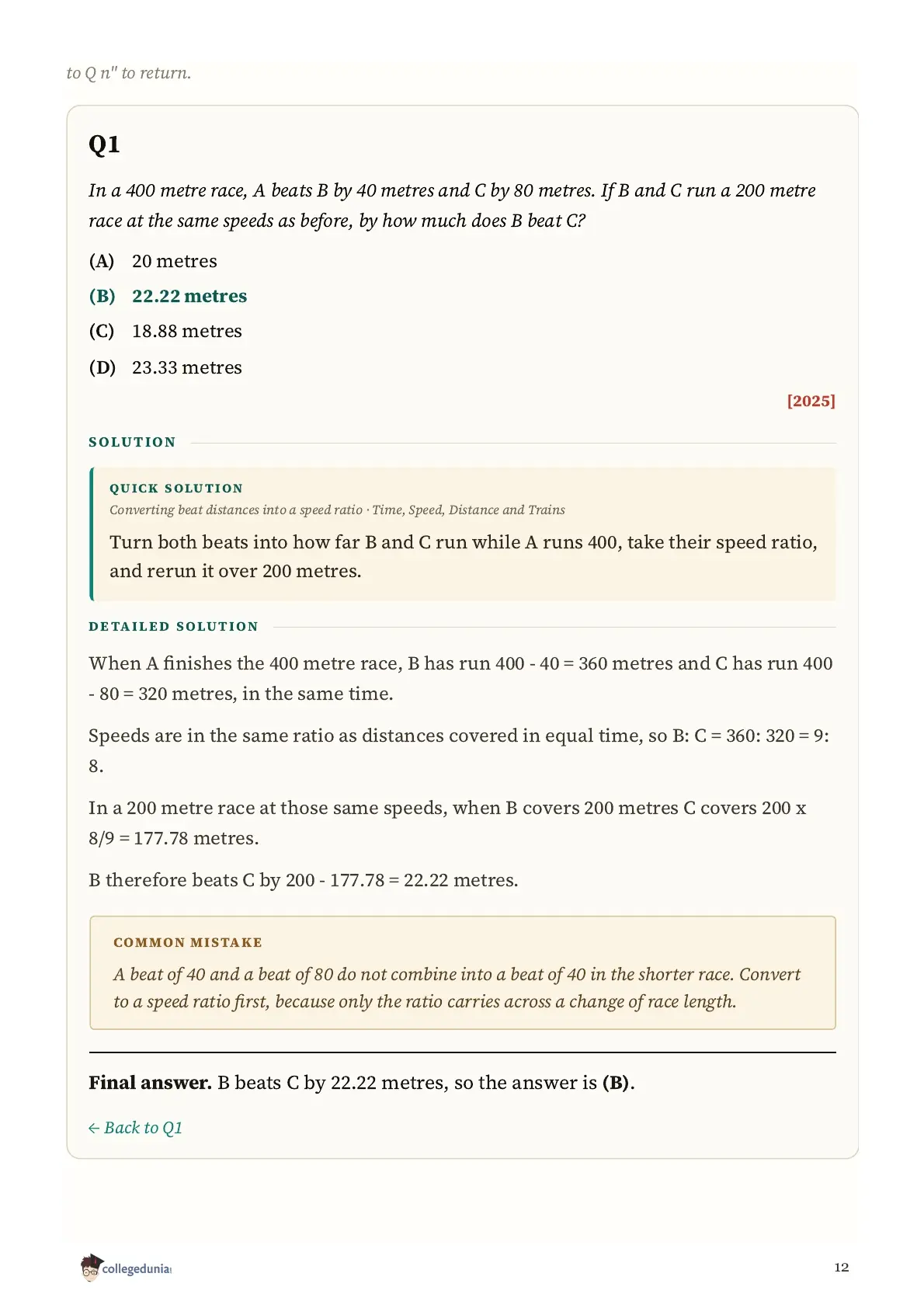
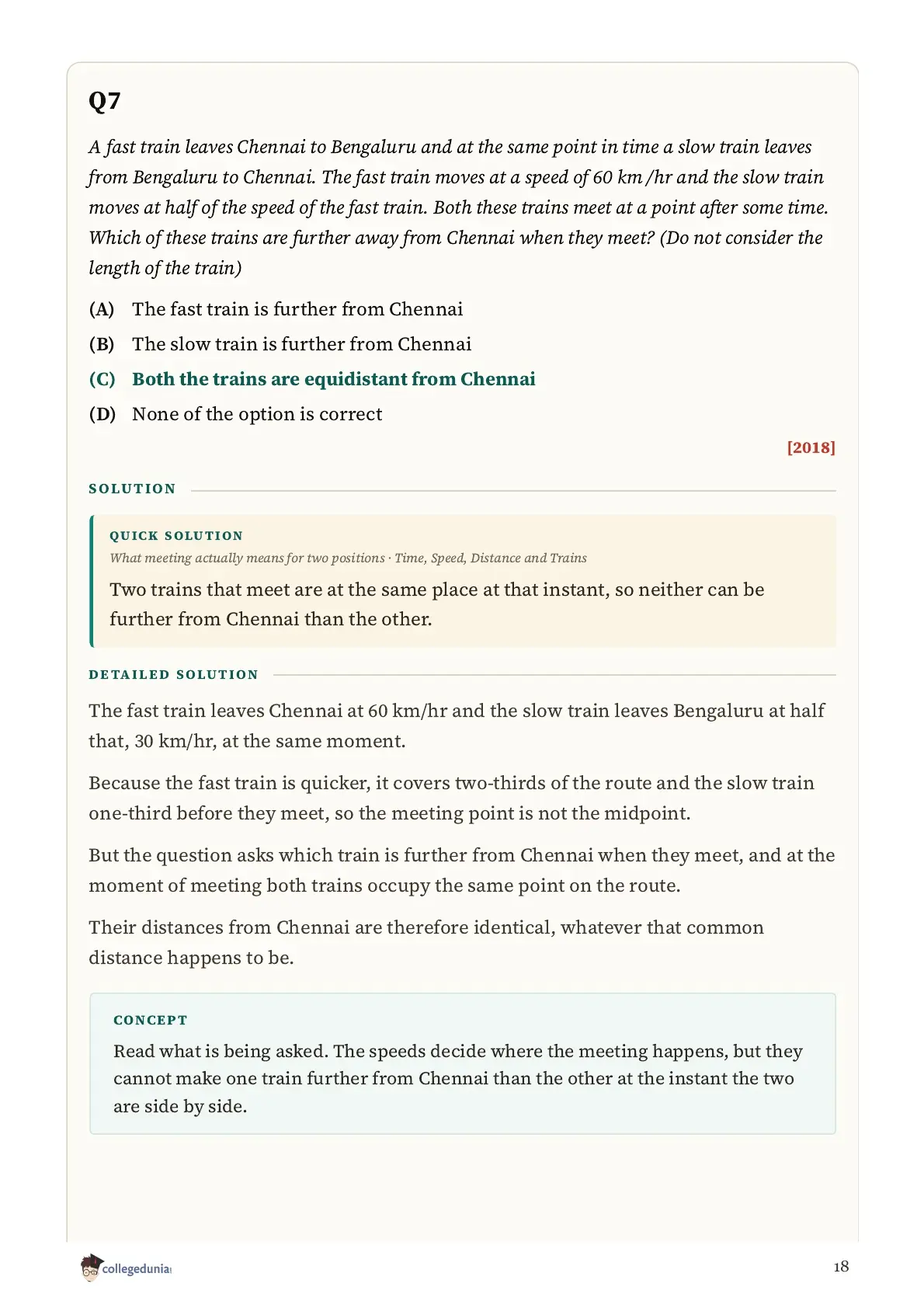
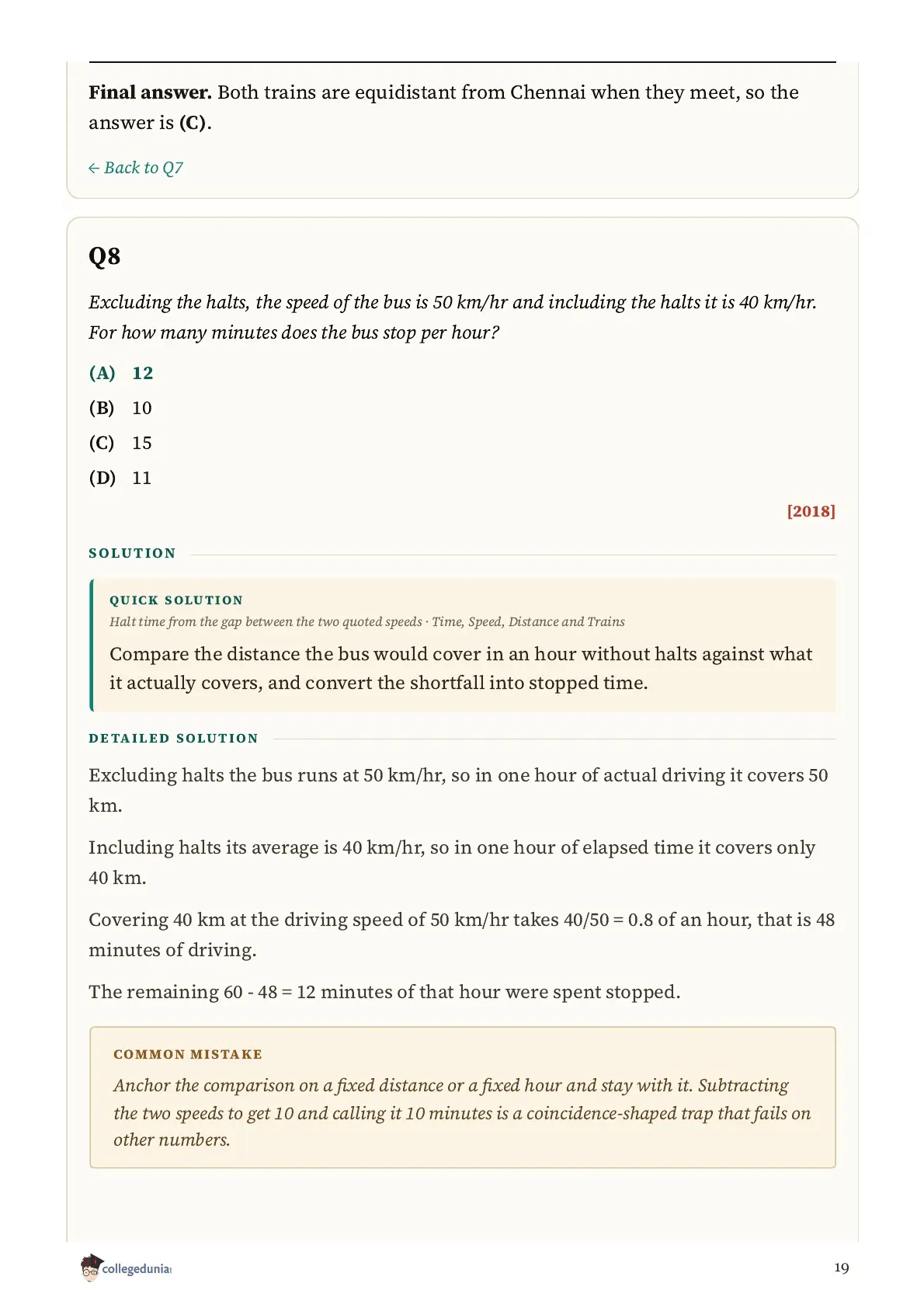
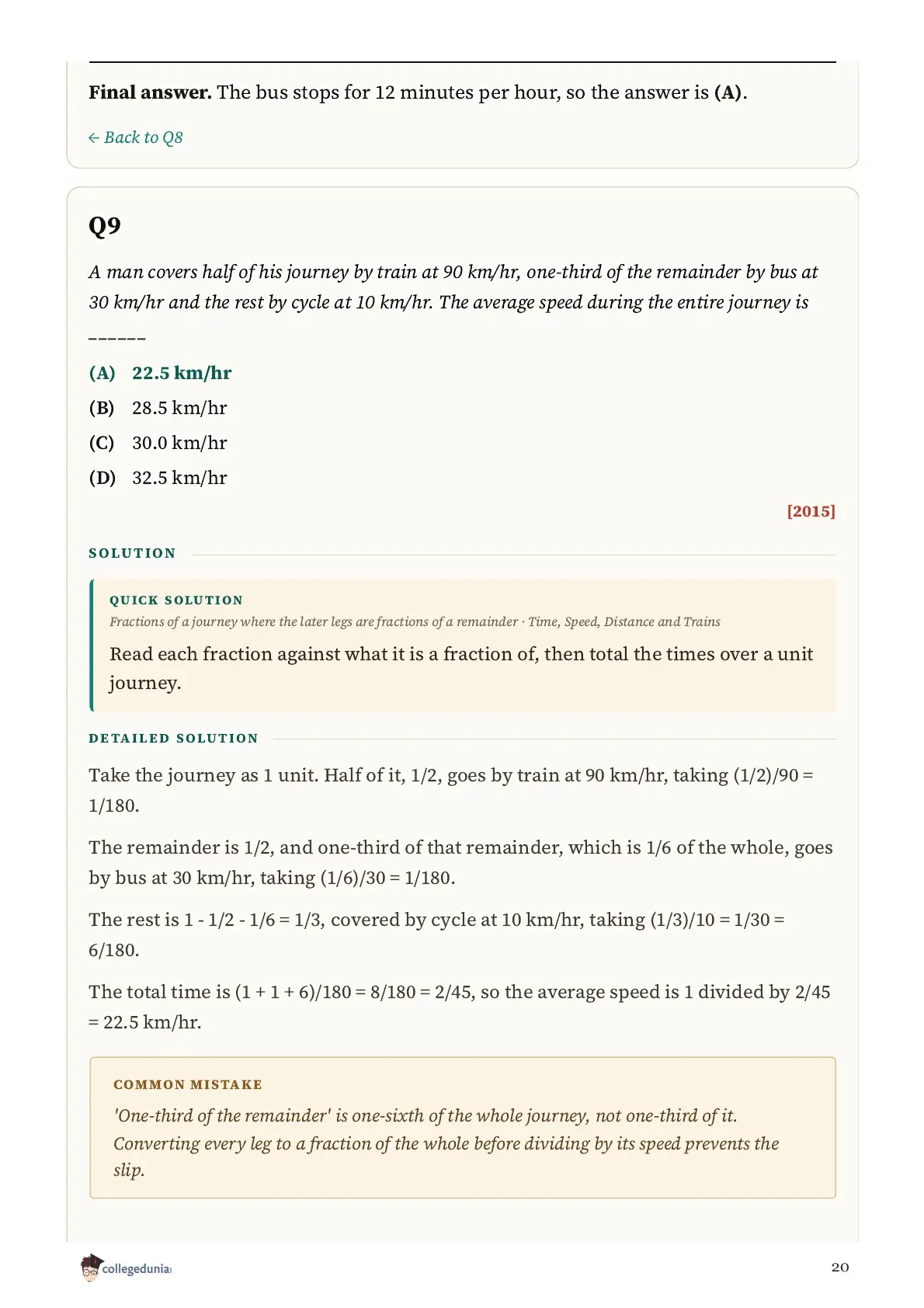
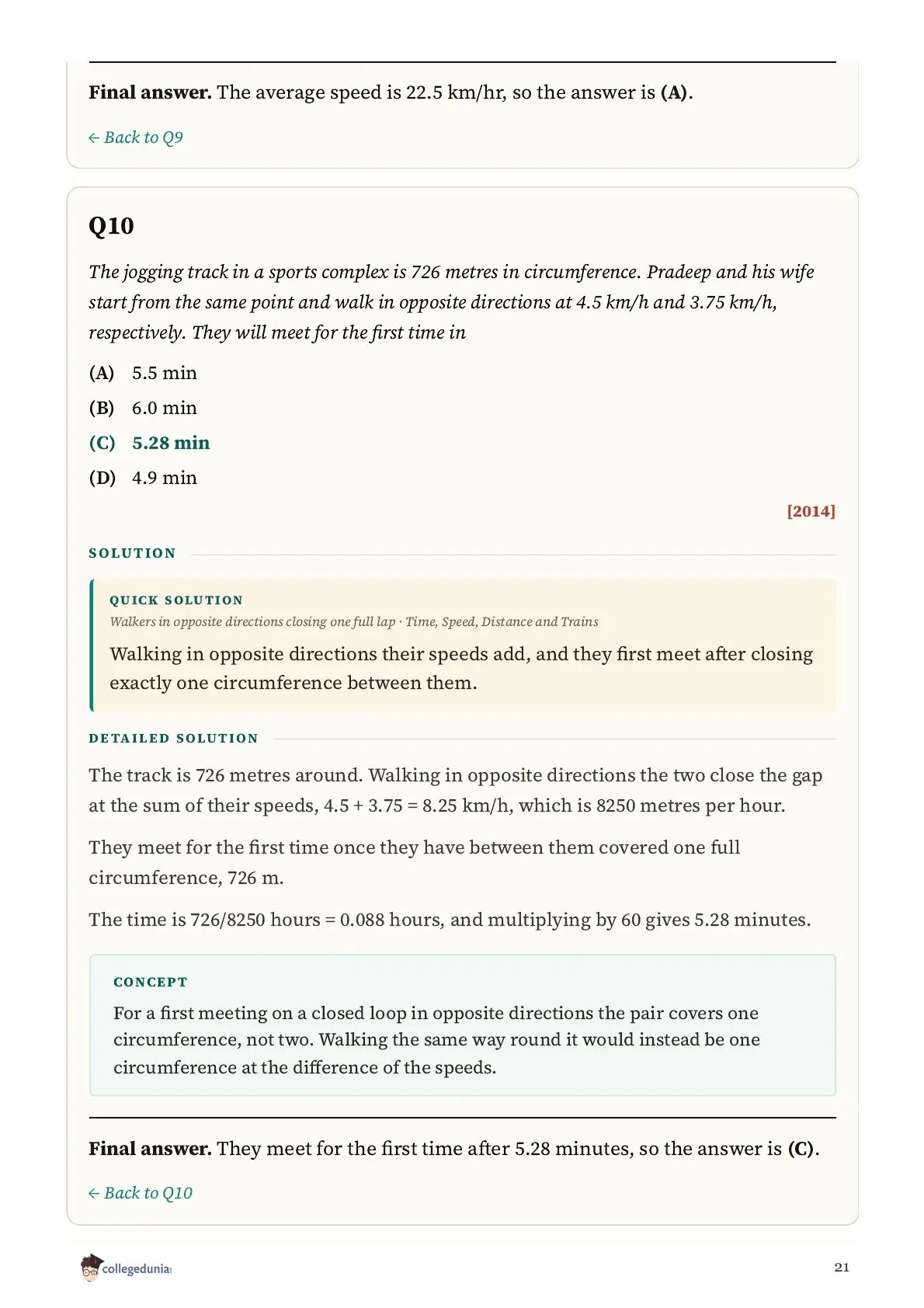
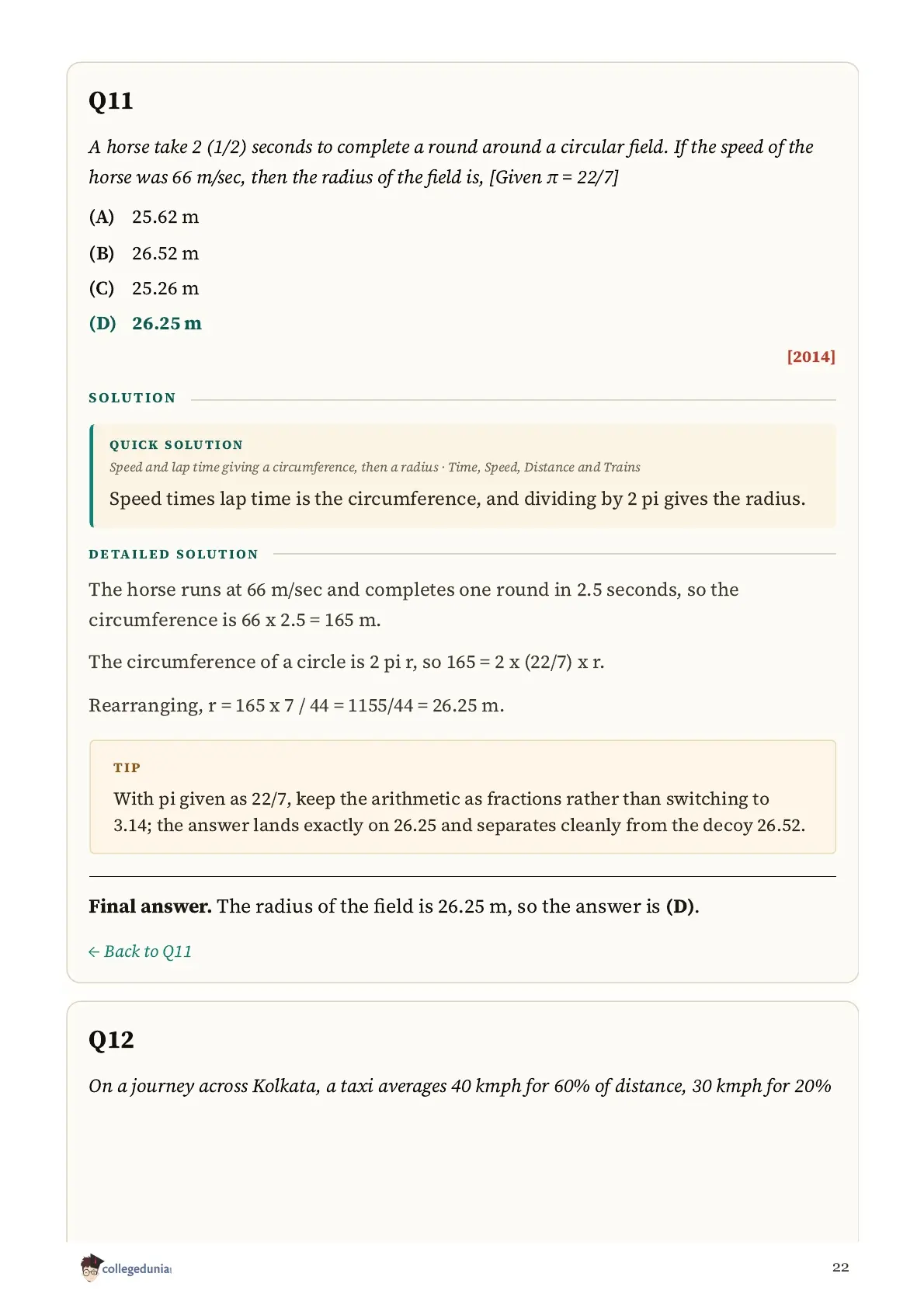
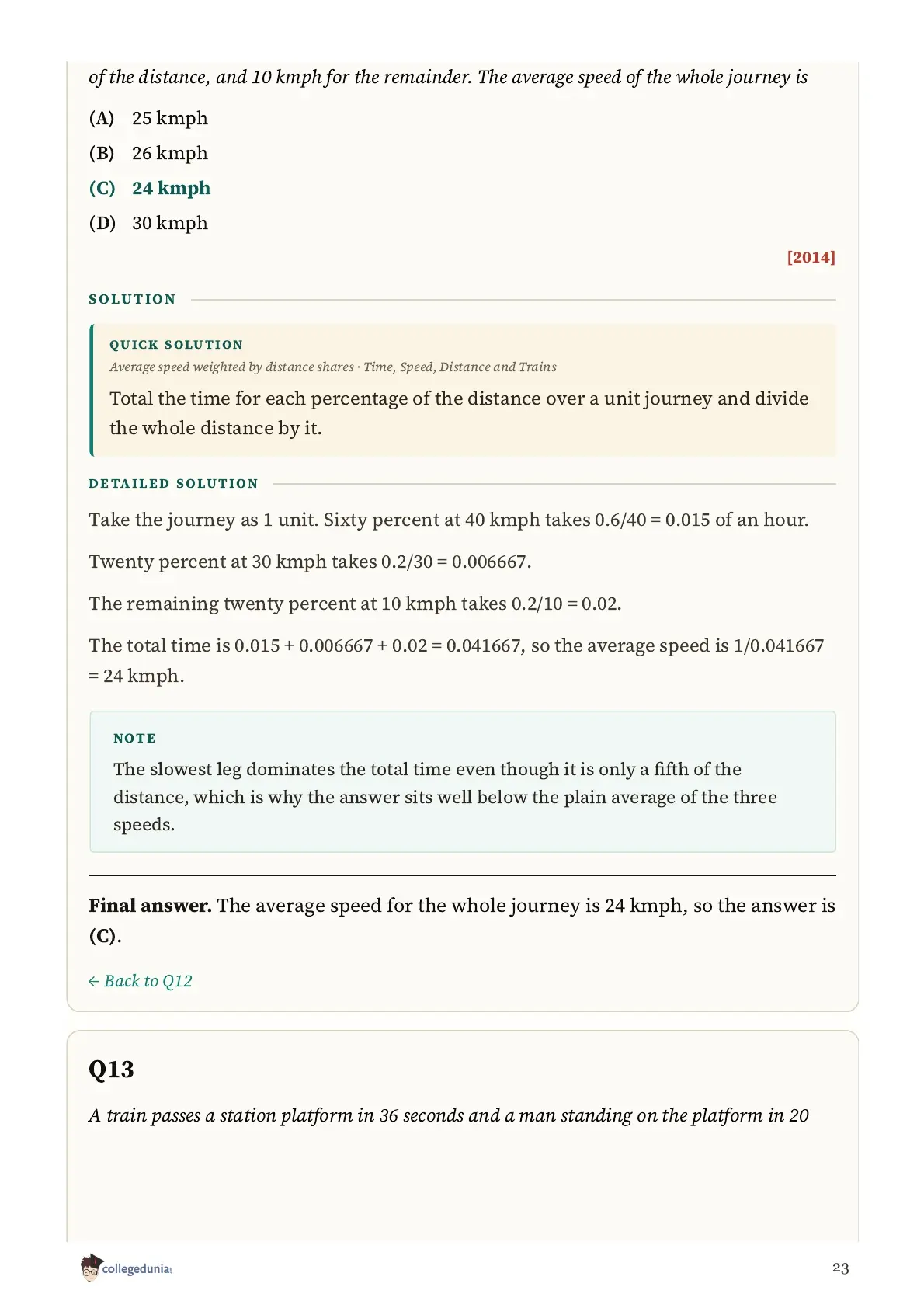
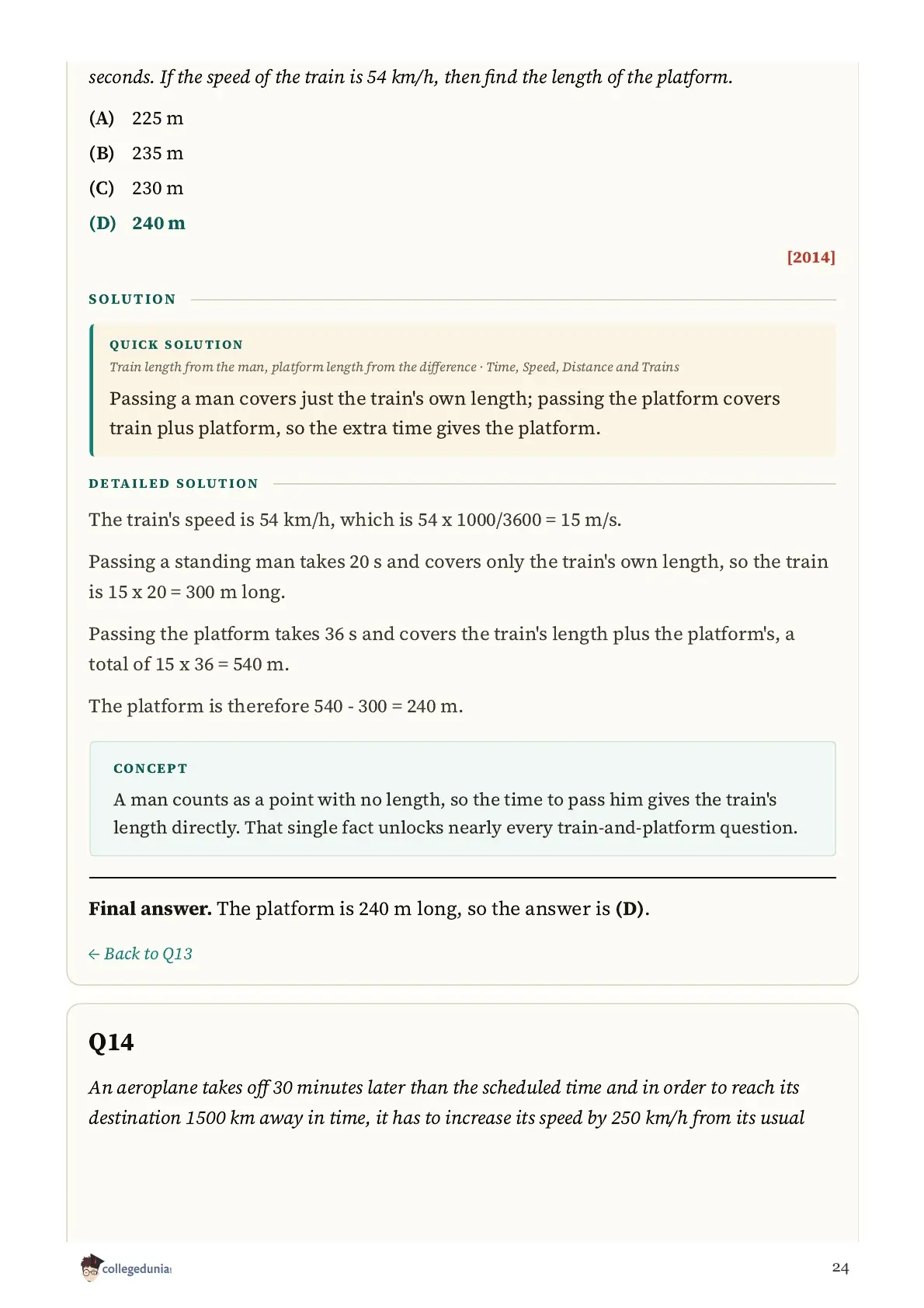
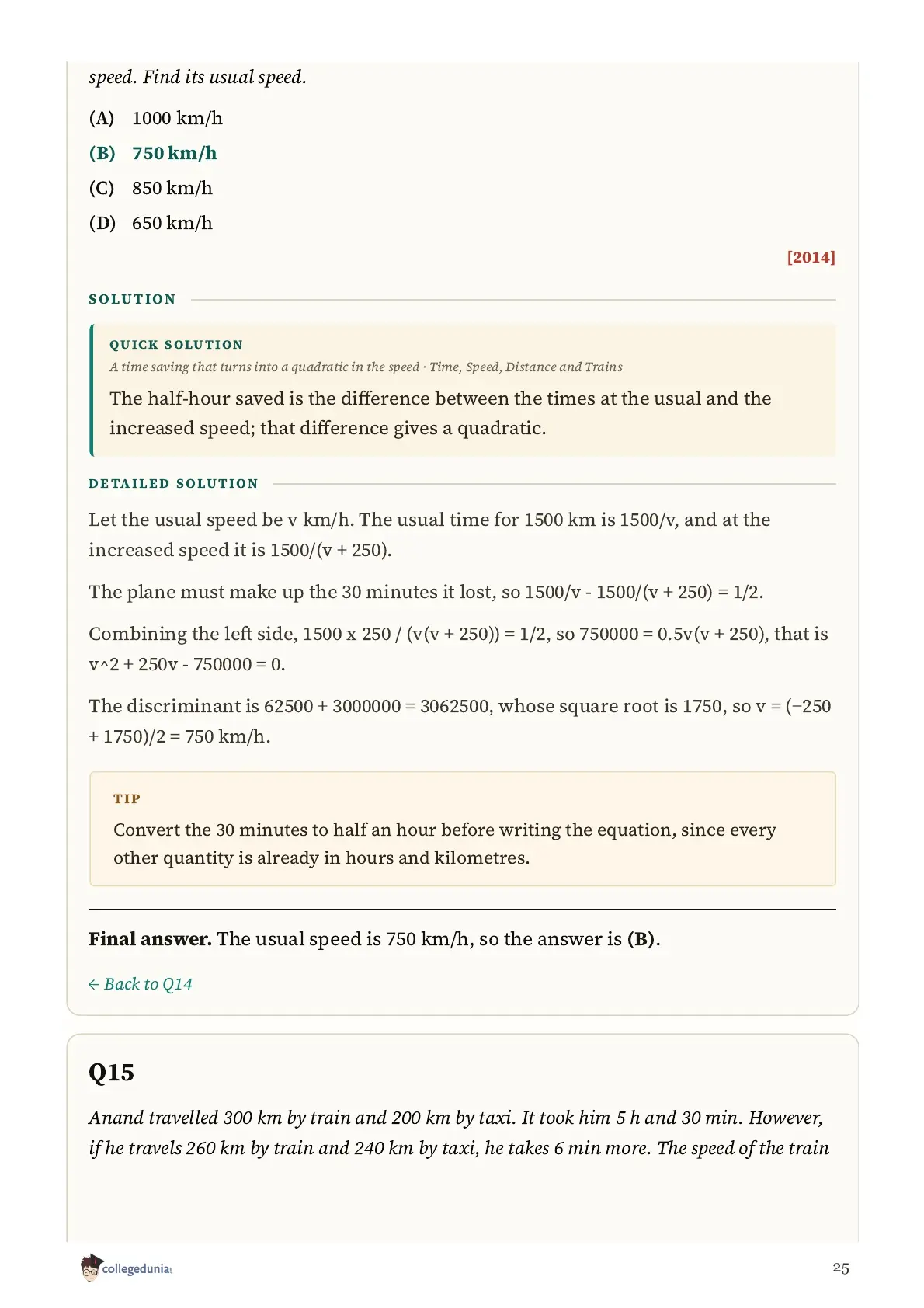
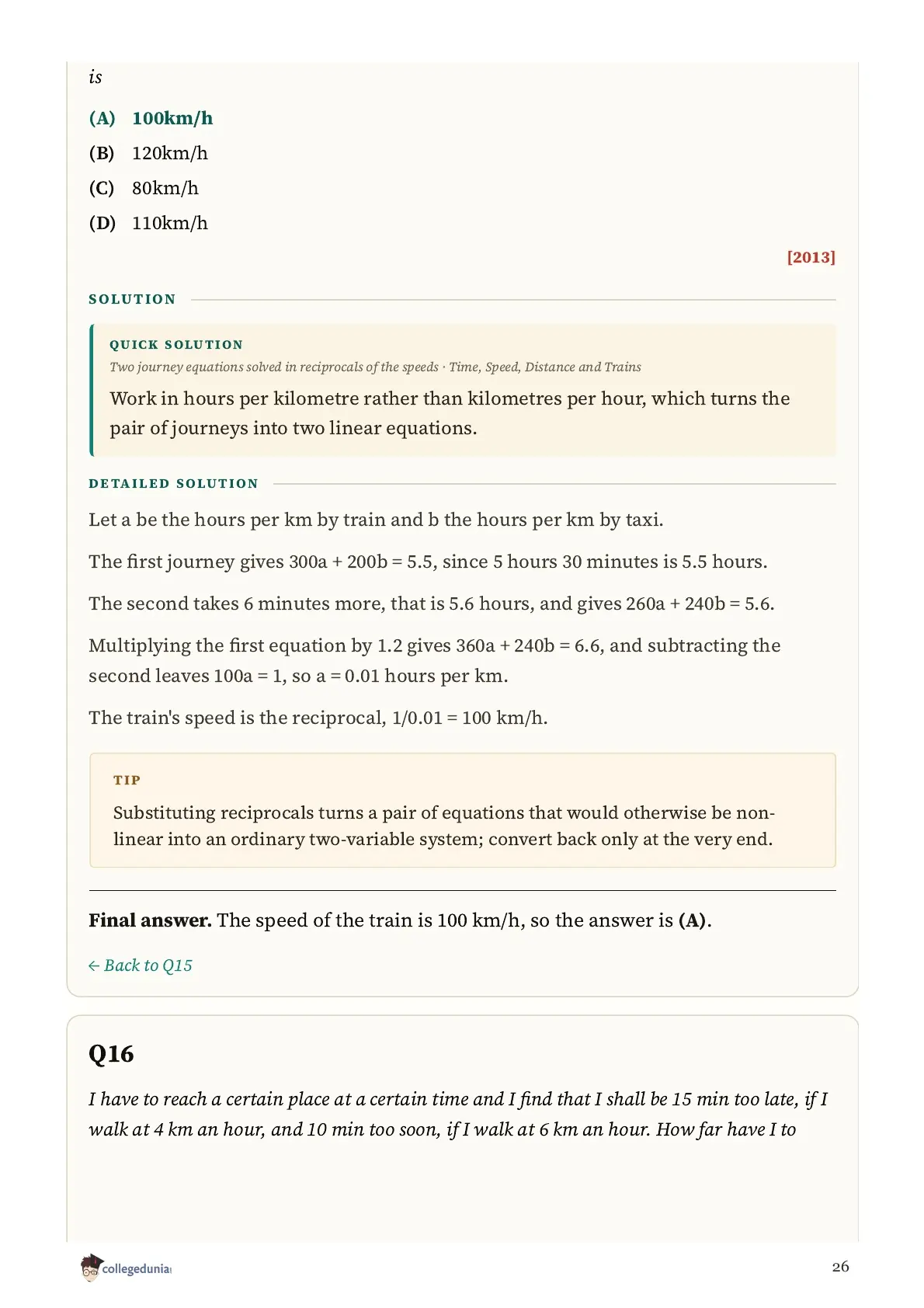
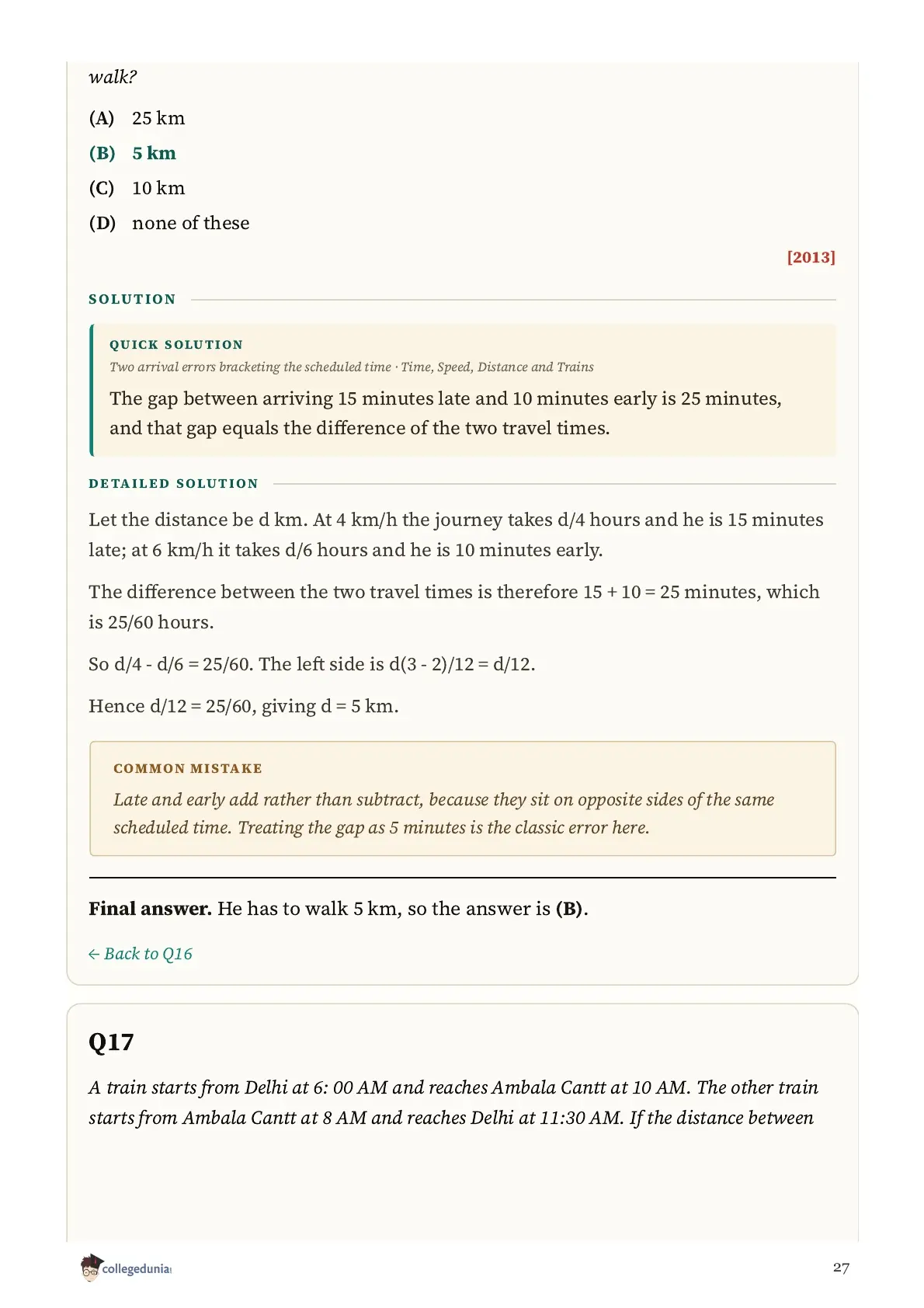
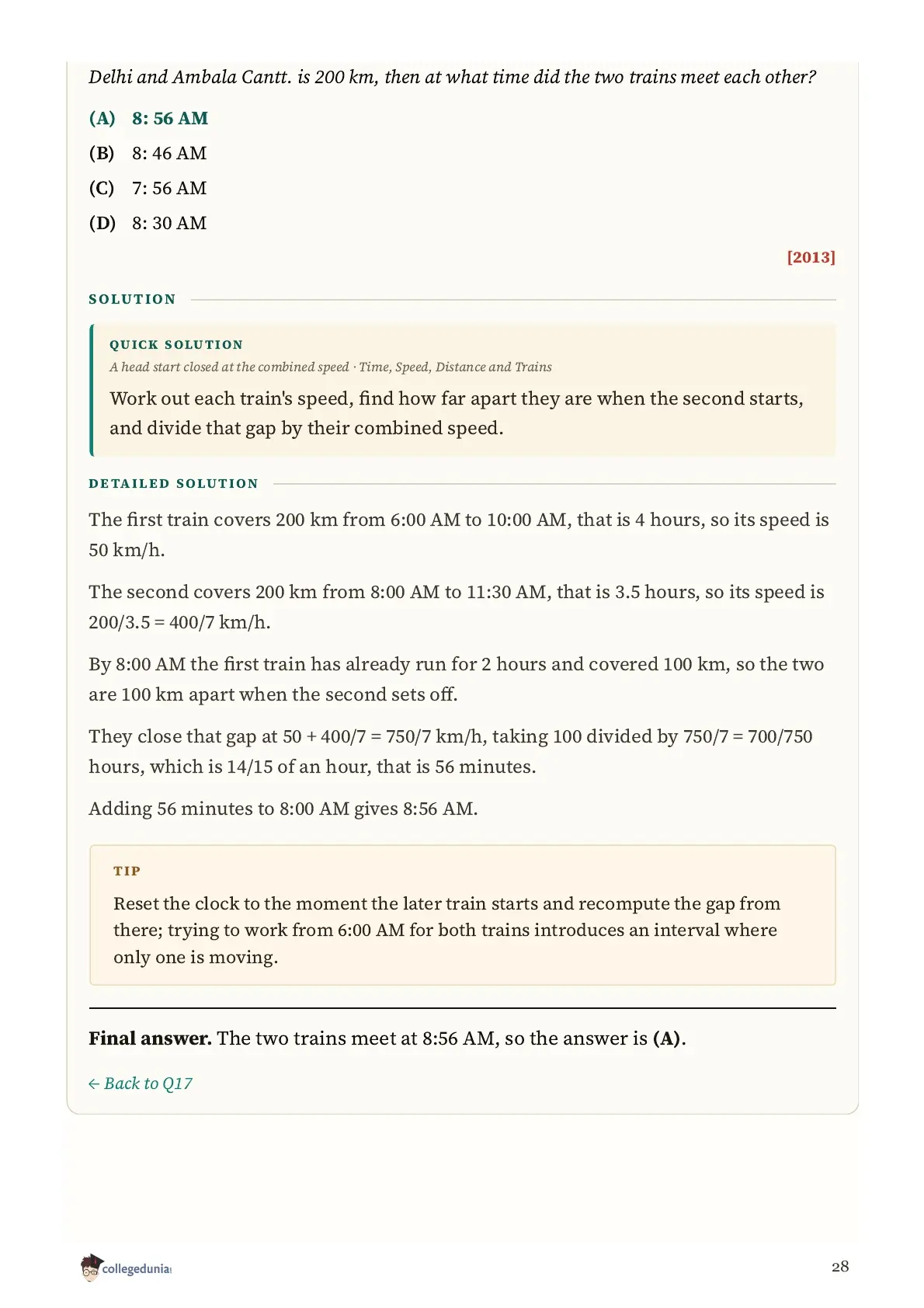
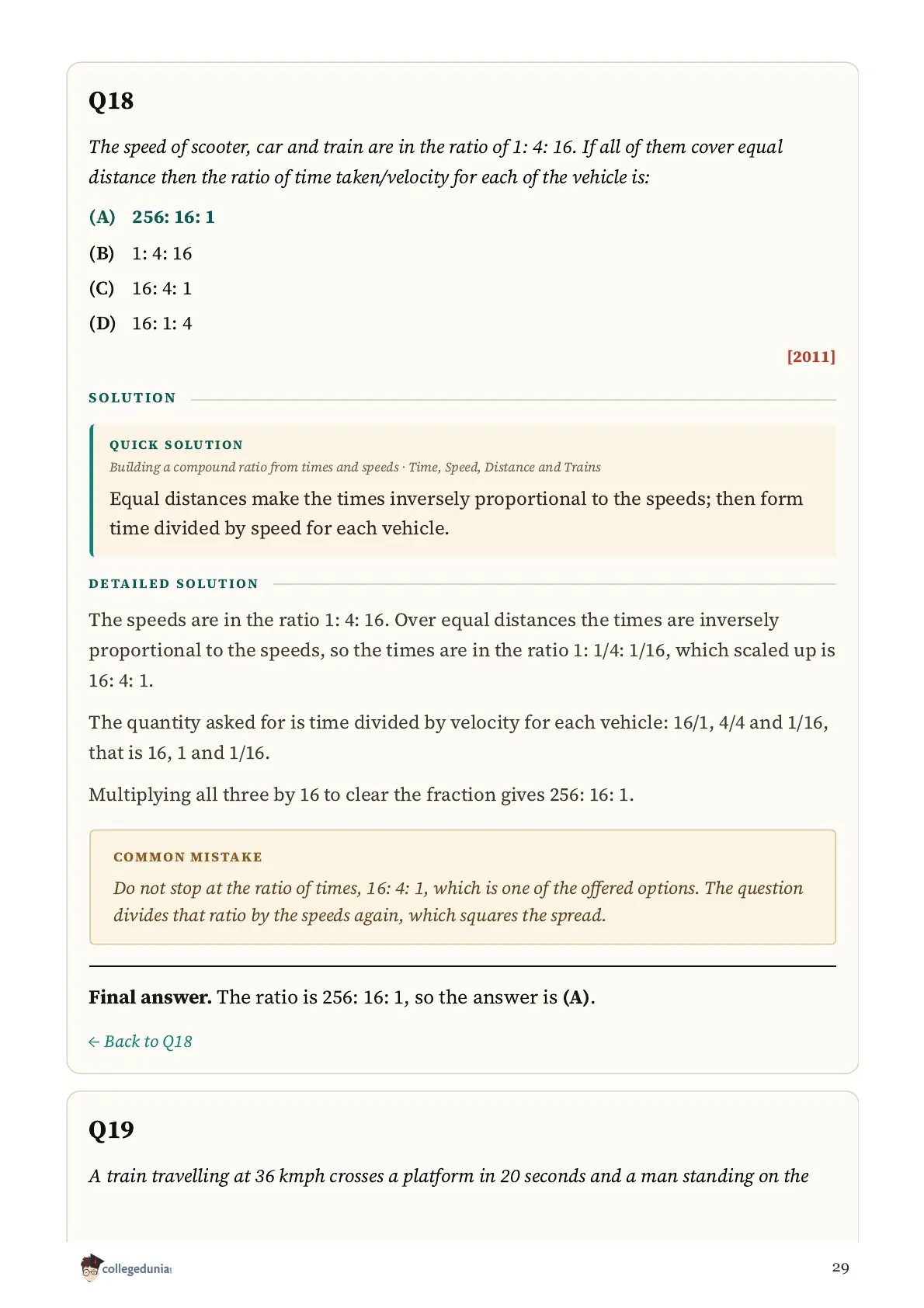
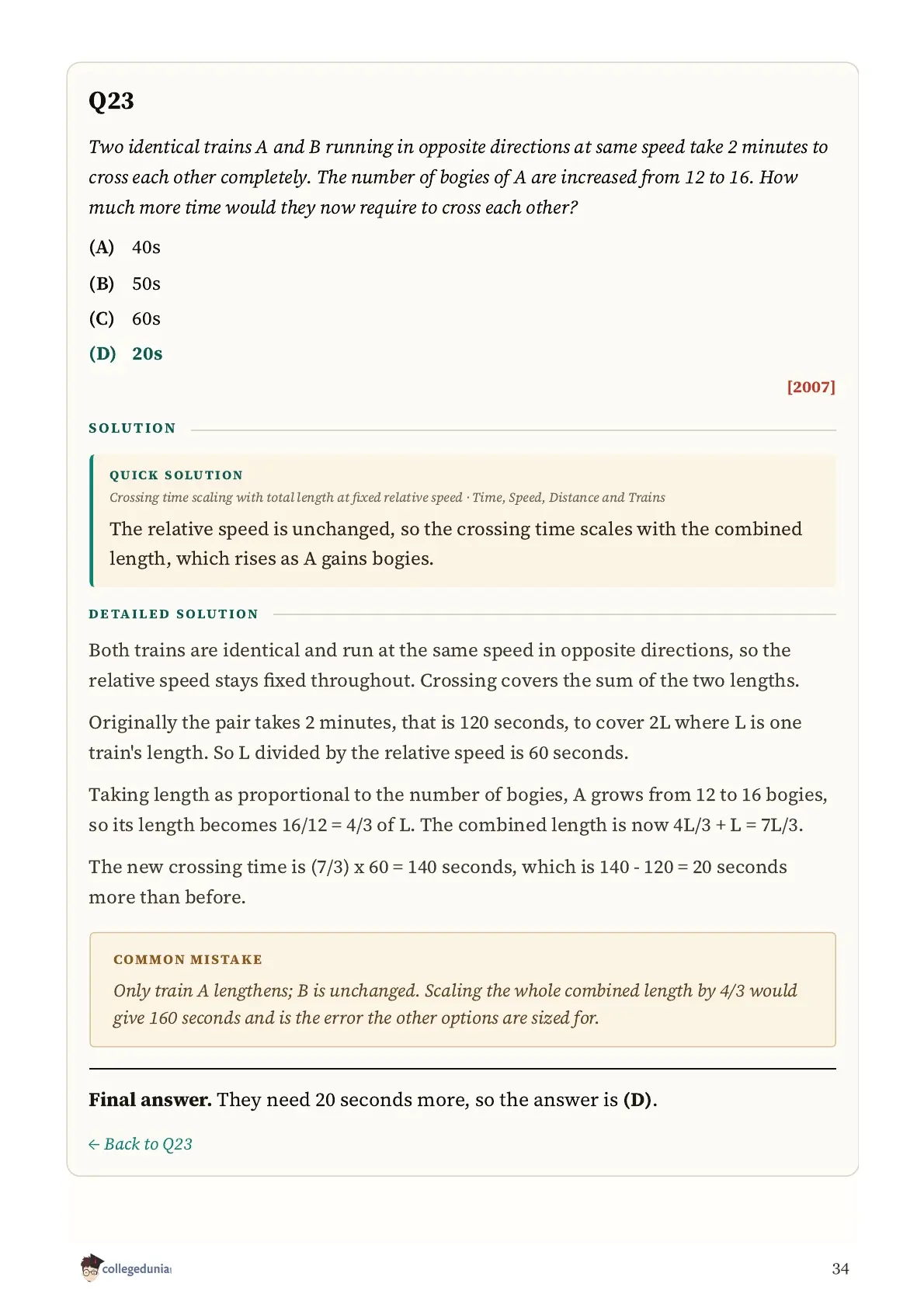
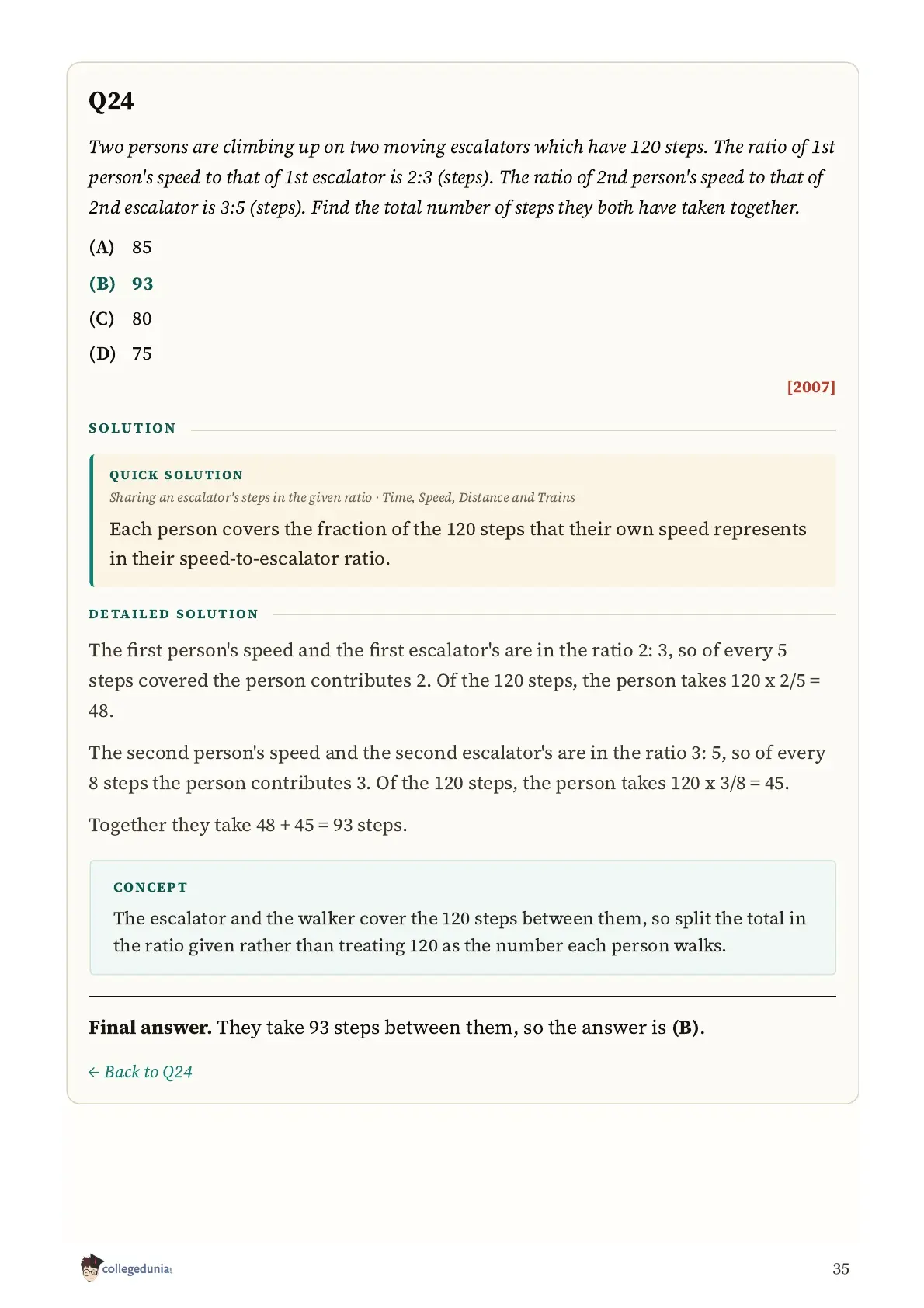
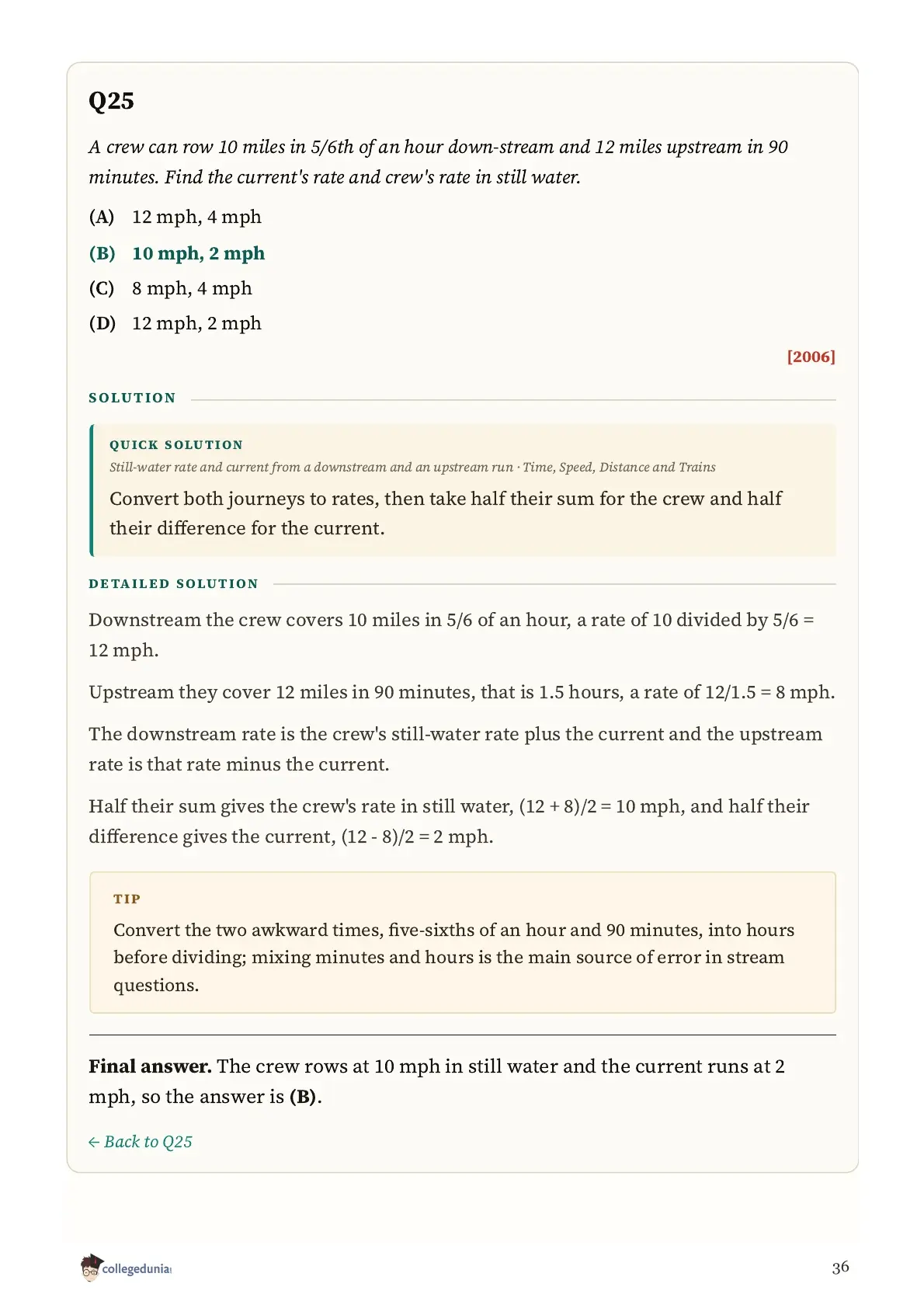
Questions run newest year first, with the options exactly as printed. The answer key follows, then a worked solution for each one.
SNAP Time, Speed and Distance Weightage
This is the largest single arithmetic topic in SNAP's quant section and the widest in range. The same 25 questions run from a one-line average-speed calculation to a pair of trawlers on perpendicular courses.
| Papers | Questions in this bank |
|---|---|
| 2006 to 2010 | 5 |
| 2011 to 2015 | 12 |
| 2018 to 2020 | 5 |
| 2021 to 2025 | 3 |
2011 to 2015 was the heaviest stretch by some distance, at twelve questions. The topic still appears in recent papers, just less densely than it once did.
What the 25 Questions Cover
- Average speed across legs of unequal length, which appears in four separate papers
- Trains crossing platforms, men and each other, in both the same and opposite directions
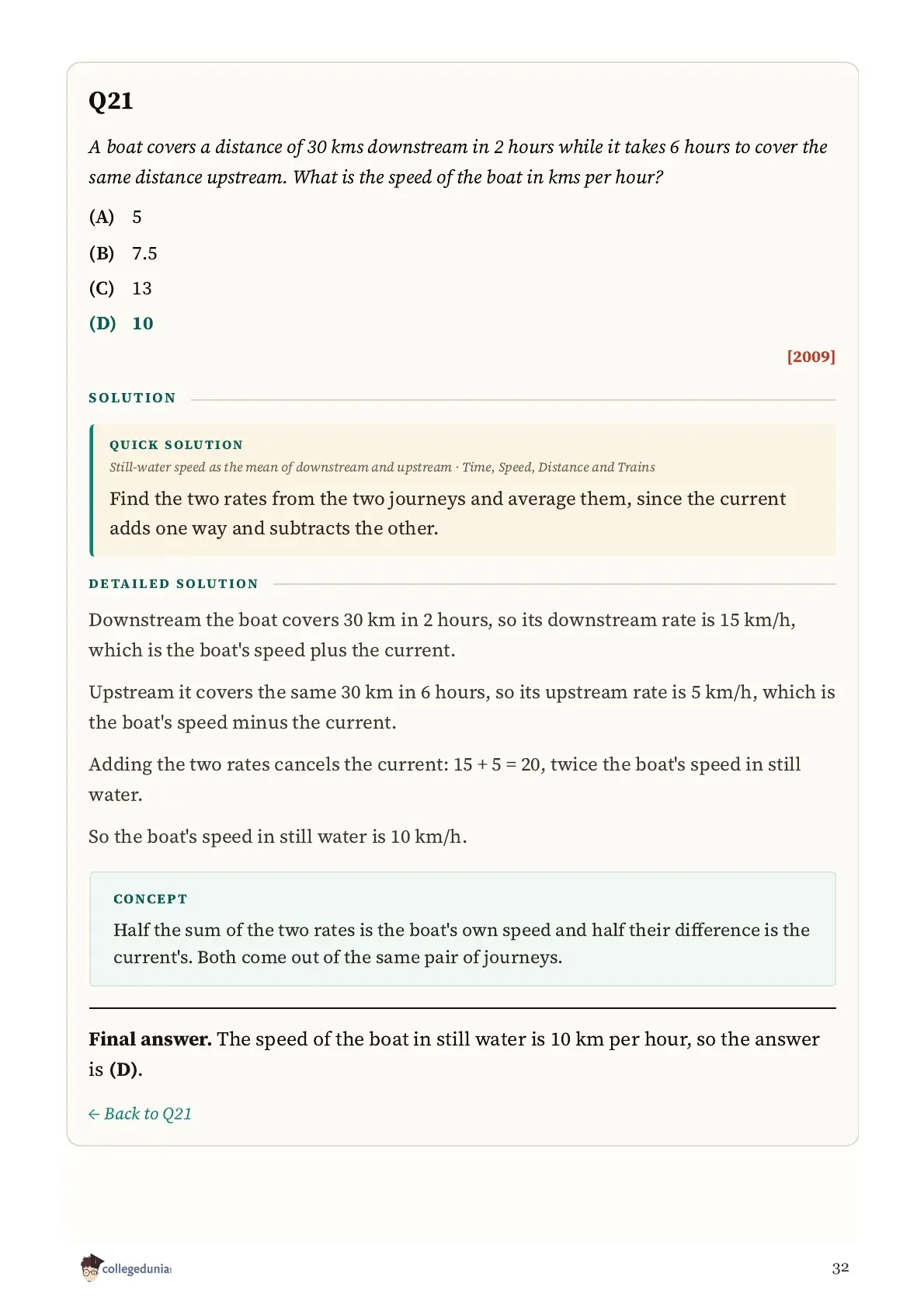
- Boats and streams, where the still-water rate is half the sum of the two journey rates
- Races and beats, where a lead in metres converts into a ratio of speeds
- Late-and-early problems, where two arrival errors bracket one scheduled time
- Meeting problems, including one where the travellers start two hours apart
How to Approach the Set
Average speed is total distance over total time, never the average of the individual speeds. It sounds obvious and it is the most common error in the topic.
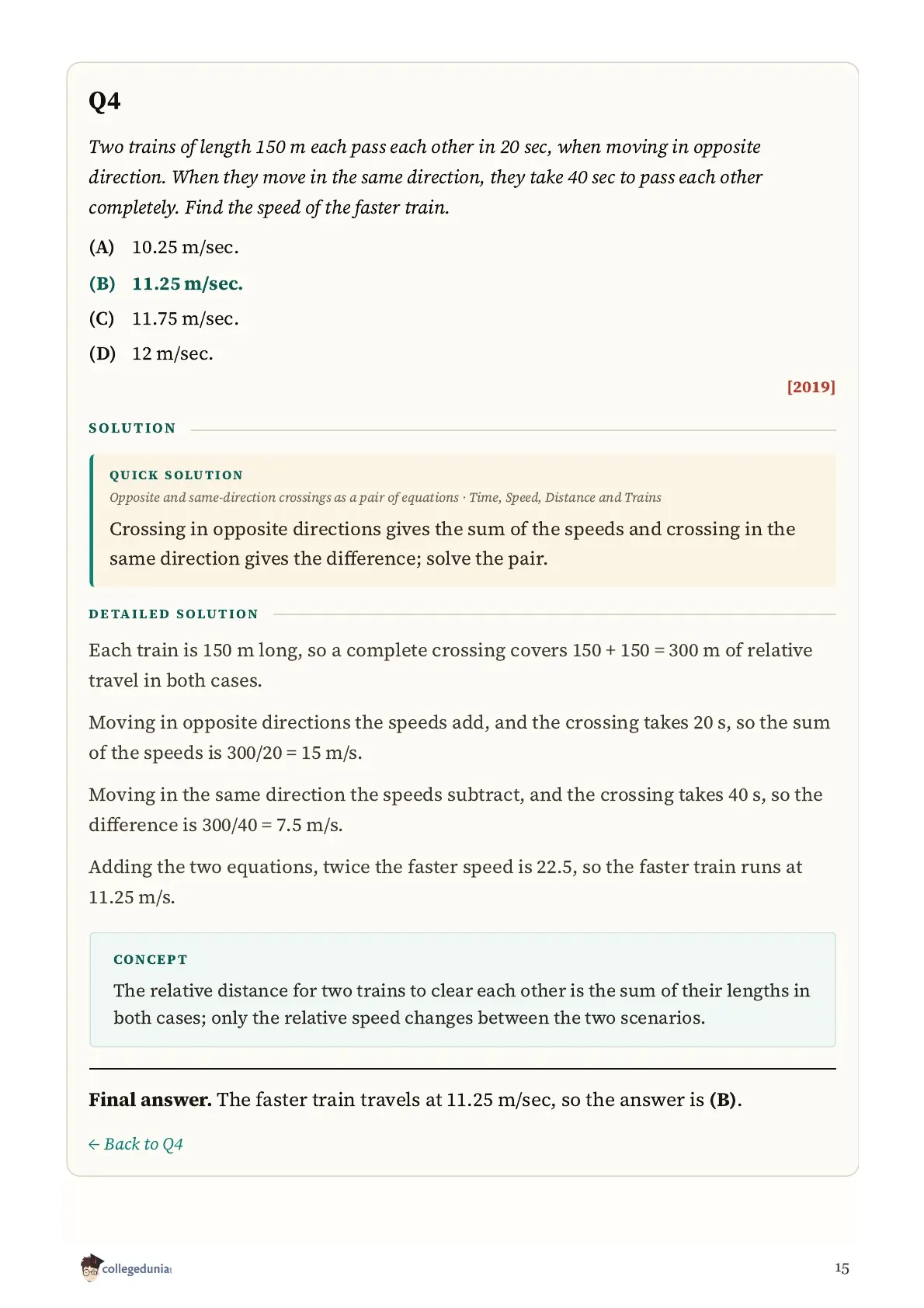
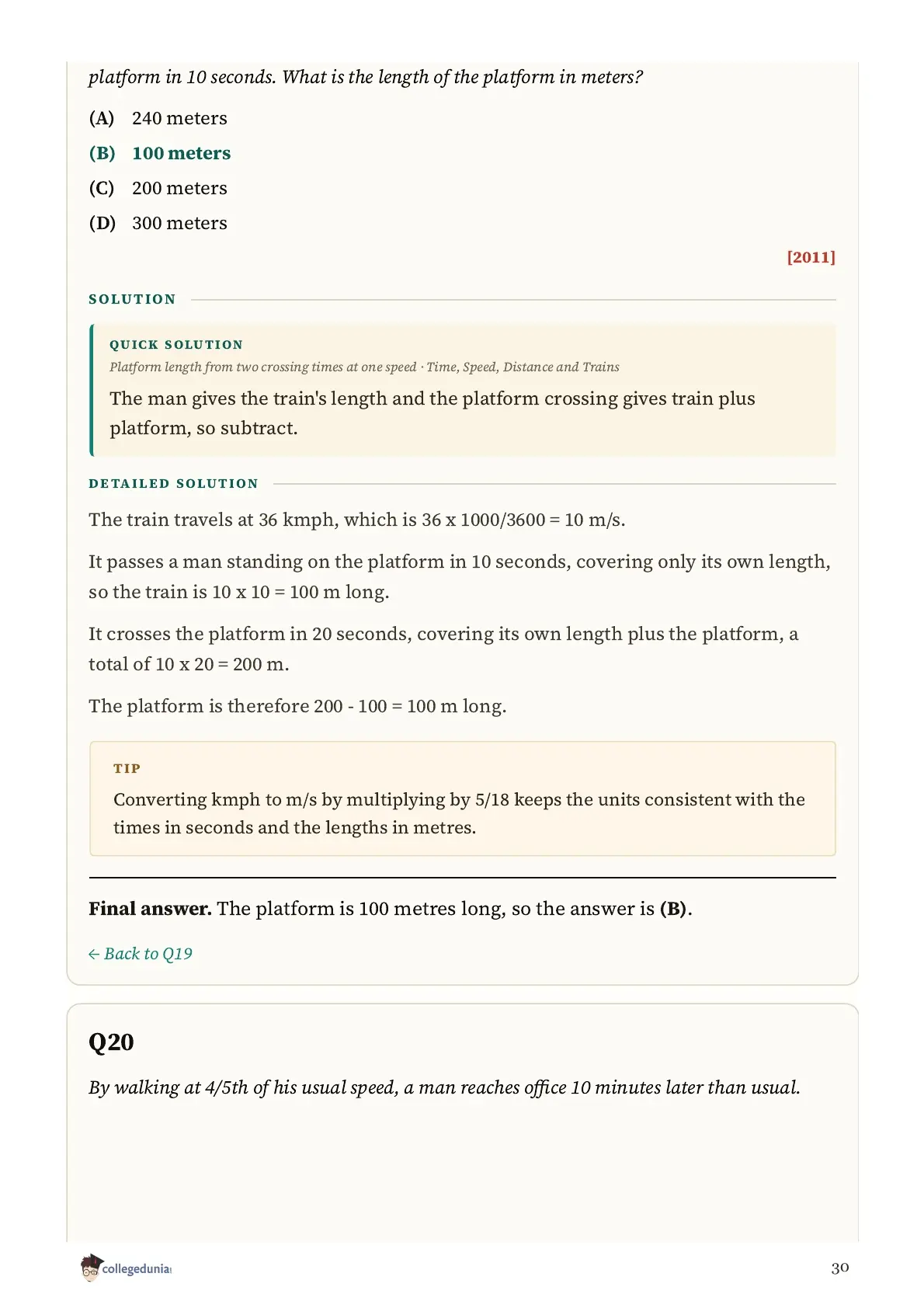
For trains, the fact that unlocks nearly every platform question is that passing a standing man covers only the train's own length. Speeds add when two bodies move in opposite directions and subtract when they move the same way.
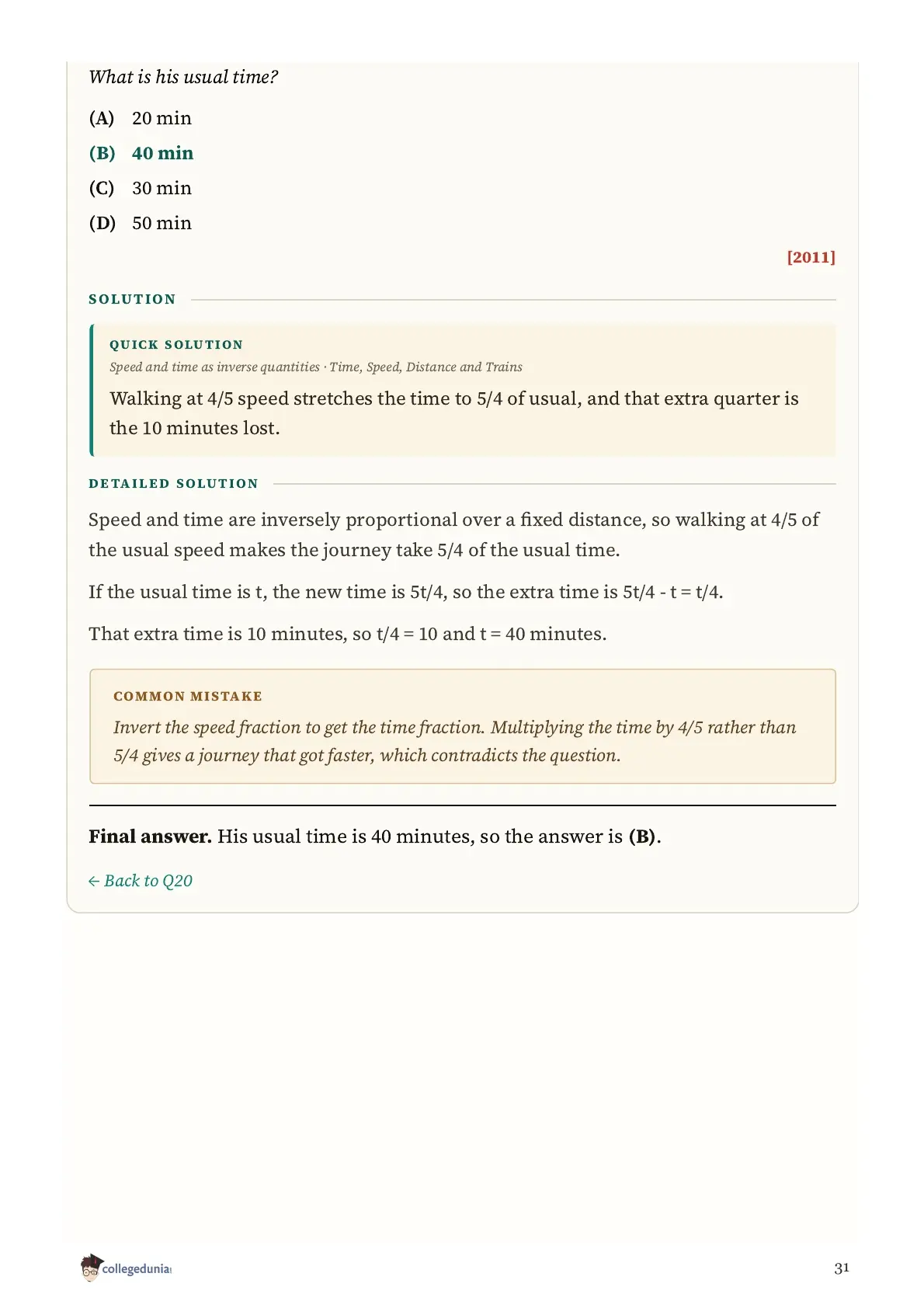
Over a fixed distance, speed and time are inversely proportional, so four-fifths the speed means five-fourths the time. And late and early add together, because they sit on opposite sides of one scheduled time. Where a pair of journeys turns awkward, substituting hours per kilometre for speed usually makes it linear.
When None of the Options Is Right
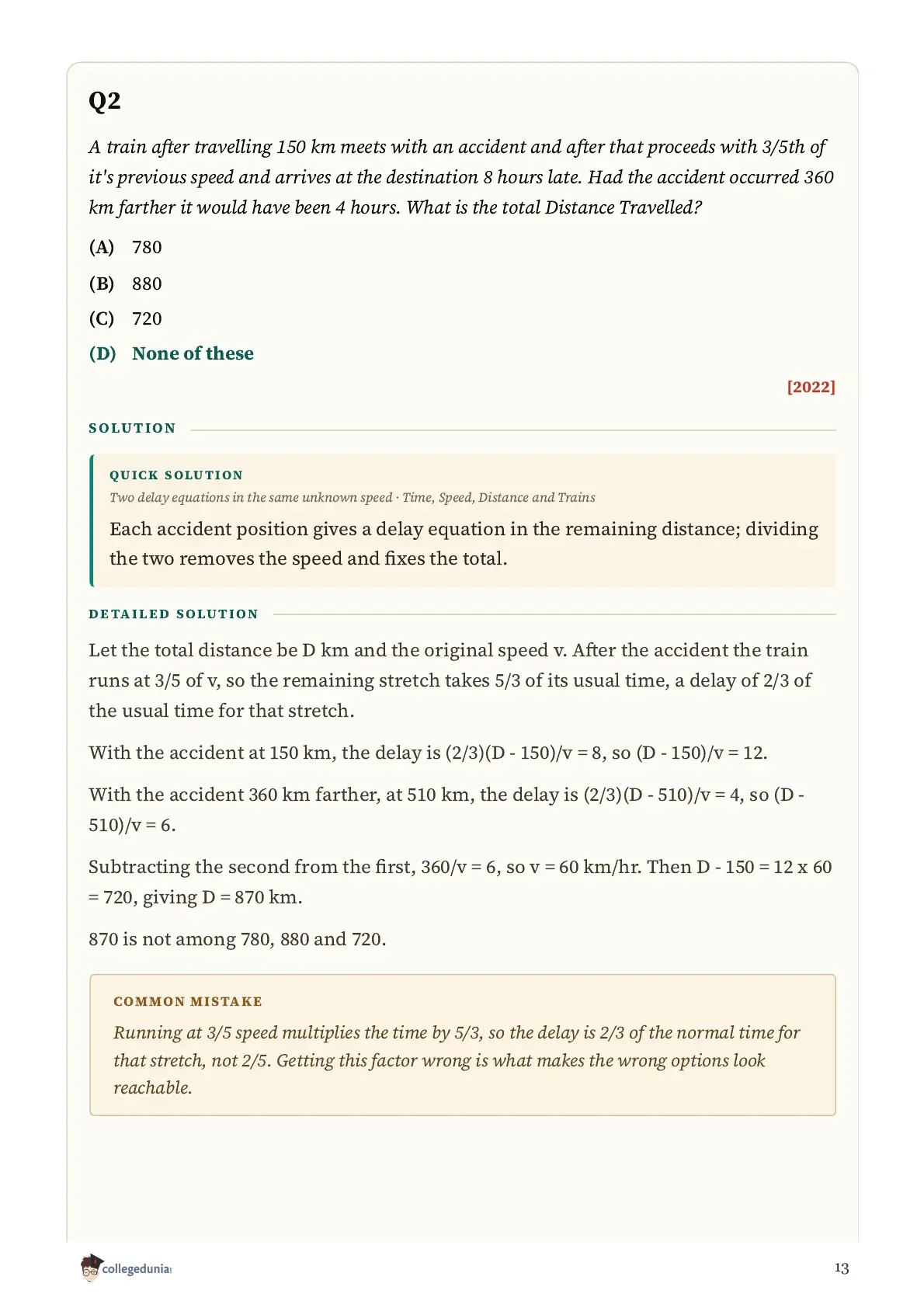
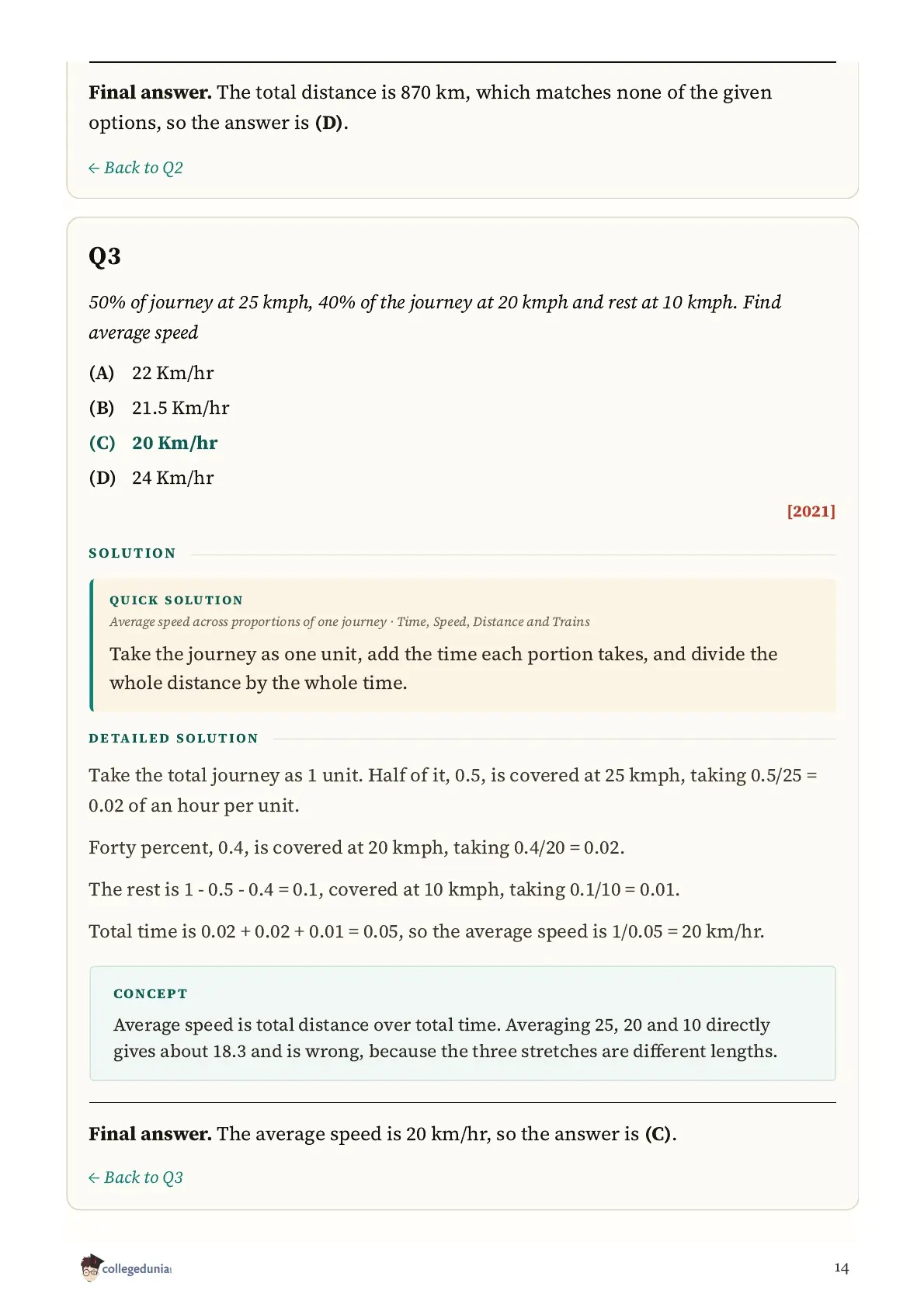
One question resolves to "none of these" and its arithmetic is worth following closely. A train breaks down after 150 km and continues at three-fifths speed, arriving 8 hours late. Had the breakdown happened 360 km farther along, it would have been only 4 hours late.
Running at three-fifths speed multiplies the time by five-thirds, so the delay is two-thirds of the normal running time for the remaining stretch. The two conditions give 870 km, against options of 780, 880 and 720.
Common Mistakes
- Averaging the individual speeds instead of dividing total distance by total time
- Reading "one-third of the remainder" as one-third of the whole journey
- Treating late and early as a difference rather than a sum
- Inverting the wrong way, so four-fifths the speed is taken to give four-fifths the time
- Scaling the combined length of two trains when only one of them grew longer
Two to Solve First
The 2018 question asking which train is further from Chennai. A fast train and a slow train leave opposite ends at the same moment and meet somewhere along the route. The speeds decide where they meet, but at that instant both occupy the same point, so neither is further. It rewards reading the question rather than reaching for a formula.
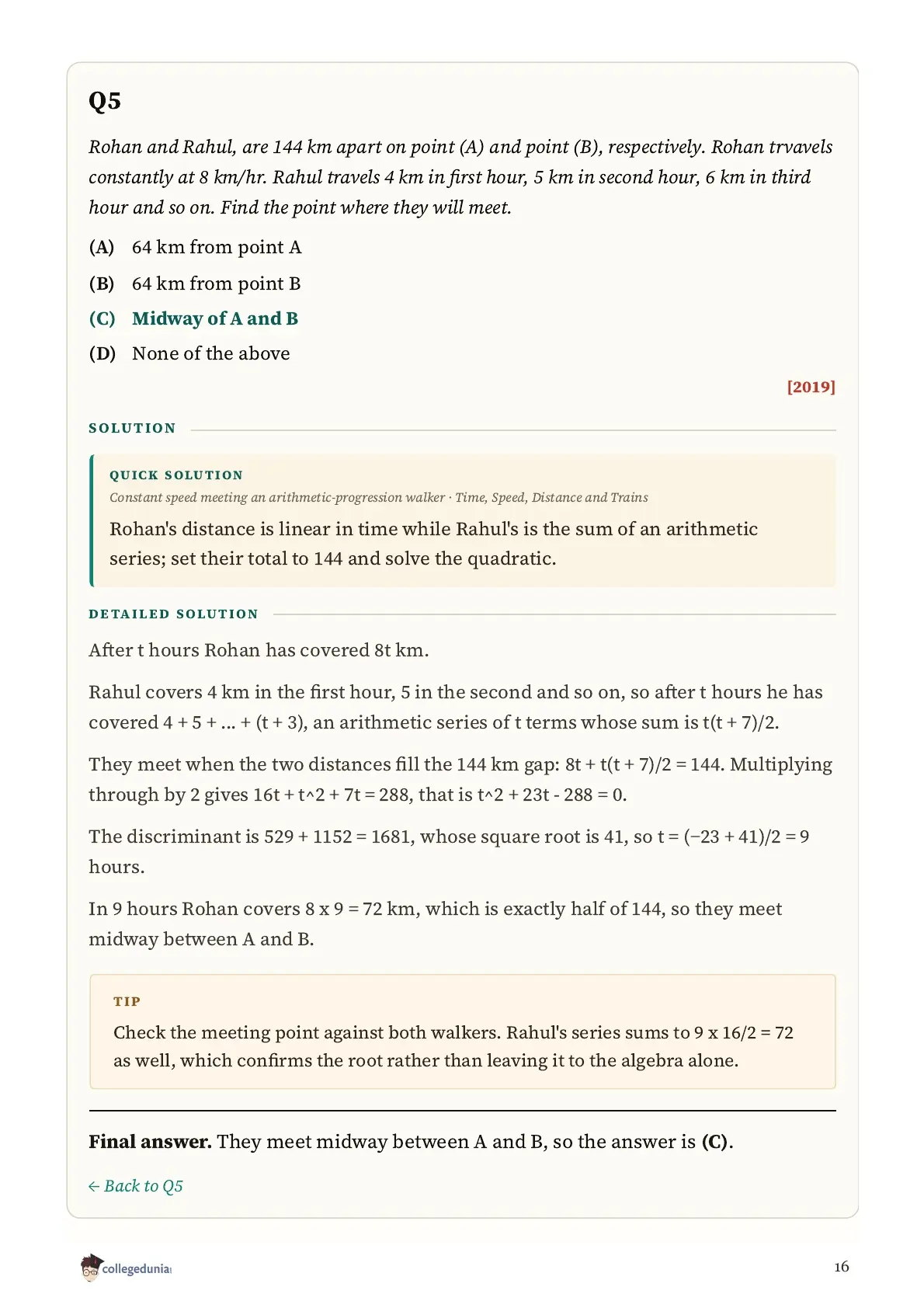
Then the 2019 question pitting a constant walker against an accelerating one, at a steady 8 km/hr against 4 km in the first hour, 5 in the second and so on. Setting the linear distance plus the arithmetic series equal to the 144 km gap gives a quadratic that resolves cleanly at nine hours.
Video Solutions
Source: MBA Pathshala
Using the Answer Key
Attempt the whole set before checking anything, allowing about ninety seconds each. Mark the key in one pass, right or wrong only, then read the solution for every miss and every lucky guess. Each opens with a one-line quick solution you can stop at and retry from.
For the rest of the section, the SNAP Averages, Mixtures and Alligation PYQs and the SNAP Permutations, Combinations and Probability PYQs cover the other repeated quant topics.
SNAP Time, Speed, Distance and Trains PYQ FAQs
Ques. How many time and distance questions come in SNAP?
Ans. Two to four in most years, inside the Quantitative, Data Interpretation and Data Sufficiency section, spread across average speed, trains, boats and races. It is the largest arithmetic topic in the paper.
Ques. Which years does this bank cover?
Ans. 2006 to 2025. The heaviest stretch was 2011 to 2015, which alone accounts for twelve of the twenty-five.
Ques. Does SNAP repeat questions across years?
Ans. Yes, and this bank has a clear example. A 1500 km aeroplane problem appeared in almost identical form in 2013 and 2014. We kept the 2014 version rather than shipping the same working twice, which is a good reason to work older papers.
Ques. Which idea should I fix first?
Ans. That average speed is total distance over total time. Four separate papers test it, and averaging the speeds instead is the single most common way marks are lost in this topic.
Ques. Is this an official SNAP answer key?
Ans. No. Symbiosis does not publish an answer key for SNAP. Every answer here was worked out from the question itself and shown with the full working, so you can check it rather than trust it.
Ques. Can the PDF be downloaded free?
Ans. Yes. All 36 pages can be read on this page and downloaded at no cost.



Comments