



Content Curator
Plant respiration is the process by which cells obtain chemical energy by consuming oxygen and emitting carbon dioxide.
- Respiration is the process where transporting oxygen and carbon dioxide between cells and the external environment.
- The process of respiration requires glucose to start the reactions which convert into energy and produce carbon dioxide and water as by-products.
- All living organisms require energy for survival from a series of chemical reactions called respiration.
- Here, we will have a detailed explanation of plant respiration in roots, stems, and leaves and a discussion of some important questions.
Key Terms: Respiration, Chemical Reactions, Energy, Cells, Carbon Dioxide, Glucose, Aerobic and Anaerobic Respiration, Cellular respiration
Do Plants Breathe?
[Click Here for Sample Questions]
Plants as well need oxygen to perform respiration, which in return gives out carbon dioxide.
- Unlike humans and animals, plants do not have any specialized structures for the exchange of gases.
- However, they do possess stomata (found in leaves) and lenticels (found in stems) that are actively involved in the gaseous exchange.
- Leaves, stems, and plant roots respire at a low pace compared to humans and animals.
- Plants basically function in respiration all through their life as the plant cell needs the energy to survive, but plants breathe differently, through a process called Cellular respiration.
- Plants generate glucose molecules through photosynthesis in this process of cellular respiration, by capturing energy from sunlight and converting it into glucose.
Read More:
Process of Respiration in Plants
The process in which cells get chemical energy by the consumption of oxygen and the release of carbon dioxide is called respiration.
- For respiration, plant cells require oxygen and a means of disposing of carbon dioxide just like animal cells.
- In plants, every part of the plant such as the root, and stem executes respiration as plants do not possess any particular organs like animals for the exchange of gases.
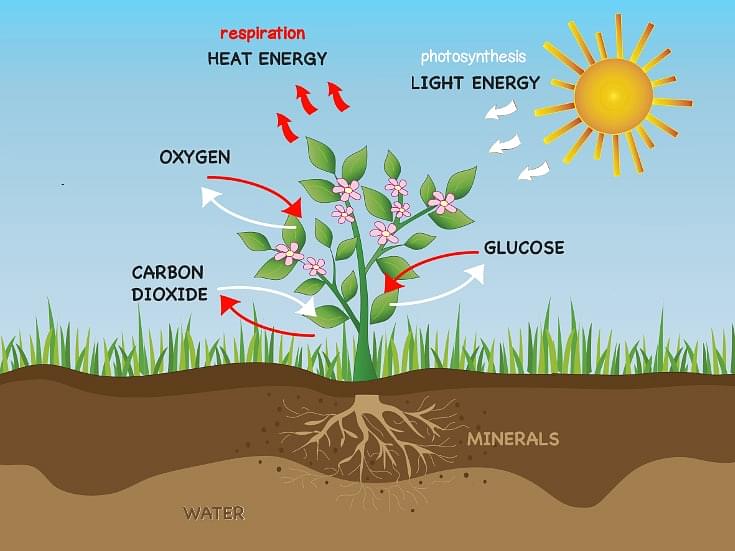
The process of respiration is written in the form of a reaction:
Glucose (C6H12O6) + Oxygen (O2) + → Water (H2O) + Carbon Dioxide with Energy
We can come to the conclusion that the same from the equation above as well respiration uses oxygen to produce carbon dioxide.
Lenticels and stomata perform the function of respiration which carries out the process of gaseous exchange.
Respiration in Roots
[Click Here for Sample Questions]
Respiration occurs with the help of roots in plants. In soil oxygen-containing air is already present in spaces between soil particles.
- This oxygen is then absorbed by the roots with the help of root hair present on the roots.
- The hairs of the roots are in straight contact with the roots.
- Generally, Root hair is a lateral tubular outgrowth of the external epidermal cells of a root.
- The oxygen present around the soil particles diffuses into the root hairs.
- From root hairs, oxygen is transferred to all the parts of the roots for respiration.
- During respiration, oxygen is converted into carbon dioxide gas which is spread in the opposite direction i.e. out of the roots by the same root hairs which completes the respiration process.
Respiration in Stems
[Click Here for Sample Questions]
In plants taking herbaceous stems exchange of gases occurs through stomata and the carbon dioxide CO2 formed during the process gets diffused into the air with the help of stomata.
- In plants containing hard and woody stems, the exchange of gases occurs through lenticels.
- Lenticels are loosely packed dead cells that are present as tiny pores on the bark of woody plants.
- These allow oxygen to pass to the intercellular spaces of the inside of tissues and carbon dioxide (CO2) to be liberated into the atmosphere this thing completes the process of respiration in stems.
Respiration in Leaves
[Click Here for Sample Questions]
The exchange of respiratory gases occurs through micropores called stomata.
- The stomata are present in large numbers on the lower side of the leaves of the plant.
- Every stoma has a tiny pore at its center which is enclosed by two kidney-shaped cells known as guard cells.
- When the stoma opens the exchange of gases occurs between the atmosphere and the interior of the leaf this method is known as respiration in leaves or the process of this completes respiration in leaves.
Aerobic Respiration
[Click Here for Sample Questions]
The respiration that occurs in the presence of air/ oxygen is called aerobic respiration.
- In aerobic respiration, the utilization of oxygen to break chemical bonds in glucose to liberate energy in high volumes.
- It is the main source of energy for plants.
- Animals and plants that use oxygen for respiration are called aerobes.
- Most animals have aerobic-type respiration.
- The organisms that gain energy by aerobic respiration cannot exist without oxygen.
Aerobic respiration takes more energy due to the complete breaking of glucose that takes place during respiration with the use of oxygen.
C6H12O6 +6O2 = 6CO2 + 6H2O + Energy
Anaerobic Respiration and Fermentation
[Click Here for Sample Questions]
The word anaerobic means without oxygen.
- The respiration that occurs without the presence of oxygen is known as anaerobic respiration.
- In anaerobic respiration, the incomplete oxidation of food substances is made by carbon dioxide and alcohol.
- This process is called intermolecular respiration.
- Anaerobic respiration occurs in organisms like yeast, certain bacteria, and parasitic worms.
- The animals and plants that can exist and gain energy in the lack of oxygen are called Anaerobic.
Glucose = Alcohol + CO2 + (Energy)
Yeast is known to be a single-celled fungus a single cell signifies the whole organism. A small volume of energy is released in this process. Yeast anaerobic ally respires and all through this process, yeast transforms glucose into alcohol. The process is also referred to as the fermentation.
Difference between Photosynthesis and Respiration
[Click Here for Sample Questions]
| Photosynthesis | Respiration |
|---|---|
| This process is common to all green plants containing chlorophyll pigments. | This process that is common to all living things, including plants, animals, birds, etc. |
| Synthesis of food takes place | Oxidation of food takes place |
| Energy is stored during photosynthesis | Energy is released during respiration |
| The process is anabolic. | The process is catabolic. |
| Cytochrome is required in photosynthesis. | Cytochrome is required |
Also Read: Aerobic and Anaerobic Respiration
Things to Remember
[Click Here for Sample Questions]
- The process of respiration required glucose to start the reactions which convert into energy and produce carbon dioxide and water as by-products.
- Lenticels and stomata (exist in stems and leaves individually) perform the function of respiration which carries out the gaseous exchange.
- During respiration, oxygen is converted into carbon dioxide gas which is spread in the opposite direction i.e. out of the roots by the same root hairs which completes the respiration process.
- The respiration that occurs in the presence of air/ oxygen is called aerobic respiration.
- The word anaerobic means without oxygen. The respiration that occurs without the presence of oxygen is known as anaerobic respiration.
Also Read: Difference between Photosynthesis and Respiration
Sample Questions
Ques. What is respiration? How respiration occurs in plants? (3 Marks)
Ans. The process in which cells get chemical energy by the consumption of oxygen and the release of carbon dioxide is called respiration.
- In plants, every part of the plant such as the root, and stem executes respiration as plants do not possess any particular organs like animals for the exchange of gases.
- The process of respiration is written in the form of a reaction:
Glucose (C6H12O6) + Oxygen (O2) + → Water (H2O) + Carbon Dioxide with Energy
- We can come to the conclusion that the same from the equation above as well respiration uses oxygen to produce carbon dioxide.
Ques. How respiration occurs in plants' roots? (3 Marks)
Ans. In soil oxygen-containing air is already present in spaces between soil particles.
- This oxygen is then absorbed by the roots with the help of root hair present on the roots.
- The hairs of the roots are in straight contact with the roots. Generally, Root hair is a lateral tubular outgrowth of the external epidermal cells of a root.
- The oxygen present around the soil particles diffuses into the root hairs.
- During respiration, oxygen is converted into carbon dioxide gas which is spread in the opposite direction i.e. out of the roots by the same root hairs which completes the respiration process.
Ques. Explain the process respiration occurs in plant stems (3 Marks)
Ans. In plants containing hard and woody stems, the exchange of gases occurs through lenticels.
- Lenticels are loosely packed dead cells that are present as tiny pores on the bark of woody plants.
- These allow oxygen to pass to the intercellular spaces of the inside of tissues and carbon dioxide (CO2) to be liberated into the atmosphere this thing completes the process of respiration in stems.
Ques. Explain about respiration occurs in the leaves of plants (3 Marks)
Ans. The exchange of respiratory gases occurs through micropores called stomata.
- The stomata are present in large numbers on the lower side of the leaves of the plant.
- Every stoma has a tiny pore at its center which is enclosed by two kidney-shaped cells known as guard cells.
- When the stoma opens the exchange of gases occurs between the atmosphere and the interior of the leaf this method is known as respiration in leaves or the process of this completes respiration in leaves.
Ques. Explain aerobic respiration in plants (3 Marks)
Ans. In aerobic respiration, the utilization of oxygen to break chemical bonds in glucose to liberate energy in high volumes.
- It is the main source of energy for plants.
- The organisms that gain energy by aerobic respiration cannot exist without oxygen. Aerobic respiration takes more energy due to the complete breaking of glucose that takes place during respiration with the use of oxygen.
C6H12O6 +6O2 = 6CO2 + 6H2O + Energy
Ques. Explain anaerobic respiration and its relation to fermentation. (3 Marks)
Ans. The respiration that occurs without the presence of oxygen is known as anaerobic respiration. In anaerobic respiration, the incomplete oxidation of food substances is made by carbon dioxide and alcohol.
- This process is called intermolecular respiration. The animals and plants that can exist and gain energy in the lack of oxygen are called Anaerobic.
Glucose = Alcohol + CO2 + (Energy)
- Yeast is known to be a single-celled fungus a single cell signifies the whole organism.4.
- A small volume of energy is released in this process. Yeast anaerobic ally respires and all through this process, yeast transforms glucose into alcohol. The process is also called fermentation.
Ques. Write the difference between photosynthesis and respiration. (5 Marks)
Ans. The difference between photosynthesis and respiration is as follows:
| Photosynthesis | Respiration |
|---|---|
| This process is common to all green plants containing chlorophyll pigments. | This process that is common to all living things, including plants, animals, birds, etc. |
| Synthesis of food takes place | Oxidation of food takes place |
| Energy is stored during photosynthesis | Energy is released during respiration |
| The process is anabolic. | The process is catabolic. |
| Cytochrome is required in photosynthesis. | Cytochrome is required |
| The process is an Endothermal. | Exothermal process. |
Check-Out:



Comments