



Education Journalist | Study Abroad Lead
Tracheids and vessels play a crucial role in the conduction of water in various kinds of plants. Tracheids and vessels are the types of cells found in xylem tissue which are responsible for the provision of essential elements such as water and minerals to the plants. Tracheids and vessels are present in both primary as well as secondary Xylem. Both tracheids and vessels are tracheary elements. Also, tracheids and vessels have a tubular structure. Tracheids and vessel cells die at the stage of maturity.
Also Read: Difference between Xylem and Phloem
Key Terms: Tracheids, Vessels, Tracheary elements, Xylem, tissue, water conduction, angiosperms, vascular tissue.
Tracheids
[Click Here for Sample Questions]
Tracheids are the type of cells which provide water and minerals via xylem in vascular plants. Tracheids are the major conductive element in gymnosperms and ferns. Whereas, tracheids are the secondary conductive element in angiosperms. Tracheids have a high surface to volume ratio and tapered ends. Tracheids have a well-defined structure. Moreover, tracheids provide mechanical strength to the plant.
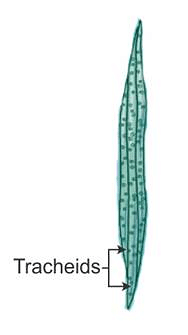
Tracheids
Read More:
Functions of Tracheids
[Click Here for Sample Questions]
- Tracheids main function is to supply the water from the roots to other parts of the plant. It means tracheids are responsible for the upward conduction of water in plants.
- Tracheids dissolve the minerals in the vascular plants.
- Tracheids are the only element that transports water and minerals in conifers and ferns.
- The water and minerals move from tracheid to tracheid through pits. Also, pits prevent the passage of damaging air bubbles.
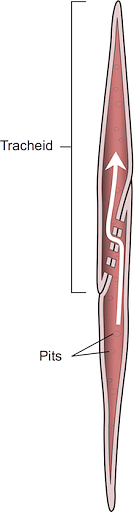
Example of Tracheids with pits
Read More:
Vessels
[Click Here for Sample Questions]
Vessels are the second type of cells with thick walls in Xylem tissue which are responsible for supplying water and minerals to the plants. Vessels are small and have transverse as well as diagonal ends. Vessels are only present in angiosperms and act as the primary element in transportation. Vessels are absent in gymnosperms and ferns.
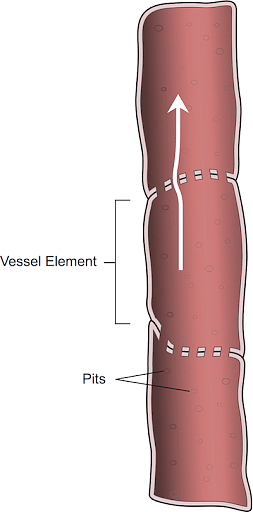
Vessels in Plant
Read More: Aestivation in Plants
Functions of Vessels
[Click Here for Sample Questions]
- Vessels provide water as well as minerals from the root of the plant to the leaves and its other parts.
- Vessels contain pits which have both ends open. Thus, vessels establish continuous tubular vessels through connecting neighbouring cells.
- In vessels, water flows through the perforations.
- Vessels also provide mechanical support to the plants.
Major Difference in Tracheids and Vessels
[Click Here for Sample Questions]
Tracheids and vessels both are conductive elements in Xylem tissue in plants. Here is the list of differences in tracheids and vessels:
| S.No. | Factors | Tracheids | Vessels |
|---|---|---|---|
| 1. | Definition | Tracheids are the tubular cells present in the xylem in vascular plants. | Vessels are the elongated cells which are responsible for the conduction of water and minerals in the plants, especially in flowering plants. |
| 2. | Origin | Tracheids are originated from a single cell | Longitudinal file of cells made Vessels. |
| 3. | Structure | Tracheids are narrow in shape. | Vessels are wide in shape |
| 4. | Presence | Tracheids are present in all vascular plants | Vessels are present in angiosperms (i.e flowering plants) |
| 5. | Length of Cell | Tracheids have length of 1 mm. | Vessels have a length of 10 cm. |
| 6. | Types of Cells | Tracheids are imperforated cells | Vessels are perforated cells. |
| 7. | Thickness of Cell Walls | Tracheids have thin cell walls | Vessels have highly thickened cell walls. |
| 8. | Connection | Tracheids are connected laterally. | Vessels are connected end to end. |
| 9. | Lumen | Tracheids have narrow lumen | Vessels have wide lumen |
| 10. | Structure of End walls | Tracheids have tapered end walls. | Vessels have diagonal or transverse end walls. |
| 11. | Pits | Tracheids have less large number of pits | Vessels have large number of small pits |
| 12. | Cross-Section | Cross-section of tracheids is polygonal | Cross-section of vessels is circular |
| 13. | Major-Conductive element | Tracheids are the major conductive element in gymnosperms and ferns | Vessels are the major conductive element in angiosperms or flowering plants. |
| 14. | Efficiency | Tracheids are less efficient in the conduction of water | Vessels are more efficient and specialized in the conduction of water and minerals |
| 15. | Surface to Volume Ratio | In Tracheids, surface to volume ratio is high | In Vessels, the surface to volume ratio is low. |
| 16. | Air Embolism | Tracheids help in preventing air embolism. | Vessels do not help in the prevention of air embolism |
| 17. | Examples | Wood, conifers, pines etc. | Rose, mango tree, mustard etc. |

Read More:
Similarities in Tracheids and Vessels
[Click Here for Sample Questions]
- Tracheids and Vessels both are responsible for the conduction of water in vascular plants via a Xylem tissue.
- Tracheids and vessels are tubular in shape.
- Tracheids and vessels provide mechanical strength to the plant.
- Tracheids and vessels die at the stage of maturity.
- Primary and secondary Xylem both contain tracheids and vessels in vascular plants
- In Tracheids and vessels, conduction of water is in an upward direction.
Things to Remember
- Tracheids and vessels both are essential for the conduction of water in Xylem tissue in vascular plants.
- Tracheids are the long and narrow cells present in Xylem tissue in plants.
- Vessels are the elongated and wide cells present in Xylem tissue in plants.
- Tracheids and vessels both give mechanical support to the plants.
- Tracheids and vessels both provide water and minerals to the plants from the roots to the other parts of the plant.
- Tracheids have one open end sidewall while vessels have both ends open side walls.
- Tracheids help in the prevention of air bubbles however vessels do not help in preventing air bubbles in plants.
Sample Questions
Ques. What do you mean by Xylem in plants? [2 marks]
Ans. Xylem tissue is the type of transport tissue which is responsible for the conduction of water, nutrients and minerals in vascular plants. Xylem tissue provides the water and minerals to the plants from the roots to the other parts of the plants with the help of tracheids and vessels. Moreover, Xylem tissue provides mechanical support to the plants. Xylem tissue is present in all vascular plants.
For example, angiosperms(flowering plants), ferns, clubmosses, horsetails, gymnosperms etc.
Ques. What are the functions of Tracheids and Vessels? [2 marks]
Ans. Tracheids main function is to supply the water from the roots to other parts of the plant. It means tracheids are responsible for the upward conduction of water in plants.
Vessels provide water as well as minerals from the root of the plant to the leaves and its other parts. Vessels contain pits which have both ends open. Thus, vessels establish continuous tubular vessels through connecting neighbouring cells.
Ques. What are the differences between Tracheids and Sieve tubes? [2 marks]
Ans.
| Tracheids | Sieve Tubes |
|---|---|
| Tracheids are the tubular cells present in the xylem. | Sieve Tubes are specialized cells present in phloem. |
| They transport water from the roots to other parts of the plant. | They transport food (glucose) produced during photosynthesis to other parts of the plant. |
Ques. What do you understand from the term tracheids? [2 marks]
Ans. Tracheids are the narrow and long cells which are present in Xylem tissue. Tracheids are present in all vascular plants. Tracheids provide the water and minerals from the root of the plant to the other parts of the plant. Tracheids are less efficient in the conduction of water due to a lack of perforation. In tracheids water flows through the pits. For example Wood, conifers, pines etc.
Ques. What are the shapes of Tracheids and Vessels? [2 marks]
Ans. Tracheids are the long and narrow cells present in Xylem tissue in plants. Vessels are the elongated and wide cells present in Xylem tissue in plants.
Ques. What do you mean by Vessels in plants? [2 marks]
Ans. Vessels are the wide and elongated cells which are present in Xylem tissue. Vessels are present in angiosperms or flowering plants. Vessels provide the water and dissolved minerals from the roots to the leaves of the plants. Vessels are more efficient and specialized in the conduction of water. Vessels have both the ends open and they form continuous tubular cells with the help of neighbouring cells.
For example, rose, mango tree, mustard etc.
Ques. What are tracheary elements in Xylem tissue in plants? Explain the principle tracheary element. [5 marks]
Ans. Tracheary elements are those elements which are responsible for the conduction of water and other dissolved minerals to the plants. Tracheary elements are the major conductive element in the Xylem tissue. These are responsible for the conduction of water and minerals from the roots to the leaves. It means conduction takes place in the upward direction. The major components of Xylem tissue comprises many elements such as xylem parenchyma, xylem fibres, tracheids and vessels. Here, we will explain the principle tracheary element of Xylem tissue:
- Tracheids: Tracheids are tubular in shape. The principal function of tracheids is to provide water and minerals from the roots to the other parts of the plant. Tracheids also provide mechanical strength to the stem of the plant. Moreover, tracheids are helpful in preventing the formation of air bubbles.
For example SoftWood, pines etc.
- Vessels: Vessels are the series of cells arranged in a well-mannered way to the rapid flow of water and minerals through xylem tissue in the vascular plants. Vessels are highly water efficient. Vessels have a wide lumen and also contain a large number of small pits.
For example Hardwood, mango tree, angiosperms etc.
Ques. What are the key difference in the structure of tracheids and vessels? [3 marks]
Ans. There are many differences between the tracheids and vessels on the basis of their origin, functionality, conductivity, structure and many more. But, here we will discuss the major differences in tracheids and vessels from the structure point of view:
| S.No. | Tracheids | Vessels |
|---|---|---|
| 1. | Tracheids have a narrow lumen | Vessels have a wide lumen |
| 2. | Tracheids cells have a length of almost 1mm. | Vessels cells have a length of 10 cm |
| 3. | Tracheids have a high surface to volume ratio | Vessels have a low surface to volume ratio |
| 4. | Tracheids have tapered end walls | Vessels have diagonal or transverse end walls |
| 5. | Tracheids have one end is open is sidewalls | Vessels have both open ends in ide walls |
| 6. | Tracheids have thin cell walls | Vessels have thick cell walls |
| 7. | Tracheids have a polygonal cross-section | Vessels have a circular cross-section |
Ques. What are the similarities between tracheids and vessels? [2 marks]
Ans. Apart from all many differences, there are some similarities in tracheids and vessels which are mentioned below:
- Tracheids and Vessels both are responsible for the conduction of water in vascular plants via a Xylem tissue.
- Tracheids and vessels are tubular in shape.
- Tracheids and vessels provide mechanical strength to the plant.
- Tracheids and vessels die at the stage of maturity.
- Primary and secondary Xylem both contain tracheids and vessels in vascular plants
- In Tracheids and vessels, the conduction of water is in an upward direction.
Ques. Write the difference between Xylem and Phloem? [3 marks]
Ans. There are many difference between Xylem and Phloem which are mentioned below:
| S.No. | Xylem | Phloem |
|---|---|---|
| 1. | Xylem is the kind of complex tissue present in plants. | Phloem is the kind of living tissue present in plants |
| 2. | Xylem is responsible for the conduction of water and minerals from the roots to the other parts of the vascular plants | Phloem is responsible for the conduction of food and other organic materials to the plants |
| 3. | Xylem has a number of dead cells | Phloem has only one dead cells that is fibers |
| 4. | Xylem has only one living cell that is parenchyma | Phloem has number of living cells |
| 5. | Xylem is present in the centre of the vascular bundle and deep in the plant | In the vascular bundle, Phloem is present on the outer side. |
| 6. | Xylem has unidirectional movement | Phloem has bidirectional movement |
| 7. | Xylem does provide mechanical support to the plant | Phloem does not provide mechanical strength to the plant |
| 8. | Xylem has tracheary elements are dead cells | Phloem has tracheary elements are living cells |
Ques. Why are Vessels more efficient than tracheids in the conduction of water in Xylem tissues? [2 marks]
Ans. Vessels are elongated cells which contain wide lumen. Vessels have strongly lignified cell walls.Also, the sidewall of vessels have a large number of small pits which are open at both the ends. These pits are connected together with the neighbouring pits to form a continuous tubular tube so that water and other minerals flow rapidly. On the other hand, tracheids also have pits but their pits have only one side open which cannot attach with other pits and tubular tube formation is not possible. Due to this, tracheids are less efficient than vessels in Xylem tissue.
Read More:



Comments