



Content Curator
Glass is a transparent amorphous solid, non-crystalline in nature. When heated up to a threshold temperature it changes to a molten state. Glass can be turned into the desired shape when melted, and thus is used for making decorative jars, articles, marbles. mirrors. Apart from this, glass is also used for making laboratory equipment. It can also acquire various kinds of colours. In this experiment, we will learn how to draw glass in a jet shape.
| Table of Content |
Key Takeaways: Glass, Heating, Jet, Threshold temperature, Softening point, Soda-lime glass.
What is Glass Jet
[Click Here for Sample Questions]
Glass jets are used while performing many experiments in laboratories. A glass rod can be drawn into a jet by softening it up to a particular temperature. The glass jet made in this experiment can thus be used for the same purpose.
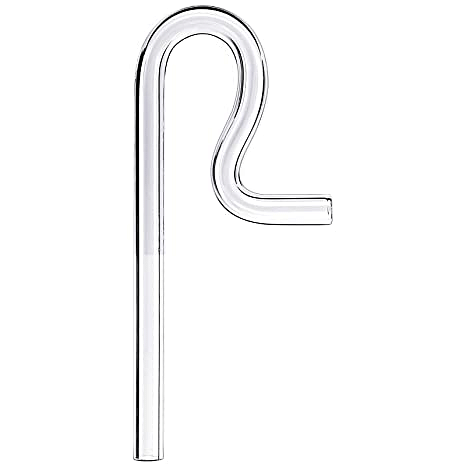
Glass Jet
Read More:
| Related Articles | ||
|---|---|---|
| Steam Distillation | Cis-Trans Isomers | Change of State |
Aim
[Click Here for Sample Questions]
To draw a glass tube into a jet by the process of heating.
Requirements
[Click Here for Sample Questions]
- Glass tube 20 cm
- Bunsen burner.
- Sandpaper.
- Triangular file.
Procedure
[Click Here for Sample Questions]
- Take the glass rod given I.e of 20 cm, for drawing the jet.
- Now, with the triangular file’s help, cut the glass tube.
- Now with the help of the burner heat the tube up in the hottest portion of the flame by holding both sides of the rod.
- Now keep heating the portion until it turns red hot and softens up, and rotate it slowly.
- Once turned soft as required, remove the tube from the flame.
- Now pull the ends apart and gently keep stretching them until the middle portion becomes narrow and swiftly pull them apart to form a fine jet.
- Now remove the formed tube and cut it from the middle.
- Now with the help of sandpaper make the edges of the formed jet smooth and fine.
- Rubbing with sandpaper will polish the edges and make it appear well furnished.
- Now take the newly formed jets made out of the glass rod, hence they are ready.

Procedure
Read More:
| Related Topics | ||
|---|---|---|
| Organic Solvent | Classification of Organic Compounds | Filtration |
Precautions While Performing The Experiment
[Click Here for Sample Questions]
- Perform Experiments under expert surveillance.
- While handling the burner and glass rod handle with care.
- Wear safety gear while in the lab
- Keep a check that fire extinguishers and other safety stuff are present in the lab.
- Stretch the rod slowly and steadily so that the jet is formed uniformly.
- Keep a safe distance from the burner.
- Don’t stretch the rod too fast, else it will leave the jets ununiformed.
- Touching the red hot portion can cause injury, hence be careful while experimenting.
Result
[Click Here for Sample Questions]
Heating the glass rod up to the desired state under a certain temperature turns the glass soft and thus the rod can be bent and jets can be formed with it.
Read More:
| Relevant Articles | ||
|---|---|---|
| Tollen’s Test | Nucleophilic Addition Reaction | Etard Reaction |
Things to Remember
- Glass is a transparent amorphous solid, non-crystalline in nature.
- Glass can be bent and changed into any desired shape by heating it at extremely high temperatures.
- Glass jet is a laboratory instrument used while performing many experiments in the chemistry labs.
Read More:
| Relevant Topics | ||
|---|---|---|
| Uses of Carboxylic Acid | Cannizzaro Reaction | Aldehydes |
Sample Questions
Ques. What is the most preferred type of glass which can be used in this experiment? (1 mark)
Ans. The most preferred glass for the experiment is soda-lime glass.
Ques. Why is sandpaper required to rub the freshly cut edges? (1 mark)
Ans. The experiments involve the use of glass and cutting it into two pieces and thus rubbing the ends with sandpaper once can make the edges blunt and avoid the risk of injuries.
Ques. Is cooling an important aspect involved in the experiment? (1 mark)
Ans. Yes, after the jets are formed from the glass rod by the process of heating and melting, cooling should be done immediately to retain the shape of the jet formed and avoid any defect.
Ques. What is the preferred diameter or length of the tube that should be chosen? (1 mark)
Ans. The maximum preferred size is 20cm, since the larger the diameter/length the longer it will stretch and can cause discomfort.
Ques. What is the softening point? (1 mark)
Ans. Softening point is the temperature at which the glass moves under its weight and flows easily.
Ques. What is the softening point of soda-lime glass? (1 mark)
Ans. The softening point of soda-lime glass is 726 degrees Celsius.
Ques. Can a knife be used instead of a file? (1 mark)
Ans. No, the knife cannot be used as it will slip over the glass.
Ques. Why should we keep rotating the glass rod while heating? (1 mark)
Ans. Because it leads to smooth heating and will make it uniform.
Ques. Why should the hot tube not be placed on the tabletop? (1 mark)
Ans. Since the surface of the table may be cold and a sudden drop in the temperature might result in the breaking of the tube.
Ques. What is the composition of soda glass? (1 mark)
Ans. Na2SiO3 • CaSiO3 • 4SiO2.
Check-Out:



Comments