



Content Curator
Electron mass is the mass of a stationary electron. It is also known as the invariant mass of an electron. It is a fundamental constant of physics. The amount of electron mass is also known as the constant weight of the electron. The electron mass is denoted by the symbol ‘me’. Its value can be expressed in various units like amu, eV etc.
Electron Mass (me) = 9.109 \(\times\) 10-31 kg
| Table of Content |
Key Terms: Electron Mass, Rest Mass, Special Theory of Relativity, Rydberg Constant, Proton
Electron Mass Value
[Click Here for Sample Questions]
According to the special theory of relativity, the mass of an object varies according to the frame of reference. Therefore, the electron mass can also be stated as rest mass. It has energy-equivalent of approximately 8.187 \(\times\) 10-14 Joules. Electrons weigh 0 ounces (atomic mass unit) around the nucleus and have a coefficient of -1.

An electron is a subatomic particle having a negative charge. The mass of an electron is approximately \(\frac{1}{1836}\)th of the mass of proton. The practical measurements in Physics are usually done on moving electrons. If the electron is moving at a relativistic velocity, the total energy E of the electron is given by,
E = \(\gamma\)mec2
Read More:
| Related Concepts | ||
|---|---|---|
| Nuclear Physics | Radioactive Decay Formula | Nuclear Binding Energy |
| Size of the Nucleus | Unit of Radioactivity | Nuclei |
Rest Mass of Electron
[Click Here for Previous Year Questions]
The rest mass of an electron can be calculated through spectroscopic measurement and Rydberg Constant. The formula of the electron mass is as follows:
me = \(\frac{2R∞h}{c\alpha^2}\)
where, me = rest mass of electron
h = Planck’s constant
c = velocity of light in vacuum
R∞ = Rydberg constant
\(\alpha\) = fine structure constant
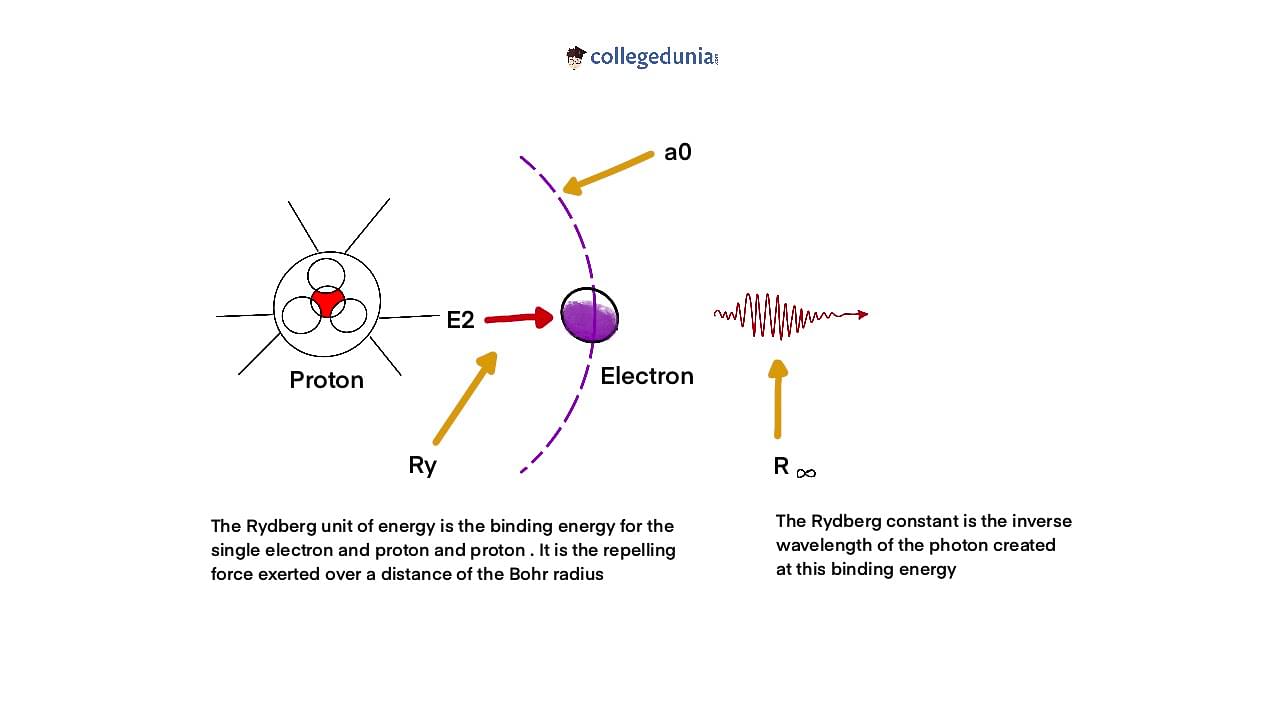
Rest Mass of Electron
The values of electron mass in different units is provided below in the table:
| Units | Mass of Electron |
|---|---|
| kg | 9.10938356 (11) × 10−31 |
| grams | 9.10938356 (11) × 10−28 |
| amu | 5.48579909070 (16) × 10−4 |
| ev | 0.5109989461 (31) |
Determination of Charge to Mass Ratio of Electrons
[Click Here for Sample Questions]
The discovery of electrons dates back to the 19th century when J.J Thomson proposed the Thomson’s Atomic Model. After the electrons were discovered, he conducted an experiment to calculate the charge and mass of the electrons. The charge to mass ratio of electron is calculated by,
e/m = 1.758820 × 10¹¹ C/kg
where, m = mass of electron = 9.10938356 × 10⁻³¹ kg
e = charge of the electron = 1.602 × 10⁻¹⁹ coulombs
Experimental Set Up for the Determination of Charge to Mass Ratio
J.J Thomson carried out a discharge tube experiment in which he observed that the particles of the cathode shows deviation from their path. The extent of their deviation depends upon different parameters given below:
- The particles having higher magnitude of the charge experienced more interaction with the electric and magnetic field and thus showed greater deflection.
- The particles with lower mass also experienced greater deflection. Hence, deflection is inversely proportional to the mass of the electron.
- The deflection shown by the particles is directly proportional to the strength of electric and magnetic field.

Experimental Set Up for Determination of Charge to Mass Ratio of Electrons
Things to Remember
- The electron mass is the mass of a stationary electron or rest mass of an electron.
- Higher magnitude of the charge on the particle implies greater interaction with the electric field. This eventually causes higher deflection.
- Deflection of electrons from their original path increases with increase in voltage across the electrodes or strength of the magnetic field.
- The charge to mass ratio of the electrons was determined by conducting accurate measurements on the amount of deflections observed by the electrons in the electric field and magnetic field.
Read More:
| Related Concepts | ||
|---|---|---|
| Nuclear Force | Alpha Decay | Mass Energy Equivalence |
| Binding Energy Formula | Radioactivity | Beta Decay |
| Ncert Solutions of Chapter 13 Nuclei | Nuclei MCQ | Nuclei Important Questions |
Previous Year QuestionsSome previous year questions related to the concept of electrons are provided below:
|
Sample Questions
Ques. Derive the value of mass of an electron in grams? (1 Mark)
Ans. The mass of electrons in kg 9.1 × 10⁻³¹ kg. since 1 kg = 1000 g therefore, the mass of electrons in grams is 9.1 × 10⁻²⁸ g.
Ques. Are protons and electrons of the same weight? (1 Marks)
Ans. Electrons are a type of subatomic particle that is negatively charged. Protons and neutrons have the same weight as electrons, but both are much larger (about 2,000 times as big as electrons).
Ques. What is the size of a single proton? (1 Mark)
Ans. A proton is a stable subatomic particle with a fine charge equivalent to that of an electron and a resting mass of 1.67262 1027 kg, or 1,836 times the size of an electron.
Ques. What is meant by electron transition? (1 Mark)
Ans. Electron transition refers to the jumping of the electron from one energy level to the other.
Ques. Where do protons get their weight? (2 Marks)
Ans. These particles are made up of three quarks that are bound together by gluons, particles that move high in energy, and move at an astonishing speed. The number of protons and neutrons is determined by the force of this interaction between quarks and gluons.
Ques. What is an electron? (2 Marks)
Ans. Electrons are the negatively charged subatomic particles. It can be free or attached to atoms. The electron energy levels in atoms are expressed by circular shells of various radii. Electricity charges per unit are defined as charges per single electron.
Ques. Derive the properties of Electrons. (3 Marks)
Ans. Every matter consists of atoms which contain protons, neutrons, electrons. Electrons are negatively charged particle that contains following properties:
- It spins around the nucleus like planets around the sun.
- The rest mass of an electron is 9.1 × 10⁻³¹ kg or 5.489 × 10⁻⁴ amu.
Ques. Which experiment led to the discovery of electrons and how? (3 Marks)
Ans. The cathode ray discharge tube experiment performed by J.J. Thomson led to the discovery of negatively charged particles called electrons.
A cathode ray tube consists of two thin pieces of metals called electrodes sealed inside a glass tube with sealed ends. The glass tube is attached to a vacuum pump and the pressure inside the tube is reduced to 0.01mm. When fairly high voltage (10,000 V) is applied across the electrodes, invisible rays are emitted from the cathode called cathode rays. Analysis of these rays led to the discovery of electrons.
Ques. What will be the mass of an electron moving with the velocity of light? (3 Marks)
Ans. The mass of a particle moving with the velocity (v) is given by,
m = \(\frac{m}{\sqrt{1-(v/c})^2}\)
me = \(\frac{m_e}{\sqrt{1-(c/c})^2}\) = 1/0 = ∞
Ques. Calculate the ratio between the wavelength of an electron and proton, if the proton is moving at half the velocity of the electron. (5 Marks)
Ans. Mass of proton = 1.67 × 10⁻²⁷kg
Mass of electron = 9.11 × 10⁻²⁸ g
Using De-Broglie Equation, \(\lambda\) = h / mv
Wavelength of electron = 6.625 × 10⁻³⁴ / 9.11 × 10⁻³¹
Wavelength of proton = 6.625 × 10⁻³⁴ / 1.67 × 10-27 × 0.5
Therefore, the ratio is 9.2455 × 10⁻² m.
Ques. Calculate the mass of a proton if the charge to mass ratio of an electron is 1.758820 × 10¹¹ C Kg-1. (5 Marks)
Ans. Here, e/m = 1.758820 × 10¹¹ C Kg-1
e = 1.602 × 10⁻¹⁹ C and mass of electron = 9.1 × 10⁻³¹ kg
We know, mass of proton is 1837 times greater than the mass of the electron.
So, mass of proton = 1837 × 9.1 × 10-31 Kg = 1.67 × 10⁻²⁷ Kg
For Latest Updates on Upcoming Board Exams, Click Here: https://t.me/class_10_12_board_updates
Check-Out:



Comments