



Content Curator
Living organisms require various nutrients for its survival. Calcium is one of those essential nutrients which are required by all living organisms including humans for several physiological processes. The need for calcium in the human body is for building and maintaining strong and healthy bones. According to scientists, the bones and teeth of human bodies are composed of 99% of calcium only.
The lack of calcium can cause severe diseases such as hypocalcemia. It has been discovered by scientists that hypocalcemia is associated with risks of sudden Cardiac Arrest (CA).
| Table of Content |
Key Takeaways: Calcium, cardiac arrest, hypercalcemia, muscle contraction, cellular fluid, sodium conductance, Laryngospasm, Hypoparathyroidism
Also Read: Reproductive Health
What is Hypocalcemia?
[Click Here for Sample Questions]
The deficiency in the calcium levels in the blood serum is known as Hypocalcemia. The normal range of calcium level in blood serum is expected to be 2.1-2.6 mmol/L and levels lesser than 2.1 mmol/L are defined as Hypocalcemia. However, levels more than 2.6 mmol/L are considered hypercalcemia. The symptoms of Hypocalcemia cannot be as frequently seen as that of Hypercalcemia but can potentially cause life-threatening disease.

Hypocalcemia
The primary cause of hypocalcemia is Tetany. It is the spontaneous tonic muscle contractions that occur due to the increased neuronal excitability which takes place as a result of low extracellular fluid calcium concentration. This, as a result, reduces the threshold for excitation of the neural tissue. In brief, hypocalcemia reduces the quantity of depolarization necessary to induce an increase in sodium conductance and depolarize nerve cells.
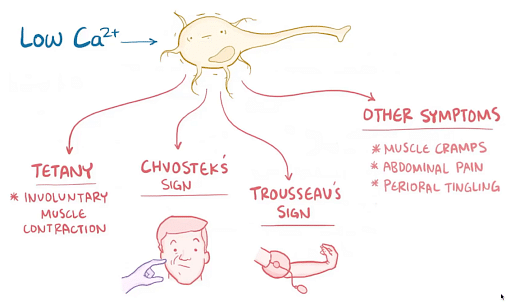
Hypocalcemia Tetany
Symptoms of Hypocalcemia
Some common but hazardous symptoms of hypocalcemia may include pain in muscle, seizure, cardiac arrest, and numbness, etc. It is assumed that most of the problems are acquired, however, some are inherited. The deficiency of calcium may not cause any symptoms in the early stages, however; the symptoms may arise as the condition progresses.
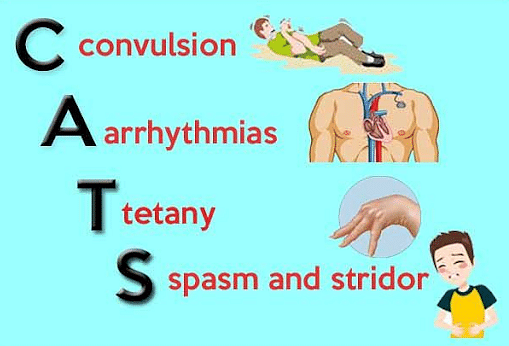
Hypocalcemia Symptoms (CATS)
The severe symptoms of hypocalcemia are mentioned in the list below:
- Confusion/Memory loss
- Muscle spasms and cramps
- Depression
- Weak & brittle nails
- Easy fracturing of bones
- Numbness & tingling in the hand, feet, or face
- Tetany
- Hyperactive tendon reflexes
- Laryngospasm, apneas, & stridor.
Also Read:
Causes of Hypocalcemia
[Click Here for Sample Questions]
The common cause of Hypocalcemia is Hypoparathyroidism. The common causes of hypocalcemia are mentioned in the list below:
- Massive RBC transfusion due to an excess of citrate in blood.
- Hyperphosphatemia
- Vitamin D deficiency
- Chronic liver disease
- Osteomalacia
- Chronic kidney failure
- Tumor bone syndrome
- Acute kidney injury

Hypocalcemia Treatment
[Click Here for Sample Questions]
Since Hypocalcemia is normally asymptomatic, the key causes of hypocalcemia must be examined and improved when the symptoms gradually show up. The declined level of magnesium in the blood must be changed by increasing the consumption of magnesium-rich food. This will further prevent Hypomagnesemia. Any rise in levels of calcium will become transient without replenishing magnesium in the body.

Hypocalcemia Treatment
The treatments that be taken are as follows:
- The levels of Parathyroid hormone & vitamin D must be ideally examined beforehand initiating treatment for hypocalcemia.
- Emergency treatment is usually required in exceptional circumstances such as those with primary hypoparathyroidism, hypoparathyroidism secondary to hyperthyroidism, complications of pregnancy or nursing, etc.
- Short-term or long-term treatment is desirable only to treat primary hyperparathyroidism & complications of pregnancy or nursing (eclampsia).
- Intravenous calcium gluconate can be controlled.
- In the situation of severe hypocalcemia, calcium chloride is given in place of calcium gluconate.
- To prevent further decline in the calcium level, maintenance doses of both calcium and vitamin D are often recommended.
Also Read:
Things to Remember
- Hypocalcemia is caused due to the low calcium levels in the blood serum.
- The normal range of calcium level in a human body is 2.1-2.6 mmol/L
- Calcium level lower than 2.1 mmol/L is considered hypocalcemia whereas higher than 2.6 is considered hypercalcemia.
- The bones and teeth of human bodies are composed of 99% of calcium only.
- The symptoms of hypercalcemia are not seen initially but they gradually increase and are not taken care of.
- The hypercalcemia is mostly asymptomatic.
Also Read:
Sample Questions
Ques: What is the difference between Hypercalcemia and Hypocalcemia? (2 marks)
Ans: The body may experience some harmful symptoms due to the lack or abnormal levels of calcium in the body. If the body has lower calcium than the average amount, it denotes Hypocalcemia whereas the excess or an overabundance of calcium may represent Hypercalcemia.
Ques: Is the deficiency of calcium life-threatening? (2 marks)
Ans: If the deficiency of calcium lasts for a longer period then it may lead to many health problems including dental changes, cataracts, brain alterations, and osteoporosis, etc. These can cause the bones of the organism to become brittle. Without treatment, the deficiency of calcium may become life-threatening.
Ques: How is the neurologic system affected by Hypocalcemia? (2 marks)
Ans: In the body of living organisms, the nerve endings in the muscle cells discharge calcium ions. The calcium discharged from the muscle cells binds with the activator proteins and further signals the muscles of the body to contract and relax. Insufficient calcium levels lead to a condition known as “neuromuscular irritability,” which is an involuntary twitching of the muscles and nerves.
Ques: What is Neonatal hypocalcemia? What are its symptoms? (3 marks)
Ans: This disease occurs in infants soon after they are given birth. Most of these cases have occurred within the first few days after the birth. Its symptoms are mentioned in the list below:
- Jitteriness
- Poor feeding
- Seizures
- Apnea
- Breathing problems
- Tachycardia
Ques: What are some commonly recommended calcium supplements? (3 marks)
Ans: The commonly recommended supplementary for the deficiency of calcium in the body is as follows:
- Calcium carbonate
- Calcium citrate
- Calcium phosphate
These supplements are available in the form of liquid, tablets, and even in chewable forms.
Ques: What are some possible complications of hypocalcemia? (2 marks)
Ans: The complications which arise due to the deficiency of calcium disease are as follows:
- Eye damage
- Abnormal heartbeat
- Osteoporosis
If the disease of calcium deficiency is ignored or left untreated could eventually be fatal.
Ques: How to prevent hypocalcemia? (3 marks)
Ans: The deficiency of calcium in the body can be prevented by including the consumption of calcium in a daily diet. Dairy products such as milk and yogurt are rich in calcium. Other calcium rich-foods are as follows:
- Sardines
- Salmon
- White beans
- Broccoli
- Figs
- Wheat bread
- Fortified orange juice & tofu
Ques: What organs does hypocalcemia affect? (1 mark)
Ans: If left untreated, hypocalcemia may affect the brain and might cause neurological or psychological symptoms including confusion, memory loss, and depression, etc.
Also read:



Comments