



Content Curator
Even before the development of calculus, mathematicians employed logarithms to convert division and multiplication problems into addition and subtraction issues. The power is raised to a specified number, usually a base number, in a logarithm to arrive at a specific number.
- Logarithms are effective in manipulating numbers of a size that is much easier to handle when you need to work with really huge numbers.
- The definition, formula, and functions will all be covered in-depth in this part along with several examples.
- In other words, the real integer y that has the property that y=xby=x is the logarithm of x to base b.
- The symbol for the logarithm is "logbx." (pronounced as "the logarithm of x to base b", "the base-b logarithm of x", or most commonly "the log, base b, of x").
Read More: Types of Probability
| Table of Content |
Key Terms: Logarithmic function, Log, Exponential function, Domain, Range.
What is a Logarithmic Function?
[Click Here for Sample Questions]
A logarithmic function is an inverse of the exponential function, in simple words, the logarithmic function can be defined as the logarithmic function is an inverse function to exponentiation. The logarithmic function is defined as
For x>0, a>0 and a ≠ 1,
y= logax if and only if x = ay
Then the function is given by
f(x) = loga x
- The logarithm base is equal to a.
- This can be understood as the log base of x.
- Base 10 and base e are the two most common bases used in logarithmic functions.
- The formula for a logarithmic function is f (x) = logb x.
- In this instance, the base of the logarithm is b, and the common bases used for natural logs and logs to base 10 are base and base 10.
- Numerous real-world uses of logarithms can be found in fields including electronics, earthquake analysis, acoustics, and population forecasting.
Read More: Value of Log 0
Graph of Logarithmic Function
[Click Here for Previous Year Questions]
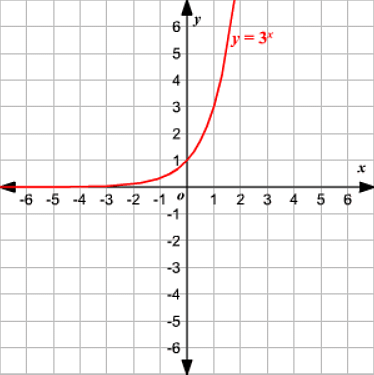
Graph of Logarithmic Function
Read More: Value of Log 1
Domain and Range of Logarithmic Function
[Click Here for Sample Questions]
A logarithmic function has real values larger than zero as its domain and real numbers as its range. In relation to the line y = x, the graph of y = logax and the graph of y = ax are symmetrical. Any function and its inverse are related in this way.
- The domain of y=x is R+, i.e., x∈(0,∞)
- The range of y=x is R i.e., x ∈(-∞,∞)
Read More: Value of Log 1 to 10
Common and Natural Log
[Click Here for Previous Year Questions]
Common logarithmic function - A common logarithm is one with base 10. The place value in our number system, which has ten bases and ten digits from 0 to 9, is determined by groups of ten.
- With a common base of 10, you can recall common logarithms.
- The logarithmic function with base 10 is called the common logarithmic function
- It is denoted by log10 or simply log. f(x) = log10 x
Natural Logarithmic Function - Different is a natural logarithm. A natural logarithm has the number e as its base when the base of the common logarithm is 10.
- Despite being a variable, e is actually a fixed, irrational number with a value of 2.718281828459.
- Other names for e include Euler's number and Napier's constant.
- To pay homage to mathematician Leonhard Euler, the letter e was chosen. Despite appearing difficult, e is a fascinating number.
- There are numerous uses for the function f (x) = loge x in business, economics, and biology.
- E thus has significance.
- The logarithmic function to the base e is called the natural logarithmic function and it is denoted by loge. f(x) = loge x
Read More: Logarithmic Differentiation
Properties of Logarithmic Function
[Click Here for Sample Questions]
All the properties of logarithmic functions are:
- The Product Rule
Logb(MN) = logb(M) + logb (N)
This property denotes that the logarithm of a product is the sum of the logs of its factors. Multiply two numbers having the same base, then add the exponent’s example: log 20 + log 2 = log 40
- The Quotient Rule
Logb (M/N) = logb (M) – logb (N)
This property denotes that the log of a quotient is the difference between the log of the dividend and the divisor. Divide two numbers having the same base and subtract the exponent.Example: log6 54 – log6 9 = log6 (54/9) = log6 6 = 1
- The Power Rule
Logb (M/N) = logb (M) – logb (N)
This property denotes that the log of a quotient is the difference between the log of the dividend and the divisor. Divide two numbers having the same base and subtract the exponent.Example: log6 54 – log6 9 = log6 (54/9) = log6 6 = 1
- The Zero Exponent Rule
Loga 1 = 0
- Change of Base Rule
logb (x) = ln x / ln b or logb (x) = log10 x / log10 b
- some other properties of logarithms are as follows:
logb (xy) = logb x + logb y
Logb b = 1 Example: log1010 = 1
logb (x/y) = logbx – logb y
logb (xr) = rlogb x (if logb x = logb y therefore x = y)
Logb bx = x, Example: log1010x = x
There are also several fractional logarithmic functions. It has the important virtue of allowing one to utilize the identities to get the log of a fraction.
- ln(ab)= ln(a)+ln(b)
- ln(ax) = x ln (a)
Read More: Logarithm questions
Solved Examples
[Click Here for Previous Year Questions]
Example 1. Express 2logx + 3logy = log in logarithm free form.
Solution. 2logx + 3logy = log a.
Log a = logx2 + logy3 (By logarithmic rule- logab=b log a).
Log(X2y3) = log a ( By the logarithm rule, log (ab) = log (log a + log b)
X2y3 = a [If a = b, then logma = log m b]
Example 2. If log(x-1) + log(x+1) = log21, then find x.
Ans. The answer is log(x-1)+log(x+1)=log 21.
log(x-1) + log(x+1) = 0
log[(x-1)(x+1)] = 0
Because log 1 Equals 0,
(x-1) (x+1) = 1
X2 – 1=1
X2 = 2
x = ± √2
Because the log of a negative number is undefined, hence x= √2
Read More: Value of log infinity
Things to Remember
- When a > 1, the logarithmic graph rises, and when 0 a 1, it falls. The domain is obtained by increasing the function's parameter above 0.
- a > 0 and a ≠ 1 The set of all real numbers is known as the range.
- The function is continuous and one-to-one.
- The graph and x-axis intersect at (1,0). The x-intercept is therefore 1.
- The equation y=logb(x+h)+k shifts the logarithmic function, y=logbx, by k units vertically and h units horizontally.
- The natural logarithm is the base-e logarithm. The symbol for it is lnx.
- The opposite of the natural base exponential function, y=ex, is the natural logarithmic function, y=ln x.
Previous Year Questions
- Nascent hydrogen consists of..
- In which of the following reactions the hydrogen peroxide acts as a reducing agent?..[JEE MAIN 2023]
- Major product of the following reaction is..[JEE MAIN 2023]
- The total current supplied to the circuit by the battery is...[AIEEE 2004]
- The reading of voltmeter in the circuit shown is….[Rajasthan PMT 2023]
- The oxidation of toluene to benzaldehyde by chromyl chloride is called...[NEET UG 1996]
- An aggregate fruit is one which develops from..[NEET UG 2014]
- The order of stability of the following carbocations..[JEE MAIN 2013]
- Complete hydrolysis of cellulose gives...[BITSAT 2012]
- Which one among the following metals is the weakest reducing agent?..[JEE MAIN 2023]
Sample Questions
Ques. Express log(75/16)-2log(5/9)+log(32/243) in the terms of log 2 and log 3. (3 Marks)
Ans. The answer is log(75/16) – 2 log(5/9) + log(32/243).
Because nlog am = log amn
⇒ log(75/16) – log(5/9)2 + log(32/243)
⇒ log(75/16) – log(25/81) + log(32/243)
Given that log am – log a n = log a(m/n),
⇒ log[(75/16) ÷ (25/81)] + log(32/243)
⇒ log[(75/16) ÷ (81/25)] + log(32/243)
⇒ log(243/16) + log(32/243)
Since, logam + llogan = log amn
⇒ log (32/16)
⇒ log2
Ques. If logam=n, express an-1 in terms of a and m. (2 Marks)
Ans. Log an m=n
an = m
an/a = m/a
an n-1 = m/a
Ques. If log5 (x-7) = 1, find x. (2 Marks)
Ans. Provided,
log5(x-7)=1
Logarithm rules allow us to write;
51 = x-7
5 = x-7
x=5+7
x=12
Ques. If logam=n, express an-1 in terms of a and m. (2 Marks)
Ans. logam = n
an = m
a n /a = m/a
an-1 = m/a
Ques. Find x if log5(x-7) = 1. (2 Marks)
Ans. Provided,
log5(x-7)=1
Logarithm rules allow us to write;
51 = x-7
5 = x-7
x=5+7
x=12
Ques. Find the log of 32 to the base 4. (2 Marks)
Ans. log432 = x
4x = 32
(22)x = 2x2x2x2x2
22x = 25
2x=5
x=5/2
Therefore,
log432 =5/2
Ques. Log101 = 0 should be expressed exponentially. (2 Marks)
Ans. Assuming log101 = 0,
We are aware of the law;
logac=b = ab=c
Hence,
100 = 1
Ques. Explain in a logarithmic form that 53 = 125. (2 Marks)
Ans. 53 = 125
The fact is,
ab=c
logac=b
Therefore;
Log5125 = 3.
For Latest Updates on Upcoming Board Exams, Click Here: https://t.me/class_10_12_board_updates
Check-Out:



Comments