



Education Journalist | Study Abroad Lead
Mass flow hypothesis, also known as pressure-flow hypothesis, is an important theory of biology. It is mainly concerned with explanation of the movement of sap via phloem in a plant. The theory was proposed in 1930 by Ernst Munch. A highly concentrated sugar, especially the one present in the cells of phloem, form a diffusion gradient that is responsible for eventually drawing water in adjacent xylem cells. In this article, we will read about mass flow hypothesis, its origin, mechanism, and various other corresponding topics.
| Table of Content |
Key Takeaways: Mass flow, phloem, xylem, sucrose, organic sugar, pressure gradient, hydrostatic pressure, bilateral movement
What is Mass Flow Hypothesis?
Mass flow hypothesis or pressure-flow hypothesis is a theory that originated in 1930. It was a German plant physiologist, named Ernst Munch, who worked upon it to explain the concept of movement or transportation of sap through phloem in a plant.
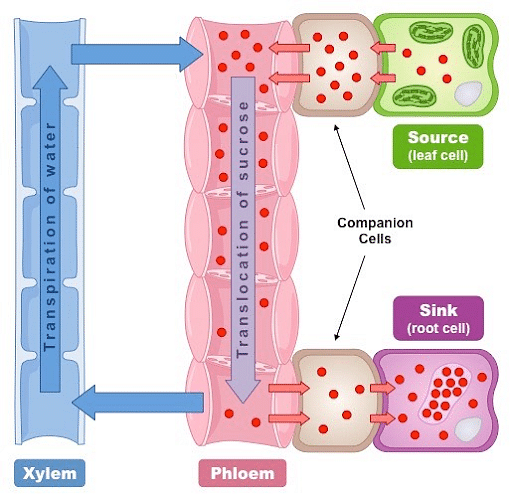
This hypothesis explains that the presence of highly concentrated and organic sugar in the cell of phloem of plant is the main reason behind the flow of water within it. This sugar tends to draw water from xylem and in turn, develops the hydrostatic pressure also known as turgor pressure in the phloem. Therefore, bi-directional movement in the phloem takes place due to mass flow from sugar to the sugar sinks. However, this movement is unidirectional in the cells of xylem.
Mass Flow Hypothesis Mechanism
The mechanism of mass flow is driven by multiple concepts. Let us have a look at some of them:
- Beginning with process of translocation, which states about the negative pressure which is mainly responsible for movement of minerals and water via xylem and hydrostatic pressure which is, on the other hand, responsible for the movement via phloem.
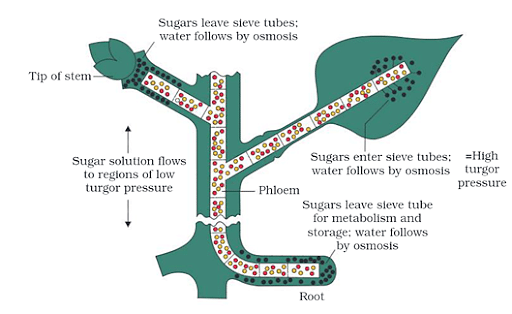
- This process of translocation is often accompanied by another process, namely, phloem loading and unloading. In this process, sugar sources are mainly used which undergo osmosis in order to load a sieve tube. This, in turn, develops pressure that pushes the sap low. The further working of movement of the sap is maintained by pressure gradient managed by the leaf.
- Photosynthesis leads to the formation of glucose in mesophyll. Some amount of glucose is utilized in respiration.
- Whereas, the remaining amount of glucose is transformed into a type of non-reducing sugar.
- This even forms sucrose which is used by cells of the leaves consisting of minute veins.
- This sucrose along with other substances is further moved towards the sink through cell of the sieve tube. All this happens due to the existing Hydrostatic pressure.
- However, from the sinks, sucrose is further eliminated into apoplast.
- On the other hand, water reaches the leaf through xylem while undergoing the process of osmosis.
- Now, when osmosis occurs, water moves out of the cell, lowering hydrostatic pressure and developing a pressure gradient.
- Sugar present in phloem shall be utilized by cellular respiration after being eradicated by the cortex of root and stem, as per mass flow hypothesis.
Read More: Life Processes
Criticism of Mass Flow Hypothesis
There is a lot of criticism related to mass flow hypothesis theory. Some of them are:
- Many critics believed that process of translocation happens due to metabolic process and not due to hydrostatic pressure.
- As the hypothesis talks about the uniform rate of transmission of material inside phloem and sieve tube, critics have disagreed with the same.
- Critics also argued that the reason behind bilateral movement of the material has not been explained wisely.
Things to Remember
- Mass flow hypothesis involves great experiments and facts and was propounded by Ernst Munch.
- This great theory was manifested in his book where he simply dedicated 230 pages only to the fluid circulation within plants.
- However, even after propounding something so novel, Munch never realized that it was original and new.
- As per mass flow hypothesis, Sucrose has the tendency of getting diffused into sieve tube from neighbor cells.
- This entire process of diffusion of sucrose takes place through plasmodesmata. Thus, raising the amount of sucrose in elements of sieve tube.
- When the elimination of sucrose takes place in storage sinks, it shall always occur before sucrose enters symplast of the sink.
Check out: Energy Currency of the Cell
Sample Questions
Ques. Who found mass flow hypothesis? (3 marks)
Ans. Mass flow hypothesis or pressure-flow hypothesis is a theory that originated in 1930. It was a German plant physiologist, named Ernst Munch, who worked upon it to explain the concept of movement of sap through phloem in a plant. This hypothesis explains that the presence of highly concentrated and organic sugar in the cell of phloem of plant is the main reason behind flow of water within it.
This sugar tends to draw water fromxylem and in turn, develops hydrostatic pressure also known as turgor pressure in phloem. Therefore, the bi-directional movement in phloem takes place due to mass flow from sugar to the sugar sinks. However, this movement is unidirectional in the cells of the xylem.
Ques. What is the main idea behind mass flow hypothesis? (5 marks)
Ans. This hypothesis explains that the presence of highly concentrated and organic sugar in the cell of phloem of the plant is the main reason behind flow of water within it. This sugar tends to draw water from xylem and in turn, develops hydrostatic pressure also known as turgor pressure in phloem. Therefore, the bi-directional movement in phloem takes place due to the mass flow from sugar to the sugar sinks. However, this movement is unidirectional in the cells of xylem.
Ques. Explain three criticisms of mass flow hypothesis. (3 marks)
Ans. The three criticisms are as follows.
- Many critics believed that process of translocation happens due to metabolic process and not due to hydrostatic pressure.
- As the hypothesis talks about uniform rate of transmission of material inside phloem and sieve tube, the critiques have disagreed with the same.
- Critiques also argued that the reason behind bilateral movement of the material has not been explained wisely.
Ques. Explain the process of translocation in context of mass flow hypothesis. (2 marks)
Ans. Process of translocation states about the negative pressure which is mainly responsible for the movement of minerals and water via xylem and hydrostatic pressure which is, on the other hand, responsible for the movement via phloem. This process of translocation is often accompanied by another process, namely, phloem loading and unloading. In this process, sugar sources are mainly used which undergo osmosis in order to load a sieve tube. This, in turn, develops pressure that pushes the sap low. The further working of movement of the sap is maintained by pressure gradient managed by the leaf.
Ques. Explain the mechanism of mass flow hypothesis in brief. (5 marks)
Ans. The mechanism of mass flow hypothesis is as follows.
- Beginning with process of translocation, which states about negative pressure which is mainly responsible for the movement of minerals and water via xylem and hydrostatic pressure which is, on the other hand, responsible for the movement via phloem.
- This process of translocation is often accompanied by another process, namely, phloem loading and unloading. In this process, sugar sources are mainly used which undergo osmosis in order to load a sieve tube. Photosynthesis leads to the formation of glucose in mesophyll. Some amount of glucose is utilized in respiration.
- Whereas, remaining amount of glucose is transformed into the type of non – reducing sugar.
- This even forms sucrose which is used by the cells of leaves consisting of the minute veins.
- This sucrose along with other substances is further moved towards the sink through the cell of sieve tube. All this happens due to the existing Hydrostatic pressure.
- However, from the sinks, the sucrose is further eliminated into the apoplast.
- On the other hand, water reaches the leaf through xylem while undergoing the process of osmosis.
- Now, when osmosis occurs, the water moves out of the cell lowering hydrostatic pressure and developing a pressure gradient.
- The sugar present in phloem shall be utilized by cellular respiration after being eradicated by the cortex of root and stem, as per mass flow hypothesis.
Ques. How has Munch used pressure gradient and hydrostatic pressure in his mass flow hypothesis? (3 marks)
Ans. Mass flow hypothesis explains that the presence of highly concentrated and organic sugar in the cell of phloem of plant is the main reason behind the flow of water within it. This sugar tends to draw water from xylem and in turn, develops the hydrostatic pressure also known as turgor pressure in the phloem. Therefore, the bi-directional movement in the phloem takes place due to the mass flow from sugar to the sugar sinks. However, this movement is unidirectional in the cells of xylem.
The hypothesis involves process of translocation, which states about the negative pressure which is mainly responsible for the movement of minerals and water via xylem, and hydrostatic pressure which is, on the other hand, responsible for the movement via phloem.
This process of translocation is often accompanied by another process, namely, phloem loading and unloading. In this process, sugar sources are mainly used which undergo osmosis in order to load a sieve tube. This, in turn, develops pressure that pushes the sap low. The further working of movement of sap is maintained by the pressure gradient managed by leaf.
Ques. What is the process of phloem loading and unloading? (2 marks)
Ans. The process of phloem loading and unloading is followed by the process of translocation, according to mass flow hypothesis. In this process, sugar sources are mainly used which undergo osmosis in order to load a sieve tube. This, in turn, develops pressure that pushes the sap low. The further working of movement of the sap is maintained by the pressure gradient managed by leaf.
Read More:



Comments