



Content Curator
Respiration is one of the most important chemical activities performed by all living organisms to release energy needed for the functioning of life. The mechanism of respiration happens in both the existence and lack of oxygen. Humans, for example, respire by inhaling oxygen gas and exhaling carbon dioxide gas. Several other living organisms, such as plants, use respiration to acquire energy for metabolic functions. Respiration is further divided into two types- Aerobic and Anaerobic Respiration.
| Table of Content |
Keyterms: Respiration, Organisms, Energy, Oxygen, carbon dioxide, Plants, Metabolic function, Gas, Electrons, Fuel
Aerobic Respiration
[Click Here for Sample Questions]
Aerobic respiration refers to the series of processes performed by enzymes. This method also involves the transmission of electrons from molecules that serve as a supplier of fuel, such as glucose, to oxygen.
It also serves as the ultimate electron acceptor. In aerobic respiration, oxygen works as an electron acceptor, assisting in the production of ATPs more efficiently and swiftly. Except for certain early prokaryotes, all flora, creatures, birds, and humans respire aerobically.
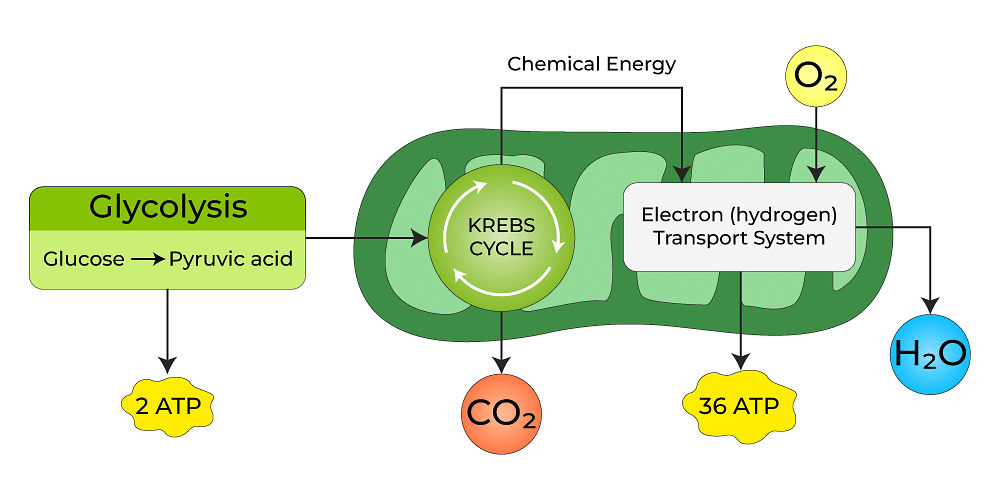
Aerobic Respiration
Examples of Aerobic Respiration
The examples of Aerobic Respiration:
- In living beings, cellular respiration is an aerobic mechanism in which full oxidation of glucose generates the energy necessary by the organism.
- It starts in the cell's cytoplasm and moves into the mitochondria, where additional processes take place.
- The lungs take oxygen, which is then preserved in red blood cells. The oxygen is subsequently sent to the cells that need energy.
- The glucose is subsequently oxidised, generating carbon dioxide gas while producing energy.
- In organisms, cellular respiration encompasses the key metabolic processes for the oxidation of carbs to produce energy.
Anaerobic Respiration
[Click Here for Sample Questions]
Anaerobic respiration is the use of electron recipients other than oxygen molecules in respiration (O2). It employs a respiratory electron transfer chain despite the fact that oxygen is not the ultimate electron receiver.
Anaerobic respiration is identical to aerobic respiration in which chemicals join the electron transit chain to deliver electrons to the ultimate electron acceptor. The last electron acceptors in anaerobic respiration have a lower oxidation capacity than molecular oxygen as a result less energy is produced.
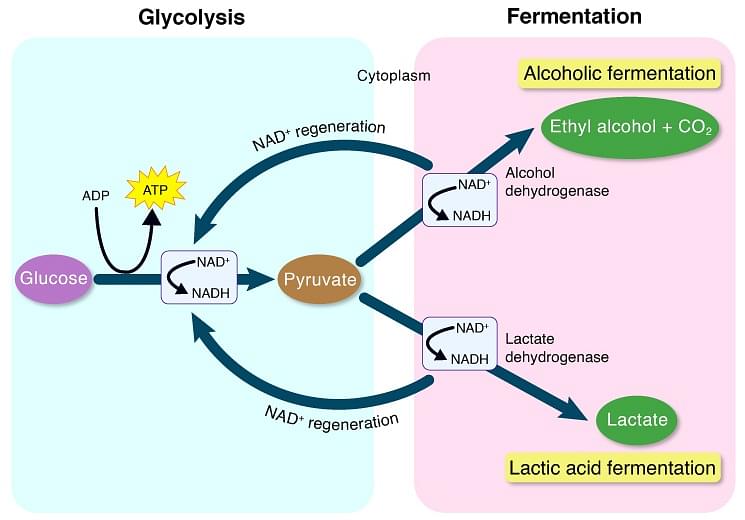
Anaerobic respiration
Examples Of Anaerobic Respiration
The Examples of Anaerobic Respiration:
- The muscles in our bodies cannot obtain sufficient oxygen during hard activity, therefore they execute more glycolysis than the system can transmit oxygen to the electron transport system. Due to a lack of oxygenation in our muscles, this causes anaerobic respiration. As a result, rather than aerobic respiration, anaerobic respiration occurs, resulting in the creation of lactic acid.
- Fermentation is a kind of anaerobic respiration that consumes anaerobic organisms such as yeasts. Yeasts undertake anaerobic respiration when carbohydrate-rich items are packaged with yeasts, guaranteeing a low oxygen level in the container. As a reaction, fermentation occurs, in which yeast transforms carbs into ethyl alcohol.
Also Read:
| Related articles | |
|---|---|
| Difference between Photosynthesis and Respiration | Difference-between-respiration-and-combustion |
Differences Between Aerobic and Anaerobic Respiration
[Click Here for Sample Questions]
Some of the important differences between Aerobic and Anaerobic Respiration are mentioned below:
| Parameters | Aerobic Respiration | Anaerobic Respiration |
|---|---|---|
| Equation | The general equation for aerobic respiration is as follows: C6H12O6 + 6O2 → 6CO2 + 6H2O + energy | The general equation for aerobic respiration is as follows: C6H12O6 → C2H5OH + CO2 + energy |
| Gas Exchange | Aerobic respiration involves a gas exchange in which oxygen is taken and carbon dioxide is expelled. | Anaerobic respiration does not include the gaseous exchange. Sulphur and nitrogen gases, on the other hand, are emitted by some species. |
| End Products | Aerobic respiration produces CO2, water, and energy. | Anaerobic respiration produces acids, alcohols, gas, and energy. |
| Occurrences | Aerobic respiration appears in the majority of higher species, including plants and animals. | Primordial prokaryotes breathe anaerobically. Anaerobic respiration occurs in individual muscle cells during severe motions. |
Importance of Aerobic Respiration
[Click Here for Sample Questions]
- The energy released during this aerobic respiration is used by living organisms to accomplish a variety of reactions and other tasks. It is the typical energy releasing catabolic mechanism seen in all aerobic species.
- Carbon di-Oxide (CO2) generated during this process is used in photosynthesis to make carbohydrate meals.
- It entails the internal oxidation of the organic compounds into CO2, H2O (water), and power in a stepwise manner.
- This technique aids plants in moisture absorption, which subsequently maintains development and other biological activities.
- Many of the procedure's intermediate molecules are beneficial to other metabolic functions in cells.
Importance of Aerobic Respiration
[Click Here for Sample Questions]
- Some bacteria are unable to survive in the midst of oxygen. These types of bacteria use aerobic respiration.
- Anaerobic respiration is the only one that generates energy. It is an energy release and supply catabolic process of anaerobic organisms.
- Anaerobes may live in anaerobic settings because it acts in the lack of oxygen.
- This technique produces ethyl alcohol which is used in a multitude of sectors.
Also Read:
| Related articles | |
|---|---|
| Life Processes | Hypertension |
| Excretion in Plants | Excretion in Human Beings |
Things to Remember
- The breakdown of glucose in the presence of oxygen to produce more energy is called aerobic respiration.
- The breakdown of glucose in the absence of oxygen to produce energy is called anaerobic respiration.
- The majority of ATPs created during aerobic respiration are generated by oxidative phosphorylation, in which the power of an oxygen molecule is utilised to push protons out of the membranes.
- At the completion of aerobic respiration, a total of 38 ATPs are created. Nevertheless, some energy is wasted owing to membrane leakage or in the transportation of pyruvate across the cell, resulting in the formation of only 29-30 ATPs.
- Anaerobic respiration occurs in a variety of habitats, including freshwater, soil, and deep-sea surfaces.
- Oxygen cannot easily pass across their surface that is why certain bacteria in oxygenated settings employ anaerobic respiration.
Also Read:
| Related articles | ||
|---|---|---|
| Autotrophic Nutrition | Heterotrophic Nutrition | Excretion |
Important Questions
Ques: Aerobic respiration occurs in what kinds of life forms? (2 Marks)
Ans: Oxygen is essential for cellular respiration and is utilised to decompose substances such as sugar in order to produce ATP (energy) as well as carbon dioxide and water. Cellular respiration can be used by species from all domains of life, especially bacteria, archaea, plants, protists, mammals, and fungi.
Ques: What is the primary end result of anaerobic respiration? (2 Marks)
Ans: Anaerobic respiration generates ethyl alcohol and lactic acid as byproducts. In the lack of oxygen, glucose degrades in anaerobic respiration. There is no carbon dioxide or water formed in an anaerobic process. Because the glucose does not actually break down, less energy is generated in this form of respiration.
Ques: Where would aerobic respiration happen in bacteria? (2 Marks)
Ans: Certain prokaryotes, which are tiny simple cells like bacteria, are capable of aerobic cellular respiration. Electrons will be moved back and forth through the cell surface by these cells. Since other species of prokaryotes can’t use oxygen for cell respiration, they must rely on anaerobic respiration.
Ques: What are Phosphorylation and Link Reactions in the Aerobic Respiration Process? (2 Marks)
Ans: Using energy and phosphate groups from ATP, glucose is transformed into glucose 6-phosphate via phosphorylation. This is transformed to fructose 1,6-diphosphate utilising ATP as a source of energy and phosphate groups once again. Hydrolysis converts ATP to ADP + phosphoric acid (Pi). This connects glycolysis with the Krebs Cycle (Frequently called the citric acid cycle). In the mitochondria, pyruvate molecules are decarboxylated (they lose a carbon dioxide molecule). Pyruvate molecules are oxidised and transformed to acetyl coenzyme A, or acetyl CoA.
Ques: What is propionic Acid Fermentation in Cheese? (3 Marks)
Ans: Propionic acid fermentation happens when bacteria (for example, Propionibacterium shermanii) use carbs such as lactose and glucose to generate propionic acid and CO2. The most prevalent use of this method is seen in Cheese. The carbon dioxide gas created throughout this process causes bubbling to appear in the cheese, as well as the particular flavour owing to the carboxylic acid. This mechanism, like all other anaerobic respiration mechanisms, occurs when there is no or little oxygen present.
C12H22O11 → C3H6O2 + CO2 + energy is the total reaction of this process.
Ques: What exactly are the four phases of aerobic respiration? (3 Marks)
Ans: Aerobic respiration is a sequence of enzyme-controlled events that release and make accessible the energy accumulated in carbohydrates and lipids throughout photosynthesis. Glycolysis, the link reaction, the Krebs cycle, and oxidative phosphorylation are the four phases. During glycolysis, glucose units (six carbon atoms) are divided into two pyruvates (three carbon compounds) via an enzyme-controlled series of events. This can happen during both aerobic and anaerobic respiration.
Ques: What is Fermentation in Methanogens? (3 Marks)
Ans: Methanogens are archaea-related prokaryotes. Methanogens are called after the fact that they create methane as a result of oxidising carbohydrates in the lack of oxygen. This is known as methanogenesis. Methanogens are another type of ferment that produces a distinct alcohol, methanol. This is also known as methanol toxicity.
Methanogens (for example, Methanosarcina barkeri) oxidise fiber from plants to make methanol rather than ethyl alcohol as yeasts do. Methanol intoxication can cause neurological injury and even death in certain persons. The entire process of methanol synthesis is as follows:
C6H12O6 → CH3OH + CO2 + Energy
For Latest Updates on Upcoming Board Exams, Click Here: https://t.me/class_10_12_board_updates
Check-Out:



Comments