



Education Journalist | Study Abroad Lead
Nitrogen Cycle is the biogeochemical process that converts the nitrogen in the air to nitrates for human use. It is a biogeochemical process that transforms the inert nitrogen present in the earth’s atmosphere into a more usable form for different living organisms.
- Nitrogen Gas exists in both organic and inorganic forms.
- Organic nitrogen is present in living organisms and inorganic nitrogen is formed in abundance in the atmosphere.
- Nitrogen is a key component of the bodies of living organisms.
- The nitrogen cycle involves several processes like Nitrogen Fixation, Nitrification, Denitrification, Decay and Putrefaction.
Key Terms: Nitrogen, Nitrogen cycle, Biochemical, Ecosystem, Nitrogen fixation, Carbon, Ammonia, Stages of Nitrogen Cycle
What is the Nitrogen Cycle?
[Click Here for Sample Questions]
The nitrogen Cycle is a biogeochemical cycle through which nitrogen converts into many forms as it circulates among the atmosphere, terrestrial, and marine ecosystems. It starts with the inorganic nitrogen in the atmosphere, in the form of dinitrogen (N2). The air we breathe has 78% nitrogen, 21% of oxygen and other trace gases.
- Being inert, nitrogen cannot be used by plants directly.
- Plants receive it through a symbiotic relationship with symbiotic bacteria like Azotobacter and Rhizobium, which fix the atmospheric nitrogen and convert it into nitrates and nitrites through the nitrogen cycle.
- These are then used up by plants and increase the nitrogen content of the soil. From there, nitrogen reaches the organisms and from the organisms, it goes back to the atmosphere.
- Animals derive their nitrogen from plants.

Nitrogen Cycle Diagram
| Fact about Nitrogen: 78% of Earth’s atmosphere by volume is made of Nitrogen gas which is even more than oxygen present in the atmosphere. |
Read More:
| Related Topics | ||
|---|---|---|
| Components of Ecosystem | Oxygen Cycle | Nitric Acid |
Stages of Nitrogen Cycle
[Click Here for Sample Questions]
The different stages of the Nitrogen Cycle are explained as follows:
Nitrogen Fixation
Nitrogen Fixation in Nitrogen Cycle is the process of converting atmospheric nitrogen into nitrates and nitrites through atmospheric, biological, or industrial processes.
- Atmospherically, nitrogen can be fixed by lightning strikes.
- Lightning Strikes fix 5-10 billion kilograms of nitrogen annually.
- Biologically, nitrogen fixation is carried out through the process of the Symbiotic Relationship.
- In this process, nitrogen-fixing bacteria like Rhizobium, which is present in the roots of legumes, produce ammonia from atmospheric nitrogen in exchange for carbohydrates.
- This fulfils the nitrogen needs of the plant and also increases the nitrogen content in the soil.
- Industrially, nitrogen fixation is carried out by Haber’s Process which uses high temperature and pressure to convert atmospheric nitrogen into ammonia.
Types of Nitrogen Fixation
- Atmospheric Fixation: Atmospheric Fixation is a phenomenon where the energy of lightning breaks nitrogen into nitrogen oxides which are later used by plants.
- Industrial Nitrogen Fixation: Industrial Nitrogen Fixation is a man-made alternative which uses ammonia to aid nitrogen fixation. Ammonia is produced by the direct combination of nitrogen and hydrogen. It is used in various fertilisers like urea for plants.
- Biological Nitrogen Fixation: Bacterias like Rhizobium and blue-green algae transform the nitrogen which is not in use into other compounds which are usable. These nitrogen compounds get fixed in the soil by these microbes.
Nitrification
The process of Nitrification in Nitrogen Cycle involves the conversion of ammonia into nitrates and nitrites by the bacteria present in the soil. This conversion is necessary as ammonia gas is harmful to plants. The reactions involved in nitrification are:
2NH4+ + 3O2 → 2NO- + 4H+ + 2H2O
2NO2- + O2 → 2NO3-
Assimilation
The nitrates, ammonium, and other nitrogen compounds produced during nitrogen fixation are absorbed by the plants through their root hairs. These compounds are used up in the formation of plant and animal proteins in Nitrogen Cycle. Hence, through this stage, nitrogen enters the food web.
Ammonification
Ammonification in Nitrogen Cycle is the process of conversion of organic nitrogen into ammonium (NH4+). Organic nitrogen reaches the soil from the death of plants/animals or animal waste. The bacteria/fungi present in the soil convert the organic nitrogen into ammonium.
Denitrification
The process of conversion of nitrates into dinitrogen is called Denitrification in Nitrogen Cycle. This conversion is carried out by denitrifying bacteria such as Pseudomonas and Clostridium and it takes place in the absence of oxygen. These bacteria process nitrate to obtain and give out dinitrogen back into the atmosphere.
Read More:
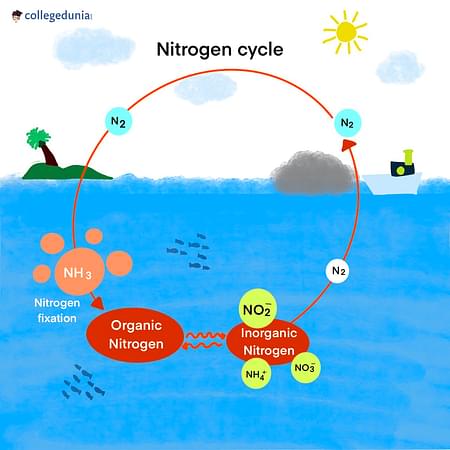
Nitrogen Cycle in Marine Ecosystem
[Click Here for Sample Questions]
The Nitrogen Cycle in the marine ecosystem is the same as that of the territorial ecosystem. The only difference is that in the case of the marine ecosystem, nitrogen fixation is done by marine bacteria. The cycle goes as follows:
- Nitrogen enters the oceans through rain, surface runoff or from the atmosphere.
- Nitrogen fixation is the next process that is carried out by cyanobacteria. Phytoplankton consumes the cyanobacteria and releases ammonia and urea into the water through excretion.
- Due to the mixing or sinking of waste, ammonia is introduced at the lower depths. Bacteria further convert ammonia into nitrates and nitrites.
- Due to vertical mixing and upwelling, the nitrates rise and are consumed by phytoplankton, hence, the Nitrogen cycle continues.
- Dinitrogen is released back into the atmosphere through denitrification.
![Nitrogen Cycle in Marine Ecosystem]()
Nitrogen Cycle in Marine Ecosystem Diagram
Importance of Nitrogen Cycle
[Click Here for Sample Questions]
The Nitrogen Cycle is important due to many reasons. Some of the reasons are as follows:
- Through nitrogen fixation, plants can use the otherwise inert nitrogen for different processes.
- It helps in the synthesis of chlorophyll by plants from nitrogen compounds.
- The process of ammonification in Nitrogen Cycle involves the decomposition of dead plants and animals by different bacteria and fungi, which cleans the environment.
- The release of nitrates and nitrites into the soil during nitrogen fixation increases the nitrogen content in the soil.
- Nitrogen is an important component of cell formation in the human body.
Handwritten Notes on Nitrogen Cycle
[Click Here for Sample Questions]


Things to Remember
- A biogeochemical cycle is a pathway by which a chemical substance goes through the biotic and abiotic components of the Earth.
- The nitrogen Cycle is a biogeochemical cycle through which nitrogen converts into many forms as it circulates among the atmosphere, terrestrial, and marine ecosystems.
- The different stages of the nitrogen cycle are Nitrogen Fixation, Nitrification, Assimilation, Ammonification, and Denitrification.
- Nitrogen fixation in the case of the marine ecosystem is done by marine bacteria.
- Nitrates and nitrites in the soil during nitrogen fixation increase the nitrogen content in the soil.
Sample Questions
Ques. What is the Nitrogen Cycle? What are the different stages of the nitrogen cycle? (3 Marks)
Ans: The nitrogen Cycle is a biogeochemical cycle through which nitrogen converts into many forms as it circulates among the atmosphere, terrestrial, and marine ecosystems. During the Nitrogen Cycle, nitrogen goes through various steps/stages, such as:
- Nitrogen Fixation
- Nitrification
- Assimilation
- Ammonification
- Denitrification
Ques. What are the different methods of Nitrogen Fixation? (3 Marks)
Ans: The different methods of nitrogen fixation are as follows:
- Atmospherically, nitrogen can be fixed by lightning strikes. Lightning Strikes fix 5 to 10 billion kgs of nitrogen annually.
- Biologically, nitrogen fixation is carried out through the process of the Symbiotic Relationship. In this process, nitrogen-fixing bacteria like Rhizobium, which is present in the roots of legumes, produce ammonia from atmospheric nitrogen in exchange for carbohydrates. This fulfils the nitrogen needs of the plant and also increases the nitrogen content in the soil.
- Industrially, nitrogen-fixation is carried out by Haber’s Process which uses high temperature and pressure to convert atmospheric nitrogen into ammonia.
Ques. What is Nitrification and Denitrification? (3 Marks)
Ans: The process of Nitrification includes the conversion of ammonia into nitrates and nitrites by the bacteria in the soil. Ammonia gas is harmful to plants. The reactions involved in nitrification are:
2NH4+ + 3O2 → 2NO- + 4H+ + 2H2O
2NO2- + O2 → 2NO3-
The process of conversion of nitrates to dinitrogen is known as Denitrification. This conversion is carried out by denitrifying bacterias such as Pseudomonas and Clostridium in the absence of oxygen. These bacteria processes nitrate to give dinitrogen into the atmosphere.
Ques. What is Assimilation? (2 Marks)
Ans: The nitrates, ammonium, and other nitrogen compounds that are formed during nitrogen fixation are absorbed by the root hairs of the plants. These compounds are used in plant and animal proteins. Hence, nitrogen enters the food web.
Ques. What is Ammonification? (2 Marks)
Ans: Ammonification converts organic nitrogen into ammonium. Organic nitrogen reaches the soil through the death of plants or animals or animal waste. The bacteria or fungi in the soil convert the organic nitrogen into ammonium.
Ques. What are the steps of the nitrogen cycle in the marine ecosystem? (4 Marks)
Ans: The different steps of the nitrogen cycle in the marine ecosystem are:
- Nitrogen enters the oceans through rain, surface runoff or from the atmosphere.
- Nitrogen fixation is the next process that is carried out by cyanobacteria. Phytoplankton consumes cyanobacteria to release ammonia and urea into the water through excretion.
- Due to the mixing or sinking of waste, ammonia comes at lower depths. Bacteria convert ammonia into nitrates and nitrites.
- Due to vertical mixing, nitrates are consumed by phytoplankton.
- Dinitrogen is released into the atmosphere through the process of denitrification.
Ques. Why is the Nitrogen Cycle important? (4 Marks)
Ans: Nitrogen Cycle is important due to the following reasons:
- Pants can use inert nitrogen by fixing nitrogen for different processes.
- It helps to synthesise chlorophyll through plants from nitrogen compounds.
- Ammonification concerns the decomposition of dead plants and animals which cleans the environment.
- The release of nitrates and nitrites into the soil increases the nitrogen content.
- Nitrogen helps in cell formation in the human body.
Ques. Why do plants need nitrogen? (2 Marks)
Ans: Nitrogen is needed by plants as this element is an important component of chlorophyll. Chlorophyll is an important part of the process of photosynthesis, so lack of nitrogen can cause deficiency disorders such as stunted growth and other abnormalities
Also read:



Comments