



Content Curator
Perfect Cube is a number that is a product of three same integers. In other words, a Perfect Cube is a number equal to a number multiplied by itself thrice. If ‘N’ is a perfect cube and N= M3 it infers that N is a perfect cube of M, where N can be obtained by multiplying N with itself three times. The formula of the Perfect Cube is given by,
N = M3
where, N= Perfect Cube and M= cube root of N.
For example, when we multiply 5 X 5 X 5, we get 125. Therefore 125 (= 53) is a perfect cube. Interestingly, the cube of an even number is always even and the cube of an odd number is always odd. The major application of cubes may be seen in geometry where the volume of the three-dimensional structures is calculated.
| Table of Content |
Key Takeaways: Perfect Cube, Cube Root, Even number, Odd Number, Squares, Cubes.
Perfect Cube
[Click Here for Sample Questions]
Perfect Cube can be defined as the product of three same integers. It means a Perfect Cube is a number that is equal to a number multiplied by itself thrice. Let us assume ‘N’ is a perfect cube and N= M3. It implies that N is a perfect cube of M, where N can be obtained by multiplying N with itself three times.
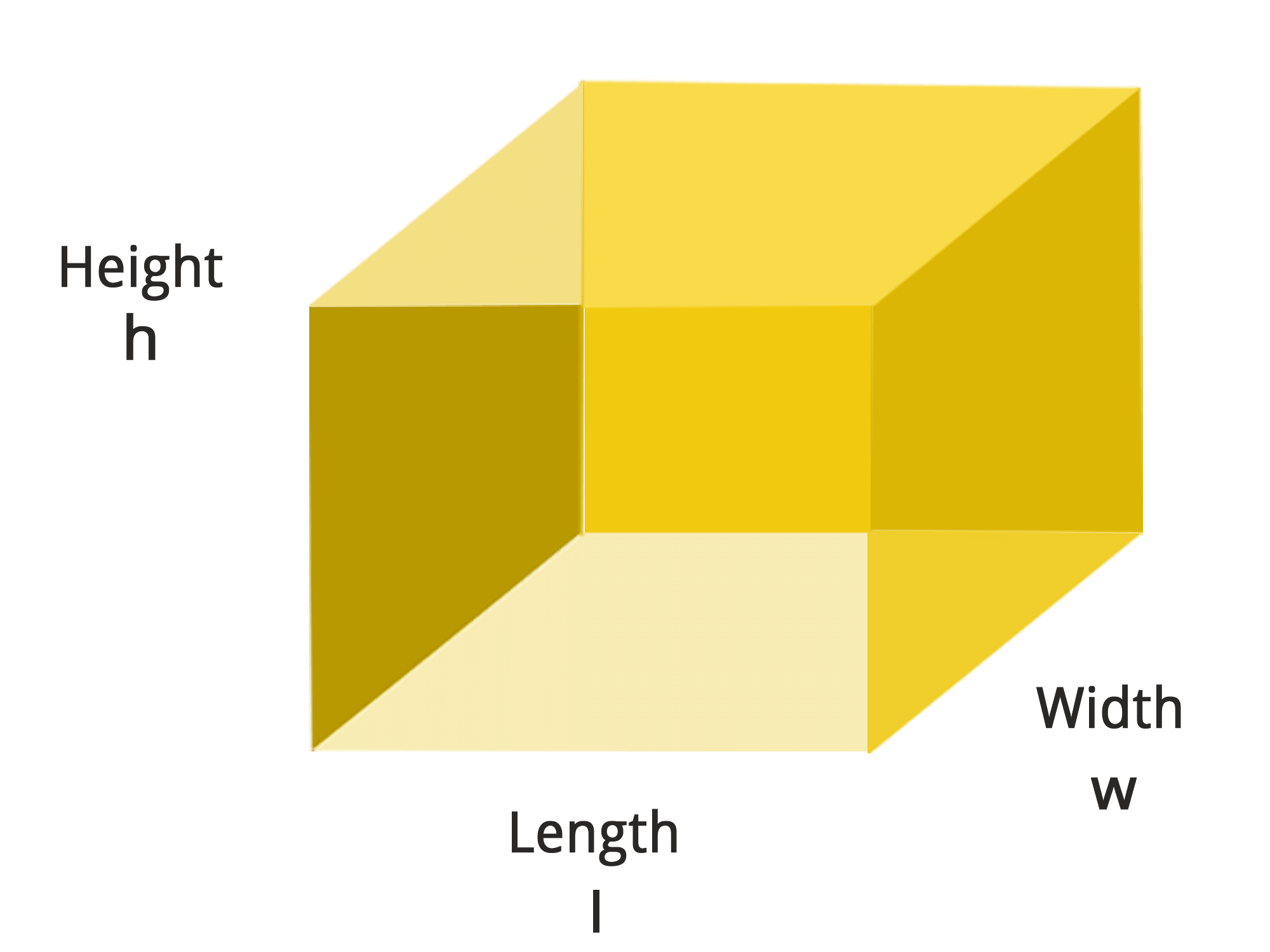
Perfect Cubes in Geometry
For example, 8, 27, 64 are some of the examples of perfect cubes as they can be obtained by multiplying 2,3 and 4 with themselves thrice. Perfect cubes can be negative as well. For example, -27 is a perfect cube of -3.
8 = 2X2X2 = 23
27= 3 X 3X 3= 33
64= 4X 4X4= 43
-27= -3X-3X-3= (-3)3
Also Read:
How to Find a Perfect Cube
[Click Here for Sample Questions]
Perfect Cube of a number can be investigated by following the steps given below-
Step 1: Every Number can be expressed as the product of its prime factors. The given number has to be factorized starting from the smallest prime number which is 2.
Step 2: Once the prime factorization is done, every three same factors are to be clubbed together.
Step 3: Same steps should be repeated for all the sets of the group of the same three factors. Now, if there is any factor left behind and it is not being fitted into a group of the same factors, the given number is not a Perfect Cube. Otherwise, the said number is a perfect cube as every factor will fit into the group. Here, is an example to understand the concept-
Example 1: 216
Prime Factorization of 216 is 2X3 X 2X3 X 2X3
216= 6X6X6 (same number is multiplied thrice)
Thus, 216 is a Perfect Cube.
Example 2: 300
Prime Factorization of 300 is 2X5 X 2X5X3
300= 10X 10 X 3 (since the factors are not the same, 300 cannot be considered as a Perfect Cube.)
Perfect Cube Formula
[Click Here for Sample Questions]
Perfect Cube formula is used to see if any number is a perfect cube or otherwise. Let us assume that there is an integer N, such that, N=MXMXM. Now, as per the fundamental theorem of arithmetic, every composite number is expressed as the product of the power of its component prime factors. Here, if the power of all the prime factors is in multiple of three, then the number can be called a Perfect Cube.
N = M3
Where,
N= Perfect Cube
M= cube root of N
Properties of Perfect Cube
[Click Here for Sample Questions]
Perfect Cubes have some fascinating properties that are listed below-
- The cube of an even number is always even. For instance, 4 is an even number and 43= 64 which is an even number as well.
- The cube of an odd number is always odd. For instance, 5 is an even number and 53= 125 which is an odd number as well.
- Another interesting property of a Perfect Cube is that it can be expressed as a sum of consecutive odd numbers. For example, 13=1, 23= 3+5, 33=5+7+9, 43= 13+15+17+19 and so on.
Here, the total count of consecutive odd numbers which add up to constitute a perfect cube is always equal to the number that is being cubed. Thus, for 23, it involves the sum of 2 numbers, 3 and 5 and for 33, it involves three odd numbers 5,7 and 9. The pattern continues for the successive numbers as well.
Cube Root of Perfect Cube
[Click Here for Sample Questions]
Whenever a number is cubed, it implies that it has been multiplied by itself thrice. Cube root refers to reversing the process of cubing the number. For example, when 7 is cubed, we obtain 7X7X7 which is 343. Reversing the process, we will get the cube root of 343 which is 7. The symbol of cube root is \(\sqrt[ 3]{ } \). It is the same as the use of the square root symbol except a ‘3’ is inserted in the place of 2. However, in the exponent form, the cube root of a number can also be expressed as (number)1/3.

Cube Root
Things to Remember
[Click Here for Sample Questions]
- A Perfect Cube can be defined as the product of three same integers. It means a perfect cube is a number that is equal to a number multiplied by itself thrice.
- If ‘N’ is a perfect cube and N= M3. It implies that N is a perfect cube of M, where N can be obtained by multiplying N with itself 3 times.
- The cube of an even number is always even.
- The cube of an odd number is always odd.
- A Perfect Cube is that it can be expressed as a sum of consecutive odd numbers.
Also Read:
Sample Questions
Ques: What is a Perfect Cube? (2 marks)
Ans: A Perfect Cube refers to the product of three same integers. It means a Perfect Cube is a number that is equal to a number multiplied by itself thrice. For example, when we multiply 5X5X5, we get 125. Therefore 125 is a perfect cube.
Ques: How can we find whether a number is a perfect cube? (3 marks)
Ans To find whether a number is a perfect cube, the following steps can be taken-
- The given number has to be factorized starting from the smallest prime number which is 2.
- Once the prime factorization is done, every three same factors are to be clubbed together.
- The same steps should be repeated for all the sets of the group of the same three factors. Now, if there is any factor left behind and it is not being fitted into a group of the same factors, the given number is not a Perfect Cube. Otherwise, the said number is a perfect cube as every factor will fit into the group.
Ques: Can Perfect Cube be Negative? (2 marks)
Ans: Yes, the perfect Cube numbers can be negative. For example, -343 is a perfect cube since it can be obtained by multiplying -7 three times. -7X-7X-7= -343. Therefore, the negative integers can also be Perfect cubes.
Ques: What is the formula of Perfect Cube? (2 marks)
Ans: Let us assume that there is an integer N, such that, N=MXMXM. It means,
N=m3
M= ?N
If M= ?N is true, the number N is a Perfect Cube.
Ques: What is the difference between a Perfect Cube and a Cube Root? (2 marks)
Ans: A cube root is denoted by (number)1/3 or ?. For example, the cube root of 64 is 4. This can be expressed by 364=4. To check whether a number is a Perfect Cube, we find the cube root of the said number, The cube root should be a whole number. Then only the given number was a Perfect cube. In the above-said case, 64 is a perfect cube only because it gives a whole number 4 as a cube root.
Ques: What is the Perfect Cube formula for a negative integer? (2 marks)
Ans: in the case of the negative numbers, the Perfect Cube formula is the same. However, the cube of a negative number is always negative such as (-5)X(-5)X(-5)=-125.
Ques: How is the Perfect Cube Formula for Polynomials expressed? (2 marks)
Ans: In the case of polynomials, algebraic identities can be applied to factor the polynomials. Such formulas are
- Factoring a sum of cubes: a3+ b3= (a+b)(a2-ab+b2)
- Factoring a difference of cubes: a3-b3= (a-b)( a2+ab+b2)
Ques: Use the perfect cube formula to find if 1000 is a perfect cube. (2 marks)
Ans: The perfect cube formula is m= 3N, where ‘N’ is the perfect cube and m is the cube root of N.
Here, N=1000, the cube root of 1000 = 31000.
Prime factorization of 1000= 2X2X2X5X5X5
= 10X10X10
= (10)3
Therefore, cube root of 1000 = 10
Hence, 1000 is a perfect cube.
For Latest Updates on Upcoming Board Exams, Click Here: https://t.me/class_10_12_board_updates
Check-Out:



Comments