



Content Curator
Potassium Chloride is a salt of two elements known as Potassium and Chlorine. Since Potassium is an alkali metal and Chlorine is a halogen, Potassium Chloride is called a metal halide. It is formed due to the ionic bond (The bond between two elements which occurs due to the complete transfer of electrons is known as an ionic bond) between Potassium and Chlorine. Hence, Potassium Chloride is also known as an ionic compound.
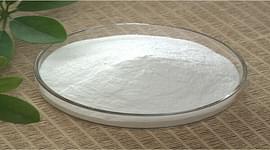
Potassium Chloride
Read More: Physical Properties of Haloalkanes and Haloarenes
| Table of Content |
Key Terms: Potassium Chloride, KCl, Potassium, Chlorine, ionic compound, halide, electrons
Structure of Potassium Chloride
[Click Here for Sample Questions]
Potassium Chloride is an ionic compound because it is formed due to the complete transfer of an electron from Potassium to Chlorine, making Potassium K+ which is a cation, and making Chlorine Cl- which is an anion. We know that every element in Chemistry needs to follow either the duplet or octet rule, therefore, in the case of Potassium Chloride, Potassium (whose atomic number is 19) needs to get rid of one electron, whereas, Chlorine (whose atomic number is 17) needs one electron to complete the octet rule. Hence, Potassium donates one electron to Chlorine and this is how Potassium Chloride is formed. Hence, the formula of Potassium Chloride is KCl.

Potassium Chloride (KCl)
Preparation of Potassium Chloride
[Click Here for Sample Questions]
- Potassium Chloride can be extracted from seawater.
- Potassium Chloride can be obtained as a by-product during the synthesis of Nitric acid (HNO3) from Hydrochloric Acid (HCl), and Potassium Nitrate (KNO3).
- Potassium Chloride (KCl) can be prepared by reacting bases of potassium (such as potassium hydroxide) with hydrochloric acid (HCl) in the laboratory.
- KCl can directly be extracted from sylvite, carnallite, and potash.
Physical Properties of Potassium Chloride (KCl)
[Click Here for Sample Questions]
Following are the physical properties of KCl:
- Potassium Chloride does not have any odour.
- It is a crystalline salt and follows a face-centred cubic (FCC) arrangement. (In FCC arrangement atoms are arranged in a cube and atoms are placed at every corner of the cube and on every face of the cube.)
- Potassium Chloride is a white-coloured salt that tastes sour.
- The density of KCl in the solid-state is 1.984 g/ml.
- Potassium Chloride is soluble in water.
- Potassium Chloride is soluble in alcohol except for ether.
- The melting point of KCl is 1040 Kelvin.
- The boiling point of KCl is 1690 Kelvin.
- The solubility of KCl is directly proportional to temperature. The pH level of Potassium Chloride on the pH scale is 7.

pH Scale
Chemical Properties of Potassium Chloride (KCl)
[Click Here for Sample Questions]
The chemical properties of Potassium Chloride (KCl) are as follows:
- The aqueous solution of Potassium Chloride has high electrical conductivity because it can be completely ionized into Potassium ion (K+) and Chlorine ion (Cl-) in water.
- KCl can be reduced to Potassium (K) by reacting with Sodium (Na), despite Sodium (Na) being at a lower position than Potassium (K) in the electropositivity series. The temperature at which Sodium (Na) displaces Potassium (K) is 850 degrees C. This reaction is also termed a Redox Reaction (Reaction where Reduction and Oxidation occur simultaneously). The chemical equation of this reaction is KCl + NaCl + K
- Potassium Chloride (KCl) burns with lilac or pale violet-coloured flame. This flame test is one of the chemical tests to identify it.
Uses of Potassium Chloride
[Click Here for Sample Questions]
Potassium Chloride (KCl) has a wide variety of uses and let’s discuss them one by one.
- Potassium is one of the components of our blood and its deficiency can be fatal for life, so Potassium Chloride (KCl) is prescribed by doctors to patients suffering from hypokalemia ( a condition where potassium level in the blood drops to the lowest).
- Potassium Chloride is widely used in the agricultural sector. It is used in the manufacturing of Potash, which is a soil-enriching fertilizer and helps in the growth of plants.
- Potassium Chloride (KCl) is also used as a substitute for Sodium Chloride (NaCl) for patients having high blood pressure problems.
- Potassium Chloride (KCl) is also used in the production of Potassium (K) metal. For example through this chemical reaction KCl + Na = NaCl + K
- KCl is also used to manufacture Potassium Hydroxide (KOH).
- Potassium Chloride is used as a source of beta radiation for calibration monitoring equipment.
- Potassium Chloride (KCl) is used by industries for manufacturing soaps.
- KCl is one of the components of the flux used in oxy-fuel welding machines for the welding of aluminium.
Things to Remember
- The pH level of KCl is 7.
- Potassium Chloride burns in lilac or pale-violet flame during the flame test.
- Potassium Chloride is not soluble in ether.
- KCl is an ionic compound.
- The aqueous solution of KCl has high electrical conductivity.
Also Check: Solubility
Sample Questions
Ques: How is Potassium manufactured from Potassium Chloride? (1 Mark)
Ans: Potassium Chloride is used in manufacturing Potassium by undergoing a redox reaction with Sodium Chloride. The equation is given below:
KCl + Na ⇒ NaCl + K
Ques: What is the medical use of Potassium Chloride? (1 Mark)
Ans: Potassium Chloride in the form of capsules is prescribed by doctors to patients suffering from hypokalemia or deficiency of potassium in the blood.
Ques: What is the chemical test for KCl? (1 Mark)
Ans: Potassium Chloride (KCl) burns with lilac or pale violet colour flame which is one of the tests to identify the salt.
Ques: What type of bond is present in KCl? (1 Mark)
Ans: KCl has an ionic bond formed due to the complete transfer of an electron from Potassium (K) to Chlorine (Cl).
Ques: What is the colour of Potassium Chloride? (1 Mark)
Ans: Potassium Chloride (KCl) is white-coloured salt.
Ques: What is the boiling point of KCl? (1 Mark)
Ans: The boiling point of KCl is 1690 Kelvin.
Ques: What is the melting point of KCl? (1 Mark)
Ans: The melting point of KCl is 1040 Kelvin.
Ques: What is the density of Potassium Chloride? (1 Mark)
Ans: The density of KCl in the solid state is 1.984 g/ml.
Ques: What is the agricultural use of KCl? (1 Mark)
Ans: KCl is used for the manufacture of Potash which is a fertilizer used for plant growth.
Ques: Which bond is present in KCl? (1 Mark)
Ans: KCl is formed by an ionic bond between the K+ and Cl-
Ques: Potassium Chloride is used as a substitute for which salt during cooking? (1 Mark)
Ans: Potassium Chloride can be used as a substitute for Sodium Chloride.
Ques: At what temperature does Sodium (Na) displace Potassium (K) from KCl? (1 Mark)
Ans: Sodium (Na) displaces Potassium (K) from KCl at 850 degrees C.
Read More About:
Also Check:



Comments