



Education Journalist | Study Abroad Lead
Para nitroacetanilide, also called 4-nitroacetanilide, is a chemical compound that is a nitroacetanilide derivative made from a mixture of acetanilide and nitrating. In addition to para products, a trace of ortho products is also formed. Nitration is an important reaction that is used in the training of nitro compounds. Nitro compounds are used as the primary substances for dyes, drugs, pills, explosives, and many other commercially beneficial materials. In this experiment, p-nitro acetanilide will be prepared by the acetanilide nitration.
| Table of Contents |
Key Terms: P-Nitroacetanilide, Nitroacetanilide, Nitration, Acetanilide, Ethyl Alcohol, Acetic Acid, Nitric Acid, Sulphuric Acid, O-Nitro Acetanilide, Electron, Electrophile, Amino Group, Hydrolysis, Oxidation, Aniline, Acetophenone
What is p-Nitroacetanilide?
[Click Here for Sample Questions]
Para nitroacetanilide is also called 4-nitroacetanilide. Para nitroacetanilide is defined as a chemical compound that is a derivative of nitro acetanilide made from a mixture of nitrating and acetanilide. In addition to para products, a trace of Artho products is also formed. Other names for p-Nitroacetanilide may include p-Acetamido Nitrobenzene, N- (4-nitrophenyl) acetamide, and N-Acetyl-4-nitroaniline.
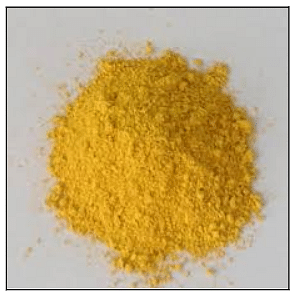
p-Nitroacetanilide
Principle of p-Nitroacetanilide
[Click Here for Sample Questions]
p-Nitroacetanilide is prepared by nitration of acetanilide. The acetamide organization (-NHCOCH3) in acetanilide is the ortho and para directing. Thus, in nitration, the sum of o- and p-nitroacetanilide is shaped.
As the acetamido organization is a huge group, it poses a steric challenge to the ortho function. Therefore, p-nitro acetanilide is fashioned as the primary product. On the crystallization from ethyl alcohol, p-nitro acetanilide crystallizes almost as a colourless crystal, even in a solution of ortho isomers.
Read More: Uses of Methanol and Ethanol
Objectives
[Click Here for Sample Questions]
After performing this experiment, we should be able to do the following:
- Recrystallize the p-nitro acetanilide,
- Prepare p-nitro acetanilide,
- Determine the melting point of prepared p-nitro acetanilide
- Perform the other compounds' nitration
Read More: Isomerism
Preparation of Para Nitro Acetanilide From Acetanilide
[Click Here for Sample Questions]
The process of preparation of para nitroacetanilide has been elaborated below in detail.
Aim
Preparation of p-Nitroacetanilide from acetic acid and acetanilide in the presence of a nitrating mixture.
Theory
Organic compounds can be prepared by nitration from p-nitro acetanilide. When acetanilide is treated with a nitrating mixture, i.e. a mixture of nitric acid and sulphuric acid, it forms p-nitro acetanilide. Also, as a minor product, along with p-nitro acetanilide, o-nitro acetanilide is formed. Since o-nitro acetanilide is much soluble in alcohol, it is so easy to dissociate p-nitro acetanilide by crystallization.
It is a type of electrophilic substitution reaction. Here, the electrophile -NO2 will attach the paragraph position because -NHCOCH3 is considered an electron releasing group. And nitro anilines will be prepared by this kind of reaction since if it is not possible to nitrate the aniline, the amino group will be oxidized with the nitrating mixture. Apart from that, in order to protect the amino group from oxidation, acetanilide is nitrated to form p-nitro acetanilide first and then p-nitro aniline is formed by hydrolysis, which is difficult to obtain directly by nitration.
Material Required
The essential materials required to make p-nitroacetanilide are listed as follows:
- Acetic acid
- Acetanilide
- Fuming Nitric acid
- Concentrated Sulphuric acid
- Ethyl alcohol
- Beaker
- Conical flask
- Filter paper
- Dropping funnel
- Buchner funnel
- Glass rod
- Pipette
Procedure
- In a clean beaker take 3 grams of fine powder acetanilide and then dissolve it by adding glacial acetic acid to stir the contents carefully at room temperature.
- Now, gently heat the mixture to dissolve the acetanilide completely.
- Then, cool the solution and slowly add the concentrated sulphuric acid to a constant stir. The solution becomes warm by doing so.
- Then, put the mixture in an ice bath, and a clean solution is obtained.
- Now, add fuming nitric acid to the dropwise through a dropping funnel, stirring constantly in the cold solution.
- Maintain the temperature below 20oC during the entire procedure.
- Once the nitric acid has been added, the beaker can be removed from the freezing mixture bath and allowed to stand for half an hour at room temperature.
- Pour the mixture into 100 grams of crushed ice in a beaker and stir it well.
- By doing this, large crystals of p-nitro acetanilide are obtained and then those crystals are filtered through filter paper.
- Then, to remove excess acid, the isolated p-nitro acetanilide is washed well with cold water.
- It is then crystallized from ethyl alcohol.
- Now, dry the crystals in a fold of filter paper and weigh them to know the yield.

Preparation of p-Nitroacetanilide
Observations
Let’s take a look at the sample observations, which are tabulated below:
| Colour of the Crystals | Colorless |
| Melting Point | 214oC |
| Expected Yield | 4 gm |
Precautions
[Click Here for Sample Questions]
- The temperature has to not exceed extra than 20oC.
- Advisable to assemble nitric acid into the reaction aggregate even as it is immersed in the ice bath.
- Carefully upload the fuming nitric acid drop by drop and do not inhale the fumes of nitric acid.
- Ensure you have been nicely knowledged within the threat communique general.
- Identify the chemical substances you're using.
- Be sure to list quantity, garage location, and storage techniques.
- Ask your chemical supplier for safety information sheets and preserve them in their hands for reference.
- Label all boxes with name, awareness, date of manufacture, and statistics on the hazards associated with the chemical being saved.
Safety
Ethanol is flammable, so it is advisable to handle it carefully. Sodium acetate trihydrate which is CH3COONa.3H2O, acetophenone oxime, and acetophenone irritate the eyes, ears, and respiratory system when exposed. It is advisable to avoid direct or indirect contact and not to inhale or ingest. Hydroxylamine hydrochloride (NH2OH.HCl) is defined as corrosive. Therefore, avoid all contact and handle this compound carefully. Deuterochloroform (CDCl3) is defined as toxic, so it should be handled with caution.
Read More: Hyponitrous Acid Formula
Things To Remember
- p-Nitroacetanilide can be prepared by acetanilide nitration. The acetamido group (which is -NHCOCH3) is para and indicator in acetanilide. Thus, upon nitration, an o- and p-nitro acetanilide mixture is formed.
- When crystallized from ethyl alcohol, p-nitro acetanilide crystallizes as mostly colourless crystals, on the other hand, ortho isomers remain in the same solution.
- Another minor product made during the preparation of para nitro acetanilide is ortho nitro acetanilide. Acetanilide reacts with concentrated nitric and sulfuric acids at 288 K. Para and ortho nitro acetanilide are formed as a product. By dissolving the solution in ethanol, ortho nitro acetanilide is separated from para nitro acetanilide.
- Some precautions should be taken while preparing p-nitroacetanilide. The temperature should not exceed 200C.
- It is recommended to add nitric acid to the reaction mixture when immersed in the ice bath.
- Add fuming nitric acid drops carefully and do not inhale the fumes of nitric acid.
Sample Questions
Ques. How p-nitroacetanilide is separated from o-nitroacetanilide in the crude sample? (3 Marks)
Ans. By dissolving the solution in ethanol, ortho nitro acetanilide is separated from para nitro acetanilide. Ortho nitro acetanilide is more soluble in ethanol so that it remains in the mother liquor and during crystallization, only para nitro acetanilide separates. o-nitro acetanilide is more soluble in ethanol as compared to water.
Ques. Mention the uses of p-nitroacetanilide. (3 Marks)
Ans. p-Nitroaniline is referred to as an organic chemical compound that consists of a phenyl group attached to an amino group which is para to a nitro group. A number of the uses of para nitro acetanilide may be indicated as follows: It may be used in prescription drugs for the manufacture of phenacetin and paracetamol. It is also used in pesticides and chemical compounds in rubber as intermediates for dyes.
Ques. Why is the ortho product is minor and the para product is major? Give reason. (3 Marks)
Ans. Ortho and Para products produce a resonance structure that stabilizes the arenium ion. This reaction is an electrophilic substitution reaction and the nitronium ion formed is directed towards ortho and para positions. Due to steric hindrance in the ortho position the nitronium electrophile is directed more towards the para position. Therefore, the para product is major.
Ques. What is called nitrating mixture? (3 Marks)
Ans. The combination of concentrated sulphuric acid and fuming nitric acid is called a nitrating mixture. Its action depends on the presence of the nitronium ion, NO2+. It is used to introduce mainly groups into the molecules of aromatic compounds. The nitro group may later be converted or replaced by others. To make commercial nitro compounds, such as explosive cellulose trinitrate, glyceryl trinitrate, trinitrotoluene, and picric acid.
Ques. What is the formula for p-nitroacetanilide? Give its IUPAC name. (2 Marks)
Ans. The formula for p-nitroacetanilide is C8H8N2O3. The IUPAC name is N-(4-nitrophenyl) acetamide. p-Nitroaniline is a bright yellow powder that smells like a faint ammonia-like odour.
Ques. Why is p-nitroaniline coloured? (3 Marks)
Ans. The problem is that the remaining traces of acid will hydrolyze it into p-nitroaniline which is a deep yellow to yellow-orange and it smells like ammonia. This compound has a melting point of 146 -149 °C. Unfortunately, it is difficult to remove p-nitro aniline from p-nitro acetanilide by crystallization.
Ques. Why is it impossible to prepare p-nitroaniline directly from aniline? Is p-nitroaniline soluble? (3 Marks)
Ans. In aniline, the NH2 group directs the incoming electrophile to the ortho and para position. Therefore a mixture of o-nitroaniline and p-nitroaniline is usually found during direct nitration of aniline.
Para nitro aniline is insoluble in water. This chemical is sensitive to moisture. Toxic oxides of nitrogen can be formed in fire. The major product, p-nitroaniline, is almost insoluble in ethanol whereas, in contrast, o-nitroaniline is soluble in ethanol.
Ques. What is 4-Nitroacetanilide? (3 Marks)
Ans. 4-Nitroacetanilide is a chemical compound that is a nitro derivative of acetanilide that contains two more isomers, 2-nitroacetanilide and 3-nitroacetanilide. 4-Nitroacetanilide is used as an intermediate in the production of some dyes. It is used as an intermediate in the manufacture of pharmaceuticals pesticides, and dyes.
Read Also:



Comments