



Education Journalist | Study Abroad Lead
Sericulture is the technique of rearing silkworms for the production of silk fibre. Major activities of sericulture comprise food-plant cultivation to feed the silkworms raising cocoons and reeling the cocoons for the silk filament for value-added benefits such as processing and weaving. India is the second largest producer of silk after China and these two countries contribute 60% of all the silk production globally. Karnataka is the largest silk-producing state in India followed by Andhra Pradesh and Assam.
| Table of Content |
Key Terms: Sericulture, Sericin, Fibroin, Mulberry Silk, Cocoon, Reeling, Silkworms, Tasar Silk, Muga Silk, Rearing
What is Sericulture?
[Click Here for Sample Questions]
Sericulture is defined as the process of rearing silkworms and extracting silk from them. There are several commercial species of silkworms used in the process of sericulture. Bombyx Mori is the most widely used silkworm along with other species such as Eri, Muga, and Tasar.
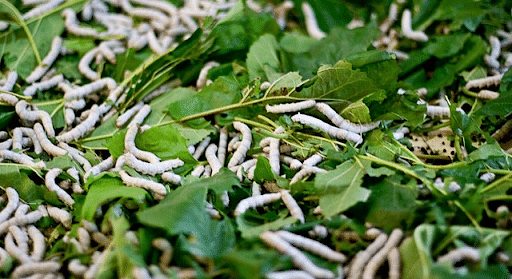
Sericulture
History of Sericulture
[Click Here for Sample Questions]
According to old Chinese text rearing of silkworms dates back to 2700 BC, Silk was mostly used for clothing but had other minor uses too. Mahatma Gandhi was against the traditional method of sericulture as it required killing the worm and Mahatma Gandhi was a promoter of Ahimsa. He also promoted "Ahimsa silk", made without boiling the pupa to procure the silk and wild silk produced from wild silkworms.
Read More: Difference Between Larva and Pupa
Composition of Silk
[Click Here for Sample Questions]
Silk is a natural fibre used to make silk textile produced from rearing silkworms. Silk is composed of two proteins namely sericin and fibroin. fibroin is the major component of the silk fibre constituting about 80% of the fibre part and is concentrated at the core. Sericin forms a layer around the fibroin core and makes up the remaining 20% of silk.
Read More:
| Related Links | ||
|---|---|---|
| Fungus Life Cycle | Mycology | History of Clothing Material |
| Natural Fibres | Economic Importance of Fungi | Difference between Bacteria And Virus |
| Serine | Fly Life Cycle | Metamorphosis |
Types of Silkworms
[Click Here for Sample Questions]
There are five major types of silk produced worldwide using sericulture. Except for mulberry, all other varieties are termed non-mulberry varieties.
- Mulberry Silk: It contributes to the bulk of the silk produced in the world. Mulberry silk is produced by Bombyx mori L. which mainly consumes the leaves of mulberry plants. The major mulberry silk-producing states in India are Karnataka, Andhra Pradesh, West Bengal, Tamil Nadu and Jammu & Kashmir
- Tasar Silk: Tasar is copper-coloured silk with a coarse texture, mainly used for furnishings and interiors. Tasar silk is Produced by the silkworm, Antheraea mylitta which mainly survives on the food plants Asan and Arjun.
- Oak Tasar: Oak Tasar is a finer variety of Tasar silk produced from the silkworm, Antheraea profile J. As the name suggests, in India it feeds on natural food plants of oak, Oak Tasar is found in abundance in the sub-Himalayan belt of India.
- Eri Silk: Eri silk is produced by domesticating silkworm, Philosamia ricini that feeds mainly on castor leaves. It is used for making chadars for its own use by tribes of India. In India, this Eri silk is produced mainly in the northeastern states and Assam.
- Muga Silk: Muga Silk is golden in colour. It is obtained from semi-domestication of the silkworm, Antheraea assamensis. These silkworms mainly eat the aromatic leaves of Soalu and some plants. It is used in the production of sarees, chaddars, etc.

Mulberry Silk Yarn
Read More: Animal Fibre
Stages of Sericulture
[Click Here for Sample Questions]
Sericulture has two main stages of production:
- Rearing Stage
- Processing Stage
Rearing Stage
- The female silk moth lays 300 to 500 eggs.
- These moths are then collected and disinfected using formalin and then transported to the sericulture farms.
- At the farms, these eggs hatch and give birth to the larvae of the silkworm. These larvae then feed on mulberry leaves to produce mulberry silk.
- These larvae feed day and night on mulberry leaves to grow enormous in size.
- After 20-30 days, they reach their potential and stop eating leaves, these are then transferred to a container and transported to the processing unit.
Processing Stage
- In the first stage the cocoons are exposed to the sun (traditional method) or steam machines (modern method) to separate the silk fibre from the cocoon.
- After the fibres are separated from the cocoon, Reeling is done. Reeling is the process of collecting silk fibres from the cocoon.
- Reeling is performed using special machines designed for the process.
- The silk fibre is then spun to create silk threads which are then turned into various woven items.
Read More: Lizard and Moth Life Cycle
Challenges Faced in Sericulture
[Click Here for Sample Questions]
There are numerous challenges faced by the farmers practicing sericulture. Here are some of the most common challenges posed to sericulture:
- Silkworms are prone to several diseases such as pebrine and flacherie. Pebrine disease infects the eggs, leading to the death of the larvae before hatching. It also makes the worm lethargic and develops dark spots.
- Silkworms are also threatened by several pests and get infected which results in the shrinkage of their bodies.
- A few other viral infections such as cytoplasmic polyhedrosis leads to the larvae losing their appetites.
- Fungi cause the muscardine infection that causes the larvae to become extremely feeble and eventually die.
- A few mites also produce a toxic substance that kills silkworms.
Read More: Insecticides
Things to Remember
- The rearing of silkworms for silk fibre is referred to as the process of Sericulture.
- The rearing of silkworms dates back to 2700 BC.
- Silk is mainly composed of two proteins- Sericin and Fibroin.
- There are five major types of silk produced worldwide. All other varieties of silk except the mulberry are termed non-mulberry varieties.
- Sericulture has two main stages of production- Rearing Stage and Processing State.
- China is the largest producer of silk followed by India in second place. Both these two countries contribute 60% of all the silk production globally.
Sample Questions
Ques. List down the important uses of sericulture. (3 Marks)
Ans. The important uses of sericulture are listed below:
- The silk produced through sericulture is used to produce clothes, accessories, types of furniture, furnishing clothes, etc.
- It is also useful in preparing high-end shampoos and conditioners.
- It is also helpful in repairing heavy tolerable bags like gun power bags.
Ques. Who is the largest producer of silk in the world? (1 Mark)
Ans. China is the largest silk producer in the world.
Ques. Why Was Mahatma Gandhi against Sericulture? (1 Mark)
Ans. Mahatma Gandhi was against the traditional method of sericulture as it required killing the worm and Mahatma Gandhi was a promoter of Ahimsa.
Ques. What are mulberry and non-mulberry silks? (3 Marks)
Ans. Mulberry Silk is the silk produced by Bombyx mori which mainly consumes the leaves of mulberry plants. Except for mulberry, all other varieties are termed non-mulberry varieties. The non-mulberry varieties of silk are Tasar Silk, Oak Tasar, Eri Silk, and Muga Silk.
Ques. What are the two proteins found in silk? (3 Marks)
Ans. Silk consists of two proteins namely Sericin and Fibroin.
- Fibroin is the major component of the silk fibre constituting about 80% of the fibre part and is concentrated at the core.
- Sericin forms a layer around the fibroin core and makes up the remaining 20% of silk.
Ques. Write a short note on Mulberry Silk. (3 Marks)
Ans. Mulberry Silk is the most widely produced type of silk in the entire world. Mulberry silk comes from the silkworm, Bombyx Mori. It primarily feeds on mulberry leaves hence getting its name, The major mulberry silk-producing states in India are Karnataka, Andhra Pradesh, West Bengal, Tamil Nadu and Jammu & Kashmir
Ques. Name the various species of silkworms. (3 Marks)
Ans. The major species of silkworms are
- Mulberry Silkworm
- Tasar Silkworm
- Muga Silkworm
- Eri Silkworm
- Oak Silkworm
- Giant Silkworm
Ques. Describe the process followed in Sericulture. (3 Marks)
Ans. The process of sericulture process follows the following steps:
- Moriculture, i.e, the cultivation of mulberry leaves.
- Silkworm Rearing which is promoting the growth of the silkworm.
- Silk Reeling, i.e, the extraction of silk filaments from the silkworm cocoons.
As the final step, the silk fibres are woven together to form a thread which is then plied together to form a yarn.
Ques. Mention the major problems faced during sericulture. (3 Marks)
Ans. During the process of sericulture, diseases can affect the eggs and destroy the silk rearing process. Any sort of infection during the rearing process may result in the shrinkage of larvae bodies. Also, insufficient technical skills may result in low-quality silk and low silkworm production.
Read More:



Comments