



Content Writer
Spontaneous Generation Theory is a form of scientific hypothesis that states the possibility of life from nonliving objects. According to the theory, fleas will be born from dust, and maggots will arise from rotting meat.
- The theory was supported by the famous philosopher Aristotle.
- In his book On the Generation of Animals, Aristotle stated that organisms require certain environmental conditions for their occurrence.
- The theory behind spontaneous generation has been widely accepted for more than two thousand years.
- However, it was challenged in the 17th century by fellow biologists Francesco Redi and Lazzaro Spallanzani.
- The theory was considered similar to the theory of the origin of life, which also states that life arises from organic compounds.
- The spontaneous Theory of Generation was finally disapproved in the 19th century by the work of Louis Pasteur.
| Table of Content |
Key Terms: Theory of Generation, Organic Compounds, Spontaneous Generation, Abiogenesis, Theory of Hylomorphism
Spontaneous Generation Theory
[Click Here for Sample Questions]
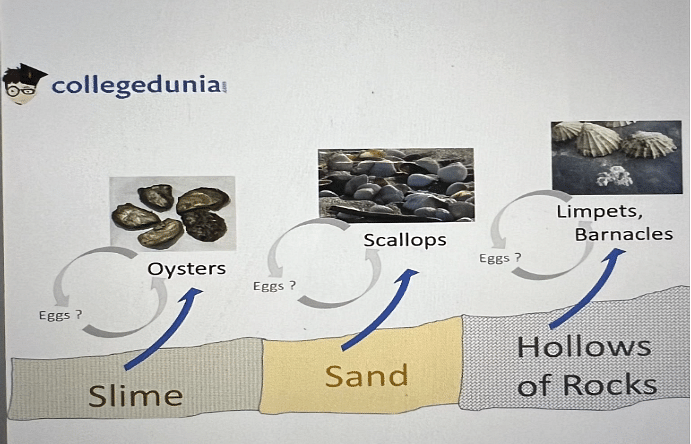
According to the term spontaneous generation, a life would be born from a nonliving matter or object. It states that it can easily be produced with the help of inanimate objects.
Spontaneous Generation Theory
- Researchers use a more scientific term for such theories as Abiogenesis.
- Another term that is most commonly used is equivocal generation.
- The term equivocal generation explains the generation of one form of life from something very uncommon.
- It is also known as heterogenesis and xenogenesis.
- Many theory supporters also explained that burning a candle in a closed flask will destroy the air around it.
Also Read: Unicellular Organisms
Supporter of Spontaneous Generation Theory
[Click Here for Previous Year Questions]
Many renowned and famous scientists accepted the Spontaneous Generation Theory and demonstrated various experiments to prove their validity within individuals.
Aristotle
Aristotle is the first and foremost supporter of the Spontaneous Generation Theory. He expanded the work that other philosophers are proposing for the theory's validity.
- He used the theory of Hylomorphism to support the spontaneous theory.
- According to the theory, every compound is derived from other compounds and matter.
- He also used the sexual theory of reproduction to explain the phenomena of the generation theory.
- He states that the male seed is developed with the help of the menstrual blood of the female.
- Aristotle used this sexual theory in the case of plants, where he explained that plants arise from matter similar to that of seed.
John Needham
John Needham is the second big supporter of the Spontaneous Generation Theory. Needham is an English naturalist who also experimented to state the validity of the theory.
- In the experiment, Needham boiled the broth in a pan and then poured it into a covered flask.
- During that time, it was known among people that boiling water or liquid would remove microorganisms from it.
- A few hours later, Needham broth was filled with microorganisms.
- Needham stated that microorganisms were born due to the effect of spontaneous theory.
- However, many fellow scientists challenged his theory, stating that he did not heat the broth properly.
Experimental Proof of Spontaneous Generation Theory
[Click Here for Sample Questions]
The theory received wide criticism from many biologists and physicists and conducted experiments to state the spontaneous generation theory is not valid.
Francesco Redi
Francesco Redi was the first person to state that the theory of spontaneous generation has many flaws.
- He conducted an experiment on the meat to prove that the theory was flawed.
- He placed two slices of meat in various separate jars.
- Some jars are covered with muslin cloth, and others are kept open.
- He kept the jar away to show the correct result of the experiment.
- When he checked the jar, the jar which was kept openly developed maggots.
- On the other hand, the jar that is kept covered was kept intact.
- The experiment conducted by Francesco Redi proved that spontaneous generation theory is not valid.
Pier Antonia Micheli
Pier Antonia Micheli was an Italian biologist who also considered the spontaneous generation theory was not valid.
- Pier Antonia Micheli conducted an experiment on the slice of melon.
- He placed fungal spores on each slice of melon thus proving the failure of the theory.
Check More:
| Related Topics | ||
|---|---|---|
| Germ Theory Of Disease | Evolution Of Life On Earth | Miller - Urey Experiment |
| Darwin's Contributions - Theory of Evolution | Heredity And Evolution | Difference Between Hypothesis and Theory |
Rejection of Spontaneous Generation Theory
[Click Here for Previous Year Questions]
The work of Francesco Redi, Pier Antonia Micheli and many other famous scientists were not credited for their work regarding the invalidity of spontaneous generation theory. It was in the 19th century when the theory was officially disapproved.
Louis Pasteur
Louis Pasteur was the first microbiologist whose results were considered valid regarding the inefficiency of the theory.

Louis Pasteur Broth Experiment
- He conducted the experiment on the meat broth that Needham had conducted earlier.
- He poured the broth into the swan-necked flask, allowing air to circulate through the flask.
- The microbes were closed in the neck of the flask.
- When he checked the flask after an extended time period, the broth was kept clear.
John Tyndall
John Tyndall is the second person who stated that the spontaneous generation theory was invalid. He conducted the same experiment which was conducted by Louis Pasteur and proved the invalidity of spontaneous generation theory.
Things to Remember
- Spontaneous Generation Theory is a form of theory that explains the birth of living organisms from nonliving matter.
- The theory was strongly supported by the Greek philosopher Aristotle.
- He conducted many experiments to state the validity of Spontaneous Generation Theory.
- The theory was also supported by John Needham, who conducted a broth experiment to state the theory is valid.
- Scientists like Francesco Redi and Pier Antonia Micheli raised voices regarding the inefficiency of the theory.
- The theory was disapproved after the experiment conducted by Louis Pasteur and John Tyndall.
- Louis Pasteur was awarded the Alhumbert Prize for his work on the invalidity of spontaneous generation theory.
Previous Year Questions
- Electric flux at a point in an electric field is..
- The correct order of acid strength of the following carboxylic acids is..[Jee Advanced 2019]
- The measurement of voltmeter in the following circuit is...[AIIMS 2017]
- Angular velocity of minute hand of a clock is...[MP PMT 2004]
- Highly pure dilute solution of sodium in liquid ammonia...[Jee Advanced 1998]
- A gas mixture consists of 22 moles of oxygen and 44 moles of Argon at temperature T. Neglecting all vibrational modes, the total internal energy of the system is..[NEET UG 2017]
- Alkali halides do not show Frenkel defect because..
- Let R = {(1,3),(4,2),(2,4),(2,3),(3,1)} be a relation on the set A = {1,2,3,4}. The relation R is...[AIEEE 2004]
- Degree of freedom for polyatomic gas...[AIIMS 2012]
- In pyrrole, the electron density is maximum on...[NEET UG 2016]
Sample Questions
Ques. What is spontaneous generation theory? (2 marks)
Ans. Spontaneous Generation Theory is a form of theory according to which living organisms like fleas, worms and others will come to life from a nonliving object. The theory was supported by many scientists and biologists. Even the great scientist Aristotle stood for the support of the theory and conducted experiments to prove the validity of the theory.
Ques. What are some of the examples of Spontaneous Generation Theory? (3 marks)
Ans. Some of the examples that state the validity of Spontaneous Generation Theory are as follows:
- During the spring, the river Nile is flooded with water, leaving behind nutritious mud that will help people in farming. However, the river also leaves behind dead frogs in the mud, thus stating that mud gives birth to frogs.
- In the mediaeval time, farmers stored wheat in the thatched roofs. Due to low maintenance, the roof started leaking, and the number of mice also increased. The result was grains giving birth to mice, thus supporting the theory.
- The meat was hanging by the nail in the butcher shop for the entire day, attracting many flies over it. It was proved that meat gave rise to flies.
Ques. Who was awarded the Alhumbert Prize? (1 mark)
Ans. Louis Pasteur was awarded the Alhumbert Prize from the Paris Academy of Sciences for proving that Spontaneous Generation Theory was invalid.
Ques. What experiment was conducted by Lazzaro Spallazani? (3 marks)
Ans. Lazzaro Spallazani was an Italian biologist who was against the spontaneous generation theory. He was the first person to raise his voice against an experiment conducted by John Needham. He conducted the same experiment that John Needham conducted, where he boiled the broth in a sealed container with small air space. Like Needham, he kept some jars open and some jars closed. He kept the jar away for some time and checked the results by stating that air was the reason for the development of microbes in the broth.
Ques. Who were the scientists that stated that spontaneous generation theory was invalid? (1 mark)
Ans. Francesco Redi, Louis Pasteur, Lazzaro Spallazani and John Tyndall were the scientists who stated that the spontaneous generation theory was invalid
Ques. What experiment was conducted by Francesco Redi to show that Spontaneous Theory is flawed? (3 marks)
Ans. Francesco Redi was the first to show that the Spontaneous Generation Theory was invalid. He conducted an experiment on two fresh slices of meat. He kept one slice of meat in a jar covered with muslin cloth. He kept the other slice in an open jar and kept both jars away for several days. After several days, when he checked the jar, he found that the covered jar was intact while other meat had spoiled, thus showing that the spontaneous theory was invalid.
Ques. What hypotheses were kept by Aristotle to show the validity of Spontaneous Generation Theory? (3 marks)
Ans. Aristotle was the first scientist who stood with the idea of the theory and expanded the work carried out by other philosophers to prove that the theory was valid. He explained the theory with the example of sexual reproduction, where he states that male semen is developed with the help of female menstrual blood. He also used this example in the case of plants and animals, in that some plants are born from seeds, and some plants are born from other non-living things.
For Latest Updates on Upcoming Board Exams, Click Here: https://t.me/class_10_12_board_updates
Check-Out:



Comments