




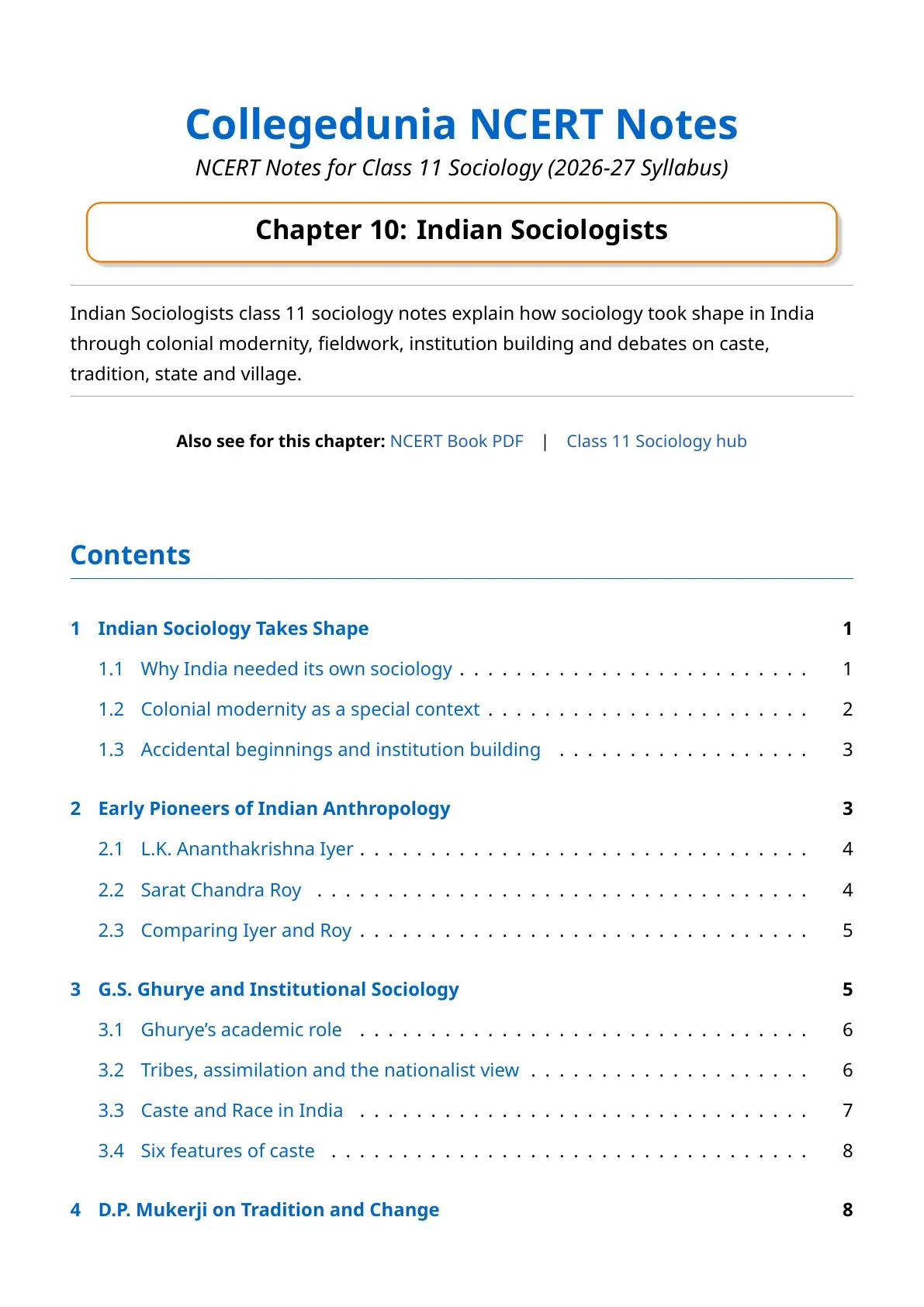
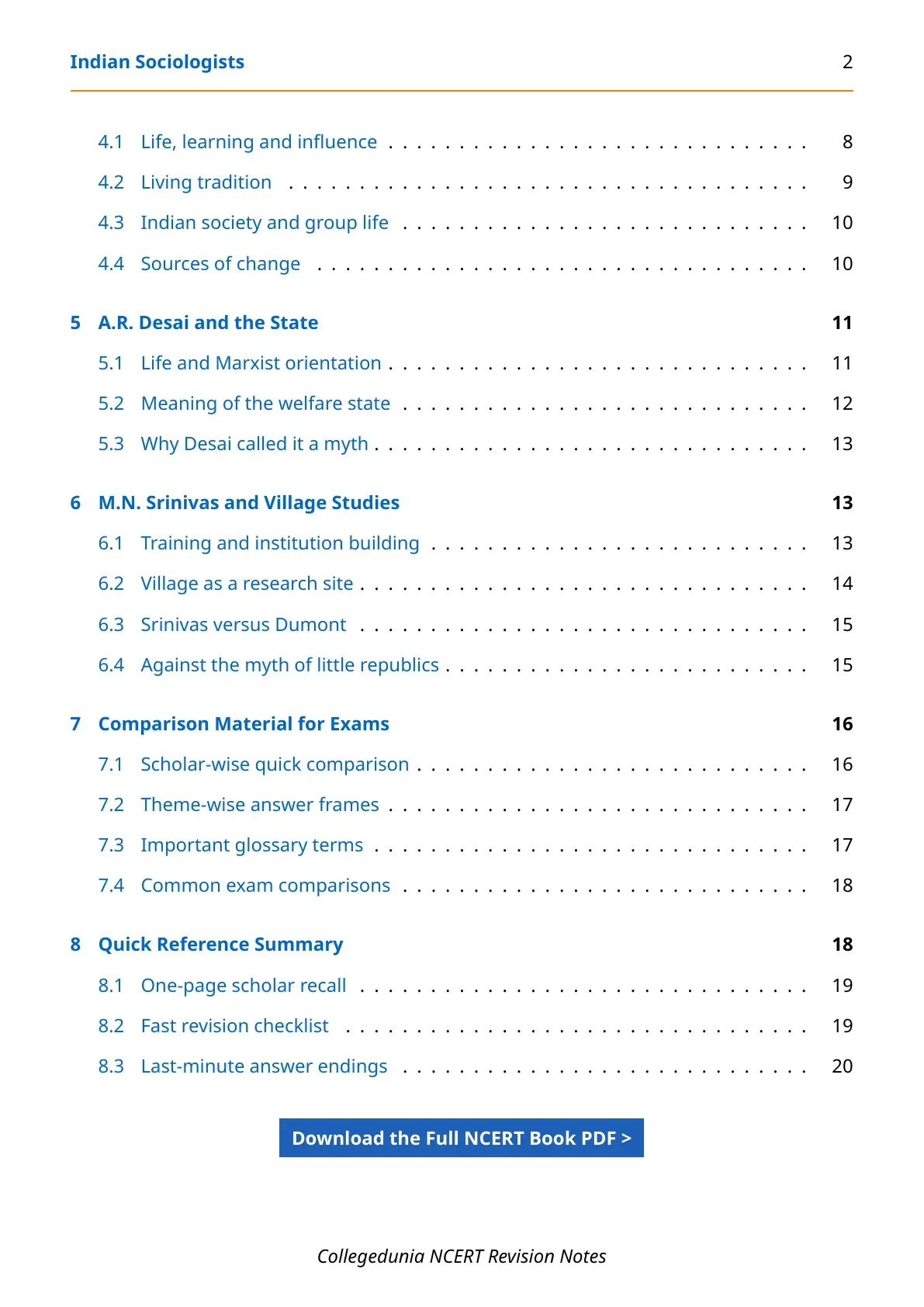
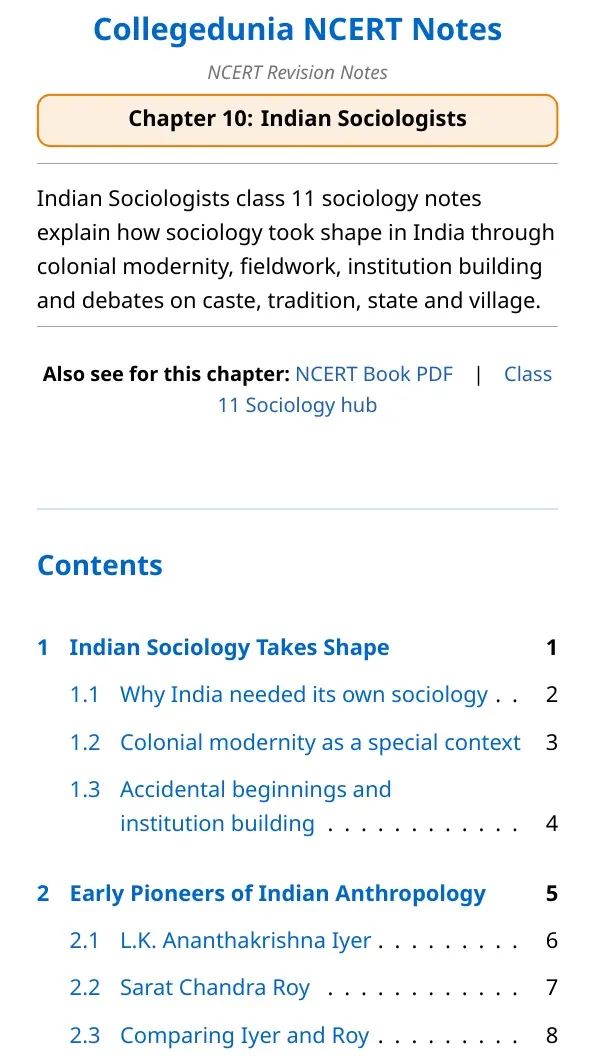
The NCERT Class 11 Sociology Chapter 10 Indian Sociologists Notes help students revise the 2026-27 NCERT chapter on how sociology grew in India. The PDF covers L. K. Ananthakrishna Iyer, Sarat Chandra Roy, G. S. Ghurye, D. P. Mukerji, A. R. Desai and M. N. Srinivas.
- Best for: Class 11 Sociology tests, NCERT revision and short-answer practice.
- PDF focus: Indian fieldwork, caste, tribe, tradition, nationalism and village studies.
- Chapter value: this chapter explains how Indian sociology found its own method.
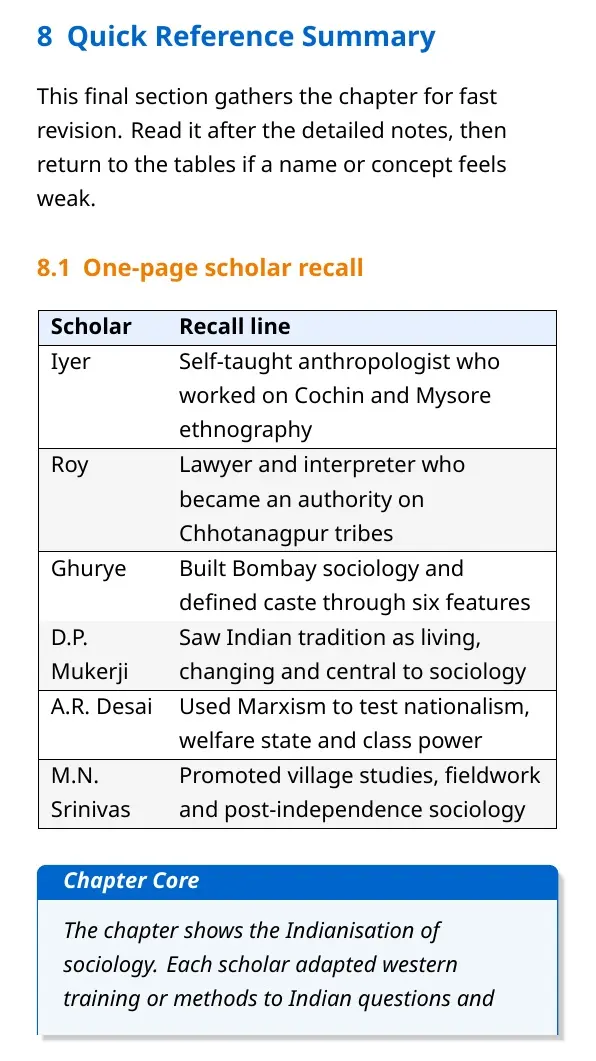
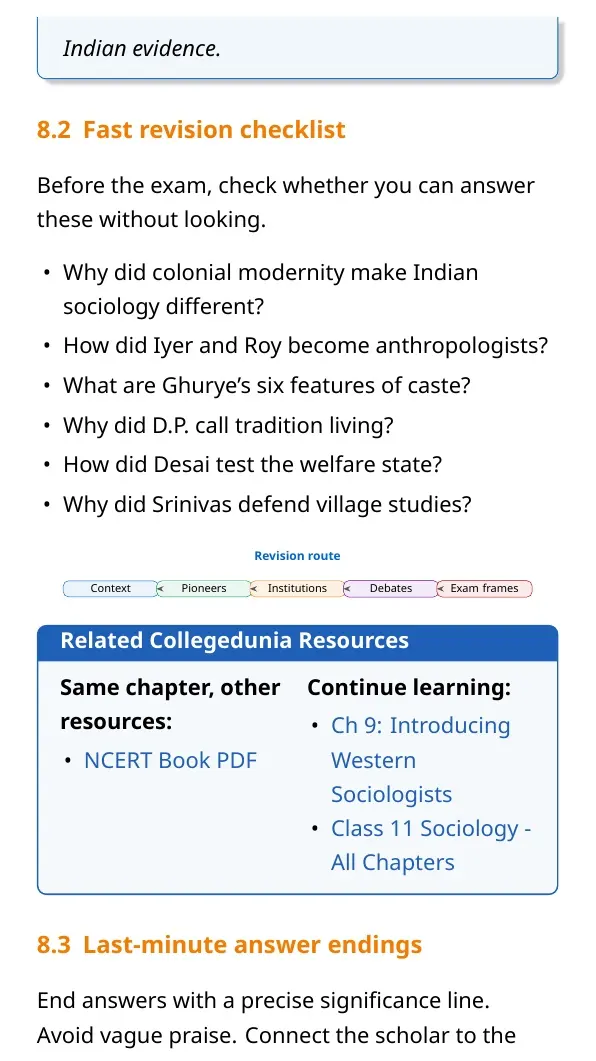
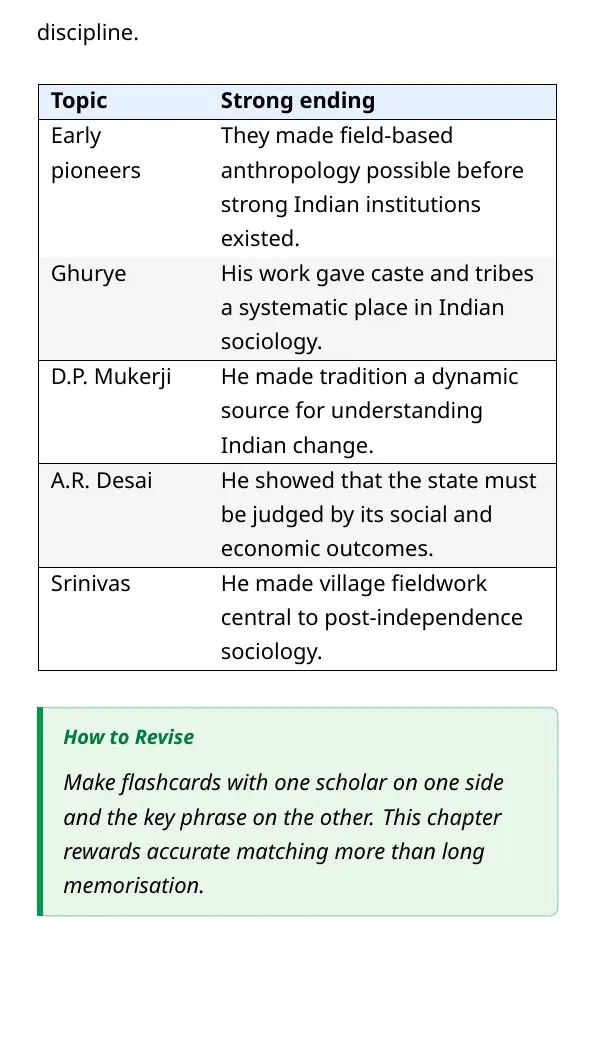

Revision Note: Read the chapter as a timeline first, then attach each sociologist to one method, one key idea and one Indian example.
Source: Collegedunia editorial review of the NCERT 2026-27 chapter structure.
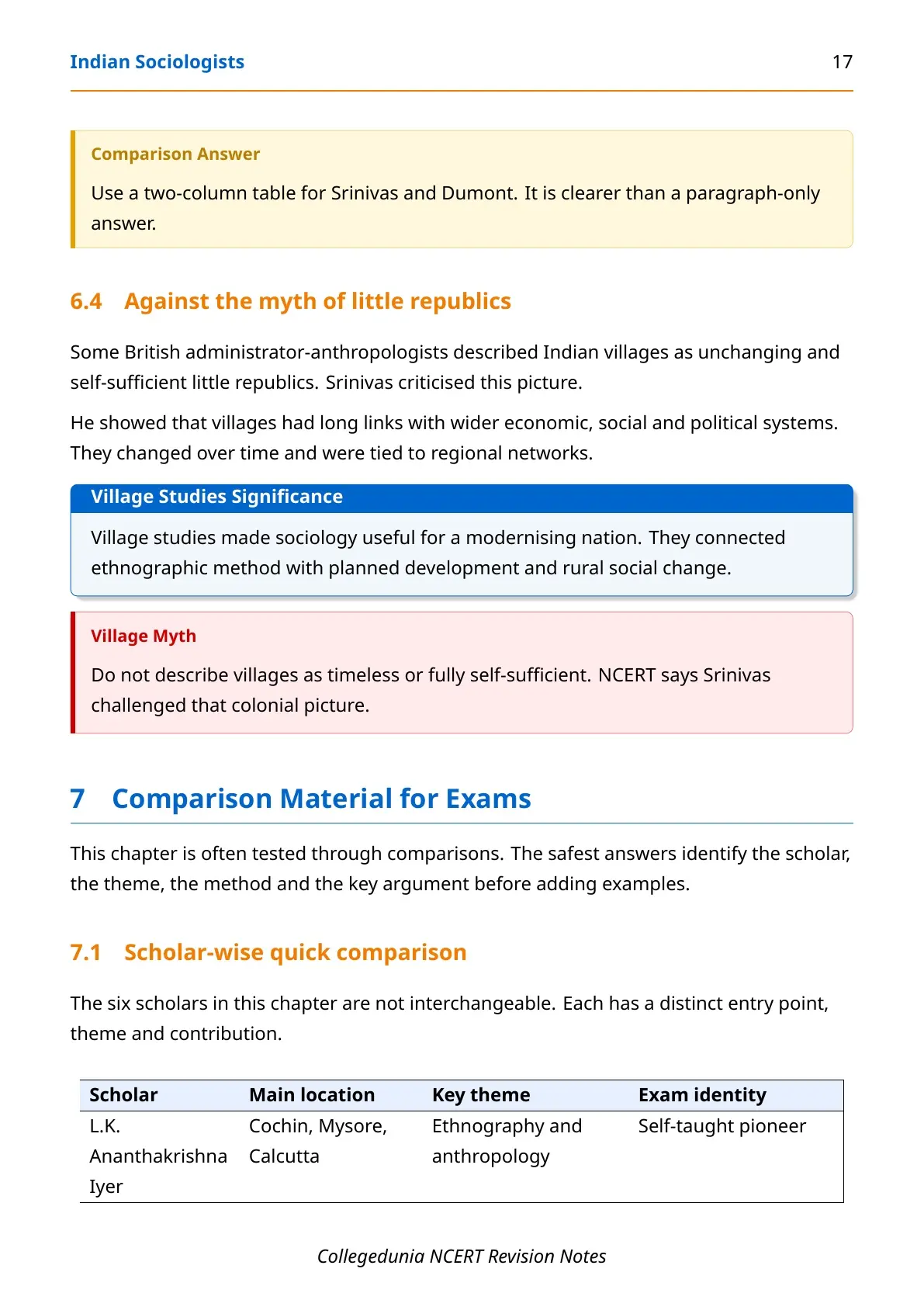
What the Indian Sociologists Notes Cover
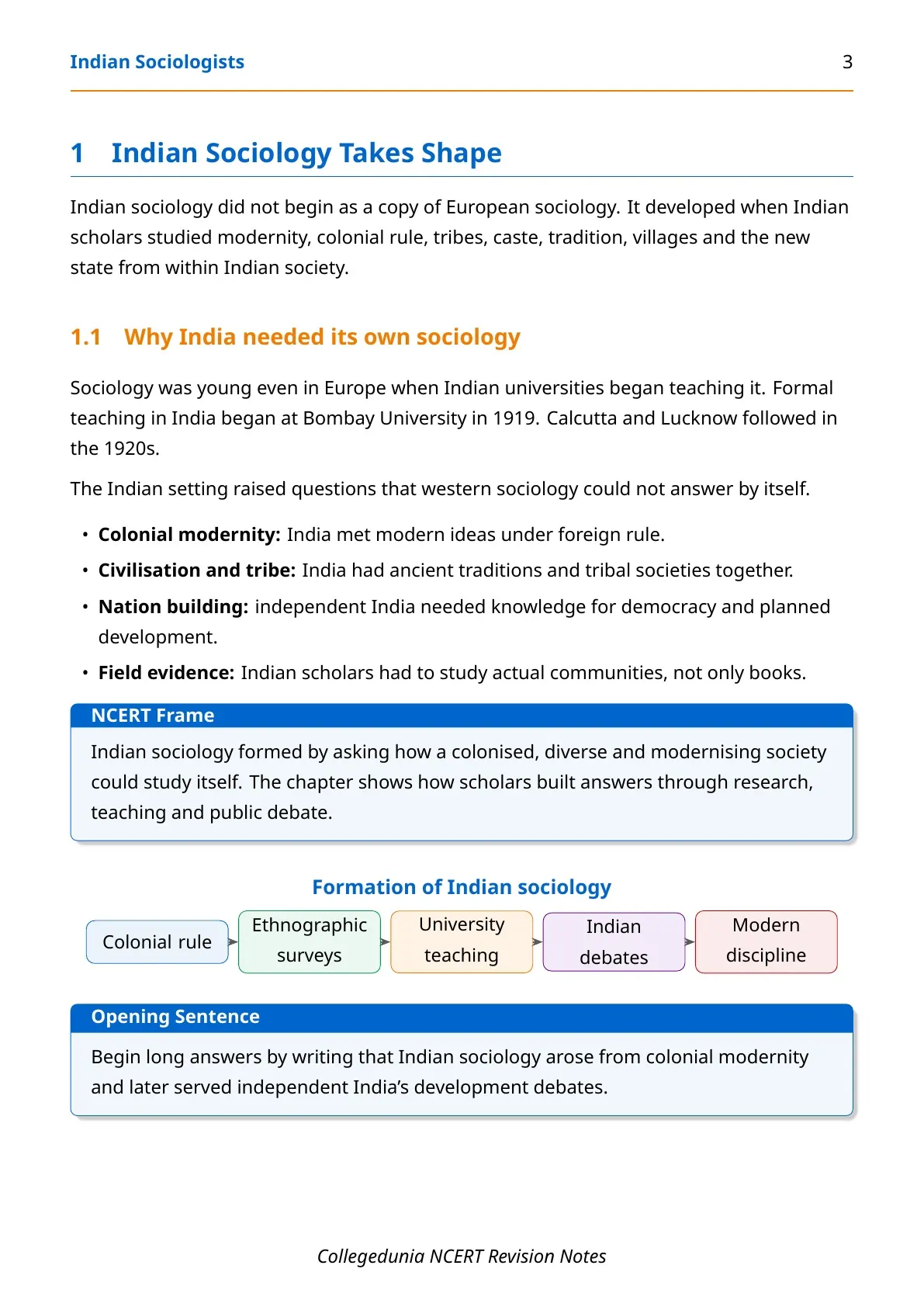
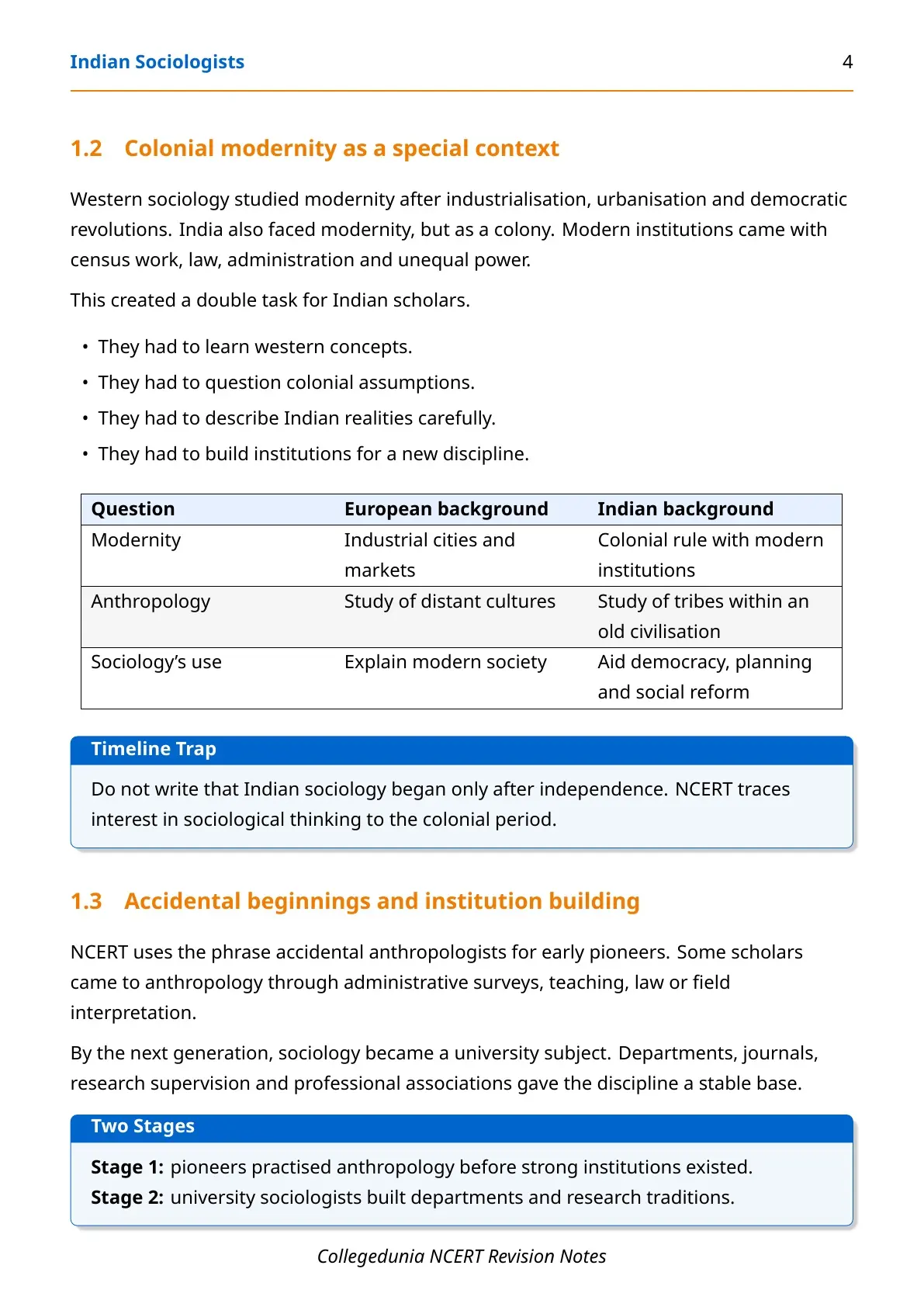
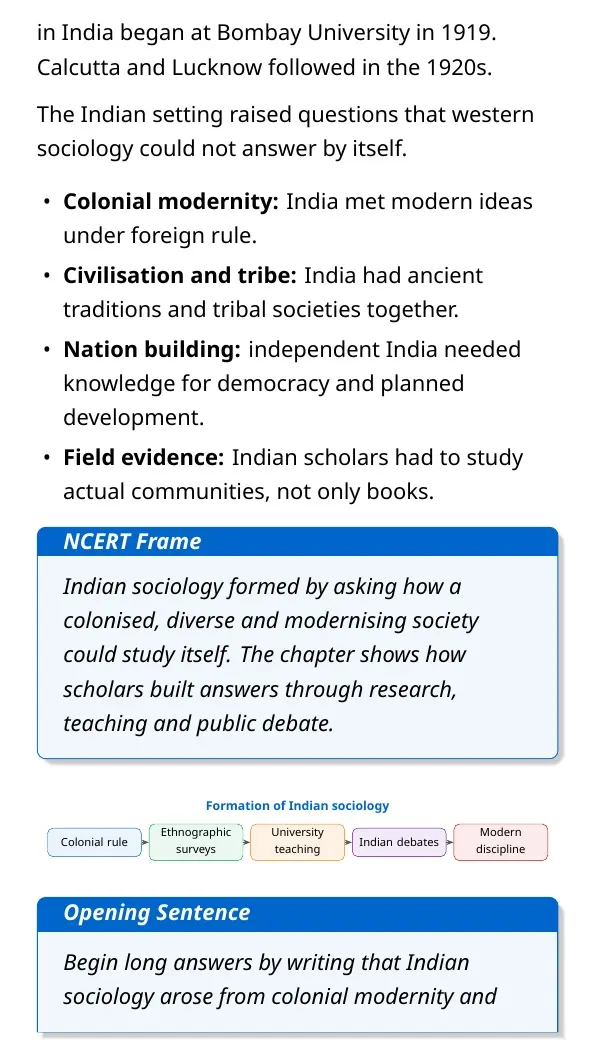
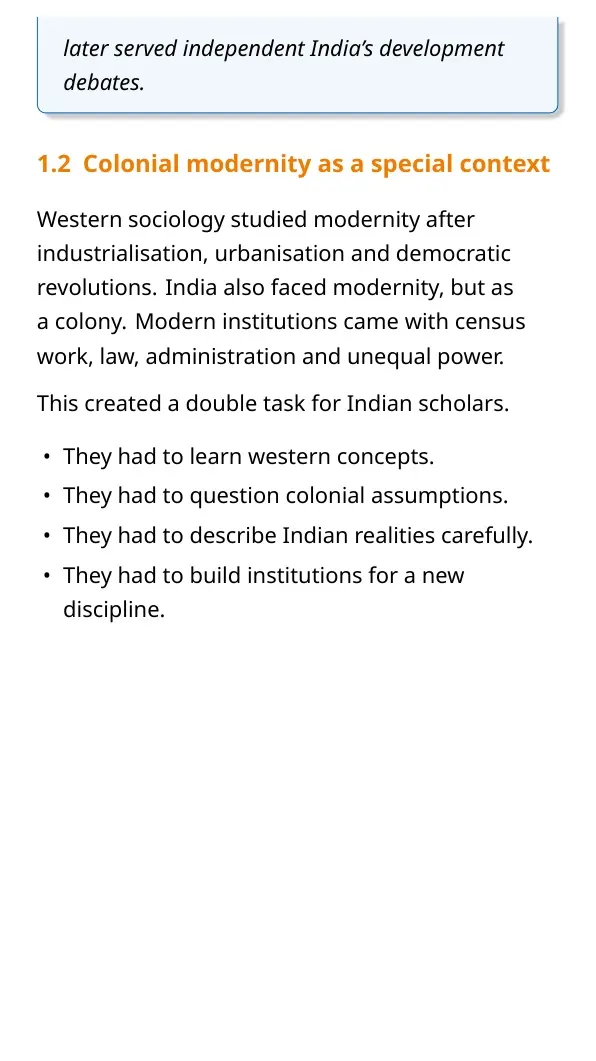
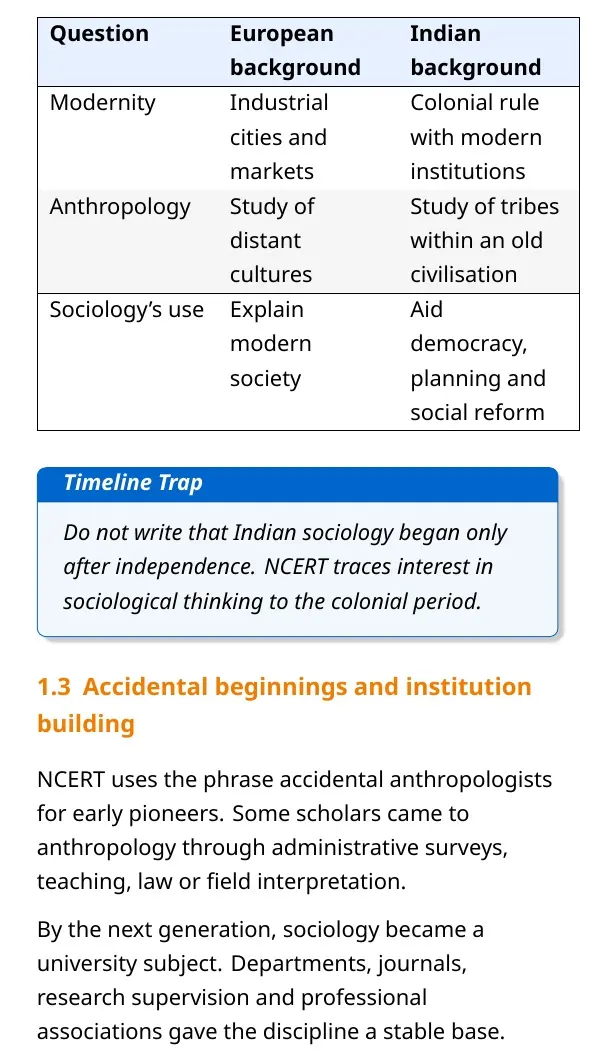
Chapter 10 explains why sociology in India could not simply copy European sociology. Indian sociologists had to study caste, tribe, village, tradition and colonial change through Indian evidence.
| PDF section | What students revise |
|---|---|
| Early discipline | Bombay University, Patrick Geddes and the first teaching centres. |
| Accidental pioneers | L. K. Ananthakrishna Iyer and Sarat Chandra Roy in anthropology. |
| Institution builders | Ghurye, D. P. Mukerji and the growth of Indian sociology. |
| Fieldwork tradition | Desai, Srinivas, village studies, Sanskritisation and dominant caste. |
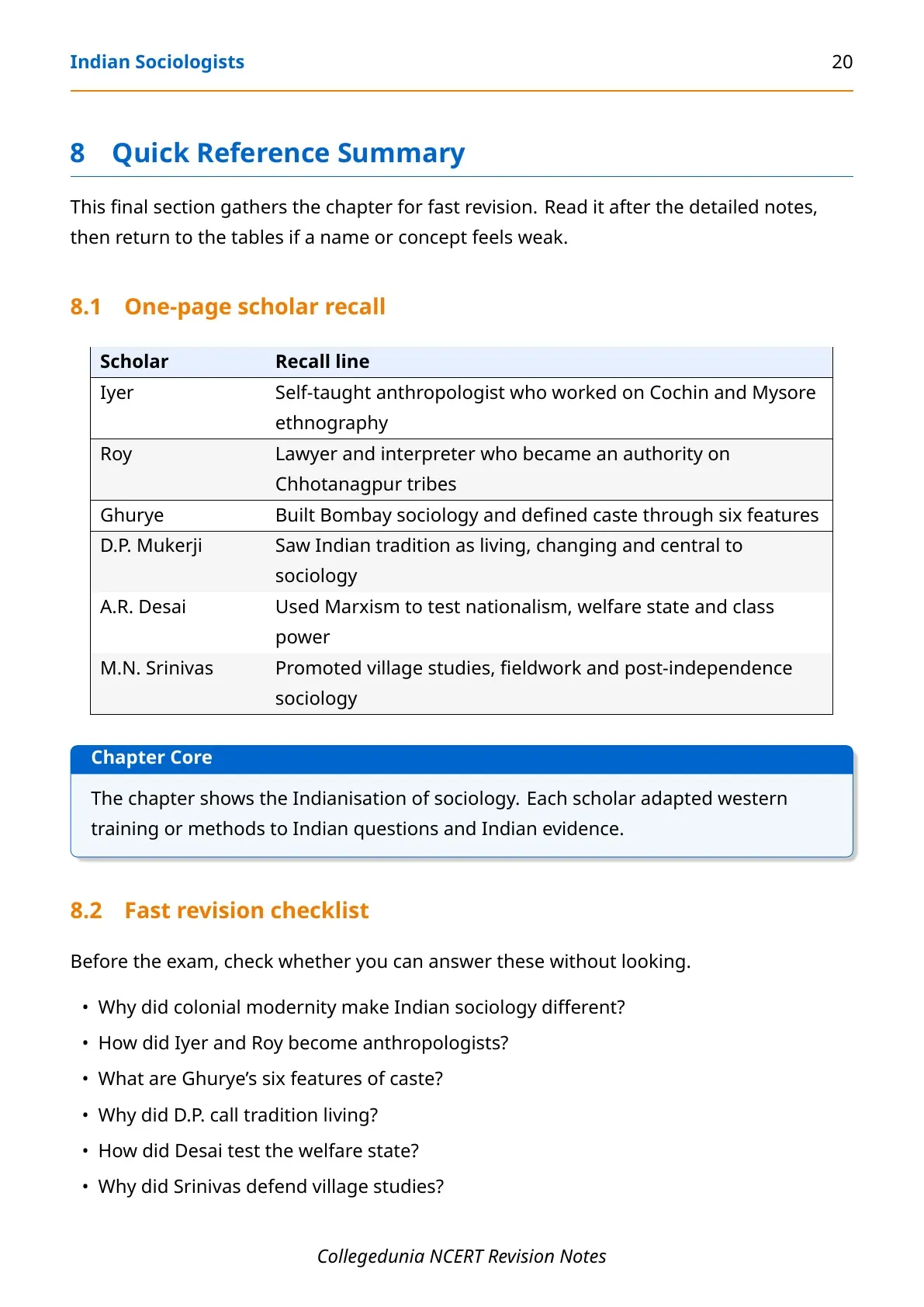
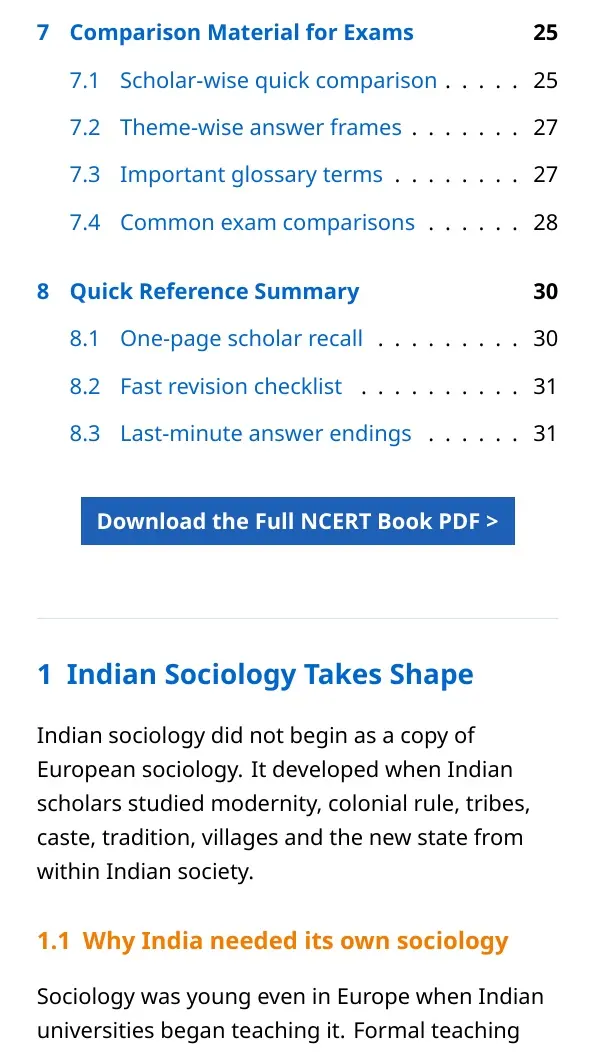
For exams, connect each sociologist with one method and one Indian social question.
Indian Sociologists Class 11 Video
Source: Magnet Brains on YouTube
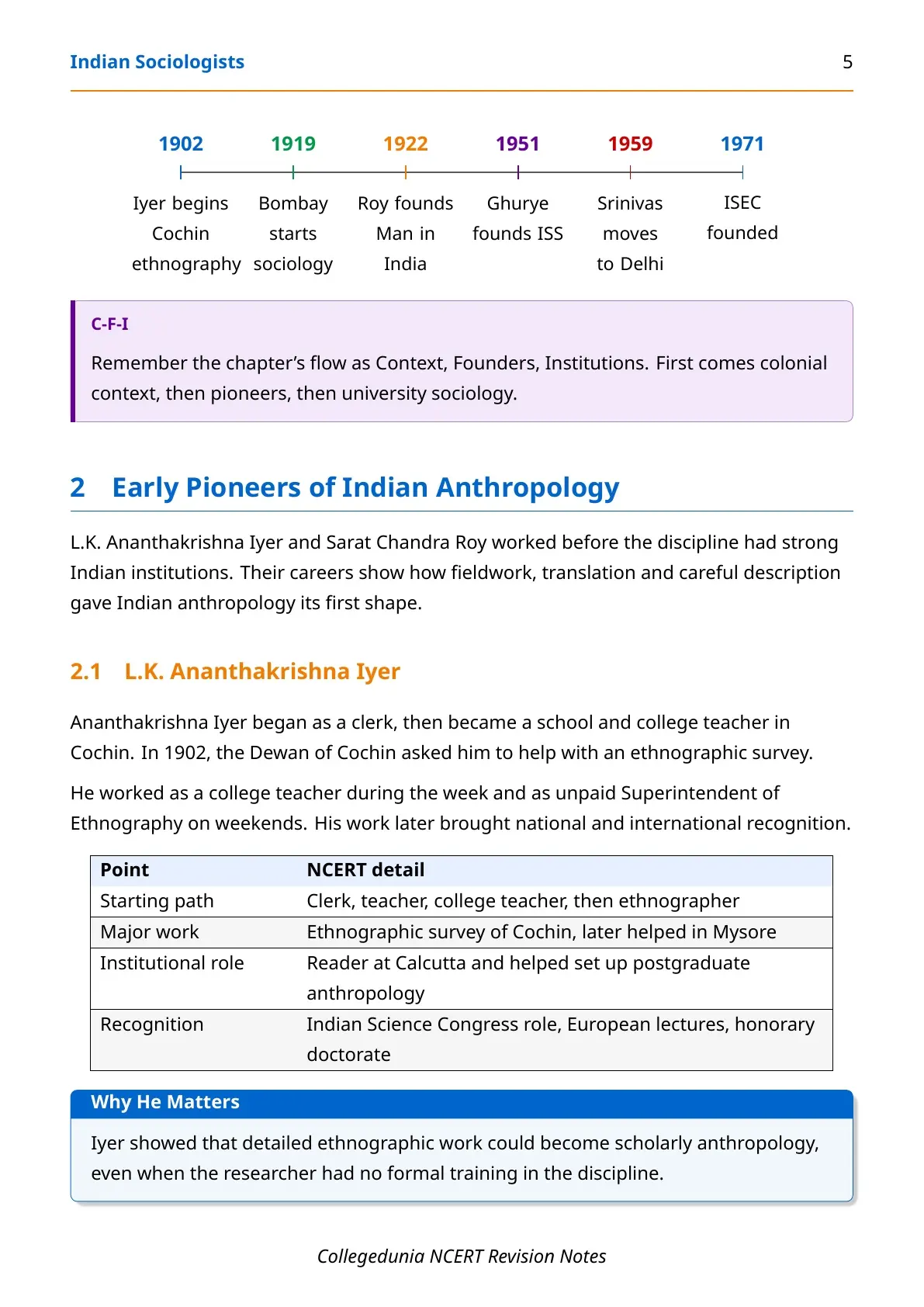
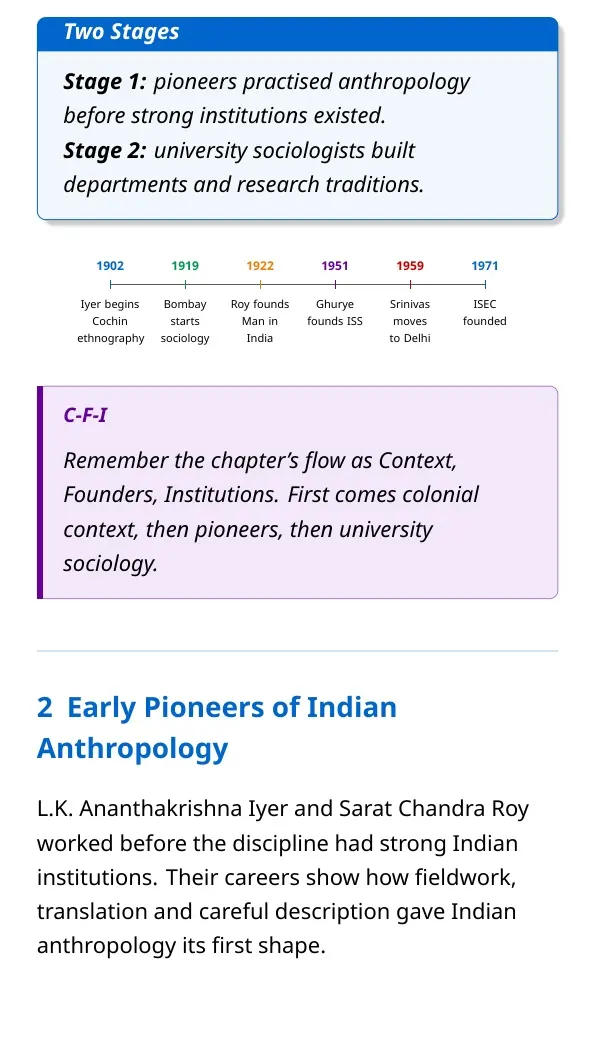
Indian Sociology Timeline for Class 11 Revision
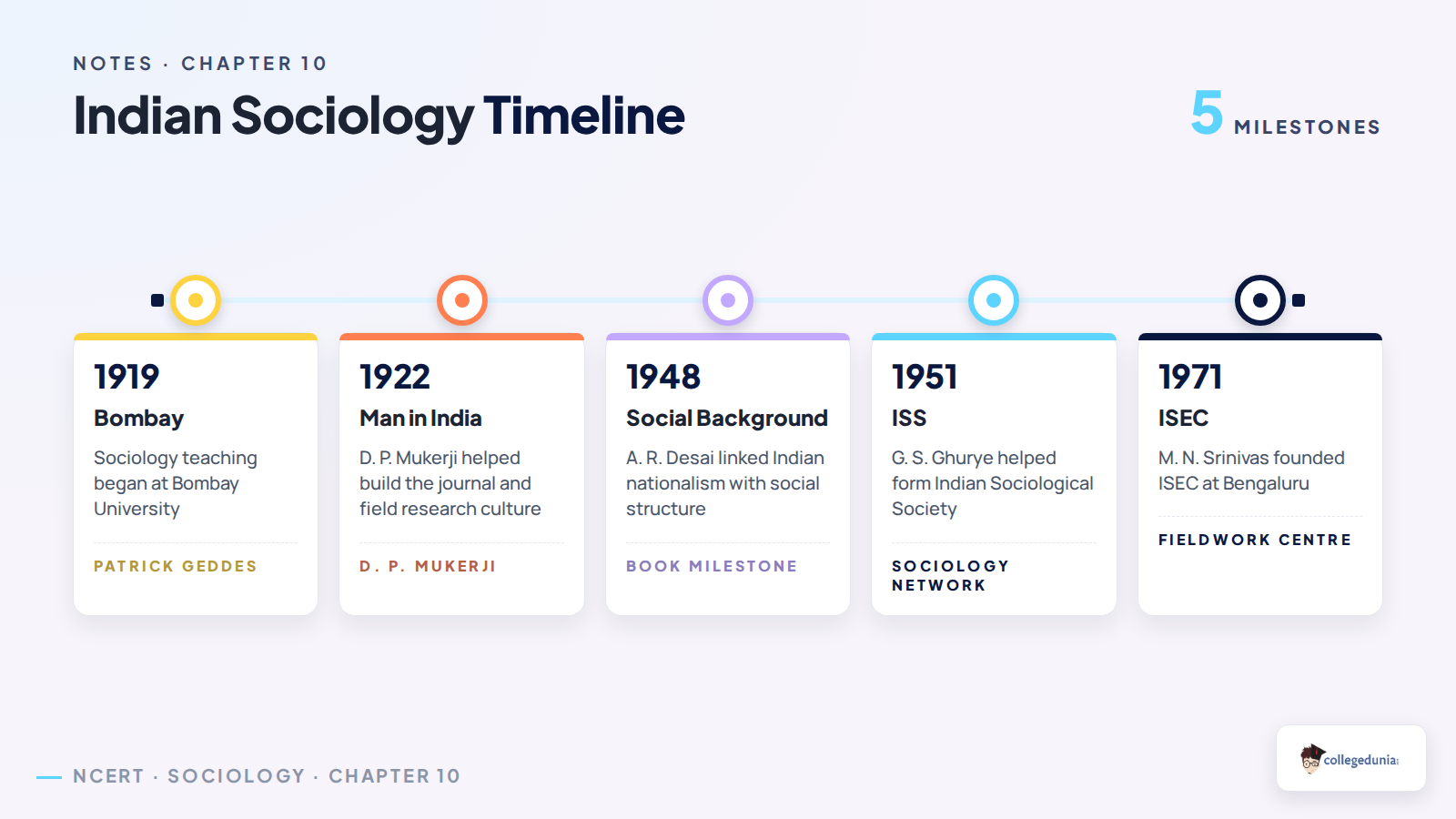
The timeline matters because Indian sociology grew through teaching, fieldwork, journals and institutions. The chapter shows that the subject became strong when scholars studied Indian society on its own terms.
- 1919: sociology teaching began at Bombay University.
- 1922: journals and surveys made field evidence more visible.
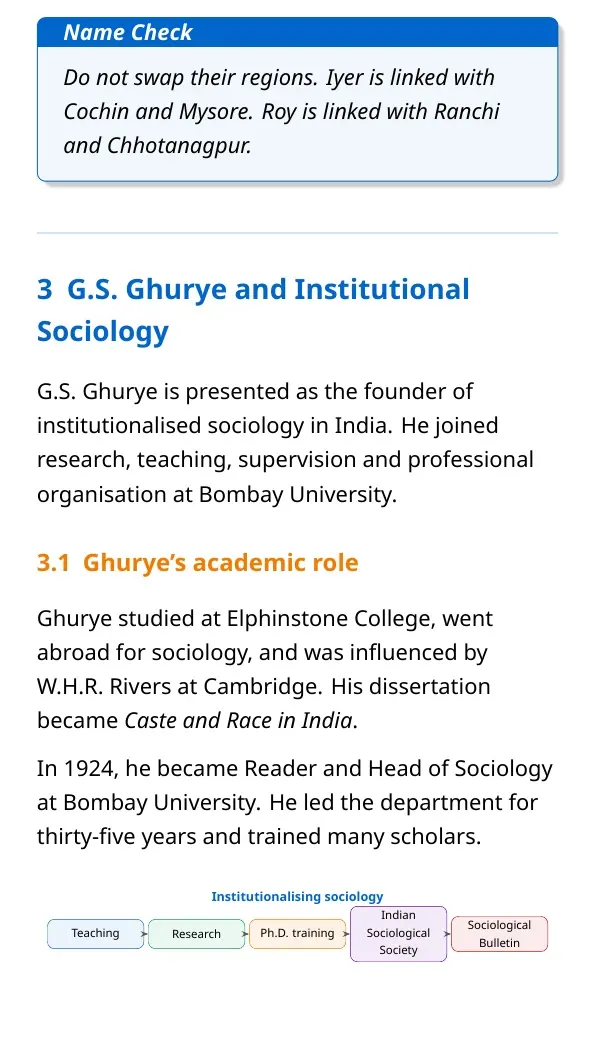
- 1951: the Indian Sociological Society helped organise the discipline.
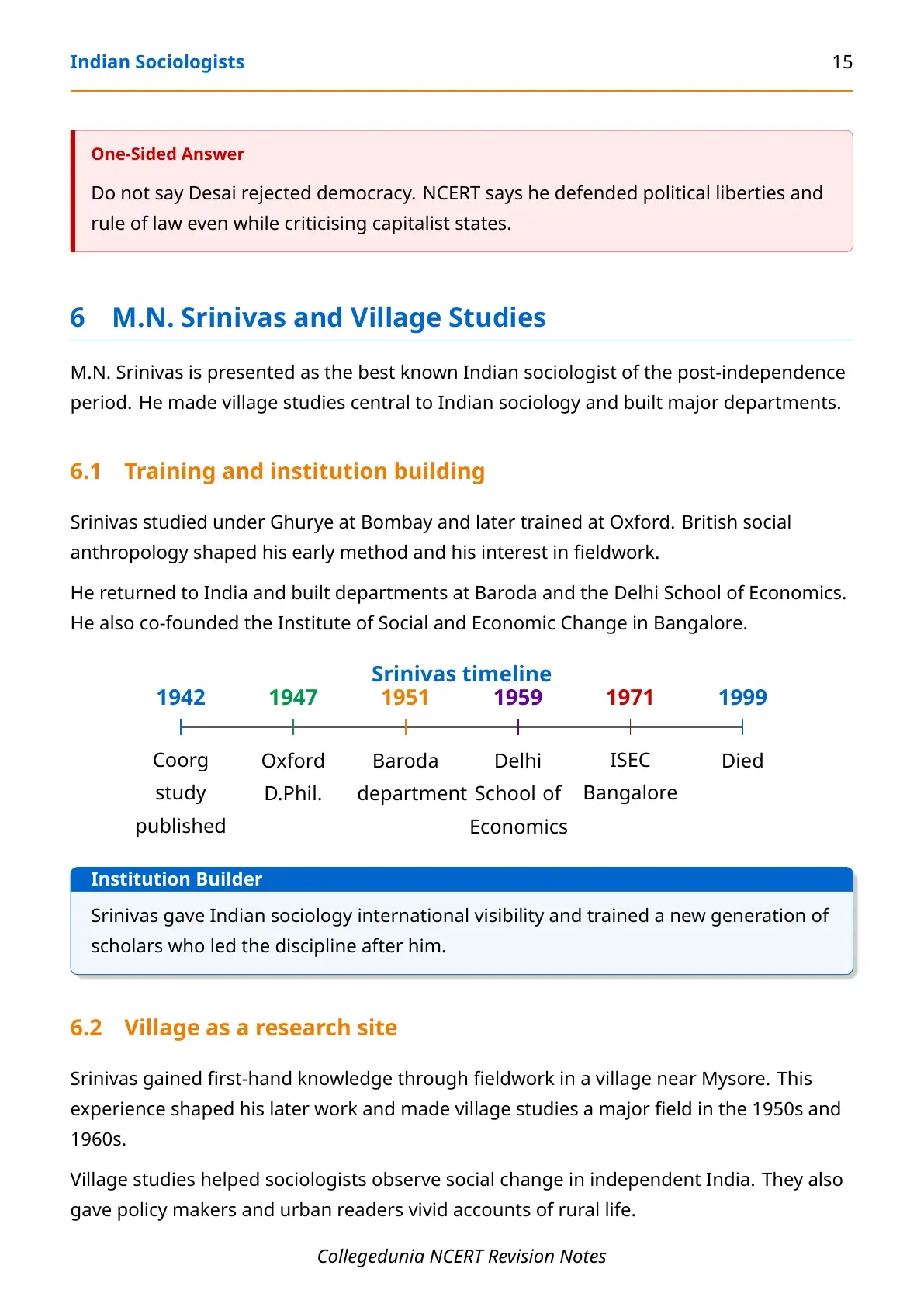
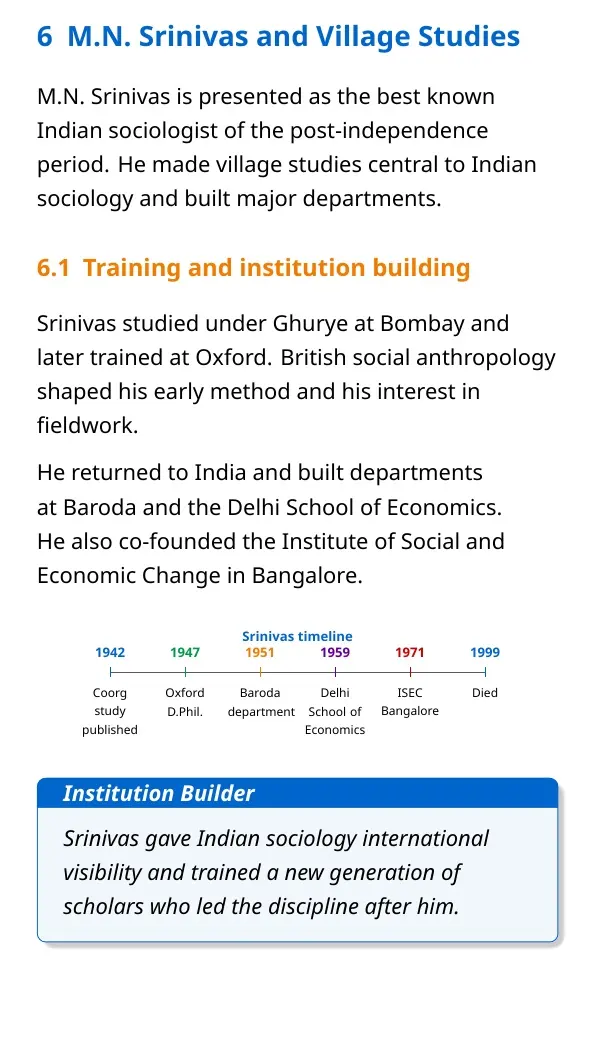
- 1971: ISEC made field-based social science research stronger.
Early Indian Pioneers in Indian Sociologists
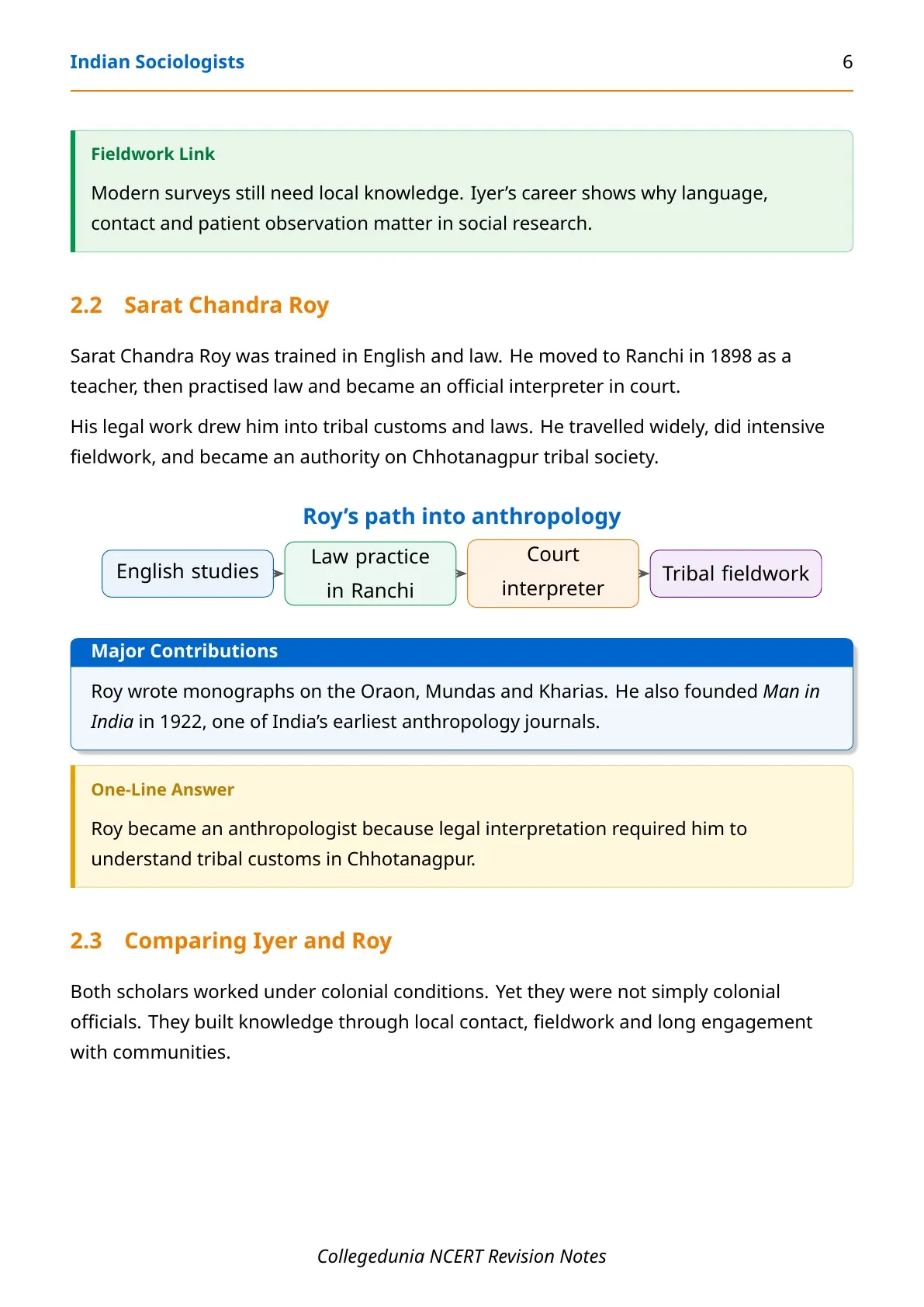
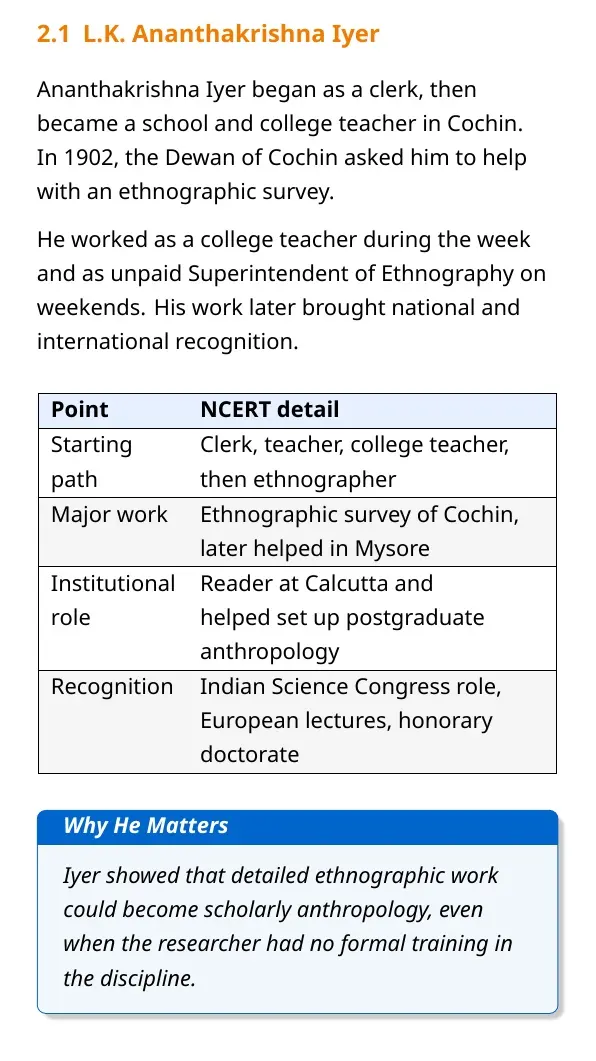
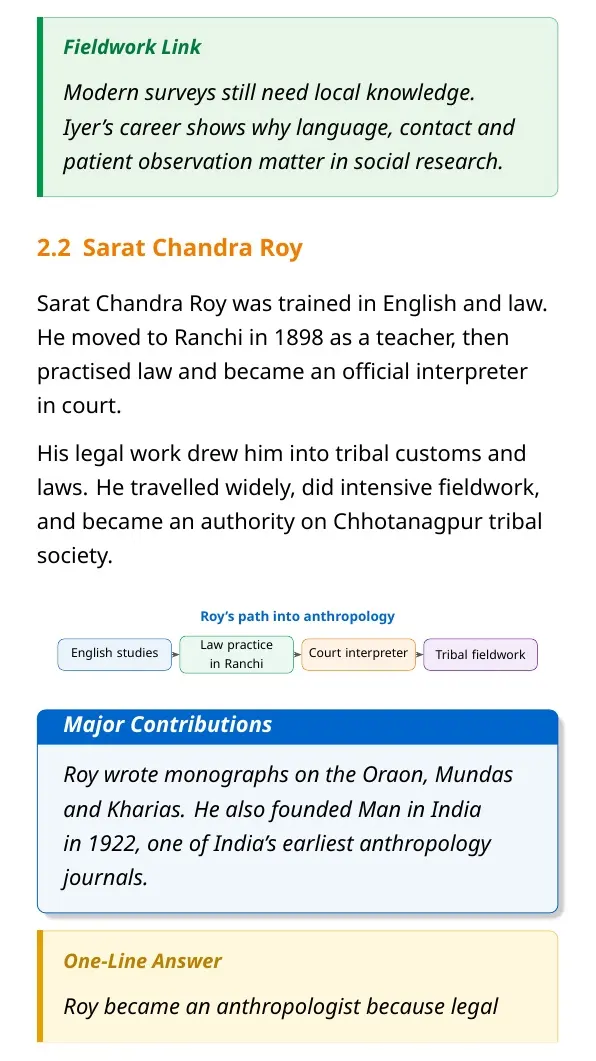
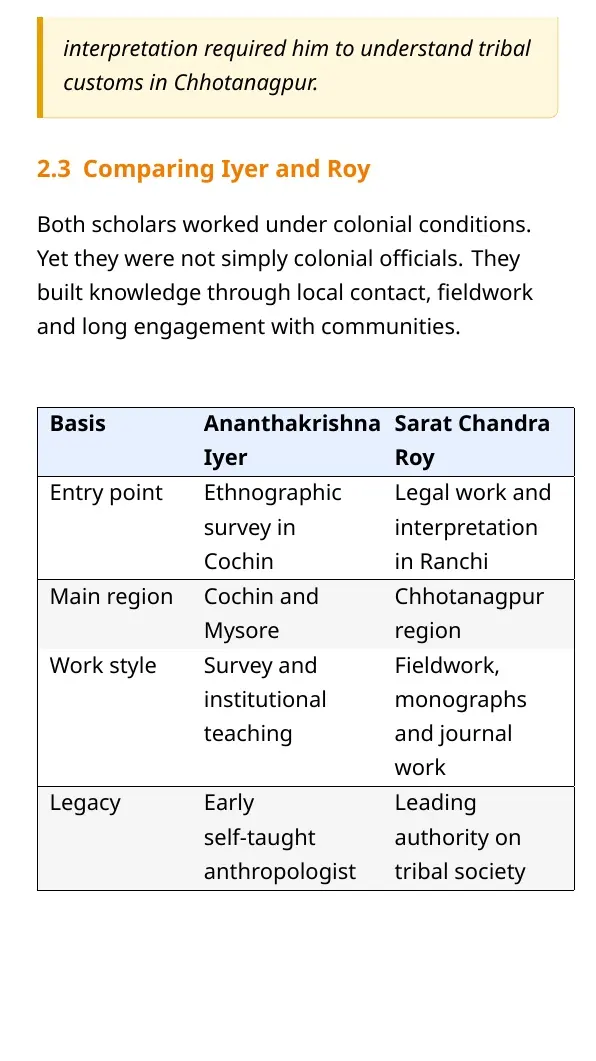
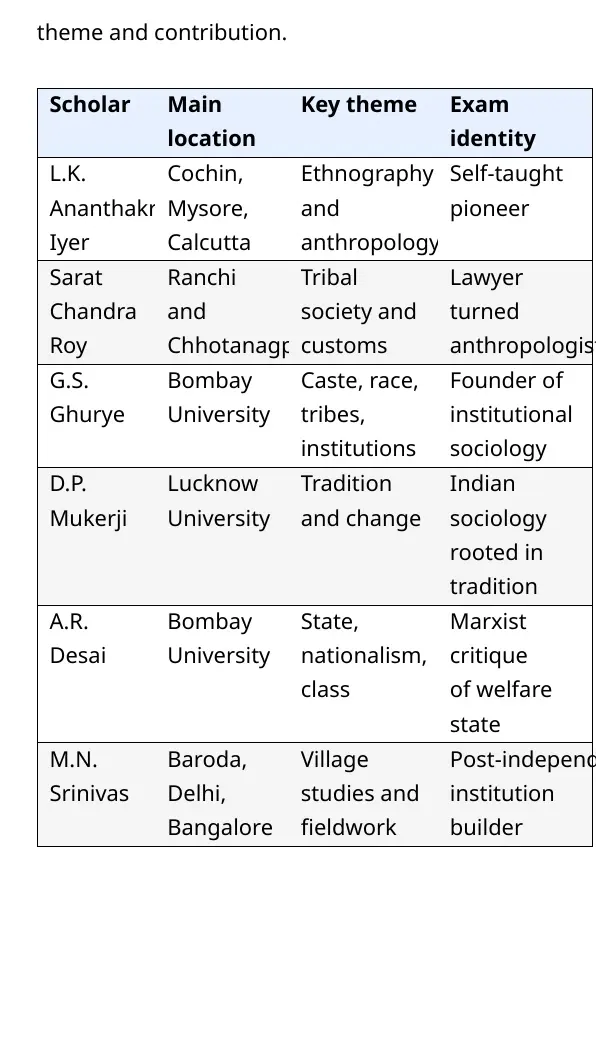
L. K. Ananthakrishna Iyer and Sarat Chandra Roy were not trained as modern sociologists in the beginning. NCERT calls them important because they studied communities closely and built records that later scholars used.
| Pioneer | Exam point |
|---|---|
| L. K. Ananthakrishna Iyer | Used detailed ethnographic work on castes and tribes. |
| Sarat Chandra Roy | Studied tribal communities and helped build Indian anthropology. |
| Patrick Geddes | Helped start sociology teaching in Bombay in 1919. |
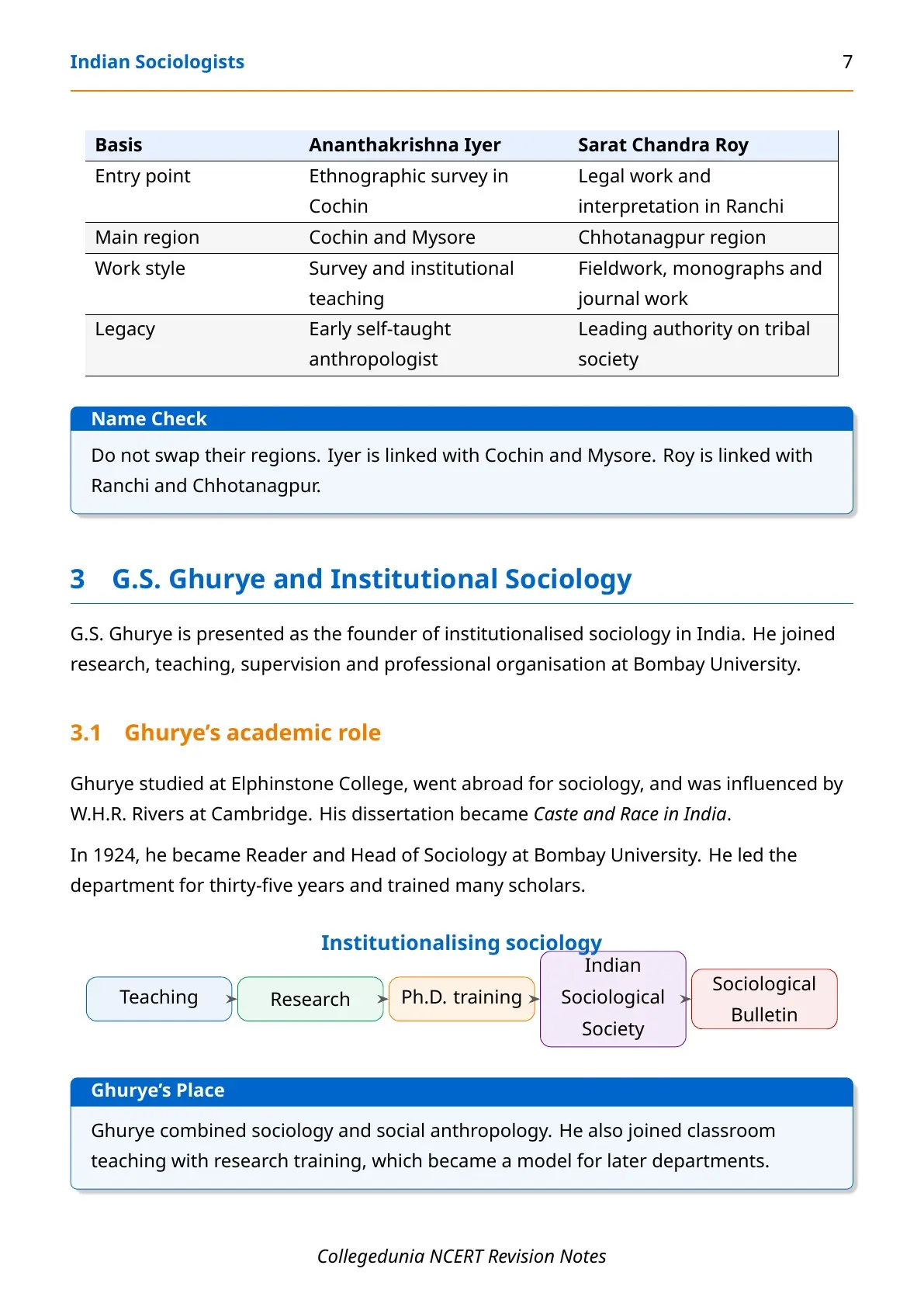
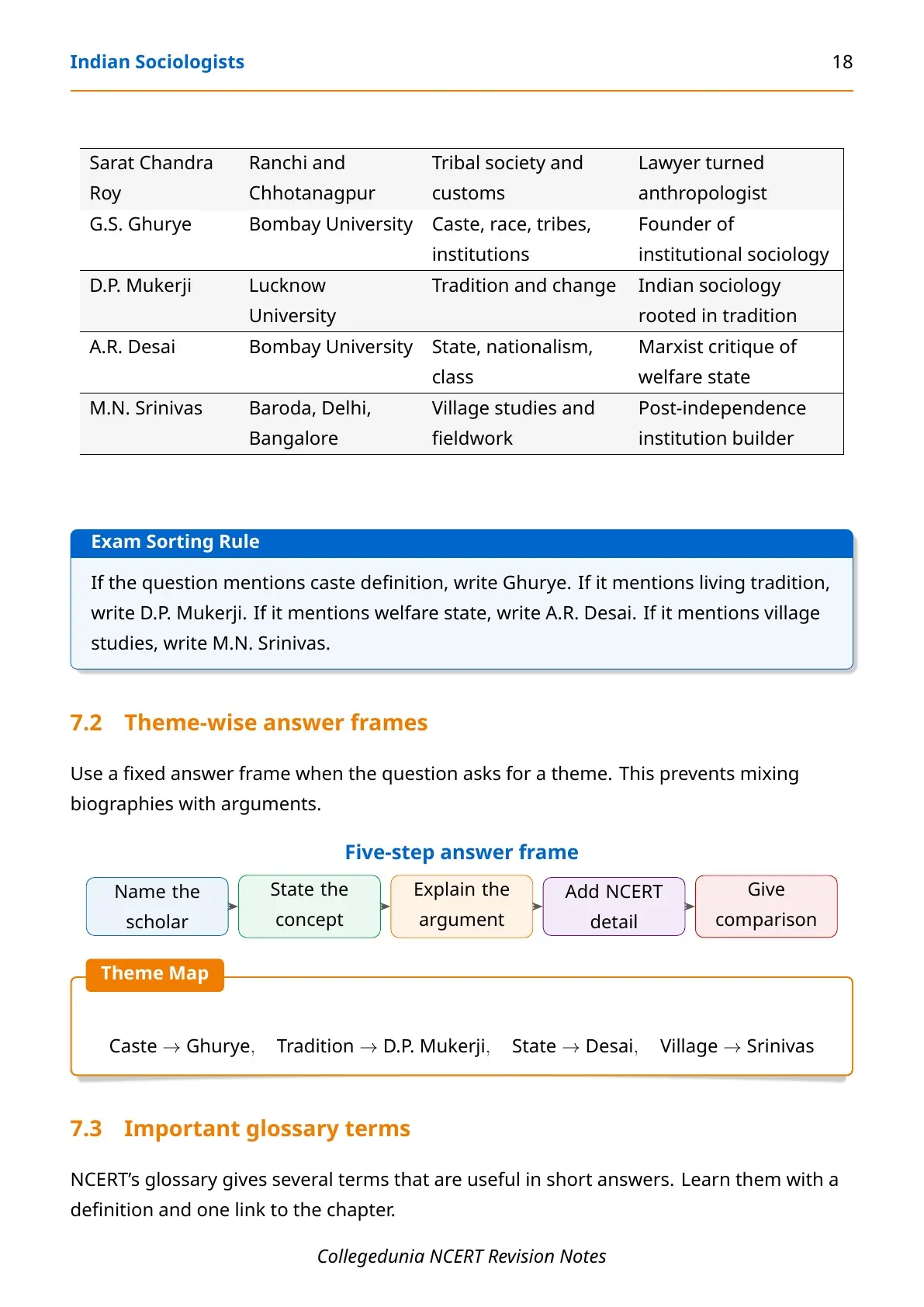
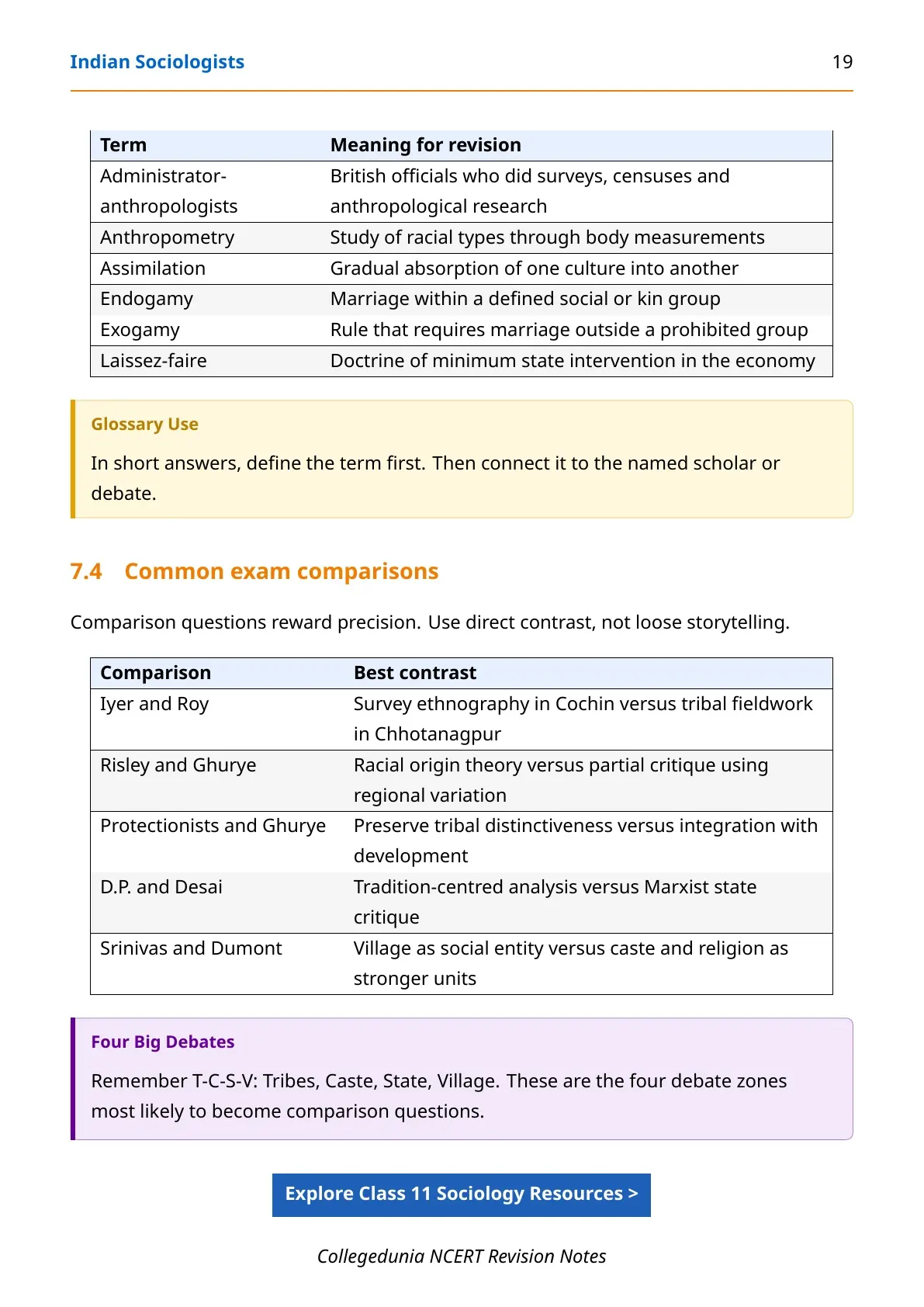
Ghurye Mukerji Desai and Srinivas Compared
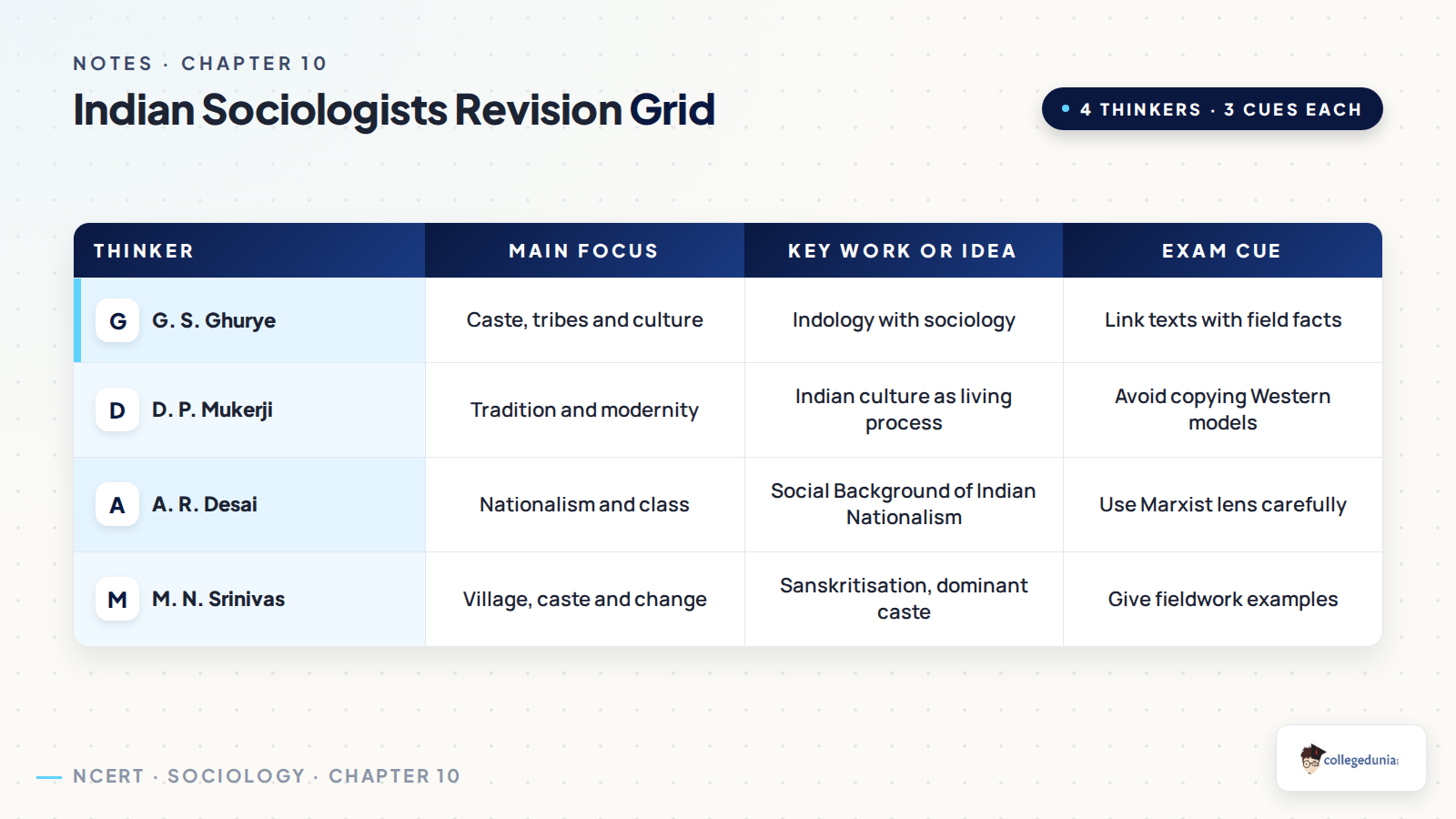
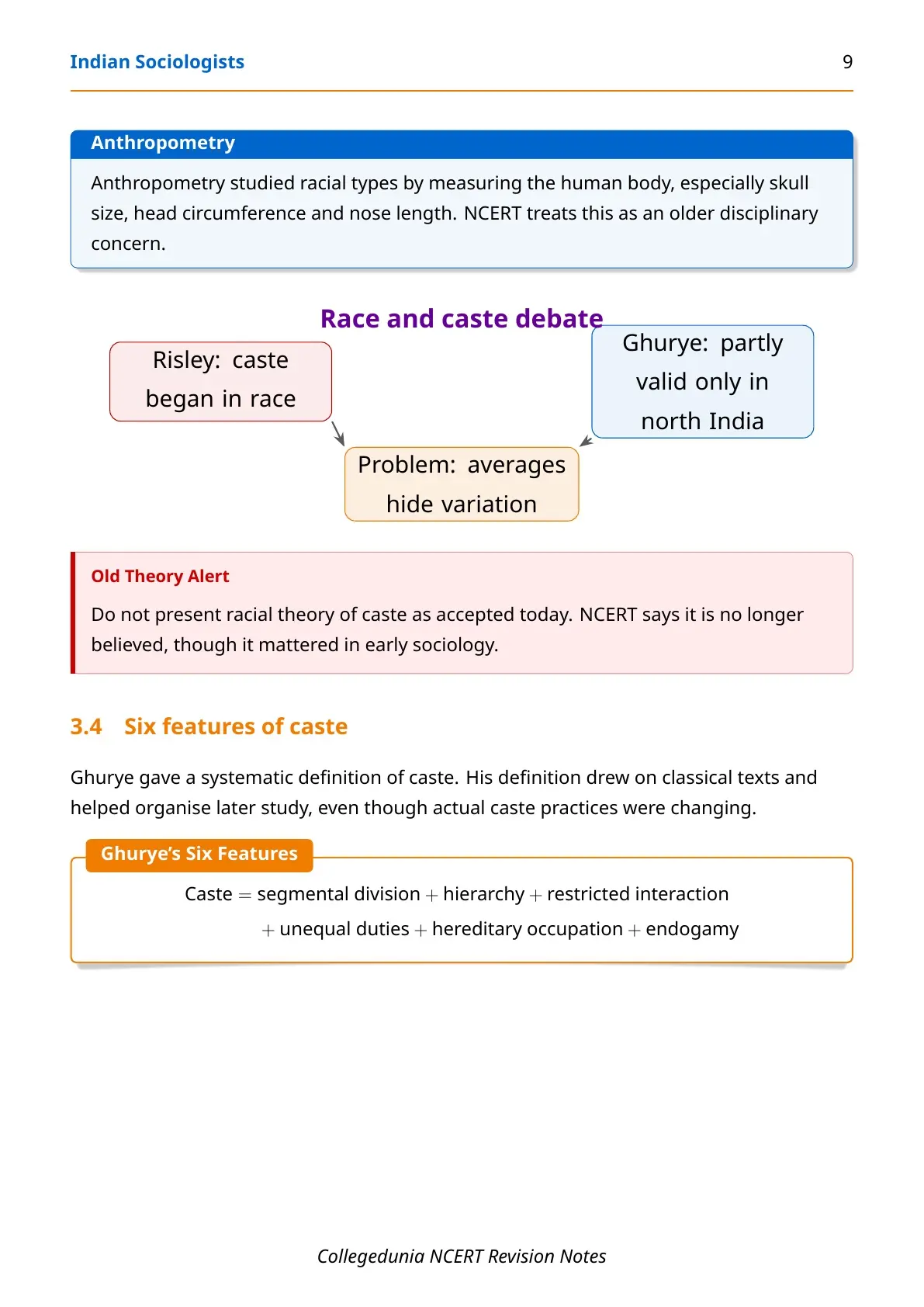
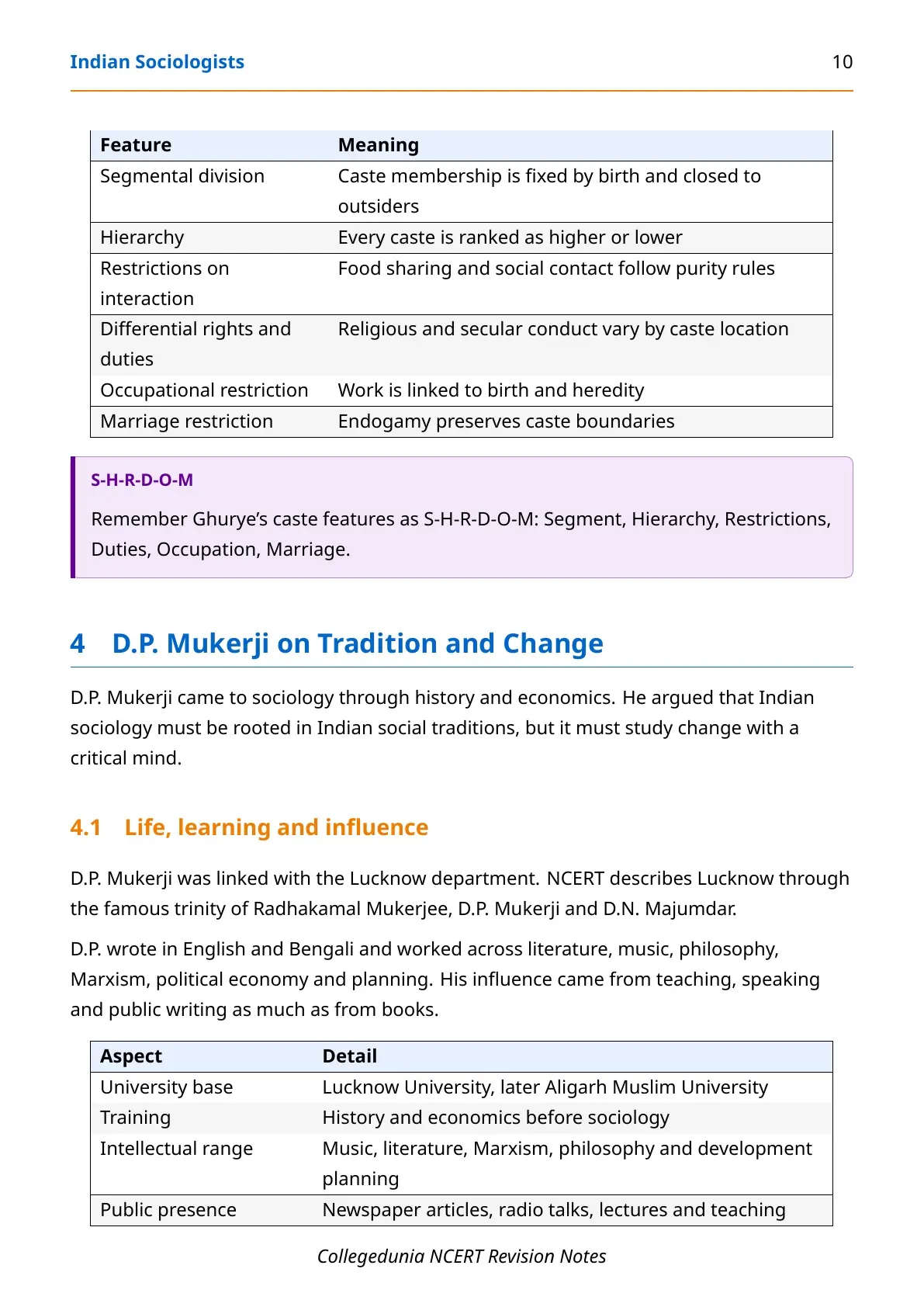
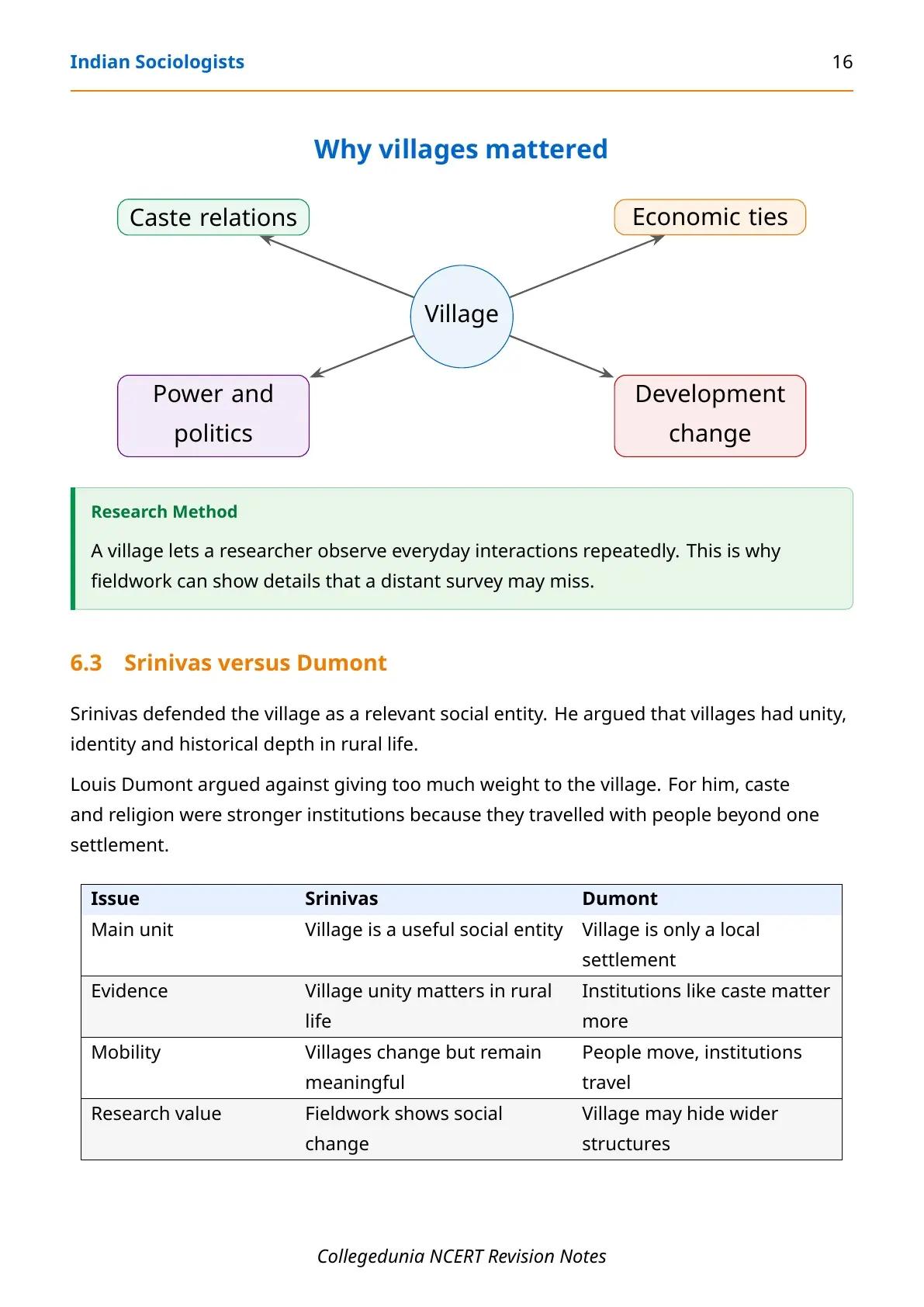
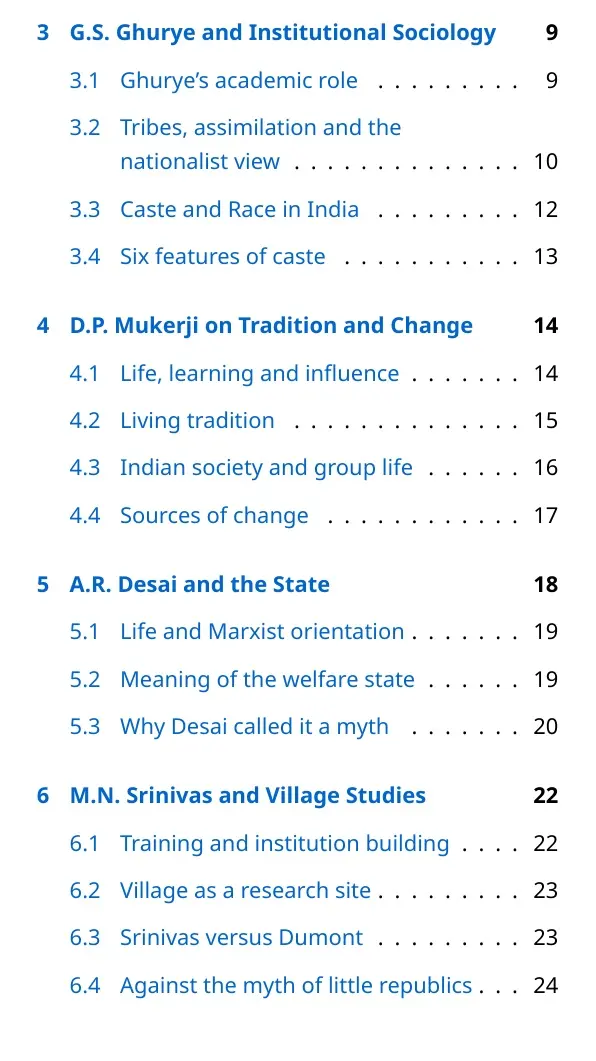
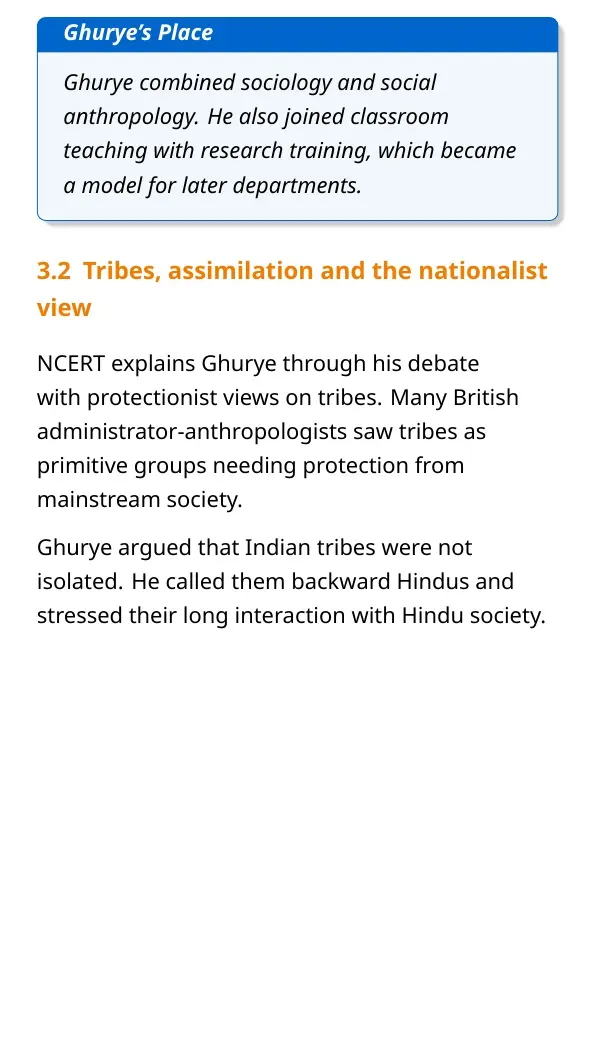
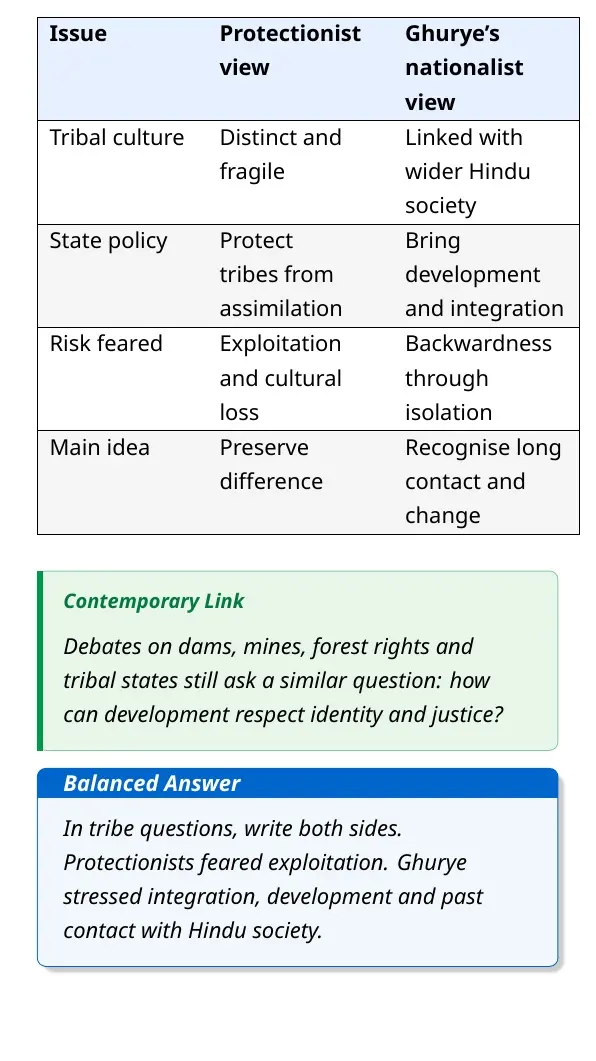
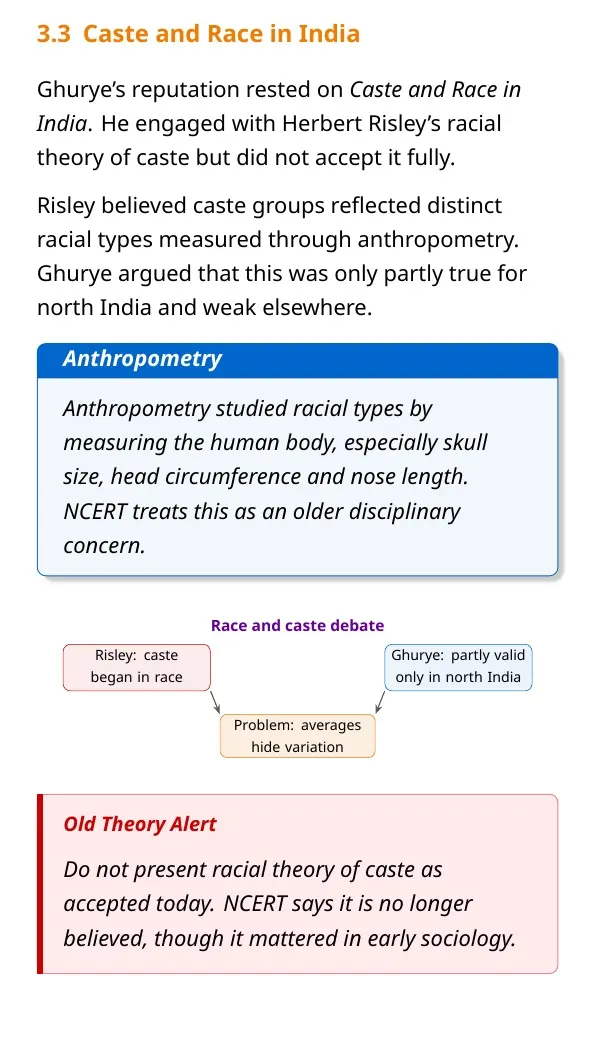
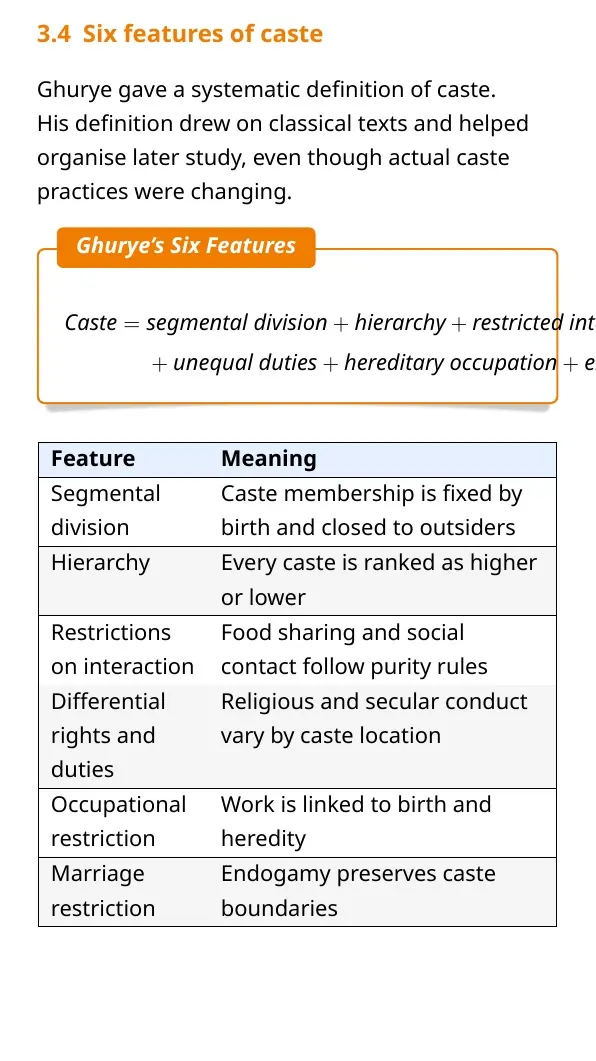
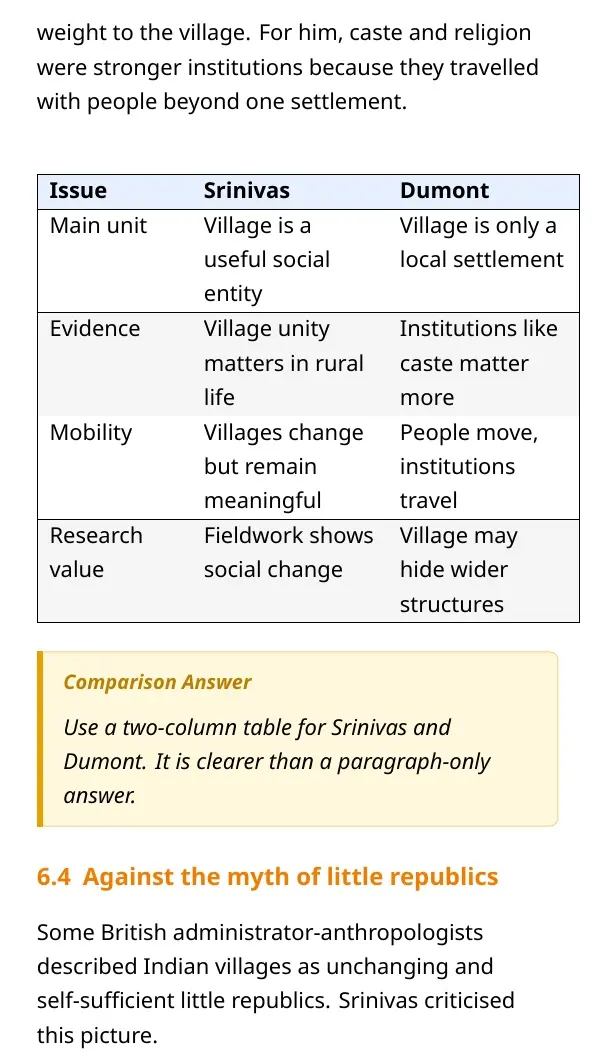
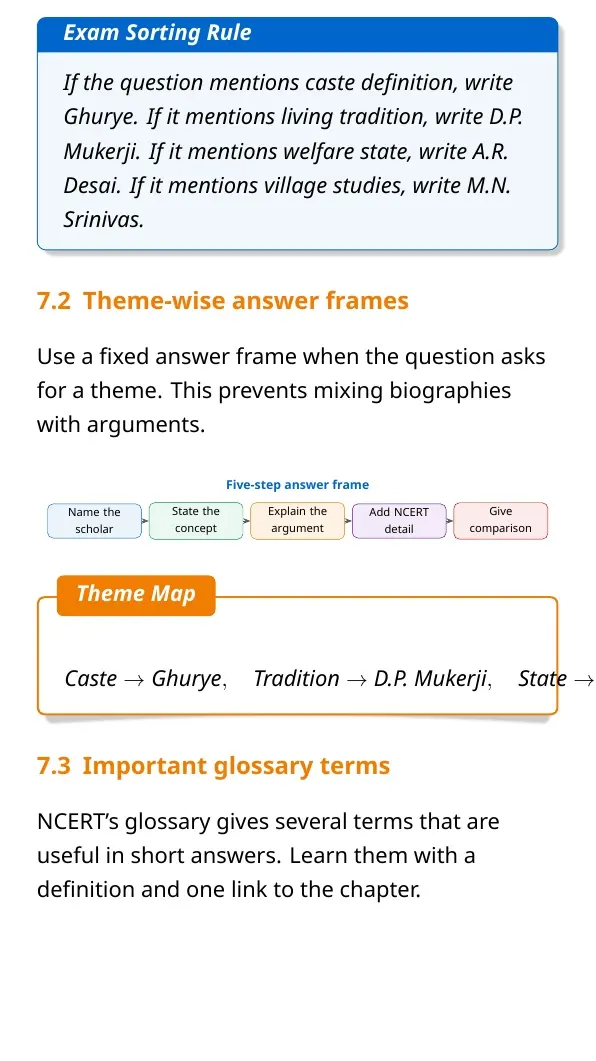
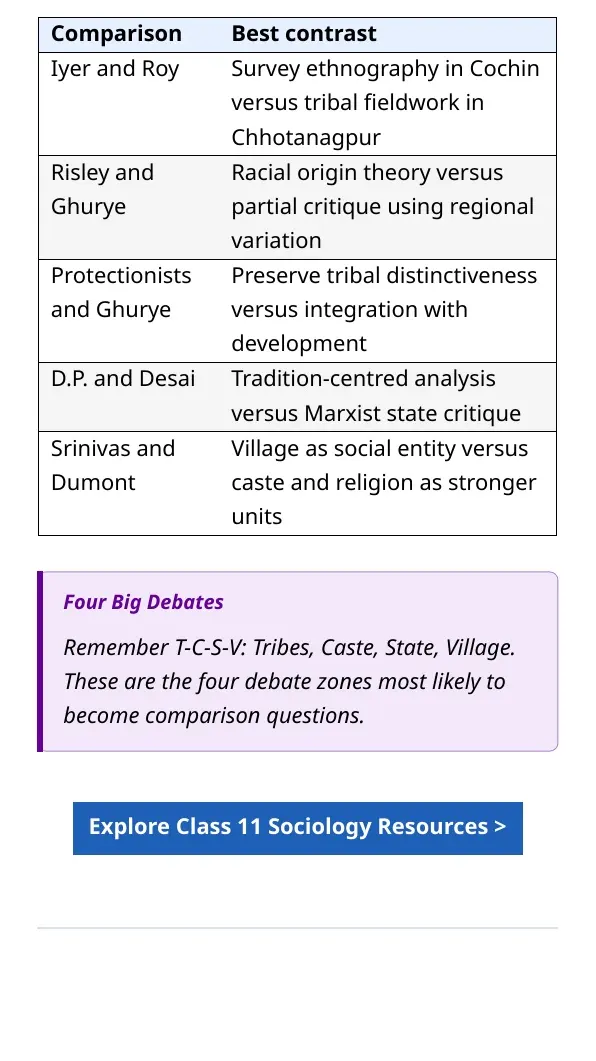
Ghurye used Indology and fieldwork, Mukerji stressed tradition, Desai used a Marxist lens, and Srinivas built village-study concepts. These four names carry the main long-answer value of the chapter.
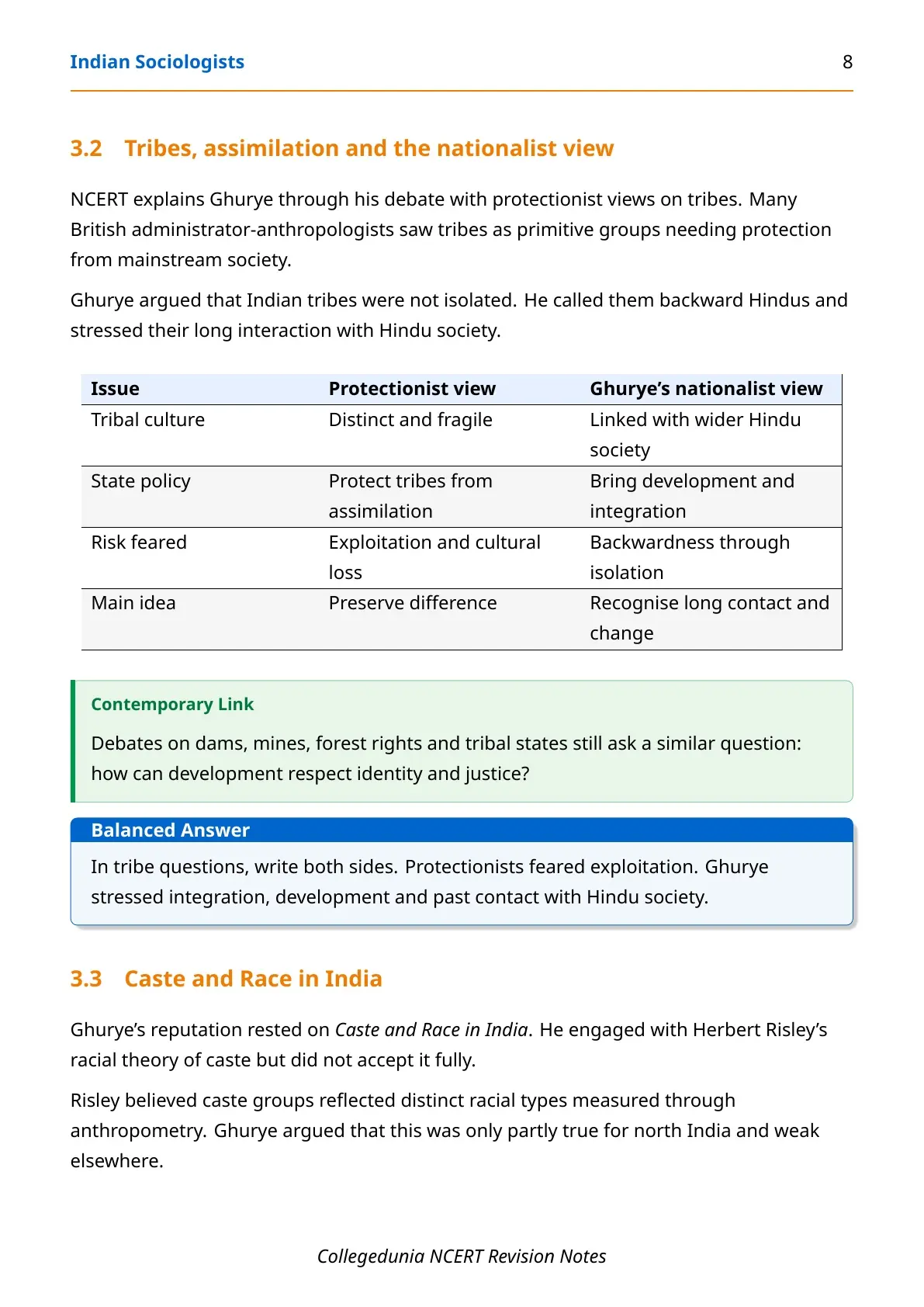
- G. S. Ghurye: caste, tribe, culture and the Indian Sociological Society.
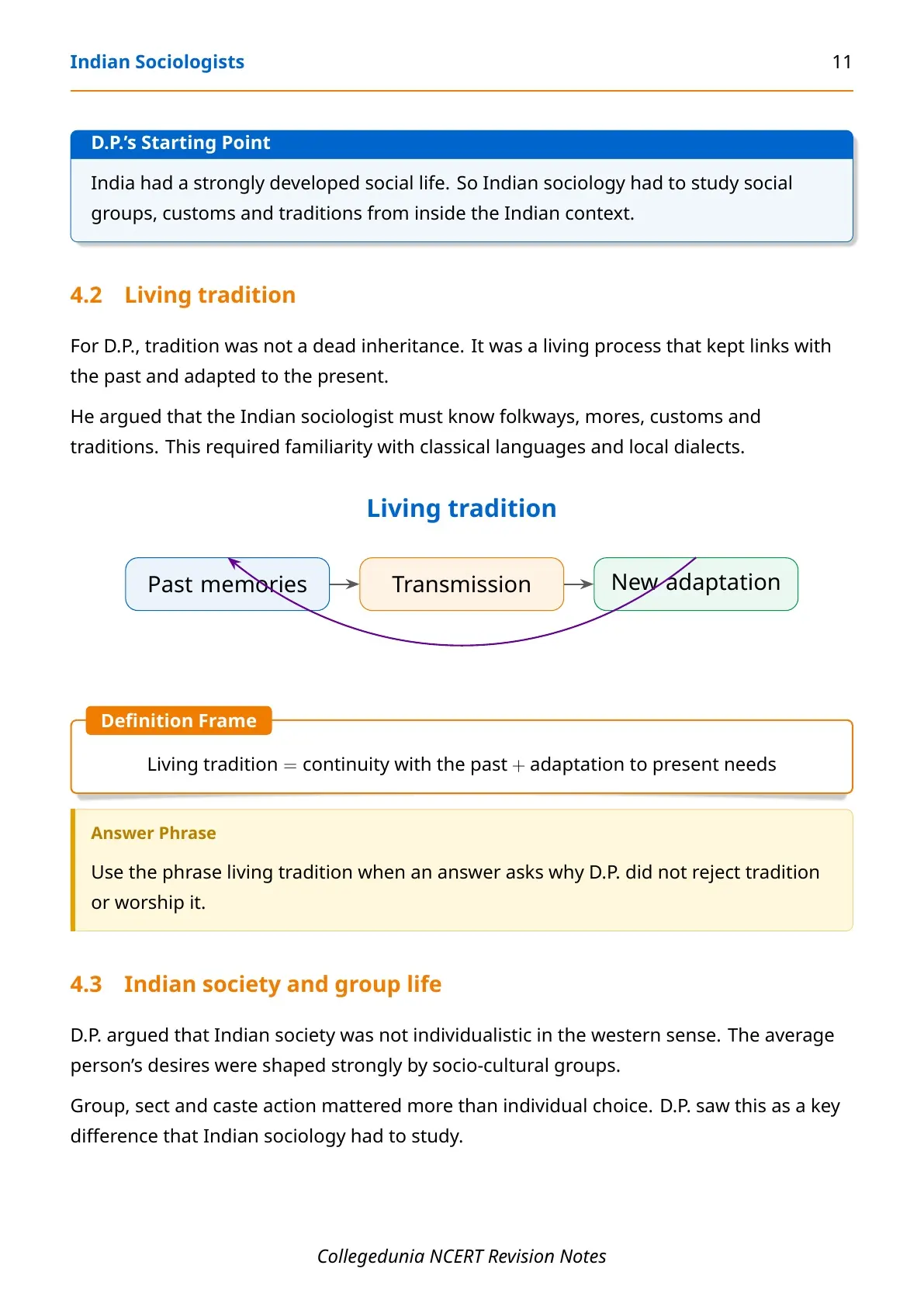
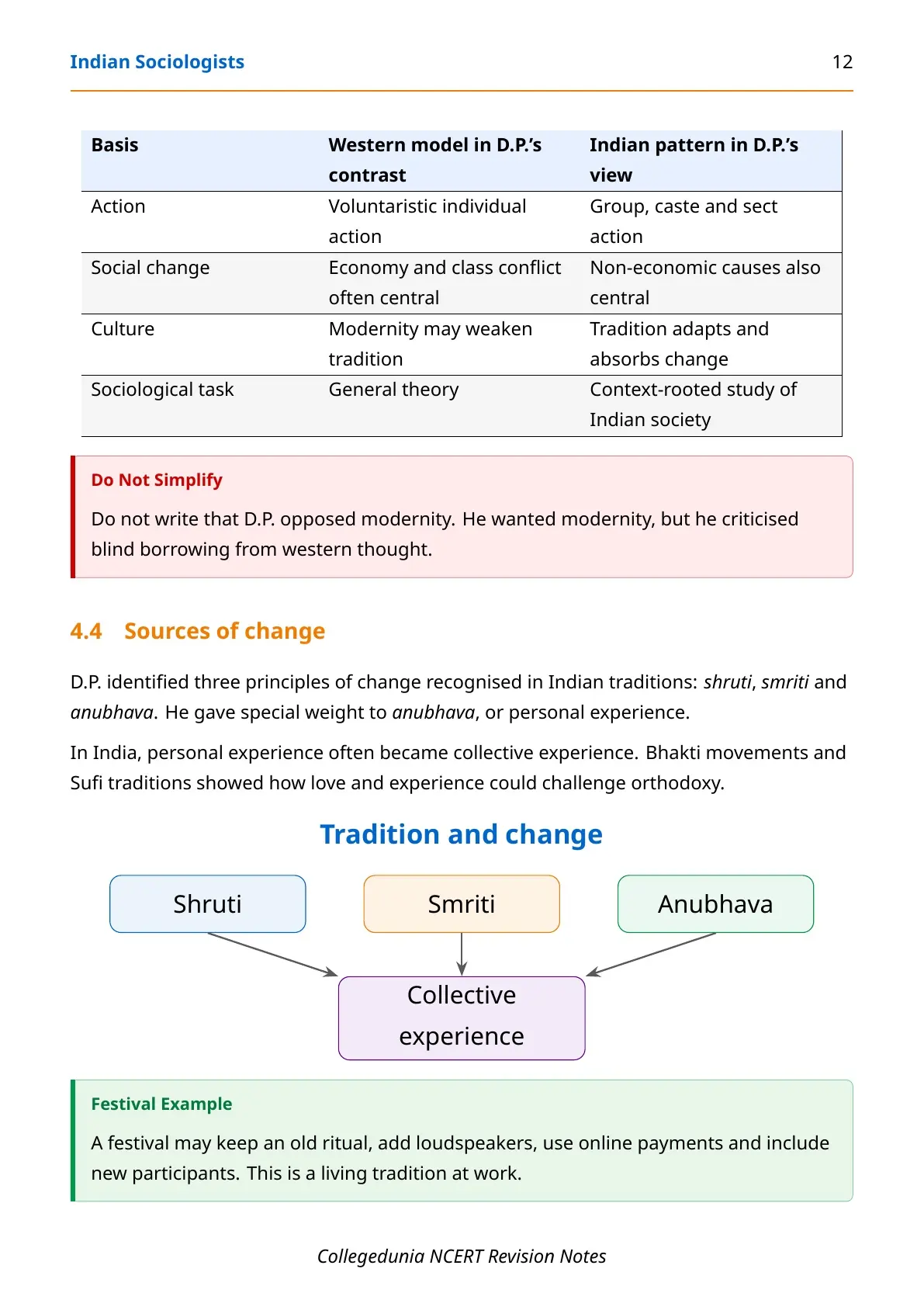
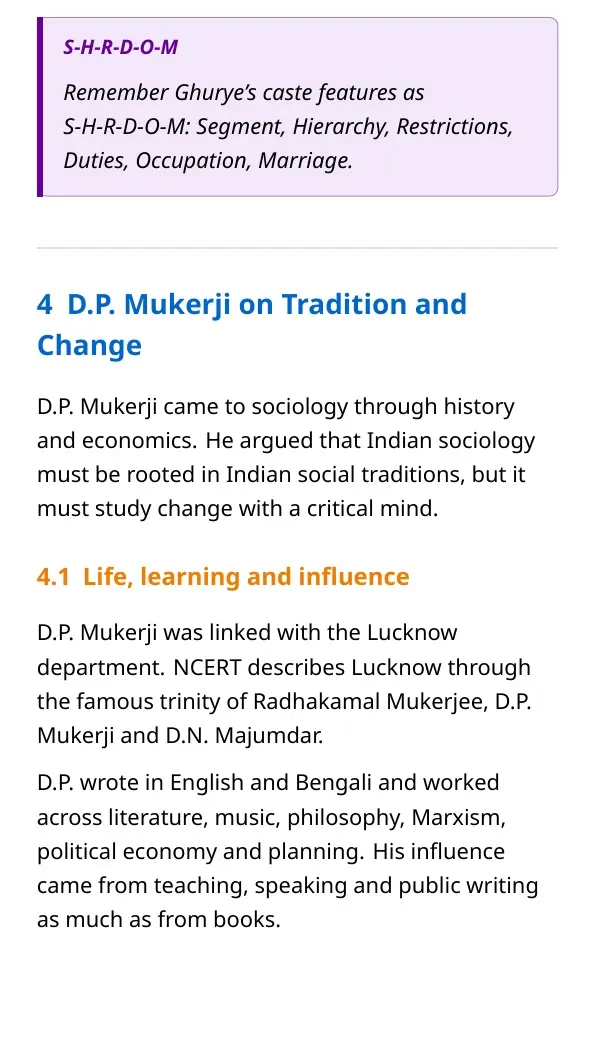
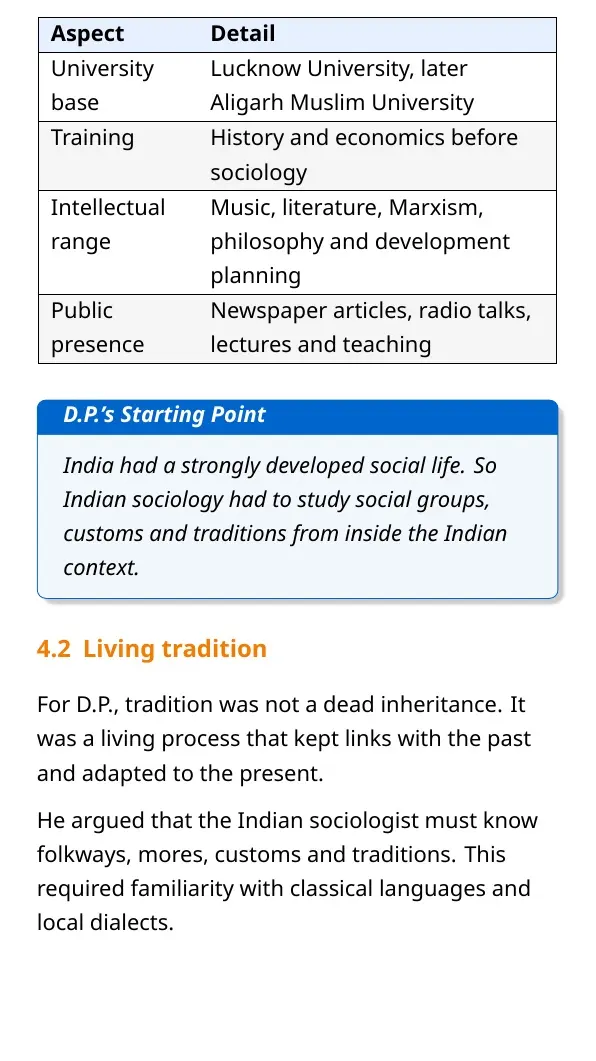
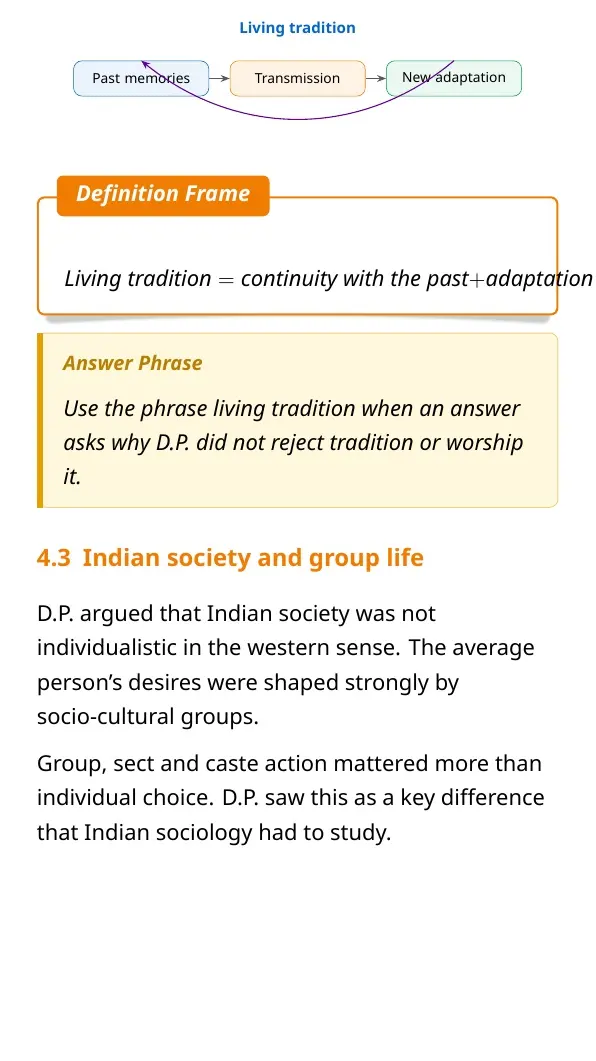
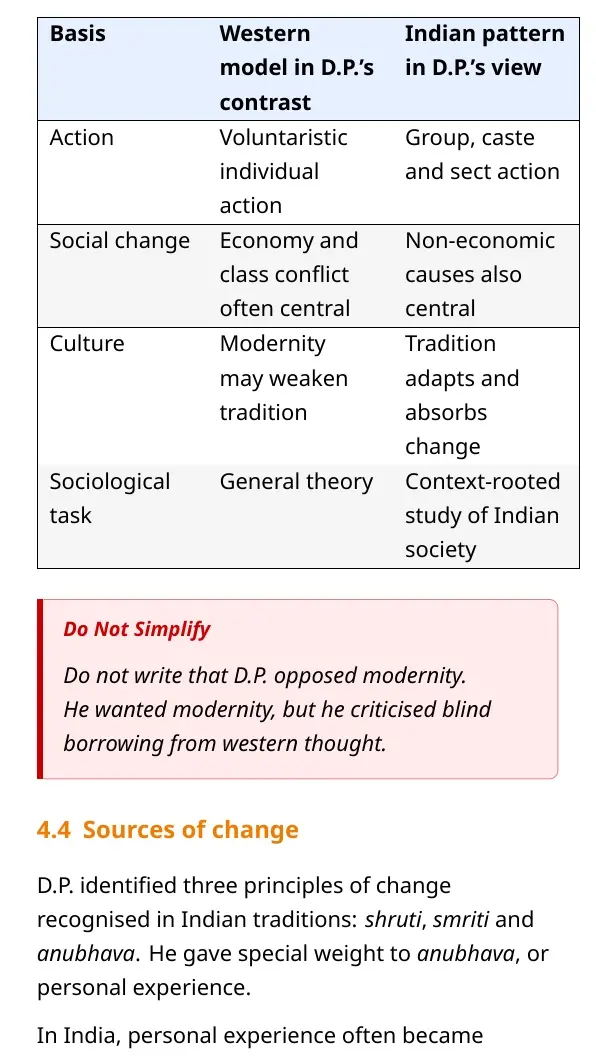
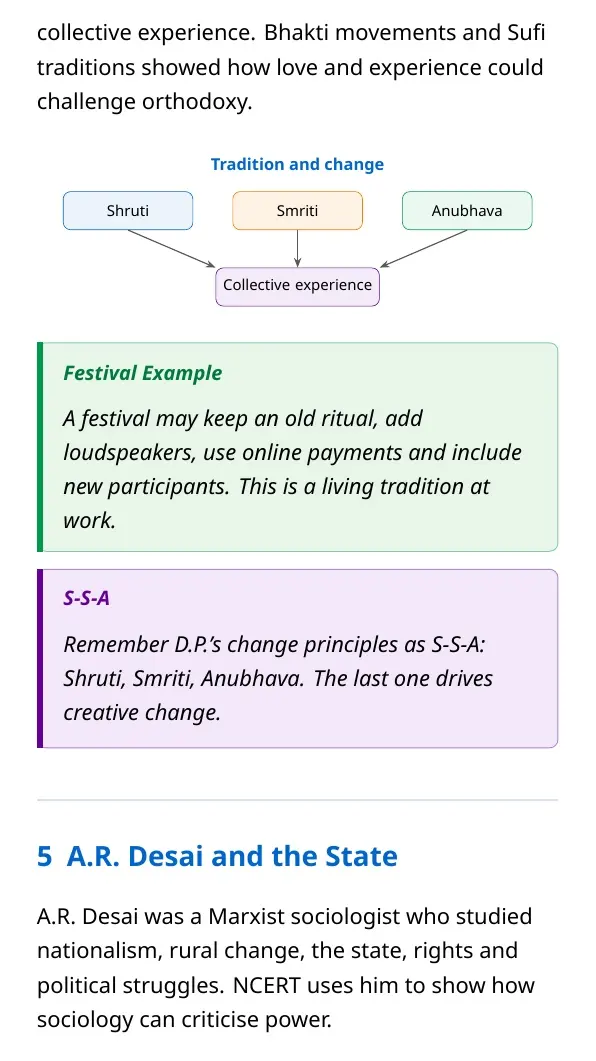
- D. P. Mukerji: Indian tradition, modern change and the need for Indian categories.
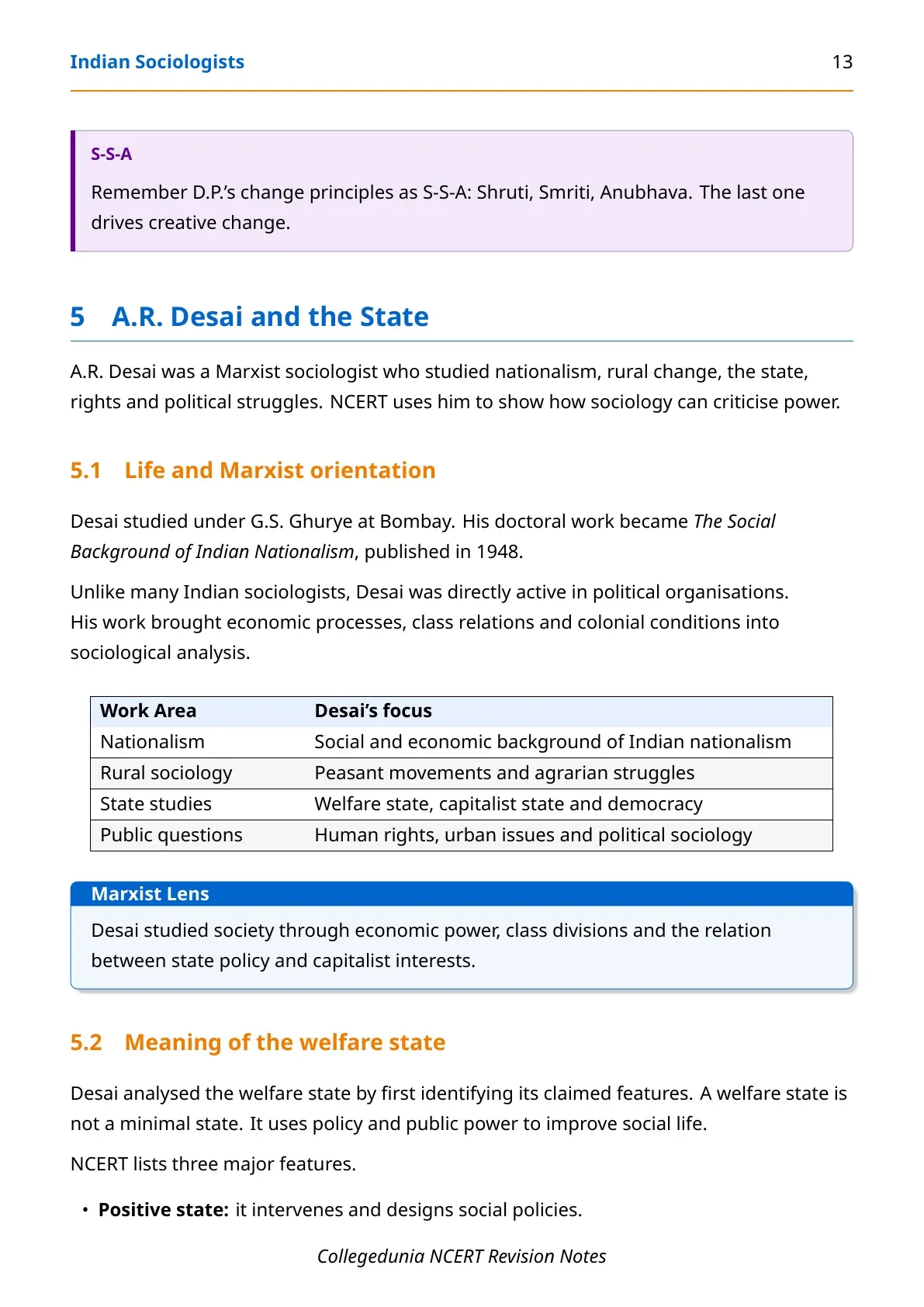
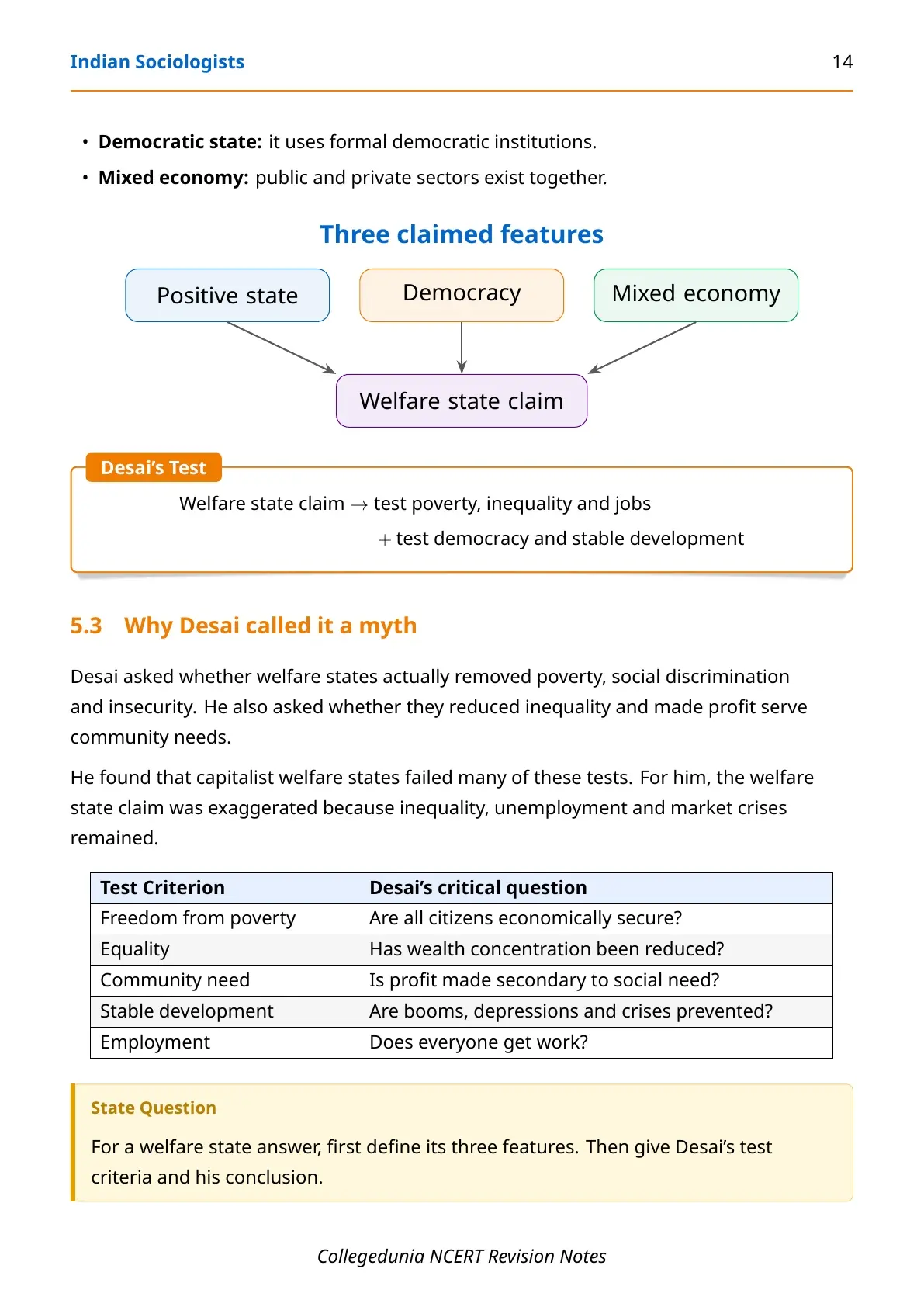
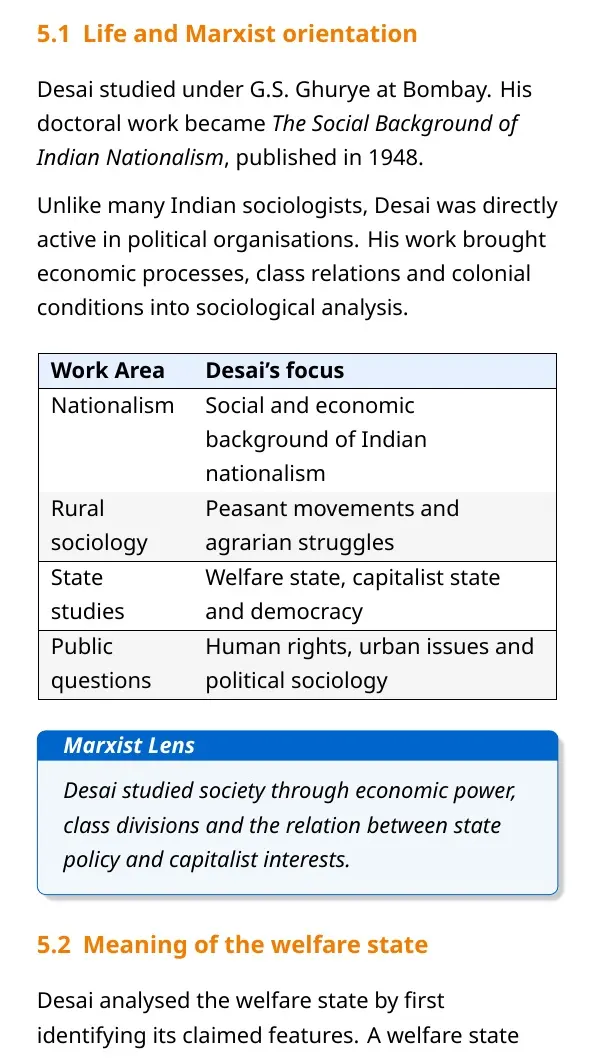
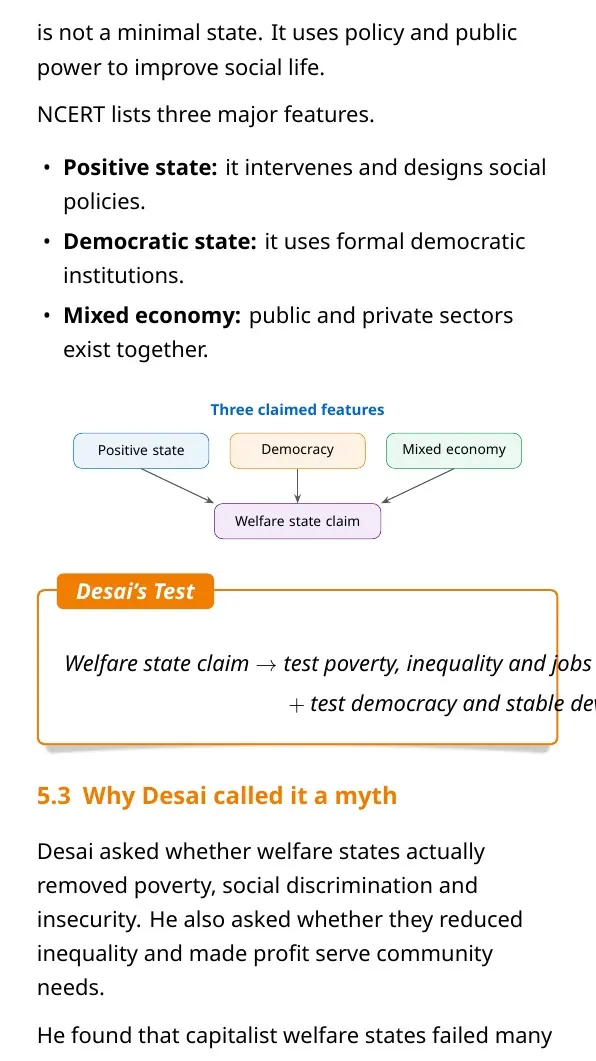
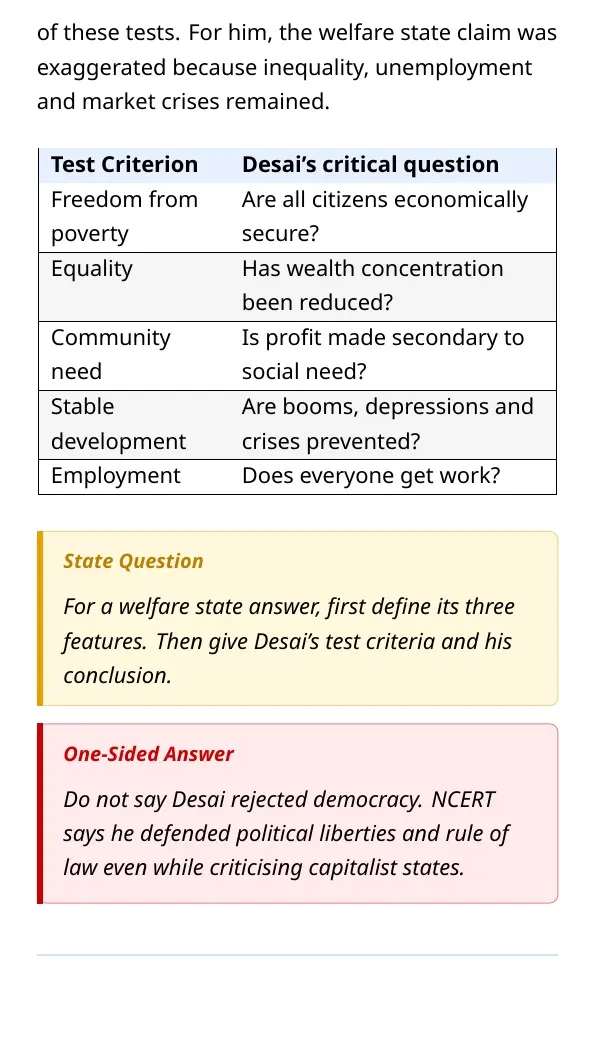
- A. R. Desai: nationalism, class and social structure through Marxist sociology.
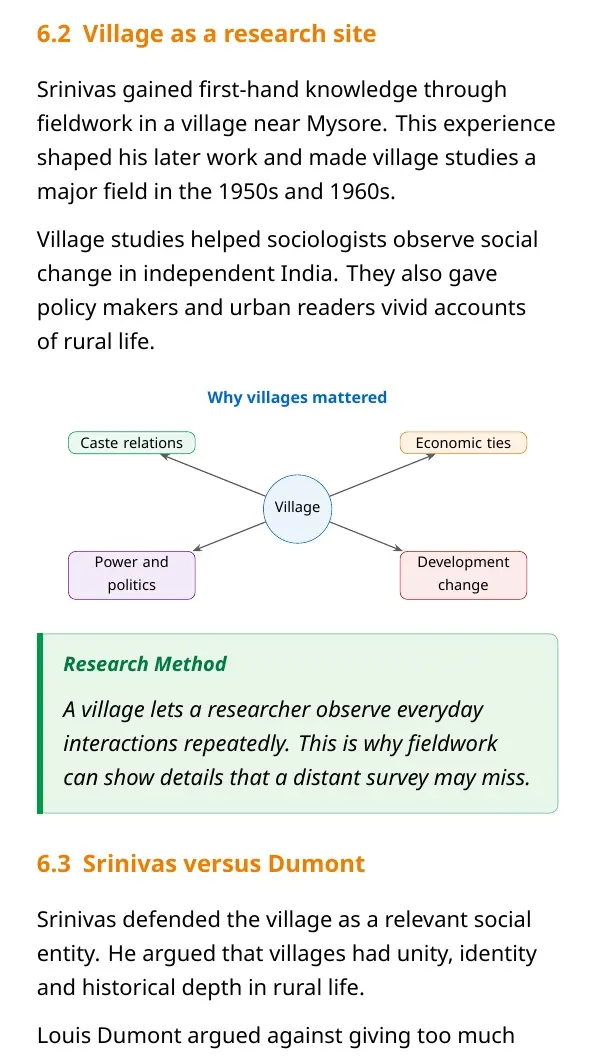
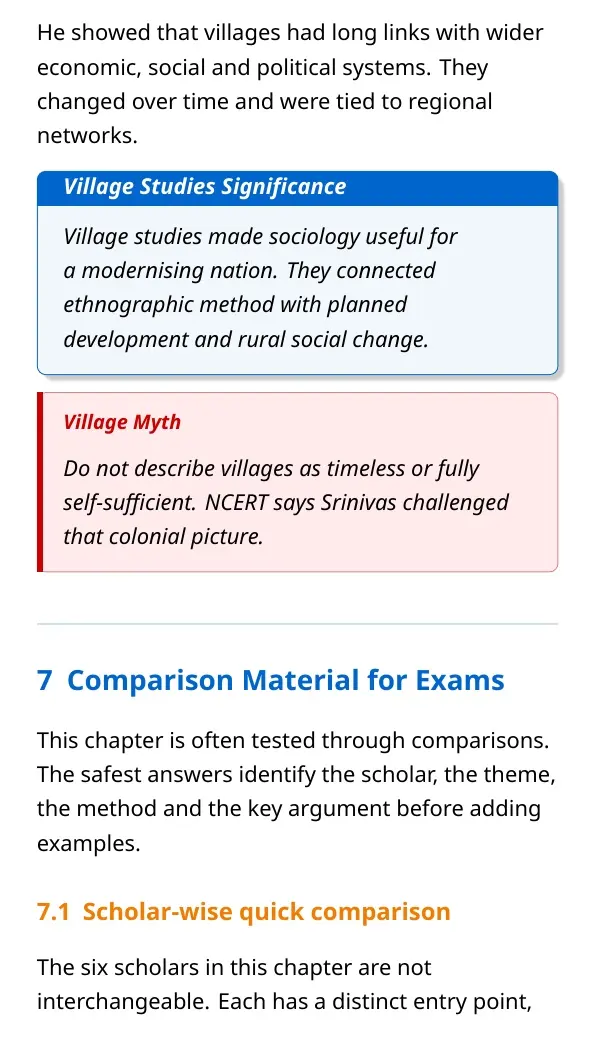
- M. N. Srinivas: fieldwork, Sanskritisation, dominant caste and village studies.
How to Revise Indian Sociologists for Class 11 Exams
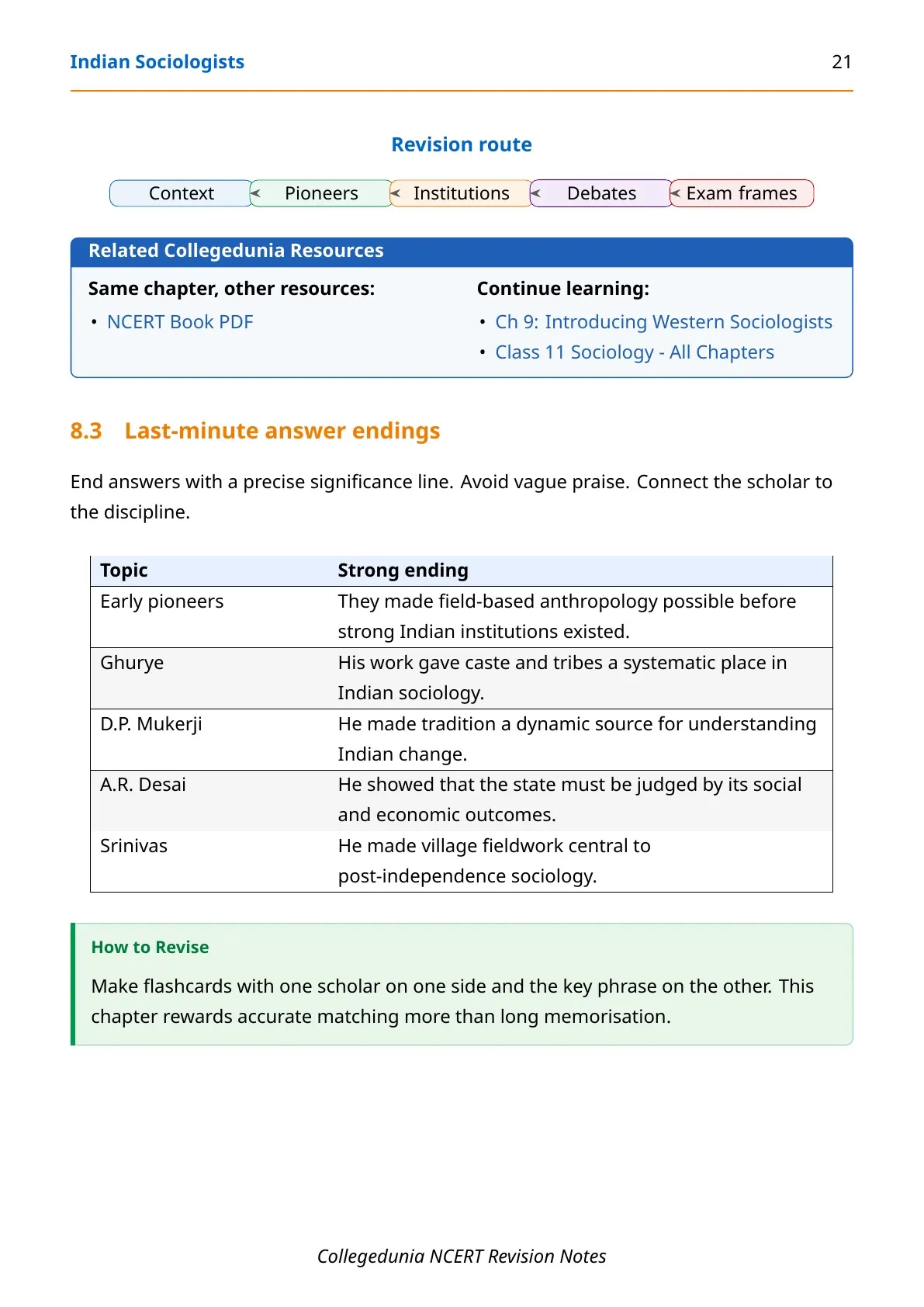
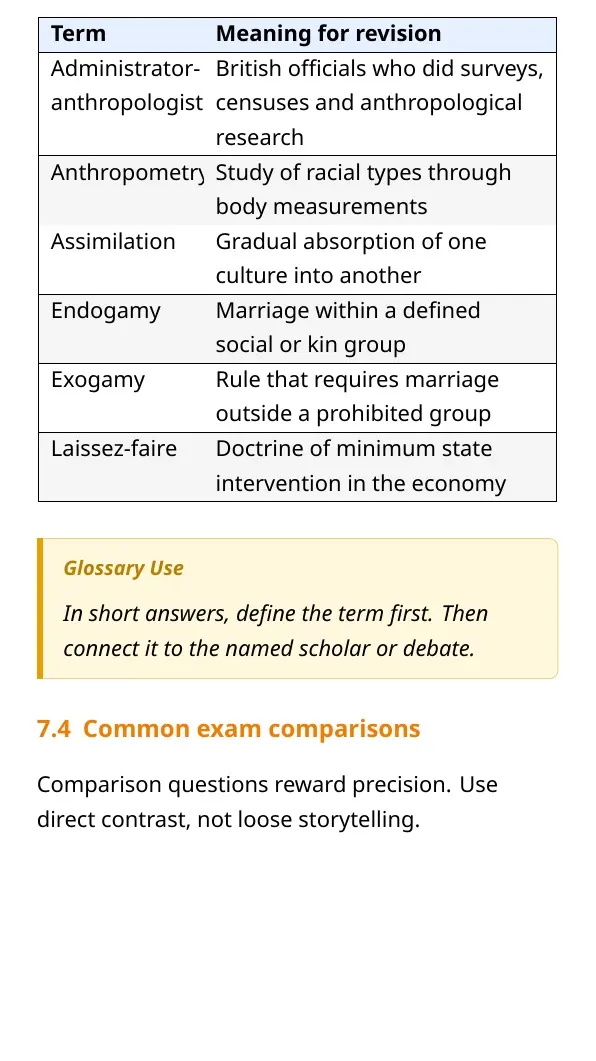
Do not memorise every paragraph in order. Build a four-column table: sociologist, method, concept and example. This keeps answers short and helps students avoid mixing up thinkers.
- First pass: write all names with one date or institution.
- Second pass: attach each name to one concept.
- Third pass: practise a 120-word answer on Indian sociology's special path.
- Final pass: revise Sanskritisation, dominant caste and Indology together.
Related NCERT Resources for Indian Sociologists
| Resource | Use it for |
|---|---|
| Class 11 Sociology Chapter 10 NCERT Book PDF | Official textbook reading and exercise questions. |
| Class 11 Sociology Chapter 10 Handwritten Notes | One-shot revision in a handwritten format. |
| Class 11 Sociology Chapter 10 NCERT Solutions | Check answers after revising the notes. |
| Class 11 Sociology Chapter 9 Notes | Revise Western sociology before Indian sociology. |
All Class 11 Sociology Notes Chapters
| Chapter | NCERT Notes link |
|---|---|
| Chapter 1 | Sociology and Society Notes |
| Chapter 2 | Terms, Concepts and Their Use in Sociology Notes |
| Chapter 3 | Understanding Social Institutions Notes |
| Chapter 4 | Culture and Socialisation Notes |
| Chapter 5 | Doing Sociology Research Methods Notes |
| Chapter 6 | Social Structure and Social Processes Notes |
| Chapter 7 | Social Change and Social Order Notes |
| Chapter 8 | Environment and Society Notes |
| Chapter 9 | Introducing Western Sociologists Notes |
| Chapter 10 | Indian Sociologists Notes |
Indian Sociologists Class 11 Notes FAQs
Ques. What is covered in Class 11 Sociology Chapter 10 Notes?
Ans. The notes cover early Indian sociology, Ghurye, Mukerji, Desai, Srinivas, caste, tribe, tradition, nationalism and village studies.
Ques. Why is G. S. Ghurye important in Indian sociology?
Ans. Ghurye helped build sociology in India through work on caste, tribe, culture and the Indian Sociological Society.
Ques. What is Sanskritisation in the Indian Sociologists chapter?
Ans. Sanskritisation is M. N. Srinivas's term for a process where a lower caste adopts practices of a higher caste to raise its status.
Ques. How should students revise Indian Sociologists quickly?
Ans. Make a table with each sociologist, method, key idea and example. Then practise one short answer on each major thinker.



Comments